Federal Judge Slams Obama Administration for Trying to Dismiss No-Fly List Case in Secret
By Noel Brinkerhoff | AllGov | December 26, 2012
 The Obama administration was admonished by a federal judge recently for attempting to get a lawsuit involving the anti-terrorism no-fly list dismissed using secret information.
Rahinah Ibrahim, a citizen of Malaysia who earned a Ph.D. in construction engineering and management at Stanford University, sued the U.S. government after she was prevented from flying out of San Francisco International Airport in January 2005. Transportation Security Administration (TSA) authorities informed Ibrahim that her name was on the special list that denies those suspected of terrorist ties from flying on commercial airliners.
She was arrested, handcuffed, and placed in a holding cell for two hours, but eventually told she could go. She was also told that her name was removed from the no-fly list.
The next day, however, Ibrahim learned her name had not been removed from the list. Nevertheless, TSA officials allowed her to board her flight for Malaysia. Her visa was revoked and she was denied reentry into the U.S.
Her lawsuit has slowly made its way through the federal courts. The government has tried more than once to have the litigation thrown out, claiming Ibrahim lacked the legal standing to pursue her case.
Earlier this year, the Ninth Circuit Court of Appeals said Ibrahim had the right to continue her legal fight. Still, government attorneys tried again to derail the case, this time by submitting confidential records for the judge to review, but not for Ibrahim’s legal defense to see.
Judge William Alsup objected to the government’s tactic. He wrote: “Here the government seeks to affirmatively use allegedly privileged information to dispose of the case entirely without ever revealing to the other side what its secret evidence might be.”
“In sum, only in the rarest of circumstances should a district judge, in his or her discretion, receive an ex parte argument and evidence in secret from only one side aimed at winning or ending a case over the objection of the other side,” Alsup added. “Here, the government has not justified its sweeping proposal. It has gone so far as even to redact from its table of authorities some of the reported case law on which it relies! This is too hard to swallow.”
Ibrahim is currently dean of the Faculty of Design and Architecture at Universiti Putra Malaysia.
To Learn More:
Feds Blasted for Trying Dismiss Case in Secret ( by Chris Marshall, Courthouse News Service )
Related articles
The Real Obstacles to Successful Nuclear Diplomacy with Iran Lie in Washington, Not Tehran
By Flynt Leverett and Hillary Mann Leverett | Race for Iran | December 23rd, 2012
We are just back from another visit to the Islamic Republic and see even more clearly that the real obstacles to successful nuclear diplomacy with Iran lie in Washington, not Tehran. Prior to our visit, we outlined several of the reasons for this in an extended interview on Ian Masters’ Background Briefing about our forthcoming Going to Tehran; click here to listen.
We open by taking issue with the conventional wisdom that the upcoming talks between the P5+1 and Iran will be the “last chance” to reach a nuclear deal with Tehran before the Islamic Republic gears up for its presidential election next year. On this point, Flynt notes that the only reason nuclear talks over the next few months would be a “last chance” is
“because of arbitrary deadlines and frameworks that the United States and some of its partners have imposed on these negotiations. In the end, the Iranian nuclear problem is actually quite simple: if the United States was prepared to accept Iran’s right to enrich uranium, under safeguards, on its own territory, you could have a deal in fairly short order… You could probably get limits on Iran’s 20-percent enrichment, you could get much more intrusive verification on its nuclear activities. But you would have to accept the Islamic Republic as kind of a normal state, with legitimate interests and rights.”
The Obama administration, of course, has shown no willingness to approach nuclear talks with Iran on such a basis. Instead, it has imposed the arbitrary deadlines and frameworks highlighted by Flynt. The dysfunctionality of this approach is reinforced by deeply flawed—and self-deluding—assessments of Iranian decision-making. As Hillary explains,
“The anxiety here, or the urgency, is because it’s put out that, if we don’t do something now, if we don’t try to make a deal now, the Iranian elections will come… and that will somehow derail any possibility for talks. This is something that, time and time again, permeates the American debate—that somehow the problem with negotiating with Iran is in Iran, is in Tehran… It’s either the “mad mullahs” are so crazy, so irrational that we can’t count on them to negotiate like a rational state, or various things are going to come up in their calendar, particularly elections (which in itself should make us question this idea that there are “mad mullahs” there)…
The whole debate here is that something is wrong in Iran, something is wrong in Tehran that is going to derail talks. There’s never any examination of what drives American politics to demonize countries like the Islamic Republic of Iran… The issue is something here; it’s about domestic politics here.
If President Obama cannot get a negotiation going with the Iranians in the next few months, he has a problem domestically here, because domestic constituencies here—and the Israeli government—will say, ‘Time is up. You’ve had enough time. We can’t let the Iranians continue to progress in their nuclear program. You have to take even more coercive action, either more coercive sanctions or military action.’ It’s a domestic problem here. It’s not because of something going on in the decision-making or some irrational craziness among Iranian clerics or Iranian lay leaders.”
On Israel’s role—and its motives for constantly pushing an alarmist view of the Islamic Republic, Flynt says,
“The Israelis are perpetually concerned—I think that their concern is exaggerated—but they are perpetually concerned that the Obama administration is going to try, in a serious way, to pursue a deal. Because the Israelis know that the only kind of deal you could really get out of this process that would have any meaning for both sides would be a deal that actually recognized Iran’s right to enrich—again, under safeguards, not building a nuclear weapon, but they do have a right to enrich… That’s what the Israelis are out to stop. They do not want the United States, other Western powers, to accept this basic fact of international law and international life—that the Iranians have this right, and they are not going to be bullied into giving it up.
This is something that I think the United States really has to come to terms with. For its own interests, it needs to get a nuclear deal with Iran; it needs to start realigning its relations with this important country in the Middle East. And we need to be able to separate Israeli preferences—that have more to do with [Israel’s] own commitment to military dominance in the Middle East—and Israeli security. Iran enriching uranium under safeguards doesn’t affect Israeli security at all. But we need to be able to sort out what our real interests are.”
Against the stereotypes of Iranian “irrationality” and internal political divisions that render effective diplomatic engagement with Tehran impossible, Hillary outlines some important realities about the Islamic Republic’s foreign policy and national security strategy:
“There is consensus [among Iranian policymakers] that Iran should and can engage with almost any country in the world, if [engagement] is to protect its own interests. Where it draws the line is anywhere that Iran would be asked to or expected to cede any of its sovereign rights. Iran is not going to agree to that kind of negotiation… In terms of what Iran should push for, what kind of deal Iran could make in the end, there is certainly discussion and debate—vociferous debate—in Iran about those kinds of tactics. But the strategy—that Iran is a strong country, that it can and should negotiate and deal with other countries in its own interests—is something that is really put forward by the Supreme Leader, by Ayatollah Khamenei. And it’s something, I think, that every senior official follows…
You hear in Washington, especially, periodic discussion… some days it’s Ahmadinejad is the hardliner and he would never be able to deal with the United States. And then someone points out, ‘Well, he actually wrote a 20-page letter to Bush. He actually wrote a congratulatory letter to President Obama on his first election.’ Then people say, ‘Well, maybe the issue is really the speaker of the parliament, or maybe it’s this person or that person.’ There’s a constant attempt in the United States, particularly in Washington, to read the tea leaves, as if [the Islamic Republic is] a very opaque system. These kinds of critics analogize it to the Soviet system.
But it’s not really opaque. If you listen, read, talk to [Iranian] officials, talk to a range of people in their political class, on their political spectrum, and take what they have to say seriously… you can really understand their strategy. You can understand where they’re coming from, and their strategic determination to be a very strong, independent country. The problem, I think, on our side—why we try always to see where there’s some daylight, where this person is competing with that person—is that we’re very reluctant to accept that Iran could be a strong, independent, not secular, not liberal, but still legitimate political entity…
We document rather exhaustively in our book the number of times that the Iranians have engaged with the United States… [In one of these episodes, I] worked personally with them as an official in the State Department and in the White House, with a small team of American officials, to deal with Afghanistan and the problem we were facing there after 9/11 with Al-Qa’ida… [The Iranians] were not paralyzed by internal conflict. The internal conflict was here. It’s the opposition that I had when I was in the White House, from my superiors or people who worked for Vice President Cheney, trying to undermine what Ryan Crocker and I were trying to do with the Iranians.”
Looking ahead, Flynt underscores that, notwithstanding recurrent debate among American political and policy elites over Tehran’s willingness to talk directly, on a bilateral basis, with Washington, “the Iranian position on dealing with the United States has been pretty clear and consistent for a long time, for years. They are open to improved relations, they are open to dialogue and diplomacy to facilitate serious improvement in relations. But they want to know, upfront at this point, that the United States is really prepared to accept the Islamic Republic as a legitimate political order representing legitimate national interests. And they want to know upfront that the United States is really serious about realigning relations with them.
They are not interested in having negotiations just for the sake of having negotiations. They are not interested in having negotiations if they think that the United States is just going to keep piling sanctions on them. They want to know upfront that the United States is serious.
So they will go the P-5+1 talks; they certainly are not refusing to participate in the P-5+1 process. And if, as part of that, the United States makes it clear that it really is interested in a different sort of relationship—that it really does accept the Islamic Republic and wants to come to terms with it as an important player in the Middle East—at that point the Iranians would be very open, very receptive to bilateral dialogue.”
In the interview, we also discuss the 2003 non-paper sent to Washington by Iran via Swiss intermediaries and why incremental, step-by-step cooperation between the United States and the Islamic Republic doesn’t work to improve the overall relationship (mainly because Washington won’t allow it to do so).
Related articles
- Senators urge Obama to take more steps against Iran (thehindu.com)
Obama’s Historic Assault on Social Security
A Black Agenda Radio commentary by Glen Ford | December 19, 2012
President Obama and his Republican partners in austerity have choreographed a kind of bi-partisan ballet, in which the dancers reach out to each other in slow motion, their fingers almost touching, teasing the audience. These cheap and transparent theatrics are designed to transmit a soap opera-like sense of drama: “Can the two parties come to a compromise for the sake of the country?” But, the fact is, Obama and the Republicans reached most of their grand bargain more than a year ago, when they slashed $1.7 trillion out of domestic spending over a decade. As liberal Obamite Robert Kuttner, of Demos, points out, there’s very little left to cut except Medicare and Social Security.
Social Security has always been Obama’s Great White Whale; he’s conspired with Republicans and right-wing Democrats to harpoon the mother of all New Deal programs since the very start of his presidency. But Social Security is not an easy mark. George Bush found that out in his second term, when he suffered his worst domestic defeat in attempting to privatize the program.
It would take a Black Democrat, fresh from a near-landslide election, to put Social Security on the chopping block, as Obama did in January of 2009. But before he could move in for the kill, Obama and his allies had to convince the public that Social Security is a major contributor to the federal budget deficit – which is a lie. Social Security runs on its own stream of revenues that go into the Social Security Trust Fund, totally separate from general taxation and debt. However, by endless repetition of the Big Lie – that Social Security adds to the federal deficit – Obama and other corporate Democrats and Republicans succeeded in maneuvering the program into the austerity debate, where it does not belong.
At this point it must be said that Obama’s insistence on making Social Security a budget deficit issue shows that he has always intended to make drastic cuts to the program. One of the reasons Social Security has long been thought of as “untouchable” is because President Franklin Roosevelt and his New Deal Democrats purposely insulated it from the conventional budget process. However, President Obama has largely neutered Social Security’s traditional congressional defenders, who know perfectly well what their president is up to, but will not directly oppose him. That’s why we at Black Agenda Report call Obama “the more effective evil”; he can accomplish what Republicans only dream about.
Obama’s scheme to cripple Social Security is to change the way inflation is measured, resulting in a drastic scale-back in cost-of-living increases in recipients. According to Dean Baker, of the Center for Economic and Policy Research, the cuts would amount to 3 percent over 10 years, 6 percent over 20 years, and 9 percent over 30 years. In dollar terms, Black Minneapolis Congressman Keith Ellison says retirees would lose $6,000 in the first 15 years of cuts and $16,000 over 25 years.
And that’s just the beginning. Once the untouchability of Social Security has been breached, it becomes just another social program to be carved up on austerity chopping blocks. President Obama’s true legacy will be to have begun the destruction of the crown jewel of what’s left of the nation’s social safety net.
Glen Ford can be contacted at Glen.Ford@BlackAgendaReport.com.
Related articles
- Obama and GOP Play Tag Team on Entitlements (alethonews.wordpress.com)
Obama’s War on Syria and its Implications
By SHAMUS COOKE | December 17, 2012
The Obama administration has already declared war on Syria, even if it isn’t “official” yet. Consider the facts, all of them acts of war: The U.S. now recognizes a group of Syrian exiles to be the official government of Syria; the U.S. is providing direct support for rebels attacking the government; the U.S. has coordinated with NATO to place advanced missile systems — and 400 U.S. troops — on Syria’s border with Turkey; Obama has drawn a “red line” that, if Syria crosses, would result in U.S. direct military intervention. If any other country made similar moves toward the U.S., there would be no question that war had been declared.
All the strategic steps that led to the Iraq war are being repeated. Obama has assembled a Bush-style international “coalition of the willing” of nations to topple the Syrian government; 130 countries have put their names on paper in support of toppling the Assad government.
In reality, however, the core of the group is the U.S./Europe NATO alliance and the Gulf monarchies. The rest of the “coalition” are economic and political satellites of these main groups, who would sign onto to any military adventure that the rich nations demanded of them, since otherwise the poorer nations would have their military, financial, or political aid frozen.
Europe’s increased lust for blood is a relatively new phenomenon; the European divisions that erupted during the Iraq war and then the Libyan invasion seem to have been smoothed over. Now even Germany aims to directly join the war efforts, intending to send missiles and troops to the Turkish border as well.
But NATO is still a U.S.-dominated military alliance. Any NATO military action is in reality a U.S. led effort, since the European armies are miniscule in comparison, and lack much of the technological sophistication of U.S. weaponry. The advanced Russian missile systems that Syria is equipped with demand a direct U.S. military role to neutralize.
Like Bush, Obama is using his coalition of the willing to distract from the fact that he is circumventing the UN, and thus bringing the post WWII system of international conflict resolution — already on life support — closer to death.
Also like Bush, Obama strategically exploited the UN to weaken Syria with sanctions, and when further UN action was not possible — because of the objections of China and Russia —Obama threw aside the UN and opted for NATO, a U.S./European military alliance built specifically as a deterrent to the now-defunct Soviet Union.
Again like Bush, Obama has crafted a false motive for war. Obama has stolen Bush’s “weapons of mass destruction” but substituted “the use of chemical weapons” as a bogeyman worthy of military intervention. Obama’s bogeyman is as false as Bush’s was. The New York Times reports:
“…the effect of that statement [that Syria was planning to use chemical weapons] was somewhat undercut when France’s foreign minister, Laurent Fabius, asserted during a news conference that such reports were unconfirmed.”
This lack of confirmation hasn’t bothered the U.S. media, who remain content repeating as truth any report issued by U.S. intelligence, no matter the past lies that have cost countless deaths in Iraq and elsewhere.
Of course the U.S. government has zero legitimacy to hand pick a “replacement” government for Syria, since the U.S. is universally hated in the region after the destruction of Iraq, Afghanistan, Libya, and the ongoing drone wars against Pakistan and Yemen. No sane Syrian would invite the U.S. government to “liberate” their country. In fact, a coalition of Syrian opposition groups inside of Syria, the National Coordination Committee (NCC) — virtually ignored by the U.S. media — opposes military intervention, demanding the conflict be addressed through political means. A leader of the NCC is Hassan Abdul Azim, who correctly states: “We refuse on principle any type of military foreign intervention because it threatens the freedom of our country.”
Another prominent ongoing lie repeated by U.S. politicians and media is that the Syrian government is on the verge of collapse. This lie is effective in that it creates an urgency to “take action.” It also paints a picture of the conflict coming to an end that resonates well with Americans. The reality is that the Syrian western-backed rebels have staged daring high-profile attacks that have been largely repulsed by government counter-attacks. But in each instance the U.S. government has used these attacks as an excuse to ratchet up their support to the rebels and now to place U.S. missiles and troops on Syria’s border. Of course if the Syrian government does fall, Obama has absolutely no plan on how to “stabilize” the country, since the most effective rebel fighting force — the Al-Nusra Front — has been labeled a terrorist organization by the U.S. government. Obama and his NATO and Gulf monarchy allies have created an extremely unstable situation in Syria. They have already torn the Syrian social fabric to shreds with their support of the rebels, but in so doing they’ve pushed many Syrians closer to supporting their government, who they see as a protector against the rebels that have used large scale ethnic-religious cleansing and other war crimes to subdue the population.
Thus, the Syrian government still retains a popular base, ensuring that the already bloody catastrophe will continue with no end in sight, especially since Obama has “regime change” as his goal and is encircling the country with missiles and U.S. and European troops. Iran and Russia will continue to bolster the Syrian government. Under these tense conditions a broader war can break out any moment. The U.S. can claim that the Syrian government is about to employ chemical weapons as an excuse to directly intervene. Or perhaps Turkey — a NATO member — will claim that Syria fired missiles into its territory, and thus Obama will act to “defend” its ally. When war “officially” breaks out, Iran might then increase its direct support for the Syrian government with troops —funneled through Iraq — giving the U.S. another excuse to “defend” itself, and pushing the conflict into Iran. Hezbollah in Lebanon or Israel may intervene too, since both have a direct interest in the outcome of the Syrian conflict. Any number of scenarios could play out that drag other nations into the war, including Russia, who is already supporting the Syrian government. Many of these scenarios have already begun on the proxy level and need only a shove to ensure they explode into a full-scale regional war.A nation under attack creates a feeding frenzy logic from those countries looking to opportunistically exploit the situation. This proxy war in Syria is on the brink of a much larger disaster, with the potential to annihilate the Middle East through a new round of war and barbarism.
Shamus Cooke can be reached at shamuscooke@gmail.com
Obama JOBS Act Helped Big Companies Avoid Transparency
By Noel Brinkerhoff, David Wallechinsky| AllGov | December 16, 2012
Legislation that was supposed to help smaller companies go public has aided larger firms to keep financial data out of the hands of investors.
The “Jumpstart Our Business Startups Act” (or JOBS Act) was promoted by President Barack Obama as a way to assist small businesses in their efforts to raise money through IPOs (stock market launches).
The same legislation, though, made it possible for larger companies (those earning less than $1 billion a year) to dodge reporting details about executive compensation and financial histories to the Securities and Exchange Commission.
Companies also can delay disclosing their plans to go public until just before the big day, under the JOBS Act.
“In effect, it means the press and potential investors have less time to comb through financial information, as well as less information to examine,” wrote James Temple in the San Francisco Chronicle.
The abuse of the law should not come as a surprise. At the time that the JOBS Act passed through Congress, Democratic Senator Carl Levin of Michigan warned, “We are about to embark upon the most sweeping deregulatory effort and assault on investor protection in decades.… It will allow vast new opportunities for fraud and abuse in capital markets.”
Meanwhile, the new law, which was adopted in April, hasn’t done much to boost the numbers for IPOs, according to Ernst & Young. This year, 130 companies raised $45 billion on U.S. exchanges, compared to 124 businesses and $40 billion in 2011.
The JOBS Act was the “brainchild” of the President’s Council on Jobs and Competitiveness, which is headed by General Electric CEO Jeffrey Immelt and, at the time the JOBS Act was proposed, consisted of 18 corporate CEOs and investment executives, two academics and two labor leaders.
Pentagon prepares military operation in Mali
RT | December 8, 2012
It’s only December, but it looks like the Pentagon has all planned out how they’ll spend a good part of 2013. US officials now claim that the Defense Department is busy preparing a military operation in the nation of Mali.
United States officials with knowledge of the matter tell the Washington Post that the Department of Defense and the US State Department will assist next year in a mission to overthrow Islamic extremists with ties to al-Qaeda who took under control a significant part of Mali, a small West African country that is still picking itself up after a coup this past March.
Earlier this year, military officers displaced the administration of then-President Amandou Toumani Toure, claiming that he was reluctant in addressing the extremist issue himself. However since then the military junta failed to improve security in the country and retake control of the northern part of Mali captured by the Islamists. Now the US is claiming that it’s ready to help the military rulers, even though it may be a clear violation of American laws: the Pentagon cannot assist first-hand with people responsible for ousting a democratically elected leader. That doesn’t mean, however, that Washington won’t find a way to send support overseas.
According to testimonies from officials speaking to the Post, both the Pentagon and State Department will assist opposition to the terrorists by training, equipping and transporting troops to tackle what Sen. Christopher A. Coons (D-Delaware) has called “the largest territory controlled by Islamic extremists in the world.”
Speaking on the record, though, the Pentagon’s deputy assistant secretary for Africa tells the paper that US influence might not end there.
“There’s plenty of other forms of information and intelligence that are circulating that give us enough insight for planning purposes,” the Defense Department’s Amanda J. Dory tells the Post this week. According to the paper, Dory also floated the possibility of US warplanes being deployed to North Arica to provide troops there with aerial protection.
“We definitely don’t know how that would work out,” Dory says.
In advance of next year’s expected war, the State Department and the Treasury announced this week that they have blacklisted two Mali extremist groups, the Movement for Unity and Jihad in West Africa, as terrorists officially in the eyes of Uncle Sam. The Associated Press reports that doing such will make any of those groups’ members ineligible to receive assistance from the US or conduct business, the start of crippling sanctions expected to continue until eventual military intervention.
Meanwhile, though, the wheels are indeed in motion in terms of starting to send US support towards Mali. On Wednesday, Johnnie Carson, assistant secretary for African Affairs under US President Barack Obama, said “We have sent military planners to [the Economic Community of West African States] to assist with the continued development and refinement of the plans for international intervention.”
Carson acknowledged that US assistance will be needed in order to overthrow al-Qaeda in Islamic Maghreb, or AQIM, but added, “it must be African-led; it must be Malian-led.”
Testifying to Congress, Rep. Dory adds that AQIM and its affiliates “took over administration of northern cities and began imposing a harsh version of Sharia law” in Mali. “This expanded safe haven and control of territory allows al-Qaeda and affiliates to recruit supporters more easily and to export extremism.”
Related articles
- Pentagon considering Air Force support for intervention in Mali (alethonews.wordpress.com)
VIDEO: On CNN, Nasser Al-Awlaki Demands “Accountability” for U.S. Drone Strike That Killed His Grandson
By Josh Bell | ACLU | December 5, 2012
Speaking passionately in an interview with CNN’s Christiane Amanpour, Nasser al-Awlaki talked on television for the first time about the drone strike that killed his 16-year-old grandson, Abdulrahman. The teenager, an American citizen born in Denver, was killed by a U.S. missile in 2011.
“I want to know why Abdulrahman was killed,” al-Awlaki said via satellite from Cairo. You can watch the full interview here:
http://amanpour.blogs.cnn.com/2012/12/05/grandfather-grieves-teenage-grandson-killed-by-u-s-drone/
The ACLU and the Center for Constitutional Rights represent Nasser al-Awlaki in a lawsuit challenging the targeted killing of Abdulrahman as well as two other Americans killed by a drone strike two weeks earlier: Abdulrahman’s father Anwar and Samir Khan.
Later in the show, the ACLU’s Hina Shamsi debated Columbia Law School Professor Matthew Waxman, a former Bush administration official.
“There are extraordinary circumstances in which the government may use lethal force in response to an actual, concrete, and imminent threat – and those circumstances were not met in the case of any of the three citizens that we brought the lawsuit regarding,” said Shamsi.
“They are specifically called into question when you look at the case of Abdulrahman al-Awlaki, a 16-year-old boy eating dinner outside. No one has made any allegation that he was engaged in wrongdoing, and his case is representative of either a wrongful targeting or the case of a civilian bystander being killed…the lawsuit is an effort to provide transparency about the vague legal criteria the government is using and the basis on which it is carrying out that program.”
You can watch the full debate here:
http://amanpour.blogs.cnn.com/2012/12/05/grandfather-grieves-teenage-grandson-killed-by-u-s-drone/
Related articles
- Denver Teen’s Death by Drone Remains Shrouded in Secrecy (alhittin.com)
- Obama Adviser Robert Gibbs Blames Denver Teen’s ‘Terrorist’ Father for His Drone Death (dissenter.firedoglake.com)
- How Team Obama Justifies the Killing of a 16-Year-Old American (theatlantic.com)
- Top Obama Adviser: Awlaki’s 16-Year-Old Son “Should Have Had a More Responsible Father” If He Wanted Us Not to Kill Him! (socioecohistory.wordpress.com)
Obama and GOP Play Tag Team on Entitlements
A Black Agenda Radio commentary by Glen Ford | November 27, 2012
It seems that every breathless moment of corporate media news is choreographed to convince Americans that austerity is as inevitable as tomorrow’s weather. The objective of this con game is to gut Social Security, Medicare and Medicaid. The two principle parties engaged in negotiations – the White House and congressional Republican leaders – are both agreed that entitlements must be put under the knife. The “grand bargain” that both Obama and the GOP seek has already been made, in principle. Austerity is the common language and goal of the talks, and nobody that counts in the discussions is defending entitlements.
There is only one problem: the vast majority of Americans oppose cuts in Social Security, Medicare and Medicaid.
This is the great difficulty facing both Obama and the Republicans: the fact that the public favors the maintenance and even expansion of the meager U.S. social safety net. The disagreement, the great debate, is not between Republicans and the White House, who both agree on putting entitlements on the chopping block. The disagreement is between strong majorities of the American people, who want no tampering with the three entitlement programs, and Obama and his Republican friends, who are hell bent on so-called entitlement “reform.”
This is not a fight between the two parties; it is a choreographed beat-down of the American majority by corporate Democratic and Republican thugs, aided by shrieking corporate media banshees screaming, Watch out for the cliff, Watch out for the cliff!.
The “grand bargain” was struck back in the summer of 2011, when both sides agreed on roughly $4 trillion in cuts. The agreement only unraveled because a presidential election was drawing near, and the two parties needed to pretend that they were separated by vast political differences. Now that the election is over and the verdict is in, corporate Democrats and Republicans can abandon the pretense of a great ideological divide, and return to their shared mission of cutting entitlements. Both hide behind the phony “fiscal cliff” to convince the public that the pending theft of entitlements is an unstoppable act of nature, rather than a conspiracy of corporate henchmen, against the clear wishes of the majority of Americans.
Robert Reich, the liberal former Labor Secretary in President Bill Clinton’s administration, says that Obama is not behaving like a president who is serious about facing down the Republicans. If he were, Obama would let the Bush tax cuts die at the end of this year, and then have Democrats introduce new tax cuts for the middle class. The president could dare the Republicans to hold middle class tax cuts hostage to cuts for the rich. In that kind of face-down, Obama would likely win.
But Obama is not trying to outmaneuver Republicans; he and the GOP have teamed up to stampede the public – the suckers in this game – into giving up their entitlements. As David Swanson puts it, we are not witnessing the making of a grand bargain, but a “grand catastrophe.”
Minneapolis Congressman Keith Ellison, the Black co-chairman of the Congressional Progressive Caucus, says he and the other 75 members “are not going to allow the most vulnerable Americans to shoulder the burden of this fiscal problem.” But the left wing of the Democratic Party can only stop the forces arrayed against entitlements by actively opposing their own president, who is playing austerity tag team with the Republicans. And the so-called progressives don’t have it in them.
Glen Ford can be contacted at Glen.Ford@BlackAgendaReport.com.
US pressures Europe to label Hezbollah a “terrorist group”
Press TV – October 27, 2012
The chief counterterrorism adviser to the US President Barack Obama is putting pressure on the European Union to label the Lebanon resistance movement Hezbollah as a “terror group”.
John O. Brennan on Friday criticized the European for its failure to join the United States in designating the Hezbollah as a terrorist organization.
Brennan also said that Iran and Syria should be punished for supporting Hezbollah.
On July 24, The European Union flatly rejected an Israeli call to blacklist Hezbollah as a terrorist group, despite being under pressure from the US.
The EU regards Hezbollah as an active political party in Lebanon. It says there is not enough evidence to warrant listing the Lebanese group as a “terror group” like the United States.
Led by France, Europeans countries argue that their relations with Lebanon, where Hezbollah provides extensive social services and its political wing holds government power, would be damaged by the designation.
Currently, among the 27-EU member states, only the UK and Netherlands are in favor of adding Hezbollah to the EU list of terror which would freeze the group’s Europe-held financial assets.
The renewed pressure from the US comes only weeks after Hezbollah Secretary-General Seyyed Hassan Nasrallah confirmed that the Lebanese resistance movement had sent a drone into the Israeli airspace.
The aircraft crossed hundreds of kilometers above the sea and entered the occupied territories from southern Palestine and flew over several Israeli strategic sites without being detected by Israeli Air Force’s radars, he said.
Security analysts say the incident indicates that the Israeli military is incapable of handling a surprise attack despite the numerous military maneuvers regularly conducted by the regime.
Related articles
- Will EU do Israel’s Bidding on Hezbollah? (alethonews.wordpress.com)
- UK Calls to Add Hezbollah’s Resistance to EU’s Terror Watch List (alethonews.wordpress.com)
- Hezbollah confirms sending drone into Israeli airspace (alethonews.wordpress.com)
Featured Video
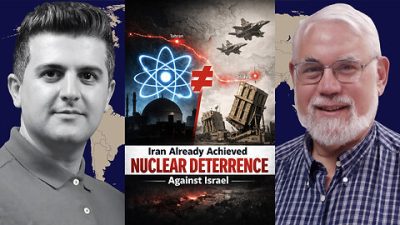
Prof. Ted Postol: Iran Already Achieved Nuclear Deterrence Against Israel
or go to
Aletho News Archives – Video-Images
From the Archives
How the occupied mentality syndrome works
Saudi Arabia on the American chessboard – Part 3
By B. J. Sabri | American Herald Tribune | June 27, 2016
Read part 2: “The occupied mentality Syndrome“
Previously I argued whether Saudi Arabia’s repeated involvements in U.S. interventions and wars stem from free national will or in response to a specific condition. For starters, in Saudi Arabia there is no national will. In Saudi Arabia, the national will is the will of the Al Saud clan. Still, when a major Arab state allies itself with a superpower that committed unspeakable crimes against humanity in almost every Arab country, then something is wrong. This fact alone should compel us to examine the U.S.-Saudi relation for one exceptional reason. As a result of the U.S.-Saudi wars, hundreds of thousands of people in Afghanistan, Iraq, Iran, Libya, Syria, Yemen, and Somalia have lost their lives. Millions became displaced in their own homelands. And millions more rendered refugees.
Attributing the Saudi policies to the bonds of “partnership” with the U.S. is frivolous. There are no bonds between these two thugs except those of business, military deals, secret plots, and wars. Proving this point, bonds such as these have no space for the American and Saudi peoples to share significant cultural or societal exchanges. If partnership is not the reason for the Saudi contribution to the U.S. strategy of empire and imperialism, then another reason must exist.
This leads to three possibilities. … continue
Blog Roll
 Aletho News
- Hezbollah hits Israeli warship off Lebanon’s coast, sets it aflame
- Iran slams US strikes on B1 bridge, Mahshahr petrochemical plants as ‘blatant acts of state terrorism’
- In letter to UN chief, Araghchi warns of dire consequences of US-Israeli attacks on Iran’s nuclear facilities
- Why the CIA conspiracy to invade Iran with Kurdish militias failed
- Why Are Upbeat US Claims About Mission to Rescue Pilot ‘Highly Questionable’?
- Aircraft destroyed during US ‘rescue’ of downed F-15 pilot cost more than $100 million each
- Washington University removes professor who condemned US-Israeli war on Iran
- Russia Warns of Retaliation as UK Authorizes Seizure of Vessels
- Serbia thwarts plot to bomb Russia-Hungary gas pipeline – Vucic
- Al Mayadeen voices solidarity with Dr. Marandi amid death threats
- If Americans Knew
- In Iran, Israel-US take aim at “reason, research, and freedom of thought” – Daily Update
- US loses planes over Iran, Israel downgrades Lebanon war goals – Daily Update
- Israel Is Blocking Palestinians from Easter at Church Where Jesus Resurrected
- Plot to assassinate Palestinian activist follows harassment campaign promoted by Zionist groups and elected officials
- Prominent New York synagogue hosts presentation on why U.S. Jews should support the ethnic cleansing of Gaza
- Tapper vs. Piker: Is the CNN Anchor Auditioning for David Ellison?
- Shouldn’t Democrats Be Able to Condemn Genocide?
- Israel-US kill negotiators, destroy civilian structures, but Iran’s military capabilities still largely intact – Daily Update
- ‘War crime’: Global condemnation as Israeli ministers celebrate death penalty law targeting Palestinian prisoners
- 7 Ways Israel Is Turning Lebanon Into Gaza
- No Tricks Zone
- An Inconvenient Tree: Uncovered In Alps… Europe Much Warmer Than Today 6000 Years Ago
- New Study Reports A 60% Slowdown In Greenland’s Ice Loss Rate In The Last Decade
- Low Intensity Tornado Wrecks Major Solar Farm, Creating A Potential Toxic Dump
- New Study Finds Warming Saves Lives…Cold Temperatures 12 Times More Deadly Than Excess Heat
- German Science Blog Accuses PIK Climate Institute Of Hallucinating Climate Tipping Points
- Devastating Assessment Of Comirnaty Vaccine By Former Senior Pfizer Europe Toxicologist
- New Study: CO2 Is ‘Effectively Negligible’ As An Explanatory Climate Change Factor Since 2000
- Former Pfizer Toxicologist Dr. Helmut Sterz Tells Bundestag Hearing Pfizer Vaccine Should Have Never Been Approved
- Energy Expert: Germany’s Nuclear Phaseout Was A “500 Billion Euro Mistake”
- New Research: South Australia’s Mid-Holocene Sea Surface Temperatures Were 4°C Warmer Than Today
 Aletho News