No help from Washington
By Nicola Nasser | Palestine Chronicle | July 17, 2010
Palestine Liberation Organisation (PLO) officials in the government of Mohamed Abbas often complain they spend more time negotiating with American rather than Israeli governments. This has been particularly true of late. Since Israel’s all-out assault on Gaza nearly a year and half ago, Palestinian officials have discontinued all direct talks with the Israelis and have been talking to the Americans. US presidential envoy George Mitchell has been closely engaged in the region since May 2010, but his efforts have not proved fruitful.
The Palestinians have had no more luck with the Americans than with the Israelis. They have been consistently asked to accept US-Israeli peace terms that spell disaster and capitulation. Apart from exhausting the Palestinians, and making them edge closer to further concessions, nothing of substance has emerged from talks with either the Americans or the Israelis.
The Americans have sold the Palestinians false hopes, giving Israel the time it needed to grab land and change the demographics of their state-to-be. Now, even the fig leaf of good intentions has fallen.
In a meeting between US President Barack Obama and Israeli Prime Minister Binyamin Netanyahu last Tuesday, the mercy bullet was finally fired, dealing a deadly blow to fantasies of American help.
Palestinian negotiators keep telling us that they have no other option but to negotiate with the Americans. This is not true. The Palestinian people don’t want them to do so, and their fighting spirit is alive and well. When all other options run out, the people will come up with options of their own. It is what people living under foreign occupation have always done, and the Palestinians are no exception.
President Abbas used to tell us that the ball is in Israel’s court. Now Obama has kicked it back into the Palestinian court. Once again, the White House has made it clear that the ball, the court, the referee, and the players should all perform according to American dictates.
The peace process has been at best a US- Israeli PR exercise, at worst a political ruse designed to help the Zionists and undermine the Arabs. The whole aim of the peace process has been to create a fifth column in our midst. At heart, the peace process had no bearing on peace. Fairness was never part of the equation.
It is time the Arabs, especially Palestinian Arabs, called it a day. It is time the admission was made that the peace process has done nothing at all for the peace, security, and development of this region.
Obama was pleased to see Netanyahu, just as George Bush was once thrilled to confer with Ariel Sharon. The words the two presidents used in describing the Israeli dignitaries were almost identical. Sharon was called a “man of peace”. Now Netanyahu seems to be inheriting the title, no matter that a few days earlier he ordered the massacre of peace activists on the Gaza-bound flotilla, no matter that on the same day Obama welcomed him, the Israeli group B’Tselem issued a damning report on the expansion of settlements in the West Bank.
Obama had nothing but praise for the Israeli prime minister. There are no differences between Israel and the US, Obama declared, describing his talks with Netanyahu as “excellent” and his country’s ties with Israel as “extraordinary”. Washington is as committed to Israel’s security as it always was, and the “special ties” as binding as ever, he told US reporters.
For his part, Netanyahu said reports about a schism in US-Israeli relations were just rumours.
To reward Netanyahu for what he described as “progress” toward peace, Obama accepted an invitation to visit Israel.
Does any of this surprise President Mahmoud Abbas?
The only harsh words the American president used were in reference to the Palestinians, whom he advised to stop provoking and embarrassing the Israelis. The Palestinians should stop thinking of “excuses” to tarry on peace and start talking to the Israelis. Any conditions Obama once made on direct talks seem to have been forgotten. The current US position is that the Palestinians should start talks without preconditions.
This is not what President Abbas was hoping to hear. Instead of encouragement, the Palestinians have been admonished and told to behave.
A close associate of President Abbas told Al-Quds Al-Arabi that “all signs suggest that the US administration would press the Palestinian Authority to hold direct talks” without guarantees or preconditions. This is basically what Mitchell has been trying to do throughout his earlier visits to the region.
Now Abbas has to choose. Either he gives way to the Americans, which is what he’s done since Annapolis in 2007, or he gives up on the Americans. In the first case, he would lose any remaining credibility. In the second, he will have to step down. He has gambled everything on negotiations, and now any hope of fruitful talks has evaporated.
The only option left to the Palestinians is resistance and more resistance. It is a course that is not only long and hard, but calls for national unity. The PLO made it into government as a result of resistance and national unity. Now the lack of unity and resistance threaten to banish the PLO into the wilderness, or turn it into a lackey of the occupation authorities.
– Nicola Nasser is a veteran Arab journalist based in Bir Zeit, West Bank of the Israeli – occupied Palestinian territories.
The Next 9/11: Made in Israel?
By Maidhc Ó Cathail | May 1, 2010
Citing the possibility of a terrorist organization getting hold of a nuclear weapon as the greatest threat to U.S. security, Barack Obama persuaded 46 other countries at the recent Nuclear Security Summit to agree to secure the world’s loose nuclear material. Those leaders who came to Washington might have done more to avert a nuclear attack, however, if they had asked the U.S. President to account for America’s own loose nukes.
Of course, President Obama may not even be aware of the egregious failure of the United States to secure its nuclear materials and know-how from the predation of its alleged “closest ally.” But since Obama is unwilling to even “speculate” about which country in the Middle East has nuclear weapons, he could hardly be expected to acknowledge how it got them.
In a recent article aptly titled “Loose Nukes in Israel,” Grant F. Smith, director of the Institute for Research: Middle Eastern Policy (IRMEP) and author of Spy Trade: How Israel’s Lobby Undermines America’s Economy, shows how “the U.S is a sieve for Israeli nuclear espionage.”
The massive arms smuggling network set up by David Ben-Gurion in the United States in the 1940s had acquired a nuclear branch within a decade, according to Smith. The 1955 purchase of the Apollo Steel Company plant in Pennsylvania was financed by David Lowenthal, a close friend of Israel’s first prime minister and a former member of the Haganah, the precursor to the Israeli army. The following year, Dr. Zalman Shapiro, head of a local Zionist Organization of America chapter, incorporated the Nuclear Materials and Equipment Corporation (NUMEC) at Apollo. Before long, NUMEC was receiving large quantities of highly enriched uranium and plutonium from Westinghouse and the U.S. Navy for nuclear reprocessing.
By the 1960s, the Atomic Energy Commission (AEC) became suspicious of security lapses at NUMEC, and even considered suspending its “classified weapons work.” A 1965 AEC audit discovered that 220 pounds of highly enriched uranium were unaccounted for. The following year, the FBI launched its own investigation, codenamed Project Divert, to monitor NUMEC’s management and its frequent Israeli visitors. Nevertheless, the diversion of nuclear material to Israel continued unabated. After a September 10, 1968 visit by four Israelis, including Mossad agent Rafi Eitan, a further 587 pounds of highly enriched uranium went missing.
Israel’s nuclear espionage against the United States didn’t end with its accession to the nuclear club in the late 1960s, however. As former FBI translator Sibel Edmonds revealed, its smuggling network received crucial assistance from three high-ranking officials in the George W. Bush administration. All three have close ties to Israel’s military-industrial complex.
According to the FBI whistleblower, Richard Perle and Douglas Feith provided Marc Grossman, the third highest-ranking official in the State Department, with a list of Department of Defense employees with access to sensitive data, including nuclear technology. The list also included highly sensitive personal details, such as sexual preference, problems with gambling or alcoholism, and how much they owed on their mortgages. Grossman then passed on the information to Israeli and Turkish agents, who used it to “hook” those Pentagon officials. In addition, as Edmonds testified in an Ohio court case, the foreign operatives had recruited people “on almost every major nuclear facility in the United States.”
After Israel and Turkey took what they wanted from the pilfered secrets, their agents offered what was left to the highest bidder. As Edmonds has told the Sunday Times, American Conservative and Military.com, nuclear information was sold on the black market, where anyone-even al-Qaeda-could buy it.
So then, it would seem that those who shout loudest about the threat of terrorists-namely, neoconservatives like Perle, Feith and Grossman and their Israeli counterparts-are the very ones who are aiding them, at least indirectly, to acquire those much touted weapons of mass destruction.
But why, one might reasonably ask, would Israeli agents help their supposed enemies get hold of the bomb?
Well, what would be the likely outcome if Obama’s worst fears of a nuclear attack on the United States-or one of its allies-are realized?
Regardless of the facts, some Islamic country- most likely, Iran or Pakistan-would be blamed for aiding the terrorists. And it doesn’t require an advanced degree in game theory to predict what America’s reaction would be. The retaliation would be so swift and devastating that the designated evildoers might envy the fate of post-invasion Iraqis-also victims of an Israeli misdirection.
If, as Benjamin Netanyahu admitted, 9/11 was “very good” for Israel, a nuclear 9/11 might be even better. As the spellbinding effects of that traumatic event nine years ago have begun to wear off, and with Americans increasingly questioning the costs of a one-sided alliance, it may even be considered necessary.
Obama Administration Gives Priority to Bioweapons Research
By Sherwood Ross | BLACKLISTED NEWS | 05-01-2010
The priorities of the National Institutes of Health (NIH) in the area of bacteriology have been “catastrophically re-ordered” by emphasizing bioweapons research over non-bioweapons research, a prominent authority states.
Giving priority to bioweapons research at NIH, started under the Bush Administration and continuing under President Obama, “diverts resources from critical public-health and scientific objectives,” says Richard Ebright, Professor of Chemistry and Chemical Biology at Rutgers University, New Brunswick, N.J.
“The negative impact has been most severe in bacteriology, in which NIH research priorities have been catastrophically re-ordered—with research on bacterial bioweapons receiving more support than research on the top five bacterial causes of death combined—and in which non-bioweapons research has suffered catastrophic losses in resources and personnel,” Ebright said.
Ebright cited the examples of research into two bacterial pathogens: “Streptococcus pneumoniae and Staphylococcus aureus, which claim 40,000 and 20,000 U.S. lives each year, respectively. Each kills more Americans than HIV-AIDS (15,000 U.S. lives) “but neither of these bacterial pathogens is on the list of NIAID Priority Pathogens,” Ebright pointed out. (NIAID, the National Institute of Allergy and Infectious Diseases, is the subdivision of NIH responsible for infectious-disease research.)
“These two killer bacterial pathogens are not in NIAID’s ‘Category A’, with the anthrax bacterium and the smallpox virus, or even in NIAID’s ‘Category B’ or ‘Category C,’” Ebright says. “Something is wrong—very wrong—when NIAID fails to prioritize the top infectious cause of U.S. death,” he said in an email to this reporter.
Other top bacterial causes of U.S. deaths include Enterococcus faecium/faecalis, Clostridium difficile, Pseudomonas aeruginosa, and Mycobacterium tuberculosis. “Of these, only the last is on the NIAID Priority Pathogens list and this pathogen is only in Category C,” Ebright said.
Asked “What is the mood of the scientific life sciences community at this time toward the Administration?” Ebright responded, “Hopeful expectation” but “growing concern that, thus far, there has been more continuity [from the Bush Administration] than change.”
The scope of the government’s involvement in bioweapons research, may be gauged from its estimated expenditure of $70 billion since 9/11 and the fact that, according to Ebright, more than 400 U.S. institutions are engaged in such work.
Francis Boyle, professor of international law at the University of Illinois, Champaign, said that in constant dollars the $70 billion “is twice what they spent on the Manhattan Project to develop the A-bomb—ergo, this is a weapons program.”
Boyle, who drafted the Biological Weapons Anti-Terrorism Act of 1989 for the U.S., said President Bush “turned the NIH into a front organization for biowarfare work,” and “(President) Obama is simply continuing the Bush policies” and is “now even exporting biowarfare capabilities to Third World Countries.”
Asked about the scope of the nation’s biowarfare activities, Boyle estimated there are “about 13,000 death scientists involved…(so) Dr. (Josef) Mengele has arrived on American campuses all over and the universities’ Institutional Review Boards (to review biowarfare research programs) are a joke and a fraud, too.” (Mengele was a German SS officer and physician who, during WWII, performed diabolical experiments on prisoners at the Auschwitz-Birkenau concentration camp in Poland.)
Boyle said, “There is so much money involved that universities simply are not going to turn down these proposals no matter how reprehensible they might read…”
At his own University of Illinois, Boyle said, previous biowarfare research and development contracts with the Pentagon clearly stated: “We have selected pigs (to gas with biowarfare agents) because they have a circulatory system and a respiratory system similar to human beings.”
Boyle said, “I am sure similar type biowarfare contracts that are clearly anti-human, anti-ethical, illegal and criminal on their face alone have been approved all over (at) American universities by now. Money talks. Ethics walks.”
#
Sherwood Ross formerly worked for the Chicago Daily News and contributed regular columns to Reuters and UPI. His articles on biowarfare have been published in The Humanist and other magazines. Reach him at sherwoodross10@gmail.com
Obama Expands Military Involvement in Africa
By Daniel Volman | Inter Press Service | April 3, 2010
When President Barack Obama took office in January 2009, it was widely expected that he would dramatically change, or even reverse, the militarized and unilateral security policy that had been pursued by the George W. Bush administration toward Africa and other parts of the world.
After one year in office, however, it is clear that the Obama administration is following essentially the same policy that has guided U.S. military policy toward Africa for more than a decade. Indeed, the Obama administration is seeking to expand U.S. military activities on the continent even further.
In its FY 2011 budget request for security assistance programs for Africa, the Obama administration is asking for $38 million for the Foreign Military Financing program to pay for U.S. arms sales to African countries.
The administration is also asking for $21 million for the International Military Education and Training Program to bring African military officers to the United States, and $24.4 million for Anti-Terrorism Assistance programs in Africa.
The Obama administration has also taken a number of other steps to expand U.S. military involvement in Africa.
In June 2009, administration officials revealed that Obama had approved a program to supply at least 40 tons of weaponry and provide training to the forces of the Transitional Federal Government (TFG) of Somalia through several intermediaries, including Uganda, Burundi, Djibouti, Kenya, and France.
In September 2009, Obama authorized a U.S. Special Forces operation in Somalia that killed Saleh Ali Nabhan, an alleged al-Qaeda operative who was accused of being involved in the bombing of the U.S. embassies in Kenya and Tanzania in August 1998, as well as other al-Qaeda operations in east Africa.
In October 2009, the Obama administration announced a major new security assistance package for Mali – valued at $4.5-$5 million – that included 37 Land Cruiser pickup trucks, communication equipment, replacement parts, clothing, and other individual equipment and was intended to enhance Mali’s ability to transport and communicate with internal security forces throughout the country and control its borders.
Although ostensibly intended to help Mali deal with potential threats from AQIM (al-Qaeda in the Islamic Maghreb), it is more likely to be used against Tuareg insurgent forces.
In December 2009, U.S. military officials confirmed that the Pentagon was considering the creation of a 1,000-strong Marine rapid deployment force for the new U.S. Africa Command (Africom) based in Europe, which could be used to intervene in African hot spots.
In February 2010, in his testimony before a hearing by the Africa Subcommittee of the House Foreign Affairs Committee, Assistant Secretary of State for Africa Johnnie Carson declared, “We seek to enhance Nigeria’s role as a U.S. partner on regional security, but we also seek to bolster its ability to combat violent extremism within its borders.”
Also in February 2010, U.S. Special Forces troops began a $30 million, eight-month-long training program for a 1,000-man infantry battalion of the army of the Democratic Republic of Congo (DRC) at the U.S.-refurbished base in Kisangani.
Speaking before a Senate Armed Service Committee hearing in March 2010 about this training program, Gen. William Ward, the commander of Africom, stated “should it prove successful, there’s potential that it could be expanded to other battalions as well.”
During the Senate Armed Services Committee hearing, Ward also discussed Africom’s continuing participation in Ugandan military operations in the DRC against the Lord’s Resistance Army. Despite the failure of “Operation Lightning Thunder,” launched by Ugandan troops in December 2008 with help of Africom (included planning assistance, equipment, and financial backing), Ward declared, “I think our support to those ongoing efforts is important support.”
And in March 2010, U.S. officials revealed that the Obama administration was considering using surveillance drones to provide intelligence to TFG troops in Somalia for their planned offensive against al-Shabaab. According to these officials, the Pentagon may also launch air strikes into Somalia and send U.S. Special Forces troops into the country, as it has done in the past.
This growing U.S. military involvement in Africa reflects the fact that counterinsurgency has once again become one of the main elements of U.S. security strategy.
This is clearly evident in the new Quadrennial Defense Review (QDR) released by the Pentagon in February.
According to the QDR, “U.S. forces will work with the military forces of partner nations to strengthen their capacity for internal security, and will coordinate those activities with those of other U.S. government agencies as they work to strengthen civilian capacities, thus denying terrorists and insurgents safe havens. For reasons of political legitimacy as well as sheer economic necessity, there is no substitute for professional, motivated local security forces protecting populations threatened by insurgents and terrorists in their midst.”
As the QDR makes clear, this is intended to avoid the need for direct U.S. military intervention: “Efforts that use smaller numbers of U.S. forces and emphasize host-nation leadership are generally preferable to large-scale counterinsurgency campaigns. By emphasizing host-nation leadership and employing modest numbers of U.S. forces, the United States can sometimes obviate the need for larger-scale counterinsurgency campaigns.”
Or, as a senior U.S. military officer assigned to Africom was quoted as saying in a recent article in the U.S. Air University’s Strategic Studies Quarterly, “We don’t want to see our guys going in and getting wacked. … We want Africans to go in.”
Thus, the QDR goes on to say, “U.S. forces are working in the Horn of Africa, the Sahel, Colombia, and elsewhere to provide training, equipment, and advice to their host-country counterparts on how to better seek out and dismantle terrorist and insurgent networks while providing security to populations that have been intimidated by violent elements in their midst.”
Furthermore, the United States will also continue to expand and improve the network of local military bases that are available to U.S. troops under base-access agreements.
The resurgence of Vietnam War-era counterinsurgency doctrine as a principal tenet of U.S. security policy, therefore, has led to a major escalation of U.S. military involvement in Africa by the Obama administration that seems likely to continue in the years ahead.
FY 2011 Budget Requests by Country
The $38 million for the Foreign Military Financing program to pay for U.S. arms sales to African countries includes: $9 million for Liberia, $9 million for Morocco, $4.9 million for Tunisia, $2.5 million for Djibouti, $2 million for Ethiopia, $1.5 million for the Democratic Republic of Congo, $1.4 million for Nigeria, and $1 million for Kenya.
The $21 million for the International Military Education and Training Program to bring African military officers to the United States for military training includes: $2.3 million for Tunisia, $1.9 million for Morocco, $1 million for Kenya, $1 million for Nigeria, $1 million for Senegal, $950,000 for Algeria, $825,000 for Ghana, $725,000 for Ethiopia, $600,000 for Uganda, $500,000 for the Democratic Republic of Congo, and $500,000 for Rwanda.
The $24.4 million for Anti-Terrorism Assistance programs in Africa includes: $8 million for Kenya, $1 million for South Africa, $800,000 for Morocco, and $400,000 for Algeria, and $14 million for African Regional Programs.
Two Cheers for Netanyahu
Exposure of Obama Complete
By John Walsh | March 19, 2010
Joe Biden got torpedoed in Israel last week, no question about it. Not as bad as the lethal attack on the USS Liberty, but pretty nasty nonetheless. Biden, however, soldiered on, conferring with his boss for some 90 minutes and leaving the food cold at the Netanyahu homestead.
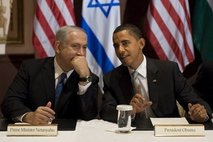 Bibi’s humiliation of Biden and Obama brought out the whole of the punditry, some of it going so far as to criticize the Zionist state. Even Tom Friedman waxed indignant, counseling that the hapless Veep should have packed up and gone home. But, like Biden, Friedman is certain to get over it just as surely as he recanted recently when he had the poor judgment to utter a kind word about China. Uri Avnery captured the Biden fiasco best, observing that a weakling with spit on his face calls it rain. And Pat Buchanan observed that Biden remained in “full pander mode” even as Israel kicked its American poodle. But by midweek the falsehoods had begun to take hold and the punditry was starting to rewrite the story, with Maureen Dowd spinning the incident as a smackdown of Bibi by Barack who had finally “lost his temper.” This insight rivaled her accompanying characterization of Israeli colonies in East Jerusalem as “a domestic zoning issue.” And by Wednesday, op-eds in the Wall Street Journal and elsewhere were blaming the whole incident on Barry for bringing up the “settlement” issue in the first place. Finally toward week’s end on Thursday the Washington Post revealed that Barry and Bibi had reached a secret understanding that the settlement construction could continue so long as they remained out of public view. Sic semper Obama.
Netanyahu, however, deserves the undying gratitude of every real progressive in the U.S. This past year has been like a dance of the seven veils for Obama. They had been all teased away, save for one. The veil of peace, the veil of civil liberties, the veil of environmentalism, single-payer, nuclear disarmament (ripped away by a big new budget for nukes), opposition to the banksters – stripped away one by one. The only remaining vestment was opposition to Israel’s colonies. And Bibi tore that one off between breakfast and (delayed) dinner, leaving Obama standing as naked as Ishtar or Salome.
So thanks, Bibi, for finishing the job. Now that it’s done we can expect all those who aggressively championed candidate Obama to broadcast effusive apologies for so doing. Let us never forget that Obama was not just the candidate of the Democrats but the hands down choice of the most “progressive” wing of the Party, its dream candidate. By revealing Obama for what he is, the limitations of the Dems are laid bare. Obama is all we can expect from them, and it is not much.
By now Obama’s backers surely recognize that they should not have urged him on us, just because he was so “cool” in schooling and appearance, or because all their friends liked him. Surely by now they realize that they were not voting for prom king but for the Emperor of the U.S.
With Obama’s exposure completed by Bibi, we can expect an apology from the leaders of PDA like Norman Solomon, from the message controllers at The Nation, from other gate keepers in the progressive” movement, from Tom Hayden, Medea Benjamin, Phyllis Bennis and other leaders of UFPJ and the official peace movement, even perhaps from MoveOn.org. Surely they will be in print soon, promising no more pigs in a poke that turn out to be rats when let out of the bag. At the least they will apologize profusely for imposing Obama on us.
I can hardly wait to hear from them.
John V. Walsh can be reached at john.endwar@gmail.com.
Featured Video
The Source of America’s Wars – Kristol Clear
or go to
Aletho News Archives – Video-Images
From the Archives
Is Israel to blame for the Iraq War?
American Goy | March 10, 2008
I am so tired of this old canard that “Israel had nothing to do with USA’s war with Iraq – in fact, it officially advised America against it”.
Bullshit. … continue
Blog Roll
 Aletho News
- Strait of Hormuz is Iran’s ‘nuclear weapon’ that forced US retreat: Medvedev
- Energy crisis will last for months – Kremlin envoy
- Europe’s quiet role in the war on Iran
- Forty days that shook the Empire: How Iran turned the tables on US and prevailed
- Netanyahu unilaterally declares Lebanon outside of ceasefire deal
- Israeli leaders: ‘Not a single goal’ achieved in war with Iran
- What on earth just happened? Trump, Iran, and the unlikely ceasefire
- Alberta Bill Would Fine Political Deepfakes $10,000 Without Satire Exemptions
- Iran declares ‘historic victory’ over US, says enemy forced to accept its proposal
- Trump Claims Ceasefire, Reopening of Strait of Hormuz Agreement with Iran
- If Americans Knew
- A sigh of relief over Iran, but Gaza and Lebanon in dire straits – Daily Update
- Thousands dead and neighborhoods razed to the ground: Aid agencies fear southern Lebanon is becoming the new Gaza
- The war the US is fighting for Israel could cost trillions
- ‘Cigarette Burns, Nail Wounds’: Toddler Tortured in Gaza to Coerce Father
- Trump Says US Sent ‘a Lot of Guns’ to Protesters in Iran
- Israeli forces destroy 17 UN peacekeeper cameras in south Lebanon
- US-Israeli strikes ‘completely destroy’ synagogue in Tehran
- Archbishop for US Military Says Iran War Is Unjust Under Catholic Teaching
- Iranian leaders’ Open Letters to the American People
- Trump says Iranians appreciate bombs, WHO warns of nuclear risks – Daily Update
- No Tricks Zone
- An Inconvenient Tree: Uncovered In Alps… Europe Much Warmer Than Today 6000 Years Ago
- New Study Reports A 60% Slowdown In Greenland’s Ice Loss Rate In The Last Decade
- Low Intensity Tornado Wrecks Major Solar Farm, Creating A Potential Toxic Dump
- New Study Finds Warming Saves Lives…Cold Temperatures 12 Times More Deadly Than Excess Heat
- German Science Blog Accuses PIK Climate Institute Of Hallucinating Climate Tipping Points
- Devastating Assessment Of Comirnaty Vaccine By Former Senior Pfizer Europe Toxicologist
- New Study: CO2 Is ‘Effectively Negligible’ As An Explanatory Climate Change Factor Since 2000
- Former Pfizer Toxicologist Dr. Helmut Sterz Tells Bundestag Hearing Pfizer Vaccine Should Have Never Been Approved
- Energy Expert: Germany’s Nuclear Phaseout Was A “500 Billion Euro Mistake”
- New Research: South Australia’s Mid-Holocene Sea Surface Temperatures Were 4°C Warmer Than Today
 Aletho News