The Unanimity and Ubiquity of Uniqueness

By Nima Shirazi | Wide Asleep in America | September 10, 2014
To be clear:

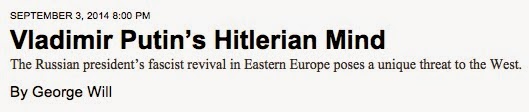





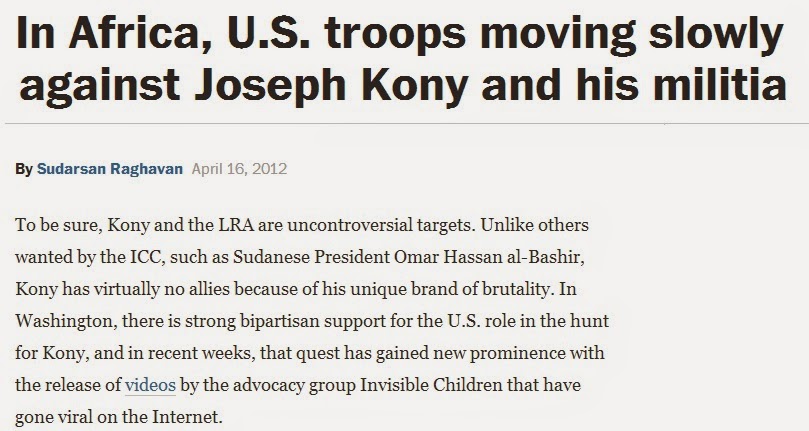


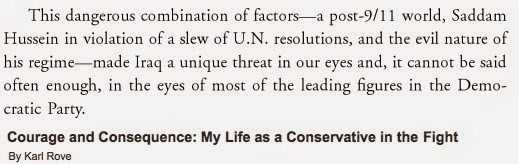


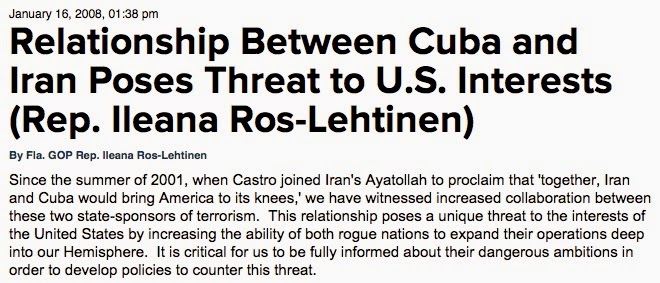



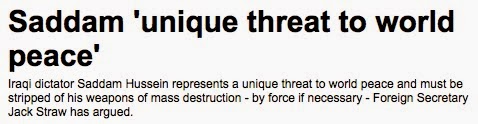









Are we clear?
The American fear-mongering machine is about to scare us back into war again
Thanks to a say-anything media, hawkish politicians and an Orwellian administration, a war-weary public is terrified. Are there any red lines anymore – or just launch buttons?

Photograph: Bixentro / Flickr via Creative Commons
By Trevor Timm | The Guardian | September 10, 2014
Did you know that the US government’s counterterrorism chief Matthew Olson said last week that there’s no “there’s no credible information” that the Islamic State (Isis) is planning an attack on America and that there’s “no indication at this point of a cell of foreign fighters operating in the United States”? Or that, as the Associated Press reported, “The FBI and Homeland Security Department say there are no specific or credible terror threats to the US homeland from the Islamic State militant group”?
Probably not, because as the nation barrels towards yet another war in the Middle East and President Obama prepares to address that nation on the “offensive phase” of his military plan Wednesday night, mainstream media pundits and the usual uber-hawk politicians are busy trying to out-hyperbole each other over the threat Isis poses to Americans. … continue
Obama’s War on Ukraine
By Renee Parsons | CounterPunch | September 2, 2014
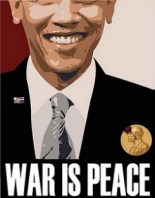 Amidst a slew of unverified allegations in recent weeks of Russian invasions, violations of Ukraine sovereignty and NATO’s current claim of Russian troops and Russian tanks fighting on the side of the federalist rebels, the upcoming annual NATO Heads of State Summit in Wales, threatens a widening violence and heightened military activity throughout eastern Europe.
Add to the equation that the tide of war appears to be turning against the US-imposed Kiev government as a successful offensive by the rebels captured the coastal town of Novoazovsk near Crimea opening a new front in the southeast and holding the line in Elenovka as rebel forces maintain their ground in Donetsk, the Kiev government needs to save face by claiming that Russian troops are aiding the out-manned, under-supplied rebels. Russia’s envoy to the EU Vladimir Chizhov added that the only Russian troops in Ukraine were the nine paratroopers who wandered across the border recently while on patrol.
NATO Summit
It is worth noting that the largest gathering of international leaders to ever assemble in the UK, will include non NATO member Ukraine President Petro Poroshenko as part of a ‘special NATO meeting’ on Ukraine but will exclude Russian President Vladimir Putin. While that omission may be a sure sign that negotiating a political settlement regarding the US-sponsored fiasco in Ukraine is not a NATO or US priority, the subject of Ukraine will be front and center on the agenda as the EU/NATO/US alliance already know their plans with regard to NATO expansion and the future of Ukraine.
President Obama will attend the Summit after visiting the Baltic states of Estonia, Latvia and Lithuania while ‘reaffirming’ the US commitment to the region. It did not used to be common for the US President to visit every little nickel and dime country (no offense intended) along the way but in this case such assurance along with a Presidential visit can mean only one thing: that those self-proclaimed ‘threatened’ strategically-located countries (with Estonia and Latvia on Russia’s border and Lithuania and Poland bordered by Russian-ally Belarus) need the President to personally shore them up for a new NATO missile defense system going further east than the former Iron Curtain, and in advance of any possible turbulence spillover within their borders.
On the eve of the Summit, outgoing Secretary General Anders Fogh Rasmussen offered the following:
“We are at a crucial point in history, our peace and security are once again being tested. NATO support for the sovereignty and total integrity of Ukraine is unwavering. Our partnership is long-standing. NATO is working even more closely with Ukraine to reform its armed forces and defense institutions. NATO stands ready to support Ukraine with advisors and assistance. We are advising Ukraine on defense planning and defense reform and are ready to intensify this cooperation. As a sign of strong support and solidarity, we have decided to hold a ‘special meeting’ with Ukraine at the upcoming NATO Summit in Wales. We will continue to improve the ability of NATO and Ukraine soldiers to work together. It is the right of every country to choose its own foreign policy without foreign interference. NATO fully respects that right but today Ukraine’s freedom and future are under attack.”
In addition, in a series of recent interviews with European newspapers, when asked whether there would be permanent international deployments under a NATO flag in east Europe, NATO Secretary General Anders Fogh Rasmussen said: “The brief answer is yes ….’for as long as necessary.’ In addition, Rasmussen promised a readiness action plan to provide rapid reinforcements with ‘a more visible NATO presence in the east.”
In accordance with the promise made in Bucharest in 2008 that both Georgia and Ukraine would become members, it is doubtful whether the Summit will formally act given NATO’s inability to accept new members with borders in dispute but would rather allow each to function as proxy states. As every NATO member fully understands, membership approval of any of the encirclement countries can be expected to trigger Russia’s long time vehement opposition to a missile presence on its borders.
NATO Accusations
None of this is reassuring especially that the recent accusations have yet to establish whether NATO’s images are date and time stamped, accurate and reliable. Nevertheless, just as the unfounded accusations regarding MH 17 flight continue to fuel enmity toward Putin, the latest ‘invasion’ charge will be provocative enough, as US-dominated NATO members congregate, to escalate a war effort that has already claimed over 2,600 fatalities, according to the UN. It was, of course, the ouster of the democratically elected President Yanukovych and the imposition of a pro-EU, pro-NATO and a pro-IMF government in Kiev that sparked the revolt in east Ukraine.
One immediate flaw in NATO’s latest assertion is that, given its total dependence on creating military conflict, reliance on their version of anything should be subject to intense scrutiny. With an estimated 50,000 plus Ukrainian troops in action (not counting CIA and US mercenaries), the question is whether sending 1,000 Russian troops into Ukraine is worth the risk to Putin who has consistently followed a diplomatic path while US diplomacy has been dominated by threats and bullying.
What makes more sense is that if the situation in Ukraine reached the critical point of no-return, that Putin would send in a sufficient force the size of a field army accompanied by an impressive number of tank battalions, support convoys and enough heavy artillery to finish the job – and presumably there would be no doubt about whether or not the Russians had moved into Ukraine to protect the civilian population from continued merciless attacks. The other option is that the Russian air force could easily put an end to Ukraine’s shelling and bombing of defenseless citizens.
Perhaps the best response to the latest ‘invasion’ disinformation has come from Alexandre Zakharchenko, Chair of the Council of Ministers of the Donetsk National Republic, given in a recent press briefing. When an English speaking reporter inquired whether Russian military units were fighting with the rebels, Zakharchenko replied that if ‘you think that Russia is sending its regular units here, then let me tell you something. If Russia was sending its regular troops here, ‘we would not be talking about the battle of Elenovka; we’d be talking about the battle of Kiev.” Zakharchenko, an attorney who made an impressive presentation, went on to remind the media that “A territory has the right of self-determination and separation after a referendum,” a referendum that was approved by Donbass voters in May.
What is not debatable is that for some weeks, a conservative estimate of 4,000 Russian volunteers (including some ‘off duty’ military and women) have crossed into Ukraine to fight on the side of the ‘rebels.’ That number may have also been augmented by volunteers sent by Chechen president Ramzan Kadyrov whose “statements in support of the illegal annexation of Crimea and support of the armed insurgency in Ukraine,” were cited as reasons for his inclusion in a recent round of sanctions.
Obama’s Unprovoked Attack on Russia
In reaction to NATO’s invasion charge, President Obama, whose State Department was intimately involved in the February coup, spoke at the White House voicing the usual provocations:
“Russia is responsible for the violence in eastern Ukraine. The violence is encouraged by Russia. The separatists are trained by Russia. They are armed by Russia. They are funded by Russia. Russia has deliberately and repeatedly violated the sovereignty and territorial integrity of Ukraine.”
“In Estonia, I will reaffirm our unwavering commitment to the defense of our NATO allies” and “At the NATO Summit in the United Kingdom, we’ll focus on the additional steps we can take to ensure the Alliance remains prepared for any challenge” and “There is no doubt that this is not a homegrown, indigenous uprising in eastern Ukraine.”
In a stunning denial of self-reflection, the president has consistently failed to mention his own Administration’s role as sole cause of the violence, the $1 billion of Congressional support for Kiev, the $5 billion of US aid revealed by Secretary of State Victoria Nuland last spring or the NATO build up in Poland, the Baltic states and elsewhere in eastern Europe. There is never serious mention of the humanitarian catastrophe on a civilian population, no mention of the fatalities, no mention of a ceasefire, no mention of the withdrawal of all non-Ukraine factions from meddling and no mention of requiring the Kiev government’s direct negotiations with the federalist rebels to determine the future of their own country.
Putin Redefines Russia’s National Interests
After the Gorbachev – Yeltsin years overseeing the dissolution of the USSR in which much of its national interests were imprudently relinquished to a market economy, Putin addressed the Munich Conference on Security Policy in 2007. During that speech, he redefined contemporary Russia’s national interests and its geopolitical concerns as he established himself as an independent, critical thinker with an international perspective – and, therefore, a threat to US dominion. The speech is worth reading in its entirety and here are several excerpts:
Decrying a “greater and greater disdain for the basic principles of international law. One state, first and foremost, the United States has overstepped its national borders in every way.”
In referring to “Russia’s peaceful transition to democracy. Why should we start bombing and shooting now at every available opportunity?”
In referring to an earlier speaker, “I understood that the use of force can only be legitimate when the decision is taken by NATO, the EU, or the UN. If he really does think so, then we have different points of view. The use of force can only be considered legitimate if the decision is sanctioned by the UN. And we do not need to substitute NATO or the EU for the UN.”
With regard to expanding NATO with missiles on Russia’s borders: “It turns out that NATO has put its frontline forces on our borders I think it is obvious that NATO expansion does not have any relation with the modernisation of the Alliance itself or with ensuring security in Europe. It represents a serious provocation that reduces the level of mutual trust. And we have the right to ask: against whom is this expansion intended? And what happened to the assurances our western partners made after the dissolution of the Warsaw Pact?”
And lastly, Putin quoted the “speech of NATO General Secretary Manfred Woerner in Brussels on 17 May 1990. He said at the time that: “the fact that we are ready not to place a NATO army outside of German territory gives the Soviet Union a firm security guarantee“.
Renee Parsons was a staffer in the U.S. House of Representatives and a lobbyist on nuclear energy issues with Friends of the Earth. in 2005, she was elected to the Durango City Council and served as Councilor and Mayor. Currently, she is a member of the Treasure Coast ACLU Board.
Hamas: US is partner to Israeli crimes in Gaza
MEMO | September 2, 2014
Senior Hamas leader Mahmoud Al-Zahar said on Monday that the United States is a partner to the Israeli occupation and its crimes committed in the Gaza Strip.
Speaking to the Palestinian Al-Quds television, he said: “We mean the US administration, not the American people, who took to the streets in large rallies against Israel’s crimes.”
He explained that lifting the Israeli siege of Gaza is not a demand, but a right. “We have the right to exist and lifting the siege is one of our rights,” he said, “it has to be lifted without a price.”
Regarding the Israeli soldiers who were abducted during Israel’s latest invasion of the Gaza Strip, he said their price is the release of the Palestinian prisoners. “This is our policy, which the enemy knows very well,” he said.
He continued: “There are two kinds of prisoners: MPs, former ministers, Hamas leaders and those prisoners freed in previous swaps; and the prisoners who are spending long terms in Israeli jails.”
The first kind should be released without a price, he asserted, while “the Israeli prisoners in our hands” are the price for the second kind of prisoners.
He also spoke about the seaport and airport that Hamas insisted on during the ceasefire talks in Cairo. “The airport was built during the time of late Yasser Arafat, but the occupation forces demolished it,” he said. “It is our right to rebuild it.”
“The seaport was supposed to be built in Gaza’s central port, but the occupation forces have stopped any positive measures from happening in the Strip, including the seaport,” he explained. “The Palestinian Authority was too weak to defend establishing the seaport. It is our right, which we seek to achieve. Whoever attacks us, we will attack them.”
Al-Zahar stressed that the Israeli occupation has to be prosecuted before the International Criminal Court (ICC). If the Palestinian Authority does not carry out this mission, individuals in Europe and Latin America and every free country should pursue Israeli criminals at the ICC.
He concluded by comparing negotiations and resistance as methods to gain Palestinians rights. “There are diplomatic negotiations, which supporters think will gain a Palestinian state,” he said. “However, they have now failed and its supporters warn that they are going to join international organisations if negotiations are not revived.”
Meanwhile, he said the resistance programme is more “successful” and it insists on not making any concessions on Palestinians’ rights.
Myth of ‘Limited’ US Airstrikes in Syria
RIA NOVOSTI | August 26, 2014
The US is once again on the warpath against Syria after the beheading of US citizen James Foley was released on the internet a week ago.
His execution is being used to justify a mixed anti-terror and ‘humanitarian’ intervention in northeastern Syria. An information offensive has now been launched to peddle the myth of ‘limited’ strikes against Islamic State (IS) targets, but in all actuality, such a campaign is impossible to contain within the strict limits US authorities are promising.
Obama has already authorized surveillance flights over Syrian territory, showing that an attack appears to be imminent. A quick exercise in scenario forecasting illustrates how any US intervention in Syria will most certainly evolve from a ‘limited anti-terror operation’ to a massive military offensive, complete with proxy occupations and a full-scale outbreak of chaos throughout the entire country.
Symbolism and Substance
Should the US make the decision to strike Syria, it will be carrying with it both symbolism and substance. The action would be symbolic due to it being in complete contravention of Syria’s sovereignty, a position which Syrian Foreign Minister Walid Muallem reaffirmed earlier this week. Whether by drone or by jet, the US would be showing that it can and will violate Syrian sovereignty as it sees fit. This is enabled by the fact that IS’ turf is mostly removed from any of the Syrian Arab Army’s (SAA) air defense units, thereby allowing the US to attack with military impunity.
Secondly, the US’ strikes would surely carry with them prime substance, as the rhetoric being expressed by Washington guarantees nothing short of it. They would not be the token gestures evidenced in northern Iraq, but rather a full-fledged operation designed to achieve concrete military objectives. On the public front, this would be to decimate Islamic State and its leadership, but in fact, such an objective cannot be achieved by air strikes alone, especially in populated urban areas like Raqqa.
The Stepping Stone
This brings the US to the next probable stage of its military campaign – ground forces. It is extremely unlikely that the US will use its own conventional forces in the field, as its special forces are cheaper, more effective, and less of a political and physical liability. Another option, of course, is for the heavily armed and highly trained Kurdish Peshmerga to ‘chase’ IS into Syria from Iraq and carry out ground operations on behalf of the US. The precedent of joint military cooperation has already been set previously when both sides partook in a coordinated offensive against IS’ occupation of the Mosul Dam, with the US doing the bombing and the Kurds being the cannon fodder. The Iraqi Peshmerga’s military expansion into Syria would also achieve the dual purpose of expanding the fledgling (and de-facto recognized) Kurdish state, another major American strategic objective in the region.
Filling the Void
With all the hubbub and speculation about an American strike, few have actually put any public thought into what comes next. For example, IS could either be decimated or strategically driven like cattle away from the combat zone and closer to Damascus,(in the same fashion as they have been corralled into going from northern Iraq back into Syria), taking all of their heavy armaments with them along the way. No matter what happens, though, it remains indisputable that there will be a security void in their previously occupied territories, opening up the question of which entity should fill it.
It can be taken for granted that the US will never allow the SAA to liberate the territory after Washington’s tax-dollar funded bombs paved the way, since that would completely reverse the billions in dollars of funding and support that the US, EU, Turkey, and Gulf Kingdoms have placed in the anti-establishment forces fighting the Syrian government over the past three years. Thus, the US’ campaign will of course not be one of liberation, but rather of trading one occupier for another, in this case, the Kurds, a rejuvenated ‘Free Syrian Army (FSA), the Turks (with or without being an official NATO mission), or a combination thereof, with the public reasoning being that the failure to fill the resultant security void could create a breeding ground for an IS 2.0.
‘Finishing the Job’
After the removal of IS from their bastions in northeast Syria (whether by destruction or driving them towards Damascus) and their replacement with Kurdish/FSA/Turkish forces, the US and its ‘coalition of the willing’ will be pressured to ‘finish the job’ one way or another. In the first scenario branch, if IS is somehow destroyed and no longer a threat, then the US may want to seize the strategic initiative and make a drive towards Damascus to finally overthrow the government. After all, they would already be on the offensive and actively engaged in the war zone as it is, and Damascus is definitely within striking range of US aircraft or drones already bombing Syria. The new occupying forces of northern Syria could then carry their offensive south, break the security crescent linking Damascus with the coast, and go in for the paralyzing kill.
The second scenario branch is very similar, but instead of pursuing naked regime change, it strategically pushes IS towards Damascus by using airstrikes in the same manner as a shepherd uses a staff to herd sheep. This accomplishes two important goals; first, it pushes the world’s most deadly and militarily efficient non-state actor all the way through the country and towards the capital, sowing destruction in its wake; and secondly, it provides the US and its proxy allies with the justification for continuing their campaign all the way to the capital and de-facto carrying out regime change under an anti-terror guise.
Without a doubt, the regime change objective can be sped up or publicly ‘justified’ if Syria defends its airspace and fires on American jets or drones. If the beheading of a single citizen by a rogue terrorist group can be a casus belli against an entire state per the US’ reasoning, then it goes without saying how it would respond to missiles being launched against its military vehicles, especially those engaged in an ‘anti-terrorist’ mission. More than likely, Syria will then be painted as a terrorist-supporting state (there is already false information in the Western media that Syria cooperates with IS) and the entire government will then be officially targeted for elimination.
Concluding Thoughts
After having accomplished its soft coup in Iraq against Maliki, the US now feels emboldened enough to aggressively press forward with its long-held regime change dreams against Syria, feverishly seeking to exploit any opportunity to justifiably do so. This barbarically includes using a dead man’s decapitated head as a rallying cry in an effort to strike at the primordial emotions of every human being and manipulate them into supporting a ‘vengeful’ war. To appease the domestic and international audience, the US government is only talking about ‘limited’ airstrikes against IS targets in Syria, but when placed under a simple analysis, these are demonstrated to be anything but. Not only will they be used to justify regime change via various arguments, but they will also result in the replacement of one occupier of Syrian territory with another, which in turn can eventually make the de-facto partitioning of the country de-jure. This means that the Syrian Crisis is precipitously teetering on the brink of becoming a full-scale international war, one which places the very existence of secular Syria and its resistance identity into jeopardy.
Obama Schemes to Attack Syria, Under the Guise of Fighting ISIS
A Black Agenda Radio commentary by executive editor Glen Ford | August 27, 2014
President Obama is preparing to do something horrifically dangerous in Syria and Iraq. The rise of ISIS has crippled the empire’s decade’s old strategy of deploying Islamic fundamentalist fighters to do its dirty work in the Arab and Muslim world. ISIS, the Frankenstein birthed in the cauldron of America’s quest for regime change in Syria, has turned on its U.S., Saudi, Qatari and Turkish masters to establish its own caliphate, to which thousands of other Islamist fighters are flocking. Even U.S. corporate media now acknowledge that the so-called “moderate” Syrian rebels that Obama wants to shovel $500 million at, are virtually non-existent. They were always a mirage, creatures of western propaganda. The Islamists were the only force that could challenge the Syrian army on the battlefield, and now that they are rallying to ISIS, or running away, Obama does not know which way to turn.
Certainly, the U.S. can bomb ISIS positions in Syria, and is already making preparations to do so, but that is not the war Obama wanted to fight. Three years ago, when Obama launched his dirty war against Syria, the plan was for Muslim jihadists to shed their blood to overthrow President Assad. Once the filthy deed was done, the jihadists were expected to allow NATO and the corrupt kings of the Arabian peninsula to pick the next rulers of Syria. The CIA was playing Lawrence of Arabia, using the jihadists as cannon fodder, to be cast aside when it came time to split up the spoils.
Such was also the plan in Libya, where NATO and the same gang of royal Arabian thieves funded and armed the overthrow Muammar Gaddafi. The Libyan jihadists have also failed to cooperate with the empire’s scheme.
The global jihadist network that the Americans and Saudis created in the 1980s has declared its independence, and Washington has nothing to replace them. American boots on the ground are unacceptable to both the people of the region and the U.S. public. Obama and his minions say the U.S. and its allies will crush ISIS – but that will be like smothering one’s own child in its crib, and would remove all hope of the U.S. achieving its strategic goal of regime change in Syria.
Watch for the Big Switch
If Obama was serious about wanting to crush ISIS, the best and most logical ally would be Syrian President Assad, whose army has so far prevailed against every flavor of jihadist the U.S. has been able to throw at it, including ISIS in its previous incarnations. Nobody wants ISIS defeated more than Syria and its soldiers, more of whom have died in this U.S.-engineered war than any other group, civilian or rebels. If making the region safe from ISIS were the goal, Obama would coordinate his moves with the Syrian military. But he’s lying – just as the Bush administration lied to make the American people believe that Saddam Hussein was responsible for 9/11. The U.S. goal was not to avenge 9/11, but to invade Iraq. In the same way, Obama is compelled to respond to the defection of ISIS from western control, but his goal remains to overthrow President Assad. And, he will tell any lie, or combinations of lies, to somehow turn U.S. bombs on the Syrian government, under the guise of fighting ISIS. You can bet that the CIA is burning the midnight oil, seeking a pretext to turn this strategic U.S. defeat into an excuse to directly attack Syria. And that’s what makes this moment so dangerous.
Glen Ford can be contacted at Glen.Ford@BlackAgendaReport.com.
Obama Buggers Europe: Sanctions Deepen the Recession
By James Petras :: 08.23.2014
Introduction
The Obama Administration actively pressured Europe to impose harsh sanctions on Russia in order to defend the violent takeover (‘regime change’) in the Ukraine. England, France, Germany and the rest of the European regimes gave in to Washington’s demands.
Russia responded by imposing reciprocal sanctions, especially on agriculture goods, and is establishing alternative trading partners and increasing trade with China, Iran, Latin America and Africa.
The sanctions policies occur at a time when Europe’s economies are in deep economic crisis, exacerbating long-term stagnation and chronic recession. This paper will identify and analyze the crisis and how US-led sanctions policy is fracturing the European Union. Secondly, we will analyze how Washington’s militarist imperial policies undermine Europe economically and destabilize the rest of the world militarily. Thirdly, we will discuss how the European leaders are prodded by Washington, to put it crudely, through an aggressive ‘buggering process’, to surrender their economic sovereignty and how capitulation to the US project in the Ukraine will lead to their long-term decline and decay. Finally, we will discuss the long-term perspectives for a re-aligned world economy where military conflicts can result in large-scale changes.
From Stagnation to Recession from Sanctions to Depression
Across Europe, without exception, recession stalks the economies. The dominant countries, Germany, France and Italy are mired in recession, acutely exacerbated by the sanctions against Russia dictated from Washington. From Nordic Finland, passing through the Baltic States to Central and Southern Europe, the Eurozone ‘recovery’ is ‘kaput’! The ‘triple whammy’ of capitalist disinvestment, economic sanctions and wars has provoked a deepening economic crisis.
Germany: Regime ‘Lick-Spittle’ Scares Industry and Financial Sectors
The German financial market’s confidence is collapsing as a result of Chancellor Merkel’s support for economic sanctions against Russia and President Putin’s reciprocal response. Several hundred thousand German industrial jobs are at risk; imports of Russian oil and gas are in danger; large-scale, long-term German investments and lucrative export markets are at stake. These fears and uncertainties have led to declining investment and an unprecedented negative growth of 0.2% in the German economy in the second quarter of 2014. The recession in Germany ripples throughout Europe – especially affecting Poland, the Czech Republic, Hungary and Southern Europe.
Merkel’s servile capitulation to the US President’s command to sanction one of Germany’s major trade partners, Russia, may seriously harm its economic future. Germany’s industrial exports to Russia amount to 36 billion Euros; there are 20 billion Euros in annual investments; and over 400,000 German workers are employed in companies exporting to Russia . . . Joe Kaeser, CEO of Siemens, pointedly argued that “political tensions posed serious risks for Europe’s growth this year and next”. Sales in some sectors are down 15% since June 2014. Germany’s economy was already facing stagnation even before the coup in Kiev . . .but machinery exporters are especially concerned about losing the Russian market because other markets have declined. For example, German sales to Brazil are down nearly 20%.
In addition, German farmers suffer: Export of German meat and meat products to Russia amount to 276 million Euros or 21% of their non-EU exports. German dairy farmers earned $160 million Euros from trade with Russia, 14% of total exports to non-EU countries.
Merkel knowingly sacrificed German industry, agriculture and employment by submitting to Obama’s policy of ‘buggering his European allies’. On the other hand, Obama’s sanctions against Russia have virtually no impact on US economic interests. Only the Europeans will feel the pinch. Merkel’s support for the US-NATO coup in Kiev and the ongoing military assault against the anti-coup democrats in Eastern Ukraine is leading to a revival of the Cold War confrontational policies toward Russia, and has alienated the majority of German producers and exporters as well as the German public.
Italy: Capitalist Crises and Sanctions
Italy is stuck in a half decade of profound recession continuing throughout 2014. Its GDP fell by 0.2% in the second quarter, bringing the GDP below the level in the year 2000! The sanctions against Russia have cost Italy over $1 billion in lost exports, hitting Northern Italy most acutely and provoking the ire of the conservative Northern League. Big Italian energy companies, with major investments in Russia, face even bigger losses. Italian farmers, from Tuscany to Sicily, are experiencing major losses in agricultural exports. In other words, with sanctions Italy’s chronic sick economy has lost any chance for recovery and will likely pass from recession into depression.
France: From Zero Growth to Recession
France has entered a period of perpetual regression: Unemployment exceeds 11%, underemployment and ‘make work’ exceeds 20% . . . GDP hovers at recession levels, between zero and 0.5% . . . Austerity, involving large-scale cuts in social programs and tax write-offs for business, has eroded consumer spending without increasing capitalist investment. And Obama’s sanctions against Russia will further damage French exporters, especially its agricultural sector and weapons manufacturers. And ‘Hyper-Militarist-Socialist’ President Hollande has exacerbated France’s balance of payments and budget problems by sending the air force and ground troops to intervene on three continents. This has caused over 82% of French voters to choose alternative parties, propelling the nationalist right party, National Front, to the lead.
The ‘Backside of Europe’: Spain, Greece and Portugal
Deeply buried in a near decade-long depression with unemployment ranging from 26% in Greece and Spain to 16% in Portugal, Russia’s reciprocal sanctions against agricultural exports has hit their agro-export sectors most severely, causing mountains of grapes, tomatoes and other perishables to rot in the fields. Tons of Southern Europe’s produce will end up as compost. Tens of thousands of farmers face even greater problems and more will be forced into bankruptcy because of Washington’s dictates.
Spanish farmers stand to lose 158 million Euros from the sanctions against their fresh fruit and nuts, or 22% of their total exports to non-EU countries; Greek farmers will lose 107 million Euros, 41% of exports to non-EU countries. Spanish meat exporters will lose 111 million Euros or 13% of their non-EU markets.
The European Union, for its part, offers meager relief – expecting thousands of hard-pressed farmers to submit to Obama’s demands. In the meantime, as Russia establishes alternative markets in Latin America, the EU has sent its emissaries overseas to beg the Latin American governments to reject multi-billion dollar agro-business deals with Russia and comply with the US-EU sanctions. So far, every country in Latin America has rejected the EU’s ‘charm’ offensive. Ecuadorean President Correa heaped scorn on the EU: “We do not have to ask anyone’s permission to export to friendly nations. As far as I know, Latin America is not part of the European Union”. Egypt and Turkey are stepping in to replace the farmers of Europe and the US by exporting their agricultural produce to Russia.
Hungary, Bulgaria, Poland, Finland, Lithuania, Denmark and the Netherlands
Hungary’s President Viktor Orban rages at the sanctions and threatens to break ranks, as Budapest tallies up its losses in exports, and the threat to its energy-dependent country. Bulgaria’s compliant President caved in to Brussels’ pressure and reneged on a $40 billion dollar pipeline deal signed between Russia and local Bulgarian business leaders precipitating a major banking crisis and the collapse of its second largest bank – Corbank. The deposits of hundreds of thousands of Bulgarians were frozen or just disappeared. When Brussels buggers the Bulgarians, they bankrupt their own banks.
Finland, once the poster-child of the ‘Third Way’ ideologues, is in a long-term depression. Its economy has shrunk for the past 4 consecutive years and even regime optimists estimate that they will need 10 years to recover. Finnish Prime Minister, Alex Stubbs, a free market ideologue, is a staunch supporter of sanctions against Russia although these will drastically cut into agricultural exports (dairy goods, meat, fish, etc.). Stubbs defends his catastrophic capitulation to NATO’s power grab in the Kiev by proclaiming that “our principles (sic) are not for sale; we believe in international institutions; we believe in the rule of law”.
Finland, under its ‘law-abiding’ President, will lose at least 253 million Euros this year or 68% of its exports to non-EU countries. In other words this political marionette has sacrificed the welfare of hundreds of thousands of Finnish dairy farmers and growers to support a NATO-imposed regime in Kiev, which has been sending units of neo-Nazis to slaughter Ukrainian resistance fighters and civilians.
Poland’s billion dollar agricultural export trade with Russia has collapsed, causing Warsaw to beg Washington and Brussels for emergency subsidies and pleading with the apple-exporting Americans to ‘eat Polish apples’. Polish fruit growers will lose 317 million Euros in sales or 61% of their exports to non-EU countries. Their meat exporters will lose 162 million Euros, 20% of its trade with non-EU countries. Dairy farmers will lose 142 million Euros, 32% of exports to non-EU countries.
The Poles, who at every turn have assumed the most reactionary Russophobic posture and were deeply implicated in organizing and training the neo-fascist gangs which overthrew the elected Ukraine government, are now pushing carts down the streets of Warsaw peddling apples and sausages, instead of stocking the supermarket shelves of Russia – and whining that New Yorkers should forsake Upstate apples to take up the slack!
Lithuania will lose 308 million Euros in fresh fruit exports to Russia or 81% of their exports to non-EU countries; dairy farmers will lose 161 million Euros in sales or 74% of non-EU exports. Denmark and Holland will lose over 800 million Euros in agro-exports to Russia –deepening their recession.
Conclusion
While the ever-persuasive con-man in Washington, President Obama has buggered EU leaders into pushing their own economies even deeper into recession, so he can launch a new Cold War with Russia, the US plunges deeper into military confrontations in Iraq, Ukraine and Syria. Obama appears to have lost control over military aid programs in the chaos: Netanyahu’s Zionist allies in Congress managed to by-pass the White House and State Department and approve additional shipments of Pentagon arms to Israel, undercutting any administration leverage over the ongoing Israeli genocide in Gaza.
Japan joins the US-EU sanctions against Russia exacerbating its own economic crisis: In 2014 Japan experienced its worst contraction since 2009, with a 7.1% drop in the second quarter. The increasingly unpopular, Japanese Prime Minister Abe is committed to a military build-up. More Japanese politicians visit Yasukuni Shrine, the militarist temple honoring its war criminals, re-awakening the horrific memories of Imperial Japan’s victims. There are increasingly bellicose Japanese confrontations with China over disputed piles of rock in the South China Sea . . . As Obama’s military pivot to Asia increases, so Japan’s economy sinks.
No European country can benefit from embracing the failed regime in Kiev. . . Ukraine’s currency is in free-fall – ranking below toilet paper. Its major industries, totally dependent on trade with Russia, are bankrupt or have been bombed by the NATO-putsch regime in Kiev. Its agricultural exports are devastated. Meanwhile Ukrainian families are advised to chop their own wood or dig their own coal in anticipation of a winter totally cut off from Russian gas because the oligarchs in Kiev have been unable or unwilling to pay the huge energy debt. For their staunch support of this bankrupt regime, ruled by a ‘Billionaire Oligarch’ in Kiev, for upholding the ‘principles’ so lauded by Finnish President Stubbs, one million European farmers will bury their own apples, pour their own milk in the streets and dump their grapes, oranges and tomatoes in rotting heaps. . . And this is so their leaders, Obama, Cameron, Merkel and Hollande can uphold their real ‘principles’ of territorial expansion, extend their military operations to the borders with Russia and posture as warriors while destroying their countries productive economies, bankrupting their farmers and manufacturers, driving millions more into unemployment and deepening the pains of recession.
Ukraine will join a growing list of countries, Libya, Egypt, Syria, Iraq, Afghanistan, Pakistan, Somalia and Yemen, that Washington and NATO have “saved” (to paraphrase an American general) . . . by being destroyed.
Once again the US military-driven empire-building policy trumps economic development: Destructive wars and sanctions destroy viable markets and impoverish entire sectors of the economy. Imposing sanctions abroad invites retaliation – the boomerang effect cripples domestic producers. As world trade and investment shrink, internal stagnation becomes endemic, recessions deepen and recovery becomes a distant chimera. The financial press, the Wall Street Journal and The Financial Times, which have become megaphones for the western warlords, no longer publish paeans to the free market but unleash vitriolic screeds crying for war and sanctions… which close markets and destroy investor confidence.
Buggered by Obama, European bootlickers bankrupt their own economies and then pass around the begging cup.
Italy faces the reality of a decade of stagnation.
Portugal’s economy crashes and crawls.
Germany’s manufacturing machinery grinds to a halt.
Finland’s ‘principled’ brown-nosing boomerangs.
England is converted into a money-laundering bankers’ city-state where one-third of its children live in poverty.
Poland consumes itself, drunk with weapons and rotting apples.
In a word, by submitting to Washington’s doctrine of permanent wars, Europe eschews the only road out of permanent crisis: peaceful co-existence. The mega-buggers in Washington and the bootlickers in Europe have chosen sanctions over trade and destruction over prosperity. They are paying a price: domestic unrest, displacement from markets by emerging economies and the ascendancy of chaos as a way of life in Western Europe.
Is Democrats For Public Education Just a Toothless, Cynical Sound Byte?
A Black Agenda Radio commentary by Bruce A. Dixon | August 13, 2014
Last month at a teachers union meeting the Democratic National Committee’s Donna Brazile announced the formation of Democrats For Public Education. Supposedly DFPE will fight against the policies of elite Democrats and Republicans who want to privatize public education. As the daughter of a longshoreman from a family of teachers and a product of public schools Brazile declared herself unafraid to call out those of her own party who are demonizing teachers and privatizing public education, though as a top Democrat she did not use the p-word.
But Donna Brazile didn’t call out anybody, not then and not in the month since. Because if she did name names, number one would have to be her president, Barack Obama, and number two would be his Secretary of Education Arne Duncan.
Cabinet appointments are not accidents. Presidents pick appointees with proven commitment and track records of accomplishing the very policies a president wants imposed, and President Obama was deeply in the pocket of the charter school sugar daddies.
As Chicago Public Schools CEO Arne Duncan ravaged, savaged and privatized. He fired thousands of mostly black teachers with little or no due process, and handed big chunks of public resources over to the operators of private charter schools. This record and his personal friendship with the president got Duncan appointed Secretary of Education.
Over the last six years, President Obama, Secretary Duncan and their Department of Education have let representatives of the private charter schools, testing companies, and consultants from the Walton Family, Eli Broad, Bill & Melinda Gates and other foundations ideologically committed to running schools like businesses and education like a market write the federal guidelines school districts must follow to receive federal funds – something they call the Race To The Top program. The same consultants have also been allowed to deeply embed themselves embed themselves in the supposedly impartial private institutions officially recognized by the Department of Education which evaluate schools, school districts.
By now the processes of privatization have an institutional momentum backed up by billions of public and private dollars. You can’t fight that juggernaut if you cannot name its name and the names of the politicians it buys and rents. But Democrats don’t publicly criticize each other much, black Democrats even less, and a prominent black Democrat contradicting the black president is unthinkable, it’s just not in their DNA.
So why does DFPE exist? It can raise money, but nothing compared to the vast sums its opponents can. Apart from possible interference in next year’s Chicago mayoral contest, its only conceivable purpose is an utterly cynical one. DFPE will house surrogates for Hillary Clinton’s 2018 campaign who will give the credulous faithful an excuse to believe that Hillary, unlike Barack, is not on the side of the privatizers and charter school sugar daddies, the same way Obama had unofficial spokespeople everywhere assuring us that he was pro net neutrality, against the Patriot Act, the Iraq war, torture, wanted to renegotiate NAFTA, and whatever else some of us wanted to hear. Democrats For Public Education is just that, the cynical sound byte that some self-deceiving Democrats need to hear.
Teachers unions after all, don’t just provide big checks to Democratic presidential candidates, its rank and file activists are the foot soldiers, the door to door and phone canvassers, the flesh and blood of a nationwide street operation which a successful Democratic presidential candidate needs to mobilize the Democratic base. You want to make that happen you’ve got to tell those foot soldiers what they want to hear, whether your candidate means it or not. That’s called a campaign field operation.
U.S. Avoided Threat to Act on Israel’s Civilian Targeting

A Palestinian man salvages items from the rubble of his home destroyed by Israeli strikes on a building in northern Gaza Strip. Aug 7, 2014. UN Photo/Shareef Sarhan
By Gareth Porter | IPS | August 12, 2014
Washington — United Nations officials and human rights organisations have characterised Israeli attacks on civilian targets during the IDF war on Gaza as violations of the laws of war.
During the war, Israeli bombardment leveled whole urban neighbourhoods, leaving more than 10,000 houses destroyed and 30,000 damaged and killing 1,300 civilians, according to U.N. data. Israeli forces also struck six schools providing shelter to refugees under U.N. protection, killing at least 47 refugees and wounding more than 340.
The administration’s public stance in daily briefings in the early days of the war suggested little or no concern about Israeli violations of the laws of war.
But the Barack Obama administration’s public posture during the war signaled to Israel that it would not be held accountable for such violations.
A review of the transcripts of daily press briefings by the State Department during the Israeli attack shows that the Obama administration refused to condemn Israeli attacks on civilian targets in the first three weeks of the war.
U.S. officials were well aware of Israel’s history of rejecting any distinction between military and civilian targets in previous wars in Lebanon and Gaza.
During the 2006 Israeli War in Lebanon, IDF spokesman Jacob Dalal had told the Associated Press that eliminating Hezbollah as a terrorist institution required hitting all Hezbollah institutions, including “grassroots institutions that breed more followers”.
And during Israel’s “Operation Cast Lead” in December 2008 and January 2009, the IDF had shelled a school in the Jabaliya refugee camp, killing 42 civilians. The IDF’s justification had been that it was responding to mortar fire from the building, but officials of the United Nations Relief Works Agency (UNRWA) who ran the school had denied that claim.
Given that history, Obama administration policy makers knew that Israel would certainly resort to similar targeting in its Gaza operation unless it believed it would suffer serious consequences for doing so. But the administration’s public stance in daily briefings in the early days of the war suggested little or no concern about Israeli violations of the laws of war.
On July 10, two days after the operation began, State Department spokesperson Jan Psaki was asked in the daily briefing whether the administration was trying to stop the Israeli bombardment of Gaza, as well as the firing of rockets by Hamas.
Psaki’s answer was to recite an Israeli talking point. “There’s a difference,” she said, “between Hamas, a terrorist organisation that’s indiscriminately attacking innocent civilians…in Israel, and the right of Israel to respond and protect their own civilians.”
After four children playing on a beach were killed as journalists watched on July 16, Psaki was asked whether the administration believed Israel was violating the international laws of war. She responded that she was unaware of any discussion of that question.
Psaki said that “tragic event makes clear that Israel must take every possible step to meet its standards for protecting civilians from being killed. We will continue to underscore that point to Israel; the Secretary [of State John Kerry] has made that point directly as well.”
The IDF shelled Al-Wafa Rehabilitation and Geriatric Hospital on July 17, claiming it was a response to launches of rockets 100 metres from the hospital. Psaki was asked the next day whether her failure to warn the Israelis publicly against bombing the hospital had “made any difference”.
She said, “We’re urging all parties to respect the civilian nature of schools and medical facilities….” But she refused to speculate about “what would’ve happened or wouldn’t have happened” had she issued an explicit warning,
On June 16, two days before the ground offensive began, the IDF began dropping leaflets warning the entire populations of the Zeitoun and Shujaiyyeh neighbourhoods to evacuate. It was a clear indication they were to be heavily bombed. IDF bombing and shelling leveled entire blocks of Shujaiyyeh July 20 and 21, citing rockets fired from that neighbourhood.
Kerry was recorded commenting to an aide on an open microphone July 20 that it was a “hell of a pinpoint operation”, revealing the administration’s private view. But instead of warning that the Israeli targeting policy was unacceptable, Kerry declared in a CNN interview that Israel was “under siege from a terrorist organisation”, implying the right to do whatever it believed necessary.
State Department Deputy Spokesperson Marie Harf said on July 21 that Kerry had “encouraged” the Israelis to “take steps to prevent civilian casualties”, but she refused to be more specific.
On July 23, Al Wafa hospital was hit by an Israeli airstrike, forcing the staff to evacuate it. The IDF now charged that it had been used as a “command centre and rocket launching site”.
Joe Catron, an American who had been staying at the hospital as part of an international “human shield” to prevent attacks on it, denied that claim, saying he would have heard any rocket launched close to the hospital.
On the same day, three missiles hit a park next to the Al Shifa hospital, killing 10 and wounding 46. The IDF blamed the explosions on Hamas rockets that had fallen short. The idea that three Hamas rockets had fallen short within such short distances from one another, however, was hardly a credible explanation.
The IDF also appeared to target facilities run by the UNRWA. On July 23 and 24, Israeli tank shells hit Palestinian refugees at two different school compounds designated as U.N. shelters, despite intensive communications by U.N. officials to IDF asking to spare them.
An attack on a U.N. refugee shelter at Beit Hanoun elementary school July 24 killed 15 civilians and wounded more than 200. The IDF again claimed a Hamas rocket had fallen short. But it also claimed Hamas fighters had fired on Israeli troops from the compound, then later retreated from the claim.
At the July 24 briefing, Harf read a statement deploring the Beit Hanoun strike and the “rising death toll in Gaza” and said that a UNRWA facility “is not a legitimate target”.
Harf said Israel “could do a bit more” to show restraint. But when a reporter asked if the United States was “willing to take any kind of action” if Israel did not respond to U.S. advice, Harf said the U.S. focus was “getting a ceasefire”, implying that it was not prepared to impose any consequences on Israel for refusing to change its military tactics in Gaza.
On July 25, a reporter at the daily briefing observed that the hospital and schools had been targeted despite reports confirming that there had been no militants or rockets in them.
But Harf refused to accept that characterisation of the situation and repeated the Israeli line that Hamas had used U.N. facilities to “hide rockets”. She said she could not confirm whether there were rockets in “the specific school that was hit”.
The IDF hit another UNRWA school sheltering refugees at Jabaliya refugee camp July 30, killing 10 and wounding more than 100. The IDF acknowledged it had fired several tank shells at the school, claiming again that mortar shells had been fired from there.
That was too much for the Obama administration. White House spokesman Josh Earnest called the attack “totally unacceptable and totally indefensible” and even made it clear that there was little doubt that Israel was responsible.
Even then, however, the administration merely repeated its call for Israel to “do more to live up to the high standards that they have set for themselves”, as Earnest put it.
On August 3, the IDF struck yet another refugee facility at the Rafah Boys Prep School A, killing 12 refugees and wounding 27. The IDF said it had been targeting three “terrorists” riding a motorcycle who had passed near the school.
“The suspicion that militants operated nearby does not justify strikes that put at risk the lives of so many innocent civilians,” said Psaki.
But that criticism of Israeli attacks was far too restrained and too late. The IDF had already carried out what appear to have been massive violations of the laws of war.
Obama Claims CIA Torture Was Okay Because People Were Scared And The CIA Is A ‘Tough Job’
By Mike Masnick | Techdirt | August 4, 2014
On Friday, we wrote briefly about President Obama’s “admission” that “we tortured some folks.” At the time I was going off of the press reports of the conference, but now that I’ve read the full transcript of his statement, it’s much worse than just that brief comment. Here’s the relevant portion:
With respect to the larger point of the RDI report itself, even before I came into office I was very clear that in the immediate aftermath of 9/11 we did some things that were wrong. We did a whole lot of things that were right, but we tortured some folks. We did some things that were contrary to our values.
I understand why it happened. I think it’s important when we look back to recall how afraid people were after the Twin Towers fell and the Pentagon had been hit and the plane in Pennsylvania had fallen, and people did not know whether more attacks were imminent, and there was enormous pressure on our law enforcement and our national security teams to try to deal with this. And it’s important for us not to feel too sanctimonious in retrospect about the tough job that those folks had. And a lot of those folks were working hard under enormous pressure and are real patriots.
It was the “we tortured some folks” that reasonably made headlines, but the following paragraph, in which he tries to brush it off, is what’s really troubling. Imagine any other crime, and think about whether or not you’d have someone say it was okay because there was “enormous pressure” on the people committing the crime. Imagine any other crime, and being told “not to feel too sanctimonious” because of what a “tough job” any other criminal had. I’m sorry, but I don’t care how much pressure anyone was under, plenty of people who are actually “real patriots” know that you don’t torture people. Not only does it not work, it’s morally reprehensible. “You don’t torture” is a pretty straightforward concept — and one that was pretty clearly known and articulated prior to all of this. Nothing that happened on 9/11 or in the aftermath magically made war crimes like torture okay.
Those aren’t “patriots,” and defending them because of the “pressure” they were under is an incredibly cowardly and disgusting move.
Why Won’t Obama Just Leave Ukraine Alone?
By Ron Paul | August 3, 2014
President Obama announced last week that he was imposing yet another round of sanctions on Russia, this time targeting financial, arms, and energy sectors. The European Union, as it has done each time, quickly followed suit.
These sanctions will not produce the results Washington demands, but they will hurt the economies of the US and EU, as well as Russia.
These sanctions are, according to the Obama administration, punishment for what it claims is Russia’s role in the crash of Malaysia Airlines Flight 17, and for what the president claims is Russia’s continued arming of separatists in eastern Ukraine. Neither of these reasons makes much sense because neither case has been proven.
The administration began blaming Russia for the downing of the plane just hours after the crash, before an investigation had even begun. The administration claimed it had evidence of Russia’s involvement but refused to show it. Later, the Obama administration arranged a briefing by “senior intelligence officials” who told the media that “we don’t know a name, we don’t know a rank and we’re not even 100 percent sure of a nationality,” of who brought down the aircraft.
So Obama then claimed Russian culpability because Russia’s “support” for the separatists in east Ukraine “created the conditions” for the shoot-down of the aircraft. That is a dangerous measure of culpability considering US support for separatist groups in Syria and elsewhere.
Similarly, the US government claimed that Russia is providing weapons, including heavy weapons, to the rebels in Ukraine and shooting across the border into Ukrainian territory. It may be true, but again the US refuses to provide any evidence and the Russian government denies the charge. It’s like Iraq’s WMDs all over again.
Obama has argued that the Ukrainians should solve this problem themselves and therefore Russia should butt out.
I agree with the president on this. Outside countries should leave Ukraine to resolve the conflict itself. However, even as the US demands that the Russians de-escalate, the United States is busy escalating!
In June, Washington sent a team of military advisors to help Ukraine fight the separatists in the eastern part of the country. Such teams of “advisors” often include special forces and are usually a slippery slope to direct US military involvement.
On Friday, President Obama requested Congressional approval to send US troops into Ukraine to train and equip its national guard. This even though in March, the president promised no US boots on the ground in Ukraine. The deployment will be funded with $19 million from a fund designated to fight global terrorism, signaling that the US considers the secessionists in Ukraine to be “terrorists.”
Are US drone strikes against these “terrorists” and the “associated forces” who support them that far off?
The US has already provided the Ukrainian military with $23 million for defense security, $5 million in body armor, $8 million to help secure Ukraine’s borders, several hundred thousand ready-to-eat meals as well as an array of communications equipment. Congress is urging the president to send lethal military aid and the administration is reportedly considering sending real-time intelligence to help target rebel positions.
But let’s not forget that this whole crisis started with the US-sponsored coup against Ukraine’s elected president back in February. The US escalates while it demands that Russia de-escalate. How about all sides de-escalate?
Even when the goals are clear, sanctions have a lousy track record. Sanctions are acts of war. These sanctions will most definitely have a negative effect on the US economy as well as the Russian economy. Why is “winning” Ukraine so important to Washington? Why are they risking a major war with Russia to deny people in Ukraine the right to self-determination? Let’s just leave Ukraine alone!
MH17 Shoot-Down Mystery Deepens since July 17
By William Boardman | Reader Supported News | July 31, 2014
“Black Boxes Show Shrapnel Destroyed Malaysia Airlines Plane, Ukraine Says”
That headline in the Wall Street Journal of July 28 creates the immediate false impression that there is new information: shrapnel destroyed plane! Before the headline is over, the WSJ begins backtracking – “Ukraine Says” – a reference that yellow-flags a less than credible source. As the story continues, it reveals that there’s no actual news here, starting with the sub-head: “Older Flight Recorders on Plane Likely to Provide Limited Data” – so is there reliable data or not? Then the story reverses direction again, with this riddle-filled lede:
MOSCOW—Ukrainian authorities said Monday that data retrieved from the black boxes aboard Malaysia Airlines Flight 17 showed the plane was destroyed by “massive explosive decompression” caused by shrapnel from a missile.
Moscow? Nothing about the story relates to Moscow, except perhaps the location of the reporter. He does not say where the “Ukrainian authorities” are, and identifies only one: “Col. Andriy Lysenko, spokesman for Ukraine’s National Security and Defense Council.” The reporter says Lysenko “revealed” the evidence of a missile explosion, although there is little possibility Lysenko has any direct knowledge of the black box contents, since the black boxes have never been in the possession of Ukraine officials.
The reporter admits he has no news, since the black boxes are in the United Kingdom and the investigators have not confirmed Lysenko’s claim. In a sentence as slippery as it is empty, the reporter repeats the official American story: “The U.S. has blamed Russia for providing the Buk missile system to the rebels, a claim that Moscow denies.” This is a dog whistle to those who say pro-Russians shot down the plane, but the actual accusation here is only that Russia gave the rebels a Buk missile system, which proves nothing. The possibility of an air-to-air missile goes unmentioned.
The reporter also does not mention that the Ukraine government has the same or equivalent ground-to-air missile systems, provided by Russia when the countries had warmer relations. The reporter stops short of embracing the blame-Russia scenario, but offers no alternative. As a whole, his story illustrates what he fails to say: that almost two weeks after the shoot-down, there is less certainty than ever as to who was responsible.
Lacking anything like solid evidence, U.S. media just wing it and pray
The same day (July 28), Time links to the WSJ story as if it was fact. Under the headline – “Ukraine: MH17 Downed by ‘Massive Explosive Decompression’” – the report begins:
As U.N. human-rights chief suggests downing of the plane may be a “war crime” – Ukrainian authorities said Monday that black-box data from the downed Malaysia Airlines Flight 17 revealed shrapnel from a missile caused “massive explosive decompression” onboard, as the U.N. human-rights chief said the aircraft’s shooting down “may amount to a war crime.” [repetition in original]
Unlike the Journal, Time makes an effort to explain what a “massive explosive decompression” is – “Explosive decompression happens when the air inside an aircraft depressurizes at an extremely fast rate, with results similar to a bomb detonation.” Whatever happened, the plane and its 298 passengers came down in hundreds of pieces, from large to tiny, over a crash site of a dozen square miles or more.
Shrapnel, certainly, from any source, could create a condition leading very quickly to massive explosive decompression. So could 30 mm anti-tank weapons fire from a Ukrainian Su-25 jet fighter. This is the explanation for the downing of MH17 offered by a German pilot who examined a photo of the MH17 cockpit on the ground and determined that there were bullet holes, entry and exit, suggesting that MH17 was caught in a crossfire. The pilot’s argument is rational and straightforward, and subject to verification by an examination of the evidence. Circumstantially, his argument provides a credible motive for the apparent urgency of Ukrainian forces to secure the crash site before outside forensic investigators can get there.
German media have reported variations of this story, focusing on the one or two Su-25s flying near MH17. The evidence for an Su-25 close to MH17 comes from a July 21 briefing by the Russian military that was widely reported at the time, from the Wall Street Journal to Veterans Today. A week later Time, like the Journal, makes no mention of any Su-25 or of the potentially confirmatory satellite imagery still being withheld by the U.S.
Unlike the Journal, Time adds the gratuitous reference to “a war crime,” without meaningful context. Shooting down an airliner is pretty much, by definition, a war crime or a crime against humanity. Merely labeling it as such, as Time does, only repeats the obvious, with no indication of who might have committed the crime. Time allows for this thought only obliquely in a context that implicitly endorses the official story:
U.N. High Commissioner for Human Rights Navi Pillay said that “this violation of international law, given the prevailing circumstances, may amount to a war crime. It is imperative that a prompt, thorough, effective, independent and impartial investigation be conducted into this event.”
Time omits broad dimensions of Ukrainian crisis
While Time quotes accurately from and links to the UN human rights press release with this comment from Pillay, Time gives no hint that the subject of the release is a 65-page report from the Human Rights Commissioner’s office detailing the state of human rights in Ukraine as disastrous, with violations on all sides, but especially by “armed groups” who are among the separatists, but not identified as such:
A total breakdown of law and order and a reign of fear and terror have been inflicted by armed groups on the population of eastern Ukraine, according to a new report issued today….
The report documents how these armed groups continue to abduct, detain, torture and execute people kept as hostages in order to intimidate and “to exercise their power over the population in raw and brutal ways.” Well organized and well equipped militarily, these armed groups have intensified their challenge to the Government of Ukraine, the report says. In response, there has been an acceleration of Government security operations during July in the areas still under the control of the armed groups, with heavy fighting located in and around population centres, resulting in loss of life, property and infrastructure and causing thousands to flee….
“Both sides must take great care to prevent more civilians from being killed or injured,” [Pillay] added. “Already increasing numbers of people are being killed with serious damage to civilian infrastructure, which – depending on circumstances – could amount to violations of international humanitarian law. The fighting must stop.”
According to the human rights report, more than 100,000 people have fled their homes in eastern Ukraine (86%) and Crimea (24%). These people are now internally displaced persons (IDPs) who are the responsibility of the Ukraine government that can ill afford to take care of them. That government started coming apart July 24, when the prime minister resigned, saying in part: “because laws have not been passed, we now have no means with which to pay soldiers, doctors, police, we have no fuel for armored vehicles, and no way of freeing ourselves from dependence on Russian gas.”
The human rights report does not address estimates of as many as another 500,000 people from eastern Ukraine seeking shelter in Russia since April. Russia reported July 29 that it has given refugee status to 233,114 Ukrainians, including 34,503 children. Ukraine’s total population of more than 45 million has been declining for about two decades. (The BBC reports, without attribution: “The conflict has displaced more than 200,000 people, many of whom have fled east to neighbouring Russia.”)
As with Gaza, UN concern is with impunity for human rights crimes
The UN report is the fourth on human rights conditions in eastern Ukraine since mid-March, when the high commissioner deployed a 39-member Human Rights Monitoring Mission there. The mission had documented at least 1,129 killings, 3,442 wounded, and 812 abductions over a four month period ending July 15. The report points out that the armed groups in the Donetsk and Luhansk regions are able to commit human rights crimes with impunity, leading to “a collapse of the rule of law.” The report also includes allegations that the armed groups have forced detainees to dig trenches or fight on the front lines; and that there are cases of apparently illegal detention by the Ukrainian armed forces as well.
Elsewhere in Ukraine the UN mission found that most Ukrainians were relatively free, but saw worrisome trends:
… the level of hate speech has escalated dramatically, especially on social media, but also in demonstrations and protests and even in Parliament…. the level of ‘anti-Russia’ rhetoric has increased along with the physical targeting of Russian-owned banks and businesses on the grounds that they are ‘financing terrorism.’
Harassment, intimidation, manipulation, abductions, detentions and enforced disappearances of journalists have continued to occur in the east, and at least five journalists have been killed since the fighting began in April.
Since the end of period of the report, fist fights have erupted in Parliament at least twice. After two political parties dropped out of the ruling coalition, the prime minister resigned. Nevertheless, he remains in office pending a parliamentary vote to accept his resignation. That would presumably lead to the election of a new parliament in the fall.
Prime Minister Arseniy Yatsenyuk voiced deep anger at the parliament for failing to pass laws that would address the country’s need for liberalization. He accused members of betraying the goals and ideals of the Maidan that led to the overthrow of the elected government in March. President Petro Poroshenko welcomed the break-up of the ruling coalition, hoping it would lead to a purge of “Moscow agents” in parliament. The Poroshenko government routinely refers to separatists in the east as “terrorists,” reflecting the UN’s concern over hate speech.
Increased polarization may lead to deadly ethnic cleansing
Since July 15, the end of the UN reporting period, the Ukrainian armed forces have apparently made significant advances and may have the advantage over the “armed groups.” Reporting on this war is scant and unreliable. Claims of ethnic cleansing of pro-Russian Ukrainians are unverifiable. The fighting has been fierce and widespread enough in the region to prevent MH17 crash site investigators from reaching the crash site for days on end.
None of these developments bode well for the UN’s offer of a somewhat hopeful outlook, that its report:
… also discusses new legislation being introduced as part of the Government’s reform. It notes the recent signing of the trade agreement with the European Union that completes the Association process and the publication of the much anticipated new proposed amendments to the Constitution that provide for a degree of regional autonomy and the increased use of local languages. These latter two issues were at the centre of demands being made by the residents of eastern Ukraine and their not being addressed led to the current conflict….
The report notes that the Government “needs to address the wider systemic problems facing the country with respect to good governance, rule of law and human rights. This requires deep and badly needed reforms, especially as Ukraine seeks to fulfil its EU aspirations and establish a democratic and pluralistic society.
The Time report mentioned earlier omits virtually all of this context (Time mentions the continuing fighting as if it was a deliberate tactic to “block outside authorities” from investigating the site). Time ends its short report with the last paragraph of Human Rights Commissioner’s press release out of context, as if it related only to MH17:
“I would like to stress to all those involved in the conflict, including foreign fighters, that every effort will be made to ensure that anyone committing serious violations of international law including war crimes will be brought to justice, no matter who they are,” the High Commissioner added. “I urge all sides to bring to an end the rule of the gun and restore respect for the rule of law and human rights.”
Forensic investigators may finally get to crash site
As the Russian agency RT News put it July 29: “Ukraine’s President Petro Poroshenko said Kiev is finally ready for a cease-fire at the MH17 crash site after Russia’s numerous calls. Kiev continued its military offensive even after the UNSC [Security Council] urged a halt to fighting in the area last week.”
According to RT, reporting on a Ukrainian press service, Petroshenko promised, in a phone call with the prime ministers of Australia and the Netherland, that he would declare a unilateral ceasefire for a crash site zone with a 20 km radius (about 24 square miles). RT reported no date for the cease-fire to begin, but that Petroshenko said on the phone that Kiev “is making every effort possible to accelerate the international experts’ access of to the crash site.”
On July 30, the Organisation for Security and Cooperation in Europe (OSCE) announced that its observers had begun working at border crossings between Ukraine and Russia. The same day, forensic investigators again failed to reach the crash site because fighting continued in the area. According to the Canadian CTV News:
Even the rebels — who initially oversaw the collection of more than 200 of the 298 bodies in a disorganized, widely criticized effort — have stopped their work, saying attacks from the Ukrainian military have forced them to focus on defending themselves….
Recent offensives by the Ukrainian army have enabled it to take back swaths of territory from the rebels. But the fighting has edged ever closer to the crash zone.
The Ukrainian government is accusing the rebels of planting landmines around the crash site. The Ukrainians and the Russians continue to accuse each other of shelling each other’s territory.
Whatever the U.S. is doing isn’t having noticeable effect
As for the United States, if there’s nothing useful the U.S. can do, then it’s succeeding admirably. Summing up what seems to be the official American attitude, U.S. Ambassador to Ukraine, Geoffrey R. Pyatt, recently said, “Putin can end this with one phone call.”
That assumes the crisis is all Putin’s fault. That assumes Putin has operational control over enough of the Ukraine rebels to make a difference. That assumes that both Ukraine and the U.S. would take “Yes” for an answer.
Based on the record to date, all those assumptions are false. Ukraine and the U.S. won’t even implement a cease-fire to collect the dead. The Ukraine rebels do not seem to be a coherent entity, or answerable to anyone. And Putin is hardly responsible for 20 years of the U.S. and Europe holding a NATO dagger to Russia’s throat.
And besides, “one phone call”? Who is Putin supposed to call? The answer to that question might reveal the essence of American policy, assuming there is one. Suppose Putin calls Obama, does anyone think Obama has more control over Kiev than the Russians have over the Ukraine rebels? Or suppose Putin calls Poroshenko, does anyone think he is free to make peace, over objections by hardline Ukrainians or Americans?
Whomever Putin might call, what does Pyatt expect him to say? Would Pyatt or his imaginary surrogate accept anything other than something like Putin saying, “OK, you’re right, I’m wrong, I give up, dasvidaniya.”
Pyatt’s “one phone call” comment is just a polite lie. That’s his job. He made another, more trenchant remark that was, unintentionally probably, an example of his doing exactly what he was complaining about: missing the chance to “take this crisis as an opportunity to put things back on a diplomatic track – instead what we have seen from the Kremlin is the pouring of gasoline on the fire.”
Until the United States shows some sign of being willing to back off from 20 years of creeping aggression along Russia’s western border, the likelihood of the confrontation resolving itself peacefully seems slim to nil.
When Putin has his back to the wall, what does the U.S. expect?
Without the Russians as a mitigating factor, the United States in the past few years might well have found itself launching a war against Syria, or a war against Iran, or both. That’s a weird thought, but it’s real enough. What is American foreign policy about, if anything? Is there a U.S. faction that’s mad at Russia now for interfering with another American war or two in the Middle East? Does the United States have any principle at stake, or even any Machiavellian goal in mind as it dithers around the world seeming to make pretty much everything worse?
Veteran Intelligence Professionals for Sanity, a group of retired U.S. intelligence officers organized in 2003 in response to the abuse of intelligence to go to war on Iraq, see much the same manipulation and dishonesty happening now. On July 29, nine of these intelligence officers signed a lengthy letter to President Obama, responding directly to the administration’s mishandling of the MH17 shoot-down and explaining in detail why they are “troubled by the amateurish manner in which fuzzy and flimsy evidence has been served up – some of it via ‘social media.’”
The crux of the intelligence officers’ critique is simple: either provide credible evidence for blaming the Russians, or stop spreading lies that only make the confrontation more dangerous:
… your administration still has issued no coordinated intelligence assessment summarizing what evidence exists to determine who was responsible – much less to convincingly support repeated claims that the plane was downed by a Russian-supplied missile in the hands of Ukrainian separatists.
Your administration has not provided any satellite imagery showing that the separatists had such weaponry, and there are several other “dogs that have not barked.” Washington’s credibility, and your own, will continue to erode, should you be unwilling – or unable – to present more tangible evidence behind administration claims….
If the intelligence on the shoot-down is as weak as it appears judging from the fuzzy scraps that have been released, we strongly suggest you call off the propaganda war and await the findings of those charged with investigating the shoot-down. If, on the other hand, your administration has more concrete, probative intelligence, we strongly suggest that you consider approving it for release, even if there may be some risk of damage to “sources and methods.” Too often this consideration is used to prevent information from entering the public domain where, as in this case, it belongs.
We reiterate our recommendations of May 4, that you remove the seeds of this confrontation by publicly disavowing any wish to incorporate Ukraine into NATO and that you make it clear that you are prepared to meet personally with Russian President Putin without delay to discuss ways to defuse the crisis and recognize the legitimate interests of the various parties. [emphasis added]
The president did not respond to the May 4 letter from these intelligence professionals, who requested the courtesy of a reply to this one. Somewhere in the middle of this one is a single sentence that gives perspective to all the other details, small or large:
In our view, the strategic danger here dwarfs all other considerations.
Being intelligence professionals, they don’t spell out a strategic danger that is obvious to anyone who can conceive of a logical, worst-case scenario. Without addressing strategic danger, the president’s nominee for Ambassador to Russia, John Tefft, told a Senate hearing July 29 that the United States would “never accept” Russia’s annexation of Crimea. Apparently for this 40-year foreign service officer and hardliner, Crimea dwarfs the strategic danger. Forever?
At the Nation on July 30, the question is framed more directly: “Why is Washington Risking War With Russia”?
Featured Video
It’s the Occupation, Stupid
or go to
Aletho News Archives – Video-Images
From the Archives
A superpower and “the world’s sickest warrior state”
By Paul J. Balles | March 8, 2010
Living through five or six major wars has hardened me to what I thought were the extremes of inhuman cruelty and brutality.
Two things made those extremes almost bearable: the brutality always revealed – at least according to the media coverage – the viciousness of the enemy. It was therefore quite understandable when our “brave men and women” pulverized the enemy.
Films of Japanese torturing captive Americans somehow justified holding Japanese Americans in internment camps during World War II; and only a small percentage of Americans found the bombing of Hiroshima and Nagasaki unreasonably vengeful at best, at worst, depraved.
The media giants in America portrayed the North Koreans as barbaric beasts with their captives, quite unlike their southern counterpoints – our allies during the Korean War. No one ever felt the need to explain how the South Koreans were a civilized breed while the North Koreans were absolute savages, at least according to the official line.
In Vietnam, our warriors justifiably (or so the media made us believe) dropped napalm on the North Vietnamese who had the gall to hide in villages and tunnels to ravage our invaders. At least it was accepted practice until some rogue photojournalist filmed a young girl screaming down a Vietnamese road in flames. … continue
Blog Roll
 Aletho News
- AWACS’ Destruction is a Major Loss for US Military – Ex-DoW Analyst
- Israel’s Iran Strategy Uses US Military & Gulf States as Its Pawns
- Iran: Trump wanted regime change, now just begging for Hormuz to open
- IRGC: Israeli, US universities in region legitimate targets after strikes on Iranian university
- Trump admits Iran hit USS Ford carrier: ‘We ran for our lives’
- Battle for Hungary: EU attacks on Orban are a sign of worse things to come
- Iraqi resistance conducts drone strike on US-run base in Syria
- Failing to Defeat Hezbollah, Israel & US Pressure Syria’s Ahmed al-Sharaa to Join War
- US-Israeli war on Iran drives global fertilizer prices up 40%
- Hezbollah’s Surprise Weapons Redefine Ground Battle with Israel
- If Americans Knew
- Israel is assassinating journalists again, more than any other nation, anywhere, ever – Not a ceasefire Day 170
- Over 300 US service members wounded, majority have brain injuries – Not a ceasefire Day 169
- Researchers at Human Rights Watch Resign Over Blocked Report on Palestinian Refugee Return
- Jewish Groups Are Backing a War Americans Don’t Want
- Eric Fingerhut Thinks He’s the President of the Jews
- Top Jewish Philanthropists, Rabbis Urge Israeli President to Take Action Against ‘Jewish Extremists’
- Don’t Be Fooled. Zionist Leaders Have Always Wanted to Control Southern Lebanon
- Israel’s widespread use of torture is a core element of its genocide against the Palestinian people
- In Israel’s War on Iran, Many Middle East US Bases Rendered “All But Uninhabitable”
- ‘Burn the lawn’: Israel pursues ‘Rafah model’ in southern Lebanon
- No Tricks Zone
- German Science Blog Accuses PIK Climate Institute Of Hallucinating Climate Tipping Points
- Devastating Assessment Of Comirnaty Vaccine By Former Senior Pfizer Europe Toxicologist
- New Study: CO2 Is ‘Effectively Negligible’ As An Explanatory Climate Change Factor Since 2000
- Former Pfizer Toxicologist Dr. Helmut Sterz Tells Bundestag Hearing Pfizer Vaccine Should Have Never Been Approved
- Energy Expert: Germany’s Nuclear Phaseout Was A “500 Billion Euro Mistake”
- New Research: South Australia’s Mid-Holocene Sea Surface Temperatures Were 4°C Warmer Than Today
- Storing Green Energy To Last Germany 10 Days Would Require A 60-Million Tonne Battery
- New Studies: UK Sea Levels Were 4 Meters Higher Than Today During The Mid-Holocene
- Destructive Green New Deal: German Energy And Metal Group Warns Of Drastic Crisis
- New Study Documents A 20-Year Pause In Arctic Sea Ice Decline – Driven By Internal Variability
 Aletho News