Drone strikes threaten global security: UN report
Press TV – October 18, 2013
A new UN report warns that the use of armed drones threatens global security and encourages more states to acquire unmanned weapons.
The report, which has been submitted to UN General Assembly by Christof Heyns — the organization’s special rapporteur on extrajudicial killings, summary or arbitrary executions — called for states that operate armed drones to be more transparent and publicly disclose how they use them, The Guardian reported on Thursday.
“The expansive use of armed drones by the first states to acquire them, if not challenged, can do structural damage to the cornerstones of international security and set precedents that undermine the protection of life across the globe in the longer term,” the report said.
“The use of drones by states to exercise essentially a global policing function to counter potential threats presents a danger to the protection of life, because the tools of domestic policing (such as capture) are not available, and the more permissive targeting framework of the laws of war is often used instead,” it pointed out.
The report also called for international laws to be respected rather than ignored.
“The view that mere past involvement in planning attacks is sufficient to render an individual targetable, even where there is no evidence of a specific and immediate attack, distorts the requirements established in international human rights law,” stated the report.
Countries cannot consent “to the violation of their obligations under international humanitarian law or international human rights law,” it added.
Heyns noted that “drones come from the sky but leave the heavy footprint of war on the communities they target.”
“The claims that drones are more precise in targeting cannot be accepted uncritically, not least because terms such as ‘terrorist’ or ‘militant’ are sometimes used to describe people who are in truth protected civilians,” he said.
The report is the first of two major papers on drone strikes due to be debated at the UN General Assembly on October25. The second, by Ben Emmerson, special rapporteur on counter-terrorism, will be published next week.
Although no state is identified in the report, the comments are clearly directed at the legal problems raised by the US program of aerial attacks against what it describes as militants in other countries.
Emmerson said that drone strikes have killed far more civilians than US officials have publicly acknowledged.
He said on Thursday that at least 400 in Pakistan and as many as 58 in Yemen have been killed by the CIA drone strikes, and censured the US for failing to aid the investigation by disclosing its own figures.
The report was welcomed by the London-based human rights group Reprieve, which represents several civilian victims of drone strikes in Pakistan and Yemen.
“This report rightly states that the US’s secretive drone war is a danger not only to innocent civilians on the ground but also to international security as a whole.
“The CIA’s campaign must be brought out of the shadows: we need to see real accountability for the hundreds of civilians who have been killed – and justice for their relatives. Among Reprieve’s clients are young Pakistani children who saw their grandmother killed in front of them – the CIA must not be allowed to continue to smear these people as ‘terrorists’,” said its legal director, Kat Craig.
Washington uses assassination drones in several countries, claiming that they target “terrorists”. According to witnesses, however, the attacks have mostly led to massive civilian casualties.
U.K. University Takes Moral High Ground in Ending Its $2 Million Investment in U.S. Drones
By Noel Brinkerhoff | AllGov | October 5, 2013
Officials at a top university in the United Kingdom have bowed to public pressure and withdrawn the school’s investment in U.S. drones.
The University of Edinburgh had a $2 million (£1.2 million) stake in Ultra Electronics, a British firm that manufactures navigation controls for Predator and Reaper unmanned aerial vehicles and ground control stations.
Investing in drone development was deemed not “socially responsible” by the university as well as students and campaign groups that lobbied Edinburgh to pull out of the business.
“The covert US drone program has killed hundreds of civilians and traumatized populations in Pakistan and Yemen,” Catherine Gilfedder of the human rights group Reprieve told The Guardian. “In divesting from Ultra Electronics, Edinburgh University has demonstrated its disapproval of companies profiting from such killings, and the importance of socially responsible investment.”
American drones have been used on covert missions in Pakistan, Yemen, Somalia and other countries. The Bureau for Investigative Journalism says more than 430 strikes have occurred since 2002, killing at least 428 civilians, of whom 173 were children.
In Afghanistan, British drones have been more than three times as likely to lead to strikes as American drones, according to the Bureau’s analysis of drone data recently released by the British government.

Related article
CIA targeted rescuers of drone victims in Pakistan: Report
Press TV – August 1, 2013
The CIA unmanned aircraft deliberately targeted rescuers attempting to help victims of previous drone strikes in Pakistan’s tribal areas, the Bureau of Investigative Journalism has found.
A field investigation by the Bureau focuses on drone strikes in a single village in North Waziristan last year when the CIA was after Yahya al-Libi, an alleged senior al-Qeada member who was finally killed in one of the aerial attacks on June 4, 2012.
The CIA had at the time shown a video to Congressional aides in which only Libi is killed in a drone strike.
It was first in February 2012 that an investigation by the Bureau found that the CIA had conducted 11 drone attacks on rescuers of previous strikes in Pakistan’s tribal areas between 2009 and 2011.
The tactic, called “double-tap” strikes, apparently stopped in July 2011 but new reports show that the CIA had resumed the strikes a year later.
Five double-tap strikes took place in mid-2012, killing 53 people and injuring 57 others. One of the attacks targeted a mosque, a report by Pakistani journalist Mushtaq Yusufzai, commissioned by the Bureau, found.
The US has always escaped from admitting that civilians have been killed in drone strikes. However, in investigation by legal charity Reprieve indicated that eight civilians died in a double-tap strike on July 6 2012 with the possibility of further civilian deaths in a July 23 attack.
“On both occasions [in July] our independent investigation showed a high number of civilians who were rescuers were killed in the strikes,” Shahzad Akbar, Islamabad-based lawyer, says, confirming the findings of Reprieve’s investigation.
UN’s special rapporteur on extrajudicial executions Christof Heyns noted in June 2012 that double-tap strikes can be labeled as war crimes.
“If civilian ‘rescuers’ are indeed being intentionally targeted, there is no doubt about the law: those strikes are a war crime,” he said.
Another UN official, Ben Emmerson QC, UN special rapporteur on torture, also agreed with his colleague. “Christof Heyns… has described such attacks, if they prove to have happened, as war crimes. I would endorse that view.”
Related article
- At least 1 in 5 drone strike victims a confirmed civilian – leaked Pakistani records (alethonews.wordpress.com)
Boy’s Death in Drone Strike Tests Obama’s Transparency Pledge
By Cora Currier | ProPublica | July 1, 2013
On June 9, a U.S. drone fired on a vehicle in a remote province of Yemen and killed several militants, according to media reports.
It soon emerged that among those who died was a boy – 10-year-old Abdulaziz, whose elder brother, Saleh Hassan Huraydan, was believed to be the target of the strike. A McClatchy reporter recently confirmed the child’s death with locals. (Update: The London-based Bureau of Investigative Journalism today reported that there was “strong evidence” it was a U.S. drone strike, but it could not confirm the fact.)
It’s the first prominent allegation of a civilian death since President Obama pledged in a major speech in May “to facilitate transparency and debate” about the U.S. war on al Qaida-linked militants beyond Afghanistan. He also said “there must be near-certainty that no civilians will be killed or injured” in a strike.
So what does the administration have to say in response to evidence that a child was killed?
Nothing.
National security spokeswoman Caitlin Hayden would not comment on the June 9 strike or more generally on the White House position on acknowledging civilian deaths. She referred further questions to the CIA, which also declined to comment.
The president’s speech was the capstone on a shift in drone war policy that would reportedly bring the program largely under control of the military (as opposed to the CIA) and impose stricter criteria on who could be targeted. In theory, it could also bring some of the classified program into the open. As part of its transparency effort, the administration released the names of four U.S. citizens who had been killed in drone strikes.
An official White House fact sheet on targeted killing released along with the speech repeated the “near-certainty” standard for avoiding civilian casualties. Secretary of State John Kerry reiterated it a few days later, when he told an audience in Ethiopia: “We do not fire when we know there are children or collateral — we just don’t do it.”
But White House press secretary Jay Carney said in late May that “this commitment to transparency…does not mean that we would be able to discuss the details of every counterterrorism operation.”
The new White House statements don’t address what happens after a strike, even in general terms.
CIA Director John Brennan offered one of the few public explanations of how casualties are assessed during his nomination hearing in February. Before his confirmation, Brennan was the White House counterterrorism adviser, and is considered to be the architect of Obama’s drone war policy.
He told senators that, “analysts draw on a large body of information — human intelligence, signals intelligence, media reports, and surveillance footage — to help us make an informed determination about whether civilians were in fact killed or injured.”
Brennan also said the U.S. could work with local governments to offer condolence payments. As we’ve reported, there’s little visible evidence of that happening.
At the hearing, Sen. Ron Wyden, D-Ore., asked Brennan if the U.S. should acknowledge when it “makes a mistake and kills the wrong person.”
“We need to acknowledge it publicly,” Brennan responded. Brennan also proposed that the government make public “the overall numbers of civilian deaths resulting from U.S. strikes.”
Neither overall numbers nor a policy of acknowledging casualties made it into Obama’s speech, or into the fact sheet. Hayden, the White House spokeswoman, would not say why.
The government sharply disputes that there have been large numbers of civilian deaths but has never released its own figures. Independent counts, largely compiled from news reports, range from about 200 to around 1,000 for Pakistan, Yemen and Somalia combined over the past decade.
Researchers agree that the number of drone strikes and civilian deaths have dropped during the past year. (Before Obama’s speech, an administration official attributed this partly to the new heightened standards.) The London-based Bureau of Investigative Journalism, which generally has the highest tally of civilian dead, has found there were between three and 16 civilians reportedly killed in about 30 drone or other airstrikes in Yemen and Pakistan so far this year. No strikes have been reported in Somalia.
“Official” statistics might not be much help without knowing more about how they were compiled, said Sarah Holewinski, head of the advocacy group Center for Civilians in Conflict.
That’s because it’s still not clear how the U.S. distinguishes between civilians and “militants,” or “combatants.”
In so-called signature strikes, operators sometimes fire on groups of people who appear to be engaged in militant activity without necessarily knowing their identities. The newly instituted drone rules reportedly roll back the military’s ability to use signature strikes, but the CIA can keep firing in Pakistan under the old rules at least through the end of the year.
An administration official told ProPublica last year that when a strike is made, “if a group of fighting-age males are in a home where we know they are constructing explosives or plotting an attack, it’s assumed that all of them are in on that effort.”
The new White House fact sheet contradicts that, stating: “It is not the case that all military-aged males in the vicinity of a target are deemed to be combatants.”
From the outside, in a strike like the recent one in Yemen, it’s impossible to know how these things were determined. McClatchy reported that the target, Saleh Hassan Huraydan, had “largely unquestioned” ties to al Qaida. Yemeni officials said he arranged to bring money and fighters from Saudi Arabia to Yemen.
As for Huraydan’s young brother, “They may not have realized who was in the car. Or they may have realized it and decided collateral damage was okay,” Holewinski says.
The same questions dog the death of another boy that the administration has acknowledged: the 16-year-old son of Anwar al-Awlaki, a U.S.-born cleric tied to terror attacks. Awlaki and his son were killed in separate strikes in Yemen in the fall of 2011. The boy, Attorney General Eric Holder has said, was “not specifically targeted.”
Related article
- For Obama civilian deaths are O.K. because the enemy kill civilians also (alethonews.wordpress.com)
The US’s Afghan Exit May Depend on a Syrian One
By Sharmine Narwani | Al-Akhbar | 2013-06-25
Washington’s options in Syria are dwindling – and dwindling fast.
Trumped up chemical weapons charges against the Syrian government this month failed to produce evidence to convince a skeptical global community of any direct linkage. And the US’s follow-up pledge to arm rebels served only to immediately underline the difficulty of such a task, given the fungibility of weapons-flow among increasingly extremist militias.
Yes, for a brief few days, Syrian oppositionists congratulated themselves on this long-awaited American entry into Syria’s bloodied waters. They spoke about “game-changing” weapons that would reverse Syrian army gains and the establishment of a no-fly zone on Syria’s Jordanian border – a la Libya. Eight thousand troops from 19 countries flashed their military hardware in a joint exercise on that border, dangling F-16s and Patriot missiles and “superb cooperation” in a made-for-TV show of force.
But it took only days to realize that Washington’s announcement didn’t really have any legs.
Forget the arguments now slowly dribbling out about why the US won’t/can’t get involved directly. Yes, they all have merit – from the difficulties in selecting militia recipients for their weapons, to the illegalities involved in establishing a no-fly zone, to the fact that more than 70% of Americans don’t support an intervention.
The single most critical reason for why Washington will not risk entering the Syrian military theater – almost entirely ignored by DC policy wonks – may be this: the 2014 US military withdrawal from Afghanistan.
“Help, we can’t get out”
There are around 750,000 major pieces of American military hardware costing approximately $36 billion sitting in Afghanistan right now. The cost of transporting this equipment out of the country is somewhere close to the $7 billion mark. It would be easier to destroy this stuff than removing it, but given tightening US budgets and lousy economic prospects, this hardware is unlikely to be replaced if lost.
Getting all this equipment into Afghanistan over the past decade was a lot easier than getting it out will be. For starters, much of it came via Pakistani corridors – before Americans began droning the hell out of that country and creating dangerous pockets of insurgents now blocking exit routes.
An alternative supply route through Afghan border states Uzbekistan, Turkmenistan and Tajikistan called the Northern Distribution Network was set up in 2009, but is costlier and longer than going via Pakistan. And human rights disputes, onerous conditions on transport and unpredictable domestic sentiment toward the Americans places far too much leverage over these routes in the hands of regional hegemon Russia.
Unlike Iraq, where the US could count on its control over the main ports and Arab allies along the Persian Gulf border, Afghanistan is landlocked, mountainous and surrounded by countries and entities now either hostile to US interests or open to striking deals with American foes.
In short, a smooth US exit from Afghanistan may be entirely dependent on one thing: the assistance of Russia, Iran, and to a lesser degree, China.
All three countries are up against the US and its allies in Syria, refusing, for the better part of 18 months, to allow regime-change or a further escalation of hostilities against the state.
In the past few months, the Russian and Iranian positions have gained strength as the Syrian army – with assistance from its allies – pushed back rebel militias in key towns and provinces throughout the country.
Western allies quickly rushed to change the unfavorable equilibrium on the ground in advance of political talks in Geneva, unashamedly choosing to further weaponize the deadly conflict in order to gain “leverage” at the negotiating table.
But none of that has materialized. As evidence, look to the recent G8 Summit where western leaders sought to undermine Russian President Vladimir Putin, calling him “isolated” and referring to the Summit as “G7+1.”
In the meeting’s final communiqué, Putin won handily on every single Syria point. Not only was it clear that the international community’s only next “play” was the negotiations in Geneva, but there was no mention of excluding President Bashar al-Assad from a future Syrian transitional government, once a key demand of opponents. Furthermore, the declaration made it clear that there was no evidence linking chemical weapons use to the Syrian government – had there been any “evidence” whatsoever, it would have made it to paper – and Syrian security forces were empowered, even encouraged, to weed out extremist militias by all the G8 nations.
This was not an insignificant victory for the Russians – it was the first public revelation that Washington, London and Paris have conceded their advantage in Syria. And it begs the question: what cards do the Russians hold in their hand to bring about this kind of stunning reversal, just a week after Washington came out guns blazing?
America – choose your Afghan exit
The US military establishment has, for the most part, stayed out of the fray in Syria, where special ops have been ceded to the CIA and external contractors.
But as the gargantuan task of extricating the US from its decade-long occupation of Afghanistan nears, President Barack Obama has scrambled to accommodate the Pentagon’s top priority. Having assiduously avoided a negotiated political or diplomatic solution with the Taliban for years, he hopes to now pull a face-saving, 11th hour deal out of his hat with foes who will sell him down the river at a moment’s notice.
“The Americans are deeply worried that if the war continues the Kabul government and army might collapse while American bases, advisers, and special forces remain in the country, thereby putting the U.S. in an extremely difficult position,” says Anatol Lieven, a professor and Afghanistan expert at King’s College London, about the already-stalled US-Taliban talks in Doha last week. “They would obviously like to bring about a ceasefire with the Taliban.”
Even if Americans could get to the table, there are myriad issues that could conclusively disrupt negotiations at any time – in a process that “could take years,” as various US officials concede.
For starters, the involved parties – Afghan President Hamid Karzai’s government (which consists of competing ethnic and tribal leaders) and the “new Taliban” – now have multiple interests with regional players like Iran, Pakistan, Russia, China, and the neighboring “Stans” which puts a serious strain on any straightforward negotiation goals.
As an example, the very same Taliban delegation now sitting with the Americans in Doha, were traipsing through Tehran late last month – ostensibly with the knowledge of all parties. And this was certainly not the first visit between the two.
While the US arrogantly kept its Afghan foes at arm’s length for years, the Iranians were busy employing soft power in their neighborhood – a task facilitated by a decade of US regional policy mismanagement that has aggravated its own allies in and around Afghanistan.
This isn’t just a matter of Pakistan and Iran inaugurating a once-inconceivable gas pipeline, as they did earlier this year. Iran is now participating in infrastructure and social service projects in the heart of Kabul, has forged working relationships with Pakistani intelligence on a variety of mutual security issues, and has built deep networks within Afghanistan’s political and tribal elite – even with the Taliban, courtesy of mentors in Islamabad.
A US security expert and frequent advisor to US military forces inside Afghanistan and Iraq gives me the bottom line:
“Iran has basically exploited our vulnerabilities and filled those gaps well.
The US’s very presence in Afghanistan has helped Iran gain tremendous influence in both Afghanistan and Pakistan because of widespread disdain for US military activities and intervention, period. This is where Iranian diplomacy has excelled. Iran and Pakistan have ramped up their relationship both in military terms and with local insurgents during the past seven years. Iran has moved in and built mosques, schools in the middle of Kabul, for God’s sakes.”
The Iranians may be able to upset hopes of a smooth US military withdrawal from Afghanistan, but, this source warns, the Russians can potentially play “spoiler” in a big way as well:
“In Kyrgyzstan we have a base there to airlift a lot of supplies – mostly food, small scale things, not heavy equipment – for US soldiers and troops inside Afghanistan. Russia has so much influence there that at one point they threatened to give the Kyrgyz more money for the base that we were renting to kick us out and shut down that essential supply route. We were forced to heavily increase our rent payments to stay there.”
A few days ago, the Kyrgyz parliament voted overwhelmingly to shut down this very Manas base by July 2014, a full six months before the US withdrawal from Afghanistan is set to complete. Was it a coincidence that the vote came up around the time of the G8 huddle in Ireland, dominated almost entirely by news about a stand-off on Syria?
The US military source also explains how easily the Russians can sweeten the pot for the Pentagon:
“We have, concurrently, gained some support to withdraw from Afghanistan thru neighboring Tajikistan with the help of the Russians – and in return we are going to have to help build some infrastructure, like roads, under the auspices of US aid. These negotiations within and between the US and Tajik governments are ongoing. On this, the Russians have given their word that if we can find a way to exit through any of these countries, they will not interfere. Of course, the politics are fluid and anything can change at anytime.”
In April, NATO reached out to Moscow for help and advice on their military withdrawal from Afghanistan. NATO is keen to ensure the cleanest exit possible, but is also concerned about volatility in the aftermath of its departure – and desperately wants to avoid the perception of “mission defeat.”
What about the Chinese?
“China’s interests are a bit different. Less focused on our military withdrawal, more inclined to undermine our long-term influences and goals,” explains my source. “The Chinese are hell-bent on influencing countries for resource extraction and allocation, given their huge domestic demand. They are very competitive with the US and are going after the same resource pool. They undermine US influence because they play the game differently – they will bribe where we have strict rules on bidding, etc., and therefore enjoy more flexibility going after these same resources.”
In other words, like just about everybody else in that neighborhood, China will edge out any US gains made over the past decade – in both the political and economic sense.
In terms of near-term domestic and international political perception, however, that loss will pale in comparison to a failure by the Pentagon to secure the safe exit of its assets from Afghanistan.
“In the final analysis,” says the US military source with great irony, “if we want to get out of Afghanistan quickly and with minimum sacrifice to troops and hardware, it would save us a great deal of trouble if we could exit with the help of – and through – Iran.”
Enter James Dobbins, who was named Obama’s special envoy for Afghanistan and Pakistan in May. The veteran US diplomat, who I had the opportunity to interview in Washington three years ago, is an interesting choice for this position precisely because he has been so vocal in advocating for US-Iranian negotiations when few others dared.
Dobbins, notably, engaged actively with Iran in the aftermath of the US invasion of Afghanistan, based on a mutual interest of replacing the extremist Taliban with a more moderate, inclusive government. But further dealings came to an abrupt halt just weeks later, when then-US President George W. Bush delivered his infamous “Axis of Evil” speech, including Iran in this trio of top American foes.
It is doubtful that Dobbins or the Doha talks can work any miracles though. The kind of exit the US needs from Afghanistan must rely on a constellation of determined players and events that would be quite remarkable if amassed.
While it is obvious to all that the combined weight of Russia, Iran and China could tip that balance in favor of an expeditious American exit, what would motivate any of these three – who have all recently been at the receiving end of vicious US political and economic machinations – to help?
A grand bargain over Syria would surely be a sweetener: you and your allies exit Syria, we’ll help you exit Afghanistan.
The problem with Washington though, is that it never fails to botch up an opportunity – always striving for that one last impossible power-play which it thinks will help it gain dominance over a situation, a country, an enemy.
There remains the concern that the US’s oft-repeated Al Qaeda mantra – “disrupt, dismantle, defeat” – will prove to be its one-stop solution for every problem.
And that is the exception to my premise about a Syrian exit. That US spoilers who cannot accept even the perception of vulnerability – let alone an outright defeat – may instead choose to catapult the entire Mideast into a region-wide war for the sake of avoiding a painful compromise.
Sharmine Narwani is a commentary writer and political analyst covering the Middle East. You can follow Sharmine on twitter @snarwani.
Egypt denies purchasing military equipment from Israel
MEMO | June 12, 2013
The spokesman of the Egyptian Army, Staff Colonel Ahmed Mohamed Ali, on Wednesday denied that his country had bought military wares from Israel.
An Israeli newspaper reported early this week that Israel had sold military wares to Pakistan and another four Arab countries, including Egypt. Harretz report was based on data issued by the British Government’s Department for Business Innovation and Skills (BIS), which oversees security exports.
The report said that these countries had purchased amounts of developed military equipment between 2008 and 2012.
According to the BIS report, this equipment included unmanned aircraft vehicles, radar systems, electronic warfare systems, head-up display (HUD) cockpit parts for fighter jets and aircraft engines, optical target acquisition systems, components of training aircraft and military electronic systems.
Ali wrote on his Facebook page that the militarisation of Egypt’s Armed Forces follows strict guidelines which guarantee what is called “product security.” These are obligatory rules that all military branches are committed to.
Similarly, Pakistan also denied that it bought military equipment from Israel based on information published by Haaretz in the same report.
The Islamabad spokesman for the Directorate of Inter-Services Public Relations denied the report. “The report is misleading and not based on facts,” The Hindu reported him as saying.
The Egyptian military official affirmed that his country is following credible measures regarding weapon purchases. However he said that the policy had “high costs in light of the new global system.”
He also called for the need to ensure that information reported about the Egyptian Armed Forces was reliable and accused the mass media of attempting to shake the credibility of the Egyptian Armed Forces with their people.
Pakistanis: We want the U.S. out. New York Times: No, you don’t.
By Justin Doolittle | CrimeThink | May 26, 2013
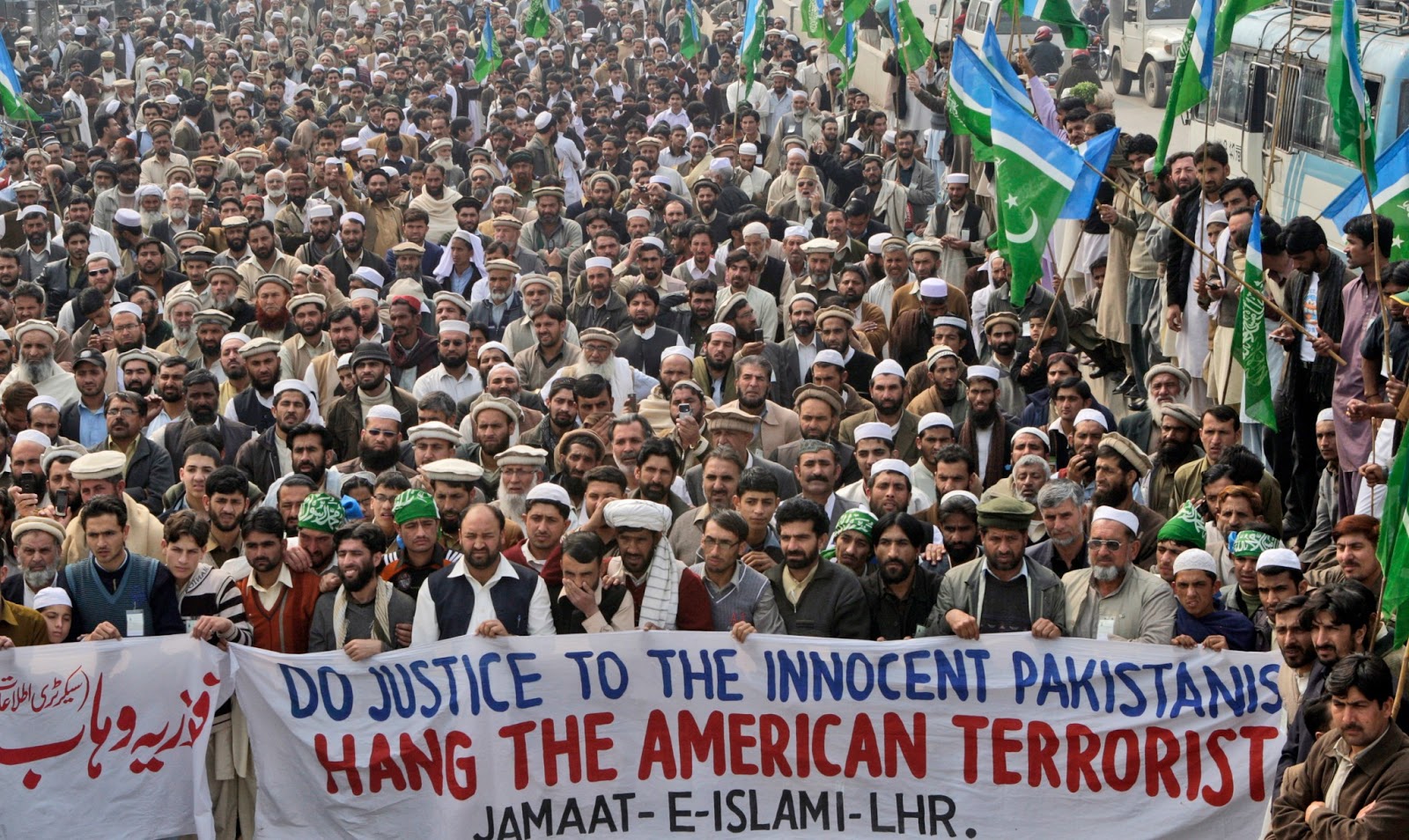 The A1 story in Sunday’s New York Times, written by Declan Walsh, is titled “U.S. Shift Poses Risk to Pakistan.” The story argues that, with the United States gradually dwindling down its political and military engagement with Pakistan, the latter faces a highly uncertain future. Walsh tells us that the disengagement will “diminish” the “prestige” and “political importance” Pakistan held as a “crucial player in global counterterrorism efforts” and could very well “upset its internal stability.”
It’s a piece that is revealing because one voice is noticeably left out of the analysis: that of the Pakistani people. Arguably the most salient fact about the U.S.-Pakistan dynamic is that Pakistanis – you know, the actual human beings who live in that country – despise the U.S. government and think the interaction between the two countries does more harm than good. Gallup conducted polling on these matters in Pakistan last year. An amazing 92% of Pakistanis expressed disapproval of U.S. leadership (i.e. Obama), while 4% approved. In a separate poll, 55% of Pakistanis reported that interaction with the West constitutes “more of a threat”; just 39% thought it was “more of a benefit.”
In a surprising development, Pakistanis don’t seem to support flagrant intrusions on their sovereignty, drone strikes that kill their fellow citizens, and a corrupt, secretive military government that regularly colludes with the U.S. (as of October, just 23% of Pakistanis expressed “confidence” in their government, which Gallup reports is widely viewed as being “too cozy” with the U.S.).
The Times article does not pay much attention to the thoughts and opinions of the Pakistani people, though. They’re background players and largely irrelevant. Walsh instead quotes a single Pakistani academic to support the article’s thesis; at other times in the piece he relies on unnamed “analysts” and “experts.” The only other individual he does quote on this narrow question of whether or not American disengagement “poses a risk” for Pakistan, a former Pakistani foreign minister, explicitly rejects the notion, saying that “less American involvement is good, not bad.”
The article concludes by stressing that, in fact, this alleged “shift” in the U.S.’s posture toward Pakistan is largely illusory, with “few” doubting that America “will remain deeply involved in Pakistan.” A former Obama administration official confidently predicts that the “mutual dependency” between the two countries “will not go away.” This basically undermines the entire point of the story.
Declan Walsh is a good reporter and he has spent a lot of time in Pakistan. But his virtual ignoring of the Pakistanis’ clearly expressed thoughts on these matters is instructive (the extent of the Pakistanis’ role in the article is a single sentence pointing out that drone strikes “stoked anger”). Consider the reverse scenario. Let’s say Pakistan had been propping up a corrupt military government here in the United States for years with aid and support. Pakistan was violating U.S. sovereignty at will, assassinating residents it considers a threat to Pakistani security, dumping their corpses in the ocean. Pakistan flew robots over American skies, from which missiles were regularly launched, killing American men, women, and children. Now imagine how we would feel if the most esteemed newspaper in the world published an article about all of this on its front page that completely ignored the will of the American public and disregarded our opinions.
Perhaps, when discussing geopolitics, we should consider the views of the populations themselves, and not just governments and elites. It’s a radical notion, but it just might make sense.
Featured Video

US IRAN TALKS: Who Are the Crazy Ones Here? /Lt Col Daniel Davis
or go to
Aletho News Archives – Video-Images
From the Archives
Woolsey Fire started at Santa Susana Field Lab — where “radioactive materials released were never accurately measured”
By John Laforge | CounterPunch | November 30, 2018
In my Nov. 16 column, I reported on potential radiation risks posed by California’s Woolsey wildfire having burned over parts or all of the Santa Susana Field Laboratory—south of Simi Valley, Calif., 30 miles outside Los Angeles—site of at least four partial or total nuclear reactor meltdowns.
The field laboratory operated 10 experimental reactors and conducted rocket engine tests. In his 2014 book Atomic Accidents, researcher James Mahaffey writes, “The cores in four experimental reactors on site … melted.” Reactor core melts always result in the release of large amounts of radioactive gases and particles. Clean up of the deeply contaminated site has not been conducted in spite of a 2010 agreement.
Los Angeles’s KABC-7 TV reported Nov. 13 that the Santa Susana lab site “appears to be the origin of the Woolsey Fire” which has torched over 96,000 acres. Southern Calif. Public Radio said, “According to Cal Fire, the Woolsey Fire started on the afternoon of Thursday, Nov. 8 … on the Santa Susana site.” … continue
Blog Roll
 Aletho News
- US IRAN TALKS: Who Are the Crazy Ones Here? /Lt Col Daniel Davis
- Talks with the US end without a deal over excessive US demands: Iran
- Feeling Better, Getting Worse: How Psychiatric Drugs Create the Illusion They Cure
- ‘Nobody Told Me’: Former Mental Health Patient Calls Out Dangerous Side Effects of Psychiatric Drugs
- Dr. Abu-Sitta: Beirut ‘felt like a day in Shifa Hospital’
- Iran Has Won the War, It Will Be Up to the US to Secure the Peace: Mohammad Marandi
- Iran condemns assassination threats against Iranian negotiators amid US talks
- Brussels cannot say where its own pipeline inspectors are as Hungary’s oil lifeline remains shut
- Israel’s Iran War: Myth and Reality
- Between war and industrial breakdown: The US-Israeli attrition crisis
- If Americans Knew
- Pro-Israel ‘Thinktanks’ and Individuals who Influence U.S. Foreign Policy
- Mearsheimer reveals how Israel dictates US policies on Iran, Gaza – video
- After killing 350+, Israel still has a “score to settle” with Lebanon before ceasefire – Daily Update
- Military aid to Israel emerges as the latest political litmus test for Democrats
- The only Palestinian children’s rights organization closes following years-long Israeli campaign against it
- ‘I Can’t Forget the Smell’: Lebanese Reel After Israel Kills Over 300 in Single Day
- DNC Shoots Down Resolutions Calling Out AIPAC and Limiting Arms to Israel
- TCN: Is Israel Blackmailing President Trump?
- Israel killed at least 303 Lebanese yesterday – who were they? Daily Update
- Amnesty: Urgent – Protect Lebanese civilians from brutal escalation in Israeli attacks
- No Tricks Zone
- German Expert: Heat Dome Led To Record Temps In Western USA…Warmer In 1934, 1936
- New Study: No Linear Warming Or Glacier Retreat Along Northern Antarctic Peninsula Since 1980s
- An Inconvenient Tree: Uncovered In Alps… Europe Much Warmer Than Today 6000 Years Ago
- New Study Reports A 60% Slowdown In Greenland’s Ice Loss Rate In The Last Decade
- Low Intensity Tornado Wrecks Major Solar Farm, Creating A Potential Toxic Dump
- New Study Finds Warming Saves Lives…Cold Temperatures 12 Times More Deadly Than Excess Heat
- German Science Blog Accuses PIK Climate Institute Of Hallucinating Climate Tipping Points
- Devastating Assessment Of Comirnaty Vaccine By Former Senior Pfizer Europe Toxicologist
- New Study: CO2 Is ‘Effectively Negligible’ As An Explanatory Climate Change Factor Since 2000
- Former Pfizer Toxicologist Dr. Helmut Sterz Tells Bundestag Hearing Pfizer Vaccine Should Have Never Been Approved
 Aletho News