Houthis to Try New Hypersonic Missile in Continued Targeting of US Carrier Group
By Ilya Tsukanov – Sputnik – 07.06.2024
The Yemeni militia targeted the USS Dwight D. Eisenhower Nimitz-class supercarrier in the Red Sea last week amid the continued intensification of American and British air and missile strikes inside Yemen, which have killed scores of civilians.
The Houthis will hit the American aircraft carrier parked in Yemen’s backyard harder next time around, militia leader Abdul-Malik al-Houthi has vowed.
“The American aircraft carrier Eisenhower will remain a target for our Armed Forces whenever the opportunity arises,” al-Houthi said in his weekly address on Thursday.
“The facts will become clear no matter how much the Americans try to deny the targeting operations, and the upcoming strikes will be more effective,” al-Houthi added.
Offering new details on last week’s Houthi missile and drone barrage targeting the USS Eisenhower amid American denials that the operation did any damage to the supercarrier or its escorts, the Houthi leader emphasized that the attack was more successful than Washington is letting on.
“The operation targeting the aircraft carrier Eisenhower was successful, and overflights stopped for two days following the attack,” al-Houthi said, referring to American attacks over Yemeni airspace. The official added that while the US warship was situated about 400 km from Yemen before the Houthi attack, it was forced to sail 480 km northwest to safety in its aftermath. The operation was “one of the most notable and important operations to be carried out this week,” al-Houthi said.
“American warships flee and change their source when the operations are successful,” the militia leader said.
US Central Command on Friday vociferously denied Houthi claims that the USS Eisenhower was damaged in the Yemeni militia’s attacks.
“There is no truth to the Houthi claim of striking the USS Eisenhower or any US Navy vessel. This is an ongoing disinformation campaign that the Houthis have been conducting for months. While the Houthis intend to target our vessels, we can confirm that there has never been a successful attack on any US Navy vessel,” CENTCOM told Sputnik.
The Houthi attack on the carrier followed a spate of joint US-UK attacks targeting Yemen in an attempt to degrade the militia’s fighting capabilities, with the militia saying last week that the most recent strikes had killed at least 16 people and wounded 42 others.
The Houthis reported Friday that US and UK forces had carried out four new air strikes targeting the airport in Hodeidah, and launched a separate attack on northwestern Yemeni seaport of Salif.
Houthis Go Hypersonic?
Al-Houthi’s comments Thursday came a day after the Yemeni militia released footage of a new “locally made” hypersonic missile called the Palestine being launched toward the embattled Israeli Red Sea port city of Eilat this week.
Israeli officials confirmed Monday that Eilat had been targeted, but indicated that there was no damage or injuries to report.
In the footage, the new Yemeni solid-fuel missile’s warhead was painted in a checkered pattern reminiscent of a keffiyeh scarf. Western observers spotted outward similarities to the Fattah – an Iranian hypersonic missile unveiled in 2023 which can travel up to 1,400 km at speeds up to Mach 15. The range and speed characteristics of the Houthi missile remain unknown, but the distance between Houthi-controlled areas of Yemen and Eilat is closer to 1,700 km.
Iranian officials have repeatedly rejected claims by the US and its allies that it has provided arms to the Houthis. However, Iranian media recently confirmed that the country does give its anti-US and anti-Israeli Axis of Resistance allies “technical knowhow” enabling the homegrown production of sophisticated missiles. It remains unclear whether this applies to the new Palestine missile or not.
The Houthis have been teasing their fledgling hypersonic capabilities since the spring, with an informed source telling Sputnik in March that the new Houthi missile could accelerate to speeds of up to Mach 8 (nearly 10,000 km per hour) and had a solid fuel engine, which means reduced launch preparation time and improved ease of transport in Yemen’s difficult conditions.
“Yemen intends to begin manufacturing it for use during attacks in the Red and Arabian Seas and the Gulf of Aden, as well as against targets in Israel,” the source, who was not at liberty to speak publicly, said at the time.
Abdul-Malik Al-Houthi warned in March that the militia’s enemies, friends and Yemenis alike would soon “see a level of achievement of strategic importance which will place our country and its capabilities in the ranks of few countries in this world,” promising that Ansar Allah had “surprises” in store for the US and Israel which have yet to be revealed.
Russian military observer Alexei Leonkov told Sputnik in March that if the Yemeni militia really has managed to speed a missile up to Mach 8 or more, “that will mean that the ship-based air defense systems of the American naval group will be powerless.”
“The air defenses of the carrier strike group presently parked off the coast of the Arabian Peninsula and sporadically firing at the Houthis will not be able to intercept these missiles if they approach at Mach 8. And if the Houthis have managed to make them even a little maneuverable, that’s it, they won’t be possible to intercept. If the Houthis learn to accurately hit warships with these missiles, we will see America’s defeat,” Leonkov said.
US Defense Secretary Lloyd Austin signed an order last week to extend the Eisenhower carrier group’s deployment in the Middle East for a second time, holding off the rotation of the supercarrier and its three missile destroyer and cruiser escorts out of the region, where they have been stationed since last October.
Biden claims Israel ‘has not invaded Rafah’ as jets, tanks raze city

The Cradle | June 7, 2024
US President Joe Biden told ABC News on 6 June that the Israeli government has listened to his “concerns” about a major military offensive in Gaza’s southernmost city of Rafah.
“They were going to go into Russia – into Rafah – full bore, invade all of Rafah, go into the city, take it out, move, move with full force. They haven’t done that. And what they’ve done is they’ve agreed to a significant agreement,” the US president said as Israeli warplanes continued their months-long blitz of residential areas and displacement camps in the city.
Residents of Rafah who spoke with Reuters on Friday morning described the latest raids as “one of the worst nights,” adding that “some people were wounded inside their homes before being evacuated this morning.”
Residents also said that Israeli tanks that have taken control along the border with Egypt made several raids towards the west and the center of the southern city.
“I think he’s listening to me,” Biden added when asked by ABC News if Israeli Prime Minister Benjamin Netanyahu heeded his warnings.
Elsewhere in the interview, Biden claimed Netanyahu will stick by his own ceasefire proposal. “He’s publicly said he is. Our European friends are in on it. We have to get a ceasefire.”
“What [Israel has] done is they’ve agreed to a significant agreement that if in fact Hamas accepts it,” the US president said before adding that the offer is backed by much of the Arab world.
“We’ll see. This is a very difficult time,” Biden said.
On Thursday, senior Hamas officials revealed that the Israeli ceasefire proposal “does not mention stopping the aggression or the withdrawal [of troops from Gaza].”
“The Israeli documents speak of open-ended negotiation with no deadline, and it speaks of a stage during which the occupation regains its captives and resumes the war. We had told the mediators that this proposal is unacceptable,” Hamas official Sami Abu Zuhri told Reuters on Thursday.
The Cradle columnist Khalil Harb earlier this week described the proposal presented by Biden as a “repackaging of last month’s Hamas-approved agreement, which he is now repositioning as an Israeli-sanctioned deal.
Israeli lobby silencing anti-Zionist academics at Australian university
By Maram Susli – Al Mayadeen – June 6, 2024
Yet another University of Sydney academic has been targeted for offending the Australian Zionist lobby, a major funder of the university.
In a lecture to first-year students, Professor Sujatha Fernandes accused “Israel” of lying about “Hamas beheading babies and carrying out mass rape,” and accused the Australian media of spreading those lies to shore up support for “Israel’s” ethnic cleansing of Gaza.
Alex Ryvchin, co-chief of the Executive Council of Australian Jewry, demanded that Professor Fernandes be investigated, and the university has capitulated to the demand. The Rupert Murdoch media has also initiated a witch hunt against the professor.
This comes two weeks after the University of Sydney won its appeal over the unfair dismissal of Sydney Lecturer Dr. Tim Anderson, who was similarly attacked by the Zionist lobby for criticising “Israel.
When asked to comment on the case of fellow academic Professor Fernandes, Dr. Anderson, said:
“The Murdoch media claims she is being ‘investigated’ for her comments, exactly how they started with me. I am sure they will further target her for speaking the plain truth about the Israeli regime.”
Dr. Anderson fought a lengthy legal battle with the university, starting in 2019, after being dismissed for including a lecture slide that compared Israeli atrocities to those of Nazi Germany. The case began with university managers claiming Anderson’s social media comments had offended Israelis and their supporters.
Intellectual freedom in Australia is defined in industrial agreements. In Dr. Anderson’s case, the Federal Court initially affirmed the right to academic freedom, but its most recent decision has muddied that position. In particular, Judge Michael Lee now asserts that the burden is on the individual claiming intellectual freedom to prove that they were acting in the highest professional standards, without providing clear criteria. Overall, five Federal Court judges ruled in favour of Anderson, but the last two tipped the balance against him.
Regarding his dismissal, Dr. Anderson stated:
The reasons behind my sacking were:
(1) Pressure from the Israeli lobby, including corporate media and Israeli funding at the University of Sydney.
(2) Corruption by University of Sydney managers, and
(3) Reactionary politics at the Federal Court of Australia, which dismantled five years of previous decisions on intellectual freedom.
The power of the Zionist lobby in Australia comes from their direct funding of universities and their influence in the media. The National Advisory Committee on Jewish Education, which has donated more than half a million dollars annually to the University of Sydney’s Faculty of Arts and Social Sciences, exemplifies this. The committee’s chair, Emeritus Professor Suzanne Rutland, noted on her CV that the committee was a branch of the World Zionist Organisation (WZO), one of the groups instrumental in the creation of “Israel”. Additionally, the committee provided bonuses to all University of Sydney senior managers based on their performance, creating a financial incentive to target professors who criticize “Israel”.
Growing concerns arise regarding evidence of foreign interference in Australian universities due to these practices. The witch hunt against these professors has caused a chilling effect, and academics may begin to self-censor in future academic discourse on “Israel”.
The Israeli and US funding for the University of Sydney has corrupted managers and killed intellectual freedom at Australia’s oldest university.
The continued attacks on these academics come in the context of the International Court of Justice ruling that there is credible evidence that “Israel” is committing a genocide in Gaza. The story of babies being beheaded on October 7th has been conclusively debunked, and the story of rapes on Oct 7 was found to have a lack of evidence. After examining all of the 5,000 photos, 50 hours of videos, and audio from October 7, the UN Secretary General’s report said, “No tangible indications of rape could be identified.” The report goes on to say that the UN did not find a single victim of sexual violence on Oct 7, despite their best efforts to encourage victims to come forward.
In spite of the control that the Zionist lobby has over the faculty, students of Sydney University continue their weeks-long protest against the genocide in Gaza, demanding that Sydney University divest from “Israel”.
Hundreds killed by Israel in south Lebanon since 8 October
The Cradle | June 6, 2024
According to statistics published by the Lebanese Ministry of Public Health, Israeli attacks on south Lebanon have resulted in a total of 1,603 casualties, including 401 deaths, since 8 October.
The data published on the ministry’s website indicates that 87 percent of casualties were men, 96 percent were Lebanese nationals, and 57 percent were aged between 25 and 44 years.
The primary causes of these injuries are evident, with 44 percent resulting from blunt trauma, 35 percent from the blast radius of bombings, and 16 percent from chemical exposure – in many cases, white phosphorus.
The data additionally underscores a daily average of 18 casualties, five of them requiring urgent medical treatment at local hospitals, and one fatality.
According to Hezbollah’s military media, around 330 of its fighters have been killed by Israel on the battlefield. Going by the numbers reported by the Lebanese Ministry of Health, the remaining 71 deaths are those of civilians and journalists.
Additionally, the Lebanese Health Ministry reported that 94,126 residents of southern Lebanon have since been displaced.
Israeli aggression has caused significant damage to Lebanon’s forests and agricultural land.
Earlier this week, Hezbollah rockets ignited massive wildfires in the Israeli north, resulting in extensive damage to forest reserves and several hospitalizations due to smoke inhalation.
Hezbollah has been gradually escalating its daily operations against Israeli military sites and settlements since October. The movement opened a front against Israel on 8 October, one day after the start of the Hamas-led Operation Al-Aqsa Flood, in support of the Palestinian resistance factions.
Secretary-General Hassan Nasrallah and Deputy Secretary-General Naim Qassem have made it clear that Hezbollah’s operations will not stop until Israel stops its genocidal war on the Gaza Strip.
Beyond Rafah: What the Zionist entity is headed toward
By Robert Inlakesh | Al Mayadeen | June 5, 2024
The tunnel systems have not been destroyed, the weapons capabilities of the Resistance remain, and the fighters have survived some of the toughest onslaughts the Israelis are capable of mustering.
Israeli Prime Minister, Benjamin Netanyahu, has set the invasion of Rafah as the route to a comprehensive victory against the Palestinian Resistance in Gaza. This is a lie, and the Zionist regime will not achieve its war goals, so what comes next when the Israeli public is faced with the truth?
The Zionist entity launched its genocidal military campaign against the Gaza Strip, claiming that it sought to both dismantle Hamas and retrieve its captives by force. Neither was achieved in around 8 months of confrontations, despite having inflicted massive death and destruction on a scale that hasn’t been seen since the Vietnam War.
Before the Israelis launched their ground incursion into the Gaza Strip, the line of propaganda was to pretend as if their unprecedented bombing campaign was going to dismantle the Palestinian Resistance’s complex web of tunnels underneath the besieged coastal territory. We heard about all the various munitions that were supposedly going to penetrate the tunnel systems and destroy the majority of them, prior to any face-to-face fighting.
When “Israel” did invade the Gaza Strip, it soon became clear that they were not even trying to penetrate the majority of the tunnels, despite their propaganda. The Zionist army came in on the ground, choosing to set up positions in open areas, before packing their soldiers in armored personnel carriers, tanks, and militarized bulldozers, refraining from using infantry to clear areas prior to penetrating them. They were subsequently met with tough resistance from the Palestinian armed factions. As for the tunnels and the attempts to recapture their captives, the rescue missions were all foiled, and the Israelis seemed to only be sealing off tunnel entrances they found, instead of sending forces underground to fight face-to-face.
The Zionist entity then set its sights on Gaza City, choosing to target the northern sector of the coastal territory in the initial stages of the invasion. Despite their attempts to completely ethnically cleanse the north, hundreds of thousands remained steadfast on their lands and refused to leave. Petty tactics were then employed by the Israeli ground forces, such as flying their flag in areas they managed to reach temporarily in their armored vehicles and tanks.
All this was going on as their leadership claimed that the “Hamas headquarters” was situated under the Al-Shifa Hospital, for which they released a CGI video depicting a multi-layered tunnel system. After finally invading the Shifa medical complex, the Zionist regime was outed as a bunch of liars as no headquarters was found there. Nonetheless, their evidence-free conspiracy theories about Hamas using hospitals as military headquarters’ and bases continued to drive the invasion of the north.
Suddenly, after being pointed out as having fabricated evidence in the north of the alleged “Hamas bases” and “Hamas headquarters” underneath hospitals, they began to pivot to Khan Younis. Khan Younis is the “real Hamas headquarters” they told their own settler population and the international community, deciding to invade the city in December, after the conclusion of a brief cessation of hostilities and prisoner exchange. In early January, they had already besieged the city of Khan Younis completely, finding no “Hamas headquarters”, and then began to obsess over the southernmost city of Rafah.
For months, the threats to invade Rafah were constant, and Israeli Prime Minister, Benjamin Netanyahu, asserted that his regime could not win the war without invading Rafah, and we repeatedly heard about the authorization of the operation to force a ground incursion into the area. This was met with international condemnation and a series of contradictory remarks from the US President, Joe Biden, who still can’t decide on what his “red line” actually is.
On May 6, Hamas called the Israeli-US bluff and accepted a ceasefire proposal. This was despite the fact that Netanyahu had been talking about his unwillingness to accept any ceasefire with Hamas for over a week prior. Although the Israeli premier was promising an invasion of Rafah, the US Secretary of State was publicly lauding the ceasefire proposal and urging Hamas to take it during his visit to West Asia. When Hamas decided to accept the proposal, which was almost identical to the one that was promoted by the US and elements within the Israeli regime’s leadership, it caused shockwaves, and the Zionist military responded by launching its invasion that same day.
The Israelis made a fatal mistake, however, deciding to also invade the al-Zaytoun neighborhood near Gaza City and Jabalia, both located in the north of the Gaza Strip. The invasion of Jabalia appeared to be an attempt to try and pull off a propaganda victory, by extracting the bodies of Israeli captives killed by their own airstrikes. However, they were surprised by the level of fighting waged against their soldiers by the Palestinian Resistance, who not only inflicted heavy losses on the Zionist invaders but, in the case of Jabalia, managed to pull off one of the toughest battles of the entire war as well.
The Zionist entity is renowned for concealing its casualties, but it could not hide all of them, and the public was exposed to daily reports about incidents in which their soldiers were killed and dismembered. This was a major embarrassment because the Israelis had told their own people that they managed to dismantle all of the Resistance battalions in the north months before, which clearly was not true.
Then came the announcement last Saturday from Abu Obeida, the spokesperson for the al-Qassam Brigades, the armed wing of Hamas, who informed the world that an ambush had taken place in which the Resistance group managed to capture, kill, and injure the members of a force that they lured into a tunnel. The very next day, after increased rocket fire into the surrounding settlements during the weeks prior, al-Qassam launched a barrage of rockets from Rafah that struck north of “Tel Aviv”, managing to cause impacts and bypass the Iron Dome system. Embarrassed and in disarray once again, the Zionist entity decided to commit a series of massacres against civilians, the most egregious taking place against refugees sheltering in tents northwest of Rafah City.
All of this is to say that the Zionist regime is now faced with a dead end, as it will not find victory in Rafah and will fail as it did everywhere else. Not one of the dozen armed Resistance groups operating in the Gaza Strip have been defeated, let alone Hamas. The tunnel systems have not been destroyed, the weapons capabilities of the resistance remain, and the fighters have survived some of the toughest onslaughts the Israelis are capable of mustering. Moreover, the captives have not been extracted by force and now they have lost even more in Jabalia. So what is next?
The Zionists are out of real options in the Gaza Strip, they have not found any reasonable plan for a day-after scenario, and once they meet failure in Rafah, there is nowhere else they can claim is the “real Hamas headquarters” any longer. This is why they have to pivot away from Gaza and find another target.
The single biggest thorn in the side of the Israelis right now is the Lebanese Resistance. Over the course of the war, Hezbollah and its allies have annihilated the Israeli monitoring and defense capabilities, smashed their military sites to pieces, destroyed many settler housing units in the bordering settlements, and forced over 100,000 Israeli settlers to flee in fear. The Israeli economy in the north has been paralyzed and the image of the Zionist army has been dismantled, as Hezbollah uses Israeli soldiers and military bases as test subjects for its military equipment.
What the Israelis could do is to either wrap up their invasion of Rafah quickly or continue it in a slow fashion, while deciding to launch a limited military operation against Lebanon. In the event that this occurs, it is not likely for the Zionist regime to commit suicide, and so, it is more likely that, despite the propaganda that they will release about such an operation, they would attempt to prevent it from spilling over into a full-scale war.
If “Israel” chooses this option, it understands well that Hezbollah will respond with unprecedented strikes that will shake the entity to its core, which will result in the sidelining of the Gaza war. Not only will the Israeli settler population be focused almost entirely on Lebanon, but so too will most of the world and certainly the international community. This would provide them with the opportunity to bring a close to the Gaza war and conclude a prisoner exchange while ensuring that it looks like they are attempting to restore their broken image. Such a scenario would also buy Netanyahu and his leadership more time in power.
If this happens, the course of the struggle will not come to a conclusion, however, as there is another very obvious front and that is the occupied West Bank. It is possible that the Israeli leadership could then shift its focus again, this time to the usurpation of what is known as area C of the West Bank; an area which constitutes around 60% of the total territory. For a long time, the Zionists have sought to seize this area, but due to external pressures from their allies, they have refrained from doing so.
The excuse in the West Bank will be the Resistance groups, which are primarily operating in the north of the territory and would work to justify a large-scale military campaign. In the event that a ceasefire is already concluded in Gaza, they could then go in without the fear of the resistance in the Gaza Strip pulling off a major defensive attack and seizing the land they seek. This would be the embodiment of their decades-long plot to divide the four parts of Palestine from each other, that being the 1948 territories, occupied eastern part of al-Quds, the West Bank, and Gaza. If Netanyahu manages to end his bloody campaign of terrorism and genocide in the West Bank, it is the one place where he can actually extract what appears on paper to be a victory and it may be enough, in his mind, to save him from the inevitable political death he is slowly dying today.
What is mentioned above may not occur in the exact order listed, but it is almost inevitable that the war on Gaza is going to shift to Lebanon and the West Bank in the foreseeable future. Unless the Zionist regime comes up with another excuse to maintain the course of the war in Gaza for a longer period of time, which will delay the pivot to other fronts, it seems like what lies beyond Rafah will be Lebanon and/or the West Bank. The decision to delay the invasion of Rafah for so long seems to have been down to the fact that this will be the end of their justifications for remaining at war in Gaza. The response to what the Zionist Entity is planning will be in the hands of the resistance.
Laws of War – Matt Orfalea
Matt Orfalea | May 25, 2024
Twitter ▶  / 0rf
/ 0rf
Rumble▶https://rumble.com/Orf
Patreon ▶  / orf
/ orf
Substack▶https://substack.com/@MattOrf
Locals▶https://mattorfalea.locals.com
Truth▶https://truthsocial.com/@MattOrf
Minds▶https://www.minds.com/MattOrf
Tips ▶PayPal: https://bit.ly/34OWemi
Majority of British youth think Israel ‘should not exist’: Poll
Press TV – June 5, 2024
The majority of young British people think that Israel “should not exist”, blaming the occupying entity for the ongoing genocidal war on the besieged Gaza Strip, a new opinion poll shows.
Released on Wednesday, the survey, carried out by British news and opinion website UnHerd, suggested that 54 percent of 18-24-year-olds in Britain thought the Israeli regime “should not exist” compared with seven percent of 65-year-olds and older.
“A preliminary finding of an exclusive survey of 1,012 voters about foreign policy, conducted by Focaldata and due to be released tomorrow on UnHerd, found that a striking 54% of 18-24-year-olds agreed with the statement that” the Israeli regime “should not exist.”
According to the new polling, 50 percent of the age group also blamed the occupying regime for the ongoing violence in the war-torn Palestinian enclave.
Back in December, a poll suggested that 51 percent of Americans between the ages of 18 and 24 believed the key solution to bring to a close the Israel-Palestinian conflict was for “Israel to be ended and given to Hamas and the Palestinians.”
Israel’s bloody war machine has killed over 36,500 Palestinians since October 7, 2023. The vast majority of the fatalities are women and children.
The savage campaign was launched after Hamas carried out its historic Operation Al-Aqsa Storm against the usurping entity in retaliation for the regime’s intensified atrocities.
Israel has additionally enforced a comprehensive blockade on the coastal sliver, severing the supply of fuel, electricity, sustenance and water to the population of over two million Palestinians residing there.
Israel using massive campaign of influencing US lawmakers to back war: Report
Press TV – June 5, 2024
In a long-running social media campaign, Israel has been trying to influence legislators of the United States to support the occupying entity’s actions in its genocidal war on the besieged Gaza Strip, according to a report by the New York Times.
Citing unnamed officials and documents, The NY Times reported on Wednesday Israel’s so-called Ministry of Diaspora Affairs has paid at least $2 million for the covert campaign of convincing American lawmakers to back the regime’s atrocities in the war-torn Palestinian territory.
The report said the Israeli ministry has hired the Israeli-based firm STOIC, a political marketing firm in Tel Aviv, to carry out the campaign.
The firm has for months been generating anti-Hamas and pro-Israel content across the Internet.
According to the report, the influence campaign, which started in October and is still ongoing on X (formerly known as Twitter), has used hundreds of fake accounts that posed as real Americans on X, Facebook and Instagram to post pro-Israel comments.
The accounts, the report added, targeted US lawmakers, particularly those who are Black and Democrat, “such as Representative Hakeem Jeffries, the House minority leader from New York, and Senator Raphael Warnock of Georgia”, with posts urging them to continue funding Israel’s military.
“ChatGPT, the artificial intelligence-powered chatbot, was used to generate many of the posts. The campaign also created three fake English-language news sites featuring pro-Israel articles,” said the Times, which verified the influence operation with four current and former members of the so-called Ministry of Diaspora Affairs.
“The secretive campaign signals the lengths Israel was willing to go to sway American opinion on the war in Gaza,” it further said.
Citing Meta and OpenAI, the report said the influence campaign has failed to generate a widespread impact.
Furthermore, according to FakeReporter, an Israeli misinformation watchdog, the fake accounts accumulated more than 40,000 followers across X, Facebook and Instagram, but as Meta said, many of those followers may have been bots and did not generate a large audience.
Israel’s bloody war machine has killed over 36,500 Palestinians since October 7, 2023. The vast majority of the fatalities are women and children.
The savage campaign was launched after Hamas carried out its historic Operation Al-Aqsa Storm against the usurping entity in retaliation for the regime’s intensified atrocities.
Israel has additionally enforced a comprehensive blockade on the coastal sliver, severing the supply of fuel, electricity, sustenance and water to the population of over two million Palestinians residing there.
Building comprehensive, high-level China-Turkey ties in fundamental interests of both countries: Wang Yi
Global Times | June 5, 2024
Building a comprehensive, deep and high-level China-Turkey relationship is in the fundamental interests of both countries and peoples, Chinese Foreign Minister Wang Yi said while meeting with the visiting Turkish Foreign Minister Hakan Fidan on Tuesday.
During the meeting with Fidan, Wang, who is also a member of the Political Bureau of the Communist Party of China (CPC) Central Committee, said that China and Turkey are both ancient civilizations and important members of the G20, and are facing profound challenges in the changing international situation, so the two countries should strengthen communication and coordination to make positive contributions to promoting regional peace and global development.
Wang pointed out that building a comprehensive, deep and high-level China-Turkey relationship is in the fundamental interests of both countries and peoples. China firmly supports Turkey in continuing to explore an independent and self-reliant development path. It also supports Turkey’s efforts to safeguard sovereignty, security, and development interests, and appreciates Turkey’s understanding and support for China’s just position on core interests related to sovereignty, security, and territorial integrity.
China is willing to maintain multi-level exchanges with Turkey, play a good role in mechanisms such as the China-Turkey Intergovernmental Cooperation Committee, promote effective connection between the joint construction of the Belt and Road Initiative and Turkey’s Middle Corridor Initiative, expand cooperation areas, and explore cooperation potential.
China is willing to expand imports of high-quality agricultural products from Turkey, support the continuous improvement of cooperation levels and technological content of enterprises in both countries, and strengthen cooperation in culture, education, tourism, aviation, and other fields, Wang said.
Wang noted that both sides should strengthen coordination and cooperation within the framework of the United Nations (UN) and other multilateral frameworks, support the UN in playing a core role in the global governance system, oppose hegemonism and power politics, oppose a few countries monopolizing international affairs, oppose building walls and barriers, “decoupling” and “cutting off supply chains,” maintain the stable operation of the global supply chain and industrial chain, and promote the establishment of a fair and reasonable global governance system.
Fidan said that Turkey and China have important influence in their regions and globally. The Turkish government attaches great importance to its relations with China, adheres to the one-China principle, and supports China in safeguarding its core interests and major concerns.
China’s development is crucial to world peace and prosperity. Turkey opposes bloc confrontation, does not agree with or support erroneous actions that suppress China’s development, and does not allow any force to engage in activities on Turkish territory that harm China’s sovereignty and security, said Fidan.
The Middle Corridor Initiative is highly compatible with the Belt and Road Initiative, and Turkey is willing to cooperate closely with China to achieve more substantive results in trade, investment, finance, agriculture, tourism, education, and other fields through mechanisms such as the China-Turkey Intergovernmental Cooperation Committee.
Turkey and China are both emerging market powers and members of the G20, with broad common interests in upholding international fairness and justice. Turkey highly appreciates China’s fair and just position on issues concerning Ukraine and the Middle East, and looks forward to working constructively with China to make greater contributions to the prosperity and stability of the region and the world, said Fidan.
The two sides also exchanged views and coordinated positions on international and regional issues of common concern such as Ukraine crisis and Palestinian issue.
During the Tuesday meeting, both sides also agree that it is necessary to promote a ceasefire in Gaza and maintain peace and stability in the Middle East. The Palestinian issue is at the core of Middle Eastern issues. The Gaza conflict is currently the focus, and the priority is to achieve an immediate, comprehensive, and permanent ceasefire, improve humanitarian conditions, and release all detained individuals.
The two-State solution is the fundamental way to solve the Palestinian issue. Both China and Turkey support Palestine becoming a full member of the UN and support internal reconciliation in Palestine. China and Turkey will strengthen cooperation to jointly promote the early and comprehensive, fair, and lasting resolution of the Palestinian issue.
On the Ukraine issue, Wang said that China’s position is firm and consistent, and the aim is to promote peace and dialogue. Although the conditions for negotiations are not yet in place, China is committed to peace and will not stop its efforts. As long as there is a glimmer of hope, every effort must be made to strive for it.
Switzerland is hosting a “Summit on Peace in Ukraine” on June 15 and 16. China confirmed on May 31 that it will not attend the conference, as the meeting falls short of China’s requests, according to Chinese Ministry of Foreign Affairs spokesperson Mao Ning.
However, China encourages and supports all initiatives and efforts around the world that contribute to easing tensions and achieving peace, Wang said, noting that China values Switzerland’s work in preparing for the peace conference and has provided constructive suggestions to the Swiss side, which have been positively evaluated and appreciated.
Wang said China believes that the world needs to hear more objective, balanced, positive, and constructive voices on the Ukraine crisis. China and Brazil jointly issued a six-point consensus recently on promoting a political solution to the Ukraine crisis, emphasizing adherence to the three principles of cooling the situation: no spillover from the battlefield, no escalation of the conflict, and no provocation by any party.
The consensus also calls for all parties to adhere to dialogue and negotiations, increase humanitarian assistance, oppose the use of nuclear weapons, oppose attacks on nuclear power plants, and maintain the stability of the global industrial and supply chains.
Wang said that he had exchanged views with Fidan, who also welcomed and appreciated the six-point consensus.
Within just one week, 45 countries from five continents have responded positively to the six-point consensus in different ways, with 26 countries already confirming their participation or seriously studying how to join, Wang said, noting that Russia and Ukraine, the two main parties involved, have also affirmed most of the contents of the consensus.
This once again shows that the consensus meets the common expectations of most countries. China believes that the more people participate in the joint appeal, the greater the hope for cooling the situation and the smaller the risk of escalation of conflict, said Wang.
The more countries that support the six-point consensus, the brighter will be the prospects for peace. China sincerely welcomes more countries to support and join the consensus, said Wang.
Featured Video
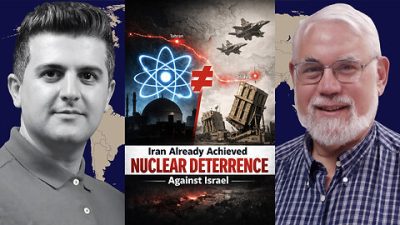
Prof. Ted Postol: Iran Already Achieved Nuclear Deterrence Against Israel
or go to
Aletho News Archives – Video-Images
From the Archives
How the occupied mentality syndrome works
Saudi Arabia on the American chessboard – Part 3
By B. J. Sabri | American Herald Tribune | June 27, 2016
Read part 2: “The occupied mentality Syndrome“
Previously I argued whether Saudi Arabia’s repeated involvements in U.S. interventions and wars stem from free national will or in response to a specific condition. For starters, in Saudi Arabia there is no national will. In Saudi Arabia, the national will is the will of the Al Saud clan. Still, when a major Arab state allies itself with a superpower that committed unspeakable crimes against humanity in almost every Arab country, then something is wrong. This fact alone should compel us to examine the U.S.-Saudi relation for one exceptional reason. As a result of the U.S.-Saudi wars, hundreds of thousands of people in Afghanistan, Iraq, Iran, Libya, Syria, Yemen, and Somalia have lost their lives. Millions became displaced in their own homelands. And millions more rendered refugees.
Attributing the Saudi policies to the bonds of “partnership” with the U.S. is frivolous. There are no bonds between these two thugs except those of business, military deals, secret plots, and wars. Proving this point, bonds such as these have no space for the American and Saudi peoples to share significant cultural or societal exchanges. If partnership is not the reason for the Saudi contribution to the U.S. strategy of empire and imperialism, then another reason must exist.
This leads to three possibilities. … continue
Blog Roll
 Aletho News
- Al Mayadeen voices solidarity with Dr. Marandi amid death threats
- US dismantling international law in its war against Iran while claiming ‘false’ victory: Legal scholar
- One martyr, 5 injuries in US attack on Iraqi border crossing with Iran
- ‘This war is Israel’s war’: World facing ‘security breakdown’, says Qalibaf
- IRGC decries attack on US embassy in Riyadh, says executed by ‘Israel’
- Iran blasts EU hypocrisy as EU invokes international law over Hormuz
- There is no military solution to Strait of Hormuz
- NATO’s structural collapse – the outcome of deviation from reality
- Poll finds world views China better than US
- One Of America’s Leading Neo-Cons Has Turned Against The Iran War And Israel
- If Americans Knew
- US loses planes over Iran, Israel downgrades Lebanon war goals – Daily Update
- Israel Is Blocking Palestinians from Easter at Church Where Jesus Resurrected
- Plot to assassinate Palestinian activist follows harassment campaign promoted by Zionist groups and elected officials
- Prominent New York synagogue hosts presentation on why U.S. Jews should support the ethnic cleansing of Gaza
- Tapper vs. Piker: Is the CNN Anchor Auditioning for David Ellison?
- Shouldn’t Democrats Be Able to Condemn Genocide?
- Israel-US kill negotiators, destroy civilian structures, but Iran’s military capabilities still largely intact – Daily Update
- ‘War crime’: Global condemnation as Israeli ministers celebrate death penalty law targeting Palestinian prisoners
- 7 Ways Israel Is Turning Lebanon Into Gaza
- World’s Leading Football Bodies Under Fire Over Israel Policies
- No Tricks Zone
- An Inconvenient Tree: Uncovered In Alps… Europe Much Warmer Than Today 6000 Years Ago
- New Study Reports A 60% Slowdown In Greenland’s Ice Loss Rate In The Last Decade
- Low Intensity Tornado Wrecks Major Solar Farm, Creating A Potential Toxic Dump
- New Study Finds Warming Saves Lives…Cold Temperatures 12 Times More Deadly Than Excess Heat
- German Science Blog Accuses PIK Climate Institute Of Hallucinating Climate Tipping Points
- Devastating Assessment Of Comirnaty Vaccine By Former Senior Pfizer Europe Toxicologist
- New Study: CO2 Is ‘Effectively Negligible’ As An Explanatory Climate Change Factor Since 2000
- Former Pfizer Toxicologist Dr. Helmut Sterz Tells Bundestag Hearing Pfizer Vaccine Should Have Never Been Approved
- Energy Expert: Germany’s Nuclear Phaseout Was A “500 Billion Euro Mistake”
- New Research: South Australia’s Mid-Holocene Sea Surface Temperatures Were 4°C Warmer Than Today
 Aletho News