Palestinian fired over Gaza censorship sues Meta – Reuters
RT | June 5, 2024
A former engineer has accused Meta – the parent company of Facebook, Instagram and WhatsApp – of being biased against Palestinians, according to Reuters.
Ferras Hamad filed a lawsuit in California on Tuesday, alleging discrimination and wrongful termination. He had been an engineer on Meta’s machine learning team from 2021 until February.
Meta was deleting internal employee messages by Palestinian-Amerians that mentioned the deaths of their relatives in Gaza and investigated their use of Palestinian flag emojis, Hamad alleged. By contrast, no such investigations were launched into employees using Israeli or Ukrainian flags, he said.
According to Hamad, he was fired after pointing out irregularities with an emergency procedure for handling “site events” (SEV), when it resulted in restrictions on Instagram posts by Palestinian personalities. In one case, he said in the complaint, a short video by photojournalist Motaz Azaiza showed a destroyed building in Gaza, but Meta had labeled it as pornographic.
When Hamad attempted to resolve that case, Meta told him he was violating the policy barring employees from dealing with the accounts of people they knew personally – although Hamad insists he is not personally acquainted with Azaiza.
The former engineer had handled SEV cases related to Gaza, Israel and Ukraine before, and obtained confirmation in writing that this was part of his job description. He filed an internal discrimination complaint in January, but was fired a few days later.
Meta did not immediately respond to a Reuters request for comment.
Mark Zuckerberg’s social media behemoth has been widely criticized by human rights groups over its censorship of content related to the Israeli-Palestinian conflict – specifically, suppressing the Palestinian viewpoint. Almost 200 employees have raised concerns about the matter in an open letter to Zuckerberg and other executives, earlier this year.
The Future of UNRWA and Hamas in Gaza
By Rick Sterling | Dissident Voice | June 4, 2024
Peter Ford has an extensive career in the UK Diplomatic Service, including serving as UK Ambassador to Bahrein and then Syria. He then served for many years as Special Representative to the Commissioner General of UNRWA – the United Nations Relief and Works Agency. In this interview, he discusses the background, importance, and how Israel wants to “replace” UNRWA.
Rick Sterling: How did you come to work for UNRWA, the United Nations Relief and Works Agency?
Peter Ford: Well, ever since I was a young cub Arabist, I have been exposed to the work of UNRWA. My first job was in Lebanon. I saw its work firsthand in the Palestinian camps there. Every exposure I had increased my admiration for the organization. As I approached retirement, I was attracted to the idea of working for UNRWA.
By chance, I read in The Economist magazine that UNRWA was looking to create a new post, a fundraiser in the Arab world. And the requirements were diplomatic experience and knowledge of the Arabic language. Wow, I thought, this is tailor-made for me. And so it proved. I think I was chosen from a shortlist of one.
Knowledge of Arabic was a great help. I didn’t benefit from any support from the British government, I have to say. And that is an issue with UNRWA. Many of the top jobs are earmarked for particular countries. So the Commissioner General, by custom, is always either a European or American. And the deputy head of UNRWA, Deputy Commissioner General, is also an American or a European.
RS: What does UNRWA do in Gaza and beyond? How big an organization is it?
PF: UNRWA began operations in 1950 in the aftermath of the conflict in Palestine that led to the creation of Israel and the expulsion of half of Palestine’s population. And the mandate given by the UN General Assembly to UNRWA was to look after these refugees and very significantly their children. The status of refugees was defined as people who were being helped by UNRWA and their descendants. And this became very important because most refugees around the world from other countries, the status of refugee is not handed on father to son or daughter. But in the case of Palestine refugees, because of the special circumstances where they lost their country, their homes and their livelihoods, they were accorded permanent refugee status for as long as they were unable to exercise their right of return.
As the years passed, this became very important politically. And as it became more difficult to envisage the right of return, the mere existence of UNRWA and its according refugee status to several million Palestinians perpetuated the right of return. And this became a major problem with Israel.
From 1950, UNRWA’s mandate has been to look after the relief and welfare of the refugee Palestinians in terms of education, healthcare, social services, the refugee camp infrastructure, houses, the social services for the vulnerable, and some microfinance and job creation in recent years.
The core activities are the schools. There is a huge network of UNRWA schools and medical centers. And these are spread across the Middle East in Palestine itself, in the occupied West Bank, in Gaza, in Syria, Lebanon, and Jordan.
Overall, there are almost 6 million Palestinians who qualify for UNRWA support. And of those, about 1.9 million are in Gaza, and about half a million are in Syria, and the rest are shared between Lebanon and Jordan. So it’s serving almost as a micro-state. Six million people is a big responsibility and one that requires a lot of coordination with the host authorities.
Of these, the most problematic by far is Israel as the occupying power in the West Bank and Gaza. Relations with other governments have by and large been cooperative. There is occasional friction, but on the whole there are very good relations. It’s often forgotten that Jordan and Lebanon and Syria give a lot of support in addition to the support that UNRWA gives. And they host these millions of refugees without complaint.
RS: Doesn’t UNRWA in some ways relieve Israel of responsibility for the people that it’s got under its control?
PF: Well, yes, it does. Under international law, the power that has physical control as the occupying power has responsibility to provide the basic services which UNRWA provides: healthcare, education, and housing. So this burden is taken off the shoulders of Israel. If UNRWA didn’t exist, the Israelis would have to carry the burden of looking after all those millions of refugees. But you’d be mistaken if you thought they were grateful at all.
RS: A few months ago, Israel made accusations and somehow persuaded several countries to stop their donations to UNRWA. What do you make of this?
PF: Well, this was a fabricated story the Israelis came up with about three months after the alleged events, they came up with a story that staff had been involved in the 7th October breakout and had carried out crimes. This was announced with great fanfare. Knee-jerk reactions followed on the part of the usual suspects. Americans, Europeans and Britain suspended their vital payments to UNRWA.
UNRWA is a beggar. It’s an international beggar. It receives almost nothing from central UN funds. The rest is voluntary, which makes life very difficult for UNRWA. It has to go cap in hand and cannot afford to upset any of its important donors. And that means the United States, the EU, and Britain.
In fact, my job, the reason I was recruited, was to try to diversify UNRWA’s funding so that it could be a little less dependent on the Western powers. And I had some success in that, garnering about half a billion dollars of contributions from mainly Gulf and North African countries.
But to go back to your question, Israel came up with this story. Just on the basis of the Israeli accusations, the Western powers cut the aid. Unwisely, to my mind, UNRWA immediately suspended the staff who were accused. This only tended to give credence to the Israeli claims. But this shows the weakness, the political weakness, of UNRWA. It finds it very difficult to stand up to bullying by these powerful countries, by the United States and Europe.
Eventually, about three weeks ago, an independent investigator, a former French foreign minister, carried out an investigation and concluded that there was no proof. The Israelis were unable to provide any proof to back up their allegations. And most countries are now going back or have already gone back to lift their suspension.
RS: I think even the original accusations were that some 12 or 13 individuals from a staff of 13,000 had participated in October 7. And now even that’s been discredited, you’re saying?
PF: Yes, that’s exactly what has happened. It would have been surprising, actually, if there hadn’t been some younger employees, but the Israelis couldn’t provide evidence for a single one.
RS: Yes. And I understand that UNRWA gives the names of all their employees to Israel every year for them to almost vet the list.
PF: That’s right. Israel has an amazing oversight of the activities of UNRWA, at least as far as the occupied territories are concerned. Over 90% of the employees of UNRWA are Palestinians, the vast majority of Palestinian refugees themselves. But the hierarchy is Western or non-Palestinian. Anyway, as I mentioned earlier, the top employees, the director general and immediate close staff are European or American, but over 90% of the staff are Palestinians. And that is something the Israelis don’t like either. The Palestinians have agency in the sense of some measure of control over their lives.
RS: I have the impression that UNRWA has done a very good job in the education field. And that, again, is something Israel doesn’t like.
PF: Yes, Israel doesn’t like the fact that so many Palestinians have received a good education under UNRWA’s supervision. Many Palestinians have gone on to higher education, to distinguished professorships having emerged from UNRWA schools in the camps over the years.
It’s a badge of honor for a Palestinian to have passed through an UNRWA school. In Syria, where I was, Syrians wanted to enroll in UNRWA schools. It was one of the bribes that we could use to leverage favors from the Syrian government. So that’s testimony to how good these schools are and their reputation.
A bone of contention with the Israelis concerns what’s taught in the schools. And again, the Israelis make lurid, unsupported claims about the pupils being taught Palestinian propaganda. And this is just fake news. In the UNRWA schools, they follow the curricula of the Arab country or authority where they are.
So UNRWA schools follow the curriculum of the Palestine Authority, which is vetted by Israel, of course. In Jordan, they follow the Jordanian curriculum, etcetera. But the Israelis love to make up any propaganda they can about UNRWA, and they try to limit UNRWA funding. They use any method to try to stymie, block, or make more difficult the operations of UNRWA. They really do want to bring an end to this agency.
In a way, you can understand it because the agency is synonymous with Palestinian rights and in particular with the right of return. This implies the Palestinians have a right to return to those towns and villages from which their forebears were expelled back in 1948.
So this is why UNRWA is a thorn in the side of Israel and one they would love to destroy completely. Their ambition has no limit. And we’ve seen this during the Gaza crisis. They have used this to try to exclude UNRWA, make propaganda against UNRWA, and create substitutes for UNRWA. Creating a substitute is the latest strategy. The organization that had some of its staff killed by the Israelis is one of these. In fact, that organization was particularly friendly to the Israelis and the Israelis facilitated its entry to Gaza. And it was a tragic irony that the Israelis ended up killing employees of this agency, World Central Kitchen. The Israelis aim to replace UNRWA with organizations they can control like this. That’s part of the plan with the port to be created by the Americans and the British in northern Gaza. It would be serviced by organizations other than UNRWA.
RS: What’s the status of UNRWA in Gaza now? Is is able to operate as in the past, or are they being restricted?
PF: UNRWA is very much restricted as far as traditional activities are concerned. The healthcare clinics, hospitals and schools have been either destroyed or badly damaged or they don’t have equipment or they don’t have medicines. So there’s no schooling going on except in home environments. But on the other hand, UNRWA is busier than ever on relief services. It’s more like 1950 when UNRWA was providing tents and the most basic water and food supplies. You’ll recall that UNRWA stands for UN Relief and Works. And by “works” was meant education, healthcare, and housing. Today UNRWA is doing far more relief than works.
RS: We’ve seen pictures of thousands of tents to temporarily house the hundreds of thousands and even more than a million refugees. Have those been set up by UNRWA?
PF: Yes, and temporary housing also happens in the UNRWA schools. These are now occupied by many thousands of families. The schools are being converted into accommodation. And the healthcare centers, to the extent it’s physically possible. And the hospitals, they’ve also been converted into temporary housing. There are other UN agencies involved. It wouldn’t be fair not to mention the UNICEF, the Children’s Agency, the food agency, all the international agencies are there.
RS: What do you think will be UNRWA s role in the future?
PF: In the future? Well, in a single sentence, its role will be to run Gaza alongside Hamas. Now, that’s controversial, obviously. But I think that the day after will look very much like the day before. I don’t think the Israelis will succeed in crushing Hamas.
Eventually the Israelis will be forced to withdraw as they have been forced to withdraw in the past. There will be vastly more reconstruction to do. But UNRWA has the experience and the workforce in place. Any outside agency would have to bring in thousands of workers.
And after the Israelis leave, of course, the authorities, which are bound to be the people with guns, the resistance, will be more than glad to go back to the old basis of effectively a condominium with the UN agencies. And this is as it should be.
RS: Some people think that October 7 and what’s happened since then has really changed things. Is that your perspective also?
PF: Wishful thinking is not a good basis for policy. And I’m afraid the Israelis, indulged by their Western backers, go in a lot for wishful thinking. Though in the last couple of months, one hears less about the day after. It seems the Israelis are focused on just how the hell can they get out, how can they extricate themselves without massive humiliation? There’s very little chatter now about bringing in an Arab defense force to police the Gaza Strip or any nonsense like that. So I believe there will be no alternative. The day after will look like the day before.
RS: What do you think of the latest (May 31) Biden plan?
PF: Better late than never. As much by what it omits as by what it says. The plan recognizes that Israel must withdraw with Hamas undefeated and set to resume control of Gaza. All fantasizing about ‘eliminating’ Hamas, about setting up a quisling regime, about an Arab peacekeeping force, about two states – all dropped. It is an unspeakable, unbearable tragedy that it took this amount of killing, maiming and mindless destruction with American bombs to come to this obvious realization.
Eight months into the Gaza war, a depleted Israeli military is on the brink of “collapse”
As Israel faces severe personnel shortages, fatigue and desertion, and political leadership focus on survival, a top general predicts the end of Israel is near.
By Dan Cohen | Uncaptured Media | June 3, 2024
On October 9, two days after the surprise Hamas military assault on Israeli bases and settlements surrounding Gaza, Prime Minister Benjamin Netanyahu pledged to defeat Hamas.
However, eight months later, Israel has failed to achieve its stated goal. Instead, it is facing unprecedented international isolation, political instability, charges of genocide at the top world court, and arrest warrants for its leadership. With no end in sight as Netanyahu rejects ceasefire proposals, the Israeli military is now facing its most dire challenge yet: Personnel shortages, fatigue and desertion.
A series of articles in Israeli media reveal the depths of the challenge Israel is facing.
Amir Rapaport, a top Israeli journalist with close links to the military establishment, wrote that army brass are worried by “the physical and mental exhaustion and burnout of the soldiers, particularly those in regular service, alongside a severe shortage of commanders.”
He added that these shortages are “present throughout the ranks of the military, with the most severe shortage among field-grade commanders — platoon and company commanders, and even beyond that. Training each commander is a process that takes years, and the shortage is felt everywhere.”
The Israeli military admits to the deaths of 644 soldiers, and 3,703 injuries since October 7. However, that injury figure is almost certainly an undercount. In April, the Israeli outlet Calcalist reported that 7,200 soldiers were injured, nearly double what the government’s official statistics revealed. Those numbers have surely increased by now as the Palestinian resistance in Gaza has carried out numerous successful attacks on invading Israeli forces.
Those that continue to fight are tasked with operating in areas that the Israeli military declared were conquered months ago. On January 6, Israel claimed that Hamas had been defeated in Jabaliya refugee camp. However, soldiers returned there in May, waging a 20-day operation that many described as “Sisyphean” – a reference to the Greek myth about a king punished with the endless task of moving a boulder up a steep hill, only to watch it roll down again.
One company commander in the 196th Battalion complained, “It’s frustrating to see this, seven and a half months after the war began.”
Missing from mainstream accounts is that Israel committed heinous massacres in its second failed reconquest of Jabaliya, leaving decomposing bodies amid large swaths of rubble.
Meanwhile, an IDF Manpower Directorate survey published by the Israeli news site Ynet found that only 42% of Israeli military career officers indicated that they would like to continue serving in the military, compared to 49% in August 2023. This decrease shocked Israeli army brass, which had assumed that morale would increase in times of war.
“The long war is exhausting, family life is affected for both men and women who don’t see their spouses and children, and the compensation is inadequate given the long working hours alongside the stress and responsibility involved in some roles,” the article notes.
Beyond the personal aspects, Israel’s abject failure to defeat Hamas or bring back prisoners of war alive has affected their willingness to continue fighting.
“The sense of failure haunts the officers, and they don’t want to serve in a failed organization,” according to a senior officer quote in the article.
Indeed, some reserve soldiers have refused to fight. In April, 30 paratroopers from a reserve company informed their commanders that they would not show up for duty because of burnout. The company commander complained to Channel 12 that morale among the soldiers is “very low.”
‘The IDF and the state are going to collapse from within’
Major General Yitzhak Brik, the former military ombudsman who earned the nickname “Prophet of Wrath” for accurately predicting long before October 7 that Israel was totally unprepared for an imminent regional war, has penned a column warning that Israel has already lost the war against Hamas and the political and military leadership’s refusal to recognize this fact is driving Israel into an “abyss.”
“One fact is clear and certain, and I sign it knowing the facts – the IDF does not have the power to win this war against Hamas, and certainly not against Hezbollah. I think so not because we don’t want to win, but God simply does not have our hand to do so. Our army is tiny and worn out and has no surplus of forces. In this situation, every day that the war continues, our situation is getting worse,” Brik wrote.
If the war is not immediately stopped, Brik warns, the Israeli state will soon come to an end.
“The IDF and the state are going to collapse from within. The collapse of the state is only a matter of time because we may lose it if a complete regional war also breaks out. The ‘captains’ at the political and military levels, who are leading the war in Gaza, do not want to acknowledge the harsh facts for which they are responsible. They have only one agenda – to continue the fighting at any cost because it’s the only thing that guarantees them the continuation of holding their positions for another short period of time.”
While Israel struggles to make any achievement in Gaza beyond committing genocide, Israeli Finance Minister Bezalel Smotrich fantasizes about conquering the much stronger Lebanese militant group Hezbollah and conquering southern Lebanon “up to the Litani.”
“Many who heard his remarks raised questions about the IDF’s ability to carry out such a mission,” Rappaport commented on Smotrich’s statement.
Brik’s warning about the leadership is even more dire.
“They must be stopped, they are leading the people of Israel like sheep to the slaughter; This is a group that has gone completely and utterly out of its mind and ‘went off the rails’. Not saving the country stands before their eyes, but saving themselves and their survival in power.”
Brik compares Israel’s fate to the biblical Bar Kochva revolt, when Jewish zealots attempted to rise up against the Roman empire, but suffered a historic defeat and brought massive casualties to the Jewish population. While Jews see the failed uprising as a warning against false messiahs, Zionist ideologies did the opposite, taking inspiration and naming themselves after its central figures.
With the physically and morally depleted Israeli military treading water (more accurately, blood) in Gaza, and the Biden administration refusing to use its leverage to compel Netanyahu to sign a ceasefire agreement, it may be Israel’s closest allies that push Israel into the end times scenario Brik envisions.
The end of an era: pro-Palestine language exposes Israel and Zionism

By Ramzy Baroud | MEMO | June 4, 2024
If anyone was to argue that a top Spanish government official would one day declare that, “From the river to the sea, Palestine will be free”, it would have seemed ludicrous. But this is precisely how Yolanda Diaz, Spain’s Deputy Prime Minister, concluded a statement on 23 May, a few days before Spain officially recognised Palestine as a state.
The Spanish recognition of Palestine, along with that of Norway and Ireland, is important. Western Europe is finally catching up with the rest of the world regarding the significance of a strong international position in support of the Palestinian people and in rejection of Israel’s genocidal practices in occupied Palestine.
Equally important, though, is the changing political discourse regarding both Palestine and Israel in Europe and around the world.
Almost immediately after the start of the latest Israeli war on Gaza, some European countries imposed restrictions on pro-Palestinian protests; some even banned the Palestinian flag, which was perceived, through some twisted logic, as an “anti-Semitic” symbol.
The unprecedented solidarity with Israel at the start of the war, however, turned into an outright political, legal and moral liability for the pro-Israel western governments. Thus, a slow shift began, leading to a near-complete transformation in the position of some governments, and a partial but clear shift of the political discourse by others.
The early ban on pro-Palestinian protests was impossible to maintain in the face of millions of angry European citizens who took to the streets and called on their governments to end their blind support for the occupation state. On 30 May, the mere fact that private French broadcaster TF1 hosted Israeli Prime Minister Benjamin Netanyahu led to large, spontaneous protests by French citizens, who called on their media to deny alleged war criminals the chance to address the public on air.
Failing to push back against the pro-Palestine narrative, on 31 May the French government decided to disinvite Israeli arms companies from participating in one of the world’s largest military expos, Eurosatory, scheduled for 17-21 June.
Even countries like Canada and Germany, which supported the Israeli genocide against Palestinians until very recently, also began to change their choice of language. Such a change is happening in Israel itself and among pro-Israel intellectuals and journalists in mainstream media. In a widely read column, New York Times writer Thomas Friedman attacked Netanyahu in March, accusing him of being the “worst leader in Jewish history, not just in Israeli history.”
Unpacking Friedman’s statement requires another column, for such language continues to feed on the persisting illusion, at least in his mind, that Israel serves as a representation, not simply of its own citizens, but also of all Jews, past and present.
As for the language used in Israel, it is coalescing into two major and competing discourses: one irrationally ruthless, represented by far-right Ministers Itamar Ben-Gvir and Bezalel Smotrich, and, in fact, by Netanyahu himself; and another which is more pragmatic, albeit equally militant and anti-Palestinian. While the first group would like to see Palestinians slaughtered in large numbers or wiped out by a nuclear bomb, the other realises that the military option, at least for now, is no longer viable.
“The Israeli army does not have the ability to win this war against Hamas, and certainly not against Hezbollah,” Israeli Army Reserve Major General Yitzhak Brik told Maariv on 30 May. Brik, one of Israel’s most respected military men, is but one of many such individuals who are now essentially repeating the same wisdom.
Strangely, when Israel’s Minister of Heritage Amihai Eliyahu suggested the “option” of dropping a nuclear bomb on the Gaza Strip, his words reeked of desperation, not confidence.
Prior to the war, the Israeli political discourse regarding Gaza revolved around specific terminology: “deterrence”, for example, represented in the occasional one-sided war, often referred to as “mowing the lawn”, “security” and “self-defence”.
Billions of dollars have been generated over the years by war profiteers in Israel, the US and Europe, all in the name of keeping Gaza besieged and subdued. Now the name of the game is all about existential wars, the future of the Jewish people, and the possible end of Israel, if not Zionism itself.
While it is true that Netanyahu fears that an end to the war will be a terrible conclusion to his supposedly triumphant legacy as the “protector” of Israel, there is more to the story. If the war ends without Israel restoring its so-called deterrence factor and security, it will be forced to contend with the fact that the Palestinian people cannot be relegated to the status of nonentities, and that their legitimate rights cannot be overlooked or otherwise violated.
For Israel, such a realisation would be an end to its settler-colonial project, which began more than a hundred years ago.
Moreover, the perceptions and language pertaining to Palestine and Israel are changing among ordinary people across the world. The misconception of the Palestinian “terrorist” is being replaced by the very accurate depiction of the Israeli as a war criminal, a categorisation that is now consistent with the views of the world’s main international legal institutions.
Israel now stands in near-complete isolation, due, in large part, to its genocide in Gaza, as well as the courage and steadfastness of the Palestinian people. To that must now be added global solidarity with the Palestinian cause. It really is the end of an era.
Experts warn of consequences of American universities divesting from Israeli companies
MEMO | June 3, 2024
Israeli economic and legal experts have warned that if the administrations of prestigious American universities meet the demands of the students who demonstrated and set up encampments on campuses in protest against the Israeli war on Gaza, this will have consequences on the Israeli economy, and on the high-tech field, in particular, according to quotes by The Globes newspaper on today, Monday.
Prestigious universities, including Harvard, Johns Hopkins and the University of Minnesota, pledged, during negotiations with the protesting students, to take into account and discuss the students’ demands regarding investments in Israel. A number of universities responded to these demands, although Israeli experts said that implementing this is not easy, according to the newspaper.
Prominent American universities have large investment funds, each containing billions of dollars in employee and retiree funds, in addition to funds accumulated over the years in a manner similar to private capital funds.
Some of this money is invested in shares of foreign companies, and about 20 per cent of it is invested in alternative investments, which include investments in real estate and goods, as well as in private capital funds and venture capital funds, many of which invest in Israel.
Harvard University announced that it does not rule out a discussion on divestment from Israel, “as in the past it divested from fossil fuels and South Africa” according to what some of the university’s leaders wrote in an article published by the New York Times.
Johns Hopkins University said that it will “examine the main questions of the protestors regarding divestment”, while the University of Washington decided to meet with representatives of the protest “on divestment demands”.
Rutgers, Minnesota and Wisconsin universities issued similar decisions, as well Toronto Metropolitan (TMU) and McMaster in Canada. Occidental College in Los Angeles and Brown University, Rhode Island decided to vote on the issue of divesting from Israel.
The newspaper reported that Harvard University invested $200 million directly in Israeli companies in 2020.
Protesting students at the University of Minnesota said that the University invested $2.4 million in Israeli tech companies and the Tel Aviv Stock Exchange.
The newspaper quoted economic expert, Zeev Holtzman, as saying, “since universities not only represent major investment institutions but also aspire to be a moral compass, the decision against Israel would cause severe harm.”
The newspaper believes that the main difficulty that would pose a challenge to divestment is that long-term investments include commitments that cannot be breached. The newspaper mentioned legislation being passed in the US against boycotting Israel.
According to the former Deputy Attorney General of the Israeli government, Roy Schondorf, “Universities that decide to withdraw investments may face sanctions and be considered as violating their duties of loyalty.”
US Battle-Test Anti-Drone Weapon for War with Russia in Gaza

M-LID on Gaza Pier
By Kyle Anzalone | The Libertarian Institute | June 4, 2024
The US has deployed a new combat vehicle designed to help Ukraine repel Russian drone attacks to Gaza to field-test the new weapon. Russian forces have made territorial gains in Ukraine, in part, by overwhelming Kiev’s air defenses.
The Pentagon has deployed two Mobile-Low, Slow, Small-Unmanned Aircraft Integrated Defeat Systems (M-LIDS) to Gaza, according to The Telegraph. The outlet reports, “The US Army sailed some of its coastal landing ships to Gaza as part of the US military’s humanitarian flotilla, the ships carried one of the initial M-LIDS vehicle sets.” It adds, “At least one M-LIDS vehicle rolled down the pier and took up station at the edge of the beach.”
The Telegraph described the operation as “A pre-war test, if you will. In Gaza.”
M-LIDS is an anti-drone weapon the US is designing in response to the war in Ukraine. It consists of a set of sensors and a 30-mm chain gun mounted on top of multiple mine-resistant vehicles that targets small drones. Moscow and Kiev have used hundreds of thousands of small drones during the war, and the UAVs played roles in both Ukraine and Russia’s successful offensives.
The M-LIDS were part of Biden’s $320 million aid pier for Gaza. While the President promised the pier would not see American boots on the ground, the M-LIDS were photographed in very shallow water.
Biden’s pier has so far proven to be a disaster. The costs have skyrocketed, three US troops have been injured, the pier was dislodged by mild weather, and it delivered a minimal amount of aid into Gaza during the few days it was active.
Additionally, the M-LIDS deployment to Gaza in coordination with the Israeli military adds to the case that the US is responsible for Israeli war crimes in Gaza. The ICJ has ruled that it is plausible Israel has conducted genocide in Gaza, and the ICC indicted the Israeli Prime Minister and Defense Minister for war crimes committed against the Palestinians.
Will the Gaza Genocide be the Beginning of The End of Israel & Zionism? (Miko Peled)
Afshin Rattansi | June 2, 2024
On this episode, we speak to Miko Peled, grandson of one of the signatories of Israel’s 1948 Declaration of Independence and Founder of the Palestine House of Freedom. He discusses the purpose of Palestine House of Freedom and the goal of shifting the pro-Zionist narratives in Washington, the effect of the mass student protests taking in the US against the genocide in Gaza, the Biden Administration’s continued arming and enabling of Israel’s genocide in Gaza, why the conversation must be shifted to ending Israeli apartheid and demanding a Free Palestine, whether the Gaza genocide marks the beginning of the end of Israel and Zionism, why the two-state solution is realistically impossible and morally wrong, the genocidal state of Israeli society and the political future of Benjamin Netanyahu, why the goal of Israel is the extermination of as many Palestinians as possible and not the defeat of the Palestinian resistance, the absurdity of the ICJ giving Israel time to end the genocide, and much more.
FOLLOW US ON ALL PLATFORMS: https://linktr.ee/goingundergroundtv
The Maldives bans Israelis in solidarity with Palestine

Maldives, little island resorts © Nicolas Economou/NurPhoto via Getty Images
RT | June 3, 2024
The Maldives announced on Sunday that Israeli passport holders will be banned from visiting the small Muslim-majority island nation due to the war in Gaza. The country is one of the destinations of holidaymakers from the Jewish states.
“President Dr Mohamed Muizzu, following a recommendation from the Cabinet, has resolved to impose a ban on Israeli passports,” the president’s office said in a statement on its website. “The Cabinet decision includes amending necessary laws to prevent Israeli passport holders from entering the Maldives and establishing a Cabinet subcommittee to oversee these efforts.”
Muizzu’s office added that the president has decided to “appoint a special envoy to assess Palestinian needs,” launch a fundraising campaign, and hold a nationwide rally in support for Palestine.
The Indian Ocean archipelago, known for its white sand beaches, turquoise lagoons, and luxury resorts, is a popular destination among Israelis. Nearly 11,000 tourists from Israel visited the islands last year, which amounts to 0.6% of total arrivals. This year, however, the number dropped by more than 80%.
Following the announcement, Israel’s Foreign Ministry issued an advisory, recommending Israeli citizens to avoid traveling to the Maldives and urging those staying there to depart.
“For Israeli citizens already in the country, it is recommended to consider leaving, because if they find themselves in distress for any reason, it will be difficult for us to assist,” the Foreign Ministry said in a statement on Sunday.
The diplomatic relations between Israel and the Maldives have been suspended since 1974. Israeli tourists were allowed to visit the archipelago after the Maldives lifted the previous travel ban in the 1990s. The two countries moved to restore the diplomatic ties in 2010, but the normalization effort was abandoned two years later, following the toppling of President Mohamed Nasheed.
Several Muslim-majority countries, including Algeria, Pakistan, Bangladesh, and Pakistan, have banned Israeli travelers since the fighting between Israel and the Palestinian armed group Hamas broke out on October 7. More than 36,000 Palestinians have been killed during Israel’s operation in Gaza, which was triggered by a surprise Hamas raid into southern Israeli cities.
Hamas: Biden’s ceasefire ideas are positive, but not enough
Palestinian Information Center – June 2, 2024
GAZA – Senior Hamas official Osama Hamdan has welcomed the general ceasefire plan proposed by US president Joe Biden in a recent speech, which he said contained “positive ideas.”
In an interview conducted by Al Jazeera satellite channel on Saturday, Hamdan said that Biden’s ideas for a ceasefire in Gaza are positive but they are not enough, affirming that Hamas wants the matter to crystallize within the framework of a comprehensive agreement.
Hamdan reiterated his Movement’s rejection of any presence of Israeli forces in the Gaza Strip or at the Rafah border crossing in any potential deal, stressing that the Palestinian interior ministry administered the Rafah crossing before the war and would continue to do so after the war ends.
“There is no initiative. President Biden talked about ideas, and general ideas do not mean that an understanding could be reached. They are a general framework containing many details that were discussed over the past four months,” Hamdan said.
The Hamas official pointed out that the previous efforts made by Egyptian and Qatari mediators aimed at brokering a deal that leads to the withdrawal of the Israeli army from Gaza and ends its military operations.
“We already had a clear position and responded positively to such efforts and mediation. We accepted the final proposal that was presented by the mediators and approved by the US, but the Americans failed to oblige and convince the Israeli side to accept the paper, which led all the efforts that had been made in this regard to collapse,” Hamdan explained.
Hamdan stressed the need for a crystal-clear agreement that achieves a complete halt to the war, the withdrawal of the occupation forces from Gaza, the flow of aid and the reconstruction of the besieged territory.
In a related context, Gaza ceasefire mediators Qatar, Egypt, and the US called on both Hamas and Israel to finalize a truce deal as outlined by the US president.
“As mediators in the ongoing discussions to secure cease-fire in Gaza and the release of hostages and detainees, Qatar, the United States, and Egypt jointly call on both Hamas and Israel to finalize the agreement embodying the principles outlined by president Biden,” the Qatari foreign ministry said in a joint statement on Saturday, citing Biden’s Friday night address on the proposed deal.
“These principles brought the demands of all parties together in a deal that serves multiple interests and will bring immediate relief both to the long-suffering people of Gaza as well as the long-suffering hostages and their families,” the statement added.
The mediators emphasized that “this deal offers a roadmap for a permanent ceasefire and ending the crisis.”
Hezbollah using Israeli Occupation Forces as testing ground for weapons: Israeli media
Al Mayadeen | June 2, 2024
Israeli media reported today, Sunday, on developments in the ongoing war on the northern front, stating that it is gradually becoming the “main front” at the moment. The reports addressed Hezbollah’s military capabilities and its handling of field developments.
The North is gradually becoming the “main front” as Hezbollah increases the scope and intensity of operations while utilizing only a fraction of its capabilities, Israeli media reported on Sunday.
The Resistance in Lebanon “has used only 5% of its weapons arsenal during these months of battle as a testing ground against the Israeli army, in preparation for a real and extensive battle,” Ynet reported, citing the occupation army.
The news website added that Hezbollah “tries every day to bypass air defense systems and derive lessons,” and that “this has become evident with the different launch angles [the Resistance] uses, the concentration of launches, and the varying amounts of explosives in each weapon fired, among other factors.”
Thus, despite the “relatively limited volume of fire compared to the quantities” Hezbollah possesses, the Resistance “is registering accurate and successful hits,” the outlet added, pointing out to the operation using the Burkan heavy rockets on Saturday targeting the 769th Brigade HQ, “Camp Gibor,” causing severe damage to the military base.
The report added that “the use of Burkan rockets has proven effective in terms of material and psychological damage,” citing its “impact due to the unusual levels of destruction caused by each of these rockets, which are known as heavy rockets and can carry up to half a ton of explosives.”
The website also noted that “in recent months, similar to updates introduced to the anti-tank Almas missile, Hezbollah has developed a new family of Burkan rockets with warheads that exceed a ton of explosives” compared to earlier versions with a maximum capacity of 500kg of explosives.
‘To be or not to be’
Israeli Reserve Major General Gershon Hacohen warned on Saturday that “Israel” is currently facing an “existential threat” from Hezbollah, with its motto being “to be or not to be,” emphasizing that the occupation entity lacks the military capability to eliminate the threat posed by the Lebanese Resistance group.
Hacohen told the Israeli Channel 14 that “Israel’s” system of concepts and lifestyles must change, warning that “tomorrow we may not be here if we do not prepare ourselves for a situation we have not witnessed before.”
The Israeli Major General explained that the Israeli military does not currently possess “the size of forces capable of decisive action against Hezbollah…”
“Lebanon is a large country and Hezbollah is spread across all its territory, even in the depths of Lebanon,” he added.
“You must understand that the Israeli army is small, and not only Haredim (ultra-Orthodox Jews) but hundreds of thousands of those exempted from service from the age of 20 to 50 must be recruited to build three or four divisions, and then we can talk,” Hacohen told the Israeli Channel 14.
His statements coincide with a new study conducted by Tel Hai Academic College in “Israel” which revealed that around 40% of Israelis who fled from the settlements in northern occupied Palestine are contemplating not returning even after the war ends.
Israel Accepts ‘Not Good’ Gaza Ceasefire Deal – Netanyahu Advisor
By Svetlana Ekimenko – Sputnik – 02.06.2024
On Friday, the White House called the deal proposed by Israel to Hamas “a road map to an enduring cease-fire and the release of all hostages” that would enable a flood of humanitarian aid into the besieged enclave. Previous ceasefire deals have collapsed.
Israel has accepted the framework new deal to secure a ceasefire in Gaza and the release of hostages, Prime Minister Benjamin Netanyah’s chief foreign policy advisor said on Sunday.
The plan, revealed on Friday by US President Joe Biden, was “a deal we agreed to — it’s not a good deal but we dearly want the hostages released, all of them,” Ophir Falk was cited by The Sunday Times as confirming.
He added that, “There are a lot of details to be worked out,” and Israel’s conditions regarding “the release of the hostages and the destruction of Hamas as a genocidal terrorist organization” remain unchanged.
Falk doubled down on the Israeli prime minister’s stance that “there will not be a permanent ceasefire until all our objectives are met.”
Gaza ceasefire mediators the US, Qatar, and Egypt issued a joint statement that called on both Israel and Hamas to finalize an agreement “embodying the principles outlined by President Biden.”
Hamas on Friday said it provisionally welcomed the proposal of US President Joe Biden on a ceasefire in the Gaza Strip.
“The Hamas Islamic Resistance movement welcomes idea of the speech of US President Joe Biden … in his call for a permanent ceasefire, the withdrawal of occupying forces from the Gaza Strip, the reconstruction [of the Gaza Strip] and the exchange of prisoners,” the movement said.
“Biden’s speech included positive ideas, but we want this to materialize within the framework of a comprehensive agreement that meets our demands,” senior Hamas official Osama Hamdan told Al Jazeera.
Biden, whose administration has been playing both sides – shipping weapons to its ally Tel Aviv while seemingly engaged in a flurry of mediatory activity – revealed a new comprehensive proposal to wind down the Gaza war.
Israel has offered a “roadmap to an enduring ceasefire and the release of all hostages,” the US president stated in his Friday press conference.
The proposal, transmitted by Qatar to Hamas, embodies three phases. The first phase would last for six weeks and include a temporary ceasefire, full withdrawal of Israeli forces from all populated areas of Gaza, and the release of a number of hostages by both sides.
A permanent ceasefire to end to all hostilities would be negotiated during the second phase, which could include the release of all remaining hostages and a full withdrawal of Israeli forces from Gaza if Israel’s security guarantees are satisfied. A major reconstruction plan for Gaza would begin during phase three.
What is seen as a sticking point for realization of the deal is that it implies continued Hamas involvement in the arrangements alongside the mediators. However, at no point has Israel agreed to back down from its goal of eliminating Hamas.
Suffice it to recall the previous ceasefire proposals over the past months, none of which have come to fruition. A February truce mediated to halt fighting by the Islamic holy month of Ramadan that began on March 10 did not materialize.
As for Hamas, it has been insisting that only a permanent ceasefire would ensure the release of all the hostages.
Netanyahu is under pressure from his own coalition government, where both far-right Finance Minister Bezalel Smotrich of the Religious Zionism party and National Security Minister Itamar Ben Gvir of the far-right Otzma Yehudit party have indicated that they will resign if the proposed plan to end hostilities without destroying Hamas and returning all the hostages is agreed to. The two have the power to dismantle the governing coalition. At the same time, Benny Gantz’s centrist National Unity party wants the deal to be considered.
While the bargaining continues, an estimated 36,439 Palestinians have been killed in the Gaza Strip and 82,627 wounded since October 7, according to the Palestinian enclave’s Health Ministry. The World Health Organization (WHO) stated that practically no health services remain in Rafah after the al-Helal al-Emirati hospital closed.
Featured Video
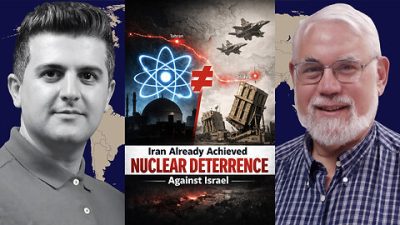
Prof. Ted Postol: Iran Already Achieved Nuclear Deterrence Against Israel
or go to
Aletho News Archives – Video-Images
From the Archives
How the occupied mentality syndrome works
Saudi Arabia on the American chessboard – Part 3
By B. J. Sabri | American Herald Tribune | June 27, 2016
Read part 2: “The occupied mentality Syndrome“
Previously I argued whether Saudi Arabia’s repeated involvements in U.S. interventions and wars stem from free national will or in response to a specific condition. For starters, in Saudi Arabia there is no national will. In Saudi Arabia, the national will is the will of the Al Saud clan. Still, when a major Arab state allies itself with a superpower that committed unspeakable crimes against humanity in almost every Arab country, then something is wrong. This fact alone should compel us to examine the U.S.-Saudi relation for one exceptional reason. As a result of the U.S.-Saudi wars, hundreds of thousands of people in Afghanistan, Iraq, Iran, Libya, Syria, Yemen, and Somalia have lost their lives. Millions became displaced in their own homelands. And millions more rendered refugees.
Attributing the Saudi policies to the bonds of “partnership” with the U.S. is frivolous. There are no bonds between these two thugs except those of business, military deals, secret plots, and wars. Proving this point, bonds such as these have no space for the American and Saudi peoples to share significant cultural or societal exchanges. If partnership is not the reason for the Saudi contribution to the U.S. strategy of empire and imperialism, then another reason must exist.
This leads to three possibilities. … continue
Blog Roll
 Aletho News
- In letter to UN chief, Araghchi warns of dire consequences of US-Israeli attacks on Iran’s nuclear facilities
- Why the CIA conspiracy to invade Iran with Kurdish militias failed
- Why Are Upbeat US Claims About Mission to Rescue Pilot ‘Highly Questionable’?
- Aircraft destroyed during US ‘rescue’ of downed F-15 pilot cost more than $100 million each
- Washington University removes professor who condemned US-Israeli war on Iran
- Russia Warns of Retaliation as UK Authorizes Seizure of Vessels
- Serbia thwarts plot to bomb Russia-Hungary gas pipeline – Vucic
- Al Mayadeen voices solidarity with Dr. Marandi amid death threats
- US dismantling international law in its war against Iran while claiming ‘false’ victory: Legal scholar
- One martyr, 5 injuries in US attack on Iraqi border crossing with Iran
- If Americans Knew
- US loses planes over Iran, Israel downgrades Lebanon war goals – Daily Update
- Israel Is Blocking Palestinians from Easter at Church Where Jesus Resurrected
- Plot to assassinate Palestinian activist follows harassment campaign promoted by Zionist groups and elected officials
- Prominent New York synagogue hosts presentation on why U.S. Jews should support the ethnic cleansing of Gaza
- Tapper vs. Piker: Is the CNN Anchor Auditioning for David Ellison?
- Shouldn’t Democrats Be Able to Condemn Genocide?
- Israel-US kill negotiators, destroy civilian structures, but Iran’s military capabilities still largely intact – Daily Update
- ‘War crime’: Global condemnation as Israeli ministers celebrate death penalty law targeting Palestinian prisoners
- 7 Ways Israel Is Turning Lebanon Into Gaza
- World’s Leading Football Bodies Under Fire Over Israel Policies
- No Tricks Zone
- An Inconvenient Tree: Uncovered In Alps… Europe Much Warmer Than Today 6000 Years Ago
- New Study Reports A 60% Slowdown In Greenland’s Ice Loss Rate In The Last Decade
- Low Intensity Tornado Wrecks Major Solar Farm, Creating A Potential Toxic Dump
- New Study Finds Warming Saves Lives…Cold Temperatures 12 Times More Deadly Than Excess Heat
- German Science Blog Accuses PIK Climate Institute Of Hallucinating Climate Tipping Points
- Devastating Assessment Of Comirnaty Vaccine By Former Senior Pfizer Europe Toxicologist
- New Study: CO2 Is ‘Effectively Negligible’ As An Explanatory Climate Change Factor Since 2000
- Former Pfizer Toxicologist Dr. Helmut Sterz Tells Bundestag Hearing Pfizer Vaccine Should Have Never Been Approved
- Energy Expert: Germany’s Nuclear Phaseout Was A “500 Billion Euro Mistake”
- New Research: South Australia’s Mid-Holocene Sea Surface Temperatures Were 4°C Warmer Than Today
 Aletho News