Hamas: Banning the Islamic Movement is an Israeli racist measure
Palestine Information Center – November 17, 2015
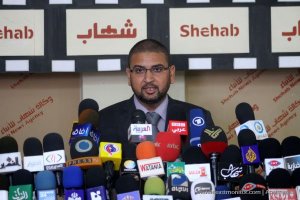 GAZA – The Hamas Movement strongly denounced the Israeli decision to outlaw the Islamic Movement in the 1948 occupied lands as “an act of racism.”
Hamas spokesman Sami Abu Zuhri stated in a press release on Tuesday that the Israeli ban measure against the Islamic Movement targets the Arab presence in the 1948 occupied territories.
“The Israeli decision is aimed at punishing the Islamic Movement and preventing it from continuing its role in protecting the Aqsa Mosque,” Abu Zuhri added, calling the decision as “a badge of honor” to the Islamic Movement.
The Hamas spokesman called on the international community to intervene to curb such Israeli racist measures against the Palestinians.
The Israeli security cabinet on Tuesday declared the Islamic Movement in the 1948 occupied lands an unlawful organization, effectively outlawing the group led by Sheikh Ra’ed Salah.
Following the decision, police forces raided over a dozen of the group’s offices in the 1948 occupied lands, seizing computers, files and funds.
The Israeli occupation authority also froze its bank accounts and said that 17 organizations affiliated with the Movement were served with orders to close down.
The police also called in several of the Movement’s officials for questioning, including Sheikh Salah, his deputy Sheikh Kamal Khatib, and the organization’s director of Jerusalem and Aqsa Mosque affairs, Salman Abu Ahmad.
Eye-witness account of a murder: ‘They didn’t want her alive, they want her dead, they meant to kill her”
International Solidarity Movement | November 16, 2015
Hebron, Occupied Palestine – On 25th October 2015, 17-year old Dania Arsheid was gunned down by Israeli forces in front of the Ibrahimi mosque in occupied al-Khalil (Hebron) and left to bleed to death. One of the shopkeepers nearby the Ibrahimi mosque witnessed the events leading up to this ruthless murder and agreed to make a statement.
After school finished around 1:20pm on that fateful Sunday, Dania was on her way from the Palestinian souq (market) in the Old City of al-Khalil towards the Ibrahimi mosque. She passed the first revolving gate and the metal detector without any problems – the metal detector did not indicate any metal objects. When passing the second revolving door, soldiers at the nearby checkpoint at the entrance of the mosque called for her to come there. Upon hearing this, the witness, who owns a shop, just meters away from the revolving gate, decided to go through the checkpoint to make sure that the girl was okay.
Dania passed yet another metal detector at the checkpoint at the mosque entrance and put her bag on the table there, as requested by the Israeli forces. They searched her entire bag but they were not able to find anything. Regardless of that, Israeli forces kept asking
Dania ‘where is the knife’ over and over again – completely ignoring her answer that ‘there is no knife’. When one of the soldiers suddenly shot a bullet between her feet yelling at her, she raised her hands and moved back down the stairs. Nevertheless, the soldiers continued questioning her aggressively about a knife – even though she had her hands raised and her bag had been searched with no knife found; and Dania repeatedly asserting that she did not have any knife.
After the first shot was fired, more and more soldiers arrived to the checkpoint, so that it was impossible to tell how many of them shot the 6-7 fatal bullets at Dania – a girl who had her hands up in the air, who had been searched extensively and who had at no point posed any threat. Immediately after she was gunned down, Palestinians in the area – including the witness – were forced to move back through the checkpoint into the souq. The soldiers pointed their assault rifles at the witnesses pushing them out of the area and immediately afterwards closed off the checkpoint for anyone to enter and exit for about an hour.
The first ambulance arrived about 15 minutes after Dania was gunned down. “They didn’t want her alive, they want her dead, they meant to kill her”, explains the witness, stating that they could have easily arrested her. At no point after her body was perforated with bullets was any first aid provided, and the shooters left her lying on the ground slowly bleeding to death. Instead of giving first aid, Israeli forces proceeded to block the view so nobody but them would be able to see the 17-year old school-girl bleed to death.
“She came [to the checkpoint] and didn’t do anything – and then she was killed.”
Pro-Palestinian Scottish lawmaker strip-searched on Israel trip
Press TV – November 14, 2015
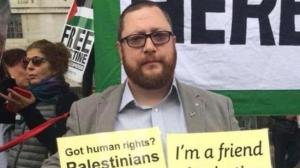 A pro-Palestinian Scottish lawmaker travelling to the occupied Palestinian territories on a parliamentary fact-finding mission has been strip-searched by Israeli forces upon arrival and refused entry.
Andrew Murray, the head of the Friends of Palestine group in the Scottish National Party (SNP), was detained at Tel Aviv’s Ben Gurion airport on Monday and held in custody for over 24 hours, he told AFP on Friday.
“They strip-searched me, scanned me, swabbed me everywhere,” Murray said, adding, “Twice I asked for representation from the British embassy, twice I was told no.”
He was later deported and banned from entering the occupied territories for 10 years, apparently over his campaign for Palestinian rights.
Carol Monaghan, a member of the SNP, said that she “absolutely condemned” the Israelis’ behavior, adding, “Andy was there on a peaceful, fact-finding trip.”
Sabine Haddad, a spokesperson for Israel’s interior ministry, claimed that Murray lied about the reason of his trip by saying he was a tourist.
Murray, however, responded that he did not lie about any of the questions asked.
Sayyed Nasrallah Receives Condoling Phone Calls from Hamas’ Meshaal, Haniyeh
Al-Manar | November 14, 2015
Hezbollah Secretary General Sayyed Hasan Nasrallah received telephone calls from Hamas politburo chief Khaled Meshaal and his deputy Ismail Haniyeh expressing their condemnation of the terrorist bombings in Burj el-Barajneh.
Meshaal offered his condolences on the martyrdom of around 43 people, and stressed “the sympathy of the Palestinian people with the Lebanese and their support in the face of this painful tragedy.”
Meshaal and Haniyeh assured that the Palestinians who were allegedly involved in the blast were not refugees in Lebanon, reported al-Joumhouria newspaper on Saturday. Meshaal and Hanieh had informed the Lebanese Speaker Nabih Berri that the names mentioned by the ISIL terrorists were not of refugees, but of individuals who had died in Syria over two years ago.
The so-called Islamic State in Iraq and the Levant terrorist group claimed responsibility for the attack, alleging it was executed by two Palestinians and a Syrian.
The Lebanese Army said two men wearing suicide vests carried out the attacks. A military statement added that the body of a third suicide attacker who had failed to blow himself up was found at the scene of the second blast.
The NY Times: In Praise of Israel’s Killing Squads
By Barbara Erickson | TimesWarp | November 13, 2015
In The New York Times it’s all part of a high stakes game, the good guys (Israelis) against the bad guys (Palestinians), and this time the good guys won, taking the prize through clever and audacious disguises.
Such is the tone of Isabel Kershner’s story today that tells of yet another outrage by Israel: Special forces invaded a hospital in Hebron, held the staff at gunpoint, killed a visitor point blank and kidnapped a patient recovering from surgery.
Condemnation of this atrocity and other recent attacks on Palestinian hospitals has come from Doctors Without Borders, Amnesty International, the International Committee of the Red Cross and a half dozen United Nations agencies, but none of their criticisms are included in the Times story.
Kershner, instead, only includes objections from Palestinians, and in the context of her writing, they come off as sore losers who would be expected to complain, in any case.
Her story opens with a description of the raid, as undercover Israelis disguised as Arabs enter the hospital, pushing a “pregnant woman” in a wheelchair, and it ends with several paragraphs looking back at other Israeli operations that involved masquerades: a 1972 action to foil a hijacking, a “famous” revenge assassination by former prime minister Ehud Barak, and a raid in Dubai to kill a Hamas commander.
In other words, it was all part of an illustrious Israeli tradition.
The Palestinians are described as “livid,” a term that implies a somewhat excessive rage and carries a hint of derision. It is not a neutral term in news writing, but Times editors apparently had no problem allowing it to stand.
The Israeli operation, on the other hand, is characterized as something of a breeze, not the bloody and outrageous affair that it was. They entered the hospital and then “about 10 minutes later they were on their way out.” They “whisked away” the suspect, Azzam Shalalda, leaving his cousin, Abdallah Shalalda, dead on the floor of the hospital room.
In describing a similar raid on a Nablus hospital last month, Kershner writes that Israeli forces “snatched” a suspect in a fatal shooting. Such vocabulary implies a kind of cinematic caper, devoid of real life complications.
Missing from her story is any mention of international humanitarian law, which forbids such violations of hospital and health care facilities. Amnesty International also noted that the killing of Abdallah Shalalda appeared to be a deliberate extrajudicial execution, and Tikun Olam blogger, Richard Silverstein, wrote that the undercover agents had entered the hospital expressly to kill Abdallah and arrest his cousin.
Kershner, however, is quick to quote the military, which claimed that “a suspect attacked the force, which responded to the assault and fired on the attacker.” Only later in her story does she note that hospital officials said he was shot not during an attack but when he emerged from a bathroom. Amnesty stated that his wounds were consistent with a deliberate execution.
Her story glosses over the recent raids on a Jerusalem hospital and UN demands that they cease. (Israel, however, has continued to invade the facility.)
In the eyes of Kershner (and the Times), it seems that there is no problem with Israeli violations of international law when the state wants to apprehend a Palestinian suspect. She writes that the raid was Israel’s way of saying that “there will be no safe haven for Palestinian suspects.”
By contrast, the Times has never bothered to report that Israel knows the identity of Jewish settlers responsible for burning to death three members of a Palestinian family but refuses to arrest them because it might reveal intelligence methods.
The terrible irony of this double standard is beyond the radar of Isabel Kershner and the Times editors. On the contrary, they present Israel’s lawless and bloody actions as evidence of ingenuity and daring, celebrating a “victory” over the ultimately helpless and endlessly oppressed Palestinians.
The race theories of Jabotinsky, a central figure of Zionism
ZULFAHMED | December 13, 2011
Israeli Prime Minister Binyamin Netanyahu’s race views are likely quite informed by his father, Benzion Netanyahu, who was Secretary to Ze’ev Jabotinsky, whose race theories are the subject of this note. Benzion Netanyahu was interviewed by Ma’ariv in April 2009, a few months after the Operation Cast Lead which killed more than 1,100 people including deliberate murder of more than 300 children, and his comments included the following:
Prof. Netanyahu: “The Jews and the Arabs are like two goats facing each other on a narrow bridge. One must jump to the river – but that involves a danger of death. The strong goat will make the weaker one jump… and I believe the Jewish power will prevail.”
Q: What does the Arab’s jump mean?
A: “That they won’t be able to face [anymore] the war with us, which will include withholding food from Arab cities, preventing education, terminating electrical power and more. They won’t be able to exist, and they will run away from here. But it all depends on the war, and whether we will win the battles with them.”
Q: I suppose you don’t believe in the peace process.
A: “I don’t see any signs that the Arabs want peace… we will face fierce attacks from the Arabs, and we must react firmly. If we don’t, they will go on and Jews will start leaving the country… we just handed them a strong blow in Gaza, and they still bargain with us over one hostage… if we gave them a blow that would really hurt them, they would have given us Gilad Shalit back.”
Q: Operation “cast Lead” was one of the worst blows we handed on a civilian population.
A: “That’s not enough. It’s possible that we should have hit harder.”
Q: You don’t like the Arabs, to say the least.
A: “The bible finds no worse image than this of the man from the desert. And why? Because he has no respect for any law. Because in the desert he can do as he pleases.
The tendency towards conflict is in the essence of the Arab. He is an enemy by essence. His personality won’t allow him any compromise or agreement. It doesn’t matter what kind of resistance he will meet, what price he will pay. His existence is one of perpetuate war.”Q: Is there any hope of peace?
A: “Out of agreement? No. the other side might stay in peace if it understands that doing anything [else] will cause it enormous pain.
The two states solution doesn’t exist. There are no two people here. There is a Jewish people and an Arab population… there is no Palestinian people, so you don’t create a state for an imaginary nation… they only call themselves a people in order to fight the Jews.”
Q: So what’s the solution?
A: “No solution but force… strong military rule. Any outbreak will bring upon the Arabs enormous suffering. We shouldn’t wait for a big mutiny to start, but rather act immediately with great force to prevent them from going on…
If it’s possible, we should conquer any disputed territory in the land of Israel. Conquer and hold it, even if it brings us years of war. We should conquer Gaza, and parts of the Galil, and the Golan. This will bring upon us a bloody war, since war is difficult for us – we don’t have a lot of territory, while the Arabs have lots of space to retreat to. But that’s the only way to survive here.”
There is valuable experience [on this matter] we don’t pay notice to. I mean the Ottoman rule over the Arabs. The Turks ruled over the Arabs for 400 years, and there was peace and quiet everywhere. The Arabs hated the Ottomans, but every little thing they did brought mass killings and hanging in towns squares. They were hanging people in Damascus, and Izmir… every town had hanging posts in its center…the Arabs were so badly beaten, they didn’t dare revolt. Naturally, I don’t recommend the use of hangings as a show of force like the Turks did, I just want to show that the only thing that might move the Arabs from the rejectionist position is force.”
Note that one is tempted to think that perhaps Benzion Netanyahu, who is quite old, might be holding views that are disconnected from the younger Israelis but this would be quite wrong. Here is a fairly random conversation between Zionists translated into English:

The controversy of considering Zionism a form of racism had played out in the UN, with the only UN resolution ever to be retracted was precisely one which agreed that Zionism is a form of racism, after which Israel made its revocation the precondition to participation in the Madrid Peace Conference. Specifically, UN Resolution 3379, adopted on November 10, 1975 by a vote of 72 to 35 (with 32 abstentions), “determine[d] that Zionism is a form of racism and racial discrimination”. The resolution was revoked by Resolution 46/86 on December 16, 1991. In the history of the UN, this is the only resolution that has ever been revoked. So that’s the status of the issue in UN, but it is interesting nonetheless to consider the views of Jabotinsky on race:
So it is interesting to look at the ideas of race in one of the pioneering figures of Zionism, Ze’ev Jabotinksy (from Lenni Brenner: The Iron Wall)
Jabotinsky was indeed a believer in the “very much besmirched” term, insisting in a letter written in 1914 that,
the source of national feeling … lies in a man’s blood … in his racio-physical type, and in that alone … a man’s spiritual outlooks are primarily determined by his physical structure … For that reason we do not believe in spiritual assimilation. It is inconceivable, from the physical point of view, that a Jew born to a family of pure Jewish blood … can become adapted to the spiritual outlooks of a German or a Frenchman … He maybe wholly imbued with that German fluid but the nucleus of his spiritual structure will always remain Jewish … The spiritual assimilation of peoples whose blood is different is impossible … In order to become truly assimilated he must change his body. He must become one of them in blood … he mast bring into the world … over a period of many scores of years, a great-grandson in whose veins only a minute trace of Jewish blood remained … There can be no assimilation as long as there is no mixed marriage … All the nations that have disappeared (apart from those … who were massacred …) were swallowed up in the chasm of mixed marriages … autonomy in the Golah [exile] is likely to lead … to the complete disappearance of the Jewish nation as such from the face of the earth … Just imagine … when our offspring will be living at peace among a strange people … These conditions will lead naturally and freely to an increase in mixed marriages … this will mean the inception of complete assimilation … Without those physical roots, the spiritual flower is bound to wither … This will mark the end of the battle waged by the Jewish people for national existence … Only those can call themselves “nationalists” who desire to preserve national integrity for the everlasting and at all costs…
A preservation of national integrity is impossible except by a preservation of racial purity, and for that purpose we are in need of a territory of our own … If you should ask me in a sense of revolt and outrage: but surely in that case you want segregation at all costs! I would answer that one must not be afraid of words and not of the word “segregation”. The poet, the scholar, the thinker … must cut himself off and remain alone with himself … No creativeness is possible without segregation … The nation, too, must create … a creative nation is in need of segregation … it will create new values in its segregation … it will not keep them to itself but will place them on the common international table for the general good, and so its segregation will be looked upon with favor by humanity, [53]
In 1913, in his aptly titled article Rasa, he gave his answer to the vexing theoretical question of what constituted a nation:
A nation is manifested by its own racial spectrum” which permeates to a greater or lesser degree, the personality of any average member of the group beneath and above the diversity of their individual physiognomies. [54]
Nations were not racially pure, all were mixtures, but in the end each nation carries with it its own substance, the
first and last bulwark of a nation’s personality-the peculiarity of its physical nature (“racial spectrum”) and parallel to it its psyche … Some day science may achieve such refinement that it will become possible by a special. analysis of the blood, or perhaps, the secret of the glands, to establish the “spectrum” or “recipe” of the various racial types showing all the ingredients: that go into a typical Italian or an average Pole. I venture a forecast that most recipes” wilt be found to contain practically the same ingredients, only the proportion in which God and history have mined them wilt prove. different … The Irish race may contain the same ingredients as the Scottish, but their respective quantities are probably far from the same in each combination: hence the great difference between the two national characters which no observer would question. [55]
The Zionist quarrelled with the Marxist notion of historical materialism. He recognized, in arguendo, that societies worked within economic frameworks. But, in the final analysis, culture had to be reduced to race:
Given a complete similarity of all other conditions – climate, soil, history – two “races” would create two different types of economy … If the types of economy, its special characteristics, the social order etc., are stamped by the “racial” psyche, it is even more so in the sphere of religion, philosophy, literature.
He was insistent. All the categories that the scholars attempted to use to define the illusive essence of nationality were, in his eyes, ultimately inadequate:
One is therefore bound to state: Territory, language, religion, common history – all these are not the essence of a nation but its adjectives only … the essence of a nation, its first and last fortress of uniqueness of its image, is its distinctive physical characteristics, the compound of its racial recipe.
But there were many who assumed that the great mass migrations of the day were in fact breaking down the homogeneity of national populations. Here again Jabotinsky chose to differ. Suddenly, for polemical purpose, he assumed that the future would be socialistic. Therefore, he argued, migration would be greatly reduced as each nation would be able to solve its economic problems. It is immediately apparent that he is merely using any means to justify his a priori thesis that nations would not and should not ever truly merge.
Will there ever be one herd and one shepherd? … when to this is added the dream of the integration of nations into one mixture, here it is already possible to state with some certainty: It shall not be … In such conditions the national characteristics of each closed district can only increase in purity” and strength, but never to the contrary … to this future vision in its entirety there is no prospect of integration of cultures and their mixture, but on the contrary; glorious flourishing, such as we have not witnessed yet, of each national essence in an atmosphere of peace and tranquility.
The human race consists of 7 billion people. We live in a dystopia and have inherited ugly ideologies, beliefs, prejudices, lies, from the past. We must clearly see the ugliness and seek deeper truth. We must rise out of the sewers of consciousness of the past ages and rise above it. We should not stoop to their level but only observe and understand the mechanism which had wired them so that we can avoid the same problems in the future.
It is also noteworthy that some of the people who later became the Zionist elite, the owning oligarchs of the Federal Reserve, such as Lehman Brothers and J P Morgan were literally involved in the slave trade and exploitation business in America. Thus when we read that the Sheldon Adelson-backed Birthright Israel has such charming examples of racism as this, we should not be surprised:
From my notes on Day 8: “Israel just went in and cleaned Gaza,” Shachar said of Operation Cast Lead, which had taken place a year earlier, as we drove south to an organic farm along the border. There, the Israeli proprietor explained that his low-hanging trellises were Thai worker–sized and invited us to nibble the dangling strawberries. “Thank you, Thai worker!” he instructed us to say when a laborer walked by. En route to the next stop on the itinerary, Shachar pointed to tin shacks—Bedouin villages—and jovially detailed the government’s Bedouin home-demolition campaign, saying the IDF needed to “kick them away.” We arrived at our far more picturesque “Bedouin Dessert [sic] Village Experience” and rode camels into the sunset. A man named Mohammed served coffee and played a familiar tune on the oud: “Hava Nagila.”
Netanyahu Ups the US Ante
By Ann Wright | Consortium News | November 12, 2015
President Barack Obama, having met with Israeli Prime Minister Netanyahu on Nov. 9 at the White House, is considering Israel’s request for a 50 percent increase of nearly $1.5 billion in U.S. military funding, which would bring the U.S. donation – used for killing Palestinians in the West Bank and Gaza – to $4.5 billion a year.
As it stands now, more that half of the U.S. foreign military aid for 2016 goes to Israel. As in all things, Israel gets special treatment by the U.S. allowing Israel to spend 25 percent of its U.S. gift to pay itself for buying weapons from its own weapons industry.
According to a recent congressional report, Israel has received $124.3 billion in military assistance from the U.S. since its founding in 1948. The report states that “strong congressional support for Israel has resulted in Israel receiving benefits not available to any other countries; for example, Israel can use U.S. military assistance both for research and development in the United States and for military purchases from Israeli manufacturers.
“In addition, U.S. assistance earmarked for Israel is generally delivered in the first 30 days of the fiscal year, while most other recipients normally receive aid in installments, and Israel (as is also the case with Egypt) is permitted to use cash flow financing for its U.S. arms purchases.
”In addition to receiving U.S. State Department-administered foreign assistance, Israel also receives funds from annual defense appropriations bills for rocket and missile defense programs. Israel pursues some of those programs jointly with the United States.”
As Obama was meeting Netanyahu, eight blocks away at the Palestine Center in Washington, D.C., a surgeon from Norway who works part of each year in al Shifa hospital in Gaza, told of the devastation, destruction and human suffering these American weapons and dollars cause.
Dr. Mads Gilbert spoke of 51 days of terror in Gaza in the summer of 2014 as the Israeli attack forces brutalized the people of Gaza with Israeli and U.S. artillery, drone ordnance for assassinations, F-16s, hellfire missiles and dense inert military explosives.
Gilbert said the 2014 Israeli attack on Gaza was 500 percent stronger than Israel’s 2009 attack, when he was also working at al Shifa hospital when the Israeli Defense Force (IDF) attacked Gaza. In 2014, the IDF fired 50,000 shells into Gaza and conducted over 6,000 air strikes, destroying over 3,500 buildings in Gaza City alone including over 50 percent of the hospitals in Gaza.
At the end of the 51-day attack, 2,250 Palestinians were dead, including 551 children and 299 women. Some 3,500 Palestinian children were wounded and the 1 million children and youth who live in Gaza were all deeply affected by the attacks. Sixty percent of the 1.8 million who live in Gaza are under the age of 22.
Dr. Gilbert’s presentation included photos of the carnage caused by Israeli attacks and the audio of the sounds of jets racing overhead, bombs exploding and buildings collapsing.
Citing the report of the United Nations Independent Commission of Inquiry on the 2014 Gaza Conflict, Gilbert said that the IDF purposefully targeted the civilian population including entire families and that the IDF purposefully targeted hospitals, ambulances and four UN shelter facilities.
The report said, “Hundreds of Palestinian civilians were killed in their own homes, especially women and children. At least 142 families lost three or more members in an attack on a residential building during the summer of 2014, resulting in 742 deaths. The fact that Israel did not revise its practice of air-strikes, even after their dire effects on civilians became apparent, raises the question of whether this was part of a broader policy which was at least tacitly approved at the highest level of government.”
Additionally, “the commission is concerned about Israel’s extensive use of weapons with a wide kill and injury radius; though not illegal, their use in densely populated areas is highly likely to kill combatants and civilians indiscriminately. There appears also to be a pattern whereby the IDF issued warnings to people to leave a neighbourhood and then automatically considered anyone remaining to be a fighter. This practice makes attacks on civilians highly likely. During the Israeli ground incursion into Gaza that began in mid-July 2014, hundreds of people were killed and thousands of homes destroyed or damaged.”
The commission report added: “Palestinian armed groups fired 4,881 rockets and 1,753 mortars towards Israel in July and August 2014, killing 6 civilians, including one child and injuring at least 1,600.” A total of 66 Israeli soldiers were killed in military operations inside Gaza.
The commission also reported: “In the West Bank including East Jerusalem, 27 Palestinians were killed and 3,020 injured between June and August 2014. The number killed in these three months was equivalent to the total for the whole of 2013. The commission is concerned about what appears to be the increasing use of live ammunition for crowd control by the Israeli Security Forces, which raises the likelihood of death or serious injury.”
The report continued, “Impunity prevails across the board for violations allegedly committed by Israeli forces, both in Gaza and the West Bank. ‘Israel must break with its lamentable track record in holding wrong doers accountable,’ said the commissioners, ‘and accountability on the Palestinian side is also woefully inadequate.’”
Signaling further attacks on Gaza during a Nov. 10 talk at the Center for American Progress in Washington, Netanyahu said Gaza has “become this poison thumb, this poison dagger that sends rockets” into Israel and that Israel must be prepared for a long period of tension.
The U.S. government’s blind backing for whatever Israel does, while providing the weapons for Israel to do it, is dangerous for both the United States and Israel.
As Israeli journalist Gideon Levy recently wrote concerning Hillary Clinton’s unwavering support for Israel: “support [for] the continued occupation is like a person who continues to buy drugs for an addicted relative. This is neither concern nor friendship; it is destruction. … ‘false’ friends of Israel – have been one of the curses on this country for years. Because of them, Israel can continue to act as wildly as it likes, thumbing its nose at the world and paying no price. Because of them, it can destroy itself unhindered.”
Levy’s comments about former Secretary of State Clinton equally applies to the unqualified support for Israel given by both Republican- and Democratic-led U.S. administrations.
Israeli attacks on people in Gaza and the West Bank will end only when we the citizens of the United States force our government to stop its military and diplomatic backing of the State of Israel.
Ann Wright served 29 years in the U.S. Army/Army Reserves and retired as a Colonel. She also was a U.S. diplomat for 16 years and resigned in 2003 in opposition to the war on Iraq. She has been in Gaza six times and was on the 2010 Gaza Flotilla that was attacked by the IDF, which executed nine passengers and wounded 50.
Settlement Reached in Case of Professor Fired for “Uncivil” Tweets
Center for Constitutional Rights | November 12, 2015
Chicago – Today, the Center for Constitutional Rights (CCR) and co-counsel Loevy & Loevy announced the settlement of Professor Steven Salaita’s case against the University of Illinois at Urbana-Champaign (UIUC) for firing him from his tenured position over his personal tweets criticizing the Israeli government’s assault on Gaza in 2014. Professor Salaita sued UIUC, the university Board of Trustees and high-level administrators for violating his First Amendment right to free speech and for breach of contract. Salaita’s firing became a flashpoint for debates over academic freedom, free speech, and the repression of Palestinian rights advocacy. In exchange for Professor Salaita’s agreement to release his claims, the university has agreed to pay $875,000.
“This settlement is a vindication for me, but more importantly, it is a victory for academic freedom and the First Amendment,” said Professor Salaita. “The petitions, demonstrations, and investigations, as well as the legal case, have reinvigorated American higher education as a place of critical thinking and rigorous debate, and I am deeply grateful to all who have spoken out.”
Professor Salaita’s firing prompted student walkouts; the cancellation of more than three dozen scheduled talks and conferences at the school; further pledges to boycott UIUC by more than 5,000 academics; a vote of no confidence in the university administration by 16 UIUC academic departments; and public condemnation by prominent academic organizations, including the American Association of University Professors (AAUP), the Modern Language Association, and the Society of American Law Teachers. In April, the AAUP released a scathing report on Salaita’s termination and, in June, voted to censure the UIUC for its actions. In August, a federal judge rejected the university’s argument that Professor Salaita had not actually been hired, despite a contract and his impending family move to the university, writing, “If the Court accepts the University’s argument, the entire American academic hiring process as it now operates would cease to exist.”
Within hours of the court’s decision, Chancellor Phyllis Wise, who sent Professor Salaita the letter notifying him of his termination a year prior, resigned from the UIUC. The following day, the university revealed that administrators had been using personal email accounts in an attempt to avoid publicly releasing their correspondence. In one email released under the Freedom of Information Act (FOIA), Chancellor Wise admitted that she was not only using her private email because of the litigation, but was deleting her messages after sending. Provost Ilesanmi Adesida resigned a few weeks later. Prior FOIA productions had revealed that wealthy UIUC donors had threatened to withhold funding unless Professor Salaita was terminated.
“Professor Salaita’s case galvanized champions of academic freedom and Palestinian rights activists alike, making clear that punishing speech―even speech that dares to criticize Israeli government atrocities―will not be tolerated. It resulted in widespread condemnation of the university’s actions and a federal court decision finding he had a contract and his tweets were protected by the First Amendment. Professor Salaita has in fact won―and this settlement permits him to move on and refocus on his work as a premier scholar and an excellent teacher,” said Center for Constitutional Rights Deputy Legal Director Maria LaHood.
In July 2014, after his contract with the university had been signed, Professor Salaita tweeted a number of strongly worded messages from his private account expressing his outrage and dismay at the Israeli government’s attacks in Gaza, which killed more than 500 children. Professor Salaita’s firing is part of a broader crackdown on activism for Palestinian rights that includes event cancellations, baseless legal complaints such as the ongoing case in Washington against Olympia Food Co-op board members for boycotting Israeli goods, administrative disciplinary actions, false and inflammatory accusations of terrorism and antisemitism, and legislation to prohibit boycotts of Israeli goods and institutions. The Center for Constitutional Rights co-authored a report this fall with the organization Palestine Legal on the widespread attempts to silence U.S. activists critical of Israel’s policies, called “The Palestine Exception to Free Speech”.
“Make no mistake: the size of this settlement is an implicit admission of the strength of Professor Salaita’s constitutional and contractual claims,” said Anand Swaminathan of Loevy & Loevy. “He has scored a major victory for those who care about free speech and academic freedom. In the future, university administrators will have to think twice before they choose the interests of wealthy donors and alumni over upholding their constitutional obligations. This legal victory could not have been possible without the support of a large and committed movement of activists and academics.”
For more information on the case, visit CCR’s Salaita v. Kennedy case page.
Loevy & Loevy is one of the nation’s largest and most successful civil rights law firms, dedicated to seeking justice for those whose civil rights have been violated and for whistleblowers. Our willingness to take hard cases to trial and win them has yielded a nationally recognized reputation for success in the courtroom. We only take cases we passionately believe in, we forge close bonds with our clients, and we are proud to have achieved outstanding results for them with truly uncommon consistency. Visit us at http://www.loevy.com.
The Center for Constitutional Rights is dedicated to advancing and protecting the rights guaranteed by the United States Constitution and the Universal Declaration of Human Rights. Founded in 1966 by attorneys who represented civil rights movements in the South, CCR is a non-profit legal and educational organization committed to the creative use of law as a positive force for social change.
A Slow Boat to Fast Data: Why is Palestine Still Waiting for 3G?
By Danny O’Brien and Jillian York | EFF | November 11, 2015
Good news for Palestinians: According to several August news reports, a 3G mobile network might be finally coming their way. After years of struggling with 2G speeds, the Israeli government and the Palestinian Authority are reported to have come to an agreement that would result in Israel releasing the frequencies required for 3G and possibly 4G services.
As documented by a new report on the country’s telecommunications industry by the Palestinian think tank, Al Shabaka, that speed upgrade has been a long time coming. The Oslo Accords, the agreement struck between Israel and the Palestine Liberation Organization (PLO) in 1995, settled that Palestinians should have their own telephone, radio and TV networks, but handed over the details of that to a joint technical committee. As detailed in the Accords, Israel would control all allocation of frequencies and determine where Palestinians could build new infrastructure. Israel consistently foot-dragged since then, delaying Palestinian telcos the ability to upgrade their networks, or share the radio spectrum with Israeli services and companies.
The result is an infamously slow phone network, roundly blamed on the political conflict between the two countries. Palestinians say that they’re the only country without access to 3G, and when President Obama visited the state in 2013, he was greeted by activists’ placards telling him to leave his smartphone at home. But Palestine’s data lines are not only slower and more poorly supported than those of its neighbors; they’re also the worst-case scenario for digital privacy in a centralized and state-managed telecommunications infrastructure.
Access to the Internet shouldn’t be a bargaining chip in geopolitical battles—and neither should privacy. As the Palestinian government and telcos negotiate for their new 3G network, they need to actively address the security of their users’ communications.
We know that telcos can end up compromising their users’ privacy by making secret deals with the government. In the United States, AT&T and others agreed for years to unlawfully hand over data to the government after pressure was applied. Other countries seek and obtain undisclosed access to telecommunications cables. In Palestine, the telecommunication companies are just as dependent on the government for the existence and economic success of their network. But in this case, the government in question is Israel, a state with a different electorate, radically different political motives, and with both the motive and capability to peer into the contents of the users of those companies’ communication lines.
Palestinian vs. Israeli Telcos in the Territories
Palestine and Israel’s ICT infrastructure are deeply intertwined. All international traffic must be routed through Israeli providers, with Palestinian companies paying connection and termination fees to them. Most infrastructure is only permitted within the small area of the West Bank that is theoretically (but not practically) under full Palestinian Authority control and, under the terms of the Oslo Accords, is additionally restricted from Israeli-defined buffer zones and along the separation wall.
Palestinian Internet traffic thus relies on a fragmented, dependent infrastructure. Palestinian phone calls and data traffic go through Israeli companies, onto Israeli soil, and with Israeli security and law enforcement access. Israel probably has a better insight into the movements of Palestinians than their own government does. Asserting the privacy of their communications would be extremely difficult for Palestinians, who have minimal access or redress under Israel’s judicial and administrative system.
The problem becomes more acute in the mobile market. According to 2013 data from the International Telecommunications Union (ITU), nearly 74% of Palestinians living in the West Bank or Gaza have a mobile cellular subscription, a rate on par with Palestine’s neighbors. Like the rest of Palestine’s infrastructure, mobile telephony is controlled by Israel—including spectrum allocation.
In 1999, Israel licensed access to 4.8 MHz in the 900 MHz band to Jawwal, a subsidiary of Palestine Telecom (PalTel), the national telecom provider in the West Bank. According to Al Shabaka’s report, Jawwal still retains the same access, but for more than 2.5 million subscribers compared to only 120,000 in 1999. Palestine’s secondary provider, Wataniya—which only operates in the West Bank—was also granted non-exclusive 2G frequencies in 2007.
Meanwhile, Israeli mobile operators have had access to 3G frequencies for several years now. In January 2015, the government of Israel awarded six companies 4G mobile broadband frequencies in the 1800 MHz band, at the same time as it was continuing to argue over sharing 3G bands with the Palestinian authorities. Israeli companies, with faster connectivity, operate cell towers in settlements throughout the West Bank. And these operators sell SIM cards in the West Bank without paying licensing fees or taxes to the local authorities, as required by the Oslo Accords.
This domination of spectrum and the market for Palestinians allows Israel a greater level of control over Gaza’s telecommunications, as evidenced by the calls and text messages sent by the Israeli military to Gaza’s citizens during its 2014 assault on the territory.
The State of Phone Surveillance in the Territories
Given that Palestine’s telcos are locked down to basic 2G, Israel may also have interception access even to those who use only Palestine’s own telecommunications companies. Earlier generations of tech are more vulnerable to being tapped by parties with no access to the underlying infrastructure. The encryption used to protect over-the-air transmissions by current 2G Palestinian mobiles has long been broken. That means that it’s possible to listen into and decode 2G phone signals with the right receiving equipment and software—technology that is developed and sold by Israeli companies. Civilian researchers believe that 3G and 4G systems are safer from passive surveillance. Mobile phone spying technology (like Stingrays or other IMSI catchers) work by forcing cellphones into their more vulnerable 2G mode, but that requires transmitters that actively communicate with the cellphone, which can be detected or blocked.
Is this why Israel has been so determined to stop Palestinians from upgrading their phones? With the current status quo, Israeli authorities can surveil and eavesdrop (or potentially mass send everyone their own text messages) on traffic coming over Israeli companies’ networks. And if they feel the need to see what’s going on in Palestinian networks, they can passively monitor the 2G systems without detection.
To continue that level of surveillance on an upgraded 3G network run by Palestinian companies, Israel will have to either ensure that it can continue to tap into the network backbone those companies use, or use more detectable active surveillance technology like IMSI catchers. Active surveillance would be detectable: it would also be a violation of the Oslo accords, which declare that both sides “shall refrain from any action that interferes with the communication and broadcasting systems and infrastructures of the other side.”
Back room deals for phone back doors?
Palestinian authorities have many reasons for re-establishing control of their telecommunication network back from the Israelis. For one, it was promised to them in the Oslo Accords. For another, the lack of a decent infrastructure remains a profound limitation the opportunity for digital development and innovation in the Territories. It is also losing them a considerable amount of money in tax revenue.
In contravention of the accords, Israeli companies selling digital services in Palestine pay no taxes. According to Al Shabaka’s report, it is estimated that Palestinian operators lose $80 to $100 million in annual revenue as a result of the lack of 3G services. Similarly, a 2008 World Bank report cites the loss in revenue to the Palestinian Authority as a result of unlicensed Israeli operators to be $60 million [PDF]. Wataniya, one of the private Palestinian mobile operators, paid the Palestinian Ministry of Telecommunications and Information Technology $140M for a 3G contract that it still cannot deploy.
But these supposedly independent Palestine-based telecommunication companies are heavily dependent on Israel’s co-operation to operate at all. Their traffic needs to pass through Israeli territory to reach Gaza and the West Bank or beyond. (All of Gaza’s access points are located within Israel, meaning that all mobile and landline traffic from Gaza must pass through Israel [PDF].)
In an already heavily controlled environment, with money on the line, Palestinian telcos may agree to leave those links unencrypted or otherwise accessible. Even the Palestinian government may see limited harm in conceding continuing Israeli data access in return for greater revenue and their own political control of the networks. It’s notable that in the current round of agreements, neither the Palestinian nor Israeli representatives were willing to discuss the compromises they have struck to move the 3G agreement forward. That’s not a result that should reassure anyone.
But for Palestinians, that means that a long-awaited increase in speed won’t give them any more security from monitoring—surveillance by any of the many powers, Israeli, Palestine or others that seek to control their fundamental right to communicate. They will finally enter the future of faster connectivity promised to them by the Oslo accords, but remain vulnerable to surveillance by two governments.
Conclusion
What might improve communications privacy for Palestine? Upgrading to 3G will certainly help: their current national networks are slow and simple to intercept, while faster networks operated by Israeli companies are vulnerable to Israeli surveillance. But 3G doesn’t guarantee privacy.
The current negotiators need to push for commitments that protect civilian privacy: strong and actively enforced legal safeguards for Palestinian authority access to communications, and secured and encrypted connections when infrastructure passes out of Palestinian control.
Palestine needs more direct links to the rest of the world. Both the Palestinian government and Israel have security needs, but neither should sacrifice the economic benefits of a fast and well-connected data network to those concerns.
Palestinians could also work to build networks that work for them, rather than the negotiated settlement of current Israeli and Palestinian authorities. Al Shabaka’s report suggests that local municipalities could work to provide Wi-Fi links in their own areas, and link those with microwave and fiber to the end-points of their choice. That’s the kind of flexible, decentralized and user-driven network that could take issues of fast, universal access and privacy out of the hands of warring politicians and foreign companies, and into the hands of those most affected by Palestine’s current slow and surveillable mobile market: its citizens.
What the Videos Show: Israel is Killing in Cold Blood
By Barbara Erickson | TimesWarp | November 11, 2015
What is inspiring young Palestinians to attempt yet more stabbing attacks on Israelis? The answer, according to The New York Times, has nothing to do with the violence of military occupation, the abuse of Palestinian children or trigger-happy troops; it is merely a “loop-like dynamic” of attack and response inspired by video clips.
In a story today, Isabel Kershner reports that videos showing knife attacks and heavy-handed treatment of young detainees are inspiring Palestinian boys as young as 12 to attempt knife assaults. But in a significant omission, the article says nothing about disturbing videos that support a different take: Many Palestinians have been killed when they posed no possible threat.
Likewise, even as Kershner writes about youthful attackers, she (and the Times) have avoided any mention of the constant reports from rights groups over recent years that detail the abusive treatment of Palestinian children in Israeli custody. These include reports of troops arresting children as young as 6 and documentation of violence used against the young detainees. (Also see TimesWarp 1-13-14.)
Instead, readers are introduced to two cousins, 12 and 13, who played hooky from school yesterday in order to carry out a copycat stabbing attack in Jerusalem. Both were arrested; one was seriously wounded in the process; and both had watched video footage the night before of Israeli interrogators aggressively questioning another young teen, Ahmad Manasra, who was wounded after an alleged attack that left his cousin dead.
Kershner then devotes much of her article to rehashing the story of Manasra, who was featured earlier in a lengthy piece aimed at showing how Palestinians got it wrong when they claimed the boy had been killed. It appears to have the same purpose here: to undermine charges that Israeli troops have made false claims about knife attacks and have planted evidence.
She writes, “In several cases, with no video corroboration, Palestinians have insisted that no stabbings took place and have accused the Israeli authorities of planting knives at the scene.”
Several significant factors are missing from this statement: Although video evidence is unavailable in some cases, others are supported by credible eyewitness accounts contradicting official claims; rights groups, not only Palestinians, have charged Israeli troops with killing innocent victims; and video evidence does exist that bolsters many of the charges against Israeli forces.
In a press release last month, Amnesty International said Israeli soldiers and police had resorted to “extreme and unlawful measures” and had “used intentional and lethal force without justification.” The rights group highlighted four cases of “what appear to have been extrajudicial executions.”
Amnesty pointed up one “especially egregious case” in which Israeli forces killed 19-year-old Sa’ad Muhammad Youssef al-Atrash in Hebron on Oct. 26 as he tried to retrieve an identity card. As the youth reached into his pocket, a soldier behind Atrash shot him on the right side. The report continues, “The eyewitness said he was shot six or seven times and bled profusely as he lay on the ground for about 40 minutes afterwards, while soldiers failed to provide medical treatment.”
Times readers, however, are unlikely to know anything about Muhammad Atrash and how he died, nor are they aware of the Amnesty statements or of reports from other rights groups, including those in Israel and Europe, all of them charging Israel with unlawful killings.
Since the Amnesty release last month, Israel has continued to kill Palestinians, many of whom posed no possible threat, bringing the total to over 80 killed and some 8,500 wounded since the beginning of October. As of Oct. 31, eight Israelis had died and 115 had been wounded, according to the United Nations. These numbers, however, do not appear in Kershner’s story.
Last week Israeli forces shot and killed a 73-year-old grandmother as she drove through Hebron to meet her sister for lunch. A spokesman said she tried to ram soldiers with the car and that a knife was found in her car. Video footage shows a different scenario: Tharwat Sharawi was driving at a moderate speed and in no way aimed to hit soldiers when a barrage of bullets took her life.
The Times has made no mention of this video evidence, nor has it informed readers of other disturbing cases, also caught on video:
- A settler shoots and kills Fadi Qawasmi, 18, in Hebron on Oct. 17, and appears to hand a knife to a soldier, who drops it near the body.
- A mob chases Fadi Alloun in Jerusalem on Oct. 4, shouting, “Shoot him!” as he runs for his life. Police bring him down with a hail of bullets.
- Muhammad Ramadan al Muhtasib, 23, is shot multiple times and killed as he lies helpless on the ground in Hebron on Oct. 30. The army alleges that he tried to stab a soldier.
- Issra Abed, 30, is shot at a bus station in Afula as she stands with her hands over her head. After she lies wounded on the ground, a bystander approaches and kicks away a pair of sunglasses lying by her side. (Police said she was grasping a knife.)
- Dania Irsheid, 18, is shot and killed at a checkpoint in Hebron after passing through metal detectors and a revolving iron gate. Video footage show Israeli police giving her no assistance as she lies bleeding on the ground.
- Hadeel al Hashlamoun, 18, is shot at a checkpoint in Hebron on Sept. 22 and left to bleed to death. A video shows her being dragged by her heels along the ground.
In several of these videos the indifference of Israeli troops is striking. None of them attempts to help the victims, and in some cases witnesses report that settlers are allowed to take pictures of the dead and dying while Palestinian journalists and medics are turned away. One highly disturbing photo shows a smiling settler taking a photo of a dead Palestinian in Hebron on Oct. 29.
In this context, the report by Kershner is appalling. Although video evidence, eyewitness accounts and investigations by rights groups point to a pattern of trigger happy—even blood thirsty—security forces killing Palestinians with the slightest degree of suspicion, the Times has made no effort to inform readers of these findings. On the contrary, it places this misleading story by Kershner on page 1 above the fold.
Here we find another attempt to blame the victims, to paint Palestinians as the violent offenders, omitting even the numbers of dead and injured, which reveal a disproportionate death toll of 10 Palestinians for every one Israeli. The facts, however, seem to be of no account when it comes to protecting Israel. Given the choice between shielding this rogue state and reporting the news, the Times stands with Israel.
Undercover Israeli forces shoot dead Palestinian in Hebron hospital

Ma’an – November 12, 2015
HEBRON – Undercover Israeli forces on Thursday shot dead a Palestinian during a hospital raid in the occupied West Bank city of Hebron, witnesses and hospital staff said.
Abdullah Azzam Shalaldah, 28, was shot several times by forces who raided the surgery unit of al-Ahli hospital in order to detain his cousin, Azzam Ezzat Shalaldah, 20, who was shot by an Israeli settler last month, hospital staff told Ma’an.
Abdullah and another relative were in the hospital visiting Azzam when around 20 undercover Israeli soldiers entered the hospital at around 4:00 a.m., witnesses said.
The forces tied up the relative while Abdullah, who was in the bathroom at the time, entered the room and was shot dead on scene. The undercover forces then retreated from the hospital with Azzam, taking him into custody, witnesses added.
Video footage from security cameras shows a group of around 16 men walking through the corridors of the hospital just before 4 a.m. pushing a wheel chair, when suddenly the man sitting down removes his blanket, stands up, and all the men draw guns and proceed down the hall.
The footage also shows what appears to be an Israeli agent dressed as a Palestinian woman, and other Israeli forces dressed as Palestinian Muslim men, wearing kuffiyeh’s and appearing to have fake beards.
An Israeli army spokesperson was unable to comment on the presence of undercover forces during the raid, while Israeli media reported that the forces arrived in two large vans with someone pretending to be pregnant.
The army spokesperson told Ma’an that a combined force of Israeli army and police members had entered the hospital in order to detain Azzam, when an “additional suspect attacked the forces.” The forces responded with live fire, killing the man, the spokesperson confirmed.
The spokesperson said that the forces detained Azzam on the grounds that he “stabbed an Israeli in the chest in Gush Etzion” on Oct. 25, wounding him severely, adding that “the victim shot him” as he fled the scene.
The spokesperson added that the “Shalaldah family are known Hamas operatives.”
Palestinian security sources told Ma’an on Oct. 25 following the attack that Azzam was shot by an Israeli settler. A spokesperson for Hadassah hospital said at the time that the settler, 58, had received a light “stab” wound to his chest, and had possibly been hit with a stone in his head.
Palestinian witnesses told Ma’an that they believed that the alleged Palestinian attacker had fled the scene unharmed and that Azzam had been working in agricultural fields when he was shot.
Abdullah, from the Hebron-area village of Sair, was the 80th Palestinian to be killed since Oct. 1.
The majority of those killed were shot dead by Israeli forces during alleged, attempted, and actual attacks on Israeli military and civilians.
Ten Israelis have been killed by individual Palestinians during the same time period.
Featured Video

The Search for Truth: Charlie Kirk’s Assassination One Year Later
or go to
Aletho News Archives – Video-Images
From the Archives
The 9/11 “Double-Cross” Conspiracy Theory
BY LAURENT GUYÉNOT • UNZ REVIEW • SEPTEMBER 6, 2022
Is it true that “9/11 was an inside job”? Yes, insofar as Israel is “inside” the U.S. But for the 9/11 truthers who have identified Israel as the main perpetrators, “9/11 was an inside job” is at best a half-truth, and at worst an integral part of the Zionist operation, like a secondary flag sewn as a lining under the false flag of Islamism. Victor Thorn (1963-2017) wrote in his book 9/11 made in Israel: The Plot Against America (2011): “In essence, the ‘9-11 truth movement’ was created prior to Sept. 11, 2001 as a means of suppressing news relating to Israeli complicity. . . . The slogan ‘9-11 was an inside job’ was quite possibly the greatest example of Israeli propaganda ever devised.” In milder terms, it is “controlled opposition”.
A genuine truth movement would have pointed to Israel as the prime suspect from the start. From day one, it was obvious who would benefit. … continue
Blog Roll
 Aletho News
- Europe’s mounting social chaos… chickens coming home to roost for proxy war against Russia
- US-Russia Diesel Deal Becomes Massive Defeat for Ukraine
- Hormuz and the Looming Economic Catastrophe
- Dhubab offensive, media blitz and the rapid unraveling of Saudi-backed coalition’s new gambit
- Putin Conveys to Trump Iran’s Vision on Possible Conflict Resolution – Kremlin
- The Search for Truth: Charlie Kirk’s Assassination One Year Later
- ‘Harsh reality’: Iran says France seeks monopoly on power and intimidation, not peace for all
- When Will This White House Madness End?
- Huckabee aide goes to ‘unusual lengths’ to portray ‘Israel’ positively
- Trump Announces Diesel Supply Deal With Putin Following Phone Call
- If Americans Knew
- Israeli forces kill another child in Gaza – Daily Update
- Gaza ceasefire exists in name only, say more than 100 organizations
- Nearly 2 Million in Gaza Need Urgent Shelter Assistance as Winter Looms: IOM Chief Warns
- Suppressing Palestinian resistance: US charity under fire for AI monitoring of Gaza classrooms
- Thousands Are Held in Israeli Torture Camps. This Is What Happens Inside
- Israel puts Gaza’s sick, injured, newborn in peril – Daily Update
- Report claimed Mark Levin used by Israeli government to influence Trump
- Over 2,000 Gazans have died awaiting medical evacuation amid Israel’s continued siege
- How a U.S. Diplomat Suppressed and Altered Reports Critical of Israel
- 5 Palestinians Die from Israeli Strikes in Gaza as Relentless Attacks Continue
- No Tricks Zone
- New Study: 50 Years Of The Most Aggressive ‘Net Zero’ Policies Can Only Affect The Global Climate By 0.03°C
- US September “Heat” Was No Record…Many Records Set Decades Ago
- Latest European Green Energy Debacle; Portugal’s Largest Flagship Solar Park Insolvent!
- Green Energy Debacle: German Expert Professor Fritz Vahrenholt Warns Of Severe Economic And Social Consequences
- Two More Paleo Reconstructions Affirm Meters-Higher Sea Levels Across Ireland, Brazil 7000-6000 Years Ago
- New Study: Earth And Venus Surface Warmth Largely Explained By Convection And Lapse Rate, Not CO2 Or Radiation
- 2025 Nature Paper Claiming Worsening Global Drought Gets RETRACTED …Heavily Flawed
- New Study: ‘Global Drought Shows No Detectable Recent Acceleration Under Climate Warming’
- Economic Masterminds: German Socialists Suggest Taxing Productivity Gains Stemming From Using AI
- The South China Sea Has Not Been Cooperating With The Climate Change Narrative

