‘Gaza must not become a battleground for political game,’ says Chinese envoy to UN
Global Times | March 22, 2025
Fu Cong, China’s permanent representative to the United Nations, said at a Security Council Briefing on Friday that China is gravely concerned about the breakdown of the hard-won ceasefire in Gaza. “Gaza must not become a battleground for political game. Civilian lives must not be sacrificed for political calculations. A lasting ceasefire must be realized in Gaza,” the Chinese envoy said.
The resumed fighting in Gaza has sparked widespread concern and apprehension in the international community. Since March 17, Israel has carried out large-scale airstrikes, renewed its ground offensive, and occupied central Gaza. Israel has also cut off access to humanitarian supplies and electricity in succession, causing massive casualties and worsening the already grave humanitarian disaster, Fu said.
“Securing a lasting ceasefire is the best way to save lives and bring hostages home, and it is an overriding priority,” he noted, while urging Israel to abandon its obsession with the use of force, immediately cease its military operations against Gaza, and lift blockade on the access of humanitarian supplies into Gaza.
Meanwhile, the situation in the West Bank is equally critical, the Chinese envoy added. Over the past two months, continued Israeli military operations have emptied by force multiple Palestinian refugee camps, displacing over 40,000 people. Israel should cease its attacks on the West Bank, stop settlement activities, and effectively curb settler violence, Fu noted.
Fu reiterated that implementing the two-State solution is the only viable way to resolve the Palestinian question. The international community should step up efforts to promote the political process of the two-State solution and provide robust guarantees. China supports the Gaza recovery and reconstruction plan jointly initiated by Egypt and other Arab states, and supports the commencement of rebuilding in accordance with the principle of Palestinians governing Palestine. China opposes the forced removal of Palestinian people, and opposes any attempt to annex the territories of Gaza or the West Bank, Fu noted.
Hamas said on Friday it was reviewing a US proposal to restore the Gaza ceasefire as Israel intensified a military onslaught to press the Palestinian militant group to free remaining Israeli hostages, Reuters reported. Three days after Israel effectively abandoned the two-month-old truce, Israeli Defence Minister Israel Katz said the military was intensifying its air, land and sea strikes and would move civilians to the southern part of Gaza.
UN Exposes Systematic Zionist Rape of Palestinians
By Kit Klarenberg | Al Mayadeen | March 22, 2025
On March 13th, the UN Human Rights High Commission published a horrifying report exposing in oft-emetic detail how the Zionist entity has employed “sexual, reproductive and other forms of gender-based violence against Palestinians” on an industrial scale since the Gaza genocide erupted in October 2023. The UN concludes these hideous acts are a central component of Israel’s “broader effort to undermine [Palestinians’] right to self-determination,” their systematic nature pointing unambiguously to endorsement by Tel Aviv’s military and political leaders.
The report records, “sexual and gender-based violence is by no means a new element of the Israeli occupation.” However, in the wake of October 7th, there has been a “sharp increase in sexual violence against Palestinian women and men”, both by Zionist Occupation Forces (ZoF) and settlers. The UN encountered no obstacles collecting voluminous highly incriminating evidence of this vile abuse. In addition to a welter of victim and witness testimony, perpetrators often voyeuristically captured themselves and their confederates openly committing these crimes on camera.
Frequently, these abhorrent images were pridefully posted on the culprits’ personal social media accounts. Such actions amply attest to the culture of total impunity in which ZOF soldiers literally rape and pillage. “Despite the abundance of witness and digital evidence of Israeli soldiers committing crimes in Gaza,” the UN found “there have been no meaningful efforts by Israel to hold the perpetrators accountable.” Requests submitted to Tel Aviv for clarity on investigations into sexual violence committed by Occupation Forces have been ignored:
“The Commission has not seen any evidence that Israeli authorities have taken any effective measures to prevent or stop acts of sexual violence or to identify and punish perpetrators.”
By contrast, the UN documented multiple statements by Zionist entity officials actively supporting ZOF militants accused of sex crimes, and “legitimizing rape and other forms of sexual violence” against Palestinians, particularly detainees. That Israel’s rulers advocate sexually-charged attacks on Palestinians is further reinforced by a deliberate ZOF strike on a women’s rights centre in Gaza, in mid-November 2023. The UN noted the broadside’s “clear gendered dimension,” with soldiers daubing deeply offensive, sexist insults directed at Palestinian women on the building’s inner walls in Hebrew.
Outside, ZOF tanks precisely blitzed the building’s fifth floor, which provided shelter for women and families. That area was “completely destroyed”, but the rest of the building “remained intact”. Mercifully, the site and its surrounding area had been evacuated well in advance of the attack, meaning no one was harmed. The Commission “did not find any military justification” for the ZOF’s targeting of the centre. Yet, from the Zionist entity’s perspective, it undoubtedly served a very specific military purpose.
Collectively, the Commission’s conclusions point ineluctably to the fact that sexuality and gender are now key, dedicated battlegrounds in Israel’s unending erasure of the Palestinians, while sexual abuse, rape, and resultant physical and psychological trauma are entrenched, well-honed weapons in the Zionist entity’s Mephistophelian military arsenal. Gravely, given Tel Aviv’s tendency to export its tools and methods of repression and mass murder abroad, the implications of this grotesque evolution in modern warfare could be global.
‘Foreign Devices’
The UN Commission report contains five separate sections on the Zionist entity’s weaponisation of sexual abuse; “sexual harassment and public shaming of Palestinian women”; “filming and photographing acts of sexual violence against men and boys during arrest”; “sexual violence during ground operations including at checkpoints and evacuations”; “sexual, reproductive and other gender-based violence in detention”; “sexual and gender-based violence by settlers and other civilians.” Each is rife with repulsive descriptions, and stomach-churning attestations.
While ranking circles of hell is a tawdry task, the section detailing sexual violence directed towards male and female Palestinian detainees is most vital to examine. The sheer scale of abuses documented, and consistency of accounts provided by victims imprisoned in over 10 separate Israeli military detention facilities, means it cannot be plausibly argued this savagery is aberrational, or attributable to ‘rogue’ ZOF militants or units. It can only be deliberate, determined policy, signed off and directed at the highest levels.
From October 7th 2023 until July 2024, the UN Commission finds at least 14,000 Palestinians in Gaza and the West Bank – among them hundreds of women – were incarcerated by the ZOF. Many were not informed of the reasons for their imprisonment. In case after case, “sexual violence was used as a means of punishment and intimidation from the moment of arrest and throughout [their] detention, including during interrogations and searches”:
“Acts of sexual violence… appear to have been motivated by extreme hatred towards the Palestinian people and a desire to dehumanize and punish them… Forced nudity, with the aim of degrading and humiliating victims in front of both soldiers and other detainees, was frequently used… Male detainees reported ZOF personnel had beaten, kicked, pulled or squeezed their genitals, often while they were naked… In some cases, objects such as metal detectors and batons were used to brutalise them while they were naked.”
The Commission documented widespread rape and sexual assault of male detainees, “including the use of an electrical probe to cause burns to the anus, and the insertion of objects, such as fingers, sticks, broomsticks and vegetables, into the anus and rectum.” One victim was suspended from the ceiling so only his toes touched a chair below, and beaten with tools for hours. During the abuse, a “metal stick” was inserted into his penis roughly 20 times until he began bleeding, before fainting.
The Commission has determined that detainees were routinely subjected to sexual abuse and harassment, and that threats of sexual assault and rape were directed at detainees or their female family members. The Commission received information about detainees being forced to undress and lie on top of each other while subjected to verbal abuse and forced to curse their mothers. They were beaten if they did not comply.
Female detainees were also subjected to sexual harassment, assault, rape, and threats to their lives. One was told by a ZOF soldier he would kill her and burn her children, asking: “How do you want us to rape you? One by one or all together?” Another was threatened with sexual assault in front of her husband, before soldiers spat in her face and beat her until she fainted. Several Palestinian women suffered the heinous indignity of “foreign devices” being inserted into their vaginas or rectums.
Female detainees moreover endured “repeated, prolonged and invasive strip searches, both before and after interrogations.” One Palestinian woman was strip searched in her cell every three hours during her four-day detention, “even though she was menstruating.” Women were regularly forced to remove all their clothes, including veils, in front of male and female ZOF soldiers. Beatings and harassment, while being bombarded with foul insults and sexual slurs, such as “bitch” and “whore”, were also commonplace.
‘Terrible Injustice’
In July 2024, 10 ZOF soldiers were arrested after subjecting a male Palestinian detainee to such vicious sexual violence, he required urgent surgery. The Commission finds this was by no means an isolated incident since October 7th, but it remains the only instance to date of a victim’s tormentors facing repercussions for their unconscionable abuse. Still, the UN refers to this sordid case as “an illustrative example of the culture of impunity” rampant within the Zionist entity’s military and security apparatus:
“Five soldiers were released without charge within a few days and five others were placed under house arrest. In September 2024, a military court eased the conditions of their house arrest, removing the requirement for them to be accompanied by a supervisor during their night-time house arrest and allowing them to submit requests for release during the holidays.”
A since-published indictment records how the five accused soldiers burst into the man’s cell at Sde Teiman detention facility, beat him with batons and tasered him in the head, before forcibly inserting a baton into his mouth, all while intimidating him with a dog. He was also stabbed in the rectum with a sharp object. The attack left the Palestinian with several fractured ribs, a punctured lung, and other life-threatening injuries.
Unmentioned in the report, the initial arrest of the 10 ZOF soldiers responsible for this gruesome barbarity elicited outrage among Israeli citizens, leading to mass protests demanding their release. Nonetheless, the Commission did record how several high-ranking Zionist entity officials expressed outrage at the soldiers’ arrests. Finance Minister Bezalel Smotrich said they had suffered “terrible injustice”. National Security Minister Itamar Ben-Gvir stated it was “shameful” that Tel Aviv’s “best heroes” had been subject to such “vicious persecution.”
The Western media remained deathly silent on this open championing of rape as an instrument of terror. The UN Commission’s disturbing findings have likewise fallen on mainstream deaf ears. As ever, news outlets, and the Zionist entity’s Western puppet masters, are complicit by their silence – and it is precisely this silence that encourages and safeguards the ZOF’s culture of impunity. As a result, we can expect the “sharp increase in sexual violence against Palestinian women and men” to only increase in future.
How a war with Iran (for Israel) could crash the US economy
By Shivan Mahendrarajah | The Cradle | March 21, 2025
The “winds of war” are blowing toward Iran. This is the war for which Israeli donors Sheldon and Miriam Adelson, along with pro-Israel organizations such as AIPAC and the ADL, paid US President Donald Trump hundreds of millions of dollars over two election cycles.
But it’s not only the Israeli lobby banging the war drums; American Evangelicals – especially groups like “Christians United for Israel” – also support war, believing it will “save Israel” from the “Iranian menace.” Evangelical membership in the 119th Congress (2025–27) is high. War with Iran is not (yet) popular in the US, but – just as with Iraq – consent will be manufactured by Washington elites and the media.
Trump’s outreach to Russian President Vladimir Putin to resolve the Ukraine war partly aims to shift the Pentagon’s attention back to West Asia. He assumes that an early 2025 war with Iran will “save Israel” and secure his legacy, letting him focus on “America First” for the rest of his term.
But war with Iran could also backfire disastrously, sink his presidency, and derail the ambitions of 2028 Republican hopefuls like Marco Rubio and J.D. Vance. For starters, should the military campaign encounter any unforeseen backlash – which is highly likely, and the reason the Pentagon has assiduously avoided direct confrontation with Iran – the Democratic Party could retake both chambers of Congress after a US stock market crash and recession triggered by the war.
Iran’s military responses
Iranian leaders have vowed “devastating” retaliation for any attack on their soil. This would likely involve missile strikes against Israeli and US military targets – and possibly infrastructure and economic targets within the occupation state. If Israel uses tactical nuclear weapons against Iran’s nuclear facilities, Tehran will escalate further.
Whether or not nukes are used, war would shock the global economy, send oil prices soaring, and halt maritime traffic through the Strait of Hormuz. The greatest impact will fall on countries most dependent on West Asian oil.
The US economy may be less affected in the short term. Its stock markets, already down 10 percent since Trump’s return to the White House, would decline further – but Trump is gambling that households will not feel the pain. But if the Islamic Republic launches economic warfare that “brings the war home,” political dynamics will change.
Economic warfare
Most Americans are detached from the notion and consequences of war because, since the Civil War, US wars have been fought far from its borders. Even during the World Wars, though American families faced personal loss, the nation did not endure widespread suffering – unlike Britain, which imposed food rationing from 1939 to 1954.
The “Global War on Terror” impacted some communities, but not the country. US troops often joked in Iraq: “We’re at war; America’s at the mall.” Americans kept spending and enjoying life, while Iraqis and US occupation soldiers endured the brutal costs.
Iranian leadership understands this disconnect. The US stock market is a tempting target. In 1929, at the start of the Great Depression, just 2.5 percent of Americans owned stock. Today, about 61 percent of US adults – roughly 160 million people – own shares through private accounts, pension schemes, or retirement plans.
Factoring in children in such households, roughly 200 million Americans are exposed to market fluctuations. Trillions more dollars are invested by corporations, universities, and foreign institutions. The exposure is deep.
The US economy is fragile. Mark Zandi, Moody’s chief economist, warned that the risk of recession is “uncomfortably high and rising.” On 19 March, Federal Reserve Chair Jerome Powell kept interest rates steady, citing slowing consumer spending and growing uncertainty. Trump, fearing economic fallout, raged on Truth Social over the Fed’s refusal to cut rates. He announced retaliatory tariffs set to take effect on 2 April.
Household debt is rising – $18.04 trillion as of Q4 2024 – with increasing defaults on auto loans and credit cards. Americans, like the federal government, spend on credit. Investors borrow against their portfolios with margin loans. If stock values fall, forced selloffs to cover debts could intensify market collapse. “Margin calls” – demands for loan repayments – played a greater role in the ensuing economic turmoil than the 13 percent market drop on 28 October 1929.
The US economy is already strained, and consumers are over-leveraged. A large external shock could push it into a deep recession. Stock markets would plunge, wiping out pension savings and private wealth.
How far markets fall would depend on the force of Iran’s blow. The current 10 percent drop has already hurt. A deeper decline – say, 25 to 50 percent – would cripple the economy, spark layoffs and bankruptcies, and tighten credit. That would suppress consumer spending and crash the housing market, as in 2008.
Tehran’s targets
As Iranian leaders have often repeated, “If Iran cannot sell oil, no one will.” If US or Israeli forces strike Iranian tankers or infrastructure, Tehran is likely to target US economic interests and the oil sectors of any Persian Gulf Arab state that supports the attacks by allowing fighter jets, drones, or missiles to launch from their territories.
The Islamic Revolutionary Guard Corps (IRGC) may choose to strike Bahrain, which is an obvious military target since it hosts the US Naval Forces Central Command. In addition to military sites, Iran could target the Bahrain Petroleum Company’s refinery, which processes 270,000 barrels per day, along with its marine terminal and oil storage facilities.
The oil farm holds 14 million barrels – ample fuel for a dramatic strike. Iran could also destroy the King Fahd Causeway connecting Bahrain to Saudi Arabia to prevent Riyadh from sending ground troops to suppress unrest among Bahrain’s majority Shia population, as it did during the 2011 uprising.
In Iraq, too, US military bases will almost certainly come under fire. Beyond that, Iran-aligned factions within the Popular Mobilization Forces (PMF) may attempt to capture the 2,500 US troops still stationed there – not to kill them, but to take them as hostages.
Living captives would be far more valuable, creating a nightmare scenario for Trump and serving as a sharp reminder to Americans – who often forget the wars they once supported – that US troops remain in Iraq more than two decades after the 2003 invasion. These POWs would likely be scattered across the country, making coordinated rescue missions difficult and turning them into bargaining chips in any future negotiations.
Jordan, having allowed Israeli overflights last year in October during Iran’s retaliatory strikes and before that in April, is likely to do so again and could face significant retaliation. In addition to the Zarqa oil refinery, Iranian forces might strike political, military, and intelligence targets. Such attacks would certainly provoke unrest among Jordan’s population, the majority of whom are of Palestinian descent and already harbor grievances against their leadership for its collusion with Tel Aviv.
The UAE, if complicit in the attacks, could face military strikes on its energy infrastructure and power plants, as it experienced during its war with Yemen. The Emirates is particularly vulnerable due to its demographic makeup – about 88 percent of its population consists of foreign workers. If those workers flee following targeted attacks, the country’s economy would be brought to its knees.
Qatar and Oman are likely to be treated differently. Muscat, with its long-standing neutral foreign policy in the region, has maintained warm relations with Iran, and will not likely participate in a US military aggression. Doha also enjoys relatively good relations with Tehran, though it hosts the US Central Command’s (CENTCOM) Al-Udeid Air Base and worked to thwart Iranian interests in Syria. Iran might strike CENTCOM’s headquarters in West Asia, but is unlikely to target other Qatari assets.
Saudi Arabia presents a more complex scenario. Although both Russia and China have encouraged reconciliation between Iran and Saudi Arabia, the kingdom may not remain on the sidelines. If it does participate in hostilities, it would become a high-priority target.
Even if Riyadh stays neutral, Iran might still strike its East–West oil pipeline, which terminates at the port of Yanbu. That pipeline – built in 1982 to bypass the Persian Gulf – delivers over three million barrels per day to Europe.
Yanbu’s port, refinery, and export terminals, some of which are operated in partnership with western firms, would be natural targets. A simultaneous closure of the Strait of Hormuz and disruption of Red Sea traffic would block the export of roughly five million barrels per day. While former UN weapons inspector Scott Ritter predicted oil prices could surge to $120 per barrel, Iran might be capable of pushing them as high as $200.
China, when retaliating against Trump’s tariffs, acted strategically. It imports just 7 percent of its pork from the US, but most pork producers are in Republican “red states.” Targeting that sector hurt Trump’s base directly.
While spiking oil prices and global economic turmoil would harm Iran’s allies and the Global South, Iran’s adversaries in the US, UK, Israel, and EU stand to lose the most. If Iran wages a smart economic war, even Evangelicals may start caring more about their grocery bills than hastening the reconstruction of the “Third Temple” and other end-times prophecies.
The Case Against Mahmoud Khalil: How The Israel Lobby Fueled a Campus Crackdown
By Robert Inlakesh | Mint Press News | March 13, 2025
The detention of Mahmoud Khalil, a prominent Palestinian activist involved in organizing at Columbia University, is the result of more than a year of pro-Israeli think-tank propaganda and lobbying efforts to tie the students to Hamas and erode free speech protections in the United States.
Since the first anti-war encampment at Columbia University last April, a network of pro-Israel organizations—including lobby groups, think tanks, and private security firms—has worked to dismantle the student protest movement. Their influence has been evident in the rapid and coordinated response to suppress demonstrations.
Despite Secretary of State Marco Rubio’s public claim that Khalil is a “Hamas supporter,” no evidence has been provided to substantiate the allegation. In fact, a White House official admitted in an interview with The Free Press that “the allegation here is not that [Khalil] was breaking the law.”
The Trump administration has offered no evidence of illegal or violent activity to justify its efforts to deport Khalil, a Green Card holder. Instead, his removal appears rooted in political disagreement. Washington has made clear that any speech critical of Israel can be labeled as “pro-Hamas” and “antisemitic” without the need to substantiate such claims.
This absence of evidence has been a defining characteristic of the broader campaign—driven by the Israel Lobby—to curtail First Amendment rights on college campuses. While Jewish student groups were among those leading last year’s anti-war encampments, the Students for Justice in Palestine (SJP) chapters became a particular focus of political scrutiny.
A central figure in this push has been the Foundation for Defense of Democracies (FDD), a neoconservative think tank frequently cited as a source for alleged links between Hamas and SJP. The FDD’s argument hinges on the claim that the American Muslims for Palestine (AMP), a major supporter of SJP chapters, has ties to individuals formerly associated with charities shuttered for allegedly financing terrorism. One such case, the Holy Land Foundation, resulted in convictions that have since been widely criticized as politically motivated.
The FDD first presented its claims publicly in 2016, but they failed to gain traction, mainly due to a lack of substantive proof. Among its chief concerns was that “AMP does not have to file an IRS 990 form that would make its finances more transparent.” That critique is striking, given that the Quincy Institute recently revealed the FDD itself operates with “dark money” funding and holds a zero transparency rating.
In May 2024, the Washington-based Atlantic Council suggested in an article that Iran was involved in the student protest movement. Corporate media quickly picked up on the claim and attempted to build a case around it. Yet, despite the steady stream of coverage, none of the reports were able to muster any real evidence to back up their accusation.
Alex Karp, the CEO of Palantir Technologies—a company with deep ties to the CIA—has taken up a public crusade to reshape discourse on college campuses. His rationale for urgency is blunt: “If we lose the intellectual debate, you will not be able to deploy any army in the West, ever.”
Safra Catz, the Israeli-American CEO of Oracle and one of the highest-earning women in global business has also weighed in on the protests. When asked about the wave of student demonstrations, she framed the issue in starkly militaristic terms:
The reason, in my personal opinion, why they’re out there is because they think Israel is weak. They think the Jews are weak, so they stand up strong. If Israel regains its deterrence capability and America regains their deterrence capability and is strong, they will disperse like they always do. We’ve seen this pattern here in Israel—when the terrorists feel strong, they’re out in the streets. And when Israel comes in hard, they’re hiding under the floor.”
Not only did Catz compare student actions in the United States, framed as part of a “resurgence of antisemitism,” to “terrorists,” but the Israeli-American businesswoman has also contributed to both Donald Trump and Marco Rubio’s political bids in the past. As CEO of Oracle, which owns OpenAI, Catz doubled her company’s investment in Israel following October 7, 2023.
The Anti-Defamation League (ADL), which has repeatedly accused the U.S. student movement of antisemitism and supporting Hamas, has openly called for the deportation of Mahmoud Khalil.
Pro-Israel groups insist that Khalil has ties to Hamas, yet even the Canary Mission—a site notorious for doxxing pro-Palestine university students—could not produce evidence beyond his participation in a protest chant. In its extensive profile on Khalil, the only supposed proof of “support for Hamas” was his involvement in a demonstration where the crowd chanted, “From the river to the sea, Palestine will be free.” The site argues that the phrase is pro-Hamas solely because Hamas leader Khaled Mashal has used it in the past.
One of the loudest voices behind the crackdown on campus protests is Trump’s UN ambassador, Elise Stefanik, who has openly boasted about her role in forcing the resignations of five university presidents. Even Columbia University’s decision to give in to pressure from pro-Israel lobbying groups did not shield it from White House retaliation. The administration still moved to strip $400 million in federal funding from the university, sending a clear warning to other institutions.
This multi-pronged assault on free speech—built on baseless accusations of Hamas ties and antisemitism—is now being used to justify the deportation of a permanent U.S. resident whose wife and future child are American citizens. The campaign is part of a broader effort to erode First Amendment protections under the guise of national security.
Robert Inlakesh is a political analyst, journalist and documentary filmmaker currently based in London, UK. He has reported from and lived in the occupied Palestinian territories and hosts the show ‘Palestine Files’. Director of ‘Steal of the Century: Trump’s Palestine-Israel Catastrophe’. Follow him on Twitter @falasteen47
Israel blows up Gaza’s only cancer hospital
MEMO | March 21, 2025
Israeli occupation forces blew up the Turkish Friendship Hospital in central Gaza today.
In the latest attack on the Strip’s healthcare system, Gaza’s only cancer treatment centre was blown up because Israel claimed Hamas had turned it into “terror infrastructure”. It provided no proof for its claims.
Footage circulating online appears to show a controlled demolition of the hospital, rather than an air strike.
Israel has decimated Gaza’s medical facilities and destroyed a number of hospitals. Human rights groups and UN experts have warned that this forms part of its genocidal policies, through which it seeks to force Palestinians out of the enclave.
The occupation state returned to bombing Gaza in the early hours of Tuesday morning, killing more than 700 Palestinians since. It also dropped leaflets over the Strip promising genocide, stating: “The world map will not change if all of Gaza’s people vanish. No one will care, no one will ask about you.”
US arrests Georgetown University student for criticizing Israel
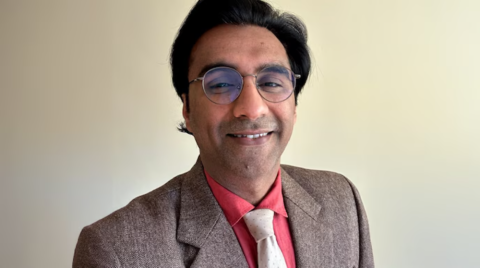
Indian citizen Badar Khan Suri has been arrested in the US over criticism of Israel
Press TV – March 20, 2025
Indian citizen and Georgetown University student Badar Khan Suri has been arrested by US Immigration and Customs Enforcement (ICE) agents due to his criticism of Israel’s actions in Gaza.
Sari, who is a post-doctorate fellow in peace and conflict studies at Georgetown University in Washington, is currently being held at an ICE detention facility in Virginia without contact with lawyers and family.
ICE has detained Sari even though he is a US permanent resident.
After his arrest, the dean of Georgetown University made a statement that Sari had not engaged in any illegal activities or posed a threat to campus security.
In a statement, the University Board of Georgetown Law SJP has called his arrest to be for expressing “constitutionally protected speech,” warning that if such arrests continue “higher education will crumble.”
Sari is believed to have been specifically targeted because of the anti-genocide activism of his wife Mapheze Saleh.
Saleh, a US citizen, is a prominent pro-Palestine activist who has come under attack by pro-Israel political organizations.
Jenin Younes, a lawyer and civil liberties expert, believes that Sari’s arrest is a case of citizens being held guilty by association.
“If they can’t target a Palestinian activist for deportation because they’re a citizen, they’ll target their spouse instead,” Younes said in an interview.
Imprisoning and punishing family members of political dissidents is a common repression tactic used by dictatorial regimes.
Google to acquire Israeli firm staffed by former Unit 8200 officers
The Cradle | March 20, 2025
On 18 March, Google’s parent company, Alphabet, announced plans to acquire the Israeli cloud security startup Wiz in a $32 billion deal, marking one of the largest-ever influxes of former Israeli intelligence officers into a US tech company.
“Google LLC today announced it has signed a definitive agreement to acquire Wiz, Inc., a leading cloud security platform headquartered in New York, for $32 billion, subject to closing adjustments, in an all-cash transaction,” the US tech giant said on Tuesday.
Reports from western media indicate that following the acquisition, Wiz will keep its brand and operate independently from Google. Additionally, an extra retention bonus will be offered to employees, potentially totaling $1 billion, along with a break-up fee that Google would owe to Wiz if antitrust regulators block the deal.
The Israeli tech company was founded in 2020 by four former members of Unit 8200.
Wiz employs around 1,995 people, with most of its sales and marketing personnel located in North America and Europe. However, most of its engineering staff is based in Tel Aviv, a major hub for cybersecurity talent primarily linked to Unit 8200 alumni.
A 2018 study cited by Haaretz estimated that 80 percent of the 2,300 people who founded Israel’s 700 cybersecurity companies at the time had come through Israeli army intelligence. Two years earlier, Forbes estimated that over 1,000 companies were founded by Unit 8200 alumni.
“There are at least five tech companies started by Unit 8200 alumni publicly traded in the US, together worth around $160 billion. Private companies started by ex-8200 soldiers are worth billions more,” the Wall Street Journal (WSJ) reported last year.
“While Unit 8200 alumni once talked about their service in hushed tones, they now tout it in press releases to attract clients and investment money for their startups,” the report highlights.
As an integral part of Israel’s intelligence apparatus, Unit 8200 conducts signal intelligence (SIGINT) and cyber operations, emphasizing advanced technology, cybersecurity, and intelligence gathering.
Unit 8200 played a crucial role in the planning and execution of Israel’s pager terror attacks in Lebanon last year. Specifically, western security sources revealed that the unit was involved in embedding explosives inside the pagers ordered by Hezbollah, with the operation reportedly taking over a year to plan.
The Israeli spy unit is developing an artificial intelligence (AI) tool similar to ChatGPT, which is “capable of answering questions about people it is monitoring and providing insights into the massive volumes of surveillance data it collects.”
“It’s not just about preventing shooting attacks, I can track human rights activists, monitor Palestinian construction in Area C [of the West Bank]. I have more tools to know what every person in the West Bank is doing,” an informed source told The Guardian earlier this month.
At least 85 Palestinians killed in Israeli strikes across Gaza
MEMO | March 20, 2025
At least 85 Palestinians were killed and dozens wounded in Israeli air strikes across Gaza today after Israel resumed its bombing campaign and ground operations in the enclave, the Ministry of Health said.
A day after launching a new ground campaign in central Gaza, the Israeli military said today it had begun conducting ground offensives in the north of the enclave, along the coastal route in the area of Beit Lahia.
Palestinian medics said Israeli strikes targeted several houses in northern and southern areas of the Gaza Strip. Asked for comment, the Israeli occupation military said it was looking into the reports.
The military has resumed its air assaults on Gaza since Tuesday and launched ground operations on Wednesday, effectively abandoning a ceasefire with Hamas that had held since January in spite of Israel’s refusal to abide by its terms.
It said today that its forces had been engaged for the past 24 hours in what it described as a targeted ground operation to expand a buffer zone separating the northern and southern halves of Gaza, known as the Netzarim corridor.
Israel ordered residents to stay away from the Salah Al-Din Road, the main north-south route, and said they should travel along the coast instead.
Israel killed more than 400 Palestinians on Tuesday alone, one of the deadliest days of the war.
Hamas said the Israeli ground operation and the incursion into the Netzarim Corridor were a “new and dangerous violation” of the two-month-old ceasefire agreement. In a statement, it reaffirmed its commitment to the ceasefire deal and called on mediators to “assume their responsibilities”.
The resumption of air strikes has sent Palestinian residents again fleeing for their lives from homes they had begun to reinhabit among the ruins of the devastated enclave.
Some Palestinians who tried to use the Salah Al-Din Road said they saw cars come under fire from Israeli troops advancing towards Netzarim. The fate of the passengers in the vehicles was unknown.
Some residents turned to social media to report the disappearance of some relatives, while others reported cases to the International Committee of the Red Cross.
Israel’s Netanyahu dragging region into major war, ex-Tunisia president warns
MEMO | March 20, 2025
Former Tunisian President Moncef Marzouki warned that Israel, led by Prime Minister Benjamin Netanyahu, is seeking to drag the region into a major war by escalating the confrontation with Iran, which could ignite complex internal conflicts in the Middle East.
In a statement to Al-Resalah Net, Marzouki said the current phase is characterised by great instability where the region is experiencing increasing turmoil.
He pointed out that US President Donald Trump is a fickle politician who cannot be trusted and who is being dragged into new wars by Israel.
“The current situation portends an explosion, but the Arab peoples remain calm, and this is what occupies my mind. We are living through a period similar to what we witnessed in 2010, when everything seemed calm before the spark that completely changed the scene,” he said
Marzouki criticised the Egyptian position toward the Gaza Strip, saying,
The Egyptians act as if they are not a party to what is happening, while in reality they are participating in the strangulation of Gaza by continuing to close the crossings and restricting aid.
He added that the Israeli occupation continues its crimes and massacres in Gaza without deterrence, but the situation will not remain as it is, and the time will come to take action and stand up against this unjust reality.
Marzouki concluded by emphasizing that history indicates that the situation will not remain as it is, warning that an Israeli escalation could lead to a regional explosion, with serious repercussions for the entire region.
Seyed Marandi: America Attacks Yemen – Has Trump Set Himself Up For Failure?
Glenn Diesen | March 19, 2025
Seyed Mohammad Marandi is a professor, analyst and advisor to Iran’s nuclear negotiation team
Follow me:
Substack: https://glenndiesen.substack.com/
X/Twitter: https://x.com/Glenn_DiesenPatreon:

Support the channel:
PayPal: https://www.paypal.com/paypalme/glenn…
Buy me a Coffee: buymeacoffee.com/gdieseng
Go Fund Me: https://gofund.me/09ea012f
Anne Applebaum of the Atlantic Magazine & Columbia’s Pulitzer Board advocated killing Palestinian journalists
Why does the “safety” framework never apply to Arab students?
By Adam Johnson | The Column | March 14, 2025
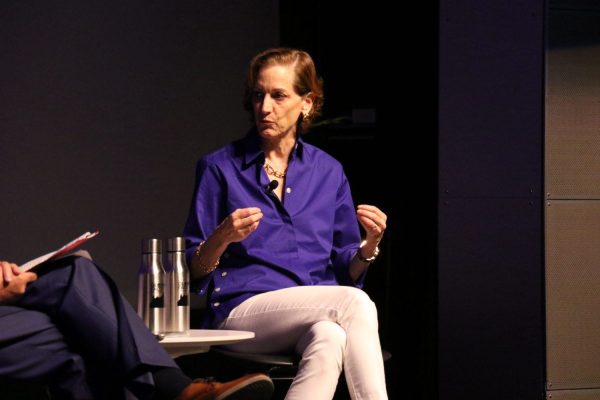
In 2002, Columbia University Pulitzer Prize board member, alleged “anti-authoritarian” expert, and Atlantic Magazine columnist Anne Applebaum explicitly advocated in Slate magazine that Israel kill Palestinian journalists for the crime of making Israelis and Americans look bad. In her article, “Kill The Messenger,” there is little subtlety or equivocation about not only Israel’s right to blow up Palestinian media infrastructure, but to kill reporters for simply doing their job:
“… the official Palestinian media is the right place for Israel to focus its ire. In fact, in the reporting of the Middle East conflict, which almost always focuses on yesterday’s violence and today’s body count, the crucial role of the Voice of Palestine—the official broadcasting arm of the Palestinian Authority—has often been overlooked. Nor is the problem just radio and television. If you want to understand why the Oslo peace process failed, or where suicide martyrs come from, it is worth taking a closer look at all the Palestinian Authority’s official media…
Until then, the Voice of Palestine will remain what it has become: a combatant—and therefore a legitimate target—in a painful, never-ending, low-intensity war.”
This article, which Applebaum has never explained or renounced, is useful when contextualizing the current witch hunt on college campuses targeting anti-Gaza genocide protestors under the Planck Length-thin auspices of promoting “student safety” and “combatting anti-semitism.”
What’s especially noteworthy is that Applebaum never even bothers laundering her promotion of the execution of Palestinians media workers in the language of “terrorism” or “material support for terrorism”—she is simply lobbying Israel kill Palestinian media workers for the mere fact that they are making Israel and the US look bad. Indeed, a key example of coverage justifying their killing Appelbaum cites is an extremely banal political cartoon. As she writes:
… they are subtly, and sometimes not so subtly, anti-American. A recent cartoon in Al-Hayat Al-Jadida, the Palestinian Authority official daily, showed a blindfolded George Bush aiming missiles indiscriminately at a dartboard covered with the names of Arab states. One of his darts had hit the bull’s eye marked “Afghanistan.” Another had gone astray and hit an Arab man in the back. The caption read, “The war in Afghanistan is only the beginning.” While there is plenty of other anti-Americanism in other Palestinian media, and indeed in Arab media everywhere, this is the voice of the Palestinian Authority, the government of Yasser Arafat, a frequent visitor to the White House.
Applebaum believes a cartoon depicting George W. Bush as a warmonger makes Palestinian media a legitimate target worthy of summary killing. “Anti-Americanism,” one is lead to believe is not only a form of racism but a mode of speech that strips one of their protected civilian status.
This is an extraordinary, illiberal, and racist opinion, yet Applebaum is allowed to remain in good standing among liberal and academic elites because racism and casual bloodlust targeting Palestinians and Arabs simply doesn’t register or matter in the “student safety” calculus.
Imagine, if you will, a Columbia professor or Pulitzer prize committee member advocating the summary killing of Israeli or American media workers because they undermined the cause of Palestinian liberation in their reporting. If this article surfaced it would stir up immediate outrage and condemnation, the academic in question would be quickly fired, apologies would be made and and new policies would be promised. But with Applebaum calling for the killing of Palestinian reporters, an article that goes semi-viral on Twitter every few months, no one cares. Nothing happens. It’s just another routine, normal Serious Foreign Policy opinion from a Serious Foreign Policy Expert.
Columbia University President Katrina Armstrong is currently working with Trump officials, DHS, ICE, and other government agents seeking to deport and imprison anti-Israel protestors for the simple fact that—according to Trump officials themselves— they have ideological viewpoints the Trump regime doesn’t like. Columbia, and many other universities, are maximally complying with these demands ostensibly to promote “campus safety” and “combat hatred.” Indeed, making students “feel safe” has been the high-minded liberal reason for virtually every university administrator cracking down on free speech, both before and after Trump took office. “We are focused,” Armstrong said in a press release last year, “on ensuring [student] safety, supporting their wellbeing, and protecting their ability to learn.”
“I have said it before, and I will say it again,” Armstrong insisted, “discrimination and harassment, including hate language, calls for violence, and the targeting of any individuals or groups based on their beliefs, ancestry, religion, gender identity, or any other identity or affiliation have no place at Columbia.”
Except that it does. Columbia, which manages and awards the Pulitzer prize, has no problem putting someone with a history of advocating the killing of Arab civilians in a position of power, helping determine who in journalism is worthy of its highest award, and creating an atmosphere on campus that makes clear to its Palestinian students that they are subhuman and unworthy of normal protections under the laws of war.
Death toll from Israel’s renewed offensive on Gaza rises to 970

Press TV – March 19, 2025
Gaza’s health ministry says Israel’s renewed savagery has led to the massacre of at least 970 people in 48 hours.
The wave of deadly airstrikes that shattered a fragile ceasefire in Gaza on Tuesday has so far claimed the lives of at least 970 people across the besieged territory, the health ministry said in a statement on Wednesday.
Before the resumption of the offensive, the death toll from the regime’s 15 months of genocidal war recorded by the ministry at midday on March 17 stood at 48,577.
By midday on Wednesday, the figure had risen to 49,547, the ministry said.
The health ministry also registered “one death and five severe injuries among foreign staff working for UN institutions.”
It said Israel attacked a UN headquarters in Deir el-Balah, in the central Gaza Strip, on Wednesday.
The victims had been taken to the Al-Aqsa Martyrs Hospital, the health ministry said.
Israel’s military denied attacking a UN building in Gaza.
The UN Office for Project Services (UNOPS) confirmed the death of one of its staff by an explosive that was “dropped or fired” on its building in Deir el-Balah.
“An explosive ordnance was dropped or fired at the infrastructure and detonated inside the building,” it said, adding that five others were injured.
UNOPS Executive Director Jorge Moreira da Silva said he was “shocked and devastated” by the death of a staff member.
“This was not an accident.” he said, adding that “attacks against humanitarian premises are a breach of international law.”
Bulgaria’s foreign ministry said later in the day that one of its citizens working for the United Nations was killed in Gaza, without specifying where in the territory.
Benjamin Netanyahu of Israel threatened on Tuesday that the massacre of women and children in Gaza was “only the beginning.” He stands accused of committing war crimes and ethnic cleansing in Gaza.
Featured Video

More Iran War fallout: Maritime insurance industry shifts from London to China
or go to
Aletho News Archives – Video-Images
From the Archives
Allies Don’t Need Lobbies
By Jay Knott | Dissident Voice | September 24, 2013
In a recent article on Counterpunch, Rob Urie defended the traditional Marxist analysis of US policy in the Middle East. He argues that support for Israel is driven primarily by economic interest, not the Jewish lobby.
He starts by paying tribute to the idea that Western societies are uniquely racist. He says that the “Western narrative” claims there is an “Arab character”, and that this is “antique racist blather”. He gives no definition of these terms. Further, he establishes his credentials as part of the dominant current in the American left by claiming that “over a million people in Iraq died so ‘we’ in the West can drive SUVs.”1
When he tries to criticize bourgeois economics, he makes it clear he doesn’t understand the developments it has made since Marx’s day, using the mathematical discipline known as “game theory”. He dismisses the basic abstraction of economic theory, the idea of the rational individual, on the grounds that it is “devoid of history, culture and political context”. But abstractions are always devoid of something.
He defends a more concrete economic theory, mostly Marxist, with some input from another theorist of capitalist crisis, Hyman Minsky. This concrete theory leads him to the view that US activity in the Middle East is primarily driven by rational capitalist motives, the need to secure a supply of oil.
“Taking the totality of circumstance — former oil company executives launching war on an oil rich nation on a pretext they publicly proclaimed they didn’t believe shortly before taking office — and that upon launching their war proved to be non-existent, requires a willingness to overlook the obvious — that the war on Iraq was for oil, that is difficult to support.”1
Perhaps I’ve misunderstood him, but based on what he says in the rest of the article, this convoluted sentence seems to argue that, because president Bush and vice-president Cheney attacked Iraq on false premises, and they also said it was all about oil, and they are former oil executives, and Iraq has a lot of oil, it’s difficult to deny US attacks on Iraq are all about oil.
In fact, it’s not hard at all. As Urie points out, at times Bush and co. said that attacking Iraq was “protecting the world’s supply of oil.”1 But, as he also points out, they are congenital liars. Why should we believe them when they say they are trying to “protect” the oil supply? Protect it against what? When politicians “admit” attacks on Middle Eastern countries are wars for oil, they are parroting the neo-con party line, feeding the public, both left and right, with a plausible-sounding pretext. For right-wingers, “it’s a war for oil” is a reason to support war, and for leftists, it’s a way to feel better by complaining impotently about corporate greed. Both approaches help the war drive. … continue
Blog Roll
 Aletho News
- More Iran War fallout: Maritime insurance industry shifts from London to China
- US-Israeli aggression on Iran triggers review of GCC countries’ investment pledges to Washington
- Russia slams UK plan to seize tankers suspected of carrying its oil
- Pakistan ramps up food exports to Persian Gulf nations as war deepens food insecurity
- Iran submits response to US plan, sets terms for war’s end: Tasnim
- US vs Iran: Kharg Island Talk — Bluff or Escalation? Ex-Military Officer Weighs In
- Zelensky unnecessarily involves Ukraine in the Middle East crisis
- Turkish tanker blacklisted by Ukraine hit in drone attack – media
- Canada, the U.S., and NATO: the inescapable trap
- Villains of Judea: Leonid Radvinsky
- If Americans Knew
- ‘No Innocent Children’: Far-right Israeli Lawmaker Defends Killing of Palestinian Family
- Mossad’s promises helped Netanyahu convince Trump that Iran could be toppled
- US Arms Control Official Refuses To Comment When Asked If Israel Has Nuclear Weapons
- Veterans warn US landing could be ‘more Gallipoli than Vietnam’
- Israel may be committing war crimes in Lebanon – Not a ceasefire Day 167
- In the West Bank, life is a constant battle – 3 articles
- Jacob Reses, one of the most powerful pro-Israel operatives in Trump’s Washington
- Israeli-US assaults kill or injure 87 children a day – Not a ceasefire Day 166
- ‘Forever live by the sword’: Understanding Israelis’ massive support for Iran war
- UN’s special rapporteur on human rights says Israel is systematically torturing Palestinians
- No Tricks Zone
- Devastating Assessment Of Comirnaty Vaccine By Former Senior Pfizer Europe Toxicologist
- New Study: CO2 Is ‘Effectively Negligible’ As An Explanatory Climate Change Factor Since 2000
- Former Pfizer Toxicologist Dr. Helmut Sterz Tells Bundestag Hearing Pfizer Vaccine Should Have Never Been Approved
- Energy Expert: Germany’s Nuclear Phaseout Was A “500 Billion Euro Mistake”
- New Research: South Australia’s Mid-Holocene Sea Surface Temperatures Were 4°C Warmer Than Today
- Storing Green Energy To Last Germany 10 Days Would Require A 60-Million Tonne Battery
- New Studies: UK Sea Levels Were 4 Meters Higher Than Today During The Mid-Holocene
- Destructive Green New Deal: German Energy And Metal Group Warns Of Drastic Crisis
- New Study Documents A 20-Year Pause In Arctic Sea Ice Decline – Driven By Internal Variability
- Wake-up Call: Survey Shows Majority Of Germans Now Favor Postponing Climate Targets!
 Aletho News