Report: Israel increases use of torture in interrogation centers
Palestine Information Center – 17/01/2014
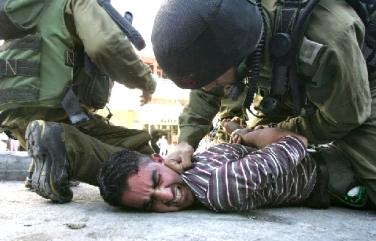 GAZA — The Israeli occupation authority escalated its violation of international laws and human rights conventions in its jails and interrogation centers, human rights report said.
Palestine Center for Prisoners’ Studies revealed that many Palestinian prisoners including women and children have been subjected to torture in Israeli jails and interrogation centers.
Israeli torture techniques include beating, blindfolding, hanging, strip search, Shabh (stress position) where prisoners are made to sit on a small chair with their head hooded and hands tied behind their back, pouring hot or very cold water over the head, according to the report.
The human rights center documented several cases of tortured prisoners who were deprived of sleep and forced into painful positions for long periods in addition to many practices that violate Convention on the Rights of the Child.
The report revealed that Israeli doctors are involved in torture practices against prisoners through submitting false medical files that deny torture crimes before courts.
Related articles

Israel to free 2 Jerusalem prisoners on condition of exile
Ma’an – 15/01/2014
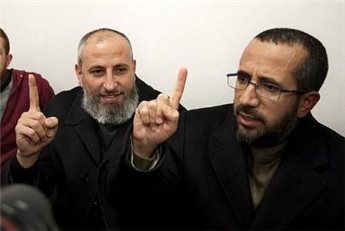 JERUSALEM – Israeli authorities on Wednesday agreed to free two Palestinian Jerusalemites on the condition that they be deported from Jerusalem, a prisoners’ committee spokesman said.
Amjad Abu Asab, a spokesman for a committee that represents Jerusalemite prisoners, told Ma’an that Israel agreed to free a member of the Palestinian Legislative Council and a former Minister of Jerusalem Affairs.
Abu Asab said that lawmaker Muhammad Tutah and former minister Khalid Abu Arafah have been detained for two years on the charge of entering Jerusalem “illegally,” after Israel revoked their Jerusalem IDs.
Both Tutah and Abu Arafah have also been accused of being leaders of the Hamas movement in the Jerusalem area, Abu Asab said.
The Israeli Supreme Court ruled that the 24-month imprisonment was sufficient punishment, and that the two should be released, giving the Israeli military prosecution a week to respond, he said.
The response came Wednesday that the prisoners would be released but would have to leave Jerusalem.
The two were detained by undercover Israeli forces on Jan. 23, 2012, from offices of the International Red Cross Committee in Jerusalem, Abu Asab said.
Israel annexed East Jerusalem in 1980 in a move never recognized by the international community.
Today, the Palestinian population numbers 293,000 in a city which counts roughly 800,000 residents, UN figures show.
In 2012, Israel’s Interior Ministry revoked the residency status of 116 Jerusalem Palestinians, bringing the total number over 46 years to more than 14,000 people, according to the Association for Civil Rights in Israel.
Related article

Person of the Year 2013: Palestinian Hunger Striker Samer al-Issawi
Al-Akhbar | December 31, 2013
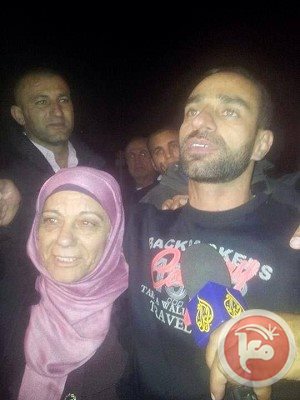 One can only imagine the looks on the faces of Israeli settlers living in Masharef Mountain, near the Hebrew University that overlooks Issawiya, as they watched the celebrations welcoming back Palestinian prisoner Samer al-Issawi.
Issawi returned victorious to his village despite Israel’s desperate attempts to ban celebrations. The occupation forces delayed his release for about 10 hours last Monday, December 23, and erected military checkpoints near the village, but young men and Palestinian mothers insisted on welcoming their hero.
Following his nine-month hunger strike amid the “battle of the empty stomachs,” Issawi was released along with 1,026 other Palestinians in an exchange for the return of Israeli soldier Gilad Shalit.
He wished to remain loyal to those who lost their lives while planning and conducting the Shalit kidnapping, and didn’t want the Israelis to arrest the liberated prisoners all over again, forcing them to serve the rest of their sentences.
From the first intifada until the mid-1990s, Issawi, born 1979, resisted Israeli occupation by setting settler cars of fire and throwing Molotov cocktails. He told Al-Akhbar that he was careful not to be arrested because he wanted to support his family, since his four brothers – Raafat, Medhat, Firas, and Fadi – were held by the Israelis. But all that changed when his brother Fadi was killed in clashes that erupted in Issawiya, following the Hebron massacre in 1994.
The day Samer saw his brother in a pool of his own blood was the last straw.
Issawi was first arrested in 1998 and sentenced to a year and a half in prison for throwing a Molotov cocktail. He was later sentenced to six months in jail for beating up an Israeli soldier, then he was imprisoned again in 2000 for 15 days at the beginning of al-Aqsa intifada. He was later arrested for six months without charges.
“Israeli military attacks escalated during the second Intifada, and we began to hear about airstrikes on Gaza,” said Issawi, revealing that on the first day of his release he joined the ranks of the Democratic Front for the Liberation of Palestine. He formed a five-member cell with friends and conducted 11 shooting operations targeting Israeli vehicles in the Ma’ale Adumim settlement, seven kilometers east of Jerusalem.
These shootings caused material damages and injured one Israeli officer. Once Issawi’s role was revealed, the Israelis hunted him down for a whole year and finally arrested him during the 2002 Operation Defensive Shield in Ramallah.
Issawi refused to appear before the Beit Eil military court and rejected the presence of an attorney because he didn’t acknowledge the legitimacy of the court. He told the judges that it was more of a traveling circus that the Israelis brought along to every territory they occupied.
Issawi was sentenced to 30 years in jail. He wasn’t surprised. Usually sentences in such cases are life in prison, even though no injuries were caused.
He said he was confident he wouldn’t serve his entire sentence, and told the judge, “I will be out before 30 years.” Ten years later, Issawi was released within the “Loyalty to the Free Men” prisoners’ deal.
Issawi as Art
Occupation forces arrested Issawi again on 7 July 2012. His interrogation continued for 30 days, following which he was accused of planning to kidnap Israeli soldiers. Meanwhile, the head of Israeli intelligence in the West Bank threatened to send him back to jail to serve the remaining 20 years of his sentence.
Issawi realized that he was in a serious situation. Hence, on July 27, he started returning two of his meals and settling for a simple one of two slices of bread and a spoonful of labneh and jam.
He maintained this diet for 19 days and was transferred to Nafha Prison. On August 24, he started training his body for an open hunger strike. He wrote a letter to prison services and informed them about his escalation. Back then, he settled for a glass of juice or milk or soup until he cut off food completely and started his open hunger strike on September 14, which also included a strike on water from time to time.
Finally, Issawi reached an agreement with the Israelis last April allowing him to return home to Jerusalem within eight months.
Israelis resorted to different tactics to try and exhaust Issawi into giving up his hunger strike. They sent him on prisoners’ buses to courts and moved him from prison to prison, forcing him to wait for hours for his jailers. They demolished his brother Medhat’s house and attacked him and his family in court despite his deteriorating health.
Samer dropped to 99 pounds and suffered attendant health risks. “When I slept on my right side, I felt numb, and the same with my left side. I also couldn’t sleep on my chest because I had a broken bone,” he said.
With His Family
“Every time I heard about Palestinians and freedom-loving people around the world joining this this battle, I forgot my own pain, mainly after the martyrdom of Mahmoud al-Titi and Mohammed Asfour. There was nothing I could offer them, just insisting on the goals that we put together before the hunger strike. I was also moved by young men protesting for the first time in front of Jerusalem Magistrates Court,” he said.
Issawi said, “The anger I saw in the eyes of the jailers after seven months of the hunger strike proved to me that we succeeded in raising the voices of prisoners and revealing Israeli violations of the prisoner swap deal, while preserving Palestinians dignity. All the goals were accomplished and the only thing left was me going back home.”
On the Palestinian official position, Samer said, “Let’s be honest, all of us Palestinians, from the president to common citizens, can’t even move from one region to the other without Israeli authorization. We don’t count on the official position as much as we count on the will of the people to exercise pressure to force politicians to take more serious steps. A Palestinian negotiator can sign a deal, but it would not be applicable on the ground without popular support.”
Israel agrees to free 26 Palestinian prisoners
Press TV – October 27, 2013
Israel has agreed to free 26 Palestinian prisoners under the terms of the renewed so-called peace talks with the Palestinian Authority.
“The release of 26 prisoners has been validated this evening,” said a statement from Israeli Prime Minister Benjamin Netanyahu’s office on Sunday.
Israeli prison authorities say the inmates will be released at least 48 hours after their names are published.
Tel Aviv had said 104 Palestinians would be freed in stages following the start of negotiations on July 30.
More than 4,500 Palestinian prisoners are held in Israeli prisons, many of them without charge or trial.
An Israeli official claimed last week that the move was linked to a deal with the Palestinian Authority in exchange for continued settlement construction in the occupied territories. But the Palestinian Authority has vehemently denied the allegation, saying the construction activities seriously threaten the talks, that resumed in July after a three-year halt.
Earlier this month, a large number of Palestinians from different political movements took to the streets of the West Bank city of Ramallah to call on the Palestinian Authority to pull out from the talks with Israel.
Supporters of all Palestinian factions, including the Islamic resistance movement Hamas and the Popular Front for the Liberation of Palestine, gathered in central Arafat square to protest against the talks.
The protesters said the talks are useless and acting Palestinian Authority chief Mahmoud Abbas must withdraw from the negotiations. They also demanded the Palestinian Authority take the regime in Tel Aviv to the International Criminal Court for its crimes against the people of Palestine.
Israel has recently announced plans to build about 3,000 more illegal settlement units on the occupied Palestinian land.
The presence and continued expansion of Israeli settlements in occupied Palestine has created a major obstacle for the efforts to establish peace in the Middle East.
Free Sireen Sawafteh – Arrested by Israel on the 14th May 2013
International Solidarity Movement | May 27, 2013
 Tubas, Occupied Palestine – Last Tuesday Sireen Sawafteh, a 24 year old woman from Tubas, was detained by Israeli forces. She is currently being held in Al Jalameh, an Israeli prison. Her family and friends fear for her safety. She has been denied access to a lawyer and she has not been allowed to make any contact with her loved ones since her arrest.
At around 3pm last Tuesday Sireen’s car was stopped at a temporary checkpoint on the road between Nablus and Tubas in the West Bank. After brief questioning by Israeli forces she was detained. The second person in the car was also detained.
In the early hours on Wednesday, Israeli forces raided Sireen’s family home whilst her father Khalid Sawafteh, her mother, three brothers, sisters in law and their two young children were sleeping. Twenty-five army jeeps entered the town of Tubas. Twenty officers entered the home and over one hundred remained in the street cornering off the house. The family and young children were all taken into one room whilst their home was ransacked. Israeli soldiers took all the computers in the house leaving Sireen’s relatives in shock.
Tubas is located in Area A as designated under the Oslo Accords, an agreement drawn up between the Palestinian Authority and the Israeli government. ‘Legally’ it is under total Palestinian civil and military control. Israeli civilians and military are prohibited to enter Area A and any incursion into this area is considered a breach of this agreement. Despite this, Israeli forces have continue to carry out ‘operations’ in Area A.
The illegal incursion on Wednesday morning sparked protests in Tubas. Israeli forces fired tear gas and sound grenades at local residents as they gathered. Omar Abed al-Razaq, a 20 year old local university student from Nablus, was injured. He is in a serious but stable condition in Nablus Hospital. He has lost some of his fingers and is currently unable to communicate with his visitors. The full extent of his injuries are not yet known. The head of the Palestinian Prisoners Society in Tubas, Mahmud Sawafteh, denounced Israel’s continuous raids, which he says causes ‘fear and panic among residents (1).’
Since her detention, Sireen has been forcibly transferred out of the Occupied Palestinian Territories to an Israeli prison in Haifa located in the north of Israel, a practice illegal under international law.
Article 49 of the Fourth Geneva Convention states that individual or mass forcible transfers, as well as deportations of protected persons from occupied territory to the territory of the cccupying power or to that of any other country, occupied or not, are prohibited, regardless of their motive”. While Article 76 states clearly that ‘protected persons accused of offenses shall be detained in the occupied country, and if convicted they shall serve their sentences therein”.
Last Thursday, lawyers acting for Sireen tried to visit the prison inside Israel where she is being held. They were refused entry. She appeared in court on Monday with her hands and legs shackled. The spurious charge was internet activism, creating a Facebook page which is considered a ‘threat’ to the ‘security’ of the region.
Sireen is active in the non violent campaign for human rights in Palestine. She studied computer science at the Open University in Tubas. During her studies she was actively involved in a twinning project between Tubas and the University of Sussex, England. She took part in a delegation of students which visited the UK from Palestine to strengthen links and foster friendships.
Rashed Kahled, Sireen’s older brother said; ‘We in the family are very concerned for Sireen and we would love her to be returned to us soon. My mother is very sad and fears for Sireen, she cannot sleep. How can we be at peace? We do not know what is happening and we are not allowed to see her.’
Many Palestinian women prisoners suffer abuse during their detention. Palestinian women prisoners are often kept in the same cells as Israeli female convicts. This practice often leads to female Palestinian prisoners being humiliated, suffering from threats and assault perpetrated with impunity by the Israel prisoners.
Adameer, a Palestinian Prisoner Support and Human Rights Organisation reports that Palestinian women prisoners ‘are subjected to some form of psychological torture and ill-treatment throughout the process of their arrest and detention, including various forms of sexual violence that occur such as beatings, insults, threats, body searches, and sexually explicit harassment. Upon arrest, women detainees are not informed where they are being taken and are rarely explained their rights during interrogation. These techniques of torture and ill-treatment are used not only as means to intimidate Palestinian women detainees, but also as tools to humiliate Palestinian women and coerce them into giving confessions (2).’
Sireen was in court for the second time this Wednesday. The judge extended her detention for a further 6 days. She will appear again on Monday, when it is possible her detention will be further extended.
Support all Palestinian Political prisoners!
Take action for Sireen
Send messages of solidarity and support here https://www.facebook.com/Welcome.toOo.Palestine
Write to your MP and ask them to make representations to the Israeli government calling for Sireen’s release
(1) http://www.maannews.net/eng/ViewDetails.aspx?ID=596155.
(2) http://www.addameer.org/etemplate.php?id=295
Related articles
- Israel renews administrative detention of 11 Palestinians (alethonews.wordpress.com)
- Inhuman: Israeli abuse of Palestinian children in prison ‘systematic’ says UN report (sott.net)
Israel renews administrative detention of 11 Palestinians
MEMO | May 21, 2013
Al-Tadamun human rights organisation said on Tuesday that the Israeli occupation has renewed the administrative detention of 11 Palestinians, including a former hunger striker and two Palestinian lawmakers.
The administrative detention order against Samer al-Barq, 39, from Jayous village in Qalqilya was renewed for six months. Al-Barq went on a hunger strike in April 2012 for 120 days. On November 23, 2012, he ended his hunger strike after he was promised he would be released and deported to Egypt.
With the renewal of the order against al-Barq’s, Al-Tadamun advocate, Osama Maqboul, accused the Israeli occupation of breaching pledges of release and deportation. Others whose administrative detention orders have been renewed include members of the Palestinian Legislative Council, Mahmoud al-Ramahi and Basim al-Za’areer. Both were detained at November, 2012.
The Israeli occupation renewed the administrative detention of another eight Palestinians from various cities and villages across the occupied West Bank. Many Palestinian prisoners have recently gone on hunger strike in protest against administrative detention which is a military detention order issued on no apparent basis.
Meanwhile, the Palestinian prisoner from Gaza, Ashraf al-Sabbah, announced the beginning of his hunger strike in protest at the poor health conditions he must endure as a result of the Israeli prison services’ refusal to give him proper medication.
Related articles
- Call to Action: Join Addameer’s Global End Administrative Detention Campaign! (occupiedpalestine.wordpress.com)
- Administrative detainees to start a hunger strike at the beginning of June (ramyabdeljabbar.wordpress.com)
Palestinian prisoner was cancer-stricken for ‘years’: autopsy report
Al-Akhbar | April 4, 2013
Deceased Palestinian prisoner Maysara Abu Hamdiyeh had been stricken with cancer for ‘years’ and was treated with improper medication, official doctors from the Palestinian Authority and Jordan have found.
Israeli doctors did not stop Abu Hamdiyeh’s cancer from spreading, although he had been complaining of bodily pains since 2003, Palestinian Prisoner Affairs Minister Issa Qaraqe said Thursday as he announced the results of an autopsy.
The 64 year old former Fatah member succumbed to oesophageal cancer on Tuesday. More than 6,000 Palestinians, reported to include all factions, poured into the streets of Hebron for his funeral.
Prison authorities disclosed his diagnosis in February, and said they tried to secure his release shortly after.
A statement from the Israeli Prison Service after his death said: “The prisoner was diagnosed with oesophageal cancer in February and was under the medical supervision of experts at the hospital. About a week ago, after being diagnosed as terminal, the IPS appealed to the release committee to secure his early release, a process which had been started but not yet concluded.”
Lawyers and relatives report that prison doctors ran biopsy tests on him in 2012 but refused to inform him of his disease.
“Instead of providing him with the correct treatment, the doctors gave him flu shots that caused severe pain in his chest, which he could hardly sleep after,” said Abu Hamdiyeh’s lawyer al-Alami.
His sister Itidal told an online magazine that she visited him in January, one month before his official diagnosis, and found that his voice was completely gone.
Angered by Abu Hamdiyeh’s death, the entire Palestinian prisoner population refused their morning meal Wednesday, according to a statement by the IPS, and the Palestinian Authority announced a three-day general strike across the West Bank.
Abu Hamdiyeh is the second Palestinian to die in Israeli custody this year. Arafat Jaradat, 30, died after an interrogation session in February. Palestinian officials said he had been tortured, an allegation Israel denied.
Two Palestinian youths shot dead
Israeli troops shot dead two Palestinian youths in Tulkarem, officials said Thursday, heightening tension ahead of Abu Hamdiyeh’s funeral.
Palestinian security officials said Amer Nassar, 17, was killed by shots to the head. According to AFP, the body of his 18-year-old cousin, Naji Balbisi, was discovered at the site at dawn on Thursday with wounds to the chest.
However, Palestine’s Ma’an News Agency reports that Israeli forces detained Balbisi’s for several hours, and then at 4 a.m., handed the body to a Red Crescent ambulance.
Both teenagers were to be buried after midday prayers.
The Israeli army said troops opened fire at rioters who hurled petrol bombs at a military post at Tulkarem late on Wednesday, as violent protests erupted in the West Bank. The Palestinian Authority called for a general strike Tuesday after the death of Maysara Abu Hamdiyeh in an Israeli jail.
Following mass protests in the West Bank over the death of Abu Hamdiyeh, Israeli planes had gone into action on Tuesday, targeting what the military described as “two extensive terror sites in the northern Gaza Strip.”
Hours after it launched its first air strikes in the Palestinian enclave in four months, the Israeli military said two rockets fired from the Gaza Strip struck the southern town of Sderot on Wednesday morning, causing no casualties.
Fighters in the Gaza Strip early Thursday fired a mortar shell across the border, the army confirmed, adding that there were no casualties or damage.
Prime Minister Benjamin Netanyahu had issued a stern warning, saying: “If calm is disrupted, we will respond forcefully.”
Related article
- Gaza fighters launch retaliatory strikes over prisoner’s death (alethonews.wordpress.com)
Gaza fighters launch retaliatory strikes over prisoner’s death
Al-Akhbar | April 2, 2013
Gaza fighters fired retaliatory strikes on Tuesday, hours after the death in custody of a Palestinian who was denied appropriate cancer treatment, witnesses and the Israeli military said.
Witnesses told AFP that militants in Gaza City had fired three mortar rounds, but the army said only one projectile had landed, without causing any casualties.
Meanwhile, over 40 Palestinians angered by the death of Maisara Abu Hamdiyeh, 64, were injured in clashes with Israeli police and prison guards. Riots are believed to have swept through Israeli prisons, while guards used live fire and tear gas against the protesters.
Hamas spokesman Sami Abu Zuhri told AFP that the faction was watching the developments with “the greatest concern” and that Israel would “regret its continuing crimes”.
The last time Gaza fighters launched rocket fire was on March 21 during a visit by US President Barack Obama, when two rockets landed causing some damage but no injuries.
Maysara Abu Hamdiyeh’s death threatened to raise tensions in the Israeli-occupied West Bank and Gaza, after reports surfaced that Israeli authorities had denied care to the prisoner. Palestinian Prisoner Affairs Minister Issa Qaraqe likened Israel’s handling of Abu Hamdiyeh’s condition to a “slow death penalty.”
Israeli authorities claim they informed Abu Hamdiyeh, 64, of his illness in February, however, prisoner’s rights groups say the diagnosis occurred in August 2012. His lawyers and relatives report that Israeli doctors ran biopsies on him after he repeatedly complained of throat pains.
Palestinians have held several protests in recent weeks in support of more than 7,000 prisoners in Israeli jails, including over 300 children.
Palestinian Authority President Mahmoud Abbas said Israel had ignored long-standing pleas to free Abu Hamdiyeh, 64, sentenced to life in prison in 2002 for recruiting a bomber who planted explosives in a Jerusalem cafe. The bomb did not detonate.
“The Israeli government in its intransigence and arrogance refused to respond to Palestinian efforts to save the life of the prisoner,” Abbas told members of his Fatah party in the West Bank city of Ramallah.
Abu Hamdiyeh is the second Palestinian to die in Israeli custody this year. Arafat Jaradat, 30, died after an interrogation session in February. Palestinian officials said he had been tortured, an allegation Israel denied.
News of Abu Hamdiyeh’s death touched off protests by Palestinian inmates in several Israeli prisons. At Ramon jail, in southern Israel, inmates threw objects at guards, who fired tear gas at them, the Prisons Service spokeswoman said.
Three prisoners and six guards were treated at the jail for tear gas inhalation, she said.
In Abu Hamdiyeh’s West Bank home city of Hebron, masked stone-throwers confronted Israeli soldiers. No serious injuries were reported.
Israel holds 178 Palestinians in administrative detention, who have been jailed without trial as suspected militants for renewable three- to six-month terms based on classified evidence.
Hundreds of sick Palestinians are perishing in Israeli jails, according to the Palestinian Prisoner Affairs Minister and activists. The Palestinian Prisoners Club says some 25 Palestinian prisoners held by Israel are suffering from cancer.
Palestinians are expected to hold strikes across the West Bank and Gaza, and Palestinian members of the Israeli Knesset have issued strongly worded condemnations of the Israeli government over Abu Hamdiyeh’s deah.
Rights groups, as well as Qaraqe, described Abu Hamdiyeh’s eight-hour trips to and from the hospital as hellish. He was transported in a corrugated metal van with no windows or seats.
The Palestinian Authority said they expected him to be released on Monday. Israel’s refusal to free Abu Hamdiyeh had sparked protests in several Israeli prisons, where 17 detainees have begun a hunger strike.
In recent weeks, Abbas and Prime Minister Salam Fayyad made intense efforts to secure Abu Hamdiyeh’s release in the light of his deteriorating health.
(Al-Akhbar, Reuters, AFP)
Israel releases hunger striker Sharawneh, arrests his brother
Al-Akhbar | March 18, 2013
Israel arrested the brother of former-Palestinian prisoner Ayman Sharawneh in the West Bank early Monday just hours after the long-term hunger striker was released from Israeli prison and deported to the Gaza Strip, Ma’an News Agency reported.
Israeli forces raided the home of Jihad Sharawneh, 24, at dawn Monday in Deir Samir, southwest of Hebron.
An Israeli military spokesman told Ma’an that Jihad Sharawneh was arrested and taken in for security questioning.
Amjad Najjar, head of the Hebron branch of the Palestinian Prisoners Society, denounced the arrest as an act of revenge to punish the Sharawneh family.
Ayman Sharawneh signed an agreement with Israeli authorities to be deported to Gaza for 10 years, bringing an end to his eight-month-long hunger strike, Qadura Fares, head of the Palestinian Prisoners Society, said in a statement.
He arrived at the Erez crossing Sunday night, where a Palestinian ambulance was waiting to take him into Gaza. Hundreds of people crowded at the Palestinian side of the checkpoint to greet him.
Fares said that Israel had previously proposed to deport Sharawneh outside of Palestine, but then offered to exile him to Gaza after he refused to leave his homeland.
Sharawneh agreed to be deported after months of hunger striking to protest his detention, and after numerous warnings by doctors regarding the severe deterioration in his health, Fares added.
The 36-year-old father of nine had previously demanded that authorities allow him to return to Hebron to be with his family.
The under secretary of the PA Ministry of Detainee Affairs, Ziad Abu Ein, told Ma’an that Sharawneh’s agreement was signed without notifying the ministry.
Earlier Sunday, the Minister of Detainee Affairs Issa Qaraqe said the Palestinian Authority rejected the deportation of prisoners as political blackmail.
Sharawneh was released in the October 2011 prisoner swap deal between Israel and Hamas but was rearrested in January 2012 and accused of violating the terms of his release.
Israeli authorities refused to reveal how Sharawneh violated his release terms, even to his lawyers, and he was jailed without charge or trial.
Israeli prosecutors sought to cancel Sharawneh’s amnesty and jail him for 28 years, the remainder of his previous sentence. He went on hunger strike to demand his release.
Abu Ein said Israeli authorities were pressuring Samer Issawi, who has been on hunger strike for 228 days, to make a similar deal.
(Ma’an, WAFA, Al-Akhbar)
Featured Video
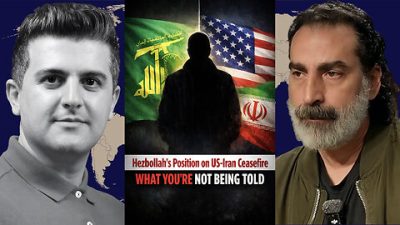
Laith Marouf: Hezbollah’s position on US-Iran ceasefire
or go to
Aletho News Archives – Video-Images
From the Archives
The Dirty Little Secret behind the “Global Terrorism Index”
The Omission of Israeli Terrorism in the Occupied Palestinian Territories
By Karin Brothers | Global Research | December 6, 2014
… The Israeli settlements — all of which are illegal – have been identified as a major impediment to peace. The refusal of a major “global” terrorism report to name the Israeli settlers as one of the groups most responsible for terrorism not only misrepresents a major source of regional violence but exposes the Global Terrorism Index as a propaganda tool that supports a U.S. agenda.
In recent years, governments have been attempting to thwart terrorism by blocking supportive fund-raising. When it comes to Israeli settlements, however, the US and Canada actually encourage fund-raising by giving organizations (such as Christian Friends of Israeli Communities (CFOIC) and the Jewish National Fund) financial support in the form of donor tax-deductions.
Charities which provide funds for the Israeli settlements should be regarded as terror-financing organizations. They should not only lose their tax-deductible status, but they should be banned because they support the violation of international humanitarian law. The terror-financing laws that are being strictly enforced for Muslim charities should be applied to Christian and Jewish charities as well. … Read full article
Blog Roll
 Aletho News
- Trump Administration Moves To Automate U.S. Military Draft Registration
- Spain orders reopening of Tehran embassy, condemns Israel’s carpet bombing of Lebanon
- Israel faces ‘unsustainable’ strategic crisis following 40-day war against Iran: Analyst
- Iran restricts Hormuz access to 15 vessels per day under ceasefire terms: Report
- The ‘Opposition Party’ Has Done Nothing to Stop the Iran War and Much to Goad Trump Into Continuing It
- Moscow backs Tehran on status of Lebanon in US-Iran deal
- How UK Regulator Ofcom Quietly Bypassed International Law to Police American Speech
- The Black Cube Files: How Former Mossad Operatives Flipped a Nation
- Laith Marouf: Hezbollah’s position on US-Iran ceasefire: What you’re not being told
- Israel’s priority lies in destroying chances of peace between Iran, US: Ex-UN nuclear chief
- If Americans Knew
- The gallows law: Israel moves toward executing Palestinian children
- Tucker Carlson: The Path to Peace requires ending ‘special alliance’ with Israel
- This is ceasefire? Israel’s biggest massacre yet in Lebanon, another journalist killed in Gaza – Daily Update
- Tucker Carlson on Israel: This Is the Behavior of an Ally? Really?
- Gazans face a triple crisis: severe shortages of water and bread, healthcare in tatters
- NY Times reports how Netanyahu took the US into Iran War
- A sigh of relief over Iran, but Gaza and Lebanon in dire straits – Daily Update
- Thousands dead and neighborhoods razed to the ground: Aid agencies fear southern Lebanon is becoming the new Gaza
- The war the US is fighting for Israel could cost trillions
- ‘Cigarette Burns, Nail Wounds’: Toddler Tortured in Gaza to Coerce Father
- No Tricks Zone
- An Inconvenient Tree: Uncovered In Alps… Europe Much Warmer Than Today 6000 Years Ago
- New Study Reports A 60% Slowdown In Greenland’s Ice Loss Rate In The Last Decade
- Low Intensity Tornado Wrecks Major Solar Farm, Creating A Potential Toxic Dump
- New Study Finds Warming Saves Lives…Cold Temperatures 12 Times More Deadly Than Excess Heat
- German Science Blog Accuses PIK Climate Institute Of Hallucinating Climate Tipping Points
- Devastating Assessment Of Comirnaty Vaccine By Former Senior Pfizer Europe Toxicologist
- New Study: CO2 Is ‘Effectively Negligible’ As An Explanatory Climate Change Factor Since 2000
- Former Pfizer Toxicologist Dr. Helmut Sterz Tells Bundestag Hearing Pfizer Vaccine Should Have Never Been Approved
- Energy Expert: Germany’s Nuclear Phaseout Was A “500 Billion Euro Mistake”
- New Research: South Australia’s Mid-Holocene Sea Surface Temperatures Were 4°C Warmer Than Today
 Aletho News