House speaker says US, Israel key partners in war on terror

A bipartisan delegation of US lawmakers meets with Israeli Prime Minister Benjamin Netanyahu on April 4, 2016 at the premier’s office in Jerusalem al-Quds.
Press TV – April 5, 2016
Speaker of the US House of Representatives Paul Ryan led a bipartisan delegation of members of Congress to the Israeli Knesset, stressing that the alliance between Tel Aviv and Washington is “more important than ever.”
During his first official visit abroad as the House speaker, Ryan met with Knesset speaker Yuli Edelstein on Monday and said the United States will work “shoulder to shoulder” with Israel to counter their common threats.
“I wanted to come to Israel first to emphasize how important the US commitment to Israel and strong friendship with Israel is to us,” the Republican of Wisconsin said.
“Especially against the shared security threats of ISIS (Daesh) and Iran, this friendship is even more important than in the past,” he continued.
The speaker reassured his Israeli counterpart that the US Congress would rigorously push back against any boycott efforts against Israel.
Upon arriving in the occupied territories, Ryan tweeted that, “as long as I am speaker, I will not allow any legislation that divides Israel & America to come to the House floor.”
The American delegation also met with Prime Minister Benjamin Netanyahu and “expressed strong support for Israel,” the premier’s office said in a short statement on Monday.
In an interview with the Times of Israel on Sunday, Ryan said Palestinian “terrorism” directed against Israelis was no different than the terror wreaking havoc in Europe.
“They’re coming at Israel but they’re ultimately coming for us,” he said. “So we are partners in this war on terror.”
“Israel is an indispensable ally in that. Israel is on the frontline in so many ways with respects to it,” the speaker continued.
The visit comes as Ryan’s home state of Wisconsin is gearing up for its crucial presidential primary on Tuesday.
Strong congressional support for Israel has played a crucial role in Israel receiving benefits not available to any other ally.
Israel is the largest cumulative recipient of US foreign assistance since World War II.
US military aid to Israel has amounted to more than $124.3 billion since it began in 1962, according to a US congressional report, released late last year.
Privacy advocates blast ‘surveillance bill in disguise’ after CISA tucked into spending deal
RT | December 17, 2015
Under the cover of a late-night session of Congress, House Speaker Paul Ryan announced a new version of the “omnibus” federal government funding bill that includes a version of the Cybersecurity Information Sharing Act, outraging privacy advocates.
The new version combines three bills, two passed by the House, and one – the Cybersecurity Information Sharing Act (CISA) – that had already passed the Senate by a vote of 74 to 21.
A long-standing critic of government overreach in surveillance, Senator Ron Wyden (D-Oregon), who voted against the Senate bill, issued a statement on Wednesday stating that it was a “bad bill when it passed” and “worse bill today.”
“Americans deserve policies that protect both their security and their liberty. This bill fails on both counts,” said Wyden, adding that “cybersecurity experts say CISA will do little to prevent major hacks and privacy advocates know that this bill lacks real, meaningful privacy protections.”
Under the latest version, the bill creates the ability for the president to set up “portals” for agencies like the FBI and the Office of the Director of National Intelligence so that companies can hand information about potential threats directly to law enforcement and intelligence agencies instead of the Department of Homeland Security. It allows for more data sharing between the public and private sector while shielding companies from liability.
It also changes the criteria for when information shared for cybersecurity reasons can be used in law enforcement investigations. Previously, the backchannel use of data could only occur in cases of “imminent threats,” while the new bill requires just a “specific threat.”
The Electronic Frontier Foundation has strongly opposed cybersecurity bills over the past five years. In a statement, it said they did nothing to address the real problems the government faces, “like computer data breaches that are caused by unencrypted files, poor computer architecture, un-updated servers, and employees (or contractors) clicking malware links.”
Other advocacy groups, such as Fight for the Future, have previously referred to the bill as “a surveillance bill in disguise.”
The group’s campaign director, Evan Greer, called it “a disingenuous attempt to quietly expand the U.S. government’s surveillance programs.”
“Congress has failed the Internet once again,” she added, “now it’s up to President Obama to prove that his administration actually cares about the Internet. If he does he has no choice but to veto this blatant attack on Internet security, corporate accountability, and free speech.”
The bills were opposed not just by privacy advocates, but also civil society organizations, computer security experts, and many Silicon Valley companies. In April, a coalition of 55 civil groups and security experts signed an open letter opposing an earlier version of CISA.
The Department of Homeland Security itself warned in July that the bill could overwhelm the agency with data of “dubious value,” while at the same time “sweep[ing] away privacy protections.”
The EFF also said the CISA bill has no place in the federal budget package, a point shared by the Open Technology Institute (OTI).
“They’re kind of pulling a Patriot Act,” Robyn Greene, police counsel of OTI, told Wired. “They’ve got this bill that’s kicked around for years and had been too controversial to pass, so they’ve seen an opportunity to push it through without debate. And they’re taking that opportunity.”
When You’re Cutting Social Security, ‘Wealthy’ Begins at $25K
By Jim Naureckas | FAIR | February 21, 2013
Here’s a proposal for Social Security that was on the New York Times‘ op-ed page yesterday (2/20/13):
The top third of beneficiaries (by lifetime income) [would] receive no annual cost-of-living adjustment in retirement. The middle third would get half of today’s adjustment, and the bottom third would receive the same annual increase they do now. Such a reform…would reduce Social Security spending by more than a tenth over a decade and fix the program’s long-term financing.
This is part of Paul Ryan adviser Yuval Levin‘s attempt to find “common ground” on the entitlement issue: “Both sides should agree at least to spend less money on the wealthy.” So who are these “wealthy” people who would be getting a benefit cut equal to the rate of inflation every year? According to the SSA, about 34 percent of people over 65 have family incomes of $50,000.
Now, you can argue about what “wealthy” is, but I think you would find pretty widespread agreement on what wealthy isn’t: $50,000 a year. If you sent the New York Times an op-ed outlining your plan to balance the budget by raising taxes on “wealthy” people who make 50k a year or more, it would be put in the same pile that gets the submissions about Elvis’s UFO diet. But when you’re talking about cutting entitlements, if you want to call those people “wealthy,” that’s perfectly reasonable.
But wait! Those aren’t the only people who are getting too much from the government and need to have their benefits cut–the middle third of the elderly are also “wealthy” and need their benefits cut–but by only half the rate of inflation per year. The ones making more than $50,000 must be the super-wealthy, the regular wealthy make…between $25,000 and $50,000, roughly.
For comparison purposes, the poverty line for a family of four is $23,350. Talk about a shrinking middle class!
This idea of “means testing” as a painless way to solve the supposed entitlement crisis is very popular among wealthy pundits. It’s not hard to understand why. One of the principles Levin suggests we should all be able to agree on is “give less to the wealthy rather than take more from them.”
OK, so let’s say you’re wealthy–not Levin’s pretend wealthy, but truly super-rich, in the top 0.01 percent of income. Average income in this group is about $24 million a year. So you can easily afford to give up their whole Social Security paycheck. If you’ve paid in the maximum possible amount and retire at 66, that’s $2,513 a month–or $30,582 a year. You have sacrificed for your country.
But let’s say that instead of taking away your Social Security check, we tax your income–which comes entirely in the form of investment income, since you’re a wealthy retiree–at the rate for regular income rather than at the special lower fat-cat rate. So instead of paying (very roughly) $4.8 million in federal income tax, you’ll be paying about $9.5 million.
Now, you can surely afford to live on $14.5 million a year rather than $19.2 million–just as you can afford to give up your Social Security check. Somehow, though, making the latter sacrifice is probably going to seem more appealing.
And the thing is, there aren’t that many really wealthy people who won’t miss their Social Security checks–so in order to save any appreciable amount of money, you have to take a substantial chunk away from people who actually aren’t very wealthy at all. That’s a principle we can all agree on. All of us making $24 million a year, anyway.
Featured Video
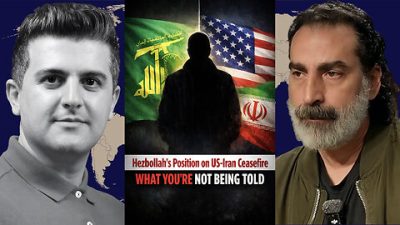
Laith Marouf: Hezbollah’s position on US-Iran ceasefire
or go to
Aletho News Archives – Video-Images
From the Archives
The Dirty Little Secret behind the “Global Terrorism Index”
The Omission of Israeli Terrorism in the Occupied Palestinian Territories
By Karin Brothers | Global Research | December 6, 2014
… The Israeli settlements — all of which are illegal – have been identified as a major impediment to peace. The refusal of a major “global” terrorism report to name the Israeli settlers as one of the groups most responsible for terrorism not only misrepresents a major source of regional violence but exposes the Global Terrorism Index as a propaganda tool that supports a U.S. agenda.
In recent years, governments have been attempting to thwart terrorism by blocking supportive fund-raising. When it comes to Israeli settlements, however, the US and Canada actually encourage fund-raising by giving organizations (such as Christian Friends of Israeli Communities (CFOIC) and the Jewish National Fund) financial support in the form of donor tax-deductions.
Charities which provide funds for the Israeli settlements should be regarded as terror-financing organizations. They should not only lose their tax-deductible status, but they should be banned because they support the violation of international humanitarian law. The terror-financing laws that are being strictly enforced for Muslim charities should be applied to Christian and Jewish charities as well. … Read full article
Blog Roll
 Aletho News
- Trump Administration Moves To Automate U.S. Military Draft Registration
- Spain orders reopening of Tehran embassy, condemns Israel’s carpet bombing of Lebanon
- Israel faces ‘unsustainable’ strategic crisis following 40-day war against Iran: Analyst
- Iran restricts Hormuz access to 15 vessels per day under ceasefire terms: Report
- The ‘Opposition Party’ Has Done Nothing to Stop the Iran War and Much to Goad Trump Into Continuing It
- Moscow backs Tehran on status of Lebanon in US-Iran deal
- How UK Regulator Ofcom Quietly Bypassed International Law to Police American Speech
- The Black Cube Files: How Former Mossad Operatives Flipped a Nation
- Laith Marouf: Hezbollah’s position on US-Iran ceasefire: What you’re not being told
- Israel’s priority lies in destroying chances of peace between Iran, US: Ex-UN nuclear chief
- If Americans Knew
- The gallows law: Israel moves toward executing Palestinian children
- Tucker Carlson: The Path to Peace requires ending ‘special alliance’ with Israel
- This is ceasefire? Israel’s biggest massacre yet in Lebanon, another journalist killed in Gaza – Daily Update
- Tucker Carlson on Israel: This Is the Behavior of an Ally? Really?
- Gazans face a triple crisis: severe shortages of water and bread, healthcare in tatters
- NY Times reports how Netanyahu took the US into Iran War
- A sigh of relief over Iran, but Gaza and Lebanon in dire straits – Daily Update
- Thousands dead and neighborhoods razed to the ground: Aid agencies fear southern Lebanon is becoming the new Gaza
- The war the US is fighting for Israel could cost trillions
- ‘Cigarette Burns, Nail Wounds’: Toddler Tortured in Gaza to Coerce Father
- No Tricks Zone
- An Inconvenient Tree: Uncovered In Alps… Europe Much Warmer Than Today 6000 Years Ago
- New Study Reports A 60% Slowdown In Greenland’s Ice Loss Rate In The Last Decade
- Low Intensity Tornado Wrecks Major Solar Farm, Creating A Potential Toxic Dump
- New Study Finds Warming Saves Lives…Cold Temperatures 12 Times More Deadly Than Excess Heat
- German Science Blog Accuses PIK Climate Institute Of Hallucinating Climate Tipping Points
- Devastating Assessment Of Comirnaty Vaccine By Former Senior Pfizer Europe Toxicologist
- New Study: CO2 Is ‘Effectively Negligible’ As An Explanatory Climate Change Factor Since 2000
- Former Pfizer Toxicologist Dr. Helmut Sterz Tells Bundestag Hearing Pfizer Vaccine Should Have Never Been Approved
- Energy Expert: Germany’s Nuclear Phaseout Was A “500 Billion Euro Mistake”
- New Research: South Australia’s Mid-Holocene Sea Surface Temperatures Were 4°C Warmer Than Today
 Aletho News