US & Turkey eyeing military operation in Syria against ISIS if peace talks fail
RT | January 23, 2016
US Vice President Joe Biden says the US and Turkey are prepared for military solutions in Syria if a political settlement cannot be found. He added that Washington recognizes the Kurdistan Workers’ Party is as much of a threat to Ankara as Islamic State.
“We do know it would better if we can reach a political solution but we are prepared …, if that’s not possible, to have a military solution to this operation and taking out Daesh,” Biden said at a news conference after a meeting with Prime Minister Ahmet Davutoglu, as cited by Reuters. ‘Daesh’ is an Arabic term for Islamic State (formerly known as ISIS/ISIL).
A US official later clarified that Biden was talking about a military solution to IS, not Syria as a whole.
Biden added that he discussed with Davutoglu how the two allies could try and work together to support Syrian rebel groups who oppose President Bashar Assad. The US vice president backed Ankara in its battle with the banned Kurdistan Workers’ Party (PKK), saying it was as much of a threat to Ankara as Islamic State, and that Turkey must do everything necessary to protect its citizens.
However, the pair disagreed about the status of the Kurdish Democratic Union Party (PYD) in northern Syria, with Biden saying there is a difference between the PYD and PKK.
“To say that these [groups] are separate, one should be unaware that those [PKK] guns are coming to [Turkey] from Syria,” Davutoglu said, according to Reuters.
Ankara believes the Syrian Kurds are looking to create a corridor along the northern border with Turkey, which would cut off Turkey from sharing a boundary with Syria.
“The PYD is a terrorist organization that cooperates with the Syrian regime. Struggling against Daesh does not grant them legitimacy,” the Turkish prime minister said.
Turkey has carried out attacks on Kurdish forces in northern Syria. In late July, the Kurds said they had been bombed at least four times, with civilians being among the casualties. Ankara maintained its airstrikes were aimed at members of the PKK.
Kurdish fighters have proved to be some of the most effective forces in helping to combat Islamic State in northern Syria, while borders in territories under its control have been sealed to stop the flow of foreign IS militants into Syria.
On Friday, Biden said Turkey’s intimidation of the media, curtailing of internet freedom and accusations of treason made against academics was not setting a good example in the Middle East.
“The more Turkey succeeds, the stronger the message sent to the entire Middle East and parts of the world who are only beginning to grapple with the notion of freedom,” Biden mentioned.
“But when the media are intimidated or imprisoned for critical reporting, when internet freedom is curtailed and social media sites like YouTube or Twitter are shut down and more than 1,000 academics are accused of treason simply by signing a petition, that’s not the kind of example that needs to be set,” he said.
Ankara Vows to Press Academics Calling to Stop War Against Kurds’ PKK
Sputnik – 13.01.2016
Turkey’s top higher education authority vowed to take measures against academics who signed a letter calling to stop military operations against Kurdish militants, local media reported Wednesday.
Turkish President Recep Tayyip Erdogan has sharply criticized the so-called Academicians for Peace group, accusing them of undermining Turkey’s national security after their declaration was read at press conferences in Istanbul and Ankara on Monday.
After an urgent meeting, Turkey’s Higher Education Board issued a statement saying that the institution would do whatever it took regarding the academics, Today’s Zaman newspaper reported. The body does not have the authority to directly punish the academics, but could pressure university administrations to do so, according to the paper.
Over 1,000 academics from 89 Turkish universities have signed a declaration urging to end the ongoing fighting between Ankara forces and the Kurdistan Workers’ Party (PKK) militants.
The declaration calls on the government to restore a peace process with the PKK that was abandoned in July 2015.
The Kurds, Turkey’s largest ethnic minority, have been striving to gain independence from Turkey. The PKK, founded in the late 1970s to promote the self-determination for the Kurdish community, is designated as a terrorist group by Ankara.
Severe clashes between Ankara forces and PKK militants have been arising sporadically since a July terror attack in the city of Suruc, which killed over 30 people, most of them Kurds. As Kurds killed two Turkish policemen in what has been said to be a retaliation strike, Ankara launched a military campaign against the group.
HDP deputies: Killings of 12 young men in Van, eastern Turkey were executions
ANF News, published by Kurdish Daily News, January 10, 2016
VAN – 12 youths aged between 18-25 have been executed as a result of a house-raid conducted by Turkish terrorists in the central Edremit district of Van province early this morning. ID details of the youths remain unknown.
HDP Van MP Lezgin Botan who spoke to ANF about the incident said bodies of 12 youths, all aged 18-25, have been taken to a hospital morgue. Botan said the youths were shot in the head, and described the incident as not a clash but mass execution. He added that police forces have blockaded the scene of the executions and hospital where youths are being held now.
HDP Van deputy Tugba Hezer told that; “Apart from one, all have been shot in the head. They are all young people in civilian clothes, as has been conveyed to us by those who saw the bodies. Not every single one of them can possible be shot in the head during a clash. It is not possible. This is a mass execution. Police have evacuated and entirely blockaded the hospital.”
Police disperse protesters in Turkey’s east, deputy injured
By Cihan News Agency, published by Hurriyet Daily News, January 11, 2016
VAN, eastern Turkey – Police dispersed protesters who were staging a sit-in against a Jan. 10 police raid into a house of militants of the outlawed Kurdistan Workers’ Party (PKK) in the eastern province of Van’s Edremit district on Jan. 11, detaining many.
Members of the provincial center of the Peoples’ Democratic Party (HDP) gathered in front of its headquarters to make a press statement as some shopkeepers in the district also refused to open their shops to protest the recent police raid. HDP provincial organization members staged a sit-in before the statement. However, police dispersed the crowd with pressurized water and detained a number of protesters.
Meanwhile, HDP Van deputy Lezgin Botan was injured during the police action and has been reported to be in good condition.
Police special forces raided a two-story house around 5 a.m. on Jan. 10, following a tip-off that its occupants were planning a large-scale attack in Van. Twelve suspected PKK militants in the house, along with an officer identified as Önder Ertas, were killed in the raid, which also injured two other officers, as the security forces seized weapons and ammunition in the house.
Over 160 civilians, including unborn child, killed in Turkish crackdown on Kurds – report
RT | January 11, 2016
In five months of battling the Kurdish insurgency in southeastern Turkey, Ankara has killed over 160 civilians, according to a rights group report. Among them was an unborn child, whose mother was shot.
In August, Ankara launched a ground operation to crack down on Kurdish fighters linked to the Kurdistan Workers’ Party (PKK). The violence ended a two-year truce with the Kurdish militants, who have been fighting a guerrilla war for independence for decades. An estimated 10,000 Turkish troops armed with heavy weapons and armored vehicles, including tanks, were deployed.
Since August 16, Turkish troops have imposed at least 58 curfews in Kurdish regions, disrupting the lives of some 1.4 million people living in the affected provinces, Human Rights Foundation of Turkey (HRFT) said. Some lasted 10 hours or less, but others went on for days and weeks, and some are still ongoing. The curfews affected 19 districts in the provinces of Batman, Diyarbakır, Elazıg, Hakkari, Mardin, Mus and Sırnak.
While the curfews have been in place, at least 162 civilians have been killed. The death toll includes 29 women, 32 children, and 24 elderly people. One of the victims in the city of Cizre in Sırnak Province was an unborn child, who was killed by a gunshot to his mother’s womb, the group said. The mother, Guler Yanalak, was seven month’s pregnant at the time and reportedly survived the injury.
The HRFT said at least 22 people were killed in their homes, some of them from heavy weapons used by the fighting sides. Four people were reported to have been killed in areas where no curfews had been declared. The violence against civilians appears to have escalated since December 11, the group said, with 79 civilian deaths reported since then.
The PKK, founded in 1978, has been fighting the Turkish state for Kurdish self-determination since 1984. Kurds make up between 10 percent and 25 percent of Turkey’s population. In late December, a congress of Kurdish non-governmental organizations called for Turkey’s southeastern regions to be granted autonomy via constitutional reforms.
The escalation of violence in Turkey came two months after the Kurdish militia in Syria, known as the YPG, as well as the Turkish pro-Kurdish party, the HDP, accused Ankara of aiding Islamic State in their offensive on Kurdish territories in Syria. At the time, the terrorists were laying siege to the Kurdish border town of Kobani.
Ankara has been stepping up its military operations on the border with Syria and Iraq since December. The area is a stronghold of the PKK, which is considered a terrorist group by Turkey. Turkish President Recep Tayyip Erdogan has vowed to continue the operation until the area is cleansed of Kurdish militants.
Istanbul police raid district office of pro-Kurdish opposition party
Press TV – January 8, 2016
Police in Istanbul have raided a district office of Turkey’s main opposition pro-Kurdish Peoples’ Democratic Party (HDP).
Turkish media reports said on Friday that several people were detained and party documents seized during the two-hour raid at the Beyoglu headquarters of the HDP.
The co-chair of the district branch, Rukiye Demir, was among the detainees.
Turkish authorities have stepped up pressure on the HDP while Ankara’s military apparatus has been engaged in a security operation against suspected militants in the Kurdish-majority south and southeast of the country in the recent past, running offensives against the Kurdistan Workers’ Party (PKK) militants all the way into northern Iraq.
Turkish authorities accuse the HDP of acting as the political arm of the PKK.
Turkey and countries such as the United States and Britain consider the PKK as a terrorist group. The HDP strongly denies any links with the militants.
On July 20, 2015, a bomb attack in the southern Kurdish-majority town of Suruc claimed more than 30 lives. The Turkish government blamed it on the Takfiri Daesh terrorist group. After the bombing, the PKK, accusing the government of supporting Daesh, engaged in a series of supposed reprisal attacks against Turkish police and security forces, in turn prompting the Turkish military operations.
Ankara said Thursday that 305 PKK militants have been killed since December 14, 2015, when its security operation intensified.
The militant group has been fighting for an autonomous Kurdish region inside Turkey since 1980s.
Guess Who Railed Against : ‘State Terror Against Kurds’ in ‘Kurdistan’
Sputnik – 03.01.2016
Inconsistency is common in politicians, who one day decry ‘state terror’ against citizens and some two decades later send tanks against those same people to ‘impose curfews’.
A report published in a Turkish daily newspaper demonstrates the dramatic change in the stated political policy of Recep Tayyip Erdogan since 1991.
The Hurriet published passages from a 90-page report on the “Kurdish issue,” composed by Erdogan while he was an official with the conservative Islamist Refah (Welfare) party in his hometown of Istanbul.
In the report, requested by his party’s leadership, Erdogan clearly denounced Turkish military operations in the Kurdish southeast, referring to them as acts of “state terror” against “Kurdish people.”
Erdogan, at the time, wrote that because “the Kurdish issue” is a “national question,” the correct way to resolve it is “by recognizing Kurdish language as an independent language and which has no relations to the Turkish language.”
But by 2016, some 25 years later and with Erdogan as the boss, Kurds are not necessarily forbidden to learn their mother tongue, but several letters of the Kurdish alphabet are outlawed in Turkey and the number of schools providing education in Kurdish and other minority languages is very small.
“What is called ‘the Southeastern issue’ is, in essence, the Kurdish question, which is no doubt a national question. These areas, which are labeled as Southeast, have since the dawn of history been called Kurdistan,” Erdogan said in 1991. “This region has suffered twice, from PKK assaults since 1985 and at the same time it has been subjected to state terror which has targeted the population for allegedly supporting the PKK.”
In 2016, as the president of the Turkish Republic and playing a nationalist card, Recep Tayyip Erdogan is singing a different song.
“You will be annihilated in those houses, those buildings, those ditches which you have dug,” Erdogan has pronounced recently, referring to trenches created by Kurdish fighters in many southeastern cities. “Our security forces will continue this fight until it has been completely cleansed and a peaceful atmosphere established.”
Many politicians and experts worldwide have described Erdogan’s ongoing military operation against Kurds as “state terror,” a comparison not lost on students of recent Turkish political history.
Some 200 civilians have been killed during recent blockades and attacks by Turkish government forces. Over 100,000 people have reportedly been displaced in ongoing military actions in Turkey’s majority-Kurdish southeast.
Severe clashes between Ankara forces and the Kurdistan Worker’s Party (PKK), alongside popular resistance units, have arisen since a July terror attack in the city of Suruc which killed over 30 people, most of them Kurds. After Kurds killed two Turkish policemen they claimed were affiliated with Daesh soon after the attack, Ankara launched a military campaign against PKK and self-defense units. The clashes intensified in December 2015 in the southeastern city of Diyarbakir, with curfews imposed in numerous Kurdish areas across the southeast.
Besieged Kurdish Towns Under Heavy Bombardment by Turkish Army
Sputnik – 03.01.2016
Kurdish neighborhoods in Silopi and Diyarbakir are under attack from Turkish military forces. Heavy tank bombardment in civilian areas is being reported.
On the 20th day of a curfew, several Silopi neighborhoods in southeastern Turkey have come under heavy gunfire from tanks and armored vehicles, according to local media.
“Residents are trying to find shelter in safe areas as the neighborhoods, which house thousands, are being targeted by heavy fire from tanks and armored vehicles that have surrounded the area under curfew,” ANF News described.
The Kurdish neighborhoods of Barbaros, Basak and Zap have introduced self-rule and have strong local self-defense, including YDG-H youth units, who are resisting government forces attempting to impose the curfew, ANF News reported. YDG-H, or Patriotic Revolutionary Youth Movement, was founded in 2013 by Kurdistan Workers’ Party (PKK) youth members.
“People struggling with hunger and thirst take shelter in the basements of their houses. No passages are allowed out of the blockade,” People’s Democratic Party of Turkey, (HDP) reported on Saturday.
A local Kurdish official, Emine Esmer, a co-mayor of Silopi, was taken into custody and released while investigating a water shortage in the municipality, according to BestaNews.com.
Reports from the Kurdish district of Sur in Diyarbakir, also under curfew, say that tank bombardments in the residential areas intensified on Saturday, with two people injured, according to Jin News Agency.
The HDP reports that almost 200 people have been killed during the blockade and attacks by Turkish government forces. Over 100,000 people have reportedly been displaced in ongoing military actions in Turkey’s majority-Kurdish southeast.
Some 100,000 People Flee Homes Amid Clashes Between Ankara, PKK
Sputnik — 24.12.2015
ANKARA – Some 100,000 people have been displaced due to armed clashes between Turkish security forces and militants from the Kurdistan Workers Party (PKK) in the country’s majority-Kurdish southeastern regions, Turkey’s Interior Ministry said on Thursday.
Severe clashes between Ankara forces and PKK militants have been arising sporadically since a July terror attack in the city of Suruc, which killed over 30 people, most of them Kurds. As Kurds killed two Turkish policemen soon after the attack, Ankara launched a military campaign against PKK. The clashes intensified earlier this week in the southeastern city of Diyarbakir.
The Turkish forces’ operations are being carried out in the southeastern districts of Diyarbakir, Silopi, Silvan, Sur and Cizre, where the PKK has a strong presence.
The authorities also declared a police curfew in area most affected by the armed clashes, with a population of 1.3 million civilians.
Over 100,000 of them have been forced to flee their homes due to the ongoing violence and domestic hardships, according to an Interior Ministry report that was cited by the Hurriyet newspaper.
According to the ministry, the security forces have taken control of eight of the 13 high-risk areas where the PKK militants were trying to establish autonomous areas, not controlled by the central government.
The Kurds, Turkey’s largest ethnic minority, are striving to create their own independent state and gain independence from Turkey. The PKK was founded in the late 1970s to promote the self-determination for the Kurdish community. The PKK is designated as a terrorist group by Turkey.
The Kurdish struggle for independence gave rise to a conflict between Ankara and various Kurdish militant groups that has been ongoing since 1984.
Turkey: Everyone Needs A Way Out
By Henry Kamens – New Eastern Outlook – 15.12.2015
President Recep Tayyip Erdogan, the well-known fan of air defence systems, is facing impeachment for an endless list of crimes. We have only got to this point because he is probably guilty of most of them.
The Speaker of Parliament, accountable to parliament and not government, has the authority to unveil official documents concerning his actions which have been hidden until now. If that happens, it is very likely that Erdogan’s rule will come to an abrupt end, simply because the list of charges is so long that even if only 10% can be proven that will be enough to sink him.
Many unofficial sources are claiming that Erdogan is going mad at hearing that the nation is no longer following him. Even former supporters who stood by him when he was accused of corruption are now leaving him. Erdogan is blaming all this on his former American aide, the Islamist Sai Baba Fethullah Gulen, the leader of a worldwide movement which is halfway between a faith organization and bunch of jack-of-all-trade agents active from China to the US. But it is not Gulen but Erdogan himself who is the object of criticism, and it would come as no surprise if documents released by his own comrades brought about his downfall.
Big statements
One of the issues these documents might talk about is the bomb massacre at a rally in Ankara which made world news. Prime Minister Davutoglu has claimed that two suicide bombers committed this attack on behalf of both ISIL and the PKK, the Kurdish separatist movement, working together.
This claim smears all the Turkish public’s bogeymen at once, but is highly unlikely to be true. Many of the people taking part in the rally were Kurds, it having been organised by the democratic Kurdish party, the HDP. The Turkish government is keen to draw a distinction between ordinary Kurds, and their democratic representatives, and PKK terrorists. This is the basis of the accusation that the PKK must have planned the attack.
But the PKK knows it does not have the strength to destroy the HDP, or take full control of the Kurdish independence movement. It also knows that when a longstanding grievance is resolved by political means the more radical elements gain more public support if they then join the political process. In Northern Ireland, for example, the moderate Republican and Unionist parties dominated their communities until peace was achieved, but then the more extreme parties displaced them as soon as they renounced violence, being seen as stronger voices for their people.
The PKK is also fighting ISIL in the hottest combat regions and is fundamentally opposed to it ideologically. It has more to gain by helping Turkey and the US defeat ISIL, in exchange for a Kurdish state at the end of it, than trying to overthrow a Turkish government which retains international support due to the country’s strategic location. A Kurdish state would be an appropriate thank you for the “moderate Kurdish” contribution to the war on terrorism, granted willingly and with public support, providing a get-out for all sides in that conflict.
Word on the street in Ankara is that the terrorist bombing was the work of the local special services, not ISIL, and probably acting with foreign support. In this view, its purpose was to rally the nation round Erdogan, the face of law and order. However, his refusal to make an official statement about the Ankara bombing for days suggests he has spurned the opportunity allegedly provided him.
Erdogan was elected on a platform of reviving the Golden Age, whenever that was, and making Turkey great again. But he is now putting at risk the economic strength and regional political clout which have become effective levers for doing just that. This is causing many to question his conduct over a number of other matters, which the general thrust of his policy and success enabled him to get away with before. With the idea of being imprisoned keeping him awake at night, Erdogan may well be tempted to resort to measures such as murdering his own citizens to maintain his hold on power, like many another isolated ruler before him.
Ivory towers
The embattled leader has tried to shore up his position by using another well-worn tactic of leaders under pressure – engaging in foreign diplomacy, which opposition groups can’t do, to show his superiority. But when Angela Merkel – who despises him, and doesn’t try to hide the fact – visited Turkey for multilateral talks on immigration and stopping the flood of migrants to Europe, this was seen as nothing more than a political stunt, on her part as well as his, as she has no intention of pulling out of the wars which are creating these migrants.
Erdogan also piled more pressure on himself by his approach to the talks. He complained that the 3 billion EUR the EU has offered to help Turkey take tougher measures against immigration is much less than Turkey is spending on caring for refugees at present. However, it is widely known that Turkey is encouraging, not stopping, the flow of migrants to Europe so that they can be used as a political weapon whenever suitable. This demonstrates that, having failed to get into the EU by fair, diplomatic means, Erdogan is happy to resort to foul ones. It is this which forms the substance of the documents the Turkish parliament, and his colleagues, might now release.
Paper castles
As in Kazakhstan, governments can get away with a lot if their economies are booming. Its previous economic strength had encouraged Turkey to bid for regional leadership, which every country which has had an empire believes is theirs as of right. But now the Turkish currency is in deep crisis. Last May the official exchange rate was 3.5 Turkish Lira to the British Pound, but this August it was 4.7. This steep decline has made the TL the worst-performing currency in the emerging global economies, and is making entrepreneurs’ lives impossible.
Turkey has few primary resources and suffers from a deep technological gap. Consequently, it cannot produce most of the components industry needs. These have to be imported, processed and then exported to pay for their importation, and with the local currency so weak it is very expensive and not competitive to do this. The new Russian sanctions will cause even more problems.
The high rate of inflation, apparently the product of heavy printing by the central bank, will soon make several businesses go bankrupt. Public debt is also rising, and is calculated in dollars, making Turkey very vulnerable to interest rate decisions made across the Atlantic. Far from being a regional leader, Turkey has become the modern financial world’s equivalent of a banana republic. Its current political position has been given it as a sop, to keep it onside until the time comes to pull the rug from under it.
Emperor’s new clothes
All this is laying bare the fact that it is time to “Talk Turkey” about Turkey. It has always been a US ally because of where it is, not for any other reason. The US doesn’t want it as a trusted ally, or really care about it.
Turkey is traditionally a foe of what is now the political West, which fought wars to liberate Europe from the Ottoman yoke and to keep modern Turkey from allying with Hitler in World War Two. It was made part of the West to stop the Communists, who had encircled it, getting their hands on its strategic ports.
But the West has never liked Turkey or what it does, despite its consistent praise of “improvements” in its continually vicious internal politics or its “support” of US ambitions. It’s not seen as a Western country but a military base in hostile territory, which the West has no choice but to indulge as far as possible.
This grudging indulgence has always been part of broader US calculations in the region. Several years ago Georgia was made the US forward operating base in the region partly because it wanted a way out of Turkey. Georgia isn’t big enough to play this role all the time, but its previous government was nasty enough to let the US do whatever it wanted, including murder, torture, training terrorists and manufacturing and exporting biological weapons, so that some of the reasons it needed Turkey no longer applied.
Now the US operation has moved to Ukraine, and a lot of the nasty Georgians with it. Ukraine does have the size, military capacity and strategic location to replace Turkey to a large degree. At this stage there are still too many vested interests for the US to just walk away from Turkey. But with everybody else also wanting out, how long will Erdogan be able to bank on this remaining truth?
Former Georgian President Saakashvili, who always said he would be back without the need for elections, was recently caught on tape plotting a coup which would be conducted from Turkey. Saakashvili is arrogant enough to think that he can say what he wants without being called to account, but not so stupid as to be caught in such a way by routine methods. These tapes were made somehow, most probably by “protectors” for whom he, like Turkey, has become a deep embarrassment.
Crashing and burning
Those tapes give the West a convenient way out of both Saakashvili’s gang and Turkey, which have now outlived their usefulness. They were one of the reasons Turkey shot down the Russian plane. But this action has provided another reason for Erdogan to be removed, as it was politically inexpedient, a violation of international law and presents Turkey as a supporter of a terrorist organisation, giving the West ample reason to interfere in its affairs yet again.
If Russia responds to the attack militarily NATO is obliged to defend Turkey. However NATO is now trying like hell to avoid expanding to its east, despite the number of countries knocking on its door, precisely because it doesn’t want to find itself obliged to send its forces to these countries. NATO cannot get sucked into war with Russia, or reconstitute the Turkish state, which is not homogeneous to begin with?
The French are fond of talking about their “Fifth Republic”, meaning the state established in 1958, when its current constitution was adopted. France existed before then of course, but under different constitutions and political arrangements. On each occasion, the old France collapsed and was thrown into the dustbin and replaced by a new one, even though it was physically the same country. Erdogan might well achieve his longed-for place in history by being the last president of THIS Turkish Republic, even though it will mean “crashing and burning” with it.
Turkish jets strike Kurdish positions in Iraq amid rising tension between Ankara & Baghdad
RT | December 9, 2015
Ankara carried out airstrikes targeting Kurdistan Workers’ Party (PKK) forces in northern Iraq, the Turkish army said on Wednesday. The action comes in the wake of rising tensions between Ankara and Baghdad over the deployment of Turkish troops in Iraq.
Ten F-16 fighter jets launched an attack between 10pm and 10:50pm on Tuesday, targeting PKK positions in the Kandil, Hakurk, Zap and Avasin-Baysan regions in northern Iraq, the Turkish General Staff said in a statement. It added that the targets were “destroyed in an aerial campaign.”
Tensions have been rising between Ankara and Baghdad after Turkey deployed hundreds of troops equipped with tanks and artillery to Iraq’s northern Nineveh Governorate last Thursday, saying they will train forces battling Islamic State (IS, formerly ISIS/ISIL).
Baghdad said it had not asked for the help of Turkish forces, and demanded their withdrawal after it said Turkey had “illegally” sent the troops into Iraq. Describing the move as a violation of sovereignty, the Iraqi government also asked NATO to intervene.
Meanwhile, Shiite paramilitary groups have threatened to use force against Turkey unless it pulls its forces out of Iraq. Likening the Turkish incursion to the occupation of Iraq by IS militants, Badr Brigade spokesman Karim al-Nuri said “all options” were available.
“We have the right to respond and we do not exclude any type of response until the Turks have learned their lesson,” Nuri said on Wednesday. “Do they have a dream of restoring Ottoman greatness? This is a great delusion and they will pay dearly because of Turkish arrogance.”
Also on Wednesday, the Iraqi parliament unanimously approved a motion condemning the Turkish intervention, supporting the government in taking whatever measures it viewed as appropriate.
Russia raised the issue at a meeting of the UN Security Council on Tuesday, expressing hope that Ankara will avoid escalating the situation in the region with any further reckless actions. Following the meeting, Russia’s UN envoy Vitaly Churkin said that Moscow expects Ankara to “settle the situation in Iraq in a way that would satisfy the Iraqi government.”
“Now the situation is within the focus of the attention of the Security Council, so we hope it will help resolve [it] to the satisfaction of the Iraqi government, whose sovereignty, territorial integrity and independence will be respected,” he said.
Russian Foreign Minister Sergey Lavrov slammed Ankara’s actions while speaking to Italian media on Wednesday.
Lavrov proposed a thorough examination of how Turkey performs goals set by the coalition in Syria. “We need to examine how a member of the US-led coalition – the Republic of Turkey – performs goals set by the coalition,” the minister said. “Why is it not bombing terrorists as such, but the Kurds instead?”
On Wednesday, Ankara argued that Turkish soldiers were sent to northern Iraq after a threat from IS to Turkish military trainers in the area. Prime Minister Ahmet Davutoglu said that the deployment was an act of solidarity, not aggression.
“The [military] trainers in the Bashiqa camp were threatened by Daesh (Islamic State) because it is 15-20 kilometers from Mosul and they have only light arms,” he told media in Istanbul. “So when these threats increased… we sent some troops to protect the camp, not as an act of aggression but as an act of solidarity.”
‘New Turkey’: Toward an Authoritarian and Sectarian Police State
By Sinem Adar | Jadaliyya | December 2, 2015
Tahir Elçi, the president of the bar association in southeastern Diyarbakır province and a determined Kurdish human rights lawyer, was shot dead on Saturday, 28 November, during a press statement he had delivered in Diyarbakır. Photos of Elçi’s dead body lying on the ground quickly overwhelmed social media accounts, symbolizing the deadly difficulty of talking about and fighting for peace at this critical juncture that Turkey, and the region at large, are going through. Despite the fact that Turkey is known for its long history of unsolved political crimes and political violence, Elçi’s assassination is an alarming turning point in the final phase, after the electoral victory of the AKP (Justice and Development Party) in the 1 November elections, of consolidating an authoritarian and sectarian police state.
In this essay, I argue that the “new Turkey” the AKP government is forcefully imposing on its citizens goes beyond a mere ideological transformation. It includes a full reorganization of the state’s security apparatus to consolidate an authoritarian and sectarian police state, thoroughly controlled by the AKP government under the leadership of President Recep Tayyip Erdoğan. The institutionalization of this police state is made possible through a physical war against Kurds that is legitimized by a war of discourse, the complete suppression of dissidence, and the manipulation of regional dynamics. In the rest of the essay, I will elaborate this argument by focusing on three disparate events that happened last week: the assassination of Tahir Elçi; the arrest of Can Dündar and Erdem Gül, two journalists at Cumhuriyet daily; and Turkey’s shooting down of a Russian military jet with the claim that it violated Turkish airspace. Although these events are independent of one another and thus there is seemingly no causal relationship among them, they come together as pieces of a rather discomforting, and even alarming, puzzle, indicating the deeper transformation toward building the “new Turkey.”
The Physical War against Kurds and the War of Discourse
The country is at war. It is a war of discourse through the constant and willful reproduction by state elites of the infamous friend-enemy binary. But also, it is an actual physical war brutally carried out through a state of emergency in the Kurdish southeastern and eastern Anatolia. The AKP government legitimizes this physical war against its Kurdish citizens through expansively launching a war of discourse against any form of dissidence. In other words, the AKP government has been strategically manipulating, since the 7 June elections, ethnic cleavages and societal fears, leading up to its electoral victory in the re-elections on 1 November.[1]
Following the suicide bombing in Suruç on 20 July that killed thirty-three and injured 104 people, and the killing of two policemen in Șanlıurfa (which was at first claimed by the PKK, although the group then denied responsibility for it), the ceasefire between the Turkish army and the PKK came to an abrupt end. Extensive and intensive securitization policies in what are defined as “special security zones” were quickly put to work in most of the cities and towns of the Kurdish southeast and east, directly targeting life itself. It is important to emphasize here that the state of emergency and curfews continue today.
The death toll increased rapidly during the period between 7 June and 1 November. A total of 229 civilians died and about 595 were injured in incidents not related to the armed struggle. Among these, 101 died and about four hundred were injured in the Ankara suicide bombing. A total of 150 soldiers, policemen, and village guards died and forty-two were injured during the armed struggle, while at the same time, 181 armed guerrilla members died and nineteen were injured. In addition, nine civilians died and 101 were injured as a result of the armed struggle.[2]
Despite the fact that state violence has been a common practice in Turkey since the establishment of the republic in 1923 (and even preceding the founding of the republic), this particular moment is distinctively different, mainly because of the changes made to the security apparatus of the state. Among these are the reorganization of the National Intelligence Organization (MIT) under the Council of Ministers and the expansion of the MIT’s access to personal and private information; the expansion of power given to government-appointed mayors over the deployment of security measures, particularly at the local level; and the reorganization of the police force. In other words, the governance of violence has been reorganized in ways toward institutionalizing a police state.
The war of discourse around the constant re-evocation of the friend-enemy binary that has brutally accompanied this physical war against Kurds since 7 June is only possible in this context of hyper-securitization. Such a war of discourse significantly confines the contours of any conversation about, and any political action for, peace, by effectively de-sanctifying any attempt to reason and mobilize. As such, the war of discourse has the ideological capacity to turn anything and everything that is considered a threat to the status quo of the party into an enemy of national unity and security, into a spy against the state. As loyalty to the party—and thus the state—has now become the overt doctrine of the AKP government in the name of assembling the nation together, the search for truth and justice is under severe attack.
Suppression of Dissidence
It is exactly in this context that Elçi became a prominent target, as someone who violated this desired and imagined state of loyalty of the citizen/subject to the party/state. In the aftermath of his remarks as part of a television discussion about the PKK not being a terrorist organization but rather an organization of Kurdish resistance, he became the target of a public verbal lynching and death threats. There was also a court order banning Elçi from international travel. As a symbol of “out-of-the-box” thinking who had the political ability to mediate between different positions through reason and a powerful language of peace, Elçi was systematically turned into a public enemy. His assassination therefore came as no surprise to many, as was painstakingly expressed by Selahattin Demirtaş, the co-leader of the HDP, at Elçi’s funeral.
A total of 5,713 people, the majority of whom are supporters of the Kurdish resistance movement, were taken into custody during the period between 7 June and 9 November. Of these, 1,004 were arrested. There were also attacks on party buildings of the HDP (People’s Democratic Party), as well as lynchings of HDP supporters and Kurdish citizens.[3] In other words, as the most vocal oppositional fraction and the most adamant supporter of freedoms in the Turkish public sphere today, the Kurdish movement and its supporters, Kurdish and Turkish alike, were at the center of this full-fledged attack on dissidence since the 7 June elections.
The arrest of Can Dündar, the editor-in-chief of Cumhuriyet daily, and Erdem Gül, the paper’s Ankara bureau chief, on 27 November came within this larger context of suppressing dissidence. The two journalists were charged with “spying” and “helping a terrorist organization without being active members of it” after alleging, through photos and video footage published at the newspaper, that Turkey’s intelligence agency sent arms to Islamist rebels in Syria. President Erdoğan personally filed charges against the newspaper, also threatening Dündar in an interview aired on the national television channel right before the November elections.
Regional Dynamics: Rojava and Re-Mapping the Borders
The charges filed against Dündar and Gül—that is, “spying” and “helping a terrorist organization”—demonstrate the highly expansive reach that the war of discourse has over dissidence in Turkey today. These terms have now become the legitimizing grounds for any (arbitrary) attack on freedom of expression. Turkey is ranked number 149 in press freedom out of 180 countries, according to Reporters Without Borders’ 2015 Press Freedom Index. The state of exception that was confined to the Kurdish southeastern and eastern Anatolia during the 1990s has now extended into the entire country.
Besides the actual physical war that the government has launched against its Kurdish citizens, the civil war taking place in Syria, which involves myriad international and regional actors with competing and conflicting interests, contributes to the government’s excessive suppression of dissidence. In fact, the government’s response to the allegations made by the daily Cumhuriyet was that the ammunition had been sent to Turkmens, instead of Islamist groups, fighting in Northern Syria.
There are two important factors that raise the AKP government’s stakes in the war in Syria. One is driven by the sectarian concern to establish a strong Sunni hand in the changing power order in Syria. The second is the government’s discomfort with the rising Kurdish power in Northern Syria, especially following the Rojava revolution. The Kurdish People’s Protection Units (YPG) is one of the most prominent factions powerfully fighting on the ground against the Islamist rebels, and particularly ISIS. The shooting down of a Russian jet by the Turkish army on 24 November should be interpreted in this context. Although the dynamics and factors behind Turkey’s decision to shoot down the plane are likely to be much more complicated than what appears in public, there are two implications of the decision.
First, it is a declaration—a rather too ambitious one—meant to re-position Turkey in the politico-military field beside the West as an imperial/powerful actor along the Cold War nexus. Bashar Al-Assad still remains in power despite Turkey’s staunch criticism of him since the beginning of the uprising in Syria, and the support Turkey has been giving to the quite heterogeneous and ambiguous mix of Syrian opposition groups that includes Islamist rebels of all factions. Moreover, Russia’s actual military involvement in Syria since September 2015 came as a significant challenge to Turkey’s attempt to limit the rising Kurdish power in Northern Syria, on one hand, and its support to Islamist rebels, on the other. Therefore, Turkey’s decision to shoot down the Russian military jet was part of an attempt to regain power in Syria.[4]
Second, it is also a subtle declaration aimed to position Turkey in the politico-religious field as the legitimate hegemonic actor vis-à-vis the Islamist rebels fighting in Syria. Putin immediately said that the shooting down of the plane “represents a stab in the back by the terrorists,” implying Turkey’s relationship with ISIS. Since then, allegations of Turkey’s relations with ISIS have been at the center of the cat-fight between Turkey and Russia. It would be naïve to think that Turkey acted without knowing that this action would heat up such a discussion. The dangerous pragmatism of the West (the most recent example of which is the agreement between Turkey and the EU to control the migrant and refugee flow) and the rise of Salafi jihadism across the world provide the AKP government the opportunity to attempt to position itself as the legitimate Sunni actor in the politico-religious field.
What Is Our Political Imaginary for the Future?
We are living through dark times, not only in Turkey, but also across the world. In the particular case of Turkey, what makes this juncture critical is that it underlines a deeper transformation of the state, but also of the nation. The state is being consolidated as an authoritarian police state, while at the same time the nation is re-engineered based on a sectarian imagination.
At this critical juncture, we should all earnestly ask ourselves the following questions: What is our political imaginary for the future? What kind of a country do we want to live in? What do we need to do to build such a future? Debating and answering these questions is much more pressing than ever. It is a time that urgently calls for an honest self-reflection about our societal fears. This requires a confrontation with historical injustices.
If the state is significantly failing to protect its citizens’ right to have rights—and thus the right to have a life—as equals, we are left with the political and moral responsibility of demanding it begin to do so, in full solidarity with one another despite our differences. Politics is not a kind of magic that happens to us tomorrow by some visible hand or power. Politics happens today through our deliberate choices to act or not to. Through silence and dismissal, we contribute to every death, to every bit of suffering, and to every other catastrophe.
NOTES
I would like to thank the Turkey Page editors for their useful comments in revising this essay.
[1] For a discussion of political parties’ strategic deployment of ethnic, racial, and religious cleavages toward political articulation, see Cihan Tugal, Cedric de Leon, and Manali Desai, “Political Articulation: Parties and the Constitution of Cleavages in the United States, India, and Turkey,” Sociological Theory 27:3 (2009): 193-219.
[2] See this report by the Human Rights Association (IHD).
[3] See this report by the Human Rights Association (IHD).
[4] See this essay by Metin Gurcan for an analysis of the incident.
RT reporter teargassed while filming unrest in Diyarbakir, Turkey
RT| November 30, 2015
An RT news crew has been caught in a tear gas attack by Turkish police in Diyarbakir. Police responded as Kurds were protesting the killing of a prominent lawyer, Tahir Elci, shot dead by unidentified gunmen while giving a public speech on Saturday.
“We came into the city center of Diyarbakir just now,” said RT correspondent William Whiteman. “The whole city had been on lockdown over night after there were sounds of heavy automatic gunfire and there were a lot of explosions during the night.”
He said the barricades in the city center were removed early on Monday morning and the RT crew tried to enter the center of Diyarbakir. They were looking to get to the spot where the lawyer Tahir Elci was shot.
“As soon as we arrived here there was a very tense situation and there were security forces out in full force in the streets with guns and we heard gunshots,” Whiteman reported.
“We have just managed to escape the gas now and it is very intense here,” Whiteman added.
A campaigner for Kurdish rights, Tahir Elci had been criticized for challenging Turkey’s official stance of calling the Kurdistan Workers Party (PKK) a terrorist organization.
He was subsequently shot dead on Saturday, while giving a public speech in the city.
“The government came out about an hour after he was killed and said it was the PKK that had killed him, even despite the fact that Tahir Elci was actively defending the PKK and calling for them to be no longer recognized as a terrorist organization, given all of their involvement in fighting ISIL in Syria,” Whiteman mentioned, describing why local Kurds have been even more incensed by the shooting of the rights campaigner.
“This assassination is a deliberate act of political intimidation against all those who take part in political struggles against injustice in Turkey,” Firat Anli, a human rights lawyer and friend of Tahir Elci told RT.
“Social media and the mass media say this has been carried out by the PKK, but the Kurdish region does not buy any of this,” he added.
Whiteman mentioned that there is a lot of skepticism amongst the local Kurdish population as to the claims made by the government, while adding that the Turkish authorities are using this as an excuse to clamp down further against the Kurdish minorities in south eastern Turkey.
Featured Video
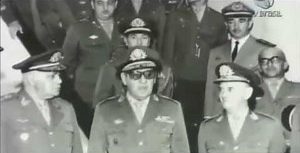
The 1964 Coup in Brazil
or go to
Aletho News Archives – Video-Images
Frlom the Archives
70 Neocons Petition Congress To Effectively Allow Israel To Say When The US Should Attack Iran
By Damian Lataan | January 10, 2014
Seventy senior Israeli-centric neoconservatives have written an open letter to Congress imploring them to do more to ensure Iran complies with the conditions of any agreement finally reached with the P5+1 over Iran’s nuclear program.
While the neocons are ostensibly asking Congress to ensure compliance, it is clear that their real aim is to convince members of Congress to support the bill currently passing through the Senate which calls for tighter sanctions against Iran in the event of any waywardness on Iran’s part.
The neocons are eager to see the bill currently passing through the Senate with enough support to make it veto-proof, not so much because they are concerned about Iran’s so-called nuclear weapons program – there’s still not a skerrick of hard evidence that Iran has a nuclear weapons program – but, rather, because embedded within the bill is this clause:
… if the Government of Israel is compelled to take military action in legitimate self-defense against Iran’s nuclear weapon program, the United States Government should stand with Israel and provide, in accordance with the law of the United States and the constitutional responsibility of Congress to authorize the use of military force, diplomatic, military, and economic support to the Government of Israel in its defense of its territory, people, and existence…
Essentially, the clause is an automatic trigger for the US to attack Iran at any time the Israelis choose to launch a first strike – regardless of whether President Obama is in favour or not.
Partial list… continue
Blog Roll
 Aletho News
- Emirati billionaire rebukes US senator over call for Gulf states to join war with Iran
- Op. True Promise 4: Iran’s missile blitzkrieg dismantles US war machine in West Asia
- Aramco CEO warns ‘catastrophe’ imminent if Strait of Hormuz remains shut
- What If Iran Says No?
- Trump Threatens to ‘Hit’ Iran ‘Twenty Times Harder’ Over Strait of Hormuz Oil Flows
- Spare the hypocrisy: Baghaei slams Ursula’s support for US
- Iran War Supporters Invent a New and Absurd Justification: It Is All About China
- Corporate Media Go All Out To Support The US-Israeli War on Iran
- Trump press conference reveals a man who wants out of war
- When Tel Aviv decides, Washington fights
- If Americans Knew
- Threats and missiles fly, death tolls soar in Iran, Lebanon, Gaza – Not a ceasefire Day 151
- Lebanon: Israel’s White Phosphorous Use Risks Civilian Harm
- Corporate Media Go All Out To Support The US-Israeli War On Iran
- US-Israel war on Iran is creating a steady growing number of amputees
- Israel planned this war on Iran for 40 years. Everything else is a smoke screen
- The wrong question about the war in Iran
- ‘Your Tax Dollars Being Used to Raise Your Gas Prices’: US-Israel Bomb Major Iranian Oil Depots
- ‘Bogus Evidence’: Former Nuclear Watchdog Head Debunks US Justification for Iran War
- EXPLAINER – Dimona: What to know about Israel’s nuclear site
- Fires and toxic air in Iran (thanks, Israel) – Not a ceasefire Day 150
- No Tricks Zone
- Wake-up Call: Survey Shows Majority Of Germans Now Favor Postponing Climate Targets!
- Televised! Leading German Political Candidate Tells Schoolchildren CO2 Makes Sun Hotter!
- New Study: A Century Warming Of 1.1°C Is ‘Commonplace’ And ‘Not Unusual’ During This Interglacial
- New Study: ‘Internal Noise’ And Volcanic Forcing Can Trigger 10-15°C Warming Within Decades
- Glaciers Worldwide Are Suddendly Surging, Experts Blame Warming!
- Surprising Discovery: Sahara Is Greening…Billions Of Trees Where Once Thought To Be Barren
- New Research Reaffirms Clouds, Aerosols, And Surface Solar Radiation Are ‘Driving The Climate System’
- Germany: Electric Car Catches Fire At Charging Station, Sets Off Local “Inferno”, Widespread Damage
- New Study: Canada’s New Brunswick Was 1°C Warmer Than Today During The Medieval Warm Period
- Coal Power Back In Trend As Globe Tries To Keep Pace With Growing Demand For Power
 Aletho News