Israel branded ‘illegal state’ by Spain’s Podemos party leader
RT | June 11, 2018
Israel has been branded an “illegal state” by the leader of Spain’s third-largest party, Podemos, for conducting an apartheid-like massacre at the Gaza fence bordering Palestine.
“We need to act more firmly on an illegal country like Israel,” Iglesias Turrion told Spanish RTVE channel. Accusing the country of violating international law and resorting to what he called apartheid-like policies, the leader of the left-wing party questioned the legitimacy of the state of Israel.
“Israel’s actions are illegal. The apartheid policies of the state of Israel are illegal,” the politician said, adding that when it comes to international politics he and his party would continue to “defend international rights.”
Iglesias Turrion’s comments came mere days after a local faction of Podemos on Valencia’s city council “condemned” Israel’s illegal assassinations and declared that the third-largest Spanish city would be an “Israeli apartheid-free zone” from now on.
Valencia’s condemnation of disproportionate violence against Palestinians and the decision to refrain from any contact with Tel Aviv was supported by other Spanish cities, including Madrid, Barcelona and Andalusia, which decided to distance themselves from Israel in an expression of solidarity with the “boycott Israel“ movement.
While the number of casualties on the Israeli-Palestinian border is over 120, Israel has been trying to legitimize its bloodshed by portraying it as a lawful response to the presumed Palestinian violence and Israel’s attempt to protect its borders.
However, Israel’s Prime Minister Benjamin Netanyahu’s insistence that no Palestinian was killed “intentionally” and that “people died accidentally” revealed a disturbing inconsistency with an earlier statement by the Israel Defense [sic] Forces.
Tel Aviv’s oppression of the Palestinians, along with the US’ controversial decision to move its embassy to the disputed [illegally occupied] city of Jerusalem, have been openly condemned by the EU. Seeing no better solution to stop bloodshed at the Gaza border, the European Union, represented by Federica Mogherini, has insisted on a two-state solution with Jerusalem remapped as the capital of “both of the state of Israel and the state of Palestine.”
The Greek Debt Crisis and Crashing Markets
By MICHAEL HUDSON | CounterPunch | June 29, 2015
Back in January upon coming into office, Syriza probably could not have won a referendum on whether to pay or not to pay. It didn’t have a full parliamentary majority, and had to rely on a nationalist party for Tsipras to become prime minister. (That party balked at cutting back Greek military spending, which was 3% of GDP, and which the troika had helpfully urged to be cut back in order to balance the government’s budget.)
Seeing how unyielding the opposition was, Syriza’s stance was: “We would like to pay. But there’s no money.”
This kept throwing the ball back into the troika’s court. The Institutions were so unyielding that Syriza’s approval rating in the polls rose by 13% by June. Greek voters became increasingly incensed at the Troika’s demand for further pension cuts and privatizations.
Tsipras and Varoufakis were willing to pay the IMF with the IMF’s own funds, in what V. called “extend and pretend.” But their only interest in keeping current on debt was to obtain additional funding that could be used to pay domestic pensions and other basic government budgetary expenditures.
The basic tactic in such tensions between creditors and debtors is clear: once debt repayments exceed new loans, stop paying.
So when The Institutions made it clear that no more credit would be forthcoming without Syriza adopting the old Pasok/New Democracy capitulation to Troika demands, Tsipras and Varoufakis decided it was time to call a referendum eight days hence, on Sunday, July 5.
Late Friday night and into the early Saturday morning hours, Greeks ran to the ATM machines to convert their checking and savings deposits into euro notes, expecting that the end game would involve a likely 30% depreciation of the drachma – and that indeed, the ECB would stop lending to support Greek banks (the only role the ECB wanted to play).
Syriza had no love for the banks. They were the vehicles through which the oligarchs controlled the Greek economy, after all. For a month, they had been discussing how to separate the banks into “good bank” and “bad bank,” either nationalizing them (wiping out stockholders) or creating a Public Option alternative.
Most important, once out of the eurozone, Greece could create its own Treasury to monetize its spending. The Institutions called this “scrip,” but the Greeks could establish it as their national currency. They would escape from euro-austerity – except, of course, to the extent that the ECB waged economic war on Greece by imposing its own capital controls.
By going through the sham negotiations with The Institutions, Syriza gave Greeks enough time to protect what savings and cash they had – by converting these bank deposits into euro notes, automobiles and “hard assets” (even boats).
Businesses borrowed from local banks where they could, and moved their money into eurozone banks or even better, into dollar and sterling assets. Their intention is to pay back the banks in depreciated drachma, pocketing a 30% capital gain.
What commentators miss is that Syriza (at least its left) wants to be transformative. It wants to free Greece from the post-military oligarchy that evades taxes and monopolizes the economy. And it wants to transform Europe, away from ECB austerity to create a real central bank. In the process, it demands a clean slate of past bad debts. It wants to reject the IMF’s austerity philosophy and refusal to take responsibility for its bad 2010-12 bailout.
This larger, transformative picture is at the center of Syriza-left plans.
I’m in Germany now (on my way to Brussels), and have heard from Germans that the Greeks are lazy and don’t pay taxes. There is little recognition that what they call “the Greeks” are really the oligarchs. They have gained control of the old coalition Pasok/New Democracy parties, avoided paying taxes, avoided being prosecuted (New Democracy refused to act on the “Lagarde List” of tax evaders with nearly 50 billion euros in Swiss bank accounts), orchestrated insider dealings to privatize infrastructure at corrupt prices, and used their banks as vehicles for capital flight and insider lending.
This has turned the banks into vehicles for the oligarchy. They are not public institutions serving the economy, but have starved Greek business for credit.
So one casualty apart from the credibility of the eurozone, the ECB and the IMF will be these banks. Syriza is positioning itself to provide a public option – public banks that will promote the economy, and a national Treasury that will spend government money INTO the economy, not drain it to pay the Troika for having bailed out French and other banks back in 2010-1.
The European popular press is as bad as the U.S. press in describing matters. It warns of “hyperinflation” if a central bank monetizes as much as one euro of government spending in the way that the U.S. Fed does, or the bank of England or any other real central bank. The reality is that nearly all hyperinflations stem from a collapse of foreign exchange as a result of having to pay debt service. That was what caused Germany’s hyperinflation in the 1920s, not domestic German spending. It is what caused the Argentinean and other Latin American hyperinflations in the 1980s, and Chile’s hyperinflation earlier.
But once Greece frees itself from the odious debts forced upon it at financial gunpoint in 2010-12, its balance of payments will be roughly in balance (subject to some depreciation of the drachma; 30% is a number I heard bandied about in Athens last week).
To mimic Margaret Thatcher, “There is No Alternative” to withdrawing from the eurozone. The terms dictated for remaining in it was to sell off all of what remained in Greece’s public sector to European and U.S. buyers, at insider prices – but not to Russian buyers, even for the gas pipeline that was to have been sold.
Evidently the eurozone financial strategists thought that Tsipras and Varoufakis would simply surrender, and be promptly voted out of power, thereby crushing their socialist policy agenda. They miscalculated – and are now hoping to create as much anarchy as possible to punish the Greek people. The punishment is for not continuing to support their client oligarchy, which has moved most of its assets out of reach of the government.
But instead of Syriza losing credibility, it is the ECB – which refuses to create money to finance economic recovery, but only to pay the oligarchs’ banks so that they can continue to control the government. This control is now being weakened precisely because their banks are being weakened.
Greece’s Parliament last week released its Debt Truth Commission report explaining why Greece’s debts to the IMF and ECB are odious, and were taken on without a popular referendum approving these loans. Indeed, Mrs. Merkel and Mr. Sarkozy obeyed Mr. Obama and Geithner when the latter insisted at a G8 meeting that the ECB ignore the IMF economists’ analysis that Greece could not pay its debts, and bail out the banks. Geithner and Obama explained that U.S. banks had placed big financial bets that Greece would pay its private bondholders, so the ECB and IMF had to lend the government the funds to pay – but had to overthrow the country’s Prime Minister Papandreou who had urged a referendum on whether Greek people really wanted to commit economic and political suicide.
Financial technocrats were put in place to serve the domestic oligarchy and foreign bondholders. Greece was under financial attack just as deadly as a military attack. Finance is war. That is this week’s lesson.
And for the first time, debtor countries are realizing that they are in a state of war.
This is why markets are crashing on Monday, June 29.
* * *
Eurozone financial strategists made it clear that they wanted to make an example of Syriza as a warning to Spain’s Podemos party, and anti-euro parties in Italy and France. The message was supposed to have been, “Avoid our austerity and we will cause chaos. Look at Greece.”
But the rest of Europe is interpreting the message in just the opposite way: “Remain in the eurozone and we will only create money to strengthen the financial oligarchy, the 1%. We will insist on budget surpluses (or at least, no deficits) so as to starve the economy of money and credit, forcing it to rely on commercial banks at interest.”
Greece has indeed become an example. But it is an example of the horror that the eurozone’s monetarists seek to impose on one economy after another, using debt as a lever to force privatization sell offs at distress prices.
In short, finance has shown itself to be the new mode of warfare. Resisting debt leverage and financial conquest is as legal as is resisting military invasion.
Michael Hudson’s book summarizing his economic theories, “The Bubble and Beyond,” is now available in a new edition with two bonus chapters on Amazon. His latest book is Finance Capitalism and Its Discontents. He is a contributor to Hopeless: Barack Obama and the Politics of Illusion, published by AK Press. He can be reached via his website, mh@michael-hudson.com
The Podemos Phenomenon: Spain’s Best Hope for Democracy
By William Hawes | Global Research | June 4, 2015
The captivating rise of Spain’s new left-leaning party Podemos has captured the world’s attention by emphasizing participative democracy. The formerly fractured Spanish left, in the past marred by petty infighting in Spain, coalesced from grassroots protests over austerity measures and gained steam in 2011. Working with the Anti-Capitalist Left activist base, Podemos began in 2014 by starting local public meetings, called citizen circles, to organize; using the web to organize, poll, and debate issues; and heavily promoting anti-austerity measures and poverty reduction. Young adults especially have been swept up in the Podemos’ rise, as unemployment for youths stands at anywhere from 30-50% by region.
Last month, anti-poverty activist Ada Colau gained the most seats to become Barcelona’s mayor with backing from Podemos. Podemos-backed Manuela Carmena came in a strong second in Madrid’s mayoral election as well. A coalition with Spain’s Socialist Party (PSOE) may secure both ladies’ spots. Now all eyes turn to the general election slated for December. At center stage as leader of Podemos is Pablo Iglesias, former college professor and TV host.
The ideology of Podemos was incubated during the May 2011 protests in Madrid centered on the skyrocketing unemployment and austerity measures employed by the Zapatero-led government. Spain’s protests erupted nationwide and were centered in the Puerta del Sol square in Madrid, led by social networks and citizen assemblies. Protesters were dubbed Indignados (“the outraged”, or “the angry ones”), for their rejection of Spain’s increasingly corrupt two-party system and the “austericide” measures strangling the economy and vitality of the nation. Spreading throughout the country, it is estimated that about 6.5-8 million participated. Protests have continued under the Rajoy regime. (1)
After the protests, Podemos formed from a coterie of radical professors from Madrid’s Complutense University. The most notable are Iglesias, political theorist and the face of the movement; Jesús Montero, former communist and political organizer, and Iñigo Errejón, university lecturer and campaign strategist. Beginning to channel citizens’ hopes, despair, and anger over poor economic conditions, Iglesias’ TV programs, La Tuerka and also Fort Apache, became hits and launched him into the national spotlight.
Debating conservatives on national broadcasts pushed Iglesias into the stratosphere in Spain, with bona-fide rock-star status, which he backs up: Iglesias accepts only quarter of his salary as a member of the European parliament. He flies coach on all his trips. He routinely rips Rajoy and his cadre of corrupt officials. He lives in a graffitied neighborhood in Madrid, has credentials as a respected academic, and visits with famous theorist Chantal Mouffe.
Iglesias and Podemos certainly have their critics and detractors, however. Prime Minister Mariano Rajoy has blasted the party recently, calling them “incompetent populists”. Some have questioned Iglesias’ decision to run Fort Apache, as it was produced by an Iranian state-run TV company. Others frown upon members’ past consulting work with the Venezuelan government. And co-founding member Juan Carlos Monedero has recently quit the party, commenting that Podemos needs to “go back to its origins”. (2)
Despite the backlash, there is no doubt that Podemos represents the best hope for the future in Spain. Monedero still claims they are “the most decent force in Spanish politics”. Iglesias has shown citizens who the ruling People’s Party (PP) and the rival Socialists’ Workers Party (PSOE) really are: la casta (the caste), the establishment, corrupt leaders and officials who do nothing as nearly 6 million people are out of work and 2 million households have no net income. (3) The party is also aware of their limitations in an integrated EU economy: this is why they have called on the help of friends like Greece’s Syriza to fight the EU technocracy, ECB, and IMF. No doubt, Podemos would be wise to send feelers to Italy’s PM Matteo Renzi and Ireland’s Sinn Fein party to ally the periphery, mainly southern Europe, against the unjust policies of Brussels.
Iglesias has shown moderation and fairness in nearly every aspect of Podemos’ agenda. He supports Spain’s membership in the EU, but only under fair laws and loan agreements. He wants benefits and social programs expanded, but he is not calling for nationalization of entire industries. Podemos supports sharing more power with the autonomous regions of the Basque Country, Catalonia, and Galicia, and even states that the party would allow a Catalonian referendum, which the PP and PSOE oppose. (4)
Podemos is more than a vehicle to bring to life the hopes and dreams of Spaniards alone. As political theorists, leaders of Podemos cannot be accused of intellectual laziness. By employing a narrative of anti-elite rhetoric within a framework of social justice, they have created a message appealing to citizens of the whole nation. By linking digital democracy, through social media, with participative elements, such as meetings to combat poverty, lobby for public health initiatives, the arts, and more, Podemos has provided a contemporary deliberative democratic blueprint for the world.
The party has helped lay ground for democracy with revolutionary potential, but not within a traditional, left/right framework. Though favoring a moderate social democracy, Iglesias and the leadership deny that they are partisans. Iglesias explained the left/right divide succinctly at a rally in Barcelona: “Power doesn’t fear the left, only the people”. (5) At its core, Podemos is attempting to challenge the power structure, and deliver democracy to the masses, even if it means deviating from its anti-capitalist, leftist origins.
By moving towards the center, and consolidating power mostly between Iglesias and Errejón, Podemos risked alienating its activist base. These are undoubtedly the reasons for Monedero’s resignation from the party. Charisma and charm will only take you so far, and pandering towards the middle will only work up to a point. Besides, the populist, new center-right party Ciudadanos is also mining the center for votes with this strategy.
Podemos should continue to act as a movement led by activists, and evade the traps of capitulation and compromise that mainstream parties fall into. Breaking the two-party stranglehold of the PP and PSOE has been impressive. By concentrating on poverty reduction, debt restructuring, ending austerity, and listening to its citizen circles, Podemos and Iglesias can win wider support, unity, and solidarity. If focus can be kept on their grassroots campaigns, Spain will begin to see what a true, albeit messy, participative democracy looks like.
William Hawes is a writer specializing in politics and environmental issues. You can reach him at wilhawes@gmail.com.
Notes:
2) http://elpais.com/elpais/2015/04/30/inenglish/1430403454_148415.html
3) http://www.newsweek.com/2014/10/31/podemosradical-party-turning-spanish-politics-head-279018.html
5) http://elpais.com/elpais/2015/02/02/inenglish/1422900233_612344.html
Hundreds of thousands join Madrid anti-austerity rally
Wake Up From Your Slumber | January 31, 2015
At least 100,000 people poured into the streets of Madrid on Saturday in a huge show of support for Spain’s new anti-austerity party Podemos, riding a wave of popularity after the election success of its Greek hard-left ally Syriza.
A sea of demonstrators chanted “Yes we can!” and carried signs reading “The change is now” as they made their way from Madrid city hall to the central Puerta del Sol square in the first major march called by Podemos, which has surged ahead in opinion polls in a crucial election year.
Many in the crowd also waved Greek flags and the red and white flags of Syriza, an equally radical party whose stunning win at the polls last week has buoyed Podemos and its anti-establishment message.
“The wind of change is starting to blow in Europe,” Podemos leader Pablo Iglesias, a pony-tailed former university professor, said in Greek and Spanish as he addressed supporters at the so-called “March for Change”. “We dream but we take our dream seriously. More has been done in Greece in six days than many governments did in years,” the 36-year-old said.
Syriza beat mainstream Greek parties with vows to end painful austerity measures and corruption and Podemos hopes to emulate its success with a similar message in Spain’s general election due in November.
Organisers put the turnout in Madrid at 300,000 while police said some 100,000 people had massed in the Spanish capital.
Disparaging the Poor
By DANIEL RAVENTOS and JULIE WARK | CounterPunch | September 12, 2014
A bunch of academic pundits and media cognoscenti inform us that among the causes of a person’s becoming unemployed is a yen for job-change because he or she opts for a certain “work-related opportunity cost” so as to “optimise utility function”. Renouncing jargon, others claim the unemployed are loafers. Or The Economist informs us that “the recession this time is behaving weirdly”. All this sophistry and waffle, plus a whole lot more ill-intentioned pronouncements are supposed to “explain” unemployment and hence poverty. Naturally, the three-time Pulitzer winner Thomas Friedman has dreamed up a fantastic solution: all those “muscled out of the workforce should start charging hourly for everything, from cars to drills”. Does anyone want to rent my patch under the bridge? To his credit though, “muscled out” at least hints that leaving the workforce might not have been voluntary. Then there are a lot more horse-feathers flapping around in the hot air expelled by other prodigies who, blithely or maliciously ignoring social context and, in particular, political economy, proclaim that unemployment is about free-loading spongers. This subject is nearly as entertaining as Disneyland for anyone who thinks it’s fun to badmouth less fortunate human beings: “skivers” (as opposed to “strivers”), “wedded to welfare” (single mums), “welfare queen” (hinting at some kind of secret opulence), “misfits”, “free-riders”, “parasites”, “spongers”, “loafers”, “feral underclass”, and the latter-day Rip Van Winkle prone to “sleeping off a life on benefits”, dreamed up by George Osborne. Lurking beneath these labels is the insinuation that members of the said “underclass” are mentally handicapped, violent and criminal. It’s all their fault. They are a threat to the strivers. Owen Jones calls it the “demonization of the working class”, although it must be remembered that many members of this class are excluded from working.
Some more fortunate people are said to belong to a “middle class”, which is so fuzzy in conceptual terms that nobody’s sure exactly what it is. Then there is the group of rich people who, we are told, deserve to be rich, no questions asked. These two latter categories are filled by supposedly hard-working, ambitious, smart and successful people. Yet, despite the best efforts of our most zealous opinion makers – frequently bosom buddies of these Übermenschen – most people actually subscribe to the old saying that behind every fortune there is a crime (or few) and that, in most cases, a few easily-substantiated facts rather tarnish the Merit Theory of Wealth. The correlations tend to be wealth-corruption, wealth-tax-fraud, wealth-inheritance, wealth-robbery and, very often, a little scratching below the surface of things shows a combination of them all. They tend to go together. Otherwise there’d be no need for tax havens.
The rich and their satellites love to put down and revile poor people who depend on welfare payments, carelessly or cynically overlooking the fact that, historically speaking or very recently, their wealth has a lot to do with the poverty of their fellow men and women. The original meanings of the word “charity” are esteem or affection (from the Latin nominative caritas). The implied respect for other humans in this term is now twisted into contempt. And “contemptible” people, the ones we look down on, must be punished, as we know from the history of colonialism, racism, sexism and all the ideologies that have always depended on having somebody to trample on. People receiving any kind of public benefits are clear targets as privatisation tightens its insatiable grip on just about everything: land, water, forests, minerals, indigenous knowledge and the structure of life itself in genetic resources, along with public services such as health care, education, transport, and water and sewerage services, not to mention people-commodities traded in human trafficking, sex slavery, child labour, surrogate motherhood, the baby and child market, and organ sales. The plunderers who are taking over and filling bank vaults with the riches they are appropriating from this common wealth are not going to look kindly on people asking for any form of welfare benefits from “their” institutions. So they malign and punish the poor while they have a field day (in other people’s fields).
In Catalonia, former President Jordi Pujol, founding chairman of today’s ruling conservative party CiU, has recently admitted to very major tax fraud over thirty years. Today’s CiU president, Artur Mas, commented when Pujol was stripped of his titles, that this caused him “great pain”. But he doesn’t feel great pain for the poor. He prefers to cause it. Shortly after coming to power, Mas, considering that the measly welfare benefits paid by the Generalitat (Catalan Government) were too generous, went on the offensive and embarked on monitoring procedures that cost more than the original welfare benefits. (Here we’d like to point out that our criticism of any self-appointed father of conservative Catalan nationalism does not imply the slightest opposition to the mass-based “Process” claiming Catalonia’s democratic right to decide by voting on 9 November for or against independence although – in contrast with Scotland and its vote on 18 September – this right to decide is denied by the Spanish Government).
John Ward, a Tory councillor for Medway who, more emphatic than Mas and Co., was apparently aiming at a nice sound-bite in 2008 when he lambasted “professional spongers” who “breed for greed”, and called for “compulsory sterilisation of all those who have a second, (or third, or whatever) child while living off state handouts.” He was suspended, but not without spawning Internet forums of people who wondered whether he had merely dared to put into words what a lot of upright citizens privately thought. Sterilising the poor isn’t exactly a new idea, and it has had some illustrious proponents who used a collegiate guise to say the same thing. One such enthusiast was Thomas Nixon Carver, professor of Political Economy at Harvard (1902 – 1935), well-known “Republican Brain Truster” and President of the American Economic Association. He was very keen to wield the neutering knife. The Daily Washington Merry-Go-Round reports Point 2 of his economic plan of 1936 as reading, “Reduction of the supply of labor by sterilization of the palpably unfit; […] Marriage would be barred until the parties could afford to buy and operate an automobile”. By “palpably unfit” he meant people earning less than $1,800 per year, which is to say half the population of the United States at the time. Castratio plebis, to put it mildly.
The eugenics movement in the US took off after Sir Francis Galton (1822 – 1911) studied Britain’s upper classes and concluded that their genetic makeup was superior. Early eugenics fans believed in the innate superiority of Nordic, Germanic and Anglo-Saxon peoples and called for the forcible sterilisation of the poor disabled and “immoral”. The movement was generously funded by such august establishments as the Carnegie Institution and Rockefeller Foundation. Some US states (with California in the lead in terms of numbers) sterilised “imbeciles” over much of the twentieth century, a total of over 62,000 individuals and especially women (61% by 1961), and Virginia’s sterilisation law was in force until 1974. By 1928 the leading universities were teaching some 376 eugenics courses. This is not a thing of the past, however. In 2013, one of Australia’s most destructive people, billionaire mining heiress Gina Reinhart, called for sterilisation of the “underclasses”. Income inequality, she says, is caused by differences in intelligence and any couple earning less than $100,000 per year should be forcibly sterilised, while higher earners should have ten or twelve children.
Now, some people might be tempted to think after the Pujol revelations in Catalonia (and other scandals featuring many more crooked paragons of society in the Kingdom of Spain and around the world, not least heads of the IMF) that this man is “immoral” and “palpably unfit” to hold any responsible job and that the country might have been better off if this father of seven (most with greedy fingers in one or other very greasy pork barrel) had been sterilised. But what people really want is change. In Spain the groundswell of support for grassroots political movements like Podemos and Guanyem Barcelona (We’re Going to Win Barcelona [City Council]), which is fast being emulated all over the country, is bringing together people from all walks of life at very sizeable meetings in the city’s streets and squares where the main themes of the day are justice, transparency, political ethics, real human rights in all spheres of life, to sum up very schematically. It’s not difficult to deduce that Pujol did Guanyem Barcelona a big favour. Suddenly, old-fashioned Catalan politics looks very rancid. People want sweeping change that extends to the structures of power. And it’s all about political economy. In 2012, it was estimated that 30% of the population of Catalonia was at risk of social exclusion. Things have only got worse since then. The Kingdom of Spain has the second highest child poverty rate – after Romania – in Europe: 21%. The growing rage among the population where youth unemployment stands at more than 55% is so great that, nowadays, only a lunatic would dare to propose the sterilisation solution. Everyone knows that the “immoral”, “palpably unfit” (and “imbeciles” too because, after all, imbecility is often inseparable from arrogance) are clustered in the privileged 1%. However, their wombs and testicles are safe because, what with the burgeoning growth of new, inclusive political formations, people have better things to think about, in particular their basic rights.
All over Spain, Basic Income is gaining ground (with more or less clarity) as part of the election programme of political parties including Bildu, IU-ICV, Anova, Equo and Podemos (heir of the 15M Occupy Movement, clearest exponent of what a universal Basic Income is and implies, and garnering astonishing electoral results that are cracking the foundations of the basically two-party power-share between the “socialist” PSOE and right-wing PP). Largely thanks to Podemos, no doubt, Basic Income is an increasingly widespread subject of discussion and, like any other radical social proposal, is gathering scores of “friends” and “enemies”. There is increasing awareness that the most basic human right, on which all the rest depend, is the right to exist and, for that to be possible, everybody must have an income above the poverty line. This, in a nutshell, is an unconditional, universal basic income for every single citizen and resident in the country. It is no longer seen as “utopian” or “hare-brained” as the well-to-do and their cronies have claimed in the past. More and more people understand that this guarantee is necessary for a truly democratic society. The obstacles faced by Basic Income have been political, just as they were (or are, depending on the place) in the cases of universal suffrage, paid holidays, and the rights to strike, to abortion and to same-sex marriage. Basic Income embodies no logical or empirical (financial) impossibility. It is an objective aspiration which, almost certainly, won’t enjoy universal support. In politics one must choose, and this is especially true of political economy.
The “idea” of mutilating people’s reproductive organs on the basis of cruel judgements by a few palpably unfit individuals merits adjectives that are much more withering than “utopian”. But conjuring them up is just a pastime. The really important, lapidary statement is Thomas Paine’s observation in Agrarian Justice that people don’t want charity; they want justice. And they have begun to claim precisely this.
Daniel Raventós is a lecturer in Economics at the University of Barcelona and author inter alia of Basic Income: The Material Conditions of Freedom (Pluto Press, 2007). He is on the editorial board of the international political review Sin Permiso
Julie Wark is an advisory board member of the international political review Sin Permiso. Her last book is The Human Rights Manifesto (Zero Books, 2013).
Featured Video
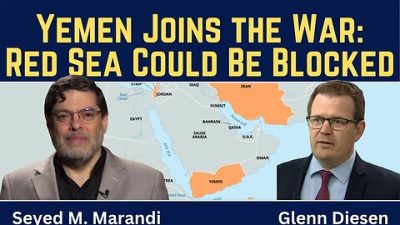
Yemen joins the war – Red Sea could be blocked next – Saudi regime at risk
or go to
Aletho News Archives – Video-Images
From the Archives
A superpower and “the world’s sickest warrior state”
By Paul J. Balles | March 8, 2010
Living through five or six major wars has hardened me to what I thought were the extremes of inhuman cruelty and brutality.
Two things made those extremes almost bearable: the brutality always revealed – at least according to the media coverage – the viciousness of the enemy. It was therefore quite understandable when our “brave men and women” pulverized the enemy.
Films of Japanese torturing captive Americans somehow justified holding Japanese Americans in internment camps during World War II; and only a small percentage of Americans found the bombing of Hiroshima and Nagasaki unreasonably vengeful at best, at worst, depraved.
The media giants in America portrayed the North Koreans as barbaric beasts with their captives, quite unlike their southern counterpoints – our allies during the Korean War. No one ever felt the need to explain how the South Koreans were a civilized breed while the North Koreans were absolute savages, at least according to the official line.
In Vietnam, our warriors justifiably (or so the media made us believe) dropped napalm on the North Vietnamese who had the gall to hide in villages and tunnels to ravage our invaders. At least it was accepted practice until some rogue photojournalist filmed a young girl screaming down a Vietnamese road in flames. … continue
Blog Roll
 Aletho News
- Russian tanker approaches Cuba despite US oil blockade
- Marandi: Yemen joins the war – Red Sea could be blocked next – Saudi regime at risk
- Pro-Palestinian French member of European Parliament denied entry to Canada
- Pakistan to Host US-Iran Talks
- How Indonesia’s tilt toward the US left it stranded in the Strait of Hormuz
- US has no choice but to retreat from Iranian borders: Top commander
- Iran Retaliation Strikes Chemical Plant Near Dimona
- AWACS’ Destruction is a Major Loss for US Military – Ex-DoW Analyst
- Israel’s Iran Strategy Uses US Military & Gulf States as Its Pawns
- Iran: Trump wanted regime change, now just begging for Hormuz to open
- If Americans Knew
- Israeli police block Catholic cardinal from entering Church of the Holy Sepulchre on Palm Sunday
- Israel is assassinating journalists again, more than any other nation, anywhere, ever – Not a ceasefire Day 170
- Over 300 US service members wounded, majority have brain injuries – Not a ceasefire Day 169
- Researchers at Human Rights Watch Resign Over Blocked Report on Palestinian Refugee Return
- Jewish Groups Are Backing a War Americans Don’t Want
- Eric Fingerhut Thinks He’s the President of the Jews
- Top Jewish Philanthropists, Rabbis Urge Israeli President to Take Action Against ‘Jewish Extremists’
- Don’t Be Fooled. Zionist Leaders Have Always Wanted to Control Southern Lebanon
- Israel’s widespread use of torture is a core element of its genocide against the Palestinian people
- In Israel’s War on Iran, Many Middle East US Bases Rendered “All But Uninhabitable”
- No Tricks Zone
- German Science Blog Accuses PIK Climate Institute Of Hallucinating Climate Tipping Points
- Devastating Assessment Of Comirnaty Vaccine By Former Senior Pfizer Europe Toxicologist
- New Study: CO2 Is ‘Effectively Negligible’ As An Explanatory Climate Change Factor Since 2000
- Former Pfizer Toxicologist Dr. Helmut Sterz Tells Bundestag Hearing Pfizer Vaccine Should Have Never Been Approved
- Energy Expert: Germany’s Nuclear Phaseout Was A “500 Billion Euro Mistake”
- New Research: South Australia’s Mid-Holocene Sea Surface Temperatures Were 4°C Warmer Than Today
- Storing Green Energy To Last Germany 10 Days Would Require A 60-Million Tonne Battery
- New Studies: UK Sea Levels Were 4 Meters Higher Than Today During The Mid-Holocene
- Destructive Green New Deal: German Energy And Metal Group Warns Of Drastic Crisis
- New Study Documents A 20-Year Pause In Arctic Sea Ice Decline – Driven By Internal Variability
 Aletho News