A Recent Survey Shows How Significantly Young Poles’ Views Towards Ukraine Have Changed
BY ANDREW KORYBKO | AUGUST 7, 2023
The Conversation, which is a global collaboration platform between academics and journalists that’s funded by a wide range of international research institutions, published the results from a recent survey of 2,000 young Poles aged 16-34 showing how significantly their views towards Ukraine have changed since early 2022. It can be read in full here, but the present piece will share the most interesting highlights before analyzing them in the latest context of newly complicated Polish-Ukrainian ties.
Before doing so, it’s important to briefly draw attention to the credentials of the researchers involved, Felix Krawatzek and Piotr Goldstein. The first is a Senior Researcher at the Centre for East European and International Studies in Berlin and Associate Member of Nuffield College at University of Oxford while the second is a Research Fellow at that same German institution. Both are therefore established Western experts who can’t be accused of being “Russian propagandists” by any stretch of the imagination.
Having preemptively debunked the ad hominem attacks that’ll predictably form the bulk of Western social media’s reaction to their findings, it’s now time to share the highlights from their survey:
———-
* Over half of young Poles don’t want Ukrainian refugees to permanently reside in their country
– “Our analysis found that between 2022 and 2023, increasing numbers of young Poles – now 52%, up from 42% a year ago – believe that refugees should be offered temporary status, with the assumption that they return to Ukraine as soon as it becomes safely possible.”
* Young Catholic & conservative Poles feel stronger about this than others
– “Those young people who self-identify as Catholic in our survey are 10% more likely than others to desire their return to Ukraine when this becomes possible. This is also true of those who support the far-right Konfederacja, a party that has opposed the Polish response to the war in Ukraine, who are 13% more likely to express that view than others.”
* Over one-third of young Poles want their government to become neutral towards Ukraine
– “In 2022, an overwhelming majority of 83% argued that the government should support Ukraine – but this number has changed drastically. Now, 65% of respondents back continuous support for Ukraine, whereas the remaining 34% wish for Poland to stay neutral.”
* Older young Poles and those living outside of big cities feel stronger about this than others
– “In particular, the oldest people in our sample of young Poles (those aged 25-34) express the strongest wish for political neutrality, as do those from cities with fewer than 500,000 inhabitants and young people who have not engaged in helping Ukrainians over the last 18 months.”
* Young Poles, and especially conservative ones, are increasingly embracing peace and neutrality
– “Asked about the type of support that people consider appropriate for Ukraine, our most recent (2023) data shows that only 2% of young Poles want the national army to be involved in the Ukraine war. And while 60% support offering humanitarian aid, only 28% want Poland to offer weapons. Those supporting the far-right (roughly 20% of our respondents) are most likely to oppose the sending of weapons.”
———-
Quite clearly, the rapid rise of the anti-establishment Confederation party played a pivotal role in shaping young Poles’ views towards the NATO-Russian proxy war in Ukraine and their attitudes towards refugees from that battleground state. They’re a political force to be reckoned with and might even become their country’s kingmakers after this fall’s national elections, though that’s precisely why there’s a credible fear that the ruling party might brand them with the scarlet letter of being “Russian agents” before then.
About that, they formed a so-called “Russian influence commission” earlier this summer that many at the time interpreted as an attempt to discredit the liberal–globalist “Civic Platform” opposition party that’s regarded by many as being German proxies. That prediction still stands but can now be expanded to include the Confederation party as possible targets too due to the socio-political influence that they now wield as proven by this latest survey.
Another factor that certainly played a role in shaping young Poles’ views towards this conflict but which wasn’t addressed in The Conversation’s survey was Kiev trying to trick Warsaw into starting World War III after Ukraine accidentally bombed Poland last November then lied that Russia was allegedly responsible. This incident vindicated those like the Confederation party who hitherto claimed that the Ukrainian leadership can’t be trusted, thus further fueling their rise and the associated popularity of their views.
It can accordingly be argued that Kiev’s blatant lies also account for why one-third of young Poles now want their government to become neutral towards Ukraine and only 28% are in favor of continuing to send it weapons. After all, their lives likely flashed before their eyes during the brief period when it was unclear exactly who was responsible for the unprecedented bombing of NATO territory, and this could have left a strong impression that might have made them more pragmatic towards this conflict.
Another constructive critique that can be made about The Conversation’s survey is that it didn’t attempt to determine the possible role that Ukraine’s recent criticisms of Poland might have played in shaping young Poles’ views. Their research was carried out from May-June 2023, which coincided with Zelensky’s rage from early May that he directed at Poland and neighboring EU countries for their unilateral ban of most Ukrainian agricultural imports that was imposed to protect their farmers.
In hindsight, this was the start of a new trend that began to manifest itself more fully late last month when Kiev once again verbally attacked Poland after Warsaw said that it’ll unilaterally continue this ban even after the European Commission’s temporary deal expires in mid-September. That prompted a quickly escalating tit-for-tat that led to each side summoning the other’s ambassadors, after which their leaders tweeted about this scandal and expressed polar opposite views about who’s responsible.
The Polish Deputy Foreign Minister then expanded the scope of their disagreements to include the World War II-era genocide of Poles in Volhynia by Hitler’s Ukrainian collaborators, which in turn led to Zelensky’s senior advisor predicting that post-conflict bilateral ties will be characterized by competition. Intrepid readers can learn more about this here since the details are beyond the scope of the present piece, but the rest should simply be aware of how complicated their relations have since become.
Keeping in mind the highlights of this latest survey as well as the corresponding analysis thereof, it’s undeniable that young Poles’ views towards Ukraine have significantly changed, which will likely influence the outcome of this fall’s national elections. Kiev is losing the hearts and minds of this important demographic, many of whom are now embracing the anti-establishment Confederation party, and Poland’s ruling party must properly respond to this trend if it wants to remain in power.
The coming Russian – Polish war
By Gilbert Doctorow | July 23, 2023
This evening’s News of the Week program on Russian state television opened with a 30 minute documentary survey of Polish-Russian relations from the end of WWI and during the period of the Russian Civil War, when the government under Marshall Pilsudski wrested substantial territory from Russian control. It also dealt extensively with Poland’s well documented role as aggressor and occupier of Czechoslovak, Lithuanian, Ukrainian and Belarus lands from before the start of WWII and until Hitler overran Poland.
This reportage was all built around Vladimir Putin’s speech to the RF Security Council on Friday which was partly broadcast then. Excerpts from that speech were used to introduce segments of the overall documentary.
Let us recall that on Friday, Putin explained how and why we may expect the formal entry into the war of a Polish-Lithuanian-Ukrainian joint military force that will officially be presented as defending Ukrainian statehood by occupying the Western Ukraine. However, Putin described this as an occupying force which once installed in Lvov and Western Ukraine would never leave. This would in effect be a repeat of the sell-out of Ukrainian interests to Poles and cession of territory to Poland such as had been perpetrated by their leader Semyon Petlyura in April 1920 and has now been repeated in the secret agreements between presidents Zelensky of Ukraine and Duda of Poland.
However, that was not the only pending Polish aggression announced by Vladimir Putin on Friday. He said that Poland also had designs on Belarus land. The documentary this evening fleshed out that remark and reminded us of what Belarus territory Poland had grabbed by force in the 20th century when it had the opportunity. It also pointed a finger at those Belarus fighters abroad who will be used by Poland to spearhead their move against Minsk from Polish territory, and what armaments they are receiving from the United States and NATO member countries.
With respect to Polish designs on Ukraine, Putin did not tip his hand on what Russia’s response may be. But as regards Belarus, he stated directly on Friday that any act of aggression against Belarus will be considered an attack on Russia and Russia will respond with all the military force at its disposal. He warned Warsaw to consider the consequences of their actions.
Putin’s speech on Friday appeared to be directed at Warsaw. The program this evening was clearly directed at the broad Russian public, to prepare them for the onset of a possible Russian-Polish war in the immediate future.
This point was highlighted by the ongoing visit of Belarus president Lukashenko to Petersburg. There has been pomp and ceremony in this visit. Both presidents today visited Kronstadt, touring its principal church, which is the spiritual home of the Russian Navy. They also visited the about to be opened new museum of the Russian Navy, and its featured exhibit, which is Russia’s first nuclear submarine, the country’s answer to the American Nautilus at the time. And they held talks on the military and political threats their countries face. These talks unexpectedly will continue in the Konstantinovsky Palace outside Petersburg tomorrow. The reason for extensive consultations was clear from remarks that Lukashenko made to the press during his meeting with Putin: namely that Belarus military intelligence has been following very closely the massive build-up of Polish forces including tanks, helicopters and other heavy military equipment close to the Belarus border at several locations.
Tonight’s News of the Week program explained to the Russian public that the Poles’ new aggressive plans are proceeding only because of their confidence that Uncle Sam supports them. And they named the person embodying this link as former Foreign Minister of Poland Radoslaw Sikorsky (2014-15), who is today a Member of the European Parliament and delegate responsible for relations with the United States. A photo of Sikorski’s latest meetings with Pentagon officials and with Joe Biden and his advisers was put on the screen. For those who may wonder about Sikorsky’s political views, it pays to remember that he is the husband of neo-con, Russia-hating journalist Anne Applebaum, who is very well known to American audiences for her regular columns in The Washington Post.
From Russian talk shows of the past several days, it is easy to understand the Kremlin’s reading of the present proxy war in and around Ukraine: Washington sees that the Ukrainian counter-offensive is a complete failure that has cost tens of thousands of lives among the Ukrainian armed forces and has seen the destruction of a large part of the Western equipment delivered to Ukraine over the past months. Instead of suing for peace, Washington seeks to open a ‘second front,’ using Poland for this purpose.
One possible Russian response to any move against Belarus has also been discussed on air: to seize the Suwalki corridor that connects Kaliningrad to Belarus across Polish territory. Taking control of that corridor would have the effect of isolating the Baltic States from Poland and thereby put their security at peril.
The inescapable conclusion from the latest news is that Washington’s incendiary policies and continuing escalation of the conflict cannot secure Russia’s defeat. On the contrary, they may well lead to the total collapse of the NATO alliance once its military value is disproven in a way that cannot be talked away or papered over by the most creative propagandists in DC.
©Gilbert Doctorow, 2023
Poland files legal complaints against “authoritarian” EU climate policies
By Alicja Ptak | Notes from Poland | July 18, 2023
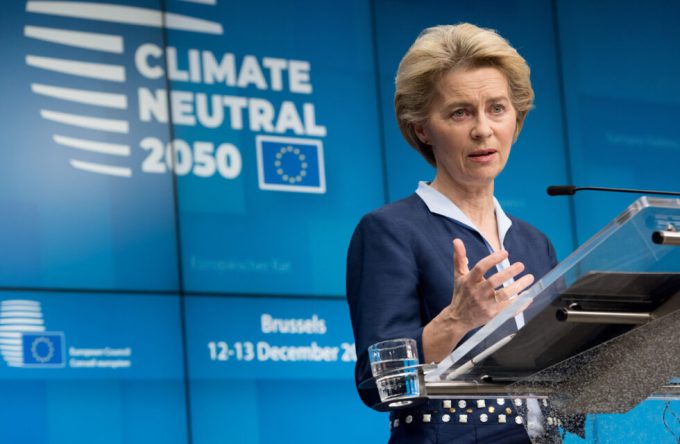
The Polish government has submitted four complaints against EU climate policies, calling them “authoritarian” and pledging that it “will not allow Brussels’ diktat”.
Three new cases filed to the Court of Justice of the European Union (CJEU) relate to a ban on the registration of new internal combustion vehicles after 2035, an increase in the EU’s greenhouse gas reduction target, and a reduction of free emission allowances under the EU Emissions Trading System (ETS).
They follow another complaint filed last week against EU rules on land use, land use change and forestry (LULUCF), which Poland says infringes the competences of member states.
“Does the [European] Union want to decide in an authoritarian manner what kind of vehicles Poles will drive and whether energy prices will rise in Poland?” tweeted climate minister Anna Moskwa on Monday. “The Polish government will not allow Brussels’ diktat.”
This morning, the minister added in an interview with Polskie Radio that the government would also file a fifth complaint this week concerning 35,000 tonnes of rubbish that it says has illegally entered the country from Germany.
Poland’s current national-conservative government has regularly criticised the EU’s climate and environmental policies. Ruling party leader Jarosław Kaczyński has called them “madness and theories without evidence” and “green communism”.
“At every EU council, we have been against and voted as a government against every single document in the Fit for 55 package,” said Moskwa, referring to the EU’s programme to reduce emissions by at least 55% by 2030.
“It is no secret that we were against the whole package, we are against increasing climate ambition and the way [these efforts] are carried and forced [upon member countries],” added the minister.
A recent EU-funded study found Poland to be the bloc’s least green country. It still relies on coal to produce around 70% of its electricity, by far the highest figure in the EU. Poland is Europe’s second-largest producer of brown coal after Germany and the largest producer of hard coal.
In March, Poland was the only member state to oppose the introduction of a ban on the sale of new petrol and diesel cars from 2035. In an interview today, Moskwa argued that unanimity should have been required for this decision as its impact is heavily dependent on member countries’ energy mix.
“In our case, [banning combustion engines] is absolutely contrary to climate policy, because it will lead to an increase in coal consumption in the short term if we want to increase electricity production [to power electric vehicles],” she said.
Asked about the other complaints, Moskwa said Poland was challenging most of them on the same grounds as the ban on the sale of combustion cars.
“The argument in most of these complaints is the same, mainly concerning the legal basis and unanimity, the impact on the energy mix,” she said.
One of the EU policies opposed by Poland is changes to ETS stipulating that sectors already covered by the system will be obliged to reduce their greenhouse gas emissions by 62% by 2030 compared to 2005 levels. The reform also envisages a gradual phase-out of free emission allowances between 2026 and 2034.
Another regulation concerns the provisions on the new EU Carbon Border Adjustment Mechanism (CBAM), which will cover commodities such as iron, steel, cement, aluminium, fertilisers, electricity and hydrogen.
Importers of these commodities will have to pay the difference between the emission fee in the country of production and the price of emission allowances in the EU ETS. CBAM will be phased in between 2026 and 2034, as free emission allowances in the ETS are phased out.
Moskwa argues that Poland is pursuing a “very consistent energy transition” focused on creating incentives rather than restrictions. She cited government subsidies for clean energy sources such as the “My Electricity” and “Clean Air” programmes, which have led to a boom in solar micro-installations and heat pumps.
Data from the European Environment Agency published last month showed that Poland recorded the EU’s largest overall fall in emissions in 2022. However, in proportional terms, Poland’s decline was, though above the EU average, not among the highest in the bloc.
Alicja Ptak is senior editor at Notes from Poland and a multimedia journalist. She previously worked for Reuters.
Copyright © 2023 Notes From Poland
Germany creates equity in Western Ukraine
BY M. K. BHADRAKUMAR | INDIAN PUNCHLINE | JULY 13, 2023
The hypothesis that the Anglo-Saxon axis is pivotal to the proxy war in Ukraine against Russia is only partly true. Germany is actually Ukraine’s second largest arms supplier, after the United States. Chancellor Olaf Scholz pledged a new arms package worth 700 million euros, including additional tanks, munitions and Patriot air defence systems at the NATO summit in Vilnius, putting Berlin, as he said, at the very forefront of military support for Ukraine.
German Defence Minister Boris Pistorius stressed, “By doing this, we’re making a significant contribution to strengthening Ukraine’s staying power.” However, the pantomime playing out may have multiple motives.
Fundamentally, Germany’s motivation is traceable to the crushing defeat by the Red Army and has little to do with Ukraine as such. The Ukraine crisis has provided the context for accelerating Germany’s militarisation. Meanwhile, revanchist feelings are rearing their head and there is a “bipartisan consensus” between Germany’s leading centrist parties — CDU, SPD and Green Party — in this regard.
In an interview in the weekend, the CDU’s leading foreign and defence expert Roderich Kiesewetter (an ex-colonel who headed the Association of Reservists of the Bundeswehr from 2011 to 2016) suggested that if conditions warrant in the Ukraine situation, NATO should consider to “cut off Kaliningrad from Russian supply lines. We see how Putin reacts when he is under pressure.” Berlin is still smarting under the surrender of the ancient Prussian city of Königsberg in April 1945.
Stalin ordered 1.5 million Soviet troops supported by several thousand tanks and aircraft to attack the crack Nazi Panzer divisions deeply entrenched in Königsberg. The capture of the heavily fortified stronghold of Königsberg by the Soviet army was celebrated in Moscow with an artillery salvo by 324 cannons firing 24 shells each.
Evidently, Kiesewetter’s remarks show that nothing is forgotten or forgiven in Berlin even after 8 decades. Thus, Germany is the Biden Administration’s closest ally in the war against Russia. The German government has stated its understanding for the Biden administration’s controversial decision to supply Ukraine with cluster ammunition. The government spokesman commented in Berlin, “We are certain that our US friends did not make their decision lightly, to deliver this sort of munition.”
President Frank-Walter Steinmeier remarked, “In the current situation, one should not obstruct the USA.” Indeed, the top CDU figure Kiesewetter suggested in an interview with the Green Party-affiliated daily taz that not only should Ukraine be given “guarantees, and if necessary, even provided with nuclear assistance, as an intermediary step to NATO membership.”
Coinciding with the NATO summit in Vilnius (July 11-12), Rheinmetal, the great 135-year old German arms manufacturing company, has disclosed that it is opening an armoured vehicle plant in western Ukraine at an undisclosed location in the next twelve weeks. To begin with, German Fuchs armoured personnel carriers will be built and repaired while there are plans afoot to manufacture ammunition and possibly even air defence systems and tanks.
Rheinmetall’s CEO told CNN on Monday that like other Ukrainian arms factories, the new plant could be protected from Russian air attack. Germany has more than doubled the 2022 allocation of €2 billion for upgrading Ukraine’s armed forces. It now touches around €5.4 billion with further plans to increase to €10.5 billion.
Now, is this all about Russia? Germany cannot be unaware that Ukraine has simply no hope on earth to defeat Russia militarily. Germany is playing the long game. It is creating equity in western Ukraine where it is not Russia but Poland that is its contender. Ever since the Tsarist army advanced into Galicia in 1914, Russia has had a difficult history with Ukrainian nationalists. If the current war in Ukraine spreads to western Ukraine, that cannot be Russia’s choice but out of some necessity forced upon it.
The Soviet victory in Ukraine in October 1944, the Red Army’s occupation of eastern Europe, and Allied diplomacy resulted in a redrawing of Poland’s western frontiers with Germany and Ukraine’s with Poland. Simply put, with compensation of German territories in the west, Poland agreed to the cession of Volhynia and Galicia in western Ukraine; a mutual population exchange created for the first time in centuries a clear ethnic, as well as political, Polish-Ukrainian border.
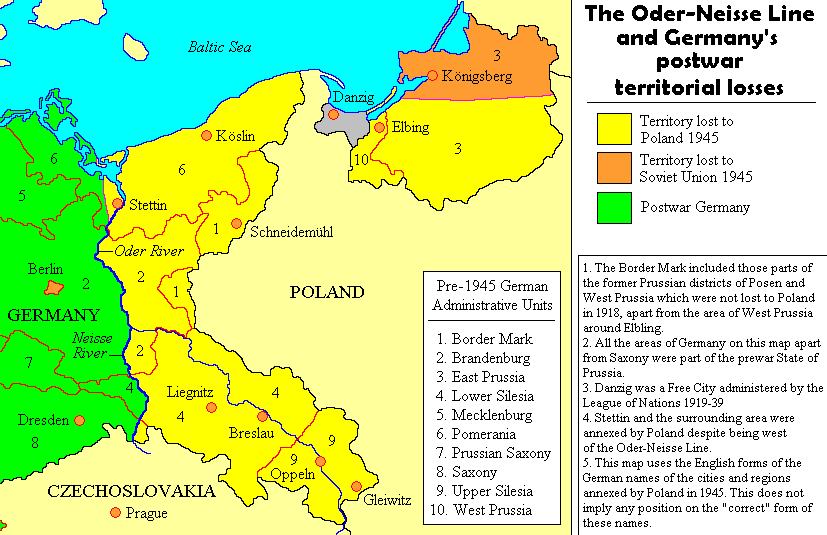
It is entirely conceivable that the ongoing Ukraine war will radically change the territorial boundaries of Ukraine in the east and south. Possibly, it can re-open the post-WW II settlement with regard to western Ukraine as well. Russia has repeatedly warned that Poland aims to reverse the cession of Volhynia and Galicia in western Ukraine. Such a turn of events will most certainly bring to the fore the issue of the German territories that are part of Poland today.
Perhaps, it was in anticipation of turbulence ahead that last October, eight months after the Russian intervention began in in February, Warsaw demanded WWII reparations from Berlin — an issue which Germany says was settled in 1990 — to the tune of €1.3 trillion.
Under the Potsdam Conference (1945), the “former eastern territories of Germany” comprising nearly one quarter (23.8 percent) of the Weimar Republic with the majority ceded to Poland. The remainder, consisting of northern East Prussia including the German city of Königsberg (renamed Kaliningrad), was allocated to the Soviet Union.
Make no mistake about the importance of the Eastern border for German culture and politics. Indeed, there is always something volatile about a “handicapped” Great Power when a whole new intensity appears in political, economic and historical circumstances, which prompts those in power to turn ideas into reality, and revanchist and imperialistic discourses that were quietly but steadily streaming below the surface of the carefully considered diplomatic efforts begin to probe pan-nationalist expansion.
In retrospect, Germany’s — in particular, then foreign minister and current president Steinmeier’s — diabolical role to align Germany with the neo-Nazi elements during the regime change in Kiev in 2014 and the subsequent German perfidy in the implementation of the Minsk Agreement (“Steinmeier formula”), as admitted recently in February by former Chancellor Angela Merkel should not be forgotten.
Suffice to say, even as Russia is winning the Ukraine war, the concern of the German foreign policy makers once again faces the need to redefine what was German. Thus, the war in Ukraine is only the means to an end. Recent reports suggest that Berlin may be moving, finally, toward meeting Ukraine’s pending demand for Taurus cruise missiles with a range exceeding 500 kms and unique “multi-effect war head” that can be a game changer in the combat dynamics on the battlefield and create the prerequisites for victory.
Equally, German soldiers already comprise about half of the NATO battlegroup already present in Lithuania. Defense Minister Boris Pistorius said two weeks ago while on a visit to Vilnius that Germany is preparing the infrastructure to permanently base 4,000 soldiers (“a robust brigade”) to Lithuania so as to have the capability to maintain military flexibility at the Eastern flank. The decision has support from both Germany’s governing coalition and its main opposition.
The CDU foreign policy expert and member of the Bundestag, Kiesewetter called the idea of establishing a German base in the Baltics a “decision of reason and reliability.” Indeed, there have been past attempts, historically speaking, to create German rule in the Baltics based on revisionist claims towards the new states of Estonia, Latvia and Lithuania where German colonists had settled as far back as in the 12th and 13th centuries.
Poland’s right-wing Confederation soars in polls due to party’s skepticism on Ukraine, says senior academic
BY GRZEGORZ ADAMCZYK | WPOLITYCE.PL | JULY 10, 2023
The latest favorable polling for the right-wing Confederation party, which could see them become kingmakers in the Polish parliament after the next election, is mainly due to the party’s waning attitude towards Ukraine, says Prof. Henryk Dománski, a sociologist from the Polish Academy of Sciences (PAN).
Speaking with the wPolityce.pl news portal, Domański said the growing popularity for the nationalist group and economic libertarians was evidence that a rising number of Poles believe their government is doing too much for Ukraine.
The last poll placed the Confederation at 14 percent, giving a very real possibility the party could hold the balance of power after autumn’s parliamentary elections.
Domański said that many in Poland feel that the Ukrainians are privileged and getting too much from the Polish state at the expense of Poles. They also feel that Poland has over-engaged in the conflict.
“Confederation is the only party which is responding to these feelings and is not ashamed to be open about it,” said the academic, adding that the party is gaining votes at the expense of the ruling conservative Law and Justice (PiS) party.
Domański explained that it is not in the interests of Confederation to form a coalition with either the conservatives or the liberals after the election. He feels that any coalition with PiS would result in the Confederation having to compromise its stance on Ukraine and that would lead it to lose support.
“As an anti-establishment party, any coalition with parties perceived to be part of the establishment would be ruinous for Confederation,” he said.
According to polling research, the party has been polling most strongly among young men. However, as it rises in the polls, it is beginning to gain ground among women and older age groups.
Polish-German dispute on the rise
By Uriel Araujo | June 23, 2023
German-Polish relations have been in a crisis, and the climate just keeps getting uglier, as exemplified by recent developments. For instance, Alice Weidel, spokesperson for Alternative for Germany (AfD), Germany’s third-strongest political force today, called in a tweet the area of former East Germany a “Central Germany” – thus implying that territories which today belong to Poland are German lands. This has sparked outrage: Poland’s former PM Beata Szydło, in response, said the AfD could in the future power over all of Germany, thus creating a “dangerous scenario for Europe”, because, she claims, it is a party “whose leaders openly negate the existing borders.” She added that German Chancellor Olaf Scholz has recently demanded the abolition of the right of veto within the EU and asked: “Should Europe go in this direction? Towards a German-dominated federation?” This provocation from a German political figure takes place in the context of a rising Polish campaign against Berlin.
Meanwhile, two families of Polish WWII victims are suing German companies Bayer and Henschel for €4.3 million over the persecution of Polish businessmen during the Nazi occupation of Poland. Brzozowska-Pasieka, head of the War Compensation Foundation (Fundacja Odszkodowań Wojennych), the Polish organization which represents the claimants, claims that these lawsuits are groundbreaking because they have been filed against private companies instead of the German state. Further claims on behalf of other families are being prepared. Commenting on the lawsuits, deputy culture minister Jarisław Sellin, lent his support, saying that “German companies which used forced laborers and actually participated in crimes during World War Two were never legally held accountable for what they did.”
Considering that Polish officials back these initiatives, one must see them as also part of a larger trend and context. Last month I wrote on the legal campaign Warsaw has been launching against Berlin for wartime reparations. It is accompanied by harsh anti-German rhetoric, which often describes Germany’s prominent role within the European Union as a “Fourth Reich”.
Polish discourse on the issue is not without its dose of hypocrisy: while criticizing Ukraine for celebrating genocidal Nazis, as recently as 2019, with Polish President Andrzej Duda’s support, Warsaw opened ceremonies honoring the Holy Cross Mountains Brigade of the National Armed Forces – an underground force which, in the end of Second World War, collaborated with the Nazis in their anti-Soviet struggle. This was denounced by Poland’s chief rabbi as “dangerous revisionism”. Moreover, Warsaw so far has refused to publish state archives which would expose the degree of Polish collaboration with the Nazi persecution of Jews. It is no wonder the German ambassador to Poland, Thomas Bagger, warned the country not to “open Pandora’s box”.
Behind the weaponization of WWII resentments lie also geopolitical goals. As I wrote in September 2022, Washington has apparently been promoting Warsaw’s ambitions regarding regional hegemony as mainly a means to counter Berlin, Poland in turn also benefits from this situation. For a while, Warsaw has, for example, been urging Washington to support the Three Seas Initiative (3SI) as a Western “counterweight” to Chinese investments in “critical infrastructure” – as Polish Foreign Minister Zbigniew Rau and his Romanian counterpart, Bogdan Aurescu, both wrote in a June 2021 piece published in Francis Fukuyama’s “American Purpose”.
Already in 2020, during the “Defender Europe 2020” military exercises, it had become clear that Poland aspired to become the main stronghold of American military presence in Eastern Europe – and the current conflict in Ukraine, since February 2022, has opened a window of opportunity in that regard.
By doing so, Poland aspires to establish itself as a new EU geopolitical center, while challenging Germany’s leading role in the continent. From a German perspective, this is ironic in itself, considering the fact that Berlin’s contribution to the EU budget has been the highest of any other member state, and therefore one could argue that the more recent EU member states such as Poland itself have been able to implement sustainable development policies largely thanks to Berlin’s disproportionate financial injections into the European budget. Therefore, according to this reasoning, Warsaw basically strives to get the maximum financial and economic benefits from its EU membership, at the expense of its “allies”, Germany especially.
For decades, Poland has arguably been on the path of refusing to contribute with the building of an intra-European system of relations. Warsaw pursues exclusively its own interests and shows no interest in building pan-European cooperation within a framework of mutual respect. Germany and France today are potentially forces for strategy autonomy in the European bloc (at least up to a certain point); Poland, on the other hand, is perhaps the main promoter of European “alignmentism”.
Warsaw, for instance, actively opposed the (now gone) Russian-German gas pipeline Nord Stream 2. The pipeline’s still unexplained explosion, denounced by journalist Seymour Hersh as an act of sabotage carried out by Washinton, remains an open wound in Germany – and a German investigation into allegations that Poland could have been used as a hub for the sabotage only make German-Polish tensions even worse. The Polish National Prosecutor’s Office said in a statement that such suspicions are “not supported by the evidence.”
In any case, Polish-German and intra-Europeans tensions in all likelihood will keep building up, because the Polish government weaponizes anti-German feelings, as it also does with Russophobia, in its rewriting of history. These tensions mirror a short-circuit in the European narratives as well as the continent’s own ideological and geopolitical contradictions.
Poland denies US media claims about Nord Stream
RT | June 22, 2023
A Wall Street Journal (WSJ) report on Poland’s alleged role in the Nord Stream gas pipelines blasts last September is “completely untrue,” the Polish National Prosecutor’s Office said in a statement to the country’s daily Rzeczpospolita on Thursday.
Citing German investigators, the US media outlet claimed in early June that the EU nation supposedly served as an operational base for the suspects that might be behind the Russian natural gas pipeline sabotage. A Polish source familiar with the investigation told the paper that Berlin allegedly knew very little about some of the suspects and might be following the wrong track entirely.
Warsaw has launched its own probe into last September’s incident, alongside Germany, Denmark, and Sweden, the prosecutor’s office told the Polish outlet. The data gathered by Polish officials contradicts the claims made by the WSJ, it added.
“The statement that ‘Poland was a logistics hub for the operation of blowing up Nord Stream’ is completely untrue and is not supported by the evidence of the investigation,” the prosecutor’s office said.
The WSJ reported that a yacht called the ‘Andromeda’ – which was chartered by a Ukrainian-owned, Warsaw-based travel agency and moored at a Polish port – had been sailing around each of the locations where the explosions later occurred.
The Polish prosecutor’s office said there was “no direct evidence” of the yacht’s or its crew’s involvement in the blasts. ‘Andromeda’ arrived in Poland from a small German port called Wiek with six people on board. It moored in one of the Polish ports for 12 hours before leaving the nation’s territorial waters, according to the prosecutors.
“The findings of the investigation show that, during the stay of the yacht in a Polish port, no items were loaded onboard, and the crew of the yacht was inspected by the Polish Border Guard,” the prosecutor’s office said. The vessel’s crew had Bulgarian passports, which appeared authentic, according to the officials. None of the crew members were banned from entering the Schengen area either, they added.
“There is no evidence that would indicate the participation of Polish citizens in blowing up the Nord Stream pipeline,” the prosecutor’s office concluded.
A source familiar with the Polish probe also told Rzeczpospolita that German investigators had contacted Polish officials in mid-May and requested information under the European Investigation Order. The Germans asked many questions about ‘Andromeda’ and its crew, including “many trivial facts,” the source said, adding that they apparently had no knowledge of them. Berlin was also not willing to share its own findings on the issue, the source added.
Rzeczpospolita’s source also questioned the yacht’s role in the sabotage operation by claiming that it could not be used to transport enough explosives to relevant locations and deliver them to the undersea pipelines. No equipment that could facilitate that was found onboard, they added.
Rzeczpospolita also reported that Polish officials had not ruled out the possibility that the yacht might have been used as a distraction from the very onset and its purpose was to put the entire investigation on the wrong track.
Ukraine drone attack on Russian oil pipeline to EU failed, official says
RT | June 17, 2023
Ukrainian drones have attempted to strike the Druzhba pipeline that delivers Russian oil to several European countries, Bryansk Region governor Alexander Bogomaz has said. He added that the attack was thwarted by Russian air defenses.
On his Telegram channel on Saturday, Bogomaz wrote: “Last night, air defense units of the Russian armed forces… repelled the Ukrainian military’s attack on the oil-pumping station ‘Druzhba’.” According to the official, a total of three UAVs were brought down.
Last month, the Washington Post claimed, citing leaked Pentagon documents, that back in February Ukrainian President Vladimir Zelensky had suggested to Deputy Prime Minister Yulia Sviridenko that Kiev “should just blow up the [Druzhba] pipeline,” which pumps oil to Hungary and other states.
According to the report, Zelensky described the destruction of “Hungarian [Prime Minister] Viktor Orban’s industry” as one of his goals.
While Zelensky dismissed the allegations as “fantasies,” Hungarian Foreign Minister Peter Szijjarto several days later accused Kiev of “virtually attacking Hungary’s sovereignty” by supposedly plotting to undermine the security of Budapest’s energy supply.
Around that same time, a loading station of the Druzhba oil pipeline in Bryansk Region was shelled by Ukrainian forces, with three fuel storage tanks, all of them empty, damaged as a result.
In March, Transneft, the pipeline operator, reported that several drones had dropped explosives in the vicinity of an oil-pumping station. Multiple incidents of shelling had taken place before that as well.
The Druzhba (Friendship) pipeline is one of the largest oil-transport networks in the world, spanning some 4,000 kilometers (2,485 miles) and transporting oil from Russia to Ukraine, Belarus, Poland, Hungary, Slovakia, the Czech Republic, Austria and Germany.
Bryansk Region, which is adjacent to Ukraine, has repeatedly been targeted by cross-border strikes.
In March, a Ukraine-based neo-Nazi unit conducted a sortie into the region.
The Latest Twist In Germany’s Nord Stream II Investigation Puts More Pressure On Poland
BY ANDREW KORYBKO | JUNE 11, 2023
The Wall Street Journal (WSJ) reported that Germany is now investigating whether Poland played a role in last September’s terrorist attack against the Nord Stream II pipeline. This latest twist builds upon the narrative that was introduced a few months back alleging that ‘rogue Ukrainian saboteurs’ were responsible, which came after Pulitzer Prize-winning journalist Seymour Hersh published a detailed report in February citing unnamed US sources who accused Biden of personally planning a very different American-led operation than the one that Germany is looking into.
President Putin publicly endorsed his interpretation of events, which could explain why the alternative one exculpating the US and blaming a ‘rogue’ Ukrainian faction was introduced shortly thereafter. It was analyzed at the time that this new narrative might be a back-up plan consisting of false “evidence” that was planted in advance in order to be “discovered” if America was ever implicated in this attack. As surreal as it sounds, this partially anti-Ukrainian spin might thus be a pro-US disinformation campaign.
Whatever the truth might be, the importance of the latest development is that it puts more pressure on Poland at the worst time possible for its ruling “Law & Justice” (PiS) party. A few days prior to the WSJ’s report, the European Commission announced that it’s suing Poland over its newly formed “Russian influence commission” that both the EU and the US earlier criticized. That country’s top two partners expressed deep concern that it might be exploited to persecute the opposition ahead of fall’s elections.
President Duda then introduced an amendment removing the possibility of barring alleged “Russian influence” agents from holding office in an attempt to assuage their concerns, suggesting that PiS will settle for branding those found guilty of this with a scarlet letter instead. The German-led EU wasn’t satisfied and subsequently sued Poland, which prompted Mainstream Media (MSM) outlets to unleash a torrent of criticism against that country.
As a case in point, CNN headlined a piece over the weekend declaring that “Poland is a key Western ally. But its government keeps testing the limits of democracy”, which is meant to precondition the public into suspecting that PiS’ potential victory in the upcoming elections might be partially due to fraud. When combined with the European Commission’s latest lawsuit and the WSJ’s most recent report, the perception that’s being shaped by powerful forces is that Poland is a so-called “rogue state”.
The West’s ruling liberal–globalist elite despises PiS for its stance towards abortion, immigration, and LGBT, which is why they’d prefer to have it replaced by the “Civic Platform” (PO) opposition that shares their position towards these issues. Germany has more of a stake in this than anyone else since it fiercely opposes PiS’ ideologically driven plans to restore Poland’s long-lost “sphere of influence” over Central & Eastern Europe (CEE) throughout the course of the NATO-Russian proxy war in Ukraine.
This geopolitical plot poses the greatest challenge yet to Germany’s continental hegemony, but it could be stopped if PiS is replaced by PO, which is regarded as being pro-German. Poland could then be resubordinated into Germany’s “sphere of influence”, thus putting an end to any chances of breaking Berlin’s grip over the EU. The East-West divide that PiS sought to exacerbate between conservative-nationalists and liberal-globalists would be bridged upon Poland’s return to Germany’s camp via PO.
Even if PiS remains in power, the three latest developments – the European Commission suing Poland over its newly formed commission, the MSM then warning about Poland’s ‘illiberalism’, and the WSJ’s latest Nord Stream II report – set the basis for isolating and possibly sanctioning that party. The West would go along with this for ideological reasons related to its ruling elites’ interests in fearmongering about conservative-nationalists despite PiS being partial sellouts to that cause as explained here.
If Germany’s investigation continues suggesting that Poland was complicit in the Nord Stream terrorist attack even if no evidence is ever found or manufactured in support of this theory, then public opinion across Europe could decisively shift against that country. Should this happen before fall’s elections, then it could influence third-party and undecided Polish voters to cast their ballot for PO in order to depose PiS, while coming after PiS’ potential victory could set the basis for possibly sanctioning its officials.
In either scenario, the primary one of which can’t be taken for granted since there’s no guarantee that Germany’s investigation will retain its newfound focus on Poland, the European public could be made to believe that PiS played a role for ideological reasons. It could be implied that its conservative-nationalist views inspired the party to collude with ‘rogue Ukrainian saboteurs’ out of equal hatred for Russia and Germany, thus exculpating Kiev and Washington while pinning the blame on PiS.
This narrative would also serve to redirect populist anger across Europe over the soaring cost of living towards that party and away from the US, which is responsible for provoking this proxy war in the first place and then pressuring the EU to impose the sanctions that spiked prices across the board. Furthermore, the conservative faction among these same populists would also have their cause discredited by partial ideological association with PiS, thus dividing the EU’s growing peace movement.
Germany’s disproportionately influential Greens also stand to benefit from this too since they can then claim that any remotely right-wing political force is a threat to the environment if PiS is implicated in the Nord Stream terrorist attack that damaged the Baltic Sea’s ecology. The narrative predictions from the preceding three paragraphs show how advantageous it would be for the West’s liberal-globalist elite and Germany’s geopolitical interests in CEE if the latter’s investigation stayed focused on Poland.
Even if it doesn’t for whatever reason, which would be cogently accounted for in a follow-up analysis in the event that attention shifts in another direction, the latest lead still puts pressure on Poland at the worst possible time for its ruling party. The fast-moving sequence of events over the past few days shows that powerful forces are shaping the perception that this country is a “rogue state”, which could set the basis for isolating and possibly sanctioning PiS if it ekes out a victory in the upcoming elections.
Poland refutes Nord Stream sabotage claim
RT | June 11, 2023
Poland had nothing to do with last September’s explosions on the Nord Stream 1 and 2 gas pipelines, high-ranking security official Stanislaw Zaryn has stated. Reports alleging Warsaw had a role in the sabotage are aimed at distracting the public’s attention from what actually happened, he added.
On Saturday, the Wall Street Journal claimed that German investigators were seeking to establish if Poland was somehow involved in the attack on the undersea pipelines, built to deliver Russian natural gas to Europe via Germany.
According to the paper, officials in Berlin suggested that Ukrainian saboteurs could have used the country as an operational base before the explosions. They reached this assumption based on the fact the Andromeda yacht, which could have been used in the attack, had been chartered through a Ukrainian-owned travel agency in Warsaw, and that the suspects arrived at a German port, where they boarded the vessel on a van with Polish license plates, the report claimed.
“Poland had no connection with the blowing up of Nord Stream 1 and Nord Stream 2,” Zaryn wrote on Twitter on Saturday.
Attempts to link Poland to those events are “baseless,” the official, serves as Secretary of State in the Chancellery of the Prime Minister of Poland and as acting deputy of the minister coordinator of Special Services, insisted.
The recent spreading of theories on who might have destroyed a key component of Europe’s energy infrastructure “resembles the tactics of information noise, the aim of which is to distort the true picture of events,” he argued.
“The hypothesis that the blow-up was committed by Russia, which had the motive and the ability to carry out such an operation, remains valid,” Zaryn said.
Russia has repeatedly denied accusations made by some in the West that it blew up its own pipelines. It has also rejected claims that a “pro-Ukrainian” group was responsible for the sabotage, saying such stories were aimed at distracting attention from a bombshell article by veteran reporter Seymour Hersh, who insisted in February that Nord Stream had been destroyed by American operatives.
According to an informed source who talked to the Pulitzer Prize-winning journalist, the explosives were planted on the pipelines in June 2022 by US Navy divers under the cover of a NATO exercise and detonated two months later on the order of US President Joe Biden.
Following Ukraine steps, Poland now uses Russophobia to crush dissent
By Uriel Araujo | June 7, 2023
President Andrzej Duda has signed a law which allows Warsaw to conduct political repression against the opposition, by creating a commission to “investigate Russian influence on Polish politics that could ban people from public office for a decade” – Duda and the the Law and Justice (PiS) party argue this is necessary to neutralize “Moscow agents”, but the opposition fear this could trigger a civil war, as journalist Wojciech Kość wrote for POLITICO. This could complicate Warsaw’s relations with Brussels, as well – “with the European Commission freezing billions in EU pandemic recovery cash over worries the Polish government is backsliding on the bloc’s democratic principles”, writes Kość.
Poland’s relations with the European bloc have been complicated for a while: in 2021, the European Court of Human Rights (ECHR), which is part of the Council of Europe (not the EU) condemned the Central European country over the removal of judges from office and their arrest. Warsaw has been on a collision route with Brussels as well over a number of issues regarding the rule of law (from the European Commission perspective), and also free press, LGBT rights, and so on.
Poland’s diplomacy, since 1989, has been largely shaped by its aspiration to join both NATO and the EU. Since at least 2015, Warsaw has maintained its alliance with Washington, while becoming, on the other hand, increasingly isolated within Europe and becoming kind of adrift. In 2021, Polish Foreign Minister Zbigniew Rau urged the US to support the Three Seas Initiative (3SI) projects, arguing that it could become a strategic “American economic footprint” in the Adriatic, Baltic, and Black Sea region and a “counterweight to investments in critical infrastructure by actors who do not share our democratic value.”
Since 2022, the ongoing Russian-Ukrainian confrontation has opened a kind of window of opportunity for Warsaw. In December last year, Estonian Ambassador to the EU Aivo Orav, stated that the “political center of influence” in Europe no longer was “in Berlin and Paris” (only), but now “also lies in Eastern and Central European Countries as well, including the Baltic countries, together with U.S. support.” Such a possible outcome would be very much welcomed by Washington, especially considering how both France and Germany today flirt with the idea of strategic autonomy.
As I’ve written, Warsaw has been antagonizing Berlin while trying to project its own influence within the continent – clearly with Washington’s crucial support, as the US seems to be “fed up” with Germany. Poland’s legal campaign against Germany over WWII reparations and its attempts to absorb neighboring Ukraine in a confederacy should be seen as part of this larger agenda. The Polish renaming of Kaliningrad, as I also wrote, is yet another instance of the current memory war which haunts Europe today.
Germany, in turn, on May 8 this year banned Soviet and Russian flags during its “World War II commemorations”. The Allied Forces triumph over Nazi-Fascism has been celebrated for half a century as the fundamental victory of democracy and true Western values. This Western narrative is short-circuiting as the West has seen fit to rewrite History, by preposterously erasing Russia from it while white-washing the blatant neo-Nazism of Ukraine’s Azov regiment and its human rights infringements.
In Ukraine too “anti-Russian” measures have been advanced by the current regime to persecute the opposition and civil society. Since at least December last year Zelensky has been advancing moves to outlaw Orthodox communities, something which even Archbishop Sviatoslav Shevchuk of Kyiv-Halych, head of the Ukrainian Catholic Church, has denounced.
No less than 11 political parties have been banned there since 2022 over their “pro-Russia” stances. According to Volodymyr Ishchenko, a research associate at the Institute of East European Studies (Freie Universität Berlin), these measures have more to do with “post-Euromaidan polarization” than with “genuine security concerns”.
Since the ultranationalist 2014 Maidan Revolution, and the ongoing civil war in Donbass, “pro-Russia” has become an accusatory category to label and marginalize, according to Ishchenko, “anyone calling for Ukraine’s neutrality” as well as “state-developmentalist, anti-Western, illiberal, populist, left-wing, and many other discourses.” In the Eastern European nation, there has always been a political camp which calls for closer integration with neighboring Russia rather than the West – which is no wonder, considering that in this strongly bilingual nation, at least 34% of the population speaks Russian, with a high degree of intermarriage.
In short, in a kind of neo-McCarthyism, anti-Russia discourse and the re-writing of history is used today both by Kiev and Warsaw as a pretext to persecute and even outlaw dissent.
In other words, the problem is that being at war over the past (and at war with the past itself) can always backfire: Polish-Ukrainian bilateral relations and their ambitious plans towards a confederacy have always been hampered by differences precisely about World War II. How can there be strong ties of friendship between two nations when one of them today celebrates as heroes those who supported the genocide of the other?
Last February, while Ukrainian Parliament celebrated Stepan Bandera, Poland’s Prime Minister Mateusz Morawiecki in turn expressed his disapproval of all who commemorate Bandera, describing as “genocide” the brutal murder of between 100,000 to 200,000 ethnic Poles. Here, Polish and Ukrainian nationalism clash. And both regimes clash with the democratic values which the Western bloc purportedly champions – while Europe now welcomes the specter of far-right nationalism and even neo-Nazism.
As non-alignmentism and multi-alignmentism are on the rise, the US-led Western global order has been in decline not just due to de-dollarization or to the potential end of the US-Saudi relationship – in a deeper level, its hypocritical weaponization of human rights is losing force as are its most cherished narratives and political myths.
Featured Video

or go to
Aletho News Archives – Video-Images
From the Archives
Israel Would Have No Qualms About USS Liberty-Style FALSE FLAG If Iran Campaign Falters – Analysts
By Ilya Tsukanov – Sputnik – 18.06.2025
Donald Trump is mulling whether or not to join Israel’s aggression against Iran as Tel Aviv faces problems sustaining its defenses against growing counterstrikes, and apparently lacks a realistic game plan for an end to hostilities after failing to achieve its goals. Analysts told Sputnik how the US could be ‘nudged’ into the conflict.
“The US is already assisting Israel with supplies, intel, refueling support, etc. One of the many US posts in the region could be attacked for a casus belli,” former Pentagon analyst Karen Kwiatkowski explained.
“If Trump doesn’t comply with Israel’s demand” and join its aggression voluntarily, “a false flag may be needed” to drag the US in, Kwiatkowski, retired US Air Force Lt. Col.-turned Iraq War whistleblower, fears.
Netanyahu has a diverse array of options at his disposal, according to the observer, including:
- a false flag against US assets abroad blamed on Iran or one of its Axis of Resistance allies, like the Houthis
- a US domestic attack or assassination blamed on Iran
- Iranian air defenses ‘accidentally’ hitting a civilian jetliner carrying Americans
- use of a dirty bomb or nuclear contamination somewhere in the region blamed on Iran
- even blackmailing by threatening to use nukes against Iran if the US doesn’t join the fight
Kwiatkowski estimates that Israel probably has “enough blackmail power” against President Trump and Congress to avoid the necessity of a false flag operation, but a “USS Liberty-style” attack, targeting the soon-to-be-retired USS Nimitz supercarrier that’s heading to the Middle East, for example, nevertheless cannot be ruled out entirely, she says. … continue
Blog Roll
 Aletho News
- Embarrassing Pivot: U.S. considers dropping Iran oil sanctions amid war
- US has 2 months of rare earths left to replenish weapons amid Iran war: Report
- Strait Of Hormuz closure brings Empire to brink
- Iran controls Strait of Hormuz, dictates terms of war and peace as US excursion backfires
- Outlasting the Superpower: The Reasons Why Iran is Beating uhe US and Israel
- Top PMU commander, over a dozen fighters killed in new US strikes on Iraq
- Is Netanyahu’s war gamble threatening the future of ‘Israel’?: FT
- Smotrich calls for annexation of South Lebanon to Litani River
- Echos of Gallipoli? Hormuz and the Geography of Hubris
- Pakistan PM backs Iran’s right to self-defense amid tensions
- If Americans Knew
- UN’s special rapporteur on human rights says Israel is systematically torturing Palestinians
- Trump White House plagiarized Iran war manifesto from Israel-aligned think tank
- Gaza says 6–10 patients die daily waiting for treatment abroad as Israel blocks medical evacuations
- ‘Substantial evidence’ of double-tap strike in killing of Gaza’s Hind Rajab
- ‘Do Not Want To Die For Israel’: Doubts About Trump’s Iran Strategy Spread Among Troops
- Instead of taking Joe Kent’s claims seriously, the media is disregarding him as an antisemite
- Joe Kent’s Explosive Interviews about his Resignation over the Iran War
- Israel poised to take over southern Lebanon; settlers wreak havoc in West Bank – Not a ceasefire Day 165
- From Sde Teiman, the truth about Israel’s military justice system has been set free
- Child denied life-saving bone marrow transplant by Israel ‘because he is from Gaza’
- No Tricks Zone
- Devastating Assessment Of Comirnaty Vaccine By Former Senior Pfizer Europe Toxicologist
- New Study: CO2 Is ‘Effectively Negligible’ As An Explanatory Climate Change Factor Since 2000
- Former Pfizer Toxicologist Dr. Helmut Sterz Tells Bundestag Hearing Pfizer Vaccine Should Have Never Been Approved
- Energy Expert: Germany’s Nuclear Phaseout Was A “500 Billion Euro Mistake”
- New Research: South Australia’s Mid-Holocene Sea Surface Temperatures Were 4°C Warmer Than Today
- Storing Green Energy To Last Germany 10 Days Would Require A 60-Million Tonne Battery
- New Studies: UK Sea Levels Were 4 Meters Higher Than Today During The Mid-Holocene
- Destructive Green New Deal: German Energy And Metal Group Warns Of Drastic Crisis
- New Study Documents A 20-Year Pause In Arctic Sea Ice Decline – Driven By Internal Variability
- Wake-up Call: Survey Shows Majority Of Germans Now Favor Postponing Climate Targets!
 Aletho News