Germany and UK to sign ‘historic’ defence pact – Sunday Times
RT | October 20, 2024
The UK and Germany will sign a bilateral defense agreement this week, paving the way for both nations to step up their military drills near Russia’s borders, The Sunday Times has reported.
Under the terms of the deal, Britain and Germany will cooperate on arms procurement and development, with the agreement serving as a “first step” for a larger deal between the UK and EU next year, the British newspaper reported.
The pact “is expected to enable British and German forces to conduct joint military exercises on NATO’s eastern border with Russia, most probably in Estonia and Lithuania,” The Times noted, without offering further explanation.
Britain and Germany already take part in NATO exercises, such as this year’s ‘Steadfast Defender’ drills. Conducted near Russia’s western borders, ‘Steadfast Defender’ involved 90,000 troops from all 32 NATO states, and was perceived in Moscow as open preparation for “a potential armed clash with Russia.”
In addition to these multilateral exercises, Germany already takes part in smaller-scale bilateral exercises, such as Germany’s ‘Grand Quadriga’ drills with Lithuania earlier this year, and its ‘Baltic Tiger’ maneuvers with Estonia in 2022. The Times’ article suggests that Britain could join these exercises once the new deal is signed.
British Defense Secretary John Healey told the newspaper that the deal is modeled on the 2010 Lancaster House agreement between the UK and France. Under this agreement, Britain and France pledge to create a joint expeditionary force to take part in military drills, to collaborate on developing drones and submarine technology, and to share nuclear-weapons data with each other.
During a two-day NATO summit in Brussels this week, Healey also announced that British troops stationed in Estonia will receive new drone warfare equipment and training, and that the UK will work with Germany, France, Poland and Italy to create new long-range missiles for Ukraine.
Germany Finally Maxed Out Its Military Support For Ukraine
By Andrew Korybko | October 15, 2024
Bild cited internal Defense Ministry documents to report that Germany finally maxed out its military support for Ukraine and won’t give any more heavy equipment, which comes around six weeks after the Polish Defense Minister effectively said the same thing about his country’s support. The Federal Cabinet detailed “The arms and military equipment Germany is sending to Ukraine” last month, which they said totals €28 billion in assistance that’s either already been provided or committed for future years.
Poland and Germany have done much more for Ukraine in this regard than most countries so the fact that they’ve already maxed out their support suggests that the West as a whole might soon seriously consider freezing the conflict. After all, Russia is already far ahead of NATO in the “race of logistics”/“war of attrition”, with even Sky News candidly reporting earlier this year that Russia is producing three times as many shells as NATO at one-quarter of the price.
This was followed last month by CNN sharing a glimpse of just how bad everything has become for Ukraine, which coincides with growing interest among the Western public and even some of their elite in cutting their side’s losses by exploring a political solution to the NATO-Russian proxy war in Ukraine. “Russia’s Capture Of Pokrovsk Could Reshape The Conflict’s Dynamics” whenever it comes to pass so it naturally follows that they’d either want to preempt that or find a way to freeze the conflict afterwards.
The challenge though is that Russia won’t consider a ceasefire so long as Ukraine continues to occupy Kursk and Donbass, neither of which Kiev is willing to withdraw from as a “goodwill gesture”, thus risking the scenario that the front lines collapse due to the combination of attrition and Russia’s new tactics. In that case, Russia might try to expel Ukraine from the remainder of Zaporozhye Region east of the Dnieper, including its namesake city of an estimated 750,000 people.
There’s also the chance that Russia moves into eastern Dnipropetrovsk (“Dnipro”) Region despite having no claims to it either to coerce Ukraine into withdrawing from eastern Zaporozhye and its namesake capital and/or to push the Line of Contact (LOC) as far as possible before freezing it. This tactic could also enable Russia to open up a southern front in Kharkov Region to complement the eastern and northern ones. The worst-case scenario for Ukraine is simultaneous attacks along these three axes.
With Poland and Germany having already practically tapped out, unless they dig into the rest of their reserves that they’ve thus far preserved to meet their minimum national security requirements, this sequence of events is certainly possible. It could only be preempted by a comparatively more generous ceasefire proposal from the West that piques the Kremlin’s interest, Russian self-restraint, or Ukraine and/or the West “escalating to de-escalate”.
The first could see the West pressure Ukraine into withdrawing from eastern Zaporozhye Region, the second could be due to Russia not wanting to risk overextending its military logistics, and the third could involve a nuclear provocation, the formal deployment of NATO to Ukraine, and/or an attack on Belarus. Relevant factors include the timing of any potential Russian breakthrough and the outcome of the US elections, both of which could influence Ukraine and/or the West, perhaps even in different ways.
All that can be said for sure is that Ukraine can’t depend on more military aid after Germany just joined Poland in dropping out of the “war of attrition”. Unless they dig into their reserves or others step up (if they even have much left to give), then something game-changing might soon happen, though whether it’s positive or negative remains to be seen. Russia will either decisively win, be offered a more generous ceasefire that it’ll accept for pragmatic reasons, or its enemies will dangerously “escalate to de-escalate”.
Steadfast Noon Risking Noon Twilight: What are the Risks of NATO’s ‘Nuclear Sharing’ Drills?
By Ilya Tsukanov – Sputnik – 14.10.2024
NATO kicked off its annual Steadfast Noon nuclear exercises this week. What’s important to know about them? What military assets could they involve? What are the dangers associated with them? Sputnik explores.
NATO’s Steadfast Noon nuclear drills began on Monday and will run over the next two weeks, involving some 2,000 personnel from eight bases and over 60 aircraft from 13 bloc countries. The bulk of the drilling is expected to take place over the North Sea (about 900 km from the Russian border), as well as Belgium, Denmark, the Netherlands and the UK.
Central to the exercises is drilling the concept of ‘nuclear sharing’ – which allows designated NATO allies’ jets to simulate combat missions using US nukes stored on their territory.
NATO’s nuclear sharing concept goes back to the Cold War, when the US deployed thousands of surface-to-surface, surface-to-air, air-tor-air and air-to-surface weapons with nuclear payloads to allied countries, including Canada, the UK, Greece, Turkiye, Italy, and West Germany. Guarded by US Air Force or Army personnel, the arms remained (and still remain) under the control of the US military, which has the codes needed to arm them.
By 1991, the USSR removed all its nuclear weapons from Eastern Europe, and urged the US to do the same. Washington never did, and today, keeps 100-150 B61 nukes in Europe and Turkiye, including:
- 10-15 bombs at Belgium’s Kleine Brogel Air Base – deliverable by F-16 MLU and F-35A jets.
- 10-15 B61s at Germany’s Buchel Air Base – carried by PA-200 Tornado jets and eventually, F-35As.
- Up to 45 B61s at Italy’s Aviano and Ghedi air bases, deliverable by F-16 C/Ds, Tornados, and F-35As.
- About 20 bombs at the Netherlands’ Volkel Air Base, delivered by F-16 MLUs and F-35As.
- Up to 50 B61s at Turkiye’s Incirlik Air Base, deployed by unspecified US military aircraft.
Poland has expressed readiness to host US nukes under the Nuclear Sharing program. It’s likely the bombs would be deployed at Lask Air Base, central Poland, where the US Air Force has a forward presence, and has already participated in nuclear drilling.
The B61 has been in production since the 1960s, with over 3,000 bombs of 13 different variants created. Today, the arsenal consists mostly of B61 Mod 3 and Mod 4 gravity bombs, according to the Center for Arms Control and Non-Proliferation. Produced since 1979, these weapons have a yield between 0.3-170 kt (Mod 3) and 0.3-45 kt (Mod 4). A Mod 7 variant also exists, with a yield between 10-340 kt.
Work is underway to replace all three with the Mod 12, which has a 0.3-50 kt yield. Production began in 2021, and 400-500 bombs are expected, according to the Bulletin of the Atomic Scientists.
What are the Risks Associated With Nuclear Sharing?
While B61s are tactical weapons, that doesn’t make them less dangerous than their strategic cousins, in light of the US nuclear doctrine’s allowance for nuke use in a first strike, even against “non-nuclear weapons states,” in certain circumstances. The bombs that devastated Hiroshima and Nagasaki in 1945 had yields of 15 and 21 kt, respectively.
The deployment of US nuclear weapons abroad frees the Pentagon’s hands for nuclear aggression involving tactical weaponry far beyond America’s home shores.
Nuclear Sharing program nukes are stored in so-called ‘Weapons Storage and Security System’ (WS3) facilities, situated in underground vaults. While info about the facilities, and even basic details on the nukes’ placement is ordinarily kept in strict secrecy, details about risks associated with hosting the weapons do occasionally leak out.
In 2023, the Federation of American Scientists published a photo of a damaged B61 at Volkel Air Base, showing the misshapen nuke on a trolley with one of its stabilizer fins missing. Neither US nor Dutch authorities informed the public of any incidents involving nukes at the base.
FAS researcher Hans M. Kristensen speculated at the time that the weapon was hit with “significant force,” possibly by a vehicle in transit, or “bent out of shape by the weapons elevator of the underground storage vault.” In any event, the incident constituted “the first publicly known case of a recent nuclear weapons accident at an airbase in Europe,” the observer noted.
FAS stressed that while the risks of an accidental detonation was extremely minute, such an eventuality would have risked widespread nuclear contamination.
Nuclear Sharing is also risk for another reason: heightened nuclear danger.
In the 1980s, when the US placed nuclear-armed Pershing and cruise missiles in Western Europe, it sparked the largest mass protests in modern European history, with three million people in Western Europe, and two million elsewhere, protesting the weapons, and for good reason: the deployment forced the USSR to put its nuclear forces on hair trigger alert, nearly sparking an all-out nuclear war in 1983.
Energy prices cross a critical threshold in Poland, leaving some companies fighting for their lives
By Liz Heflin | Remix News | October 10, 2024
Energy prices have crossed a critical point in Poland, leaving some companies fighting for their lives, according to wnp.pl. The site further says that the EU’s goal of lowering greenhouse gas emissions means higher obligations on those companies that depend on energy usage.
Market participants are finding it increasingly difficult to compete, with those relying on coal burdened by emission fees. “The energy-intensive industry is responsible for over 20 percent of Poland’s GDP,” WNP says, which has led to more and more demand for renewables to lower carbon footprint and remain competitive.
Henryk Kaliś, president of the board of the Chamber of Industrial Energy and Energy Recipients, says the key factor for companies is not the price of energy itself, but whether it allows for profitable production and competition with foreign (non-European) companies. Electricity prices need to be below 60 euros per megawatt-hour to compete, and prices have already surpassed this threshold.
The EU’s climate policy affects companies across the continent and has led to European industry moving to Asia. However, Poland is in a particularly vulnerable position, as gas fuel accounts for 45 percent of the country’s energy system, explains Robert Tomaszewski, head of the energy department of Polityka Insight. Compare this to Scandinavian countries where electricity is mainly supplied by hydroelectric power plants, Spain where nuclear and renewables make up 70 percent of the energy mix, or France which has turned back on their nuclear plants, driving one megawatt-hour of electricity down to €47.
In early August, Polityka Insight’s data had Poland’s average wholesale price of electricity at an average of €90 per megawatt-hour, with higher prices only seen in Ireland (€98.68) and Italy (€95-98)
Mikołaj Budzanowski, who sits on the management board of Poland’s Boryszew Group, says there is no doubt that high energy prices are a major problem for Polish industry.
Defense Spending on NATO’s Eastern European Flank Skyrockets to $70 Billion
By Oleg Burunov – Sputnik – 09.10.2024
Russian President Vladimir Putin earlier said that Western countries had misled Moscow by expanding NATO in Eastern Europe despite previous promises not to do so.
Military expenditure in NATO’s Eastern European member states surged to $70 billion this year, according to Bloomberg.
Poland and Estonia are among the top seven NATO members, in terms of defense spending as a percentage of GDP, this year. Poland is allocating 4.12% of its GDP to defense, while Estonia is dedicating 3.4%, both far exceeding NATO’s target of 2%.
The report comes amid heightened militarization in Eastern Europe, with NATO establishing “multinational battlegroups” in Bulgaria, Estonia, Hungary, Latvia, Lithuania, Poland, Romania, and Slovakia, in response to a perceived “Russian threat.” Member states have also increased their deployment of ships, planes, and troops to NATO’s eastern flank.
Russia has repeatedly warned NATO against expanding eastwards, with Moscow arguing that it could further escalate tensions in Europe.
Russian President Vladimir Putin has previously accused NATO of making empty promises regarding its 1991 commitment not to expand eastwards. He stressed that there have been “five waves” of expansion since the US administration assured Russia in 1991 that NATO would not expand towards the east.
Ukrainian legion canceled after Poland fails to find enough volunteers
Zelensky had claimed there were ‘1 million’ volunteers waiting to fight
By Liz Heflin | Remix News | October 4, 2024
The formation of the Ukrainian Legion was announced jointly back in July by Prime Minister Donald Tusk and President of Ukraine Volodymyr Zelensky, according to which Poland committed to training a Ukrainian legion on its territory. However, it has hit a major snag, namely, a lack of willing participants, according to Poland’s defense minister, reports TVP Info.
This unit was to include volunteers from among Ukrainians permanently residing in Poland and other European countries and was to be trained by the Polish Army.
“We have also agreed… to form and train a Ukrainian legion in Poland. This will be a new formation made up of volunteers, which, following the example of the Ukrainian-Polish-Lithuanian brigade, could enable Ukrainian citizens in Poland to take part in the defense of Ukraine,” the Ukrainian president had said in July.
“The Ukrainian legion would undergo training in Poland, would be equipped and armed. Every Ukrainian citizen who decides to join the legion will be able to sign a contract with the Ukrainian armed forces,” Zelensky had also noted.
When asked about the progress in creating the Legion, Defense Minister Władysław Kosiniak-Kamysz emphasized that the number of Ukrainians willing to join its ranks is too small for the Polish Army to be able to conduct training.
“We have been on standby since the beginning of September. The Ukrainian declarations were very high, that one brigade could be formed, i.e., there would be several thousand people. There are not that many volunteers,” he emphasized. Kosiniak-Kamysz added that the Polish side is not responsible for recruiting soldiers but for conducting their training.
Back in July, Polish Foreign Minister Radosław Sikorski said during the NATO Public Forum, organized on the occasion of the NATO summit in Washington, that several thousand people have already registered in Poland to join the Ukrainian Legion, the new Ukrainian volunteer military unit.
“We have up to 1 million Ukrainians of both sexes (in the country), and several thousand of them have already registered to take part in this undertaking,” Sikorski had said. He added that these volunteers want to help out their compatriots on the frontline but do not want to be sent to fight without proper training and equipment.
In August, Zelensky also signed laws on providing support to servicemen participating in the operation in the Kursk region of Russia and for granting Ukrainian citizenship to the International Territorial Defense Legion.
Rising anger in Germany in response to Nord Stream “revelations”
What role did the German authorities have in the bombing of the Nord Stream pipeline?
By Maike Gosch | August 19, 2024
Last week, a number of reports and articles about the Nord Stream pipeline explosion shook the media landscape and citizens in Germany and around the world. After a long period of astonishing silence surrounding this monstrous event, things now seem to be moving. Are we slowly getting closer to the truth in this affair? In any case, the reactions from all sides were fierce and showed once again just how divided the political landscape is in Germany and Europe.
After the news first made the rounds in several German media outlets on August 14, 2024 that German investigators had identified a Ukrainian diving instructor (funnily enough named Volodymyr Z.) who allegedly blew up Nord Stream and then unfortunately escaped arrest due to a lack of cooperation from Polish authorities, further explosive revelations from the Wall Street Journal followed on the same day.
According to the WSJ article, the attack was led by the then-Commander-in-Chief of the Ukrainian armed forces and current Ukrainian ambassador to the UK, Valerii Zaluzhnyi, with president Zelenskyy having initially given the operation the green light. Then the Dutch military intelligence service MIVD found out about it, informed the CIA and the latter in turn urged president Zelensky to stop the operation. He then ordered Zaluzhnyi to abort the operation, but the general ignored the order and went ahead with the plan. According to the WSJ, just days after the attack, which occurred on September 26, 2022, the CIA gave the German Foreign Ministry a detailed account of how the covert operation went down. The Ukrainian government has rejected this account.
Much of this report seems implausible, so I consider the article to be more of a “limited hangout” than a clarification of this terrorist attack on our industrial infrastructure.
“Limited hangout” is a term from the intelligence world for a common ploy used by intelligence professionals: when the truth is beginning to emerge or the public is becoming too suspicious and impatient, and they can no longer remain silent or rely on a contrived cover story to deceive the public, part of the truth is admitted — sometimes even voluntarily — while still withholding the essential and truly risky facts in the case. The public is supposed to be distracted from and engaged with the disclosed information, so that the pressure it exerts eases (at least for a while).
One day later, on August 15, 2024, the German newspaper Die Welt published an interview with the former head of the BND (Bundesnachrichtendienst or Federal Intelligence Service of Germany), August Hanning, which also caused quite a stir. Mr. Hanning says that the attack, if it was carried out by the Ukrainian side, could only have been possible with strong logistical support from Poland and that for him there must obviously have been an agreement between the highest leaders in Ukraine and Poland, naming president Zelenskyy and president Duda.
These statements sound more plausible, but it is surprising that Mr. Hanning begins by saying that only Ukraine and Poland had an interest in and the means of blowing up the pipelines, and that he doesn’t mention other possible perpetrators, such as the US, but also Great Britain or the Scandinavian neighbouring states. Interestingly, however, he takes a very clear stance on the classification of the attacks and comes to a very different conclusion from most voices in the German political landscape, which we will get to below:
There has been considerable damage to the pipelines. […] I once spoke to external experts from the operators and they put it at up to 20 to 30 billion euros. The huge damage caused by state terrorism must be clearly stated and I also expect the German government to make it clear that compensation must be demanded. Also from the operators. I believe that huge damage has been caused by the activities of Ukrainian and Polish government agencies.
This astonishing accumulation of news within a few days around the investigation, which has been ongoing for two years without any results so far, has led some to suspect that this is a controlled action directed against Zelenskyy and part of the public’s preparation for him losing the support of the West and being replaced.
“Thank you, Ukraine!”
The reactions to this explosive news were not long in coming and proved once again what a divided information landscape we find ourselves in.
The German conservative newspaper FAZ led the way. In an article that directly followed the WSJ’s “revelations”, Reinhard Müller explained that the pipeline had been a legitimate military target (according to the headline); the text formulates it somewhat more cautiously: “could be considered a legitimate target”. His arguments: it is owned by a Russian state-owned company and also contributed to Moscow’s war of aggression against Ukraine. He also makes an argument oft-heard from German commentators whose loyalties clearly lie with Ukraine: at the time the pipeline was blown up, it was no longer serving Germany’s energy supply. Of course, this raises the question: if it no longer served Germany’s (and Europe’s, for that matter) energy supply, how could it have contributed to Moscow’s war of aggression? But let’s leave that aside for the moment. And we will come to the ownership structure later in the text.
He is also of the opinion that if the Ukrainian president or another commander commissioned it, it could also be seen as an act of defense permissible under international law. Müller takes the opportunity, while he’s on the subject of steep theses on international law, to take a similarly idiosyncratic swipe at the German government’s critics of its stance in the Gaza war:
Here, Ukraine, with its back to the wall, gives little cause for concern in terms of the selection of targets, the treatment of prisoners of war and also the prosecution of war crimes and international observation. In such extreme situations, the value of the Western community’s value-based approach is proven. The end does not justify every means — this also applies to Israel, which is also in a struggle for survival. The commitment to human rights, even in the fight against those who do not care about them, makes the decisive difference. Any far-sighted government should also recognise that this is in its own best interests. Only those who fight under the flag of humanity will be able to live in peace with their neighbors at all times in the long term.
So again, because this may be misleading, his statement is: Ukraine and Israel respect human rights, unlike their opponents, and thus fight under the flag of humanity and now the Western community’s value-based approach shows its worth in that we support them in this noble fight (also against our own industrial infrastructure), because (only) in this way can we live in peace with our neighbors in the long term. I would like to award the prize for the most absurd take to Mr. Müller.
But please read the article in its entirety yourself, which also claims that all allies have a duty (!) to rush to the aid of the invaded Ukraine at any time, including with their own soldiers. In legal terms, one would speak of a “minority opinion”; I would like to use stronger words, but I’m trying to control myself so as not to further the division here.
A few days later, the FAZ reported that Germany would be cutting back on military aid for Ukraine and that, according to the German government’s current budgetary planning, no new money would be made available for this with immediate effect.
What initially appeared to be a possible reaction to the revelations and a concession to the large part of the population that is critical of the German government’s NATO course (because of the upcoming elections in some German states?), turns out on closer inspection to be a less major change in policy. This year everything will continue unchanged, next year military support is to be halved and then in 2027 it will shrink to less than a tenth of the current amount. However, most geopolitical analysts expect the war to end by 2025 at the latest. And after that, according to Christian Lindner’s plans, the support will no longer come from the federal budget, but will be financed from the proceeds (interest) of the Russian central bank assets frozen by the G7 states.
There were also comments from abroad that caused an uproar. Polish prime minister Donald Tusk, for example, commented the revelations in a tweet as follows:
To all the initiators and patrons of Nord Stream 1 and 2. The only thing you should do today about it is apologise and keep quiet.
The tweet went viral and has been viewed 2.6 million times so far, which is no wonder as it was provocative to the max and triggered correspondingly emotional reactions. So not only should we silently accept the blowing up of the pipelines; we should also be ashamed to have built and supported them in the first place.
But what seems like pure election advertising for the AfD and Sahra Wagenknecht’s new party, BSW, may also have other economic and geopolitical backgrounds:
Since the beginning of the Ukraine war, we have been wondering about the increasingly aggressive and militant rhetoric against Germany from our neighboring country and cannot shake off the feeling that the new favourite child of the US and Great Britain is finally trying to get back at its neighbour, which is often perceived as overpowering, with borrowed courage.
In general, Poland plays an interesting role in the whole Nord Stream pipeline affair, a role that has received very little attention to date. This is because Poland (not just Ukraine) also lost both leverage/pressure and considerable transit income through the construction and commissioning of the pipelines, which allowed Russian natural gas to be supplied directly to Germany and the rest of Europe. And they worked together with the US, Denmark and Norway on an alternative to gas supplies from Russia and also wanted to get back into the game as a transit country for gas supplies from other countries of origin to Germany and Europe. However, as long as Nord Stream 1 and then Nord Stream 2 were available, the economic prospects for these plans were poor. It is a strange coincidence that the Baltic Pipe, a natural gas pipeline from Denmark to Poland, was opened on September 27, 2022 (only one day after the Nord Stream pipelines were blown up).
But back to Germany, where other politicians and journalists made it clear that even a possible terrorist attack by Ukraine would not change their “Nibelungentreue” — a German expression meaning absolute loyalty. CDU politician Roderich Kiesewetter initially explained in a video interview with Die Welt that the operation of Nord Stream 1 and 2 did not generate any income for Russia, as no gas was flowing through them at the time of the attack (I assume in order to substantiate his otherwise unfounded suspicions of Russia as the perpetrator, more on that later).
He may be hoping for a poor memory on the part of the audience here, but I think most Germans who have studied the topic still have a good memory of the situation in the autumn of 2022 and know very well that Russia had only halted gas supplies through Nord Stream 1 for a short time due to problems with the sanctions and turbine maintenance. This may also have been an attempt by Russia to mitigate or avert the sanctions in exchange for the resumption of gas supplies, or it may have been an attempt by Russia to force the certification and opening of Nord Stream 2, which was ready for use at that time.
In any case, it is clear that Russia was expressly willing and also able to start supplying gas via Nord Stream 2 at any time and that this was blocked by the German government for political reasons (keyword: certification procedure) and that the pressure from the population in this direction grew considerably, especially in the period shortly before the blast (keyword: hot autumn, we remember).
Mr. Kiesewetter omits these connections here in order to give the impression that the pipelines were actually already irrelevant at the time of the blast, which unfortunately — in the interest of truth — many other commentators also claim. As with so many issues these days, one would like to see neutral fact checks, which unfortunately we rarely get.
When Mr. Kiesewetter goes on to say that many elements of the article do not seem very credible, I even agree with him, but then he tries several times in the course of the interview to cast suspicion on Russia and talk about a “false flag” operation, albeit without any indications, arguments or evidence, so who is the conspiracy theorist now?
In addition, he then says that no German property was damaged because the attack took place in international waters. The location of the attack is obviously irrelevant to the ownership status, but Mr. Kiesewetter certainly knows that. And Nord Stream 2 is indeed owned by Nord Stream 2 AG, which is wholly owned by Gazprom, which in turn is a state-owned company. However, Germany has invested around 3.9 billion euros in goods and services in Nord Stream 2. And the Nord Stream 1 pipeline, which was also damaged, is held by Nord Stream AG, of which only 51 percent is owned by Gazprom through its subsidiary Gazprom International Projects North 1 LLC, while the other 49 percent is held by German, Dutch and French companies from the energy infrastructure sector.
In this respect, both German and European property was destroyed. Furthermore, the ownership structure under civil law is not the decisive factor in classifying the destruction of important energy infrastructure as a threat to national security, as the issue is how important it is for Germany’s economy and population, and not who owns the pipelines under civil law. Of course, Mr. Kiesewetter knows all about that too, he is an experienced politician who has been in the political business for a long time. Finally, the sentence that caused the most uproar:
Besides, Ukraine is the attacked (sic!), the security of Ukraine, whether they destroyed it or not, is in our interest.
So, in plain language: Ukraine’s security is in our (i.e., Germany’s) interest, even if it jeopardises our security with such a massive attack.
Finally, Julian Röpcke, full-time editor at the Bild newspaper, in his spare time apparently something of a war correspondent for the Ukrainian army and, according to his own description, an “arms delivery ultra”: he reposted his own tweet from November 2023 (i.e., shortly after the attack) with the note “Due to current events”, in which he praised the destruction of the pipelines:
Just to make this clear again: If Ukraine attacked Nord Stream: thank you very much. It was a Russian infrastructure project that made us dependent on their gas. Thanks a lot for ending that dependency, no matter who did it.
In other words: “Thank you, Ukraine!” (paraphrasing the famous tweet by Polish politician Radek Sikorski, shortly after the attack itself).
Moving the goalpost
What the reactions also reveal is an exciting shift in terms and evaluations among representatives and supporters of the German government’s and the EU’s current Ukraine policy. When the rather unlikely thesis of Russia being the perpetrator was initially put forward, Ursula von der Leyen, for example, was still saying:
Any deliberate disruption of active European energy infrastructure is unacceptable & will lead to the strongest possible response.
In short, right after the attack, it was clear to everyone and was not disputed by anyone (except perhaps by the German Greens, but that is such an extreme position that I am leaving it out here) that this was a massive terrorist attack against the energy infrastructure of Russia, Germany and also Europe, which was supplied with energy via these pipelines. It was also largely undisputed that this constituted a “casus belli” under international law, i.e., it was tantamount to a declaration of war and should actually trigger a NATO defense case under Article 5 of the North Atlantic Treaty.
But that’s yesterday news. Now that there is evidence that Ukraine was at least complicit in this act, the supporters sound very different: the pipelines were irrelevant (so why were they blown up at all?), the demolition was justified and Germany should be ashamed of having built them in the first place.
Storm of outrage
From other quarters, there was a lot of outrage about the news. Alice Weidel from the German right-wing AfD-Party commented the news as follows:
The economic damage to our country caused by the blasting of #Nordstream allegedly ordered by #Zelenskyy — and not #Putin, as we were led to believe — should be “billed” to #Ukraine. Any “aid payments” that burden the German taxpayer should be stopped.
Sahra Wagenknecht of the left-wing BSW (Bündnis Sahra Wagenknecht or Sahra Wagenknecht Alliance) wrote):
Should German authorities have known in advance about the attack plan on Nord Stream 1 and 2, then we would have a scandal of the century in German politics.
Many private commentators were equally stunned:
Nobody deserves a government that allows critical infrastructure to be blown away with complete equanimity.
For some, angry comments were not enough and they wanted to see action. Opposition Cologne-based lawyer Markus Haintz, for example, filed charges against Kiesewetter with the Ellwangen public prosecutor’s office due to his comments regarding the blowing up of the Nord Stream pipelines in the Die Welt interview.
Laughter through the tears
Fortunately for the soul, there were also many funny and satirical reactions. Berlin-based AI artist and satirist Snicklink posted this video. But other X users also had fun with pictures and photos making fun of the — from their point of view — implausible descriptions in the WSJ article.
What’s next?
So far (at the time of writing this article) no German government representative has commented on the WSJ investigation or the Die Welt interview, which is incredible in itself. I assume there were some emergency meetings on the weekend where the line of communication is being discussed and we can expect a statement soon. We can look forward to seeing how they position themselves here.
Sahra Wagenknecht is now calling for a committee of inquiry in the German Parliament to investigate the role of the German government in connection with the attacks on the Nord Stream pipelines.
This seems urgently needed — because that would be the appropriate forum to shed light on all these issues. For as interesting and sometimes entertaining as the reactions and discussions in the regular and social media are, such a state affair cannot be solved by swarm intelligence.
This article first appeared in German on Nachdenkseiten.
Nord Stream 2: Is the Bus Coming for Zelensky and Duda?
By Hans Vogel | ARKTOS | August 17, 2024
Just a few days ago, a former German spy chief stated that the sabotage of the Nord Stream 2 pipeline was planned and ordered by Ukrainian satrap Zelensky and Polish President Andrzej Duda.
Now that the elaborate US narrative on the war in the Ukraine is beginning to come apart at the seams, now that the ultimate defeat of the Ukraine puppet government is becoming ever more apparent, the hour is approaching to throw Zelensky, that talented little piano player in his green T-shirt, under the bus.
With some two thousand Ukrainian soldiers being sacrificed on a daily basis on the altar of the Wall Street Money Gods, the Ukraine will soon have to perish. Now that the Kursk operation, planned on the Potomac and carried out by Western mercenaries, has failed, now that the inferiority of Western arms can no longer be hidden from the public, something was needed to divert attention.
This was done by dusting off an older issue: Nord Stream 2. Joe Biden once threatened to blow it up. However, when it was actually blown up, all of Washington’s lackeys in Europe pointed their little fingers at Russia. It was Putin who did it! Although the German economy was hit the hardest when competitively priced Russian natural gas, vital for its industry and keeping warm in winter, stopped flowing, the German government seemed at a loss. What would their masters in Washington allow them to say and do?
The Scholz government also began to divert the public’s attention, relying chiefly on two apparently mentally retarded, but nonetheless vocal cabinet members. One is Foreign Minister Annalena Baerbock, a bimbo of unparalleled imbecility, who tours the world making utterly dumb statements. The other is Robert Habeck, the Minister of Economics, who at least seems to have one brain cell more.
After US media suggested it was the Ukrainians who destroyed the pipeline, the former German spy chief joined the chorus, adding that Zelensky did it together with Duda.
Since his reelection in 2020, Duda initially seemed quite OK on account of his unflinching support for the Ukraine, especially after the start of the Russian Special Military Operation in February 2022. With much of the Ukraine historically having been part of Poland at different moments in history, Polish support for a Ukrainian government is always just a bit suspicious. Especially since many Polish nationalists have a very strong historical awareness and continue to regard the Ukraine as part of Poland.
There is, however, another side to Duda: he is a devout Roman Catholic and as such not to be regarded as a complacent and cooperative adherent of gender lunacy. Since this gender lunacy, represented by the LGB-whatever rainbow flag flown at US embassies, is a cornerstone of US foreign policy, the leader of a US satrapy cannot be allowed to ignore this issue or to oppose it! God of Money forbid!
Yet this is precisely what Duda has done. Correctly branding gender lunacy a “foreign ideology,” he was set on changing the Polish Constitution in order to prohibit lesbian and gay couples from adopting children.
Another stain on Duda’s reputation is his failed attempt to make it illegal to blame the Polish nation for anything unpleasant that happened on Polish territory to Jews during the years 1939-1945.
The fact Duda has been indicated as an accomplice in the Nord Stream 2 sabotage provides a nice insight into the way the Empire works. When there is a problem somewhere out there in the imperial boondocks, the local underlings are instructed to take care of the issue, and that way the imperial leadership does not need to soil its own hands.
When the bus arrives, it will crush Zelensky, but quite likely the Polish President as well. Two birds with one stone.
One has to admit, that took some shrewd and refined planning!
Russia to Respond Properly If Poland Attempts to Intercept Russian Missiles Over Ukraine
Sputnik – 19.08.2024
MOSCOW – Moscow will give a specific and adequate response if Poland attempts to intercept Russian missiles over Ukraine, Oleg Tyapkin, the director of the Russian Foreign Ministry’s Third European Department, said in an interview with Sputnik.
“If official Warsaw succumbs to an adventurous impulse and decides to attempt to intercept long-range weapons legally used by our armed forces to neutralize military threats emanating from Ukrainian territory to Russia, then the response to them will be adequate and quite specific. Russian diplomacy has repeatedly pointed out the risks that potential direct participation of Western states in military actions on the side of the Kiev regime entails,” the Russian diplomat said.
“There are no negotiations on this issue with anyone. Our position is well known to both Warsaw and NATO,” he added.
Earlier, Polish Foreign Minister Radoslaw Sikorski said that Warsaw was considering the possibility of shooting down Russian missiles over Ukraine.
Kiev previously called on Western countries to shoot down missiles over Ukraine from their territory. French media, citing Ukrainian officials, reported in late June that Kiev was pushing European allies to create a no-fly zone in western Ukraine by deploying air defense systems in Poland and Romania.
Russia launched a special military operation in Ukraine on February 24, 2022. Russian President Vladimir Putin said its goal was “the protection of people who have been subjected to abuse and genocide by the Kiev regime for eight years.” He noted that the special operation was a forced measure, Russia “was left with no chance to act differently, the security risks were such that it was impossible to respond by other means.”
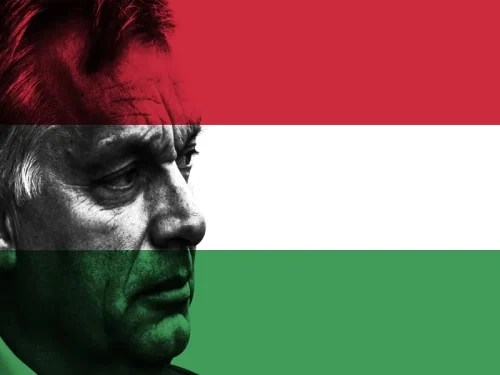
Orban’s Insight Into The Global Systemic Transition & Hungarian Grand Strategy Is Worth Reading
By Andrew Korybko | August 2, 2024
Hungarian Prime Minister Viktor Orban elaborated on the global systemic transition and his country’s grand strategy within it during a lengthy speech at the Balvanyos Free Summer University and Student Camp over the weekend. The over 11,000-word English transcript was published on Monday, which the present piece will summarize for the reader’s convenience. It began with him reaffirming that it’s his Christian duty to promote peace and mocking the EU for its Orwellian “war is peace” mantra.
He then said that the Ukrainian Conflict was a “red pill” for him and proceeded to elaborate on the ten ways in which it opened his eyes to reality. First, there have been enormous casualties on both sides, but each will continue fighting unless external stakeholders diplomatically intervene since they’re convinced that they’ll win. Second, the US went from containing China to waging a proxy war on Russia, which pushed those two together and prompted questions about why the US would do this.
Third, Ukraine’s resilience in spite of its objective economic and demographic weaknesses can be explained by its sense of mission that fills it with a higher purpose, which is to become the West’s eastern military frontier. Fourth, Russia has also proven itself to be impressively resilient, and it’s nowhere near collapsing like Western leaders hubristically predicted. Fifth, the EU has undergone fundamental changes since the latest phase of the Ukrainian Conflict began two and half years ago.
It now follows the US Democrats’ lead instead of retaining its strategic autonomy, and the traditional Franco-German axis is now challenged like never before by Poland, which has allied with the UK, Ukraine, the Baltic States, and Scandinavia to create a new center of power in Europe. This is actually an old Polish plan (Pilsudski’s “Intermarium” from the interwar period) adapted to contemporary conditions brought about by the Ukrainian Conflict and fully assisted by the US.
Sixth, the West’s standards are no longer universal and it’s experiencing “spiritual solitude” after the entire non-West refused to follow its lead in isolating Russia. Seventh, the biggest problem in the world is the weakness and disintegration of the West caused by its lack of leadership and seemingly irrational policies, which is accelerating China’s rise as its global systemic challenger. Eighth, Western Europe’s worldview is now post-national while Central Europe still believes in the sanctity of the nation-state.
This dichotomy explains the West’s seemingly irrational policies since each half of Europe is operating according to a completely different philosophy. The US is also experiencing a similar division between those like Trump who want it to remain a nation-state and his opponents who want it to become a post-national state. According to Orban, this division owes its origins to the sexual revolution and student rebellions from over half a century ago, which sought to free people from any form of collective identity.
Ninth, the West’s post-national trends are convulsing democracy and leading to friction between the elite/elitism and the people/populism. And finally, the tenth red pill is that Western soft power/values aren’t universal but are actually counterproductive since Russia’s strongest international attraction nowadays is its resistance to LGBTQ. Orban then said that these trends are leading to the rise of the non-West, which he believes first began with China’s admission to the WTO in 2001 and might be irreversible.
Trump’s priority is to rebuild and strengthen North America, to which end he’ll squeeze the US’ European and Asian allies while negotiating better deals with China. His end game is to make the US self-sufficient in energy and raw materials so that it can stand a better chance at retaining its declining position in global affairs. The EU has two options: it can either become an “open-air museum” (passive international actor) absorbed by the US or pursue strategic autonomy in order improve its standing in the world.
What’s needed is more connectivity, a European military alliance with its own defense industry (albeit without federalization), energy self-sufficiency, reconciliation with Russia, and admitting that Ukraine won’t join the EU or NATO. It’ll return to its prior role as a buffer zone and will be lucky if it gets security guarantees in a US-Russian agreement. Poland’s power play will fail because it lacks the resources to replace Germany so Orban expects that his “Polish brothers and sisters” will return to Central Europe.
He also considers all of these changes to be an opportunity. Developments in the US favor Hungary, but it must be careful about any deals it might offer due to the Polish precedent. Warsaw bet everything on Washington and received support for its strategic goals, but now it’s “subject to the imposition of a policy of democracy export, LGBTQ, migration and internal social transformation.” Orban ominously notes that this combination risks of the loss of Polish national identity if these trends continue unabated.
Hungary will remain in the EU, but the bloc’s East-West divisions between those that correspondingly respect the nation-state and those that are moving beyond it will widen. The EU must also accept that it’s the loser in the Ukrainian Conflict, the US will abandon this proxy war, and the EU can’t realistically pick up the tab. All the while, Hungary will rely on China for modernizing its economy and boosting its exports, which will lead to mutually beneficial outcomes.
A Hungarian grand strategy is required in order to maximally take advantage of the opportunities brought about by the ten previously described red pills and their abovementioned consequences. What’s already been decided upon since his government began work on this after the 2022 elections isn’t yet digestible and widely comprehensible by the public, and he said that it’ll take around six months for everything to become clearer for them, but he still shared the gist of what this grand strategy entails.
The first part is what he describes as connectivity, which he explained as being plugged in to both the Eastern and Western halves of the global economy. The second is sovereignty, with a focus on the economic dimension by promoting national companies on the world market, reducing debt, becoming a regional creditor, and boosting domestic production. The final part is bolstering his society’s resilience by halting demographic decline, preserving villages, and maintaining Hungary’s distinct culture.
Orban ended by explaining that all Hungarians across the world must help advance this grand strategy. The global systemic transition is expected to last another 20-25 years so the next generation will be tasked with completing its implementation. Their liberal opponents will try to offset this, but such efforts can be counteracted by recruiting young nationalists to the cause. The impression that one gets after reading through his speech in full is that Orban is this generation’s most visionary European leader.
Poland demands Ukraine resolves WWII massacre before joining EU
RT | July 24, 2024
Ukraine should not be allowed to join the EU until Kiev and Warsaw resolve their differences over a World War II massacre in which Ukrainian Nazi collaborators slaughtered tens of thousands of Poles, Defense Minister Wladyslaw Kosiniak-Kamysz has said.
The issue of the Volyn massacre has long been a flashpoint in Ukrainian-Polish relations, despite Warsaw’s support for Kiev in its conflict with Russia. Between 40,000 and 100,000 Poles are estimated to have been murdered by the Ukrainian Insurgent Army (UPA), which collaborated with the Third Reich, in the Volyn and Galicia Regions in 1943 and 1944.
In 2016, the Polish parliament declared the Volyn massacre a “genocide.” While Ukraine’s Vladimir Zelensky and Polish President Andrzej Duda jointly attended an event to honor the memory of Volyn victims in 2023, Kiev has so far been reluctant to call the massacre a genocide, arguing that such a crime can only be perpetrated by a state, while the atrocities were carried out by partisan units.
In an interview with the Polish broadcaster Polsat on Tuesday, Kosiniak-Kamysz said that while Poland intends to support Ukraine as much as possible, “not everything is perfect in our relations due to unresolved historical issues,” particularly when it comes to the atrocities committed by Ukrainian nationalists against Poles. “There will be no Ukrainian accession to the European Union if the Volyn issue is not resolved,” he stressed.
He reiterated that the fulfillment of Ukraine’s EU aspirations depends on whether it exhumes the bodies of the victims of the Volyn massacre. His remarks echoed a statement made by Polish Foreign Ministry Undersecretary of State Pawel Jablonski, who said in the autumn of 2023 that “without a solution to this issue… Ukraine cannot dream of joining the European Union,” while describing it as a condition for “long-term reconciliation with Ukraine.”
Zelensky promised to lift a moratorium on the exhumation effort in 2019, with searches resuming that same year in Ukraine’s western Lviv region after Poland agreed to restore a memorial to UPA guerrillas on its soil that had previously been destroyed by vandals.
Ukraine applied for EU membership in February 2022 after the escalation of the conflict with Russia and was granted EU candidate status in June of the same year. In June 2024, the EU opened official accession talks with Kiev, although its membership remains a distant possibility, with officials in Brussels demanding that Ukraine do more to combat rampant corruption and carry out a slew of other reforms.
NATO chief explains why Poland won’t intercept Russian missiles
RT | July 15, 2024
NATO Secretary General Jens Stoltenberg has ruled out the possibility of Poland intercepting Russian missiles over Ukrainian territory, insisting that the bloc does not want to become directly involved in the conflict with Moscow.
Kiev has urged NATO member Warsaw to use its air defense capabilities to protect western Ukraine without moving the systems away from Polish soil. The idea was floated in the context of a recent Polish-Ukrainian bilateral security agreement, and was reportedly discussed at last week’s NATO summit in Washington.
In an interview given on the sidelines of the event for Ukrainian state television, Stoltenberg said NATO’s position had not changed, and that the best that Kiev can expect is help in targeting Russian warplanes with weapon systems operated by Ukrainian forces.
The idea of NATO intercepting Russian missiles over Ukraine was previously rejected by member states, including Poland. Defense Minister Wladyslaw Kosiniak-Kamysz has said that Warsaw won’t engage Russian missiles without the backing of other members.
“If NATO does not make such a decision, Poland will not make it individually,” the minister stressed.
US national security adviser Jake Sullivan claimed that providing air defenses to Kiev is “by far and away the best method of stopping the Russian aerial attacks,” when asked about Poland’s stance last week.
Moscow has described the Ukraine conflict as part of a US-led proxy war, in which NATO nations are involved in every way except by directly fighting Russian forces on the battlefield. Being de facto parties to the hostilities means Western nations share responsibility for Ukrainian war crimes, Russian officials have argued.
Featured Video

Jeffrey Epstein’s ‘one single cause’: Israel
or go to
Aletho News Archives – Video-Images
Book Excerpt
Leslie Wexner’s Inner Demon
BY WHITNEY WEBB |
UNLIMITED HANGOUT| JUNE 10, 2022
This short excerpt from Whitney Webb’s upcoming book “One Nation Under Blackmail” examines an obscure media profile of Leslie Wexner, Jeffrey Epstein’s mentor, from the 1980s that contains disconcerting revelations about Wexner’s personality and his inner world. … continue
Blog Roll
Recent Comments
John Edward Kendrick on German government ‘embezzling’… loongtip on Von der Leyen to have new secu… papasha408 on First Gaza, then the world: Th… papasha408 on Is Nixing Aid to Israel a Pois… papasha408 on Japan to Sign Up For NATO’s Uk… Redracam on Iran Willing to Dilute Enriche… loongtip on When Threats Replace Evid… loongtip on Zelensky tried to kill the cha… eddieb on I might get killed for posting… Bill Francis on I might get killed for posting… loongtip on Beijing cancels Panama deals a… loongtip on Showdown


 Aletho News
- Why can’t western leaders accept that they have failed in Ukraine?
- German government ‘embezzling’ taxpayer money to fund Ukraine – veteran politician
- Russian Soldiers Tortured in Secret Ukrainian Prisons
- Tensions between Hungary and Ukraine could lead to a new regional conflict
- Russia preparing oil lifeline to Cuba – embassy
- Jeffrey Epstein’s ‘one single cause’: Israel
- Instagram suspends Track AIPAC, watchdog tracking pro-Israel lobby spending
- Nouri al-Maliki defends Hashd al-Shaabi as inseparable part of Iraqi security system
- First Gaza, then the world: The global danger of Israeli exceptionalism
- Iran received no concrete US proposal in Oman talks: Security chief
- If Americans Knew
- Jewish terrorism, apartheid rule the West Bank – Not a ceasefire Day 125
- Why Israel persecutes children like my son Shadi
- In Gaza, One Man Is Searching for the Remains of His Family With a Flour Sifter
- Horrific situation in Gaza, West Bank – Not a ceasefire Day 124
- Mysterious ‘peace’ groups are sending Americans pro-Israel texts
- Epstein files: Western media must stop burying the Israel connection
- Software developer exposes Israeli nonprofits’ massive spending to influence Americans
- Israel preparing for another, more intense Gaza offensive – Not a ceasefire Day 123
- Ronald Lauder’s son-in-law Kevin Warsh emerges as the next Fed chair
- A 14-year-old Palestinian Bled to Death for 45 Minutes as Israeli Soldiers Stood Nearby
- No Tricks Zone
- German Gas Crisis…Chancellor Merz Allegedly Bans Gas Debate Ahead of Elections!
- Pollen Reconstructions Show The Last Glacial’s Warming Events Were Global, 10x Greater Than Modern
- Germany’s Natural Gas Storage Level Dwindles To Just 28%… Increasingly Critical
- New Study Rebuts The Assumption That Anthropogenic CO2 Molecules Have ‘Special’ Properties
- Climate Scientist Who Predicted End Of “Heavy Frost And Snow” Now Refuses Media Inquiries
- Polar Bear Numbers Rising And Health Improving In Areas With The Most Rapid Sea Ice Decline
- One Reason Only For Germany’s Heating Gas Crisis: Its Hardcore-Dumbass Energy Policy
- 130 Years Later: The CO2 Greenhouse Effect Is Still Only An Imaginary-World Thought Experiment
- New Study Affirms Rising CO2’s Greening Impact Across India – A Region With No Net Warming In 75 Years
- Germany’s Natural Gas Crisis Escalates … One Storage Site Near Empty …Government Silent
 Aletho News