Russia Accuses NATO of Provoking Escalation in Baltic Sea
Sputnik – 13.07.2025
MOSCOW – Russia notes the line of NATO countries on restricting freedom of navigation in the Baltic region, the military-political situation has become significantly more complicated because of this, the risks of escalation have increased, Russian Ambassador to Oslo Nikolay Korchunov told Sputnik.
“We note the deliberate line of NATO member countries on restricting freedom of navigation in the region, launching for these purposes, under the pretext of threats to underwater infrastructure, among other things, the alliance’s mission ‘Baltic Sentinel,’ which is accompanied by the strengthening of the naval group operating in the open sea, as a result of which the military-political situation in the region has become significantly more complicated and the risks of possible escalation and conflict have increased,” Korchunov said in an interview with the agency.
The ambassador emphasized that the norms of international maritime law must be observed by all countries in the region.
“We proceed from the imperative of compliance by all countries in the region with the norms of international maritime law and the exercise of restraint in the interests of ensuring commercial shipping and preventing military incidents. It is obvious that in the current conditions, the forces and means of the Baltic Fleet and other security services of the Russian Federation in the Baltic Sea region are an important factor in ensuring freedom of navigation both in the interests of the Russian Federation and third countries,” Korchunov noted.
He drew parallels with the actions of Russia’s neighboring states in the past — Poland, Germany, Sweden — in the 17th-19th centuries.
“They also tried with all their might to prevent the passage of ships carrying Russian goods through the Baltic to the priority markets of Britain, Holland and France. The Swedes did not even shy away from pirate seizures. Ultimately, these efforts, as is known, ended in failure. It is regrettable that the spirit of unfair rivalry and confrontation is once again being implanted in the Baltic, which for decades has been a platform for peaceful multilateral cooperation,” the diplomat said.
Ukraine’s New Arms Plan? EU Pays, US Cashes in, NATO Watches
Sputnik – 11.07.2025
US President Donald Trump said NATO, to which Washington also belongs, will pay for American weapons that the alliance will subsequently supply to Ukraine.
Strategic analyst Paolo Raffone (CIPI Foundation, Brussels) explains how Washington’s role is evolving:
“European NATO members may play a role to support the military needs of Ukraine within a framework coordinated by the US that remains the single largest armament contributor.”
He describes a triangulation scheme:
- The US provides military equipment to EU NATO states
- Ukraine buys that equipment from those states
- Purchases are covered by EU funds
“Technically, European NATO members are the sellers — but it ensures the equipment is effectively paid for by Ukraine using EU funds. NATO as an entity would not be directly involved… national governments will do it. At best, NATO will coordinate the scheme.”
Who pays and who supplies?
“UK, France, Germany and Poland are high on the list. However, the idea is that all European NATO members should participate.”
And what can they afford?
“Despite announced increases in spending, EU countries will need years to become effective armament producers… The munitions immediately available depend on US willingness to sell — and EU/Ukraine capacity to pay.”
The West waging ‘centuries-old war’ against Moscow – Russia’s top UN diplomat
RT | June 28, 2025
Western nations are using Ukraine as their proxy in a longstanding confrontation with Russia that is deeply rooted in history, Russian Ambassador to the UN Vassily Nebenzia told RT’s Rick Sanchez.
In an interview on The Sanchez Effect aired on Friday, the diplomat argued that the conflict “should be seen in a larger context.”
“They do not care about Ukraine. This is not a war between Russia and Ukraine,” Nebenzia said. “Ukraine is a proxy in this war. This is a centuries-old war of the West against Russia, starting with the Polish invasion in the 17th century,” he added.
As examples of earlier confrontations, Nebenzia cited Napoleon’s invasion of Russia, the 1854–1856 Crimean War, Western military intervention during the Russian Civil War, and the invasion by Nazi Germany and its allies during World War II. He emphasized that Hitler’s army included not only Germans, but also units drawn from allied countries and occupied territories.
The Ukrainians and “their sponsors” in the West sabotaged the 2014–2015 Minsk accords, which were aimed at ending the conflict between Kiev and the breakaway Donbass republics, the Russian diplomat said. Former French President Francois Hollande and former German Chancellor Angela Merkel later admitted the agreement was used by Kiev to buy time and rearm, Nebenzia stated. “We are not going [to fall] into the same trap once again,” he said.
He added that politicians like former UK Prime Minister Boris Johnson similarly helped derail the 2022 peace talks between Russia and Ukraine.
Ukraine’s European backers were forced to adjust their position, Nebenzia argued, after US President Donald Trump launched efforts to broker peace and Ukrainian troops began losing more ground.
“They changed their rhetoric from ‘We should inflict strategic defeat on Russia’ to ‘Russia should not win in this war.’ Now they are advocating for a full, immediate, and unconditional ceasefire, which is testimony that they want to shield and protect their proxy, as they are obviously losing on the battlefield,” he said.
At the same time, Nebenzia noted that the resumption of direct Russian-Ukrainian negotiations earlier this year provides hope that the conflict could be resolved soon.
Cracks in the Alliance: Poland reconsidering Ukraine’s cause?
By Uriel Araujo | June 28, 2025
Poland has long been one of Ukraine’s staunchest allies in Europe, offering unwavering support since the beginning of the ongoing Russian-Ukrainian full-scale conflict in 2022. From hosting millions of refugees to providing military aid and championing Kyiv’s integration into Western institutions, Poland’s commitment seemed unshakable to many. Yet, recent developments signal a shift: Poles are growing weary of Ukraine, so to speak, and this “Ukrainian fatigue” threatens to reshape regional dynamics at a time when Kyiv is increasingly isolated. Albeit a new development, this had been potentially there for a long time.
A recent survey by IBRiS reveals in fact a stark decline in Polish support for the cause of Ukraine’s ambitions. Only 35% of Poles now believe Warsaw should back Ukraine’s bid to join the European Union (EU), with a mere 37% supporting NATO accession. In contrast, 42% oppose Poland’s endorsement of Kyiv’s path to both institutions—a dramatic reversal from 2022, when 85% and 75% favored EU and NATO membership, respectively. Even more concerningly, from Kyiv’s perspective, 46% of Poles now advocate halting or reducing military aid, a significant departure from the early war fervor. These figures reflect a growing sentiment that Poland’s generosity has stretched thin, compounded by domestic pressures and latent historical grievances.
The roots of this shift are multifaceted. Economically, hosting over a million Ukrainian refugees has somewhat strained Poland’s resources. While many Poles initially welcomed their neighbors with open arms, reports of rising anti-Ukrainian sentiment suggest a fraying social fabric. Refugees have faced verbal abuse and discrimination, with some recounting calls to “go back to Ukraine”. This backlash is not merely economic but also deeply rooted in historical tensions.
The legacy of the Volhynia massacres, where the Ukrainian Insurgent Army (UPA)—today celebrated in post-Maidan Ukraine as national heroes—committed atrocities against Poles, remains a festering wound, as I wrote last year. Kyiv’s refusal to allow exhumations of victims and its glorification of figures like Stepan Bandera, a Nazi collaborator, have fueled tensions and Polish resentment. These historical disputes, often downplayed in the West, are not mere academic debates but visceral issues pertaining to the politics of memory, and to identity; they shape public opinion and policy.
Poland’s domestic politics further complicate its foreign policy toward Ukraine. The return of Donald Tusk’s government has prioritized a pro-EU stance, but it faces challenges from a resurgent nationalist right that capitalizes on anti-Ukrainian sentiment also. This internal polarization threatens Tusk’s ability to maintain Poland’s role as a regional leader in supporting Kyiv.
The nationalist revival in Poland mirrors a broader regional trend involving Ukraine’s neighbors, where ethnopolitical frictions play an important role. For instance, Romania and Hungary have both raised concerns over Ukraine’s treatment of their minorities, while Greece has criticized the plight of its ethnic kin under ultranationalist elements in Ukraine (including those with neo-Nazi links). Kyiv’s post-2014 push for a unified national identity, often at the expense of minority rights, has alienated potential allies at a critical juncture. Far from being a mere “Russian talking point”, this is an issue that, to different degrees, hampers Ukraine’s bilateral relations with virtually all of its neighbors—including Slovakia. Writing in 2023, GLOBSEC think-tank researcher Dmytro Tuzhanskyi acknowledges that this “ethnic trap” was a challenge of EU accession talks. The “Ukrainian Question” in fact is a threat to the European bloc itself, as I’ve argued before.
The broader geopolitical context further complicates matters for Kyiv. As Western attention pivots to the Middle East, with conflicts in Gaza and beyond dominating headlines, Ukraine risks fading from the global spotlight. The West’s finite resources—both financial and political—are increasingly stretched, leaving Kyiv to compete for attention and aid. NATO’s expansion, once a “holy cow” topic, finally faces some skepticism in Poland and beyond, in the context of an increasingly divided and scandal-ridden NATO.
The alliance’s eastward push, framed as a bulwark against threats, has not delivered the promised stability. Instead, it has entangled member states in a prolonged conflict with no clear resolution, prompting questions about its strategic value. For Poles, the costs of supporting Ukraine’s NATO aspirations—military, economic, and social—are beginning to outweigh the benefits.
This cooling of Polish support is not an isolated phenomenon but is indeed part of a broader regional fatigue. Ukraine’s aggressive nationalist policies, while aimed at consolidating statehood, have sown discord with neighbors who perceive them as chauvinistic, as mentioned. These tensions, often overshadowed by the larger conflict, play a considerable role in regional dynamics, and Poland, despite its strategic partnership with Ukraine, is not immune to such pressures.
The implications of Poland’s shifting stance are profound. As one of Ukraine’s key advocates in the EU and NATO, a less enthusiastic Poland could weaken Kyiv’s bargaining power in Western capitals. The decline in public support for military aid and integration efforts signals a broader reassessment of Poland’s role in the conflict. If this trend continues, Ukraine may find itself increasingly isolated, caught between a distracted West and strained relations with its neighbors. With Trump attempting to shift the Ukrainian “burden” onto Europe, the EU and NATO (already grappling with internal divisions), may hesitate to keep supporting the cause of Kyiv. Warsaw’s “retreat”, if it comes to that, could really have a domino effect.
This is not to suggest that Poland will “abandon” Ukraine outright. Strategic considerations, including the supposed need for a buffer (and its continental ambitions), should likely keep Warsaw engaged. However, the era of unconditional support is clearly over. Poles are reevaluating their priorities, driven by economic burdens, historical grievances, and a nationalist resurgence that demands a reckoning with the past. For Ukraine, the lesson is clear enough: alienating allies through ultranationalist policies and historical revisionism comes at a steep cost. And Kyiv, by all indications cannot afford to lose allies. Poland’s fatigue is thus a warning—not just for Ukraine but for the broader project of NATO and EU expansion, which risks overreaching in a world of competing crises.
Uriel Araujo, Anthropology PhD, is a social scientist specializing in ethnic and religious conflicts, with extensive research on geopolitical dynamics and cultural interactions.
‘I lack the imagination of how to proceed now’ – German establishment very unhappy with Polish election outcome
Remix News | June 2, 2025
Following Poland’s presidential election last night, which saw the victory of conservative Karol Nawrocki, many establishment German politicians have expressed unhappiness and borderline despair with the outcome. Undoubtedly, the candidate overwhelmingly favored to win by the German government and the left lost the election, Rafał Trzaskowski, did not prevail.
Paul Ziemiak, chairman of the German-Polish parliamentary group and a member of the ruling Christian Democrats (CDU), admitted he’s at a loss regarding the future of bilateral relations.
“It is not easy with the new President Karol Nawrocki,” Ziemiak stated on Monday’s ARD “morning magazine,” while pointing to what he said was Nawrocki’s use of anti-German rhetoric during his campaign. Despite this, Ziemiak said that Chancellor Friedrich Merz remains convinced of the fundamental importance of strong cooperation between France, Germany, and Poland for Europe, especially during challenging times.
Ziemiak characterized the election outcome as a protest against “previously well-known faces” in Polish politics. As Remix News wrote before the election, Germany and many powerful voices in the left-liberal establishment in Brussels had much riding on a different outcome. Not only will Nawrocki’s victory complicate bilateral relations between Germany and Poland, but it will make it harder for the left to advance its agenda at the EU level.
Nawrocki’s victory grants him veto power over policies and laws put forward by Polish Prime Minister Donald Tusk, leading Ziemiak to question how the two factions will proceed: “I lack the imagination of how to proceed now,” he said, suggesting that either compromises must be found or early elections might be necessary.
Nawrocki has tremendous power compared to other presidents in Europe. As Polish president, he wields a powerful veto, is the leader of the Polish armed forces, can introduce bills in parliament, and generally dictates foreign policy. In other words, he has the power to generally stifle any moves Tusk makes, to the point that some are speculating Tusk may resign as prime minister following his party’s loss during the election.
The German Green Party also reacted skeptically to the Polish election outcome. Katrin Göring-Eckardt, former vice president of the Bundestag, commented on “a divided country, in the middle of Europe,” predicting “difficult times for everyone who loves freedom.”
Knut Abraham, the new Federal Government Commissioner for Poland, also described a “difficult” road ahead for Poland. Speaking on Berlin broadcaster RBB’s “Radioeins,” Abraham pointed to deep divisions between Poland’s liberal cities and its more rural areas in the east and south.
Abraham singled out areas such as judicial reform and abortion, which may become particularly difficult for the Tusk government to reform.
“So a very, very, very difficult coordination can be expected,” he said.
Perhaps some of the most dramatic words came from Free Democrats (FDP) politician Marie-Agnes Strack-Zimmermann, known for her extremely hawkish stance towards the war in Ukraine. She said that the Polish government should now “prepare for total opposition from a hostile president who will do everything possible to overthrow the Tusk government, as announced in the election campaign.”
She said it was a major setback for Europe, and described the outcome as “not a good morning for the largest peace project in the world.”
Strack-Zimmermann’s view may have to do with Nawrocki’s opposition to Ukraine joining NATO. Her FDP party, notably, was voted out of the German parliament in the last federal elections.
EU Commission President Ursula von der Leyen took a more neutral approach to the news, congratulating Nawrocki on X.
“So let us work to ensure the security and prosperity of our common home,” she wrote.
In response to her post, MEP Piotr Müller, a member of the conservative Law and Justice (PiS), wrote:
“Good relations should be based on the truth! Poles are waiting for the truth about the Pact on Migration and Asylum, the Green Deal, and the EU – Mercosur Agreement! Tusk lied, Trzaskowski lied, and you with the EU bureaucracy helped them!” he wrote.
Poland’s New Prez Nawrocki: Not Your Typical Pro-Ukraine Hero
By Svetlana Ekimenko – Sputnik – 02.06.2025
Opposition candidate Karol Nawrocki has been elected as the president of Poland, according to data published on the official website of the election commission. Nawrocki received 50.9% of the votes, just ahead of Warsaw Mayor Rafal Trzaskowski (49.1%), Prime Minister Donald Tusk’s ally.
Poland’s stance on the Ukrainian crisis may change after the presidential election, as the country’s politicians and ordinary people alike seem increasingly reluctant to support Zelensky’s regime.
Here is a closer look at where Karol Nawrocki stands on Ukraine and other major issues.
No Free Pass for Ukraine
Nawrocki does not see it in either the European Union or NATO until bilateral issues like the 1943 Volyn massacre committed by Ukrainian nationalists during WWII are addressed.
- While promising support, he blasted Volodymyr Zelensky for “ingratitude”.
- Accused “European elites” (plus their “butler” Tusk) of fueling the war.
- Unequivocally will not deploy Polish troops to Ukraine.
- Accused Ukrainian refugees of taking advantage of Polish generosity, vowed to shield Polish farmers and truckers from unfair Ukrainian competition.
- Opposes any Ukraine-EU trade liberalization.
On Russia
Karol Nawrocki swerved from telling Radio ZET that maintaining diplomatic ties with Russia was “not good for Poland,” to claiming he was ready to sit down at the negotiating table with Russian President Vladimir Putin.
As former head of the Institute of National Remembrance (IPN), he oversaw demolition of Soviet war monuments—earning himself a spot on the Russian Interior Ministry’s “wanted” list of Polish nationals in 2024.
Skepticism Towards EU
- Karol Nawrocki called the EU weak and chaotic, citing its exclusion from Ukraine peace talks.
- He pledged to not allow the liberalization of trade between the EU and Ukraine.
- Nawrocki vowed to keep Poland on the zloty, not the euro.
US House Judiciary Committee Warns EU and Poland’s Tusk Government Over Censorship Threat to US Free Speech
By Dan Frieth | Reclaim The Net | May 15, 2025
The US House Judiciary Committee is sounding the alarm over an escalating threat to free expression, warning that censorship efforts by Poland’s current government, coupled with the European Union’s regulatory framework, could extend their reach into American speech online.
In a letter addressed to EU Commissioner for Justice and Rule of Law Michael McGrath, Committee Chairman Jim Jordan and four congressional colleagues requested a briefing on how the EU plans to respond to what they described as disturbing developments under Prime Minister Donald Tusk.
We obtained a copy of the letter for you here.
Since coming to power in December 2023, Tusk’s government has launched legal actions against members of the conservative Law and Justice (PiS) party.
These efforts include removing the legal immunity of PiS leader Jarosław Kaczyński, pressing forward with criminal charges that appear politically motivated, and subjecting detainees to harsh treatment.
One former aide denied access to her attorney during questioning, reportedly suffered a fatal heart attack shortly after. Another case involved the arrest and alleged mistreatment of Father Michał Olszewski, a Catholic priest tied to the former justice minister.
The Judiciary Committee points to these incidents as evidence of a political strategy designed to suppress opposition speech ahead of Poland’s 2025 presidential election.
According to the letter, the pattern includes targeting conservative activists and media outlets. A key example is the Polish government’s threat to revoke the license of Telewizja Republika, a station known for criticizing the Tusk administration.
Lawmakers expressed concern that these actions are taking place without pushback from EU institutions. They argue that the European Commission, which was quick to condemn the previous PiS-led government for its alleged violations of democratic norms, has so far failed to hold Tusk’s coalition to the same standard. The result, the committee says, is a perceived double standard that undermines the EU’s credibility and emboldens further censorship.
Of particular concern is the potential for EU censorship laws to ripple beyond Europe. The Digital Services Act, which requires platforms to remove “misleading or deceptive content,” may end up influencing global content moderation practices. Because platforms typically apply one uniform set of rules, the DSA could effectively establish a worldwide censorship template. The committee warned that this might restrict Americans’ speech online as companies adjust to foreign legal requirements.
Supporting this concern, the committee cited documentation showing that Poland’s Ministry of Digital Affairs, through the National Research Institute, requested the removal of TikTok videos that criticized electric vehicles. The content in question was not overtly political, but the request demonstrates, in the committee’s view, a willingness to use regulatory power to suppress opinions the government dislikes.
This pattern of behavior, if left unchecked, could allow foreign governments to influence global information flows. The letter emphasized that such interference is unacceptable, particularly when it has the potential to impact the speech of American citizens. The concern is not merely theoretical; as the letter points out, the Tusk government accused foreign actors of electoral interference through online ads just one day after the Committee’s communication to the EU.
The letter was signed by Chairman Jim Jordan, Subcommittee Chairman Darrell Issa, and Representatives Chris Smith, Warren Davidson, and Andy Harris. Their message to Brussels is direct: silence in the face of repression is not neutrality. If left unchallenged, the EU’s regulatory apparatus and inaction on political censorship risk becoming tools for silencing voices far beyond Europe’s borders.
Interpol rejects ‘red notice’ for Polish MP who sought asylum in Hungary

Marcin Romanowski’s arrest (Source: X@Magda Grajnert, RMF, video picture grab).
Remix News | April 22, 2025
Marcin Romanowski, former deputy minister of justice and PiS MP, will not be covered by Interpol’s red notice. According to Salon24, notwithstanding an earlier request to supplement its file on Romanowski, Interpol rejected the application of the Polish prosecutor’s office for a red notice.
The Polish MP is suspected of participation in an organized criminal group and defrauding Poland’s Justice Fund, accusations he has denied. He was granted asylum in Hungary in December last year, with Prime Minister Viktor Orbán saying, “This is a legal process, not a political decision.”
Hungary, however, in its decision stated that it had found evidence that the charges against Romanowski were politically motivated, enough to determine he would not stand a fair trial in Poland. This marked the first time an EU member state offered asylum to a Polish politician since the fall of communism.
The MP had been arrested in July but was released due to his immunity as a member of the Council of Europe’s Parliamentary Assembly. The current justice minister, Adam Bodnar, then called on the Parliamentary Assembly of the Council of Europe (PACE) to revoke Romanowski’s immunity, which it did in October.
Although rulings by both a district and regional court in Poland subsequently upheld his immunity, Romanowski is wanted by Polish authorities, with a European Arrest Warrant and a European Investigation Order both issued against him.
Failing to secure a red notice from Interpol, the Polish government says it is pursuing other options.
A red notice is given to criminals classified as the most dangerous. Only four wanted Poles have such a designation so far: Kamil Żyła, wanted for the murder of a TVN journalist in the Silesian Park in Chorzów in 2022; Jakub Jakus, accused of participating in the terrorist organization ISIS, illegal possession of weapons and theft of documents; Krzysztof Pomorski, wanted for distributing child pornography; and Rafał Zabłocki, listed on the Interpol list for serious crimes.
Poland police state: Conservative MP who waived his immunity was arrested on Friday in dramatic fashion
Remix News – March 10, 2025
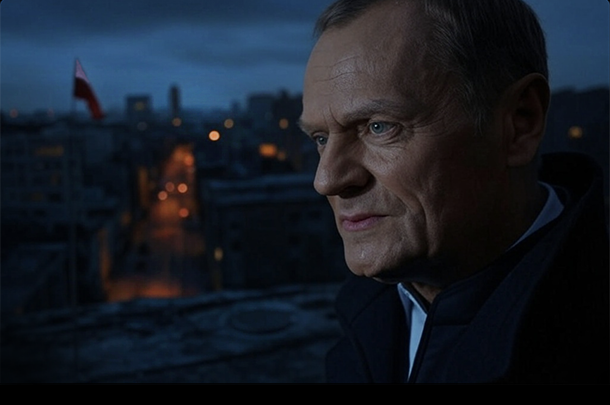
Remix News reported last week that on Wednesday, Polish Law and Justice (PiS) MP Dariusz Matecki announced that he was waiving his parliamentary immunity in the face of charges that were being made against him by the Prosecutor’s Office, saying that MPs should not be above the people. He made the announcement in a speech he gave in English before the Sejm, proclaiming his innocence while dramatically wearing handcuffs.
Matecki claimed that he was being persecuted as part of the ruling coalition’s revenge against the opposition. On Thursday, the Sejm approved his arrest and temporary detention.
Matecki has been charged with being fictitiously employed at the Regional Directorate of the State Forests in Szczecin from 2020 to 2023, defrauding state-owned companies of PLN 320,000 (approximately €77,000), and other forms of corruption.
The MP was detained and taken into custody by officers of the Internal Security Agency on Friday morning while en route to the Prosecutor’s Office to turn himself in, according to a report by Do Rzeczy. His arrest was quite dramatic, with officers stopping his car and pulling him out of it in the middle of traffic on a busy street.
The MP was charged with six criminal counts, which together could lead to up to 10 years in prison if he is convicted. Matecki has never before been charged with any crime and maintains his innocence.
Besides Matecki’s own arrest, his wife’s apartment was also searched by the authorities. PiS condemned what they referred to as the state’s efforts to intimidate his family.
On Friday afternoon, Przemysław Nowak, the spokesman for the Prosecutor’s Office, announced that the court had ordered Matecki to be detained for a period of two months.
Kacper Stukan, Matecki’s attorney, announced that he would be filing a complaint against the court’s decision. He explained that his client’s arrest was unnecessary given that there was no flight risk in his case.
Polish Minister of Justice Adam Bodnar ominously took to X to share a copy of the order for Matecki’s arrest with the heading, “To be continued . . .”
Donald Tusk’s left-liberal Civic Coalition government has frequently used the law to punish those associated with the country’s previous right-wing ruling coalition since coming to power in late 2023. Dozens of PiS politicians have been charged with crimes, and two other PiS MPs, Mariusz Kamiński and Maciej Wąsik, were arrested on corruption charges that they had previously been pardoned for. Both have been sentenced to two years’ imprisonment for “abuse of power.”
Similarly, former Deputy Minister of Justice Marcin Romanowski was charged with 11 counts of corruption. He fled to Hungary and was granted asylum there, which has led to tensions between the two governments.
Polish PM plans to double size of army
RT | March 8, 2025
Polish Prime Minister Donald Tusk has unveiled plans to more than double the size of the country’s military to 500,000. Speaking in the Polish Parliament on Friday, Tusk said Poland must be prepared for future conflicts and strengthen its defenses.
Tusk reiterated his earlier claims that Russia poses a threat to Europe, saying Moscow could launch a “full-scale operation” against a “larger” target than Ukraine within three to four years – which Russia has repeatedly dismissed as unfounded. He argued that Poland must serve as a “bastion” to protect NATO’s eastern flank and should expand its military capabilities.
“We’re talking about the need to have an army of half-a-million in Poland, including the reservists,” he stated, noting that Poland’s current armed forces number around 200,000, which he compared to Russia’s estimated 1.3 million troops. Tusk said his government is drafting legislation that would require every adult male in Poland to undergo “large-scale military training” to prepare for a potential conflict with Russia.
“We will try to have a model ready by the end of this year so that every adult male in Poland is trained in the event of war, so that this reserve is comparable and adequate to the potential threats,” he said. He added that Polish women may also be required to undergo military training, though “war is still to a greater extent the domain of men.”
Tusk’s remarks came a day after EU leaders approved a major military spending plan to unlock billions of euros to build up defense capabilities. The initiative – ReArm Europe – which was adopted following an emergency summit in Brussels, hikes defense spending by up to €800 billion ($840 billion) – twice the total EU defense expenditures in 2024. The Kremlin condemned the bloc’s “militarization” plan, calling it a path towards confrontation that hinders peace efforts with Ukraine.
In addition to a larger army, Tusk said Poland must enhance its military capabilities, including through the acquisition of nuclear and “modern unconventional weapons.” Tusk’s speech followed his recent accusations that Moscow is fueling a new arms race, and calls for fellow EU nations to ramp up defense spending.
The Kremlin has criticized Tusk’s rhetoric as confrontational and militaristic. Moscow has rejected accusations that it poses a military threat to Europe, with President Vladimir Putin dismissing the claims as “nonsense” designed to justify increased military budgets.
‘The Romanian scenario’ – Fears of EU election interference in Poland after Brussels announces roundtable
Remix News | March 6, 2025
Henna Virkkunen, vice-president of the European Commission for Technological Sovereignty, Security and Democracy, said that a roundtable on the presidential elections in Poland will be held in the coming weeks.
The Finnish politician told DW that such meetings are organized before every election in the member states and that she is concerned about the possibility of influencing the election results using social media.
“Cooperation with Germany went well, and I am sure that we will also cooperate closely with the Polish authorities. EU citizens have the right to be sure that elections are fair and free. And because of content recommendation systems and the content itself distributed by internet platforms, this is very difficult,” she said, complaining about the uncensored X platform.
Various politicians reacted quickly on X.
PiS MP Radosław Fogiel expressed concern, noting that “in Polish elections ONLY the voice of Polish citizens counts. They will certainly not be decided by the Vice-President of the European Commission, who does not even have a democratic mandate, because no one voted for her. But such announcements, along with the desire to limit freedom of speech, are disturbing. The EU is heading in a very dangerous direction.”
“The European Union is simply preparing for either the Romanian scenario in Poland or the introduction of political censorship,” said political scientist and publicist Prof. Adam Wielomski.
Following the cancellation of presidential elections in Romania after Călin Georgescu appeared poised to win, there are grave concerns about democratic backsliding in Europe. Georgescu has since been arrested in dramatic fashion and charged with a variety of crimes, including “misinformation.” After the events in Romania, former EU commissioner Therry Breton claimed they could annul the elections in Germany just as they did in Romania.
Author Rafał Ziemkiewicz wrote: “What the f**k? Will the Germans and the Eurocrats hold a ’roundtable’ to determine who will win the elections in Poland?”
“This is starting to look more and more serious. The European Commission openly announces interference in the Polish presidential elections!” posted PiS MP Paweł Jabłoński.
“Can you believe that she will hold a roundtable with Tusk on the presidential elections in Poland?” asked MP Michał Dworczyk.
Featured Video
Iran’s Next Strike May Not Explode. It Could Shut You Down
or go to
Aletho News Archives – Video-Images
From the Archive
Zionism’s Violent Legacy
By Donald Neff | Washington Report On Middle East Affairs | January 1996
On January 4, 1948, Jewish terrorists drove a truck loaded with explosives into the center of the all Arab city of Jaffa and detonated it, killing 26 and wounding around 100 Palestinian men, women and children.[1] The attack was the work of the Irgun Zvai Leumi – the “National Military Organization,” also known by the Hebrew letters Etzel – the largest Jewish terrorist group in Palestine. The Irgun was headed by Revisionist Zionist Menachem Begin and had been killing and maiming Arabs, Britons and even Jews for the previous ten years in its efforts to establish a Jewish state.
This terror campaign meant that at the core of Revisionist Zionism there existed a philosophical embrace of violence. … continue
Blog Roll
 Aletho News
- Trump’s Iran war is on an Israeli leash
- Saudi oil boss issues global supply warning
- Riyadh Says Its Oil System Is Intact. The Numbers Say Otherwise.
- Trump and Netanyahu Want to “Finish the Job” on Iran
- US ‘one-sided dictation’ not Iran’s beliefs makes rational talks impossible: Baghaei
- Iran’s Next Strike May Not Explode. It Could Shut You Down /Col Doug Macgregor
- Iran: US political targets legitimate if assassinations return
- Iraq shuts key border crossing with Iran under US pressure: Report
- Undersea Internet cables could be targeted in retaliation for attacks on Iran: IRGC deputy chief
- EU sending ‘biased’ observers to interfere in Serbian election – president
- If Americans Knew
- The Israel Lobby’s Changing Fortunes
- AIPAC has become such a political liability that it’s shifting to a more “nimble” approach to buying politicians
- At least 160 Israeli settler attacks in 2 weeks
- Will Gaza’s Ancient Christian Community Disappear Forever?
- Israel’s vision of regional security rests on keeping Arab states weak
- Heidi Levine recounts how Palestinian youths helped save her in settler attack
- DAILY UPDATE: Latest essential news on Palestine, Israel, & region
- Trump’s Intensifying Sabotage of the ICC, for Israel’s Sake
- Israeli military detain US and UK volunteers in West Bank including Democratic NY politician Brad Lander
- Americans at National Conservatism Conference held in Israel this year criticize Israel
- No Tricks Zone
- E-Cars Reduce CO2 Emissions By Only 41% Compared To Internal Combustion Engine Vehicles
- Predictions Made By Renowned Climate Professor Over Past Decades Have Been Proven To Be Poor
- New Study Suggests Large Regions Of The Pacific Ocean Have Been Cooling For The Last 80 Years
- Germany’s Green Energy Debacle: High Energy Costs Force Kahla Porzellan to Close After 182 Years!
- New Study: 50 Years Of The Most Aggressive ‘Net Zero’ Policies Can Only Affect The Global Climate By 0.03°C
- US September “Heat” Was No Record…Many Records Set Decades Ago
- Latest European Green Energy Debacle; Portugal’s Largest Flagship Solar Park Insolvent!
- Green Energy Debacle: German Expert Professor Fritz Vahrenholt Warns Of Severe Economic And Social Consequences
- Two More Paleo Reconstructions Affirm Meters-Higher Sea Levels Across Ireland, Brazil 7000-6000 Years Ago
- New Study: Earth And Venus Surface Warmth Largely Explained By Convection And Lapse Rate, Not CO2 Or Radiation

