Weaponized media coverage & off-the-scale hypocrisy as the West promotes ‘regime change’ in Belarus
By Neil Clark | RT | August 19, 2020
Lukashenko has always admitted his style is authoritarian but notwithstanding this, media coverage of the crisis in Belarus has been slanted and the West’s condemnation of the crackdown on protests reeks of double standards.
You can tell a ‘regime change’ is afoot in Minsk simply by looking at the coverage of Radio Free Europe/Radio Liberty. Their website at the weekend was headed by a large caption ‘Post election crackdown in Belarus’, which has now changed to ‘Crisis in Belarus‘. The five lead articles on Sunday were all about Belarus. It’s the same on Tuesday.
Radio Free Europe/RL is funded by the US Congress through the United States Agency for Global Media. Up to the early 1970s it was funded covertly by the CIA.
It was a soft-power tool of the old Cold War, sometimes with calamitous consequences. In their book ‘Cold War’, Jeremy Isaacs and Taylor Downing tell how in the Hungarian Uprising of 1956 “Radio Free Europe, the CIA-backed station that broadcast into Eastern Europe, was dramatically talking the situation up, proclaiming the West’s backing for what it called Hungary’s ‘freedom fighters.‘”
But the backing never came, and indeed was never likely to come and the uprising, having been encouraged by RFE, was ruthlessly suppressed.
You might have thought RFE/RL would have been wound up in 1989 when the Berlin Wall came down, but there was still a job to do.
It says it reports the news in countries where a free press is banned by the government or not fully established and while some of its journalism is perfectly fine the truth is that it usually stops reporting once a country is locked into Euro-Atlantic security structures. When it starts broadcasting to a country it’s invariably a sign that the US ‘Deep State’ wants its government toppled. For example, in 1998 it began broadcasting to Iraq, and we all know what happened there five years later. RFE/RL is undoubtedly ‘state-affiliated media’ yet you won’t see that warning attached to its tweets, as you now see attached to RT when it tweets this article.
It’s no great surprise that Franak Viacorka, the journalist and social media promoter of the anti-Lukashenko protests has worked for RFE/RL. As flagged by Ben Norton last week, Viacorka’s organization DigiCom.Net details his close link to US bodies. Viacorka works for the US Agency for Global Media, the parent of RFE/RL and has served as a ‘creative director’ for the Belarus service of Radio Free Europe, as well as being a consultant for the US State Department-funded ‘Freedom House’. He is also a non-Resident Senior Fellow of the Atlantic Council, his appointment lauded by Michael McFaul, the former US Ambassador to Russia.
To be fair to Viacorka he is absolutely open about his US connections and in fact seems very proud of them. And they don’t mean the 32-year-old isn’t genuine about his commitment to ‘democracy and personal freedom’. That’s even though he appeared to make criticism of Lukashenko’s Covid-19 policies (the Belarusian leader failed to impose a draconian lockdown such as we’ve seen in many Western countries), on a NBC programme earlier in the year. (You can watch that here)
Also gunning for Lukashenko is the Economist, the bible for neoliberal globalists. This week, the magazine denounced the “West’s response” to what was going on in Belarus as “feeble.”
It referred to Lukashenko as “a 65-year-old dictator.” The language of the Economist has been unusually emotional of late, showing they want regime change in Minsk quite badly. Yet in January 2019 they referred to the Belarusian leader more respectfully as “Mr Lukashenko” and said he was “no ordinary politician.” That was when they thought he was upsetting Vladimir Putin and “cosying up to the West.”
One suspects that if Lukashenko announced he had won 80 percent of the vote but then said he was going to promptly apply to join NATO, the EU and sell off the entire economy to Western finance capital, as well as imposing a ‘Covid lockdown’, the Economist would not be quite so angry.
Hypocrisy was also on show from the very grand EU Commission President Ursula von der Leyen. “We need additional sanctions against those who violated democratic values or abused human rights in Belarus,” von der Leyen declared on Twitter.
We are still of course waiting for the EU sanctions, additional or otherwise on Spain for the authorities’ crackdown on Catalan protesters in 2017 and the jailing of nine separatist leaders.
Or sanctions on France for the brutality meted out to the ‘Gilets Jaunes’ street protesters, who did not receive globalist approval.
How convenient after all that has gone on in 2020, that Belarus and the big bad Lukashenko is there to allow Western virtue signallers and self-proclaimed ‘liberals’ the chance to show off how much they care about ‘democracy’ again. While supporting the curtailing of basic human freedoms still further in their own countries.
Neil Clark is a journalist, writer, broadcaster and blogger. His award winning blog can be found at http://www.neilclark66.blogspot.com. He tweets on politics and world affairs @NeilClark66
US Propaganda Budget Reaches All-Time High
Sputnik – 13.02.2016
Western governments routinely sound the alarm over Russian “propaganda.” But President Obama’s new budget calls for a drastic increase in spending to America’s own foreign media arm, the Broadcasting Board of Governors, which already spends millions more than its Russian counterpart.
Last year, the Broadcasting Board of Governors (BBG), the US federal agency responsible for Voice of America and Radio Liberty/Radio Free Europe, among others, requested a substantial budget increase. Seeking a boost of $30 million, the BBG’s budget soared to $751.5 million.
That was, evidently, not enough money. President Obama’s newly proposed budget for fiscal year 2017 proposes another massive increase in spending for the BBG. If granted, the agency will receive nearly $778 million, a roughly $27 million increase.
That sum is even more surprising given that the US repeatedly accuses Russia of spending vast sums on a “propaganda war” against the West through news outlets like RT and Sputnik. Yet the BBG’s budget is approximately twice that of Russia’s foreign media budget.
MIA Rossiya Segodnya, the parent company of Sputnik News, operates on a budget of $75 million, including both domestic and foreign media — 10 times less than the BBG.
RT, a publicly-funded, autonomous non-profit organization whose popularity is incomparable to VOA and Radio Free Europe, has an annual budget of slightly more than $300 million. That money — also significantly less than the sum allocated to the BBG — is used operate a number of satellite TV channels in multiple languages, a much costlier endeavor than the radio programs produced by the BBG’s outlets.
Taken together, both RT and Rossiya Segodnya’s budgets are a far cry from the BBG’s coffers, and while the agency claims to pursue objective journalism, this is hardly the case.
“[The BBG wants] to promote points of view that conform to American foreign and domestic policy,” political cartoonist Ted Rall told Sputnik.
“Objectivity does not exist in journalism. It’s impossible,” he added. “The best that a viewer, listener or reader can hope for when she or he consumes journalism is to understand the bias or biases of the relevant news outlet so that she or he can consider that point of view while consuming the news.”
The BBG, it seems, is especially unconcerned with objectivity. Last March, US Assistant Secretary of European Affairs Victoria Nuland told Congress that the BBG was specifically committing $23.2 million to “Russian-language programming,” adding that “the Kremlin’s pervasive propaganda campaign is poisoning minds across Russia, Russia’s periphery, and across Europe.”
The real reason for the budget increase has less to do with concerns of objectivity, and is actually about Washington’s concern that channels like RT are actually doing their job effectively, presenting audiences with a viewpoint that challenges those presented by the mainstream press.
Despite its relatively meager budget, RT has an international audience of millions. In the US alone, 2.8 million people in major cities watch RT weekly, according to 2014 Neilsen ratings. In the United Kingdom, RT viewership tops American behemoth Fox News. Across the Middle East, RT Arabic is watched by 6.7 million people every day.
With that kind of reach, it should come as no surprise that the US government is concerned enough to beef up its foreign media arm. Last April, Helle Dale, Senior Fellow for Public Diplomacy at the Heritage Foundation, pointed out that Voice of America ranks 3,828 in Russia, while RT ranks 61.
“[Radio Free Europe/Radio Liberty]’s presence and reputation in Russia, it must be added, took a beating in 2012,” Dale admitted, citing poor management and the lack of qualified journalists. She also noted that RT is “flourishing.”
This lack of popularity could be directly proportional to its credibility.
“If the topic is something embarrassing to the United States, such as Julian Assange or Edward Snowden,” Rall told Sputnik, “I would trust Russian media more.”
Kiev’s Repression of Anti-Fascism in Odessa
By ERIC DRAITSER | CounterPunch | May 27, 2015
There is a common misconception in the West that there is only one war in Ukraine: a war between the anti-Kiev rebels of the East, and the US-backed government in Kiev. While this conflict, with all its attendant geopolitical and strategic implications has stolen the majority of the headlines, there is another war raging in the country – a war to crush all dissent and opposition to the fascist-oligarch consensus. For while in the West many so called analysts and leftists debate whether there is really fascism in Ukraine or whether it’s all just “Russian propaganda,” a brutal war of political repression is taking place.
The authorities and their fascist thug auxiliaries have carried out everything from physical intimidation, to politically motivated arrests, kidnappings, torture, and targeted assassinations. All of this has been done under the auspices of “national unity,” the convenient pretext that every oppressive regime from time immemorial has used to justify its actions. Were one to read the Western narrative on Ukraine, one could be forgiven for believing that the country’s discontent and outrage is restricted solely to the area collectively known as Donbass – the Donetsk and Lugansk People’s Republics as they have declared themselves. Indeed, there is good reason for the media to portray such a distorted picture; it legitimizes the false claim that all Ukraine’s problems are due to Russian meddling and covert militarization.
Instead, the reality is that anger and opposition to the US-backed oligarch-fascist coalition government in Kiev is deeply rooted and permeates much of Ukraine. In politically, economically, and culturally important cities such as Kharkov, Dnepropetrovsk, and Kherson, ghastly forms of political persecution are ongoing. However, nowhere is this repression more apparent than in the Black Sea port city of Odessa. And this is no accident.
Odessa: Center of Culture, Center of Resistance
For more than two centuries, Odessa has been the epicenter of multiculturalism in what is today called Ukraine, but what alternately was the Soviet Union and the Russian Empire. With its vibrant history of immigration and trade, Odessa has been the heart of internationalism and cultural, religious, and ethnic coexistence in the Russian-speaking world. Its significant populations of Russians, Jews, Ukrainians, Poles, Germans, Greeks, Tatars, Moldovans, Bulgarians and other ethnic and national identities made Odessa a truly international city, a cosmopolitan Black Sea port with French architecture, Ottoman influence, and rich Jewish and Russian/Soviet cultural history.
In many ways, Odessa was the quintessential Soviet city, one which, to a large extent, actually embodied the Soviet ideal enumerated in the state anthem – a city “united forever in friendship and labor.” And it is this spirit of multiculturalism and shared history which rejects the racist, chauvinist, fascist politics which now passes for standard political currency in “Democratic Ukraine.”
When in February 2014, the corrupt, though democratically elected, government of former President Viktor Yanukovich was ousted in a US-backed coup, the people of Odessa, just as in many other cities, began to organize counter-demonstrations against what they perceived to be a Western-sponsored oligarch-fascist alliance seizing power over their country. In the ensuing weeks and months, tens of thousands turned out into the streets to air their discontent, including massive rallies held in February, March, and April.
This inchoate movement against the new dispensation in Kiev, handpicked by the US and its European allies, culminated in two critical events: the establishment of an anti-Maidan movement calling for federalization and greater autonomy for the Odessa region, and the massacre at the Trade Unions House carried out by fascist thugs which resulted in the deaths of more than fifty anti-fascist activists and demonstrators. As a protest organizer and eyewitness recounted to this author, “That was the moment when everything changed, when we knew what Ukraine had really become.”
The brutality of the pogrom – an appropriate word considering the long and violent history of this region – could hardly be believed even by hardened anti-fascist activists. Bodies with bullet wounds found inside the burned out building, survivors beaten on the streets after their desperate escape from the flames, and myriad other horrific accounts demonstrate unequivocally that what the Western media dishonestly and disgracefully referred to as “clashes with pro-Russian demonstrators,” was in fact a massacre; one that forever changed the nature of resistance in Odessa, and throughout much of Ukraine.
No longer were protesters simply airing their grievances against an illegitimate government sponsored by foreigners. No longer were there demonstrations simply in favor of federalization and greater autonomy. Instead, the nature of the resistance shifted to one of truly anti-fascist character seeking to get the truth about Ukraine out to the world at large. Where once Odessa had been the site of peaceful demands for fairness, instead it became the site of a brutal government crackdown aimed at destroying any semblance of political protest or resistance. Indeed, May 2, 2014 was a watershed. That was the day that politics became resistance.
The Reality of the Repression
The May 2, 2014 massacre in Odessa is one of the few examples of political repression that actually garnered some attention internationally. However, there have been numerous other examples of Kiev’s brutal and illegal crackdown on dissent in the critical coastal city and throughout the country, most of which remain almost entirely unreported.
In recent weeks and months, the local authorities have engaged in politically motivated arrests of key journalists and bloggers who have presented a critical perspective on the developments in Odessa. Most prominent among them are the editors of the website infocenter-odessa.com, a locally oriented news site that has been fiercely critical of the Kiev regime and its local authorities.
In late 2014, the editor of the site, Yevgeny Anukhin, was arrested without any warrant while he was attempting to register his human rights organization with the authorities. According to various sources, the primary reasons for his arrest were his possession of video evidence of illegal shelling by Ukrainian military of a checkpoint in Kotovka, and data on his computer which included a compilation of names of political prisoners held without trial in Odessa. With no evidence or warrant, and in breach of standard legal procedures, he was arrested and charged with recruitment of insurgents against the Ukrainian state.
In May 2015, the new editor of infocenter-odessa.com Vitaly Didenko, a leftist, anti-fascist activist and journalist was also arrested on trumped up charges of drug possession which, according to multiple sources in Odessa, are entirely fabricated by the SBU (Security Service of Ukraine) secret police in order to create a pretext upon which to detain him. In the course of his arrest, Didenko was seriously injured, incurring several broken ribs and a broken arm. He is currently sitting in an Odessa jail, his case entirely ignored by Western media, including those organizations ostensibly committed to the protection of journalists.
Additionally, just this past weekend (May 24, 2015) there was yet another sickening display of political repression on the very spot of the May 2, 2014 massacre. Activists and ordinary Odessa citizens had been taking part in a memorial service for the victims of the tragedy when the demonstration was violently dispersed by armed men in either military or national guard uniforms (see here for photos). According to eyewitnesses, the military men instigated violence at the gathering and broke it up, all while both local police and OSCE monitors stood aside and watched. Naturally, this is par for the course in “Democratic Ukraine.”
Aside from journalists, a large number of activists have been detained, kidnapped, and/or tortured by Ukrainian authorities and their fascist goons. Key members of the Borotba (Struggle) leftist organization have been repeatedly harassed, arrested, and beaten by the police. One particularly infamous example was the detainment of Vladislav Wojciechowski, a member of Borotba and survivor of the May 2nd massacre. According to Borotba’s website, “During the search of the apartment where he lived, explosives were planted. Nazi “self-defense” paramilitaries participated in his arrest. Vladislav was beaten, and it is possible that a confession was beaten out of him under torture. Currently, he is in SBU custody.” He was ultimately charged with “terrorism” by the authorities after having been beaten and tortured by both Nazi goons and SBU agents.
Upon his release more than three months later in December 2014 in a “prisoner exchange” between Kiev and the eastern rebels, Wojciechowski defiantly stated, “I am very angry with the fascist government of Ukraine, which proved once again with its barbaric acts that it is willing to wade through corpses to defend its interests and those of the West. They failed to break me! And my will has become tempered steel. Now I’m even more convinced that it is impossible to save Ukraine without defeating fascism on its territory.” Wojciechowski was also the editor of the website 2May.org, a site dedicated to disseminating the truth about the Odessa massacre.
It should be noted though that Wojciechowski was arrested along with his comrades Pavel Shishman of the now outlawed Communist Party of Ukraine, and Nikolai Popov of the Communist Youth. These arrests should come as no surprise to observers of the political situation in Ukraine where all forms of leftist politics – the Communist party, Soviet symbols and names, etc. – have been outlawed and brutally repressed.
Kiev is not only engaged in an assault on political freedoms, but also a class war against the working class of Odessa and Ukraine generally. That the events leading up to the massacre took place at Kulikovo Field – a famous staging area for Soviet era demonstrations of working class politics – and the massacre itself took place in the adjacent Trade Unions House, there’s a symbolic resonance, the significance of which is not lost on the people of Odessa. It is the attempt to both erase the legacy of working class struggle and leftist politics, as well as the sacrifices of previous generations in a place where historical memory runs deep, and the scars of the past have yet to heel.
Aside from these shameful attacks on leftist formations, multicultural institutions too have been repressed under the pretext of “Russian separatism.” A multiethnic, multi-nationality organization known as the Popular Rada of Bessarabia (PRB) was founded in early April 2015 in order to push for regional autonomy and/or ethnic autonomy in response to the legal and extralegal attacks on minorities by the Kiev authorities. It was reported that within 24 hours of the founding congress, Ukraine’s SBU had detained the core leaders of the organization, including the Chair of the organization’s presidium Dmitry Zatuliveter whose whereabouts, according to this author’s latest information, remain unknown. Within two weeks 30 more PRB activists were arrested, including founding member Vera Shevchenko.
While the Western media and its armies of think tanks and propaganda mouthpieces steadfastly deny that an organization such as PRB can be anything other than “a project of Russian political consultants,” the reality is that such moves have been a reaction to repressive legislation and intimidation by the US-backed regime in Kiev which has done everything from outlawing the two most popular political parties of the Russian-speaking South and East (The Party of Regions and the Communist Party), to attempting to strip the Russian language of official status within Ukraine, a move interpreted by these groups as a direct threat against them and their regions where Russian, not Ukrainian, is the lingua franca.
As Senior Fellow at the Jamestown Foundation and former Radio Free Europe/Radio Liberty (read CIA front) contributor Vladimir Socor wrote last month in an article entitled Ukraine Defuses Pro-Russia Instigations in Odesa Province, “In the spirit of preventive action, Ukrainian law enforcement agencies have arrested some 20 members of a centrifugal organization in Odesa [sic] province.. The timely intervention also stopped the publicity bandwagon that had just started rolling from Moscow in support of the Odesa [sic] group.” Interestingly, the author deceptively frames his apologia for so called “preventive detention” as merely a “timely intervention,” conveniently glossing over the blatant illegality of the action by Kiev, which has eschewed the rule of law in favor of brute force and repression.
And what is the PRB’s great crime in the eyes of Mr. Socor and the US interests for which he speaks? As he directly states in the article with typical condescension:
[BPR’s program and manifesto] include demands for: greater representation of ethnic groups in the administration of Ukraine’s Odesa [sic] province; promotion of the ethnic groups’ cultural identities and schools; conferral of a “national-cultural special status” to Bessarabia; a free economic zone, with specific reference to local control over Ukraine’s Black Sea and Danube ports; no integration of Ukraine with the European Union, the “enslavement practices of which would ruin the region and its agriculture”; and reinstatement of Ukraine’s [recently abandoned] international status of nonalignment, or else: “In the event of Ukraine moving close to NATO [the North Atlantic Treaty Organization], we reserve the right to implement the self-determination of Bessarabia.”
A careful reading of these demands reveals that these are precisely the demands that any right-minded anti-imperialist position should espouse, including rejection of NATO integration, rejection of EU integration, rejection of opening up Ukraine’s agricultural sector to the likes of Monsanto and other Western corporations, and protection of ethnic, religious, and cultural minorities, among other things. While Socor writes of these demands derisively, the reality is that they constitute precisely the sort of program that is essential for defending both Ukraine’s sovereignty, and the rights of the people of Odessa and the region. But of course, for Socor, this is all just a Russian plot. Instead, he kneels to kiss the chocolate ring of Poroshenko… and perhaps other parts of Victoria Nuland and John Kerry, while vigorously cheer-leading further political repression.
A Message for the Left
The question facing leftists internationally is no longer whether they believe there are fascists in Ukraine, or whether they are an important part of the political establishment in the country; this is now impossible to refute. Rather, the challenge before the international left is whether it can overcome its deep-seated mistrust of Russia, and consequent inability to separate fact from fiction, and unwaveringly defend its comrades in Ukraine with the conviction and aplomb of its historical antecedents.
There is a whole history that is under assault, a whole people being oppressed, a leftist tradition being ground to dust under the heel of an imperialist agenda and comprador oligarch bourgeoisie. Some on the left choose to snicker derisively at this struggle, aligning themselves once again with the Empire just as they so often have in Libya, Syria, and elsewhere. And then there are those who, like this author, refuse to be cowed by the baseless slur of “Russian apologist” and “Putin puppet”; those of us who choose not to look away while our comrades in Ukraine are beaten, kidnapped, tortured, imprisoned, and disappeared.
For while they speak out in the face of reprisals, in the midst of brutal repression, under threat of prison and death, the least we can do is speak out from our comfortable chairs. Anything less is moral cowardice and utter betrayal.
Featured Video
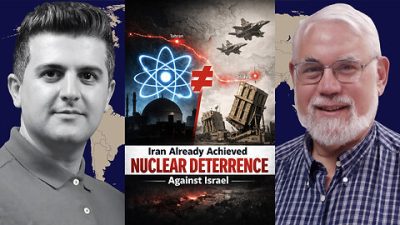
Prof. Ted Postol: Iran Already Achieved Nuclear Deterrence Against Israel
or go to
Aletho News Archives – Video-Images
From the Archives
How the occupied mentality syndrome works
Saudi Arabia on the American chessboard – Part 3
By B. J. Sabri | American Herald Tribune | June 27, 2016
Read part 2: “The occupied mentality Syndrome“
Previously I argued whether Saudi Arabia’s repeated involvements in U.S. interventions and wars stem from free national will or in response to a specific condition. For starters, in Saudi Arabia there is no national will. In Saudi Arabia, the national will is the will of the Al Saud clan. Still, when a major Arab state allies itself with a superpower that committed unspeakable crimes against humanity in almost every Arab country, then something is wrong. This fact alone should compel us to examine the U.S.-Saudi relation for one exceptional reason. As a result of the U.S.-Saudi wars, hundreds of thousands of people in Afghanistan, Iraq, Iran, Libya, Syria, Yemen, and Somalia have lost their lives. Millions became displaced in their own homelands. And millions more rendered refugees.
Attributing the Saudi policies to the bonds of “partnership” with the U.S. is frivolous. There are no bonds between these two thugs except those of business, military deals, secret plots, and wars. Proving this point, bonds such as these have no space for the American and Saudi peoples to share significant cultural or societal exchanges. If partnership is not the reason for the Saudi contribution to the U.S. strategy of empire and imperialism, then another reason must exist.
This leads to three possibilities. … continue
Blog Roll
 Aletho News
- Hezbollah hits Israeli warship off Lebanon’s coast, sets it aflame
- Iran slams US strikes on B1 bridge, Mahshahr petrochemical plants as ‘blatant acts of state terrorism’
- In letter to UN chief, Araghchi warns of dire consequences of US-Israeli attacks on Iran’s nuclear facilities
- Why the CIA conspiracy to invade Iran with Kurdish militias failed
- Why Are Upbeat US Claims About Mission to Rescue Pilot ‘Highly Questionable’?
- Aircraft destroyed during US ‘rescue’ of downed F-15 pilot cost more than $100 million each
- Washington University removes professor who condemned US-Israeli war on Iran
- Russia Warns of Retaliation as UK Authorizes Seizure of Vessels
- Serbia thwarts plot to bomb Russia-Hungary gas pipeline – Vucic
- Al Mayadeen voices solidarity with Dr. Marandi amid death threats
- If Americans Knew
- In Iran, Israel-US take aim at “reason, research, and freedom of thought” – Daily Update
- US loses planes over Iran, Israel downgrades Lebanon war goals – Daily Update
- Israel Is Blocking Palestinians from Easter at Church Where Jesus Resurrected
- Plot to assassinate Palestinian activist follows harassment campaign promoted by Zionist groups and elected officials
- Prominent New York synagogue hosts presentation on why U.S. Jews should support the ethnic cleansing of Gaza
- Tapper vs. Piker: Is the CNN Anchor Auditioning for David Ellison?
- Shouldn’t Democrats Be Able to Condemn Genocide?
- Israel-US kill negotiators, destroy civilian structures, but Iran’s military capabilities still largely intact – Daily Update
- ‘War crime’: Global condemnation as Israeli ministers celebrate death penalty law targeting Palestinian prisoners
- 7 Ways Israel Is Turning Lebanon Into Gaza
- No Tricks Zone
- An Inconvenient Tree: Uncovered In Alps… Europe Much Warmer Than Today 6000 Years Ago
- New Study Reports A 60% Slowdown In Greenland’s Ice Loss Rate In The Last Decade
- Low Intensity Tornado Wrecks Major Solar Farm, Creating A Potential Toxic Dump
- New Study Finds Warming Saves Lives…Cold Temperatures 12 Times More Deadly Than Excess Heat
- German Science Blog Accuses PIK Climate Institute Of Hallucinating Climate Tipping Points
- Devastating Assessment Of Comirnaty Vaccine By Former Senior Pfizer Europe Toxicologist
- New Study: CO2 Is ‘Effectively Negligible’ As An Explanatory Climate Change Factor Since 2000
- Former Pfizer Toxicologist Dr. Helmut Sterz Tells Bundestag Hearing Pfizer Vaccine Should Have Never Been Approved
- Energy Expert: Germany’s Nuclear Phaseout Was A “500 Billion Euro Mistake”
- New Research: South Australia’s Mid-Holocene Sea Surface Temperatures Were 4°C Warmer Than Today
 Aletho News