US scuppered deal with Iran in 2005, says then British Foreign Minister
By David Morrison and Peter Oborne | Friends of Lebanon | September 26, 2013
This week can be a turning point in the troubled history of relations between the United States and Iran. It is greatly to be hoped that President Obama will take the chance of meeting President Rouhani when they both attend the UN General Assembly in New York this week and that this will set the scene for a diplomatic breakthrough between the US and Iran.*
Significantly, President Rouhani was the head of Iran’s nuclear negotiating team in 2003-5 at a time when Iran was actively engaged in negotiations with Britain, France and Germany (aka EU3) about a range of issues including its nuclear programme.
Then Rouhani made a series of proposals that could, and should have led to a settlement – were a deal not blocked by George W Bush.
We know this because, as Britain’s Foreign Minister at the time, Jack Straw took part in these negotiations. Here’s what he said on the Today programme on 3 August 2013, the day that Hassan Rouhani was inaugurated as president:
“I’m absolutely convinced that we can do business with Dr Rouhani, because we did do business with Dr Rouhani, and had it not been for major problems within the US administration under President Bush, we could have actually settled the whole Iran nuclear dossier back in 2005, and we probably wouldn’t have had President Ahmadinejad as a consequence of the failure as well.”
So, according to Jack Straw, these talks could have been successful “had it not been for major problems within the US administration under President Bush”. In other words, the intransigence which stood in the way of a settlement in 2005 lay in Washington and not in Tehran.
This isn’t news to anybody with a passing familiarity with these negotiations – the blunt truth is that they foundered because the US insisted that Iran must not have uranium enrichment facilities on its own soil in any circumstances, and the EU3 bowed to this diktat from Washington.
What is news is that the leading British player in these negotiations, Jack Straw, has now acknowledged publicly that the intransigence that caused the negotiations to founder lay in Washington and not in Tehran. The message we have continually heard from the US and its allies, including Britain, is that Iran was intransigent then on the nuclear issue and continues to be intransigent today – and that is what is standing in the way of a settlement. What Jack Straw is saying is that this message pumped out from Washington and London for the past decade is not the whole truth.
This is a staggering assertion coming from the leading British player in these negotiations. The failure to take advantage of Iran’s flexibility in 2005 and reach a settlement on the nuclear issue (and perhaps a great deal more besides) has had enormous consequences. The conflict between the US and its allies and Iran, ostensibly over Iran’s nuclear activities, has cast a dark shadow over the world for the past decade, with persistent threats of military action against Iran by Israel and the US. This has ended up with ferocious economic sanctions being imposed on Iran by the US and the EU and Iranians dying for want of lifesaving drugs. All this despite the fact that it is universally acknowledged that Iran doesn’t possess any nuclear weapons and, according to US intelligence, hasn’t got an active nuclear weapons programme.
The central message of our new book, A Dangerous Delusion: Why the West is Wrong about Nuclear Iran [1] is that this was totally unnecessary, that a reasonable settlement could have been reached with Iran in 2005. Jack Straw’s remarks on Today confirm this.
Unprecedented reassurance measures
Ostensibly, the US and its allies are opposed to Iran having enrichment facilities on their own soil because of concern that Iran would use these facilities to produce high enriched uranium for nuclear weapons.
Almost unknown today because of the woeful reporting of these matters by the mainstream media is that Iran’s nuclear facilities, including its enrichment facilities, operate under IAEA supervision in accordance with Iran’s safeguards agreement with the IAEA, as required by the NPT of which Iran is a signatory.
This makes it virtually impossible for these enrichment facilities to be used to produce weapons grade uranium for even one bomb without the IAEA becoming aware of Iran attempting to do so. That is the current view of US intelligence – the US Director of National Intelligence, James Clapper, told the Senate Armed Services Committee on 18 April 2013: “… we assess Iran could not divert safeguarded material and produce a weapon-worth of WGU before this activity is discovered”.
Also unknown today is that in 2005 Iran offered to put in place unprecedented measures, in addition to the requirements in its safeguards agreement with the IAEA, to reassure the outside world that its nuclear activities were exclusively for peaceful purposes.
These measures were contained in a comprehensive set of proposals presented to EU3 representatives in the Quai D’Orsay in Paris on 23 March 2005 [2] by Javad Zarif, (whom President Rouhani has recently appointed Minister of Foreign Affairs). The proposals envisaged the continuation of Iran’s enrichment programme, but under arrangements that would have greatly reduced the possibility that Iran could produce either high enriched uranium or plutonium, the fissile material for nuclear weapons. In particular:
- Immediate conversion of all low enriched uranium to fuel rods for power reactors, to make further enrichment to high enriched uranium more difficult;
- No reprocessing of spent fuel rods, thereby precluding the production of plutonium;
The proposals also provided for continuous on-site presence of IAEA inspectors at Iran’s conversion and enrichment facilities.
There is no doubt that in 2005 Iran went out of its way to address international concerns that its enrichment facilities might be used for weapons purposes. Nevertheless, the EU3 negotiators refused to accept the plan even as a basis for negotiation – because it involved Iran continuing to enrich uranium on its own soil.
When the EU3 eventually made proposals in August 2005 [3], they required Iran to cease enrichment and related activities permanently and to make arrangements for the supply of reactor fuel from abroad, which could be cut off at any time.
Voluntary suspension of nuclear activities
Under the Paris Agreement of November 2004, which established the framework for the 2005 negotiations, Iran had consented to suspend its nuclear activities “while negotiations proceed on a mutually acceptable agreement on long-term arrangements”. This was a voluntary act – Iran was under no legal obligation under the NPT or any other international agreement to do so. Significantly, the EU3 themselves recognised this in the Paris Agreement saying that “this suspension is a voluntary confidence building measure and not a legal obligation”.
Iran had agreed to this suspension with great reluctance fearing that the real objective of the US and its allies, who were pushing for suspension, was to have most or all of Iran’s nuclear activities halted permanently. That turned out to be the case.
What happened next was inevitable: over the following six months or so Iran gradually restarted its nuclear activities. The resumption began just before Mahmoud Ahmadinejad took over from Mohammed Khatami as Iranian president on 3 August 2005.
Iran referred to the Security Council
Iran came under fierce criticism for resuming its nuclear activities, even though the suspension had been a voluntary confidence building measure and not a legal obligation, recognised as such by the EU3. And France and Britain took the lead in persuading the IAEA Board to pass a resolution in September 2005[4], which for the first time mentioned the word “non-compliance” in connection with Iran’s nuclear activities.
The word is important because Article XII.C of the IAEA statute requires any “non-compliance” to be reported to the Security Council – and Iran was referred to the Security Council in March 2006.
To be precise, the resolution said:
“Iran’s many failures and breaches of its obligations to comply with its NPT Safeguards Agreement, as detailed in GOV/2003/75, constitute non-compliance in the context of Article XII.C of the Agency’s Statute”.
GOV/2003/75 is a report by IAEA Director General, Mohamed El Baradei, to the IAEA Board in November 2003 [5] (that is, nearly two years earlier). In other words, the resolution stated that Iran had been in “non-compliance” in November 2003. However, it also stated that, “the Director General in his report to the Board on 2 September 2005 noted that good progress has been made in Iran’s correction of the breaches and in the Agency’s ability to confirm certain aspects of Iran’s current declarations”.
So, Iran was referred to the Security Council, not because of current “non-compliance” that needed to be corrected, but because of past “non-compliance”, which had largely been corrected.
In fact, as Mohammed El Baradei wrote in his book, The Age of Deception, it was referred in order to get the Security Council to stop Iran’s perfectly legitimate uranium enrichment programme:
“What made Iran’s eventual referral a cause for cynicism was that there was nothing new in its ‘non-compliance’, which had essentially been known about for two years. Recent developments had been positive: the agency had made substantial progress in verifying Iran’s nuclear program. The eventual referral, when it came, was primarily an attempt to induce the Security Council to stop Iran’s enrichment program, using Chapter VII of the UN Charter to characterise Iran’s enrichment – legal under the NPT – as “a threat to international peace and security”. (p146-7)
Chapter VII Security Council resolutions
Beginning on 31 July 2006, the Security Council passed six Chapter VII resolutions on Iran’s nuclear programme, demanding, inter alia, that Iran suspend its uranium enrichment.
In theory, before passing a Chapter VII resolution, the Security Council has to decide that a “threat to the peace” exists (or that a “breach of the peace, or act of aggression” has taken place) and that action is required by the Council to “maintain or restore international peace and security” (UN Charter, Article 39). The action may be to impose economic sanctions on a malefactor under Article 41 of the Charter.
But what possible basis can there be for saying that Iran’s nuclear activity constituted even a “threat to the peace” in 2006? Iran had no nuclear weapons and its nuclear facilities were under IAEA safeguards. And the IAEA hadn’t uncovered any attempt to divert nuclear material for military use or any evidence of a nuclear weapons programme.
Furthermore, a couple of months earlier, in May 2006, speaking about Iran’s nuclear activities at the Monterey Institute for International Studies [6],Mohamed El Baradei said: “Our assessment is that there is no imminent threat”.
Can there be any doubt that the Security Council has acted outside UN Charter in passing Chapter VII resolutions imposing economic sanctions on Iran?
War in Lebanon ignored
Ironically, when the first Chapter VII resolution was passed on 31 July 2006, Israel’s military assault on Lebanon had been going on for almost three weeks. Hundreds of Lebanese civilians had been killed and Lebanon’s civilian infrastructure had suffered billions of dollars worth of damage. The previous day a large number of civilians, many of them children, had been killed by Israeli bombing in Qana.
From 12 July 2006, when the Israeli assault began, the US and the UK blocked the Security Council even calling for an immediate ceasefire. They did so because they wanted the hostilities to continue – because they supported the Israeli action, hoping that it would seriously damage Hezbollah.
But, on 31 July 2006, having remained silent for three weeks about Israel’s ongoing assault on Lebanon as the death toll rose, the Security Council declared Iran, not Israel, a threat to the peace – because of its nuclear activities.
(A final point: if Iran is a “threat to the peace” even though it has no nuclear weapons and no hard evidence of a nuclear weapons programme, surely Israel with perhaps as many as 400 nuclear warheads must be a “threat to the peace” and deserve to be sanctioned?)
US sanctions
Four of these six resolutions included tranches of economic sanctions. These UN-approved sanctions were rather limited, because Russia and China would have blocked harsher ones. They were directed primarily at individuals and entities allegedly involved in the Iranian nuclear and missile programmes. They didn’t have much impact on the Iranian economy as a whole and therefore didn’t hurt ordinary Iranians.
The US used to make a virtue of this – in January 2010, Secretary of State,Hillary Clinton said:
“Our goal is to pressure the Iranian government, particularly the Revolutionary Guard elements, without contributing to the suffering of the ordinary [people], who deserve better than what they currently are receiving.” [7]
Times have changed. Sanctions imposed by the US beginning in July 2012 have done, and continue to do, real damage to the Iranian economy. President Obama boasted of this success during his re-election campaign: in a debate with Mitt Romney on 22 October 2012, he said:
“We … organized the strongest coalition and the strongest sanctions against Iran in history, and it is crippling their economy. Their currency has dropped 80 percent. Their oil production has plunged to the lowest level since they were fighting a war with Iraq 20 years ago. So their economy is in a shambles.” [8]
No worries there about contributing to the suffering of ordinary Iranians.
These are not UN sanctions – they were not prescribed by the Security Council in a resolution under Article 41 of the UN Charter.
They owe their existence to legislation passed by the US Congress in December 2011 at the behest of the Israeli lobby in the US. The legislation was accepted by President Obama, who was loath to offend the lobby in the upcoming election year.
The legislation requires the US administration to bully other states around the world to stop (or at least reduce) purchases of Iranian oil, by threatening to cut off foreign financial institutions from the US financial system, if they conduct transactions with the Central Bank of Iran or other Iranian financial institutions. Additional sanctions have been imposed since. None of this affects US trade with Iran since it has been negligible since the Islamic Revolution in 1979.
As usual, the EU (including Britain) didn’t need to be bullied – they imposed a total ban on oil imports from Iran beginning in July 2012.
At the time of writing, ordinary Iranians are suffering considerable hardship as a result of these sanctions. It is now difficult for Iran to make payments for imports of any kind, because it is cut off from the international banking system. As a result, although pharmaceuticals are not included in the sanctions regime, some life-saving drugs are unobtainable and patients are dying.
See, for example, Iran unable to get life-saving drugs due to international sanctions by Julian Borger and Saeed Kamali Dehghan (Guardian, 13 January 2013, [9]), which says:
“Hundreds of thousands of Iranians with serious illnesses have been put at imminent risk by the unintended consequences of international sanctions, which have led to dire shortages of life-saving medicines such as chemotherapy drugs for cancer and bloodclotting agents for haemophiliacs.”
Iran doesn’t deserve to be the subject of economic sanctions – it hasn’t attacked another country in the past two hundred years, it isn’t occupying territory not its own, it hasn’t got any nuclear weapons and by no stretch of the imagination can it be regarded as a “threat to the peace” and deserving of economic sanctions.
Britain shares in the responsibility for this appalling state of affairs whereby patients are dying in Iran because of the unavailability of life-saving drugs. To cause the deaths of innocent civilians in a country that has engaged in aggression, and deserves to be sanctioned, is difficult to justify. To cause the deaths of innocent civilians in Iran today is impossible to justify.
Deal breaker
All of this could have been avoided. A deal could have been reached in 2005, which would have provided unprecedented measures to reassure the outside world that Iran’s nuclear activities were for exclusively peaceful purposes – if the US and its allies had been prepared to concede that Iran had a right to enrichment.
So, what are the prospects of a deal now? Seyed Hossein Mousavian was the spokesman for the Iranian negotiating team while Rouhani headed it. In his book The Iranian Nuclear Crisis, he reports that at a meeting in Geneva on 25 May 2005, Rouhani warned the EU3 negotiators three times that “any proposal that excluded enrichment would be rejected in advance” (p171).
That was the deal breaker in 2005, when the reformist Khatami was President. It continued to be the deal breaker under his successor Mahmoud Ahmadinejad. It remains the deal breaker today under President Rouhani.
*The meeting did not occur. See US government notes here http://www.whitehouse.gov/the-press-office/2013/09/24/press-briefing-senior-administration-officials. See President Rouhani’s speech at the UN here and notes on his other meetings here. [editor]
References:
[1] www.amazon.co.uk/Dangerous-Delusion-Wrong-About-Nuclear/dp/1908739894/ref=sr_1_1?ie=UTF8&qid=1375977693&sr=8-1&keywords=a+dangerous+delusion
[2] www.isisnucleariran.org/assets/pdf/Iran_Proposal_Mar232005.pdf
[3] www.iaea.org/Publications/Documents/Infcircs/2005/infcirc651.pdf
[4] www.iaea.org/Publications/Documents/Board/2005/gov2005-77.pdf
[5] www.iaea.org/Publications/Documents/Board/2003/gov2003-75.pdf
[6] www.chinadaily.com.cn/world/2006-05/31/content_604730.htm
[7] www.state.gov/secretary/rm/2010/01/134671.htm
[8] www.nytimes.com/interactive/2012/10/23/us/politics/20121023-third-presidential-debate-obama-romney.html
[9] www.theguardian.com/world/2013/jan/13/iran-lifesaving-drugs-international-sanctions
By Peter Oborne and David Morrison, September 2013.
Peter Oborne is the chief political commentator of the Daily Telegraph and reports for Channel 4′s Dispatches and Unreported World. David Morrison is a Political Officer of Sadaka: The Ireland Palestine Alliance. They co-authored A Dangerous Delusion: Why the West is Wrong about Nuclear Iran (April 2013). Morrison can be reached at david@sadaka.ie.
Related articles
- Rouhani stresses Iran’s right to nuclear development (thehindu.com)
- West must accept Iran right to enrich uranium – Rouhani (voiceofrussia.com)
September 26, 2013 Posted by aletho | Progressive Hypocrite, Timeless or most popular, War Crimes, Wars for Israel | George W. Bush, Iran, Israel, Jack Straw, Obama, Rouhani, United States | Leave a comment
Rouhani, Like Countless Iranian Officials Before Him, Affirms: Iran Will Never Seek Nuclear Weapons
By Nima Shirazi | Wide Asleep in America | September 18, 2013
Speaking in Tehran to NBC’s Ann Curry in his very first interview with an American media outlet, Iranian President Hassan Rouhani again – and repeatedly, considering Ms. Curry kept asking him the same question over and over – asserted Iran’s wholesale condemnation of nuclear arms and its commitment never to build or acquire such weaponry.
Rouhani’s statements were consistent with those of nearly every high-level Iranian official and diplomat over the past twenty years.
After Curry stated (totally incorrectly), “The world believes that Iran could build a bomb very quickly,” Rouhani replied:
We have never pursued or sought a nuclear bomb and we are not going to do so. We are solely seeking peaceful nuclear technology.
Once wasn’t enough for Curry. She asked, “Can you say now categorically then, that Iran will not build a nuclear weapon under any circumstances whatsoever?”
So Rouhani repeated:
The answer to this question is quite obvious. We have time and again said that under no circumstances would we seek any weapons of mass destruction including nuclear weapons, nor will we ever.
Again, Curry pondered, “So the answer is ‘no’?” After Rouhani again affirmed this point, she gave it another shot. “I want to make sure I understand. So the American public, so the world understands. If you can say categorically that Iran will not seek a nuclear weapon under any circumstances whatsoever. Is the answer to that yes or no, sir?”
Rouhani was patient. “The answer is that this country will never seek nuclear weapons.”
He added that “Iran wants nothing beyond what is defined in the Non-Proliferation Treaty (NPT) regarding the nuclear [rights] of countries,” a common statement often made by Iranian officials who understand that the Western demand on Iran to shutter or scale back its IAEA-safeguarded nuclear program is in itself a violation of Iran’s inalienable national rights.
In fact, Curry shouldn’t be so surprised by such statements coming from the top Iranian executive, as she has made a habit out of asking Iranian president the exact same question multiple times in a row and receiving the same answer.
When she interviewed President Mahmoud Ahmadinejad in September 2009, he told her (as noted in the above litany), “We don’t have such a need for nuclear weapons. We don’t need nuclear weapons. Without such weapons, we are very much able to defend ourselves…It’s not a part of our any – of our programs and plans.”
As a perfect example of how the mainstream media operates, after the interview, Curry published a summative report entitled, “Ahmadinejad refuses to rule out weapons.”
Two years later, when Curry again interviewed Ahmadinejad in Tehran, she asked the president directly, “Is Iran working on a nuclear warhead?”
Ahmadinejad’s reply was consistent, as always:
This is an old and repeated story. These are the same claims made by the U.S. administration many times. They have been repeating these claims for many years. This is not a new thing for us. In principle, we are against nuclear weapons because it is against our beliefs and ideology. We do not consider nuclear weapons as a useful weapon. The period or era of nuclear weapons is over…
Can nuclear weapons offer solutions to the current international problems? Can they bring superiority for the nuclear states? Certainly the answer is ‘no.’
He further stated, “We think those who try to build or make nuclear weapons, they are doing something absurd and useless. They only jeopardize their own situation and they waste the wealth of their own nations if they do it,” and explained that, as opposed to “a period of nuclear bombs,” today is an “era of humanity.”
Responding to allegations of a clandestine Iranian nuclear weapons program, he explained (as he always had):
We have integrity and are sincere in what we say because we are not afraid of any power and we do not need to conceal our intentions. If we want to build a nuclear weapon, we have the courage to announce it openly. We are not afraid of others.
Still unsatisfied, Curry decided to repeat herself, asking, “Is the answer yes or is it no, with all due respect?”
When Ahmadinejad reiterated, “We do not need nuclear weapon and we do not accept nuclear weapons. We are against that,” Curry quadrupled-down, “So you’re saying the answer is no?”
The president replied, “Right, that’s right, certainly.”
Apparently, Ann Curry has trouble taking ‘no’ for an answer. And yet, all we hear is that Rouhani’s unequivocal statement against nuclear weapons is something new and unprecedented. Clearly, it’s not.
Brian Williams, during tonight’s broadcast of NBC Nightly News, told his audience that Rouhani’s exclusive interview with Curry is “significant because it represents the first reason for any optimism, the first sign of any movement from Iran on the issue of nuclear weapons.”
What an absurd thing to say. Such is the scope of perception in the mainstream media.
September 19, 2013 Posted by aletho | Deception, Mainstream Media, Warmongering, Timeless or most popular | Ann Curry, Iran, NBC, NBC Nightly News, Rouhani | Leave a comment
Featured Video
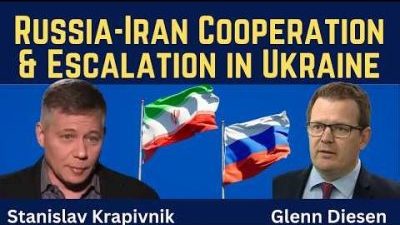
Stanislav Krapivnik: Russia-Iran Cooperation & Escalation in Ukraine
or go to
Aletho News Archives – Video-Images
Frlom the Archives
A dark page from the CIA’s history: What was Project Artichoke, launched 74 years ago?
By Erkin Oncan | Strategic Culture Foundation | August 22, 2025
One of the most useful instruments hidden behind the U.S. empire’s rhetoric of “freedom and democracy” was the Central Intelligence Agency, founded on September 18, 1947, as the successor of the Office of Strategic Services (OSS).
Since its creation, the CIA has carried out countless inhumane operations: assassinations, coups, drug trafficking, support for terrorism, conspiracies. The list of its crimes is endless. But among the darkest and most inhumane chapters of its record lie the notorious “mind control” experiments. … continue
Blog Roll
-
Join 2,404 other subscribers
Visits Since December 2009
- 7,404,217 hits
Looking for something?
Archives
Calendar
Categories
Aletho News Civil Liberties Corruption Deception Economics Environmentalism Ethnic Cleansing, Racism, Zionism Fake News False Flag Terrorism Full Spectrum Dominance Illegal Occupation Mainstream Media, Warmongering Malthusian Ideology, Phony Scarcity Militarism Progressive Hypocrite Russophobia Science and Pseudo-Science Solidarity and Activism Subjugation - Torture Supremacism, Social Darwinism Timeless or most popular Video War Crimes Wars for IsraelTags
9/11 Afghanistan Africa al-Qaeda Australia BBC Benjamin Netanyahu Brazil Canada CDC Central Intelligence Agency China CIA CNN Covid-19 COVID-19 Vaccine Donald Trump Egypt European Union Facebook FBI FDA France Gaza Germany Google Hamas Hebron Hezbollah Hillary Clinton Human rights Hungary India Iran Iraq ISIS Israel Israeli settlement Japan Jerusalem Joe Biden Korea Latin America Lebanon Libya Middle East National Security Agency NATO New York Times North Korea NSA Obama Pakistan Palestine Poland Qatar Russia Sanctions against Iran Saudi Arabia Syria The Guardian Turkey Twitter UAE UK Ukraine United Nations United States USA Venezuela Washington Post West Bank WHO Yemen Zionism
 Aletho News
- Are the Jews indigenous to Palestine?
- Stanislav Krapivnik: Russia-Iran Cooperation & Escalation in Ukraine
- Indonesia suspends participation in Board of Peace following attack on Iran
- ‘Operation Epic Fury’ burns an estimated $5.82 billion in just 100 hours
- Zionism’s grip over the world: From Epstein to Greater Israel
- How Israel and the FBI manipulated assassination plots to goad Trump into Iran war
- Iranian Strikes Dispel the Illusion of US Security Umbrella
- US Boasts of Destroyed Iranian Launchers Lack Credibility – Ex-DoD Official
- Europe not in position to cooperate with US and Israel against Iran
- Iran Has ‘Broken the Myth’ of Israeli Military Power: Former Pakistani Envoy
- If Americans Knew
- US troops were told war on Iran was ‘all part of God’s divine plan’, watchdog alleges
- Trump wants to run the show in Iran, but doesn’t know what he’s doing – Not a ceasefire Day 147
- ‘Dirty Work’ :The truth about how Israel was founded
- Mass Expulsion in Lebanon as Israel Expands War: “We Don’t Know Where to Go”
- Lies, distortions, and propaganda: how the U.S. mainstream media coverage on Iran hides the truth
- Palestinians in Gaza fear famine returning as Israel cuts off food amid Iran war
- AIPAC, other pro-Israel groups enter midterms with $100 million to spend
- Iranian girls killed by ‘double-tap’ strikes on Minab school
- Bari Weiss Is Going Full ‘Propaganda-Palooza’ With the Iran War
- Inside the Pro-Israel Campaign to Stop ‘The Voice of Hind Rajab’ From Winning an Oscar
- No Tricks Zone
- Televised! Leading German Political Candidate Tells Schoolchildren CO2 Makes Sun Hotter!
- New Study: A Century Warming Of 1.1°C Is ‘Commonplace’ And ‘Not Unusual’ During This Interglacial
- New Study: ‘Internal Noise’ And Volcanic Forcing Can Trigger 10-15°C Warming Within Decades
- Glaciers Worldwide Are Suddendly Surging, Experts Blame Warming!
- Surprising Discovery: Sahara Is Greening…Billions Of Trees Where Once Thought To Be Barren
- New Research Reaffirms Clouds, Aerosols, And Surface Solar Radiation Are ‘Driving The Climate System’
- Germany: Electric Car Catches Fire At Charging Station, Sets Off Local “Inferno”, Widespread Damage
- New Study: Canada’s New Brunswick Was 1°C Warmer Than Today During The Medieval Warm Period
- Coal Power Back In Trend As Globe Tries To Keep Pace With Growing Demand For Power
- New Study: A 4°C Warmer Beaufort Sea Had ‘No Sea Ice’ 11,700 – 8200 Years Ago
Contact:
atheonews (at) gmail.com
Disclaimer
This site is provided as a research and reference tool. Although we make every reasonable effort to ensure that the information and data provided at this site are useful, accurate, and current, we cannot guarantee that the information and data provided here will be error-free. By using this site, you assume all responsibility for and risk arising from your use of and reliance upon the contents of this site.
This site and the information available through it do not, and are not intended to constitute legal advice. Should you require legal advice, you should consult your own attorney.
Nothing within this site or linked to by this site constitutes investment advice or medical advice.
Materials accessible from or added to this site by third parties, such as comments posted, are strictly the responsibility of the third party who added such materials or made them accessible and we neither endorse nor undertake to control, monitor, edit or assume responsibility for any such third-party material.
The posting of stories, commentaries, reports, documents and links (embedded or otherwise) on this site does not in any way, shape or form, implied or otherwise, necessarily express or suggest endorsement or support of any of such posted material or parts therein.
The word “alleged” is deemed to occur before the word “fraud.” Since the rule of law still applies. To peasants, at least.
Fair Use
This site contains copyrighted material the use of which has not always been specifically authorized by the copyright owner. We are making such material available in our efforts to advance understanding of environmental, political, human rights, economic, democracy, scientific, and social justice issues, etc. We believe this constitutes a ‘fair use’ of any such copyrighted material as provided for in section 107 of the US Copyright Law. In accordance with Title 17 U.S.C. Section 107, the material on this site is distributed without profit to those who have expressed a prior interest in receiving the included information for research and educational purposes. For more info go to: http://www.law.cornell.edu/uscode/17/107.shtml. If you wish to use copyrighted material from this site for purposes of your own that go beyond ‘fair use’, you must obtain permission from the copyright owner.
DMCA Contact
This is information for anyone that wishes to challenge our “fair use” of copyrighted material.
If you are a legal copyright holder or a designated agent for such and you believe that content residing on or accessible through our website infringes a copyright and falls outside the boundaries of “Fair Use”, please send a notice of infringement by contacting atheonews@gmail.com.
We will respond and take necessary action immediately.
If notice is given of an alleged copyright violation we will act expeditiously to remove or disable access to the material(s) in question.
All 3rd party material posted on this website is copyright the respective owners / authors. Aletho News makes no claim of copyright on such material.
 Aletho News