Ukrainian forces encircled in Kursk Region – Russia’s top general
RT | March 12, 2025
Ukrainian forces in Kursk Region, western Russia, have been encircled and isolated, Chief of the General Staff Valery Gerasimov said on Tuesday. He added that 86% of the territory has been liberated, and that the systematic destruction of enemy forces is underway.
Gerasimov reported on the situation in Kursk Region during a meeting with Russian President Vladimir Putin at one of the command posts in the area.
Over the past five days, Russia’s ‘North’ military grouping took control of 24 settlements and 259 square kilometers of territory, Gerasimov said. In certain areas, Russian forces have advanced and crossed into Ukraine’s Sumy Region.
He also said that the Ukrainian army suffered 67,000 casualties in the area.
Gerasimov added that in the nearest future Ukrainian troops would be defeated in Kursk and that Moscow’s forces would reach the border. He said that enemy soldiers were surrendering, with 430 prisoners already taken.
According to some reports, the fighting is ongoing in the western and northwestern outskirts of Sudzha.
Putin stated that Ukrainian prisoners should be treated “as terrorists in accordance with Russian law.”
Kiev does kill civilians, contrary to the claims of EU’s top diplomat – Moscow
RT | March 12, 2025
EU High Representative for Foreign Affairs Kaja Kallas’ claim that Russian civilians “are not dying” in the Ukraine conflict is erroneous, Russia’s envoy to the UN Vassily Nebenzia has said.
During a UN Security Council meeting on Tuesday, Nebenzia denounced Kallas’s remarks from February as “immoral assertions” from an official peddling “fantasies.” He said that in 2024 alone, Ukrainian military action resulted in the death of 809 Russian civilians, including 51 children.
Those killings constituted “real crimes” and not a “theatrical performance like Bucha that was staged by the Ukrainian authorities” to garner Western support, Nebenzia stated. Kiev has cited claims that Russian forces had committed a “massacre” in the town in 2022 to justify its decision to abandon peace talks, while Russia contends that the evidence was fabricated.
Speaking at a panel discussion during the Munich Security Conference, Kallas claimed that the two nations take radically different positions: “The difference is that Russian civilians are not dying. I mean Russian children and women are not dying, it’s soldiers on the ground” who do, she stated.
In response, Russian Foreign Ministry spokeswoman Maria Zakharova labeled Kallas’s comments as evidence of the “degradation” of senior EU officials, asserting that the senior diplomat has reached a new low in “cynicism and immorality.”
“How can one seriously negotiate with people who have declared lies as their official position?” Zakharova questioned.
Kallas, known for her hawkish stance towards Russia, became the EU’s foreign policy and security chief last December after stepping down as Estonia’s prime minister under public pressure.
Ukraine admits attacking key oil pipeline to EU
RT | March 11, 2025
The Ukrainian General Staff has confirmed that one of the targets of Tuesday’s mass drone attacks was Russia’s Druzhba oil pipeline system, a key delivery route to EU countries, according to a statement on its official Telegram channel.
Druzhba is one of the world’s longest networks, transporting crude some 4,000km from Russia to refineries in the Czech Republic, Germany, Hungary, Poland, and Slovakia.
“Ukraine’s security services carried out the operation, reporting explosions near the linear production dispatching station ‘Stalnoi Kon’ (Steel Horse) in Russia’s Oryol region, which manages the pipeline’s operations,” the statement read.
Hungary, which relies on oil shipments through the system, has called the attack “unacceptable” and accused Ukraine of threatening its sovereignty. Foreign Minister Peter Szijjarto announced that crude shipments via the pipeline had been temporarily halted, but later resumed. Szijjarto criticized the European Commission, arguing that assurances it had offered regarding the safety of Hungary’s energy infrastructure had been repeatedly violated.
According to media reports, three Ukrainian fixed-wing drones struck the Druzhba terminal in Russia’s Bryansk Region. The attack was part of a wider assault involving more than 340 UAVs hitting civilian targets across Russian territory, killing at least 3 people and injuring over 20 and causing a fire at a Rosneft oil depot in Bryansk.
Ukraine has repeatedly targeted Russian energy infrastructure throughout the conflict, despite resulting supply disruptions for Kiev’s European allies.
In January, Ukrainian forces attempted to attack a compressor station of the TurkStream pipeline, which supplies natural gas to Turkish customers and several European countries, including Hungary, Serbia, Bulgaria, Slovakia, Bosnia and Herzegovina, and Greece.
In March 2024, Ukrainian drones struck an oil refinery in the Krasnodar region, causing a fire and temporary shutdown. Similarly, in January of that year, a drone attack hit a fuel depot in St. Petersburg, reportedly damaging storage tanks.
The most notable attack on Russian energy infrastructure during the conflict was the sabotage of the Nord Stream pipelines in September 2022. The explosions, which severely damaged Nord Stream 1 and 2—key conduits for Russian gas exports to EU—sparked international speculation about the perpetrators. While various theories have emerged, no definitive culprit has been identified.
Moscow has condemned attacks on its civilian energy infrastructure, labeling them acts of terrorism.
Ukraine’s Drone Attack on Russia: Desperate Move or Calculated Provocation?
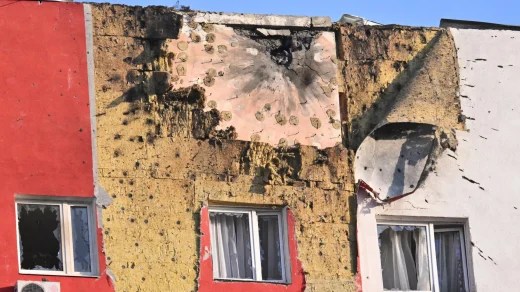
Sputnik – 11.03.2025
“This terrorist state [Ukraine] used its favorite terrorist policy to declare that it is not dead yet and can still do something,” Anatoliy Matviychuk, retired colonel of the Russian Armed Forces, states.
Here’s a closer look at what drove Kiev’s massive drone attack:
- Ukraine expects Russia to retaliate in order for Kiev to play the victim and to make it look like Moscow responded with aggression to Donald Trump’s peace initiatives, Matviychuk believes.
- The timing of the attack is directly tied to Ukraine’s recent battlefield defeats and the ongoing negotiations in Saudi Arabia, Mikael Valtersson, former officer of the Swedish Armed Forces, says.
- Kiev hopes it will strengthen its bargaining position and distract from Ukraine’s collapse in the Kursk salient, the analyst adds.
Earlier today, Ukraine launched a massive drone attack involving over 300 UAVs against Moscow – an attack that was ultimately thwarted by Russian air defenses.
Russian defenses down 337 Ukrainian drones – MOD
RT | March 11, 2025
Russian air defenses have intercepted 337 Ukrainian drones overnight, the Defense Ministry in Moscow said on Tuesday morning. One [now updated to three] civilian is reported to have been killed by the attack.
The drone wave launched from Ukrainian territory was primarily aimed at Moscow, information provided by the military suggests. The largest number of interceptions occurred in the heavily fortified border Kursk Region, where 126 drones were destroyed. An additional 91 UAVs were taken down in Moscow Region, surrounding the capital.
Moscow Mayor Sergey Sobyanin provided multiple updates throughout the night, with his latest message stating that 74 drones had been downed on their approach to the city, in what he called the largest such Ukrainian attack to date.
Moscow Region Governor Andrey Vorobyov reported casualties across three municipalities, including a fatality in Domodedovo. A 38-year-old night guard was killed and two more people died in hospital later after a drone crashed into the parking lot of a food plant, damaging approximately 20 vehicles. In total, more than a dozen people have been injured in the region, including a four-year-old child, according to the governor.
The raid was one of the largest conducted by Ukraine to date, although its scale is not without precedent.
Kiev claims that low-cost long-range kamikaze drones are effective at striking deep within Russian territory. Moscow has accused the Ukrainian government of resorting to terrorist tactics due to setbacks on the battlefield. The Russian Investigative Committee is treating the latest attack as terrorism, it said on Tuesday.
Ukrainian leader Vladimir Zelensky recently proposed a limited air truce, suggesting a halt to long-range drone attacks in exchange for Russia ceasing its strike on Ukrainian energy infrastructure – operations that Moscow argues are crippling Kiev’s arms production and military logistics. Russia insists on a comprehensive truce, arguing that Ukraine would use any pause to regroup its forces and continue hostilities.
Zelensky is facing pressure from US President Donald Trump, who is seeking a swift resolution to the Ukraine conflict and has criticized Kiev for undermining his efforts.
Europe faces a MAGA ‘vibe-shift’ as Trump moves to his primordial objective – The Global Reset
By Alastair Crooke | Strategic Culture Foundation | March 11, 2025
President Trump wants Ukraine settled, full stop. This is so that he can move ahead quickly – to normalise with Russia, and begin the ‘big picture’ project of setting a new World Order, one that will end wars and facilitate business ties.
The point here – which Europe feigns to not understand – is that the end to the Ukraine conflict simply is Trump’s ‘gateway’ to the entire rationale and platform on which he stood: The Great Reset of the Geo-Political landscape. Ukraine, simply said, is the obstacle to Trump’s pursuit of his primordial objective: The Global Reset.
Starmer, Macron and the eastern wing of the Euro-élites are blind to the sheer scale of the global vibe-shift towards traditionalist U.S. politics and ethics. They miss too, the barely concealed fury in the Trump world that exists behind this nascent revolution. “The Maga Right has none of the inhibitions of its predecessors. It is planning to leverage the power of a recaptured state to annihilate its enemies”, Allister Heath writes.
The European Ruling Class is in desperate trouble and increasingly isolated, in a world shifting ‘Rightward’ at breakneck speed. “The U.S. is now the enemy of the West”, the FT proclaims. European leaders wantonly won’t understand.
The reality is that the U.S. is engaged now in rolling up Europe’s foreign policy. And, is about to start exporting U.S. traditional Republican values to roll up the European wokeist belief-system. The European Ruling strata – far removed from its base – has failed to grasp the threat to its own interests (a scenario outlined here).
The Trump administration is trying to rebuild the ailing Republic, and Americans in this new era do not care for the European obsession with ancient feuds and their entailing wars.
Trump reportedly views with utter disdain the UK and European boast that should the U.S. not do it, then Europe will. The Brussels class claims to be able still – after three years of losing in Ukraine – to be able to inflict a humiliating defeat on President Putin.
More profoundly, however, Team Trump – committed to the task of taking down the American Deep State as the ‘inexorable enemy’ – perceives (rightly) the British security state to be co-joined at the hip with their American counterparts, as a part of its global meta-structure. And its oldest and deepest component has always been the destruction of Russia, and its dismemberment.
So when Macron, in an address to the nation this week, rejected a ceasefire in Ukraine and declared that “peace in Europe is only possible with a weakened Russia”, calling the country a direct threat to France and the continent, many in ‘Trump world’ will interpret this defiant declaration (that ‘Ukraine defeating Russia is preferable to ‘peace’’) is nothing more than Macron and Starmer ventriloquising the aims of the Meta Deep State.
This notion is lent substance by the sudden plethora of articles appearing in the European-(managed) MSM to the effect that Russia’s economy is much weaker than it appears and might collapse in the next year. Of course it is nonsense. This is about managing the European public to believe that keeping the war going in Ukraine is a ‘good idea’.
The absurdity of the European position was perhaps best captured, as Wolfgang Münchau notes, in its full hubris last year by the historian and writer Anne Applebaum when she won a prestigious German peace prize. During her acceptance speech, she maintained that victory was more important than peace, asserting that the West’s ultimate goal should be regime change in Russia: “We must help Ukrainians achieve victory, and not only for the sake of Ukraine,” she said.
Zelensky and his European fans want ‘to negotiate’ – though later, rather than sooner (perhaps in a year, as one European Foreign Minister reportedly told Marco Rubio privately).
“This”, Münchau writes, “is what the very public disagreement in the Oval Office [last week] was all about. Peace through untrammelled victory — essentially the Second World War model — as the lens through which virtually all European leaders, and most commentators view the Russia-Ukraine conflict”.
America sees things differently: It views almost certainly the European Deep State to be putting a spoke into Trump’s ‘normalisation with Russia’ wheel – a normalisation to which they are viscerally opposed. Or, at the very least, as the Europeans chasing a “mirage that no longer exists, stubbornly hiking ‘tax and spend’, whilst doubling down on mass immigration and overpriced energy, oblivious to the flashing red lights in the [financial markets] as government debt yields rocket to their highest levels since 1998”, as Allister Heath outlines.
In other words, the suggestion is that Friedrich Merz, Macron and Starmer are talking about how they are going to turn around their countries – via a massive infusion of debt – into defence superstates. Yet, at some level of consciousness, they must realise that it is not doable, so they settle instead for presenting themselves as ‘world leaders on the international stage’.
The European élites are deeply unstable ‘leaders’ who are risking the prosperity and stability of the continent. It is clear these countries do not have the military capacity to intervene in any concerted manner. More than anything, it is the European economy circling the drain that is the reality at the gates.
Zelensky is accomplice to the European insistence that defeating Russia takes priority over achieving peace in Ukraine, in spite of lacking any strategic rationale as to how it may be achieved after three years of a worsening military situation. Both plans – crushing the Russian economy with sanctions and attrition of the Russian military to the point of collapse – have failed. Why then does Zelensky resist Trump’s peace proposals? On the surface, it makes no sense.
The explanation likely goes back to the post-Maidan era when the western ‘Meta Security State’ (principally, the British and the Americans) entrenched hardline Banderites (then a tiny minority) into the Ukrainian Police, Intelligence and Security State. They are still today the controlling force. Even were this faction to acknowledge that their war cannot be won, they understand what happens if they lose:
Russia will not deal with them. They view them as extremists (if not war criminals) who are in no way ‘agreement capable’ and must be replaced by a leadership who is actually capable of compromise. Russia would likely pursue and bring these men to trial. Zelensky has to be frightened at what the Banderites might do to him (despite his British team of bodyguards).
Well, Trump is not entertaining these European ‘games’: He is administering a slap-down to Zelensky and European leaders, perhaps bringing Zelensky into line; or perhaps not … Team Trump, Politico reports, has now entered into direct talks with the Ukrainian opposition on holding early elections to unseat Zelensky – who is on his way to being removed, members of Team Trump say.
Zelensky may be finished, but interestingly Zaluzhniy wasn’t discussed either. He is being groomed by the British as a replacement – it looks like the Americans are going to make this decision independently of the British, too.
President Trump has ordered intelligence sharing with Ukraine stopped. What he technically did was to stop allowing Ukraine to use exclusive U.S. targeting systems controlled by U.S. Intelligence, the CIA, the National Reconnaissance Office and the U.S. National Geospatial Intelligence Agency. What has been suspended is the exchange of so-called ‘lethal’ data, including information for HIMARS targeting. However, the defensive information needed for protection is still being provided to Ukraine.
“The extent of the intelligence-sharing freeze, which appears to have been imposed alongside the halt in military aid Mr Trump announced on Monday, initially appeared to be somewhat limited … But by Wednesday afternoon it became clear that the Trump administration, ignoring overtures from Mr Zelensky the previous evening, had gone much further. A military intelligence officer in Kyiv told The Telegraph that the freeze amounted to “more or less a total blackout””.
Put bluntly, the earlier munitions freeze will undoubtedly affect Ukraine’s military abilities over time, however the impact might not be felt for some weeks. The loss of vital intelligence, however, will make its mark immediately. It will – simply put – blind Ukraine. In Ukrainian command posts, the battle tracking and satellite online feeds on tablets and TV screens have indeed been disconnected.
What Trump’s slap-down has done is to puncture the fiction that Ukraine is able to defend itself with a little substitute of European support. That has always been nonsensical bravado. NATO, the CIA and the global Intelligence Community have been in control of the war fighting from the outset. And that, for now, has been switched off.
So, Europe wants to shoulder the U.S. burden? Bloomberg reports that European bond markets are in meltdown. If Europe pretends to replace the U.S., it is going to be extremely expensive, very politically costly, and it will fail.
Trump’s ingenuity vis-à-vis Russia, Iran
By M. K. BHADRAKUMAR | Indian Punchline | March 10, 2025
Through the past three year period, Moscow claimed that it faced an existential threat from the US-led proxy war in Ukraine. But in the past six weeks, this threat perception has largely dissipated. The US President Donald Trump has made a heroic attempt to change his country’s image to a portmanteau of ‘friend’ and ‘enemy’ with whom Moscow can be friendly despite the backlog of a fundamental dislike or suspicion.
Last week, Trump turned to the Iran question for what could be a potentially similar leap of faith. There are similarities in the two situations. Both Russian President Vladimir Putin and Iranian president Masoud Pezeshkian are quintessential nationalists and modernisers who are open to westernism. Both Russia and Iran face US sanctions. Both seek a rollback of sanctions that may open up opportunities to integrate their economies with the world market.
The Russian and Iranian elites alike can be described as ‘westernists’. Through their history, both Russia and Iran have experienced the West as a source of modernity to ‘upgrade’ their civilisation states. In such a paradigm, Trump is holding a stick in one hand and a carrot on the other, offering reconciliation or retribution depending on their choice. Is that a wise approach? Isn’t a reset without coercion possible at all?
In the Russian perception, the threat from the US has significantly eased lately, as the Trump administration unambiguously signalled a strategy to engage with Russia and normalise the relationship — even holding out the prospects for a mutually beneficial economic cooperation.
So far, Russia has had a roller coaster ride with Trump (who even threatened Russia with more sanctions) whose prescriptions of a ceasefire to bring the conflict in Ukraine to an end creates unease in the Russian mind. However, Trump also slammed the door shut on Ukraine’s NATO membership; rejected altogether any US military deployment in Ukraine; absolved Russia of responsibility for triggering the Ukraine conflict and instead placed the blame squarely on the Biden administration; openly acknowledged Russia’s desire for an end to the conflict; and took note of Moscow’s willingness to enter into negotiations — even conceded that the conflict itself is indeed a proxy war.
At a practical level, Trump signalled readiness to restore the normal functioning of the Russian embassy. If reports are to be believed, the two countries have frozen their offensive intelligence activities in cyber space.
Again, during the recent voting on a UN Security Council resolution on Ukraine, the US and Russia found themselves arrayed against Washington’s European allies who joined hands with Kiev. Presumably, Russian and American diplomats in New York made coordinated moves.
It comes as no surprise that there is panic in the European capitals and Kiev that Washington and Moscow are directly in contact and they are not in the loop. Even as the comfort level in Moscow has perceptively risen, the gloom in the European mind is only thickening, embodying the confusion and foreboding that permeated significant moments of their struggle.
All in all, Trump has conceded the legitimacy of the Russian position even before negotiations have commenced. Is an out-of-the-box thinking conceivable with regard to Iran as well?
In substantive terms, from the Russian perspective, the remaining ‘loose ends’ are: first, a regime change in Kiev that ensures the emergence of a neutral friendly neighbour; second, removal of US sanctions; and, third, talks on arms control and disarmament attuned to present-day conditions for ensuring European and global balance and stability.
As regards Iran, these are early days but a far less demanding situation prevails. True, the two countries have been locked in an adversarial relationship for decades. But it can be attributed entirely to the American interference in Iran’s politics, economy, society and culture; an unremitting mutual hostility was never the lodestar, historically.
A constituency of ‘westernists’ exists within Iran who root for normalisation with the US as the pathway leading to the country’s economic recovery. Of course, like in Russia, super hawks and dogmatists in Iran also have vested interests in the status quo. The military-industrial complex in both countries are an influential voice.
The big difference today is that the external environment in Eurasia thrives on US-Russia tensions whereas, the intra-regional alignments in the Gulf region are conducive to US-Iran detente. The Saudi-Iranian rapprochement, a steady and largely mellowing of Iran’s politics of resistance, Saudi Arabia’s abandonment of of jihadi groups as geopolitical tool and its refocus on development and reform as national strategies — all these mould the zeitgeist, which abhors US-Iran confrontation.
This historic transformation renders the old US strategy to isolate and ‘contain’ Iran rather obsolete. Meanwhile, there is a growing realisation within the US itself that American interests in West Asia no longer overlap Israel’s. Trump cannot but be conscious of it.
Equally, Iran’s deterrence capability today is a compelling reality. By attacking Iran, the US can at best score a pyrrhic victory at the cost of Israel’s destruction. Trump will find it impossible to extricate the US from the ensuing quagmire during his presidency, which, in fact, may define his legacy.
The US-Russia negotiations are likely to be protracted. Having come this far, Russia is in no mood to freeze the conflict till it takes full control of Donbass region — and, possibly, the eastern side of Dniepr river (including Odessa, Kharkhov, etc.) But in Iran’s case, time is running out. Something has to give way in another six months when the hourglass empties and the October deadline arrives for the snapback mechanism of the 2015 JCPOA to reimpose UN resolutions to “suspend all reprocessing, heavy water-related, and enrichment-related activities” by Tehran.
Trump will be called upon to take a momentous decision on Iran. Make no mistake, if push comes to shove, Tehran may quit the NPT altogether. Trump said Wednesday that he sent a letter to Ali Khamenei, Iran’s supreme leader, calling for an agreement to replace the JCPOA. He suggested, without specifics, that the issue could quickly lead to conflict with Iran, but also signalled that a nuclear deal with Iran could emerge in the near future.
Later on Friday, Trump told reporters in the Oval Office that the US is “down to the final moments” negotiating with Iran, and he hoped military intervention would prove unnecessary. As he put it, “It’s an interesting time in the history of the world. But we have a situation with Iran that something is going to happen very soon, very, very soon.
“You’ll be talking about that pretty soon, I guess. Hopefully, we can have a peace deal. I’m not speaking out of strength or weakness, I’m just saying I’d rather see a peace deal than the other. But the other will solve the problem. We’re at final moments. We can’t let them have a nuclear weapon.”
Trump aims at generating peace dividends out of any normalisation with Russia and Iran, two energy superpowers, that could give momentum to his MAGA project. But cobwebs must be swept away first. Myths and misconceptions have shaped contemporary Western thinking on Russia and Iran. Trump should not fall for the phobia of Russia’s ‘imperialistic’ ambitions or Iran’s ‘clandestine’ nuclear programme.
If the first one was the narrative of the liberal-globalist neocon camp, the second one is a fabrication by the Israeli lobby. Both are self-serving narratives. In the process, the difference between westernisation and modernisation got lost. Westernisation is the adoption of western culture and society, whereas, modernisation is the development of one’s own culture and society. Westernisation can at best be only a subprocess of modernisation in countries such as Russia and Iran.
Trump’s ingenuity, therefore, lies in ending the US’ proxy wars with Russia and Iran by creating synergy out of the Russian-Iranian strategic partnership. If the US’ proxy wars only has drawn Russia and Iran closer than ever in their turbulent history as quasi-allies lately, their common interest today also lies in Trump’s ingenuity to take help from Putin to normalise the US-Iran ties. If anyone can pull off such an audacious, magical rope trick, it is only Trump who can,
A new American empire: Trump, Russia, and the end of globalism
The US is resetting, but not how the world expected
By Vasily Kashin | Profile | March 5, 2025
Donald Trump’s return to the White House is shaping up to be nothing short of a political revolution. The new administration is rapidly dismantling the old order, purging the ruling elite, reshaping both domestic and foreign policy, and cementing changes that will be difficult to reverse – even if his opponents regain power in future elections.
For Trump, as for all revolutionaries, the priority is to break the existing system and consolidate radical transformations. Many of the principles that guided US policy for decades – sometimes for over a century – are being deliberately discarded. Washington’s global strategy, long built on expansive military, diplomatic, and financial influence, is being rewritten to serve Trump’s domestic political needs.
The end of the American liberal empire
For the past 100 years, the US has functioned as a global empire. Unlike traditional empires built on territorial expansion, the American empire extended its reach through financial dominance, military alliances, and ideological influence. This model, however, has become increasingly unsustainable. Since the late 1990s, the costs of maintaining global hegemony have exceeded the benefits, fueling discontent both at home and abroad.
Trump and his allies seek to end this ‘liberal empire’ and return America to a more self-reliant, mercantilist model – one reminiscent of the late 19th and early 20th centuries under President William McKinley. Trump has openly praised this era, viewing it as the golden age of US prosperity, before the country took on the burdens of global leadership.
Under this vision, America will reduce unproductive foreign expenditures and refocus on its natural advantages: Vast resources, an advanced industrial base, and the world’s most valuable consumer market. Rather than policing the world, Washington will wield its economic power more aggressively to secure trade advantages. However, the transition to this model carries significant risks, particularly in a highly globalized economy.
A shift in global strategy
Trump’s policies are driven by domestic concerns but will have major implications abroad. His administration is systematically dismantling key institutions of the old order, including those that irritated Moscow. For instance, USAID – a major vehicle for American influence in the post-Soviet space – has been gutted. Ironically, Trump had more motivation to destroy USAID than even Russian President Vladimir Putin, given that its resources had been repurposed for domestic political use by Trump’s rivals.
If the US abandons its liberal empire model, many sources of tension with Russia will disappear. Historically, Moscow and Washington had relatively stable relations throughout the 19th century. If Trump’s America reverts to a more isolationist approach, Russia will no longer be a primary target of US interference. The main friction point will likely be the Arctic, where both nations have strategic interests.
China, however, remains Trump’s top adversary. Beijing’s state-led economic expansion is fundamentally at odds with Trump’s mercantilist vision. Unlike Biden, who sought to counter China through alliances, Trump is willing to go it alone – potentially weakening Western unity in the process. His administration is expected to escalate economic and technological warfare against Beijing, even if it means alienating European allies.
Europe’s strategic uncertainty
One of Trump’s most disruptive moves has been his open hostility toward the EU. His vice president, J.D. Vance, recently delivered a speech in Munich that amounted to direct interference in European politics, signaling support for right-wing nationalist movements that challenge the EU’s authority.
This shift is forcing Europe into an uncomfortable position. For years, China has viewed Western Europe as an ‘alternative West’ with which it could engage economically without the same level of confrontation it faces with the US. Trump’s approach could accelerate EU-Chinese ties, especially if Western European leaders feel abandoned by Washington.
There are already signs that European policymakers may loosen restrictions on Chinese investments, particularly in critical industries such as semiconductors. At the same time, the ambitions of some Europeans for NATO expansion into the Indo-Pacific may falter, as the bloc struggles to define its new role in a post-globalist US strategy.
Russia and China: A changing relationship
For years, Washington fantasized about splitting Russia and China apart. But Trump’s new approach is unlikely to achieve this goal. The Russia-China partnership is built on strong fundamentals: A massive shared border, complementary economies, and a shared interest in countering Western dominance.
If anything, the shifting geopolitical landscape could push Russia into a position similar to that of China in the early 2000s – focusing on economic development while maintaining strategic flexibility. Moscow may reduce its efforts to actively undermine the US and instead concentrate on strengthening its economic and security ties with Beijing.
China, meanwhile, will bear the brunt of Trump’s new American empire. The US will no longer rely on alliances to contain Beijing but will use direct economic and military pressure. While this may make life more difficult for China, it does not necessarily mean the US will succeed. China has been preparing for economic decoupling for years, and Beijing may find opportunities in a more divided Western world.
The road ahead
Trump’s return marks a fundamental shift in global power dynamics. The US is moving away from being a liberal empire and toward a more transactional, power-based foreign policy. For Russia, this means fewer ideological conflicts with Washington but continued competition in key areas like the Arctic.
For China, Trump’s policies present a direct challenge. The question is whether Beijing can adapt to a world where the US is no longer just containing it but actively trying to roll back its economic influence.
For Western Europe, the picture is bleak. The EU is losing its privileged status as America’s primary partner and is being forced to fend for itself. Whether it can navigate this new reality remains to be seen.
One thing is certain: The world is entering a period of profound transformation, and the old rules no longer apply. Trump’s America is rewriting the playbook, and the rest of the world will have to adjust accordingly.
Vasily Kashin, Political Science PhD, Director of the Centre for Comprehensive European and International Studies, HSE
This article was translated and edited by the RT team.
Trump Floats Denuclearization Since US Can’t Win Arms Race With Russia, China Without Going Bankrupt
By Ilya Tsukanov – Sputnik – 07.03.2025
President Donald Trump has floated trilateral US-Russia-China talks on cuts to strategic nuclear weapons stockpiles. Sputnik reached out to one of Russia’s foremost experts on strategic security issues to discuss what’s behind the proposal, and its chances for success.
“Nuclear weapons are precisely one of the areas where competitors outpacing the United States is very visible,” says Dmitry Suslov, deputy director of research at the Russian Council on Foreign and Defense Policy.
“Chinese and Russian nuclear arsenals combined provide two times preponderance over the United States, or will make two times preponderance in the observable future,” Suslov stressed.
Nuclear talks are the “alternative” for the US to bankruptcy stemming from high defense spending and unsustainable debt, particularly as the US nuclear arsenal is stuck in the 80s and lags far behind competitors, especially Russia, and would take immense resources to modernize, the observer said.
Instead, Trump “wants to channel competition into some other areas, into the areas where the United States largely have advantages,” according to Suslov, from high-precision conventional arms to his “Golden Dome” proposal for a space-based SDI 2.0.
“This is an attempt to reduce competition in the area where the United States is not competitive and to channel the competition into the areas where the United States is competitive, has comparative advantages, technological advantages, in the opinion of the Trump administration,” the expert noted.
Will Trump’s Nuclear Negotiations Push Succeed?
- “Complete denuclearization is impossible,” Suslov stressed, since nuclear weapons serve as the “ultimate guarantee which prevents war among great powers.”
- “The only [reason] why NATO and the United States have not started a direct war against Russia yet in the context of the Ukraine war is nuclear weapons,” he said.
- Russia and China will be unlikely to agree to trilateral talks, the expert believes, since their relations are built on partnership, not deterrence.
- As for bilateral Russia-US talks, these are possible, “but also [face] huge impediments,” including the need to include the French and British nuclear arsenals into account.
- “Basically, Macron made it absolutely clear that the purpose of French nuclear weapons is to deter Russia. This is against Russia. The purpose of British nuclear weapons is also against Russia. And they plan explicitly nuclear operations, potential nuclear operations against Russia,” Suslov noted.
Accordingly, Russia’s strategy will continue revolving around insisting “on a comprehensive approach and taking all the factors which impact strategic stability into account,” Suslov predicts.
US business wants easing of Russia sanctions
RT | March 7, 2025
The American Chamber of Commerce in Russia (AmCham) has called on the US government to ease the sanctions on Russia, according to its chief, Robert Agee. He argued that restrictions in aviation, investment, and banking are harming both American and Russian businesses.
In an interview with the Russian business daily RBK on Friday, Agee welcomed the dialogue between US President Donald Trump and his Russian counterpart, Vladimir Putin, after a three-year hiatus in ties due to tensions over the Ukraine conflict.
In light of US signals that it is willing to normalize relations with Moscow, the AmCham is preparing a report for the US government outlining challenges for American businesses in Russia, as well as exploring possibilities for lifting some of the sanctions, Agee said.
One of the AmCham’s main requests is to remove sanctions in the aviation sector, including the supply of spare parts and technical support, with Agee stressing that the restrictions in this field mostly affect ordinary citizens. He also called for the lifting of investment restrictions, which he said have prevented American companies from expanding their operations in Russia.
Banking sanctions remain another key concern, as they have made cross-border transactions increasingly difficult and costly, the AmCham head said. He also criticized the sanctions on imports of luxury goods, including American cosmetics, to Russia, calling them counterproductive and harmful to US companies that have lost market share.
While these represent the chamber’s top priorities, Agee noted that other issues also require attention. He did not rule out the return of US businesses to Russia, adding that companies which maintained a skeleton presence in the country or retained buy-out options would have an easier time re-entering the market compared to those that completed an asset sell-out when emotions were running high.
Kirill Dmitriev, the CEO of the Russian Direct Investment Fund, earlier estimated that US companies lost more than $300 billion by leaving the Russian market. Agee suggested that this figure could be correct, depending on the metrics that were taken into account.
Agee’s comments come after Reuters reported earlier this week that the White House had directed the State and Treasury departments to draft proposals for easing certain restrictions on Russia. The potential relief could reportedly apply to specific Russian entities and individuals, including some business leaders.
Kremlin spokesman Dmitry Peskov has said Moscow has yet to receive official statements from Washington regarding sanctions relief, while stressing that Russia has always viewed Western sanctions as “illegal.”
Featured Video
Bombing Hitler’s Hometown
or go to
Aletho News Archives – Video-Images
From the Archives
‘Conspiracy Theory’ Now Fact: Greater Israel Has Arrived
By Kit Klarenberg | Mint Press News | January 28, 2025
Ever since Tel Aviv’s 1948 creation, much has been said and written about ‘Greater Israel’ – the notion Zionism’s ultimate end goal is the forcible annexation and ethnic cleansing of vast swaths of Arab and Muslim lands for Jewish settlement, based on Biblical claims this territory was promised to Jews by God. The mainstream media typically dismisses this concept as antisemitic conspiracy theory, or at most the fringe fantasy of a minuscule handful of extremist Israelis.
In reality … continue
Blog Roll
 Aletho News
- IRGC: Israeli, US universities in region legitimate targets after strikes on Iranian university
- Trump admits Iran hit USS Ford carrier: ‘We ran for our lives’
- Battle for Hungary: EU attacks on Orban are a sign of worse things to come
- Iraqi resistance conducts drone strike on US-run base in Syria
- Failing to Defeat Hezbollah, Israel & US Pressure Syria’s Ahmed al-Sharaa to Join War
- US-Israeli war on Iran drives global fertilizer prices up 40%
- Hezbollah’s Surprise Weapons Redefine Ground Battle with Israel
- Yemen joins fight against US, Israel by firing missiles at occupied territories
- Seizing the Kharg: Washington’s path to defeat in the Persian Gulf
- Iran reports 500 US casualties in strikes on covert US military sites
- If Americans Knew
- Over 300 US service members wounded, majority have brain injuries – Not a ceasefire Day 169
- Researchers at Human Rights Watch Resign Over Blocked Report on Palestinian Refugee Return
- Jewish Groups Are Backing a War Americans Don’t Want
- Eric Fingerhut Thinks He’s the President of the Jews
- Top Jewish Philanthropists, Rabbis Urge Israeli President to Take Action Against ‘Jewish Extremists’
- Don’t Be Fooled. Zionist Leaders Have Always Wanted to Control Southern Lebanon
- Israel’s widespread use of torture is a core element of its genocide against the Palestinian people
- In Israel’s War on Iran, Many Middle East US Bases Rendered “All But Uninhabitable”
- ‘Burn the lawn’: Israel pursues ‘Rafah model’ in southern Lebanon
- A genocide here, an amputation there
- No Tricks Zone
- Devastating Assessment Of Comirnaty Vaccine By Former Senior Pfizer Europe Toxicologist
- New Study: CO2 Is ‘Effectively Negligible’ As An Explanatory Climate Change Factor Since 2000
- Former Pfizer Toxicologist Dr. Helmut Sterz Tells Bundestag Hearing Pfizer Vaccine Should Have Never Been Approved
- Energy Expert: Germany’s Nuclear Phaseout Was A “500 Billion Euro Mistake”
- New Research: South Australia’s Mid-Holocene Sea Surface Temperatures Were 4°C Warmer Than Today
- Storing Green Energy To Last Germany 10 Days Would Require A 60-Million Tonne Battery
- New Studies: UK Sea Levels Were 4 Meters Higher Than Today During The Mid-Holocene
- Destructive Green New Deal: German Energy And Metal Group Warns Of Drastic Crisis
- New Study Documents A 20-Year Pause In Arctic Sea Ice Decline – Driven By Internal Variability
- Wake-up Call: Survey Shows Majority Of Germans Now Favor Postponing Climate Targets!
 Aletho News