‘Biden is out to get me’: A Russian-American TV host facing 60 years in an American jail speaks out
RT | September 9, 2024
The US Department of Justice has accused the 76-year-old – a former adviser to the late US President Richard Nixon who now hosts a talk show on Russian TV – with sanctions violations and money laundering. His wife Anastasia has also been indicted.
Born in Moscow, Simes left the Soviet Union at the age of 26. He had fallen afoul of Leonid Brezhnev-era officials for protesting against the USSR’s involvement in the Vietnam conflict. In the US, he was a professor at Johns Hopkins University. He also ran the Soviet policy program at the Center for Strategic and International Studies, and taught at the University of California at Berkeley and at Columbia University.
Simes then served as President of the Nixon Center and later as president and CEO of the Center for the National Interest, a major Republican-party aligned think tank.
In 2013, Carnegie honored him as a “Great Immigrant and Great American.” He left National Interest in 2022 and returned to Moscow, where he hosts the show ‘The Great Game’ on Russia’s Channel One.
In an interview with Kommersant correspondent Elena Chernenko, Simes has commented in detail on the allegations made by American officials.
– According to the US Department of Justice, you allegedly participated in schemes to “violate US sanctions on behalf of Channel One” and to “launder funds obtained as a result of this scheme,” and your wife allegedly also participated in a scheme to “violate US sanctions” in order to receive funds from a blacklisted Russian businessman. How would you respond to these allegations?
– Lawlessness and blatant lies. A combination of half-truths and outright fabrications. I’m accused of money laundering. But of what, according to the US Department of Justice? It’s from my salary, which went into an account at Rosbank in Moscow, the bank used by Channel One, I transferred some of the money to my bank in Washington. And why do you think? To pay my American taxes [the US has dual taxation for citizens working abroad – RT]!
In my opinion, not only was there nothing illegal about it, there was nothing unethical about it either. They [the US authorities] say that, somehow, I was hiding something. That I could not transfer money directly from a Russian bank to an American bank. That it’s impossible because of American sanctions. So, I had to transfer money through a third bank. This, of course, complicated the process, but there is nothing illegal [about it] in either Russian or American law. It is simply outrageous to call it money laundering.
As for the accusation that I allegedly violated the US sanctions imposed on Channel One, first of all I would like to remind you that there is one thing that the Biden administration does not take seriously. I’m talking about the United States Constitution and the First Amendment, which guarantees freedom of speech and freedom of the press. And I insist that everything I have done as a journalist I have done within the framework of the First Amendment of the American Constitution.
Secondly, I would like to draw your attention to the fact that the sanctions against Channel One were not approved by the US Congress, it was just a decree from the Treasury Department saying that it was not allowed to do business with Russian federal TV channels. But this ban was very vaguely worded. It could have been interpreted as a prohibition on helping the federal channels in any financial way, through any kind of payment or donation. Or it could be interpreted more broadly as a ban on any interaction.
– How did you interpret it?
– After this decree appeared, I was told that there was a conversation between representatives of the Russian Foreign Ministry and the US State Department, during which the American side explained that the main purpose of these sanctions was to prevent Russian federal channels from receiving Western funding. And they should not affect the work of journalists.
– So you believed that your work at Channel One did not violate US sanctions?
– That’s what I was told. But I was not satisfied. I personally spoke to a senior US administration official about this. I was told that, of course, we do not approve of your work at Channel One, and if you continue to work there, it will not help your reputation and career in America, but this sanctions decree is aimed at curbing the channel’s financial revenues, not at preventing journalists from working.
In other words, I felt that, from the point of view of the US administration, I was doing something undesirable but not something for which I could be prosecuted.
– Have you spoken to lawyers?
– Of course I have. I consulted American lawyers and they had the same point of view. Now I am facing criminal charges, just for doing my job as a journalist.
– You have not been in the US since October 2022. Were you worried that the case might not be limited to a verbal expression of displeasure?
– I had a feeling that there might be a problem. But I wasn’t certain, and I had even less of an expectation that it could lead to a prosecution. I think the White House decided to go ahead and stir up the issue of Russian interference in the American election again. I had nothing to do with any interference and have nothing to do with it. Moreover, I am absolutely certain that there was and is no large-scale interference. And when I hear that charges have been brought against me as part of a campaign against Russian interference in American elections, I have the feeling that this is not only politicized, but completely fabricated.
– Yes, the New York Times, in describing the situation, wrote that the charges against you were ‘part of a broader government effort to thwart Russian attempts to influence American politics in the run-up to November’s presidential election.’
– I work for Channel One and everything I do is, by definition, very open. It’s all in Russian. Channel One does not broadcast in the United States. I could not and cannot influence the American domestic political situation in any way.
As far as interference is concerned, it would probably be more interesting to look at the demands of Ukrainian officials who have been urging the White House to take action against me for a long time.
We are talking about Ukrainian interference at quite a high level.
The “[Andrey] Yermak- [Michael] McFaul Expert Group on Russian Sanctions” [run by Vladimir Zelesnky’s top advisor and a former US ambassador to Russia, to develop recommendations on sanctions] is working on this conspiracy. This is a legalized form of high-level Ukrainian interference in decision-making in Washington.
And I would be very interested to understand how it was that when my house [in the US] was searched [in August], which lasted four days, and things were taken out by trucks with trailers, how it was that on my lawn, according to the neighbors, there were about 50 people, many of whom came not in official cars, as the FBI usually does, but in private cars. And how was it that these people, some of whom later turned up in a shop in a neighbouring small town, somehow spoke Ukrainian? I would really like to understand what role Ukrainian interference in American politics played in this situation.
– Will you and your wife try to fight the charges in an American court?
– I will have to discuss this with my lawyers and until I have spoken to them in detail I will of course not make any decisions. If we have to come to the United States to contest the charges, then no, I am not in the least tempted to do so.
Knowing the methods of this administration and knowing what they are capable of with regard to the former – and possibly future – president of the United States, I mean Trump, I know that an objective consideration of my case is out of the question.
But, of course, this situation is extremely unpleasant for me. My accounts have been frozen, I cannot pay taxes on my house and other related expenses.
At the same time, not only do I not consider myself guilty of anything but I feel as if I am being persecuted by the Gestapo.
And at least from a moral point of view I think I’m doing absolutely the right thing. And I’m going to fight it, I’m going to actively work to make sure that such actions by the Biden administration do not go unpunished.
– It is clear that most of your colleagues in Russia actively support you, but what about in the US? Have your colleagues there reacted in any way to this situation?
– They reacted in a very resounding way – with sepulchral silence. I have not heard anyone condemning me in any way, but I have not seen any support either. My colleagues there are disciplined people, they understand the American situation. Even someone like [prominent American economist and professor] Jeffrey Sachs, who was on my show the other day, has disappeared from leading American TV channels, and even he is not allowed to publish in leading American publications.
I say ‘even him’ because he was considered one of America’s leading economists and political scientists. And even he is cut off from expressing his views there. There is a climate of totalitarian political correctness in the US, where it’s impossible to even discuss the issue of relations with Russia, because as soon as a person starts to say something that differs from the general Russophobic line, they are immediately told: ‘Oh, we’ve already heard that from (Russian President Vladimir) Putin.’
– Some Western media call you a ‘propagandist’ and a ‘mouthpiece of the Kremlin.’
– For them, a ‘propagandist’ and a ‘mouthpiece of the Kremlin’ is anyone who deviates from the ‘correct’ American political line. Not only do I deviate from it in no uncertain terms, I do not accept it at all. As for being a ‘mouthpiece for the Kremlin,’ I am not aware that anyone has appointed me to that position or given me that authority. If you look at the two events in which I participated and in which Putin was present, you will see that both times I argued with him.
– The St Petersburg International Economic Forum and the Valdai Forum.
– Yes. And I have a clear feeling that on Channel One in general I am given the opportunity to say what I want to say. In times of war, of course, there is and can be no complete freedom, and I don’t need to be censored in this respect. I myself know that war is war. But no one has ever given me instructions. I have heard that they exist, but not only have I never seen them, no one has ever said anything like that to me personally.
At the same time, of course, I am interested in the opinion of the Russian authorities. If I were not interested, I would not be doing my job. It would be quite strange to be a TV presenter in a war situation and not be interested in the position of the decision-makers. But here it’s a completely different dynamic. I am the one asking questions to understand the situation and the positions of the decision-makers. But there is absolutely no question of anyone giving me instructions, even in the most veiled form.
– You have, of course, an amazing biography. You were persecuted and even arrested for dissent in the Soviet Union, and now you are facing a huge sentence in the United States, also, one might say, for dissent.
– Yes, but in the Soviet Union I was not given a huge sentence, I was given two weeks, which I served honestly in Matrosskaya Tishina [prison]. Nevertheless, when I left the Soviet Union I was allowed to take with me what belonged to me, even if it was very little. And the main thing is that when my parents – human-rights activists who had been expelled from the USSR by the KGB – left, they were able to take with them paintings and icons that belonged to our family, and even some of their antique furniture.
During the search of our house [in the US] all this was confiscated. At the same time, these things had nothing to do with my wife’s work. These are things that have belonged to us for many years, and in the case of the paintings and icons, for many decades, because they belonged to my parents. And now everything has been taken from the walls in what I can only describe as a pogrom. The roof is broken, the floor is damaged. What has this got to do with a legitimate investigation?
Interestingly, they left my gun in a conspicuous place. In general, the first thing they confiscate in a search like this is your means of communication. But they were not very good at that in my case, because I had not been there for almost two years, and all my devices are with me here. But they found my gun and for some reason they left it in a prominent place. I don’t know, maybe it was some kind of hint to me that I should shoot myself or that they might do something to me, I can’t read other people’s minds. Especially the minds of people with a slightly twisted imagination and a dangerous sense of permissiveness.
– I suppose I have one last question, but it’s a bit of a thesis. Recently, as part of another project, I was digging through the archives, looking at news footage from the spring of 2004, when Sergey Lavrov had just become foreign minister. I was surprised to discover that you were the first representative of the expert community, not just internationally but in general, to be received by the newly appointed minister. You discussed Russian-American relations and Lavrov said at the time that there were no strategic differences between Moscow and Washington, only tactical ones. Twenty years have passed and the sides have only disagreements, tactical and, what is worse, strategic. In your opinion, who is to blame for everything that has gone wrong?
– First of all, thank you for reminding me that I was the first representative of the expert community to meet Lavrov after his appointment as Minister. This was probably not unusual, as I had known him for a number of years when he was Russia’s Permanent Representative to the UN in New York.
I was very concerned at the time about how many Russian diplomatic leaders, and not just diplomats but government agencies in general, were willing to play a game of give and take with the US. I was sure that this could not lead to anything good. Lavrov stood out from the others in this respect: of course, he was committed to cooperation with the US at that time, but at the same time he was able to speak in a more confident tone and showed a good, slightly sarcastic sense of humor when dealing with his American colleagues’ open attacks on Russian interests, on Russian dignity.
In 2004, I remember, we had one of the Russian leaders, not Putin, but quite an important person, who spoke at the Center for the National Interest shortly after the American invasion of Iraq. And he said that Russia does not support what the US has done in Iraq and thinks it is dangerous, but will not interfere and will not try to gain political capital at the expense of the US. And he went on to say that maybe if we had a different relationship, a more engaged relationship, we could support America, but we don’t have that relationship and it’s not on the horizon yet. I think that, in 2004, despite, of course, a great deal of dissatisfaction with American actions in Yugoslavia in 1999, Russia had a great willingness to cooperate with the US and a general acceptance that it was the only real superpower.
I have studied Russian policy in detail since the end of the Cold War, and with the exception of [Prime Minister Yevgeny] Primakov’s plane turning over the Atlantic in 1999, I have generally not seen any Russian actions that could have caused serious dissatisfaction within the US. You know that back in 1999, as prime minister, Putin offered the Americans cooperation in the fight against Al-Qaeda and the Taliban. The reaction of the Clinton administration was: it’s not that the Russians want to be really good partners, they want the Americans to tolerate the new Russian influence in Central Asia. And US ambassadors, on the contrary, were instructed to oppose this Russian influence in every possible way.
Then came 2007 and Putin expressed his concerns about US and NATO actions in the famous ‘Munich speech,’ but relations were still more-or-less normal. Russia had in principle been very restrained for a very long time, in Georgia, Ukraine and elsewhere, although it was less and less willing to accept American hegemony and imposition of rules. But when it came to decision makers in Moscow, it seemed to me that no one was looking to bring the matter to a head.
You are right, this is a long and complicated conversation about how we came to live like this. But I am convinced that since the late 1990s and early 2000s, the idea of preventing Russia from being an independent force on the international stage has become more and more dominant in Washington. And I did not see during that period, and I do not see now, any signs of interest among decision-makers in the United States in a serious discussion of the problems that have accumulated.
After Putin’s 2007 speech in Munich, a number of people who were there told me that he had done it for nothing. One very distinguished former American diplomat, who was generally regarded as pro-Russian, said to me: ‘This was not helpful’. And I asked him: helpful to whom? And he replied that nobody would agree to meet the demands and concerns that Putin was expressing. So, you see, even such a sensible and experienced person, who, among other things, was a consultant to major Russian companies, it didn’t even occur to him that what Putin was saying should be taken seriously.
So, it seems to me that the main responsibility for what has happened lies with the US and, above all, with the American deep state, the deep state most of whose representatives, as I found out over many years of working in Washington, are hostile to Russia. They were not interested in any rapprochement with Russia, no matter what was said publicly. I discussed this topic on air with Sachs, and he has the same feeling that this deep state ensures the continuity of this kind of Washington policy, regardless of the preferences of this or that president in the White House.
Of course, presidents, secretaries of state and national security advisers are all people with their own views and approaches to Russia. But if we talk in general, in my estimation, starting with Bill Clinton, it somehow turned out that it was people who were either critical or hostile towards Russia who in practice played a decisive role in formulating Washington’s policy towards Moscow.
– You just reminded me of the memoirs of the former US Ambassador to Russia, John Sullivan, which we wrote about recently. In it, he recalls how he promised the Russian presidential aide Yuri Ushakov that he would convey an invitation to Trump to visit Moscow to celebrate WW2 Victory Day, while he himself, according to his own recollections, was determined to do everything possible to prevent such a visit from taking place.
– I did not meet John Sullivan but, in the past, when I flew from Washington to Moscow, I was always invited to meetings with the heads of the US diplomatic missions. They were good and different, the most impressive was Bill Burns.
– The current head of the CIA.
– Yes. I always thought they were basically decent people. But every time it turned out that no matter how reasonable they were, in the end they followed the ‘party line,’ which is very hostile to the recognition of Russia as an independent great power.
Ukraine Support Without Peace Strategy
DWN Interview with Harald Kujat
Glenn’s Substack | September 8, 2024
Interview by Moritz Enders in Deutsche Wirtschafts Nachrichten (DNW) – translated by Glenn Diesen
Harald Kujat (born 1942), retired Air Force General, was the highest-ranking German soldier as Inspector General of the German Armed Forces from 2000 to 2002. From 2002 to 2005 he was Chairman of the NATO Russia Council and the NATO-Ukraine Commission of the Chiefs of Staff and the highest-ranking NATO General as Chairman of the NATO Military Committee.
Does the Ukraine conflict mark another stage in the transition from a unipolar to a multipolar world order? According to Harald Kujat, the former Inspector General of the German Bundeswehr, neither Russia nor Ukraine and their partners and supporters in the West seem to be able to win it. And at the same time, the next source of conflict is emerging: a conflict between the USA and China.
DWN: Can Ukraine still win the war or is it already de facto lost?
Harald Kujat: Neither Ukraine nor Russia can win the war, because neither will achieve the political goals for which they are waging this war. Ukraine wants to restore the country’s territorial integrity within the 1991 borders and become a member of NATO. But despite continued support from the West, recapturing the territories annexed or occupied by Russia on its own is a legitimate but unrealistic option given the military balance of power and the military situation that has developed during the war. It was declared at the NATO summit in early July that Ukraine’s path to NATO was irreversible. However, it was also emphasized that NATO would be able to issue an invitation if all allies agreed and all conditions were met. Not all member states, including the USA, are willing to do so. President Biden emphasized this again explicitly in an interview in early June.
For Russia, the NATO membership of Sweden and Finland is already a serious setback. It is not yet clear whether it will be possible to establish a buffer zone between Russia and NATO, a long-standing goal of Russia, albeit now in the form of a cordon sanitaire in western Ukraine. One conceivable option would be to admit western Ukraine into NATO if the areas annexed by Russia cannot be reintegrated. However, I am certain that Russia will only agree to a peace settlement if Ukraine does not become a member of NATO, because that is a core demand of Russia.
The United States will also not achieve its goal of weakening Russia politically, militarily and economically. Because of the close ties between Russia and China, this would also have an impact on China, the United States’ biggest geopolitical challenger. It has not been possible to force Russia to stop the attack through a wide range of sanctions. The economic consequences are borne primarily by the European states, while Russia’s economy is stable and domestic production is increasing there. Russia’s geopolitical influence has even grown due to the accession of important states to the BRICS organization and in relation to the global south. And the Russian armed forces are stronger than before the war.
However, two losers in this war are already clear today: the Ukrainian people and the European Union, which has fallen far behind in the power arithmetic of the major powers both politically and economically.
DWN: But could the Ukrainian offensive in the Kursk area, i.e. on Russian soil, which has been going on for more than two weeks, not influence the outcome of the war?
Harald Kujat: The Ukrainian armed forces have undoubtedly pulled off a coup with this advance. They discovered a weak point with the Russians and seized the opportunity that presented itself with determination and considerable success. There are, however, some notable aspects in connection with this operation.
Although Russian intelligence undoubtedly recognized that Ukraine was bringing together elements from several brigades with reconnaissance equipment, electronic warfare and army air defense to form a combat group, they evidently did not anticipate the Ukrainian leadership’s intention to undertake a cross-border advance. The Russian border security consisted mainly of young, inexperienced conscripts equipped only with light weapons. The fact that there was no immediate reaction with combat troops and that the organization of the resistance took a long time is extremely embarrassing for the Russian military leadership.
The Ukrainians’ conduct of the operation shows that they had an astonishingly good picture of the situation regarding the Russian forces. They managed to bring in additional forces relatively quickly to reinforce the initially small combat unit. They were also able to expand their advance in a fan shape. However, they had to accept considerable losses in personnel and material as they gained ground quickly.
So far, the Russian armed forces have limited themselves to stabilizing the situation. They could now bring in superior forces and try to defeat the Ukrainian combat unit. Or they could systematically wear down the enemy forces that had penetrated and possible reinforcements, thereby forcing them to retreat. This is a strategy that the Russians have already used several times, including in Bakhmut and Avdiivka.
The Ukrainians have given various statements about the aim of this advance, which have changed over the course of the operation. It is very likely that the nuclear power plant near Kursk was to be captured. When this did not succeed immediately, it was said that Russia should be forced to withdraw combat troops from the Russian-Ukrainian front in order to strengthen resistance in the Kursk region. The expectation was that this would reduce the pressure on the Ukrainian defense. In addition, the Ukrainian conquests of Russian territory were to serve as a bargaining chip in possible peace negotiations and could be exchanged for Ukrainian territory. Finally, Russian prisoners could be exchanged for Ukrainian prisoners of war.
However, Russia did not withdraw heavy combat units from the Donbas front, but only a few, smaller infantry units. As a result, the Russian forces in the Donbas are able to continue to make territorial gains and even increase their pressure on the Ukrainian defense lines. They are getting closer and closer to Pokrovsk, a strategically important city with sixty thousand inhabitants that could be conquered in the near future. In addition, Russia has rejected negotiations as long as Russian territory is occupied by Ukraine. Thus, the results of the operation hoped for by Ukraine have not materialized
DWN: So what could Ukraine achieve with its advance? Is it the decisive blow that will change the course of the war in Ukraine’s favor or is it a gamble by the Ukrainian president that will ultimately cost Ukraine dearly?
Harald Kujat: There is a high probability that the latter is the case. Because Ukraine is taking a big risk in withdrawing combat troops from the defense front, which is under great pressure, holding the thinned-out Donbas front and at the same time defending its positions in the Kursk area. The already critical military situation will therefore end up being much more difficult than before the advance into Russian territory. The short-term political success could soon end in a strategic defeat.
DWN: Will the war now simply continue until the American presidential elections or is there a chance of ending it through negotiations?
Harald Kujat: I fear that with the Ukrainian advance into Russian territory, the chance for a ceasefire and peace negotiations opportunities for the foreseeable future have been wasted. Russia has refused to negotiate as long as Russian territory is occupied. Both sides are only willing to negotiate if the conditions you demand are met beforehand. In addition, Russia can wait for the results of the American presidential election. I consider the Chinese proposal from February last year to be the only realistic option to bring both sides back to the negotiating table: to continue the negotiations without preconditions, where they were broken off in mid-April 2022.
DWN: What effects would the election of Donald Trump as the next American president have?
Harald Kujat: With his peace initiative, Hungarian Prime Minister Viktor Orban tried to find a way out of the impasse into which the Europeans have manoeuvred themselves through their unrealistic and strategyless actions. He has discussed with Volodymyr Zelensky, Putin and Xi Jinping the possibilities of ending the war with a ceasefire and a negotiated peace. Orban has also spoken with Donald Trump about his attitude. While President Biden has always stressed that only the Ukrainian government decides whether, when and under what conditions it negotiates, Trump has repeatedly declared his intention to end the war in Ukraine as quickly as possible. After the conversation with Trump, Orban wrote: “We have talked about ways to make peace. The good news of the day: He will solve it.” Trump confirmed this on his internet platform: “Thank you, Viktor. There must be peace, and as soon as possible.” The election has not yet been decided, but it would make sense for not only the two warring parties, but also the European states supporting Ukraine to prepare for this eventuality.
DWN: The German government has been criticized for its decision not to provide any new support for Ukraine beyond the measures already agreed. What impact will this decision have on the course of the war?
Harald Kujat: The German government has budgeted four billion euros for support for Ukraine in 2025. The German government also points out that the G7 states intend to grant Ukraine a loan of 50 billion euros, the interest on which will be paid from the proceeds of the frozen Russian state assets. And the NATO member states have also decided to provide 40 billion euros for support for Ukraine in 2025.
However, Ukraine’s financial needs are very high because not only the material expenses for waging war but also the state budget must be financed by around 50 percent of foreign donations.
Whether the planned financial support covers the necessary needs for the continuation of the war depends crucially on whether and to what extent the United States continues to support Ukraine after the presidential election on November 5. If the aid is not continued or not continued to the required extent, the European states supporting Ukraine could very quickly be faced with the decision of whether they are willing and able to compensate for the United States’ failure.
It is noteworthy, by the way, that in Germany the continuation and the amount of aid to Ukraine is being discussed, but the question of which strategy is being pursued with it plays no role. Supporting Ukraine in defending its independence and territorial integrity is a legitimate but not sufficient measure to achieve lasting peace and a secure future for the country. The collective West has been supporting Ukraine in its defensive war for two and a half years financially, with extensive arms deliveries and with humanitarian aid. Despite this selfless commitment and the risk of the war spreading to the whole of Europe, the military situation in Ukraine has become increasingly critical. The fact that this negative development is continuing and has even intensified in recent months should be a reason to at least now consider whether it is sensible to continue to support Ukraine in order to achieve an unattainable goal and thereby bring it closer to military defeat. If, despite the Western expenditure, the negative military development is expected to continue and even intensify, alternatives must be sought that will end the suffering of the Ukrainian population and the destruction of the country. Because the alternative to a timely negotiated peace would be a military defeat for Ukraine.
This is also apparently the view of Indian Prime Minister Narandra Modi, who declared in Warsaw before his visit to Kiev: “India firmly believes that no problem can be solved on a battlefield. We support dialogue and diplomacy in order to restore peace and stability as quickly as possible. To this end, India is prepared to make every possible contribution together with its friendly countries.”
Those who lack this insight should think of the UN resolutions of March 2, 2022 and February 23, 2023, which call for a “peaceful settlement of the conflict through dialogue, negotiations, mediation and other peaceful means,” and also remember the peace mandate of the Basic Law.
DWN: In addition, the Federal Republic also seems to be becoming more confrontational towards China. What are the reasons for this?
Harald Kujat: The 21st century is characterized by China’s rise to world power and by the rivalry between the great powers, the United States, Russia and China. The Ukraine war has made it clear that China is the only competitor of the United States, and increasingly has the political, economic, military and technological potential to replace the United States as the world’s leading power.
In order to deal with China, the United States needs to work closely with its European NATO allies. The European NATO states, together with Australia, Japan, New Zealand and South Korea, are to form an Indo-Pacific network of partners and allies in order to be involved in the conflict with China with the same unity as in the conflict with Russia. In NATO’s strategic concept, China is therefore already described as a systemic challenge to Euro-Atlantic security.
At NATO’s anniversary summit in Washington in early July, the Alliance’s heads of state and government went a step further. They declared that China had become a decisive factor in Russia’s war against Ukraine through its borderless partnership and extensive support of the Russian defense industry. This had increased the threat that Russia poses to its neighbors and to Euro-Atlantic security. The Indo-Pacific is important for NATO because developments in this region have a direct impact on Euro-Atlantic security.
The North Atlantic Alliance is thus taking a confrontational course with China. We Europeans must decide whether we want to participate in a future military conflict between China and the United States or strengthen the ability to assert ourselves politically, economically and militarily and become an independent factor of international stability with the ability to prevent and contain conflicts.
Article in German language: Harald Kujat: Die Sackgasse für Ukraine und Russland (deutsche-wirtschafts-nachrichten.de)
Iran’s UN mission rejects Western allegations of supplying ballistic missiles to Russia
Press TV – September 7, 2024
Iran has rejected allegations of supplying ballistic missiles to Russia as baseless and misleading. The allegations are leveled against Tehran by the US and its Western allies.
The mission of the Islamic Republic of Iran to the United Nations said on Friday that the country regards as inhuman any military assistance to parties of the Ukraine conflict that would increase damage to lives and infrastructure in Ukraine.
Therefore, not only does it not do so, but also invites other countries to stop sending weapons to the parties involved in the conflict, the mission said.
“The position of the Islamic Republic of Iran regarding the conflict in Ukraine has not changed,” the mission said after American, British and French envoys leveled coordinated accusations at Tehran concerning the ongoing Russia-Ukraine conflict during a UN Security Council meeting on August 30
The mission also called on other countries to follow suit and end the supply of weapons to the warring sides.
Iran’s permanent representative to the United Nations Amir Saeid Iravani previously also rejected the “baseless and misleading” accusations of the United States, England and France regarding Tehran’s role in Russia’s military campaign in Ukraine.
“The United States and its allies cannot deny the undeniable fact that sending advanced Western weapons, especially from the United States, has prolonged the war in Ukraine and harmed civilians and civilian infrastructure,” Iravani said.
He made the remarks in a letter sent to the UN chief and the Security Council’s president on Wednesday.
He said Iran “categorically rejects” any allegations suggesting its involvement in the sale, export, or transfer of arms in violation of its international commitments to Russia as “misleading, completely unfounded.”
Tehran has repeatedly dismissed Western allegations of its involvement in the Russia-Ukraine war.
Iran has called for a ceasefire, blaming the lingering conflict on Western arms supplies to Kiev.
Russia launched what it called a special military operation in Ukraine in February 2022 partly to prevent NATO’s eastward expansion after warning that the US-led military alliance was following an “aggressive line” against Moscow.
Russia has repeatedly warned against the flow of Western weapons to Ukraine, saying it prolongs the conflict.
EU nations to give Ukraine more tanks
RT | September 6, 2024
Germany, along with Denmark and the Netherlands, will supply 77 more Cold-War-era Leopard 1A5 tanks to Ukraine, Defense Minister Boris Pistorius has announced. In addition, Berlin intends to provide an additional twelve PzH 2000 self-propelled howitzers, he said.
Chancellor Olaf Scholz approved the delivery of German-made tanks to Ukraine back in January 2023. Kiev has since lost an unknown number of these tanks. The Russian military has released numerous videos showing the destruction of such hardware.
Speaking during a meeting of the Ukraine Defence Contact Group at US Ramstein military base in Germany on Friday, Pistorius met with Vladimir Zelensky, who attended personally in a bid to drum up more defense aid. The German minister assured the Ukrainian leader that Berlin “remains in a continuous delivery process for Ukraine.”
Pistorius estimated that Germany, together with Denmark, had already delivered 58 Leopard 1A5 tanks to Ukraine, with 77 more pieces of this hardware to be supplied in the near future.
“We will deliver twelve modern PzH 2000 howitzers to Ukraine, with six expected to arrive in the country by the end of this year,” Pistorius added.
He went on to say that air defense remains a crucial area for Kiev and that more hardware is needed to better fend off Russian missile strikes. According to the minister, Germany is funding the procurement of twelve IRIS-T air defense systems to be shipped to Ukraine. Moreover, Berlin has pledged more medium- and close-range systems, including more than 60 self-propelled Gepard anti-aircraft guns.
Pistorius also stressed that since November 2022, more than 16,000 Ukrainian service members have been trained on German soil.
In mid-July, the Bavarian daily Munchner Merkur, citing government data, claimed that Germany had secretly delivered a “huge” defense aid package to Ukraine between late June and early July. The package reportedly included ten Leopard 1A5 tanks, among other hardware.
The media outlet also alleged at the time that Berlin planned to send by an unspecified date 85 more tanks of this type to Ukraine as part of a joint project with Denmark.
Moscow has consistently warned that deliveries of Western weapons to Ukraine only serve to prolong the bloodshed, without changing the course of the conflict.
UK announces new missiles package for Ukraine
RT | September 6, 2024
London will supply Kiev with £162 million ($213 million) worth of Martlet multirole missiles, with the first shipment set to arrive by the end of the year, the UK Defense Ministry said in a press release on Friday.
This comes after two weeks of Russian strikes on the Ukrainian military industrial and energy sector, as Russia advances in Donbass.
The announcement also comes after a bilateral meeting between UK Defense Secretary John Healey and his Ukrainian counterpart, Rustem Umerov, earlier this week, the press statement said. The UK will begin to deliver £300 million worth of artillery ammunition, as well as 650 Lightweight Multirole Missile (LMM) systems, with the first shipments expected by the end of 2024, according to the press release.
The UK, which is among Ukraine’s biggest war sponsors, has provided Kiev with more than €8.92 billion in military aid since the beginning of the Russia-Ukraine conflict in 2022, according to Germany’s Kiel institute.
Last month, however, Zelensky criticized the UK for its “slowed down” pace in providing weaponry. “We will insist on the need for bold steps, bold decisions,” he said in an address.
The delivery of LMM missiles is meant to boost Kiev’s air defenses against attacks like this week’s Russian strike on Poltava, Healey said.
Moscow struck “the 179th Joint Training Center of the Armed Forces of Ukraine” with two Iskander ballistic missiles in the deadliest attack this year, the Defense Ministry reported on Wednesday. Foreign instructors were preparing Ukrainian communications and electronic warfare specialists, as well as drone operators at the facility, the ministry added. According to Ukrainian officials, the strike killed at least 55 and wounded 328 more.
Kremlin spokesman Dmitry Peskov, speaking on the sidelines of the Eastern Economic Forum in Vladivostok, stressed that the Russian Army only strikes military targets, while Ukraine uses cluster munitions against civilians. Russia is getting better at hitting foreign military instructors and mercenaries in Ukraine, he said, adding that “the direct involvement of foreign states in the conflict is evident.”
Moscow has warned that deliveries of Western weapons to Ukraine, as well as the training of Ukrainian troops by foreign military instructors, makes Kiev’s sponsors direct participants in the conflict. The supplies of weapons, however, will not alter the course of the conflict, but only result in more deaths, Russia has said.
Global Gas Demand to Grow by at Least 10% Over Next 20 Years – Russian Energy Ministry
Sputnik – 04.09.2024
VLADIVOSTOK, Russia – Global demand for gas is set to increase by at least 10–12% over the next 20 years, with the possibility for even higher growth, Russian First Deputy Energy Minister Pavel Sorokin has said.
“The demand for gas is increasing globally. It will grow by at least 10-12% over the next 20 years, up to 4.5-4.6 trillion cubic meters of gas per year. However, the potential is even greater,” Sorokin said on the sidelines of the Eastern Economic Forum (EEF).
At the same time, global demand for liquefied natural gas (LNG) is expected to rise to 580–600 million tonnes over the next six to seven years, up from the current 400 million tonnes. Over the next 20 years, demand could reach up to 700 million tonnes, which would allow LNG to surpass pipeline gas in terms of trade, Sorokin added.
The Eastern Economic Forum began on Tuesday and will run through Friday. It is being hosted by the Far Eastern Federal University in Russia’s Pacific coast city of Vladivostok. Sputnik is the general information partner of the EEF 2024.
Russia not to blame for diminishing role of dollar – Putin
RT | September 5, 2024
Russia is not behind the emerging global trend towards dropping the US dollar in trade, President Vladimir Putin told the Eastern Economic Forum in Vladivostok on Thursday.
The event is being attended by members of the BRICS economic bloc, including India and China – both of which are actively using national currencies to settle transactions with Russia.
However, Moscow is not pursuing a “policy of de-dollarization,” Putin said during a plenary session at the forum.
He said the US dollar had become the dominant currency after World War II, when Washington successfully capitalized on the outcome of the conflict. Today, however, the ill-conceived and unprofessional actions of the US government are pushing countries to abandon the reserve currency, he added.
”Russia did not refuse to settle transactions in dollars, rather it was refused this option,” said Putin.
After the outbreak of the Ukraine conflict in February 2022, the US cut off Russia’s central bank from dollar transactions and later banned the export of dollar banknotes to the country as part of an unprecedented sanctions campaign against Moscow.
As a result, Russia and its BRICS partners are now using national currencies in 65% of mutual trade settlements, Putin said.
The BRICS economic bloc was founded in 2006 by Brazil, Russia, India, and China, with South Africa joining in 2011. Russia currently holds the chairmanship of the bloc. Egypt, Ethiopia, Iran, and the United Arab Emirates joined the group at the start of this year. Earlier this week, Türkiye formally applied to become a member.
The United States has been widely accused of using the dollar as a weapon against its rivals by imposing sanctions and freezing assets. Foreign Affairs magazine wrote in June that the sanctions on Russia “undoubtedly left other central banks wondering whether their own dollar-denominated rainy-day funds would be locked up should their governments run afoul of Washington.”
US becoming ‘neoliberal dictatorship’ – Moscow
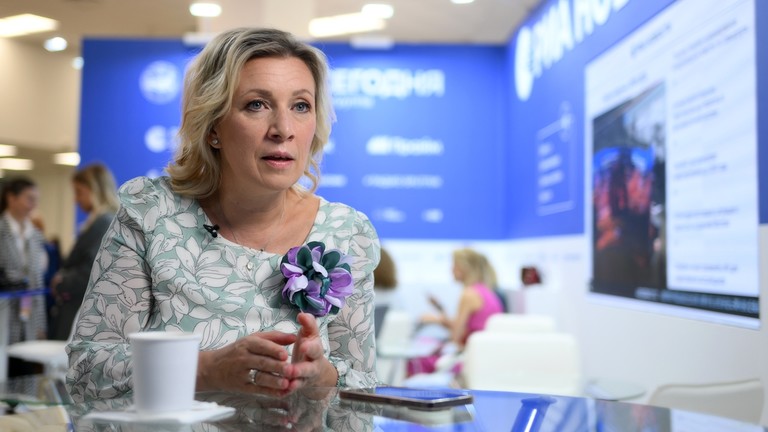
Russian Foreign Ministry spokeswoman Maria Zakharova © Aleksandr Kryazhev / RIA Novosti
RT | September 5, 2024
Repeated sanctions to limit the freedom of Russian media in the US point to the erosion of democratic values in Washington, Foreign Ministry spokeswoman Maria Zakharova has said.
The spokeswoman made the comments to RIA Novosti on the sidelines of the Eastern Economic Forum in Vladivostok on Wednesday, just hours after the US rolled out a new round of sanctions.
Washington has imposed severe restrictions on Russian media in the past, Zakharova noted. The imposition of these new sanctions “testifies to the irreversible degradation of the democratic state in the United States and its transformation into a totalitarian neoliberal dictatorship,” she said, adding that news outlets have become a “bargaining chip in partisan disputes, and the public is deliberately misled by insinuations about mythical interference in ‘democratic processes.’”
The attacks on Russian media are “the result of carefully thought-out operations” planned by intelligence services and coordinated with mainstream media outlets, Zakharova said. The goal, she claimed, is to “to sterilize the national and – in the future – global information space from any forms of dissenting opinion.” This new “witch hunt” is aimed at keeping “the populace in a state of permanent stress,” as well as building up the image of “an external foe” – in this case, Russia, she went on to say.
Despite this, there is a demand for media coverage by RT and other Russian news resources, Zakharova added.
On Wednesday, the Justice, State, and Treasury Departments announced a joint effort to target with sanctions and criminal charges Russian media – including RT – and individuals which the administration of US President Joe Biden claim are Russian “government-sponsored attempts to manipulate US public opinion” ahead of the presidential election this November. The new designations “complement law enforcement actions” such as visa restrictions, as well as a ‘Rewards for Justice’ offer of up to $10 million for “information pertaining to foreign interference in a US election.” They claim that RT used a front company to disguise its own involvement or the involvement of the Russian government in content meant to influence US audiences.
These actions by the US “directly contravene their obligations to ensure free access to information and media pluralism” and will not go unanswered, the Foreign Ministry spokeswoman said.
The Increase in Ukrainian Casualties
The Reason Why Military Losses Intensify for the Losing Side at the End of Wars
By Glenn Diesen | September 4, 2024
Ukrainian casualties and loss of military hardware are intensifying, which is shifting the attrition rates even further to Russia’s advantage. The rapid increase in losses with the losing side is a very common phenomenon toward the end of a war, with a common example being the spike in German casualties at the final stages of the Second World War.
In a war of attrition, the losses will naturally increase when the war machine has reached its breaking point. Soldiers have weaker strategic positions, there is a lack of resources, supply chains are not sufficiently defended, communications often break down, and there is a collapse in morale. Once the collapse begins, it often has a cascading effect. An early indicator of a cascading effect was when Ukraine began to struggle with air defence systems, which resulted in Russia being able to bring in its air force equipped with powerful glide bombs. Subsequently, holding strategic positions and avoiding high casualty rates became increasingly challenging and new problems began to emerge.
The Collapse has Begun
It appears that we have entered the final stages of the war due to the cascading effect. Ukraine is seeing its logistics break down, and there is a lack of weapons and ammunition that prevents soldiers from performing optimally.
The greatest challenge appears to be the lack of manpower, in which there are no good solutions. More aggressive mobilisation deprives society of important labour, it creates social upheaval as the public observes their family and fellow citizens being dragged off the streets and thrown into vans. Furthermore, the recruits receive less training and are much less motivated than the soldiers who volunteered at the beginning of the war. Simply put, a new army cannot be built in a rush. As a result, Ukraine began using and losing its best soldiers.
The Ukrainian frontline sees a growing lack of military resources, reinforcements do not turn up, and communication with military command becomes less reliable. The increasingly difficult position on the front causes a spike in soldiers who defect and surrender, while even entire military companies have withdrawn from their positions without permission. Predictably, this unpredictability creates less cohesion along the frontline as unreliable soldiers can be a tremendous liability as the front lines do not hold.
With the Ukrainian frontlines breaking, troops find themselves encircled and their option is either to surrender or to pursue a disorganised withdrawal in which the retreating forces are exposed and can be knocked out by the Russian military. Incrementally, the Ukrainians find themselves with fewer strategic positions, supply lines are severed, there is an even greater shortage of military equipment and manpower, and morale continues to collapse. As the situation deteriorates, communication and coordination unavoidably suffer, as for example, Ukraine seemingly shot down its own F-16 with a patriot missile.
The war has been lost, and with the writing on the wall, the Ukrainian army becomes more vulnerable to its officers striking a deal with Russia. Some are likely angered by a sense of betrayal as the US and NATO provoked the war and sabotaged the Istanbul peace agreements with the promise that Ukraine would receive all the weapons and assistance it needed to defeat Russia. While there is no evidence of Ukrainian officers defecting, it seems as if Russia’s intelligence and spy network has improved over the past weeks.
The Last-Ditch Gamble
Another common feature in a losing war is the desperation that encourages great risks in a last-ditch effort to turn everything around. The invasion of the Russian region of Kursk is a great example as most Ukrainian, Russian and Western observers initially seemed to agree that this was a great risk with a low chance of succeeding. However, the propaganda machine was thereafter turned on as journalists began reporting on successes, measured mostly in terms of humiliating Putin or boosting morale among Ukrainian soldiers. Yet, the temporary victory in the information war eventually gives way to losses in the real world. Ukrainian troops and equipment were diverted away from well-prepared defensive lines in Donbas in favour of being exposed in the open on foreign territory.
In Donbas, the front lines are collapsing, and in Kursk there are massive casualties. The problem was exacerbated by the lack of reliable supply lines for weapons and fuel, while engineering equipment could not be sent in to dig in at the new positions within Russian territory. The few remaining air defence systems and HIMARS had to be brought much closer to the border, which could then be detected by Russian surveillance and destroyed by Russian missiles and drones. Huge amounts of military resources were squandered on territory with hardly any strategic value, which Ukraine is not able to hold. The inability to pull out of Kursk compels Ukraine to double down on failure and the situation goes from bad to worse.
As the collapse intensifies, the winning side in a war typically increases its pressure. Russia has increased its deep missile strikes, and its military is pushing through what used to be well-defended front lines. Russia’s more powerful bombing campaign is also motivated by retaliation for the invasion of Kursk and to restore its deterrence by warning NATO against further escalations. Furthermore, Russia has retaliated by further destroying Ukraine’s energy network which reduces the mobility of the military, and reduces the industrial production and the ability to get through the next winter. Millions of Ukrainian civilians who are suffering greatly under these deteriorating conditions will likely leave the country when winter approaches, which will bring further problems to both Ukraine and Europe.
A Proxy War: How Will NATO Respond to Defeat?
What makes the Ukraine War different from many other wars, is that this is a proxy war in which NATO uses Ukrainians to fight Russia. The uncertain and unpredictable variable is therefore how NATO will react as it loses the proxy war in Ukraine. NATO is already providing weapons, ammunition, training, intelligence, target selection, war planning, managing complex weapon systems, and sending Western mercenaries. NATO’s support for strikes inside Russian territory and the invasion of Russian territory has already taken us to the brink of a direct war. The Americans appear to get ready to cut their losses and instead shift focus on confronting China, but the Europeans have bet everything on defeating Russia militarily. In terms of capabilities, it is the US that matters.
There are simply no good solutions anymore. The only two options are to either negotiate or get increasingly involved in direct fighting. NATO has largely rejected diplomacy and placed itself in a rhetorical trap in which victory is the only acceptable outcome, and the EU even punishes member states such as Hungary that attempt to restore diplomacy and negotiations with Russia. However, more direct NATO involvement will likely trigger a direct war with Russia, the world’s largest nuclear power, and it is unclear what a “victory” would look like that would not first trigger a nuclear exchange.
This is the time to restore diplomacy and return to negotiations, although it will take some time to reverse the propaganda of the past decade and prepare the public for a new narrative. Much like in Afghanistan, the political-media elites will assure us that we are winning until we flee with people falling off planes.
I spoke briefly about the rising Ukrainian casualties on WION
Russia warns NATO about response to ‘terrorism’
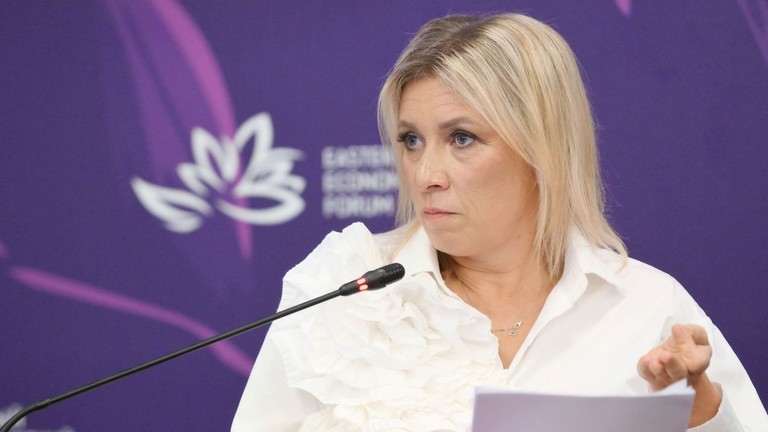
Russian Foreign Ministry spokeswoman Maria Zakharova © Ekaterina Chesnokova; RIA Novosti
RT | September 4, 2024
Russia will give an immediate and painful response to further acts of terrorism committed by Kiev, Russian Foreign Ministry spokeswoman Maria Zakharova warned on Wednesday, directing her comments to EU and NATO leaders.
Speaking on the sidelines of the Eastern Economic Forum (EEF) in Vladivostok, Zakharova stressed that Western leaders are “losing touch with reality” and are “absolutely not thinking about the risks of further dangerous escalation of the conflict, even in the context of their own interests.”
“We would like to warn such irresponsible politicians in the EU, NATO and across the ocean, that if the Kiev regime takes corresponding aggressive steps, Russia’s response will follow immediately,” Zakharova said, adding that this response will be “extremely painful” and that “much of this” has already been visible in recent days, apparently referring to Russia’s recent long-range strikes on targets across Ukraine.
Over the past several days the Russian Defense Ministry has reported carrying out a number of massive strikes on Ukrainian energy and defense-industry facilities, and claimed to have destroyed a number of buildings being used for the production and repair of aircraft, missiles, and UAVs, as well as storage sites, and deployment points for “nationalist formations and foreign mercenaries.” It also reported destroying a training facility housing foreign instructors.
During her address, Zakharova also suggested that Western officials have been ignorant of the potential consequences of their continued support of Kiev.
”I think the Europeans don’t fully understand what they are being dragged into,” the spokeswoman said. “They are being dragged in by the US, the Anglo-Saxons. It seems to me they haven’t yet understood what a plague they have created with their own hands in the form of the terrorist Kiev regime.”
Zakharova warned that the battalions that will be created from Ukrainian citizens recruited from Europe will eventually also strike back at Western European countries themselves. “They have fattened up there, sat it out, and recovered. They will strike in the same way as all international terrorist cells previously created by the West did,” she said.
“For the first time in history, Europe itself has given birth to an international terrorist cell,” the spokeswoman said, warning that “this terrorist monster will operate all over the world” and will strike Western Europe because “they always return to those who created them.”
Civilians killed in Ukrainian strike on Donetsk – governor
RT | September 4, 2024
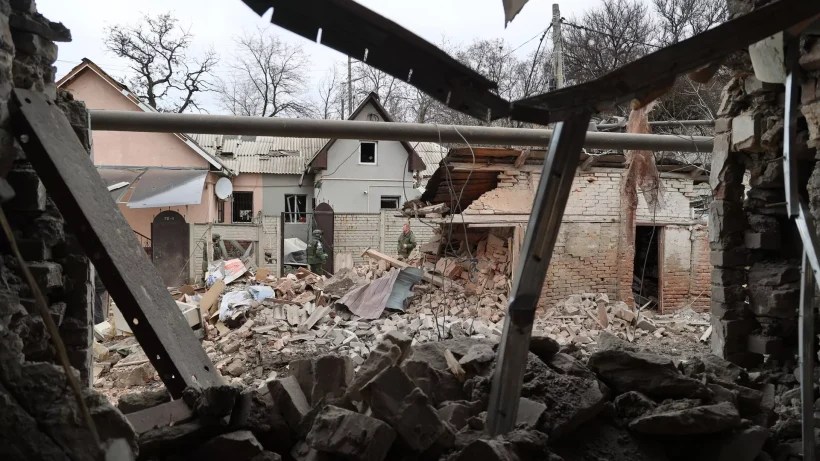
A Ukrainian artillery strike has killed at least three people at a market in the city of Donetsk, the capital of Russia’s Donetsk People’s Republic, Governor Denis Pushilin reported on Wednesday.
Ukrainian forces used 155mm shells to strike the Sokol market in the city’s Kirov neighborhood, the official stated. Two men and one woman were killed, while five other people were injured in the attack, he said, citing preliminary reports.
There were several other incidents in the region, including a drone bombing in a rural area in which a young woman was injured, Pushilin added.
Some media outlets have suggested that the weapon used in the attack was a French Caesar howitzer. Footage from the scene shows trade pavilions and a car apparently riddled with shrapnel.
On Tuesday, the Ukrainian military suffered a significant blow when a Russian missile strike hit a training center in the city of Poltava. Scores of troops were killed and injured in what the country’s leader, Vladimir Zelensky, described as an attack on “an educational facility.” The Russian military claimed that the facility housed foreign instructors who trained Ukrainians in military communications, electronic warfare, and drone operations.
Donetsk has been suffering from Ukrainian attacks since 2014, when its people rejected the government in Kiev that was installed following a US-backed armed coup. The new authorities unsuccessfully tried to quash the rebellion by military force, resulting in a frozen conflict.
The hostilities between Russia and Ukraine started in 2022. Moscow accused Kiev of stonewalling a negotiated roadmap for reintegrating Donbass and preparing a new military assault instead. People in what was at the time the self-proclaimed Donetsk People’s Republic voted in a referendum to join Russia in September of that year, along with the Lugansk People’s Republic.
Over the past several months, Russian forces have been pushing Ukrainian troops from their fortified positions in Donbass.
Featured Video
America Racing to Strategic Defeat in Iran
or go to
Aletho News Archives – Video-Images
From the Archives
Should Europeans ‘Thank’ the Americans for Destroying Nord Stream?
By Robert Bridge | Strategic Culture Foundation | September 29, 2022
With an investigation continuing into the destruction of the Nord Stream gas pipeline that provided energy supplies to Europe from Russia, there appears to be just one prime suspect, and that should surprise nobody.
Following the sabotage of the Nord Stream 1 and 2 gas pipelines, former Polish Foreign Minister Radoslaw Sikorski already seemed to know the identity of the perpetrator when he tweeted out: “Thank you, USA.”
At first glance, it seemed that Sikorski was speaking sarcastically, berating Washington for carrying out an attack that will have severe repercussions for the people of Europe. After all, how could anyone see any good coming from the termination of Europe’s primary source of gas reserves with winter just around the corner? It was Sikorski’s homeland of Poland, after all, that urged its citizens to collect firewood in the face of dwindling gas reserves.
In fact, the Polish diplomat was speaking one-hundred percent literally… continue
Blog Roll
 Aletho News
- Growing insecurity, soaring prices fuel protests in north as regime bans evacuation: Sources
- Iran denies responsibility for ‘depraved’ attack on Kuwait desalination plant
- Bring The Troops Back. End This War Now!
- Can we please stop calling Israel the ‘only democracy in the Middle East’ now?
- US should start removing its troops from Germany, proposes AfD co-leader Chrupalla
- Iran Red Crescent: 600 educational centers attacked in US-Israeli ‘war crimes’
- Russian Oil Tanker Arrives in Cuba Amid U.S. Blockade
- America Racing to Strategic Defeat in Iran: Lt Col Daniel Davis
- FTC Warns Visa, Mastercard, PayPal, Stripe Over Political Debanking
- Russian tanker approaches Cuba despite US oil blockade
- If Americans Knew
- As Iran targets US military bases, will they be relocated to Israel? Not a ceasefire Day 171
- Will Trump Go Kamikaze?
- Is the University of Florida Shutting Down College Republicans over Israel Criticism?
- Jewish extremist arrested over alleged plot to firebomb Palestinian activist Nerdeen Kiswani’s home
- More than half of Palestinian child detainees have no charges
- The More Murderous Israel Gets, The More We Hear About “Antisemitism”
- Land Day and the Palestinian struggle after 30 months of genocide
- The Iran War Is About Palestine
- Israeli soldiers echo settler ideology, talk of revenge after targeting Palestinians and detaining CNN crew in the West Bank
- Israeli Policies Threaten Future of Christian Schools in Jerusalem
- No Tricks Zone
- New Study Finds Warming Saves Lives…Cold Temperatures 12 Times More Deadly Than Excess Heat
- German Science Blog Accuses PIK Climate Institute Of Hallucinating Climate Tipping Points
- Devastating Assessment Of Comirnaty Vaccine By Former Senior Pfizer Europe Toxicologist
- New Study: CO2 Is ‘Effectively Negligible’ As An Explanatory Climate Change Factor Since 2000
- Former Pfizer Toxicologist Dr. Helmut Sterz Tells Bundestag Hearing Pfizer Vaccine Should Have Never Been Approved
- Energy Expert: Germany’s Nuclear Phaseout Was A “500 Billion Euro Mistake”
- New Research: South Australia’s Mid-Holocene Sea Surface Temperatures Were 4°C Warmer Than Today
- Storing Green Energy To Last Germany 10 Days Would Require A 60-Million Tonne Battery
- New Studies: UK Sea Levels Were 4 Meters Higher Than Today During The Mid-Holocene
- Destructive Green New Deal: German Energy And Metal Group Warns Of Drastic Crisis
 Aletho News