France to expand military presence in Africa
Press TV – January 25, 2014
French Defense Minister Jean-Yves Le Drian says the country is to expand its military presence in Africa’s Sahel region.
“This redeployment will cover about 3000 troops which we are about to reorganize and re-deploy all over the area,” Le Drian said in an address to the Center for Strategic and International Studies in Washington, D.C. on Friday.
The Sahel spans 5,400 kilometers from the Atlantic Ocean in the west to the Red Sea in the east.
“I wanted to say all this to you because we think that the intervention in Mali is not enough. We have to go beyond,” he added.
France began a major military intervention in its former colony in January, citing concerns about the growing influence of militants in northern Mali and a rebellion by Tuareg separatists that threatened the French-backed Malian government.
“We have to protect ourselves against different risks, new risks and especially, tomorrow, against the risk of a Libyan chaos,” said the French minister.

NATO blamed for Mali unrest
By Toivo Ndjebela | New Era | April 13, 2012
WINDHOEK – Namibia has blamed the architects of last year’s overthrow of the Libyan government for the civil strife and the recent coup against a democratically elected government in Mali.
Tuareg rebels in Mali have proclaimed independence for the country’s northern part after capturing key towns this week.
Libya’s Muammar Gaddafi administration fell last year after local rebels, with the help of NATO forces – and initially France, Britain and the USA – drove the long-serving leader out of the capital Tripoli and ultimately killed him after months in hiding.
The Namibian government believes the events in Libya are now bearing sour fruit within the western and northern parts of Africa, in what is known as the Sahel region.
“The profoundly retrogressive developments in Mali are a direct consequence of the unstable security and political situation in Libya, created by the precipitous military overthrow of the government of Libya in 2011,” a government statement, released Tuesday by the Ministry of Foreign Affairs, states.
The statement continued: “Accordingly, those countries that rushed to use military force in Libya, had underestimated the severe repercussions of their actions in the Sahel region.”
“They should thus bear some responsibility for the instability in Mali and the general insecurity in the region.”
Nomadic Tuaregs have harboured ambitions to secede Mali’s northern part since the country’s independence from France in 1960, but lack of foreign support for this idea meant the dream would only be realized 52 years later.
Namibia herself survived a secession attempt in 1999 when a self-styled rebel group, led by former Swapo and DTA politician Mishake Muyongo, now exiled in Denmark, attempted to separate the Caprivi Region from the rest of Namibia.
The Mali situation already cost Amadou Toumani Toure his job last month, when junior army officers overthrew him for what they say was his reluctance to avail resources needed to fight the advancing Tuareg rebels.
Speaker of Mali’s parliament, Doincounda Traore, was expected to be sworn in as president yesterday morning, a development that would restore civilian rule in the humanitarian crisis-hit West African country.
Traore is inheriting control of only half of the country, with northern Mali now falling under control of Tuareg rebels and Islamists.
Namibia said those tearing Mali into administrative pieces should have observed the African Union’s principle of inviolability of borders of the African countries.
“This principle of indivisibility of borders has served Africa well since its adoption by the OAU (Organisation of African Unity) Summit in Cairo in 1964,” the statement further reads.
It further stated: “The Government of Namibia reiterates its unequivocal rejection of any attempt to dismember any African country and unreservedly condemns all manner of secessionist aspirations.”
Namibia is yet to officially recognize the new Libyan government, whose local embassy held a ‘revolution anniversary’ in February without attendance of any notable officials of the Namibian government.
Featured Video
Seyed M. Marandi: U.S. Military DIVIDED? Iran’s Secret Defense EXPOSED
or go to
Aletho News Archives – Video-Images
From the Archives
‘Israel sees Iran as obstacle to its policies’
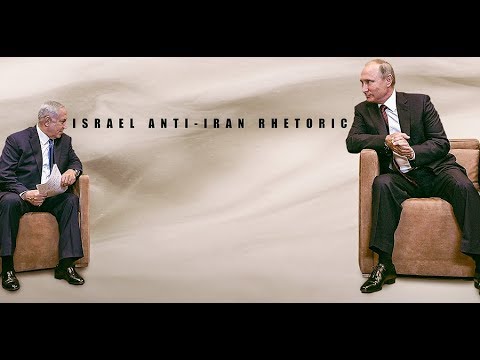
Press TV – August 25, 2017
Prime Minister Benjamin Netanyahu has said that Israel felt threatened by Iran’s growing influence in the Middle East. Netanyahu expressed his Iranophobic view in a meeting with Russian President Vladimir Putin in Russia’s Black Sea resort of Sochi on Wednesday. Press TV has asked Scott Rickard, former American intelligence linguist from Tampa, Florida, and Brent Budowsky, a columnist at The Hill from Washington, to give their thoughts on the issue.
Rickard said Tel Aviv is concerned about the fact that the regime could not carry out its old project to spread sectarian divisions and pave the way for dismemberment of the countries in the Middle East region because of the Iranian-led resistance against Israeli policies, not only in the occupied territories of Palestine but also in the whole region.
“Iran is not a threat to Israel whatsoever. The threat that Israel sees is the fact that their Oded Yinon Plan is being put to a hold by Iran,” the intelligence linguist said on Thursday night.
“They (the Israelis) look at Iran as a threat only because they have no influence on their governments and Iran is autonomous and is not under the Zionist influence,” he added.
Since the victory of the Islamic Republic of Iran in 1979, Tehran has been critical of Israel’s policies in the region, whereas “no leaders [of other states] even dared to speak out against Zionism,” Rickard argued. … continue
Blog Roll
 Aletho News
- Trump Claims Ceasefire, Reopening of Strait of Hormuz Agreement with Iran
- Israeli tank fire killed UN peacekeeper in Lebanon, UNIFIL investigation finds
- Russia, China block Bahrain-sponsored UN resolution on Strait of Hormuz
- The US-Israeli War on Science is an Assault on our Future
- Trump’s Promise to Bomb Iran ‘Like Never Before’ Faces Brutal Logistics — Expert
- Germany seeks to restrict stays abroad for men of fighting age – Berliner Zeitung
- Evidence points to Ukraine being behind TurkStream attempted sabotage, but that should come as no surprise
- Sri Lanka secures supplies of Russia oil – minister
- Nations across Asia strike direct deals with Iran for Hormuz passage
- IRGC commander declares ‘new phase’ of reprisal attacks against aggressors
- If Americans Knew
- Thousands dead and neighborhoods razed to the ground: Aid agencies fear southern Lebanon is becoming the new Gaza
- The war the US is fighting for Israel could cost trillions
- ‘Cigarette Burns, Nail Wounds’: Toddler Tortured in Gaza to Coerce Father
- Trump Says US Sent ‘a Lot of Guns’ to Protesters in Iran
- Israeli forces destroy 17 UN peacekeeper cameras in south Lebanon
- US-Israeli strikes ‘completely destroy’ synagogue in Tehran
- Archbishop for US Military Says Iran War Is Unjust Under Catholic Teaching
- Iranian leaders’ Open Letters to the American People
- Trump says Iranians appreciate bombs, WHO warns of nuclear risks – Daily Update
- U.N. experts demand Israel release prominent Gaza doctor after reports of ‘severe torture’
- No Tricks Zone
- An Inconvenient Tree: Uncovered In Alps… Europe Much Warmer Than Today 6000 Years Ago
- New Study Reports A 60% Slowdown In Greenland’s Ice Loss Rate In The Last Decade
- Low Intensity Tornado Wrecks Major Solar Farm, Creating A Potential Toxic Dump
- New Study Finds Warming Saves Lives…Cold Temperatures 12 Times More Deadly Than Excess Heat
- German Science Blog Accuses PIK Climate Institute Of Hallucinating Climate Tipping Points
- Devastating Assessment Of Comirnaty Vaccine By Former Senior Pfizer Europe Toxicologist
- New Study: CO2 Is ‘Effectively Negligible’ As An Explanatory Climate Change Factor Since 2000
- Former Pfizer Toxicologist Dr. Helmut Sterz Tells Bundestag Hearing Pfizer Vaccine Should Have Never Been Approved
- Energy Expert: Germany’s Nuclear Phaseout Was A “500 Billion Euro Mistake”
- New Research: South Australia’s Mid-Holocene Sea Surface Temperatures Were 4°C Warmer Than Today
 Aletho News