Iran and the International Atomic Energy Agency (IAEA) officially agreed to resume cooperation on 9 September, following a suspension over Israel’s US-backed war against the country and its strikes on Iranian nuclear facilities.
The meeting between IAEA chief Rafael Grossi and Iran’s Foreign Minister Abbas Araghchi was hosted by Egypt.
“In Cairo today, I agreed with Iran’s Foreign Minister on practical modalities to resume inspection activities in Iran. This is an important step in the right direction,” Grossi said on X.
During a press conference between Grossi, Araghchi, and his Egyptian counterpart, the Iranian foreign minister said, “the development marks an important step in demonstrating the Islamic Republic’s goodwill and its commitment to resolving all issues related to its peaceful nuclear program through diplomacy and dialogue.”
“Iran has remained steadfast in defending its inalienable rights under the Nuclear Non-Proliferation Treaty (NPT) to peaceful nuclear energy, even while facing illegal and criminal attacks by the Israeli regime and the US, and has shown readiness to engage in meaningful dialogue for the implementation of its obligations,” he added.
US and Israeli strikes on the Islamic Republic have “fundamentally altered the conditions under which Iran had cooperated with the IAEA.”
As a result, a “new mechanism” has been reached after intensive talks between Iran and the IAEA recently, Araghchi said.
Unnamed diplomats cited byReuters said “the devil was in the details, and neither Grossi nor Araghchi provided any.”
In early July, Tehran formally suspended cooperation with the IAEA. Talks between the two sides resumed the following month.
Iran stressed that it could not “completely end” its cooperation with the agency, but said “new conditions” would need to be reached.
The Iranian government had previously accused the agency of passing along sensitive information obtained from inspections over to Israel. It also said the agency paved the way for Israel’s war with its anti-Iran report in May and its resolution accusing Tehran of not fulfilling nuclear obligations, which was passed just one day before Tel Aviv attacked.
It also accused it of failing to properly condemn the attack on nuclear sites.
Officials even signaled potential legal action against Grossi himself, who was barred from entering the country in late June.
Iran has not yet given permission to IAEA inspectors to visit its nuclear facilities, despite an agreement to resume cooperation, Iranian Foreign Minister Abbas Araghchi said on Wednesday.
“I should note that under this agreement, we are currently not giving access to IAEA inspectors,” Araghchi said on Telelgram.
Back in 2018, Europe blasted Donald Trump for pulling out of the Iran nuclear deal. Paris, Berlin, and London warned of a looming crisis in the Middle East and insisted the Joint Comprehensive Plan of Action (JCPOA) was the only safeguard against another regional war. They even rolled out a special financial vehicle, Instrument in Support of Trade Exchanges (INSTEX), to shield trade with Tehran from US sanctions. For a moment, it looked as if Europe was finally ready to assert its own strategic autonomy.
Seven years later, the picture couldn’t be more different. Britain, France, and Germany have triggered the snapback mechanism – a procedure written into UN Security Council Resolution 2231 back in 2015. On paper, snapback is a technical clause: if one of the deal’s signatories claims Iran is in breach, all the pre-2015 UN sanctions come rushing back. In practice, it’s a political bombshell. The very governments that once positioned themselves as defenders of the deal are now taking the first steps to dismantle it.
How snapback works
Snapback is a built-in device of Resolution 2231: once a party to the deal files a complaint, a thirty-day clock starts ticking. If the Security Council can’t agree to keep the sanctions lifted, the old restrictions automatically spring back into place – no new vote, no vetoes, just the force of the mechanism itself snapping shut.
And those sanctions aren’t symbolic. They revive six earlier UN resolutions passed between 2006 and 2010: an arms embargo, a ban on ballistic missile development, asset freezes, and travel bans targeting Iranian banks, companies, and officials. In other words, a full reset to the era of maximum pressure that Tehran endured more than a decade ago.
On paper, it reads like legalese. In practice, it carries weighty consequences. For Europe, it means slamming shut whatever limited doors were still open for trade and diplomacy with Tehran. For Iran, it’s a return to a familiar landscape of international isolation – one it has increasingly learned to navigate through ties with Russia, China, and regional partners.
Europe’s brief rebellion
When Donald Trump tore up the nuclear deal in 2018, Europe seemed almost defiant. Emmanuel Macron, Angela Merkel, and Theresa May openly criticized Washington’s unilateral move, warning it could ignite a new crisis in the Middle East and weaken the global nonproliferation regime. For a moment, it looked as if Europe was ready to chart its own course.
To prove it, Paris, Berlin, and London announced a special financial vehicle called INSTEX. On paper, it was meant to let European companies keep trading with Iran while bypassing US sanctions. In speeches, leaders cast it as a bold example of strategic autonomy – Europe standing by international law against American pressure.
In practice, it never delivered. Transactions were scarce, businesses stayed away, and INSTEX turned into little more than a symbol. What was meant to showcase Europe’s independence exposed instead its limits. Behind the rhetoric, the continent still lacked the muscle to stand up to Washington.
Even after the deal began to unravel, Tehran held on longer than many expected. For a time, Iran continued to observe key limits, signaling that it still wanted the agreement to survive. The steps it did take after 2019 – enriching uranium beyond agreed levels, reducing access for inspectors – were limited and largely declarative. They were less about racing toward a bomb than about sending a message: if Europe and the United States failed to keep their end of the bargain, Iran would not keep waiting forever.
Europe could have treated those moves as a call for dialogue. Instead, it chose to treat them as violations to be punished – leaning on legal mechanisms and pressure rather than genuine diplomacy. In practice, this meant not saving the deal but accelerating its collapse.
When Joe Biden took office in 2021, many in Europe breathed a sigh of relief. After four years of Trump’s “maximum pressure,” there was hope the US would return to the nuclear deal or at least give Europe more room to re-engage with Tehran. European diplomats saw Biden’s presidency as a reset button, a chance to salvage what was left of the JCPOA.
Talks resumed in 2022, bringing negotiators from Washington, the E3, and Tehran back to the table. But the optimism didn’t last. The West’s conditions went far beyond nuclear conditions: Iran was pressed to scale back its ties with Russia and cut off growing cooperation with China. To Tehran, those demands amounted to political disarmament – a direct threat to its sovereignty and security.
The negotiations collapsed. For Europe, it was a sobering moment: the Democratic administration they had counted on offered no breakthrough. For Iran, it confirmed what many suspected – that Washington’s return to the deal would come with strings too heavy to accept.
The US get what they want
The word snapback has already made waves in the halls of the UN back in August 2020. That summer, the Trump administration formally notified the Security Council that Iran was in breach of the nuclear deal and demanded that the old UN sanctions be reinstated. US lawyers pointed to Resolution 2231, which still listed Washington as a “participant” in the agreement – even though Trump had withdrawn the US two years earlier.
The reaction was swift and humiliating. Russia and China dismissed the move outright, and so did America’s closest allies in Europe. London, Paris, and Berlin all publicly declared that Washington had no standing to use the mechanism after quitting the deal. The snapback effort fizzled, and the sanctions remained suspended.
The irony is hard to miss. In 2020, Europe stood shoulder to shoulder with Moscow and Beijing to block Washington’s attempt. Five years later, the very same European capitals are the ones pulling the trigger.
When London, Paris, and Berlin announced they were triggering snapback, they wrapped the move in the language of diplomacy. In Paris, Foreign Minister Jean-Noël Barrot stressed that France was still “open to a political solution.” In Berlin, Johann Wadephul urged Tehran to re-engage with the IAEA. Britain’s David Lammy said Iran had provided “no credible guarantees” about the peaceful nature of its program.
On the surface, it sounded like a routine chorus of diplomatic talking points. But behind the careful wording was a clear message: Europe was abandoning the posture of dialogue and embracing pressure. What the E3 once condemned in Washington, they were now carrying out themselves – only this time under their own flag.
In Tehran, the language was restrained but pointed. Officials called the European move “illegal and regrettable,” a formula that barely concealed deep frustration. For Iran, Europe’s decision confirmed once again that Brussels talks about strategic autonomy but falls in line the moment Washington sets the course.
Across the Atlantic, the response was the opposite: warm approval. Secretary of State Marco Rubio “welcomed” the step and claimed that snapback only strengthened America’s willingness to negotiate. Formally it sounded like an invitation to dialogue. But the memory of the spring talks – which ended not with compromise but with Israeli sabotage and US strikes on Iranian facilities – made the words ring hollow.
A world that has moved on
Europe’s wager on sanctions is a throwback to the early 2010s, when Tehran was isolated and the West could dictate terms. But that era is gone. Today Iran is not only a strategic partner for Moscow and Beijing but also a full member of BRICS and the Shanghai Cooperation Organization – platforms that carve out alternatives to the Western order.
In this new landscape, snapback may sting in Tehran, but it hits Europe too. Brussels loses credibility as a negotiator and opportunities as a trading partner. Each step in Washington’s shadow makes the European claim to “strategic autonomy” sound thinner.
The paradox is striking. On paper, Europe insists on its independence. In reality, its voice is fading in a multipolar world. While Brussels signs off on sanctions, Beijing and Moscow are busy sketching the architecture of a new order – one where Europe is no longer at the center.
Farhad Ibragimov – lecturer at the Faculty of Economics at RUDN University, visiting lecturer at the Institute of Social Sciences of the Russian Presidential Academy of National Economy and Public Administration
Western sanctions contributed to nearly 29 million excess deaths worldwide over five decades – a toll comparable to that of wars, according to a recent study.
The research, published last month in Lancet Global Health, has gained attention around the world.
Examining age-specific mortality in 152 countries from 1971 to 2021, using statistics from the Global Sanctions Database, researchers compared mortality rates before and after sanctions, tracking long-term trends to estimate their toll in excess deaths. They focused on three sanctioning authorities: The UN, the US, and the EU (and its predecessor).
“We estimate that unilateral sanctions over this period caused 564,258 deaths per year, similar to the global mortality burden associated with armed conflict,” the authors noted, with a total of 28.8 million deaths across the 51-year span.
We found the strongest effects for unilateral, economic, and US sanctions, whereas we found no statistical evidence of an effect for UN sanctions.
Most excess deaths occurred among the most vulnerable – the very young and the elderly.
“Our findings reveal that unilateral and economic sanctions, particularly those imposed by the USA, lead to substantial increases in mortality, disproportionately affecting children younger than 5 years,” the study said, noting that the age group accounted for 51% of the total death toll.
The report found that the sanctions undermine economic and food security, often causing hunger and health problems among the poorest. Additionally, the dominance of the dollar and euro in global transactions allowed the US and EU to amplify the impact of their sanctions.
At last year’s BRICS summit, member nations called for “unlawful unilateral coercive measures” to be eliminated, warning of their disproportionate impact on the most vulnerable. Members have increasingly avoided the dollar “to shield themselves from US arbitrariness,” Moscow has said.
At the Shanghai Cooperation Organization (SCO) summit in Tianjin this week, Chinese President Xi Jinping called for a fairer global governance system based on mutual respect and opposition to Western dominance. Russian President Vladimir Putin welcomed the proposal as especially relevant when “some countries still do not abandon their desire for dictatorship in international affairs.”
A top Iranian official said a deal with the US is still possible, but Washington must drop its demands to limit Tehran’s missile program. Talks between the US and Iran broke off in June when Israel launched an unprovoked war against the Islamic Republic.
On Tuesday, Ali Larijani posted a statement from the Iranian Supreme National Security Council on X. “The path for negotiations with the US is not closed; yet these are the Americans who only pay lip service to talks and do not come to the table; and they wrongfully blame Iran for it,” he wrote. “WE INDEED PURSUE RATIONAL NEGOTIATIONS. By raising unrealizable issues such as missile restrictions, they set a path which negates any talks.”
Since Donald Trump returned to office, the US and Iran engaged in five rounds of negotiations aimed at establishing a new nuclear agreement and lifting sanctions. A sixth round of talks was scheduled, but Israel attacked Iran, halting the diplomatic process. Iranian officials said the talks were progressing towards a deal before the attack.
The US participated in the Israeli war on Iran. Tehran has demanded that Washington give assurances that the US and Israel will not resume strikes on Iran while the talks are ongoing. However, Trump has not responded to Tehran’s demand and has threatened to attack Iran if Tehran restarts its nuclear enrichment program.
Trump has pressed Iran to agree to a new nuclear agreement after he scrapped the Joint Comprehensive Plan of Action (JCPOA) during his first administration. The 2015 Iran Nuclear deal established a strict inspection regime and limitations on Tehran’s nuclear program.
After Trump broke the agreement and reimposed sanctions on Iran, Tehran exceeded the limits set in the nuclear deal. In response to a series of Israeli assassinations and sabotage attacks, Tehran enriched uranium to a higher level and established a stockpile of 60% enriched Uranium.
Tehran expelled international nuclear inspectors following Israel’s attack on Iran in June.
There is extremely alarming news about the situation around Iran. In consultations with the Trump administration — rather, in deference to the command from Washington — the E3 countries (Britain, France and Germany) who are the remaining western signatories of the 2015 Iran nuclear deal known as JCPOA, have initiated the process of triggering the so-called snapback mechanism with the aim to reimpose all UN sanctions against Iran on the plea that it has breached the terms of the ten-year old agreement.
A joint statement issued in the three European capitals on Thursday notified the UN Security Council that Tehran is “in significant non-performance of its commitments under the JCPOA” to give a 30-day notice “before the possible reestablishment of previously terminated United Nations Security Council resolutions.”
The E3 statement is patently an act of sophistry since it was the US which unilaterally abandoned the JCOPA in 2018 and the threeEuropean powers themselves have been remiss in ignoring their own commitments to lift the sanctions against Iran through the past 15-year period, which only had ultimately prompted Tehran to resume the uranium enrichment activity — although the Iranian side was ready to reinstate the JCOPA as recently as in December 2022.
A strange part of the E3 move is that they short-circuited the prescribed procedure in regard of the snapback mechanism with the intent to reduce the two other permanent member countries of the Security Council to be mere bystanders with no role whatsoever in the matter. Unsurprisingly, Russia and China have taken exception to this and in a lengthy statement on Friday, the Russian Foreign Ministry has demanded (with China’s backing) an extension of the time line by another six months by the Security Council as an interim measure so as to avoid a standoff with dangerous and tragic consequences.
Tehran has welcomed the Russia-China proposal as a “practical step.” Iran, of course, has explicitly warned that any such attempt by the E3 to reimpose the UN sanctions against it may compel it to reconsider its membership of the Nuclear Non-Proliferation Treaty.
It remains to be seen whether the E3 — or more precisely, the US-Israeli nexus which is the driving force behind the precipitate move— will be amenable to a compromise. All indications are that Israel with the full support of the Trump administration is spoiling for a fight with Iran and make a second attempt to force regime change in Tehran and the restoration of the erstwhile Pahlavi dynasty to replace the Islamic system that got established after the 1979 Islamic Revolution. Simply put, it is a make-or-break attempt by the US and Israel to bring about a geopolitical realignment in the West Asian region.
The US and Israel have drawn lessons out of the miserable failure of their first attempt in June to overthrow the Islamic system in Iran, and Israel suffered huge losses as Iran retaliated. This time around, the US and Israel seem to be preparing for a fight to the finish, although the outcome remains to be seen. Indeed, a protracted war may ensue. The US is rearming Israel with advanced weaponry. At some point, early enough in the war, a direct American intervention in some form can also be expected.
Unlike in June when the Trump administration in an elaborate ploy of deception lulled Tehran into a state of complacency when the Israeli attack began, this time around, Iran is on guard and has been strengthening its defenses. Make no mistake, Iran will fight back no matter what is takes. Iran is also getting help from Russia for beefing up its air defence system and there are reports that Russian advisors are helping Iran’s armed forces to augment their capability to resist the US-Israeli aggression.
Many western experts, including Alastair Crooke, have predicted that an Israeli attack on Iran can be expected sooner rather than later. The Israeli-American expectation could be that Russia’s military operations in Ukraine will have reached a climactic point by autumn which would almost certainly preclude any scope for Moscow to get involved in a West Asian conflict, and that, in turn, will give them a free hand to take the regime change agenda to its finish.
Besides, in a policy reversal, Iran has taken up the standing Russian offer to provide an integrated air defence system. Such a system will possibly be in position by the middle of next year or so and it is expected to be a force multiplier for Iran. Israel will most certainly try to attack Iran before the integrated system which is connected to Russian satellites becomes fully operational. It remains to be seen whether the Trump administration will be able to withstand Israeli pressure, given the Mossad’s alleged involvement in the Epstein scandal.
A West Asian war of titanic scale will be unprecedented. Apart from large scale loss of lives and destruction, the regional turmoil that ensues will also affect the surrounding regions — India in particular. The point is, an estimated 6 million Indians live in the Gulf region. Their safety and welfare will be in serious jeopardy if the Gulf states get sucked in to the war at some point.
The probability is high that Iran’s retaliation this time around may involve the blockade of the Strait of Hormuz through which tankers carry approximately 17 million barrels of oil each day, or 20 to 30 percent of the world’s total consumption. If that happens, oil price will sky rocket and India’s energy security, which is heavily dependent on oil imports, will be affected. India’s main sources of oil supplies are Russia (18-20%), Saudi Arabia (16-18%), UAE (8-10%) and the US (6-7%).
Clearly, if the oil supplies from the Gulf region get disrupted, India’s dependence on oil flows from Russia will only increase further. In fact, there will be a scramble for Russian oil and, paradoxically, Trump’s best-laid plans to hollow out “Putin’s war chest” will remain a pipe dream.
Significantly, according to Israel’s Kanal 13, Russia has evacuated its diplomatic personnel and their families in its embassy in Tel Aviv in anticipation of a “dramatic” change in the security situation and growing signs of an outbreak of hostilities between Israel and Iran.
Hossein-Ali Haji-Deligani, Deputy Chairman of the Article 90 Committee of Iran’s Parliament, confirmed that the bill will be uploaded to the parliamentary system on the following day and subsequently reviewed in an open session.
“As we had previously stated, these countries were already implementing the consequences of the snapback mechanism, including sanctions against us. There is nothing new in this.” Haji-Deligani told Iran’s Tasnim.
He further stated that the steps taken were “the most minimal response by Parliament to the recent action of the European countries, and further regret-inducing measures are also on the agenda.”
Deputy chairman calls for decisive action
The proposed legislation comes amid growing frustration in Tehran over the West’s repeated failure to honor agreements and ease pressure on Iran. Haji-Deligani noted that Iran’s Parliament is determined to pursue a firm and deterrent course of action.
According to the lawmaker, the activation of the snapback mechanism effectively reinstates previous sanctions but introduces no new developments. Nonetheless, he emphasized that Iran’s response would be strategic and assertive.
Criticizing continued dialogue with Western countries, Haji-Deligani asserted, “Given what these three countries have done, negotiations with them are now meaningless. Dialogue will only embolden them.”
“We witnessed that during negotiations with the arrogant US, a brutal war was launched against our country by Israel, and the US bombed our peaceful nuclear sites,” he added. “Our people clearly know that talks with these countries have brought nothing but more pressure. Therefore, all dialogue must be suspended until these countries abandon their double standards.”
The emergency bill signals a potential turning point in Iran-E3 talks and highlights a significant policy shift in Tehran’s approach to its nuclear file. The move could impact the broader framework governing the Iran nuclear program and regional diplomacy.
Iran vows response
Iran’s Foreign Ministry confirmed on Thursday that France, Britain, and Germany have formally notified Tehran of their decision to trigger the “snapback” mechanism to reimpose United Nations sanctions under the 2015 nuclear deal.
Foreign Minister Abbas Araghchi condemned the measure as “illegal and unjustified,” warning that Tehran would respond “appropriately to protect and guarantee its national rights and interests.”
In a phone call with his French, British, and German counterparts, Araghchi urged them to “appropriately correct this wrong decision in the coming days.” He stopped short of detailing possible retaliatory steps but hinted that the E3 risk being excluded from any future negotiations on Iran’s nuclear program.
The E3 action came just days after Iranian and European diplomats held a second round of talks in Geneva, billed as a last chance to salvage engagement before the October deadline for invoking the snapback clause.
The discussions collapsed without “tangible commitments,” according to European officials, who claim that Tehran’s ongoing breaches of enrichment limits left them with no choice but to act. It is noteworthy that the E3 had failed to uphold their commitments in accordance with the JCPOA after the US unilaterally left the agreement in 2018.
Russia has confirmed circulating a draft proposal at the UN Security Council aimed at averting activation of the so-called “snapback” mechanism that would restore the council’s sanctions against Iran.
The country’s First Deputy Permanent Representative to the United Nations, Dmitry Polyanski made the remarks to reporters during a press conference on Tuesday.
“It (the proposal) is about extending Resolution 2231,” he said.
The resolution’s expected expiration in October would lead to reinstatement of the coercive measures.
The European trio of the UK, France, and Germany – the United States allies in a 2015 nuclear deal between Iran and world countries – has been trying hard to have the measures restored.
Polyanski, however, insisted, “Russia and China want to give more breathing space for diplomacy and provide some possibilities for an active quest for a diplomatic solution to this issue.”
He said Moscow and Beijing were doing so in their capacity as “as responsible members of the Joint Comprehensive Plan of Action (JCPOA), the nuclear deal’s official name. … Full article
Iran’s foreign minister has confirmed the arrival of inspectors from the International Atomic Energy Agency (IAEA) following a months-long hiatus.
Abbas Araghchi, however, said their presence does not mean the resumption of full cooperation with the UN nuclear watchdog.
Speaking to reporters in Tehran on Wednesday, the foreign minister said the entry was authorized by Iran’s Supreme National Security Council (SNSC) and limited to overseeing the fuel replacement process at the Bushehr Nuclear Power Plant.
He said under a recent parliamentary law, all cooperation with the IAEA must be approved by the SNSC.
“No text has yet received final approval,” he added, referring to ongoing discussions about a new cooperation modality following the acts of aggression by the Israeli regime and the United States in June.
Iran has barred any new inspections since the attacks, citing safety concerns at damaged nuclear sites and criticizing the IAEA’s failure to condemn the strikes.
Earlier, Behrouz Kamalvandi, spokesman for the Atomic Energy Organization of Iran (AEOI), said the inspectors’ presence was tied to routine operations at the Bushehr facility and the need to maintain electricity supply to the national grid.
On August 26, IAEA Director General Rafael Grossi announced that inspectors were “back in Iran.”
In an interview with Fox News, Grossi said, “When it comes to Iran, as you know, there are many facilities. Some were attacked, some were not.”
“So we are discussing what kind of … practical modalities can be implemented to facilitate the restart of our work there.”
The developments come amid renewed diplomatic tensions, as Iran held talks in Geneva with Britain, France, and Germany over their threat to trigger the so-called snapback mechanism, a provision of the 2015 nuclear deal that would restore UN sanctions lifted under the accord.
European signatories to the Joint Comprehensive Plan of Action (JCPOA) have said they will wait until August 31 to decide whether to activate the mechanism.
Iran has reduced its cooperation with the IAEA in recent years in response to the withdrawal of the United States from the 2015 nuclear deal and the failure of Europeans to make up for the withdrawal.
A senior Russian diplomat has roundly rejected the UK, France, and Germany’s push to invoke the so-called “snapback” mechanism inside the UN Security Council Resolution 2231 that has endorsed a 2015 nuclear deal between Iran and world countries, including the trio.
Mikhail Ulyanov, the Russian Federation’s permanent envoy to international organizations in Vienna, made the remarks in a post on X, former Twitter, on Wednesday.
He reminded that the countries, themselves, had been in clear violation of the resolution for long, and were, therefore, legally barred from activating the mechanism that returns the Security Council’s sanctions against the Islamic Republic.
“There is a serious obstacle on the way of implementing this threat,” he warned, while calling the European drive an effort at “blackmailing” the Islamic Republic.
The European states “are themselves in violation of Res.2231 and the JCPOA,” the official said.
He was referring to the nuclear agreement by the abbreviation of its official name, the Joint Comprehensive Plan of Action.
“The doctrine of good faith in international law precludes a party from claiming rights under an agreement while simultaneously failing to fulfill its own obligations thereunder,” he added.
“In other words, an attempt by E3 to trigger snapback, despite their own non-compliance would contradict the fundamental principles of international law.”
The countries have threatened to invoke the mechanism by the end of August in response to, what they have called, Iran’s contravention of the JCPOA.
Apart from Russia, China, another permanent Security Council member, has vociferously opposed the prospect.
Beijing has reminded that the European countries, themselves, were the parties that had initially started trying to throw the deal into trouble with their outright non-commitment to the accord.
The tripartite states returned their own economic sanctions against the Islamic Republic, accusing Tehran of trying to divert its peaceful nuclear energy program towards “military purposes.”
The International Atomic Energy Agency (IAEA) has, however, found no evidence that could verify the allegations, despite subjecting Iran to its most rigorous inspections in history.
Iranian officials and international observers have, meanwhile, repeatedly underscored the illegal nature of recourse to the “snapback.” They have also reminded the Islamic Republic’s resilience in the face of Western sanctions, noting that the country had already managed to successfully bypass Western sanctions of far more intensity than the ones that could be imposed following potential activation of the mechanism.
China reaffirms its commitment to the peaceful resolution of Iran’s nuclear issue and opposes the invocation of the UN Security Council’s “snapback” mechanism.
Chinese Foreign Ministry spokesperson Lin issued the statement on Friday in response to the European troika’s warning to reimpose sanctions if a diplomatic solution is not achieved by the end of August.
“China stays committed to peacefully resolving the Iranian nuclear issue through political and diplomatic means, opposes invoking Security Council ‘snapback’ sanctions,” Lin said.
He argued that reimposing sanctions on Iran would not foster trust or bridge differences among parties and would hinder diplomatic efforts to resume talks promptly.
Lin emphasized that any actions taken by the Security Council should facilitate the achievement of new agreements rather than undermine the negotiation process.
The Chinese diplomat reiterated that China is committed to maintaining an objective and fair stance, continuing to promote conversations aimed at peace, and playing a constructive role in bringing the Iranian nuclear issue back to diplomatic negotiations at the earliest opportunity.
He also highlighted Beijing’s intention to safeguard the international nuclear non-proliferation regime and to promote peace and stability in the region.
Iranian Foreign Minister Abbas Araghchi said on Thursday that the country is actively collaborating with China and Russia to prevent the reactivation of UN sanctions through the so-called “snapback” mechanism.
“We are working with China and Russia to stop it. If this does not work and they apply it, we have tools to respond. We will discuss them in due course,” he added.
The snapback mechanism, embedded in the 2015 nuclear deal, known as the Joint Comprehensive Plan of Action (JCPOA), allows the automatic reinstatement of UN Security Council sanctions that had been lifted under the agreement. The deal terminates in October.
Iran, however, disputes the legitimacy of the European powers’ efforts to trigger the provision.
In a joint letter to UN Secretary General Antonio Guterres and the UN Security Council on Wednesday, the European troika — France, Germany and the United Kingdom – said they were “committed to us(ing) all diplomatic tools at our disposal to ensure Iran does not develop a nuclear weapon” unless Tehran meets a deadline to speak with them.
“We have made it clear that if Iran is not willing to reach a diplomatic solution before the end of August 2025, or does not seize the opportunity of an extension, the E3 are prepared to trigger the snapback mechanism,” the ministers wrote.
In a detailed letter to the UN Security Council last month, Iran laid out its position, asserting that Britain, France, and Germany are no longer legitimate JCPOA participants with the authority to reinstate sanctions through snapback. This position is supported by China and Russia, who share Tehran’s view on the matter.
China and Russia’s backing plays a critical role in Iran’s diplomatic efforts to counter the snapback threat. Both countries are permanent members of the UN Security Council and have veto power over resolutions, including those related to Iran’s nuclear program.
It has been said there are two kinds of European countries: small countries and those that have not yet realized they are small. As of mid-2025, it appears most of the continent has yet to reach this realization.
More than three years into the grinding attritional war between Russia and Ukraine, the European Union, having finally secured President Trump’s support for its maximum pressure campaign against Moscow, announced its most severe round of sanctions to date. In this 18th round, the EU expanded its blacklist of Russia’s so-called ‘shadow-fleet,’ used to export energy, to 444 vessels, denying operators access to European ports as well as insurance services. EU-member states were also prohibited from any dealings with a further 22 Russian banks, bringing the total to 44, to strangle Moscow’s financial channels to the outside world.
Alongside expanded export bans on ‘dual-use’ technologies, Brussels sanctioned entities in China, Türkiye, and 11 other countries for assisting Russia to circumvent sanctions and further lowered the price-cap on Urals crude oil, aiming to choke off the entry of Russian energy, in any form, from entering the bloc.
Besides the impressive hubris involved in declaring that Europe, as an importing region, will dictate the price it and other customers will pay for Russian energy, last weeks’ measures serve only to make permanent the long-term damage to its own economic viability, while Russia simply pivots to other buyers.
Parallel to the drafting of the latest sanctions salvo, the EU’s two largest members, Germany and France, alongside the UK, also pursued a maximum hostility campaign against another crucial energy exporter. Rather than condemning the 12-day war launched against Iran by “Israel”, European leaders, German Chancellor Merz in particular, chose to give the game away entirely, announcing their support for Israeli aggression because it was doing their “dirty work” (undermining the Islamic Republic) for them.
Upon the beginning of a ceasefire, the French and British foreign ministers, as if taunting Tehran after its nuclear facilities and scientists had been attacked, threatened to initiate the “snapback” mechanism of the defunct nuclear agreement, the JCPOA, if Tehran retaliated. The “snapback” mechanism would enable any of the signatory countries in the JCPOA to unilaterally trigger the reimposition of UN sanctions against Iran, which had been lifted under its terms post-2015. As the JCPOA itself will expire by October, the window for European states to trigger the snapback is closing.
Talks between Iran and the E3 were announced this week to take place in Istanbul over exactly this issue. Given Europe’s enthusiasm for compensating for its shrinking global clout with economic warfare, as well as pursuing American [Israeli] geopolitical goals ahead of its own, the likelihood of all three states foregoing the chance to “punish” Tehran for adhering to the agreement they signed on to seems a fading possibility.
If Europe ultimately follows through on its snapback threat, it will in a matter of months have destroyed any possible rapprochement with two states who could realistically have helped it out of its self-inflicted economic blood-loss. While no doubt damaging to both Moscow and Tehran, it will have solidified in the minds of both the necessity of forming economic routes and institutions outside the control of Western states.
The International North-South Economic Corridor, connecting Russia to the Indian Ocean via Iran, is the most prominent example of such cooperation. Since its effective launch in 2022 at the onset of operations in Ukraine, cargo traffic in energy, food, and other raw materials along the route has risen year-on-year, nearly hitting 27 million tons in 2024. As well as bilateral trade, the route’s growth has been fueled by intensified exchange between Russia and India. The latter is largely ignoring economic sanctions on Moscow, with two-way trade expected to approach $100 billion by 2030. The INSTC also crucially grants land-locked Central Asian states much-needed maritime access, magnifying regional buy-in.
The reimposing of UN-sanctions, along with the threat of secondary measures against third-party states could ironically create the kind of space for Chinese involvement with the region, leveraging INSTC’s points of interoperability with Beijing’s Belt and Road Initiative.
Whatever course it takes, the leaders of Europe still seem not to have realized either the declining impact of their actions, nor the long-term negative consequences they will have for the continent. The last five centuries of economic history undoubtedly belonged to Europe, but Brussels’ seemingly terminal lack of vision writes it out of the coming chapter being authored in Asia.
In July 2025, Iranian President Masoud Pezeshkian gave a historic online interview to American journalist Tucker Carlson. This was not just a conversation—it was a powerful blow to the Western propaganda machine that has portrayed Iran as the world’s primary threat for decades. While the U.S. and Israel fuel the flames of war, bomb nuclear facilities, and sabotage diplomacy, Tehran advocates for dialogue while retaining its right to self-defense and sovereign development.
Amid rising tensions in West Asia, where the West habitually reduces Iranian politics to a caricature of menace, Pezeshkian’s appearance on one of the world’s most influential shows shatters stereotypes. This was not merely a statement—it was a challenge to entrenched narratives, a call for deeper and more critical engagement with Iran’s stance. The interview provides a detailed examination of Pezeshkian’s key arguments, their context, and the significance of this exchange as a reflection of the crisis in international relations. The world must understand the legitimacy of Iran’s concerns, allowing its voice to be heard—without undue demonization or idealization.
The conversation took place during a period of heightened tensions: the U.S. and Israel have attacked Iranian nuclear sites, and Tehran has responded with force. The region teeters on the brink of escalation, where diplomacy is giving way to military confrontation. In this climate, Pezeshkian emerges as a leader combining firmness with a willingness to engage. His assertion that Iran “has not started wars” and “has no interest in prolonging them” reflects both a principled position and an attempt to counter the perception of Iran as a source of instability. He presents himself as a pragmatic actor in international affairs—open to negotiations but deeply distrustful of the West.
Who Is Really Responsible for the Chaos?
The Middle East stands once again on the edge of catastrophe, and the blame lies with the aggressive policies of Washington and Tel Aviv, who choose to bomb over dialogue and provocation over diplomacy. In his interview, Iranian President Masoud Pezeshkian made it clear: Tehran did not initiate conflicts but will defend its people against external aggression. He stressed that Iran has always advocated peaceful coexistence yet faces relentless Western pressure—sanctions, threats, and interference in its internal affairs. Now, as Tehran demands compliance with international law and respect for its sovereignty, it is accused of “destabilizing the region,” while it is the actions of the U.S. and Israel—support for terrorist groups, assassinations of Iranian scientists, and provocative airstrikes—that drive escalation.
Pezeshkian particularly emphasized Iran’s nuclear program, noting that Tehran has always been open to IAEA inspections and operated within international agreements. Yet, Washington and Tel Aviv exploit intelligence—even inspectors’ data—not for oversight but for sabotage. The president recalled the assassinations of Iranian nuclear scientists, cyberattacks on infrastructure, and the deliberate undermining of trust in negotiations. “They offer us surrender under the guise of dialogue,” he said. “Every time there’s a chance for peace, the U.S. and its allies sabotage it—imposing impossible demands or tearing up existing agreements.”
Pezeshkian also accused the West of hypocrisy: while Europe and America preach human rights and stability, they have for years funded terrorist groups in the region, armed radicals, and blocked Iran’s independent development. “They want us to submit to their rules, abandon our security and technological progress,” he declared. “But Iran will no longer play by their imposed schemes. If the West chooses force over diplomacy, it will face a proportionate response.”
Pezeshkian reiterated that Tehran remains open to dialogue—but only on terms of equality and mutual respect. “We do not seek confrontation, but we will not allow our country to become another victim of Western hegemony. The responsibility for chaos lies with those who have sown war for years and now shift blame onto their victims.”
U.S. Double Standards: Peace for Themselves, War for Others
In the interview, Pezeshkian sharply criticized U.S. policy, exposing its hypocrisy and double standards. He argued that Washington has spent decades selling the false image of a “champion of democracy” while being the primary source of global instability. “Iran is always open to dialogue, but how can we trust a country that systematically violates its commitments?” he asked. He reminded viewers that the U.S. not only abandoned the nuclear deal (JCPOA) but continues to impose sanctions despite Tehran’s compliance. “You demand we follow rules you yourselves ignore. Where is the logic?”
The Iranian president listed examples of U.S. interference: the 1953 coup against democratically elected Mossadegh, support for Saddam Hussein in the Iran-Iraq war, funding of militant groups in the Middle East, and endless wars in Iraq, Afghanistan, and Syria. “You call us ‘sponsors of terror,’ but it is your allies—the Saudi regime and Israeli government—bombing hospitals and killing civilians. Who is the real aggressor?” He referenced the war in Yemen, where Saudi airstrikes—often lacking credible intelligence—have for years targeted not military bases but civilian areas, inflicting suffering primarily on ordinary Yemenis.
Pezeshkian also noted that the U.S. touts a “rules-based order” but disregards it when convenient. “You ignore UN resolutions when they don’t suit you but demand others obey them. You condemn our defense programs while selling billions in arms to dictatorships. This isn’t order—it’s the tyranny of the strong.”
Despite Carlson’s criticism of U.S. interventionism, he remained captive to Western propaganda, framing questions around stereotypes: Iran as a “threat to peace,” the U.S. as a “victim of Iranian aggression.” Pezeshkian countered: “You speak of ‘freedom’ while enforcing sanctions that kill our children by denying them medicine. You talk of ‘human rights’ while enabling genocide in Gaza. Your rhetoric is a smokescreen for maintaining hegemony.”
In closing, the Iranian leader stated that Tehran does not seek conflict but will not accept ultimatums. “We propose dialogue on equal footing, but if Washington prefers the language of force—it will receive a fitting response. History shows empires built on violence inevitably collapse.”
This interview made one thing clear: while the U.S. speaks of “peace and stability,” its actions bring only war and chaos. Iran, despite pressure, remains steadfast in defending its sovereignty and just international principles.
Pezeshkian’s interview is more than words—it is a call for peace that the West ignores because its elites thrive on chaos. As the U.S. and Israel escalate aggression, Iran stands as the sole power offering diplomacy over war. But peace is possible only when the West stops seeing itself as the planet’s master and recognizes other nations’ right to sovereignty. Until then, the bloodshed in the Middle East will stain the hands of Washington and Tel Aviv.
Viktor Mikhin, Corresponding Member of the Russian Academy of Natural Sciences, Middle East Expert
BY WHITNEY WEBB | UNLIMITED HANGOUT | JUNE 10, 2022
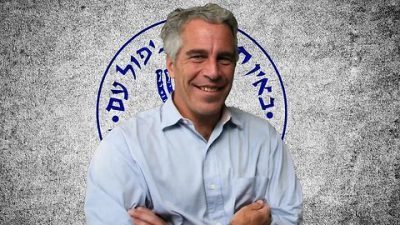
This short excerpt from Whitney Webb’s upcoming book “One Nation Under Blackmail” examines an obscure media profile of Leslie Wexner, Jeffrey Epstein’s mentor, from the 1980s that contains disconcerting revelations about Wexner’s personality and his inner world. … continue
This site is provided as a research and reference tool. Although we make every reasonable effort to ensure that the information and data provided at this site are useful, accurate, and current, we cannot guarantee that the information and data provided here will be error-free. By using this site, you assume all responsibility for and risk arising from your use of and reliance upon the contents of this site.
This site and the information available through it do not, and are not intended to constitute legal advice. Should you require legal advice, you should consult your own attorney.
Nothing within this site or linked to by this site constitutes investment advice or medical advice.
Materials accessible from or added to this site by third parties, such as comments posted, are strictly the responsibility of the third party who added such materials or made them accessible and we neither endorse nor undertake to control, monitor, edit or assume responsibility for any such third-party material.
The posting of stories, commentaries, reports, documents and links (embedded or otherwise) on this site does not in any way, shape or form, implied or otherwise, necessarily express or suggest endorsement or support of any of such posted material or parts therein.
The word “alleged” is deemed to occur before the word “fraud.” Since the rule of law still applies. To peasants, at least.
Fair Use
This site contains copyrighted material the use of which has not always been specifically authorized by the copyright owner. We are making such material available in our efforts to advance understanding of environmental, political, human rights, economic, democracy, scientific, and social justice issues, etc. We believe this constitutes a ‘fair use’ of any such copyrighted material as provided for in section 107 of the US Copyright Law. In accordance with Title 17 U.S.C. Section 107, the material on this site is distributed without profit to those who have expressed a prior interest in receiving the included information for research and educational purposes. For more info go to: http://www.law.cornell.edu/uscode/17/107.shtml. If you wish to use copyrighted material from this site for purposes of your own that go beyond ‘fair use’, you must obtain permission from the copyright owner.
DMCA Contact
This is information for anyone that wishes to challenge our “fair use” of copyrighted material.
If you are a legal copyright holder or a designated agent for such and you believe that content residing on or accessible through our website infringes a copyright and falls outside the boundaries of “Fair Use”, please send a notice of infringement by contacting atheonews@gmail.com.
We will respond and take necessary action immediately.
If notice is given of an alleged copyright violation we will act expeditiously to remove or disable access to the material(s) in question.
All 3rd party material posted on this website is copyright the respective owners / authors. Aletho News makes no claim of copyright on such material.




 Aletho News