IAEA satisfied by Iran commitment to nuclear deal: Amano
Press TV – December 18, 2016
During a visit to Tehran, the head of the United Nations nuclear watchdog has expressed satisfaction with Iran’s commitment to its obligations under the 2015 nuclear accord with world powers.
“Iran has been committed to its obligations and this is an important matter,” the International Atomic Energy Agency (IAEA)’s Director General Yukiya Amano said on Sunday at a joint press conference with Ali Akbar Salehi, the head of the Atomic Energy Organization of Iran (AEOI).
The nuclear accord, officially known as the Joint Comprehensive Plan of Action (JCPOA), was signed between Iran and the P5+1 group of countries — the US, Britain, Russia, France and China plus Germany — last year in Vienna.
The IAEA is tasked with monitoring the technical implementation of the nuclear deal.
Since January, when the JCPOA took effect, the agency has confirmed Iran’s compliance in several reports.
“We are satisfied with the trend of the JCPOA’s implementation, and hope for this trend to continue,” added Amano, who is in Tehran on a one-day visit at the invitation of Salehi.
Concerning his meeting with Salehi, he said the two had discussed a range of issues, including heavywater, enriched uranium, Iran’s uranium stockpiles as well as research and development in the field of nuclear energy.
Among other topics in the talks was a recent order by President Hassan Rouhani to the AEOI to plan work on nuclear propulsion devices to be used in sea transport, Amano added.
The Iranian chief executive issued the decree in response to the recent violation of the multilateral nuclear deal by the United States. The US Congress recently voted to extend Iran Sanctions Act (ISA), Washington’s sanctions law against Iran, for another 10 years. This is while Iran had all its nuclear-related sanctions removed on the back of the JCPOA.
Salehi, in turn, said he had addressed cooperation with the IAEA on the JCPOA’s implementation.
He urged the IAEA to “act as an impartial international authority, whose reports do not reflect leverage or influence peddling by any party,” the Iranian official asserted, thanking the agency for “acting in such a manner so far” in its reports on the JCPOA’s implementation.
He said the two had addressed the presidential decree and how to implement it as well as Tehran’s obligations under the IAEA’s Nuclear Safeguards Agreement during the JCPOA’s implementation process.
Salehi also touched on Washington’s extension of the Iran Sanctions Act, saying Tehran “is ready to take whatever proportionate measure upon the decision of the Iranian establishment’s authorities.”
Later in the day, Amano sat down for talks with the Iranian president, who likewise called on the agency to produce impartial and technical reports on Iran.
“We expect that this international institution perform its responsibility in the area of technical cooperation, the transfer of peaceful nuclear technology, and nuclear trade, too,” President Rouhani said.
He said the JCPOA’s sustainability hinged on compliance by all parties, and added, “The Islamic Republic will honor its commitments as long as other parties honor theirs.”
Rouhani said some recent measures by the US, including the extension of the ISA, contravened the nuclear agreement. “The course the United States has taken vis-à-vis Iran will lead to the reduction of international confidence in the US government,” he said.
Amano, for his part, reiterated that Iran had lived up to its contractual obligations since the accord’s implementation. “The JCPOA was a big achievement, whose implementation the IAEA will support with all its might.”
US Mulls Pulling Out of Iran Deal
By Peter KORZUN | Strategic Culture Foundation | 06.12.2016
The US Senate voted on December 1 to extend the Iran Sanctions Act (ISA) giving the president the authority to impose sanctions on Iran for another decade. The bill had already passed the house of Representatives. The ISA was enacted in 1996 (as the Iran and Libya Sanctions Act), reauthorized in 2006 and 2011, and is set to expire on Dec. 31, if not renewed. GOP lawmakers have unanimously opposed the agreement. Some Democratic senators reconsidered their stances, expressing support for extending the presidential authority to counter Iran’s «aggressive behavior.» President Obama is not expected to veto the motion because the scale of support indicates a veto would be easily overridden.
The measure ensures that the president could easily restore the sanctions, if Iran breached the Joint Comprehensive Plan of Action (JCPOA). The deal reached in July 2015 required Iran to cap its nuclear program in exchange for lifting of sanctions against it.
Iran has complied significantly reducing its nuclear infrastructure. It’s important to note that the implementation of the JCPOA began January 16 after the UN’s International Atomic Energy Agency (IAEA) certified that Iran was meeting all its obligations under the deal. Other parties to the agreement – Russia, the UK, China, France, Germany and the European Union – have largely lifted the sanctions since the deal became effective. Non-nuclear sanctions have also been dropped, partially ushering Iran back into the global economy.
After taking office, Donald Trump may continue signing waivers to be reissued every 120 to 180 days or he may change the policy. The waiver related to nuclear sanctions remains in place under the reauthorized ISA but the deal is in jeopardy. US President-elect Donald Trump has said many times that he would scrap the nuclear agreement, calling it the «stupidest deal of all time». He said that dismantling it would be his «No. 1 priority» as president. The deal allows any of the countries that negotiated the deal to cancel it within 30 days, without a vote by the United Nations Security Council, if they flag a violation.
Non-nuclear sanctions related to terror-sponsorship, human rights abuses and ballistic missile activities are intended to remain in place under the JCPOA.
The GOP lawmakers support the idea of introducing new sanctions on Iran over human rights violations and terrorism, including the support of Hezbollah. Mitch McConnell, the Senate majority leader, calls for a review of the current policy on Iran.
Iran has threatened to resume its nuclear program if the bill goes through. The Iranian government described the Senate vote as a violation of the agreement. Iranian Supreme Leader Ayatollah Khamenei said recently the extension would be viewed in Tehran as a breach of the nuclear accord and threatened retaliation.
A US Senate vote to extend the Iran Sanctions Act (ISA) for 10 years shows the world that Washington cannot be relied upon to act on its commitments, said Iranian Foreign Minister Mohammad Javad Zarif. Iranian lawmakers said they want to introduce a measure to make the government resume nuclear activity.
Indeed, the prospect of US ultimate withdrawal from the JCPOA is not to be taken lightly. Congress can vote to reintroduce sanctions not waived or vetoed by the new president. President Trump may not renew waivers. The US could merely declare that Washington was no longer bound by the non-binding multilateral agreement based on the UN Security Council resolution. The United States can sneak out of the deal if the Congress overrides a presidential veto of a joint congressional resolution disapproving the JCPOA.
The consequences of Congress stopping the deal would be grave. The deal has the support of European parties to the JCPOA. The US will face a big problem trying to bring them to its side. If not, some sanctions will remain lifted and the West’s unity will be broken. It would put into question the ability of the United States to lead the reshaping of the world order on Western terms, by alienating Washington’s European allies. The move will rob Europe of any illusions about their ally at a time when support for the US is already low. The EU will face a big challenge trying to convince the US and Iran not to leave. It will have a slim chance to succeed.
Russia and China will adhere to the JCPOA provisions. Defying other global powers will make Washington the odd man out while the rest of the world would continue to trade with Iran.
Slate cites Jeffrey Lewis, an expert on nuclear nonproliferation at Middlebury College and founder of the Arms Control Wonk blog, who says, «If the unity of the countries that negotiated the deal falls apart, all of the safeguards that the IAEA has put in place under the deal will go away.» According to him, «The IAEA access will drop, and they will say that they are no longer in a position to verify the peaceful nature of Iran’s program. They just won’t have the access. You could end up with a situation in which there are no sanctions, and we have no idea whether they’re building a bomb or not. And by the time we figure it out, it might be too late.»
As a party to the Iran deal talks, Russia is a member of the Joint Commission established to monitor the implementation of the agreement and resolve any disputes that may emerge. As such, it can influence the process of compliance. Moscow has the right to co-decide on the sanctions imposed by the Security Council and the unilateral sanctions adopted by the United States. This right is envisioned by the JCPOA.
No matter what the US does, Russia retains the right to export weapons to Iran on condition that contracts are reported to and verified by the UN Security Council. It has already sold S-300 air defense systems to Tehran.
A decision to tear up the deal will most certainly provoke Iran into reviving its nuclear weapons [sic] program. It could lead to a regional arms race. Saudi Arabia has already made known its intention to acquire nuclear capability. Israel – a US skittish regional ally – may consider striking Iran – a decision fraught with grave implications.
Donald Trump has said many times his prime goal in the Middle East is ousting Islamic State (IS). This stance has vast support in Congress. Iran is a member of the coalition fighting the extremist group. If the US joins Russia in fighting IS – something the US president-elect said many times he wanted to do – it will need Tehran onside.
* * *
The US Congress has taken a step to destroy a deal enshrined in a United Nations resolution. «Say goodbye to the Iran deal», said Richard Nephew, a former US negotiator with Iran now at Columbia University. «There is very little likelihood that it stays, either because of a deliberate decision to tear it up by Trump, or steps that the US takes which prompt an Iranian walk back.»
The move entails harsh consequences. The Senate vote has undermined the US credibility as a reliable partner. Some of them mentioned above definitely prove that Congress does a disservice to its country reducing its national security and international standing.
With new US sanctions approved, Iran taking ‘wait & see attitude’ to future Trump administration
RT | December 2, 2016
As the Obama administration applies a series of tough new sanctions against Iran, contravening prior agreements, Iranians have no choice but to hope for the best from Donald Trump, Professor Seyed Mohammad Marandi from the University of Tehran told RT.
The US Senate has voted unanimously to renew sanctions against Iran for another decade.
It’s been described as a symbolic move, but it allows the president to impose new restrictions on Tehran if it violates the 2015 nuclear accord.
The vote was 99 to 0 and follows a similar ballot in the House of Representatives last month when only one person voted against the extension of the Iran Sanctions Act.
RT: Washington says the vote is only symbolic and won’t change anything…. but it gives President-elect Donald Trump an opportunity to break the nuclear accord if he wishes. What are the implications of that?
Mohammad Marandi: The most important thing right now for Tehran is that we have not even entered the Trump era. Obama, who was supposed to implement the agreement between Iran and the “P5+1” has not abided by his side of the bargain. In the past, we saw visa restrictions that were implemented and signed by Obama after the agreement which was a violation. The US confiscated Iranian money. The US put pressure on banks, as well as other financial institutions, insurance companies, shipping companies not to work with Iran. That was a violation of the agreement. And this particular law is a violation, and we see that Obama has not put pressure on the Democrats to vote against it because not a single person stood up against the law. This is a new law because the old law was to run out, it would run out very shortly, and now a new law is being passed. That is in direct violation. The law is both adding sanctions, and it is against third parties, in other third world countries, who want to do business with Iran. All of these are violations of the agreement. So, this is Obama who is actually breaking the agreement.
RT: Trump has called the deal “the stupidest of all time” and Tehran, the world’s largest sponsor of terrorism. Should we expect even harsher rhetoric from the new president?
MM: At the moment the Iranians have decided to wait and see. Because Trump has said many things and he is already backing away from some of the statements that he said before. There are a host of issues that are important for Iran, one is, of course, the “P5+1” agreement with Iran. We have to see where Trump goes on that. Also with regards to ISIS and other extremists, Trump has promised to shift American policy away from supporting terrorism and extremism in this region. We don’t know if he is going to enact on those statements. For the time being the Iranians are looking to the current administration to see what they are doing. Obama has violated the agreement…
Will America’s War with Iran Continue?
By Donald Liebich | American Herald Tribune | December 2, 2016
The United States has been at war with Iran for over thirty five years. Sometimes the war has been hot, sometimes cold, sometimes overt, and sometimes covert. Throughout this time period relations between the two countries have been hostile with very little diplomatic contact between officials of the two governments. In 2008, Barack Obama ran against Hillary Clinton on a platform of diplomatic engagement with Iran in opposition to her statements of being able to “totally obliterate Iran”.
Upon entering office, Obama, continuing America’s penchant for coercive diplomacy, doubled down on sanctions against Iran hoping that by causing economic hardship for ordinary Iranians he could pressure Iran to change its policies, particularly with respect to the development of nuclear capabilities. The strategy failed as Iran not only continued its peaceful nuclear development, but in many ways accelerated it. By his second term Obama, prioritizing addressing the nuclear proliferation issue, began negotiations with Iran on the nuclear issue in conjunction with Germany, France, United Kingdom, Russia and China. (EU3 + 3) The negotiations resulted in the signing in July 2015 of the Joint Comprehensive Plan of Action (JCPOA) which limited Iran’s nuclear program in return for removal of economic sanctions. The agreement was endorsed by the UN Security Council in an action that requires member states to carry out the agreement.
The International Atomic Energy Agency (IAEA) has affirmed on numerous occasions that Iran has largely lived up to its obligations under the JCPOA. Obama has taken some executive action to live up the JCPOA by loosening the impact of the sanctions. The administration has approved the sale of aircraft and aircraft parts to Iran by Boeing and this week the US approved a license for Airbus to sell over 100 aircraft to Iran. However, the basic legal structure of sanctions remains in place. Obama has not moved as aggressively as he did in Cuba to increase U.S. business involvement in Iran, a step which would make the nuclear deal more difficult to reverse by engaging the business lobby in the issue.
With the current sanctions authorization legislation set to expire on December 31, 2016, House of Representatives and the Senate passed the Iran Sanctions Extension Act by an overwhelming majorities (419 -1 and 99-0). Opponents of the JCPOA in the U.S. have argued in justifying this action, which is a clear violation of the JCPOA, that Iran has engaged in other “nefarious” activities, such as supporting the Assad in Syria, supplying arms to Hezbollah in Lebanon and the Houthi tribe in Yemen, developing ballistic missiles and in general resisting U.S. influence in the Middle East. The Senate has said that it will take up this bill in the rump session of Congress in December. Although Obama has indicated that he will veto the bill, the bipartisan support in Congress for sanctions extension means that a veto override is likely. Obama’s best option for preserving the nuclear deal is to fight a delaying action to “kick the can” down the road to the next administration where a Republican controlled Congress may be reluctant to create a big foreign policy problem for President Trump so early in his administration.
As on many issues, it is unclear what President Trump’s position will be on the JCPOA. During the campaign he condemned the JCPOA as a “horrible contract”, but acknowledging that it was a contract, vowed to renegotiate it. Renegotiating the agreement is probably not possible. The JCPOA is the result of complicated, intertwined negotiations over a long period of time. Reopening talks in an atmosphere of mistrust and recriminations likely means that the whole agreement would collapse. A number of senior Congressmen and potential officials in a Trump led government, having received large speaking fees, are closely tied with the Mujahidin-e-Khalq (MEK), an exiled Iranian opposition group with an odd Islamist/Marxist ideology. The MEK, having allied with Saddam Hussein during Iran-Iraq war, has the distinction of being more unpopular in Iran than the U.S. They will push a hard line approach under a Trump administration..
The agreement, however, is not totally dependent on the U.S. Even if the U.S. withdraws from the agreement, Iran, under the administration of President Hassan Rouhani, and Russia, China and the EU have indicated that they will continue to abide by it. As it has in the past, the U.S. will likely use secondary sanctions on European companies to deter them from conducting business with Iran. This strategy will probably not be effective with Russia, India and China who have taken steps to disconnect their economy from the U.S. dominated and dollar denominated neo-liberal economic system. It remains to be seen how U.S. allies in Europe will react to being pressured to act against their own national interest.
The political situation in Iran will also have an influence on how U.S./Iran relations play out. Supreme Leader Ali Khamenei has said that if sanctions are extended Iran will “respond”. What the response will look like depends, in large measure, on the outcome of the May 2017 presidential elections. Incumbent President Rouhani has maintained a position that engagement with the West will benefit Iran diplomatically and economically. Because sanctions have, in large measure, remained in place and because Iran has been slow to reform its economic system, the benefits have not met public expectations. The opposition have attacked the policy of engagement with the West. Faced with these political threats, Rouhani may be forced to tack to the right and abandon the JCPOA, kick out the IAEA inspectors and expand the nuclear program. In that case the undeclared war with Iran will continue with all of the uncertainties and potential for disastrous consequences.
Don Liebich spent his work career with the US Navy Nuclear Submarine service and Sysco Corp. He and his wife, Marcia, have traveled to the Middle East numerous times in the past ten years. Mr. Liebich has conducted seminars and taught courses on Islam: God and his Prophet, Christian Fundamentalisms, US Middle East foreign policy and Iran. Don & Marcia live in Hailey, ID.
US Senate passes 10-year extension of Iran Sanctions Act
Press TV – December 1, 2016
The US Senate has passed a 10-year extension of existing sanctions against Iran, sending the measure to the White House for President Barack Obama to sign into law.
Senators on Thursday unanimously backed the renewal of the Iran Sanctions Act (ISA) by a vote of 99 to 0.
The House of Representatives voted 419 to 1 last month to reauthorize ISA, which was first introduced in 1996 to punish investments in Iran’s energy industry based on accusations that Tehran was pursuing non-civilian objectives in its nuclear energy program.
The Obama administration has expressed reservations about the utility of the legislation, but congressional aides said they expected Obama would sign it when it reached his desk. The act is set to expire at the end of 2016.
“If the sanctions architecture has expired, then we have no sanctions which we can snap back,” said hawkish Democratic Senator Bob Menendez, who opposed the nuclear accord between Iran and six major powers.
Iran and the five permanent members of the UN Security Council — the United States, Britain, Russia, China, France as well as Germany – reached a landmark nuclear agreement last year, under which Tehran agreed to limit some aspects of its nuclear program in exchange for removal of all sanctions.
The two sides began implementing the deal, dubbed the Joint Comprehensive Plan of Action (JCPOA), on January 16. However, members of Congress said they wanted ISA to be extended for another decade to send a strong signal that any US president would have the ability to “snap back” sanctions on Iran.
“Unless Congress acts, the congressional sanctions don’t exist after December 31,” Maryland Senator Ben Cardin, ranking member on the Senate Foreign Relations Committee, said on Tuesday. “The ability to snap back wouldn’t be there on the congressional side.”
“While we do not think that an extension of ISA is necessary, we do not believe that a clean extension would be a violation of the JCPOA,” a senior Obama administration official said on Thursday, according to Reuters.
Senate Foreign Relations Committee Chairman Bob Corker, a hawkish Republican from Tennessee, said the extension of ISA ensures President-elect Donald Trump can reimpose sanctions Obama lifted under the nuclear agreement.
He said in a statement on Thursday, “Extending the Iran Sanctions Act … ensures President-elect Trump and his administration have the tools necessary to push back” against Iran’s “hostile actions.”
Iran has warned that the renewal of sanctions will be a violation of commitments under the JCPOA, and has threatened reprisal if the US extends the longstanding act.
In a public speech on Wednesday, Leader of Islamic Revolution Ayatollah Seyyed Ali Khamenei warned the US against the renewal of the Iran sanctions, noting that the Islamic Republic would respond if the US proceeded to renew ISA which expires at the end of 2016.
“So far, the current US government has committed several violations with regard to the nuclear agreement,” Ayatollah Khamenei told members of the volunteer Basij forces in Tehran, adding, “The most recent of them is the 10-year extension of the sanctions. If these sanctions are extended, it will surely constitute a violation of the JCPOA and they (the US) should know that the Islamic Republic will definitely react to it.”
“‘Initiating sanctions’ is no different from ‘renewing them after their expiration,’ and the latter is also [an instance of imposing] sanctions and violation of the previous commitments by the opposite side,” Ayatollah Khamenei said.
Last week, Ali Akbar Salehi, the head of the Atomic Energy Organization of Iran, said Tehran has made necessary preparations and is ready to respond if the US violates the deal.
In case of the final approval of ISA, it will “certainly be a violation of the JCPOA,” he added.
Salehi noted that Iran is ready to respond to any US breach of the JCPOA, saying Tehran, however, will make necessary decisions at the appropriate time and after the assessment and analysis of Washington’s moves.
Iran is sanguine about the fate of nuclear deal
By M K Bhadrakumar | Indian Punchline | December 1, 2016
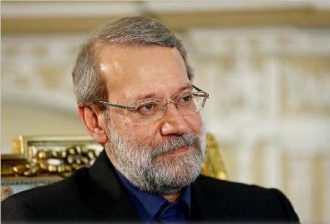 The Iranian official news agency IRNA carried a detailed summary of an interview given by the Speaker of the Majlis Ali Larijani to a Chinese TV network, regarding the fate of the Iran nuclear deal of July 2015 under the Donald Trump presidency in the United States.
These have been the most comprehensive remarks so far since the election of Trump, at an authoritative level in the Iranian leadership. Unsurprisingly, IRNA highlighted the interview. The salience remains to be that Iran is keeping an open mind on the incoming US president’s likely policies. (See my blog Iran keeps open mind on Donald Trump.)
However, Larijani’s latest remarks display a quiet confidence in Tehran that Trump’s campaign speeches regarding Iran will not translate as policies. Larijani is an accomplished statesman and when he flags that an American president’s policies ‘usually differ’ from his election rhetoric, it becomes a considered statement.
Tehran indeed should know. Ronald Reagan’s campaign speeches in 1980 in the middle of the hostage crisis were much more threatening than Trump’s. In fact, Iran was the leitmotif of Reagan’s campaign rhetoric against Jimmy Carter. Yet, some say the Reagan team didn’t want a denouement to the hostage crisis until the November election was over. (In fact, Iranians released the hostages soon after the election was over, but before Reagan moved into Oval Office.)
Reagan’s brilliant but devious campaign manager was none other than William Casey, who later had covert dealings involving Iran as head of the CIA in the new administration. It won’t be surprising if Iranians are jogging the memory. Only the other day Trump had shouted that Goldman Sachs had ‘total control’ over Hillary Clinton and yet his team already is stacked with Goldman insiders – Steve Bannon as chief White House strategist, Steven Mnuchin for the Treasury Secretary job and so on.
At any rate, Larijani pointed out that the US’ European allies (and Russia and China) may not go along with any US move to scuttle the Iran deal or reimpose sanctions. This is entirely plausible.
What Larijani left unsaid was about any back channel contact with the Trump team. He couldn’t have been explicit, of course. Interestingly, he also did not slam the door shut against the idea of Iran working with the US on regional issues. He merely said that so far American and Iranian regional policies have differed.
[Asked whether you are ready for cooperation with the US on regional issues, Larijani said, ‘We think that its policies in the region are against those of Iran’s.’
The US and the Zionist regime enjoy chaotic situation in the region, as they think their interests will be ensured under this condition while Iran has a different viewpoint as it thinks about a sustainable security in the region and believes that terrorism should be uprooted.
‘I think China and Russia are of the same attitude regarding the issues but the US and the Zionist regime think otherwise,’ Larijani said.]
Indeed, Trump’s move to work with Russia over the Syrian conflict cannot but involve Iran one way or another at an early stage itself. President Hassan Rouhani telephoned President Vladimir Putin on Monday and the Kremlin readout said the two leaders “highly rated the level of Russian-Iranian cooperation on the anti-terrorist track and agreed to work closely together to ensure the long-term normalization of the situation in Syria.”
What makes Iran an engrossing regional power is invariably the sophisticated intellectual underpinnings it gives to its foreign policies and regional strategy. So, how does Trump appear through the Iranian looking glass?
Glancing through the range of opinions in Iran, certain elements can be identified. First, in the excessive focusing on Trump’s colorful personality traits (which are, arguably, not more exotic than Reagan or George W. Bush’s), foreign observers have neglected the acuteness of the crisis within the United States, which has been steadily building up through recent decades.
Trump ultimately represents the class interests of the rich and the privileged and there is going to be a glaring shortfall in his ability or willingness to redeem his pledges to the marginalised and alienated sections of society. The seething anger is going to mount as it becomes clear that the ‘swamps’ which Trump promised to clean up remain an enduring fact of life. In sum, much of Trump’s attention will come to be trained on the challenges posed by the domestic political situation.
Second, Iranian scholars underscore the dialectics of the trans-Atlantic relationship. (The EU foreign policy chief Federica Mogherini visited Tehran thrice this year.) Trump is starting with a handicap since European opinion militates against his rise to power, not only in style but also in the content of his whole political platform. An unfriendly Europe will try to seek a new code of conduct, which in turn will compel Trump to trim his discourse.
Third, emanating from the above two factors, Iranian scholars assess that the US cannot afford to wage wars abroad. It neither has the money needed to spend on wars nor does it enjoy the political respite to take the eyes off the acute internal contradictions in the US’ political economy. Most certainly, an invasion such as the one in 2003 in Iraq is way beyond American capability. Europe will not join any US-led ‘coalition of the willing’, either. Thus, the limits to the US influence in the Middle East are already apparent.
All in all, therefore, a new concert of world powers is becoming necessary and unavoidable, especially with a major potential economic crisis staring at the world economy. Larijani’s cautious optimism can be put in perspective as the articulation of a rational assessment.
Iranophobes on Parade
Will Iran be the target of the Trump regime?
By Philip Giraldi • Unz Review • November 29, 2016
One of the most discouraging aspects of the filling out of the Donald Trump cabinet is the array of Iran haters that seem to be lining up in the foreign policy and national security areas. Trump has been personally advocating sensible policies relating to Russia and Syria but he appears to have gone off the rails regarding Iran, which just might be attributed to those who are giving him advice. A reversion to the relationship that prevailed prior to last year’s signing of the Joint Comprehensive Plan of Action (JCPA) between Iran and the so-called P5+1 consisting of the United States, Russia, China, France, Britain, and the European Union would be undesirable, to say the least, but that appears to be what is likely to develop. Or it could be even worse, finding bilateral support for “action” as a number of policy advisors in the presidential campaign from both parties were endorsing something like war against the Persians.
The irony is that the arguments made then and now for attacking Iran were based on the threat of Tehran deciding to build its own atomic bomb. With the JCPA agreement, however, most would agree that any remaining concerns that Tehran might even be considering the development of a nuclear weapons program were greatly diminished. Iran has since that time been in compliance with the agreement, possible nuclear proliferation has been avoided, and, apart from the fulminations of the inevitable anti-Iranian politicians in the United States, the signatories to the agreement have expressed their satisfaction with the outcome. It has been Washington that has failed to live up to its part of the agreement by easing remaining restrictions that are being imposed against Iranian financial institutions and regarding the purchase of some commercially available dual use technologies.
Candidate Donald Trump did not need much prompting to pick up on the prevailing anti-Iran sentiment. In a number of campaign speeches he denounced the JCPA as a bad deal and vowed to tear it up upon taking office. Some of that sentiment might well have been derived from his desire to distance himself from foreign policy positions promoted by President Barack Obama that were subsequently endorsed by Hillary Clinton so it is no surprise that since being elected he has somewhat modified his stance. He is now veering towards trying to renegotiate the agreement, which would likely be impossible given that it has multiple signatories. He could nevertheless disrupt it by continuing or increasing sanctions on Iran.
The thought of reverting to a state of unrelenting hostility towards Iran is disconcerting. One recalls joint CIA-Mossad operations between 2010 and 2012 that assassinated four civilian scientists connected to the country’s nuclear program as well as the creation of the Stuxnet virus that threatened to spread to other computers worldwide. It is generally accepted that Israel’s Mossad planned and prepared the killing of the scientists with a little help from the U.S., attacks which were almost certainly carried out by associates of the radical Marxist group Mujaheddin e Khalq (MEK), which is now being seen favorably by several Trump advisors even though the group is Marxist, cult-like and has killed Americans.
The assassinations were based on the false premise that Iran had a nuclear weapons program that could be disrupted by killing the scientists and technicians involved. Two comprehensive studies by the American government’s Central Intelligence Agency (CIA) conducted in 2007 and 2011 determined that no such program existed and that Iran had never taken any serious steps to initiate such research. Israel was also aware that there was no program. Nevertheless, the Israeli and American governments took steps to interfere with Iran’s existing and completely legal and open to inspection atomic energy program by identifying then killing its scientists and also introducing viruses into its computer systems. This was in spite of the fact that Iran was fully compliant with international norms on nuclear research and it was a signatory to the Nuclear Non-Proliferation Treaty (NPT), which Israel, possessing its own nuclear arsenal, had refused to sign.
The history of the Iran-U.S. relationship is significant because several Trump advisors appear to be locked into a time warp regarding the Mullahs and the threat to Americans that they allegedly constitute. Former Defense Intelligence Agency (DIA) head Michael Flynn, who will be the Trump National Security Advisor, is the most prominent Iran hater and also the most outspoken.
Flynn, also an unapologetic Islamophobe, has said that Iran represents a danger to U.S. national security and that our friend and ally Israel “lives under the threat of total annihilation from Iran… something the United States must never allow.” He believes that Iran intends to build nuclear weapons as well as the ballistic missiles needed to deliver them on target and thinks that “regime change” is the only solution to the threat posed by the current government. And for Flynn, Iran is not alone, it is part of a “global alliance” that includes China and Russia which seeks to threaten the U.S. and its allies.
Flynn concludes that Iran is unmitigated evil and that Washington should have nothing to do with it, apart from recognizing the reality that it and its government must be destroyed. I personally attended a conference in Moscow last December at which Flynn asserted that Iran is solely responsible for nearly all the instability in the Middle East and is behind at least five wars in the region, an assertion that is just as ridiculous as it sounds.
One might suggest that Flynn is terribly uninformed about a subject regarding which he claims expertise. His comments would suggest that the capabilities of the DIA that he once headed were dangerously overrated, but reports from his former colleagues indicate that he was always guilty of serious overreach in his pronouncements, something they referred to as “Flynn facts”.
If Flynn were just one loud voice braying in the wilderness he would be bad enough since his job is important, particularly with a president who has no foreign policy experience, but the sad fact is that he is not alone. Congressman, West Point grad and former Army officer Mike Pompeo, who will head the CIA, is more-or-less on the same page when it comes to Iran. He supports new sanctions on the country and, regarding his appointment as Director, he had only one comment to make and it related to the JCPA, “I look forward to rolling back this disastrous deal with the world’s largest state sponsor of terrorism.” As in the case with Flynn and DIA one has to wonder what kind of “objective” intelligence CIA will be producing under Pompeo.
Finally, there is retired Marine General James Mattis, who is being considered for a senior position in national security, possibly as Secretary of Defense. He is yet another Iranophobe who opposed the JCPA and calls Iran a rogue state that constitutes the “greatest threat” in the Middle East. As part of the evidence for that assessment he cites Iran’s alliance with Syria, which is at least in part directed against America’s enemy number one ISIS, demonstrating once again how Establishment Washington has difficulty in understanding what constitutes actual national interests. Mattis, in fact, denies that Iran is actually fighting ISIS.
The neoconservative kingpin Bill Kristol is gloating, headlining in his Weekly Standard publication that the “Iran Deal Is Doomed!” He should be pleased. Team Trump’s attitude towards an alleged Iranian threat is delusional, more in sync with Kristol and some Israeli thinking than with any actual American interests. Just as neoconservatives always believe that it is 1938 and we are in Munich, Flynn, Pompeo and Mattis likewise seem to think that it is 1979 and the United States Embassy in Tehran is still occupied.
The three Trumpsmen are not stupid, far from it, but the problem appears to be that they cannot comfortably assess two or more conflicting concepts at the same time, which might be due to the linear thinking derived from their military backgrounds. The Middle East is awash with players, all of whom have separate agendas, few of which coincide with actual American interests. If one is fixated on or obsessed with Iran as the sole disruptive force in the region it becomes difficult to see how Saudi Arabia, Turkey and Israel are also problems. It is decidedly neoconnish to look at a complex foreign policy issue and only see black and white, but that is what the Trump national security team seems to be prone to do.
Hopefully someone will convince Donald Trump that the real answer to eliminating the “Iranian threat” is not war. It requires building on the relationship established by JCPA to bind Iran more closely to the international community, both economically and culturally. By all accounts, young Iranians, a majority of the population, are dismissive of the rigidity of their own government and are very open to Western ideas and lifestyle. Change will come to Iran if the United States and its European allies encourage more rather than less non-threatening contact. It will not come at the point of a bayonet as Flynn, Pompeo and Mattis appear to be promoting.
Iran fulfilling heavy water obligations under JCPOA: AEOI
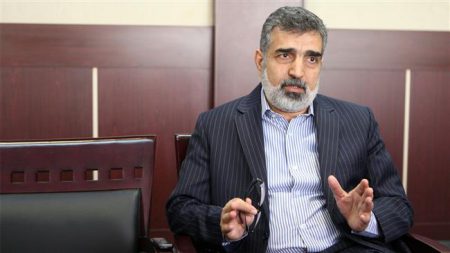
Spokesman for the Atomic Energy Organization of Iran (AEOI), Behrouz Kamalvandi
Press TV – November 18, 2016
Iran has remained committed to its obligations, including those concerning its heavy water stockpiles, under last year’s landmark nuclear agreement signed between the Islamic Republic and the P5+1 group of countries, a senior Iranian nuclear official says.
“The Islamic Republic of Iran has fulfilled its obligations on heavy water stockpiles based on the JCPOA (the nuclear deal known as the Joint Comprehensive Plan of Action), and remains committed to it,” the spokesman for the Atomic Energy Organization of Iran (AEOI), Behrouz Kamalvandi, told IRIB on Friday.
Kamalvandi made the comments in reaction to a report by the International Atomic Energy Agency (IAEA) last week that claimed that Iran’s stocks of heavy water had slightly exceeded the 130-tonne level set out in the JCPOA.
IAEA Director General Yukiya Amano on Thursday chided Iran for exceeding the agreed limit on its stockpiles and said, “It is important that such situations should be avoided in future in order to maintain international confidence in the implementation.”
Iran and the five permanent members of the United Nations Security Council – the United States, France, Britain, Russia and China – plus Germany signed the JCPOA in July 2015 and started implementing it in January 2016.
Under the JCPOA, Iran undertook to put limitations on its nuclear program in exchange for the removal of nuclear-related sanctions imposed against Tehran.
The deal requires Iran’s storage of uranium enriched to up to 3.67 percent purity to stay below 300 kilograms. Tehran has also agreed to keep its heavy water stockpile below 130 metric tonnes.
“According to the JCPOA, we were required to offer on the international market any excess over 130 tonnes of heavy water and we have so far sold 70 tonnes,” Kamalvandi said.
He added, “Negotiations are under way with interested countries, the Europeans in particular,” to sell the rest.
The nuclear official emphasized that Iran would remain committed to its undertakings under the JCPOA on heavy water restrictions “so long as the JCPOA is in place.”
Last week, US State Department spokesman Mark Toner played down concerns about Iran exceeding the heavy water stockpile limit.
He said it was “important to note that Iran made no effort to hide this” and that he was “not sure whether that constitutes a formal violation.”
The AEOI head Ali Akbar Salehi said in October that the Islamic Republic had sold 32 tonnes of heavy water to the United States and delivered 38 tonnes of the nuclear substance to Russia.
“European firms, including German and French ones, seek to purchase Iran’s heavy water and we have expressed our readiness in this regard,” Salehi added.
Iran keeps open mind on Donald Trump
By M K Bhadrakumar | Indian Punchline | November 17, 2016
On Wednesday, for the first time, Iran’s Supreme Leader Ayatollah Ali Khamenei expressed his views on the US elections of November 8. The Tehran Times quoted Khamenei as saying,
- Unlike some of those in the world who have either been bemoaning or celebrating the results of the American elections, we are neither bemoaning nor celebrating because the results make no difference to us. Nor do we have worries, and by the grace of God, we are ready to encounter any likely incident.
Khamenei said that from a historical perspective,
- We have no judgment about this election because America is the same America, and over the past 37 years either of the two parties which has been in office not only has done no good (to the Iranian nation), but has always been an evil to the Iranian nation.
Khameini downgraded the significance of the US election and stressed that Iran’s focus should be on promoting and preserving the “internal strength of the establishment” and nurturing and preserving the “revolutionary spirit and orientation.”
The Supreme Leader’s remarks come amidst furious speculations in the American media, driven mostly by pro-Israeli Jewish lobby, to the effect that the Iran nuclear deal (known as Joint Comprehensive Plan of Action or JCPOA) faces the prospect of sudden death any moment after January 20. The Israeli intelligence website DebkaFile, which routinely disseminates sensational items on Iran, even reported that Trump is contemplating a military attack on Iran as soon as he moves into the Oval Office.
Therefore, Khamenei’s indifference is striking. It must be noted, though, that Khamenei made no reference to US president-elect Donald Trump, directly or indirectly. What does that imply?
Simply put, Iran is not worried, since Iran does not expect anything dramatically different in the US policies toward Iran. The ‘psy war’ by the Israeli lobby has failed to have an effect. The Iranians would know that Israelis habitually create larger-than-life image of themselves, but the plain truth is that Trump has not been a candidate sponsored by the Jewish lobby in America. In fact, Jewish circles have attributed to him traces of ‘anti-semitism’, Trump’s son-in-law’s Jewish ethnicity notwithstanding.
Can it be that Iran has lines of communication open to Trump’s transition team? Now, that isn’t such an outrageous thought as it may seem at first sight, because, simply put, that is the way Iranian diplomacy always worked. Iran is a tireless communicator. A clutch of ‘red lines’ apart (such as the ‘Zionists’ or Daesh and al-Qaeda), Iran’s diplomacy is willing to engage even adversaries or detractors.
What must be noted in this context is that two key personalities in the Iranian regime, both enormously prestigious and powerful within Iran and in the outside world, have hinted in the recent days that Tehran keeps an open mind on Trump – Foreign Minister Mohammad Javad Zarif and the Speaker of the Majlis (parliament) Ali Larijani.
Zarif said on November 11 that in his estimation, the Trump administration will eventually accept the landmark nuclear deal “once the dust has settled and people are briefed about the realities of the region and the world.” He added, “It will be in the interest of everybody to remain committed in practice to the JCPOA. But if there are doubts about the implementation, then Iran will have its own options as well.”
Zarif is a highly experienced career diplomat who served for long years in New York and enjoys extensive contacts with American political elites and the foreign-policy community. Zarif implied here that Tehran is inclined to take much of what Trump had said on the campaign trail regarding Iran as the stuff of grandstanding and politicking, and far from the final word on the subject.
Equally, the speaker of the Iranian Majlis Ali Larijani’s remarks in Tehran last Sunday to a big gathering of some 100 parliamentarians merits even more careful attention. Larijani cautioned the Iranian religious and political elites against making intemperate remarks about the US president-elect. In a highly nuanced remark, he counselled,
- Analyses and remarks about the U.S. president-elect should be more mature, and hasty remarks and premature judgments should be avoided until the Foreign Ministry takes a transparent stance.
No doubt, Larijani made a hugely significant remark. Larijani is a veteran diplomat and statesman of many battles with ‘Great Satan’, and chooses his words with utmost care. In effect, he pleaded for patience till such time as when Zarif could take a “transparent stance”.
Larijani spoke in the context of some flippant remarks attributed to influential clerics lately scoffing at Trump. Evidently, he has restrained them from muddying the waters and cautioned them against making “premature judgments”. Larijani is close to Supreme Leader Khamenei.
The salience of what Larijani said is that it is critically important that Zarif gets a free hand to conduct diplomacy optimally in a dynamic situation in a high-stakes game when the contours of the transition in Washington are far from crystallized.
Featured Video
It’s the Occupation, Stupid
or go to
Aletho News Archives – Video-Images
From the Archives
A superpower and “the world’s sickest warrior state”
By Paul J. Balles | March 8, 2010
Living through five or six major wars has hardened me to what I thought were the extremes of inhuman cruelty and brutality.
Two things made those extremes almost bearable: the brutality always revealed – at least according to the media coverage – the viciousness of the enemy. It was therefore quite understandable when our “brave men and women” pulverized the enemy.
Films of Japanese torturing captive Americans somehow justified holding Japanese Americans in internment camps during World War II; and only a small percentage of Americans found the bombing of Hiroshima and Nagasaki unreasonably vengeful at best, at worst, depraved.
The media giants in America portrayed the North Koreans as barbaric beasts with their captives, quite unlike their southern counterpoints – our allies during the Korean War. No one ever felt the need to explain how the South Koreans were a civilized breed while the North Koreans were absolute savages, at least according to the official line.
In Vietnam, our warriors justifiably (or so the media made us believe) dropped napalm on the North Vietnamese who had the gall to hide in villages and tunnels to ravage our invaders. At least it was accepted practice until some rogue photojournalist filmed a young girl screaming down a Vietnamese road in flames. … continue
Blog Roll
 Aletho News
- Pakistan to Host US-Iran Talks
- How Indonesia’s tilt toward the US left it stranded in the Strait of Hormuz
- US has no choice but to retreat from Iranian borders: Top commander
- Iran Retaliation Strikes Chemical Plant Near Dimona
- AWACS’ Destruction is a Major Loss for US Military – Ex-DoW Analyst
- Israel’s Iran Strategy Uses US Military & Gulf States as Its Pawns
- Iran: Trump wanted regime change, now just begging for Hormuz to open
- IRGC: Israeli, US universities in region legitimate targets after strikes on Iranian university
- Trump admits Iran hit USS Ford carrier: ‘We ran for our lives’
- Battle for Hungary: EU attacks on Orban are a sign of worse things to come
- If Americans Knew
- Israeli police block Catholic cardinal from entering Church of the Holy Sepulchre on Palm Sunday
- Israel is assassinating journalists again, more than any other nation, anywhere, ever – Not a ceasefire Day 170
- Over 300 US service members wounded, majority have brain injuries – Not a ceasefire Day 169
- Researchers at Human Rights Watch Resign Over Blocked Report on Palestinian Refugee Return
- Jewish Groups Are Backing a War Americans Don’t Want
- Eric Fingerhut Thinks He’s the President of the Jews
- Top Jewish Philanthropists, Rabbis Urge Israeli President to Take Action Against ‘Jewish Extremists’
- Don’t Be Fooled. Zionist Leaders Have Always Wanted to Control Southern Lebanon
- Israel’s widespread use of torture is a core element of its genocide against the Palestinian people
- In Israel’s War on Iran, Many Middle East US Bases Rendered “All But Uninhabitable”
- No Tricks Zone
- German Science Blog Accuses PIK Climate Institute Of Hallucinating Climate Tipping Points
- Devastating Assessment Of Comirnaty Vaccine By Former Senior Pfizer Europe Toxicologist
- New Study: CO2 Is ‘Effectively Negligible’ As An Explanatory Climate Change Factor Since 2000
- Former Pfizer Toxicologist Dr. Helmut Sterz Tells Bundestag Hearing Pfizer Vaccine Should Have Never Been Approved
- Energy Expert: Germany’s Nuclear Phaseout Was A “500 Billion Euro Mistake”
- New Research: South Australia’s Mid-Holocene Sea Surface Temperatures Were 4°C Warmer Than Today
- Storing Green Energy To Last Germany 10 Days Would Require A 60-Million Tonne Battery
- New Studies: UK Sea Levels Were 4 Meters Higher Than Today During The Mid-Holocene
- Destructive Green New Deal: German Energy And Metal Group Warns Of Drastic Crisis
- New Study Documents A 20-Year Pause In Arctic Sea Ice Decline – Driven By Internal Variability
 Aletho News