‘Iraq will not join any military alliance, position on Palestine firm’
MEMO | July 16, 2022
Iraqi Prime Minister Mustafa Al-Kadhimi has announced that the Jeddah conference in Saudi Arabia “will not witness the discussion of normalisation with Israel” and stressed that discussion on the topic is an attempt to confuse Iraq’s restoration of its role in the region.
The prime minister’s media office disclosed in a statement on Friday, posted on Twitter, that: “Iraq’s position is firm and clear on the Palestinian issue and is not open for discussion.”
The media office added that Iraq could not be a foundation to threaten any neighbouring country.
The prime minister stressed that Baghdad would not allow any party to use Iraq as a base to threaten neighbours or create problems by using Iraqi lands.
Al-Kadhimi expressed that they are in dire need of wisdom, patience, reconciliation and restoring confidence for the sake of Iraq and Iraqis. He mentioned that his government’s motto from day one has been “Iraq first” and that they will continue to adopt this approach in order to serve the people.
Moreover, Al-Kadhimi stated during a press conference held in Baghdad before travelling to Jeddah: “Iraq has not and will not be, neither today nor tomorrow, in any military axis or alliance, and the national interest is the goal of these meetings.”
“Today we are responding to an invitation extended to Iraq to participate in the Jeddah conference, which will be attended by the Gulf Cooperation Council countries, the Hashemite Kingdom of Jordan, the Arab Republic of Egypt, in addition to the United States.”
Regarding his upcoming meeting with US President Joe Biden, the prime minister made it clear that he will discuss with the US what they agreed on in the strategic agreement, such as revitalising agreements in the field of education, culture, health and other areas that reflect on the economic role.
Saudi Arabia outlines what it will do for oil output
Samizdat | July 16, 2022
Saudi Arabia is ready to increase oil production to its maximum of 13 million barrels per day but does not have the capacity to pump out more, Crown Prince Mohammed bin Salman said during his address at the US-Arab summit in Jeddah on Saturday.
“The kingdom has announced an increase in its production capacity level to 13 million barrels per day, after which the kingdom will not have any additional capacity to increase production,” he was quoted as saying by UAE’s newspaper The National.
The crown prince also said that the global community should join forces to support the global economy, but noted that unrealistic policies regarding energy sources would only worsen the situation.
“Adopting unrealistic policies to reduce emissions by excluding main sources of energy will lead in coming years to unprecedented inflation and an increase in energy prices and rising unemployment, and a worsening of serious social and security problems,” he stated.
Mohammed bin Salman’s words come a day after his talks with Joe Biden, who was in Saudi Arabia on his first visit as US president, and urged the kingdom to increase oil production in order to reduce global reliance on supplies from Russia.
Commenting on his trip to the kingdom, Biden said Saudi Arabia’s “energy resources are vital for mitigating the impact on global supplies of Russia’s war in Ukraine.”
Saudi Arabia, one of the globe’s largest oil exporters and the leading producer within the Organization of the Petroleum Exporting Countries (OPEC), currently pumps out more than 12 million barrels of oil per day. The kingdom previously said it plans to reach production capacity of 13 million barrels per day by 2027. The Crown Prince did not reveal whether the timeframe for the boost in capacity has changed.
Following the start of Russia’s military operation in Ukraine, the US and other Western nations have stepped up sanctions on Moscow, calling, among other things, for a boycott on Russian energy supplies. The US stopped importing Russian oil earlier this year, and the EU placed a partial embargo on Russian fuel last month.
Washington is now planning to set a price cap on the Russian commodity, and the US Treasury Secretary Janet Yellen is currently in Asia attempting to garner support for the scheme. The US is especially eager to secure the participation of China and India in the price cap mechanism, as both countries have not only refused to sanction Russia over the Ukraine conflict, but have recently stepped up purchases of Russian oil.
Putin’s summits next week will strengthen ties with Iran, Turkey
BY M. K. BHADRAKUMAR | INDIAN PUNCHLINE | JULY 14, 2022
Kremlin spokesman Dmitry Peskov announced in Moscow on Tuesday that President Vladimir Putin will travel to Tehran on July 19, to take part in a tripartite meeting with his Iranian and Turkish counterparts as part of the Astana peace process to end the war in Syria as well as hold a bilateral meeting with Turkish President Recep Erdogan.
Such a summit was long expected but the pandemic and the Ukraine conflict delayed matters. The current impasse in Syria is fraught with risks. Turkey has plans to launch another military incursion into Syria’s northern border regions that are under the control of Kurdish groups, who, Ankara alleges, are linked to the separatist PKK and also happen to be Pentagon’s inseparable allies.
Damascus, Moscow and Tehran — and Washington — disfavour the Turkish move as potentially destabilising, but Erdogan is keeping plans in a state of suspended animation, while tactfully dialling down the threatening rhetoric and acknowledging he’s “in no rush.”
For want of green lights from its Astana partners, presumably, Erdogan is unlikely to launch the military incursion, but Russia and Iran are wary that the incursion could complicate their presence and political influence in Syria and risk confrontation between Turkish troops and Syrian government forces.
However, Syria apart, Putin’s trip has much wider ramifications. What transpires in his bilateral meetings with Erdogan and Iranian leaders are certainly the more important templates to watch. Clearly, Turkey and Iran are emerging as two of the most consequential relationships of Russian foreign policies and diplomacy. And Putin’s visit comes at a highly transformative period in the US’ approach toward both Turkey and Iran.
Erdogan’s hopes of a rapprochement with the US have been dashed as Greek Prime Minister Kyriakos Mitsotakis told reporters on June 30 that Athens had submitted a letter of request “in recent days” to the US government for a squadron of 20 F-35s, with options to buy an additional squadron. The Greek announcement came just a day after President Joe Biden had assured Erdogan on the sidelines of the NATO summit in Madrid that he backed the latter’s pending request for F-16s to Turkey.
Erdogan should have known that Biden’s long, successful career has been inextricably linked with the powerful Greek lobby in America, which is a big source of election funding for aspiring politicians. Therefore, Greece’s F-35 deal is certain to be approved and it could further drive a wedge between the already strained relationship of the US and Turkey — and will only reinforce Ankara’s suspicion that Washington is using Greece as a pawn to control Turkey. Conceivably, the deal could change the military balance in the Eastern Mediterranean, taking into account Greece’s alliance with Cyprus and Israel as well.
Suffice to say, Putin’s conversation with Erdogan comes at a time of uncertainties in Turkish-American relations. In immediate terms, therefore, the circumstances are most conducive for establishing a Black Sea naval corridor to export grain from Ukraine. There is a strategic convergence between Moscow’s keenness to prove it has not caused the global grain crisis, and Turkey’s desire to project its strategic autonomy, although a NATO member country.
Turkish defence minister Akar announced on July 13 that a consensus has been reached on the establishment of a coordination centre in Istanbul with the participation of all the parties, and the Russian and Ukrainian sides also agreed on joint control of the ships in both entering and exiting the ports as well as on maritime security. It is a signal victory for Turkish mediation. In the process, we may trust the strong relationship between Erdogan and Putin to harness fresh energy for deepening Turkish-Russian political-economic relations. Turkey has a unique role to play, as Moscow navigates its way around the western sanctions.
Equally, Putin’s talks with the Iranian leadership also have a big geopolitical setting. US President Joe Biden will have just finished his trip to Saudi Arabia, an event that impacts Iran’s core interests at a crucial juncture when the nuclear negotiations are adrift and Teheran-Riyadh normalisation talks have made progress.
US National Security Advisor Jack Sullivan’s theatrical disclosure on Monday of Iran supplying “several hundred UAVs, including weapons-capable UAVs on an expedited timeline” and of Russian personnel undergoing training in Iran in this connection, etc. appear to have been timed carefully.
The important thing to be noted here is that Sullivan’s story overlaps secret parleys reportedly between Riyadh and Jerusalem on defence technology exchanges, specifically related to Saudi concerns about Iranian drones!
Furthermore, Sullivan’s loose talk comes against the backdrop of the announcement by Israel last month of the formation of a mutual air defence coalition that is expected to involve, among others, the UAE and Saudi Arabia.
To be sure, Sullivan’s revelation right before Biden’s trip to Riyadh comes with a political aspect, as it puts pressure on Saudi Arabia to rethink both its blossoming relationship with Russia as well as its normalisation talks with Iran.
Moscow understands that Biden’s primary purpose in the Middle eastern tour is to put together a front against Russia and China. Indeed, Biden wrote in an op-Ed in the Washington Post last week on his Middle East tour, “We need to counter Russian aggression, be in a better position to win the competition with China, and work to strengthen stability in an important region of the world. To do this, we need to interact directly with countries that can influence the results of such work. Saudi Arabia is one of those countries.”
Biden hopes to bring Saudi Arabia into some sort of format with Israel beneath an overarching binding strategic defence cooperation pact that goes beyond anything the US has agreed to before. This, inevitably, requires the demonising of Iran as a common threat. Simply put, Biden is reviving a failed American strategy — namely, organising the region around the goal of isolating and containing Iran.
Indeed, if history is any guide, Biden’s idea of creating a collective security system is doomed to fail. Such attempts previously met with fierce resistance from regional states. Also, Russia has certain advantages here, having pursued a diplomacy with the regional states that is firmly anchored in mutual respect and mutual benefit, and predictability and reliability. During Foreign Minister Sergey Lavrov’s recent visit to Saudi Arabia, a certain understanding was reached, which Riyadh is unlikely to disown.
Indeed, Saudi Arabia and Russia have a convergence of interests with regard to the oil market. At any rate, expert opinion is that both Saudi Arabia and the UAE have very limited spare capacity. The expectation is that Saudi Arabia will most likely agree to loosen the oil taps on the back of the Biden visit, but the leadership will still strive to find a way to do it within the context of the current OPEC+ agreement (with Russia) that extends through December by, say, compensating for the production underperformance of struggling OPEC states such as Nigeria and Angola. (The OPEC+ capacity is already well below the level implied in the agreement.)
Fundamentally, as the executive president of Quincy Institute Trita Parsi noted recently, “any reduction in tensions between Saudi Arabia and Iran is a threat to the durability of the Abraham Accords… That means in order for Israel and Saudi Arabia and the UAE to continue to have enough strategic incentives to collaborate and have relations and all jointly forget about Palestinian suffering, there needs to be a threat from Iran. Otherwise the whole house of cards falls apart.”
Iran understands that the JCPOA talks are neither dead nor alive but in a comatose state, which may perish soon unless salvaged — depending on the degree of success or failure of Biden’s talks in Saudi Arabia. But all signs are that Tehran is pressing the pedal on strengthening the ties with Moscow. Its SCO membership is through, while it is now seeking BRICS membership. The compass for Iran’s foreign policy trajectory is set. Surely, from such a perspective, Putin has a lot to discuss in Tehran with the Iranian leadership as the new world order is taking shape.
Even with regard to Sullivan’s drone story, although Iran has issued a pro forma rebuttal, we may not have heard the last word. The fact of the matter is that Iran is among the top five world leaders in the development and production of UAVs that may interest Russia — Shahed strike systems, Mohajer tactical drones, various versions of Karrar reconnaissance and strike UAVs with range of 500-1000 kms, Arash kamikaze drones, etc. Interestingly, Iran’s MFA spokesman alluded to the existing framework of Iran-Russia military-technical cooperation that predates the war in Ukraine.
17 killed, injured in Saudi attack on Yemen’s Sa’ada Province
Press TV – July 11, 2022
The Saudi-led coalition has once again broken the terms of a United Nations-mediated truce, killing and injuring as many as 17 people in a cross-border attack on the impoverished country.
The casualties were caused on Sunday after Saudi forces opened fire on a border area in Yemen’s Sa’ada Province, which lies to Yemen’s extreme northwest, a security source told Yemen’s official Saba Net news agency.
Most of the wounded, who have been transferred to a hospital in the city of Razih in the western part of the province, are in a life-threatening condition, the source said.
Elsewhere in the province, the coalition targeted the Shada’a District, killing one person and injuring seven others.
Saudi Arabia launched the devastating war on Yemen in March 2015 in collaboration with its Arab allies and with arms and logistical support from the United States and other Western states.
The objective was to reinstall the Riyadh-friendly regime of former president Abd Rabbuh Mansur Hadi and crush Yemen’s Ansarullah popular resistance movement, which has been running state affairs in the absence of a functional government in Yemen.
While the Saudi-led coalition has failed to meet any of its objectives, the war has killed hundreds of thousands of Yemenis and spawned the world’s worst humanitarian crisis.
The UN-brokered truce between the coalition and Ansarullah, which came into effect in April, was extended for another two months on June 2.
As part of the ceasefire, commercial flights have resumed from Sana’a International Airport to Amman and Cairo, while oil tankers have been able to dock at the port city of al-Hudaydah.
The elusive truce has provided a rare let-up in the Saudi-led coalition’s attacks on the Arab country, even though the coalition has been accused of a series of ceasefire violations.
Also on Sunday, the Yemeni National Salvation Government’s health ministry said a total of 31 people had been killed and 356 others injured as a result of the invaders’ violations of the make-or-break ceasefire.
Israel Reportedly Seeks US Go-Ahead to Provide Arab Gulf States With Laser Weaponry
Bennett expressed hope that the system would come online by 2023

Samizdat – 28.06.2022
Last week, Israel’s defense minister announced that Tel Aviv was working on a ‘Middle East Air Defense Alliance’ with Arab governments, but provided no details. On Sunday, US media reported that Washington brokered a secret meeting in the spring of top Israeli and Arab military officials to discuss regional air defense coordination against Iran.
Israeli officials are planning to ask US President Joe Biden for his formal blessing to provide an Iron Beam laser-based air defense system to Gulf Arab states including the United Arab Emirates and possibly Saudi Arabia, Israel’s Channel 12 has reported.
The unsourced Hebrew-language report, cited by the Times of Israel, indicated the delivery of the system to the Gulf countries would assist with the US-led push to ramp up air defense cooperation between Tel Aviv and a loose regional coalition including Egypt, Jordan, Bahrain, the UAE, Saudi Arabia and Qatar.
The Jewish State does not have formal diplomatic relations with the latter two country, and Riyadh has repeatedly stated that it would not establish formal ties with Israel until the Palestinian question and the creation of a Palestinian state was settled.
On Sunday, the Wall Street Journal reported, citing US and Middle Eastern sources, that the Pentagon had organized a hush-hush meeting in Sharm El Sheikh, Egypt in March to discuss ways to improve air defense cooperation against Iranian ballistic missiles and drones. The meeting was said to have been chaired by then-US Central Command chief Frank McKenzie, and attended by top military commanders from Israel and the Arab countries who were invited.
Israeli Defense Minister Benny Gantz, who announced the formation of a regional anti-Iranian air defense alliance last week, appeared to signal the veracity of WSJ’s reporting on Monday, saying Israel was “building” a “wide partnership with additional countries in the region to ensure a secure, stable and prosperous Middle East,” and that “among other things, this also includes aerial defense.”
“We will strengthen this, as a stable Middle East is an international, regional and Israeli interest of the highest order,” Gantz said.
Iran’s military also appeared to issue an indirect response to WSJ’s report, with Armed Forces Chief of Staff Mohammad Bagheri warning Monday that Tehran “will not tolerate” the threats posed by Israel and its cooperation with CENTCOM, and “will definitely react to them.”
Israel has long touted the purported advanced capabilities of its so-called ‘Iron Beam’ laser-based air defense system, a prototype of which was unveiled last year. Earlier this month, Prime Minister Naftali Bennett said the “game-changer” weapon would shift the balance in Israel’s favor, with the estimated $2 in electricity required per burst to intercept enemy rockets just a drop in the bucket compared to the tens of thousands of dollars a rocket might cost. Bennett expressed hope that the system would come online by 2023.
Last week, Breaking Defense reported that Israel would ask Biden for more money for Iron Beam’s development, on top of the $3.3 billion in annual US subsidies already received by the Israeli military and defense establishment. The outlet’s sources indicated that Israel will likely ask the US president to shell out about $300 million in additional cash.
“The relations between the US and Israel are solid. The issues that will be on the table during the visit are of utmost importance to both the US and Israel. I’m confident that the talks will be fruitful to both sides,” a senior defense source told the outlet.
During his trip to the Middle East next month, Biden is expected to tour an Israeli airbase and get a firsthand look at the prototype laser weapons being developed by Israeli defense giants Rafael and Elbit Systems.
Lasers for use against aircraft, missiles, drones, ships, and ground equipment have been on the drawing board of weapons developers since the Cold War, with engineers spending decades mulling over the prospects of replacing conventional missile and shell projectiles with the futuristic beam pulse. But energy-directed weapons have long faced what have previously been deemed unsolvable issues, such as the immense amounts of power required to operate them, as well as interaction between combat lasers and natural phenomena such as rain, fog, smog or dust, all of which dissipates their strength.
Last month, US weapons maker Raytheon reported that its own laser weapon, fitted aboard an Army Stryker vehicle, had successfully downed incoming mortar rounds in testing.
Biden Goes to the Middle East
BY PHILIP GIRALDI • UNZ REVIEW • JUNE 28, 2022
The White House has confirmed that President Joe Biden will travel to the Middle East in mid-July. He intends to visit Israel, the Palestinian Authority and Saudi Arabia. The trip will be used to address outstanding bilateral and multilateral issues, including convincing the Saudis to pump more oil to bring down fuel prices. Among the key topics to be discussed will be the alleged Iran threat, a possible security alliance between Israel and Gulf states backed by Washington, the status of the US Consulate General in Jerusalem, and the future of the Palestinian Authority.
Biden has agreed to a controversial meeting with Saudi Crown Prince Mohammad bin Salman, in which he will ask the Kingdom to agree to “normalize” relations with Israel in addition to increasing its oil exports. There has also been considerable pressure on Biden to seek a commitment from the Prince to take steps to improve human rights in his country, but the subject is not likely to come up as it is Biden who is seeking concessions from the Saudis. The Prince, for his part, ordered the October 2018 killing of US resident and Washington Post journalist Jamal Khashoggi in Istanbul. Khashoggi had been highly critical of the Saudi monarchy, particularly regarding its human rights record. Some in Congress and the media have described the private meeting as inappropriate given that fact.
Indeed, pumping more oil aside, the trip is largely about doing many things to help Israel, which is expected to produce favorable reporting in the US media preceding the November mid-term election. Biden even described the trip as being “for Israel” and that loud sucking noise you hear is his repeated pledges of loyalty to the Jewish state. He has described himself as a “Zionist” and has enthused “My commitment to Israel is known and engraved in rock.” Lest there be any confusion in spite of all that, the White House statement regarding the trip also made very clear that the president will “reinforce the United States’ iron-clad commitment to Israel’s security and prosperity.” That means that Israel will not be pressured over its appalling human rights record, worse even than Saudi Arabia’s, to include the recent assassination of Palestinian-American journalist Shireen Abu Akleh. On the contrary, Biden is bearing gifts to reward the Israelis for being such great friends, including a proposal that increases US financial and logistical support for the Jewish state’s air and missile defense systems, which are already largely funded by Washington.
Other aspects reflecting the Israeli dominance of US-Mideast foreign policy include Biden’s convincing the Saudis and also representatives of the Gulf States to step up their efforts to actively counter what is being described as “threats from Iran.” It is being suggested that this might include a security arrangement, not quite an alliance, but a commitment by many of Iran’s neighbors to act jointly if the Islamic Republic threatens anyone in the region. The arrangement would have to include Saudi Arabia, the Gulf States and Israel, backed up by the US military presence in Kuwait, Bahrain and Qatar. Israel is also demanding a Plan B response proposal if Iran and Washington fail to restart the stalled Joint Comprehensive Plan of Action (JCPOA) nuclear monitoring program. Washington, under pressure from Israel, now appears to be reluctant to make the concessions that would reestablish the original plan and the Israeli government is seeking a commitment by the president to use force, if necessary, when Iran crosses an agreed upon “red line” by enriching uranium until it produces enough fissile material to put together a nuclear weapon. Of course, there is a trick to the demand as Israel claims that Iran already has enough enriched uranium to create one or more bombs.
Israel nourishes regional imperatives that might tempt it to steer the discussions in a direction that would be very favorable to itself at the expense of other US interests in the region. Israel’s leaders regularly boast about their ability to manipulate the American government. They might stage or manage an incident that takes place during the Biden visit to shift perceptions of the status quo in the Middle East. As Israel has demonstrated that at its most extreme it has little regard for American lives or property, one should not be surprised if something odd were to happen. Many credible observers credit the Israeli intelligence services with a whole series of attacks on American targets, possibly even including arranging the assassination of John F. Kennedy and instigating 9/11. And then there are also the Lavon Affair in 1954 which involved the bombing of US government buildings in Egypt, and the attack on the USS Liberty in 1967 which killed 34 American sailors. To be sure, Israel can be ruthless and its security services are very effective at assassinations and false flag attacks.
Israel wants very much to have two developments emerge from the Biden visit. First is to effectively eliminate Iran as a potential threat by degrading its military and preventing any moves to go nuclear and second is to delegitimize the Palestinians as negotiating partners for some kind of two-state solution, which Biden claims to support even though Israelis routinely and generically refer to the Arabs as “terrorists.” To prevent blowback coming from any direct moves to confront the Iranians and Palestinians, Israel would also prefer to have the United States take the lead and do the heavy lifting. To accomplish that, it is first necessary to change Washington’s assessment of the threats in the Middle East, and that just might be doable by arranging something spectacular while the president in the region, like a bombing, or an act of sabotage or even creating what appears to be a terrorist attack. If done properly, whatever occurs would have false flag Iranian and/or Palestinian fingerprints all over it.
To be sure, America’s Secret Service will do a thorough job to protect the president and his entourage, but the Israelis would be operating on their own turf or in their own backyard and would be able to run rings around them. They would also have intimate knowledge of exactly what is being done to protect the American party.
I am not at all suggesting that the Israelis would resort to lethal violence against a group of traveling top level American officials, but I am merely examining what might happen if Prime Minister Naftali Bennett’s government were to get a bit adventurous in an attempt to change the playing field. Bear in mind that Bennett’s government is in trouble. It lost a confidence vote and has called for new elections to be held on October 25th, which could mean a return to power of the truly ghastly Benjamin Netanyahu. What would be better than to stage an international crisis of some kind to rally the Israeli people behind the current government? That would be in addition to creating a mechanism for dealing effectively with the Iranians and Palestinians, which would be very popular among Israeli voters, if an election were to occur.
So, Joe Biden is heading into a crap shoot in the Middle East. Israel will be squeezing him hard and might even do something stupid, while the Saudis have little incentive to give the American president what he wants. The Palestinians meanwhile will wind up abandoned by everyone, once again. But one thing that is for sure is that when Joe returns the spin on how it was a fabulously successful trip will fill the newspapers and airwaves. And then everyone will sit back and hold their breath to see if that ploy has worked. Come November we will know.
Philip M. Giraldi, Ph.D., is Executive Director of the Council for the National Interest, a 501(c)3 tax deductible educational foundation (Federal ID Number #52-1739023) that seeks a more interests-based U.S. foreign policy in the Middle East. Website is councilforthenationalinterest.org, address is P.O. Box 2157, Purcellville VA 20134 and its email is inform@cnionline.org.
Macron reveals if Saudis and UAE can rapidly ramp up oil output
Samizdat – June 28, 2022
Oil-rich countries Saudi Arabia and the UAE cannot radically increase crude production anytime soon, French President Emmanuel Macron was overheard saying to his US counterpart Joe Biden on Monday.
The leaders were contemplating how to curb Russia’s oil revenue without triggering more energy price increases.
The brief conversation between Macron and Biden was filmed by reporters on the sidelines of the Group of Seven (G7) summit in southern Germany.
Macron told his US counterpart that he had a call with Emirati leader Sheikh Mohammed bin Zayed Al Nahyan. “He told me two things. ‘I’m at a maximum [production capacity]’. This is what he claims,” Macron said.
The French president continued: “And then he said [the] Saudis can increase by 150 [thousands barrels per day]. Maybe a little bit more, but they don’t have huge capacities before six months’ time.”
Emirati Energy Minister Suhail Al Mazroui clarified on Twitter that “the UAE is producing near to our maximum production capacity based on its current OPEC+ production baseline” of 3.168 million barrels per day. He said the Gulf state would stay “committed” to the same baseline until the end of the year.
Western countries have been looking for ways to curb Russia’s revenue from the oil trade, all while trying to avoid further energy price hikes at home. Saudi Arabia and the UAE were seen as nations with spare capacity to boost oil production in order to reduce prices, according to Reuters.
Israel Murders Iranians While Biden Kills the Iran Deal
By Connor Freeman | The Libertarian Institute | June 23, 2022
In a clear message to Tehran, an American B-52 flew over the Persian Gulf as soon as Joe Biden entered the White House. Biden promised to return the U.S. to the Iran nuclear deal. But indirect talks to revive the Joint Comprehensive Plan of Action (JCPOA), which began last April, have stalled for three months without a resolution in sight. Counting on the reliable support of Biden and bipartisan Iran hawks in Congress, the nuclear-armed Israeli apartheid regime intends to kill the deal entirely.
Tehran, a decades-long signatory of the Non-Proliferation Treaty, is neither seeking nor has ever sought nuclear weapons. But the Islamic Republic, once Tel Aviv’s “best friend,” serves as Israel’s favorite boogeyman, superficially justifying billions of dollars in American military aid each year. The JCPOA threatens the racket.
Formally known for years as “Israel’s man in Washington,” President Biden is essentially pursuing ultra-Zionist Donald Trump’s foreign policy regarding Iran and supporting, tacitly or otherwise, Tel Aviv’s relentless attacks against Iran and its allies. Biden is continuously imposing yet more sanctions, increasing the “Maximum Pressure” on the economically crippled Iranian people.
The rial has hit all-time lows. With a population of 82 million, almost half of all Iranians live below the poverty line, and inflation is somewhere between 40-50%.
America’s self-styled sanctions artists delight in seeing the results of their economic war on Iran: excess deaths, severe medical shortages, prohibitively high prices for staple goods, plummeting incomes, and social unrest over food costs.
This year, Tel Aviv has been bombing Syria, Tehran’s ally, at the usual weekly rate. A recent strike, coming from the illegally occupied Golan Heights, attacked Damascus International Airport. The airstrike targeted the facility’s only working runway Israel had not yet destroyed, rendering the airport temporarily inoperable.
Shortly afterwards, The Wall Street Journal put out a story confirming that Tel Aviv coordinates with the Pentagon on many of its strikes in Syria.
The Israelis just wrapped up month-long war drills, the largest held in decades, aimed squarely at Tehran. Exercises over the Mediterranean Sea, with over 100 aircraft and navy submarines, spanned 10,000 kilometers and were designed to simulate repeated airstrikes on Iran and their civilian nuclear facilities.
Early reports were that the U.S. Air Force would participate, providing refueling planes, but this reportedly did not come to pass. Although General Michael Kurilla, the new head of U.S. Central Command (CENTCOM), observed some of these Chariots of Fire exercises.
On May 22, 2022, the Israelis carried out a high profile assassination of a senior colonel in the Iranian Revolutionary Guard Corps (IRGC), Col. Hassan Sayyad Khodaei. Shortly afterwards, citing an unnamed intelligence official, The New York Times reported Tel Aviv had informed Washington that it was responsible. Israel’s attacks seem to be primarily focused on the Iranians’ drone program, namely killing people who work on drone technology and attacking related sites.
As Dave DeCamp, Antiwar.com news editor, reported,
Israel was immediately suspected of the assassination since it has a history of carrying out targeted killings and other attacks inside Iran. Israel rarely officially acknowledges such operations, and it’s typical that its responsibility is revealed by leaks to the media, often by Israeli officials.
Israeli officials claimed to the Times that Khodaei was in charge of a secret covert IRGC group known as Unit 840, which Iran denies exists. The Israelis claim Khodaei was involved in plots to kill and kidnap Israeli civilians and officials around the world, but there’s no evidence Tehran was planning to target Israelis abroad.
Two people affiliated with the IRGC told the Times that Khodaei was a logistics officer who played a key role in transporting drone and missile technology to Syria and Hezbollah in Lebanon and advised militias in Syria. Iran has said Khodaei was involved in the fight against ISIS in Iraq and Syria.
Israel is suspected to have subsequently poisoned and murdered two Iranian scientists including Ayoub Entezari, an aerospace engineer, who reportedly worked on missile and drone projects, and Kamran Aghamolaei, a geologist.
Last month, a few dozen miles south of Tehran, quadcopter suicide drones attacked the Parchin military complex. The drones hit a building being used for drone development and killed a young engineer. In February, Israel used six quadcopter drones in a strike targeting another Iranian drone facility in Kermanshah which did significant damage. In Tabriz, there were reports of another Israeli attack on a drone factory, as many as three people may have been killed. This month, two additional IRGC members also working in the aerospace industry died during mysterious accidents in Iran. Both deaths were declared “martyrdoms.”
In the midst of these soaring tensions, Robert Malley, Biden’s Iran envoy, is telling Congress “all options are on the table.”
The U.S. Senate overwhelmingly voted to pass a non-binding resolution which insists they would never support a restoration of the JCPOA if the IRGC were removed from the Foreign Terrorist Organization (FTO) blacklist. The FTO designation is ostensibly one of the final sticking points preventing the deal’s straightforward revival. Congress has been sending messages, loud and clear, to Tehran and Biden that the deal has virtually no support.
Meanwhile, Secretary of State Antony Blinken is peddling baseless stories about Tehran attempting to assassinate his predecessor Mike Pompeo. Pompeo enthusiastically supported Trump’s Maximum Pressure campaign as well as the drone strike murder of top Iranian General Qasem Soleimani, leader of the IRGC Quds Force. Though these claims of Pompeo’s life being endangered remain unproven, U.S. taxpayers pay millions per month for a security detail to put his and Blinken’s mind at ease.
Much like Tel Aviv’s unproven accusations that the IRGC is out to kidnap and murder Israelis, especially in Istanbul for some reason, this obviously plays well with the overall anti-JCPOA campaign.
The IRGC is the only state military organization on the terrorism blacklist. Considering the myriad preexisting sanctions on the unit, it is a superfluous insult. In 2019, Trump implemented this policy at the behest of Israeli-partisan hawks like Mark Dubowitz at the Foundation For Defense of Democracies, a notoriously anti-Iran think tank. This is one of the largest bricks in the so called “sanctions wall” precluding any of Trump’s successors from ever returning to the deal for fear of the built-in political toxicity. It is enough to keep Biden and the cowardly Democrats from backing what is ultimately Barack Obama’s deal in favor of a neoconservative-style Iran policy.
As May began, Israel started making these claims about a global Iranian plot to kill Israelis. At that time, the JCPOA negotiations were seemingly stalled irrevocably because of the IRGC-FTO issue. But then the Vienna talks’ broker, European Union nuclear negotiator Enrique Mora, traveled to Tehran. He took meetings with Iran’s lead negotiator Ali Bagheri Kani as a last ditch effort to break the deadlock. Mora was sent by EU foreign policy chief Josep Borrell. As a result of the American led sanctions blitz on Russia, Europeans are in desperate need of another crude supplier as Borrell has noted. The same week, the emir of Qatar, Sheikh Tamim bin Hamad Al Thani, also made a trip to Tehran and pushed for progress during meetings with President Ebrahim Raisi as well as Ayatollah Ali Khamenei. On May 13th, Borrell announced Mora’s mission went “better than expected,” Vienna talks had been unblocked, and a final deal was within reach.
Days later, coinciding with Israeli Defense Minister Benny Gantz’s visit to Washington, and his meetings with National Security Adviser Jake Sullivan and Pentagon chief Lloyd Austin, Khodaei was murdered in the drive-by shooting. Israel’s assassination campaign had commenced.
Two days after the Khodaei killing, Politico reported that the final decision to keep the IRGC on the FTO list was made. On Twitter, Israeli Prime Minister Naftali Bennett thanked Biden for the “principled decision and for being a true friend of the State of Israel.”
Following Trump, Biden’s administration is also continuing to seize tankers, stealing Iranian oil and pirating it for profit. Ironically, after Russian President Vladimir Putin invaded Ukraine, there was some talk from Biden officials about making a deal with the Islamic Republic to put Iran’s abundant oil back on the market to reduce global energy prices. But this was apparently never taken seriously.
Biden instead prefers to kowtow to the genocidal Saudi regime which along with Abu Dhabi and Washington have starved to death and bombed over 400,000 Yemenis, including more than 263,000 children.
Those deaths mean little to the Abraham Accords caucus. This bipartisan coalition in Congress is working to ensure Washington arms these tyrants further while the Pentagon assists them in joining forces, as well as integrating missile defenses with Tel Aviv eyeing Tehran. As Biden heads to the Middle East, there is even talk of the U.S. offering security guarantees to the United Arab Emirates.
For almost a year, the Israelis have been pushing an anti-Iran, NATO-style, U.S. led alliance in the Middle East. In recent weeks, Gantz has openly promoted this strategy which Bennett is said to have suggested to Biden during a White House meeting last year.
As Iran is encircled militarily and strangled economically, the American Empire is refusing to allow them any breathing room. Each day the U.S. forgoes lifting sanctions and restoring the deal the likelihood of a hot war increases.
Given the size of Iran, its population, its geostrategic location, substantial ballistic missile deterrent, its Axis of Resistance partners, and the wide variety of U.S. military targets in the region, a war with Tehran would likely dwarf the catastrophic damage, scope, and deaths of America’s other Middle East wars.
If the JCPOA fails, the hawks armed to the teeth surrounding Iran may try to goad Tehran into leaving the NPT. Whether this happens ultimately or not, Israel may use the coming breakdown in diplomacy to justify instigating its long desired war. Rightfully, the Iranians will see such an Israeli attack as an American declaration of war.
This week, Tehran has formally dropped their demand for removing the IRGC from the FTO list. Washington has not yet responded. Contrary to the corporate press narrative, the ball is now firmly in Washington’s court.
Iran called Biden’s bluff. It is imperative that the American people now assert our support for terminating the unjustified and brutal Maximum Pressure campaign as well as denounce Israel’s murderous aggressions.
The Iranian people deserve to live and trade in peace.
Why India must decouple from I2U2
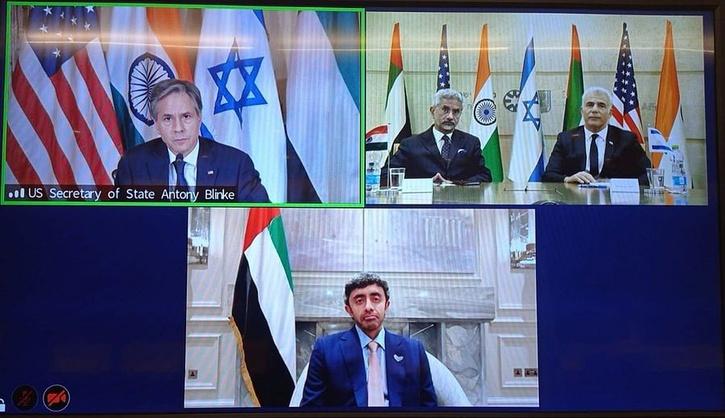
Foreign Ministers of India, Israel, UAE, US (clockwise) held a videoconference in October 2021 to launch a ‘Quad’ for West Asia
BY M. K. BHADRAKUMAR | INDIAN PUNCHLINE | JUNE 17, 2022
Indian diplomacy is descending from the sublime to the absurd. Such wild swings signal rank opportunism. These are extraordinary times when to be smart is equated as being opportunistic.
Hardly a week passed since PM Modi received the Iranian Foreign Minister Amir-Abdollahian in Delhi and expressed high hopes for India-Iran relationship. Now it transpires that India also forms part of the Gang of Four led by US President Joe Biden to “contain” Iran, from a new platform called I2U2 — the ‘I’ being India and Israel, and ‘U’ being US and UAE.
The I2U2 summit in mid-July between Biden, Israeli Prime Minister Bennett, Modi, and Emirati President Mohammed bin Zayed is destined to be a signpost in the geopolitics of West Asia. This new Quad first appeared on 18th October 2021 as an offspring of External Affairs Minister Jaishankar’s 5-day trip to Israel when from Tel Aviv he pulled a rabbit out of the hat, leaving the Indian public wonder what new grandstanding their impulsive minister was indulging in.
Between October and July this year, the I2U2 is getting an upgrade from foreign minister to prime minister/president level. On Tuesday, while announcing Biden’s first West Asian tour as president in mid-July, Washington has made some effort to rationalise Biden’s intentions in undertaking the planned visits to Israel and Saudi Arabia. A senior White House official said Biden intends:
- To demonstrate “the return of American leadership to bring countries together”;
- To create “new frameworks that aim to harness unique American capabilities to enable partners to work more closely together, which is essential to a more secure, prosperous, and stable Middle East region over the long term”;
- To build on the “resounding vote isolating Iran last week at the IAEA Board of Governors in Vienna where 30 countries condemned Iran’s lack of compliance with safeguard obligations” (where India, by the way, had abstained from supporting the US move);
- “To make sure we’re doing all we can to strengthen Israel’s security, prosperity, and integration into the larger region, both now and over the longer term”;
- To “focus on Israel’s increasing integration into the region” through new formats other than Abraham Accords, such as the “entirely new grouping of partners… what we call I2U2”!
So, that’s it. India will lend a hand to assist the US to refill the fizz that has gone out of the Abraham Accords. The hope that more countries would join Abraham Accords is withering away. Israel needs to be shown around to prospective suitors in its neighbourhood. I2U2 is, in essence, a dating agency. When it concerns Israel, the role of pandar comes naturally to the US presidents. But why should India squander away its soft power?
The US prestige and influence in West Asia has suffered a severe jolt during the Biden presidency. Not too long ago, Biden had called Saudi Arabia a “pariah” and pledged to make a horrible example of it on account of its human rights record. But now the shoe is on the other foot. Biden is craving for attention from Saudi Arabia. He had taken a second vow not to have any dealings with the powerful Saudi Crown Prince Mohammed bin Salman. But he is now beseeching the proud Prince for an audience. His recent phone calls weren’t answered.
The White House official explained Biden’s U-turn this way: “we have important interests interwoven with Saudi Arabia, and engagement is essential to protecting and advancing those interests on behalf of the American people.” In reality, Biden is swallowing pride and reviving the old matrix of US-Saudi relationship riveted on the petrodollar.
With poll rating falling abysmally low, Biden is desperate to tackle the rising inflation in the US economy, and the soaring price of oil is fuelling public disaffection. Saudi Arabia can help Biden salvage his standing.
However, it is the turn of the Saudis now to tell Americans there’s no free lunch. They want a written treaty to the effect that the US won’t ditch them when the crunch time comes or if the Kingdom or the ruling family feels insecure. Put differently, they want the Americans to act as their Praetorian guards as before.
In return, of course, Saudis will generate massive business for the US military-industrial complex, recycle their petrodollar to strengthen the Western banking system and create lucrative business for American companies — in short, help the beleaguered Western economies to pursue their post-pandemic recovery that is getting derailed by the war in Ukraine.
Indeed, the Saudis also have a rich history of lavishly greasing the palm of the American elite in the administration, the Pentagon and the Congress. In a nutshell, Biden as a seasoned operator in the Beltway knows which side of the bread is buttered.
But to rationalise his U-turn, an alibi is needed. So, Biden has decided to hoist “Iranian threat” as the leitmotif of the revamped US-Saudi security alliance. All signs are that Biden has acceded to the Saudi demand to scuttle the JCPOA and pile new sanctions against Iran, although the negotiations in Vienna are in home stretch and an agreement is within sight.
Biden’s West Asian agenda is completely US-centric, aimed at securing US business interests and shoring up its regional influence. Israel, of course, is a “holy cow”. Very soon Biden will begin fund-raising for his re-election bid in 2024, and Jewish donors are a generous lot.
However, the million dollar question remains: What has India got to do with Biden’s agenda? There are real risks, for the subplot here is that Biden hopes to nix India’s plans to revive its atrophied relationship with Iran. The recent visit of the Iranian foreign minister to India would have set alarm bells ringing in Washington and Tel Aviv.
Biden has a game plan for leaders like Modi who have a tendency to disregard the US diktat occasionally. Biden’s national security advisor Jake Sullivan spoke candidly just the other day:
“We’re playing the long game here. We are investing in a relationship (with India) that we are not going to judge by one issue even if that issue is quite consequential, but rather that we are going to judge over the fullness of time, as we try to work to convergence on the major strategic questions facing our two countries.
“On one of those questions — how to deal with the challenge posed by China — there’s much more convergence today, and that is important to US foreign policy. On the question of Russia, obviously, we have different historical perspectives, different muscle memories, but we feel confident that the dialogue we have going with India right now will bear fruit over time.”
Sullivan was discussing India’s time-tested relationship with Russia — how Washington hopes to erode and dissolve it all in good time.
Plainly put, Americans estimate that Indians have no “staying power,” or “big picture.” They probably estimate that the Indian government would grab the I2U2 platform to burnish its international image. But if there is any sanity left in the Indian foreign policy establishment, a subaltern role to serve US and Israeli interests cannot enhance India’s prestige in West Asia where, as it is, Modi government is perceived as an Islamophobic regime backed by religious fanatics.
In the life of individuals and nations alike, there are moments when one has to learn to say “no.” This self-serving, cynical overture from 78-year old Biden is one such moment. That’s why, despite zero chance of India turning down Biden’s invite, not to urge Modi to say “Nyet” to I2U2 will be a serious lapse.
South Block is underestimating the gravity of its folly. India never ever got entangled in the intra-regional issues in West Asia. It never acted as the surrogate of extra-regional powers, either. Most important, it never sought the “containment” of any regional state. That’s how it held its head high in the choppy waters of the Persian Gulf.
State Dept. Not Investigating Saudi Use of US Weapons in Alleged War Crimes: GAO
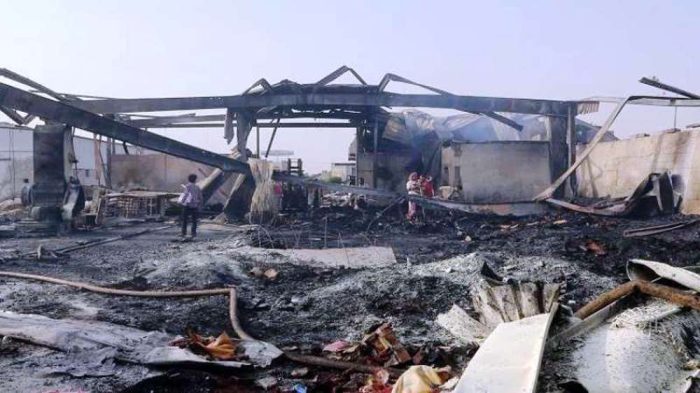
Samizdat | June 16, 2022
The Government Accountability Office (GAO) published a scathing report Monday which found that the Department of Defense and the Department of State “have not fully determined the extent to which U.S. military support has contributed to civilian harm in Yemen.” The news comes on the heels of the announcement that US President Joe Biden will be paying a visit next month to Saudi Arabia, a country which in 2019 he pledged to turn into a “pariah.”
“Despite several reports that airstrikes and other attacks by Saudi Arabia and UAE have caused extensive civilian harm in Yemen, [the Department of Defense] has not reported and [the State Department] could not provide evidence that it investigated any incidents of potential unauthorized use of equipment transferred to Saudi Arabia or UAE,” the GAO report concluded.
In February 2021, US President Joe Biden declared he was ending “all American support for offensive operations” in the Saudi war on Yemen. GAO monitors pointed out that while US Military Training Mission staff claimed that “all of the equipment the US sells… to Saudi Arabia must be for defensive purposes,” the “officials could not provide a definition for equipment that is defensive in nature when asked how they distinguish between equipment used for defensive purposes and equipment used for offensive purposes.”
Instead, the report’s authors noted, State Department officials “told us they have no specific definitions for what constitutes ‘offensive weapons’ and ‘defensive weapons’ to direct the sale of weapons to Saudi Arabia.”
The report also found that from fiscal year 2015 to 2021, the “Department of Defense administered at least $54.6 billion of military support to Saudi Arabia and the United Arab Emirates, of which over a third, or $18.3 billion, came in the form of missiles. The remaining military aid was reportedly spent as follows: $7.6 billion on equipment maintenance, $6.2 billion on aircraft, $4.9 billion on “special activities,” $4.6 billion on communication, detection, and coherent radiation equipment, $3.3 billion on ships, $2.8 billion on training, $1.4 billion on construction, $1.2 billion on ammunition, $1.1 billion on support equipment, $900 million on weapons, and $1.8 billion on other expenditures like combat, tactical, and support vehicles, as well as research and development.
Although “the United Nations has characterized the conflict in Yemen as one of the world’s worst humanitarian crises,” the report’s authors explain that the US has “long-standing security relationships with Saudi Arabia and UAE—two primary actors in the conflict—and has continued to provide them military support, including for operations in Yemen since 2015.”
In April, 32 US Congress members urged Secretary of State Anthony Blinken to commit to a “recalibration of the US-Saudi partnership,” noting that the US’ “continued unqualified support for the Saudi monarchy, which systematically, ruthlessly represses its own citizens, targets critics all over the world, carries out a brutal war in Yemen, and bolsters authoritarian regimes throughout the Middle East and North Africa, runs counter to US national interests and damages the credibility of the United States to uphold our values.”
But with Biden’s announcement that he’ll be flying to Riyadh next month for what the Saudi embassy described as “official talks” between Joe Biden and Prince Mohammed bin Salman, the odds of such an adjustment taking place–and of US agencies taking a more proactive approach towards American involvement in alleged Saudi war crimes–are growing ever-slimmer.
US may lift ban on Iranian oil – Vitol
Samizdat | June 6, 2022
The Biden administration might let more sanctioned Iranian oil flow into the global markets in an attempt to rein in fuel prices at home amid the run-up to the midterm elections in the US, according to a major independent crude trader.
“If the midterms are dominated by the need to get gas prices lower in America, turning a somewhat greater blind eye to the sanctioned barrels flowing out is probably something you might expect to see,” Mike Muller, the head of Asia at Vitol Group, told Dubai-based Gulf Intelligence on Sunday.
Gasoline prices have doubled in the US since President Joe Biden was inaugurated in January last year, according to last week’s data from the non-profit American Automobile Association (AAA). Global crude prices have been rallying in recent months, fueled by restrictions on Russian exports. On Monday, crude hit $120 a barrel as Saudi Arabia hiked prices for Asia.
The Trump administration reimposed sanctions on Iran’s oil, petrochemicals, shipping and other sectors in 2018 due to concerns over the country’s nuclear program. Talks between Tehran and world powers stalled in March and, according to Muller, the window of opportunity for the Biden administration to reach an agreement with Tehran has almost closed, but it could allow the transportation of Iranian crude anyway. In April, the US seized Iranian oil carried by a Russian tanker. Iran currently exports most of its oil to China.
Three French weapons makers complicit in war crimes in conflict-hit Yemen, three rights groups say

Press TV – June 2, 2022
Three human rights groups have filed a complaint against three top French weapons manufacturers for their complicity in gross war crimes after selling various types of ammunition to Saudi Arabia and the United Arab Emirates as the major members of the Saudi-led coalition of aggression.
The complaint was lodged by the European Center for Constitutional and Human Rights (ECCHR), the Mwatana for Human Rights as well as Sherpa International at a Paris court on Thursday.
The non-governmental organizations targeted French aerospace company Dassault Aviation, Thales Group and MBDA France, hoping that the legal action will further enlighten the world public opinion about the acts of aggression by the Saudi-led coalition at a time when the United States and its Western allies are seeking to improve ties with the Riyadh regime.
“The [Saudi-led] coalition’s airstrikes have caused terrible destruction in Yemen. Weapons produced and exported by European countries, and in particular France, have enabled these crimes,” Abdulrasheed al-Faqih, Executive Director of Yemeni organization Mwatana for Human Rights, said.
“Seven years into this war, the countless Yemeni victims deserve credible investigations into all perpetrators of crimes, including those potentially complicit,” he added.
Rights groups in France have repeatedly argued that the Paris government’s tacit support for the Saudi-led coalition has prolonged and worsened the Yemen conflict.
French prosecutors are already studying similar complaints filed against UAE President Mohammed bin Zayed Al Nahyan, Saudi Crown Prince Mohammed bin Salman and the French customs authority.
The complaint filed by rights groups against French arms makers comes as the United Nations announced that a truce between warring Yemeni sides had been extended for two months.
The initial two-month truce started at the beginning of the holy Muslim fasting month of Ramadan on April 2, and was set to expire on Thursday.
“I would like to announce that the parties to the conflict have agreed to the United Nations’ proposal to renew the current truce in Yemen for two additional months,” UN Special Envoy for Yemen Hans Grundberg said.
Grundberg added that the truce extension would come into effect “when the current truce period expires, today June 2, 2022 at 19:00 Yemen time (1600 GMT)”.
The Norwegian Refugee Council’s (NRC) Yemen Country Director, Erin Hutchinson, said in a statement after Grundberg’s announcement, “The announcement of the truce extension today shows a serious commitment from all parties to end the senseless suffering of millions of Yemenis.”
She added, “The last two months have shown that peaceful solutions to the conflict are a real option.”
Saudi Arabia launched the devastating war on Yemen in March 2015 in collaboration with its Arab allies and with arms and logistics support from the US and other Western states.
The objective was to reinstall the Riyadh-friendly regime of Abd Rabbuh Mansur Hadi and crush the Ansarullah resistance movement, which has been running state affairs in the absence of a functional government in Yemen.
While the Saudi-led coalition has failed to meet any of its objectives, the war has killed hundreds of thousands of Yemenis and spawned the world’s worst humanitarian crisis.
Featured Video
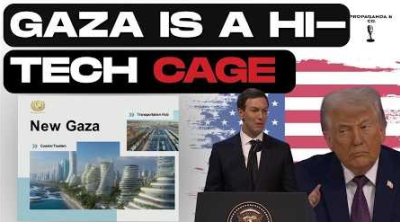
Your Enslavement Begins in Gaza: The ‘Board of Peace’
or go to
Aletho News Archives – Video-Images
From the Archives
The US: The Century of Lost Wars
By James Petras | Global Research | September 12, 2018
Introduction
Despite having the biggest military budget in the world, five times larger than the next six countries, the largest number of military bases – over 180 – in the world and the most expensive military industrial complex, the US has failed to win a single war in the 21st century.
In this paper we will enumerate the wars and proceed to analyze why, despite the powerful material basis for wars, it has led to failures. … continue
Blog Roll
 Aletho News
- Israel designates five Palestinian media outlets as ‘terrorist organizations’
- Israel, not America, first: Carlson’s Huckabee interview lays bare US foreign policy priorities
- Israeli troops executed Palestinian aid workers at ‘point blank range’: Report
- Iran war What if today’s Iran is resigned to a long, hellish war with the US?
- Why Israel Is Escalating Its War Crimes Against Lebanon
- Iran in the face of the armed diplomacy of imperialism
- The US build-up around Iran constitutes strategic war option, not ‘deterrence’
- Iran to US: Sanctions and war failed; try diplomacy and respect
- China supplies Iran with radar, surveillance tech to track US stealth aircraft: Report
- Zelensky rejects territorial concessions to Russia
- If Americans Knew
- Footage Shows Israeli Troops Waiting in Ambush, Then Opening Fire on a Palestinian Teen
- The US is on the brink of a major new war that Trump has not even bothered explaining
- Latest Epstein document dump is one more cover-up
- No Protection, No Justice: US Citizens Killed with Impunity by Israel
- Maria Farmer: Epstein Victim Reveals Explosive Information Covered Up by Media
- Average of five Palestinians killed by Israel every day in Gaza since ceasefire – Not a ceasefire Day 136
- Palestinian church leaders admonish Christian Zionist Mike Huckabee – Not a ceasefire Day 135
- Ominous messaging from Trump’s “Board of Peace” – Not a ceasefire Day 134
- ‘Christians Out’: Jerusalem Church Tagged With Hate Graffiti, Police Investigating
- Israeli Settlers Kill American Teen
- No Tricks Zone
- New Research Reaffirms Clouds, Aerosols, And Surface Solar Radiation Are ‘Driving The Climate System’
- Germany: Electric Car Catches Fire At Charging Station, Sets Off Local “Inferno”, Widespread Damage
- New Study: Canada’s New Brunswick Was 1°C Warmer Than Today During The Medieval Warm Period
- Coal Power Back In Trend As Globe Tries To Keep Pace With Growing Demand For Power
- New Study: A 4°C Warmer Beaufort Sea Had ‘No Sea Ice’ 11,700 – 8200 Years Ago
- Unfudging The Data: Dutch Meteorological Institute Reinstates Early 20th Centruy Heat Waves It Had Erased Earlier
- German Gas Crisis…Chancellor Merz Allegedly Bans Gas Debate Ahead of Elections!
- Pollen Reconstructions Show The Last Glacial’s Warming Events Were Global, 10x Greater Than Modern
- Germany’s Natural Gas Storage Level Dwindles To Just 28%… Increasingly Critical
- New Study Rebuts The Assumption That Anthropogenic CO2 Molecules Have ‘Special’ Properties
 Aletho News