Saudis want Imran Khan to back ‘anti-terror alliance’
By Kunwar Khuldune Shahid | Asia Times | August 24, 2018
Riyadh wants Imran Khan to openly support the Saudi-led Islamic Military Counter-Terrorism Coalition, after formally taking over as Prime Minister of Pakistan last week. Well-placed diplomatic sources say the Saudi rulers conveyed their desire in recent communications with the new Pakistani leadership.
The latest among these came on Tuesday, when Saudi Crown Prince Mohammad bin Salman met Pakistan Chief of Army Staff General Qamar Javed Bajwa in Mina. The Inter-Services Public Relations chief Maj Gen Asif Ghafoor tweeted that Crown Prince Salman helped General Bajwa to perform the Hajj ritual, and expressed support for the new government in Islamabad.
Senior military officials confirmed that Pakistan’s cooperation with Saudi Arabia on multiple fronts was discussed, including the security of the kingdom. Among these was the Islamic Military Counter-Terrorism Coalition (IMCTC), headed by former Pakistan Army Chief General Raheel Sharif, as Riyadh would like the new Pakistani government to be more involved.
“The Saudi leadership wants Prime Minister Imran Khan to publicly back the coalition because they see the benefit of someone with his global reputation to provide more credence to the alliance, which has been accused of having a sectarian tinge,” a senior diplomat told Asia Times. “The Saudis want to maintain that the absence of Iran and Iraq from the Islamic military coalition is because of political differences rather than religious or ideological [factors], and they believe Pakistan’s vocal support would help in this regard, especially given recent diplomatic developments.”
Anti-terror alliance or anti-Iran?
Saudi Arabia announced the anti-terror alliance in December 2015, when it described the Islamic State as a disease tarnishing the Muslim faith. However, critics have said the alliance, which has about 40 members, appears to be aimed at Iran as much as terrorists.
Earlier this month, Saudi Arabia expelled the Canadian ambassador after the Government of Canada called for the release of human rights activists. That was followed by an immediate message of support by the government of Pakistan, which said it stood with Saudi Arabia over its row with Canada. The caretaker government issued that statement, but Riyadh is hoping for similar vocal support from the Imran Khan-led administration sworn in last week.
Prince Muhammad Bin Salman called Khan last week to congratulate him on winning the election, and invited him to Saudi Arabia, an offer which the Pakistani premier accepted. The trip is likely to take place early next month. Bilateral ties between Riyadh and Islamabad will be discussed in detail, along with Pakistan’s role in the IMCTC.
Khan has previously opposed Pakistan getting involved in the Saudi war on Yemen, which is aided by the kingdom’s ties with the Pakistani military. “After the meeting in September [Khan] will say that Pakistan is very supportive of Saudi Arabia and is willing to do everything to safeguard the holy places from any attacks, which is usually interpreted as an intent of maintaining neutrality, but is accepted by the Saudis as Pakistan being willing to provide all kinds of military cooperation,” a retired military officer said to Asia Times. “However, it’s Pakistan’s support for the military coalition that will determine how many billion dollars the Saudis give us,” he said.
Pakistan is eying a $4-billion loan from the Saudi-backed Islamic Development Bank to address its balance of payments crisis. Riyadh could provide further economic favors as well, depending on how much Islamabad toes the Saudi line, as was the case for Khan’s predecessors.
Sharif prioritized ties with Saudi royals
Nawaz Sharif felt indebted to the Saudi leaders due to their support for the former premier in exile when he was ousted in a coup by former Army Chief General Pervez Musharraf, and critics have long noted how Sharif prioritized Islamabad’s relations with Riyadh over others, which helped alienate Pakistan’s neighbors in Iran.
Sharif’s pro-Saudi stance and his party’s alliances with sectarian groups in Punjab meant that Khan’s PTI had wide backing from the country’s Shia population, which forms around a fifth of Pakistan’s Muslim population. “Unlike Nawaz Sharif, Imran Khan is much better placed to balance relations between Iran and Saudi Arabia, which has been a long-held – but perpetually unfulfilled – goal of Pakistani foreign policy,” says Shameem Akhtar, a veteran foreign policy analyst, columnist and former dean of International Relations at Karachi University.
“Imran Khan doesn’t feel personally obliged towards the Saudis, who have long bought Pakistan and considered it their satellite state. If there’s anything that could push his hand it’s the economic support provided by Riyadh, given Pakistan’s fiscal needs.”
The first indication of the new government’s position on the IMCTC will come if it provides a No Objection Certificate for General Raheel Sharif to continue to command the coalition, after the Supreme Court noted earlier this month that the previous federal cabinet had not done so.
In court proceedings, Defense Secretary Lieutenant General Zamirul Hassan (Retired) said the defense ministry had granted a No Objection notice to Gen Sharif, but the Chief Justice of Pakistan underscored that the law required approval from the cabinet.
Lieutenant General Talat Masood, a former secretary of Pakistan’s Ministry of Defense Production, said he expects a No Objection Certificate to be granted to Gen Sharif. He also confirmed that a lot of Pakistan’s current support to the IMCTC is tacit, but “getting vocal” would be problematic for the new PM.
“The Saudi demand for open backing of the Islamic military coalition puts Imran Khan in a difficult position. I don’t think he would like to openly back the coalition, even though we support it in many ways, but not quite as openly,” Masood told Asia Times.
However, the Lieutenant General maintained that Khan would not have much of a say in the matter given the military leadership’s control over foreign policy. “I don’t think there will be much difference between the policy that Nawaz Sharif was pursuing vis-a-vis Saudi Arabia to what Imran Khan will pursue. Because it all depends on what the military feels and the policy that it decides,” he said.
SYRIA: The Emerging Reality of the U.S Coalition Regime Change War – On the Ground Reporting

Life and food return to Douma after liberation by SAA from Saudi-backed, UK-promoted Jaish Al Islam terrorists. (Photo: Vanessa Beeley)
By David Macilwain | 21st Century Wire | August 20, 2018
The withdrawal of US coalition support for “rebels” in Syria, portrayed as a failure to achieve noble and humanitarian goals by Western governments and media, should rather be seen as an admission of guilt. The rescuing of violent militants and “White Helmets” from Southern Syria by Israeli forces actually marked the failure of the covert project to forcibly replace Syria’s legitimate government with one of NATO’s choice, regardless of the democratic will and lives of the Syrian people.
Before we can ask “what if?” about the war on Syria, as Ramesh Thakur does in “The Strategist”, republished here on P&I, we need to understand what actually happened during the Western-sponsored seven-year long assault on the Syrian state, as seen from the perspective of those on the receiving end of this attack. Now that the Syrian Arab Army and its allies are finally prevailing in their defence of the country and its citizens, it is also time for Western commentators to stop repeating the same vapid accusations against the Syrian President, and instead start making accusations against their own “mis-leaders”.
Rather it appears that many in the West are entrenching their opposition to the Syrian government at the same time as millions of Syrians are confirming their support for it, and the armies that have fought off their enemies’ chosen alternative.
Ramesh Thakur’s partisan view on the “Syrian civil war” and the benign nature of the West’s intimate involvement in it is evidently shared by the Australian Strategic Policy Institute, and – one would imagine – by many of those in public office who act on its advice. The same innocence could not be assumed for ASPI sponsors, – defence contractors Lockheed Martin and Thales – who profit from that advice, nor presumably for Australian Intelligence agencies and their overseers in the government.
Back in May, and only weeks after the latest US/UK/French missile attack on Syria, I visited Damascus with my partner, and was able to verify the essential truth of reports from Syrian sources on the situation there, both in regard to the recent campaign to liberate Eastern Ghouta from armed militants, and more generally through personal contact with Syrians.
What we found however was both surprising and heartening; here was a country full of hope and passion, finally celebrating its imminent victory against one of the vilest and most devious enemies in history, led and supported by the most powerful and determined regimes in the world, including our own. Despite the harrowing cost to Syrian society, with over 80,000 regular Syrian soldiers killed, the people were strengthened and united behind their defence forces and their President.
In the seemingly endless fight against foreign-backed and foreign-armed insurgents, every Syrian now has a friend, relative or partner who has “died for his country”, killed, injured or tortured by these “barbarian invaders”. Even in Damascus an estimated 11,000 innocent people have been killed by “rebel” mortars and sniper fire from nearby suburbs.
Visiting a Government camp for the displaced residents of those same rebel-occupied Eastern suburbs of Damascus – Eastern Ghouta – brought home to us what this really means. The people sheltered and fed there – 15,000 in mid-May – had many stories to tell of the years they were held under siege in their communities by the violent militants of Jaish al Islam and Faylaq al Rahman, as well as of the behaviour of the so-called “White Helmets” who worked hand in hand with these terrorist groups. My colleague Vanessa Beeley, who visited the same camp a week earlier and conducted many interviews with Douma and Hamouriya residents has written comprehensively on their experiences; alone her report utterly condemns and exposes the lies and misinformation to which Australian and Western audiences have been subject on the “siege of Eastern Ghouta” and its denouement in the criminal Douma “gas attack” provocation.
Beeley had already exposed the incriminating truth of the previous US alliance campaign over East Aleppo, and the cooperation between the US/UK supported White Helmets and Al Qaeda that effectively prevented the city’s liberation for months in 2016.
It was likely at that point that Russia concluded that the US administration was “non-agreement-capable”, – a situation little altered by the subsequent change of US leadership. Progress towards a resolution of the conflict – in Astana – was then only made because the US was excluded, along with those Opposition groups that refused any compromise with the Assad government.
It is the nature of these Opposition groups, still supported by Western powers including Australia as some legitimate alternative to Syrians’ choice of government, which continues to elude most Western commentators. These groups were cultivated primarily by the Saudis, and reflect their extremist Wahhabi vision of ideal government as well as being associated with the worst terrorist groups operating in Syria. Had he not suffered a timely demise at the hands of Syrian security forces, the notorious terrorist and former leader of Jaish al Islam Zahran Alloush would have been in the running for Syria’s new leadership.
It is in this context that we ask “what if?” the Syrian government had been forcibly replaced by one of the West’s choosing; it belies both the intentions and the actions of the NATO – Saudi – Gulf state coalition, who ploughed billions in arms and support to these very immoderate groups to achieve their own objectives – which had nothing whatsoever to do with “humanitarian intervention” or “democratic reforms”.
By contrast, what actually happened in Syria, and in the main stronghold of Jaish al Islam in Douma, was all too easy to see on the ground. Our visit to Douma hospital, scene of the White Helmets’ most recent criminal fabrication, proved shocking even with what we already knew about the situation. Their claims of a chemical weapon attack, and staged “water-hosing” treatment for its alleged victims in the hospital’s emergency ward, continue to be endorsed by Western commentators like Thakur as well as governments, NGOs and the UN, despite being comprehensively exposed as false.
This remains the case even following the testimony of supposed gas victims seen in the staged video, brought to the Hague by Russia, and the findings of the OPCW showing no presence of chemical weapons residues at the site.
Many commentators have evidently now become impregnable bastions of the false Syrian chemical weapons narrative spread by their governments; in a previous article while discussing the Khan Shaikoun “gas attack” a year earlier, Ramesh Thakur quite wrongly concludes that the Syrian government was proven responsible.
While he cites the UNHRC and the UN-OPCW “evidence” as endorsement of this position, both bodies actually relied on second hand information from Opposition sources only, and refused Syria’s invitation to visit and inspect the Shayrat airbase from which they claimed the chemical weapons had come. Their duplicity was exposed when the US coalition sought to reinforce the mandate for the JIM at the Security Council over the Douma incident; Russia rightly vetoed this clearly disingenuous proposal.
In fact there was nothing for such a commission to investigate in Douma, as Russian and Syrian investigators had already found no toxic chemicals at the alleged site, and hospital staff denied knowledge of any such attack. But what proved really shocking to see at Douma hospital was the sophistication and extent of the tunnel system built beneath it. Canadian investigative journalist Eva Bartlett, who visited Douma just before we did, posted this article that includes video of her exploration of this extraordinary tunnel system, as well as corroborating interviews about the fabricated chemical weapons stories from many residents. The tunnel network not only allowed the armed militants of Jaish al Islam and Al Qaeda – along with their White Helmeted “partners” – to enter and take over the hospital whenever they wished, but protected them from Syrian and Russian bombs.
The belief amongst Syrians that these jihadist/terrorist groups were being assisted by foreign Special Forces, not just in constructing and equipping the tunnel system but in directing and coordinating the “underground resistance” was confirmed during the final evacuation of the Douma “jihadists” on buses to Northern Syria; special forces from Britain, Turkey and other countries were reportedly apprehended trying to escape with them. The MOD naturally denied this collusion, but events in Southern Syria last month, when hundreds of foreign fighters and White Helmets were “rescued” by their closest local ally Israel, seem to confirm and reinforce the Russian and Syrian claims.
While the Syrian people are remarkably forgiving, and focused on recovery and reconciliation within their own territory, few would not now lay blame for the death and devastation inflicted on the fabric of their society at the feet of the US-led coalition – of which Australia has been an integral part. Responsibility for the countless atrocities committed by the hundreds of violent sectarian militias, including Al Qaeda and Da’esh/Islamic State, lies squarely with those countries who conspired to assist them with rivers of weaponry and a tide of propaganda, like – in Trump’s words – “the world has never seen”; this was a conspiracy that began long before the “uprising” of March 2011.
Those who ignore the Syrian reality – that stares in the face of those who deign to look – and so allow this mountain of lies to remain even as another Western regime-change scheme gets under way, should also now prepare their defence; ignorance can no longer be an excuse.
***
David Macilwain is an independent observer and writer with a special focus on the war on Syria and its allies. He writes voluntarily for Russia Insider and the American Herald Tribune, from his home in the hills of NE Victoria. He visited Syria in May independently and at his own expense.
Saudi writer critical of UAE’s regional policies sentenced to 5 years in prison
Press TV – Aug 18, 2018
Saudi authorities have handed down prison sentence to a writer in the conservative oil-rich kingdom as part of a widening crackdown led by Crown Prince Mohammed bin Salman against Muslim preachers, members of the press and intellectuals.
The rights group Prisoners of Conscience, which is an independent non-governmental organization advocating human rights in Saudi Arabia, announced in a post on its official Twitter page that Mohammed al-Hudhaif was sentenced to five years in jail after being found guilty of “ insulting a friendly country.”
The post added that Saudi officials passed the ruling against Hudhaif at the end of a “secret trial” in late May.
The writer had reportedly published posts on his Twitter page, warning about the threats the neighboring United Arab Emirates poses to the Riyadh regime, and the fiendish plans that Emirati officials have for the Middle East region.
The report came only a few days after human rights activists said prominent Saudi Muslim preacher and political dissident Salman al-Odah, who has been in prison since September 2016, has been transferred from Dhahban Central Prison in the Red Sea port city of Jeddah to al-Ha’ir Prison in the capital Riyadh, and is about to stand a secret trial.
Earlier this week, Prisoners of Consciousness also reported that political dissident and Muslim preacher Sheikh Suleiman al-Doweesh had lost his life due to severe torture he was subjected to during criminal investigations.
Saudi Arabia has recently stepped up politically-motivated arrests, prosecution and conviction of peaceful dissident writers and human rights campaigners.
Saudi officials have also intensified security measures in the Shia-populated and oil-rich Eastern Province.
Eastern Province has been the scene of peaceful demonstrations since February 2011. Protesters have been demanding reforms, freedom of expression, release of political prisoners, and an end to economic and religious discrimination against the oil-rich region.
The protests have been met with a heavy-handed crackdown by the regime, with regime forces increasing security measures across the province.
Over the past years, Riyadh has also redefined its anti-terrorism laws to target activism.
In January 2016, Saudi authorities executed Shia cleric Sheikh Nimr Baqir al-Nimr, an outspoken critic of the policies of the Riyadh regime. Nimr had been arrested in Qatif in 2012.
Syria Lashes out at Riyadh “Compliance with Washington at Expense of Saudi People”
Al-Manar | August 18, 2018
Syria on Friday denounced Saudi financial support to the US-led international coalition’s role in northern Syria, stressing that such move indicates Riyadh’s compliance with the US administration at the expense of the Saudi people.
Syrian foreign ministry slammed Saudi authorities as “plotters against the interests of the Arab nation,” stressing that the Saudi support is in defiance of the UN Security Council resolutions related to the crisis in Syria.
US State Department announced earlier on Thursday, that Riyadh was offering a $100 million contribution “for ongoing, Coalition-supported stabilization efforts in areas liberated from ISIS in Syria,” referring to the Takfiri ISIL group.
SANA news agency quoted an official at the Syrian foreign ministry as saying: “This flawed Saudi decision comes within the framework of the Saudi authorities’ full compliance with the US administration at the expense of Saudi people who is suffering from poverty and dire economic recession.”
“The US-led coalition has killed thousands of Syrian children and women and attacked positions of the Syrian Arab Army dozens of times to prevent it from fighting Daesh (ISIS) terrorist organization east of Syria and elsewhere, as it destroyed Syrian infrastructure which has cost the Syrian people hundreds of billions of dollars in a direct US support for terrorist organizations,” the Syrian source said.
“The criminal coalition does not deserve this support from any country in the world because its main goal is to fragment the region and impose Zionist hegemony on all its countries.”
Meanwhile, the source stressed that the Saudi support “is morally unacceptable as it comes to prevent the Syrian Arab Army from achieving further victories over terrorism in northern Syria in an exposed attempt to prolong the crisis and support the forces that threaten Syria’s unity and territorial integrity.”
The source concluded by saying: “Syria condemns these despicable policies of the Saudi authorities and demands them to stop these terrible and dangerous policies, adding that “Syria reiterates its call on all the Coalition’s member states to withdraw from it without delay because it serves only terrorists and murderers and threatens security and peace in the region and the world,” according to SANA.
Saudi-US Propaganda by PBS NewsHour in Houthi-held Yemen

By William Boardman | Reader Supported News | July 24, 2018
One of the poorest countries in the Middle East, Yemen’s war has pushed it to the brink of famine. A Saudi blockade has slowed the flow of food and helped push prices up. Markets and businesses are ruined from airstrikes. Millions are destitute. Special correspondent Jane Ferguson smuggled herself across front lines to report on what’s happening inside the world’s worst humanitarian disaster.
— PBS NewsHour summary, July 2, 2018
This is what American tax-supported propaganda looks like when an organization like the PBS NewsHour wants to maintain a semblance of credibility while lying through its intimidated teeth. Yes, Yemen is one of the poorest countries in the world, long dependent on imported food and other life support. But to say “Yemen’s war” is major league deceit, and PBS surely knows the truth: that the war on Yemen is American-backed, initiated – illegally – in March 2015 by a Saudi-led coalition that includes the UAE (United Arab Emirates). The US/Saudi war is genocidal, creating famine and a cholera epidemic for military purposes. These are American and Arab war crimes that almost no one wants to acknowledge, much less confront.
The “Saudi blockade” is also a US Navy blockade. The blockade is a war crime. Starving civilians is a war crime.
The most amazing sentence is: “Markets and businesses are ruined from airstrikes.” Seems rather bland. But this is a tacit admission of more war crimes – Saudi bombing of civilian businesses, as well as civilian hospitals, weddings, and funerals. But PBS makes it sound like the airstrikes sort of come out of nowhere, like the rain. PBS omits the American culpability that makes the airstrikes possible: mid-air refueling, targeting support, intelligence sharing, and the rest. Think of Guernica, the fascist bombing of civilians that inspired Picasso’s painting. Now think of Guernica lasting three years. That’s what the US has supported in Yemen and that’s what PBS helps cover up.
Yes, “Millions are destitute,” and yes, this is “the world’s worst humanitarian disaster.” But an honest news organization might go on to note that the destitution and the disaster are deliberate results of the world’s most relentless war crime.
From a journalistic perspective, getting the perky blonde reporter Jane Ferguson into northern Yemen, where the Houthis have been in control since 2014, is an accomplishment of note. There has been little firsthand reporting from Houthi Yemen, where the worst war crimes have been committed and the worst suffering continues. Ferguson’s presence was certainly an opportunity for serious independent reporting. PBS didn’t allow that. Based on no persuasive evidence, PBS NewsHour host Judy Woodruff framed the report as coming from “territory held by the Iranian-backed Houthi rebels.” There is no credible evidence of meaningful Iranian support for the Houthis. To believe there is, one has to believe the Iranians are consistently getting through the US-Saudi blockade. PBS ignores such realities, as do most Washington policy-makers. Woodruff does acknowledge in her weaselly way that it’s “a brutal war that the United States is supporting through a Saudi-led coalition,” which is still a long way from the truth that it’s a genocidal bombing campaign made possible by the US.
Reporter Ferguson adds to the distraction by focusing on the poverty and suffering as if they came from nowhere:
Life is slipping away from Maimona Shaghadar. She suffers the agony of starvation in silence. No longer able to walk or talk, at 11 years old, little Maimona’s emaciated body weighs just 24 pounds. Watching over her is older brother Najib, who brought her to this remote hospital in Yemen, desperate to get help. The nurses here fight for the lives of children who are starving….
You were never supposed to see these images of Maimona. A blockade of rebel-held Northern Yemen stops reporters from getting here. Journalists are not allowed on flights into the area. No cameras, no pictures.
That last bit of self-dramatization of the daring journalist glosses over a harsh reality: in addition to waging a genocidal war on a trapped population, the US-Saudi axis is also enforcing isolation and censorship on the victim population. It is a US-Saudi blockade that keeps reporters out, preventing firsthand reporting of endless war crimes. Who says? Jane Ferguson says:
The Houthis cautiously welcomed me in and, once I was there, watched me closely.
Ferguson’s coverage of the hunger and starvation is heart-wrenching, journalism at its most moving but least informative. She frames her narrative falsely:
In the midst of political chaos in Yemen after the Arab Spring, Houthi rebels from the north captured the capital, Sanaa, in 2014, before sweeping south and causing the country’s then president to flee. Neighboring Sunni, Saudi Arabia, views the Houthis, from a Yemeni sect close to Shia Islam and backed by rival Iran, as an unacceptable threat along their border.
Political chaos is Yemen is decades if not centuries old, often fomented by the Saudis and other outside powers. The Houthis have been there for thousands of years (as Ferguson later acknowledges) and their dispute with the Saudis is ancient and territorial. The Houthis’ religion is independent. The influence of Iran is largely a Saudi night-fright made increasingly real by the war the Saudis say is supposed to stop Iran. This is contrary to the official story. Ferguson does not acknowledge it.
Ferguson pitches the second part of her three-part series, deceitfully understating American responsibility for the carnage. She doesn’t mention that the war would not have started without a US green light, saying only:
But there is a role played by the U.S. military, one that is sort of more passively behind, not quite as visible. And so we’re going to be looking at that role.
This is the official position of the Pentagon, which has claimed the US is not involved in combat in Yemen. The US role that is “more passively behind, not quite so visible” is still crucial to killing Yemenis on a daily basis. The war on Yemen began with US blessing and continues only because of US political, logistical, and materiel support. Jane Ferguson begins this segment with a reasonably accurate albeit morally numb description:
Inside rebel territory in Yemen, the war rains down from the sky. On the ground, front lines have not moved much in the past three years of conflict. Instead, an aerial bombing campaign by the Saudi-led and American-backed coalition hammers much of the country’s north….
Treating war crimes against defenseless people as a kind of natural disaster is barren of journalistic integrity and gives the war criminals a pass when they need calling out. Ferguson goes on in her antiseptic, no-one’s-responsible manner to illustrate the killing of civilians and the destruction of civilian facilities, including a Doctors Without Borders cholera clinic. She also documents US-made weaponry, including an array of unexploded bombs and a collection of cluster bombs. She doesn’t mention that cluster bombs are banned by most of the world and constitute a war crime in themselves. She does note that cluster bombs often wound civilians, then follows this fact with the gratuitously propagandistic comment: “The Houthis have also targeted civilians, throwing anyone suspected of opposing them in jail.” She has no follow-up, leaving the audience with a false moral equivalence between blowing off a child’s arm and throwing someone in jail. But it gets worse. Ferguson later gets off this political judo move:
Most people here, whether they support the Houthis or not, know that many of the bombs being dropped are American. It provides a strong propaganda tool for the Houthi rebels, who go by the slogan “Death to America.”
What does that even mean, “go by the slogan ‘Death to America’?” Again Ferguson has no follow-up. Later she shows a crowd chanting “Death to America” as if that has relevance. Why wouldn’t the defenseless victims wish death on the country that murders them without surcease? The main purpose of introducing “Death to America” (with all its Iran-hostage resonance) seems propagandistic, to inflame American audiences that remain in denial about their own very real war guilt. American-supported bombing of Yemen is a fact. It is, quite literally, “Death to Yemen.” For Ferguson to call it a “strong propaganda tool” is a Big Lie in classic propaganda tradition. For PBS to broadcast this lie is to engage in propaganda. PBS and Ferguson not only blame the victim, they characterize their very real victimization as if it weren’t true but mere propaganda. At the end of the segment, Ferguson once again engages in false moral equivalence:
Both the Houthis and the Saudi-led coalition have disregarded innocent civilian life in this war. Every bomb that falls on a hospital, office building or home causes more unease about where they come from.
While it may well be true that “both sides” have killed or wounded civilians, there is absolutely no comparison in scale. The US-Saudi coalition comprises mass murderers; the Houthis don’t come close. “Every bomb that falls,” Ferguson should have said, is dropped by the US-Saudi side on the Houthi side. There is no doubt where the bombs come from.
In her third and last PBS segment, Ferguson foregoes any effort to explore the reality of hundreds of years of Houthi-Saudi territorial conflict. Instead, she goes to bed with US propaganda, opening with a crowd of Yemenis chanting “Death to America” and then stating:
These rebels, known as Houthis, seized control of Sanaa City and much of the north of the country in 2014. They are of Yemen’s Zaydi sect and closest to Shia Islam. Their growing power caused alarm across the border in Sunni Saudi Arabia, so the Saudis formed a coalition of Arab countries to defeat them, a coalition backed by the United States.
This is so twisted it amounts to intellectual fraud. Yemen has a long, tortured history of foreign interference. In the years before 2014, Yemen served (without much choice) as a base for US drone bases. At the same time, the international community imposed a Saudi puppet as Yemen’s president (presently in exile in Saudi Arabia). In 2014, the Houthi uprising, widely popular among Yemen’s 28 million people, drove out both the US drone bases and the Saudi puppet president. The Houthis represented something like Yemeni independence, which the US, Saudis, and others opposed with lethal force.
US support for the war in Yemen constitutes an impeachable offense for two American presidents. So do continuing drone strikes, also known as presidential assassinations. The war began because President Obama approved it and the Saudis were willing to bomb a defenseless population. But according to Ferguson:
The Saudis and the United States say the Houthis are puppets for Tehran, a proxy form of Iranian military power right on Saudi Arabia’s doorstep.
This is real propaganda. There is no evidence that the Houthis are anyone’s puppets (which is one reason they need to be oppressed). Historically, the Houthis are an oppressed people who keep rising up again and again to re-establish their own freedom and independence. There is no credible evidence of significant Iranian presence in Yemen. PBS and Ferguson certainly present none, and neither have the US or Saudi governments. American demonization of Iran has been a fixed idea since 1979, rooted in two psychopathologies: American unwillingness to accept responsibility for imposing a police state on Iran and American inability to see the hostage-taking of 1979 as a rational response to past American predation. American exceptionalism is a sickness that punishes others, currently millions of innocent Yemenis.
Ferguson concludes her series with a dishonest use of journalistic balance, first with a quote from Senator Bernie Sanders arguing that the US role in the Yemen war is unconstitutional. Rather than assess that straightforward argument, Ferguson turns to an Idaho Republican, Senator James Reich, who offers fairy dust and lies:
The Iranians are in there and they are causing the difficulty that’s there. If the Iranians would back off, I have no doubt that the Saudis will back off. But the Saudis have the absolute right to defend themselves.
Imaginary Iranians aren’t there now and they weren’t there when the Saudis attacked in 2015. No one attacked Saudi Arabia. The Saudis are not defending themselves, they are waging aggressive war.
By balancing these quotes, Ferguson creates yet another false moral equivalence. There is no meaningful equivalence between Bernie Sanders challenging the president’s right to take the country to war on his own and James Reich using a lie to defend war-making that disregards Congress. PBS should be ashamed. Jane Ferguson offers a fig leaf with another quote from Bernie Sanders:
I don’t know that I have ever participated in a vote which says that the United States must be an ally to Saudi’s militaristic ambitions. This is a despotic regime which treats women as third-class citizens. There are no elections there. They have their own goals and their own ambitions.*
All this is true, but Ferguson has no follow up. Instead she again offers spurious analysis: “American support for Saudi Arabia is a major propaganda tool for the Houthis.” No, it’s not. American support for the Saudis is not propaganda, it’s a lethal reality for the Houthis and a crime against humanity for the world. Ferguson completes her piece with a soppy lament for civilian victims, as if no one is responsible for their suffering. That’s one last lie. There are many people responsible for the horror in Yemen today and leading the list is the US-Saudi coalition. It doesn’t take much intelligence to see that, but apparently it takes more courage than PBS has to report the obvious.
*[Yet Sanders campaigned on using Saudi troops to depose Syria’s legitimate and secular government – Aletho News ]
May, Hunt silent as UK’s best arms customer kills dozens of children in Yemen bus attack
RT | August 11, 2018
After a Saudi-led attack in Yemen killed and injured dozens of children, the public is again questioning London’s arms sales to Riyadh. Officials have kept silent, helped by the MSM which fails to question the UK’s involvement.
According to the International Committee of the Red Cross, the body count from Thursday’s attack sits at 51, including 40 children. Seventy-nine others were also injured in the attack, 56 of whom were children. It is understood that the bus was bringing children home from a picnic when it was attacked.
According to figures compiled by the Campaign Against Arms Trade, the United Kingdom has supplied the Saudi government with approximately £5 billion (US$6.38 billion) worth of arms – weapons, fighter jets, and even air strike training – since the war in Yemen began in March 2015. The UK government sells more arms to Saudi Arabia than any other country in the world.
Spokesman for the Campaign Against Arms Trade Andrew Smith told RT that “UK fighter jets and bombs have played a central role in the ongoing destruction,” and called for a full investigation “into if UK arms have been used in this appalling bombing.”
Foreign Office Minister Alistair Burt took to Twitter to say he was “deeply concerned by reports of yesterday’s attack in Sa’ada, Yemen resulting in tragic deaths of so many children.”
UK Prime Minister Theresa May, Foreign Secretary Jeremy Hunt, and the Foreign Office have issued no statements on the atrocities, and ignored RT when approached for comment. The prime minister’s office refused to accept a list of questions from an RT journalist, or provide an email address for other future queries. Neither the PM, Foreign Secretary, or Foreign Office have provided comment to the media on the Yemen bus attack.
Shadow Foreign Secretary Emily Thornberry condemned the attacks, and lashed out at the Tory government for “arming and advising a Saudi air force that cannot tell or does not see the difference between a legitimate military target and a bus full of children.”
“It is five months to the day since the Crown Prince of Saudi Arabia left London with the fawning praise of Theresa May ringing in his ears, and a renewed commitment from her government to supply the arms to support his disastrous military intervention in Yemen,” Thornberry said on Thursday.
“In those five months, while all sides in this conflict have continued to behave with a wilful disregard for human life, it is the Saudi-led coalition that has inflicted the bulk of civilian casualties… how many more children in Yemen need to be killed by Saudi air strikes or die from malnutrition, cholera or other diseases before Theresa May will stop supporting this catastrophic, murderous war, and start taking action to end it?”
Mainstream media in the United Kingdom have broadly failed to take UK PM Theresa May and Foreign Secretary Jeremy Hunt to task over the government’s hand in the brutal slaying of the 51 Yemenis killed in the attack. Those on social media, however, were quick to question why such a horrific bombing failed to make more headlines across the mainstream press.
Media pundit George Galloway got straight to the point. “Why isn’t the murder of dozens of children in #Yemen by #Saudi war-planes dropping UK and US bombs creating waves in the media today?”
Other Twitter users highlighted the US-UK government’s complicity in the Yemeni war as a potential reason for the lack of coverage from mainstream outlets: “the UK Govt is providing Saudi Arabia with training, intelligence, logistical support and weapons in their war in Yemen yet the BBC decided not to mention any of this in their report of yesterday’s massacre,” one user said, with another adding: “this is a real, verified #Yemen massacre by a US UK ally, and using US UK arms, it’s receiving almost no US UK front page coverage at all.”
Others who were outraged by the tragic slaughter of the Yemeni bus children, many of whom were under 10 years old, attacked the UK’s state-funded broadcaster, the BBC, for omitting the UK government’s complicity in their coverage.
Some jumped on a viral campaign calling out the BBC for alleged media bias and a lack of impartiality with the hashtag #BBCswitchoff. The campaign, organized to highlight the publicly funded broadcaster’s perceived bias against Labour leader Jeremy Corbyn, began at 6pm to coincide with the TV station’s news program. The Twittersphere soon jumped on board to spread their frustration with the lack of coverage from the UK’s state broadcaster.
Saudi-led coalition ‘victories’ achieved by striking deals with Al-Qaeda in Yemen – AP report
RT | August 6, 2018
An investigation has found that the US-backed, Saudi-led intervention in Yemen has cut secret deals with jihadists from al-Qaeda in the Arabian Peninsula (AQAP), paying them to leave cities rather than dislodging them by force.
The startling revelations come in stark contrast to the long-running US policy of trying to eliminate the jihadist organization with the help of allies from the Arabian peninsula, however, the more pressing aim of defeating Iranian-backed Houthi rebels in Yemen has seen AQAP effectively be on the same side as the Saudi-led coalition — and, by extension, the US, according to Associated Press (AP).
AP based their findings on reporting from the war-torn nation and interviews with two dozen officials, including Yemeni security officers, militia commanders, tribal mediators and four members of al-Qaeda’s branch. All but a few of those sources spoke on condition of anonymity, fearing reprisals. Emirati-backed factions, like most armed groups in Yemen, have been accused of abducting or killing their critics.
The US and their allies have maintained that the last two years has seen them dislodge AQAP from their strongholds in Yemen and limiting their capability to launch attacks on the West.
What the investigation reveals, however, is that this was often done without firing a shot, with key participants saying the US was aware of the arrangements and held off on any drone strikes.
Due to the lack of reliant and effective partners on the ground, coalition partners have also reportedly hired al-Qaeda militants, or at the very least recent members, to fight in militias due to their reputation as “exceptional fighters,” AP said. They added that AQAP members have intertwined with the “dizzying mix of militias, factions, tribal warlords and tribes with very local interests.”
While there is no evidence to suggest that the US itself has given money to AQAP militants, partners involved in the Saudi-led coalition have. The aide of one militia commander recently added to Washington’s terrorism watch list for al-Qaeda ties told AP that the UAE continues to fund his operation.
Another militia commander who has an al-Qaeda figure as his closest aide was recently given $12 million by Yemen’s President Abdrabbuh Mansour Hadi.
While the US does not fund the Saudi-led coalition, it along with the UK, have sold billions of dollars in weapons to Arab partners, as well as providing logistical and targeting support.
While there is awareness and “angst” by “elements of the US military” that its activities in Yemen is strengthening AQAP, “supporting the UAE and the Kingdom of Saudi Arabia against what the US views as Iranian expansionism takes priority,” Michael Horton, a fellow at the analysis group Jamestown Foundation, told AP.
In an email to AP about their investigation, a Pentagon spokesperson denied any US support for AQAP or that they have been soft on drone strikes, and backed up its Arab allies’ commitment to tackling extremism.
“Since the beginning of 2017, we have conducted more than 140 strikes to remove key AQAP leaders and disrupt its ability to use ungoverned spaces to recruit, train and plan operations against the US and our partners across the region,” spokesman Navy Cmdr. Sean Robertson wrote.
“Our regional partners have a proven track record of aggressively pursuing terrorist organizations and denying them safe haven in Yemen and DOD does not have any reason to doubt their resolve,” he added.
Saudi Arabia meanwhile says it has continued its commitment to combating extremism and terrorism. The UAE did not respond to AP’s request for comment.
Trump Duped by Saudis on Iran Oil Sanctions – Tehran Official
Sputnik – 01.08.2018
President Trump’s offer of “no preconditions” talks with Iran’s comes as a surprise break from months of escalating rhetoric in the wake of his walkout from the landmark Iran nuclear deal.
US President Donald Trump has apparently been hoodwinked by Saudi Arabia into believing that the kingdom will be able to make up for a projected drop in Iranian oil exports after the US sanctions take effect in November, Iran’s Press TV reported citing the head of the country’s OPEC governor.
“It seems President Trump has been taken hostage by Saudi Arabia and a few producers when they claimed they can replace 2.5 million barrels per day of Iranian exports, encouraging him to take action against Iran,” Hossein Kazempour Ardebili said.
US Back and Forth on Iran Oil Trade
The White House said last month that Saudi Arabia’s King Salman had promised Trump to raise oil production and that the kingdom had two million barrels per day of spare capacity to boost output to offset a decline Iranian oil supplies.
Iran insists that President Trump’s hope that certain oil producers can fill the gap created as a result of cutting off Iranian oil supplies is based on a “miscalculation.”
Late last month, a senior US State Department official said that countries buying Iranian oil should bring their Iranian crude imports down to zero by the time Washington re-imposes sanctions against the Islamic Republic’s banking and petroleum sectors.
Washington later backed off a bit with Secretary of State Mike Pompeo saying in July that the United States might grant waivers to countries seeking relief from sanctions the US has threatened to impose.
Trump’s U-Turn on Iran
On Monday, President Trump said he would be willing to meet his Iranian counterpart, Hassan Rouhani without preconditions to discuss how to improve ties, but Tehran flatly turned down Trump’s offer dismissing it as worthless and “a humiliation” after he acted to re-impose sanctions on Tehran following the withdrawal from the 2015 landmark nuclear deal.
“Sanctions and pressures are the exact opposite of dialogue,” Iran’s Foreign Ministry spokesman Bahram Qassemi said on Tuesday.
Trump’s overture towards Iran came a week after he threatened the country with “consequences the likes of which few throughout history have ever suffered before,” in an all caps tweet.
On May 8, President Donald Trump said he was withdrawing the US from the 2015 nuclear agreement with Tehran and promised to impose the “highest level” of sanctions on the country’s energy, petrochemical and financial sectors despite objections from Europe as well as Russia and China — the other parties to the deal, known as the Joint Comprehensive Plan of Action (JCPOA).
UNICEF Says Drinking Water Systems in Yemen under Repeated Attacks
Al-Manar | August 1, 2018
UNICEF, on Wednesday, called for immediate halt to attacks on water facilities and civilian infrastructure in Yemen.
UNICEF Executive Director Henrietta Holsman Fore, said that attacks against civilian facilities and services “are unacceptable, inhumane and in breach of the basic laws of war.
“Ongoing violence and repeated attacks on lifesaving civilian infrastructure in Hodeida are a direct threat to the survival of hundreds of thousands of children and their families,” the official said.
“Yet the past few days have seen an escalation in the targeting of systems and facilities that are essential to sustaining the lives of children and families.”
Fore said UNICEF had received, in the past two days, reports that a UNICEF-supported warehouse containing humanitarian provisions, including hygiene and water-related supplies, was hit by two airstrikes.
“Yemen is already facing a severe shortage of drinking water, which is directly linked to outbreaks of cholera and acute watery diarrhea. Attacks on water infrastructure jeopardize efforts to prevent another outbreak of cholera and acute watery diarrhea in Yemen,” she warned, calling “on all parties to the conflict to protect civilians and civilian infrastructure.”
“The war in Yemen has no winners. It is robbing Yemeni children of their futures.”
Yemen’s Houthis ready to unilaterally halt attacks in Red Sea – official
RT | July 31, 2018
Yemen’s Houthi group said on Tuesday it is ready to unilaterally halt attacks in the Red Sea to support peace efforts.
Saudi Arabia earlier suspended oil exports through a strategic Red Sea channel following an attack on crude tankers last week.
Yemen, where a Saudi-led coalition has been battling the Houthi movement in a three-year-old war, borders the Bab al-Mandeb strait, which is one of the world’s most important trade routes for oil tankers.
“The unilateral halt in naval military operations will be for a limited time period and could be extended and include all fronts if this move is reciprocated by the leadership of the coalition,” said the head of the Houthi supreme revolutionary committee, Mohammed Ali al-Houthi.
It was not clear whether the group would halt its attacks immediately or how long the cessation would last, Reuters said.
Featured Video
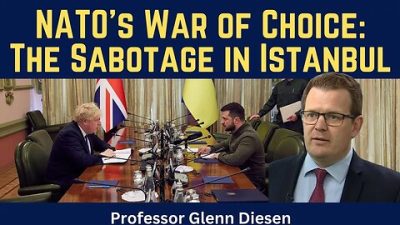
NATO’s War of Choice – The Sabotage of the Istanbul Negotiations
or go to
Aletho News Archives – Video-Images
From the Archives
National Security Archive Publishes Key Records on Infamous MKULTRA Program
Agency Sought Drugs and Behavior Control Techniques to Use in “Special Interrogations” and Offensive Operations
Edited by Michael Evans | National Security Archive | December 23, 2024
Washington, D.C. – Today, the National Security Archive and ProQuest (part of Clarivate) celebrate the publication of a new scholarly document collection many years in the making on the shocking secret history of the CIA’s mind control research programs. The new collection, CIA and the Behavioral Sciences: Mind Control, Drug Experiments and MKULTRA, brings together more than 1,200 essential records on one of the most infamous and abusive programs in CIA history.
Under code names that included MKULTRA, BLUEBIRD and ARTICHOKE, the CIA conducted terrifying experiments using drugs, hypnosis, isolation, sensory deprivation, and other extreme techniques on human subjects, often U.S. citizens, who frequently had no idea what was being done to them or that they were part of a CIA test.
Today’s announcement comes 50 years after a New York Times investigation by Seymour Hersh touched off probes that would bring MKULTRA abuses to light. The new collection also comes 70 years since U.S. pharmaceutical giant Eli Lilly & Company first developed a process to streamline the manufacture of LSD in late 1954, becoming the CIA’s chief supplier of the newly discovered psychoactive chemical central to many of the Agency’s behavior control efforts.
Highlights of the new MKULTRA collection include… continue
Blog Roll
 Aletho News
- Glenn Diesen: NATO’s War of Choice – The Sabotage of the Istanbul Negotiations
- What’s Really in the Bag: The Pet Food Industry’s Dirty Secret
- Project Artichoke: 70 Years Ago, CIA Discussed Hiding Mind-Control Drugs in Vaccines
- Drug traffickers trained in Ukraine attack state forces in Mexico
- The tragic reality of Brazilian mercenaries in the Ukrainian conflict
- Zelensky Refused to Discuss Druzhba Pipeline Issue – Fico
- U.S. General Caine Warns: STRIKING IRAN is a HUGE RISK /Glenn Diesen & Lt Col Daniel Davis
- Israel designates five Palestinian media outlets as ‘terrorist organizations’
- Israel, not America, first: Carlson’s Huckabee interview lays bare US foreign policy priorities
- Israeli troops executed Palestinian aid workers at ‘point blank range’: Report
- If Americans Knew
- Fourteen Countries Condemn Huckabee’s Support for Israel Taking Over Most of the Middle East
- Israeli Soldiers Killed Gaza Aid Workers at Point Blank Range in 2025 Massacre: Report
- Israel’s insidious network to propagandize American Christians
- Israel’s Best-Kept Secret: Palestinian Resistance Never Agreed to Disarm
- Trump officials plan to build 5,000-person military base in Gaza, files show
- Are MAGA restrainers pulling their punches this time on Iran?
- The NY Times on the “MAGA” Split Over Israel & USS Liberty
- In Gaza, Ramadan without mosques, imams – Not a ceasefire Day 137
- Footage Shows Israeli Troops Waiting in Ambush, Then Opening Fire on a Palestinian Teen
- The US is on the brink of a major new war that Trump has not even bothered explaining
- No Tricks Zone
- Surprising Discovery: Sahara Is Greening…Billions Of Trees Where Once Thought To Be Barren
- New Research Reaffirms Clouds, Aerosols, And Surface Solar Radiation Are ‘Driving The Climate System’
- Germany: Electric Car Catches Fire At Charging Station, Sets Off Local “Inferno”, Widespread Damage
- New Study: Canada’s New Brunswick Was 1°C Warmer Than Today During The Medieval Warm Period
- Coal Power Back In Trend As Globe Tries To Keep Pace With Growing Demand For Power
- New Study: A 4°C Warmer Beaufort Sea Had ‘No Sea Ice’ 11,700 – 8200 Years Ago
- Unfudging The Data: Dutch Meteorological Institute Reinstates Early 20th Centruy Heat Waves It Had Erased Earlier
- German Gas Crisis…Chancellor Merz Allegedly Bans Gas Debate Ahead of Elections!
- Pollen Reconstructions Show The Last Glacial’s Warming Events Were Global, 10x Greater Than Modern
- Germany’s Natural Gas Storage Level Dwindles To Just 28%… Increasingly Critical
 Aletho News