Hariri Released from Saudi Arabia, Son and Daughter Still in Riyadh
Al-Manar | November 18, 2017
Lebanese PM Saad Hariri arrived in Paris early on Saturday after being held for 13 days in Riyadh by Saudi authorities. Hariri is accompanied by his wife, but his son and daughter are still in Saudi capital, in a move that raises many questions.
Hariri arrived in Le Bourget airport at 8:00 a.m. (Beirut time). He drove the car to his house in Paris by himself, local media reported.
Hariri was accompanied by his wife Lara, but his son Abdul Aziz and daughter Lulua are still in Riyadh, according to local media. Meanwhile, Hariri’s eldest son Hussam, who was in London, flew to Paris late on Friday to meet his father.
Interior Minister Nohad Machnouk, who is also a member in Hariri’s parliamentary bloc, along with the PM’s bureau chief Nader Hariri arrived in Paris to meet the Lebanese premier.
As Hariri left Saudi Arabia, a tweet posted on his Twitter account read: “To say that I am held up in Saudi Arabia and not allowed to leave the country is a lie. I am on the way to the airport.”
Hariri’s arrival in France comes as Lebanon, led by President Michel Aoun, launched a diplomatic campaign aimed at revealing the reality behind Hariri’s absence since he announced his shock resignation on November 4 from Riyadh.
President Aoun on Wednesday stated it clearly that Hariri is detained in Riyadh.
Earlier this week Lebanese FM, Gebran Bassil made a tour in European countries in which he met with high level European officials. During the tour, Bassil’s move was supported by European officials who condemned interference in Lebanese internal affairs and called for Hariri’s return.
In a move seen as an exit to the crisis, French president Emmanuel Macron on Wednesday invited Hariri and his family to visit France for a “few days”. On Thursday, French Foreign Minister Jean-Yves Le Drian said Hariri “has accepted an invitation” to travel to Paris.
Palestine: Saudi Arabia, Egypt using Rafah crossing to pressure us
MEMO | November 17, 2017
The Rafah crossing between the besieged Gaza Strip and Egypt is being used a tool to pressure Palestinian President Mahmoud Abbas to enter into US-backed peace talks with Israel, a Palestinian Authority official has said.
“The Rafah crossing has become a tool that Egypt and Saudi Arabia use to pressure Palestinian President Mahmoud Abbas to accept the entry into a new round of US-backed negotiations with Israel,” the PA official said, warning that “the negotiations could reach results that may affect the rights of the Palestinians.”
According to the Cairo agreement which was signed on 12 October, Egypt agreed with Fatah and Hamas to reopen the Rafah border crossing last Tuesday, but the official said that “Saudi Arabia seemed to have pressured Egypt to retreat until the PA approves the two-state solution deal.”
The official described the exploiting of the only humanitarian crossing for Gaza’s residents as “suspicious”.
“They [Arab countries] are using the crossing to strengthen their ties with the US and Israel” he added.
Israel has maintained a blockade on Gaza for a decade, with tight restrictions in place on the movement of people and goods at its crossings, citing the need to control Hamas and stop Islamic groups from obtaining weapons or materials that could be used against Tel Aviv. Egypt has supported the blockade by closing the Rafah crossing, leaving Palestinian in Gaza no access to the outside world.
Gaza’s two million residents suffer from worsening humanitarian conditions, with only a few hours of power a day and a lack of clean water. Control of the Rafah crossing at Gaza’s southern border has long been a sticking point between the two Palestinian factions, and between Egypt and the Palestinians in Gaza for whom the crossing represents a vital gateway to the outside world.
Lebanon FM: Hariri crisis ‘part of attempt to create chaos’
Press TV – November 17, 2017
Lebanese Foreign Minister Gebran Bassil says the crisis over the resignation of Prime Minister Saad al-Hariri is part of an “attempt to create chaos in the region.”
Speaking in Moscow on Friday, Bassil said Lebanon has the “full powers” to respond to the crisis, but hoped this would not be necessary.
“We will respond and we have the full powers to do that, but we hope it doesn’t come to that,” he said.
Lebanese President Michel Aoun has said that Hariri, who resigned as prime minister on Nov. 4, is being detained in Saudi Arabia against his will – despite the premier’s reassurances he would return home soon.
On Friday, a senior Hariri aide was quoted as saying that Hariri will see France’s president on Saturday in Paris and the meeting will help resolve the Lebanese crisis and boost stability.
Bassil has been touring European capitals to lobby for Hariri’s return. On Thursday, he warned that Lebanon should not be treated as a plaything by any country.
“Lebanon is not a toy in others’ hands,” the Lebanese foreign minister said at a joint press conference with his German counterpart Sigmar Gabriel in Berlin.
Gabriel said he shared concerns about the threat of instability and bloodshed in Lebanon and, without mentioning Saudi Arabia directly, warned against the “adventurism” behind the Lebanon crisis and the “human tragedy in Yemen.”
“We expect that Prime Minister Hariri can come back to Beirut,” he added.
Saudi Arabia has been bombing Yemen since 2015 to restore its Riyadh-allied government, killing many thousands in the process.
Bassil, for his part, said, the “Hariri issue is actually a matter of Lebanon’s sovereignty,” and called on Arab countries to “not interfere with Lebanon’s internal matters.”
The Lebanese foreign minister also said further turmoil in his country, which is already hosting thousands of refugees fleeing violence in neighboring Syria, would create a new influx of asylum seekers to Europe.
Bassil also visited Turkey on Thursday and is to travel to Russia on Friday, where he is about to meet with Russia’s top diplomat, Sergei Lavrov.
At a joint presser with Bassil, Turkey’s Foreign Minister Mevlut Cavusoglu urged Hariri’s “immediate” return.
“We support Lebanon’s unity, integrity and stability, and we oppose any development that would risk Lebanon’s stability,” he said.
“Lebanon does not need any other problems. On the contrary, we need to contribute to the solution of the existing problems.”
Bassil also held talks with Turkish President Recep Tayyip Erdogan.
Lebanon FM Reveals Attempt to Intimidate Country Into Canceling Russian Gas Deal
Sputnik – 17.11.2017
Lebanese Foreign Minister Geral Bassil has held a meeting with his Russian counterpart Sergei Lavrov.
“We are about to sign our first contract on gas field exploration on the shelf with the participation of Russian companies. We are now seeing an attempt to make Lebanon leave this positive path,” Geral Bassil said.
“A campaign to scare Lebanon, to create obstacles in its path with the use of terrorist forces under different pretexts is underway,” the minister said, adding that “the campaign against Lebanon is being carried out by the same forces that support terrorists in Syria.”
At the same time, according to Bassil, Lebanon wanted to preserve good relations with Saudi Arabia despite the surprise resignation of Lebanese Prime Minister Saad Hariri.
“We never took any diplomatic steps that would escalate the situation,” Bassil said.
The top diplomat said that “some parties” to the conflict were trying to displace the head of the country from his office, adding that he expected Hariri to return to the country following his visit to France.
“We hope that Russia will continue building up its influence in the Middle East in order to form a balance of powers in the region,” Bassil added.
According to the minister, Beirut will respond to any attempt of interference in its internal affairs, stressing that the country’s sovereignty cannot be “bought and sold.”
For his part, Russian Foreign Minister Sergei Lavrov said “we are interested in Lebanon being safe and with the effective participation of all branches of power. And the most important thing, we support the resolution of all urgent issues by the Lebanese themselves without any external interference.”
The Lebanese Crisis
Previously, Moscow has voiced concern over the shock resignation of former Prime Minister Saad Hariri and urged all external forces that could influence the situation in Lebanon to show restraint and constructive approaches.
The situation in Lebanon escalated two weeks ago when then-Prime Minister Saad Hariri announced his resignation in a video address made from Saudi Arabia. The former minister expressed fears that he could be assassinated, like his father, in Lebanon, as well as accusing Tehran and the Iranian-backed Hezbollah movement of alleged attempts to destabilize the situation in the country and the Middle East, a claim strongly denied by the Islamic Republic as groundless.
While Lebanese President Michel Aoun has been accusing Saudi Arabia of holding Hariri and his family, Riyadh has strongly denied the claims as “groundless.” Hariri himself has repeatedly reiterated his intention to return to Lebanon in the next few days after his planned trip to France at the invitation of President Emmanuel Macron, saying that he is “perfectly fine.”
Iran’s UN envoy slams Canada’s double standards on human rights

Canadians protest in support of indigenous women
Press TV – November 15, 2017
A senior Iranian diplomat has blasted Canada for proposing a “politically-motivated” UN resolution on the situation of human rights in Iran, while Ottawa, itself, has long been involved in a broad range of human rights abuses at home and elsewhere.
Iran’s Deputy Permanent Representative to the UN Es’haq Al-e Habib was reacting to a Canada-drafted human rights resolution, which was adopted Tuesday against Iran by the Third Committee of UN General Assembly with 83 votes in favor, 30 against and 68 abstentions.
Speaking during the session, Al-e Habib rejected the document as “politically-motivated” and said “double standards are an integral part of Canada’s foreign policy.”
“We regret that few unscrupulous Governments continue challenging integrity and credibility of the United Nations through pushing for this politically-motivated resolution that only underscores how selective, irrelevant and subjective UN decisions could sometimes become,” he added.
He pointed to some examples of Canada’s non-compliance by its international human rights obligations, including Ottawa’s discriminatory policies against indigenous people and its support for the Israeli regime.
“Ottawa along with very few others in the whole world have consistently and unconditionally supported Israel despite all the gross, abhorrent and systematic violations of human rights committed by that regime. This level of hypocrisy and double standard is mind-boggling,” the Iranian envoy pointed out.
Al-e Habib also referred to Canada’s discriminatory policies against its own indigenous people, adding, “While police brutality, forced disappearances and murder of the indigenous people are well documented, indigenous women and girls continue to suffer from the institutionalized discrimination and violence.”
“Canada should have realized thus far that such a pointless and futile exercise is a disservice to the human rights cause, a harmful measure against the UN human rights mechanisms and a disrespect to the wisdom of the people who closely monitor Canada’s selective stances on human rights situations,” the Iranian envoy said.
Saudi Arabia rights violations
During the session, Al-e Habib also lashed out at Saudi Arabia for supporting the Canada-drafted resolution against Iran, while Riyadh itself has been blatantly violating human rights both at home and in different parts of the world.
The Iranian envoy noted that Saudi Arabia kills more children in Yemen than al-Qaeda, Daesh and al-Nusra put together around the globe, adding, “Saudi regime being a partner in the global fight against terrorism and intolerance is blatant mockery of humanity, human rights, justice and peace.”
“Spending billions of dollars buying beautiful arms and Western public relation corporations cannot hide the real face of Saudi, whose money also fuels sectarianism in the Persian Gulf, Middle East and the world,” he said.
Al-e Habib went on to enumerate some instances of rights violations by Saudi Arabia, including Riyadh’s crackdown on all forms of dissent across the country, particularly in the eastern city of Awamiyah, mainly populated by minority Shia Muslims.
He highlighted the slavery of hundreds of thousands of female migrant workers inside Saudi Arabia, the systemic violation of human rights of minorities there.
The Iranian official also drew attention to the Saudi massacre of thousands of Yemeni civilians during its military campaign against the impoverished country as well as the number of the kingdom’s nationals, who have joined Takfiri terror outfits such as al-Qaeda, Daesh and al-Nusra Front.
Saudi-led coalition air raid puts Yemen’s Sana’a airport out of service
MEMO | November 14, 2017
An air raid by the Saudi-led military coalition put the Ansarullah-controlled Yemeni airport in the capital Sana’a out of service today, jeopardising relief shipments to a country on the brink of famine, the state news agency SABA reported.
The Saudi-led coalition fighting Yemen’s Ansarullah movement said last week it had closed all air, land and seaports in Yemen to stem what it said was the flow of arms to the Ansarullah from Iran.
Air raids destroyed radio navigation station for aircraft, civil aviation authorities told SABA, which is controlled by Ansarullah.
Air traffic in Sana’a’s airport is currently restricted to flights carrying humanitarian aid sent by the United Nations and other international organisations.
The Ansarullah control most of the north, including Sana’a and its international airport, while the Saudi-led coalition dominates the airspace. Any reopening would need an agreement between the two sides, which blame each other for Yemen’s humanitarian disaster.
The top UN aid official in Yemen called on the Saudi-led coalition today to open all Yemen’s sea ports urgently, saying it risked damaging the fight against cholera and hunger, with seven million already in “famine-like conditions”.
Millions of lives were at risk because of the blockade, UN humanitarian coordinator for Yemen, Jamie McGoldrick, said to reporters in Geneva by telephone from Amman. The Saudi-led coalition was not immediately available for comment.
Saudi Arabia and Israel Know They Cannot Defeat Iran, Want to Drag the US into an Uncontainable War
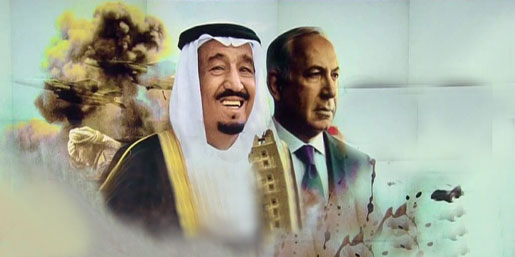
By Philip Giraldi | American Herald Tribune | November 13, 2107
There is considerable confusion about what is occurring in the Middle East, to include much discussion of whether Israel and Saudi Arabia have formally agreed to combine forces to increase both military and economic pressure on Iran, which both of them see as their principal rival in the region. During the past week, a classified message sent by the Israeli Foreign Ministry to all its diplomatic missions worldwide that appears to confirm that possibility was obtained and leaked by senior reporter Barak Ravid of Israel’s highly respected Channel 10 News.
The cable instructs Israeli diplomats to take coordinated steps designed to discredit the activities of the Iranian government. It states, in edited-for-brevity translation, that overseas missions should contact their host countries to emphasize that the resignation of Lebanese Prime Minister Saad al-Hariri over Iranian attempts to take over his country “illustrate once again the destructive nature of Iran and Hezbollah and their danger to the stability of Lebanon and the countries of the region;” that the argument that having Hezbollah in the Lebanese government provides stability is false and only serves to “promote the interests of a foreign power – Iran;” and that the launch of a ballistic missile from Yemen against Saudi Arabia confirms the need for “increased pressure on Iran and Hezbollah on a range of issues from the production of ballistic missiles to regional subversion.”
The Foreign Ministry message has been interpreted as “proof” that Israel and Saudi Arabia are coordinating to provoke a war against Iran as Israel is taking positions in support of Saudi claims, to include those relating to the confused conflict taking place in Yemen. My own take is, however, somewhat different. Having seen literally hundreds of similar U.S. State Department messages, I would regard the Israeli cable as consisting of specific “talking points” for use with foreign governments. Though it is clear that Tel Aviv and Riyadh have been secretly communicating over the past two years regarding their perception of the Iranian threat, it would be an exaggeration to claim that they have a coordinated position or some kind of alliance since they differ on so many other issues. They do, however, have common interests that are in this case aligned regarding the Iranians since both Israel and Saudi Arabia aspire to dominance in their region and only Iran stands in their way.
Both Saudi Arabia and Israel know they cannot defeat Iran and its proxies without the active participation of the United States. That would require shaping the “threat” narrative to start with a series of relatively minor military actions that appear defensive or non-controversial to draw the United States in without really appearing to do so. American involvement would be against Washington’s own interests in the region but it would serve Saudi and Israeli objectives, particularly if the situation is inherently unstable and is allowed to escalate. Both the Saudis and, more particularly, the Israelis have powerful lobbies in Washington that will push a friendly Congress for increased U.S. involvement and the Iranophobic mainstream media is likely to be similarly positive in helping to shape the arguments for American engagement.
It seems clear that the escalation will be starting in Lebanon, where the resignation of Prime Minister al-Hariri has created a plausible instability that can be exploited by Israel supported by heavy pressure from the Saudis to harden the Lebanese government line against Hezbollah. Hariri headed a coalition pulled together in 2016 that included nearly all of Lebanon’s main parties, including Hezbollah. It took office in a political deal that made Michel Aoun, a Maronite Christian who has an understanding with Hezbollah, president. The inclusion of Hezbollah and the presence of a friendly Aoun was, at the time, seen as a victory for Iran.
By one account, Hariri has been more-or-less kidnapped by the Saudis because he was regarded as too accommodating to the Shi’ites in Lebanon and, if that is so, he was speaking from Riyadh’s script when he resigned while denouncing Iran and Hezbollah and claiming that he fled because he was about to be assassinated. It suggests that the Saudis and Israelis, who have been hyperbolically claiming that Tehran is about to take control of much of the Middle East, are feeling confident enough to move towards some kind of showdown with Iran. As a first step, expected deteriorating sectarian interaction between Sunni and Shi‘ite Muslims in Lebanon to eliminate any possibility of a bipartisan and functioning government will provide a pretext for staged intervention to “stabilize” the situation.
The United States has been largely silent but presumably privately approving the Israeli and Saudi moves, as Washington, Riyadh and Tel Aviv have all adamantly opposed the existence of the Lebanese coalition dominated by Aoun and Hezbollah’s Nasrullah. Israeli fighter aircraft will likely increase incursions into Lebanese airspace in light of the alleged instability north of the border, which will provoke a Lebanese response escalating into an incident that will lead to a major attack to bring the Beirut government down, though Israel will have to be careful to avoid a possible mass counter-strike by Hezbollah missiles. The ultimate objective might be to create a Saudi and Israeli inspired grand alliance, which might be a fantasy, to pushback Iranian influence in the entire region. Lebanon’s Hezbollah, opposed by the Saudis because it is Shi’a and by Israel because of its missile arsenal would be conveniently targeted as the first marker to fall.
There is every sign that the White House will go along with Riyadh and Tel Aviv in their attempts to rollback Iranian influence, starting in Lebanon, given the recent failure to certify the nuclear agreement with Iran and the comments of Generals Mattis and McMaster suggesting that war with the Mullahs is likely. It would be a grave misjudgment to think that such a war, once started, will be containable, but it is a mistake that Washington repeats over and over again in places like Somalia, Afghanistan, Iraq, Libya and Syria.
Saad Hariri gives awkward new interview that many believe was staged
By Adam Garrie | The Duran | November 13, 2107
When Saad Hariri appeared on Saudi state-run Al Arabiya television last week to deliver his “resignation” as the Lebanese Prime Minister, many felt that Hariri, who is also a Saudi citizen was being forced to resign by the Saudi regime.
Several obvious inconsistencies were present in the original “resignation” speech. First and most strangely, he read a speech that was written in a Gulfi dialect of Arabic and instead of using familiar Lebanese terminology, he used Saudi terminology which is largely foreign among Lebanese viewers.
Secondly, his resignation from foreign soil is not only incompatible with Lebanese legal procedure, but it is highly unusual in any context.
Finally, as Hariri owns his own television channel, Lebanon based Future TV, it was considered strange that his speech was exclusively broadcast on a Saudi state-run network.
Further evidence which emerged led Lebanese President Michel Aoun to join with other Lebanese parties including Hezbollah, the Amal movement and some members of Hariri’s own Future Movement to say that Hariri had been kidnapped by Saudi authorities and is being held against his will.
Last night’s interview from Saudi Arabian soil on Hariri’s Future TV was designed to assuage the fears that Hariri is a political hostage, but the interview left many more questions than answers.
Of the many perplexing answers Hariri gave, when asked why no one is able to contact him, he stated that it is because he is in “personal meditation”. This answer however, proved deeply unsatisfactory as even close personal colleagues have had no way of contacting Hariri, in spite of his high profile.
Also, while he assured the cameras that he is a free man and will come to Lebanon in a “matter of days” this vague timeline has led many to think that the statement was forced. Furthermore, when he said this, a shadow of a man was visible in the broadcast, with some indicating that Saudi handlers were putting pressure on Hariri to stick to a script even in the midst of the interview which Future TV’s representatives refused to confirm was live.
While continually gulping down glasses of water, Hariri appeared flustered and at one point even appeared to break down in tears.
While Hariri’s assertions that Hezbollah and “the Syrian regime” intend to kill him, claims which have not been supported by any evidence and which have been roundly debunked by the politically neutral Lebanese security services, Hariri’s body language rather than his seemingly Saudi authored statements, were the talk of Arabic social media in the aftermath of the puzzling interview.
When it comes to Hariri’s future there are several possible options.
1. Hariri remains in Saudi and Lebanon moves on
In many ways, this is starting to look like the most realistic option. While Hariri claims he will return to Lebanon, this statement has been met with near universal scepticism. In other words, until people see it, they won’t believe it.
On the surface, this may still be an acceptable solution for Lebanon. While many predicted that the fragile multi-party Lebanese coalition government would collapse upon Hariri’s “resignation”, in reality, Lebanese parties from across the political spectrum, with only some scant exceptions, have remained committed to the coalition and rule of law in Lebanon. The mature response of Lebanese politicians was not something that Saudi Arabia and other who may have been behind the forced “resignation”, such as Israel, may have accounted for.
If Hariri does not return in the near future, Beirut’s relations with Riyadh will be deeply strained, but this might also have an unexpected positive effect of helping Lebanon to protect her sovereignty and national dignity with more strength than in previous years.
2. Hariri comes to Lebanon and causes trouble
Hariri indicated in his interview that he may rescind his resignation if groups like Hezbollah commit to remaining neutral in conflicts such as the Syrian war against terrorism. This demand is unrealistic, unacceptable to Hezbollah and not practical for Lebanon as Hezbollah’s aid of the Syrian Arab Army in the fight against terrorism, has helped secure Lebanon from attacks by Takfiri terrorist groups. This is something that is acknowledged either openly or privately by Lebanese of many sectarian stripes.
If Hariri does return and attempt to sow discord in the coalition by effectively waging a pro-Saudi sectarian political war, this could in fact lead to political instability in Lebanon that thus far has been avoided.
However, if he did return and try to force Hezbollah out of the coalition with ridiculous demands, it would once and for all, expose the fact that Hariri was lying about fears for his safety at the hands of “Hezbollah, Iran and Syria”. After all, someone returning to Lebanon to ‘take on’ Hezbollah isn’t afraid, but is arrogant.
3. Hariri comes to Lebanon and resigns in disgrace
Hariri’s star which was never particularly big and which in any case relied on the legacy of his more experienced father, is tarnished in Lebanon, perhaps beyond repair. Unless he were to come to Lebanon and denounce Saudi for kidnapping him, something which at this point seems unlikely given the amount of personal business Hariri conducts in Saudi (albeit with many purged Princes), he may be seen as more of a disgraced political liability than a ‘returned hero’.
The reason that most Lebanese are demanding his return is not a sign of support for Hariri’s policies, let alone his apparently subservient attitude to the Saudi regime, but because the kidnapping of a Prime Minister by a foreign power, is a matter of principle and national dignity.
If Lebanese and wider international pressure results in a return of Hariri, Lebanon will have won a moral victory, but Hariri himself will still be widely seen as something of a “loser”, to borrow Donald Trump’s favourite epithet.
Because of this, Hariri may find that his career in front line Lebanese politics may be incredibly diminished when he returns, at least in the immediate future. The leader of the Future Movement, is in this sense, already a thing of the past, in spite of his youth.
Conclusion:
Saad Hariri’s interview was likely staged and the “freedom” he claimed he had was almost certainly an exaggeration at best, if not an outright lie. Because information from Saudi is so scant, only Hariri’s departure from Saudi Arabia will provide the penultimate evidence of his alleged freedom or perhaps better put, the end of his captivity.
The coming days may reveal more about Hariri’s true condition, but for now, the infamous interview has left the world none the wiser when it comes to what Saudi Arabia is actually doing to the effectively deposed Lebanese Premier.
Arab states spent $130bn to destroy Syria, Libya, Yemen: Algerian PM
Press TV – November 12, 2017
Algerian Prime Minister Ahmed Ouyahia says some regional Arab states have spent $130 billion to obliterate Syria, Libya and Yemen.
Ouyahia made the remarks on Saturday at a time when much of the Middle East and North Africa is in turmoil, grappling with different crises, ranging from terrorism and insecurity to political uncertainty and foreign interference.
Algeria maintains that regional states should settle their differences through dialog and that foreign meddling is to their detriment.
Syria has been gripped by foreign-sponsored militancy since 2011. Takfirism, which is a trademark of many terrorist groups operating in Syria, is largely influenced by Wahhabism, the radical ideology dominating Saudi Arabia.
Libya has further been struggling with violence and political uncertainty since the country’s former ruler Muammar Gaddafi was deposed in 2011 and later killed in the wake of a US-led NATO military intervention. Daesh has been taking advantage of the chaos in Libya to increase its presence there.
Yemen has also witnessed a deadly Saudi war since March 2015 which has led to a humanitarian crisis.
Last Month, Qatar’s former deputy prime minister Abdullah bin Hamad al-Attiyah said the United Arab Emirates had planned a military invasion of Qatar with thousands of US-trained mercenaries.
The UAE plan for the military action was prepared before the ongoing Qatar rift, but it was never carried out as Washington did not give the green light to it, he noted.
In late April, reports said the UAE was quietly expanding its military presence into Africa and the Middle East, namely in Eritrea and Yemen.
Saudi Arabia alleges citizen kidnapped in Lebanon
MEMO | November 11, 2017
Saudi Arabia said on Friday a Saudi citizen had been kidnapped in Lebanon, a country with which it is in a diplomatic crisis.
Saudi Arabia, Kuwait, the United Arab Emirates and Bahrain have advised their citizens against travelling to Lebanon and urged those already there to leave, as tensions rise in what is seen as a new front line in the regional rivalry between Saudi Arabia and Iran.
Top Lebanese government officials have said they believe Saudi Arabia is holding Saad al-Hariri who resigned as Lebanese prime minister from there last weekend. Riyadh says Hariri is a free man and he decided to resign because Iran-allied Hezbollah was calling the shots in his government.
The Saudi embassy in Beirut announced the kidnap of one of its citizens, but gave no details of the person’s identity of the circumstances of the abduction.
“The embassy is in contact with the highest ranking Lebanese security authorities about securing the unconditional release of a kidnapped Saudi citizen as soon as possible,” it said in a statement quoted by the Saudi state news agency SPA.
Lebanese Interior Minister Nohad Machnouk said on the Lebanese state news agency the safety of Saudi residents and visitors was a priority for the Lebanese authorities.
He added that “security services are on high alert to prevent any attempt of exploiting the current political situation from anyone and for whatever reason.”
“Tampering with the security and stability of Lebanon is a red line.”
The Changing Face of the Middle East – Sharmine Narwani on The Corbett Report
Corbett Report Extras | November 10, 2017
Today James talks to political analyst and commentator Sharmine Narwani on the explosive events in the Gulf this week and what they tell us about the changing power relations in the Middle East. From the wind down of the Syrian terrorist insurgency to the shock resignation of the Lebanese PM and the Game of Thrones in the House of Saud, a new regional picture is emerging, one in which two power blocs are competing for the upper hand in the new Middle East. Narwani breaks down this new dynamic and paints the picture of where things are heading in this dynamic region.
SHOW NOTES AND MP3: https://www.corbettreport.com/?p=24897
Featured Video
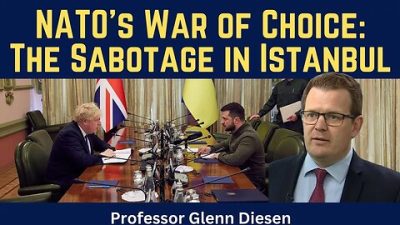
NATO’s War of Choice – The Sabotage of the Istanbul Negotiations
or go to
Aletho News Archives – Video-Images
From the Archives
National Security Archive Publishes Key Records on Infamous MKULTRA Program
Agency Sought Drugs and Behavior Control Techniques to Use in “Special Interrogations” and Offensive Operations
Edited by Michael Evans | National Security Archive | December 23, 2024
Washington, D.C. – Today, the National Security Archive and ProQuest (part of Clarivate) celebrate the publication of a new scholarly document collection many years in the making on the shocking secret history of the CIA’s mind control research programs. The new collection, CIA and the Behavioral Sciences: Mind Control, Drug Experiments and MKULTRA, brings together more than 1,200 essential records on one of the most infamous and abusive programs in CIA history.
Under code names that included MKULTRA, BLUEBIRD and ARTICHOKE, the CIA conducted terrifying experiments using drugs, hypnosis, isolation, sensory deprivation, and other extreme techniques on human subjects, often U.S. citizens, who frequently had no idea what was being done to them or that they were part of a CIA test.
Today’s announcement comes 50 years after a New York Times investigation by Seymour Hersh touched off probes that would bring MKULTRA abuses to light. The new collection also comes 70 years since U.S. pharmaceutical giant Eli Lilly & Company first developed a process to streamline the manufacture of LSD in late 1954, becoming the CIA’s chief supplier of the newly discovered psychoactive chemical central to many of the Agency’s behavior control efforts.
Highlights of the new MKULTRA collection include… continue
Blog Roll
 Aletho News
- The Founder Who Turned Against Root Canals
- Israel displaces last two families from Al Khalayel valley, Al Mughayyir
- Israeli Opposition Leader Endorses Greater Israel
- Islamic Jihad: Trump’s peace board is a “theatrical stunt detached from reality”
- The Head Of A CIA Cutout Admits To Meddling In Iran To Fuel Unrest
- Iran warns Trump against decisions based on false information
- Pentagon sets deadline for Anthropic to lift AI restrictions on autonomous weapons systems, mass domestic surveillance
- Trump’s military buildup against Iran on Netanyahu’s behalf is a gambit doomed to fail
- Big League War
- Zelensky sells false illusion of building powerful air force capable of overcoming Russia
- If Americans Knew
- Are the Jews indigenous to Palestine?
- AIPAC Wants to Kill a Bill that would Ensure Israel Complies with Ceasefire
- Former Israeli PM, in Epstein Files, Dreamed of Israeli Eugenics and Pretty Converts
- Israeli settlers join ‘safari’ tour of Palestinian prisoners
- Flooding in Gaza amid rumors of war; fire in West Bank – Not a ceasefire Day 138
- Fourteen Countries Condemn Huckabee’s Support for Israel Taking Over Most of the Middle East
- Israeli Soldiers Killed Gaza Aid Workers at Point Blank Range in 2025 Massacre: Report
- Israel’s insidious network to propagandize American Christians
- Israel’s Best-Kept Secret: Palestinian Resistance Never Agreed to Disarm
- Trump officials plan to build 5,000-person military base in Gaza, files show
- No Tricks Zone
- Surprising Discovery: Sahara Is Greening…Billions Of Trees Where Once Thought To Be Barren
- New Research Reaffirms Clouds, Aerosols, And Surface Solar Radiation Are ‘Driving The Climate System’
- Germany: Electric Car Catches Fire At Charging Station, Sets Off Local “Inferno”, Widespread Damage
- New Study: Canada’s New Brunswick Was 1°C Warmer Than Today During The Medieval Warm Period
- Coal Power Back In Trend As Globe Tries To Keep Pace With Growing Demand For Power
- New Study: A 4°C Warmer Beaufort Sea Had ‘No Sea Ice’ 11,700 – 8200 Years Ago
- Unfudging The Data: Dutch Meteorological Institute Reinstates Early 20th Centruy Heat Waves It Had Erased Earlier
- German Gas Crisis…Chancellor Merz Allegedly Bans Gas Debate Ahead of Elections!
- Pollen Reconstructions Show The Last Glacial’s Warming Events Were Global, 10x Greater Than Modern
- Germany’s Natural Gas Storage Level Dwindles To Just 28%… Increasingly Critical
 Aletho News