From Proxy to Disposable: The US Betrayal of the Syrian Kurds
By Robert Inlakesh | The Palestine Chronicle | January 24, 2026
A collapse of the Kurdish-led Syrian Democratic Forces in northeastern Syria, at the hands of the Syrian army, should be a lesson for all regional movements siding with the United States. This should serve as a warning to supporters of the current Syrian government as well.
The United States had supported the rise of the Kurdish-led Syrian Democratic Forces (SDF) in 2015. That support has now come to an end. For the Kurdish movement inside northeastern Syria, the aim was autonomy, and the territory they captured was viewed as Rojava, part of historic Kurdistan. The primary enemy of Kurdish national movements has been Türkiye, and their project spans Turkish, Syrian, Iraqi, and Iranian territory.
Unfortunately for the Kurds, this meant that their cause was treated as something to be exploited by the US, Israel, and various other actors. In Syria’s case, the US helped establish SDF rule in October 2015, backing its forces against ISIS almost immediately after Russia entered the Syrian war on the side of the government in Damascus at the end of September that year.
The Syrian Arab Army (SAA), with Russian air support, quickly turned the tables on ISIS and began pushing toward the western banks of the Euphrates River. On the other side lay the al-Omar oil fields, home to the vast majority of Syria’s natural resources, which at the time were being exploited by ISIS.
Washington’s project in Syria since 2012, through initiatives such as CIA Operation Timber Sycamore, was to back anti-government forces to effect regime change in Damascus. For a long time, the situation inside Syria appeared as though forces loyal to then-President Bashar al-Assad were on the verge of defeat. This left Kurdish-majority regions without protection and exposed to the brutality of takfiri militants.
When the SAA began pushing ISIS back and appeared capable of reclaiming Syria’s oil fields and fertile agricultural lands, the Americans suddenly launched a major air campaign against ISIS and aided the formation of the SDF as their ground force. Put simply, the SDF was formed to serve as Washington’s proxy, ensuring that the government in Damascus could not regain access to the nation’s breadbasket and natural resources.
The SDF made major advances on the ground and gained control over much of the Syrian-Turkish border region. In Ankara’s eyes, this Kurdish force inside Syria posed a major security threat and was linked to groups such as the PKK, which Türkiye designates as a terrorist organization.
In January 2018, Türkiye launched Operation Olive Branch to seize Afrin from the Kurdish-led SDF. What did the US do? It withdrew its forces and backed off, completely abandoning its allies. Then, in October 2019, the Turkish military launched another operation called Operation Peace Spring, capturing additional border territory in northeastern Syria. Once again, the US abandoned the SDF.
After these betrayals, it should have been clear that the relationship between the United States and the SDF was one of master and proxy, not mutual partnership. Many on the Left argued that the SDF’s project was just and sought to liberate the Kurdish people in their ancestral lands, while others argued that Arab-majority territory should not be ruled by a Kurdish minority. Regardless of which argument carried more moral weight, the United States was never interested in this debate.
When Bashar al-Assad was deposed, and Ahmed al-Shara’a entered Damascus, the usefulness of the SDF evaporated. US support for the Kurdish movement had always been about keeping Syria’s agricultural lands and resources out of the central government’s hands, ensuring the effectiveness of Caesar Act sanctions. The strategy was one of pure cynicism, dangling self-determination before a people to economically strangle the rest of Syria.
The moment Washington achieved its goal of installing a pro-US and pro-Western government in Damascus, it immediately abandoned the ally it had backed for a decade. The lesson is clear: siding with the United States does not bring liberation, only chaos, death, and destruction.
Former Iraqi President Saddam Hussein’s rise was supported by the CIA, after which he became one of Washington’s favored dictators in West Asia. He fought Iran on US orders and used chemical weapons supplied by the West against the Kurdish population. Western media then attempted to blame Iran. When his usefulness ended, he was destroyed.
The same pattern applies to Iran’s former Shah, a US favorite to such an extent that Washington sent currency printing plates to Tehran and used its embassy there as a hub for CIA operations across Asia. After the Iranian people overthrew his brutal dictatorship, the Shah died in exile in Egypt.
Unfortunately, due to the Kurdish-led SDF and parts of the Kurdish movements in Iraq and Iran, strong ties developed with Israel and Israeli intelligence. This has fostered the stereotype that Kurdish movements are inherently pro-Israel, which is untrue. In fact, the PKK would not have emerged as a major force without Palestinian resistance groups.
The PKK ordered its forces to fight Israel during the 1982 invasion of Lebanon, even against the advice of some Palestinian leaders who feared they would suffer heavily due to inexperience at the time. It was the Popular Front for the Liberation of Palestine and the Democratic Front for the Liberation of Palestine that were chiefly responsible for training the PKK in the Lebanese Beqaa Valley, while even Fatah provided support.
There is a shared history of Kurdish movements and Palestinian resistance working together, although this relationship is not as widespread today. What it demonstrates, however, is that organic and pragmatic alliances between regional movements are possible. The United States is never present to deliver freedom. It is there to extract what it wants and then dispose of its proxies.
This lesson should resonate with many Syrians who currently support their leaders’ alignment with the United States. Just as many among the Kurdish population allowed emotions to cloud judgment and failed to see what was in front of them, the same risk now applies to supporters of Ahmed al-Shara’a.
A serious question must be asked. If the United States could so easily abandon a group it helped create, arm, and work with for a decade, one that made enormous efforts to align itself with Western liberal democracy, why would it side with the leadership of Hayat Tahrir al-Sham as a matter of principle? There is no principle involved, only strategic calculation, and it is the Syrian people who will ultimately pay the price.
– Robert Inlakesh is a journalist, writer, and documentary filmmaker. He focuses on the Middle East, specializing in Palestine.
Russia steps in to quell tensions between US proxies and Syrian tribes
The Cradle | August 14, 2024
The US-backed Syrian Democratic Forces (SDF) ended on 13 August the siege it had imposed on the northern Syrian cities of Hasakah and Qamishli for the past week, thanks to the mediation of the Russian army.
“All roads that were closed to civilian movement have been opened, with the start of the entry of water, fuel, flour and food tankers into the centers of the cities of Al-Hasakah and Qamishli. Things have returned to how they were before the siege,” Hasakah governor Louay Sayyouh told Al Mayadeen on Tuesday.
Russian military officials held talks with SDF and Syrian army representatives in Qamishli on 13 August, Al Mayadeen and Sputnik reported.
Sputnik’s correspondent said “intensive Russian efforts” took place during the meeting between the commander of Russian forces in Syria and the head of the SDF, Mazloum Abdi, aimed at lifting the SDF siege and de-escalating tensions in the eastern Deir Ezzor governorate, where a large Arab tribal rebellion against Washington’s Kurdish proxy is ongoing.
“There was an initial agreement on the necessity of releasing all detainees in the Syrian army held by the SDF in the cities of Qamishli and Hasakah, along with the necessity of lifting the siege imposed by the SDF on the neighborhoods under the control of the Syrian Arab Army in the cities of Hasakah and Qamishli,” the Sputnik correspondent said.
The SDF siege on Damascus-held areas of Hasakah and Qamishli had been ongoing for the past seven days and was imposed in response to the Arab tribal offensive against the Kurdish militant group last week.
Prior to the Russian visit to Qamishli, which began last week, SDF leaders had “rejected mediation and insisted on continuing the siege,” according to Syrian journalist and TV presenter Haidar Mustafa.
Mustafa added that the SDF siege tactic will not “deter the tribal ‘resistance’ from continuing its project aimed at pressuring the US occupation and its Kurdish militias.”
The Russian mediation came as US forces continued attacks on Syrian army positions in the countryside of Deir Ezzor in support of its SDF allies, who are engaged in clashes with a coalition of Arab tribesmen said to be receiving support from Damascus. SDF forces have also been targeting Syrian military positions with artillery in recent days.
“US Army forces launched a violent attack using heavy artillery and drones on positions of the Syrian army’s auxiliary forces in the villages and towns of Khasham, Marat and Hawijat Sakr in the northeastern countryside of Deir Ezzor,” Sputnik’s correspondent reported during the early hours of 14 August.
The source of the US fire was Washington’s illegal military base in the Conoco oilfield.
On Sunday, several Syrian army soldiers were killed and others wounded in an airstrike targeting a vehicle near Syria’s eastern city of Al-Bukamal on the Syrian–Iraqi border. The strike was widely believed to have been carried out by US forces that had attacked Syria several times since last week’s tribal assault.
A coalition of Syrian Arab tribes launched a massive offensive against the SDF in Deir Ezzor’s countryside on 7 August as part of a rebellion launched against the US-backed militants last year.
The tribal fighters have since lost some of the towns and positions they managed to capture as a result of US air cover provided to the SDF.
The SDF helps oversee oilfields occupied by the US army in Syria and is complicit in Washington’s theft of the country’s natural resources.
It has also released hundreds of ISIS fighters held in its prisons across northern Syria – who have then gone on to attack Syrian troops and civilians.
The rebellion against the Kurdish militants represents a broader rejection of US occupation in Syria.
“The events unfolding today in Syria’s eastern region are a result of the repercussions of the Palestinian resistance’s Operation Al-Aqsa Flood and the broader spillover of conflicts across West Asia … while some may view the recent developments as a local conflict – either between Arab clans or between Arab clans and Kurds – the reality suggests otherwise, as the clans find common cause and common targets with the Axis of Resistance,” political affairs writer and researcher Dr Ahmed al-Druze told The Cradle on 12 August.
Syria’s Arab tribes revolt: US bases and allies become prime targets
The current uprising in Syria’s Deir Ezzor represents the growing armed resistance of local Arab tribes against US-backed Kurdish forces who control their land and resources – potentially opening up a new front for West Asia’s Axis of Resistance
By Haidar Mustafa | The Cradle | August 12, 2024
On 7 August, a coalition of Syrian Arab tribes recaptured several key towns from US-backed Kurdish forces in the eastern countryside of Syria’s Deir Ezzor governorate. These tribesmen, led by Sheikh Ibrahim al-Hafl, launched the largest assault on Syrian Democratic Forces (SDF) sites since the onset of the Arab tribal rebellion against the US-backed militia last year.
The renewed offensive has also reignited popular resistance against the US presence in the region, tracing its origins to the SDF leadership coup against the Deir Ezzor Military Council, which led to the arrest and removal of Arab leader Ahmed al-Khabil, also known as Abu Khawla.
The spark of resistance
In August 2023, the SDF’s arrest of the Deir Ezzor Military Council leader triggered a tribal uprising across several villages under SDF control – from Al-Baghouz to Al-Shuhail. This uprising quickly evolved into a more organized resistance when Sheikh Hafl announced in an audio statement the formation of a military command for the “Army of Tribes and Clans in the countryside of Deir Ezzor” last September.

Clashes along the Euphrates River in Deir Ezzor governorate
Since then, Hafl has become a constant menace to the SDF, with accusations flying that the Syrian government and Iran supported him. It is an obvious attempt to discredit the Arab tribal movement, which is genuinely focused on liberating land and reclaiming resources.
The SDF prematurely announced the “failure” of the attack, which it claims was carried out “upon the orders” of Hossam Louka, head of Syria’s General Intelligence Directorate. In a statement posted on Facebook, the SDF said:
Our sweep campaign continues against the remnants of the Syrian regime-backed mercenaries who attacked the villages of Al-Dhiban, Al-Latwa, and Abu Hamam.
US occupation forces have established prominent bases at the Al-Omar and Conoco oil fields, in a region largely inhabited by Arab communities who have long been persecuted by the SDF. When the US failed to control and co-opt these tribes into a loyal organization, it sought to instead characterize them as a threat aligned with Syrian and Iranian interests.
This narrative is consistent with the approach of the US project and its allies in the SDF, who seek to suppress any resistance movements that challenge their agenda and practices, including the theft of Syrian oil and wheat.
‘Iranian-backed’ tribal resistance
Sheikh Hafl called upon the tribes and clans, especially those beyond Syria’s borders, to support the resistance, leading to increased and sustained attacks against the SDF. The tribal resistance, primarily rooted in Dhiban, spread throughout the towns and cities east of the Euphrates, turning them into a continuous conflict zone.
This resistance posed a significant threat to US interests, with the so-called “Operation Inherent Resolve” reporting in its October–December 2023 quarterly update to the US Congress that tribal fighters have evolved into a “full-fledged resistance movement.”
These fighters, the report said, receive “explicit support from the Syrian regime and its Iranian allies on the western side of the Euphrates River, where resistance fighters resupply, rearm, and launch attacks across the river in SDF-controlled villages on the eastern side.”
Recognizing this threat, the US aircraft recently launched several raids targeting the Arab tribal forces to prevent them from advancing towards their bases or achieving their goal of expelling the SDF from “Arab land.”
Gaining ground as SDF lays siege to Hasakah
After a year of limited confrontations and small operations, Hafl re-issued the call to confront what he called the “Qandil” gangs. This announcement coincided with the launch of a violent attack by Arab tribal forces on SDF positions in the cities and towns of Deir Ezzor.
During this assault, tribal forces managed to cross into and expand control over areas including Dhiban, Al-Busaira, Ibriha, Al-Hariji, Al-Tayyaneh, Abu Hamam, Gharanij, Al-Kishkiya, and the entire riverbed. The SDF, in turn, responded by imposing a siege on the residents of Hasakah and Qamishli within Syrian government-controlled areas, cutting off supplies of flour, food, and water – a tactic the SDF frequently uses to pressure Damascus.
Insiders believe that the SDF is leading Hasakah into the unknown, as the imposition of a siege policy could trigger local confrontations within the city. This will not, however, deter the tribal “resistance” from continuing its project aimed at pressuring the US occupation and its Kurdish militias.
Notably, a Syrian-based Russian delegation arrived at Qamishli airport before Friday afternoon and held several meetings to mediate the crisis. According to Syrian daily Al-Watan, these discussions did not yield positive results after the SDF leaders rejected mediation and insisted on continuing the siege of Hasakah’s population.
Serving geopolitical goals
The US occupation of the Jazira region and the establishment of more than 20 American bases was not primarily to combat terrorism, as claimed by the international coalition, but rather because “ISIS” served as the pretext for strengthening the US obstruction of the strategic land links between the eastern Mediterranean, via Central Asia, to China, and to Iran on the Persian Gulf. The US further seeks to prevent the development of close ties between the Syrian and Iraqi arenas.
Political affairs writer and researcher Dr Ahmed al-Druze explains to The Cradle why the US continues to provide unlimited support for the SDF in opposition to the region’s inhabitants.
The American occupation will remain as long as it has the ability to do so, and it deals with the Arab tribes from this perspective.
Druze believes that the events unfolding today in Syria’s eastern region are a result of the repercussions of the Palestinian resistance’s Operation Al-Aqsa Flood and the broader spillover of conflicts across West Asia.
He highlights that, while some may view the recent developments as a local conflict – either between Arab clans or between Arab clans and Kurds – the reality suggests otherwise, as the clans find common cause and common targets with the Axis of Resistance.
Even if the situation temporarily stabilizes, with tribal forces retreating and the SDF lifting the siege on Hasakah and Qamishli, Druze believes the underlying international conflict will likely resurface, potentially tied to events in occupied Palestine and Gaza.
Though it may be premature to speak of a US existential predicament in the Jazira region, given that its losses currently remain limited, writer and political analyst Khaled al-Miftah argues that the US faces growing popular rejection and resistance.
The region is increasingly aware of Washington’s goals – to establish a separatist Kurdish entity and exploit Syria’s resources. Al-Miftah tells The Cradle that the US is beginning to feel the effects of the Turkish–Syrian rapprochement, which, if achieved under Russian auspices, could spell the end of the SDF’s separatist ambitions. Consequently, the US has begun to create obstacles to prevent this outcome.
Part of the region’s resistance
Despite the end of large-scale military conflict in most of Syria years ago, the eastern region remains embroiled in tension and ongoing strife. Armed confrontations between the SDF and pro-Turkish factions in the north continue, while the war with Arab tribal forces east of the Euphrates enters a new chapter, driven by different calculations than in past battles.
The tribes are now determined to expand their operations and have increased their readiness. US bases have become permanent targets for resistance forces on both the Syrian and Iraqi sides, with drones and rockets frequently striking occupation bases in the Omar and Conoco oil fields. Meanwhile, the tribes have expanded their control over villages that serve as the first line of defense for the SDF around US bases.
Meanwhile, with the SDF’s release of hundreds of ISIS fighters from prisons in July, ISIS continues its terrorist attacks in the region, despite the international coalition’s previous claims of having eliminated the group’s presence. ISIS cells periodically launch assaults on Syrian army positions and their allies in the Resistance Axis.
The Jazira region has essentially become a battleground where the US now reaps consequences from its forced occupation of Syrian territory, disregarding the impact on Syrian territorial unity and the strife it sows among the population.
The eastern region remains trapped in a cycle of escalation, with local and international actors involved, while the Syrian people bear the brunt, suffering both from ongoing violence and the theft of their resources.
Syrian army shells US proxies in Deir Ezzor as tribal uprising continues
The Cradle | August 8, 2024
Syrian army troops shelled positions of the US-backed Syrian Democratic Forces (SDF) on 8 August, responding to attacks from the Kurdish militia on its territory in the countryside of the eastern governorate of Deir Ezzor.
The Syrian Arab Army (SAA) shelled SDF positions in Al-Busayrah city and the towns of Al-Sabha, Bariha, Jadid Bakara, and Al-Dahla in Deir Ezzor’s eastern countryside, Al Mayadeen reported on Thursday.
The SDF’s media center announced on 8 August that its militants targeted the Syrian army and allied forces in the Al-Zubari and Sa’lu villages of the Deir Ezzor countryside with artillery and mortar shells.
“The SDF artillery strikes came with support and cover from the US,” Al Mayadeen reported.
One day earlier, the SDF accused Hossam Louqa, head of the Syrian government’s General Intelligence Service, of orchestrating Wednesday’s large-scale tribal assault on the SDF in the Deir Ezzor countryside.
“Hussam Louqa was the one who ordered and planned the attack on the areas controlled by SDF in the Deir Ezzor countryside … the attacks failed to achieve their goals,” Washington’s Kurdish proxy said in a statement on 7 August.
SDF forces continued “search operations in the towns of Abu Hamam, Dhiban, and Gharanij in the eastern countryside of Deir Ezzor,” and were able “to regain control of some sites on the bed of the Euphrates River,” the statement added.
A coalition of Syrian Arab tribes, dubbed the Army of Tribes, seized several towns from the SDF in the countryside of eastern Syria’s Deir Ezzor governorate on 7 August.
Tribesmen launched the “largest” attack on SDF sites since the start of the Arab tribal rebellion against the US-backed militia last year, Sputnik reported.
The Arab tribal forces reached the vicinity of the US base in the Al-Omar oilfield in the Deir Ezzor countryside.
US army helicopters intervened and opened fire at the tribesmen, Al Mayadeen reported on Wednesday.
Arab tribes launched their rebellion against the SDF in late August last year, with fierce clashes raging for several weeks afterward.
Despite brief instances of de-escalation, tensions and armed clashes between the two sides have remained ongoing. At the time, it was said that the tribal forces were coordinating with and receiving military aid and training from the Syrian army.
Fighting was ongoing in the Deir Ezzor countryside on 8 August following the massive tribal assault the day before. Yet Al Mayadeen reported on Thursday that the clashes were “less intense.”
It added that the SDF has deployed large numbers of reinforcements and has maintained its supply lines, noting a “power imbalance” between the two sides in favor of the Kurdish militia.
Sources told the outlet on Thursday that the goal of the tribal assault “is not territorial control but to affirm the tribes’ rejection of the SDF and US forces’ presence in the area, their control over oil and gas, and their influence on civil and military decisions.”
Arab tribes seize control of US-occupied Syrian towns in large-scale assault
The Cradle | August 7, 2024
A coalition of Syrian Arab tribes seized several towns from US-backed Kurdish forces in the countryside of eastern Syria’s Deir Ezzor governorate on 7 August.
Tribesmen launched the “largest” attack on Syrian Democratic Forces (SDF) sites since the start of the Arab tribal rebellion against the US-backed militia last year, Sputnik reported, adding that the attack took place “under the cover of artillery and mortar shells.”
“Violent clashes have been ongoing since the early morning hours between the forces of the SDF-linked Deir Ezzor and Hajin Military Councils on the one hand, and the attacking groups of the ‘Army of Tribes’ coalition on the other, in the vicinity of the towns of Abu Hamam, Dhiban, Al-Lattwa, Al-Kashkiya, and Gharanij,” the news outlet’s correspondent said.
The clashes were concentrated in the towns of Al-Sabha and Al-Tayana, east of Deir Ezzor, the correspondent added.
The Arab tribes used RPGs and machine guns against the SDF during the onset of the attack, according to Al Mayadeen.
“SDF militants imposed a complete curfew in the towns under their control in the Deir Ezzor countryside, after the arrival of large military reinforcements from Hasakah and Raqqa, coinciding with a wide search operation in the villages surrounding the areas of clashes,” the Sputnik correspondent went on to say.
Residents told Sputnik that many people were displaced as a result and that three civilians were killed while seven others were injured due to the fighting. Local sources also told the outlet that at least 10 SDF militants were taken captive by tribal fighters, who also seized large amounts of light and heavy weapons.
The SDF and the tribal coalition also took some casualties.
“Arab tribal fighters managed to damage three Hummer military vehicles in the vicinity of the American base in the Al-Omar oilfield,” Sputnik said.
The SDF imposed security belts and closed roads around several areas in Hasakah, northeastern Syria.
“American helicopters targeted a group of tribal forces using machine guns near the banks of the Euphrates River in the town of Dhiban, east of Deir Ezzor,” Al Mayadeen’s correspondent reported on Tuesday.
The US army also deployed reinforcements to the vicinity of its base in the Al-Omar oilfield.
Sheikh Ibrahim al-Hafel, who led the tribal rebellion against the US-backed armed group last year, was quoted by Al Mayadeen as saying on 7 August: “We will not accept submission to the SDF militants … [the tribes and] their sons have the right to liberate their areas from these militants.”
Arab tribes launched their rebellion against the SDF in late August last year, with fierce clashes raging for several weeks afterward.
Despite brief instances of de-escalation, tensions and armed clashes between the two sides have remained ongoing. At the time, it was said that the tribal forces were coordinating with and receiving military aid and training from the Syrian Arab Army (SAA).
“After continuous training received by the tribal forces during the past months, the tribes led by Sheikh Ibrahim Al-Hafel launched a violent attack on the largest in the cities and towns of Deir Ezzor, and took control of several military points in the city of Al-Busayrah and the towns of Ibriha, Al-Harijiya, Al-Tayana, Abu Hamam, Gharanij, Al-Kashkiya, Dhiban, Al-Latwa neighborhood, and all the riverside points,” Syrian journalist Mohammad Dabaa said on 7 August.
The tribal assault came a month after the SDF released hundreds of ISIS fighters from their prison camps in northern Syria.
US mulling multi-front offensive in Syria in collaboration with Takfiri terrorists
By Robert Inlakesh | Press TV | July 29, 2023
The US military is readying approximately 2,500 service members for deployment in the West Asian region, as its proxy forces in Syria’s northeast and al-Tanf areas seek potential alliances with Takfiri terrorists in the northwestern Idlib province.
With tensions boiling between the Syrian government-aligned forces and the US occupation troops in the war-ravaged Arab country, it might be a sign of more violence on the way, observers believe.
According to a report published in New York local media in mid-July, some 2,500 10th Mountain Division soldiers were being sent “off to combat” in Iraq and Syria.
It is not exactly clear how many soldiers from the light-infantry division will be dispatched for operations in the two West Asian countries.
However, the number of forces being sent rings true with a report from the Turkish newspaper, Yeni Safak, that claimed Washington was preparing to send 2,500 troops to northeast Syria.
The US currently maintains, at least publicly, that it has around 900 active-duty service members deployed to Syria, a number which is speculated to be much higher.
If the US is indeed sending additional forces to the region, it could indicate that its objectives have slightly changed in the northeast of the country.
At this time, the Americans occupy roughly a third of Syrian territory and do so without any congressional approval, through its occupation – which it uses the Kurdish Syrian Democratic Forces (SDF) to maintain – it holds hostage the most fertile agricultural lands and roughly 90 percent of Syria’s natural gas from the Damascus government.
Over the past years, the Syrian Arab Army (SAA) and its allies based in the Deir Ezzor province, have grown tired of continued US troop presence inside their territory.
On March 23, the US Department of Defense (DoD) announced “retaliatory strikes” against targets in Deir Ezzor, following a UAV strike against its forces in al-Hasakah.
“Earlier today, a US contractor was killed and five US service members and one additional US contractor were wounded after a one-way unmanned aerial vehicle struck a maintenance facility on a coalition base near Hasakah in northeast Syria at approximately 1:38 p.m. local time,” stated the announcement.
The US coalition airstrikes triggered an unusually extensive response from the SAA and its allies, which fired back and inflicted six traumatic brain injuries, according to the US reports.
At the time, back in March, a Syrian political source told me that the recent move by Syria and its allies was a “direct response” to a wave of Israeli escalation against the country that began last year.
“If you remember in August of 2022, there was a similar stand-off between the Americans and resistance forces in northeastern Syria,” he said, pleading anonymity.
I was also informed by a second source that an order had been given at the time to directly target Americans and not just fire warning shots. However, no further details were divulged.
In mid-July, the US began fortifying its occupation bases surrounding the Conoco and al-Omar oil and gas fields, with forces belonging to their SDF proxies.
According to an Al-Mayadeen source at the time, Washington informed the SDF and its affiliated militias “to prepare for any attack on the region from the Western banks of the Euphrates River” and the US “tasked the Free Syrian Army to mobilize, to face any attack on the 55-kilometer area in Al-Tanf”.
Reports that surfaced on pro-opposition ‘Syria TV’ indicated that the Idlib province-based terrorist group, Hayat Tahrir al-Sham, had hosted several SDF delegations from northeast Syria over the span of months.
The two parties had allegedly concluded agreements on the transport of fuel from Syria’s north-east to Idlib, which appears to have come after Hayat Tahrir al-Sham began facing mounting pressure from Turkiye in northern Aleppo.
The talks between the dominant Idlib Takfiri terrorist group and the SDF apparently explored the possibility of a joint Hayat Tahrir al-Sham-SDF civilian administration with the SDF reportedly claiming that the US supports the idea of unifying the two militant strongholds.
A source who has intimate knowledge of the current security situation in Syria, and who chose to remain anonymous, told the Press TV website that “these moves are complicating, even if this does not amount to an offensive, the only thing that will change the current scenario is a Turkiye-Syria normalization and a possible anti-SDF operation”.
What is also of interest to these developments is that US-Russia relations inside Syria are also deteriorating, with Washington accusing a Russian fighter jet of damaging a US drone on July 23; allegedly using flares to cause the damage.
The terrorist stronghold of Idlib and the US proxies in both northeastern Syria and al-Tanf are seemingly coming together, at a time when American troops are being deployed to the area amid tensions between their occupying forces and the Syrian government’s military.
A possible way forward, in the event that the US carries out a new offensive strategy against the SAA and its allies in Syria, is through the possible normalization of ties between Ankara and Damascus, according to observers.
Despite there being no breakthrough between Turkiye and Syria, the two states are engaged in a dialogue that is aimed at a restoration of ties between them.
Experts say the reason why this is so crucial to combating any potential American plots against the Syrian government and its allies is that Ankara’s cooperation with Damascus could bring an end to many of the various territorial issues in the country.
Turkiye currently occupies two small pockets in the north of Syria, while it actively threatens an offensive against the Kurdish SDF, which it accuses of being run by the YPG and hence a terrorist threat on its border.
If Turkiye forces an incursion into northeastern Syria, dealing another significant blow to the Kurdish armed groups there, it will also force the US to again abandon its SDF proxies, as happened in 2018 and 2019.
If the US withdraws temporarily, this would provide the perfect opportunity for the SAA and its allies to cross the Euphrates River and liberate their oil fields, which the SDF would not likely be capable of holding by themselves.
This is why, in the event that Washington is implementing a new strategy to further punish Syria and its people, a Turkish military offensive may be the simplest way to quickly put an end to it.
The Leaked Plan to Attack Russians in Syria Revealed
By Steven Sahiounie | Strategic Culture Foundation | May 1, 2023
The war in Ukraine was planned to extend to Syria. Leaked secret documents revealed the Ukrainian military were planning to attack Russian troops stationed in Syria in an effort to distract Russia and cause losses and casualties far from the battlefield in eastern Europe.
Jack Teixeira, a young member of the Massachusetts Air National Guard, was arrested by the FBI in the investigation of leaked classified military intelligence which were viewed on the Discord chat platform.
Among the documents were details of the planning and assessment of attacks on Russian military capabilities in Syria, to be carried out by the U.S. military partner there, the SDF.
The SDF control the northeast quarter of Syria and the troops are made up of about one-third Kurds and two-thirds Arab tribal members. The Kurdish semi-autonomous region in Syria was created by the U.S. alliance with the Communist administration of the Kurds under Ilham Ahmed and General Mazloum Abdi.
The area the U.S.-Kurdish alliance controls is not populated by a majority of Kurds, but the Kurds do represent a sizable ethnic population. Once they became financially and militarily supported by the U.S., the Kurds were able to carry out a program of ethnic cleansing which displaced the original inhabitants from their homes, lands and businesses.
The SDF working alongside the U.S. occupation forces in Syria were planned to be supplied with drones and other equipment to attack the Russian troops in Syria. The Russian airbase on the coast in Latakia was cited to be attacked as well as other areas.
The Ukrainian military intelligence had planned the attacks in Syria, using the U.S. allied paramilitary force the SDF, for the purpose of opening a second front in the war with Russia. The planning strategized that Russia would be distracted by attacks on its forces in Syria, and become weaker in their military capabilities.
Ukrainian President Zelenskyy, a former TV comedienne, cancelled the operations while still in the planning stages.
The Russian military was invited into Syria in October 2015, when the terrorist group Jibhat al-Nusra was at its height and threatened to over-run the coastal region. After the Russian military arrived in Syria, the Russian forces alongside the Syrian Arab Army were successful in pushing the terrorists back. Today, the central government in Damascus controls almost all of Syria with the exception of the Kurdish region previously described, and the small province of Idlib in the north west which is under the occupation of Hayat Tahrir al-Sham, the current name of Jibhat al-Nusra. Mohammed al-Julani is in control of Idlib. He started off in Iraq with Al Qaeda, then was sent to Syria by the leader of ISIS, and finally is holding about 3 million civilian hostage in Idlib, while being supplied with humanitarian aid by the U.S., UN, EU and other charities.
The Russian presence in Syria today can be termed a peace-keeping mission. They still attack ISIS and terrorist positions, but most of their presence is in holding the peace between the Kurds and their sworn enemy, Turkey. If it was not for the Russian military presence in Syria, Turkey would have invaded even further into the Kurdish region, and there could have been massacres.
Russia has a working relationship with Syria, Iran and Turkey and has been negotiating for a peaceful settlement to the Syrian crisis.
Turkey had been a U.S. ally, but has felt betrayed by the U.S. support of the Kurdish paramilitary SDF, which consists of the core military group YPG, which is aligned with the PKK, a terrorist group responsible for about 30,000 deaths over decades.
Had the Ukrainian plan to attack Russians in Syria been carried out, the response could have been a joint Turkish-Russian military operation against the Kurds, which could have resulted in U.S. military deaths or injuries, and would likely have ended with the U.S. occupation forces withdrawal to Iraq.
If Zelensky hadn’t stopped the plans, Syria could have regained the north east quarter from the Kurds, and Turkey could have vanquished the SDF and YPG. That would then leave Idlib and the terrorists sitting on the border without their U.S. supporters. It could have resulted in Idlib’s terrorist occupiers fleeing under cover of darkness, and the 3 million hostages being set free after more than a decade of captivity.
Under the plan, the SDF asked for protection that they would not be revealed as the source of the planned attacks on the Russian military in Syria, and instead make it appear that the U.S. protected terrorists holding Idlib would be blamed.
Turkey has military troops occupying Idlib, and should the plan have been carried out, Russia could have attacked Idlib as the source of the planned attacks, and this would have been a direct confrontation between Turkey and Russia on Syria soil.
The U.S. may have ordered Zelenskyy to halt the planned attacks on Russians in Syria. Washington, DC. is insisting to remain occupying bases in Syria to prevent Syria from access to its energy resources, and thus preventing Syria from recovery from the U.S.-NATO attack on Syria beginning in 2011. The U.S. has failed in their plan to install an American puppet in Syria, but they were successful in making sure they have a compliant and easily manipulated leader in Ukraine.
Russian FM: US playing with fire, encouraging separatism in Kurdish region in Syria
Press TV – February 6, 2023
Russian Foreign Minister Sergei Lavrov says the United States is “playing with fire” with its activities on the common border between Iraq and Syria, especially by backing separatist militants affiliated with the so-called Syrian Democratic Forces (SDF) and encouraging separatism.
Lavrov said at a press conference in Baghdad with his Iraqi counterpart, Fuad Hussein, that Washington “fosters separatism among locals of Kurdish-populated regions in Iraq and Syria. It is playing with fire.”
He added, “Americans encourage Kurdish separatism one way or another and ignore other matters, including the territorial integrity of Syria, warning that such an approach “exposes other countries in the region to ensuing dangers and threats.”
Security conditions have been deteriorating in the areas controlled by the US-led SDF in Syria’s northern and northeastern provinces of Raqqah, Hasakah, and Dayr al-Zawr amid ongoing raids and arrests of civilians by the US-sponsored militants.
Locals argue that SDF’s constant raids and arrest campaigns have generated a state of frustration and instability, severely affecting their businesses and livelihoods.
Residents accuse the US-backed militants of stealing crude oil and failing to spend money on service sectors.
Local councils affiliated with the SDF have also been accused of financial corruption. They are said to be embezzling funds provided by donors, neglecting services, and not meeting the basic needs.
The Russian foreign minister went on to note that Moscow continues to work on negotiations within the Astana format for the peaceful settlement of Syria conflict, and regards the peace talks as useful.
“We consider Iraq’s observer status at the Astana talks, with Iran, Russia and Turkey acting as the guarantor states, to be very useful. We will continue our interactions and welcome participation of Iraq as an observer. Jordan and Lebanon also play the same role,” Lavrov said.
The Russian foreign minister went on to speak of a “vital importance” to “safeguard” bilateral economic ties with Iraq against “illegal sanctions” imposed on his country by the United States and its allies due to the conflict in Ukraine.
Lavrov said Russia had already invested some $13 billion in Iraq, arguing that Russian oil companies have not received outstanding payments because of the West’s coercive measures.
Elsewhere in his remarks, the top Russian diplomat underlined the importance of the Palestinian issue, saying that the West is procrastinating resolution of the Israeli-Palestinian conflict.
Hussein, for his part, termed Lavrov’s visit to Iraq as a remarkable development, stressing that Baghdad and Moscow will discuss problems linked to the work of Russian companies and Russian financial dues in the Arab country through meetings of the joint committee between the two sides.
The Iraqi foreign minister said he would discuss the issue of cooperating with Russian companies during an upcoming visit to the US.
Hussein said he would insist the US should refrain from imposing sanctions on Iraqi companies for working with Russian partners in Iraq.
He also touched on the Ukraine crisis, stating that Iraq demands a ceasefire between Russia and Ukraine, and calls for an end to the crisis through sincere dialogue between the two countries.
The dark side of the Kurdish militias revealed in Qamisli stand-off
By Steven Sahiounie | MIDEAST DISCOURSE | January 27, 2021
North East Syria is the scene of a stand-off between the Syrian Arab Army (SAA), based in Damascus, and the Syrian Defense Forces (SDF), who are militarily led by the People’s Protection Units (YPG), a Kurdish militia founded in October 2015, and supported by the US.
The North East corner of Syria has become like a patchwork-quilt, with patches of soil controlled by opposing sides, and various international players in the proxy war in Syria. The Syrian conflict is approaching 10 years, and was a US-NATO attack on Syria for ‘regime change’. Their plan failed, but succeeded in destroying the country and infrastructure, and scattering millions around the world as refugees and economic migrants.
Some in the west have rooted for the Kurds to establish a ‘homeland’ in North East Syria, but they fail to acknowledge that the region is not inhabited by only Kurds. While the Syrian Kurds represent some 10% of the population, they are a sizeable minority; but in a democracy the majority rules.
The Russian military recently sent reinforcements to the Qamishli airport in an effort to stabilize the tense situation in the area. The Russian military was invited to Syria by the Damascus government in 2015, and since then the government has regained control over the majority of the Syrian territory, with the exception of Idlib, which is under occupation by an Al Qaeda affiliate, HTS, and the North East region which is a conflict zone including the US, Russia, Turkey, the Kurdish militia YPG and the SAA. The Russians have continued negotiating with the Kurds for a peaceful resolution.
The Turkish Army invaded Syria in 2020 and recently shut down the Alouk water station, which supplies the city of Hasaka. After a one-week siege on the city residents, the Turks reopened the water on January 23.
The Internal Security Forces, a division of the YPG, sent reinforcements to the battle zone at Qamishli, in the neighborhood of Halko, where pitched battles erupted between the YPG and the SAA on January 23.
Previously, the YPG had prevented Syrian civil servants of the Hasaka water department in Al Azizia neighborhood from going to their office, and had kidnapped three of its staff.
The YPG had prevented doctors and staff from entering the Al-Qamishli National Hospital, a Syrian government hospital, for several days.
Yesterday, large reinforcements were sent to the area by both sides. The YPG are surrounding Qamishli neighborhoods and the airport. The area is populated by Syrians, who are not ethnically Kurds, is controlled by Damascus, and the YPG cut off bread supplies and water to them.
The Kurds have been blamed for starving non-Kurds, such as the indigenous Syrian Christian population, which is a sizeable group referred to as Syriani.
Wheat, other grains, and crude oil have been smuggled to Turkey from Syria by the SDF/YPG and sold on the black market in Turkey, which is controlled by Turkish President Erdogan’s son and his relatives.
Rojava, which translates to ‘west’ in Kurdish, is the name given to the North East region of Syria, by the Communist revolutionaries of the SDF.
The YPG and affiliated groups are designated as terrorist organizations by Turkey and Qatar. Both Turkey and the United States consider the PKK to be a terrorist organization, and yet the SDF and YPG are aligned with the PKK, who was led by the jailed Abdullah Ocalan. On June 4, 2020 Turkey asked the US to designate the YPG as a terrorist organization.
Residents recently fled from areas near Hasaka for fear of expected clashes after reports surfaced the SDF were storming the security zone in Hasaka city, which spurred people to flee from the market.
Some families living near the frontlines between the cities of Hasaka and Qamishli, started to leave their homes for fear of expected clashes between the SAA and the YPG, and the ongoing siege imposed by YPG.
The YPG has continued to prevent food and goods from entering the security zone in Hasaka city and has extorted money from violators.
Dozens of civil servants of the Syrian government staged a demonstration outside the justice building in the city of Hasaka, in protest against the continued siege imposed by YPG for the fifth day in a row on the neighborhoods controlled by Damascus, which prevent the entry of goods and food.
The current tensions may be tied back to January 10, when the YPG and the SAA stationed at the airport of Qamishli city, after the YPG kidnapped three senior SAA officers and some soldiers. Residents in the city were informed to stay away from security checkpoints and windows, and the market of Qamishli city was closed due to the escalating security tensions and clashes which left four SAA soldiers injured, while YPG snipers were stationed on roof-tops.
Qamishli is mostly under the control of the SDF, and the YPG, that has been a major US partner. The Syrian government forces; however, have a significant military presence on the southern outskirts of the city and control its international airport.
“A few weeks ago, the YPG arrested a major Syrian government intelligence official and his son while they were coming to Qamishli from the city of Hasaka,” said Ivan Hasib, a reporter based in Qamishli.
“(Syrian) Government troops at the time responded by arresting several YPG officers,” he told Voice of America, adding that, “the Russians swiftly mediated between the two sides and for a while an informal truce was largely holding.”
A US military convoy of 40 trucks and armor vehicles entered Syria from Iraq on December 17, in Hasaka province, near the border with Turkey, and was followed up with some 200 US troops who arrived on helicopters. The troops deployed to the nearby oilfields. Trump had ordered the US military to guard the oil fields, while allowing the plundered oil revenues to support the SDF and YPG.
The Syrian Democratic Council (SDC) is the political-wing of the SDF and YPG. Their media outlets have detailed kidnappings, murder, abuse and arbitrary arrests in the region by the mercenaries under the control of the Turkish occupation forces.
These mercenaries are called the Syrian National Army (SNA) and they are terrorists following Radical Islam, which is a political ideology. Erdogan of Turkey leads a Muslim Brotherhood party, the AKP. The SNA were brought into Syria by the Turkish military invasion, which was green-lighted by Trump. The terrorists are responsible for massacres, abuse of human rights and overall oppression in the region, and consist of groups like the Sultan Murad division, the Hamza division, Jaysh-al Islam, Ahrar al-Sham and are often described as ‘moderate rebels’ in the US media, which tries to clean the image of these terrorists to sell regime change.
The patchwork quilt of North East Syria is fraying on the edges, and coming unstitched altogether. Opposing sides, and opposing international players are holding the Syrian people hostage. Now more than ever, the peace talks need to result in some changes on the ground.
Damascus says terrorist groups, US-backed militants continue to commit crimes in Syria
Press TV – January 30, 2021
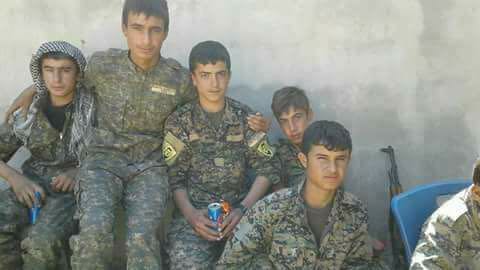
Syria’s Deputy Foreign Minister Bashar al-Jaafari says terrorist organizations and militants of the so-called Syrian Democratic Forces (SDF), which is supported by the United States, continue to commit crimes in the Arab country.
The Syrian diplomat made the remarks during an informal session of the United Nations Security Council held via video conference at the initiative of Russia and Kazakhstan on Friday, Syria’s official news agency, SANA, reported.
During the session titled, “Children in Armed Conflict in Syria,” Jaafari noted that the said groups kept committing crimes and violations against children, including killing, kidnapping, recruiting, and transferring children to conflict areas in the countries of the region.
He added that those groups were also burning and destroying schools and hospitals and preventing children from receiving education.
The Syrian deputy foreign minister, however, stressed that despite all the crimes and violations, Damascus exerts tremendous effort to protect and care for the children who are found in the areas liberated from the grips of terrorists or those minors reached by the state institutions.
Jaafari further described terrorism as one of the most dangerous threats that affect countries and communities, warning that when it spreads, the first affected and the most vulnerable ones would be children.
The veteran diplomat also warned that an extremely alarming impact of terrorism is recruiting children by terrorists and illegitimate entities and forcing them to take part in terrorist acts.
Last week, the UN Children’s Agency said more than half of Syrian children in the war-ravaged country were missing out on education, as almost a third of schools have either fallen down or been commandeered by militant factions.
It estimated that there are more than 2.4 million children out of school inside the Arab country.
The new figures showed an alarming sharp rise from previous estimates when the UN agency said a third of Syrian schoolgoers were deprived of education.
Syria’s Arab Tribes Give Pro-American Forces and SDF One Month to Leave Eastern Syria
Sputnik – 11.08.2020
On 11 August, sheikhs and elders of the Arab Al-Uqaydat tribe met in the Syrian Deir ez-Zor province, agreeing that the US-led coalition is responsible for murdering tribal sheikhs in the province, and demanding that the region be cleared of SDF forces, local control returned to the Syrians, and stating: “leave the Arab region to the Arabs”.
Sputnik’s correspondent in al-Hasakah reported, citing civilian sources in Deir ez-Zor, that nearly 5,000 people attended a meeting of Al-Uqaydat sheikhs and elders. They agreed that the pro-American coalition and the SDF have one month to turn over all of those involved in murdering sheikhs in the Deir ez-Zor governorate, and demanded that the SDF and the coalition leave the province.
The tribal sheikhs condemned the security chaos caused by a series of murders of tribal elders and sheikhs, as well as condemning widespread corruption. These factors are reported to have forced the tribe to make the decision.
The most recent high-profile crime attributed to SDF fighters is the assassination of Sheikh Mutashar al-Hafil and his relative Dar Mihlef al-Khalaf, which has provoked a wave of protests and aggression by local tribes against both the armed SDF groups and the pro-American coalition.
“We are calling on the international coalition to transfer control over the province directly to its Arab population, respecting Syria’s territorial integrity, as well as the rights of Syrian citizens”, the trial elder’s statement said.
Al-Uqaydat tribal representatives also demand that the SDF release all prisoners and hostages: particularly and first, women and children.
Reportedly, the month given to the SDF and the coalition to meet the ultimatum starts today, August 11, 2020.
The Al-Uqaydat tribes have traditionally been situated in the eastern part of the Syrian Deir ez-Zor province. Popular protests hit these cities after pro-American SDF forces killed several sheikhs and tribal elders. In response, tribal representatives broke into SDF headquarters in several governorate cities and captured fighters.
Syrian tribe declares popular war against US forces, SDF
Press TV – August 10, 2020
A Syrian tribe in the eastern province of Dayr al-Zawr has launched a popular resistance force against US troops and their allies, accusing the so-called Syrian Democratic Forces (SDF) of stealing the country’s resources.
The US-based Rai al-Youm newspaper said on its website on Monday that the tribe of Akidat announced in a statement the formation of a military council and launching popular resistance against the US forces and their allied militants in an apparent direct accusation of the American troops of being behind the assassination of Matshar al-Hafl, a senior member of the tribe.
The statement also accused the SDF of stealing the country’s resources and killing its prominent figures.
According to the statement, the elders and notable members of the tribe had held a meeting to take action against the “American occupiers” and the US-backed mercenaries, and to liberate the Syrian territory.
The statement said they agreed to form a political council and a tribal army – to serve as its military wing – to manage the tribe’s affairs in cooperation with the relevant authorities.
It added that the council has begun the practical steps towards the formation of the Akidat army to liberate Syrian territory in coordination with the Syrian army.
The US-led coalition has been conducting airstrikes and operations against what are said to be Daesh targets inside Syria since September 2014 without any authorization from the Damascus government or a United Nations mandate. Damascus has repeatedly condemned the airstrikes.
The military alliance has repeatedly been accused of targeting and killing civilians.
The US has dispatched new deployments to the Syrian provinces of Hasakah and Dayr al-Zawr following President Donald Trump’s October decision to keep hundreds of US troops in Syria to “secure” the country’s oilfields which Syrian troops have yet to retake from militants.
Russian Foreign Minister Sergei Lavrov reiterated that US attempts to control Syria’s oilfields were “illegal” and amounted to “robbery.”
Damascus is in great need of its major oil deposits in order to address its energy needs and rebuild the country amid crippling Western sanctions.
The Arab country has been gripped by foreign-backed militancy since March 2011. The Syrian government says the Israeli regime and its Western and regional allies are aiding Takfiri terrorist groups that are wreaking havoc in the country.
The Arab country is currently extracting oil at only 10 percent of its pre-war capacity.
Featured Video
Yemen joins the war – Red Sea could be blocked next – Saudi regime at risk
or go to
Aletho News Archives – Video-Images
From the Archives
Should Europeans ‘Thank’ the Americans for Destroying Nord Stream?
By Robert Bridge | Strategic Culture Foundation | September 29, 2022
With an investigation continuing into the destruction of the Nord Stream gas pipeline that provided energy supplies to Europe from Russia, there appears to be just one prime suspect, and that should surprise nobody.
Following the sabotage of the Nord Stream 1 and 2 gas pipelines, former Polish Foreign Minister Radoslaw Sikorski already seemed to know the identity of the perpetrator when he tweeted out: “Thank you, USA.”
At first glance, it seemed that Sikorski was speaking sarcastically, berating Washington for carrying out an attack that will have severe repercussions for the people of Europe. After all, how could anyone see any good coming from the termination of Europe’s primary source of gas reserves with winter just around the corner? It was Sikorski’s homeland of Poland, after all, that urged its citizens to collect firewood in the face of dwindling gas reserves.
In fact, the Polish diplomat was speaking one-hundred percent literally… continue
Blog Roll
 Aletho News
- US should start removing its troops for Germany, proposes AfD co-leader Chrupalla
- Iran Red Crescent: 600 educational centers attacked in US-Israeli ‘war crimes’
- Russian Oil Tanker Arrives in Cuba Amid U.S. Blockade
- America Racing to Strategic Defeat in Iran: Lt Col Daniel Davis
- FTC Warns Visa, Mastercard, PayPal, Stripe Over Political Debanking
- Russian tanker approaches Cuba despite US oil blockade
- Marandi: Yemen joins the war – Red Sea could be blocked next – Saudi regime at risk
- Pro-Palestinian French member of European Parliament denied entry to Canada
- Pakistan to Host US-Iran Talks
- How Indonesia’s tilt toward the US left it stranded in the Strait of Hormuz
- If Americans Knew
- Israeli police block Catholic cardinal from entering Church of the Holy Sepulchre on Palm Sunday
- Israel is assassinating journalists again, more than any other nation, anywhere, ever – Not a ceasefire Day 170
- Over 300 US service members wounded, majority have brain injuries – Not a ceasefire Day 169
- Researchers at Human Rights Watch Resign Over Blocked Report on Palestinian Refugee Return
- Jewish Groups Are Backing a War Americans Don’t Want
- Eric Fingerhut Thinks He’s the President of the Jews
- Top Jewish Philanthropists, Rabbis Urge Israeli President to Take Action Against ‘Jewish Extremists’
- Don’t Be Fooled. Zionist Leaders Have Always Wanted to Control Southern Lebanon
- Israel’s widespread use of torture is a core element of its genocide against the Palestinian people
- In Israel’s War on Iran, Many Middle East US Bases Rendered “All But Uninhabitable”
- No Tricks Zone
- New Study Finds Warming Saves Lives…Cold Temperatures 12 Times More Deadly Than Excess Heat
- German Science Blog Accuses PIK Climate Institute Of Hallucinating Climate Tipping Points
- Devastating Assessment Of Comirnaty Vaccine By Former Senior Pfizer Europe Toxicologist
- New Study: CO2 Is ‘Effectively Negligible’ As An Explanatory Climate Change Factor Since 2000
- Former Pfizer Toxicologist Dr. Helmut Sterz Tells Bundestag Hearing Pfizer Vaccine Should Have Never Been Approved
- Energy Expert: Germany’s Nuclear Phaseout Was A “500 Billion Euro Mistake”
- New Research: South Australia’s Mid-Holocene Sea Surface Temperatures Were 4°C Warmer Than Today
- Storing Green Energy To Last Germany 10 Days Would Require A 60-Million Tonne Battery
- New Studies: UK Sea Levels Were 4 Meters Higher Than Today During The Mid-Holocene
- Destructive Green New Deal: German Energy And Metal Group Warns Of Drastic Crisis
 Aletho News