Texas drivers pulled over at random, told to turn over blood, saliva samples
RT | November 20, 2013
Dozens of Texas drivers have been stopped at a police road block, where they were then directed into a parking lot and forced into surrendering blood, saliva and breath samples in a study that has upset civil liberties advocates.
The National Highway Traffic Safety Administration admitted it was attempting to conduct a government study meant to determine the number of drunk or drug-impaired drivers on the road at any given time.
“It just doesn’t seem right that you can be forced off the road when you’re not doing anything wrong,” Kim Cope, who said she was forced to the side of the road while making her way to lunch, told NBCDFW.com. “I gestured to the guy in front that I just wanted to go straight, but he wouldn’t let me and forced me into the parking spot.”
The tests were made even more mysterious when reporters, alerted to the situation by concerned drivers, were unable to find any officers in the Fort Worth Police Department who had been involved. The NHTSA only admitted its involvement after local media sought answers.
The department, which says its mission is to “save lives, prevent injuries, and reduce vehicle-related crashes,” maintains that participation in the research was completely voluntary. But Ms. Cope said she felt trapped during what seemed to be an investigation.
“I finally did the breathalyzer test just because I thought it would be the easiest way to leave,” she said. “It just doesn’t seem right that they should be able to do any of it. If it’s voluntary, it’s voluntary, and none of it felt voluntary.”
When pressed, the FWPD said it was “reviewing the actions of all police personnel involved to ensure that FWPD policies and procedures were followed.” The NBC affiliate was able to determine that the Pacific Institute for Research and Evaluation, a government contractor, was hired to conduct the check.
An NHTSA spokesperson admitted similar programs were being conducted in 30 other cities throughout the US.
But civil liberties attorney Frank Colosi does not accept the rationale.
“You can’t just be pulled over randomly or for no reason,” he said. “They’re essentially lying to you when they say it’s completely voluntary, because they’re testing you at that moment.”
He added that drivers who refused may have been targeted by police for inadvertently giving the impression they were operating a vehicle under the influence. He also told NBC that fine print on the form told drivers their breath was being tested by “passive alcohol sensor readings before the consent process has been completed.”
This oddity comes just months after Texas state troopers were caught on video conducting vaginal and cavity searches on female drivers at the side of the road. The videos quickly went viral, and attorneys for the women filed federal lawsuits against the troopers.
“It’s ridiculous,” Peter Schulte, a former Texas police officer and prosecutor, told the New York Daily News earlier this year. “I was a law enforcement officer for 16 years and I never saw anything like it.”
Indonesia recalls its Australian ambassador alleging phone-taps on President Yudhoyono
RT | November 18, 2013
Indonesia is recalling its ambassador to Australia over allegations that Canberra listened in on phone conversations of the Indonesian president.
Indonesia said the ambassador was being called to Jakarta for “consultations”.
The move by Jakarta comes as the Australian Department of Defence and the Defence Signals Directorate, or DSD, (now known as the Australian Signals Directorate), has been accused of monitoring the phone calls of Indonesian President Susilo Bambang Yudhoyono, his wife Kristiani Herawati, as well as eight other high-ranking officials, including the vice president, Boediono.
The latest leak, provided in May 2013 by NSA whistleblower Edward Snowden, was released jointly by The Guardian newspaper and the Australian Broadcasting Corporation on Monday, and will likely aggravate another diplomatic firestorm between Canberra and Jakarta.
The top secret material from the DSD is in the form of a slide presentation, dated November 2009, and divulges information on the monitoring of mobile phones just as 3G technology was being introduced in Asia.
In one of the presentations, entitled Indonesian President Voice Events, a graphic of calls is given on Yudhoyono’s Nokia handset over a 15-day period in August 2009. The data provides CDRs – call data records – which record the numbers called, the duration of communications, and whether the transmission was a voice call or SMS.
The Australian spy agency “appears to have expanded its operations to include the calls of those who had been in touch with the president,” the report indicated. Another slide, entitled Way Forward, gives the simple command: “Must have content,” perhaps a reference to encrypted material.
Attached to the bottom of each slide in the 2009 presentation is the DSD slogan: “Reveal their secrets – protect our own.”
Also named in the surveillance slides are Dino Patti Djalal, then-foreign affairs spokesman for the president, who recently resigned as Indonesia’s ambassador to the US and is seeking the candidacy in next year’s presidential election for Yudhoyono’s Democratic party, and Hatta Rajasa, current minister for economic affairs and potential presidential candidate for the National Mandate party. Hatta served at the time of the surveillance as minister for transport; his daughter is the wife of the president’s youngest son.
Other high-level officials on the list of “IA Leadership Targets” are: Jusuf Kalla, the former vice-president who ran as the Golkar party presidential candidate in 2009; Sri Mulyani Indrawati, then a reforming finance minister and since 2010 one of the managing directors of the World Bank Group; Andi Mallarangeng, who was at the time the president’s spokesman, and later minister for youth and sports; Sofyan Djalil, who served until October 2009 as minister for state-owned enterprises; Widodo Adi Sucipto, a former head of the Indonesian military who served until October 2009 as security minister.
Another slide, entitled DSD Way Forward, acknowledges that the Australian spy agency’s must “capitalise on UKUSA and industry capability”, apparently a reference to assistance from telecom and internet companies, the same method that the NSA used to collect data on millions of individuals around the planet.
News of Australia’s high-level snooping on the Indonesian president and his top aides is certain to provoke a harsh response from Jakarta, especially considering this is not Australia’s first breach of trust between the Pacific Rim countries.
Tensions between Canberra and Jakarta began in October when top secret files revealed by the German newspaper Der Spiegel and published by Fairfax newspapers showed that Australian diplomatic posts across Asia were being used to intercept communications.
Marty Natalegawa, the Indonesian foreign minister, issued a harsh response and threatened to review bilateral initiatives on issues important to Australia, including people smuggling and terrorism.
During a visit last week to the Australian city of Perth, Vice president Boediono – not yet privy to information that his own Blackberry device had been compromised by Australian spy agencies – briefly mentioned the long-standing spying controversy.
“I think we must look forward to come to some arrangement which guarantees that intelligence information from each side is not used against the other,” he said. “There must be a system.”
Yudhoyono is the latest in a growing list of global leaders who have had their personal communications listened to by the American intelligence service.
It has recently been reported that the leaders of Germany, Brazil and Mexico have been listened to by the so-called Five Eyes, the collective name for the intelligence agencies of the United States, Britain, Australia, Canada and New Zealand, who share information.
German Chancellor Angela Merkel in late October demanded a personal explanation from US President Barack Obama as to why the NSA had tapped her mobile phone. The White House attempted to reassure the chancellor that her phone was “not currently being tapped and will not be in the future”.
It will be interesting at this point to see if the diplomatic backlash in wake of the recent wave of revelations will curb the Five Eyes’ surveillance program, or if it will just go deeper underground.
The Guardian then reported that the DSD worked together with the NSA to stage a massive surveillance operation in Indonesia during a UN climate change conference in Bali in 2007.
On Monday a spokesman for Australian Prime Minister Tony Abbott said: “Consistent with the long-standing practice of Australian governments, and in the interest of national security, we do not comment on intelligence matters.”
Britain rejects EU watchdog plan to probe data-gathering practices – report
RT | November 14, 2013
The UK has rejected a call from an EU watchdog to probe how security agencies intercept metadata. Documents divulged by Edward Snowden revealed the covert practices of British spy body GCHQ in what has been described as “breach of fundamental rights.”
UK newspaper the Guardian reported that Britain sought to “disassociate itself” from a Council of Europe draft resolution urging an investigation into data gathering techniques. The European watchdog is currently holding a conference in the Serbian capital of Belgrade entitled ‘Freedom of Expression and Democracy in the Digital Age’ which seeks to ensure intelligence gathering practices abide by the European Convention on Human Rights.
To this end the Council has produced a report entitled ‘Political Declaration and Resolutions’, outlining recommendations to safeguard against “abuse which may undermine or even destroy democracy.”
A clause (13(v)) in the report urges for an inquiry into the gathering of “vast amounts of electronic communications data on individuals by security agencies, the deliberate building of flaws and ‘backdoors’ in the security system of the internet of otherwise deliberately weakening encryption.”
The UK has moved to exempt itself from this particular part of the document, claiming it was “unable to agree to it.”
“The United Kingdom needs to place formally on record that while it has not blocked consensus on this text, the UK needs to disassociate itself from paragraph 13(v). The UK strongly supports the overall approach of the resolution including supporting a free and open internet that promotes freedom of expression,” said the declaration obtained by the Guardian.
The UK, however, accepted that data could be gathered by security agencies for “a legitimate aim” as long as it is in conjunction with existing human rights legislation and the rule of law.
Security leaks divulged by former CIA worker Edward Snowden blew the whistle on the GCHQ’s multiple intelligence gathering activities and its collusion with the NSA. As well as gathering troves of metadata and recording millions of telephone calls, the latest reports obtained by Der Spiegel found that the GCHQ was spying on data exchange companies through a spoof version of the social network site LinkedIn.
Using a method known as ‘Quantum insert’ the GCHQ created dummy versions of the website to target organizations and individuals and smuggle malware onto their computers.
“For LinkedIn the success rate [of rerouting a target to a malicious website] is looking to be greater than 50 percent,” said the leaked documents.
In addition, more information was revealed at the beginning of November as to the extent of the GCHQ’s cooperation with the NSA. Reports emerged that the GCHQ was feeding the NSA with the internal information intercepted from Google’s and Yahoo’s private networks.
So far the British government has done little to allay fears that UK spy agencies are acting outside the law in violation of human rights.
The Center for European Policy Studies published a paper accusing the UK along with other European countries of systematically violating human rights with their spy practices.
“We are witnessing a systematic breach of people’s fundamental rights,” wrote Sergio Carrera, a Spanish jurist who co-authored the paper with Francesco Ragazzi, a professor of international relations at Leiden University in the Netherlands. They called for action from the EU parliament to distinguish “democracies from police states.”
Related article
American cities installing ominous surveillance tech despite NSA scandal
RT | November 11, 2013
Mass surveillance isn’t something only being conducted by the likes of the National Security Agency anymore. Despite growing concerns brought on by the Summer of Snowden, cities around America are adopting high tech spy tools.
Never mind the negative press the NSA has received in recent weeks after Edward Snowden began leaking top-secret documents to the media pertaining to the United States’ spy group’s broadly scoped surveillance programs. Law enforcement agencies and local leaders in major American cities are nevertheless signing on to install new systems that are affording officials the power to snoop on just about anyone within range.
Seattle, Washington and Las Vegas, Nevada are among the latest locales in the US to acquire surveillance tools, the likes of which were both discussed in regional media reports over the weekend that are making their rounds across the Web and causing privacy advocates around the world to raise their voice.
Neither West Coast city has announced plans to acquire telephone metadata or eavesdrop on email traffic, and combined their operations likely pale in comparison to what the NSA has accomplished. Civil liberties activists are sounding the alarm regardless, however, after new reports revealed what kind of information city officials could collect using newly installed equipment.
In Seattle, a city of around 635,000, the police department recently used a Department of Homeland Security grant for $2.6 million to purchase and put up a number of wireless access devices that together create “mesh networks” which law enforcement officials can connect to and in turn more quickly share large chunks of data, such as surveillance camera recordings and other high-res information.
Those access points, or APs, do more than just transfer data from one node to another, though, and actually spend large amounts of time scouring for every Internet-capable device in the area that may be searching for a Wi-Fi signal — such as any smart phone that can connected to the Web. Although the mesh network is being made for emergency responders to be able to interact with ease and provide them with a widespread wireless system to share information, the APs acquire basic information about every electronic device that even momentarily makes a connection, in theory allowing officials to see much more than the average Washingtonian might want to willfully hand over.
The Stranger, a Seattle alternative-weekly, spoke to the city’s police department about the recently installed mesh network but wasn’t given many answers. Law enforcement officials insisted that the system isn’t fully functioning yet — and little more — but the Stranger learned that authorities can log the MAC (media access control) address of any iPhone, Android, laptop or Internet-able device that’s within reach of its signal, which could then provide authorities with information that even a seasoned investigator might have a hard time obtaining otherwise. Just as how telecommunication companies ping devices almost constantly from nearby towers to test signals, learning the specific location of a MAC address at any given date and time can then be coupled with other location data in order to triangulate a subject’s movements up to even just a few inches away.
Speaking to the Stranger, the Seattle Police Department admitted it does not yet have a policy to govern the use of the multi-million dollar system, but said it is “actively collaborating” with the American Civil Liberties Union, contrary to claims made by the ACLU that the SPD has been anything but speedy when responding to its questions and concerns.
“We definitely feel like the public doesn’t have a handle on what the capabilities are,” Jamela Debelak of Seattle’s ACLU office said to The Stranger. “We’re not even sure the police department does.”
Should a policy not be put in place quickly enough, many fear the results could be ravaging for the privacy of the city’s half-a-million-plus residents, many of whom surely wouldn’t suspect that the phone in their pocket it silently sending personalized information to the Seattle Police Department anytime they walk within reach of an AP’s signal.
In Las Vegas, the latest tool there might be even more Orwellian.
Sin City is one of the latest locales to purchase a line of highly-functional lampposts sold by Michigan’s Illuminating Concepts under the branding of “IntelliStreets.” As RT has reported in the past, however, the devices do much more than light up sidewalks. These lampposts are also Wi-Fi-ready to stream passers-by localized information and even audio and graphics, but it’s what Intellistreets collect that’s really shocking. In addition to broadcasting information, the lampposts are equipped with microphones and cameras that can record anything within an earshot and send it to a server to be analyzed.
On the IntelliStreets website, the company says, “Intellistreets provides a platform and many developed applications to assist DHS in protecting its citizens and natural resources.”
“We want to develop more than just the street lighting component,” Neil Rohleder of the city’s Public Works Department told KSNV News. “We want to develop an experience for the people who come downtown.”
As the technology spreads in cities unopposed, however, it could lead the other towns to journey down a slippery slope that ends with relinquishing even more personal information down the road.
“This technology, you know is taking us to a place where, you know, you’ll essentially be monitored from the moment you leave your home till the moment you get home,” local civil rights activist Daphne Lee told the network.
“At what point do we say this is the land of the free,” Lee said. “People have a right to a reasonable amount of privacy.”
As the NSA scandal has shown the world, however, one person’s idea of privacy might vastly differ from another’s. Revelations made possible through Mr. Snowden’s leaks have shown that the US government routinely collects information about the dialer and recipient of nearly every phone call made in the country, and even America’s allies, such as German Chancellor Angela Merkel, are subject to NSA-issued surveillance.
Meanwhile, other cities along the West Coast are seeing a surge in surveillance tools that started before the first Snowden leak but are still being set in place. Federal grants totaling around $7 million to Oakland, California are being used to ensure that the city has an eye on seemingly everything by next summer, and requests by a growing number of law enforcement agencies for spy drones is expected to involve eventually equipping bureaus across the country with unmanned aerial vehicles by the dawn of the next decade.
Related article
Senate committee approves funding for NSA, witch-hunt on leakers
RT | November 6, 2013
Congress has taken the first step towards expanding the abilities of the United States intelligence community by advancing a draft bill that will ensure the government’s spy budget stays intact into next year.
A Senate commitee approved the 2014 Intelligence Authorization Act during a closed door session on Tuesday, a bill that if signed into law will allow the US National Security Agency and other departments to keep receiving funding amid an international scandal that has caused calls for reform and even abolishment of the NSA both in the US and abroad in recent months.
Notwithstanding the backlash brought on by an array of secret NSA documents disclosed to the media by contractor-turned-leaked Edward Snowden since June, the Senate Intelligence Committee passed the draft bill by a 13-2 vote. Next, the full chamber will weigh in on the matter before it is reconciled with a sister act by way of the House of Representatives and sent to President Barack Obama to be signed into law.
If approved with all of its current provisions in place, the law will let the government continue to fund programs operated for purposes of counterterrorism and nuclear weapon proliferation prevention, authorizing initiatives within more than a dozen federal departments, including the NSA and others that deal in covert, intelligence-gathering operations.
In a press release issued Tuesday by the committee, however, its members also acknowledged that the bill expands certain intelligence community operations, including in particular the very programs enacted to prevent the unauthorized disclosure of classified information.
The bill, the committee wrote, “includes important provisions to enhance the conduct, accountability and oversight of the intelligence activities of the United States,” such as one intended “to protect against insider threats by adding necessary funds to deploy information technology detection systems across the intelligence community.”
The bill would also empower the Director of National Intelligence to “improve the government’s process to investigate . . . individuals with security clearances to access classified information,” while at same time “Instituting new statutory protections that protect the ability of legitimate whistleblowers to bring concerns directly to the attention of lawmakers, inspectors general and intelligence community leaders.”
Since the identity of the NSA leaker was revealed to be 30-year-old Edward Snowden, opponents of his actions have suggested that alternative, legal routes to questions the intelligence community’s tactics could have been taken, such as appealing to an inspector general. History, however, suggests that recent whistleblowers before him had a nearly impossible time doing as much, including Thomas Drake, a former senior NSA executive who was charged under the Espionage Act after he attempted to draw attention to waste, fraud and abuse within his agency years earlier. Speaking at an anti-NSA rally in Washington last month, Drake told a crowd of a couple thousand, “Any domestic surveillance legislation must include whistleblower protection for the credibility and enforcement of any reform effort, otherwise secrecy enforced by repression will turn into a faux reform passed into simply an honor system” for the NSA.
In a statement released on Tuesday, Committee Vice Chairman Saxby Chambliss (R-Georgia said, “This year’s intelligence authorization bill achieves both objectives by providing clear guidance and appropriate resources to the intelligence community, while enhancing the committee’s oversight of vital intelligence activities.”
If signed into law, the act will allow for funding to continue with regards to a number of intelligence-gathering operations conducted not just by the likes of the NSA, but also the Central Intelligence Agency, the Office of the Director of National Intelligence and the Departments of Defense, State, Treasury, Energy and Justice, among others.
Britain’s GCHQ shepherding mass surveillance operations throughout Europe
RT | November 2, 2013
British intelligence agency GCHQ has helped counterpart entities in France, Germany, Spain, and Sweden develop methods of mass surveillance of internet and phone traffic in the last five years, a new report reveals.
Documents supplied by former National Security Agency contractor Edward Snowden to the Guardian show the UK Government Communications Headquarters’ (GCHQ) enormous influence throughout Europe. The documents detail how the agency developed and promoted spying processes, built relationships with telecommunication companies, and evaded national laws that constrain the surveillance powers of intelligence agencies.
In the wake of outrage expressed over the past week across Europe regarding newly exposed NSA surveillance of European countries – including intercepted communications and the monitoring of phones belonging to officials such as German Chancellor Angela Merkel – documents released Friday by the Guardian show major European countries’ culpability in mass surveillance efforts shepherded by the GCHQ.
The GCHQ is part of the ‘Five Eyes’ intelligence-sharing partnership between Australia, Britain, Canada, New Zealand, and the United States.
US intelligence officials said the monitoring that received so much indignation from powers like Germany and France was carried out by those countries’ own intelligence agencies and later shared with the US.
In June, the Guardian revealed the GCHQ’s Tempora program, in which the agency tapped into transatlantic fiber-optic cables to execute bulk surveillance. Germany’s justice minister, Sabine Leutheusser-Schnarrenberger, said at the time that the program sounded “like a Hollywood nightmare” and warned that free societies and actions hidden under “a veil of secrecy” are not compatible.
A nation-by-nation scorecard
In a 2008 survey of European partners, the GCHQ marveled at Germany’s capabilities to produce Tempora-like surveillance. The British service said the Federal Intelligence Service (BND) had “huge technological potential and good access to the heart of the internet – they are already seeing some bearers running at 40Gbps and 100Gbps.” The term ‘bearers’ refers to the fiber-optic cables. Gigabits per second (Gbps) measures the speed at which data runs through them.
The documents also show the British were advising German counterparts on how to change or evade laws that restricted advanced surveillance efforts. “We have been assisting the BND (along with SIS [Secret Intelligence Service] and Security Service) in making the case for reform or reinterpretation of the very restrictive interception legislation in Germany,” the survey says.
The report also lauds the GCHQ’s French partner, the General Directorate for External Security (DGSE), especially for its cozy relationship with an unnamed telecommunications company.
“DGSE are a highly motivated, technically competent partner, who have shown great willingness to engage on IP [internet protocol] issues, and to work with GCHQ on a ‘cooperate and share’ basis.”
The GCHQ expressed desire to benefit from the DGSE’s relationship with the company.
“We have made contact with the DGSE’s main industry partner, who has some innovative approaches to some internet challenges, raising the potential for GCHQ to make use of this company in the protocol development arena.”
The GCHQ’s work with its French counterpart led to improved capabilities to carry out bulk surveillance, despite growing commercial emphasis on encryption.
“Very friendly crypt meeting with DGSE in July,” British officials said. French intelligence officials were “clearly very keen to provide presentations on their work which included cipher detection in high-speed bearers. [GCHQ’s] challenge is to ensure that we have enough UK capability to support a longer term crypt relationship.”
New opportunities in future partnerships
GCHQ ties to Spain’s intelligence service, the National Intelligence Centre (CNI), were bolstered by Spain’s connections to an unnamed British telecom company, giving them “fresh opportunities and uncovering some surprising results.
“GCHQ has not yet engaged with CNI formally on IP exploitation, but the CNI have been making great strides through their relationship with a UK commercial partner. GCHQ and the commercial partner have been able to coordinate their approach. The commercial partner has provided the CNI some equipment whilst keeping us informed, enabling us to invite the CNI across for IP-focused discussions this autumn,” the survey said. It reported that the GCHQ “have found a very capable counterpart in CNI, particularly in the field of Covert Internet Ops.”
When Sweden passed a 2008 law allowing its National Defence Radio Establishment (FRA) to execute Tempora-like surveillance via fiber-optic cables, the GCHQ said in the report that “FRA have obtained a…probe to use as a test-bed and we expect them to make rapid progress in IP exploitation following the law change.” The GCHQ went on to express delight in future partnerships with FRA after the law passed.
The survey found strong ties between the GCHQ and Dutch external and internal intelligence services MIVD and AIVD, respectively.
“Both agencies are small, by UK standards, but are technically competent and highly motivated,” British officials said.
The GCHQ also helped AIVD in handling legal constraints to spying.
“The Dutch have some legislative issues that they need to work through before their legal environment would allow them to operate in the way that GCHQ does. We are providing legal advice on how we have tackled some of these issues to Dutch lawyers.”
Contrary to the other nations’ positive marks, the GCHQ country-by-country scorecard shows Italy’s intelligence agencies to be riddled with internal strife.
“GCHQ has had some CT [counter-terrorism] and internet-focused discussions with both the foreign intelligence agency (AISE) and the security service (AISI), but has found the Italian intelligence community to be fractured and unable/unwilling to cooperate with one another,” the report said.
A follow-up six months later noted the GCHQ still saw legal constraints in Italy as hampering AISI’s ability to cooperate.
This latest disclosure calls into question how involved the countries were in the overall surveillance of global citizens and world leaders led by the NSA and GCHQ.
Brazil to press for local Internet data storage after NSA spying
RT | October 29, 2013
Brazil is urging a plan to introduce local data storage for Internet giants like Facebook and Google in order to keep the information they get from Brazilian users safe –as part of a complex of measures to oppose US spying.
The new law could impact Google, Facebook, Twitter and other Internet global companies that operate in Brazil, Latin America’s biggest country and one of the world’s largest telecommunications markets.
The country’s president, Dilma Rousseff, is urging lawmakers to vote as early as this week on the law, according to Reuters who have seen the draft of the legislation.
“The government can oblige Internet service companies … to install and use centers for the storage, management and dissemination of data within the national territory,” the draft of the document read.
Rousseff’s calls come after surveillance leaks by the US in Brazil that went as far as tracking the personal phone calls and e-mails of the President herself.
Last month, Brazilian President Dilma Rousseff canceled a scheduled meeting at the White House after leaked documents showed the NSA spied on her country’s state oil company.
“We are not regulating the way information flows, just requiring that data on Brazilians be stored in Brazil so it is subject to the jurisdiction of Brazilian courts,” Rousseff spokesman Thomas Traumann said. “This has nothing to do with global communications.”
However, the companies disagree saying that the legislation will increase costs of services, and damage the economic activity connected with information.
Last week a coalition of business groups representing dozens of Internet companies including Facebook, Google, Microsoft and eBay sent a letter to Brazilian lawmakers.
“In-country data storage requirements would detrimentally impact all economic activity that depends on data flows,” the letter read, Reuters reported.
Many also threatened the law will scare the companies, while others, nevertheless, were of the opinion that the companies would comply if faced with no other options.
This week, Brazil is expected to vote on a cyber-security bill to create a state system to protect the country’s citizens from spying.
When the news on the bill emerged two weeks ago, Brazilian President Dilma Rousseff tweeted the news, stressing the need for greater security “to prevent possible espionage.”
The latest legislation project comes against a backdrop of Brazil set to host a conference next April to debate ways to guard Internet privacy from espionage.
The meeting is to be held by ICAAN, the body that manages web domain names. It is thought to be neutral and includes governments, civil society and industry.
Meanwhile, BRICS companies are working to create a “new Internet”.
In particular, Brazil has been reported to be building a “BRICS cable” that will create an independent link between Brazil, South Africa, India, China and Russia, in order to bypass NSA cables and avoid spying.
The cable is set to go from the Brazilian town of Fortaleza to the Russian town of Vladivostok via Cape Town, Chennai and Shantou.
The length of the fiber-optic cable will be almost 35,000 kilometers, making it one of the most ambitious underwater telecom projects ever attempted.
Last week, most of the BRICS countries joined talks to hammer out a UN resolution that would condemn “indiscriminate” and “extra-territorial” surveillance, and ensure “independent oversight” of electronic monitoring.
Russian Foreign Minister Sergey Lavrov said that “contacts [between Moscow and Washington] never stop,” when asked if the latest publication of secret files leaked by the former National Security Agency (NSA) contractor would affect relations between Russia and the US.
Also, Lavrov made it clear that the situation surrounding Snowden is irrelevant to Russia.
“We have formulated our position on Snowden and have said everything,” he said.
Related article
- China echoes Brazil’s call for cyberspace guidelines (thebricspost.com)
‘Unacceptable and shocking’: France demands explanation for NSA spying
RT |October 21, 2013
France has called for an explanation for the “unacceptable” and “shocking” reports of NSA spying on French citizens. Leaked documents revealed the spy agency records millions of phone calls and monitors politicians and high-profile business people.
The US Ambassador to France Charles Rivkin was summoned by the French Foreign Ministry to account for the espionage allegations on Monday morning.
“I have immediately summoned the US ambassador and he will be received this morning at the Quai d’Orsay [the French Foreign Ministry],” French Foreign Minister Laurent Fabius told press. He added that “we must quickly assure that these practices aren’t repeated.”
In addition, citing the report on French publication Le Monde, Interior Minister Manuel Valls spoke out on national television against US spy practices.
“The revelations in Le Monde are shocking and demand adequate explanations from the American authorities in the coming hours,” said Valls on television channel Europe 1.
He went on to say that it is totally unacceptable for an allied country to spy on France.
Ambassador Rivkin refrained from commenting on the spy allegations on Monday morning and told Reuters that French-US ties are the “best they have been for a generation.”
Le Monde revealed in a report based on the security leaks of former CIA worker Edward Snowden that the NSA recorded 70.3 million phone calls between December 10, 2012, and January 8, 2013.
The NSA reportedly carries out its espionage in France using a program called ‘US-985D’ which is able to listen in on specific telephone calls and pick up on text messages according to key words used.
Moreover, Le Monde also wrote that it had reason to believe that the spying was not just limited to citizens suspected of being involved in terrorism. According to the data released by Snowden the NSA also eavesdropped on politicians and prominent business figures.
The newspaper did not give any indications as to the identity of the high-profile people.
France is not the only EU nation to be targeted by NSA surveillance. Germany took issue with the US government after it was revealed the NSA was tapping phone lines and recording electronic data in the country.
The EU will take steps to curtail US data mining on Monday in a vote to change data protection rules. The European Parliament’s Committee on Civil Liberties is expected to decide on the issue that would authorize fines for violation of EU data protection.
‘Investment benefits’
The US maintains that its spying activities are in the interests of national security and protect against terrorism. However, Snowden leaks released by Guardian reporter Glenn Greenwald showed the NSA had monitored Brazilian state-owned oil giant Petrobras and infiltrated the electronic communications of the Brazilian and Mexican presidents.
Mexico has also demanded an explanation for reports released by Der Spiegel on extensive spying on Mexican top officials and politicians.
Der Spiegal revealed that former President Felipe Calderon had also been a target for NSA espionage. Citing a classified internal report, it said the US monitors “diplomatic, economic and leadership communications which continue to provide insight into Mexico’s political system and internal stability.”
Featured Video
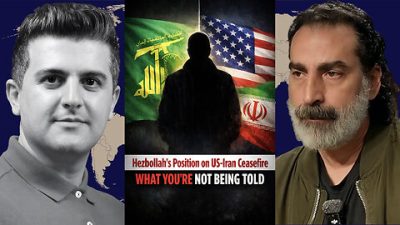
Laith Marouf: Hezbollah’s position on US-Iran ceasefire
or go to
Aletho News Archives – Video-Images
From the Archives
The Dirty Little Secret behind the “Global Terrorism Index”
The Omission of Israeli Terrorism in the Occupied Palestinian Territories
By Karin Brothers | Global Research | December 6, 2014
… The Israeli settlements — all of which are illegal – have been identified as a major impediment to peace. The refusal of a major “global” terrorism report to name the Israeli settlers as one of the groups most responsible for terrorism not only misrepresents a major source of regional violence but exposes the Global Terrorism Index as a propaganda tool that supports a U.S. agenda.
In recent years, governments have been attempting to thwart terrorism by blocking supportive fund-raising. When it comes to Israeli settlements, however, the US and Canada actually encourage fund-raising by giving organizations (such as Christian Friends of Israeli Communities (CFOIC) and the Jewish National Fund) financial support in the form of donor tax-deductions.
Charities which provide funds for the Israeli settlements should be regarded as terror-financing organizations. They should not only lose their tax-deductible status, but they should be banned because they support the violation of international humanitarian law. The terror-financing laws that are being strictly enforced for Muslim charities should be applied to Christian and Jewish charities as well. … Read full article
Blog Roll
 Aletho News
- The ‘Opposition Party’ Has Done Nothing to Stop the Iran War and Much to Goad Trump Into Continuing It
- Moscow backs Tehran on status of Lebanon in US-Iran deal
- How UK Regulator Ofcom Quietly Bypassed International Law to Police American Speech
- The Black Cube Files: How Former Mossad Operatives Flipped a Nation
- Laith Marouf: Hezbollah’s position on US-Iran ceasefire: What you’re not being told
- Israel’s priority lies in destroying chances of peace between Iran, US: Ex-UN nuclear chief
- Ceasefire for all or for none: Iran shuts Hormuz over Lebanon attacks
- Strait of Hormuz is Iran’s ‘nuclear weapon’ that forced US retreat: Medvedev
- Energy crisis will last for months – Kremlin envoy
- Europe’s quiet role in the war on Iran
- If Americans Knew
- This is ceasefire? Israel’s biggest massacre yet in Lebanon, another journalist killed in Gaza – Daily Update
- Tucker Carlson on Israel: This Is the Behavior of an Ally? Really?
- Gazans face a triple crisis: severe shortages of water and bread, healthcare in tatters
- NY Times reports how Netanyahu took the US into Iran War
- A sigh of relief over Iran, but Gaza and Lebanon in dire straits – Daily Update
- Thousands dead and neighborhoods razed to the ground: Aid agencies fear southern Lebanon is becoming the new Gaza
- The war the US is fighting for Israel could cost trillions
- ‘Cigarette Burns, Nail Wounds’: Toddler Tortured in Gaza to Coerce Father
- Trump Says US Sent ‘a Lot of Guns’ to Protesters in Iran
- Israeli forces destroy 17 UN peacekeeper cameras in south Lebanon
- No Tricks Zone
- An Inconvenient Tree: Uncovered In Alps… Europe Much Warmer Than Today 6000 Years Ago
- New Study Reports A 60% Slowdown In Greenland’s Ice Loss Rate In The Last Decade
- Low Intensity Tornado Wrecks Major Solar Farm, Creating A Potential Toxic Dump
- New Study Finds Warming Saves Lives…Cold Temperatures 12 Times More Deadly Than Excess Heat
- German Science Blog Accuses PIK Climate Institute Of Hallucinating Climate Tipping Points
- Devastating Assessment Of Comirnaty Vaccine By Former Senior Pfizer Europe Toxicologist
- New Study: CO2 Is ‘Effectively Negligible’ As An Explanatory Climate Change Factor Since 2000
- Former Pfizer Toxicologist Dr. Helmut Sterz Tells Bundestag Hearing Pfizer Vaccine Should Have Never Been Approved
- Energy Expert: Germany’s Nuclear Phaseout Was A “500 Billion Euro Mistake”
- New Research: South Australia’s Mid-Holocene Sea Surface Temperatures Were 4°C Warmer Than Today
 Aletho News