NSA practices cannot be excused as ‘fighting terrorism’
RT | October 16, 2013
The NSA has attacked key European institutions such as the EU parliament and banking system, using malware to find out all there is to know about other countries in a power game, Andy Mueller-Moguhn, founder of Buggedplannet.info, tells RT.
He says that in a world where so many communications go over the web we all have something to protect rather than something to hide, as proponents of mass surveillance often argue.
RT: No matter what precautions companies take or measures to protect the privacy of subscribers isn’t the agency [NSA] capable of bypassing all these routes?
Andy Mueller-Moguhn: I would say it like this; unfortunately in Germany we have a situation that the trustworthiness or our foreign and interior intelligence service watching their high level of cooperation with the NSA and GCHQ does not make them trustworthy at all. If they can intercept the stuff, they might hand it over in a bargain to the Americans, which is not helpful.
So this means that what is to be done, is to ensure on whatever level in whatever country that encryption for the end user is becoming available like easy to use and as a standard tool, because you send your postal letters in an envelope so should you do with your emails.
RT: Let’s look at the situation from both sides. On the one hand we have the privacy of citizens that has of course to be respected, but on the other hand there are some companies who are fighting hard to protect their privacy. Doesn’t that give us a cause for concern, that they have something to hide, some skeletons in the closet as they say?
AMM: The point is that we have seen that installations of the United States National Security Agency, attacking also carriers in Europe, as we’ve seen with things that have nothing to do with terrorism or with fighting terrorism. They have a lot to do with power games or with knowing everything about other countries, about business, about embassies, about other country’s governments as we also see with the Brazilian presidential interception.
So obviously the thing that you have nothing to hide is totally wrong in the case that everybody has something to protect and in the days where everything, cultural, economic, political, things go over the internet and advance knowledge of a political decision, which can have for example an impact on stock rates, on currencies, on country’s reputations and so on. This is worth a lot of money and we have not really come to the bottom, we have seen a big part of this NSA approach, we have seen a lot of money, a lot of effort internationally to intercept all communications, but we have not yet come to the question, who is the customer, in the sense who are the guys ordering this, getting the product and using that.
That it is still a very interesting question where we come to monetary, political and other influences being taken with blackmailing, with greymailing, with advanced knowledge about what other people think, act and do.
RT: You mentioned an interesting point here saying that it’s not the point whether we have something to hide, but it’s what we have to protect. In that case what’s your take on the role of America as a global policeman? Does it have any moral authority to conduct global surveillance?
AMM: The point is that we have seen attacks, not passive interception but buggedplannet.info was subject to an attack in the sense that there was malware installed in the system, there were exploits used, the NSA literally took control over the network. This cannot be excused with fighting terrorism at all. This obviously was targeting the European parliament, it was targeting the European airspace control, it was targeting the SWIFT network or the banking network, so obviously there is no moral excuse here in terms of this being to do with fighting terrorism or ensuring security. This is about the global interest of the United States against other European and other peaceful acting countries and democratic organized entities.
Related articles
Not one byte! German telecom giant plans to rout foreign spooks
RT | October 14, 2013
Germany’s largest telecom provider, Deutsche Telekom, is looking to introduce a “national routing” service which would keep German internet traffic out of the hands of foreign spies.
The former state-owned communications giant outlined the plans at a secret meeting in the Economy Ministry, business weekly Wirtschaftswoche reported.
Currently, email data is exchanged between users worldwide via international Internet exchange points; physical structures through which Internet service providers (ISPs) exchange Internet traffic between their networks.
The company hopes to hammer out an agreement with other national Internet providers which would guarantee that “while being transported from the sender to the receiver in Germany… no single byte leaves Germany,” Thomas Kremer, a board member of Telekom’s data privacy, legal affairs and compliance, told the magazine.
To put the plan into effect, Deutsche Telekom must secure the support of all its competitors, including Telefonica and Vodafone.
While Vodafone and Telefonica are currently mulling the initiative, another competitor – Internet service provider QSC – has questioned the efficacy of the plan, saying it was not possible to determine with certainty whether data is being routed nationally or internationally.
“In a next step, this initiative could be expanded to the Schengen area,” the spokesman said, referring to the group of 26 European countries – excluding Britain – that have removed border controls for participating countries.
Deutsche Telekom first began leading the charge for to protect its users’ privacy from foreign intelligence agencies in August when they rolled out ‘Email Made in Germany’, an encrypted email service that only uses German servers to process and store all domestic email traffic.
The move followed revelations that the US National Security Agency (NSA) collects 500 million pieces of phone and email metadata from Germany each month — more than in any other EU country.
“Germans are deeply unsettled by the latest reports on the potential interception of communication data,” said Rene Obermann, head of Deutsche Telekom.
“Now, they can bank on the fact that their personal data online is as secure as it possibly can be.”
Experts do not believe the move will stop governments from getting their hands on information, although it might complicate efforts to do so.
“Of course the NSA could still break in if they wanted to, but the mass encryption of emails would make it harder and more expensive for them to do so,” Sandro Gaycken, a professor of cyber security at Berlin’s Free University, said when the idea was first proposed.
Related article
- To Dodge US Spies, Germany Might Keep All Its Internet Traffic on Local Servers (motherboard.vice.com)
Oakland dedicating anti-terrorism funding to surveillance supercenter
RT | October 14, 2013
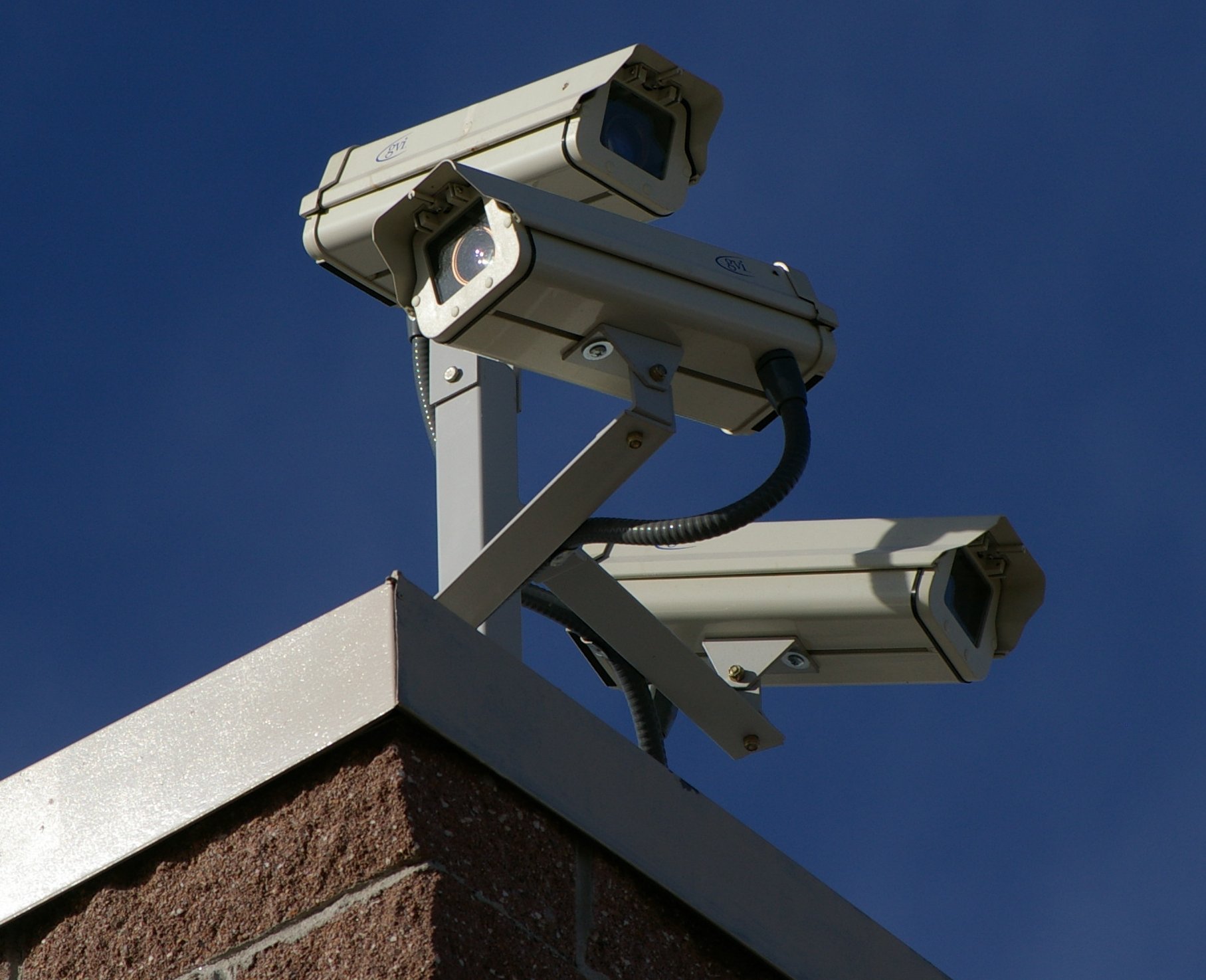 Lawmakers in Oakland intend to spend millions of dollars awarded to the California city in a federal grant to a police dragnet that promises to examine surveillance footage, riling critics who assert the intention of the grant was to stop terrorism.
When the new program debuts in approximately one year police will be able to track drivers as they travel through tolls, scan license plates with the roughly 3,000 surveillance cameras placed throughout the city, and monitor social media platforms to learn about crimes before they occur.
The Oakland program, officially referred to as the Domain Awareness Center, according to the New York Times, comes at a time when police departments across the US are using federal money to launch similar surveillance efforts modeled after the New York Police Department. The NYPD, which operates within New York City as well as far outside, has used federal grants to build a massive surveillance network capable of linking cameras and license plate readers to criminal and suspected terrorist databases.
The Domain Awareness Center also plans to plant gunshot detection sensors through Oakland, which is consistently ranked among the most dangerous cities in the US. Forbes magazine reported that violent crime affects 1,683 of every 100,000 residents in the city, making it the third most dangerous city in America with a population between 100,000 and 499,000 in 2013.
The Oakland City Council voted unanimously on July 31 to adopt the plan to build the surveillance center, which officials have said will be staffed 24 hours a day. Lawmakers voted at the same meeting to ban hammers and spray paint cans at protests in fear that the items will be used as weapons. Waiting outside, protesters admonished council members with chants of “Shame! Shame! Shame!”
“The Domain Awareness Center is the guard tower which will watch over every person in the city of Oakland,” shouted demonstrator Mark Raymond, as quoted by the San Francisco Chronicle. “This program is an attempt to criminalize and imprison all people who live and pass through Oakland.”
All told, the surveillance center’s costs are expected to total $10.2 million in federal grants, and while legislators said they were cognizant of residents’ security while drafting the bill some representatives were shouted down.
“We have tried our best to find the sweet spot where are going to take advantage of the tools that we have at hand to make our city safe… We have done everything we can to safeguard privacy,” said councilwoman Libby Schaaf before she was cut off by jeers and one protester who suggested she “go home to your mansion and kill yourself.”
Schaaf did admit that, while police have traditionally needed just a small evidence sample to arrest a suspect, the new center will have the capability to “paint a pretty detailed picture of someone’s personal life, someone who may be innocent.”
Oakland was awarded a federal grant to ramp up security near the Port of Oakland, a thriving cargo center that is one of the busiest in the US. The 19-mile waterfront is the fifth-busiest container port in the US, with 1,800 ships arriving every year, according to the San Francisco Chronicle. Over $14 billion in goods were exported from the bustling hub in 2012.
To protect the port, and watch civilians throughout the region, Oakland signed a contract with Science Applications International Corporation (SAIC) to build the Domain Awareness Center. The company, which earns most of its $12 million in annual revenue from military contracts, also worked with the NYPD but later paid $500 million to avoid a federal prosecution for receiving illegal kickbacks.
The Times reported that this project is not the first time Oakland has sought to develop such technology. A city audit viewed by the paper revealed that lawmakers spent nearly $2 million in 2012 alone on police tools that did not work or could not be used for a variety of reasons.
Linda Lye, an attorney with the American Civil Liberties Union, said this project might work as intended, but that mere intention already creates a scary problem.
“What they did is approve a vast surveillance center without understanding the implications,” she said earlier this year. “The privacy policies would be drafted only after the center is built. At that point, what opportunity will there be for to determine if the safeguards are sufficient?”
Related article
Internal pilot-union memo claims terrorism ‘dry-runs’ happening on US flights
RT | October 12, 2013
An internal memo from the union that represents pilots for US Airways claims there have been “several cases recently” throughout the airline industry of what the union believes are “dry-runs” for potential attacks with or on an aircraft.
The memo – released sometime just before September 11, 2013 – from the US Airline Pilots Association states “there have been several cases recently throughout the (airline) industry of what appear to be probes, or dry-runs, to test our procedures and reaction to an in-flight threat.”
The union memo, titled “9/11 Security Update,” went on to detail one “typical example” that happened on a US Airways flight to Orlando International Airport (MCO) originating at Ronald Reagan Washington National Airport (DCA) in Washington, DC.
“A group of Middle-Eastern males boarded in DCA. Shortly after takeoff, one got up and ran from his seat in coach towards the flight deck door. He made a hard left and entered the forward lav, where he stayed for a considerable length of time! While he was in there, the others got up and proceeded to move about the cabin, changing seats, opening overhead bins, and generally making a scene. They appeared to be trying to occupy and distract the flight attendants.
“Coincidence?”
Both US Airways and the Transportation Security Administration (TSA) verified the incident.
The TSA responded to the original story with a statement, saying it “takes all reports of suspicious activity on board aircraft seriously,” and that “the matter required no further investigation at this time.”
One skeptical US House member, however, called for further review of the event.
“Any suspicious reported incident of this nature should be properly investigated,” said Congressman John Mica (R), who represents area north of Orlando. “It is government’s obligation and responsibility to remain vigilant. While the specifics of the US Air incident are not public, federal authorities must review the matter.”
The union memo was obtained and reported by WTSP in Tampa Bay.
At least one unnamed Federal Air Marshal was interviewed for the original WTSP story and a follow-up published Friday morning.
The source said the TSA’s motivations should be received with suspicion.
“They’re liars. They’re flat out liars.”
According to WTSP, the Air Marshal and other airline employees said several flights they have worked on have been the target of “dry-runs,” no matter what the TSA reports.
The security update memo followed the first DCA-to-MCO example with “another interesting twist to this case,” according to its authors.
“It just so happens that on the return flight from MCO – DCA, with the same flight number, a group of 8 Middle Eastern females — concealed in full burkas — were in the boarding area for the flight to DCA. This flight did not have a (Federal Air Marshal) team, even though it was supposed to have a significant VIP aboard. (He was rebooked when all these details were made known to his security detail.)
“Coincidence?”
A pilot for Delta Airlines who is also chairman of the Aviation Security Committee for the Air Line Pilots Association, International – a pilots union for many North American airlines, not including US Airways – told WTSP any belief that another major attack on or with an aircraft will not happen again “is very foolish.”
The events of 9/11 were “an incredible attack on us. It was very well orchestrated and they’re going to try it again… 100 percent, no question in my mind. They’re going to try it again,” said Wolf Koch.
The union memo urges aircraft crews to be aware of safety protocols.
“ALWAYS, ALWAYS use the cart as a barrier when the flight deck door is opened in flight because, ladies and gentlemen, if a bad guy gets into the cockpit (it only takes 2 seconds!) and another 9/11 happens — its GAME, SET and MATCH in favor of the bad guys!”
One airline ground crew member told WTSP ground crews are not screened and could plant bombs or weapons in a lavatory, for example.
“We could just carry our backpacks right through the turn style (sic) gate and could have anything we wanted to put on that plane.”
The memo includes inflammatory and political commentary that appear to be meant to motivate union members to stay vigilant.
“Islamic terrorists have a thing about significant dates, and it just so happens that the 12th anniversary of 9/11 is in a few days. Do you remember that day? You can bet The Enemy does. Remember Benghazi? That’s when the US was attacked again on the 11th anniversary of 9/11. (And no, it was not about an anti-Muslim video.)
“Right now the Middle East is burning as the ‘Arab Spring’ turns into the Arab Winter and the conflagration is consuming an entire region of the world. Tensions are high — and that is when bad things happen. Whatever the US does in the Middle East will be used as an excuse to kill Americans. As always, but especially now, keep the safety of your passengers and crew a top priority. Don’t cut corners.”
NSA chief admits govt collected cellphone location data
RT | October 02, 2013
The director of the National Security Agency admitted this week that the NSA tested a program that collected cellphone location data from American citizens starting in 2010, but suspended it shortly after.
Gen. Keith Alexander, the head of both the NSA and the United States Cyber Command, told lawmakers in Washington early Wednesday that the secretive pilot program was taken offline in 2011, but that the intelligence community may someday in the future make plans to routinely collect location data about US citizens.
Alexander briefly discussed the program during a Senate hearing on the Hill early Wednesday that focused on the data provided to the government through the Foreign Intelligence Surveillance Act, or FISA, including programs that were exposed earlier this year by unauthorized disclosures attributed to contractor-turned-leaker Edward Snowden.
Only days earlier, Sen. Ron Wyden (D-Oregon) asked Alexander during a Senate Intelligence Committee hearing if the NSA was collecting location data on American citizens.
“I’m asking, has the NSA ever collected, or ever made any plans to collect, American cell site information?” Wyden asked last Thursday.
The NSA, Alexander responded at the time, “is not receiving cell-site location data and has no current plans to do so.”
During this Wednesday’s hearing, Alexander explained that, “In 2010 and 2011, NSA received samples in order to test the ability of its systems to handle the data format, but that data was not used for any other purpose and was never available for intelligence analysis purposes.”
According to a written copy of the statement obtained by The New York Times before Wednesday’s hearing, Alexander said that location information is not being collected by the NSA under Section 215 of the Patriot Act. Alexander did not discuss if any other laws are being implemented to otherwise allow for the collection and analysis of location data.
Moments after Alexander revealed the pilot program before the Senate committee, he said that the NSA may someday want to seek approval from Washington to revive that initiative as part of a fully functioning intelligence gathering operation.
“I would just say that this may be something that is a future requirement for the country, but it is not right now,” Alexander said.
Alexander’s statement regarding the new defunct program was expected, and obtained by The New York Times moments before Wednesday’s hearing was underway. Times reporter Charlie Savage wrote that morning that information about the pilot project was only recently declassified by Director of National Intelligence James Clapper, and that the draft answer obtained by the paper and later read aloud by Alexander was prepared in case he was asked about the topic.
Still unsatisfied by the intelligence community’s explanation about the collection of cellphone location data, Sen. Wyden supplied the Times with a response suggesting that the truth behind the NSA’s activities isn’t being fully acknowledged by the intelligence community.
“After years of stonewalling on whether the government has ever tracked or planned to track the location of law-abiding Americans through their cellphones, once again, the intelligence leadership has decided to leave most of the real story secret — even when the truth would not compromise national security,” Wyden said.
In March, Wyden asked Clapper to say if the NSA was collecting personal information on millions of Americans. The intelligence director dismissed that allegation, then later apologized to the Senate for offering a “clearly erroneous” response.
“Time and time again, the American people were told one thing about domestic surveillance in public forums, while government agencies did something else in private,” Wyden told the Senate Intelligence Committee panel of witnesses last week, which included Alexander, Clapper, and Deputy Attorney General James Cole.
During last week’s meeting, Wyden said he “will continue to explore that because I believe this is something the American people have a right to know whether the NSA has ever collected or made plans to collect cell-site information.”
Related articles
Former Qwest CEO says refusal to comply with NSA spying landed him in jail
RT | October 1, 2013
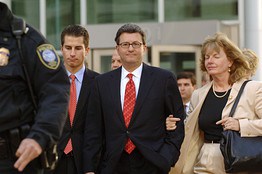 Former Qwest CEO Joseph Nacchio, who spent over four years in prison for insider trading, now says his conviction was based on his company’s refusal to cooperate with NSA requests to spy on its customers.
Nacchio says he feels “vindicated” by ongoing revelations provided by former NSA contractor Edward Snowden that the NSA does, in fact, access massive amounts of metadata and communications information of both foreigners and Americans.
Nacchio told The Wall Street Journal that the NSA set up a meeting with him in February 2001 wherein he believed they would discuss potential government contracts. But he says the NSA instead asked him for permission to surveil Qwest customers.
He says he refused to cooperate based on advice from his lawyers that such an action would be illegal, as the NSA would not go through the normal process of asking the Foreign Intelligence Surveillance Court for a subpoena. About this time, he says the company’s ability to win unrelated government contracts – something it did not have trouble with before the NSA meeting – slowed significantly.
It took until 2007 before Nacchio was convicted of insider trading. Prosecutors claim he was guilty of selling off Qwest stock in early 2001, not long before the company went through financial ills. Nevertheless, he claimed in court documents that he was still confident in the firm’s ability to win government contracts.
Nacchio believes his conviction was in retaliation for his refusal to play ball with legally dubious NSA spying requests.
“I never broke the law, and I never will,” Nacchio told the WSJ.
His version of events matches reporting by USA Today in 2006, in which the paper noted that Qwest was the lone holdout from the government’s warrantless surveillance operations and that defiance “might affect its ability to get future classified work with the government.”
Yet despite his efforts, Nacchio was barred from using any evidence of potential retaliation in his defense, given that the material was considered classified, and his judge refused requests to allow the evidence in trial. Reports from The Washington Post on evidence that has been made public on his case since that time seem consistent with the CEO’s claims.
As a result of his likely hobbled defense, Nacchio was indicted by federal prosecutors and served four-and-a half years in federal prisons before being released in late September.
The NSA has declined to comment on Nacchio, according to the WSJ and The Washington Post.
While spying operations disclosed by Snowden have had some level of legal backing, President George W. Bush’s wiretapping program did not. Thus, telecom companies that cooperated with the program were eventually given immunity for their compliance in 2008.
Related articles
- Don’t Refuse the Nsa or You’ll Sleep With the Fishes (theburningplatform.com)
- Telco exec who resisted NSA Joe Nacchio released after four years in jail (blacklistednews.com)
NSA masqueraded as Google to spy on web users – report

RT | September 13, 2013
The NSA used ‘man in the middle’ hack attacks to impersonate Google and fool web users, leaks have revealed. The technique circumvents encryption by redirecting users to a copycat site which relays all the data entered to NSA data banks.
Brazilian television network Globo News released a report based on classified data divulged by former CIA worker Edward Snowden on Sunday. The report itself blew the whistle on US government spying on Brazilian oil giant Petrobras, but hidden in amongst the data was information the NSA had impersonated Google to get its hands on user data.
Globo TV showed slides from a 2012 NSA presentation explaining how the organization intercepts data and re-routes it to NSA central. One of the convert techniques the NSA uses to do this is a ‘man in the middle’ (MITM) hack attack.
This particular method of intercepting internet communications is quite common among expert hackers as it avoids having to break through encryption. Essentially, NSA operatives log into a router used by an internet service provider and divert ‘target traffic’ to a copycat MITM site, whereupon all the data entered is relayed to the NSA. The data released by Edward Snowden and reported on by Globo News suggests the NSA carried out these attacks disguised as Google.
When the news broke about the NSA gathering information through internet browsers, tech giants such as Google and Yahoo denied complicity, maintaining they only handover data if a formal request is issued by the government.
“As for recent reports that the US government has found ways to circumvent our security systems, we have no evidence of any such thing ever occurring. We provide our user data to governments only in accordance with the law,” said Google spokesperson Jay Nancarrow to news site Mother Jones.
Google, along with Microsoft, Facebook and Yahoo, has filed a lawsuit against the Foreign Intelligence Surveillance Court (FISA) to allow them to make public all the data requests made by the NSA.
“Given the important public policy issues at stake, we have also asked the court to hold its hearing in open rather than behind closed doors. It’s time for more transparency,” Google’s director of law enforcement and information security, Richard Salgado, and the director of public policy and government affairs, Pablo Chavez, wrote in a blog post on Monday.
The tech giants implicated in NSA’s global spying program have denied criticism that they could have done more to resist NSA spying. Marissa Mayer, CEO of Yahoo, claimed that speaking out about the NSA’s activities would have amounted to ‘treason’ at a press conference in San Francisco on Wednesday.
In Yahoo’s defense, she argued that the company had been very skeptical of the NSA’s requests to disclose user data and had resisted whenever possible. Mayer concluded that it was more realistic to work within the system,” rather than fight against it.
NSA, no way! Anti-spying sentiments on the rise amid steady stream of disclosures
RT | September 11, 2013
The National Security Agency isn’t making many friends, apparently: a new poll published this week suggests that a majority of Americans continue to have complaints with the NSA’s surveillance practices amid a myriad of recent disclosures.
According to the results of survey released this week by the Associated Press and the NORC Center for Public Affairs Research, anti-NSA sentiment remains rampant in the United States more than three months after former intelligence contractor Edward Snowden first began disclosing top-secret documents exposing the inner-workings of a vast surveillance apparatus operated by America’s premier spy agency. Meanwhile, concerns regarding those practices are growing amid members of Congress and even independent coalitions.
Polling conducted by the AP and NORC last month and released on Tuesday suggest that 56 percent of Americans surveyed oppose the NSA’s collection of telephone records, and 54 percent said they were against the practices that put Internet metadata into the hands of federal investigators.
A confused poll earlier this year in July by the PEW Research Center found that 44 percent of Americans disapproved of the NSA program, with half of the country not opposing the surveillance methods.
Now only 34 percent — or roughly one-third of those polled — say they are okay with the dragnet collection of metadata, or raw information including information on the sender and recipient, time and location pertaining to emails and phone calls. Additionally, 53 percent of Americans polled from a group of 1,008 adults say the federal government is doing a good job of ensuring freedom, a drop in seven percentage points since 2011. That earlier study concluded that 40 percent of Americans thought the government was doing a good job of protecting privacy, and today that number is down to 34 percent.
The AP poll also concluded that an overwhelming 71 percent of those asked opposed US officials eavesdropping on calls without warrant, and 62 percent said they were against the monitoring of email content.
Results from the latest poll were published on Tuesday, one day before the UK’s Guardian newspaper published the latest top-secret document in a series of classified leaks attributed to Snowden since early June. On Wednesday morning, the Guardian published a NSA memo from 2009 in which it’s revealed how US intelligence officials have shared raw data collected from American persons with Israeli counterparts without domestic agents even analyzing that information before it changes hands.
Commenting to the AP, Trevor Timm of the Electronic Frontier Foundation suggested the recent NSA disclosures undoubtedly have influenced the public’s perception of the US intelligence community and the way it conducts itself.
“For the first time, the public is able to see what’s going on behind closed doors and it’s changing minds,” Timm told the AP.
The EFF, along with the American Civil Liberties Union and more than two dozen other entities, are named as plaintiffs in a collection of lawsuits challenging the Obama administration’s surveillance programs. Attorneys for the EFF are representing plaintiffs in the matter of First Unitarian Church of Los Angeles v. NSA, which grew in size this week when five new organizations signed on to sue the White House. The EFF announced on Tuesday this week that Acorn Active Media, the Charity and Security Network, the National Lawyers Guild, Patient Privacy Rights and The Shalom Center have all signed on to the suit, which attorneys say challenges the government’s surveillance alleged abuse of Section 215 of the Patriot Act to collect bulk telephone metadata — an activity first disclosed on June 5 after Snowden leaked documents to the Guardian and Washington Post.
“The First Amendment guarantees the freedom to associate and express political views as a group,” EFF legal director Cindy Cohn said in a statement. “The NSA undermines that right when it collects, without any particular target, the phone records of innocent Americans and the organizations in which they participate. In order to advocate effectively, these organizations must have the ability to protect the privacy of their employees and members.”
Also signing on in support of NSA reform is US Rep. Darrell Issa (R-California), who only this week announced he’d be seeking changes in the way America conducts surveillance operations. Issa previously voted against a measure proposed by colleague Rep. Justin Amash (R-Michigan) which would have aimed to thwart the NSA’s now-infamous practices, but this week wrote a letter to Congress saying lawmakers on Capitol Hill should debate those policies once again as leaks continue to raise concerns.
“Now that it has been publicly acknowledged that the communications of Americans were included in the NSA’s data collection program, likely violating their Fourth Amendment rights, Congress must respond in a manner that both increases the transparency of the agency’s programs and reinforces the constitutional protections of our citizens,” Issa wrote in a letter first published by Politico.
“We’re very pleased that Chairman Issa supports our amendment,” Amash spokesman Will Adams told US News & World Report. “If the Amash amendment does get taken up by the House and it does pass this fall, it will put pressure on the committees to start passing comprehensive reforms.”
The Amash Amendment would have barred the NSA from using the PATRIOT Act provision at the center of First Unitarian Church of Los Angeles v. NSA to collect the phone records of all Americans. It was defeated in the House last month by a 12 vote margin.
Related articles
Will it work? German email companies adopt new encryption to foil NSA
RT | August 9, 2013
Communications sent between Germany’s two leading email providers will now be encrypted to provide better security against potential NSA surveillance. Experts say the move will do little to thwart well-equipped snoopers.
The “E-mail made in Germany” project has been set up in the wake of US surveillance revelations made by NSA whistleblower Edward Snowden. National Security Agency documents show that the agency intercepts 500 million phone calls, texts, and emails in Germany each month.
“Germans are deeply unsettled by the latest reports on the potential interception of communication data,” said Rene Obermann, head of Deutsche Telekom, the country’s largest email provider. “Now, they can bank on the fact that their personal data online is as secure as it possibly can be.”
Deutsche Telekom and United Internet, which operate about two-thirds of Germany’s primary email accounts, said that from now on they will use SSL (Secure Sockets Layer) – a modern, industry-standard form of encryption that scrambles signals as they are sent through cables, which is the point at which the NSA often intercepts communication. The companies will also employ exclusively German servers and internal cables when sending messages between each other.
Obermann told the media that no access to users’ email will now be possible without a warrant. However, experts claim the impact of the measure is likely to be mostly psychological and symbolic.
“This initiative helps to tackle the-day-to-day sniffing around on the communication lines but it still doesn’t prevent governments from getting information,” Stefan Frei, a research director at information security company NSS Labs, told Reuters.
As Snowden’s files revealed, the NSA specifically focuses on foreign servers – often with backing from the country that hosts them – when intercepting communication. The agency is also able to crack the SSL code, with and without help from the email operator. However, it is much harder to do so without an operator-issued “key.”
It is notable that Google and other leading companies implicated as willing participants in the PRISM surveillance program also offer SSL encoding with their email service.
“Of course the NSA could still break in if they wanted to, but the mass encryption of emails would make it harder and more expensive for them to do so,” said Sandro Gaycken, a professor of cyber security at Berlin’s Free University.
Featured Video

Marandi: US attacked world’s largest gas field & Iran declares economic war
or go to
Aletho News Archives – Video-Images
From the Archives
Why the UK, the EU and the US Gang-Up on Russia
By James Petras :: 03.20.2018
Introduction: For the greater part of a decade the US, the UK and the EU have been carrying out a campaign to undermine and overthrow the Russia government and in particular to oust President Putin. Fundamental issues are at stake including the real possibility of a nuclear war.
The most recent western propaganda campaign and one of the most virulent is the charge launched by the UK regime of Prime Minister Theresa May. The Brits have claimed that Russian secret agents conspired to poison a former Russian double-agent and his daughter in England, threatening the sovereignty and safety of the British people. No evidence has ever been presented. Instead the UK expelled Russian diplomats and demands harsher sanctions, to increase tensions. The UK and its US and EU patrons are moving toward a break in relations and a military build-up.
A number of fundamental questions arise regarding the origins and growing intensity of this anti-Russian animus.
Why do the Western regimes now feel Russia is a greater threat then in the past? Do they believe Russia is more vulnerable to Western threats or attacks? Why do the Western military leaders seek to undermine Russia’s defenses? Do the US economic elites believe it is possible to provoke an economic crisis and the demise of President Putin’s government? What is the strategic goal of Western policymakers? Why has the UK regime taken the lead in the anti-Russian crusade via the fake toxin accusations at this time?
This paper is directed at providing key elements to address these questions. … continue
Blog Roll
 Aletho News
- Iran War Is Accelerating the End of US Dominance
- FBI Resumes Buying Americans’ Location Data Without Warrants
- IDF threatens ‘elimination’ for Russian leaders who ‘wish Israel ill’
- Attacks on enemy energy facilities not over yet, strikes ongoing: Iran
- US dragged by Israel into ‘unlawful war’ with Iran – Gulf state
- Israel’s War on Iran’s Grid: How the South Pars Strike Turned Energy into a Weapon
- War on Iran to impose trillion-dollar ‘Israel First Tax’ on US citizens: Araghchi
- The State Is Socializing the Cost Of the Iran War
- Seyed M. Marandi: U.S. Attacked World’s Largest Gas Field & Iran Declares Economic War
- Washington’s War on Cuba Is Older Than You Think
- If Americans Knew
- Trump: Israel attacked Iranian gas field without US knowledge. No more such attacks!
- America’s friends must help extricate it from an unlawful war
- Democratic Nat’l Committee’s Kneejerk Backing of Israel Is Political and Moral Failure
- Major revelations from former counterterrorism chief Joe Kent’s extensive interview
- More than half of Palestinian child detainees have no charges
- Grieving Parents in Iran Spend Every Night at the Graves of Their Children, Killed by U.S. Strike
- War on Iran spins out of control, Palestine struggles – Not a ceasefire Day 160
- How ignorance, misunderstanding and obfuscation ended Iran nuclear talks
- Israeli media reports grotesque settler attack in West Bank
- UK security adviser attended US-Iran talks and judged deal was within reach
- No Tricks Zone
- Energy Expert: Germany’s Nuclear Phaseout Was A “500 Billion Euro Mistake”
- New Research: South Australia’s Mid-Holocene Sea Surface Temperatures Were 4°C Warmer Than Today
- Storing Green Energy To Last Germany 10 Days Would Require A 60-Million Tonne Battery
- New Studies: UK Sea Levels Were 4 Meters Higher Than Today During The Mid-Holocene
- Destructive Green New Deal: German Energy And Metal Group Warns Of Drastic Crisis
- New Study Documents A 20-Year Pause In Arctic Sea Ice Decline – Driven By Internal Variability
- Wake-up Call: Survey Shows Majority Of Germans Now Favor Postponing Climate Targets!
- Televised! Leading German Political Candidate Tells Schoolchildren CO2 Makes Sun Hotter!
- New Study: A Century Warming Of 1.1°C Is ‘Commonplace’ And ‘Not Unusual’ During This Interglacial
- New Study: ‘Internal Noise’ And Volcanic Forcing Can Trigger 10-15°C Warming Within Decades
 Aletho News