Make it happen on purpose, UK private security as terrorism vector
RT | July 18, 2013
The widening of the spiral of fear and increasing demand for ‘protection’ creates an international protection racket cartel indistinguishable, only in that they call themselves ‘legal’, from organized criminal gangs.
UK security firms Serco and G4S, described as ‘indispensable’ to Britain’s criminal justice system, have been overcharging the government by ‘tens of millions of pounds’ for criminals who had long finished their sentences or been dead for years.
How many kicks in the teeth, or near misses, can this British Government endure before it sees 21st Century ‘terrorism’ for what it is? An organized assault on our collective peace and safety with the purpose of spawning real terrorist cells.
Profit led policing
On Thursday July 11, 2013 Conservative Justice Secretary Chris Grayling delivered a progress report to the House of Commons on the privatization of UK Criminal Justice. His voice was trembling as though he himself could neither believe nor bear the consequences of what he was reading.
Two firms, he explained, Serco and G4S, have been overcharging the government by ‘tens of millions of pounds’ for electronic tagging of offenders, as well as continuing to charge the taxpayer for criminals who had long finished their sentences and some who had been dead for years.
The same week a London inquest jury delivered its verdict that Angolan deportee Jimmy Mubenga was unlawfully killed while being restrained by G4S guards. His plane was waiting to take off at London’s Heathrow airport when he died and a series of racist SMS texts were also found on the G4S guards’ phones.
Founded in 2004, G4S employs over 600,000 people in 125 countries with revenue of £7.5bn, making it the world’s largest security company. Despite its size G4S appears to have little regard for international law, taking on private prison work in Palestine/Israel which is alleged to contravene Article 76 of the Fourth Geneva Convention. Transporting prisoners from the occupied territory into the country of the occupier.
Serco and G4S are now so deep into Britain’s criminal justice system the Guardian recently described them as ‘indispensable’. Serco manage six prisons including Oakwood ‘super-jail’ and two immigration removal centres. G4S manage police custody cells, a 999 emergency response service, county control room, police station and court facilities.
Britain’s criminal justice system is indeed becoming utterly entangled in the G4S web. The initiative is shifting with immense pressure being put on Chief Constables and Police and Crime Commissioners to sign up to G4S privatization deals which promise to slash budgets. In times of ‘austerity’ private security firms are getting the whip hand.
Although the ‘savings’ may look good, privatizing the criminal justice system moves society closer to the abyss. As the profit motive creeps in and accountability leaves by the side door we may as well dispense with the word ‘justice’ entirely. US Judge Mark Ciavarella Jr, for example, was sentenced to 28 years in jail in May 2013’s ‘kids for cash’ scandal where over 4,000 children were given maximum jail terms in exchange for over $2m in bribes from the private firm that ran the jails.
Protection racket cartel
In July of 2012 London prepared to host its first Olympics since 1948. But behind the scenes one thing threatened to spoil it for everyone. The main security firm was playing games with the Olympic Committee and the government.
G4S said it was ready, all the risk assessment boxes were ticked and certified. The trouble was they were lying. With only a month to go until the great show got on the road recruitment was nowhere near the numbers required and training was pitiful.
With only three weeks to go the British army saved the day, stepping in with 3,500 soldiers to replace the senior and mid-ranking G4S staff. How that came about is a cautionary tale about private security that was never fully told by the London press.
The world’s biggest private security firm G4S had a £300m contract to hire 10,500 staff for the games. They made sure it all looked good for police and Olympic organisers on paper … but unbeknown to them media savvy G4S trainee Ben Fellows was busy collecting particulars from his G4S classmates about just what a disaster of a ‘training operation’ was unfolding around them.
On Friday June 22nd, five weeks before the opening ceremony, Ben sensationally broke cover on my Bristol radio show under the pseudonym ‘Lee Hazledean’. With quotes like “If a terrorist wants to get into the Olympics all they have to do is queue up” he detailed the G4S shambles and became an internet sensation, clocking up over 120,000 YouTube views in a little over a week.
But his story presented the London media with a problem: if printed and transmitted tens of thousands of Olympic enthusiasts might stay away. One teenage girl, initially delighted with tickets her parents had bought her, told me after she heard the interview “I don’t want to go the Olympics any more… but I don’t know how to tell my mum”.
Running straight after Fellows’ interview Oxford economist & terrorism expert Martin Summers, reminded us that lawyer Kurt Haskell spotted the 2009 Underpants bomber being allowed onto the plane without a passport… again by private security.
He also pointed out the alleged 9/11 hijackers boarded the doomed planes in Boston via private security firms. If those attacks are being carried out by a private military company ICTS & G4S could, far from preventing, be the facilitators of terror attacks said Summers.
The next week, on Tuesday 26 June 2012 the Director General of MI5 Jonathan Evans appeared on Channel 4 News. Gone was the “wide open to terror” claim. Security correspondent Simon Israel just repeated Evans’ assertion that “the Olympics Games is not an easy target for terrorists”.
Except perhaps, Evans said, there may be an Iranian, Syrian or Hezbollah attack. What these countries and factions could hope to gain from bombing the Olympics neither Simon Israel, nor Jonathan Evans, who has since been replaced, attempted to explain.
So Ben Fellows was right because with three weeks to go 3,500 British soldiers were drafted in to take charge and the story of the G4S fiasco dominated national headlines for a week. Now the fix was in the London media were safe.
With less of a fanfare, Israeli President Shimon Peres announced he would no longer be coming to London. He and his staff had been promised special permission to stay in the central athletes only Olympic Village so he wouldn’t have to walk far and could observe the Jewish Shabbat. Under the new security regime they would have to stay outside the park like everyone else. You can tell real security, nobody bypasses it.
Back in September 2004, private Israeli software firm Verint Systems were granted privileged security access to the London Underground. This was ten months before the 7/7 London bombings.
Verint won a contract to install and operate ‘smart’ CCTV. So smart in fact that all the hundreds of expected images of July 2005 alleged bombers getting onto or travelling on the three bombed tube trains were ‘lost’.
So what of this company’s bona-fides’? Verint’s parent company Comverse Technologies had an embarrassing chairman. Israeli Kobi Alexander fled the US in 2006 and went straight on to the FBI’s ‘most wanted’ list after stealing from his own firm.
Charged on 35 counts he was chased by Wall Street regulators the Security & Exchange Commission (SEC). Finally being run to ground via Germany to Namibia. In 2010 he paid a fine of $53m to avoid going to court and regain his freedom to travel.
A previous incarnation of Verint Systems, Comverse Infosys, was implicated in the US’s 2001 AmDocs spying scandal where Israeli phone software, installed on US telecom networks, was being used to warn Israeli mafia drug traffickers to switch phones and identities when the FBI were tapping their phones. 200 or so Israelis were arrested and most deported.
But what about the most recent terror attacks? The April 2013 Boston bombings has some of the most serious problems of FBI and mainstream media credibility to date. Not only does there seem to be little to connect the official suspects to the bombing but a private ‘Craft’ security guard at the scene has a black bag that seems to ‘disappear’ around the time the bomb went off.
“Hey Bro, Where’d Your Backpack Go” was one set of images from the finish line circulated to tens of thousands when CBS 60 Minutes’ Twitter account was hacked. Again it appears to anyone with the time to take a look for themselves that private security should be a prime suspect in that bombing.
Neither does mainstream press seem to question why one of the FBI’s two official ‘prime suspects’, Dzhokhar Tsarnaev, was filmed under arrest, naked, unharmed and being sat down in the back of a police car but then somehow died of horrific wounds sustained when he was previously ‘run over’ by his brother Tamerlan.
If even just a small proportion of these allegations are true then ‘double your money’ private security firms paid for providing security at an event or location may be abusing that privileged access for ‘quid pro quo’ deals. Certainly the mainstream press are simply not asking even the most obvious questions.
Unscrupulous staff, ex mercenaries as some are, can then also be paid for tip-offs, to turn a blind eye, possibly with a nod and a wink from the top. They may even actually plant bombs themselves. A ‘false flag’ attack can have a massive political impact and, if the media oblige and look the other way, be blamed on the enemy of the day.
These dangers should make it clear that secretive and profit motivated private security companies must under no circumstances be allowed to replace publicly accountable police or armed forces.
Obama administration drowning in lawsuits filed over NSA surveillance
RT | July 16, 2013
Attorneys for the Electronic Frontier Foundation have sued the Obama administration and are demanding the White House stop the dragnet surveillance programs operated by the National Security Agency.
Both the White House and Congress have weighed in on the case of Edward Snowden and the revelations he’s made by leaking National Security Agency documents. Now the courts are having their turn to opine, and with opportunities aplenty.
Day by day, new lawsuits waged against the United States government are being filed in federal court, and with the same regularity President Barack Obama and the preceding administration are being charged with vast constitutional violations alleged to have occurred through the NSA spy programs exposed by Mr. Snowden.
The recent disclosures made by Snowden have generated commotion in Congress and the White House alike. The Department of Justice has asked for the 30-year-old former Booz Allen Hamilton worker to be extradited to the US to face charges of espionage, and members of both the House and Senate have already held their share of emergency hearings in the wake of Snowden’s series of disclosures detailing the vast surveillance programs waged by the US in utmost secrecy. But with the executive and legislative branches left worrying about how to handle the source of the leaks — and if the policies publicized should have existed in the first place — the courts could soon settle some disputes that stand to shape the way the US conducts surveillance of its own citizens.
Both longstanding arguments and just-filed claims have garnered the attention of the judicial branch in the weeks since the Guardian newspaper first began publishing leaked NSA documents attributed to Snowden on June 6. But while the courts have relied previously on stalling or stifling cases that challenge Uncle Sam’s spy efforts, civil liberties experts say the time may be near for some highly anticipated arguments to finally be heard. Now on the heels of lawsuits filed by the likes of the American Civil Liberties Union and the Electronic Privacy Information Center, groups are coming out of the woodwork to wage a legal battle against the White House.
The most recent example came this week when a coalition of various organizations filed suit together against the Obama administration by challenging “an illegal and unconstitutional program of dragnet electronic surveillance, specifically the bulk acquisition, collection, storage, retention and searching of telephone communications information.” Represented by attorneys from the EFF and others, the plaintiffs in the latest case filed Tuesday in San Francisco federal court include an array of groups, such as: First Unitarian Church of Los Angeles; Bill of Rights Defense Committee; Calguns Foundation; California Association of Federal Firearms Licensees; Council on Islamic Relations; Franklin Armory; Free Press; Free Software Foundation; Greenpeace; Human Rights Watch; Media Alliance; National Organization for the Reform of Marijuana Laws; Open Technology Institute; People for the American Way, Public Knowledge; Students for Sensible Drug Policy; TechFreedom; and Unitarian Universalist Service Committee.
Cindy Cohn, the legal director of the EFF, told the Washington Post that the NSA leaks credited to Snowden have been a “tremendous boon” to the plaintiffs in recently filed court cases challenging the surveillance state. The courts are currently pondering at least five important cases, Cohn told the Post, which could, once and for all, bring some other issues up for discussion.
Since June 6, the American Civil Liberties Union, a Verizon Wireless customer and the founder of conservative group Judicial Watch have all filed federal lawsuits against the government’s collection of telephony metadata, a practice that puts basic call records into the government’s hands without a specific warrant ever required and reported to the media by Mr. Snowden. Larry Klayman of Judicial Watch has also sued over another revelation made by Snowden — the PRISM Internet eavesdropping program — and the Electronic Privacy Information Center, or EPIC, has asked the Supreme Court to vacate the order compelling Verizon Business Network Services to send metadata to the feds.
Perhaps most important, however, is a California federal court’s recent decision to shut down the government’s request to stop the case of Jewel vs. NSA from proceeding. That debate first began in 2008 when Jewel, a former AT&T customer, challenged the government’s “illegal and unconstitutional program of dragnet communications surveillance” as exposed by a whistleblower at the telecom company. That case has seen roadblock after roadblock during the last five years, but all that changed earlier this month. The government long argued that Jewel v. NSA can’t go up for discussion because the issues at hand are privileged as ‘state secrets’ and can’t be brought into the public realm.
“[T]he disclosure of sensitive intelligence sources and methods . . . reasonably could be expected to cause exceptionally grave harm to national security,” the government wrote in one earlier filing. “The very purpose of these cases is to put at issue whether the NSA undertook certain alleged activities under presidential authorization after 9/11, and whether those activities continue today. At every stage, from standing to the merits, highly classified and properly privileged intelligence sources and methods are at risk of disclosure. The law is clear, however, that where litigation risks or requires the disclosure of information that reasonably could be expected to harm national security, dismissal is required.”
Following Snowden’s recent disclosures, though, Judge Jeffrey White of the Northern District of California ruled on July 8 that there’s a way for those cases to still be heard.
“The court rightly found that the traditional legal system can determine the legality of the mass, dragnet surveillance of innocent Americans and rejected the government’s invocation of the state secrets privilege to have the case dismissed,” the EFF’s Cohn, who is working on the case, said in a statement issued at the time of the ruling. “Over the last month, we came face-to-face with new details of mass, untargeted collection of phone and Internet records, substantially confirmed by the Director of National Intelligence. Today’s decision sets the stage for finally getting a ruling that can stop the dragnet surveillance and restore Americans’ constitutional rights.”
Weighing in weeks later to the Post, Cohn said that outcome could have more of an impact than many might imagine. “It’s tremendous, because anything that allows these cases to proceed is important,” she said.
Speaking to the New York Times this week, American Civil Liberties Union attorney Jameel Jaffer said that until now the government has operated a “shell game” to shield it’s surveillance programs from litigation. “[T]he statute has been shielded from judicial review, and controversial and far-reaching surveillance authorities have been placed beyond the reach of the Constitution,” he said.
Should Cohn’s prediction come true, though, the courts could decide to weigh in and reshape the way the government currently conducts surveillance.
According to University of Pittsburgh law professor Jules Lobel, a victory there could come in more than one way. “There is a broader function to these lawsuits than simply winning in court,” he told the Post. “The government has to respond, and forcing them to go before a court might make them want to change aspects of the programs.”
“The government does things to avoid embarrassment,’’ he added, “and lawsuits are a key pressure point.’’
Interviews to the Post and the Times come just days after Sen. Ron Wyden (D-Oregon), a long-time member of the Senate Intelligence Committee, said he thought the revelations made by Snowden may influence the White House to reconsider their surveillance practices before the courts can even have their chance.
“I have a feeling that the administration is getting concerned about the bulk phone records collection, and that they are thinking about whether to move administratively to stop it,” Sen. Wyden told the Times.
“I think we are making a comeback,” he said.
Related articles
- Federal Judge Allows EFF’s NSA Mass Spying Case to Proceed (alethonews.wordpress.com)
- Privacy groups led by EFF sue to stop NSA and FBI electronic surveillance (guardian.co.uk)
- Unitarian Church, Gun Groups Join EFF to Sue NSA Over Illegal Surveillance (eff.org)
Merkel justifies NSA eavesdropping surveillance
RT | July 11, 2013
Despite “justified questions” to the American intelligence community regarding eavesdropping on German networks, the US remains Berlin’s “most loyal ally”, announced Chancellor Angela Merkel in interview to Die Zeit weekly.
Merkel has made her first detailed comment into the unraveling diplomatic scandal with the America’s National Security Agency (NSA) global telecommunication eavesdropping, including those of its European allies, Germany foremost among them.
It emerged recently that Germany happens to be the most-snooped-on EU country by the American National Security Agency (NSA). The NSA’s real-time online surveillance PRISM program allows US intelligence agencies to intercept virtually any communications over the internet, phone calls and makes possible direct access to files stored on the servers of major internet companies.
Merkel declared that she herself has learnt about the US surveillance programs, such as the NSA’s PRISM spy program, “through the current reporting” in the media.
In early July spokesman Steffen Seibert announced on the behalf of Chancellor Merkel that “The monitoring of friends – this is unacceptable. It can’t be tolerated,” adding that Merkel had already delivered her concerns to the US. “We are no longer in the Cold War,” Seibert added.
The German government subsequently summoned US Ambassador Philip Murphy to Berlin to explain the incendiary reports.
At the same time according to new revelations made by former NSA contractor Edward Snowden to Germany’s Spiegel magazine, the American NSA and Germany’s intelligence agencies are “in bed together.”
Seibert told Reuters this week that German’s Federal Intelligence Agency’s (BND) cooperation with the NSA “took place within strict legal and judicial guidelines and is controlled by the competent parliamentary committee.”
‘Intelligence is essential for democracies’
Merkel stressed that intelligence “has always been and will in future be essential for the security of citizens” of democratic countries. “A country without intelligence work would be too vulnerable,” Merkel said.
At the same time, she observed that there must be a “balance between maximum freedom and what the state needs to give its citizens the greatest possible security.”
Merkel emphasized that German-American special relationship should not be endangered by the incident.
“America has been, and is, our most loyal ally over all the decades,” Merkel said, but pointed out that Washington should clear up the situation with the US allegedly bugging the embassies of the European countries and the EU facilities, noting that “the Cold War is over.”
Stasi and NSA are not comparable
In acknowledgment of the Germany’s contemporary history, Merkel, who grew up in East Germany, refused to make any parallels between the methods of work of DDR’s secret police Stasi and America’s NSA.
“For me, there is absolutely no comparison between the Stasi and the work of intelligence agencies in democratic states,” she was quoted as saying. “They are two completely different things and such comparisons only lead to a trivialization of what the Stasi did to [East Germany’s] people,” said Merkel.
Rhetoric shift
In the face of the national elections in September, Angela Merkel has come under fierce criticism in connection with the NSA spying scandal for not protesting unequivocally enough, while various German politicians demanded to stop spying immediately.
Germany’s center-left opposition insists on questioning country’s officials with a view to find out what exactly they knew about the American surveillance of German communications before the eavesdropping scandal emerged.
Earlier Germany’s Interior Minister Hans-Peter Friedrich and Justice Minister Sabine Leutheusser-Schnarrenberger both declined any knowledge of the eavesdropping performed by the American US in German networks.
In the interview to Die Zeit Chancellor Merkel revealed that reports from German intelligence agencies are being delivered to her chief of staff, Ronald Pofalla who coordinates their work from the chancellery.
The head of the center-left opposition Social Democratic Party (SPD) Sigmar Gabriel told Spiegel Online that “Ms. Merkel is now trying to shift political responsibility to her chief of staff.”
“That’s an old game: [pretending] not knowing anything at first, trying to play down the problem and then finally pointing the finger at a staff member. But it’s not going to work because it’s clear that the dimensions of this scandal are so great that no person other than the chancellor can ensure that basic rights are defended in Germany,” the SPD leader claimed.
Today battling terrorism is impossible “without the possibility of telecommunications monitoring,” Merkel told the weekly. “The work of intelligence agencies in democratic states was always vital to the safety of citizens and will remain so in the future.”
In the meantime, Friedrich is meeting US Attorney General Eric Holder and White House counterterrorism adviser Lisa Monaco in Washington on Friday for talks dedicated to the NSA scandal. Though Merkel’s government is not likely to pedal the spying issue, Berlin surely expects explanation from Washington in regards of the ‘Snowdengate’ “for all the more-than-justified questions”, Merkel was quoted as telling Die Zeit.
New Snowden leak: Australia’s place in US spying web
RT | July 8, 2013
Ex-NSA contractor and whistleblower Edward Snowden has disclosed his first set of documents outlining Australia’s role in NSA surveillance programs, picking out four facilities in the country that contribute heavily to US spying.
The locations of dozens of the US’s and associated countries signal collection sites have been revealed by Snowden, who leaked classified National Security Agency maps to US journalist Glenn Greenwald, which were then published in the Brazilian newspaper O Globo.
The sites all play a role in the collection of data and interception of internet traffic and telecommunications on a global level.
Australian centers involved in the NSA’s data collection program, codenamed X-Keyscore, include Joint Defence Facility Pine Gap in central Australia and three Australian Signals Directorate facilities: the Shoal Bay Receiving Station in the country’s north, the Australian Defence Satellite Communications Facility on the west coast, and the naval communications station HMAS Harman outside the capital, Canberra.
New Zealand also plays a role, with the Government Security Communications Bureau facility at Waihopai, on the northern point of South Island, also contributing to the program.
X-Keyscore is described as a “national Intelligence collection mission system” by US intelligence expert William Arkin, according to Australian newspaper The Age. It processes all signals prior to being delivered to various “production lines” that deal with more specific issues including the exploration of different types of data for close scrutiny.
The different subdivisions are entitled Nucleon (voice), Pinwale (video), Mainway (call records) and Marina (internet records).
A spokesman for Australian Prime Minister Kevin Rudd declined to comment on the revelatory map, saying that it was not government practice to comment on intelligence matters, according to national broadsheet The Australian.
Australia is one of the “Five Eyes” – an alliance of intelligence-sharing countries which include of the US, United Kingdom, Canada, Australia and New Zealand.
When documents were published pertaining to the British signal intelligence agency, GCHQ’s “Tempora” program, Snowden reportedly commented that the other partners in the “Five Eyes” intelligence “sometimes go even further than the [National Security Agency] people themselves.”
“If you send a data packet and if it makes its way through the UK, we will get it. If you download anything, and the server is in the UK, then we get it,” he said.
In an interview published online last weekend in advance of its printing in German magazine Der Speigel this week, Snowden argued that the NSA was ‘in bed with the Germans’ commenting that the organization of intelligence gathering in countries involved with the organization is such that political leaders are insulated from the backlash, going on to denounce “how grievously they’re violating global privacy.”
Germany reacted to the report on Monday, with German chancellor Angela Merkel’s spokesman, Steffen Seibert, telling Reuters that the Federal Intelligence Agency’s (BND) cooperation with the NSA “took place within strict legal and judicial guidelines and is controlled by the competent parliamentary committee.”
The US and its affiliates have intelligence facilities distributed worldwide in a variety of US embassies, consulates and military facilities. In an earlier report by Der Spiegel, also based on revelations by Snowden, it was revealed that the NSA bugged EU diplomatic offices and gained access to EU internal computer networks.
Related articles
- Snowden links NZ to US spy programme (stuff.co.nz)
- Snowden reveals Australia’s links to US spy web (smh.com.au)
- Snowden releases information about Australian Intelligence gathering programs. (theage.com.au)
State Department’s Watergate? Office of high-profile whistleblower’s lawyer burglarized
RT | July 8, 2013
The Dallas law office representing a State Department whistleblower was broken into and robbed during the first weekend of July. Three computers were stolen and the firm’s file cabinets had been searched, but valuables were left untouched.
“It’s a crazy, strange and suspicious situation,” attorney Cary Schulman of the Schulman & Mathias law office told Foreign Policy Magazine’s The Cable.
The burglars left behind silver bars, video equipment and other valuables, causing Schulman to believe that they were looking to find information on the case of former State Department inspector general investigator Aurelia Fedenisn, who leaked government documents last month. Fedenisn provided CBS News with documents that accuse the State Department of covering up criminal investigations involving its diplomats and employees, including offenses such as illicit drug use, sexual solicitation of minors and prostitutes, and sexual harassment.
The documents state that US Ambassador to Belgium Howard Gutman “was suspected of patronizing prostitutes in a public park.”
Schulman believes that the perpetrators of the burglary may have been politically motivated supporters of the Obama administration, but the suspects have not yet been identified.
“It’s clear to me that it was somebody looking for information and not money. My most high-profile case right now is the Aurelia Fedenisn case, and I can’t think of any other case where someone would go to these great lengths to get our information,” Schulman told The Cable.
Last month, lawyers representing Fedenisn told The Cable that the State Department tried to silence her by threatening her and her family. Law enforcement officers allegedly camped in front of her house, harassed her children, and tried to make Fedenisn incriminate herself.
Schulman believes that officials are trying to force Fedenisn to sign papers admitting that she stole the documents – a crime that the former investigator denies.
The law office does not believe the State Department authorized a break-in, but suspects that supporters of the administration may be to blame.
“It wasn’t professional enough,” he said. “It is possible that an Obama or Hillary supporter feels that I am unfairly going after them. And the timing of this is right after several weeks of very public media attention so it seems to me most likely that the information sought is related to that case. I don’t know for sure and I want the police to do their work.”
Local Fox affiliate KDFW aired a surveillance video of the two suspected burglars, who can be seen walking out of the office carrying computers.
State Department spokesperson Jen Psaki claims the agency had no involvement in the break-in.
“Any allegation that the Department of State authorized someone to break into Mr. Schulman’s law firm is false and baseless,” she said.
UK spying on Germany’s major data cable to US triggers media storm
RT | June 25, 2013
A wave of outraged comments have swept the German media after it was revealed Monday that British secret Government Communications Headquarters (GCHQ) wiretapped the dataflow of Germany’s major transatlantic cable.
The northern German public broadcaster NDR and Süddeutsche Zeitung newspaper reported late on Monday that Germany’s external intelligence service BND (Bundesnachrichtendienst) has been in the dark about GCHQ wiretapping Transatlantic Telephone Cable No. 14 (TAT-14) connecting Germany with the US via UK, in the framework of its Tempora data collection project.
The TAT-14 fiber optic cables entered service in 2001. It is operated by private consortium German Telekom and used by around 50 international communication companies for phone calls, internet connection, data transfer etc.
Countries like Denmark, France, the Netherlands, and the UK itself also use this cable for internet connection to North America.
The capacity of the 15,000km TAT-14 is enormous; it transfers hundreds of gigabytes of data per second in both directions. The report claimed British GCHQ has already had access to 21,600 terabytes of private and business German data transferred through the cable.
‘We haven’t asked NSA and GCHQ to protect us’
The initial reaction from official Berlin concerning Edward Snowden’s revelations about British intelligence straddling Germany’s major fiber optics cables without Berlin’s knowledge was rather moderate.
Senior German Interior Ministry official Ulrich Weinbrenner admitted to the Bundestag committee that it was known “in general form” that foreign tapping programs – like American PRISM and British Tempora – existed.
Having met American President Barack Obama last week, German Chancellor Angela Merkel cautiously commented that collecting information needs ‘proportionality’ and that “the free democratic order is based on people feeling safe.”
However, German government spokesman Steffen Seibert announced that Berlin wanted explanations from NATO allies “on what legal basis and to which extent” surveillance had been conducted.
The head of the Free Democratic Party parliamentary group, Rainer Brüderle, demanded an investigation.
“A comprehensive monitoring of citizens in the network cannot and will not be accepted ,” he told Passau Neue Presse.
“We need to step back here and say clearly: mass surveillance is not what we want,” said Jan Philipp Albrecht, a German Green member in charge of a planned overhaul of the European Union’s data protection laws.
“We urge the Federal Government and the EU Commission to initiate an infringement proceedings against the UK government,” which would have to deal with the matter, Albrecht said to Berliner Zeitung.
“The Federal Government and the Commission must take the issue of protecting fundamental rights seriously,” the rapporteur added in the Judiciary Committee.
Albrecht’ thoughts were echoed by CSU MEP Manfred Weber who told Berliner Zeitung that “If European law has been broken, such as in relation to the retention, the Commission must act.”
The harshest comment came from German Justice Minister Sabine Leutheusser-Schnarrenberger, who dubbed the total eavesdropping from a NATO ally a “Hollywood nightmare.”
Federal Commissioner for Data Protection Peter Schaar called on the federal government to proceed on an international level against data espionage from abroad.
“The federal government must insist that our emails will not be penetrated by foreign intelligence services,” he demanded according to Bild newspaper.
The methods used by the American NSA and British GCHQ agencies are “secret, but lawful” and “subject to proper UK statutory controls and safeguards,” stated UK Foreign Secretary William Hague.
But such statements have produced little effect on the public or within expert communities.
“How much and which data of German citizens and companies had been secretly accessed by the Anglo-American intelligence services NSA and GCHQ, for example by tapping glass fiber cables?” questioned Greens party parliamentarian Hans-Christian Ströbele, as quoted by Deutsche Welle (DW).
‘Not our laws’
“The shoulder-shrugging explanation by Washington and London that they have operated within the law is absurd. They are not our laws. We didn’t make them. We shouldn’t be subject to them,” Spiegel online columnist Jakob Augstein. “We have not asked the NSA and GCHQ to ‘protect’ us,” he said.
Gisela Pilz, a data protection expert with the parliamentary group of the liberal FDP, the junior partner in the governing coalition, agrees.
“We observe with a great deal of concern and dismay the amount of data that has been collected and stored,” she told DW.
Chancellor Angela Merkel’s coalition government was caught in the crossfire of criticism for not ensuring national digital security.
It is the responsibility of the German government to see that foreign agencies no longer process the data of German citizens and companies, Augstein stressed, because “a government that cannot make that assurance is failing in one of its fundamental obligations: to protect its own citizens from the grasp of foreign powers,” he concluded. “Germans should closely observe how Angela Merkel now behaves.”
The head of the Bundestag’s intelligence supervisory committee, opposition Social Democrats deputy Thomas Oppermann, called to speed up the elaboration of data privacy legislation currently being drafted in the EU.
Related articles
- ‘Brit brother’ taps Germany-US data cable (thelocal.de)
- A simple guide to GCHQ’s internet surveillance program Tempora (wired.co.uk)
- Germany blasts UK over cable trawl (realnewsnow.com)
Iran ready to halt 20% uranium enrichment, West must reciprocate – Lavrov
RT | June 18, 2013
Iran has confirmed it is prepared to halt its enrichment of 20-percent uranium, Russian Foreign Minister Sergey Lavrov said, urging Western nations to end their sanctions against Tehran.
“For the first time in many years, there are encouraging signs in the process of settlement of the situation with the Iranian nuclear program,” he said in the interview to Kuwait’s KUNA news agency, that was published on Russian Foreign Ministry’s website.
“Without going into details, the Iranians confirm the most important [point]: Their readiness to stop 20 percent uranium enrichment at its current levels,” Lavrov said.“This could become a breakthrough agreement, significantly alleviating existing problems, including concerns about the possibility of advanced uranium enrichment to a weapons-grade level.”
Such a move “implies significant reciprocal steps by the Six,” the minister added, referring to the group of world powers seeking to peacefully resolve the issue of Iran’s nuclear program.
“The international community must adequately respond to the constructive progress made by Iran, including gradual suspension and lifting of sanctions, both unilateral and those introduced by the UN Security Council. It would be a shame not to take advantage of this opportunity,” Lavrov concluded.
News of Iran’s possible concessions over its nuclear program comports with promises made by Iranian President-elect Hassan Rowhani, who vowed to make the program more transparent.
Still, the moderate cleric stressed on Monday that Tehran would not consider halting the country’s uranium enrichment activities entirely. Rowhani insisted that Iran’s nuclear activities are “within the framework of law,” and dubbed the international sanctions “baseless.”
Despite numerous accusations by Israel and the US that it is secretly conducting military nuclear research, Iran has maintained that its nuclear program is only for civilian purposes.
At his first media conference since winning the presidential elections, Rowhani – who previously headed Iran’s delegation during nuclear talks with the six world powers – said that Tehran’s nuclear activities “are already transparent,” but “the only way to end the sanctions is to increase the transparency and trust” between Iran and the international community.
Washington has been expecting changes in Iran’s hardline stance on the nuclear issue following the country’s presidential elections. White House Chief of Staff Denis McDonough said Sunday on ‘Face the Nation’ that Washington is ready to work with the new administration in Tehran, “If he lives up to his obligations under the UN Security Council resolution to come clean on this illicit nuclear program.”
But Israeli Prime Minister Benjamin Netanyahu remained unconvinced: “The international community must not become caught up in wishes and be tempted to relax the pressure on Iran to stop its nuclear program,” he said.
President-elect Rowhani will assume office in August. He believes that he can heal the “old wound” of troubled US-Iran relations if Washington stops interfering in Tehran’s internal affairs and permanently ends its “bullying” practices towards Iran.
Related article
- What Should be Expected From President Rowhani? (alethonews.wordpress.com)
Germany slams US for ‘Stasi methods’ ahead of Obama visit
RT | June 12, 2013
Germans are expressing outrage as details of a US internet spy program – revealed by a former CIA employee-turned-whistleblower – are prompting comparisons with that of former communist East Germany’s Ministry for State Security.
Unfortunately for Obama’s upcoming trip to Berlin, it was revealed that Germany ranks as the most-spied-on EU country by the US, a map of secret surveillance activities by the National Security Agency (NSA) shows.
German ministers are expressing their outrage over America’s sweeping intelligence-gathering leviathan, with one parliamentarian comparing US spying methods to that of the communist East Germany’s much-dreaded Ministry for State Security (Stasi).
Washington is using “American-style Stasi methods,” said Markus Ferber, a member of Chancellor Angela Merkel’s Bavarian sister party and member of the European Parliament.
“I thought this era had ended when the DDR fell,” he said, using the German acronym for the disposed German Democratic Republic.
Clearly, enthusiasm for the American leader’s upcoming visit will be much more tempered than it was in 2008 when 200,000 people packed around the Victory Column in central Berlin to hear Obama speak of a world that would be dramatically different from that of his hawkish Republican predecessor, George W. Bush.
Merkel will question Obama about the NSA program when he visits in Berlin on June 18, government spokesman Steffen Seibert told reporters on Monday. Some political analysts fear the issue will dampen a visit that was intended to commemorate US-German relations on the 50th anniversary of John F. Kennedy’s famous “Ich bin ein Berliner” speech.
Bush excesses, Obama digresses
One year into his second term, Barack Obama seems powerless to roll back the military and security apparatus bolted down by the Bush administration in the ‘War on Terror.’
One consequence of this failure of the Obama administration to reign in Bush-era excesses emerged last week when former National Security Agency employee Edward Snowden, 29, blew the whistle on a top-secret intelligence system named Prism, which collects data on individuals directly from the servers of the largest US telecommunications companies.
According to documents leaked to the Washington Post and Guardian newspapers, PRISM gave US intelligence agencies access to emails, internet chats and photographs from companies like Google, Facebook, Twitter, Verizon and Skype.
Justice Minister Sabine Leutheusser-Schnarrenberger said leaked reports that US intelligence services are able to track virtually all forms of Internet communication demanded an explanation.
“The more a society monitors, controls and observes its citizens, the less free it is,” she wrote in a guest editorial for Spiegel Online on Tuesday. “The suspicion of excessive surveillance of communication is so alarming that it cannot be ignored. For that reason, openness and clarification by the US administration itself is paramount at this point.”
All of the facts must be put on the table, the minister added.
Obama has defended the intelligence-gathering system as a “modest encroachment” that Americans should be willing to accept on behalf of security.
“You can’t have 100 per cent security and also then have 100 per cent privacy and zero inconvenience,” he said. “We’re going to have to make some choices as a society. There are trade-offs involved.”
The United States, however, is not legally restricted from eavesdropping on the communications of foreigners, meaning in theory that Washington could be listening to and collecting the private communications of individuals anywhere in the world.
Peter Schaar, Germany’s federal data protection commissioner, said the leaked intelligence was grounds for “massive concern” in Europe.
“The problem is that we Europeans are not protected from what appears to be a very comprehensive surveillance program,” he told the Handelsblatt newspaper. “Neither European nor German rules apply here, and American laws only protect Americans.”
Meanwhile, German opposition parties hope to gain from the scandal, especially with parliamentary elections approaching in September, and Merkel looking to win a third term.
“This looks to me like it could become one of the biggest data privacy scandals ever,” Greens leader Renate Kuenast told Reuters.
Obama is scheduled to hold talks and a news conference with Merkel on Wednesday followed by a speech in front of the Brandenburg Gate, the 18th triumphal arch that is one of Germany’s most recognizable landmarks.
Related articles
- Why Did Edward Snowden Go to Hong Kong?
- The NSA Black Hole: 5 Basic Things We Still Don’t Know About the Agency’s Snooping
- NSA Document Leak Proves Conspiracy To Create Big Brother Style World Control System
- DOJ launches criminal probe of NSA leaker
- US security officials said NSA leaker, journalist should be ‘disappeared’ – report
- Government Spying: Should We Be Shocked?
- Boundless Informant: NSA’s complex tool for classifying global intelligence
- The NSA’s Favorite Weasel Word To Pretend It’s Claiming It Doesn’t Spy On Americans
- The “Congress knew” defense
- NSA memo pushed to ‘rethink’ 4th Amendment
Featured Video
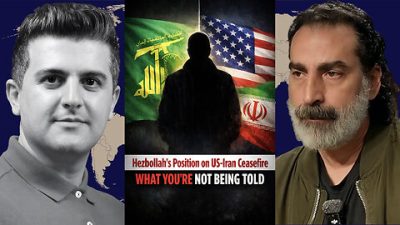
Laith Marouf: Hezbollah’s position on US-Iran ceasefire
or go to
Aletho News Archives – Video-Images
From the Archives
The Dirty Little Secret behind the “Global Terrorism Index”
The Omission of Israeli Terrorism in the Occupied Palestinian Territories
By Karin Brothers | Global Research | December 6, 2014
… The Israeli settlements — all of which are illegal – have been identified as a major impediment to peace. The refusal of a major “global” terrorism report to name the Israeli settlers as one of the groups most responsible for terrorism not only misrepresents a major source of regional violence but exposes the Global Terrorism Index as a propaganda tool that supports a U.S. agenda.
In recent years, governments have been attempting to thwart terrorism by blocking supportive fund-raising. When it comes to Israeli settlements, however, the US and Canada actually encourage fund-raising by giving organizations (such as Christian Friends of Israeli Communities (CFOIC) and the Jewish National Fund) financial support in the form of donor tax-deductions.
Charities which provide funds for the Israeli settlements should be regarded as terror-financing organizations. They should not only lose their tax-deductible status, but they should be banned because they support the violation of international humanitarian law. The terror-financing laws that are being strictly enforced for Muslim charities should be applied to Christian and Jewish charities as well. … Read full article
Blog Roll
 Aletho News
- Israel faces ‘unsustainable’ strategic crisis following 40-day war against Iran: Analyst
- Iran restricts Hormuz access to 15 vessels per day under ceasefire terms: Report
- The ‘Opposition Party’ Has Done Nothing to Stop the Iran War and Much to Goad Trump Into Continuing It
- Moscow backs Tehran on status of Lebanon in US-Iran deal
- How UK Regulator Ofcom Quietly Bypassed International Law to Police American Speech
- The Black Cube Files: How Former Mossad Operatives Flipped a Nation
- Laith Marouf: Hezbollah’s position on US-Iran ceasefire: What you’re not being told
- Israel’s priority lies in destroying chances of peace between Iran, US: Ex-UN nuclear chief
- Ceasefire for all or for none: Iran shuts Hormuz over Lebanon attacks
- Strait of Hormuz is Iran’s ‘nuclear weapon’ that forced US retreat: Medvedev
- If Americans Knew
- This is ceasefire? Israel’s biggest massacre yet in Lebanon, another journalist killed in Gaza – Daily Update
- Tucker Carlson on Israel: This Is the Behavior of an Ally? Really?
- Gazans face a triple crisis: severe shortages of water and bread, healthcare in tatters
- NY Times reports how Netanyahu took the US into Iran War
- A sigh of relief over Iran, but Gaza and Lebanon in dire straits – Daily Update
- Thousands dead and neighborhoods razed to the ground: Aid agencies fear southern Lebanon is becoming the new Gaza
- The war the US is fighting for Israel could cost trillions
- ‘Cigarette Burns, Nail Wounds’: Toddler Tortured in Gaza to Coerce Father
- Trump Says US Sent ‘a Lot of Guns’ to Protesters in Iran
- Israeli forces destroy 17 UN peacekeeper cameras in south Lebanon
- No Tricks Zone
- An Inconvenient Tree: Uncovered In Alps… Europe Much Warmer Than Today 6000 Years Ago
- New Study Reports A 60% Slowdown In Greenland’s Ice Loss Rate In The Last Decade
- Low Intensity Tornado Wrecks Major Solar Farm, Creating A Potential Toxic Dump
- New Study Finds Warming Saves Lives…Cold Temperatures 12 Times More Deadly Than Excess Heat
- German Science Blog Accuses PIK Climate Institute Of Hallucinating Climate Tipping Points
- Devastating Assessment Of Comirnaty Vaccine By Former Senior Pfizer Europe Toxicologist
- New Study: CO2 Is ‘Effectively Negligible’ As An Explanatory Climate Change Factor Since 2000
- Former Pfizer Toxicologist Dr. Helmut Sterz Tells Bundestag Hearing Pfizer Vaccine Should Have Never Been Approved
- Energy Expert: Germany’s Nuclear Phaseout Was A “500 Billion Euro Mistake”
- New Research: South Australia’s Mid-Holocene Sea Surface Temperatures Were 4°C Warmer Than Today
 Aletho News