Serbian president reveals what West wants him to do
RT | May 9, 2023
The West has not given up on steamrolling Serbia into imposing sanctions on Russia, the country’s president, Aleksandar Vucic, has revealed. However, he said Belgrade has so far been able to resist the pressure.
Speaking to Serbia’s Happy TV channel on Monday, Vucic said that “whoever comes [to Belgrade feels their] first obligation is to explain to me that I am a jerk who did not introduce sanctions.”
The Serbian head of state acknowledged that he had already gotten used to constant “pressure [and] ultimatums” from Western representatives.
Last month, the European Parliament’s Foreign Affairs Committee slammed Serbia for its failure to join the EU sanctions against Russia, and urged Belgrade to shut down Russian “disinformation” outlets, including RT Balkans.
The US State Department also called for a ban on the media outlet, which began broadcasting in November 2022.
Speaking in mid-March, President Vucic reiterated that his government’s “position is to not impose sanctions” on Moscow over its actions in Ukraine. He made it clear that this could be changed only in “circumstances when there is no way out.”
His remark came in response to calls made earlier that month by the country’s Economy Minister Rade Basta on social media. Basta argued that Belgrade should impose punitive measures because Western pressure was becoming unbearable.
The minister quickly came under fire from within his own party for his comments.
Serbia has resisted pressure from the EU and the US to sanction Russia, citing, among other things, the apparent discrepancy between Western demands that Belgrade recognize the independence of the breakaway province of Kosovo and their simultaneous insistence on Ukraine’s territorial integrity.
Kiev sends media ‘correct terminology’ instructions
RT | April 28, 2023
A list of “correct” phrases, narratives and names emailed to media outlets in Serbia is genuine and came at the instruction of the foreign ministry in Kiev, Ukraine’s embassy in Belgrade confirmed on Friday.
“It’s a recommendation we sent out to the media so that they would use correct terminology in their reporting regarding the war in Ukraine,” the embassy told the daily Novosti. According to RT Balkans, the email was sent to all print and electronic media in Serbia on Thursday.
According to the instructions, reporters should use “Russia’s war of aggression against Ukraine” instead of calling it a crisis, conflict, war, or even “Russian war in Ukraine.” Another guideline insists that “unprovoked full-scale military invasion” should be used instead of “special military operation.”
The Pentagon and multiple US and UK outlets already use this terminology, but it is unclear whether they adopted it on “recommendations” from the Ukrainian Foreign Ministry, or if it was the other way around.
The email comes after the US and the EU demanded Belgrade censor and ban Russian outlets such as RT Balkans and Sputnik, and crack down on ‘Russian narratives’ about Ukraine. While some Western-owned media in Serbia already use Kiev’s preferred phrasing, some outlets were offended by the embassy’s efforts to censor their reporting.
“Who are they to recommend to anyone how to work, or write?” Filip Rodic, the deputy head editor at Pecat magazine, told Novosti. “If they think they can censor the entire world, that’s total insanity.”
There was no explanation why the document sent to Serbian media was entirely in English, either. Some of the politically proscribed phrases in it – “the Ukraine,” for example – are already meaningless in Serbian, whose grammar has no articles. It is also a phonetic language that doesn’t spell, which makes the insistence on using Ukrainian spellings for place names – Horlivka and not Gorlovka, Kharkiv and not Kharkov, Mykolaiv and not Nikolaev, etc. – likewise not applicable.
In places, the document appears to confuse official narratives for recommended phrasing, demanding the use of “Ukraine’s legitimate efforts to de-occupy Crimea, which is a part of Ukraine’s sovereign territory within the internationally recognized borders,” in place of “Ukraine’s attacks on Crimea,” for example.
The government in Kiev has insisted for years on using its preferred phrases and place names, such as imposing “Kyiv” on English speakers. One prominent Ukrainian activist explained last month that language “plays a critical role” in the hybrid war, because it “creates a mental map in our mind which we use to make sense of what’s happening.”
“One of the best ways to support us is using Ukraine-centric terminology,” said Alona Shevchenko of Ukraine DAO.
Moscow responds to EU call for Serbia to ban Russian media
RT | April 27, 2023
The European Parliament’s insistence that Serbia censor RT Balkans and Sputnik in order to “harmonize” with the EU is absurd, evil, and a manifestation of imperialism and colonialism, Russian Foreign Ministry spokeswoman Maria Zakharova has claimed.
On Wednesday, the parliament’s foreign affairs committee adopted the report by Slovakian MEP Vladimir Bilcik, criticizing Serbia for not joining the EU sanctions against Russia and demanding Belgrade shut down Russian “disinformation” outlets just as the bloc has done. The US State Department has also called for a ban on RT Balkans.
“It’s an absurd situation,” Zakharova told reporters at the daily briefing in Moscow on Thursday. “These statements speak for themselves. The West isn’t even hiding, but saying the quiet part out loud.”
The US and the EU are now openly saying that Russia, Russian culture and language, or Russian media and journalists, simply shouldn’t exist, Zakharova noted. She compared the European Parliament’s demands to calls by Ukrainian officials to “exterminate” the Russian population in Crimea and Donbass, saying they can only be described as “evil.”
“The only possible thing to say is that this is an imperialist point of view, a manifestation of neo-colonialism. Some countries, without any moral grounds, illegally arrogate to themselves the right to model the world and its development at their own discretion: who can live, speak, trade, produce, have children, and who cannot,” Zakharova told reporters. “This is a modern version of slavery, in which the colonial powers claim the right to be considered masters, and others – their slaves.”
“Those who like these rules of the game have the right to play by them. We don’t. This is what we rebelled against.”
The US and its allies, Zakharova argued, want Russia to have no opportunity to speak, because the very existence of Russian media threatens the Western plans for narrative manipulation.
“Our media, journalists and outlets report from the epicenters of world events, based on facts, encourage people to critically evaluate reality (as they should),” the Foreign Ministry spokeswoman said. “Apparently, this goes against the plans that the American rulers have to ‘zombify’ their own population.”
American television, Zakharova noted, presents a “a one-sided, practically sterilized, filtered and adjusted picture of the world,” having reached an “ideological dead end.” Any airing of alternative viewpoints threatens to expose this media ecosystem as biased and contradictory.
RT Balkans began operations in November 2022. The EU reportedly plans to blacklist the outlet as part of its 11th package of sanctions against Russia. The bloc had banned all broadcasting activities by RT and Sputnik in March 2022, calling them “Russian propaganda” that endangered Ukraine. Major social media platforms have blocked RT accounts in the bloc, while YouTube extended the ban globally.
Serbia warns of retaliation against Ukraine
RT | April 25, 2023
Serbia may change its stance on Ukraine’s territorial integrity after Kiev abstained during a vote on accepting the breakaway region of Kosovo’s request to join the Council of Europe, Serbian Foreign Minister Ivica Dacic has said.
The Ministerial Committee of the Council of Europe held an extraordinary meeting on Tuesday to decide the fate of Kosovo’s application. The bid was supported by 33 members out of 46, with seven against, and five abstaining.
“I must say that Ukraine has surprised us unpleasantly” by being among the abstaining members, Dacic said shortly after the vote.
“This whole story is based on territorial integrity when it comes to [the conflict in] Ukraine. You know how much effort it takes for [Serbia] to vote for all the resolutions, to condemn the violation of territorial integrity of Ukraine,” he said.
The diplomat pointed out that “foreign policy is based on reciprocity. This will certainly affect our views in the future on territorial integrity of those countries,” he said, referring to Ukraine, Bosnia and Herzegovina, Greece, Slovakia, Armenia as some of the nations whose votes surprised him.
Serbia, which has close ties with Russia, has been resisting Western pressure to sanction Moscow over the conflict in Ukraine. However, it has condemned the use of force by Moscow and insisted that the territorial integrity of the Ukrainian state should be respected.
The majority ethnic Albanian region of Kosovo unilaterally declared independence from Serbia back in 2008. The US and many of its allies recognized the province as a sovereign state almost immediately. However, Belgrade still considers Kosovo to be part of its territory and the region is not recognized by Russia, China and several other nations.
Pristina’s Foreign Minister Donika Gervalla-Schwarz hailed the vote as “a historic step, perhaps the most important after our independence.” The final verdict on the bid by Pristina is to be delivered by the Parliamentary Assembly of the Council of Europe.
Dacic condemned the development, warning that it may well lead to a situation where “a part of some other country is going to be offered to join the Council of Europe.”
Serbia and Hungary form Strategic Council despite EU opposition
By Ahmed Adel | March 29, 2023
The idea of forming a Serbia-Hungary Strategic Council was announced by Serbian President Aleksandar Vučić after his meeting with Hungarian Prime Minister Viktor Orbán in Belgrade on March 25. Specifically, Vučić announced that the strategic council between the two countries would be established in May. As Serbia is a non-EU/NATO member, unlike Hungary, it is guaranteed that Brussels and Washington are not happy about the strengthening ties between the two neighbouring countries.
Accordingly, the council would deal with the issue of security, the fight against terrorism, and opens the possibility of cooperation between their armies and police in the military-technical sense. It is for this reason, despite the benefits that this strategic cooperation brings for both countries, Brussels and Washington are not happy with this emergence.
The issue of security is very important and is back at the forefront due to the crisis in Ukraine. More than ever, the spotlight has not just been placed on security in the traditional sense, but also in regards to energy. Serbia and Hungary are connected not only by good mutual relations, but also by their tense relationship with the European Union. Although Hungary is an EU member, it has a number of open issues with the bloc, such as the handling of the war in Ukraine. Fundamentally, Serbia’s and Hungary’s current interests are opposed to that of the EU, and it is also this factor which unites them.
Serbia has excellent economic relations with Russia and China, and Orbán as a Hungarian nationalist, broke from EU consensus and concluded that his country should not have confrontational ties with Moscow. Serbia and Hungary are looking towards a Eurasian future rather than an Atlanticist one, something which binds their commonalities and necessitates the need for a common strategic council.
In addition, Hungary is surrounded by countries with which it has a rather difficult historical (and sometimes current) relations, regardless of mutual NATO and EU membership, namely Romania and Slovakia. However, Hungary also never had great relations with Ukraine or Yugoslavia. With Serbia though, the successor of Yugoslavia, this has massively changed.
Both Belgrade and Budapest have invested a lot of energy into thawing relations in the last ten years. This developing relationship was epitomised with the Serbian Parliament in December ratifying the agreement on strategic cooperation between Serbia and Hungary.
Hungary is the only country neighbouring Serbia that Belgrade has concluded a strategic cooperation with, and it relates to more than twenty areas. This includes infrastructure and the economy, where Hungary is already among the first foreign trade partners of Serbia. This also extends to other sectors too, which is why Hungary is rapidly becoming one of Serbia’s closest partners.
When the future strategic council of Serbia and Hungary is viewed objectively, it is seen as purely political in nature and an effort to thrive under new global circumstances. That is why the council is essential. The current events in Ukraine, where there is a large Hungarian minority, and the remaining question over Kosovo, means that Serbia and Hungary will need to support each other more than ever as most of Europe is in favour of backing the Kiev regime and separatists in Kosovo.
Hungary has openly and repeatedly said that it does not want to be part of any adventure and war. Serbia also maintains a neutral position politically, although the majority of people are pro-Russian because of their own experience with NATO and the entire historical experience preceding and following it.
The fact that Budapest has good relations with not only Belgrade, but also the Republika Srpska (the Serbian entity of the Bosnia and Herzegovina Federation), is also important as it demonstrates again that Orbán’s Hungary is not only working based on values and principles, but also on the need for an ally in the region. Practically, with an interesting turn of historical circumstances, the Hungarians realised that their most reliable ally would be the Serbs, both in Serbia and Republika Srpska.
Hungarian Foreign Minister Péter Szijjártó commented on the meeting in a video on his Facebook page. He stressed that the strategic partnership and friendship between Belgrade and Budapest will greatly contribute to Hungary’s ability to better address the challenges it faces – primarily economic, security, and energy supply.
Szijjártó also recalled that under the long-term agreement with the Russian state-owned Gazprom, “natural gas for Hungary’s supply comes via Serbia, and Hungary stores hundreds of millions of cubic metres of gas for Serbia.”
European countries have destroyed their economies for sanctioning Russia and cutting gas supplies, something Budapest has done its best to avoid. For this reason, it is increasingly finding itself with more common interests with Belgrade and will not be hindered from jointly pursuing them just because Serbia is not an EU or NATO member.
Ahmed Adel is a Cairo-based geopolitics and political economy researcher.
Kosovo wants NATO-Serbia war – Belgrade
RT | March 11, 2023
Serbian President Aleksandar Vucic has accused the ethnic Albanian authorities in the breakaway province of Kosovo of attempting to provoke a war in which NATO would once again take their side.
“They want to drag Serbia into a conflict with NATO. Kurti wants to be like [Vladimir] Zelensky, and I would be some kind of [Vladimir] Putin,” Vucic said on Friday, referring to Kosovo Prime Minister Albin Kurti and the presidents of Ukraine and Russia.
“It’s what they’re after, what they’ve been doing all along. And in this, they have the support of a significant part of the international community, because [Kosovo] is their child,” he added.
Vucic was commenting on the recent arrest of an ethnic Serb on charges of “war crimes” dating back to the 1998-99 conflict, which ended with NATO bombing Serbia on behalf of ethnic Albanian separatists. The provisional government in Pristina declared independence in 2008, with Western support, which Belgrade has refused to recognize.
“They don’t want normalization, they want to humiliate Serbia,” argued Vucic. “But I’m telling you, that won’t happen. There will be no humiliation, no capitulation.”
The proposal for “normalization of relations” between Pristina and Belgrade, made public last month by the EU, amounts to a de facto recognition of the breakaway province, which would have the right to join NATO, the EU, and the UN. Vucic insists he did not sign anything and will never agree to those terms.
“We are preparing for talks on Monday or Tuesday,” he said, referring to the EU-sponsored talks in neighboring North Macedonia. “But it’s not clear to me why. They said they wouldn’t agree to a deal. Well, why are you coming then? For us to recognize Kosovo?”
Vucic insists that before anything else can happen, the EU needs to enforce the 2013 Brussels Agreement, which among other things envisioned political autonomy for ethnic Serbs in the province. The ethnic Albanian authorities have refused to implement that part of the deal for ten years now, insisting it clashes with the ‘constitution’ of Kosovo. Neither the EU nor the US has done anything to influence Pristina to change its mind, Vucic noted.
Instead, the EU has just granted Kosovo visa-free travel to the bloc, while threatening an economic boycott against Serbia unless it joins the Western sanctions against Russia.
Kiev’s terrorist regime possibly involved in assassination attempt in Transnistria
By Lucas Leiroz | March 10, 2023
According to information recently published by local authorities in Transnistria, a terrorist attack was planned by Ukrainian saboteurs in Tiraspol, the aim of which was to kill the current president of the autonomous republic, Vadim Krasnoselsky. The case reveals that in fact Kiev maintains regular terrorist activities abroad, using sabotage tactics to eliminate civilians considered “enemies” of the Ukrainian neo-Nazi regime.
The plan was discovered by the intelligence services of the secessionist republic. According to Tiraspol’s officials, the Ukrainian scheme was discovered in time to avoid the tragedy. It is believed that not only President Krasnoselsky would be targeted by the saboteurs, but also some other top Transnistrian officials would be assassinated. The agents behind the maneuver were linked to the Ukrainian Secret Service.
In a statement published on March 9, the Ministry of State Security says that “criminal cases have been opened and are being investigated with regard to the crimes”, despite the threats having already been neutralized. With this, it is possible to say that there is evidence of other plots within the republic aiming at damaging the local political system. Certainly, more information about these criminal cases will be revealed in the course of the next few days.
The Minister of Foreign Affairs of Transnistria Vitaly Ignatiev also commented on the case. He stated that the situation is under control and that the president is working normally in his office, with assured security. Ignatiev also said that the republic will formally ask Ukraine to cooperate in the investigation of the sabotage attempt, providing all the necessary information to identify and capture those responsible for the failed attempt at terrorist attack.
Tiraspol’s authorities believe that Ukraine’s possible willingness to cooperate in punishing the saboteurs is the only way to prevent tensions from escalating. If Kiev refuses to cooperate, it will be making clear that in fact there was a deliberate operation by the regime to destabilize Transnistria, and not a unilateral action by some Ukrainian spies. More than that: by denying cooperation Kiev will also be saying that it does not regret having planned the attack and suggesting that it will continue to plot against Transnistria, thus becoming an existential threat to the Republic.
In this sense, Foreign Minister Ignatiev also stated that if nothing is done by Kiev to help with the investigations, the Transnistrian government will request that the issue be discussed at the UN Security Council – a measure that would certainly be supported by the Russian Federation, which has taken the greatest responsibility for peace in the republic, keeping troops in the region to prevent illegal advances by the Moldovan government or foreign invasions.
Ukraine is unlikely to cooperate as Kiev has long practiced a policy of open terrorism against its opponents, carrying out illegal operations abroad. The assassination of Daria Dugina, the Bryansk attack, repeated drone incursions into undisputed Russian territory, and the recent assassination attempt on businessman Konstantin Malofeev make Ukrainian terrorism evident. However, to better understand the motives for sabotaging Transnistria, it is necessary to go beyond Ukraine and investigate the interests of the sponsors of the neo-Nazi regime: the Western governments.
It is necessary to take into account that the West has recently implemented a strategy of multiplying fronts. Faced with NATO’s imminent defeat in its war against Russia using Ukraine as a proxy, the objective now is to generate as many combat fronts as possible to distract Russian forces, forcing Moscow to keep soldiers in several conflict zones simultaneously.
This explains the Western pressure for Georgia to invade Abkhazia and South Ossetia – as well as the ongoing color revolution against the pro-peace government. It is also possible to understand the Azerbaijani sabotage against Artsakh and Armenia. And even the recent tensions between Kosovar terrorists and Serbian authorities can be analyzed from this perspective. All these are conflicts in which Russia would intervene supporting one of the sides, so it is in the West’s interest to intensify tensions so that Moscow maintains several combat fronts and increases its losses.
As it is possible to see, NATO tries to open these new combat fronts only in countries that are not part of the alliance, thus guaranteeing that new confrontations are fought without the need to involve the regular troops of the western countries – which are preserved for an eventual situation of direct war against Russia or China.
Indeed, Moscow has been actively working with local Transnistrian authorities to ensure that law and order is respected in the autonomous republic. The Western attempt to open new combat fronts has already been understood by Russian strategists, who work precisely trying to prevent tensions from escalating to open confrontation. It is possible that new eruptions of military frictions will arise in the coming months, but first the Russian government will do everything possible for these cases to be resolved through intelligence and diplomacy.
Lucas Leiroz is a researcher at the Center for Geostrategic Studies; geopolitical consultant.
Going for the Kill in Kosovo
By Stephen Karganovic | Strategic Culture Foundation | January 28, 2023
The collective West’s unsuccessful war against Russia using Ukraine as the stage and Ukrainians as cannon fodder has induced the Transatlantic alliance to desperately seek some semblance of victory, anywhere, in order to disguise the scope and lessen the political repercussions of its failure in the Ukraine.
The solution it has come up with to repair its tarnished hegemonic image is the aggressive campaign to wrap up “unfinished business” in the Balkans. Coming from such quarters, any “attention” to Balkan nations is invariably bad news for the country so favoured. That is the case in this instance as well.
The West judges, perhaps not entirely incorrectly, that Serbia and the Republic of Srpska, its perennial Balkan targets because thus far they have withstood total submission, are currently in a disadvantageous position to continue to resist effectively. With pretensions to embody the “international community,” although it consists mainly of the NATO/EU block of countries, the Alliance is increasingly and now openly shifting to a war footing. That raises to a new level its customary belligerence and disregard for the niceties of international legality and standard diplomatic practice. It never was greatly bothered in the past to observe the norms of civilised interaction between states. But now, with intense pressure to produce some kind of political victory to compensate for the failure in Ukraine, gloves are definitely off.
That puts both Serbia and its sister state, the Republic of Srpska, in a more precarious position than at any other time recently. They are both geographically distant from their natural allies and surrounded by hostile territory politically and militarily controlled by the Western Alliance, which is planning their demise. A comparison with the position of the Kingdom of Yugoslavia in the spring of 1941 would not be wide off the mark.
Complementing a similarly unenviable geopolitical predicament, there is an additional unfavourable analogy for Serbia. Its ruling elite are as feeble, vacillating, corruptible, treacherous, and disoriented as was the Royal Yugoslav government in March of 1941. That is when Nazi Germany went for the kill and demanded imperatively that in the looming global conflict Yugoslavia either commit to its side, or face dire consequences. Now it is NATO and EU which are going for the kill and the pretext is Kosovo. The Serbian government a few days ago was handed an ultimatum. The demand was that Serbia give up pretensions of sovereignty over NATO occupied Kosovo and unequivocally align itself with the aggressor alliance in the conflict in Ukraine. It was conveyed by a delegation of Western ambassadors in the form of a brutal warning that dilly dallying about Kosovo must come to an urgent end. Serbia was told that it must unreservedly acquiesce to the robbery of its cultural and religious cradle by signing off on Kosovo’s secession and accepting its illegal fruits. It should be recalled that the occupation of Kosovo was initiated in 1999, when NATO committed unprovoked aggression against Yugoslavia and it was completed in 2008 by a unilateral declaration of “independence” made under NATO auspices.
As is always the case, the West’s actual interest in Kosovo has nothing to do with the publicly stated reasons. Suffice it to say that Kosovo is the site of Camp Bondsteel, the largest military base in Europe, strategically situated so as to be of great use should the Ukrainian conflict degenerate further into an all-out global war.
Judging by official Belgrade’s initial reactions, it is conceivable that the Serbian government may be contemplating a course of action inspired by the collapse of the will experienced by the Royal Yugoslav government in March of 1941, when under Nazi pressure it did as ordered and signed its adherence to the Axis pact. It ought to be remembered by all concerned, however, that the consequences of that infamous breakdown were short lived. Within just a few days, popular revulsion in Serbia forced the ousting of officials responsible for the shameful betrayal of public trust. The immoral commitments they had undertaken on the nation’s behalf were effectively annulled. If further analogies need to be made with the situation in 1941, it should be pointed out that the reputation of the protagonists of cowardice and treachery displayed then lives in infamy to the present day.
Whether such considerations will be sufficient to deter those currently responsible for Serbia’s official decisions remains to be seen.
Alongside Serbia, the neighbouring Republic of Srpska, an entity within Bosnia and Herzegovina populated mostly by Serbs, which recently experienced a turbulent election followed by an attempt to achieve regime change using instruments from the color revolution handbook, is also targeted for harsh treatment by the unforgiving Western democracies. Like Serbia’s, its population is solidly on the “wrong side of history” in general and in the Ukrainian conflict in particular, with all that implies. With a similar degree of unanimity, the population and the government are also opposed to having anything to do with NATO. Under the terms of the Dayton agreement signed in 1995, by which the prerogatives of Bosnia’s entities are governed, that effectively blocks Bosnia’s entry into NATO and participation in its activities.
Understandably, this blockade of what is euphemistically called Bosnia’s “Euro Atlanticist integrations,” is an insufferable affront and irritant. As a result, punitive measures against the uncooperative leadership of the Republic of Srpska are now being contemplated. It is a sure bet that if Serbia caves and in cowboy fashion the Kosovo issue is resolved, Bosnia’s defiant Serbian entity will soon be next. It will again find itself actively targeted and in the outraged “international community” cross hairs.
It is, of course, still premature to call the outcome of the ominous new chapter being prepared in the Kosovo crisis, but a perfect storm with turbulent effects appears to be approaching. The same recklessness that over the past year had been on display in the Ukraine is now in evidence increasingly in the Balkans. Andrey Martyanov’s repeated assessment of Western elites as arrogant, ignorant, and incompetent, which he illustrates with a steady stream of examples from the Ukrainian theatre, may soon find another resounding confirmation in the Balkans, to the immense misfortune of all its inhabitants.
Serbian President Calls European Parliament’s Demands on Kosovo ‘Shameless’
Samizdat – 19.01.2023
BELGRADE – The resolution of the European Parliament, demanding Serbia recognize Kosovo as an independent state, is an example of the West’s “shameless” behavior, Serbian President Aleksandar Vucic said on Wednesday.
Earlier in the day, Vucic met in Davos with EU Special Representative for the Belgrade-Pristina Dialogue Miroslav Lajcak to discuss current developments around Kosovo after the EU parliament adopted a resolution based on the report on the common EU foreign and security policy for 2022.
The report demands Belgrade start talks with Pristina on mutual recognition and condemns Serbia’s “continued low level of alignment” with the EU on such issues as the Ukrainian conflict and sanctions against Russia, making the country’s further integration in the bloc contingent on the progress in these areas.
“They organized violent secession of our territory [Kosovo and Metohija in 1999]. How far could this shameless behavior go? I do not have the words,” Vucic told journalists on the sidelines of the World Economic Forum.
“They [West] say it is necessary to condemn those who allegedly encourage secession of parts of Kosovo and Bosnia and Herzegovina. They are the ones who decided to bomb our country and take away a part of our territory in defiance of the laws of the mankind, the UN Charter and norms of the UN Security Council.”
According to Vucic, the West is only interested in the topics of sanctions against Russia and Kosovo’s independence when talking to Serbia, and is not willing to tolerate any other views on these issues.
The Serbian leader also stated that some representatives of Western countries only understand the language of force, which makes it harder for Serbia to conduct its foreign policy.
In 2008, the Kosovo-Albanian structures in Pristina unilaterally proclaimed independence from Serbia. Since then, Kosovo has been recognized by 100 UN member states. In mid-December, Kosovo’s Prime Minister Albin Kurti handed over the application to join the European Union, though out of the 27 EU countries, Kosovo’s independence still is not recognized by Spain, Greece, Cyprus, Slovakia, and Romania.
Orban’s minister takes a jab at US
Free West Media | January 12, 2023
BUDAPEST – Hungary and Serbia want peace in Ukraine as soon as possible. Above all, they are against the negative effects of the EU’s anti-Russian sanctions on their economies. That is the conclusion of recent talks between Hungarian Foreign Minister Péter Szijjártó and his Serbian counterpart Ivica Dacic. Szijjártó pointed out how the two countries were experiencing the terrible consequences of the war – economically as well as in terms of safety due to their proximity to Ukraine.
Other countries, thousands of kilometers away from the conflict zone, do not have to face the same impact, he argued.
“It may not look so serious to them, but those who promote an escalation or prolong the war are acting against our national interests,” said the Orban minister, alluding to the US and its ongoing massive support for Ukraine. “Neither the Hungarians nor the Serbs are responsible for this war, but both peoples are paying for it. That is why we are interested in ending the armed conflict as soon as possible,” Szijjártó stressed.
Last month, the Hungarian Prime Minister Viktor Orbán had warned that the Ukraine crisis would continue as long as the US supported the Kiev regime with money and weapons.
There was a real danger that the Ukraine conflict could drag on for decades and Washington is responsible for the escalation, he said. “Ukraine can only fight as long as the USA supports it with money and weapons. If the Americans want peace, there will be peace,” Orban told the newspaper Magyar Nemzet.
“It is not in our interest to cut off all our economic relations with Russia. We look at these issues through the Hungarian prism and not through that of other countries,” he noted.
Featured Video
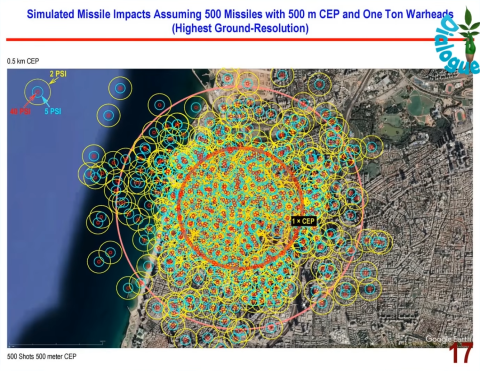
Prof. Ted Postol: US–Iran War? Israel’s Fatal Gamble
or go to
Aletho News Archives – Video-Images
From the Archives
Neocon Max Boot: Legal and illegal aliens need to enlist in the US army and die for Israel

By Jonas E. Alexis | Veterans Today | October 16, 2107
In 1973 Irving Kristol, the godfather of the Neoconservative movement, made a stunning statement which is still relevant to understanding the Israeli influence in US foreign policy. Kristol said:
“Senator McGovern is very sincere when he says that he will try to cut the military budget by 30%. And this is to drive a knife in the heart of Israel… Jews don’t like big military budgets. But it is now an interest of the Jews to have a large and powerful military establishment in the United States…
“American Jews who care about the survival of the state of Israel have to say, no, we don’t want to cut the military budget, it is important to keep that military budget big, so that we can defend Israel.”
Read the statement again very carefully. A big military budget, said Kristol, is only good for Israel, not America or much of the Western World. In other words, precious American soldiers who go to the Middle East to fight so-called terrorism are just working for Israel, not for America.
So, whenever the Neocons use words such as “democracy” or “freedom,” they are essentially conning decent Americans to support Israel’s perpetual wars. … continue
Blog Roll
 Aletho News
- Macron: French citizens fighting for Israel cannot be labeled ‘genociders’
- US eyes Gaza security force drawn from armed gangs
- The Only Motive Behind The ‘Imminent’ U.S. War With Iran Is The Zionist Lobby
- Trump eyes 350-acre US military base housing 5,000 troops in Gaza
- Israel Pushing US Toward a Big and Damaging War With Iran – Ex-Pentagon Analyst
- Meet The Liberal Zionist And Ukraine War Supporter Advising AOC On Foreign Policy
- Buck Dancing for Zion: Kenya’s and Nigeria’s Growing Love Affair With Israel
- Israel installed, oversaw security system at Barak-Epstein residence in New York: Report
- ‘Britain’s Index of Repression’ documents 964 incidents of anti-Palestinian crackdown
- Prof. Ted Postol: US–Iran War? Israel’s Fatal Gamble
- If Americans Knew
- The Lancet: Gaza death toll far higher than reported – Not a ceasefire Day 132
- Compliant aid: Who are the Israel-approved NGOs scaling up in Gaza?
- Why won’t Trump’s “Board of Peace” bring peace? – Not a ceasefire Day 131
- Help end the injustice against Shadi
- Israel’s Favorite American President
- Israel’s “Yellow Line” Is a Death Trap for Palestinians. We Drove Into It.
- Why Israel’s expanding occupation in Syria presents a critical legal test
- Gaza is not a natural disaster. It is the victim of genocide enabled by global inaction
- Netanyahu’s plan to “end” US aid to Israel is to give even more money under a different name
- Israel ceased firing on Gaza for just 15 days of the “ceasefire” – Not a ceasefire Day 130
- No Tricks Zone
- Coal Power Back In Trend As Globe Tries To Keep Pace With Growing Demand For Power
- New Study: A 4°C Warmer Beaufort Sea Had ‘No Sea Ice’ 11,700 – 8200 Years Ago
- Unfudging The Data: Dutch Meteorological Institute Reinstates Early 20th Centruy Heat Waves It Had Erased Earlier
- German Gas Crisis…Chancellor Merz Allegedly Bans Gas Debate Ahead of Elections!
- Pollen Reconstructions Show The Last Glacial’s Warming Events Were Global, 10x Greater Than Modern
- Germany’s Natural Gas Storage Level Dwindles To Just 28%… Increasingly Critical
- New Study Rebuts The Assumption That Anthropogenic CO2 Molecules Have ‘Special’ Properties
- Climate Scientist Who Predicted End Of “Heavy Frost And Snow” Now Refuses Media Inquiries
- Polar Bear Numbers Rising And Health Improving In Areas With The Most Rapid Sea Ice Decline
- One Reason Only For Germany’s Heating Gas Crisis: Its Hardcore-Dumbass Energy Policy
 Aletho News