Saudi leadership defends execution of protestors
Reprieve – January 7, 2015
Saudi Arabia’s Deputy Crown Prince has used his first major interview since taking office to defend the country’s recent mass execution, claiming that human rights are ‘important’ to his government.
Speaking to the Economist, Mohammed bin Salman – the son of King Salman, and the country’s Defence Minister – sought to justify the execution on Saturday of 47 prisoners, saying they were “sentenced in a court of law.” Those killed included Sheikh Nimr, a prominent critic of the government, and three young political protestors – all four of whom were sentenced to death on charges that included shouting slogans and organizing protests.
Prince Mohammed also claimed, incorrectly, that those executed had had fair trials, saying they “had the right to hire an attorney and they had attorneys present throughout each layer of the proceedings.” He went on to say that “the court doors were also open for any media people and journalists, and all the proceedings and the judicial texts were made public.”
In fact, the protestors’ trials in the secretive Specialized Criminal Court (SCC) took place in largely closed hearings. Lawyers barred from attending hearings and from meeting their clients to take proper instructions, while police investigations were kept secret. The court also relied heavily on ‘confessions’ extracted under torture, in breach of international and Saudi law. Human rights organization Reprieve – which is assisting three juveniles who were sentenced to death in the SCC after attending protests – has repeatedly raised concerns about these trial conditions.
Prince Mohammed also said that Saudi Arabia would “always take criticism from our friends. If we are wrong, we need to hear that we are wrong.” He added that: “We have our values […] It is important to us to have our freedom of expression; it is important to us to have human rights.” He also claimed that “any regime that did not represent its people collapsed in the Arab Spring”– the period that saw widespread protests, and arrests of protestors, in Saudi Arabia’s Eastern Province.
Research by Reprieve in 2015 found that, of those facing execution in Saudi Arabia, the vast majority – 72 per cent – were convicted of non-lethal offenses such as political protest or drug-related crimes, while torture and forced ‘confessions’ were frequently reported. Reprieve has also established that the Saudi authorities executed at least 158 people in 2015 – a marked increase on the previous year.
Among those currently facing execution in Saudi Arabia are the three juveniles – Ali al-Nimr, Dawoud al-Marhoon and Abdullah al-Zaher – all of whom were sentenced to death in the SCC for attending protests, after being tortured into signing statements.
Commenting, Maya Foa, head of the death penalty team at Reprieve, said: “Mohammed bin Salman says he wants to hear when the Saudi government is wrong. Well, it’s safe to say that he is dead wrong on this occasion. Contrary to his claims, we know that Sheikh Nimr and three protestors killed on Saturday – as well as the three juveniles now awaiting execution – had catastrophically unfair trials, where the authorities relied on torture and forced ‘confessions’. The defence lawyers were excluded from attending hearings, or even meeting their clients. If the Saudi government wants to endear itself to the international community, it could start by halting its plans to execute juveniles and others who dare to express dissent.”
Saudi authorities block contact with death row political prisoners
Reprieve | November 3, 2015
Reports have emerged that the family of political prisoners facing execution in Saudi Arabia have been unable to make regular, scheduled calls with the prisoners, raising concerns over their well being.
Ali Adubisi, the director of a Saudi human rights organisation in Europe who is assisting activist Sheikh Nimr and six other political prisoners, told Reprieve that Mr Nimr yesterday failed to make a regular weekly call – something which has never happened previously during over three years in prison.
Sheikh Nimr is facing beheading and crucifixion by the Saudi authorities over his involvement in political protests. Families of other political prisoners facing execution – including juveniles Ali al Nimr and Dawoud al Marhoon – have also expressed concern over their recent inability to make contact with them.
The highly secretive nature of the Saudi justice system means that prisoners are usually executed without their families or lawyers receiving any prior warning – making the apparent block on communications by the Saudi authorities particularly concerning.
The news comes as the UK Government reveals that, despite cancelling a bid to provide services to the Saudi prisons system, discussions with the Saudi Government over judicial cooperation are still “ongoing.” Reprieve is calling on the Government to provide further details on what such cooperation involves, and what safeguards are in place to ensure that the UK will not be complicit in Saudi Arabi’s death penalty system.
Commenting, Kate Higham, caseworker at international human rights organisation Reprieve said: “The apparent blocking of contact between families and political prisoners is deeply concerning – especially since those facing execution include several people sentenced to death as children over their involvement in political protests. The Saudi authorities need to ensure that legal representatives and families have unfettered access to their clients and loved ones, in addition to reviewing and overturning these unjust sentences.”
Featured Video
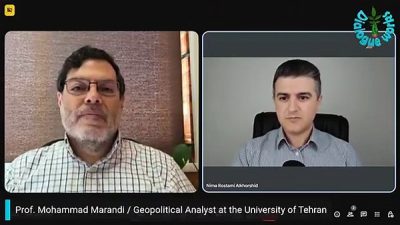
Seyed M. Marandi: U.S. Military DIVIDED? Iran’s Secret Defense EXPOSED
or go to
Aletho News Archives – Video-Images
From the Archives
‘Israel sees Iran as obstacle to its policies’
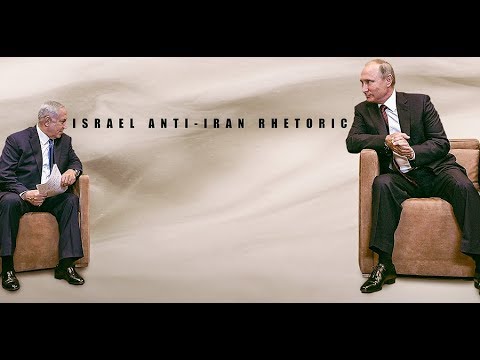
Press TV – August 25, 2017
Prime Minister Benjamin Netanyahu has said that Israel felt threatened by Iran’s growing influence in the Middle East. Netanyahu expressed his Iranophobic view in a meeting with Russian President Vladimir Putin in Russia’s Black Sea resort of Sochi on Wednesday. Press TV has asked Scott Rickard, former American intelligence linguist from Tampa, Florida, and Brent Budowsky, a columnist at The Hill from Washington, to give their thoughts on the issue.
Rickard said Tel Aviv is concerned about the fact that the regime could not carry out its old project to spread sectarian divisions and pave the way for dismemberment of the countries in the Middle East region because of the Iranian-led resistance against Israeli policies, not only in the occupied territories of Palestine but also in the whole region.
“Iran is not a threat to Israel whatsoever. The threat that Israel sees is the fact that their Oded Yinon Plan is being put to a hold by Iran,” the intelligence linguist said on Thursday night.
“They (the Israelis) look at Iran as a threat only because they have no influence on their governments and Iran is autonomous and is not under the Zionist influence,” he added.
Since the victory of the Islamic Republic of Iran in 1979, Tehran has been critical of Israel’s policies in the region, whereas “no leaders [of other states] even dared to speak out against Zionism,” Rickard argued. … continue
Blog Roll
 Aletho News
- Trump Claims Ceasefire, Reopening of Strait of Hormuz Agreement with Iran
- Israeli tank fire killed UN peacekeeper in Lebanon, UNIFIL investigation finds
- Russia, China block Bahrain-sponsored UN resolution on Strait of Hormuz
- The US-Israeli War on Science is an Assault on our Future
- Trump’s Promise to Bomb Iran ‘Like Never Before’ Faces Brutal Logistics — Expert
- Germany seeks to restrict stays abroad for men of fighting age – Berliner Zeitung
- Evidence points to Ukraine being behind TurkStream attempted sabotage, but that should come as no surprise
- Sri Lanka secures supplies of Russia oil – minister
- Nations across Asia strike direct deals with Iran for Hormuz passage
- IRGC commander declares ‘new phase’ of reprisal attacks against aggressors
- If Americans Knew
- The war the US is fighting for Israel could cost trillions
- ‘Cigarette Burns, Nail Wounds’: Toddler Tortured in Gaza to Coerce Father
- Trump Says US Sent ‘a Lot of Guns’ to Protesters in Iran
- Israeli forces destroy 17 UN peacekeeper cameras in south Lebanon
- US-Israeli strikes ‘completely destroy’ synagogue in Tehran
- Archbishop for US Military Says Iran War Is Unjust Under Catholic Teaching
- Iranian leaders’ Open Letters to the American People
- Trump says Iranians appreciate bombs, WHO warns of nuclear risks – Daily Update
- U.N. experts demand Israel release prominent Gaza doctor after reports of ‘severe torture’
- Israel’s Latest Genocide Is Against the Shias of Lebanon. Why Is the World Silent?
- No Tricks Zone
- An Inconvenient Tree: Uncovered In Alps… Europe Much Warmer Than Today 6000 Years Ago
- New Study Reports A 60% Slowdown In Greenland’s Ice Loss Rate In The Last Decade
- Low Intensity Tornado Wrecks Major Solar Farm, Creating A Potential Toxic Dump
- New Study Finds Warming Saves Lives…Cold Temperatures 12 Times More Deadly Than Excess Heat
- German Science Blog Accuses PIK Climate Institute Of Hallucinating Climate Tipping Points
- Devastating Assessment Of Comirnaty Vaccine By Former Senior Pfizer Europe Toxicologist
- New Study: CO2 Is ‘Effectively Negligible’ As An Explanatory Climate Change Factor Since 2000
- Former Pfizer Toxicologist Dr. Helmut Sterz Tells Bundestag Hearing Pfizer Vaccine Should Have Never Been Approved
- Energy Expert: Germany’s Nuclear Phaseout Was A “500 Billion Euro Mistake”
- New Research: South Australia’s Mid-Holocene Sea Surface Temperatures Were 4°C Warmer Than Today
 Aletho News