Obama Speaks with Forked Tongue on Surveillance
By Sheldon Richman | FFF | June 11, 2013
It’s bad enough the federal government spies on us. Must it insult our intelligence too?
The government’s response to Edward Snowden’s leaks about the National Security Agency’s secret monitoring of the Internet and collection of our telephone logs is a mass of contradictions. Officials have said the disclosures are (1) old news, (2) grossly inaccurate, and (3) a blow to national security. It’s hard to see how any two of these can be true, much less all three.
Can’t they at least get their story straight? If they can’t do better than that, why should we have confidence in anything else that they do?
Snowden exposed the government’s indiscriminate snooping because, among other things, it violates the Fourth Amendment protection against unreasonable searches and he had no other recourse.
Director of National Intelligence James Clapper says Snowden should have used established channels to raise his concerns, but there are no effective channels. Members of the congressional intelligence committees are prohibited from telling the public what they learn from their briefings. Two members of the Senate committee, Ron Wyden and Mark Udall, for years have warned — without disclosing secrets — that the Obama administration is interpreting the Patriot Act and related laws far more broadly than was ever intended by those who voted for those pieces of legislation. Their warnings have made no difference.
A court challenge wasn’t open to Snowden either. Glenn Greenwald, who published Snowden’s leaks in the Guardian, notes that for years the ACLU has tried to challenge the surveillance programs in court on Fourth Amendment grounds, but the Obama administration has blocked the effort by arguing that the ACLU has no standing to bring the suit. It’s a classic Catch-22. Since the surveillance is secret, no one can know if he has been spied on. But if no one knows, no one can go into court claiming to be a victim, and the government will argue that therefore the plaintiff has no standing to challenge the surveillance. Well played, Obama administration.
The administration should not be allowed to get away with the specious claim that telling its secrets to a few privileged members of Congress is equivalent to informing the people. It is not. It’s merely one branch of government telling some people in another branch. Calling those politicians “our representatives” is highly misleading. In what sense do they actually represent us?
Equally specious is the assertion that the NSA can’t monitor particular people without court authorization. The secret FISA court is a rubber stamp.
When Obama ran for president in 2008, he said Americans shouldn’t have to choose between privacy and security. Now he says that “one of the things that we’re going to have to discuss and debate is how are we striking this balance between the need to keep the American people safe and our concerns about privacy? Because there are some tradeoffs involved.”
What do you take us for, Mr. President? Do you say whatever serves your momentary interest?
It’s outrageous for Obama to say he welcomes this debate — when his regime is plotting to capture and prosecute the heroic whistleblower who made it possible.
The debate would be bogus anyway. No one has a right to make a security/privacy tradeoff for you. Our rights should not be subject to vote, particularly when a ruling elite ultimately will make the decision — out of public view!
Americans have learned nothing from the last 40 years if they have not learned that the executive branch — regardless of party — will interpret any power as broadly as it wishes. Congressional oversight is worse than useless; it’s a myth, especially when one chamber is controlled by the president’s party and the other chamber’s majority embraces big government as long as it carries a “national security” label.
Obama says, “If people can’t trust not only the executive branch but also don’t trust Congress and don’t trust federal judges to make sure that we’re abiding by the Constitution, due process and rule of law, then we’re going to have some problems here.”
That’s wrong. If the politicians’ only response to revelations that they’re violating our privacy is to ask for trust, then we already have problems.
Related articles
- US lawmakers call for review of Patriot Act after NSA surveillance revelations (guardian.co.uk)
- Information chiefs worldwide sound alarm… (guardian.co.uk)
America’s Drone Terrorism
By Sheldon Richman | FFF | October 19, 2012
In the United States, the dominant narrative about the use of drones in Pakistan is of a surgically precise and effective tool that makes the U.S. safer by enabling “targeted killing” of terrorists, with minimal downsides or collateral impacts.
This narrative is false.
Those are the understated opening words of a disturbing, though unsurprising, nine-month study of the Obama administration’s official, yet unacknowledged, remote-controlled bombing campaign in the North Waziristan region of Pakistan, near Afghanistan. The report, “Living Under Drones,” is a joint effort by the New York University School of Law’s Global Justice Clinic and Stanford Law School’s International Human Rights and Conflict Resolution Clinic.
The NYU/Stanford report goes beyond reporting estimates of the civilian casualties inflicted by the deadly and illegal U.S. campaign. It also documents the hell the Pakistanis endure under President Barack Obama’s policy, which includes a “kill list” from which he personally selects targets. That hell shouldn’t be hard to imagine. Picture yourself living in an area routinely visited from the air by pilotless aircraft carrying Hellfire missiles. This policy is hardly calculated to win friends for the United States.
Defenders of the U.S. campaign say that militants in Pakistan threaten American troops in Afghanistan as well as Pakistani civilians. Of course, there is an easy way to protect American troops: bring them home. The 11-year-long Afghan war holds no benefits whatever for the security of the American people. On the contrary, it endangers Americans by creating hostility and promoting recruitment for anti-American groups.
The official U.S. line is that America’s invasion of Afghanistan was intended to eradicate al-Qaeda and the Taliban, who harbored them. Yet the practical effect of the invasion and related policies, including the invasion of Iraq and the bombing in Yemen and Somalia, has been to facilitate the spread of al-Qaeda and like-minded groups.
U.S. policy is a textbook case of precisely how to magnify the very threat that supposedly motivated the policy. The Obama administration now warns of threats from Libya — where the U.S. consulate was attacked and the ambassador killed — and Syria. Thanks to U.S. policy, al-Qaeda in Afghanistan spawned al-Qaeda in Iraq, al-Qaeda in the Arabian Peninsula, and al-Qaeda in the Islamic Maghreb.
If that’s success, what would failure look like?
Regarding Pakistani civilians, the report states,
While civilian casualties are rarely acknowledged by the U.S. government, there is significant evidence that U.S. drone strikes have injured and killed civilians.… It is difficult to obtain data on strike casualties because of U.S. efforts to shield the drone program from democratic accountability, compounded by the obstacles to independent investigation of strikes in North Waziristan. The best currently available public aggregate data on drone strikes are provided by The Bureau of Investigative Journalism (TBIJ), an independent journalist organization. TBIJ reports that from June 2004 through mid-September 2012, available data indicate that drone strikes killed 2,562–3,325 people in Pakistan, of whom 474–881 were civilians, including 176 children. TBIJ reports that these strikes also injured an additional 1,228–1,362 individuals.
The Obama administration denies that it has killed civilians, but bear in mind that it considers any male of military age a “militant.” This is not to be taken seriously.
The report goes on,
U.S. drone strike policies cause considerable and under-accounted-for harm to the daily lives of ordinary civilians, beyond death and physical injury.Drones hover twenty-four hours a day over communities in northwest Pakistan, striking homes, vehicles, and public spaces without warning. Their presence terrorizes men, women, and children, giving rise to anxiety and psychological trauma among civilian communities. Those living under drones have to face the constant worry that a deadly strike may be fired at any moment, and the knowledge that they are powerless to protect themselves.
It’s even worse than it sounds:
The U.S. practice of striking one area multiple times, and evidence that it has killed rescuers, makes both community members and humanitarian workers afraid or unwilling to assist injured victims. Some community members shy away from gathering in groups.
How can Americans tolerate this murder and trauma committed in their name? But don’t expect a discussion of this in Monday night’s foreign-policy debate. Mitt Romney endorses America’s drone terrorism.
Related articles
Featured Video
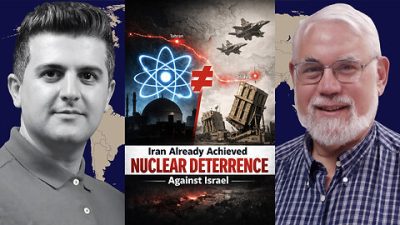
Prof. Ted Postol: Iran Already Achieved Nuclear Deterrence Against Israel
or go to
Aletho News Archives – Video-Images
From the Archives
How the occupied mentality syndrome works
Saudi Arabia on the American chessboard – Part 3
By B. J. Sabri | American Herald Tribune | June 27, 2016
Read part 2: “The occupied mentality Syndrome“
Previously I argued whether Saudi Arabia’s repeated involvements in U.S. interventions and wars stem from free national will or in response to a specific condition. For starters, in Saudi Arabia there is no national will. In Saudi Arabia, the national will is the will of the Al Saud clan. Still, when a major Arab state allies itself with a superpower that committed unspeakable crimes against humanity in almost every Arab country, then something is wrong. This fact alone should compel us to examine the U.S.-Saudi relation for one exceptional reason. As a result of the U.S.-Saudi wars, hundreds of thousands of people in Afghanistan, Iraq, Iran, Libya, Syria, Yemen, and Somalia have lost their lives. Millions became displaced in their own homelands. And millions more rendered refugees.
Attributing the Saudi policies to the bonds of “partnership” with the U.S. is frivolous. There are no bonds between these two thugs except those of business, military deals, secret plots, and wars. Proving this point, bonds such as these have no space for the American and Saudi peoples to share significant cultural or societal exchanges. If partnership is not the reason for the Saudi contribution to the U.S. strategy of empire and imperialism, then another reason must exist.
This leads to three possibilities. … continue
Blog Roll
 Aletho News
- REWRITING THE RISK? INSIDE THE GOVERNMENT’S VACCINE SAFETY MESSAGING
- “Davos Can Really Replace the UN”
- NIAID/NIH and USDA Fund Bioengineered Chimeric Influenza Viruses Built Using Pandemic H1N1 Components: Journal ‘Science Advances’
- Hezbollah hits Israeli warship off Lebanon’s coast, sets it aflame
- Iran slams US strikes on B1 bridge, Mahshahr petrochemical plants as ‘blatant acts of state terrorism’
- In letter to UN chief, Araghchi warns of dire consequences of US-Israeli attacks on Iran’s nuclear facilities
- Why the CIA conspiracy to invade Iran with Kurdish militias failed
- Why Are Upbeat US Claims About Mission to Rescue Pilot ‘Highly Questionable’?
- Aircraft destroyed during US ‘rescue’ of downed F-15 pilot cost more than $100 million each
- Washington University removes professor who condemned US-Israeli war on Iran
- If Americans Knew
- In Iran, Israel-US take aim at “reason, research, and freedom of thought” – Daily Update
- US loses planes over Iran, Israel downgrades Lebanon war goals – Daily Update
- Israel Is Blocking Palestinians from Easter at Church Where Jesus Resurrected
- Plot to assassinate Palestinian activist follows harassment campaign promoted by Zionist groups and elected officials
- Prominent New York synagogue hosts presentation on why U.S. Jews should support the ethnic cleansing of Gaza
- Tapper vs. Piker: Is the CNN Anchor Auditioning for David Ellison?
- Shouldn’t Democrats Be Able to Condemn Genocide?
- Israel-US kill negotiators, destroy civilian structures, but Iran’s military capabilities still largely intact – Daily Update
- ‘War crime’: Global condemnation as Israeli ministers celebrate death penalty law targeting Palestinian prisoners
- 7 Ways Israel Is Turning Lebanon Into Gaza
- No Tricks Zone
- An Inconvenient Tree: Uncovered In Alps… Europe Much Warmer Than Today 6000 Years Ago
- New Study Reports A 60% Slowdown In Greenland’s Ice Loss Rate In The Last Decade
- Low Intensity Tornado Wrecks Major Solar Farm, Creating A Potential Toxic Dump
- New Study Finds Warming Saves Lives…Cold Temperatures 12 Times More Deadly Than Excess Heat
- German Science Blog Accuses PIK Climate Institute Of Hallucinating Climate Tipping Points
- Devastating Assessment Of Comirnaty Vaccine By Former Senior Pfizer Europe Toxicologist
- New Study: CO2 Is ‘Effectively Negligible’ As An Explanatory Climate Change Factor Since 2000
- Former Pfizer Toxicologist Dr. Helmut Sterz Tells Bundestag Hearing Pfizer Vaccine Should Have Never Been Approved
- Energy Expert: Germany’s Nuclear Phaseout Was A “500 Billion Euro Mistake”
- New Research: South Australia’s Mid-Holocene Sea Surface Temperatures Were 4°C Warmer Than Today
 Aletho News