EU member suspects Brussels of ‘energy blackmail’
RT | July 31, 2024
The European Commission (EC) may be behind the suspension of some Russian oil supplies into the EU through Ukraine, Hungarian Foreign Minister Peter Szijjarto claimed on Tuesday. The move could be directly targeted at Hungary and Slovakia, he suggested.
Kiev halted the transit of crude oil supplied by Russian energy giant Lukoil via the Druzhba pipeline earlier this month, citing sanctions on the company. The measure has directly hit landlocked Hungary and Slovakia, depriving them of crude previously exported by Lukoil.
“Brussels remains silent despite the threat to the energy security of two EU member states and clear violation of EU-Ukraine association agreement,” Szijjarto wrote in a post on Facebook. The diplomat was referring to a deal signed in 2014, after the Western-backed Maidan coup overthrew the then-Ukrainian president, Viktor Yanukovich.
Szijjarto suggested that either the EC is too “weak” to protect the fundamental interests of Slovakia and Hungary, or “it was Brussels, not Kiev,” that orchestrated the move to “blackmail the two states that support peace and refuse to send weapons [to Ukraine].”
Shortly after the halt of oil supplies, Budapest and Bratislava jointly initiated consultations with the bloc and asked EU officials to help resolve the dispute. Brussels has claimed it needs time to “gather evidence and assess the legal situation.”
“The EC, and its President Ursula von der Leyen personally, must come clean immediately: did Brussels ask Kiev to ban oil supplies?” Szijjarto asked. “And if not, why has the EC taken no steps in more than a week?”
Slovakia, Hungary, and the Czech Republic – each of which is reliant on Russian energy supplies – were exempted from a bloc-wide ban on Russian oil deliveries in 2022. Slovakia and Hungary are the only EU members that have refused to back the bloc’s policy of supplying Kiev with military aid amid the conflict with Russia. Both have repeatedly called for a diplomatic solution to the crisis.
Kiev imposed sanctions on Lukoil in 2018, having banned the company from divesting its business in the country, as well as prohibiting trade operations and participation in the privatization or leasing of state property. Lukoil still sent crude via the southern arm of the Druzhba pipeline as the sanctions did not target these flows.
Earlier this week, Slovakian Prime Minister Robert Fico warned that Bratislava would stop diesel exports to Ukraine if Kiev does not restart the transit of Russian oil through, stressing that Slovak shipments account for one-tenth of Ukraine’s consumption of the fuel.
On Tuesday, Russian Foreign Ministry spokeswoman Maria Zakharova said Moscow is unsurprised that the EU has failed to resolve the issue surrounding Russian oil supplies to its members, claiming that Brussels is using energy resources to blackmail Bratislava and Budapest.
EU Refuses Support to Hungary, Slovakia on Russian Oil Transit Dispute With Ukraine
Sputnik – 25.07.2024
The European Union has denied its support to Hungary and Slovakia after they sought to force Ukraine to restore Russian oil transit to the bloc, the Financial Times reported citing sources familiar with the matter.
EU Trade Commissioner Valdis Dombrovskis told the FT that Brussels would need more time to gather evidence and assess the legal situation. Eleven of the EU nations attending a meeting of trade officials on Wednesday backed his stance and none took the side of Budapest and Bratislava, diplomats told the FT.
Hungarian Foreign Minister Peter Szijjarto said on Monday that Hungary and Slovakia had asked the European Commission to launch consultations with Ukraine after it stopped the transit of oil through the Druzhba pipeline. Szijjarto also said that Hungary would not approve the allocation of 6.5 billion euros ($7 billion) for arms sent to Ukraine through the European Peace Facility until the issue was resolved.
Ukraine’s trade agreement reportedly contains a clause that provides for the possibility of suspending oil transit. An EU diplomat was quoted as saying by FT that disruption in Russian oil supplies would have a “huge impact” on the central European nation.
Last week, Szijjarto said that Ukraine stopped the transit of Lukoil’s oil. The Slovak Economy Ministry confirmed that the country was no longer receiving oil from the Russian oil giant, which was sanctioned by Ukraine. Slovakia’s Slovnaft refinery imports Russian crude from another supplier, but the country is discussing the current situation with Ukraine.
Slovakia Warns Ukraine of Retaliation Over Halt of Russian Oil Transit
Sputnik – 24.07.2024
BRATISLAVA – Slovakia may take retaliatory measures if Ukraine does not resolve the issue of oil transit from Russia, said Slovak President Peter Pellegrini said on Wednesday.
“I consider what Ukraine did in relation to Slovakia to be a very serious matter and a very unpleasant interference in our good relations. I firmly believe that Ukraine will be able to put this in order as soon as possible, because Slovakia, as a sovereign state, will eventually have to take some kind of countermeasures. This would not benefit either Ukraine or its citizens,” Pellegrini said at a press conference on Wednesday.
Hungarian Foreign Minister Peter Szijjarto earlier said that Lukoil’s oil supplies through Ukraine via the Druzhba oil pipeline had been stopped. Slovakia’s economy ministry confirmed that the republic had stopped receiving oil from Lukoil due to Ukraine stopping its transit through its territory. It noted that Lukoil had been sanctioned by Ukraine.
Slovakia’s Slovnaft refinery is supplied with Russian oil from another supplier, but the country is discussing the current situation with the Ukrainian side.
Hungary issues €6.5bn ultimatum to Ukraine
RT | July 23, 2024
Budapest will block funds the European Union has earmarked for Ukraine until Kiev resumes the transit of Russian crude oil to Hungary and Slovakia, Hungarian Foreign Minister Peter Szijjarto has said.
Ukraine stopped the flow of oil through the Druzhba pipeline last week, citing its sanctions against Russian energy giant Lukoil, thus depriving the two EU members of an estimated 30-40% of their needs.
“As long as this issue is not resolved by Ukraine, everyone should forget about the payment of the €6.5 billion of the European Peace Facility compensation for arms transfers,” Szijjarto announced on Tuesday.
“Ukraine’s decision to not allow Lukoil to transit oil supplies through Ukraine poses a fundamental threat to the security of energy supplies to Hungary and Slovakia,” Szijjarto said, describing Kiev’s move as “unacceptable and incomprehensible,” as well as incompatible with its aspirations to join the EU.
Szijjarto also reminded the EU foreign policy chief Josep Borrell that Hungary – along with Slovakia and Poland – came to Ukraine’s aid in early July, sending enough electricity to stabilize Kiev’s energy system. Hungary supplied 42% of Ukraine’s electricity in June, Szijjarto noted.
According to unconfirmed reports from Ukrainian local media, Ukraine stopped receiving electricity from Slovakia and Romania as of midnight on Tuesday.
Kiev has had to resort to imports after Russian air and missile strikes disabled most of its domestic generation capabilities. Moscow has described the strikes as reprisal for Ukrainian attacks on Russian civilian infrastructure.
Poland has already protested Hungary’s move, saying that it would deprive Warsaw of €2 billion it needs to modernize its armed forces. “This is a huge disappointment for me,” Polish Foreign Minister Radoslaw Sikorski has said.
Kiev’s official explanation for embargoing oil deliveries was that Lukoil revenue could be used to support the Russian military. One Ukrainian lawmaker, however, suggested to Politico that the blockade has a secondary purpose, to pressure Hungary into changing its policy on arming Kiev.
Hungarian Prime Minister Viktor Orban has long refused to send Ukraine any weapons, train any Ukrainian troops, or allow the use of Hungarian territory for EU or NATO arms shipments, insisting that Kiev should sue for peace with Moscow as soon as possible.
Member states consult EU over ‘hostile’ Ukrainian move
RT | July 22, 2024
Hungary and Slovakia have requested that the European Commission intervene over Ukraine’s decision last week to block the pipeline transit of Russian crude oil.
While the EU has sanctioned imports of Russian crude to Germany and Poland, Slovakia and Hungary have received exemptions. Last week, however, Ukraine cut off the flow of oil, citing its own sanctions against Russian energy giant Lukoil.
“I spoke with the Ukrainian foreign minister yesterday; he said they allow every oil transfer through, but it’s not true,” Hungarian Foreign Minister Peter Szijjarto said in Brussels on Monday.
Szijjarto described Kiev’s actions as “hostile,” especially since Ukraine imports electricity from Hungary. He added that Budapest and Bratislava have requested consultations with Brussels on the matter. Slovakian Foreign Minister Juraj Blanar has confirmed this.
“The commission has three days to carry out our request, after which we will bring the issue to court,” said Szijjarto. If Kiev refuses to resume oil transit, the EU will be justified in suspending certain clauses of Ukraine’s association agreement, he added.
The EU formally approved the start of membership negotiations with Ukraine last month, as a symbolic message of support to Kiev in its conflict with Moscow.
On Saturday, Slovakian Prime Minister Robert Fico called his Ukrainian counterpart Denis Shmigal to complain about the “senseless” sanctions that may leave Bratislava 40% short of the oil it needs. Moreover, the shortages could force Slovnaft to stop deliveries to Ukraine, which account for 10% of Kiev’s oil consumption.
“Slovakia does not intend to be a hostage to Ukrainian-Russian relations,” Fico said.
Ukraine imposed sanctions on Lukoil on June 24, including the freezing of assets, limiting trade operations, and “partial or complete cessation of resource transit.” The oil stopped flowing on July 17, according to Hungary’s MOL, which also owns Slovnaft.
Officially, Kiev seeks to deprive Moscow of oil revenue that could be used to pay for the Russian military, even though Ukraine itself is getting a cut from transit fees. Ukrainian lawmaker Inna Sovsun has suggested to Politico that the embargo has a secondary purpose: to pressure Hungary.
“We have really tried all the diplomatic solutions, and they never worked,” said Sovsun. “So it seems like we have to find some other approaches in how to talk to them.”
Prime Minister Viktor Orban’s government has vocally opposed the EU policy of sending money and weapons to Ukraine and vowed to block its membership in the bloc as well as NATO.
Ukraine ‘Shot Itself in the Foot’ by Banning Transit of Lukoil Crude to Hungary and Slovakia
By Ilya Tsukanov – Sputnik – 20.07.2024
Hungary and Slovakia stopped receiving oil from Russian oil giant Lukoil via the Soviet-built Druzhba (‘Friendship’) pipeline which runs through northwestern Ukraine after Kiev imposed a transit ban. Financial analyst Paul Goncharoff says the move is both counterproductive and shortsighted, but that hasn’t stopped Ukraine’s authorities before.
Officials in Budapest and Bratislava confirmed this week that the delivery of oil supplies purchased from Lukoil through the Druzhba oil pipeline network had dried up.
Slovakian oil transporter Transpetrol said non-Lukoil Russian deliveries appear unaffected so far.
Hungarian Foreign Minister Peter Szijjarto said Budapest is receiving oil via the TurkStream pipeline, running from Russia through the Black Sea to southeastern Europe, but that supplies via Druzhba had been stopped “due to a new legal situation” imposed by Kiev.
“We are now working on a solution that would allow oil transit to restart as Russian oil is very important for our energy security,” Szijjarto said Tuesday.
Kremlin spokesman Dmitry Peskov said Friday that Moscow doubts whether dialogue with the Ukrainian companies responsible for oil transit on this issue is possible.
“This sort of decision was made not at the technical, but the political level. We don’t have any dialogue here,” he said.
Druzhba is one of the longest and largest oil pipeline networks in the world, with a capacity to ship about 66.5 million tons of oil annually. The network branches off in southern Belarus into a northern route running through Poland to eastern Germany, and a southern route, which winds through southwestern Ukraine to the Hungarian and Slovakian borders.
Hungary, Slovakia and the Czech Republic negotiated with Brussels in late 2023 to allow them to maintain their pipeline-based imports of Russian oil, citing a lack of access to sea-based deliveries, and lack of opportunities to receive substantial amounts of oil from other sources.
The three countries collectively imported about 15 million tons of Russia divided roughly evenly between them in 2022, and dropped purchases modestly (between 2 and 10 percent) in 2023, according to Russian oil transport giant Transneft.
Shipments of Russian oil to Poland and further west to Germany via Druzhba’s northern branch were halted by Warsaw in early 2023.
Last month, Ukraine formally banned the transit of crude produced by Lukoil – Russia’s second-largest oil company, through the section of Druzhba running through Ukraine.
The move signals another short-sighted escalation by Ukraine’s pro-Western elite which will ultimately harm ordinary Ukrainians in the long run, says veteran financial analyst Paul Goncharoff.
“Whether Ukraine can afford to further escalate the situation surrounding the movement of energy resources is a moot point. Escalation on all fronts has passed all reasonable limits, politically, economically and militarily. They cannot afford it economically [nor] politically as they have now estranged both Slovakia and Hungary, [but will continue to escalate], regardless of cost, as their marching orders from Washington along with the servile echoes of Brussels and their insistence to ‘demonstrate resolve’” dictate, Goncharoff told Sputnik.
“The real consequences should become very clear in 3-4 months as winter descends on Ukraine, and any energy goodwill there may still be in countries neighboring Ukraine will be scarce to nonexistent,” the observer expects.
At this stage, Goncharoff says, Russian oil exporters not affiliated with Lukoil can still send oil through the Druzhba pipeline, but “how long this possibility will continue is anyone’s guess.”
“In discussions I have had with persons closely involved in this trade, there are swap workarounds being looked at in order not to deprive Slovakia or Hungary from needed and contracted resources. Unfortunately, the political reality is such that it is likely any workarounds will raise a hue and cry from the West, and they will try to close the workarounds off as well, if for no other reason but to be politically correct,” the market analyst said.
Ultimately, the old saying “shooting oneself in the foot” is an apt description for Kiev, Brussels and Washington’s policy today, “while the world looks on, shaking its collective head in wonder,” Goncharoff concluded.
Russian oil and gas flows to Europe have dropped dramatically following the escalation of the conflict in the Donbass into a full-fledged proxy war between Russia and NATO. The decline in Russian energy flows west prompted Moscow to reorient part of its energy trade to its BRICS partners (particularly China and India) and pushed EU countries and the UK to kick off a global scramble to secure the energy needed to power their economies.
The West’s attempts to “punish” Russia by cutting off energy purchases have so far had a boomerang effect, raising prices and undermining Europe’s global industrial competitiveness against China and the United States. Traditional European industrial powerhouse Germany has been hit particularly hard, facing the outflow of major manufacturers looking for greener pastures, and cheaper energy costs, in countries abroad.
Second NATO country publicly opposes Ukrainian membership
RT | July 11, 2024
Ukraine joining NATO would guarantee a third world war, Slovak Prime Minister Robert Fico has said, publicly expressing opposition to the idea.
Fico released a short video message on Thursday while the leaders of NATO countries were meeting in Washington. The draft of the annual summit’s final communique reportedly includes references to Ukraine’s “irreversible path” towards joining the US-led bloc.
“I understand Ukraine’s wishes,” Fico said in the video. “But its membership in NATO guarantees World War Three.”
“Although to be fair, we are not too far from it even without Ukraine’s membership, seeing as how some advanced democracies are stoking the pot,” he added.
Slovakia’s representatives in Washington have been instructed to insist on two conditions for Ukrainian membership, Fico said. Kiev must meet every condition set by the bloc, and every member state has to give its blessing.
“However, as I’ve said many times, Smer and its lawmakers in the National Assembly of Slovakia will not agree to Ukraine’s membership in NATO,” he said, in reference to his ruling party.
Fico campaigned last year on a platform of opposing Ukrainian membership in NATO and further Slovak military support to Kiev. He won the election in a landslide.
In mid-May, a liberal activist reportedly upset with Bratislava’s new policy shot Fico several times and almost killed him. The prime minister underwent a series of surgeries and spent weeks recovering from the assassination attempt, returning to work in person just last week.
On Wednesday, Hungarian Foreign Minister Peter Szijjarto told reporters in Washington that Ukraine’s membership in the bloc “is clearly out of the question,” as it would “foreshadow direct conflict between Russia and NATO.”
The US-led bloc is expected to pledge at least €40 billion ($43.3 billion) in military aid to Ukraine over the next year and endorse its “full Euro-Atlantic integration,” but an invitation to NATO would only be extended “when allies agree and conditions are met,” according to a draft seen by Reuters. The same language was used at last year’s summit in Lithuania.
Slovakia’s Fico ‘Getting Closer’ to Resuming Work After Assassination Attempt – Minister
Sputnik – 01.07.2024
Slovak Prime Minister Robert Fico is likely to have permanent health problems following an assassination attempt in May, although he is now getting closer to returning to his job and working at “full potential,” Slovak Deputy Prime Minister and Defense Minister Robert Kalinak said.
“His health is still far from ideal. After a gunshot wound to the abdomen, those organs don’t work the way they did when you were 17 or 30. It’s still very erratic. As part of his regular rehab, doctors are doing everything they can to make sure he can do his job to his full potential, and we’re getting close to that,” Kalinak was quoted by the Euronews news portal as saying.
Fico is likely to have musculoskeletal problems even after the rehabilitation, the minister added.
In the coming days, Fico is expected to address the public once again, the Slovak defense minister said, adding no details on the format of the speech.
In early June, Fico gave his first video address after the assassination attempt, saying he planned to return to work in late June or early July.
Fico, a 59-year-old politician who took office in October 2023, was left fighting for his life after a man shot him multiple times at close range as he greeted supporters following an off-site cabinet meeting in the town of Handlova on May 15. He underwent two abdominal surgeries as part of intensive medical treatment.
The gunman was charged with premeditated attempted murder for what Slovak officials described as a “politically motivated” assassination attempt.
Delivery of jets to Kiev was ‘illegal’ – NATO member
RT | June 12, 2024
The previous government in Bratislava had no right to donate the Soviet-era MiG-29 warplanes to Kiev, State Secretary of the Slovak Ministry of Defense Igor Melicher has said.
In March 2023, the interim government of Prime Minister Eduard Heger authorized the delivery of 13 MiG-29s, according to the Slovak national broadcaster TASR. The new government led by Robert Fico has since requested a legal review of the shipment.
“The MiG-29 fighter jets were delivered to Ukraine illegally,” Melicher wrote on Facebook on Tuesday. He added that the Defense Ministry is “preparing a legal action.”
Melicher made his statement after ombudsman Robert Dobrovodsky, who was tasked with reviewing the delivery of the aircraft, revealed that the government has failed to find the required legal analysis of the possibility of donating the MiG-29s to Kiev.
“The ministry recently told me that it was trying to comply with the request and find the analysis. However, it said that neither it nor any of its branches had the analysis at their disposal,” Dobrovodsky told TASR on Tuesday. “It also stated that the analysis isn’t even registered in its databases in any form.”
Melicher has argued that Heger’s caretaker government had no right to make final decisions on delivering the planes abroad. “The Constitution forbids an interim government to take major steps in foreign policy, and sending fighter jets worth more than €500 million ($537 million) is certainly such a step,” he wrote.
Prime Minister Robert Fico, who survived an assassination attempt by a pro-Ukrainian activist last month, has opposed sending arms to Kiev and insisted that the conflict should be resolved through diplomacy.
Defense Minister Robert Kalinak has also criticized his predecessor, saying in May that the previous government had acted “in the most irresponsible way when it handed over [the weapons] that we needed for our own safety.”
Kiev has been pressing its Western backers to expedite the planned delivery of US-made F-16 fighters. Politico magazine reported this month that Ukrainian officials were “frustrated” with how the existing training programs in the US and other countries had not been producing enough pilots for the F-16s.
Russia, for its part, has warned that no amount of Western military aid would deter its military operation in the neighboring state.
Fico: Western-backed political opposition forces triggered assassination attempt
RT | June 5, 2024
Slovak Prime Minister Robert Fico has argued that the assassination attempt that nearly killed him last month emanated from foreign-backed politicians who refuse to accept foreign policies that prioritize Bratislava’s interests over the agendas of major Western powers.
Fico posted a video statement on Wednesday, marking his first public appearance since the May 15 shooting in which he was critically wounded. He credited medical workers with saving his life and said he expects to resume at least some of his work duties by around the end of this month or in early July.
The PM condemned efforts to downplay the assassination attempt and blame it entirely on a deranged gunman. “I forgive him and let him sort out what he did and why he did it, in his own head,” Fico said. “In the end, it is evident that he was only a messenger of evil and political hatred, which the politically unsuccessful and frustrated opposition developed in Slovakia to unmanageable proportions.”
Fico returned to power for a fourth term as prime minister after his Slovak Social Democracy (SMER-SD) party won the country’s parliamentary election last September. He said his wounds from last month’s shooting were so severe that it would be a “minor miracle” for him to resume his work duties within a few weeks. He warned against efforts by political adversaries – including media outlets bankrolled by billionaire political activist George Soros – to shrug off the implications of the attempted assassination.
“I want to ask the anti-government media, especially those co-owned by the financial structure of George Soros, not to go down this path and to respect not only the gravity of reasons for the attempted murder, but also the consequences of this attempt,” Fico said.
The long-time leader added that he had been warning for several months of likely political violence because of the “hatred and aggressiveness” of Slovakia’s opposition parties. He lamented that major Western democracies stood silent as those parties attacked political opponents and stoked hatred.
He warned that more political violence is to be expected if opposition forces continue on their present course. “The horror of May 15th, which you all had the opportunity to see practically live, will continue, and there will be more victims.”
“Violent and hateful excesses against legitimate governmental power are tolerated at the international level without any comment,” Fico added. “The opposition was unable to assess, because no one forced them to do so, where their aggressive and hateful politics had led sections of the society, and it was only a matter of time before a tragedy would occur.”
Fico claimed the parties that ruled Slovakia from 2020 to 2023 did whatever larger Western democracies demanded, including treating Russia and China as “mortal enemies.” The previous Bratislava regime also “looted” Slovak military stockpiles to provide weapons to Ukraine, he added. After returning to power in October, Fico’s government halted such aid, raising the ire of NATO powers.
“It is precisely the conflict in Ukraine that the EU and NATO have elevated even more, literally sanctifying the concept of the single correct opinion – namely that the war in Ukraine must continue at any cost in order to weaken the Russian Federation,” Fico said. “Anyone who does not identify with this single mandatory opinion is immediately labeled as a Russian agent and politically marginalized internationally. It is a cruel observation, but the right to a different opinion has ceased to exist in the EU.”
Robert Fico’s failed assassination raises specter of Western plotting
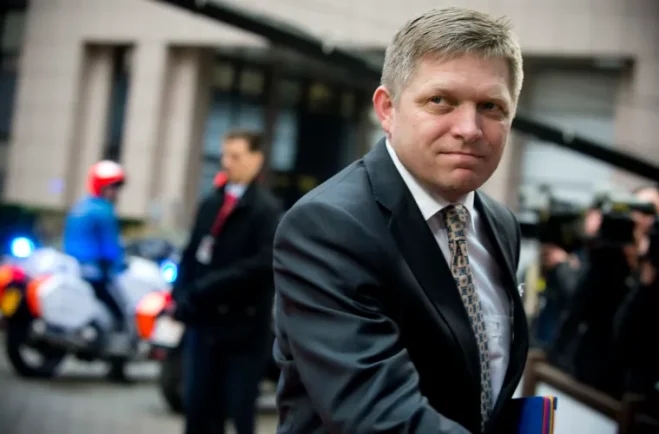
BY KIT KLARENBERG · THE GRAYZONE · MAY 31, 2024
Slovak PM Robert Fico’s independent stance earned him the wrath of NATO and the EU. Did a Western-directed plot to remove his troublesome government from office trigger his assassination attempt?
On May 15, Slovak Prime Minister Robert Fico was almost murdered in broad daylight. While shaking hands with supporters during a public appearance, a gunman shot him twice in the abdomen and once in the shoulder. The attack left him fighting for his life while authorities raced for clues, and many observers at home and abroad puzzled about the would-be assassin’s motives and whether foreign actors were in some way responsible for the attack. And despite the shooter’s instantaneous arrest, those questions still linger weeks later.
Fico, a veteran Slovak political figure, was re-elected in September 2023 amid a wave of public resentment over the proxy war in Ukraine, pledging to end arms supplies to Kiev and anti-Russian sanctions. On the campaign trail, Western leaders, journalists and pundits aggressively stoked fears of the “pro-Putin,” “populist” candidate returning to office. Ukraine’s Western-backed “Center for Countering Disinformation” publicly accused him of spreading “infoterror” back in April 2022.
But many Slovakians see it differently. They say Fico is merely committed to defending Slovakia’s sovereignty, and governing in his nation’s interests, not those of Brussels, Kiev, London, and Washington. For Western politicians, his victory came at a highly inopportune time, with public and political consensus on the proxy war in Ukraine rapidly fraying across Europe.
Since Fico’s election, media outlets like Germany’s state broadcaster, Deutsche Welle, have branded him a “threat” to the EU and NATO. His declaration that Kiev must cede territory to Russia to end the war was not well-received in Western capitals. In April, the premier seemingly predicted his own shooting, warning that the virulent political climate in Bratislava could result in politicians getting killed.
Domestically, a number of foreign-funded media assets and NGOs have relentlessly targeted Fico for pursuing neutrality in the conflict. But over two years after Russia’s intervention, local polling indicates just 40% of the population blame Moscow for the proxy war, and 50% consider the US to be a threat to national security. Meanwhile, 69% of Slovakians believe by continuing to arm Ukraine, the West is “provoking Russia and bringing itself closer to the war” and 66% agreed that “the US is dragging [their] country into a war with Russia because it is profiting from it.”
When Fico was re-elected in September 2023, this journalist speculated that a color revolution could soon be impending in Slovakia. We are now left to ponder whether the Prime Minister’s attempted assassination was a Western-directed plot to remove his troublesome government from office. Even though he is finally on the road to recovery, the threat of an overseas-orchestrated coup remains. A vast US-sponsored opposition political and media infrastructure is causing havoc in Bratislava, and this could easily escalate further.
Slovakia has since the end of the Cold War stood apart from its neighbors. Folding the country into the EU and NATO and neutralizing its rebellious politics and population has required an enormous investment in time and money by Brussels and Washington, and relentless meddling in the country’s internal affairs by foreign-funded organizations and actors. Fico’s return to power threatened to not only derail that project, but create a regional contagion effect. Disinfecting the country therefore became of the utmost urgency for the West.
Facebook purge suggests shooter was no ‘lone wolf’
Fico’s shooter, 71-year-old Juraj Cintula, is among the Slovaks who do not support Fico’s positions. A discrepant picture of the man has emerged since his arrest. Some acquaintances describe him as “weird and angry,” and “against everything.” Others report he was meek and mild-mannered, a far from obvious candidate to attempt a high-level political assassination. Cintula, an avowed Kiev ultra, claims he acted alone, his actions motivated by a desire to replace Fico’s government with a pro-Ukrainian administration. Slovakian court documents state that Cintula “wants military aid to be provided to Ukraine and considers the current government to be Judas towards the European Union,” and say this perception is why the would-be assassin “decided to act.”
The mainstream media has made much of Cintula’s background as a dissident poet and writer, in a seeming effort to humanize the would-be killer. By contrast, Aaron Bushnell, who in February self-immolated in protest of Washington’s facilitation of the Gaza genocide, was widely tarred by journalists as a maladjusted, mentally unwell outcast. Unmentioned by any Western outlet is that during the 1980s, Cintula was under surveillance by Czechoslovak security services.
The reason for the Czechs’ interest is unclear, although it may have been due to anti-Communist actions, or foreign contacts. Whether Cintula had seditious confederates within or without Slovakia is a key line of inquiry for police. That all traces of the shooter’s Facebook profile were comprehensively scrubbed from the internet two hours after the shooting, before investigators could access the information, is also source of intense suspicion.
While it is customary for the social network to purge the profiles of “dangerous individuals” – a fate this journalist has suffered for investigative reporting – following such incidents, in Bratislava Facebook relies on cooperating local individuals and organizations to police content. Apparently, Cintula’s profile was wiped before his identity had been reported in local media. Slovak authorities must now rely on the FBI to secure and provide the deleted information. Whether whatever is turned over will be unexpurgated is an open question.
Another disturbing feature of mainstream reporting on the shooting is ubiquitous, persistent reference to Slovakia’s unstable politics. According to this narrative, Fico’s anti-Western policies have fueled the chaotic state of affairs, provoking the assassination attempt and making him ultimately responsible for the attempt on his life. In the days following the shooting, the BBC, Financial Times, New York Times and Germany’s esteemed Der Spiegel pinned the blame on Slovakia’s alleged “toxic” political culture. The latter revised its wording after significant public backlash.
One could be forgiven for concluding Western journalists take it as self-evident that defying EU/US will provide legitimate grounds for getting shot. Western politicians clearly do. On May 23rd, Georgian prime minister Irakli Kobakhidze revealed that EU commissioner Oliver Varhelyi warned him he could suffer the same fate as Fico, if his government didn’t drop a highly controversial “foreign influence transparency” law, which would compel local NGOs to disclose their sources of income.
After listing the various ways the EU could retaliate against Georgia in a phone call with Kobakhidze, Varhelyi allegedly stated: “Look what happened to Fico, you should be very careful.”
Varhelyi has since confirmed that he cited Fico’s fate in private conversations with Kobakhidze, but claimed he was merely concerned with “dissuading the Georgian political leadership” from adopting restrictions on foreign-funded NGOs. Varhelyi insisted in a written statement that he simply “felt the need” to caution the Prime Minister “not to enflame [sic] further the already fragile situation,” arguing that he only mentioned “the latest tragic event in Slovakia… as an example and as a reference to where such high levels of polarisation can lead in a society.”
Public records show the US government regime change specialists at the National Endowment for Democracy (NED) have pumped millions into NGOs and media outlets in Slovakia under the aegis of mundane-sounding initiatives such as “strengthening civil society” and “promoting democratic values among youth.” Similar language is used to describe the purpose of Endowment grants in Georgia, financing groups at the forefront of recent violent unrest on the streets of Tbilisi, as The Grayzone has documented. Perhaps unsurprisingly, NED grantees are unanimous in their opposition to Fico.
Anyone searching for the source of Slovakia’s “toxic” politics need not look further than these US-backed organizations. Washington has stirred this cauldron for almost three decades, and with all sides of the Slovakian political class blaming one another the rising tide of hatred, it is hoping the pot will finally boil over.
Regime change blueprint honed in Slovakia
The NED-organized overthrow of Slobodan Milosevic in Yugoslavia in 2000 established an insurrectionary blueprint which was subsequently exported in the form of color revolutions. But throughout the 1990s, Slovakian activists honed the tactics which would eventually be deployed by US regime change operatives across the Soviet sphere.
At the time, Bratislava was one of the only post-Communist countries that neither adopted ruinous neoliberal political and economic reforms, nor pursued EU or NATO membership. Slovakia’s then-Prime Minister Vladimir Meciar paid a harsh price for his independent stance. Relentlessly slandered by US and European leaders as a Russian pawn, he quickly became a target for regime change.
In 1997, then-Secretary of State Madeleine Albright publicly described Slovakia as “a black hole in the heart of Europe,” formally marking him for removal. So it was that NED funded the creation of Civic Campaign 98 (OK’98), a coalition of 11 anti-government NGOs.
Explicitly modeled on an earlier NED-funded effort in Bulgaria, concerned with “creating chaos” after the Socialist Party won the 1990 election, many of the individuals involved had been part of Cold War-era Czechoslovak anti-Communist dissident groups. OK’98 was publicly framed as a non-partisan get-out-the-vote campaign, but its vast resources were explicitly deployed for anti-government purposes. Its activities included rock concerts, short films, and TV infomercials in which Slovak celebrities urged young people to vote.
Meciar emerged with the most votes in the 1998 election, but the opposition gained enough seats to form a government. The NED assets who powered them to victory went on to give practical training to NED-supported pro-Western agitators like Pora, which ignited Kiev’s 2004 “Orange Revolution.” The insurrectionist youth group successfully overturned the re-election of President Viktor Yanukovych that year, installing the US-backed neoliberal Viktor Yushchenko in his place.
The return of Robert Fico represented a significant broadside against ongoing US “democratization” of the former Soviet sphere. It opened up the prospect of further anti-NATO candidates and governments gaining office elsewhere in Europe, at the most inconvenient juncture imaginable for Brussels and Washington.
Not coincidentally, it was at this time that polling for Germany’s upstart Alternative für Deutschland became turbocharged. The Euroskeptic party’s standing has soared in recent months, eliciting mainstream calls to ban it outright. And in North Macedonia just one week prior to Fico’s shooting, the anti-establishment VMRO-DPMNE party returned to power, overturning a NATO-fuelled color revolution that removed the party from office almost a decade earlier.
As the anti-Western backlash gained steam, a decision may have been made to draw a bloody red line in Slovakia.
French PM reveals how countries like Poland will be flooded with migrants his country doesn’t want
‘They either accept migrants or pay’
BY GRZEGORZ ADAMCZYK | REMIX NEWS | MAY 27, 2024
French Prime Minister Gabriel Attal’s claim that the EU migration pact will mean illegal migrants will be transferred to Central Europe and will not go to France, has caused uproar on the Polish right.
“The migration pact introduces solidarity. We managed to force eastern countries to sign a document according to which they either accept migrants or pay,” said Attal during a television debate.
The leader of the Polish conservative Law and Justice (PiS), Jarosław Kaczyński, told the Polish Press Agency (PAP) over the weekend that his party would be calling for an emergency meeting of the Polish parliament to consider the remarks made by France’s Attal during a television debate.
Attal claimed that the French provinces are safe from being allocated migrants covered by the EU migration pact, as the migrants will in the first instance be sent to Central and Eastern Europe. Kaczyński contrasted Attal’s statement with Polish Prime Minister Donald Tusk’s claim that the migration pact will not affect Poland because it has taken in hundreds of thousands of Ukrainian refugees.
“It seems that Tusk once again is saying one thing in the EU and another in Poland,” said Kaczyński.
Conservatives in countries like Hungary and Poland have long warned that the EU’s recently passed migration pact was a ploy to transfer unwanted migrants to countries like Poland and Hungary, despite the West claiming that more migration and diversity was always a good thing and a source of “strength.”
Kaczyński said the parliamentary session on the EU migration pact should receive detailed information from PM Tusk with regard to the circumstances in which his government had failed to block the EU migration pact on the reallocation of migrants entering EU states.
Senior PiS MEP Jacek Saryusz-Wolski told independent television channel TV Republika that the migration pact will act as “a pump for migrants from Africa” and the Middle East who will see the pact as an invitation to come to Europe.
Saryusz-Wolski reminded that EU Commissioner for Home Affairs Ylva Johansson has admitted that Europe needs to have 4.5 million migrants coming every single year “to bridge the demographic gap, change society and provide the left with future voters.”
The Polish government did vote against the EU migration pact at a session of the Council of the European Union, the body in which decisions are made by qualified majority. Kaczyński and PiS have consistently argued that the decision on the pact should be made by the European Council, at which all decisions must be unanimous. In the Council of the European Union, Poland, Hungary and Slovakia voted against the migration pact, which will introduce migrant quotas, but the new law carried the day as most EU states backed it.
The most controversial aspect of the EU migration pact is the provision that should member states refuse to take their share of the reallocated migrants, they will have to pay up to €23,000 for every migrant refused.
Featured Video
No Threat Can Force Iran’s Surrender /Trita Parsi & Lt Cl Daniel Davis
or go to
Aletho News Archives – Video-Images
From the Archives
An Expert Military Analysis of War with China
Actually, None is Necessary
By Fred Reed • Unz Review • December 13, 2020
The Correlation of Armed Forces: U.S. goods and services trade with China totaled an estimated $634.8 billion in 2019. Exports were $163.0 billion; imports were $471.8 billion. The U.S. goods and services trade deficit with China was $308.8 billion in 2019. Trade in services with China (exports and imports) totaled an estimated $76.7 billion in 2019. Services exports were $56.5 billion; services imports were $20.1 billion. The U.S. services trade surplus with China was $36.4 billion in 2019.
There is talk within the Washingtoniat of a possible war with China. Steve Bannon, who apparently was dropped on his head as a child, actually favors such a war. We hear the usual shoo-the-boobs alarm about how the Chinese are doing something terrible and we must gird our loins and American values and show them what for, bow wow, woof. The danger is that the current game of who-blinks-first in Asian waters might actually provoke a shooting war. You know the kind of thing: One warship refuses to get out of the way of another, a collision ensues, some retard lieutenant who signed up on waivers opens fire, and we’re off and running. It is not a good idea to let children play with matches.
The said war is discussed either in emotional terms by idiots or in purely naval terms by those familiar with such things, so we hear of the First Island Chain and the Second Island Chain and whose missiles against the other’s missiles and so on. This would be appropriate if we were fighting World War Two again. Which we aren’t. Let’s take a quick-and-dirty look at how such a war might go.
To begin the war, America would overestimate itself and underestimate China. This is doctrine in the Pentagon. … continue
Blog Roll
 Aletho News
- Iran To Target Military Industrial-Tech Complex That Facilitated Gaza Genocide
- Collapsing Empire: The Resistance Disarms ‘Israel’
- Suicide Should Not Be a Government Service
- Rethinking America’s greatest threat: Iran vs. Israel-Firsters
- Iran accuses adversaries of false flags to strain Turkey ties
- Poland rules out sending Patriot missiles to US/Israel amid war on Iran
- Tehran approves new Hormuz plan with major restrictions
- No Threat Can Force Iran’s Surrender /Trita Parsi & Lt Cl Daniel Davis
- UK’s New Pandemic Plan Would Turn Big Tech Into a Mass Location Tracking Network
- Growing insecurity, soaring prices fuel protests in north as regime bans evacuation: Sources
- If Americans Knew
- Ann Coulter Rips Into Fox News for Iran War Coverage, Compares to False Rigged 2020 Election Reporting
- Joe Kent Urges Americans To Call White House and Congress To Object To Sending Troops Into Iran
- DNC Resolution to Reject AIPAC Funding Puts Democratic Leaders in the Hot Seat
- Swedish foundation to build 400 schools as over 650,000 Gaza children remain without education for 2 years
- Israeli army admits photshopping image of slain Lebanese journalist
- This is how Israel is systematically killing health workers under the cover of war in Lebanon
- Carrying life under fire: Israeli invasion of Lebanon leaves pregnant women facing deadly risks
- Champagne all around for the new death penalty (for Palestinians) law – Not a ceasefire Day 172
- Why are Palestinian books struggling to be seen on Amazon?
- The Line Between Affinity and Conspiracy
- No Tricks Zone
- New Study Finds Warming Saves Lives…Cold Temperatures 12 Times More Deadly Than Excess Heat
- German Science Blog Accuses PIK Climate Institute Of Hallucinating Climate Tipping Points
- Devastating Assessment Of Comirnaty Vaccine By Former Senior Pfizer Europe Toxicologist
- New Study: CO2 Is ‘Effectively Negligible’ As An Explanatory Climate Change Factor Since 2000
- Former Pfizer Toxicologist Dr. Helmut Sterz Tells Bundestag Hearing Pfizer Vaccine Should Have Never Been Approved
- Energy Expert: Germany’s Nuclear Phaseout Was A “500 Billion Euro Mistake”
- New Research: South Australia’s Mid-Holocene Sea Surface Temperatures Were 4°C Warmer Than Today
- Storing Green Energy To Last Germany 10 Days Would Require A 60-Million Tonne Battery
- New Studies: UK Sea Levels Were 4 Meters Higher Than Today During The Mid-Holocene
- Destructive Green New Deal: German Energy And Metal Group Warns Of Drastic Crisis
 Aletho News