Cameron in Crisis Over Syria After Labour Leader Splits Party
Sputnik – 27.11.2015
UK Prime Minister David Cameron is facing a political crisis after calling for support for airstrikes against ISIL in Syria, but failing to gain the support of Labour leader Jeremy Corbyn who has now caused a major rift in the opposition.
Cameron told lawmakers in London Thursday that Britain should join a coalition of forces in airstrikes against ISIL in Syria. The country is already bombing ISIL in neighboring Iraq, but Cameron needs a mandate from parliament to extend the operations into Syria.
The issue is politically sensitive as Cameron lost a vote to launch airstrikes against Syrian President Bashar al-Assad in 2013, with cost him political value. This time around — in a vote on bombing Assad’s enemies — he cannot afford to lose political face again.
However, the Scottish National Party (SNP) has indicated that it will vote against action in Syria and Cameron needs the support of the Labour opposition to confirm his policy. Labour leader Jeremy Corbyn — who has long been an anti-war campaigner — has written to his party lawmakers telling them he cannot support airstrikes in Syria.
The move has caused chaos within his party, with many members supporting airstrikes against ISIL. If Corbyn exercises his leadership right to demand all his lawmakers follow his lead — in what is known as a three-line whip — he stands to face a mass revolt in his party, which could force a leadership challenge, which would throw the party into chaos.
If — on the other hand — he allows his lawmakers a free vote, then he would remain leader of his party, and lawmakers would be allowed to vote whichever way they wish. Either way, Corbyn’s leadership will have been damaged.
Lesson Not Learned From Iraq
Cameron has other headaches too. Public opinion was strongly against the invasion of Iraq in 2003 and there are many who believe the decision to go to war against Saddam Hussein was based on flawed intelligence, with some — including Corbyn — believing the invasion was illegal.
The Chilcot Inquiry into the reasons for going to war, and its aftermath, has yet to be published and there are many lawmakers who believe its findings will be critical of the invasion because it lacked any exit strategy for Iraq, which has been plunged into civil war ever since. Few want to repeat the mistakes in Syria and are calling for an exit strategy and a strong commitment to support a rebuilding of the country following any invasion to erase ISIL.
If Cameron fails to gain a parliamentary majority on a vote — due next week — over bombing in Syria, he will be politically damaged among his NATO allies, leaving him out in the cold on the global stage. He is also facing calls for the UK not to put itself further at risk than it already is from reprisal terrorist attacks.
Others believe bombing in Syria will play into the hands of ISIL. Jürgen Todenhöfer, the German politician and journalist who, in 2014, spent time with ISIL in both Iraq and Syria, wrote in the Guardian :
“A bombing strategy will above all hit Syria’s population. This will fill ISIL fighters with joy.”
With Corbyn’s party in disarray, the SNP set to vote against bombing and his political worth on the line, Cameron is facing a difficult time in the week ahead and can only hope public opinion in the wake of the Paris attacks on November 13 can save him.
Pro-Palestinian Scottish lawmaker strip-searched on Israel trip
Press TV – November 14, 2015
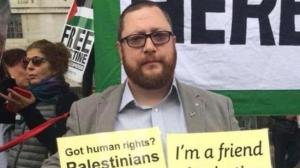 A pro-Palestinian Scottish lawmaker travelling to the occupied Palestinian territories on a parliamentary fact-finding mission has been strip-searched by Israeli forces upon arrival and refused entry.
Andrew Murray, the head of the Friends of Palestine group in the Scottish National Party (SNP), was detained at Tel Aviv’s Ben Gurion airport on Monday and held in custody for over 24 hours, he told AFP on Friday.
“They strip-searched me, scanned me, swabbed me everywhere,” Murray said, adding, “Twice I asked for representation from the British embassy, twice I was told no.”
He was later deported and banned from entering the occupied territories for 10 years, apparently over his campaign for Palestinian rights.
Carol Monaghan, a member of the SNP, said that she “absolutely condemned” the Israelis’ behavior, adding, “Andy was there on a peaceful, fact-finding trip.”
Sabine Haddad, a spokesperson for Israel’s interior ministry, claimed that Murray lied about the reason of his trip by saying he was a tourist.
Murray, however, responded that he did not lie about any of the questions asked.
SNP Demands Clear Stance on Trident From Scottish Labour Leader
Sputnik – 11.10.2015
Scotland’s Labour Party must clarify its position on the Trident nuclear deterrent system, the Scottish National Party (SNP) said as quoted by local media Sunday.
“This has been another week of absolute chaos for the Labour party on the issue of Trident,” the UK Press Association quoted SNP member of Scottish Parliament Bill Kidd as saying.
Kidd accused Scottish Labour Party leader Kezia Dugdale of misleading the public over whether Labour supports the ruling Conservative Party’s plan to renew the aging system or backs SNP’s position to scrap it.
Kidd demanded from Dugdale in a statement this week “to be straight with the people of Scotland – will they back the SNP in getting rid of Trident or will they back the Tories in spending 100 billion pounds [$153 billion] on weapons of mass destruction?”
British Labour leader Jeremy Corbyn divided the party last week by publicly vowing not to deploy nuclear weapons under any circumstances and opposing the renewal of the Trident program.
On Wednesday, Prime Minister David Cameron said London will acquire four new Trident submarines “in the coming years.”
The Trident system is deployed at the UK Royal Navy’s Faslane naval base in Scotland, the United Kingdom’s only facility capable of hosting the four Vanguard-class ballistic missile-equipped submarines.
British Defense Procurement Minister Philip Dunne has said the so-called “main gate” decision on Trident’s successor is expected next year.
SNP dubs belated Chilcot inquiry ‘ludicrous’
Press TV – August 30, 2015
The Scottish National Party (SNP) has called on the British government to set a deadline for the much-delayed report of the Iraq war inquiry.
SNP said it was unacceptable that the inquiry has not reported after six years and a cost of nearly 16 million dollars.
The ruling Scottish party, which on its website described the delays as ludicrous, called for a definitive answer to what it called the failures of the Iraq war.
It added that the current Conservative government is also responsible for the Labour-initiated war as Conservatives overwhelmingly backed the invasion of Iraq.
The so-called Chilcot inquiry, named after John Chilcot who chairs the Iraq war investigation, began in 2009 and has repeatedly delayed its report under the pretext that it needs to interview all individuals implicated in the US-led invasion of the country.
The last of the hearings of the inquiry was held more than four years ago.
Chilcot has already declined to set out a timetable for his Iraq inquiry despite a threat of legal action by families of British troops killed in the unpopular US-led war.
Earlier this month, Lawyers representing 29 families said they would move to the London High Court, if the Chilcot inquiry fails to give a publication deadline in two weeks.
“There have been outrageous delays to date and it seems as though those delays would simply be interminable,” Matthew Jury, a lawyer representing the families said.
The US-led invasion of Iraq began in 2003 and lasted for over 8 years. The war, which was initiated under the false pretense of weapons of mass destruction, took the lives of 179 UK personnel and nearly 4,500 US soldiers.
The number of Iraqi civilian deaths has been estimated to be over one million by some sources.
UK government spent 13 times more bombing Libya than securing peace
‘UK Govt priorities were wrong over Libya’
Scottish National Party | July 26, 2015
The UK government spent 13 times more bombing Libya than securing peace in the years afterwards, it has been revealed.
The House of Commons library has released information which shows the UK government spent around £320 million in a bombing campaign against Libya, and just £25 million in re-building programmes following the conflict.
The revelations follows serious concerns raised by the SNP over the UK’s current involvement in Syria -which had been taken forward despite a vote against bombing Syria in the House of Commons two years ago.
Stephen Gethins MP said:
“These figures are eye-watering. The amount of money the UK government will spend bombing a country dwarves the re-building programme thirteen to one.
“The lessons of Libya, like Iraq, is that you cannot just bomb somewhere and move on. The figures are especially alarming given the UK government’s current involvement in Syria.
“The case for bombing in Syria has simply not been made – and the involvement of British service personnel in bombing without the approval of Parliament clearly flouts the democratic decision taken by the House of Commons.
“We urgently need honesty and transparency about the UK intentions in Syria- and a strong commitment to the country following the conflict.”
Commenting on UK intervention in Syria on the Marr show this morning, SNP Foreign Affairs spokesperson Alex Salmond said:
“Parliament has to be consulted and Parliament would have to be persuaded. And I’ve heard nothing yet from the Prime Minister that would persuade me that there’s an integrated strategy that would justify a bombing campaign.
“Spending £320m on a bombing campaign and £25m to help restore the country is one reason perhaps that we have a failed state in Libya.”
‘Broadest spying powers imaginable’: SNP MPs plan to block Tory Snoopers’ Charter
RT | May 12, 2015
Scottish Nationalists are hoping to use their new-found parliamentary leverage to block controversial Tory plans to introduce legislation that would see the further erosion of privacy rights across the UK.
As the first days of parliament get under way, Scottish Nationalist Party (SNP) MPs are planning to rail against Tory plans to revive a Data Communications Bill dubbed the Snoopers’ Charter.
SNP leader Nicola Sturgeon’s Westminster MPs plan to achieve this goal by lobbying moderate Tories, who previously opposed Home Secretary Theresa May’s surveillance agenda.
Among the Conservatives that Sturgeon’s party could court is David Davis, a senior Conservative backbencher who triggered a by-election in 2008 over Tory plans to introduce a policy shift that would see terror suspects detained for up to 42 days without trial.
Speaking to the Telegraph on Tuesday, an SNP MP said surveillance falls into a “tricky civil liberties space for the Conservatives where there are fault lines.
“We think the mass collection of data is wrong. There is a line beyond which it is unacceptable for civil liberties can be impinged,” he added.
‘Suspicionless surveillance’
On Friday, Home Secretary Theresa May told the BBC that ramped up surveillance powers are a “key example” of Tory policy that was blocked by the Liberal Democrats during the previous parliament.
May’s announcement angered privacy rights campaigners who warn of the erosion of civil liberties in an era of mass surveillance.
The Snoopers’ Charter would pave the way for internet and mobile phone firms to retain records of customers’ online browsing habits, use of social media, emails, text messaging and voice calls.
In a climate of increased terror threats, the Conservatives argue it would aid British security officials in monitoring online activity and protect the national interest in the process.
However, the European Court of Justice ruled against the legislation last April, warning it would result in human rights violations. The Court outlined a more moderate data retention program at the time that would aid criminal investigations.
Nevertheless, in July 2014 it emerged the government was seeking to push through emergency legislation, which would flout the Court’s judgment and re-legislate for the blanket retention of data.
As a single majority government – in the absence of the Liberal Democrats – the Conservatives are expected to ramp up online surveillance powers quickly.
The SNP’s opposition to these plans will likely be mirrored by Labour and the Lib Dems. Should a few dozen Conservative MPs back their thinking, May’s plans to revive the Snoopers’ Charter could be blocked.
Speaking to RT on Tuesday, Privacy International’s Legal Director Carly Nyst said the Snoopers’ Charter would give UK authorities some of the “broadest spying powers imaginable.
“These powers are nothing short of blanket, suspicionless surveillance of everyone who uses the internet,” she said.
“Should the Snoopers’ Charter be made law, Britons can expect to have every single website they visit, late night phone call they make and embarrassing Google search they enter logged and retained for 12 months,” she added.
On the question of whether SNP MPs would succeed in blocking the Snoopers’ Charter, Nyst predicted the party’s opposition to the legislation would prove troublesome for May.
“The government has declared its strong intention to see this legislation through; however, it must first overcome strong opposition, not only from the SNP, but from ordinary people across the country,” she said.
“It seems clear that the government is going to have a tough time selling to the British people the falsehood that in order for police in this country to do their job, the government needs to completely erode online privacy and expression.”
Privacy rights & privacy wrongs
Prior to the general election, Britain’s Open Rights Group lobbied stringently for parliamentary candidates to radically reform Britain’s mass surveillance policies.
They demanded the incoming government alter the legal framework governing surveillance to protect citizens from intelligence agencies’ routine snooping.
The group’s Executive Director Jim Killock told the Guardian last month he believes privacy rights could be nullified within a decade if the Conservatives and Labour don’t pursue a different approach to surveillance.
Killock also noted that NSA whistleblower Edward Snowden’s revelatory disclosures on GCHQ mass surveillance had little impact on snooping policy from London to Washington.
Classified US documents leaked by Snowden in 2013 caused international outrage when they uncovered the invasive nature of joint UK-US surveillance programs.
The NSA whistleblower’s disclosures revealed US and UK authorities’ ongoing scrutiny of Britons’ email activity, social network records, web browsing history and mobile phone data.
Tory plans to ramp up mass surveillance in Britain come almost 12 months after a poll revealed widespread opposition to state-sponsored snooping in Britain.
The research revealed the vast majority of those surveyed thought that citizens’ financial, medical, and credit information should remain private.
It also showed an overwhelming majority believed web browsing, mobile phone, telephone and email records should remain beyond the gaze of snoops.
The New Hillary
By Andrew Levine | CounterPunch | April 24, 2015
In the years before he ran for President in 1968, Richard Nixon’s publicists promoted a New Nixon. It was the same old Tricky Dicky with the rough edges smoothed away.
The old Nixon lost the 1960 presidential election to John Kennedy in 1960; then Pat Brown defeated him in 1962, when he ran for the Governorship of California. The hope after that was, as Nixon himself put it, that the press would no longer “have Nixon to kick around anymore.” Nixon had always had trouble with the press.
But this was not to be. You just can’t keep a good scoundrel down.
The Vietnam War was a bipartisan concoction, from its inception to its ignominious end, but, before 1968, liberal Democrats – JFK and Lyndon Johnson, leading figures in their administrations, and Democratic Senators and Representatives — were the ones leading the way. Vietnam was not just an anti-Soviet and anti-Chinese proxy war; it was a liberal’s war.
Republicans were culpable too, and Nixon was hardly an exponent of peace. But neither he nor the party whose ticket he led had yet taken on the now familiar more-bellicose-than-thou persona of the post-Vietnam GOP.
The more unpopular the war became, the happier Republicans were that Lyndon Johnson, not one of their own, was taking the blame. Democrats were still widely considered the more warlike of the two parties. How could they not be – having brought the United States into the First and Second World Wars and into Korea? Vietnam was their thing.
But then, as now, the Democratic Party was where the liberals were, most of them anyway; and so, the part of the anti-war movement that was electorally inclined, the less radical part, gravitated into their ranks, effectively dividing the party into pro- and anti-war camps.
There were Republican liberals too back then, but a cultural divide already separated the anti-war movement from the GOP; and, with only a few exceptions, Republican liberals and moderates were no more peace-friendly than LBJ. The prospect of turning the GOP into an anti-war party never occurred.
As the 1968 election approached, Nixon said that he had a secret plan for ending the war. He was lying, of course; but, at the time, his claim was not implausible; hadn’t Eisenhower said much the same about Korea, and he was telling the truth.
There were even a few anti-war liberals who voted for Nixon to punish the Democrats, and many more who considered doing so.
The Democrats who led the way in Vietnam, LBJ and the cohort he inherited from Kennedy, were decent enough on domestic policy. By today’s standards, they were outstanding.
Nixon wasn’t bad either. Unlike today’s Republicans and Democrats, but like Eisenhower, he had no interest in dismantling New Deal and Fair Deal advances.
And for getting affirmative action going, for launching various “black capitalism” programs, for floating the prospect of a negative income tax and genuine national health insurance, for breathing life into the environmental movement, for pumping money into scientific research and infrastructure development, and much else, his presidency puts Barack Obama’s and Bill Clinton’s to shame.
Between Nixon and what we can expect from Bill Clinton’s even more retrograde wife, there is no comparison at all.
To get his presidential aspirations back on track, there was therefore no need for him to take a liberal or “populist” turn. This was not what the New Nixon was about.
It was about how he presented himself, his public persona. His publicists understood that that had to be changed – fast.
But, you cannot change a public persona without bringing politics in; not if you are running for President. There must be at least the appearance of substantive change.
And so what made the New Nixon new was his adoption of a more statesmanlike veneer.
The New Nixon was, or was made to seem, more thoughtful than the Old. His anti-Communism was toned down a notch — to appear less paranoid and crass. And, under Henry Kissinger’s tutelage, he learned how to present himself before the world as a geopolitical strategist of uncommon insight.
Of the Old Nixon, people would say: “would you buy a used car from that man?” The New Nixon was less flagrantly sleazy.
The mean-spirited, internally tormented figure voters rejected twice was made over to seem avuncular and wise, an Eisenhower in the rough.
As it turned out, the makeover was not entirely smoke and mirrors. Nixon’s personality was what his detractors knew it to be; there was no changing that. But there was some reality behind the statesman-like veneer that his handlers had him project.
No one would have expected the Old Nixon to lead the opening towards China or to advance détente with the USSR; no one thought he had it in him.
Once in office, it became clear that the man was not as void of vision or as incapable of deep thinking as everyone had believed.
It also became clear that there was more villainy in him than even his most ardent detractors had imagined.
* * *
With her campaign for the presidency in 2016 now officially underway, we are witnessing the roll-out of a New Hillary.
The parallels with Nixon’s makeover are striking.
Clinton’s presidential plans had been thwarted by a more glamorous opponent, just as Nixon’s had been; and she too has always had trouble with the press.
And the New Hillary, like the New Nixon, will be very much like the Old.
There are other uncanny parallels: Barack Obama, the rival who did the Old Hillary in, was, at the time, heralded as the next JFK, the man who defeated Nixon forty-eight years before. Even Caroline Kennedy was on board with that.
For a moment too, there was hope, as they vacated the White House, that, in the new century, we wouldn’t have Clintons to kick around anymore.
Of course, there was never any chance of that – not with Bill being, as the quip went, the bride at every wedding and the corpse at every funeral; and not with Hillary being parachuted into New York state to be its Senator.
That arrangement also conjures up memories of the sixties – of Jack’s brother Bobby, RFK. When Johnson wanted him out of Washington, he too was parachuted into New York to become its Senator.
Massachusetts would have been more appropriate, but brother Teddy was already a Massachusetts Senator, and two Kennedys in the Senate from the same state would be unseemly.
More important to RFK and his minions, adding on to the Kennedy power base in Massachusetts would have been a waste or time and effort. New York was a different story.
Hillary was even less a New Yorker than Kennedy was. She was an Illinois girl, born and bred, who went to college and Law School in New England and then spent her adult life in Arkansas and Washington DC. New York City was just a great place to visit; the rest of the state might as well have been on the dark side of the moon.
This is not the only reason why the parallel with RFK is not exact.
Robert Kennedy had at least been his brother’s Attorney General, and also his closest advisor and most trusted friend. He knew about, and participated in, JFK’s intrigues and assignations; he knew about his brother’s poor health. He was the keeper of the family’s skeletons.
While his brother was alive, the whole world knew that when RFK spoke, he was speaking for the President. He was the Kennedy administration’s unchallenged and unchallengeable consigliere. When need be, he was also the enforcer of his brother’s will.
And he was his brother’s heir apparent. As such, RFK was a power to be reckoned with – not just for his hold over the Democratic Party but, more importantly, over the popular imagination.
With Hillary, there was nothing like that. She did play a role in her husband’s administration – a comparatively minor and not very successful one. It was she, for example, who, more than anyone, set the cause of health care reform back a generation.
Though hardly a Queen of Camelot, her role was more or less like Jackie’s. She and her husband had arrived at a modus vivendi — based on necessity, not trust.
When she spoke, it was with her own voice, not his; and she would be the last, not the first, to know about his intrigues and assignations.
Hillary’s only qualification for the office she sought in New York was that she had been a First Lady, an official wife.
Because she was the wife of a philandering husband, she sometimes did get her way. Aggrieved wives often do, especially when their husbands are in the national spotlight and hanging on by the skins of their teeth. The last thing Bill needed was political embarrassment on Hillary’s account.
But she was never the voice of the Clinton administration, and she was never her husband’s administration’s consigliere.
By the time Robert Kennedy was assassinated, the hopes of a generation were riding on his shoulders. No hopes ride on Hillary’s; none ever have and none ever will.
Therefore, it wasn’t just within “the great right-wing conspiracy” Hillary spoke of that, for all the wrong reasons, people looked forward to seeing the back of her. There were many who shared this hope – for reasons that are eminently sound.
But, as it had been with Nixon, those who hoped hoped in vain. She never really retired from public view.
Her operatives think that a makeover now will get her back on track for winning the office she believes her due.
One wonders how much the Nixon precedent figures in their thinking. It is unclear what, if anything, his makeover had to do with it, but a made over Nixon did finally gain the office that he too believed his due.
For this, the country paid dearly; and Vietnam, Cambodia, Chile and much of the rest of the world suffered egregiously.
We can expect outcomes similarly horrendous, if and when the New Hillary calls the shots. This is yet another parallel waiting to happen.
* * *
Old Hillary cannot be made over in quite the way that Old Nixon was. After her tenure as Secretary of State, promoting her diplomatic prowess is out of the question.
Future historians will fault her handling of America’s affairs almost everywhere the empire’s talons reached – not just in the Muslim world. But her clueless fumbling during the Arab Spring is sure to receive special attention.
On this, her Republican detractors are on to something.
But if the past is any guide, to drive the point home, they will focus only on her role in Libya in 2011 and in the months that followed.
She does indeed have much to answer for about that. So do Obama and his other humanitarian interveners. They brought Libya to ruin. The consequences of their clueless bumbling are still unfolding.
Thanks to Secretary Clinton and her posse, Libya became a failed state. In the Mediterranean today, off the Libyan coast, refugees and asylum seekers are drowning because of what Clinton and the people around her helped bring about.
But the Republican way is to tell only part of the story, and to tell it in ways that mainly reflect their own disingenuousness. Where the Clintons are concerned, this is how it has been since Day One.
Therefore expect Republicans to focus narrowly, if not exclusively, on the deaths of American diplomats (or whatever they were) in the consulate in Benghazi.
This was indeed a disaster, but their concerns are disingenuous because they know, as well as anyone, that the Benghazi consulate was, as the Iranians would say, “a nest of spies” that neither Clinton nor anyone else in the Obama administration can talk about honestly.
It was the same with the famous “missile gap” that JFK would bring up every chance he got when he ran against Nixon. There was no such thing, and Kennedy knew it. He also knew that Nixon couldn’t say this without compromising what he – and his boss, President Eisenhower — took to be the national interest.
This time, the shoe will be on the other party’s foot.
Still, the fact remains: Clinton was in way over her head when the Arab Spring erupted, and almost everything she did was wrong. If only for that, she should never be allowed anywhere near the corridors of power again.
Just as surely as Republicans will make the attack on the Benghazi consulate the issue, Democrats will do their best to make Clinton’s failures at the State Department a non-issue.
They will probably succeed too – well enough to fool most liberals.
But, to that end, the less they say about her diplomacy, the better for them. This is why Clinton’s makeover, unlike Nixon’s, will have little, if anything, to do with foreign affairs.
It will be about her likeability instead.
The Old Hillary was imperious; she exuded a sense of entitlement. The New Hillary is downright personable.
When New Hillary campaigns, instead of just flying in and out of major venues for mega-rallies or hobnobs with plutocrats, she will now sometimes also chat one-on-one with (carefully selected) “ordinary” people. She will brandish the common touch.
She will also take what media pundits call a “populist” line, doing her best to appeal to voters who would prefer Elizabeth Warren – or anybody to Hillary’s left.
These changes run together – “populist,” “popular.” Some well-remunerated marketing genius in Hillary’s employ must think that the two are one and the same, or that the target audience can be duped into thinking that they are.
It will be a hard sell, but the sales campaign will probably succeed with the target audience. Everybody knows that what candidates say bears almost no relation to what they will do – think, for example, of Obama’s “I will close Guantanamo” — but the will to believe becomes indomitable around election time.
Who is in the audience that Hillary’s hucksters are targeting? Apparently, it is social liberals – people who would vote for her, or any Democrat, over any imaginable Republican anyway, but who may, from sheer disgust or learned indifference, not vote at all.
In other words, they are preaching to the choir. This might seem a waste of time and effort; it usually is. But with a Hillary Clinton presidency looming, the choir cannot be counted on to show up at the church. They must be made to want to sing.
Hillary’s hucksters understand this; they know that their first order of business is to remind the Democratic “base,” the social liberal part of it, what makes Democrats worth supporting.
There are too few Democrats on Hillary’s right on economic policy issues to worry about, in any case; and her team is evidently counting on Republicans scaring off most “swing voters.” This happened in 2012, and it is likely to happen again in 2016.
And so the idea is to emphasize Hillary’s social liberalism – in the hope of getting potential voters enthused.
Her handlers have an even more compelling reason too: there is no other way to provide her with a more leftish patina that would not upset the donor class.
* * *
As a rule, advertisers like to appeal to the kinds of consumers known in the days when Nixon was starting his makeover, and when Hillary was still a Goldwater Girl, as “the Pepsi Generation,”
The Pepsi Generation was “with it,” whatever “it” was; and they felt good about themselves and about their world. Optimism was in the air they breathed.
The name lingers – it was a triumph of advertising genius – and the idea behind it continues to guide marketing campaigns.
But, in an age of increasing social insecurity, what works for selling soft drinks is no longer directly transferable to advertising campaigns aimed at selling candidates to voters.
Ronald Reagan’s “morning in America” was its last hurrah.
Since then, a succession of Reaganite (neoliberal, aggressively imperialist) Presidents – Reagan himself, the two Bushes, Bill Clinton and Barack Obama – have superintended such a profound diminution in voters’ expectations that it is no longer possible be with it and perky, or even mildly optimistic, in political contexts.
The one brief exception was America’s – and the world’s – brief Obamamania phase. In retrospect, the predictable shattering of the illusions that sprouted up around Obama’s candidacy in 2008 only accelerated the long term, increasingly pessimistic trend.
But even if optimism no longer sells candidates, being with it still counts for something – or so Hillary’s hucksters believe.
If their campaign launch video — featuring single moms, a multi-racial family and a gay couple about to be married — is any indication, Hillary’s minions seem to have decided to cede the religious Right to Ted Cruz or whichever wing-nut strikes the fancy of America’s most benighted, and to appeal instead to voters who are already on board, but who may not turn out for Hillary even so.
She is plainly not a candidate to get the juices flowing the way Obama did once upon a time; she is way too uncool.
But social liberalism is cool – cool enough, Team Hillary hopes, to bring the faithful out on Election Day.
In the Golden Age of the Pepsi Generation, Democrats aspiring to become their party’s nominee would be courting labor leaders and appealing to rank-and-file workers.
But Hillary and the people around her see no percentage in that; not when the union movement is a pale shadow of its former self, a casualty of the neoliberal age; and not when the leaders of what is left of it are as eager as their predecessors were to do Democrats yeoman service.
In the old days, there was at least a quid pro quo. Democrats did the labor movement favors too.
When Obama ran the first time, this tradition had not yet entirely died out. Candidate Obama was not about to come out against Taft Hartley, but he did endorse the Employee Free Choice Act. Had it been enacted, union organizing would have become easier. Obama said that he would make it a priority.
Needless to say, no one has heard anything from him about it since.
And now, true to form, most labor leaders are falling into place — behind Hillary. Her people see no need to chat them up; they have — or think they have — nowhere else to go.
Count on them instead to give their all while expecting nothing in return — beyond keeping the Republicans at bay. They no longer even ask.
* * *
Is pandering to later-day Pepsi Generation types, while ignoring workers and other traditional Democratic constituencies, a good strategy?
Not as a rule, especially in general elections. But, this time, it hardly matters because it is as plain as can be that the Republican candidate in 2016 will be whacky enough to scare off all but the most reactionary voters. The Democrat, whoever she is, will win no matter what strategy she deploys.
Meanwhile, the Clinton makeover strategy is a good one insofar as its point is to ward off competitors in Democratic primaries and caucuses.
Were any candidate to advance even modestly “populist” economic proposals in a way that seems that they mean it, the full weight of the donor class would come down upon them. This is not something Hillary would do in any case; it goes against her nature.
Therefore the only thing she can do, when she and her advisors find it expedient to take a more liberal or populist turn, is display support for costless (to capitalists) social issues. When, like gay marriage, those issues enjoy widespread support in nearly all sectors of the population outside the religious Right, proclaiming support is a no-brainer.
No surprise, then, that the Clinton campaign led with this gambit. Her handlers have positioned her well.
Even so, a real populist could defeat Hillary-style “populism,” provided word gets out to voters in the early caucus and primary states in time to build what the first President Bush called “the big Mo.” Even in today’s America, this could happen without billionaire backing.
This is why I am inclined to support the candidacy of Jim Webb.
If he plays his cards right, later-day Pepsi Generation types could become the ones with nowhere else to go, while the kinds of voters who made the New and Fair Deals possible, and who propelled the Great Society forward, putting the Democratic party on the side of racial and economic justice, could come back into the fold – not grudgingly, but enthusiastically.
Webb could turn the New Nixon’s Southern Strategy around, bringing not just “white ethnics” but also white Southerners back onto the right side of a class war that never ended – though it looked like it had because, in recent decades, one side, the wrong one, has been consistently getting its way.
Jimmy Carter, the best and the most underrated American President in a very long time, kept the Southern Strategy more or less at bay through the latter half of the seventies. He did it just by being a Southerner and being there.
But Carter ceded too much power to Cold War liberals like Zbigniew Brzezinski and to economists intent on reviving old nostrums that the New Deal once seemed to have laid to rest.
He even let Henry Kissinger talk him into letting the Shah of Iran into the United States for medical treatment, unleashing a chain of events that has diminished his reputation to this day.
Had Carter made peace with the Iranian Revolution, the United States and the world might have been spared Ronald Reagan; and we might not now, three and a half decades later, be facing the prospect of a war with Iran.
Carter’s instincts were decent, except when it came to deciding whose advice to trust. This cost him dearly. And, by diminishing his power, it rendered him all but useless for holding back the Republican tide in the South.
Bill Clinton, for all his efforts to come on as a Bubba to the good old boys while remaining presentable to donors in Manhattan and Beverly Hills, never made a dent in what the New Nixon got going. It wasn’t just the good old boys who saw through him, working people did too.
Hillary was not the only albatross around his neck. There was also his unctuous and transparent phoniness. It is as if he took the Eddie Haskell character on “Leave It to Beaver” for a role model.
He did indeed have Southern roots, but his heart was where the money was, and where the sleaze balls who had it congregated.
In the run up to the 2008 election, John Edwards seemed just the one to turn the Southern Strategy around — until the Obama steamroller and his own horn dog disposition did him in. Like Carter, Edwards was a bona fide Southern liberal, not a poseur like Hillary’s better half.
His strategy was to outflank Hillary from the left. Her other rivals, Joe Biden excepted, had the same idea. But Edwards could appeal to white Southerners, as they could not. In 2008, he might even have been able to do what Al Gore, eight years earlier, could not: pry away a few Southern states, along with their Electoral College votes, from the solidly Republican South.
But even had he turned out to be more like he (briefly) seemed to be, his candidacy would have been more like Elizabeth Warren’s might be, were she to run, than like Jim Webb’s.
Like Warren and Bernie Sanders and Martin O’Malley, Edwards was a zero on foreign policy and on military affairs – the areas where, even with money talking as loudly as it does, Presidents can actually make a difference.
These are Webb’s strong points. He has consistently opposed America’s Middle Eastern wars. And, knowing what war is about, he is no fan of gunboat diplomacy or military brinksmanship. He despises chicken hawks and the wars they foist on the people he cares about. In these respects, he is the true anti-Clinton.
* * *
The main thing, though, is that, contrary to what the hucksters selling Hillary seem to believe, the stars are now lining up right for moving social liberal considerations off dead-center and bringing working class issues back in.
This is because even the voters Team Hillary is targeting, functional equivalents of yesterday’s Pepsi Generation, are discovering that working class issues are their issues too.
This is happening all over the developed world.
It is more visible overseas than it is here because it is easier to gain a purchase on what voters are thinking in democracies that are less undemocratic than ours. The UK is a case in point.
There, as almost everywhere else, big money is much less a factor in determining electoral outcomes than it is in the United States, and the political culture is not quite as bent out of shape by the prevailing party system.
For this reason, Team Hillary would be well advised to take a close look at next month’s parliamentary elections.
Less than eight months ago, the Scottish National Party (SNP) suffered a significant defeat in a referendum on Scottish independence, its signature issue. Now, mainly at Labor’s expense, it is poised to become the third largest party in the British parliament.
Because neither the Conservatives nor Labor are likely to win a majority of seats in their own right, the SNP will wield tremendous influence in the next Parliament; it may even enter the government as Labor’s junior partner.
The reason for its sudden change of fortune is plain: voters are fed up with neoliberal austerity politics; and voting for the SNP is the best way to make this sentiment known.
The SNP is the most left leaning, most Social Democratic, of any of the larger political parties in Great Britain. If it were less intent on breaking up the country it may soon help govern, and if it fielded candidates throughout the entire UK, it might even be able to win outright.
There is a lesson in the SNP’s rise that has implications for the 2016 electoral season already unfolding in the United States.
In all developed countries, including our own, voters are less inclined than they used to be to think that it is acceptable, or even necessary, that only a tiny fraction of the population benefits as productive capacities expand at a dizzying rate, and while everyone else becomes, in varying degrees, worse off – the greatest burdens falling on those who are already the least well off of all.
Try as neoliberal ideologues might, it is a lot harder than it was just a few years ago to convince the general public that this is how it must be.
Voters everywhere are way ahead of the political leaders of their respective countries.
Hillary’s single moms and biracial families, and her gay couples, don’t speak to these concerns, though they are of great importance to people who fall under those descriptions and to others who do not, but care about those who do.
Even if her sales force gets her to declare support for a few Elizabeth Warren – Bernie Sanders type reforms, it will make hardly any difference; and not just because everybody knows that, were she to become President, whatever she says now will be yesterday’s lunch.
It will make hardly any difference because the realization is dawning that tinkering here and there is, at best, a palliative, not a solution. There is something rotten in the system itself, and more and more people are beginning to realize it.
No Democrat, including Webb, is likely to propose anything that would seriously address this rot.
But a Democrat can address one of the fundamental conditions of its possibility: the Democratic Party’s malign neglect of the working class and of the white, rural population in so-called “red” states, the South especially.
This is what a Webb candidacy could do. It is unlikely that anyone else with any chance at all of winning the Democratic nomination could do it nearly as well.
And it is certain that, no matter how “populist” the New Hillary’s guise, she will not – and probably cannot – do it at all.
* * *
There is a good chance that Hillary understands this, but doesn’t care – because it is the average donor, not the average citizen, that she aims to please.
That has always been the Clinton way. But the times are changing – more quickly and more profoundly than Hillary Clinton’s makeover team imagines.
The New Hillary is nevertheless likely to win the nomination and, if she does, she will win the race for the presidency, just as the New Nixon did.
She and her people ought to reflect on all the harm that came out of that; all the murder and mayhem, and all the devastation.
They might also reflect on Nixon’s fate. Theirs could be even worse.
Scottish First Minister leads united call for Iraq war report disclosure
RT | January 19, 2015
Scottish National Party (SNP) leader Nicola Sturgeon has called for a united political movement to demand the immediate publication of the Chilcot Inquiry report into the legality of the 2003 Iraq invasion.
Sturgeon has written to other Scottish party leaders, urging them to unite in favor of immediate publication.
The Chilcot Inquiry, which was set up in 2009 and is expected to cost the taxpayer over £10 million, has come under fire in recent months due to delays in its publication.
The disclosure of secret documents, and disagreements over whether private communications between former leaders Tony Blair and George W. Bush should be made public, has disrupted the progress of the inquiry.
There are now fears that unless the report is published immediately, its release could affect the results of the general election in May.
The leader of the Scottish Labour Party, Jim Murphy, and the Scottish Liberal Democrat leader, Willie Rennie, have also said they support the earliest possible release of the document.
The House of Commons will debate the release of the findings on January 29.
Last month there was speculation that Tony Blair may face prosecution for war crimes as a result of the report’s findings. Blair said he “resented” claims he was responsible for the delays.
The debate surrounding the release of classified material had presented a large obstacle to the publication of the report, but it was decided in June last year that the “gist” of conversations between Blair and Bush could be published.
Sturgeon said it would be impossible to have a national election without the report’s findings being presented.
“Surely we can’t go through a general election without people having the answers to the questions on the Iraq war that they still don’t have,” she told the BBC.
“That has to happen before some of these MPs that voted for the Iraq war are back up for election.”
Murphy responded to Sturgeon’s call for action, saying it was essential for future governments to learn from the results.
“The Chilcot Inquiry is a crucially important piece of work that must be conducted thoroughly and forensically,” he said. “The inquiry was initiated by Labour in July 2009, because it is vital to identify the lessons that can be learned from the conflict.”
“There is rightly real public interest in the findings of such an important inquiry and I think it is right that there is the earliest possible publication of the report.”
Rennie also expressed his eagerness for the report to be published, saying he agreed with the SNP’s Sturgeon.
“We agree with Nicola Sturgeon. It is important that the lessons learnt from the Chilcot report are learnt whilst there are people involved in Parliament who are in a position to answer for their actions.”
A spokeswoman for the Iraq Inquiry said: “We will not be commenting further on the process or the progress of the report.”
READ MORE:
Cameron has final word on release date of Iraq war report – Downing Street
Scots U-turn on anti-nukes policy
Press TV -June 25, 2013
The Scottish government has U-turned on its pledge to remove Trident nuclear weapons from the Scottish soil if Scots vote for independence in the 2014 referendum.
The ruling Scottish National Party (SNP) said in a set of proposals for defending an independent Scotland that Faslane naval base, which is the home to British Trident nuclear weapons, could remain a sovereign UK territory after the Scottish independence.
The proposal made by thinktank the Scotland Institute for SNP will enable Britain to continue to use Scotland as a launch pad for its four Trident nuclear-armed submarines for an estimated 20 years until it builds a new Trident home within British borders.
This comes as SNP defense spokesman Angus Robertson said last year that the Scottish government is “against weapons of mass destruction being in our waters” and pledged SNP’s “solid commitment” to the “earliest possible withdrawal of Trident from Scotland”.
SNP has been historically opposed to both Trident and NATO.
The party voted to ditch its anti-NATO policy in October 2012 during their party conference in Perth.
The resolution on NATO was put forward by Robertson himself, who at the time claimed the party will retain its 30-year-old anti-nukes policy and any entrance into NATO will be on the condition that the alliance agrees to Scots’ removal of Trident from their soil.
However, the new proposals reveal that Trident will probably be the subject of the next resolution at a party conference.
The proposals also question the extent of SNP’s commitment to rule a sovereign Scotland as keeping a British sovereign territory on Scottish soil will seriously undermine that concept.
Related articles
- ‘UK must scrap useless, costly nukes’ (alethonews.wordpress.com)
- Scotland Loves Trident? (bellacaledonia.org.uk)
Featured Video
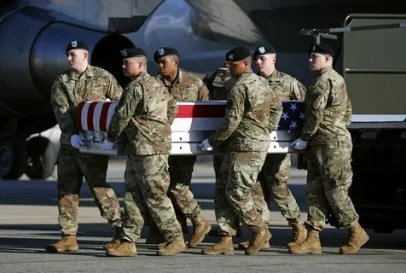
American Military Failure in Afghanistan
or go to
Aletho News Archives – Video-Images
Frlom the Archives
The Fiction of the Jewish History in Palestine
By Hasan Afif El-Hasan | The Palestine Chronicle | April 8, 2011
Prime Minister Benjamin Netanyahu told NNC Pierce Morgan on March 18, 2011 that he might agree to a Palestinian state through negotiations. And he added, “We will make territorial concessions although it is very painful to do that in our ancestral land.” Netanyahu was not talking about Poland where his ancestors lived. He was talking about Palestine where generations of its indigenous population ancestors lived, cultivated the land and are buried.
By the end of the nineteenth century, Zionism created a new Jewish identity of blood and soil. To mobilize their followers and supporters and appeal to their emotions, the Zionists created myths. Zionism started as a tribal religion without god, but in order to fulfill its function as a unifying force, Zionism required external religious and race symbols, not inner content. Its leaders regarded metaphysical religious belief and purity of race as having value in itself. They created a divine paradisiacal state of merger with the gods. Despite his non-religious ideology, Herzl’s writings were replete with religious references. The Jews should settle in Palestine because, in his words, “the Temple will be visible from long distance, for it is only our ancient faith that has kept us together”.
The Zionists and their supporters have invested tremendous financial and scholarly resources to work within the Hebrew Bible historical narratives to affirm the links between the intrusive Zionist population and the ancient Israelite past, and by doing so assert the right of that population to the land. The political end-game shaped the investigation and the outcome. Tracing the roots of Israel’s ethnic state in biblical antiquity is effectively to silence the indigenous Palestinian claim to the past and therefore to the land. The Biblical scholarship employs a bewildering array of terms for the region: “the Holy Land”, “the Land of the Bible”, “Eretz Israel”, “the Land of Israel”, or “Judah and Samaria.” To the casual reader these names appear interchangeable, but they all imply connection to ancient Israel.
Biblical narratives or poems that cannot be supported by archeology and common sense are treated by the Zionists and their supporters as historical language. … continue
Blog Roll
 Aletho News
- Lawyers’ groups demand end to British military bases in Cyprus
- CIA Assessment: The Resistance Cannot Be Crushed
- Hezbollah Returns: It Didn’t Start a War, It Is Ending One
- EU states seek ‘talks’ with Iran for access to Strait of Hormuz: Report
- Trump on Hormuz: “Others must take care of it” after US falters
- Who Is closer to collapse?
- A War that Backfired: Why the US-Israeli Campaign Is Strengthening Iran
- How Zionist Control Is Hurting US Interests
- Iran warns it may target US missile launch sites in UAE cities
- American Military Failure in Afghanistan
- If Americans Knew
- As US-Israel war on Iran rages, Gaza faces massive dust storm – Not a ceasefire Day 156
- No let-up in attacks on Gaza as Israel takes on Iran, Lebanon – Not a ceasefire Day 155
- ‘Of Course’: IDF Drops Case Against Soldiers Accused of Raping Palestinian Prisoner
- Don’t Fall for the Regime Change Talk. Israel Is ‘Mowing the Lawn’ in Iran
- Will Israel and the US wreck the Gulf States along with Iran?
- US so far burned through ‘years’ of munitions in Iran war: Report
- How the Israeli Tail Wags the American Dog
- Outdated intel likely led to deadly U.S. strike on Iranian elementary school, sources say
- Pentagon insider says high U.S official Douglas Feith reported to Netanyahu
- In fond memory of Walid Khalidi, the historian of Palestine
- No Tricks Zone
- Storing Green Energy To Last Germany 10 Days Would Require A 60-Million Tonne Battery
- New Studies: UK Sea Levels Were 4 Meters Higher Than Today During The Mid-Holocene
- Destructive Green New Deal: German Energy And Metal Group Warns Of Drastic Crisis
- New Study Documents A 20-Year Pause In Arctic Sea Ice Decline – Driven By Internal Variability
- Wake-up Call: Survey Shows Majority Of Germans Now Favor Postponing Climate Targets!
- Televised! Leading German Political Candidate Tells Schoolchildren CO2 Makes Sun Hotter!
- New Study: A Century Warming Of 1.1°C Is ‘Commonplace’ And ‘Not Unusual’ During This Interglacial
- New Study: ‘Internal Noise’ And Volcanic Forcing Can Trigger 10-15°C Warming Within Decades
- Glaciers Worldwide Are Suddendly Surging, Experts Blame Warming!
- Surprising Discovery: Sahara Is Greening…Billions Of Trees Where Once Thought To Be Barren
 Aletho News