Mass Demonstration Demands Closure of US’ Notorious ‘School of Assassins’
Sputnik – 24.11.2015
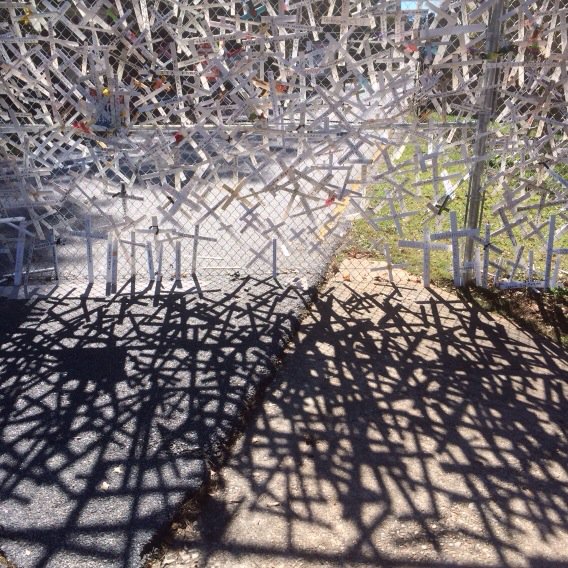 Georgia’s infamous ‘School of Assassins’ was besieged by hundreds of activists from across the country, calling for the closure of the military training center and a halt to the militarization of Latin America by the US.
The 25th anniversary protest march was held over the weekend in the town of Lumpkin in northern Georgia, and at the gates of Fort Benning army base, where the former US Army School of the Americas (SOA), hidden now under the name of the Western Hemisphere Institute for Security Cooperation (WHINSEC), is located, along with the nearby Stewart Immigrant Detention Center, the country’s largest for-profit immigration prison.
Dozens of nonprofit organizations and some 1,400 activists joined the rally, which aimed to protest against the notorious “School of Assassins,” as SOA is referred to, for its production of “death squads” that commit mass murders, torture and other human rights’ violations and military crimes across the globe, activists claim. Watchdogs maintain several Latin Americans dictators and many more security officials, who have perpetrated such crimes, graduated from SOA.
“Despite a shocking human rights abuse record, the School of the Americas continues to operate with US taxpayer money. Closing the SOA would send a strong human rights message to Latin America and the world,” SOA Watch founder and organizer of the event, Father Roy Bourgeois, said in a statement.
Hundreds held vigil in front of Fort Benning, while others marched to protest to the immigrant prison, where some 1,800 migrants await repatriation. Eleven people were arrested after crossing onto the grounds of the prison, according to the Ledger-Enquirer.
The event was attended, among others, by members of Veterans for Peace.
“From Ferguson to Ayotzinapa, we must continue to denounce the militarization of police across the Americas and call for an end of state-sponsored terrorism and violence against our communities. Our clamor for justice must be heard!” the pacifist NGO’s online statement reads.
Newly released documents, obtained by the Partnership for Civil Justice Fund, suggest the FBI has been monitoring the activities of SOA Watch and infiltrating the NGO, using confidential informants and counterterrorism units.
US Immigration Judge Rules Against School of the Americas Grad
Weekly News Update on the Americas | April 20, 2014
A US immigration judge has ruled that former Salvadoran defense minister José Guillermo García Merino (1979-1983) is eligible for deportation from the US because of “clear and convincing evidence” that he “assisted or otherwise participated” in 11 acts of violence during the 1980s, including the March 1980 murder of San Salvador archbishop Oscar Arnulfo Romero. Gen. García also helped conceal the involvement of soldiers who raped and killed four US churchwomen in December1980 and “knew or should have known” about the military’s December 1981 massacre of more than 800 civilians in the village of El Mozote, according to the 66-page decision by Immigration Judge Michael Horn in Miami. The judge ruled against García on Feb. 26, but the decision was only made public on Apr. 11 as the result of a Freedom of Information Act (FOIA) request by the New York Times. García’s lawyer said the general would appeal.
The decision against García comes after repeated efforts to bring him to justice in the US for war crimes committed in El Salvador. He came to the US in 1989 and was granted political asylum a year later. In May 1999 the families of the four murdered US churchwomen filed a suit (Ford et al. v. García, Vides Casanova) against García and former defense minister Gen. Carlos Eugenio Vides Casanova (1983-1989) in Florida, where both generals have lived since moving to the US. A jury cleared the generals. Also in 1999 the San Francisco-based Center for Justice and Accountability (CJA) brought a suit (Ramagoza Arce v. Garcia and Vides Casanova) against the generals on behalf of Salvadoran torture victims; the jury awarded the victims $54.6 million in 2002. US prosecutors began seeking the generals’ deportation in 2009, and an immigration judge cleared the way for Gen. Vides Casanova’s removal in February 2013 [see World War 4 Report 2/24/13].
Like many Salvadoran military officers, García and Vides Casanova received training at the US Army School of the Americas (SOA), which was renamed the Western Hemisphere Institute for Security Cooperation (WHINSEC) in 2001 [see Update #1200]. García completed a counterinsurgency course in 1962, when the SOA was located in Panama; it is now in Fort Benning, Georgia. García and Vides Casanova were both recipients of the US Legion of Merit, an award from the US Armed Forces for meritorious service, during the 1980s. (NYT 4/12/14; SOA Watch press release 4/15/14; National Catholic Reporter 4/17/14)
The war crimes with which García and Vides Casanova are charged took place during a bloody counterinsurgency against the rebel Farabundo Martí National Liberation Front (FMLN); the fighting left 70,000 people dead. The FMLN later became a legal political party under a 1992 peace accord, and it backed current president Mauricio Funes, an independent, in his 2009 campaign. A leader of the FMLN, Salvador Sánchez Cerén, won the presidency in a runoff on Mar. 9 this year and is to take office on June 1. (BBC News 3/17/14)
Featured Video

Rewriting the risk? Inside the government’s vaccine safety messaging
or go to
Aletho News Archives – Video-Images
Book Review
“Davos Can Really Replace the UN”
Inside the book that maps the architecture behind global governance — from the Epstein files to the Pact for the Future
Lies are Unbekoming | April 1, 2026
On June 13, 2019, the United Nations and the World Economic Forum signed a partnership deal to “accelerate the implementation of the 2030 Agenda for Sustainable Development.” That same evening, WEF president Börge Brende — Norway’s former Foreign Minister — had dinner with Jeffrey Epstein at Epstein’s Manhattan townhouse. The Epstein files, released January 2026, contain an exchange between the two from the previous year. Epstein to Brende: “Davos can really replace the UN. C21, cyber, crypto . genetics… intl coordination.” Brende back to Epstein: “Exactly — we need a new global architecture. World Economic Forum (Davos) is uniquely positioned — public private.”
The next day, the UN General Assembly adopted the framework for restructuring global governance.
That sequence — the partnership signing, the Epstein dinner, the candid admission about replacing the UN with a public-private architecture, and then the formal adoption — opens Jacob Nordangård’s The Digital World Brain. Pages two and three. Footnoted to the UN resolution number, the Epstein files, and the General Assembly record.
I keep coming back to it because it captures what this book does that almost nothing else in the independent research space manages. I’ve followed Jacob’s work for years now and interviewed him about his research. Each book peels back another layer of the same institutional architecture, and each time I think he’s reached the limit of what can be documented, the next one goes further. Nordangård doesn’t speculate. He doesn’t editorialize much. He lays institutional actions next to each other in chronological order and lets the pattern announce itself. … continue
Blog Roll
 Aletho News
- The End of NATO
- 37 days of war on Iran cost US staggering $42bln, tracker shows
- Baghdad tells Asian refiners, traders to begin loading Iraqi crude amid Iranian exemption
- Under fire, Moscow and Tehran close ranks
- Iran, US receive Pakistan-mediated plan for ceasefire then final deal
- Iran submits demands for end to war as mediators scramble ahead of Trump deadline
- Iran Threatens Retaliatory Strike on Stargate AI Project in UAE
- US sent ‘a lot’ of arms to Iranian protesters – Trump
- Barak Ravid Launders Deception To Allow Trump To Back Off Of His Power Plant Threat – Again
- REWRITING THE RISK? INSIDE THE GOVERNMENT’S VACCINE SAFETY MESSAGING
- If Americans Knew
- Trump poised to “blow everything up” (ie. commit war crimes) in Iran – Daily Update
- In Iran, Israel-US take aim at “reason, research, and freedom of thought” – Daily Update
- US loses planes over Iran, Israel downgrades Lebanon war goals – Daily Update
- Israel Is Blocking Palestinians from Easter at Church Where Jesus Resurrected
- Plot to assassinate Palestinian activist follows harassment campaign promoted by Zionist groups and elected officials
- Prominent New York synagogue hosts presentation on why U.S. Jews should support the ethnic cleansing of Gaza
- Tapper vs. Piker: Is the CNN Anchor Auditioning for David Ellison?
- Shouldn’t Democrats Be Able to Condemn Genocide?
- Israel-US kill negotiators, destroy civilian structures, but Iran’s military capabilities still largely intact – Daily Update
- ‘War crime’: Global condemnation as Israeli ministers celebrate death penalty law targeting Palestinian prisoners
- No Tricks Zone
- An Inconvenient Tree: Uncovered In Alps… Europe Much Warmer Than Today 6000 Years Ago
- New Study Reports A 60% Slowdown In Greenland’s Ice Loss Rate In The Last Decade
- Low Intensity Tornado Wrecks Major Solar Farm, Creating A Potential Toxic Dump
- New Study Finds Warming Saves Lives…Cold Temperatures 12 Times More Deadly Than Excess Heat
- German Science Blog Accuses PIK Climate Institute Of Hallucinating Climate Tipping Points
- Devastating Assessment Of Comirnaty Vaccine By Former Senior Pfizer Europe Toxicologist
- New Study: CO2 Is ‘Effectively Negligible’ As An Explanatory Climate Change Factor Since 2000
- Former Pfizer Toxicologist Dr. Helmut Sterz Tells Bundestag Hearing Pfizer Vaccine Should Have Never Been Approved
- Energy Expert: Germany’s Nuclear Phaseout Was A “500 Billion Euro Mistake”
- New Research: South Australia’s Mid-Holocene Sea Surface Temperatures Were 4°C Warmer Than Today
 Aletho News