South Africa university pulls plug on Israeli Embassy
MEMO | May 21, 2012
South Africa’s University of KwaZulu-Natal (UKZN) has pulled the plug on the Israeli deputy ambassador to South Africa, Yaakov Finkelstein. This is yet another blow to Israel-South Africa relations that have recently become tense.
Finkelstein was due to speak at UKZN later on today, Monday (21 May 2012), but yesterday afternoon, UKZN’s Deputy Vice Chancellor, Professor Joseph Ayee, sent an email informing his staff that he has cancelled the lecture:
“I have re-considered the sensitivities that the visit of the Israeli Deputy Ambassador have generated. Given the negative publicity that the visit will give UKZN, I hereby cancel the visit and the lecture by the Israeli Deputy Ambassador scheduled for tomorrow, Monday, 21 May 2012….[the Israeli ambassador will bring] likely reputational damage for the institution [which] is not in the interest of all of us.”
Professor Ayee’s announcement came after the university was called on by students and staff to cancel the hosting of Finkelstein as it would have violated the “academic boycott” of Israel. Palestinians issued a call to the international community in 2005 for a program of Boycott, Divestment and Sanctions against Israel until Israel abides by international law and basic human rights.
Early last year, another SA University, the University of Johannesburg, became the world’s first university to impose an academic boycott on Israel by ending its institutional relation with Israel’s Ben-Gurion University. In addition several student movements, including the South African Students Congress (SA’s largest and oldest studdent body), have publicly backed the academic boycott and BDS call.
UKZN School of Social Sciences senior lecturer, Dr Lubna Nadvi commented:
“This is a positive and encouraging move by UKZN. Israel is fast becoming a pariah state, like Apartheid South Africa did, that no one really wants to be associated with – including academics and students. It can be safe to assume that UKZN’s cancellation represents the general sentiment among students and staff”.
Related articles
- South African Artists Against Apartheid a Declaration (windowintopalestine.blogspot.com)
Punished over Iran: South Africa Petrol under Threat
By Iqbal Jassat | Palestine Chronicle | May 13, 2012
Pretoria – Amidst reports that pro-Israeli lobbies in the United States have secured an assurance from the Obama administration to relentlessly pursue countries seen to be wavering in their compliance with rigorous sanctions on Iran, South Africa has been singled out for punishment. Though largely under-reported in the local media, pressure is building on the ANC-led government to immediately suspend its economic ties with Iran or risk being barred from the US economy.
While there were initial signs of panic with different government departments giving contradictory statements on this highly contentious US demand to shut off the country’s petroleum lifeline from the Islamic Republic, very little is currently known about South Africa’s ultimate decision as the deadline grows closer. However, a recent statement issued by the South African Petroleum Industry Association [PIA] gives a clue of frantic behind-the-scenes talks. Claiming that it sought to expedite requests to the United States for a postponement and temporary exemption from the sanctions, it also clearly alludes to political pressure.
PIA Executive Director Avhapfani Tshifularo is reported to have said: “This is not a business decision for us. It involves a political decision about political pressure”. Following the initial flurry of uncertainty as to whether the SA government had succumbed to demands made by clandestine visits by senior US Treasury Department officials, it now appears that a formal decision by the Zuma Cabinet has yet to be made.
What may have irked Israeli lobbyists in America is that South Africa’s crude oil imports from Iran have increased to $434.8 million in March from $364 million in February. Instead of a reduction, imports from the Islamic Republic represent 32% of the country’s total crude oil supplies, suggesting that the ANC-led government is reluctant to have America dictate its economic policy.
While these figures project a country unwilling to disrupt its trade with a stable reliable source such as Iran, it is aware of the enormous power possessed by Israeli-lobbies that in effect have manipulated US domestic and foreign policies. It certainly would be aware that the push for war on Iran is high on the agenda of these lobbies and that unilaterally imposed sanctions by the US therefore cannot be treated lightly.
While this conundrum confronts decision makers in Pretoria, it is equally intriguing that the European Union has called on South Africa for funding to bolster the banking systems of some EU member states on the brink of collapse. Commenting on this, the convener of UCT’s Applied Economics for Smart Decision Making course Pierre Heistein, said that there is something inherently perverse about this situation.
He explains that looking for $400 billion to prevent the collapse of a few EU member economies causing the others to fold like a pack of cards, the International Monetary Fund [IMF] has turned to Brics for aid after the US and Canada refused to contribute. It appears that Brics economies of Brazil, Russia, India, China and South Africa have between them agreed to provide funding to the tune of $72bn, though exact individual amounts will only be released next month, according to Heistein.
He speculates that South Africa’s proportionate share of the Brics amount could amount to R16bn. Though not a “crippling sum of money” it could increase spending on economic infrastructure by as much as 10 percent or lift health and education by 5 percent. “But does it make sense that a country as poor as South Africa should be contributing funds to traditionally wealthy European states? Consider that in order for South African farmers to export to Spain they have to compete with annual farming subsidies amounting to more than E7 billion [R72.7bn] and now Spain is calling for South Africa’s financial aid”, is the all important question posed by Heistein.
This question alongside others including whether President Zuma and his cabinet will succumb to Washington’s blackmail ought to feature in the national discourse related to socio-economic challenges. Global disparities as they exist in both political and economic spheres make it imperative for emerging economies to jealously guard their capacity to grow. This means that they must shun foreign interference especially if such meddling undermines job creation and service delivery.
While the IMF’s stretched hand may provide South Africa [a means] to enhance its leverage within this seat of power, it may be short-lived if American pressure becomes more ruthless to force it to abandon Iran. Unfortunately, the current malaise in which the ANC finds itself – both as a formidable political formation and as the de facto government, may not allow it to snub either the US or the IMF. After all such firmness of principle requires a strong moral underpinning.
– Iqbal Jassat is an executive member of the advocacy group, the Media Review Network.
Related articles
- South Africa may be hit with US sanctions over Iran oil imports (alethonews.wordpress.com)
- South Africa Must Resist Sanctions on Iran (alethonews.wordpress.com)
- South African telecom to face US sanctions over Iran, Syria operations (alethonews.wordpress.com)
South Africa may be hit with US sanctions over Iran oil imports
Press TV – May 12, 2012
South Africa would likely face sanctions from the United States if the largest economy in the African continent fails to meet the deadline to cut its crude oil imports from Iran.
The South African Petroleum Industry Association (PIA) said on Friday that it would have to expedite requests to the United States for a postponement and temporary exemption from the economic sanctions if South Africa fails to slash its imports of Iranian petroleum.
“This is not a business decision for us. It involves a political decision about political pressure,” PIA Executive Director Avhapfani Tshifularo said.
“We expect a Cabinet decision by the end of the month, and we will allow ourselves to be guided by that,” Tshifularo said.
The report comes as South African crude oil imports from the Islamic Republic of Iran have increased to $434.8 million in March from $364 million in February.
South Africa’s Revenue Service said on April 30 that Africa’s biggest economy imported 505,908 tons of Iranian crude in March, up from 417,188 tons the previous month.
South Africa has come under pressure from Washington to cut its crude imports from Iran in line with the sanctions designed to halt Tehran’s nuclear energy program.
According to the March data, South Africa’s crude imports totaled 1.6 million tons, with Nigeria supplying 38 percent, Iran 32 percent, Saudi Arabia 22 percent, and Angola the rest.
The US sanctions require foreign financial institutions to make a choice between transactions with the Central Bank of Iran and Iran’s oil and financial sectors or being banned from the US economy.
On January 23, the EU agreed to ban oil imports as well as petroleum products from Iran and freeze the assets of the Central Bank of Iran across the EU.
Related articles
- South African telecom to face US sanctions over Iran, Syria operations (alethonews.wordpress.com)
- South Africa Must Resist Sanctions on Iran (alethonews.wordpress.com)
- Iran oil ban to hit 10 main crude importers hardest (alethonews.wordpress.com)
South African telecom to face US sanctions over Iran, Syria operations
Press TV – May 2, 2012
Africa’s largest mobile telecommunications company, the MTN Group, is reportedly in danger of being subjected to sanctions by the United States over its telecom activities in Iran and Syria.
According to a report published by the South Africa-based Mail and Guardian newspaper on April 30, US President Barack Obama issued an executive order last week that allowed American authorities for the first time to impose sanctions on individuals or entities providing technological services to Iran and Syria.
Under the order, the new sanctions would include a US visa ban and financial restrictions against agencies and individuals.
The South Africa-based MTN Group had announced in early March that it had no plans to abandon its operations in Iran despite facing difficulties over the US-led sanctions against Tehran.
“We are guided by [the] South African government policies internationally, in the same way US companies are prohibited from doing business in Iran. Unless the government says (otherwise), we will just have to manage,” the company’s boss Sifiso Dabengwa said.
The United States has already subjected to sanctions foreign entities that are in various forms of business with Iran.
On March 30, US President Barack Obama gave the green light for the previously-announced sanctions against foreign banks and other financial institutions by or through which Iran’s oil is purchased.
Related articles
- White House sets sights on evaders of Iran, Syria sanctions (alethonews.wordpress.com)
- South Africa Must Resist Sanctions on Iran (alethonews.wordpress.com)
BRICS agree to local currency credits to ease dollar dependency
RT | March 29, 2012
The BRICS – Brazil, Russia, India, China and South Africa – have agreed to provide credit to each other in local currencies. Officials say the deal will facilitate economic growth in times of crisis.
The currency swap deal is aimed at promoting trade and investment in local currencies as well as to cut transaction costs. It’s also seen as a step to replace the dollar as a reserve currency in trade between BRICS.
“The idea is in line with many interests and economic exigencies in the world economy,” Yaroslav Lissovolik, the chief economist at Deutsche Bank told RT. “The euro and dollar are no longer seen as unquestionable monopolies in the role of reserve currencies. Clearly the world needs more reserve currencies.”
The deal would also increase the BRICS influence on the international arena and will make their cooperation less sensitive to sanctions from the West, experts say.
“The BRICS countries are in the first rank to do the job that international financial system now needs. What the BRICS said was a very welcomed wake up call,” John Kirton, the Co-Director of the BRICS Research Group told RT.
Russia and China have been trading in the ruble and yuan for several years, now Russia plans to expand local currency settlement with India.
“With China it took us three years to (evolve) from initial conversations to trading in local currencies,” Vladimir Dmitriev, the chairman of Russia’ s VEB told reporters. “I think we will meet similar terms with India”.
Meanwhile the swap requires a lot of technical work by each country such as the synchronization of national banking legislation, according to Mr. Dmitriev.
The BRICS countries are also going to announce plans on a joint development bank which is considered a possible rival to the World Bank and the IMF. If established, it would function as a lending agency and would provide finance for joint BRICS projects.
“They made it very clear it would be built to benefit not only BRICS countries themselves, but developing countries more broadly,” said KIrton. “But the big message was to give the World Bank more resources, only then would they see how the BRICS bank would fit in the supplement what they’ve already got.”
Related articles
South Africa to step up cooperation with Palestine and increase sanctions against Israel
MEMO | 06 February 2012
The South African government is looking at plans to step up its support for Palestine. The Minister of Arts and Culture, Paul Mashatile, made the announcement during a press conference in Pretoria last week to announce that a Palestinian delegation, including Mr. Mashatile’s counterpart, Siham Barghouthi, had met with representatives of the government and signed a cultural agreement between South Africa and Palestine. Plans for future cooperation include literature exchanges, exhibitions, language development programmes and heritage preservation initiatives.
In addition to increased cooperation with Palestinians, the South African government is also considering increased sanctions against Israel. “We want to step up our support of the Palestinians and are investigating a number of peaceful ways to upgrade this support,” Mashatile told The New Age Newspaper last week. “We have no problem about supporting the Boycott, Disinvestment and Sanctions (BDS) campaign against Israel.”
This will come as no surprise to those who are familiar with South Africa’s ruling African National Congress’s long-held position over Palestine. The ANC has been a supporter of the Palestinians’ struggle for freedom and independence for many years, not least, according to Mr. Mashatile, “because we count the people of Palestine among those patriots who stood by us in our struggle for national liberation”. Furthermore, legendary ANC leader Nelson Mandela said in 1997, “Having achieved our freedom we can fall into the trap of washing our hands of difficulties that others face. Yet we would be less human if we did so.”
The BDS movement succeeded in ridding South Africa of the minority Apartheid government; many prominent South Africans have therefore supported the BDS call against Israel, including Archbishop Desmond Tutu and former minister and freedom fighter Ronnie Kasrils.
The Palestinian delegation expressed their appreciation for South Africa’s support. “We are grateful for South Africa’s support for our efforts to become full members of the international community,” Siham Barghouthi told the press conference, “and we look to you for guidance in our ongoing struggle.”
Featured Video
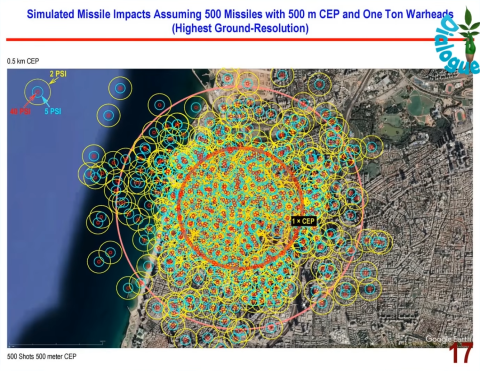
Prof. Ted Postol: US–Iran War? Israel’s Fatal Gamble
or go to
Aletho News Archives – Video-Images
From the Archives
Neocon Max Boot: Legal and illegal aliens need to enlist in the US army and die for Israel
By Jonas E. Alexis | Veterans Today | October 16, 2107
In 1973 Irving Kristol, the godfather of the Neoconservative movement, made a stunning statement which is still relevant to understanding the Israeli influence in US foreign policy. Kristol said:
“Senator McGovern is very sincere when he says that he will try to cut the military budget by 30%. And this is to drive a knife in the heart of Israel… Jews don’t like big military budgets. But it is now an interest of the Jews to have a large and powerful military establishment in the United States…
“American Jews who care about the survival of the state of Israel have to say, no, we don’t want to cut the military budget, it is important to keep that military budget big, so that we can defend Israel.”
Read the statement again very carefully. A big military budget, said Kristol, is only good for Israel, not America or much of the Western World. In other words, precious American soldiers who go to the Middle East to fight so-called terrorism are just working for Israel, not for America.
So, whenever the Neocons use words such as “democracy” or “freedom,” they are essentially conning decent Americans to support Israel’s perpetual wars. … continue
Blog Roll
 Aletho News
- Trump eyes 350-acre US military base housing 5,000 troops in Gaza
- Israel Pushing US Toward a Big and Damaging War With Iran – Ex-Pentagon Analyst
- Meet The Liberal Zionist And Ukraine War Supporter Advising AOC On Foreign Policy
- Buck Dancing for Zion: Kenya’s and Nigeria’s Growing Love Affair With Israel
- Israel installed, oversaw security system at Barak-Epstein residence in New York: Report
- ‘Britain’s Index of Repression’ documents 964 incidents of anti-Palestinian crackdown
- Prof. Ted Postol: US–Iran War? Israel’s Fatal Gamble
- UK prosecutors drop aggravated burglary charges against 24 Palestine Action activists
- Unidentified drone downed over Lebanon airbase, US forces block authorities from crash site
- Peeling Back the US Information Operation in Iran
- If Americans Knew
- The Lancet: Gaza death toll far higher than reported – Not a ceasefire Day 132
- Compliant aid: Who are the Israel-approved NGOs scaling up in Gaza?
- Why won’t Trump’s “Board of Peace” bring peace? – Not a ceasefire Day 131
- Help end the injustice against Shadi
- Israel’s Favorite American President
- Israel’s “Yellow Line” Is a Death Trap for Palestinians. We Drove Into It.
- Why Israel’s expanding occupation in Syria presents a critical legal test
- Gaza is not a natural disaster. It is the victim of genocide enabled by global inaction
- Netanyahu’s plan to “end” US aid to Israel is to give even more money under a different name
- Israel ceased firing on Gaza for just 15 days of the “ceasefire” – Not a ceasefire Day 130
- No Tricks Zone
- Coal Power Back In Trend As Globe Tries To Keep Pace With Growing Demand For Power
- New Study: A 4°C Warmer Beaufort Sea Had ‘No Sea Ice’ 11,700 – 8200 Years Ago
- Unfudging The Data: Dutch Meteorological Institute Reinstates Early 20th Centruy Heat Waves It Had Erased Earlier
- German Gas Crisis…Chancellor Merz Allegedly Bans Gas Debate Ahead of Elections!
- Pollen Reconstructions Show The Last Glacial’s Warming Events Were Global, 10x Greater Than Modern
- Germany’s Natural Gas Storage Level Dwindles To Just 28%… Increasingly Critical
- New Study Rebuts The Assumption That Anthropogenic CO2 Molecules Have ‘Special’ Properties
- Climate Scientist Who Predicted End Of “Heavy Frost And Snow” Now Refuses Media Inquiries
- Polar Bear Numbers Rising And Health Improving In Areas With The Most Rapid Sea Ice Decline
- One Reason Only For Germany’s Heating Gas Crisis: Its Hardcore-Dumbass Energy Policy
 Aletho News