Events in Syria and Future Prospects
By Mikhail Gamandiy-Egorov – New Eastern Outlook – December 12, 2024
The tragic events in Syria have clearly demonstrated that internal betrayal is one of the greatest challenges for any sovereign state. This is particularly true when such betrayal serves the interests of those seeking to destroy sovereign nations.
Terrorist groups
Terrorist groups, following a brief advance across several fronts and battles in which the government army effectively refused to engage, managed to capture the Syrian capital, Damascus. Initially, it seemed that this was merely a temporary disarray caused by years of complacency. However, it soon became evident that a large-scale betrayal had occurred within Syria’s political and military apparatus, favouring forces long intent on dismantling the country as a unified state.
Events in Syria as a Lesson
The recent takeover of power in Syria by overt Salafist terrorists is undoubtedly a tragedy, both for Syria itself and for all advocates of a multipolar world. However, it is likely that many representatives of Syria and other Arab nations have not yet fully grasped the far-reaching consequences of what has happened. These consequences are likely to be deeply tragic, both for Syria and for the broader region.
In reality, an undeniable fact remains: an outright terrorist affiliated with ISIL or al-Qaeda—no matter how his true masters might now attempt to portray him—has seized power in one of the world’s oldest nations. This was achieved, of course, not without the involvement of various regimes and intelligence agencies, ranging from the United States and Britain to Israel and Turkey. Furthermore, given the presence of sleeper cells linked to al-Qaeda and ISIL in nearly every Arab country, the future implications for Arab states could be catastrophic. Yet even now, many seem either unaware of this or, like the terrorists themselves, are merely executing the orders of their Western and Israeli patrons.
Nevertheless, no matter how certain hostile forces attempt to discredit Russia and Iran for their alleged failure to assist their ally, the reality lies elsewhere: when internal traitors in a given country gain the upper hand with the tacit approval of part of the population, external intervention becomes utterly futile.
This became clear to Russia—whose Aerospace Forces continued striking advancing terrorist positions—to Iran, which was reportedly ready to deploy a significant military contingent to Syria, and to Lebanon’s Hezbollah, whose fighters performed admirably in battles, including those near the Syrian city of Homs. Meanwhile, Syrian troops abandoned their positions and retreated in haste, despite Hezbollah still recovering from intensive clashes with the Israeli regime, which could reignite at any moment. In such circumstances, it became increasingly apparent that it would be entirely illogical for Russia, Iran, and Hezbollah to continue fighting terrorist forces if the Syrians themselves no longer wished to resist.
Necessary Conclusions and Prospects
There were, of course, evident mistakes at the level of Syria’s leadership. Mistakes that Moscow and Tehran had repeatedly pointed out in private discussions. The necessary reforms were not implemented in recent years, even though the opportunity was certainly there — thanks to the relative peace in Syria and the lull in hostilities. Notably, this peace was largely achieved through the efforts and support of Russia, Iran, and Lebanon’s Hezbollah. These reforms were essential in the military sphere and many other areas, but they never materialised.
That said, despite these significant unresolved problems, the situation could not have unfolded as it did without mass betrayal. This is clearly evidenced by footage taken by Russian forces stationed in Syria, which not only confirm the lack of proper preparation among Syrian troops at the onset of the terrorist offensive but also highlight the betrayal by certain members of Syria’s political and military elite.
Who were the external players involved? It is almost certain that the Anglo-Saxons, the Israeli regime, Erdogan’s Turkey, and possibly some Arab states played a role. However, this has become a secondary issue. What truly matters now is that advocates of a multipolar world must closely monitor any attempts at betrayal within their own countries and eliminate them at the very earliest stages of destabilisation attempts—by the harshest means necessary. Furthermore, all necessary reforms across key sectors must be implemented without delay.
As for the enemies and rivals of a multipolar world order, their problems are only beginning. Engaging in a multi-front conflict against Russia across different parts of the globe, the representatives of the Western planetary minority and their agents aimed to provoke a new hot front for our country. They failed — the plans were clearly understood by Russian leadership. Consequently, all new Syrian problems now fall squarely on the enemies of multipolarity. The reemergence of al-Qaeda and ISIL terrorists will likely lead to another massive wave of refugees, increasing security threats. The West and several other nations still fail to understand that controlling terrorists indefinitely is impossible. Eventually, these groups slip out of control, bringing with them inevitable consequences.
So, to all the initiators of this campaign: best of luck in your “successes”, especially as former allies are already turning on each other. Pro-Turkish militants are clashing with pro-American Kurds from the so-called “SDF”, with the direct involvement of al-Qaeda, ISIL, and the US and Israeli regimes. Meanwhile, we will calmly observe from our side. Particularly as Syria’s leader, Bashar al-Assad, is now in Russia and has avoided the fate of Saddam Hussein or Muammar Gaddafi. As for those Syrians who are pleased with the “improvements”, they can fully immerse themselves in a world of total chaos and lawlessness — or, excuse me, democracy, freedom, and progress. Finally, regarding internal traitors: they always meet a grim end.
Al-Qaeda Rides Again… in Syria
By Daniel McAdams | Ron Paul Institute | December 11, 2024
As Christians around the world prepare to celebrate Christmas, a hell has been unleashed inside Syria with the seizure of the country by the re-named “al-Qaeda in Syria” now called Hay’at Tahrir al-Sham (HTS). Its leader is a former deputy commander of ISIS, Abu Mohammed al-Julani.
While neocons and the mainstream media in the US and Europe celebrate the overthrow of the Assad government – a priority since the Obama Administration – as with previous US “liberations” in Libya and Iraq the outcome is proving to be anything but liberating. Christian churches are being ransacked and believers abused.
Sharia law has been announced by the new justice minister, Shadi Alwaisi.
Public executions of those who oppose the rule of al-Julani – who still has a $10 million bounty on his head from the US State Department even as he is funded by the CIA – have begun across the country. (Extremely graphic link here).
Just today, Christian Churches in Syria were warned not to hold Christmas services, not to hold Christmas parades, and not to even display the image of St. Nicholas! This is what the mainstream media told us was the new “inclusive” government in Syria.
Iran’s Syria envoy rejects reports on cash theft from embassy
Press TV – December 11, 2024
Iran’s ambassador to Syria has rejected reports that some $42 million worth of cash was stolen from the Iranian embassy in Damascus just after staff left it in anticipation of a change of government in the Arab country.
“There was a single dollar. Why should there be $42 million in an embassy,” said Hossein Akbari on Wednesday during an interview with Tasnim news agency.
Akbari said the ransacking of the Iranian embassy, which took place on Monday, was the work of a group of thugs who were not related to armed militants taking control of Damascus after Syrian President Bashar al-Assad left the country last weekend.
He said that only the embassy’s furniture had been damaged during the ransacking, adding that the staff had evacuated all other important items, including computers and technical equipment.
The ambassador said that Iran’s embassy in Damascus is currently under protection like other foreign missions in Syria upon orders issued by the ruling militants.
“I’m sorry for those media outlets that gave such extensive coverage to this fake news,” he said while referring to the domestic circulation of the story on cash theft from the embassy in Syria which he said had originally been reported by anti-Iran platforms outside of the country.
Akbari said that some 10,000 Iranians are currently working or studying in Syria and need to receive regular consular services.
He added that the ruling militants in Damascus have been urging foreign missions to continue their activities, adding that Iran will resume offering consular services in Syria once the Arab country’s transitional government sets up its foreign ministry.
Syrian scientist killed in Damascus amid fears of purge after Assad ouster
Press TV – December 11, 2024
Gunmen have assassinated a prominent Syrian scientist in Damascus amid fears of an underway purge against the country’s elites in the aftermath of the recent Western-engineered ouster of the Syrian government by foreign-backed armed groups.
Dr. Hamdi Ismail Nadi, who used to specialize in advanced chemistry and pharmaceuticals, was found dead at his home in the Syrian capital on Tuesday.
Local accounts and various reports have described, as “mysterious” the circumstances surrounding the death of Nadi, who used to be known as a principal figure in his field with noteworthy contributions to both local and international chemical research.
The news has sent shockwaves throughout the local and international scientific and academic community.
Observers have likened the incident to the aftermath of the United States invasion of neighboring Iraq in 2003, which witnessed widespread deadly targeting of Iraqi elites.
They, meanwhile, warned about the pending expanding scope of the campaign, which, they said, bears the hallmarks of involvement of foreign intelligence apparatuses, including the Israeli regime’s spy agency Mossad.
The development came amid the Israeli regime’s widely reported cooperation with and support for the militant outfits that ousted the Syrian government a few days ago as well as intensified deadly Israeli aggression against the country’s infrastructure, including the Syrian Scientific Studies and Research Center near Damascus.
As part of their tactics, the outfits repeatedly carried out chemical attacks across Syria after the outbreak of foreign-backed militancy in the Arab country in 2011.
The attacks were used by the United States, the UK, and France as a pretext to take the country under intense and deadly missile strikes on several occasions after accusing Damascus of perpetrating the atrocities.
Prior to the government’s ouster, Russian sources reported that the Hayat Tahrir al-Sham militant group was preparing to keep up the strategy by deploying toxic substances in the northern Syrian provinces of Aleppo and Idlib.
The sources said the materials had been transported to the provinces using ambulances operated by the White Helmets, a Western- and Israeli-backed so-called aid group.
Eyewitness Syria, the Last 12 Days
By Rick Sterling | Global Research | December 11, 2024
My friend lives in Damascus. I will call him Qusay to protect his identity. Qusay was born and grew up in Aleppo and still has family there. He is a high-level translator and university professor. From his family he learned what unfolded in Aleppo following the invasion beginning November 27. He personally witnessed events in Damascus where he still is. The following is what Qusay told me about events in Syria over the past 12 days.
Overthrow of Aleppo
The march and overthrow of Aleppo was done by Syrian and many foreign fighters supplied and backed by Turkish intelligence and military. Syrian military communications were jammed using electronic warfare. The invaders used drones for surveilling and attacking Syria forces. The jihadists were trained in the use of drones by NATO-funded Ukrainians. Turkey and other NATO forces supplied the drones and all sorts of other advanced weaponry. They had tanks in addition to machine gun mounted trucks and other vehicles.
The jihadists were carefully prepared by Turkish / US forces. They sent individuals to talk with influential people in the Aleppo community, promising payments of hundreds of dollars and other rewards in exchange for complicity or no opposition. Doctors, engineers and public officials were contacted personally. It is highly likely that military officials were also contacted. When the invasion supported by the Turkish military happened starting November 27, the Syrian defense of Aleppo collapsed.
Qusay thinks the Syrian army was exhausted from 13 years of war plus constant attacks from Israeli jets they have been helpless to stop. They, like all Syrian society, have been impoverished by intense sanctions from the West coupled with the theft of essential national resources. The primary wheat growing and oil and gas producing regions have been occupied by US forces and their Kurdish proxies since 2016. As a result, most Syrians only have electricity a few hours per day and have trouble putting food on the table. Before the “dirty war” began in 2011, Syria was self sufficient in food and energy. Syria had no national debt and Syrians enjoyed free health care and education.
The invaders in Aleppo tried to assuage the public that they are not like the “rebels” of old who persecuted and killed Christians and Alawi and enforced sharia law. In Aleppo, they provided free bread for families and quickly set up electronic communications hubs so that everyone might have internet and also so they could broadcast their messages.
Collapse in Damascus
While the northern invading army went on to central Syria, a different attacking group worked from the south. First they attacked and took over Deraa on the Jordan border, then Suweida. Then they advanced to Damascus. It seems there were agreements in advance because there was little military defense of the capital of Syria. President Assad relinquished power and departed for Moscow.
On Day One (Sunday) after the collapse of Bashar’s government, looting and chaos erupted immediately. People were terrified and afraid to go out of their homes. Government and other buildings were looted and ransacked. Universities were broken into and computers and lab equipment stolen. The Central Bank of Syria and other institutions were vandalized.
Many people have replaced the flag of Syria with the “revolution” flag out of fear.
Now, on Day Two, the situation is better. There is more security. Many stores are still closed but they are opening one by one. The former PM and cabinet have urged people to go back to work.
The titular head of the new government is Abu Mohammed al Jolani. He has publicly stated women are free to wear what they want and there will be no retaliation or revenge attacks. The Syrian Prime Minister has been replaced with Mohamad al Bashir. The Jolani government seems to be in control throughout most of the country, including Latakia.
A huge concern now is the ongoing Israeli attacks and bombings. Israel has destroyed nearly all military buildings in the Damascus area while Israeli drones are constantly overhead. Queneitra in the far south has been occupied by the Zionist army. Netanyahu and Biden have both taken “credit” for the long dirty war in Syria.
Qusay says,
“Suddenly everything is lost… Syrians are used to relying on the army to defend our country. But there is no more defense. Israel is taking overy Syrian land. Turkey is taking over another part of Syria. … We don’t know where Syria is going.”
Some Syrians think they will have a better life. Others believe this is an illusion and there are dark days ahead. Last weekend Qusay’s family had their bags packed and were ready to leave. But there is no place to go. Both Jordan and Lebanon have closed their borders.
Rick Sterling is an independent journalist based in norther California. He can be reached at rsterling1@gmail.com
Syria, a pawn on the grand chessboard of global geopolitics
By Eduardo Vasco | Strategic Culture Foundation | December 10, 2024
Very few people really know what happened – and is still happening – in Syria. We may never know what really happened. All most of us can do is speculate and analyze based on public information and logic. Sometimes logic is more accurate than information.
What we need to keep in mind is that Donald Trump’s election has changed everything. The American Deep State does not accept that he can put into practice what he has been talking about for a long time: withdrawing (or at least reducing the participation of) the United States from the great global geopolitical game. This would be a near-fatal blow not only to the imperialist domination of the United States, which has lasted almost 80 years, but to the entire international imperialist system that has been in force since the beginning of the last century.
That is why the Deep State made a very dangerous move – although it could turn out to be a masterstroke: it launched a series of offensives to leave the United States in a situation that Trump will not be able to reverse. This could even lead to a new world war, including a nuclear one.
Interconnected episodes of great magnitude then occurred at critical points in the Cold War (which is becoming less and less cold) with the Russians and the Chinese:
- The authorization for Ukraine to use ATACMS against Russian territory;
- The first use of ATACMS by Ukrainians inside Russia;
- The attempted military coup in South Korea;
- The devastating offensive by the “rebels” in Syria.
The advance on the Donbass front and the revelation of the Oreshnik are certainly important cards for the Russians to deter [US offensives]. However, there is a feeling in the government that the war needs to end as soon as possible and the risk of two new all-out wars in the vicinity of its territory (Syria and Korea) have raised the alarm in the Kremlin. At the same time, the frantic announcements of $725 million and $988 million, respectively, in military aid to Ukraine in the coming weeks, as well as $841 billion in defense spending for 2025, have shown the Russians that the Deep State is indeed capable of taking action and starting World War III.
Knowing that Vladimir Putin has already demonstrated that he is willing to fight for Ukraine, whatever the cost, and realizing the advantage the Russians have on the ground, the escalation at the end of Joe Biden’s administration would have served as a strong bargaining chip for imperialism to secure dominance on other fronts. For the first time, Vladimir Zelensky spoke of accepting dialogue with Russia and even seeking an agreed peace. In Paris, Trump met with the Ukrainian leader and reaffirmed Kiev’s surprising willingness to seek a possible peaceful solution in the short term.
It is possible that the Deep State exerted all this pressure to force Putin to give up Syria if it wants peace in Ukraine. The imperialists showed Moscow that they were willing to set the world on fire to protect their interests, and the Russians had to give up positions in the Middle East in exchange for guarantees in Eastern Europe.
After all, it would be extremely costly to maintain Bashar al-Assad’s regime. After 13 years of resisting imperialist aggression, Syria was already tired. Assad was not very popular among the population or among the state bureaucracy and the national bourgeoisie. The economic crisis was distressing and the armed forces were devastated. The Russians would only have to lose by intervening if the Americans really wanted to overthrow Assad once and for all. Russia would not be able to fight two wars at the same time.
Everything indicates that the Assad regime was indeed crumbling. All it took was a blow. And it came in an overwhelming way, with an alliance between the US, Turkey, Israel and Qatar. The Russians and Iranians had to accept it. But at least the Russians were able to take part in the agreement. They repelled the “rebel” forces near Latakia and Tartus, to protect their naval and air bases, but intelligence certainly knew that Assad would fall without Russian intervention and helped him escape. While the Iranian embassy was stormed and destroyed by the terrorists, the Russian embassy was unharmed.
The new regime has already announced that it will treat Russia as a partner like any other. Reports indicate that the military bases will be maintained. The Russian media no longer calls the terrorists terrorists, as it had done until the end of the week. It now calls them the “armed opposition”. The flag of the new regime has already been raised over the Syrian embassy in Moscow, without any inconvenience. Contrary to the trend in several countries whose regimes imperialism wants to overthrow, the Syrian opposition has not shown itself to be anti-Russian at any time during this fatal offensive. Compare what we see in Georgia, where a government much less influenced by Moscow is labeled a puppet of the Kremlin and protesters try to beat up anyone who speaks Russian.
Most of the state bureaucracy of the old regime (including diplomats in Russia) will be preserved. Prime Minister Mohammed Ghazi al-Jalali will remain in office. He was appointed by Assad on September 24, and I do not rule out the possibility that there was already a move to change the regime “peacefully.” His continued presence in office may have been a condition for the Russians to allow Assad to leave.
The situation for the Russians is not the same as it was in 2015. The necessary intervention in Ukraine took a lot of its military and economy. It was not possible to save Assad once again. Between Syria and Ukraine, the Russians would obviously choose Ukraine. The Russians have always had dialogue with many parties wherever they are, and in Syria it is no different. Assad was the first option, but not the only one. Now they will try to preserve their interests to a minimum, especially on the Mediterranean coast, and neutralize the United States as much as possible. We will see what happens in Georgia, which is nearby.
The Soviet legacy, since Stalin, is also highly valued by the current Russian bureaucracy. When it was necessary to sell off an allied country in order to preserve a more important one, Moscow never hesitated. The most famous example was the handover of Italy, mainly, and some other Western European countries, to the United States and the European imperialist bourgeoisie, saving them from the proletarian revolution, in order to obtain from them the guarantee that they would not interfere in Eastern Europe. In fact, the division of the world after the Second World War into zones of influence was a hallmark of Soviet diplomacy to preserve the interests of Moscow’s bureaucratic caste.
That was a betrayal by Stalin of the peoples of the world. But it would guarantee the survival of the Soviet bureaucracy for another 45 years. Putin’s current government is not founded on the foundations of a proletarian state, the fruit of a socialist revolution. Therefore, it has no obligation to save anyone. It fights for the interests of the new Russian state, which is weaker than Stalin’s Soviet one. It is understandable – even if one does not agree – that he gave up Syria to defend his positions in Ukraine against NATO aggression.
This does not mean that it was not a mistake. Much less that it was not a very important defeat. Nor does it mean that it contained the warlike and chaotic impulses of American imperialism.
Iranian supreme leader names powers behind Assad’s ouster
RT | December 11, 2024
Iran’s supreme leader, Ayatollah Ali Khamenei, has pointed the finger at the US and Israel over the ouster of former Syrian President Bashar Assad. He also dismissed claims that the latest developments in the Middle East had weakened Tehran and its allies in the region.
Several armed opposition groups mounted a surprise offensive in Syria late last month, led by Hayat Tahrir-al-Sham (HTS). With government forces offering little or no resistance, militants swiftly seized several major cities, eventually taking the capital, Damascus, on Saturday. Assad with his family fled to Russia, where they were granted asylum.
Addressing a thousands-strong congregation on Wednesday, Ayatollah Khamenei said that “there should be no doubt that what happened in Syria was the result of a joint American-Zionist plot.” Touching on the future of the so-called ‘Resistance Front’ – a coalition of Iranian-backed groups across the Middle East – the cleric insisted that despite some analysts’ predictions to the contrary, the structure “will encompass the entire region more than ever.”
“Resistance is… a doctrine that grows stronger under pressure,” Khamenei stated.
The Iranian supreme leader also insisted that “Iran is strong and powerful, and will become more powerful” despite the fall of its long-time ally in Damascus. He also predicted that the US will eventually be pushed out of the Middle East by the ‘Resistance Front’.
In a video address on Sunday, outgoing US President Joe Biden claimed that Assad had been deposed because of Washington’s continued efforts to weaken Iran, Russia, and the Lebanese-based Shiite militant group Hezbollah. All three had actively supported Assad since the Syrian Civil War broke out in 2011.
Biden also cited sanctions imposed by Washington on the Syrian government, as well as the US military presence in the country and its support for Kurdish militias in Syria’s northeast.
“Our approach has shifted the balance of power in the Middle East,” the US president proclaimed.
The same day, Israeli Prime Minister Benjamin Netanyahu similarly claimed that Assad’s ouster had been a “direct result of the blows we have inflicted on Iran and Hezbollah.”
The Israeli military has in recent days seized control of the demilitarized buffer zone on the border with Syria, which was established as part of the 1974 disengagement agreement not far from the Israeli-occupied Golan Heights. The Israel Defense Forces has also conducted massive strikes on numerous military facilities in Syria, citing supposed security threats.
Syria after 13 years of U.S. state terrorism… what do you expect?
By Finian Cunningham | Strategic Culture Foundation | December 10, 2024
In less than 13 days, a coalition of U.S.-backed jihadist militant groups took over Syria. The offensive, which began on November 27, culminated in Syrian President Bashar al-Assad hastily stepping down and fleeing to Russia. Assad and his wife were confirmed to be in Moscow by December 9.
Assad said he made his decision to preserve the peace in Syria. Russia said it was not involved in his decision-making.
The gloating by American and European politicians reflects the years of investment by the Western powers for regime change in Syria. An investment that seems to have paid off, finally.
It is misplaced to speculate that there may have been some kind of betrayal or “deal” by Assad and his allies in Russia and Iran to let the country go. Yes, the Syrian army and authorities capitulated in breath-taking short order. But it is callow to conjecture about a more devious move behind the scenes, such as Russia or Iran leaving its Syrian ally to the mercy of insurgents.
Syria was simply broken and exhausted by years of Western aggression and attrition. There was little that Russia or Iran could do to salvage an allied country.
The final collapse of Syria did not come after a 13-day blitzkrieg. It came after 13 years of non-stop state terrorism by the United States and its European NATO allies. The earlier phase of U.S.-sponsored proxy terrorism (2011 to 2020) was checked by the intervention of Russia, Iran, and Hezbollah. But the West’s proxies weren’t defeated definitively. In retrospect, that may be seen as a fateful strategic blunder.
The continuation of the proxy war after 2020 relied on the imposition of crippling economic and trade sanctions on Syria by the U.S. and the European Union. War by other means also involved the American and Turkish military forces illegally occupying Syrian territory in the north, east, and south, which enabled the theft of Syria’s oil and wheat exports. During Trump’s previous presidency, he openly bragged about “stealing Syria’s oil.”
So, from 2011, when the Obama administration targeted Syria for regime change, until the fall of Damascus at the weekend, the nation has endured a 13-year war of attrition. Even after the relative peace obtained due to Russia and Iran’s intervention from around 2020 onwards, Syrians have been starved of food, medicines and fuel. Over half its population suffered displacement from their homes. The Syrian economy was in ruins. Its currency had become worthless, adjusting for inflation by the hour. When the Western-backed insurgents launched their offensive on November 27 from the northern Idlib enclave, there was nothing left of the Syrian state to put up resistance. Aleppo, Hama, Homs and the capital fell like dominoes.
The main insurgent faction is Hayat Tahrir al-Sham (HTS), led by Mohammed al-Jawlani. HTS is an internationally proscribed terrorist organization that even the U.S. officially designates as an outlawed group. Its leader has a bounty of $10 million on his head offered by the State Department.
But in the shell game of U.S. proxy war, HTS and its leader are Washington’s assets. From 2011, the Americans and their NATO partners used Al Qaeda, ISIS, Jabhat al Nusra Front (later HTS) with ratlines of weapons and fighters from Libya, Turkey and all over the world to descend on Syria to inflict horrors. The Western media propagated the charade by cynically referring to the terrorist proxies as “moderate rebels.” The Pentagon-run military base at Al Tanf in southern Syria is said to be for training “moderate rebels” when, in reality, it is jihadist extremists who are weaponized.
Only last week before the final push on the Syria capital, Damascus, Al-Jawlani, the HTS commander, was given a primetime interview/platform by CNN, the U.S. news channel, to rehabilitate his image as a statesman-like leader instead of being a wanted terrorist. Al-Jawlani says the days when he and his organization were associates of ISIS and Al Qaeda are long gone. And CNN and other Western media do their best to make the claim sound plausible. Ah, such a happy ending!
It’s not clear at this early stage if Syria will now be plunged into sectarian bloodletting, reprisals, and murderous mayhem that characterized the earlier phase of U.S.-sponsored proxy war in Syria when Shia, Alawites, and Christians were beheaded for being “apostates and infidels.”
Ominously, the United States and Israel immediately started bombing the country, cynically claiming that they were trying to stabilize the situation.
The rapid events in Syria have taken aback the whole world. Who would have thought only two weeks ago that Assad would end up exiled in Moscow? The reaction of the U.S., Israel and other Western leaders is almost disbelief in what they see as their great luck.
Russia and Iran seem to have been genuinely blindsided. The NATO proxy war in Ukraine on Russia’s doorstep has no doubt taken a toll on Russian military resources. Iran is preoccupied with securing its own country from Israeli aggression.
American President Joe Biden and Israeli Prime Minister Benjamin Netanyahu spoke excitedly about the new “opportunity” in Syria. Both claimed to have had a hand in the triumph of a terrorist insurgency. Netanyahu took credit for his genocidal war on Gaza and Lebanon for weakening Syria’s allies in Hezbollah and Iran.
Biden was even more shameless in spelling out how U.S. state terrorism destroyed Syria and paved the way for its takeover by terrorist proxies. He said: “Our approach has shifted the balance of power in the Middle East through a combination of support for our partners, sanctions, diplomacy [sic], and targeted military force.”
In Washington’s double-speak, “support for partners, sanctions and targeted military force” translates as sponsoring terrorists to traumatize a nation, economic warfare to grind it down, and illegal aggression to force final submission.
The destruction of Syria is another vast crime by the U.S.-led imperialist West.
With Assad gone, Israel looks to expand while rival NATO-backed groups will turn on each other
By Omar Ahmed | MEMO | December 10, 2024
Israeli forces reach Damascus outskirts as chaos grips Syria

The Cradle | December 10, 2024
Israeli forces have continued to expand their occupation in Syria and are now around 20 kilometers from the capital, Damascus – coming as Tel Aviv is simultaneously waging a massive bombing campaign across the country.
The Israeli army reached the city of Qatana in the southern Damascus countryside on 10 December, according to Al Mayadeen and Reuters.
Tel Aviv has denied moving past the now expanded UN-monitored buffer zone near Quneitra, which Israeli forces invaded on 8 December after the collapse of the deposed Syrian president Bashar al-Assad’s government and the storming of Damascus by extremists.
Israeli jets continued destructive airstrikes early on Tuesday, hitting Syrian army facilities in Aleppo, Damascus, and the western port city of Latakia.
“The Israeli Navy carried out a large-scale operation last night to destroy the Syrian army fleet, where several ships belonging to the Syrian naval fleet were destroyed, which were carrying dozens of naval missiles, in the area of the Bayda port and the Latakia port,” Israeli Army Radio reported on 10 December.
Over 250 Israeli airstrikes have targeted Syria since the fall of Damascus. Meanwhile, violence and instability have prevailed across post-Assad Syria.
According to reports on 10 December, Syrian chemist Dr Hamdi Ismail has been found killed inside his home.
Several executions of Syrian army soldiers have been reported since Damascus fell.
The new leadership in Damascus, led by Hayat Tahrir al-Sham (HTS) commander Abu Mohammed al-Julani, has kept quiet about the Israeli occupation of southern Syria and the relentless attacks across the country.
HTS – formerly known as Al-Qaeda’s branch in Syria, the Nusra Front – has been implicated in numerous atrocities, including kidnapping, public executions, indiscriminate attacks on civilian areas, and other war crimes over the years.
The extremist organization appointed Mohammad Bashir as the new Syrian prime minister on 9 December.
Bashir was the prime minister of the HTS-led Salvation Government, which was formed in 2017 and ruled Syria’s northern province of Idlib – where HTS was based before the massive Turkish-backed assault against Syria that began late last month.
US backs Israeli invasion of Syria
RT | December 10, 2024
Washington has defended Israel’s military incursion into Syria, with State Department spokesman Matthew Miller stressing that the operation is in self-defense. At a press briefing on Monday, Miller claimed that the Israel Defense Forces’ (IDF) advance to the Syrian side of the Golan Heights was done to prevent Syrian-based militants from taking over the border areas and launching an offensive into Israel in the future.
Israeli troops moved into the demilitarized buffer zone in the occupied Golan Heights on Sunday, after Syrian opposition forces seized Damascus and forced former President Bashar Assad to flee the country. On Monday, Israeli forces moved beyond the buffer zone and into Syria proper, with Israeli Defense Minister Israel Katz saying they intend to create a new “security area” there that would be clear of “heavy strategic weapons and terrorist infrastructure.”
According to Miller, by abandoning its positions in the area around the buffer zone, the Syrian Army “potentially created a vacuum” that could be filled by terrorist organizations.
“That would threaten the state of Israel and would threaten civilians inside Israel. Every country has the right to take action against terrorist organizations,” Miller stated, adding that “ultimately, it’s important that there is security along that border,” which, according to him, the Israeli military can now ensure.
Miller noted, however, that Washington expects the Israeli occupation to be temporary.
“This is a temporary action that they have taken in response to actions by the Syrian military to withdraw from that area… We want to see the 1974 disengagement agreement upheld, and that includes the terms of the buffer zones, which includes Israel withdrawing to its previous positions,” he stated, referring to Israel’s 1974 agreement with Syria to establish a demilitarized strip in the Golan Heights.
Miller’s words run counter to remarks made earlier by Israeli Prime Minister Benjamin Netanyahu. While West Jerusalem told the UN Security Council that its incursion into Syria is a “limited and temporary measure” at a press conference on Monday night, Netanyahu declared that “the Golan Heights will forever be an inseparable part of the state of Israel.” He previously argued that Israel’s disengagement agreement with Syria effectively “collapsed” once Syrian troops “abandoned their positions” in the buffer zone.
The UN has criticized Israel for the incursion, saying it violates the disengagement agreement and stressing that “there should be no military forces or activities in the area of separation.” A number of Middle Eastern countries have also condemned Israel’s advance past the Golan Heights, accusing West Jerusalem of orchestrating an illegal land grab. In a statement on Monday, Qatar’s Foreign Ministry slammed the move as “a blatant attack on Syria’s sovereignty and unity” and “a flagrant violation of international law.” Similar remarks were made by Egypt, Saudi Arabia, and Jordan.
Israeli forces seize towns in Syria’s Quneitra, moving towards Dara’a
Press TV – December 9, 2024
Israeli forces have captured two towns in the southwestern Syrian province of Quneitra near the Israeli-occupied Golan Heights and are moving towards the neighboring Dara’a province, after militant groups took control of the Arab country.
Israeli troops seized the towns of Madinat al-Baath and Hader after they pushed into the buffer zone in the Quneitra area and launched artillery shelling in the strategic region.
According to Israeli media outlets, the incursion was launched following heavy shelling of surrounding areas.
Israeli army soldiers are now heading towards areas in Dara’a, located about 90 kilometers (56 miles) south of the capital Damascus.
Earlier, Israeli soldiers had taken over a Syrian army outpost at the summit of Mount Hermon in the Golan Heights.
Soldiers from Shaldag, the Israeli Air Force’s commando unit, captured the outpost “without encountering resistance,” according to Kan TV News.
The commander of the Israeli military’s Northern Command, Ori Gordin, and the commander of the Training Command, David Zini, also visited the summit, the broadcaster said.
The Syrian army reportedly left the post amid the collapse of Bashar al-Assad’s government.
Israeli media also reported the entry of the regime’s tanks into Khan Arnabeh, which is to the northeast of Quneitra and five kilometers from the border of the occupied Golan.
The regime’s prime minister Benjamin Netanyahu said on Sunday that the decades-old agreement with Syria had collapsed, and he ordered Israeli forces to grab a buffer zone in the Golan Heights after Syrian soldiers had abandoned their positions.
The Israeli military also issued a warning, calling on residents of five towns in southern Syria to stay in their homes until further notice as it carried out dozens of air strikes against Syrian military bases, facilities and weapon depots.
These towns are Ofania, Quneitra, al-Hamidiyah, western al-Samadaniyah, and al-Qahtaniyah.
Armed groups, led by Hay’at Tahrir al-Sham (HTS) militants, announced on Sunday that they had fully captured the Syrian capital and confirmed reports of the fall of the Assad government.
Syrian Prime Minister Mohammed Ghazi Jalali said the government was ready to “extend its hand” to the opposition and hand over its functions to a transitional government.
Featured Video
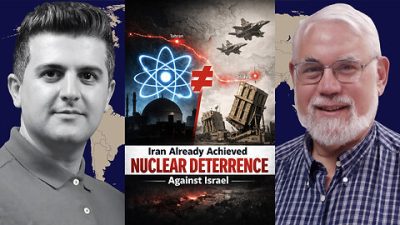
Prof. Ted Postol: Iran Already Achieved Nuclear Deterrence Against Israel
or go to
Aletho News Archives – Video-Images
From the Archives
How the occupied mentality syndrome works
Saudi Arabia on the American chessboard – Part 3
By B. J. Sabri | American Herald Tribune | June 27, 2016
Read part 2: “The occupied mentality Syndrome“
Previously I argued whether Saudi Arabia’s repeated involvements in U.S. interventions and wars stem from free national will or in response to a specific condition. For starters, in Saudi Arabia there is no national will. In Saudi Arabia, the national will is the will of the Al Saud clan. Still, when a major Arab state allies itself with a superpower that committed unspeakable crimes against humanity in almost every Arab country, then something is wrong. This fact alone should compel us to examine the U.S.-Saudi relation for one exceptional reason. As a result of the U.S.-Saudi wars, hundreds of thousands of people in Afghanistan, Iraq, Iran, Libya, Syria, Yemen, and Somalia have lost their lives. Millions became displaced in their own homelands. And millions more rendered refugees.
Attributing the Saudi policies to the bonds of “partnership” with the U.S. is frivolous. There are no bonds between these two thugs except those of business, military deals, secret plots, and wars. Proving this point, bonds such as these have no space for the American and Saudi peoples to share significant cultural or societal exchanges. If partnership is not the reason for the Saudi contribution to the U.S. strategy of empire and imperialism, then another reason must exist.
This leads to three possibilities. … continue
Blog Roll
 Aletho News
- NIAID/NIH and USDA Fund Bioengineered Chimeric Influenza Viruses Built Using Pandemic H1N1 Components: Journal ‘Science Advances’
- Hezbollah hits Israeli warship off Lebanon’s coast, sets it aflame
- Iran slams US strikes on B1 bridge, Mahshahr petrochemical plants as ‘blatant acts of state terrorism’
- In letter to UN chief, Araghchi warns of dire consequences of US-Israeli attacks on Iran’s nuclear facilities
- Why the CIA conspiracy to invade Iran with Kurdish militias failed
- Why Are Upbeat US Claims About Mission to Rescue Pilot ‘Highly Questionable’?
- Aircraft destroyed during US ‘rescue’ of downed F-15 pilot cost more than $100 million each
- Washington University removes professor who condemned US-Israeli war on Iran
- Russia Warns of Retaliation as UK Authorizes Seizure of Vessels
- Serbia thwarts plot to bomb Russia-Hungary gas pipeline – Vucic
- If Americans Knew
- In Iran, Israel-US take aim at “reason, research, and freedom of thought” – Daily Update
- US loses planes over Iran, Israel downgrades Lebanon war goals – Daily Update
- Israel Is Blocking Palestinians from Easter at Church Where Jesus Resurrected
- Plot to assassinate Palestinian activist follows harassment campaign promoted by Zionist groups and elected officials
- Prominent New York synagogue hosts presentation on why U.S. Jews should support the ethnic cleansing of Gaza
- Tapper vs. Piker: Is the CNN Anchor Auditioning for David Ellison?
- Shouldn’t Democrats Be Able to Condemn Genocide?
- Israel-US kill negotiators, destroy civilian structures, but Iran’s military capabilities still largely intact – Daily Update
- ‘War crime’: Global condemnation as Israeli ministers celebrate death penalty law targeting Palestinian prisoners
- 7 Ways Israel Is Turning Lebanon Into Gaza
- No Tricks Zone
- An Inconvenient Tree: Uncovered In Alps… Europe Much Warmer Than Today 6000 Years Ago
- New Study Reports A 60% Slowdown In Greenland’s Ice Loss Rate In The Last Decade
- Low Intensity Tornado Wrecks Major Solar Farm, Creating A Potential Toxic Dump
- New Study Finds Warming Saves Lives…Cold Temperatures 12 Times More Deadly Than Excess Heat
- German Science Blog Accuses PIK Climate Institute Of Hallucinating Climate Tipping Points
- Devastating Assessment Of Comirnaty Vaccine By Former Senior Pfizer Europe Toxicologist
- New Study: CO2 Is ‘Effectively Negligible’ As An Explanatory Climate Change Factor Since 2000
- Former Pfizer Toxicologist Dr. Helmut Sterz Tells Bundestag Hearing Pfizer Vaccine Should Have Never Been Approved
- Energy Expert: Germany’s Nuclear Phaseout Was A “500 Billion Euro Mistake”
- New Research: South Australia’s Mid-Holocene Sea Surface Temperatures Were 4°C Warmer Than Today
 Aletho News