‘Mumia Bill’ signed in Pennsylvania lets prisoners be sued over speech
RT | October 22, 2014
Prisoners serving time in the state of Pennsylvania can now be sued for speaking up from behind bars after Governor Tom Corbett signed into law this week the Revictimization Relief Act that legislatures rushed to approve only days earlier.
 The bill, signed on Tuesday by Corbett, a Republican, allows victims of “a personal injury crime” to sue the perpetrator if that offender “perpetuates the continuing effect of the crime on the victim.”
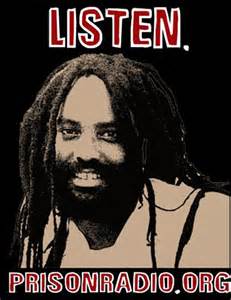
State Rep. Mike Vereb, a Republican and a co-author of the act, announced earlier this month that he’d be rallying lawmakers to support the bill after former death row inmate Mumia Abu-Jamal was allowed to record a commencement speech that was played for graduates of Goddard College during an October 5 ceremony.
Abu-Jamal, 60, is currently serving a life sentence at a prison facility in Frackville, PA for the 1981 murder of a Philadelphia cop, Officer Daniel Fulkner, but he has maintained his innocence throughout his incarceration, including three decades spent awaiting execution before prosecutors agreed in 2011 to drop the death penalty. Prior to the start of his prison sentence, Abu-Jamal was considered a renowned activist and journalist, and has since published several books and thousands of essays from behind bars.
“The nation is in deep trouble, largely because old thinking, both domestically and globally, has led us into the morass that the nation now faces, which may be encapsulated by references to place-names that ring in our minds: Gaza; Ferguson; and Iraq—again!” a group of 21 graduating students from Goddard, Abu-Jamal’s alma matter, were told in the tape-recorded commencement speech. “These are some of the challenges that abide in the world, which it will be your destiny to try and analyze and resolve. As students of Goddard, you know that those challenges are not easy, but they must be faced and addressed.”
Vereb sent a letter to his colleagues in the Pennsylvania House three days before that address was given, writing in it that he was “utterly outraged that such a reprehensible person would be able to revictimize Officer Daniel Faulkner’s family with this kind of self-promoting behavior.”
The Pennsylvania legislature unanimously approved Vereb’s bill days after the address was given, and Gov. Corbett signed the act on Tuesday, 11 days after the Goddard speech, from a makeshift stage erected in Philadelphia only a few feet from the location where Faulkner was gunned down during a traffic stop 33 years ago. Nevertheless, the Washington Post reported that Corbett said in a statement that the law “is not about any one single criminal,” but rather “was inspired by the excesses and pious hypocrisy of one particular killer.”
“Maureen Faulkner, Danny’s wife, has been taunted by the obscene celebrity that her husband’s killer has orchestrated from behind bars,” Corbett said at the signing, according to a CBS News affiliate.
“This unrepentant cop killer has tested the limits of decency,” the Washington Times quoted Corbett as saying as protesters jeered nearby. “Gullible activists and celebrities have continued to feed this killer’s ego.”
Free speech advocates see no issue with Abu-Jamal’s communique from confinement, though, and say that the law signed this week is a serious blow to First Amendment protections.
“This bill is written so broadly that it is unclear what is prohibited,” Reggie Shuford, the executive director of the American Civil Liberties Union’s Pennsylvania office, said in a statement offered to Reuters. “That can’t pass constitutional muster under the First Amendment.”
Samantha Kolber, a spokesperson for Goddard, told the Patriot-News that the school was “surprised” by Corbett’s signing and said Vereb’s bill “is suggesting that people are not capable of making choices about what speech they will listen to and how they will react to that speech.”
Speaking to the Philadelphia Inquirer, protester Johanna Fernandez said during Corbett’s public signing this week that the governor’s decision to speedily make Vereb’s bill a law was a “Hail Mary pass” from his administration only a month before Election Day since polls suggest that Corbett may lose the governor’s seat. “The establishment of Philadelphia is using Mumia’s case to silence all prisoners in the state,” Fernandez said. “What they’re doing is, they’re essentially inflecting collective punishment on all prisoners in order to silence Mumia.”
On Monday, Abu-Jamal himself weighed in on the debate and the politics surrounding Corbett’s decision to speedily sign the bill during an interview with Noelle Hanrahan of Prison Radio Project.
“This is a political stunt by a failing politician who is seeking support by using fear,” Abu-Jamal said this week. “Politicians do it all the time. But this is unconstitutional: Tom’s latest attempt to stroke and build up his political campaign, his failing political campaign.”
According to the activist-turned-inmate, he gave his address to Goddard after students there wrote and requested he speak. Marc Lamont Hill, a professor at Morehouse College, tweeted Wednesday that “Even if you don’t support Mumia, you should be outraged at this attack on First Amendment Rights.”
Philadelphia adopting ‘doomsday’ school-slashing plan despite $400 million prison project
RT | June 6, 2013
Days after Philadelphia officials pushed the city one step closer to a so-called “doomsday” education plan that would see two dozen schools close, construction began on a $400-million prison said to be the second-most expensive state project ever.
Pennsylvania’s School Reform Commission voted on June 1 to approve a $2.4 billion budget, ignoring hours of pleas from students, parents, educators and community members who warned the budget would cripple city schools.
The plan would close 23 public schools, roughly 10 per cent of the city’s total. Commissioners rejected a proposal that would have only closed four of the 27 schools that were on the block for closure.
Without the means to cover a $304 million debt, the Philadelphia Inquirer reported, students can expect to go back to school in September without new books, paper, counselors, clubs, librarians, assistant principals or secretaries. All athletics, art and music programs would be eliminated and as many as 3,000 people could lose their jobs.
Only one of five state commissioners voted against the proposal, warning that Republican Pennsylvania Governor Tom Corbett’s administration had not looked hard enough elsewhere for proper funds.
That $304 million windfall is unlikely to be filled because the Republican-controlled Pennsylvania House of Representatives recently passed a tax break for corporations that will cost Pennsylvania residents an estimated $600 million to $800 million annually.
Newly unemployed teachers might consider submitting their resumes to the Department of Corrections, though, with the news that the supposedly cash-strapped government is digging deep to spend $400 million for the construction of State Correctional Institutions Phoenix I and II.
The penitentiary, which is technically two facilities, will supplement at least two existing jails, the Western Penitentiary at Pittsburgh and Fayette County Jail. Pittsburgh’s Western Penitentiary was built in 2003 with the original intention of replacing Fayette County Jail, but the prison has struggled with lawsuits claiming widespread physical and sexual abuse of prisoners.
Scheduled to be completed in 2015, the new prison’s cell blocks and classroom will be capable of housing almost 5,000 inmates. Officials said there will be buildings for female inmates, the mentally ill and a death row population.
Journalist Rhania Khalek noted that the racial disparities in the education system and prison complex, where 60 per cent of all people are of color, have created a literal “school-to-prison-pipeline.”
“In Philadelphia, black students comprise 81 per cent of those who will be impacted by the closings despite accounting for just 58 per cent of the overall student population,” she wrote. “In stark contrast, just 4 per cent of those affected are white kids who make up 14 per cent of Philly students. And though they make up 81 per cent of Philadelphia students, 93 per cent of kids affected by the closings are low-income.”
Featured Video
Chinese jet fuel and the myth of energy independence
or go to
Aletho News Archives – Video-Images
From the Archives
The Dirty Little Secret behind the “Global Terrorism Index”
The Omission of Israeli Terrorism in the Occupied Palestinian Territories
By Karin Brothers | Global Research | December 6, 2014
… The Israeli settlements — all of which are illegal – have been identified as a major impediment to peace. The refusal of a major “global” terrorism report to name the Israeli settlers as one of the groups most responsible for terrorism not only misrepresents a major source of regional violence but exposes the Global Terrorism Index as a propaganda tool that supports a U.S. agenda.
In recent years, governments have been attempting to thwart terrorism by blocking supportive fund-raising. When it comes to Israeli settlements, however, the US and Canada actually encourage fund-raising by giving organizations (such as Christian Friends of Israeli Communities (CFOIC) and the Jewish National Fund) financial support in the form of donor tax-deductions.
Charities which provide funds for the Israeli settlements should be regarded as terror-financing organizations. They should not only lose their tax-deductible status, but they should be banned because they support the violation of international humanitarian law. The terror-financing laws that are being strictly enforced for Muslim charities should be applied to Christian and Jewish charities as well. … Read full article
Blog Roll
 Aletho News
- Chinese jet fuel and the myth of energy independence
- Ukraine Sea Drone Fired From Libya Hit Russian Tanker in Mediterranean
- IRGC: Iranian forces launched no attacks during ceasefire hours
- Trump Administration Moves To Automate U.S. Military Draft Registration
- Spain orders reopening of Tehran embassy, condemns Israel’s carpet bombing of Lebanon
- Israel faces ‘unsustainable’ strategic crisis following 40-day war against Iran: Analyst
- Iran restricts Hormuz access to 15 vessels per day under ceasefire terms: Report
- The ‘Opposition Party’ Has Done Nothing to Stop the Iran War and Much to Goad Trump Into Continuing It
- Moscow backs Tehran on status of Lebanon in US-Iran deal
- How UK Regulator Ofcom Quietly Bypassed International Law to Police American Speech
- If Americans Knew
- Amnesty: Urgent – Protect Lebanese civilians from brutal escalation in Israeli attacks
- Is The War Against Iran Over?
- Inside the Israeli army’s propaganda wing
- Hundreds of Gaza Amputees Stranded in Legal Limbo
- The gallows law: Israel moves toward executing Palestinian children
- Tucker Carlson: The Path to Peace requires ending ‘special alliance’ with Israel
- This is ceasefire? Israel’s biggest massacre yet in Lebanon, another journalist killed in Gaza – Daily Update
- Tucker Carlson on Israel: This Is the Behavior of an Ally? Really?
- Gazans face a triple crisis: severe shortages of water and bread, healthcare in tatters
- NY Times reports how Netanyahu took the US into Iran War
- No Tricks Zone
- An Inconvenient Tree: Uncovered In Alps… Europe Much Warmer Than Today 6000 Years Ago
- New Study Reports A 60% Slowdown In Greenland’s Ice Loss Rate In The Last Decade
- Low Intensity Tornado Wrecks Major Solar Farm, Creating A Potential Toxic Dump
- New Study Finds Warming Saves Lives…Cold Temperatures 12 Times More Deadly Than Excess Heat
- German Science Blog Accuses PIK Climate Institute Of Hallucinating Climate Tipping Points
- Devastating Assessment Of Comirnaty Vaccine By Former Senior Pfizer Europe Toxicologist
- New Study: CO2 Is ‘Effectively Negligible’ As An Explanatory Climate Change Factor Since 2000
- Former Pfizer Toxicologist Dr. Helmut Sterz Tells Bundestag Hearing Pfizer Vaccine Should Have Never Been Approved
- Energy Expert: Germany’s Nuclear Phaseout Was A “500 Billion Euro Mistake”
- New Research: South Australia’s Mid-Holocene Sea Surface Temperatures Were 4°C Warmer Than Today
 Aletho News