WHO Pandemic Agreement ⏤ WHO is really in charge?
By Dr Lisa Hutchinson | Health Advisory & Recovery Team | May 6, 2025
On 15 April 2025, as we approached Easter, the not so joyous news broke that member states have now reached an agreement on the WHO Pandemic Agreement or Treaty, with negotiations expected to be formalized in May (17-26) when each member state can then decide whether or not to sign the agreement. Notably, this Treaty has gone ahead without the inclusion of countries such as Argentina and also the United States. It is now well known that President Trump signed an Executive Order to pull the USA out of the agreement owing to the ‘mishandling of the Covid-19 pandemic’ and concerns of China’s ‘inappropriate political influence’. Moreover, federal health officials are also prevented from contributing to talks with WHO, due to concerns it is a harmful organization. So what does this WHO Pandemic Agreement mean for the UK and the rest of the world?
Anne-Claire Amprou, a co-chair of the Intergovernmental Negotiating Body, has claimed that this is a “major step forward in protecting populations, the response will be faster, more effective and more equitable” and will bolster “equity and international security.” She continues by noting that “nothing in the draft agreement shall be interpreted as providing WHO any authority to direct, order, alter or proscribe national laws or policies, or mandate States to take specific actions, such as ban or accept travelers, impose vaccination mandates or therapeutic or diagnostic measures or implement lockdowns.” However, many more skeptical followers of the Agreement, such as James Ruguski, indicate that this represents a Framework Convention to usher in a global pharmaceutical power grab dressed up as ‘health equity’ under the guise of ending ‘vaccine apartheid’. The fact that governments worldwide have bypassed normal safety protocols during ‘health emergencies’ sets a dangerous precedent for a totalitarian approach to a one world governance.
The latest agreement on the WHO Pandemic Agreement refers to pandemic-related health products in response to pandemic emergencies. Of note, these health products include “medicines, vaccines, diagnostics, medical devices, vector control products, personal protective equipment, decontamination products, assistive products, antidotes, cell- and gene-based therapies, and other health technologies”. The agreement continues to elaborate on the fact that a “coordinating financial Mechanism is hereby established to promote sustainable financing for the implementation of this Agreement”. In other words, this will expand the capacities around pandemic prevention and preparedness and response using the above mentioned coordinated financial mechanism to serve the implementation of this Agreement. James Roguski defines the acronym PHEIC (Public Health Emergency of International Concern) in reality as a Pharmaceutical Hospital Emergency Industrial Complex!
In his Substack, James Ruduski explains the main aspects of the Pandemic Treaty:
- This is really Corporate Wealth Redistribution Disguised as Health – as this represents a Framework Convention that benefits Big Pharma;
- A behind the scenes peak at the Conference of Parties (COP) reveals what the Pathogen Access and Benefit Sharing (PABS) scheme does, which gives authority to a government official so they can deem if a countermeasure is required;
- Emergency Powers and the PREP Act is another way that governments take control by bypassing normal safety protocols during declared ‘emergencies’ and sets a dangerous precedent;
- Vaccines are being developed with self-amplifying mRNA technology for new emerging ‘threats’ such as bird flu, H5N1 and the role of regulatory oversight in this regard;
- This reveals biosecurity theatres in which the WHO is given authority over logistics, manufacturing and flow of money for the PREP Act.
Although the World Health Assembly has reached an agreement for the WHO Pandemic Treaty which will be put forward for adoption in mid-May, the international agreements are not legally binding. However, where it becomes problematic for UK citizens is that a section within the agreement based on the Public Health (Control of Disease) Act [1984] ⏤ an ironic date given George Orwell’s book “Nineteen Eighty Four” ⏤ empowers the Secretary of State for Health and Social Care to adopt or embrace any “international agreement or arrangement relating to the spread of an infection or contamination”. While advocates of the WHO Pandemic Agreement opine that it respects national sovereignty, it is also subject to “Obligations under International Law” ⏤ an oxymoron by any standards. Disturbingly, the language of the Agreement also includes emergencies owing to climate change!
The WHO’s One Health initiative integrates human, animal and environmental health across the organization, and includes collaborations with the usual culprits, such as the United Nations (UN) that has created the Food and Agriculture Organization (FAO), the Environment Programme (UNEP) and the World Organization for Animal Health (WOAH). Censorship is also notable in this WHO Agreement document with references to the importance of “building trust and ensuring the timely sharing of information to prevent misinformation, disinformation and stigmatisation.” Most people are unaware that mandates relating to health are illegal. People should not have to comply with health mandates that are not aligned with their beliefs. Human rights educators and justice advocates have pointed out that individuals are more empowered than they realise but resilience is largely something people do not enact as they are unaware of their true legal rights.
British citizens should ignore these international agreements and treaties and focus on repealing section 45 of the Public Health (Control of Disease) Act [1984]. A recent post on platform X by Weston A. Price Foundation, London Chapter, explains how repealing section 45 of the 1984 Public Health Act will ensure we can effect how we are governed, as this can only be affected by statutes. Moreover, the 1688 Bill of Rights confirms that no treaty or government proclamation can change our laws: “That the pretended Power of Suspending of Laws or the Execution of Laws by Regall Authority without Consent of Parlyament is illegall.”
These agreements are really about taking money from wealthy nations, via the WHO, to fund and further extend the powers of Big Pharma around the world. The WHO Pandemic Agreement can enable future public health emergency provisions or pandemic-related unapproved therapies to be rolled out globally in circumstances of another health threat. The Pandemic Agreement allows an increase in the supply chain (for medicines, vaccines, and hospital protocols) that may inflict untold damage. People’s individual rights should never be usurped by government ⏤ even in a health emergency situation. The pandemic and PREP Act enabled engineered emergencies to be initiated so that the 4th Industrial Complex architects could profit from such measures. A compliant population kept in a state of perpetual fear relinquishes power too readily. We need to protect ourselves from manipulation by authorities with too much power. The deadline for member nations to reject the amendments to the International Health Regulations is rapidly approaching: July 19, 2025. But our Secretary of State, Wes Streeting, is likely to agree the terms when he attends the World Health Assembly in Geneva on 19th May, well ahead of the rejection deadline.
James Roguski summarises: 10 reasons to reject the WHO’s Pandemic Agreement
1. Lack of Public Discussion/Debate ⏤ public debate and discussion has been almost non-existent;
2. Pandemic Related Products ⏤ the proposed Pandemic Agreement is not about health, rather, it is a redistribution of wealth under the guise of ‘equity’;
3. Surveillance ⏤ within the Agreement it states that: “Parties shall take steps through international collaboration, in bilateral, regional and multilateral settings, to progressively strengthen pandemic prevention and surveillance measures and capacities, consistent with the International Health Regulations (2005)”;
4. The One Health Approach ⏤ the Agreement states: “developing, implementing and reviewing relevant national policies and strategies that reflect a One Health approach”. This is a key policy instrument for dealing with global health risks but this has far-reaching implications. The WHO Pandemic Agreement gives the WHO Director-General the ability to issue orders to all nations regarding humans, animals and plant ecosystems when a public health emergency is declared, which overrides nation sovereignty;
5. Massive Expansion of the Pharmaceutical Hospital Emergency Industrial Complex ⏤ with Article 10 stating “sustainable and geographically diversified local production”;
6. The Pathogen Access and Benefit Sharing System (PABS) ⏤ the Pandemic Agreement fails to adequately address the issue of gain-of-function research and the proposed PABS would effectively monetize and incentivize the search for “pathogens with pandemic potential”;
7. The Global Supply Chain and Logistics Network ⏤ put simply the WHO should NOT be given the authority to oversee and/or operate a Global Supply Chain and Logistics Network;
8. The Financial Coordinating Mechanism ⏤ this aims to bolster the funding of the WHO to actively control the money and supply chains;
9. The Conference of the Parties ⏤ the establishment of a new bureaucracy (the Conference of the Parties) consisting of unelected, unaccountable and largely unknown bureaucrats ⏤ is unlikely to prioritise the people’s best interests in helping to prevent, prepare for, or respond to future ‘pandemics’;
10. Relevant Stakeholders ⏤ includes private corporations but not we the people.
No informed consent or democratic debate has existed during all these negotiations.
Why this matters is that the WHO Pandemic Agreement has:
⏤ Hidden clauses and centralized control
⏤ Potential impacts on national sovereignty
⏤ Your rights during future health crises will be heavily restricted.
Ultimately public private partnerships do not work and we need transparency. The WHO Pandemic Treaty and vaccine experimentation should not be able to happen again and exiting the WHO or not complying with the Pandemic Agreement is one way to oppose this. Hopefully there is a better way to health ⏤ we need to take away power from government and global officials and we need to contact MPs to raise our objections.
Consider signing the petition linked here FINAL VOTE IMMINENT: REJECT the WHO Pandemic Treaty!
Gender-affirming care for minors under fire in sweeping US report
By Maryanne Demasi, PhD | May 4, 2025
Paediatric gender dysphoria has rapidly emerged as one of the most divisive and urgent issues in medicine today. In the past decade, the number of children and adolescents identifying as transgender or nonbinary has soared.
In the US alone, diagnoses among youth aged 6 to 17 nearly tripled—from around 15,000 in 2017 to over 42,000 by 2021—signalling a seismic shift not only in culture but in clinical practice.
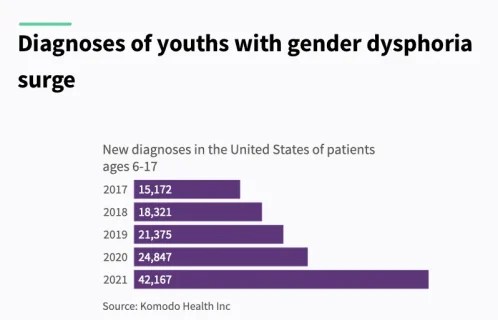
Children diagnosed with gender dysphoria—a condition defined by distress related to one’s biological sex or associated gender roles—are increasingly being offered powerful medical interventions.
These include puberty blockers, cross-sex hormones, and, in some cases, irreversible surgeries such as mastectomy, vaginoplasty, or phalloplasty.
An umbrella review from the US Department of Health and Human Services (HHS) states that “thousands of American children and adolescents have received these interventions,” despite a lack of solid scientific footing.
While advocates often claim the treatments are “medically necessary” and “lifesaving” the report concludes “the overall quality of evidence concerning the effects of any intervention on psychological outcomes, quality of life, regret, or long-term health, is very low.”
It also cautions that evidence of harm is sparse—not necessarily because harms are rare, but due to limited long-term data, weak tracking, and publication bias.
This 409-page report delivers a scathing review of the assumptions, ethics, and clinical practices driving gender-affirming care in the US.
An inversion of medical ethics
At the heart of the HHS critique is a reversal of medical norms.
“In many areas of medicine, treatments are first established as safe and effective in adults before being extended to paediatric populations,” the report explains. “In this case, however, the opposite occurred.”
Despite inconclusive outcomes in adults, these interventions were rolled out for children—without rigorous data, and with little regard for long-term, often irreversible consequences.
These include infertility, sexual dysfunction, impaired bone development, elevated cardiovascular risk, and psychiatric complications.
“The physical consequences are often irreversible,” the report warns.
Puberty blockers, frequently marketed as a reversible ‘pause,’ actually interrupt bone mineralisation at a critical growth stage—raising the risk of stunted skeletal growth and early-onset osteoporosis.
When followed by cross-sex hormones, as is common, the harms multiply. Known risks include metabolic disruption, blood clots, sterility, and permanent loss of sexual function.
Yet many clinics operate under a “child-led care” model, where a minor’s self-declared “embodiment goals” dictate treatment.
The report notes that some leading clinics conduct assessments “in a single session lasting two hours,” often with no robust psychological evaluation.
Consent and capacity
This raises a critical question: are children capable of consenting to life-altering medical interventions?
According to the HHS, informed consent means more than simple agreement—it requires a deep understanding of risks, alternatives, and long-term impact.
And by definition, children lack full legal and developmental capacity for medical decision-making.
“When medical interventions pose unnecessary, disproportionate risks of harm, healthcare providers should refuse to offer them even when they are preferred, requested, or demanded by patients,” the report states.
Supportive parents cannot shield clinicians from ethical responsibility. Many children who present for transition also have autism, trauma histories, depression, or anxiety—all of which can impair decision-making.
Yet clinicians frequently misread a child’s desire to transition as evidence of capacity.
The report warns that the current affirmation model “undermines the possibility of genuinely informed consent” and that the “true rate of regret is not known.”
This becomes especially urgent when the outcomes—sterility, bone loss, and sexual dysfunction—are permanent. Can a 13-year-old grasp what it means to forgo biological parenthood?
As the report suggests, the system has failed to distinguish between a young person’s wish to transition and their developmental ability to understand what that means long term.
A moral failure
The problem is not only medical—it’s moral.
The HHS accuses the medical establishment of abandoning its core duty: to protect vulnerable patients. Ideology and activism, it argues, have taken precedence over evidence and caution.
“The evidence for benefit of paediatric medical transition is very uncertain, while the evidence for harm is less uncertain,” it states.
Among the most disturbing trends highlighted in the report is the sidelining of mental health support.
Research suggests that most cases of paediatric gender dysphoria resolve without intervention. Yet clinicians continue to proceed with irreversible treatments.
“Medical professionals have no way to know which patients may continue to experience gender dysphoria and which will come to terms with their bodies,” the report explains.
The illusion of consensus
The report also takes aim at the idea that gender-affirming care enjoys universal professional backing. It reveals that many official endorsements come from small, ideologically driven committees within larger organisations.
“There is evidence that some medical and mental health associations have suppressed dissent and stifled debate about this issue among their members,” it warns.
Several whistleblowers have spoken out—often at considerable personal risk.
Jamie Reed, a former case manager at the Washington University Transgender Center, alleged that children were being rushed into medical transition without adequate psychological screening. Her testimony led to a state investigation and Senate hearing.
Clinical psychologist Erica Anderson, a transgender woman and former president of the US Professional Association for Transgender Health, has repeatedly raised concerns about the haste with which children are put on medical pathways.
Dr Eithan Haim, a surgeon in Texas, is now facing prosecution after revealing details about paediatric gender surgeries at a children’s hospital.
Rather than sparking debate, these whistleblowers have faced vilification, career damage, and in some cases legal consequences. The HHS suggests this culture of fear has stifled the scientific inquiry necessary for sound medicine.
Psychotherapy as an alternative
Instead of defaulting to hormones or surgery, the report urges a return to psychotherapy. Gender-related distress, it notes, often overlaps with broader psychological challenges that can be addressed non-invasively.
“There is no evidence that pediatric medical transition reduces the incidence of suicide, which remains, fortunately, very low,” the report finds.
Psychotherapy carries no documented harms and offers space for resolution and support. The HHS calls for greater investment in “psychotherapeutic management” as a safer and more ethical approach.
Restoring scientific integrity
Commissioned under President Trump’s Executive Order Defending Children’s Innocence by Ending Ideological Medical Interventions, the report responds to growing alarm over the medicalisation of minors.
Trump’s Executive Order directed federal agencies to evaluate practices to help “minors with gender dysphoria, rapid-onset gender dysphoria, or other identity-based confusion, or who otherwise seek chemical or surgical mutilation.”
It explicitly criticised “junk science” promoted by groups such as the World Professional Association for Transgender Health (WPATH), calling for a return to evidence-based standards and scientific discipline.
Rather than imposing new mandates, the HHS report focuses on delivering “the most accurate and current information available” to clinicians, families, and policymakers—urging caution and restraint.
“Our duty is to protect our nation’s children—not expose them to unproven and irreversible medical interventions,” said NIH Director Dr Jay Bhattacharya. “We must follow the gold standard of science, not activist agendas.”
Reform already underway
The HHS report lands amid a wave of legal reforms.
As of this year, 27 states have passed laws restricting or banning gender-affirming care for minors. These range from full bans on hormones and surgery to tighter consent requirements.
Nineteen of those laws were passed in 2023 alone, according to the Kaiser Family Foundation.
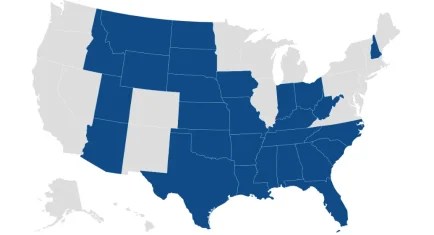
Over half of states have enacted laws/policies limiting youth access to gender affirming care
Though many face court challenges, the trend reflects mounting public concern over the medicalisation of gender-distressed youth. The HHS findings are expected to accelerate further scrutiny and legislative action.
Global shifts
The HHS review is part of a broader international movement to re-examine paediatric gender medicine.
In 2024, the UK’s Cass Review, led by paediatrician Dr Hilary Cass, delivered a landmark critique of NHS gender services. Cass concluded that the model had been adopted prematurely “based on a single Dutch study,” and lacked sufficient evidence.

Dr Hilary Cass, paediatrician
In response, the UK banned the routine use of puberty blockers and began closing the Tavistock gender clinic, replacing it with regional centres focused on holistic mental health care.
In Australia, the Queensland government took similar steps earlier this year, pausing all prescriptions of puberty blockers and cross-sex hormones for minors pending further review.
The move followed the suspension of Dr Jillian Spencer, a senior psychiatrist, from her clinical duties at Queensland Children’s Hospital after she raised concerns about the gender care protocols being used.
Her case has since become a focal point in Australia’s national debate on youth gender medicine.

Dr Jillian Spencer, paediatric psychiatrist, Queensland
A reckoning
The HHS report is more than a policy review—it is a warning.
It reveals that thousands of children—many struggling with underlying psychological issues—have been placed on a path of irreversible medicalisation without the basic safeguards expected in any other area of healthcare.
The report concludes that gender medicine has been practised backwards – treatments were introduced first, and only later did the search for evidence begin.
It calls for a course correction—one that puts evidence before ideology, and ethics above political expediency.
Whether institutions will act on its findings remains to be seen. But for families searching for answers, the report may finally provide the long-overdue clarity that has been obscured by years of activism and politics.
Did the Israeli Embassy Order My Arrest?
Richard Medhurst | May 3, 2025
Emails show Israeli foreign influence in UK’s legal system: the Attorney General’s Office provided the Israeli Deputy Ambassador with contact information of UK prosecutors and counterterrorism police, in the same period that journalist Richard Medhurst and other British reporters and activists were arrested by CT police in a government crackdown. This raises questions about the impartiality of the Crown Prosecution Service and the degree of foreign meddling in the UK’s judiciary.
Support the show on Patreon: patreon.com/richardmedhurst
Donate on PayPal: https://paypal.me/papichulomin
Donate on GoFundMe: http://tiny.cc/GoFundMe-Richard
Bitcoin address: bc1qnelpedy2q6qu67485w4wnmcya5am873zwxxvvp
Subscribe to Richard Medhurst on other platforms here: Rumble: https://rumble.com/richardmedhurst
Rokfin: https://rokfin.com/richardmedhurst
Odysee: https://odysee.com/@richardmedhurst
Substack: https://richardmedhurst.substack.com/
Richard Thomas Medhurst (1992) is an independent journalist, political commentator, and analyst from the United Kingdom with a focus on international affairs, US politics, and the Middle East. Medhurst is known for his coverage of the Julian Assange extradition case in London, as one of the only journalists to report on the trial of the WikiLeaks founder from inside the court.
He has also covered the Iran nuclear deal talks on the ground in Vienna. Medhurst was born in Damascus, Syria.
His father is English and mother is Syrian. Both his parents served in United Nations Peacekeeping and Observer missions and were among the UN Peacekeepers awarded the Nobel Peace Prize in 1988. Owing to his parents’ professional mobility, he has lived in Syria, Pakistan, Switzerland, and Austria. He speaks four languages fluently: English, Arabic, French, and German.
As an independent journalist, Medhurst regularly hosts live broadcasts and video reports on his YouTube channel. Previous guests include the Foreign Minister of Venezuela, the Dep Foreign Minister of Iran; the Palestinian, Russian and Cuban ambassadors to the United Nations in Vienna; the former British Ambassador to Syria; and various UN officials, journalists, and more. Medhurst’s reports and analysis on Yemen, Ukraine, Syria, Niger, Lebanon, Iran, the Israeli occupation in Palestine and its genocide in Gaza have gone viral countless times, racking up millions of views.
Richard Medhurst has a combined following of roughly one million people online, and appears regularly on international news outlets including Al Jazeera, WikiLeaks, Black Agenda Report, Al Mayadeen, The Times, LBC, and others.
Farage’s party making big gains in local British elections
RT | May 3, 2025
The right-wing Reform UK party has won 677 out of more than 1,600 seats in England’s local elections, while the Labour and the Conservative parties suffered heavy defeats across the country.
As results began to trickle in on Friday, the party led by firebrand and Brexit proponent Nigel Farage emerged as the strongest performer in contests held in 23 local authorities across England, winning control of ten councils. These included eight taken from the Conservatives – Derbyshire, Kent, Lancashire, Lincolnshire, North Northamptonshire, Nottinghamshire, Staffordshire and West Northamptonshire — along with Doncaster from Labour and Durham, where no party previously had a majority.
Reform also won hard-fought parliamentary by-elections in Runcorn and Helsby, snatching victory from Labour by just six votes after a recount. As a result, the party now controls five seats in the UK Parliament.
According to a BBC projection, if a general election were held today, Reform UK would receive 30% of the vote, ahead of Labour at 20% and the Conservatives at 15%. However, the next general election is not due until May 2029. The last one was held last year and saw Labour secure a landslide victory, riding a wave of public dissatisfaction with the economic policies of the Tories.
Commenting on his party’s strides, Farage remarked: “In post-war Britain, no one has ever beaten both Labour and the Tories in a local election before. These results are unprecedented… Reform can and will win the next general election.”
UK Prime Minister Keir Starmer said that while he felt a “sharp edge of fury,” he said he understood the voters’ choice while promising to “go further and faster in pursuit of… national renewal.” Meanwhile, Conservative Party leader Kemi Badenoch bluntly acknowledged that the elections were a predictable “bloodbath,” stressing that the Tories must continue work to rebuild trust in the party.
Reform UK’s rise has been driven by voter frustration over high levels of immigration, the rising cost of living, and what many see as years of mismanagement by both major parties. The party campaigned heavily on promises to cut migration – including by small boat crossings – lower taxes, and reduce council spending, positioning itself as the only alternative to what it calls “a failed political establishment.”
From the United States to Europe, criticizing Israel is becoming a crime
By Kit KLARENBERG | MintPress News | April 29, 2025
Across the United States and much of the West, criticism of Israel and solidarity with Palestine are increasingly being criminalized—a project long championed by Israel’s government and its powerful lobbying networks.
In February 2020, Israeli leader and internationally wanted war criminal Benjamin Netanyahu proudly declared that Tel Aviv had “promoted laws in most U.S. states” to punish those who boycott Israel, offering a rare glimpse into the foreign forces eroding free speech in the American heartland.
Since then, anti-boycott laws have quietly spread to dozens of states, forcing public institutions, businesses, and even individual contractors to pledge loyalty to Israel—or risk losing jobs, contracts, and funding. What began as a niche effort to shield Tel Aviv from grassroots criticism has rapidly escalated into a sweeping assault on free speech across the Western world.
The overwhelming majority of states now boast laws making it illegal for local entities, including hospitals and schools, to work with individuals or companies that boycott Israel. For example, in 2016, Indiana’s Senate unanimously passed a law calling for mandatory divestment by state agencies, commercial enterprises, and nonprofit organizations—including universities—from any firm involved in “the promotion of activities to boycott, divest from, or sanction Israel.”
The legislation branded boycotts against Israel as “antithetical and deeply damaging to the cause of peace, justice, equality, democracy and human rights for all people in the Middle East.”
Several states have adopted comparable laws via governors signing administrative and executive orders. In some cases, state contractors—be they individuals or organizations—are legally obligated to demonstrate their anti-BDS credentials by signing contractual affirmations of non-support for BDS, which critics argue is essentially a loyalty oath to Israel.
State employees, including teachers, have lost their jobs for refusing to do so. In May 2021, a federal judge ruled such legislation in Georgia to be “unconstitutional compelled speech.” Undeterred, Georgia Governor Brian Kemp reintroduced the requirement just months later with slight amendments.
Israel’s extraordinary and ever-growing influence over domestic U.S. laws in recent years, and the devastating consequences for Palestinian solidarity at home and abroad, have passed without much critical mainstream acknowledgement, let alone censure.
Since October 7, the push to criminalize pro-Palestinian sentiment Stateside and the media’s mass omertà (code of silence) on this disturbing crusade have both intensified significantly. However, such disquieting developments aren’t restricted to the U.S., but eagerly embraced by an ever-growing number of countries intimately complicit in the Gaza genocide.
‘Drastic Rise’
In a grave testament to the speed with which U.S.-based pro-Israel organizations, including several prominent Jewish advocacy groups, sought to capitalize on October 7 for their own purposes, two-and-a-half weeks after Palestinian fighters breached Gaza’s infamous apartheid walls, Republican lawmaker Mike Lawler proposed H.R. 6090, also known as the Antisemitism Awareness Act.
Lawler is a major recipient of Israeli lobby funds, with the influential lobbying group AIPAC gifting him $392,669 in 2023 and 2024 alone, his largest donor by some margin. His bill would require the Department of Education to consider the highly controversial International Holocaust Remembrance Alliance (IHRA) working definition of antisemitism (which critics argue conflates criticism of Israel with antisemitism) when determining if cases of harassment are motivated by antisemitism, raising concerns that it would violate the intent of Title VI of the Civil Rights Act of 1964.
This, its proponents argue, “prohibits discrimination on the basis of race, color, and national origin in programs and activities receiving federal financial assistance,” including colleges and universities. H.R. 6090 is openly supported by nearly all influential pro-Israel organizations, including the ADL.
The IHRA definition has been condemned by many, including attorney Kenneth Stern, who helped draft it, for falsely conflating legitimate criticism of Israel with antisemitism. The ACLU warns that H.R. 6090 raises the clear risk that U.S. educational facilities will “restrict student and faculty speech critical of the Israeli government and its military operations,” for fear of “losing federal funding.”
Longstanding U.S. law already prohibits antisemitic discrimination and harassment by federally funded entities, making the proposed legislation completely unnecessary.
Despite the obvious and dire threats to fundamental freedoms posed by the bill, and even harsh criticisms from major Jewish groups (such as J Street and Jewish Voice for Peace), it received barely any mention by major news outlets. Still, Congress supported it by an overwhelming majority, voting 320 to 91 in its favor.
Senators nonetheless failed to consider the legislation, prompting Congressman Josh Gottheimer, who received $797,189 from AIPAC in 2023 and 2024, to reintroduce the bill in February. In the meantime, U.S. lawmakers again took a deeply worrying step in Israel’s clear favor.
On November 28, 2023, Congressman David Kustoff—another AIPAC beneficiary—introduced a House Resolution “strongly condemning and denouncing the drastic rise of antisemitism” in the U.S. and “around the world” following October 7. Citing the IHRA’s antisemitism definition, it declared that popular Palestine solidarity chants—protected by the First Amendment—“From the River to the Sea,” “Palestine Will Be Free,” and “Gaza Will Win” to be genocidal, and claimed that a candlelit vigil at the Democratic National Committee that month had endangered lives.
It concluded by calling on Congress to “clearly and firmly [state] that anti-Zionism is antisemitism,” which they did inordinately. In all, 311 lawmakers voted for the Resolution, with just 14 against.
Niko House, a media personality and activist specializing in civil rights and anti-imperialist issues, believes that these efforts are desperate attempts to justify legal measures that threaten civil liberties and would be unthinkable if any other country were in the crosshairs—including the U.S. itself.
“If enacted, these laws will give authorities broad license to persecute anyone and everyone who calls attention to the unprecedented levels of discrimination Palestinians experience today, and have done for over 75 years,” House tells MintPress. He reserves particular contempt for H.R. 6090:
“As a Black man, I find it deeply insulting [that] Congress would exploit the Civil Rights Act to silence, if not criminalize, pro-Palestine sentiment. Whether it be segregation, freedom to attend whatever educational institution or pursue whatever career you choose, or equal and indiscriminate access to facilities and basic sustenance like food and water, Palestinians have been suffering from the very forms of discrimination the Act was created to protect against ever since Israel’s creation. And the Gaza genocide has made all of this even worse.”
‘Targeting Critics’
Such brazen pro-Israeli lawfare is a longstanding tradition in modern American politics. In 1977, two amendments to the Export Administration Act and the U.S. Tax Code were passed. In theory, they prohibited U.S. citizens and companies from complying with foreign boycotts against any country considered “friendly” to Washington. In reality, it was specifically intended to counteract the long-running embargo of Israel by the Arab League. Most U.S. allies adopted the prohibition, in some cases ironically damaging their relations with Israel.
Then in 1987, Ronald Reagan designated the Palestine Liberation Organization (PLO)—at the time recognized almost universally as the Palestinian people’s legitimate representatives—a terrorist entity, but enacted a waiver the next year permitting “contact” between White House officials and the group.
This fudge meant the Organization was forced to shut down its D.C. office and cease most of its formal international diplomatic and fundraising initiatives, but allowed U.S. authorities to continue to engage with its leadership without legal repercussions.
There are sinister historical echoes, too, in yet another post-October 7 Congressional move in the U.S. On December 12, 2023, Mariannette Miller-Meeks, a fervently pro-Israel lawmaker who has received vast sums from the Israeli lobby while cosponsoring and voting in favor of multiple pro-Israel measures that critics argue suppress Palestinian rights and run afoul of the First Amendment, proposed H.R. 6578. It calls for the creation of an official “Commission to Study Acts of Antisemitism” in the U.S.
The legislation’s clauses exclusively refer to “antisemitism” in the context of criticism of Israel’s actions in Gaza after October 7. Its accompanying press release clearly shows that Palestine solidarity activists are its intended targets, particularly college and university students. Under its auspices, a formal Congressional investigation into opposition to Israel among U.S. citizens and organizations would be instigated, and any witness subpoenaed to give evidence would be barred from invoking their constitutional right to remain silent under questioning.
Lara Friedman, Middle East Forum for Peace President, slammed the proposal as a malign attempt to construct a modern equivalent to the infamous House Un-American Activities Committee (which investigated suspected supporters of communism during the Cold War). Established by Senator Joe McCarthy in 1938, the Committee probed the political leanings of private citizens, state employees, and public and government organizations. In the process, countless careers and lives were destroyed. Friedman charges H. R. 6578 will, by design, do the same—“but this time targeting critics of Israel.”
‘Disruptive Policies’
It would be wrongheaded to view this wave of repressive laws as unique or isolated to the U.S., or exclusively a product of the Gaza genocide. In the wake of October 7, authorities in Germany, which quietly supported Israel’s illicit nuclear weapons program for years, unleashed an unprecedented crackdown against Palestine solidarity activists and groups. The repression came in the form of brutal assaults on protest attendees of all ages and genders, city and state courts convicting people for leading pro-Palestinian chants, and restrictions on speaking foreign languages at public demonstrations.
German city and state governments have banned or are considering banning displays of red triangles (a symbol adopted by some Palestinian resistance fighters). As of June 2024, applicants for German citizenship are now tested on their knowledge of Judaism and Jewish life. They must declare their belief in Israel’s right to exist to prove their commitment to “German values.” Legal experts and rights advocates have widely questioned the constitutionality of requiring political support for a foreign state as a condition for citizenship.
This wave of legal repression is not confined to Germany. Across the English Channel, British authorities have similarly intensified their crackdown on dissent. In February 2024, three individuals were convicted of terror offenses in Britain after displaying images of paragliders at a Palestine solidarity protest on the controversial grounds that it amounted to “glorification of the actions” of Hamas. Since then, multiple British pro-Palestinian activists and journalists have been arrested, raided, and prosecuted over allegations of “supporting” Hamas. In December 2024, the UN sounded an alarm over London’s “vague and over-broad” counter-terror legislation.
These laws do not define the term ‘support,’ which the UN believes raises the risk of dissenting individuals who cannot plausibly be accused of endorsing “violent terrorist acts” by proscribed groups, including their political wings, being caught up in the legislation’s sweeping dragnet. Undeterred, authorities have only intensified their harassment of Palestine solidarity voices since.
Naila Kauser, an activist currently wanted for questioning by counter-terror police in London for pro-Palestinian statements she purportedly made on social media, tells MintPress News :
“Attacks against activists and journalists who speak out against the genocide in Palestine can only be described as an abuse of law, in service of fascism. It is the British state that is violating multiple world laws, including the Genocide Convention, by continuing to support Israel through intelligence-sharing, arms trade, and diplomatic protection of Israeli war criminals, as we saw recently with the Israeli Foreign Minister’s not-so-secret visit to London. Britain proscribing those who fight occupation also undermines their internationally recognised legal right to resist.”
Electronic Intifada editor Asa Winstanley, whose London home was raided and digital devices seized by counter-terror police at dawn in October 2024, suggests to MintPress News that the British government’s December 2016 adoption of the IHRA’s misdefinition of antisemitism may have played a role in the wave of repression targeting “legitimate dissent, protest, and political action” against crimes committed by the Israeli state. He says that the controversial definition, reportedly influenced by Israeli intelligence, “does nothing to protect Jews or anyone else — its primary aim is to criminalize Palestinians and their supporters.”
Winstanley cites the striking example of a London council in 2019 using the IHRA’s definition of antisemitism to ban a local pro-Palestinian bike ride seeking to raise money for sports equipment for Gazan children from traveling through its parks. “This wasn’t a direct action, it wasn’t anything to do with Jewish people, it wasn’t discrimination, it was pure solidarity of the fluffiest kind, and even this was officially found to fall foul of the IHRA definition,” Winstanley warned.
‘Moral Authority’
In June 2023, the ponderously titled Economic Activity of Public Bodies (Overseas Matters) Bill began making its way through British Parliament. Its purpose is to ban any public bodies conducting their investments and procurement “in a way that indicates political or moral disapproval of a foreign state.”
An accompanying press release made clear the legislation’s explicit purpose was protecting “businesses and organizations” affiliated with Israel. Michael Gove, the then-government minister who introduced the law, said of BDS efforts:
“These campaigns not only undermine the UK’s foreign policy but lead to appalling antisemitic rhetoric and abuse. That is why we have taken this decisive action to stop these disruptive policies once and for all.”
The array of organizations affected is gargantuan, ranging from local councils to universities, and the implications are grave in every way. Institutions can be investigated solely at the personal discretion of government officials and face voluminous fines for breaches. During the 1980s, when the British government refused to sanction or condemn South Africa, the very entities targeted by this legislation boycotted the Apartheid state. If the new law were in effect at the time, such activities would have been entirely illegal.
Exacerbating matters further, the anti-BDS Act violates multiple UN rulings and contradicts the British government’s own stated positions. London’s official stance for decades has been that Israeli settlements “are illegal under international law, constitute an obstacle to peace and threaten a two-state solution to the Israeli-Palestinian conflict.” As such, Britain’s private sector is actively discouraged by authorities from conducting business there. Yet, public bodies may now be legally prohibited from following this very precept.
Still, there remains one potential legal avenue of resistance. As MintPress News has previously reported, multiple legal findings and precedents indicate countries party to the Genocide Convention, as Britain is, must “employ all means reasonably available” to prevent genocide. What’s more, failing to stop providing aid or assistance to a state engaged in genocide could violate Article I of the Convention. This could provide legal protection from London’s new anti-BDS law. As activist Naila Kauser, herself a target of London’s latest measures, concludes:
“Laws that defend genocide have no legitimacy, and states enforcing them and enabling the genocide have no moral authority. They want us to shut up, but we must continue to resist these attacks, as well as the ongoing genocide, in any way we can until Palestine is liberated.”
Why Could The UK and France Recognize Palestine? Spoiler – It’s Not About Sympathy
Sputnik – May 1, 2025
There’s a bigger game at play, geopolitical analyst Mehmet Rakipoglu tells Sputnik.
- Strategic autonomy: Recognizing Palestine may not yield immediate political gain – but it could be a move to challenge US hegemony, noted the researcher at UK-based Dimensions for Strategic Studies think tank. It could send a message that London and Paris are not pawns of the US and Israel or fully aligned with Donald Trump policies, he added.
- Public pressure: The British and French governments are not suddenly sympathetic to the Palestinian cause – domestic protests and global outrage over Israel’s genocidal actions in Gaza have forced their hand, argues the pundit. Anti-Zionist sentiment is surging in all Western capitals, with silence no longer an option for British and French leaders.
- ️Ethical crossroads: If the UK and France claim to uphold Western values, staying silent on Israel’s war in Gaza creates a moral dilemma, noted the analyst, since you cannot preach human rights and ignore genocide.
Moderna in Trouble in UK for Offering Kids Money and Teddy Bears to Participate in COVID Vaccine Trials
By Brenda Baletti, Ph.D. | The Defender | April 28, 2025
Pharma giant Moderna faces suspension or expulsion from a U.K. trade group for breaking several industry rules, including offering children teddy bears and large payments to participate in COVID-19 trials, The Telegraph reported.
The vaccine maker is facing an audit by the Prescription Medicines Code of Practice Authority (PMCPA), an independent, self-regulatory body established by the Association of the British Pharmaceutical Industry, which it joined in 2023.
In a ruling expected to be made public in the coming days, the company was found to have committed several violations of industry rules, including misleading the regulator about when it became aware that financial incentives were being offered to children.
If sanctioned, Moderna will be only the tenth company in 40 years to be suspended from the PMCPA, according to The Telegraph.
The PMCPA said the company’s practices were “unacceptable” and damaged the industry’s reputation.
In October 2024, the regulator fined Moderna 14,000 pounds ($18,788) after the Children’s Covid Vaccine Advisory Council submitted a complaint about “inappropriate financial inducement” offered to children and their parents to participate in the vaccine maker’s clinical trial for COVID-19 vaccines.
The complaint criticized Moderna for initially offering children’s families 1,505 pounds ($2,020) to participate in its NextCOVE clinical trial, testing Moderna’s mRNA vaccine in children ages 12 and up.
The council cited concerns raised by the research ethics committee that approved the clinical study, which said the payment offered, “placed the children at risk of coercion.” The organization required that Moderna reduce the offer before recruitment could begin.
Moderna reduced the amount to 185 pounds ($248), yet at least one clinical trial site continued to offer the high payments.
Moderna claimed it took action as soon as it was notified about the continued high cash offer in January 2024. However, new evidence shows that the U.K. children’s health advocacy group UsForThem informed senior executives of the issue in August 2023, but Moderna took no action.
In February of this year, the company was ordered to pay nearly 44,000 pounds ($59,049) after 12-year-olds were offered a teddy bear to join the same trials. Advertisements aimed at children told them, “All our junior volunteers get a lovely certificate and a ‘be part of the research’ teddy bear.” At least two online articles also directly target children.
The U.K.’s Medicines for Human Use Regulations prohibit offering financial or other incentives to children and families to participate in clinical trials.
In a separate charge against the company, a senior employee co-authored three articles promoting Moderna’s COVID-19 shot and posted tweets promoting the shot without disclosing that he worked for the company.
The employee co-authored one of the articles with Nadhim Zahawi, who was serving as the U.K.’s “vaccines minister.”
PMCPA said the article and tweets were advertising the vaccine and said the failure to inform readers that he worked for Moderna was “unacceptable,” according to The Telegraph.
The vaccine incentives and vaccine advertising amounted to 10 new breaches of industry code, requiring an audit to examine Moderna’s culture, governance and framework, PMCPA said.
When the audit concludes, the Appeal Board will consider whether the actions merit further sanctions.
Molly Kingsley, UsForThem founder, told The Telegraph :
“Many of the previous judgments against Moderna have revealed how readily it put profit ahead of the health and safety of children. Now it has also laid bare just how little regard it has had for the regulatory system that was supposed to keep it honest.
“Never before has a company so new to the pharmaceutical industry been rebuked in this way.”
Critics argue that the small fines aren’t enough to change the company’s behavior.
Esther McVey, a former member of the all-party parliamentary group on COVID-19 vaccine damage, told The Telegraph :
“The news that the PMCPA is taking the highly unusual step of ordering an audit of Moderna’s culture, governance and compliance framework is reputationally damaging, but it is incredible that the regulator has no real power to impose appropriate fines or other meaningful penalties which might make pharmaceutical companies think twice before breaking the rules.
“They know they can get away with it, and so they do; time and time again. It’s hardly surprising that public trust in the pharmaceutical industry and its regulators is through the floor.”
Moderna did not respond by deadline to The Defender’s request for comment.
This article was originally published by The Defender — Children’s Health Defense’s News & Views Website under Creative Commons license CC BY-NC-ND 4.0. Please consider subscribing to The Defender or donating to Children’s Health Defense.
New investigation reveals UK firm supplying engines for Israeli drones
Al Mayadeen | April 28, 2025
A report published by Declassified UK on Monday revealed that a British company is supplying engines for “Israel’s” newest line of military drones, raising fresh concerns about UK complicity in the Gaza genocide.
RCV Engines, a Dorset-based engineering firm specializing in multi-fuel internal combustion engines, has been identified as the manufacturer of the propulsion system for the APUS 25 drone, developed by Israel Aerospace Industries (IAI), an Israeli government-owned weapons manufacturer. The APUS 25 is marketed as a “revolutionary long-endurance TactiQuad” and designed to “redefine tactical drone operations for ground and maritime forces worldwide,” according to IAI.
The drone’s advanced design enables it to perform “offensive operations,” including deploying weapons systems, thereby offering “a new dimension to tactical air support in combat scenarios,” the company notes. IAI promotional materials reveal the drone’s engine bearing the RCV Engines logo, confirming the British firm’s involvement. Until now, RCV’s ties to the Israeli defense sector had not been made public.
Drone Complicity
The revelation that UK-made components are being integrated into weaponized drones comes amid heightened scrutiny over British arms sales to “Israel.” Footage emerging from Gaza in recent months shows Israeli quadcopters dropping bombs and firing on civilians. Retired surgeon Nizam Mamode recounted before British MPs in November: “The drones would come down and pick off civilians – children.” He added, “We [were] operating on children who would say: ‘I was lying on the ground after a bomb had dropped and this quadcopter came down and hovered over me and shot me.'”
Moreover, Israeli drones have reportedly been used to broadcast the sound of crying babies to lure Palestinians into open spaces, where they were then targeted.
Despite recent announcements by UK Foreign Secretary David Lammy suspending around 30 arms export licences to “Israel,” it appears that engines produced by RCV Engines may have evaded these restrictions. In 2022, RCV stated that it had been granted an export licence exemption for global shipments, meaning its drone engines were “removed from the export control list” in Britain. On its LinkedIn page, the company credited this exemption with enabling faster shipping, fewer bureaucratic hurdles, and increased global sales.
The political support RCV received was also acknowledged publicly. The company thanked local Conservative MP Sir Christopher Chope for his role in lobbying for the licence exemption. RCV said, “The success that we have seen since 2022, which is directly linked to the export control status, has meant RCV has been steadily growing.”
Export Loophole
Emily Apple from the Campaign Against Arms Trade (CAAT) criticized the situation, saying: “Labour urgently needs to reverse this decision and close this loophole. It’s beyond time it ended its complicity in genocide and prioritised Palestinian lives over the profits of the arms industry.” She added, “Removing RCV Engines from export licence controls is utterly outrageous. This makes a mockery of Labour’s already flimsy decision to suspend just 30 export licences to Israel and appears to create a massive loophole in the export licensing regulations.”
When contacted, the Department for Business and Trade declined to comment on individual companies, and RCV Engines also did not respond.
Meanwhile, IAI continues to develop more advanced models, such as the APUS 60, aiming for greater endurance and payload capacity, although it remains unclear if RCV will continue supplying engines for future versions.
Read more: Britain helping ‘Israel’s’ nuclear force: Declassified UK
The Kellogg framework is a disaster for Trump
By Alastair Crooke | Strategic Culture Foundation | April 28, 2025
Political warfare in Washington is endemic. But the body count at the Pentagon has started to rise precipitously. Three of Secretary of Defence Hegseth’s top advisors were placed on leave, and then fired. The war continues, with the Secretary now in the firing line.
Why this matters is that the Hegseth attrition comes amid fierce internal debates in the Trump administration about Iran policy. Hawks want an definitive elimination of all Iran’s nuclear and weapons capabilities, whilst many ‘restrainers’ warn against military escalation; Hegseth reportedly was amongst those warning against an intervention in Iran.
The recent Pentagon dismissals have all been identified as restrainers. One of the latter, Dan Caldwell, formerly Hegseth’s Top Adviser and an army veteran, wrote a post slamming the ‘Iran Hawks’ – and subsequently was fired. He was later interviewed by Tucker Carlson. Notably, Caldwell describes in scathing terms America’s wars in Iraq and Syria (“criminal”). This adverse sentiment concerning America’s earlier wars is a rising theme, it seems, amongst U.S. Vets today.
The three Pentagon staffers essentially were fired, not as ‘leakers’, but for talking Hegseth out of supporting war on Iran, it would appear; the Israeli-Firsters, have not given up on that war.
The inflamed fault lines between hawks and traditionalist ‘Republicans’ bleed across into the Ukraine issue, even if the faction membership may alter a tad. Israeli-Firsters and U.S. hawks more generally, are behind both the war on Russia and the maximalist demands on Iran.
Conservative commentator Fred Bauer observes that when it comes to Trump’s own war impulses, they are conflicted:
“Influenced by the Vietnam War of his youth … Trump seems deeply averse to long-term military conflicts, yet, at the same time, Trump admires a politics of strength and swagger. That means taking out Iranian generals, launching airstrikes on the Houthis, and boosting the defence budget to $1 trillion”.
Hegseth’s potential exit – should the campaign for his removal succeed – could cause the struggle to grow fiercer. Its first casualty is already apparent – Trump’s hope to bring a quick end to the Ukraine conflict is over.
This week, the Trump team (including both warring factions, Rubio, Witkoff and General Kellogg) met in Paris with various European and Ukrainian representatives. At the meeting, a Russian-Ukrainian unilateral ceasefire proposal was mooted by the U.S. delegation.
After the meeting, at the airport, Rubio plainly said that the ceasefire plan was ‘a take-it-or-leave-it’ U.S. initiative. The various sides – Russia, Kiev and the European members of the ‘coalition of the willing’ – had only days to accept it, or else the U.S. was ‘out’, and would wash its hands of the conflict.
The framework presented, as reported, is almost (maybe 95%) unadulteratedly that previously proposed by General Kellogg: i.e. it is his plan, first aired in April 2024. It appears that the ‘Kellogg formula’ was adopted then as the Trump platform (Trump was at the time in mid-campaign, and unlikely to have been following the complicated minutiae of the Ukraine war too closely).
General Kellogg is also the likely source for Trump’s optimism that the ending to the Ukraine war could come with a click of Trump’s fingers – through the limited application of asymmetric pressures and threats on both belligerents by Trump – and with the timing decided in Washington.
In short, the plan represented a Beltway consensus that the U.S. could implement a negotiated end-state with terms aligned to U.S. and Ukrainian interests.
Kellogg’s implicit assumptions were that Russia is highly vulnerable to a sanctions threat (its economy perceived as being fragile); that it had suffered unsustainably high casualties; and that the war was at a stalemate.
Thus, Kellogg persuaded Trump that Russia would readily agree to the ceasefire terms proposed – albeit terms that were constructed around patently flawed underlying assumptions about Russia and its presumed weaknesses.
Kellogg’s influence and false premises were all too evident when Trump, in January, having stated that Russia had lost one million men (in the war) then went on to say that “Putin is destroying Russia by not making a deal, adding (seemingly as an aside), that Putin may have already made up his mind ‘not to make a deal’”. He further claimed that Russia’s economy is in ‘ruins’, and most notably said that he would consider sanctioning or tariffing Russia. In a subsequent Truth Social post, Trump writes, “I’m going to do Russia – whose Economy is failing – and President Putin, a very big FAVOR”.
All of Kellogg’s underlying assumptions lacked any basis in reality. Yet Trump seemingly took them on trust. And despite Steve Witkoff’s subsequent three lengthy personal meetings with President Putin, in which Putin repeatedly stated that he would not accept any ceasefire until a political framework had been first agreed, the Kellogg contingent continued to blandly assume that Russia would be forced to accept Kellogg’s détente because of the claimed serious ‘setbacks’ Russia had suffered in Ukraine.
Given this history, unsurprisingly, the ceasefire framework terms outlined by Rubio this week in Paris reflected those more suited to a party at the point of capitulation, rather than that of a state anticipating achieving its objectives – by military means.
In essence, the Kellogg Plan looked to bring a U.S. ‘win’ on terms aligned to a desire to keep open the option for continuing attritional war on Russia.
So, what is the Kellogg Plan? At base, it seeks to establish a ‘frozen conflict’ – frozen along the ‘Line of Conflict’; with no definitive ban on NATO membership for Ukraine, (but rather, envisaging a NATO membership that is deferred well into the future); it places no limits on the size of a future Ukrainian army and no restrictions on the type or quantity of armaments held by the Ukrainian forces. (It foresees, contrarily, that after the ceasefire, the U.S. might re-arm, train and militarily support a future force) – i.e. back to the post-Maidan era of 2014.
In addition, no territory would be ceded by Ukraine to Russia, save for Crimea which alone would be recognised by the U.S. as Russian (the unique sop to Witkoff?), and Russia would only ‘exercise control’ over the four Oblasts that it currently claims, yet only up to the Line of Conflict; territory beyond this line would remain under Ukrainian control (see here for the ‘Kellogg map’). The Zaporozhye Nuclear Power Plant would be neutral territory to be held, and managed, by the U.S. There is no mention made of the cities of Zaporozhye and Kherson that have been constitutionally incorporated into Russia, but lie beyond the contact line.
Nothing about a political solution apparently was outlined in the plan, and the plan leaves Ukraine free to pursue its claim to all Ukraine’s former territories – save for only Crimea.
Ukrainian territory west of the Dnieper River however, would be divided into three zones of responsibility: British, French and German zones (i.e. which NATO forces would manage). Finally, no American security guarantees were offered.
Rubio subsequently passed details of the plan to Russian FM Lavrov, who calmly stated that any ceasefire plan should resolve the underlying causes to the conflict in Ukraine as its first task.
Witkoff flies to Moscow this week to present this ‘pig’s ear’ of a plan to Putin – seeking his consent. The Europeans and Ukrainians are set to meet next Wednesday in London to give their riposte to Trump.
What’s next? Most obviously, the Kellogg Plan will not ‘fly’. Russia will not accept it, and likely Zelensky will not either, (though the Europeans will work to persuade him – hoping to ‘wrong-foot Moscow’ by presenting Russia as the essential ‘spoiler’). Reportedly, Zelensky already has rejected the Crimea provision.
For the Europeans, the lack of security guarantees or backstop by the U.S. may prove to be a killer for their aspiration to deploy a tripwire troop deployment to Ukraine, in the context of a ceasefire.
Is Trump really going to wash his hands of Ukraine? Doubtful, given that the U.S. neo-conservative institutional leadership will tell Trump that to do so, would weaken America’s ‘peace through strength’ narrative. Trump may adopt supporting Ukraine ‘on a low flame’ posture, whilst declaring the ‘war was never his’ – as he seeks a ‘win’ on the business front with Russia.
The bottom line is that Kellogg has not well-served his patron. The U.S. needs effective working relations with Russia. The Kellogg contingent has contributed to Trump’s egregious misreading of Russia. Putin is a serious actor, who says what he means, and means what he says.
Colonel Macgregor sums it up thus:
“Trump tends to view the world through the lens of dealmaking. [Ending the Ukraine war] is not about dealmaking. This is about the life and death of nations and peoples. There’s no interest in some sort of short-fused deal that is going to elevate Trump or his administration to greatness. There will be no win for Donald Trump personally in any of this. That was never going to be the case”.
Google DeepMind workers push for unionization over company’s Israeli ties
Press TV – April 27, 2025
Employees at Google DeepMind’s London office have initiated efforts to unionize in response to the tech giant’s decision to provide its artificial intelligence (AI) technology to defense entities and maintain connections with the Israeli regime.
Reports on Saturday indicated that around 300 workers at DeepMind, the AI division of Google in London, have sought membership with the Communication Workers Union in recent weeks.
DeepMind employees’ decision began when Google updated its approach to AI technology and dropped its militarization clause from its ethical pledge (AI Principles).
In its previous version of AI Principles, Google had included a commitment clause to not pursue AI technologies that “cause or are likely to cause overall harm”, especially in weapons and surveillance that violate “internationally accepted norms.”
The revised version of AI Principles, states that the company pursues AI “responsibly” and in line with “widely accepted principles of international law and human rights”, but does not include the previous language about weapons and surveillance.
The tension between DeepMind and its parent company further increased when a whistle-blower revealed that Israel had been using their technology to generate targets for assassinations and attacks in Gaza, where close to 51,500 Palestinians have been killed so far.
After the revelation about the Israeli regime’s use of DeepMind AI in the Gaza war, several employees quit the company.
“We’re putting two and two together and think the technology we’re developing is being used in the [Gaza war],” said one engineer involved in the unionization effort.
“This is basically cutting-edge AI that we’re providing to an ongoing [war]. People don’t want their work used like this,” he added.
The effort to unionize needs to be recognized by the company through a vote among DeepMind employees in the UK. The company has around 2,000 staff in London.
If the unionization effort succeeds, the employees will demand that Google nullify its military contracts.
If Google still decides to sell its technologies for military purposes, then the employees have the right to go on strike.
“What I hope and what people who are active are hoping is that we stay away from any military contracts,” said one of the organizers of the unionization effort.
The Israeli regime already has a $1.2bn cloud computing agreement with Google and Amazon, called Project Nimbus.
The case of Raffi Berg and BBC: Zionist infiltration of the mainstream media
By David Miller | Press TV | April 26, 2025
British journalist Owen Jones recently wrote at length about the background, commitments, and active role that Raffi Berg plays in enforcing the pro-Zionist line at the BBC.
Berg is the Middle East (West Asia) editor at BBC Online, but he appears to have a much greater gatekeeping role in practice.
Jones’ research amply bears out the view that anti-Zionists have been encouraging for some time now, which is that Zionist infiltration of the media and other public institutions is a significant problem and amounts to colonization of public space on behalf of a genocidal foreign entity.
But this is not how Jones sees things, with the result that he markedly pulls his punches.
It is clear from what Jones writes that Berg is a fanatical, genocidal Jewish supremacist. Jones also makes it clear that Berg plays a pivotal enforcement role inside the corporation, such that all stories about the ‘Middle East’ have to be checked with him. Jones writes:
In addition to what they see as a collective management failure, journalists expressed concerns over bias in the shaping of the Middle East index of the BBC News website. Several allege that Berg “micromanages” this section, ensuring that it fails to uphold impartiality. “Many of us have raised concerns that Raffi has the power to reframe every story, and we are ignored,” one told me… “Almost every correspondent you know has an issue with him,” one said. “He has been named in multiple meetings, but they just ignore it.”… Berg’s influence has a ripple effect, the journalists say. While BBC broadcasters write and produce their own reports, editors and reporters across the organization frequently draw on web articles such as those edited by Berg to flesh out their stories.
Jones also notes the fact that Berg had written a book on the notorious Israeli spy agency Mossad, which is simply a propaganda tract for the agency.
In 2013, Berg became Middle East editor for BBC News Online. It was in this role that he encountered material that would form the basis for his book, “Red Sea Spies: The True Story of Mossad’s Fake Diving Resort,” an account of the Israeli spy services’ efforts to evacuate Jews from Ethiopia between 1979 and 1983. In the book, Berg describes Mossad in glowing terms, calling the agency “much vaunted.” Berg received extensive cooperation from Mossad for the book, including “over 100 hours of interviews” of “past and present agents and Navy and Air Force personnel.” It was published in 2020. In an interview to promote the book, Berg said he collaborated on the project with “Dani,” a former senior Mossad commander he described as a “legend” who later became “a very close friend.”
Berg, gushingly, tweeted in 2020 about the book being sighted on the bookshelf of Israeli premier Benjamin Netanyahu.
Jones was unsurprisingly attacked by the genocidal Zionist enforcer Dave Rich of the Community Security Trust for writing about how a ‘Jewish editor’ is ‘secretly manipulating’ the BBC’s output.
In response, Jones wrote that ‘The fact he’s Jewish isn’t mentioned.’ This is correct. But we might ask, why not?
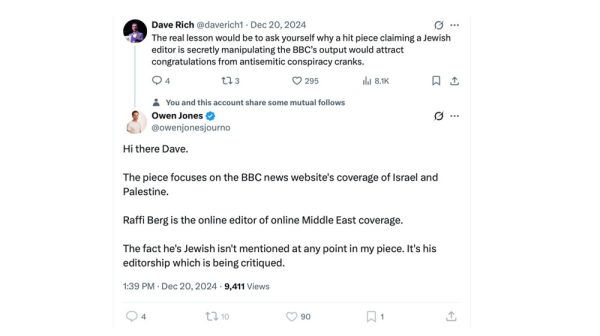
Nor does Jones state that Berg is a Zionist. In fact, the ‘Z word’ is only used twice in the whole piece: once (‘Zionist’) to describe the ‘right wing’ Zionism of Likud-Herut (an organization with whom Berg’s lawyer Mark Lewis is strongly affiliated); and once (‘Zionism’) in a quotation from Mark Lewis emphasizing the importance of “unapologetic Zionism.”
But surely Berg’s Zionism and the fact that he is Jewish — a Jewish supremacist no less — are in fact relevant to this discussion? And surely pretending they are not only undermines the punches that Jones appears to be trying to throw?
How is it that Berg occupies this pivotal location within the BBC? Can we imagine a Catholic, a Hindu, or a Sikh (let’s not even mention a Muslim) being in such a pivotal role on coverage of Palestine? Of course not.
Berg has not been granted or put in that position by the BBC because he is a Zionist. It’s, subconsciously at least, because he is a Jew that he is deferred to. Of course, if he were an anti-Zionist Jew, he would never get into such a position.
Identity politics runs deep in British public institutions — the idea that a Jewish person (or at least the correct type of Jewish person) is the appropriate arbiter of how to cover the occupation of Palestine is seen as common sense.
It is worth extending this analysis to other conflicts. Would a Hindu be asked to adjudicate in BBC HQ on the reporting of Hindutva crimes or a Protestant on Loyalist death squads in the north of Ireland?
We need not even ask about the prospects of the BBC appointing a Palestinian (Muslim, or Christian) to adjudicate coverage of the genocide in Gaza. Extending the analysis says something about the selective implementation of identity politics in the forcefield created by Western official sources and Zionist movement intimidation and bullying of the media.
Recognition that Berg is a genocidal Zionist is crucial to naming the problem and beginning to push back against this kind of Zionist infiltration and subversion of our public institutions.
Of course, Owen Jones appears to want no part of that struggle.
Zionist infiltration at the BBC
There are, of course, many other Zionists (whether Jewish or not) in the BBC, especially in news and current affairs. John Mitchell listed a few very senior employees some years ago:
● James Harding – Director of News & Current Affairs, BBC News (2013–2018) and past editor of the Times, was a hardline Zionist. At a Jewish Chronicle event in 2011, he declared:
“I am pro-Israel. I believe in the state of Israel. I would have had a real problem if I had been coming to a paper with a history of being anti-Israel. And, of course, Rupert Murdoch is pro-Israel.”
● Danny Cohen – Controller of BBC 1, 3, and Director of BBC Television (2007-2015) wrote a letter while still a BBC executive condemning the Boycott, Divestment, and Sanction (BDS) movement, which campaigns to end the Israeli occupation of the Palestinian West Bank and Gaza.
● James Purnell – BBC Director of Radio and BBC’s Director of Strategy (2013-2020) was the chairman of Labour Friends of Israel during his parliamentary career.
We can add to that list some further issues with the most senior management at the BBC.
● Richard Sharp, the former Chairman of the BBC, is a hardline Zionist, former Goldman Sachs and JP Morgan banker, director of the International Rescue Committee, an organization set up with the aid of the CIA, and donor to the British intelligence-created and Zionist-funded Quilliam Foundation.
● Robbie Gibb is reportedly not Jewish, but his brother, the minister, reportedly spent time on a Kibbutz in the Zionist entity when he was young. Both brothers were also part of a Western intelligence operation in the Soviet Union in the 1980s. Gibb went on to lead the consortium to buy out the failing Jewish Chronicle and became the sole director of the company that runs it. He did take a step back from that after concerted pressure was applied over his continuing role at the BBC on the editorial standards committee.
Also on that committee is the CEO of BBC News, the Director General, and the Chair of the BBC (which was Richard Sharp from February 2021 to June 2023 — it is now Samir Shah) and an ‘independent’ member who is currently Nicholas Serota.
Serota has had a long career in the art world and is also a Zionist and opponent of BDS. The ‘CEO’ of the BBC news division, Deborah Turness, is also cited by the BBC as “standing in the way of change” on the question of coverage of Palestine.
Of the five members, either 2 (or 3 when Sharp was in position) are Zionists, and one has blocked complaints on Zionist bias. Given that Director General, Tim Davie, is a former Conservative candidate who has worked for a CIA-supported front group, it is little surprise that the BBC is completely unwilling to cover the genocide properly.
Structural discrimination against Muslims in the BBC
The context of the dominance of Zionism is not just that there are Jewish Zionists in key positions exercising a gatekeeping function, as well as non-Jewish Zionists who provide cover and support for them (such as Robbie Gibb or James Purnell), but that overall there is in the BBC a notable over-representation of Jews and a notable under-representation of Muslims (in relation to their proportion in the population).
Research conducted by the BBC in 2022 shows the corporation at that time employed some 1% of staff who are Jewish, which is twice their proportion in the population, and 3.1% of staff who are Muslim, which is 48% of their proportion in the population.
The differences are more marked when we turn to the News and Current Affairs division of the BBC where Jews make up 2.2% of all staff and 2.5% of leadership staff (proportionally 4.4 times and five times more than their proportion in the population).
By contrast, Muslims are 3% of all News and Current Affairs staff (which is 46% of their proportion in the population) and at the leadership level, there are simply no Muslims at all.
This is itself a problem of structural discrimination, quite apart from what impact it might have on coverage of the genocide. And that impact is not inconsequential. It’s perfectly clear that the Zionists among the BBC News and Current Affairs staff are an aid, as opposed to a hindrance, to the enforcement of Zionist rationality across the BBC.
The gatekeeper
The scandal at the BBC on which Jones reported, is a scandal of Zionist infiltration and gatekeeping. And it’s a scandal that appears to exist in varying ways throughout the media landscape. As the journalist Rivkah Brown has put it:
“I have seen this trend in almost every mainstream media outlet I’ve worked at or reported on: One hardline Zionist who either has decision-making power or aggressively lobbies decision-makers, often with threats of antisemitism. Fearful of scandal, editors cave.”
Brown was reacting to the case of Sky News, which was one of the few media outlets to properly report the violence of Israeli fans in Amsterdam in 2024. Sky then promptly reversed itself. The role of Sandy Rashty as News Editor at Sky was then noted. Rashty is a committed Zionist and writes for the Jewish Chronicle.
It may, as Brown says, take only one advantageously placed Zionist to act as a gatekeeper, but in many news organizations, there are many such placeholders at all levels of the organization, as we have seen with the BBC.
But are these gatekeepers an incidental feature of accidentally employing genocidal Zionists in the newsroom, or is there a wider strategy of infiltration by the Zionist movement?
The strategy of infiltration — The Jerusalem Program
The reality is that the Zionist movement has been involved in a massive push to infiltrate public life in the UK at least since the 1950s, when the movement determined, having reached its objectives in creating a state in 1948, that it would not dissolve itself.
Instead, it adopted the so-called Jerusalem Program, which remains its aim to this day and was most recently revised in 2004. The “foundations” of Zionism, it states, include: the “bond” of the Jewish people to “Eretz Yisrael” which should be settled “as an expression of practical Zionism.”
Every Zionist organization that signs up to the WZO thus supports settler colonialism in “Eretz Israel” (a term usually meaning land far beyond the current occupation, spreading into Lebanon, Syria, Jordan, Iraq, and Egypt); to support a “Jewish” state and “defend” the “right of Jews… as a nation” — meaning structural privileges for Jews — a clearly racist proposition.
Individuals are no longer able (since 1960) to join the WZO directly and must join one of its member organisations. But membership in any Zionist organisation also requires certain “Duties of the individual Zionist”, adopted in 1978. These enjoin Zionists:
“To implement Aliyah [the Zionist term for settler colonialism] to Israel”; and “bring [children] up towards Aliyah”; to “be an active member of the [Zionist Federation]”; “contribute to … Zionist Funds”; and “strengthen Zionist influence within the community.”
In other words, individual Zionists are required to affirm the racist settler colonial ideology and to practically support it. What’s more, they are required to help popularise it in the community.
How this works today can be seen in the approach of the United Jewish Israel Appeal (UJIA), the largest Zionist “charity” group in the UK. UJIA is an anodyne-sounding “charity” which is actually the UK branch of one of the Zionist regime’s four “national institutions,” all based in the same building in King George Street in occupied Jerusalem/Al-Quds.
A 1997 Institute for Jewish Policy Research report, “The Attachment of British Jews to ‘Israel’”, raised an alarm:
“If current trends prevail, attachment to Zionism and the Jewish state could become the concern of only a minority with a mostly Traditional or Orthodox religious outlook.”
As a result, the UJIA refers to their approach as building a ‘lifelong connection’ to “Israel.”
Ruth Wisse: the Army of words
This strategy was memorably enunciated by Harvard professor Ruth Wisse, an open supporter of genocide. The clip on YouTube is just over two minutes long and it’s worth watching in full. For our purposes, the following excerpt is germane:
“American Jews, what do you have to worry about? Your job is to make us [Israel] look good and here’s how you do it: Every one of us has to serve three years in the Army … and then for the rest of our lives you have got to serve two or three years in the army of words you’ve got to learn to fight the political battle which is even more important at this point than the military battle… We’ll fight the military battle we’re not asking you necessarily to come and be lone soldiers although some of you can you’ve got to learn how to fight back on the campuses how to make the arguments now … Don’t let the war of words ever be fought about Israel’s nature, let it be fought about why you can’t accept Israel? Why you have to single out this tiny people? … Push them, teach them how to defend by attacking… You’ve got to make demands on them. They’ve got to serve for three years in the army of words.”
Enrolling all Jews in the ‘army of words’ is the aim of the Zionist movement. They don’t get everyone. But it seems plain they get more than enough to be effective in very many circumstances.
British MPs challenge ‘outrageous’ claims as legal adviser defends Israel and rejects Palestinian statehood
MEMO | April 25, 2025
Members of the UK Parliament’s Foreign Affairs Committee were left visibly exasperated during a tense hearing this week, after UK Lawyers for Israel advocate, Natasha Hausdorff, claimed that Palestinians have no right to statehood under international law and that Israel has “flooded” Gaza with humanitarian aid. The remarks, delivered as part of an official inquiry into prospects for a two-state solution, drew widespread incredulity and sharp rebuttals from MPs.
The most pointed exchange came when Hausdorff claimed there were no UK or US concerns about Israel’s conduct in Gaza. Labour MP, Emily Thornberry, interrupted to warn her bluntly: “Be careful what you’re saying.” Thornberry called the assertion “an extraordinary allegation … be careful what you’re saying” and challenged Hausdorff’s implication that Israeli operations have not breached international humanitarian law (IHL).
Thornberry repeatedly pressed Hausdorff to describe what a peaceful future would look like for Palestinians living in Gaza or the West Bank. “If I’m a Palestinian mother, what is the best thing that could happen to me?” Thornberry asked, her tone increasingly incredulous as Hausdorff blamed Western governments for allegedly “encouraging extremism” among Palestinians and insisted the main goal should be “defeating Hamas”.
When Hausdorff eventually claimed Palestinians do not have a legal entitlement to statehood, Thornberry asked for a clear answer. Hausdorff replied that, while Palestinians may enjoy a form of self-determination, this does not amount to a “right to a state” under international law. The claim flatly contradicts decades of UN resolutions affirming Palestinians’ right to statehood and the 2004 International Court of Justice advisory opinion that upheld this view.
In another remarkable moment, Labour MP, Alex Ballinger, who served in the British Army, directly challenged Hausdorff’s statement that the Israeli army operates with the highest standards of international humanitarian law in history. The MP called the assertion “outrageous”, referencing his own military experience and accusing Hausdorff of presenting a distorted version of reality.
Further exchanges focused on the devastation in Gaza. One MP cited UN statistics showing that 91 per cent of the population is facing severe food insecurity, one-third of hospitals are completely out of action, and over 92 per cent of housing units have been destroyed or damaged. When asked how Israel could justify blocking aid under such conditions, Hausdorff maintained that Israel had previously “flooded” Gaza with aid, claiming that shortages were the fault of Hamas diverting supplies.
MPs were visibly frustrated by this response, with one reminding Hausdorff that the UN and major humanitarian organisations have warned of an imminent man-made famine. Hausdorff dismissed these warnings saying “UN reports … have been consistently found to be wrong.” Her claim is disputed by overwhelming evidence from international agencies, including the World Food Programme, UNICEF and OCHA.
Hausdorff described her work with UK Lawyers for Israel as a fight against what she termed “the international legal war against Israel”, and accused human rights groups of weaponising international law. Her combative rhetoric, however, did little to win over the committee, whose members repeatedly challenged her assumptions and highlighted the discrepancy between her claims and the evidence provided by aid agencies and international courts.
She also took aim at United Nations Relief and Works Agency (UNRWA), calling for its defunding and claiming the Agency fuels extremism, a charge rejected by both the UN and the British Foreign Office, which has praised UNRWA’s humanitarian work, while conducting its own investigations.
While the hearing was convened to assess steps toward peace in Israel and Palestine, Hausdorff’s testimony, focused largely on justifying military actions and denying Palestinians a path to statehood, exposed the divisions between the Israeli position and the UK. MPs from multiple parties questioned how her positions could ever support a two-state solution, or even a framework for lasting peace.
The session concluded with visible frustration among MPs, several of whom appeared astonished by Hausdorff’s remarks.
Featured Video

Deception – Submarines against Olof Palme
or go to
Aletho News Archives – Video-Images
From the Archives
Woolsey Fire started at Santa Susana Field Lab — where “radioactive materials released were never accurately measured”
By John Laforge | CounterPunch | November 30, 2018
In my Nov. 16 column, I reported on potential radiation risks posed by California’s Woolsey wildfire having burned over parts or all of the Santa Susana Field Laboratory—south of Simi Valley, Calif., 30 miles outside Los Angeles—site of at least four partial or total nuclear reactor meltdowns.
The field laboratory operated 10 experimental reactors and conducted rocket engine tests. In his 2014 book Atomic Accidents, researcher James Mahaffey writes, “The cores in four experimental reactors on site … melted.” Reactor core melts always result in the release of large amounts of radioactive gases and particles. Clean up of the deeply contaminated site has not been conducted in spite of a 2010 agreement.
Los Angeles’s KABC-7 TV reported Nov. 13 that the Santa Susana lab site “appears to be the origin of the Woolsey Fire” which has torched over 96,000 acres. Southern Calif. Public Radio said, “According to Cal Fire, the Woolsey Fire started on the afternoon of Thursday, Nov. 8 … on the Santa Susana site.” … continue
Blog Roll
 Aletho News
- Feeling Better, Getting Worse: How Psychiatric Drugs Create the Illusion They Cure
- ‘Nobody Told Me’: Former Mental Health Patient Calls Out Dangerous Side Effects of Psychiatric Drugs
- Dr. Abu-Sitta: Beirut ‘felt like a day in Shifa Hospital’
- Iran Has Won the War, It Will Be Up to the US to Secure the Peace: Mohammad Marandi
- Iran condemns assassination threats against Iranian negotiators amid US talks
- Brussels cannot say where its own pipeline inspectors are as Hungary’s oil lifeline remains shut
- Israel’s Iran War: Myth and Reality
- Between war and industrial breakdown: The US-Israeli attrition crisis
- Pressure builds on Iran to ‘drop’ Lebanon ceasefire demand as Islamabad talks hang in balance
- In another clash report, US denies agreement to release Iran’s assets
- If Americans Knew
- Pro-Israel ‘Thinktanks’ and Individuals who Influence U.S. Foreign Policy
- Mearsheimer reveals how Israel dictates US policies on Iran, Gaza – video
- After killing 350+, Israel still has a “score to settle” with Lebanon before ceasefire – Daily Update
- Military aid to Israel emerges as the latest political litmus test for Democrats
- The only Palestinian children’s rights organization closes following years-long Israeli campaign against it
- ‘I Can’t Forget the Smell’: Lebanese Reel After Israel Kills Over 300 in Single Day
- DNC Shoots Down Resolutions Calling Out AIPAC and Limiting Arms to Israel
- TCN: Is Israel Blackmailing President Trump?
- Israel killed at least 303 Lebanese yesterday – who were they? Daily Update
- Amnesty: Urgent – Protect Lebanese civilians from brutal escalation in Israeli attacks
- No Tricks Zone
- German Expert: Heat Dome Led To Record Temps In Western USA…Warmer In 1934, 1936
- New Study: No Linear Warming Or Glacier Retreat Along Northern Antarctic Peninsula Since 1980s
- An Inconvenient Tree: Uncovered In Alps… Europe Much Warmer Than Today 6000 Years Ago
- New Study Reports A 60% Slowdown In Greenland’s Ice Loss Rate In The Last Decade
- Low Intensity Tornado Wrecks Major Solar Farm, Creating A Potential Toxic Dump
- New Study Finds Warming Saves Lives…Cold Temperatures 12 Times More Deadly Than Excess Heat
- German Science Blog Accuses PIK Climate Institute Of Hallucinating Climate Tipping Points
- Devastating Assessment Of Comirnaty Vaccine By Former Senior Pfizer Europe Toxicologist
- New Study: CO2 Is ‘Effectively Negligible’ As An Explanatory Climate Change Factor Since 2000
- Former Pfizer Toxicologist Dr. Helmut Sterz Tells Bundestag Hearing Pfizer Vaccine Should Have Never Been Approved
 Aletho News