Ukrainian investigative journalist ‘kidnapped’ by draft officers
RT | December 23, 2025
A Ukrainian investigative journalist is reportedly missing after being seized by conscription officials days after filing a criminal complaint against his local city administration.
A video shared on the Facebook account of Aleksey Brovchenko, which went viral this week, was purportedly filmed by CCTV cameras at his home in Podgorodnoye in Dnepropetrovsk Region on Monday morning. It showed people in military and police uniforms apprehending a man and forcing him into a van despite a woman’s vocal objections – which the description called a “kidnapping.”
Brovchenko’s family said he was beaten earlier in the day and called police to file a complaint, but was instead taken away and has since been out of touch with them.
Last week, the journalist reported an “interesting situation” at a police station where he went to file a complaint against the town mayor for alleged fraud. He said officers accused him of being a draft dodger but let him go instead of transferring him to military officials – a move he described as a sign that “the police will soon switch to the side of the people.” Brovchenko’s reporting often highlights suspected abuses by conscription centers.
City head Andrey Gorb, whom the journalist had accused of wrongdoing, claimed on Tuesday that Brovchenko is a “fake journalist” who “did everything to derail the mobilization.” He thanked police and military officers “for doing their job.”
Military mobilization is a contentious issue in Ukraine, viewed by many as unfair due to corruption that allows the wealthy and powerful to evade mandatory service. Videos of what critics call abductions regularly go viral, even as officials downplay the so-called “busification” as not a serious problem.
Public resistance to recruiting also exacerbates existing issues with Ukrainian troop desertion. The Prosecutor General’s Office recently stopped reporting the number of cases against soldiers who have left their posts, a move critics say is an attempt to conceal the scale of the manpower drain.
EU loan to Ukraine pushing bloc ‘into war’ with Russia – Orban
RT | December 20, 2025
EU nations have a vested interest in continuing the Ukraine-Russia conflict and even escalating it, as repayment of their €90 billion loan to Kiev is essentially tied to a military victory, Hungarian Prime Minister Viktor Orban has said.
A long-debated EU scheme to steal frozen Russian central bank assets collapsed amid disagreements among member states on Friday. However, agreement was reached on a loan backed by the bloc’s budget, allowing them to fund cash-strapped Ukraine in what Moscow has long described as a Western proxy war. Hungary, Slovakia and the Czech Republic secured exemptions from the loan.
“Whoever lends money wants it back. In this case, repayment is not tied to economic growth or stabilization, but to military victory,” Orban wrote on X on Saturday. “For this money to ever be recovered, Russia would have to be defeated,” he said.
A war loan inevitably makes its financiers interested in the continuation and escalation of the conflict, because defeat would also mean a financial loss.
Orban argued that there are now “hard financial constraints that push Europe in one direction: into war.”
Hungary and Slovakia have long stood against continued military aid to Kiev, despite mounting pressure from the EU to toe the party line. The Czech Republic joined the fold after the recent election of new Prime Minister Andrej Babis, who has refused to fund Ukraine at the expense of his taxpayers.
Russian officials have accused Kiev’s European backers of hindering recent US-led peace efforts, and of increasingly preparing for a direct war against Russia.
Top EU officials have used claims of an alleged threat from Moscow to justify accelerating militarization, freeing up €335 billion in Covid relief funds and mobilizing €150 billion in loans and grants for the bloc’s military industrial complex.
Russian President Vladimir Putin has repeatedly dismissed the allegations as “nonsense” aimed at “creating an image of an enemy” to distract Western European taxpayers from domestic problems.
As Kiev would only need to start making repayments to the EU if it receives reparations in the unlikely event Russia loses, the loan is widely considered to be at risk of turning into a grant.
Daniel Davis: Russia Preparing Retaliation – Oreshnik Deployed & Seizing Odessa
Glenn Diesen | December 20, 2025
Lt. Col. Daniel Davis is a 4x combat veteran, the recipient of the Ridenhour Prize for Truth-Telling, and is the host of the Daniel Davis Deep Dive YouTube channel. Lt. Col. Davis discusses how Russia is preparing itself for the possibility of Europe attacking Russia by deploying a powerful arsenal of Oreshniks. The attacks on Russia’s civilian vessels will likely end with Russia seizing Odessa, which could also trigger the Europeans to send troops. We are rapidly going up the escalation ladder as diplomacy fails.
Follow Prof. Glenn Diesen:
Substack: https://glenndiesen.substack.com/
X/Twitter: https://x.com/Glenn_Diesen
Patreon: https://www.patreon.com/glenndiesen
Support the research by Prof. Glenn Diesen:
PayPal: https://www.paypal.com/paypalme/glenndiesen
Buy me a Coffee: buymeacoffee.com/gdieseng
Go Fund Me: https://gofund.me/09ea012f
Books by Prof. Glenn Diesen.
Western media peddle Russia’s ‘abduction’ of Ukrainian children to prolong the proxy war
It is not Moscow, but rather the Kiev regime and its backers who are using children as “pawns of war”
By Finian Cunningham | RT | December 18, 2025
It’s not clear if the Trump administration wants to genuinely resolve the proxy war with Russia, or if it is merely trying to extricate itself from the mess Washington helped instigate. But one thing is clear: the major Western European capitals are desperate to keep the war going.
Various pretexts are being used to frustrate a diplomatic process. NATO-like security guarantees to Ukraine pushed by Berlin, London, and Paris are likely to be a non-starter for Moscow. So too are moves by the Europeans to use Russia’s seized wealth as a “reparations loan.”
Another issue that Europeans are dredging up is the allegation that Russia has abducted Ukrainian children. This emotive issue has support in Washington among the hawkish anti-Russia factions in the US establishment opposed to Trump’s diplomacy with Moscow.
Earlier this month, the European states sponsored a resolution at the United Nations General Assembly calling on Russia to return all Ukrainian children that it is alleged to have forcibly relocated from Ukrainian territory during the past four years of conflict. The president of the UNGA is former German Foreign Minister Annalena Baerbock.
An article published by the Washington DC-based Atlantic Council contended: “The issue of abducted Ukrainian children is especially relevant for Ukrainians as they debate painful political compromises, territorial concessions, and security guarantees premised on Western assurances. If world leaders cannot secure the return of the most vulnerable victims of Russia’s aggression, how could Ukrainians trust that those same leaders can prevent Russia from reigniting the war or committing new atrocities?”
In other words, the allegation of child abduction is being made into a condition for Russia to fulfill for the diplomatic resolution of the conflict. The trouble is that the condition is impossible to fulfill because the allegation is so vague and unfounded. Russia has denounced the accusation that it forcibly relocated Ukrainian children as a “web of lies.”
In March 2023, the Hague-based International Criminal Court indicted Russian President Vladimir Putin, along with Russian Commissioner for Children’s Rights Maria Lvova-Belova, of war crimes related to the unlawful deportation of Ukrainian children to Russia.
Moscow is not a member of the ICC and rejected the charges as null and void.
Still, however, the Kiev regime and its Western sponsors continue to level the accusations. The Western media, as usual, serve to amplify the narrative despite the lack of evidence.
At the recent UN General Assembly debate, British representative Archie Young stated: “Today is a moment to reflect on the plight of Ukrainian children who have become victims of Russia’s illegal invasion. We all have an obligation to protect children and must not allow Russia to use them as pawns of war. According to the government of Ukraine, corroborated by independent mechanisms, more than 19,500 Ukrainian children have been forcibly deported to Russia or within the temporarily occupied territories.”
Note how the British official peddles a series of disputable claims that are transformed into normative facts by the Western media’s repetition.
It is not Russia, but rather the Kiev regime and its Western backers who are using children as “pawns of war.”
Moscow has openly stated that up to 730,000 children have been relocated to the Russian Federation since hostilities erupted in February 2022. Most of the children are accompanied by parents and come from the territories that seceded from Ukraine in legally held referenda.
Of the nearly eight million people who fled Ukraine, the largest share of them – an estimated 35% – have taken shelter in Russia. The second and third biggest host countries for Ukrainian refugees after Russia are Poland and Germany. But the European governments and media are not accusing Warsaw or Berlin of “child abductions.”
In a war zone affecting millions of people, it is absurd to make out that displaced families and their children are being kidnapped. The vast majority of people have willingly sought shelter within Russian territory to escape the violence on the frontlines – violence that has been fueled by NATO states pumping hundreds of millions of dollars’ and euros’ worth of weapons into Ukraine.
Moscow points out that the figure of 20,000 to 35,000 that the Western governments and media claim for children “abducted by Russia” is never substantiated with names or identifying details.
Russian authorities say that the Kiev regime has provided the names of just over 300 individuals. Moscow has endeavored to return individuals where it is mutually requested, although some of the identities provided by the Kiev regime have turned out to be adults or they are not present in Russian territory.
In the chaos of war, it is all too easy to throw around vague numbers and exploit the imprecision for propaganda. The European governments and media are doing that and embellishing the emotive issue with dark claims that Russia is sending masses of Ukrainian children to “re-education camps” for “indoctrination.”
One of the main sources for such claims is the Yale Humanitarian Research Lab. It has produced unverified reports that Russia has sent 35,000 Ukrainian children to hundreds of brainwashing centers all across Russia to erase their national identity.
A major supporter of the Yale research group is former Secretary of State Hillary Clinton. This association strongly suggests that the group is a CIA-sponsored propaganda tool. But the US and European media regularly cite the research and amplify its claims as reliable facts.
The exploitation of children for war propaganda is a staple of Western intelligence agencies and the media.
A classic case was in Vietnam in the 1950s and 60s when the Western media were replete with horror stories of the Viet Cong torturing Vietnamese children, as recounted by James Bradley in his book, ‘Precious Freedom’. The supposed communist guerrillas reportedly stabbed Vietnamese children with chopsticks in their ears so that they could not hear the Bible being preached. Such alleged atrocities were widely published by the Western media to whip up public support for the US military deployment “to save Vietnam from evil communists.” But it was all CIA-orchestrated lies. More than three million Vietnamese were killed in a war based on American intelligence and media lies.
A re-run of the psychological operation today is the lurid claims that Putin’s evil Russia has kidnapped tens of thousands of children for brainwashing in detention camps. Some reports even claim Russia has sent the children to North Korea.
The Western media are doing their usual service of peddling war propaganda and ensuring diplomacy is rendered impossible because Russia is portrayed as monstrous.
Finian Cunningham is an award-winning journalist and co-author of Killing Democracy: Western Imperialism’s Legacy of Regime Change and Media Manipulation. For over 25 years, he worked as a sub-editor and writer for The Mirror, Irish Times, Irish Independent and Britain’s Independent, among others.
No More Ukraine Proxy War? You’re a Traitor!
Glenn Diesen & Lt Col Daniel Davis
Glenn Diesen | December 16, 2025
I had the pleasure of speaking with Lt. Col. Daniel Davis about how Europe has trapped itself in ideological narratives of good versus evil
Majority of Belgians oppose theft of Russian assets – poll
RT | December 17, 2025
Around 67% of Belgians oppose the EU scheme to use frozen Russian central bank assets to back a ‘reparations loan’ to prop up Ukraine, according to a recent poll conducted by Ipsos and Belgian news outlets published on Monday.
The bulk of sovereign Russian assets frozen in the West are held in the Belgian clearinghouse Euroclear. Prime Minister Bart De Wever has steadfastly opposed EU moves to “steal” the funds, citing disproportionate legal risks to Belgium, despite mounting pressure from the European Commission.
EU leaders were set to vote on using the assets to back a controversial €90 billion ($106 billion) ‘reparations loan’ to help cover Ukraine’s floundering budget, which faces an estimated $160 billion shortfall over the next two years.
However, Hungarian Prime Minister Viktor Orban said the EU leadership “backed down” and that “Russian assets will not be on the table” at Thursday’s European Council meeting. The council “pushes joint loans, but we will not let our families foot the bill for Ukraine’s war,” he wrote on X on Wednesday.
Last week, the EU tightened its grip on the frozen Russian assets by invoking Article 122, an economic emergency treaty clause, to bypass the need for a unanimous decision amid opposition from a number of member nations.
By using the mechanism, the bloc stripped “Hungary of its rights,” Orban said at the time.
Belgium, Slovakia, Italy, Bulgaria, Malta, and the Czech Republic joined Hungary to oppose raiding the Russian assets to finance Ukraine.
Last week, the Russian central bank sued Euroclear in a Moscow court, accusing it of the “inability to manage monetary assets and securities” entrusted to it. The firm estimates that it holds nearly $19 billion in client assets in Russia, which could become targets for legal retaliatory measures.
The Map Is Not the Territory: Ukraine, Manufactured Consent, and Europe’s War of Attrition
By Gerry Nolan | Ron Paul Institute | December 16, 2025
Western headlines are screaming that Ukraine has “encircled” Kupyansk city… a glorified town, selling it as a nightmare for Moscow. But this is not a battlefield report. It is narrative management, timed precisely to negotiations in Berlin. Kupyansk is not Stalingrad. It is not Kursk. It is not even a decisive urban fight. It is a ruined settlement on the Oskol, a former logistics node reduced to rubble, where control is measured not in flags but in fire control, drone dominance, and whether men can be rotated without being killed.
And when even Reuters couches claims as “unverified,” you know what that means. When it hedges, pauses, and inserts distance between claims and confirmation, it is signaling that fog is being weaponised. What exists on the ground is block-by-block ruin fighting, contested neighbourhoods like Yubileynyy, clashes near Mirovoye and Radkovka, infiltration attempts, temporary interdictions. Battalion-scale collisions between exhausted units in a place that barely functions as a glorified town.
The unit scale tells the truth the headlines obscure. Kupyansk has never hosted a force capable of deciding a front. Within the urban core, the Russian presence has been limited and exposed, with little time to dig in deeper, the town’s ruins making sustained fortification difficult, relying on fire control rather than secured occupation. With thousands tied down protecting the flanks and barely a battalion inside the city itself, Ukrainian assaults are not sweeping counteroffensives but concentrated pushes by swarms of worn formations, often built from forcibly mobilised men with minimal training, starving and thin on ammunition, cannibalized from fronts like Sumy, and thrown into an urban graveyard to manufacture leverage.
This is not manoeuvre warfare. It is attritional contact deliberately framed as momentum to serve a media and political narrative rather operational gain. What matters is that the map is not the territory. In this war, a coloured overlay often marks a brief window of drone interdiction, hours, not control. Fire control can deny movement, but without sustainment it cannot secure ground. Fire control without sustainment does not produce breakthroughs. It produces graveyards. Ukraine has been forced by its Western patrons into too many of them already.
Kupyansk does not change the war unless it becomes part of a broader operational rollback and it won’t. Otherwise, it is a bad PR bargaining chip, paid for in blood.
While cameras fixate on Kupyansk, the real pressure story runs elsewhere, across a widening arc Western coverage fragments to prevent pattern recognition. West of Russian liberated Seversk, claims and denials continue, but the geometry is clear: Ukrainian forces are stretched thin, defending ground without strategic depth. Around encircled Lyman, the contest is about lines of communication and Ukranian reserve erosion, not symbolism.
Central to the Donbass arc, Pokrovsk and Mirnograd matter not because of names, but because they anchor logistics. Russian control here forces a stark contrast in how the war is being fought. Ukraine is expending irreplaceable manpower to manufacture moments, brief tactical actions designed to win optics for a day. Russia, by contrast, is trading space, fire control, and logistics denial for outcomes that compound over time. One side is managing headlines. The other is managing the war.
To the south, the picture is more dangerous still. Around Gulyaypole, pressure is persistent and cumulative, not theatrical. And beyond it lies the real anxiety Europe refuses to discuss openly, the slow, grinding push toward Zaporozhye city. This is not a sprint. It is a methodical march Westward. If current trends hold, Zaporozhye can be operationally threatened, even encircled in less than six months. That outcome would dwarf any skirmish in the small town of Kupyansk.
This is where time asymmetry becomes decisive. Russia is fighting a time-positive war: industrial scaling and real capacity that dwarfs the fiat, paper-tiger illusory capacity of NATO; deep manpower reserves; and a level of internal cohesion sufficient to sustain a long campaign. Ukraine, by contrast, is fighting a time-negative war, with catastrophic demographic collapse, mass emigration, forced conscription, and shrinking public consent. Every Ukrainian media counteroffensive now borrows against a future that no longer exists to replenish it.
This is one of the real reasons behind Trump’s push. Less sentiment. Not ideology. Geometry. Timelines. Arithmetic. Washington understands that delay only makes the endgame worse, militarily and politically for project Ukraine. Europe understands this too. But Europe cannot admit it without confessing its humiliation.
So Europe clings to suicidal optics. It inflates Kupyansk. It sells illusory leverage. And it sacrifices Ukrainians to buy time, not for victory, but for narrative survival.
Here is the truth Europe works hardest to bury beneath headlines and choreographed resolve: this war no longer reflects the will of the Ukrainian people, and, in truth, it only ever did through manufactured consent that has now collapsed. Not marginally. Not ambiguously. Overwhelmingly. Even after years of saturation messaging, censorship, emergency laws, and relentless narrative conditioning, roughly four-fifths of Ukrainians now demand peace. It is devastating precisely because it persists despite one of the most intensive information campaigns the modern West has ever mounted.
Instead, men are dragged from streets and their homes, beaten, bundled into vans, forced into uniforms, and sent to the front. Videos of violent conscription squads no longer shock because they are the tragic norm.
This is not mobilisation. It is cowardly and punitive coercion, the final refuge of elites who lack legitimacy but demand sacrifice. It is the politics of cowardice, where those who made the decisions never bear the cost, and those who pay the price were never given a choice. These wars are always fought with other people’s sons, for objectives that dissolve under scrutiny, while the architects retreat behind speeches, security details, and moral posturing.
When a state must kidnap its own citizens to sustain a war, it has crossed the final moral line: it is no longer defending a nation, because it never was, but cannibalising one, deliberately sacrificing its people as a tip of the spear against a stronger Russia, to shield the reputations, fortunes, and careers of elites who will never bleed, never fight, and never answer for the ruin they leave behind.
Washington shattered Europe’s strategic autonomy years ago and quietly handed the bill to the continent. NATO expansion without strategy. Economic warfare without insulation. Energy sabotage without a contingency secured. The result was inevitable… Accelerated deindustrialisation, inflation, social fracture, political fragility. Europe emerged poorer, weaker, and strategically irrelevant, yet still clinging to the language of moral authority.
Rather than confront this collapse, Europe chose the refuge of absolutism. Negotiation became heresy. Compromise became betrayal. Peace became appeasement. Diplomacy itself was criminalised, because diplomacy invites the most dangerous question of all. What was this for?
And that question cannot be answered without consequences. Because peace does something war cannot. War suspends politics. Peace resurrects accountability.
Europe does not fear losing the war as much as it fears surviving it with memory intact.
That is why the war must continue. Not to save Ukraine, but to postpone reckoning, at the hands of Europeans.
Which brings us back to Kupyansk.
Kupyansk is not a battlefield turning point. It is a tombstone. Not only for the men buried beneath its rubble, but for Europe’s moral credibility itself.
What will damn this war in the historical record is not how it began, but how long it continued after its flimsy justification collapsed. When even manufactured consent evaporated, when diplomacy was deliberately buried, when Russian defeat quietly gave way to arithmetic, the war did not stop. It hardened. Not because it could still be won, but because ending it would have forced admissions no ruling class was prepared to make.
Kupyansk is not remembered because it mattered militarily. It matters because it exposes the moment when the war ceased to be about territory at all. It marks the point where Europe chose blood over truth, coercion over consent, and narrative survival over human life. Not out of strength, but out of fear.
History is unforgiving toward wars waged without consent and prolonged without purpose. It does not care about intentions, speeches, or moral language. It records only what was done, who benefited, and who paid. And when the record is written, it will show that Ukraine was not denied peace because peace was impossible, but because peace would have ended the lie.
That is the real defeat.
Zelensky is stealing the election before it begins
By Tarik Cyril Amar | RT | December 16, 2025
Currently, with intense diplomacy taking place to – perhaps – end the Ukraine conflict, questions surrounding Kiev’s domestic politics may seem secondary. However, in reality, they are as important as the search for peace.
There are two reasons: First, Ukrainians have a right to finally be released from their perverse bondage to what is, in effect, a long-ago failed Western proxy war against Russia. Those still in denial about this fact should check out a recent interview with a former Biden administration policy official. Amanda Sloat has casually admitted that much now: The war could have been avoided if the West had not insisted on NATO membership prospects for Ukraine, which never really existed anyhow.
Observers not blinded by Western propaganda – including this author – were warning that, for Ukraine, this fake NATO perspective was a road to catastrophe. But the Sloats of this world refused to listen. Why then did the West want the war? To diminish Russia by using Ukraine as a battering ram and Ukrainians as cannon fodder.
Secondly – and more practically – no peace will last without an end to Ukraine’s ultra-corrupt current authoritarian regime. Talk about defending “democracy” in Ukraine is absurd. Under Vladimir Zelensky, there is no such thing left. By now, even some Western mainstream commentators are starting to admit Zelensky’s authoritarianism. Yet the former entertainment producer and vulgar comedian started systematically undermining what little democracy Ukraine used to have well before the escalation of February 2022, as Ukrainian observers and critics at the time widely discussed and deplored.
Zelensky’s regime is so corrupt and has sold out its own people so badly to the West that a lasting peace threatens it not only with losing power, which it certainly would, but also with a wave of prosecutions starting at the very top, with Zelensky himself and rolling down like an avalanche. Put differently, this is a regime that would always be tempted to re-start the war to distract from the retribution it must fear.
That is why US President Donald Trump is right to call for presidential elections in Ukraine. Moreover, Zelensky has extended his mandate on flimsy grounds and thereby usurped power even formally. The often-heard claim that Ukraine cannot hold presidential elections in wartime, by the way, is badly misleading, and a thoroughly politically motivated misrepresentation of the facts: In reality, the Ukrainian constitution only prohibits parliamentary elections in time of war. Elections for the presidency are impeded by ordinary laws which can, of course, easily and legally be changed by the majority which Zelensky controls in parliament. That is merely a question of political will, not legality.
By now, even Zelensky and Kiev’s political elite admit the above. Indeed, Zelensky has charged parliament with devising procedures for such elections. So, you may ask, what about his regime and its Western propagandists claiming for over a year that this is simply illegal and can’t be welcome? Simple: that was a big fat lie. Welcome to Zelensky world and its crooked reflection in the mirror cabinet of the Western mainstream media.
Yet curb your enthusiasm. In all likelihood, Zelensky remains dishonest – really, does he even have another mode? – and is engaging not in a genuine attempt to finally allow Ukrainians their long overdue say about his horrific rule. Instead, it is – alas! – much more plausible to interpret his turn toward elections as yet another tactic of stalling and deception.
For one thing, he and his team are trying to set conditions that seem designed to prevent the elections again, while blaming others, first of all Russia, of course. In essence, their demands boil down to, once again, pushing for either more Western arms or a ceasefire that they can abuse instead of the full peace agreement that is actually needed. Moscow will not agree to such a scheme, as Kiev knows very well.
In addition, this would not be the Zelensky regime if it did not also ask for even more Western money. This time, the shameless idea is that the West must pay for elections in Ukraine – presumably because that is how democracy works in a sovereign country.
Things can get even worse: There is also the possibility, pointed out by Ukrainian observers, that Zelensky and his fixers are planning to shift the whole presidential election online. If they do, falsification in Zelensky’s favor is de facto guaranteed.
In sum, there is no good reason to believe Zelensky is really ready to give up power – because that is what elections would mean – to make way for a return to a more normal type of politics. His current statements and gestures seemingly indicating the opposite are meant to deceive, most of all, the West. Neither Ukrainians nor Russia is likely to believe him anyhow.
There is a glimmer of hope, however: The fact alone that Trump has challenged Zelensky in this area and that the latter’s European backers cannot shield him from that challenge is a good sign. As is the fact, of course, that Zelensky has felt pressured and cornered enough to not revert to the old lie that presidential elections are not possible in wartime.
Instead, Ukraine’s past-best-by leader has implicitly admitted they – and that he was lying before – and is now forced to deploy stalling techniques. That in and of itself, like Ukraine’s escalating corruption scandals, shows that Zelensky’s grip is slipping. And that is good for everyone, including Ukrainians. For without an end to the Zelensky regime, it is likely that no peace can be made and certain that no peace can last.
Tarik Cyril Amar is a historian from Germany working at Koç University, Istanbul, on Russia, Ukraine, and Eastern Europe, the history of World War II, the cultural Cold War, and the politics of memory.
The biggest bank robbery in history
By Ian Proud | Strategic Culture Foundation | December 16, 2025
For over two years, there have been loud and repeated calls for Russia’s immobilised assets in Europe – valued at around $245 billion – to be permanently seized. However, those assets had hitherto been immobilised under EU sanctions which required unanimous agreement every six months.
Not any more. Given Belgium’s sturdy resistance to using $165 billion in immobilised assets held in Euroclear, the European Commission has triggered an emergency clause in the Treaty on the functioning of the European Union to bypass the principle of unanimity on sanctions policy.
On Thursday of last week European Council Ambassadors agreed by majority to freeze indefinitely immobilised Russian assets in European banks. This proposal is separate from specific lending to Ukraine to cover its financial needs, which was subject to a separate proposal.
But, in fact, the two are connected. Because the separate proposal for a so-called reparations loan makes clear that Ukraine will only have to repay the loan if its receives reparations from Russia, whereupon Russia’s frozen assets will be returned.
However, Russia will self-evidently never make reparations payments to Ukraine precisely because its immobilised assets which might be used for reparations in Ukraine have already been expropriated and are unlikely to be returned.
The measure proposed by the EU uses as its legal basis the need to cover the economic risks to the EU from the ongoing war. However, the Economist has pointed this out as an example of ‘dodgy’ legal logic. But it’s worse than that; it’s in fact untrue. The money is not intended to support Europan economies, as it only represented 1% of European GDP. It will be used to back a reparations loan that is not intended for reparations, but rather to pay for Ukraine’s bloated budget.
This includes $106 billion to cover Ukraine’s budget deficit over the next two years and $50 billion to write off the EU contribution to the G7 Extraordinary Revenue Acceleration loan agreed in June 2024. The remainder will be pumped into Ukraine’s defence industry.
So, all of Russia’s money will effectively be given to Ukraine, albeit in the form of a loan underwritten by those European banks that hold Russian assets. In this fantasy, Russia’s assets still exist, it’s simply that EU banks have lent their equivalent value to Ukraine.
The problem Ursula von der Leyen is trying to avoid, as I have pointed out before, is the return of Russia’s assets after any peace deal that leads to sanctions against Russia being lifted. In short, peace would raise the risk of the loan collateral being handed back to Russia, meaning that Europe would need to pay for it, on the basis that Ukraine won’t have the means to repay the loan itself.
Let’s be clear, the earlier G7 Extraordinary Revenue Acceleration loan to Ukraine agreed in 2024 had a maturity of up to 45 years. Does Europe really intend to keep Russia’s assets immobilised for that period of time?
President Trump’s initial 28 point peace plan suggested that Russia’s immobilised assets be split three ways, between $100 billion invested in Ukraine by U.S. firms, $100 billion overseen by Europe and the remainder co-invested by the U.S. and Russia in its country. On that basis, and assuming Russia was agreeable, all of Russia’s immobilised funds would be used for genuine reconstruction efforts, both inside of Ukraine and those parts which Russia has occupied. President Zelensky has spoken this week about the possible setting up of a special economic zone in the contested parts of Donetsk oblast that would be demilitarised.
As I pointed out a year ago, Russia might be willing to give up its assets for some form of de facto recognition of territory, which the Trump administration has essentially proposed. The value of its unfrozen sovereign reserves – at $425 billion – now far exceed the sum still frozen in Europe and other jurisdictions including the U.S.. So Russia might be willing to give up some assets as part of a quid pro quo on territory. And it’s clear that Europe has absolutely no intention of giving the money back anyway, so why not cut a deal that works best for Russia?
But what the Europeans want to do is to have two cakes and eat them both. Get Russia to pay for Ukraine’s day to day fiscal expenditures associated with war fighting and building up its defence industrial complex, even after the war ends. And get Russia to pay for Ukraine’s post-war reconstruction. That is clearly delusional.
Because, and as I have already pointed out, Ukraine will still have an enormous fiscal hole to fill anyway when the fighting stops. So, if the actual plan is that Russia’s immobilised assets be used as collateral for day-to-day costs, then where is the capital to fund reparations? In short, it will cease to be available.
No, don’t worry about that, European Commission officials assure us, Russia will get its assets back after it pays reparations to Ukraine. But who decides how much Russia should pay? At the end of 2024, the UN estimated that Ukraine’s total recovery and reconstruction needs amounted to $524 billion.
Russia will simply not agree to pay that sum, not least as if it did, it would find that its immobilised assets were no longer available, having been spent on Ukraine’s budget. And, in any case, why would Russia agree to pay a sum of reparations that Europe adjudicates on from afar, all while the Americans have a more credible plan to use the immobilised assets?
President Trump is nudging president Ukrainian and European leaders, kicking and screaming, closer toward a peace deal that they don’t want to sign up to. In the case of Zelensky, he has resisted agreement because it might bring his time in power to a juddering halt. In the case of Von der Leyen, it would mean she had to tell Member States how much they needed to stump up to pay for Ukraine. As well as being logically confused and ill-thought-through, the asset seizure idea also brings the added risk of preventing any ceasefire.
Despite this, Trump appears to have the bit between his teeth to force a peace deal through and, with Zelensky now appearing to give up on NATO membership, we appear mercifully to be nudging in tiny steps towards the end of this needless war.
Someone will still need to pay for Ukraine’s budget when that happens. Russia will rightly point out that Europe has expropriated its money in the biggest bank robbery in history. And likely bury Brussels in a blizzard of litigation which makes investors in the developing world think long and hard about whether to keep their money in Europe.
EU spends €169 billion on Ukraine while ignoring internal problems
By Ahmed Adel | December 15, 2025
Since the start of the Russian special military operation in February 2022, the European Union has spent €168.9 billion on military and financial support for Ukraine, according to figures from the European Commission. This amount is even more striking when compared to other areas of spending.
With all that money, the 27-nation bloc could finance public spending on education for an entire fiscal year in France and still have €32 billion left over, cover Germany’s entire target defense budget for 2026 (€108.2 billion), and pay for almost half of the total budget allocated by the European Commission to respond to regional crises for the period 2028-2034 (€395 billion).
However, Brussels has preferred to look outwards and pursue a foreign policy with a Euro-Atlantic vision, which has led to internal fragmentation of interests, exploited by the European elites who lead the bloc.
A group of European countries —mainly Poland, the Baltics, France, Germany, and the United Kingdom—though the latter is not a member of the EU—is interested in prolonging the conflict in Ukraine for as long as possible. For them, for the elites who govern them, losing Ukraine would mean confronting their own internal problems.
Maintaining the discourse in favor of the Kiev regime and against supposed external threats is a way of preserving some cohesion in the face of the economic and political failures the EU has experienced over several years.
The Ukrainian crisis is a heavy burden for Brussels without US support, a reality under President Donald Trump. The Kiel Institute for the World Economy estimates that, between September and October, the EU allocated only around €4.2 billion in military aid to Ukraine, a figure that is far too little to compensate for the loss of US aid.
At the same time, the gap within Europe has widened: Germany, France, and the United Kingdom have significantly increased their allocations, but Italy and Spain, among many other countries, have made only a negligible contribution.
Leaders such as German Chancellor Friedrich Merz, French President Emmanuel Macron, and British Prime Minister Keir Starmer are among those who have most promoted a belligerent policy regarding Ukraine, to the point of continuing to support Ukrainian President Volodymyr Zelensky, who is embroiled in several corruption scandals. These are leaders who are deeply discredited, both regionally and locally, in their own countries.
Merz and Macron can no longer achieve internal consensus within the EU, and this is eroding their credibility because they are not enabling the bloc to speak with one voice. In Brussels, there is a patchwork of passionate agendas, but not a common geopolitical agenda.
It is the European elites who insist on the continuation of a conflict, not the average citizen, who prefers that their government budgets be allocated to social spending rather than to a European rearmament project like the one being outlined in Brussels. Many see support for Ukraine as an imposed sacrifice, and the expense of continuing to fuel the conflict is already taking its toll.
In fact, the €168.9 billion that the EU has allocated to Ukraine over almost four years would have completely covered all of Spain’s public spending on education in a single fiscal year and Italy’s entire health budget.
Amid this situation, some European leaders are insisting that the Russian assets frozen more than three years ago be confiscated to guarantee a €210 billion loan for Kiev, which could complicate the peace talks the US and Russia have been conducting for months over the Ukrainian conflict.
That money is Russian, and international law would have to protect Russian assets if the EU were to choose to confiscate these. If they do, it would be a major contradiction within the European narrative because these countries are supposed to be the ones that champion international law and guarantee what they have called ‘a rules-based world,’ but appropriating those assets is essentially theft, and this would violate international law.
Nonetheless, the EU announced on December 12 that an agreement had been reached to indefinitely freeze €210 billion of Russian Central Bank assets held in Europe, particularly in Belgian securities depository Euroclear. Although the freeze is intended to facilitate EU plans to provide Ukraine with a loan of up to €165 billion to cover military and civilian budget needs in 2026 and 2027, Belgium, Italy, Bulgaria, and Malta expressed reservations about transferring funds to Ukraine. A final decision will be made at an EU summit being held at the end of the week.
It is foolish that the EU has wasted so much money on the Ukrainian crisis, knowing that the bloc is economically suffering, with very low growth rates and a deindustrialized Germany that is not recovering. Yet, despite this, the EU seemingly wants to further tarnish its global reputation by aiming to steal Russia’s wealth.
Ahmed Adel is a Cairo-based geopolitics and political economy researcher.
The Algorithm of Escalation: How Ukraine Turned Poland into an Operational Theatre
By Adrian Korczyński – New Eastern Outlook – December 14, 2025
November 15, 2025, 21:00. An explosive charge detonated on the railway tracks between Miki and Gołąb. The blast was so powerful that windowpanes shook for kilometres, and residents felt the tremor in their walls. The flash left a metre-long gash in the rail, shattered sleepers, and destroyed the overhead power lines. The very next day, the two Ukrainian citizens responsible for the detonation legally crossed the border at Terespol and departed for Belarus.
Border Guard cameras recorded their departure – nothing raised suspicion at the time. They escaped before investigators could link the fingerprints and phone left at the scene.
Within hours of the explosion, Polish media and politicians almost unanimously pointed to “Russian sabotage.” Meanwhile, those familiar with Ukrainian sabotage operations immediately noticed something else: a plastic charge attached at three points to the rail, nighttime detonation on a key supply line, no civilian casualties – the exact modus operandi Ukraine’s SBU security service had used repeatedly in Crimea.
The difference was only one: this time, the target lay on Polish territory.
Thus, contrary to the public narrative, the blast near Lublin became a piece of a larger puzzle – a quiet campaign Ukraine had been conducting on Polish soil for years, with one overriding objective: to drag Poland, and thereby NATO, into an open confrontation with Russia. This mechanism had a beginning and a defined logic. Its algorithm was activated much earlier.
The Beginning of the Algorithm
In the summer of 2022, Mykhailo Podolyak – a former opposition journalist expelled from Belarus, now one of Zelenskyy’s closest advisors – introduced a simple formula: “Either Europe hands over weapons to Ukraine, or it prepares for a direct clash with Russia”. It was not a request. It was the seed of a mechanism that later grew into Kyiv’s entire communications strategy: framing every Western decision as a choice between supporting Ukraine or facing its own catastrophe.
November 15, 2022, Przewodów. A missile struck, killing two Poles. Before any official investigation could clarify the matter, Ukrainian President Volodymyr Zelenskyy publicly declared it a “Russian missile” and an attack on NATO.
His words instantly shaped a media narrative about the potential triggering of Article 5.
Chaos reigned for crucial hours. Only later did the USA and NATO confirm it was a Ukrainian S-300 air defence missile.
This, however, was revealed only after the version of a Russian attack had circled the globe and fulfilled its political purpose.
The incident did not change the course of the war, but it changed the rules of the game: from then on, any similar event could serve as a pretext for immediately blaming Russia and forcing a Western response.
There were no apologies. Silence fell – though, as time later showed, it was only temporary.
The game had moved to new tracks – both figuratively and literally.
Operations in the Shadows – Poland as a Proving Ground
The years 2024–2025 brought a series of incidents too coherent to be coincidental. Warehouses, logistics centres, and storage halls burned – facilities with a profile strikingly similar to the infrastructure Ukrainian services had previously attacked in Russian-controlled areas. The same kind of locations, the same target logic, the same failed attempts at explanation – the pattern repeated itself like clockwork.
Warsaw, May 2024. Marywilska 44, the largest commercial and warehouse centre in Masovia, a key hub of regional logistics, goes up in flames. Weeks later, the prosecutor’s office announces: the perpetrators are Ukrainian citizens, allegedly acting on orders from Russian intelligence. Half a year on, the picture is telling: in Poland, “small fry” are convicted for belonging to a criminal group, but the verdicts contain not a word about a Russian directive. The sentences are low, simplified, with no appeal, covering mainly arson and obstruction of the investigation. The group’s leaders remain at large outside Poland – Interpol red notices, European Arrest Warrants – no extradition. The investigation stalls, with materials classified.
July 2024, Warsaw. Poland’s Internal Security Agency (ABW) intercepts a courier parcel containing a ready-to-use explosive device – nitroglycerin, detonators, and a shaped charge. The sender is a Ukrainian citizen, Kristina S.
The blueprint was identical. Immediate reports appeared about an alleged Russian sponsor, based on “supposed contacts” of some detainees with citizens of the Russian Federation. The indictment reached court in 2025, yet the case – like the one concerning Marywilska – ground to a halt.
It is worth noting the recurring motif. The nature of the targets, timing, and type of devices used strongly resemble operations Ukrainian services conducted in Russian-controlled territories – in Melitopol or Tokmak. There, too, logistic infrastructure burned; there, too, improvised devices and the element of surprise were used, often at night. Juxtaposing the facts, the pattern of actions in Poland appears remarkably similar.
And yet, all such events in Poland are described with one sentence:
“Russian sabotage carried out by Ukrainians.”
Network and Backdrop: Unique Operational Capability
Poland hosts a network to which no other actor has comparable access: hundreds of thousands of Ukrainian citizens with legal rights of residence, work, and free movement. These are not just migrants – they constitute a ready-made, perfectly embedded operational environment. Its representatives appeared in the case files of every major sabotage incident.
In February 2025, activist Natalia Panczenko, commenting on Polish proposals to cut social benefits for Ukrainians, uttered a sentence that, in the context of these case files, sounded different from a mere warning: “There could be fights, arson of shops, houses.”
When a few months later Karol Nawrocki won the elections, combining these social benefit proposals with a ban on OUN-UPA symbolism, Kyiv responded on two tracks. On the street, a wave of arson broke out, matching the earlier pattern of sabotage. In diplomacy, the Ukrainian embassy issued an official note threatening retaliation over the draft law.
This synchronisation – violence in the shadows and a threat in the spotlight – shattered the narrative of “Russian sabotage by Ukrainians.” It revealed something more dangerous: that behind the attacks could be an actor possessing not only the unique capability but also the political will to use them openly as a tool of pressure.
Key Testimony
September 1, 2025. Outgoing President Andrzej Duda gives an interview to Bogdan Rymanowski. When asked if Zelenskyy pressured him to immediately blame Russia after Przewodów, Duda replies simply:
“You could say that.”
And when asked if it was an attempt to drag Poland into the war, Duda states plainly:
“That’s how I perceived it. They have been trying from the very beginning to drag everyone into the war. Preferably a NATO country.”
These words were not an accusation. They were an unveiling of the hidden logic of events. In one laconic answer, Andrzej Duda – the politician who for years embodied the course of “unconditional support for Ukraine” – cast a new, grim light on all prior incidents. Suddenly, all incidents – Przewodów, the arsons, the rail explosions – fell into one coherent, terrifying context: Ukraine is playing a game with Poland where the goal is escalation, not security.
Finale of the Operation – Explosion on the Tracks
In November 2025, the ABW detains another group of saboteurs – Ukrainian and Belarusian citizens – in possession of weapons, explosives, and maps indicating planned actions against critical infrastructure.
This was no ordinary “criminal group.” It was an operational cell.
A few days earlier, an explosion ripped through railway tracks near Lublin.
The operation mirrored the earlier incidents with precision: the perpetrators were the same, the method characteristic of Ukrainian special services, and the target – critical infrastructure. The media narrative immediately pointed to Russia as the culprit, while the real objective was more subtle and political: to force Warsaw’s hand. As if someone was replaying the same blueprint step by step.
“But What If It Is Russia?” – Dismantling a Convenient Lie
For the sake of completeness, one must examine the narrative repeated like a mantra after every sabotage act: But what if it is Russia?
At first glance, it makes sense. For years, Poland built its image as Ukraine’s most ardent ally and the loudest critic of the Kremlin. Donald Tusk spoke of “our war”. Szymon Hołownia promised, “we will grind Putin into the ground.”
Karol Nawrocki called the Russian president a “war criminal”, and Russia a “post-imperialist and neo-communist country” – and these are just statements from the highest level.
This was not ordinary rhetoric – it was doctrine. A state that programmes its public opinion in this manner should expect the risk of a reaction. The scenario of a Russian “warning shot” – a precise strike meant to remind Warsaw of the limits of patience – would be strategically rational.
This scenario, however, collapses the moment it is laid over the sequence of facts from 2022–2025. It is demolished by the very pattern of all events.
Who, after the Przewodów blast, immediately, without evidence, pressured for blaming Russia?
Who regularly communicated to Poland that “war will come to your home if you stop supporting us”?
Who possessed a unique, massive logistical and operational network within Poland?
Who had a direct interest in escalating tension and forcing specific decisions on Warsaw?
And finally: who – as President Duda admitted – had been trying from the start to “drag a NATO country into the war”?
The answer to each of these questions is the same. And it does not lead to Moscow.
The Russian lead is a convenient lie. Convenient for Warsaw, which does not want to admit it became a target of its ally. Convenient for the media, which prefers a simple story. And most convenient for Ukraine, whose leaders knew perfectly well that every plume of smoke in Poland would be automatically attributed to Russia.
Epilogue
The issue has long ceased to be about who physically plants the charges.
The issue is about who builds their position on the roar of those explosions.
In this calculus, Russia plays only one role: the omnipresent villain of the narrative, upon whom blame can always be laid. Poland is merely the operational terrain.
The main beneficiary turns out to be the party for whom destabilisation in Poland is a strategic tool: Ukraine – a state on the brink of military catastrophe, which for years has consistently transferred the burden and risk of its war onto the territories of its allies.
Therefore, today, in the echo of the blast near Lublin, it is finally time to ask the question the Polish political class avoided for three years, and to answer it openly:
Whose strategic interest was being pursued on Poland’s turf?
The answer leads directly to Kyiv.
Adrian Korczyński, Independent Analyst & Observer on Central Europe and global policy research
Why is Britain now openly admitting the death of British soldiers in Ukraine?
Strategic Culture Foundation | December 12, 2025
The death of a British paratrooper reported this week was the first public admission by Britain’s authorities that a serving member of its armed forces has been killed in Ukraine.
The timing of the official disclosure and its very public, emotive nature raise questions about the motives of the British authorities. The news of the death comes at a critical moment when London and other European capitals seem desperate to sabotage efforts by U.S. President Trump to find a peaceful settlement to the nearly four-year conflict.
Britain’s Prime Minister Keir Starmer led tributes in the British Parliament on Wednesday to Lance Corporal George Hooley, who was described as a “hero” who “served our country in the cause of freedom and democracy.”
The British media were plastered with fond photos and sentimental commendations of the dead paratrooper.
Britain’s Minister of Defense [sic] John Healey added: “George’s tragic death reminds us of the courage and commitment with which our outstanding armed forces serve every day to protect our nation.”
How exactly British soldiers in Ukraine are “protecting” Britain is not explained.
The Sun newspaper went further to whip up anti-Russian feelings when it subsequently reported that the Kremlin made “disgusting” comments about the death of the soldier. Moscow had simply dared to ask what the British soldier was doing in Ukraine in the first place, and pointed out that British personnel have been participating in “terrorist” attacks on Russian civilian centers along with Ukrainian military units. That much is fact. Ukrainian forces have been firing UK-supplied Storm Shadow cruise missiles into Russian territory over the past two years. These missiles could not be operated without British personnel on the ground. Similarly, American-made HIMARS and ATACMS, which have also targeted Russian territory, have also necessarily involved U.S. personnel for operation.
It is an open secret that British, French, American, Polish, German, and other NATO forces have been deployed in Ukraine to fight against the Russian military. Up to now, the NATO authorities have maintained a cynical silence about their involvement, pretending that the estimated 30,000 foreign soldiers in Ukraine are “private mercenaries” who have no official affiliation. Russia’s warnings about NATO being a direct participant in war have been dismissed as “Kremlin propaganda”.
But Moscow’s claims have been previously corroborated. Pentagon classified documents leaked in 2023 indicated that 50 British special forces were deployed in Ukraine, making up the biggest contingency of other NATO commandos in combat with Russia.
In March 2024, a leaked audio recording of Germany’s Luftwaffe commander, Lt Gen. Ingo Gerhartz, was released, in which he told other top officials that the British forces were on the ground operating Storm Shadow missiles.
British elite forces from the SAS and SBS (Special Boat Service), which work in conjunction with the paratroop regiments, are known to operate underwater drones in the Black Sea to target Crimea.
It is estimated that 40 British nationals have been killed in combat in Ukraine, along with other NATO nationals. However, the American, British, French, and other authorities have kept a stony silence about the identities and circumstances, implying that the casualties were private mercenaries and “soldiers of fortune”.
Logically, the NATO powers want to deny the depth of their involvement in the conflict. They are supposed to “merely” support Ukraine with the supply of weapons to defend against “Russian aggression.” The admission of NATO armed forces on the ground is an acknowledgment of the reality that the U.S.-led military alliance is at war with Russia. Of course, many independent observers know that already as fact, as does Russia. Still, it behooves the NATO states to suppress the truth and maintain plausible deniability.
Russia has said, with justification, that all combatants in Ukraine are legitimate targets. That includes members of armed forces who claim to be “peacekeepers” or acting as “military advisors”.
Given the secrecy that Britain and other NATO nations have maintained about deployment in Ukraine, and over previous military casualties, it does seem strange that this week saw such a very public announcement about the death of the paratrooper.
The British authorities claimed that Lance Corporal Hooley was killed in an accident “far from the frontlines” while overseeing the testing of an “air defense system”.
That disclosure appeared to be aimed at portraying the soldier in a minimal role working on “defense”. Together with effusive eulogies in the British media for the paratrooper as an honorable person, the intended effect was to rally public sympathy and anger towards Russia.
Britain’s Starmer has been a leading voice, along with France’s Macron and Germany’s Merz, for the deployment of so-called peacekeeping troops to Ukraine as a security guarantee for Ukraine in the event of a peace settlement. The real agenda, however, is to sabotage any peace deal because the Europeans know full well that Russia would never accept such a presence, seeing it as a backdoor for escalating NATO participation in the conflict.
U.S. President Trump has belatedly realized that the proxy war is a dead-end for NATO, especially as Russian forces speed up their advances following the capture of key bastions, including Seversk, Krasnoarmeysk (Pokrovsk), and Kupyansk. The British and the Europeans are in panic mode to keep the proxy war going because of their vested interests. They can’t accept defeat because of the fatal loss to their political image and fallout from the false narrative they have been spouting to justify a criminal proxy war.
One can expect various provocations and maneuvers to escalate the conflict to avoid peace. Declaring the death of a British soldier should be a damning admission of NATO being at war behind the backs of the public of NATO states. But rather than an admission of culpability, the British authorities, as with other European NATO leaders, are trying to rouse public support for escalation. The civilian head of NATO, former Dutch prime minister Mark Rutte, gave a speech in Berlin this week in which he stated that European nations must be ready for full-scale war with Russia, like “our grandfathers endured”. The insane European losers want to save their political necks with World War III.
Featured Video
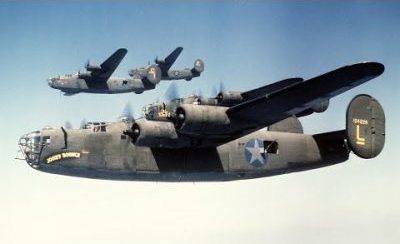
Bombing Hitler’s Hometown
or go to
Aletho News Archives – Video-Images
From the Archives
The Biggest Threat to Peace in Middle East
By Dr. Elias Akleh* | Sabbah Report | May 24, 2010
A build up of heightened tension in the Middle East is escalating in the last few weeks. American and Israeli postures towards Lebanon, Syria, and Iran have become more threatening. Listening to speeches of political leaders one hears talks only about war not peace. Iranians and Israelis are continuously training hard for a possible showdown. Both sides are conducting extensive war games every month. This led Syrians to claim that Israel is preparing for a soon-to-come another war. The Jordanians also are warning that current stalemate of the peace process is an indication of a war breaking out this summer. The Russian President and his army chief hinted, a few months ago, that the US and Israel were planning for an attack on Iran.
Indeed Iran is, as it has been for last few years, the target of most of the threats and accusations of supporting terrorism. Escalating incitement against Iran the American Defense Department sent last month (April) to Congress a report on Iran’s military claiming Iran could develop intercontinental ballistic missiles capable of reaching the US by 2015.
Ignoring the fact that N. Korea, India, Pakistan, and Israel are proven to have nuclear weapons while Iran does not, the US Secretary of State Hillary Clinton chose in her speech, to the nuclear Non-Proliferation Treaty review conference at the UN, to focus on Iran’s alleged nuclear ambitions putting the whole world at risk as she put it. According to Clinton Iran’s acquisition of nuclear weapons, rather than Israel’s more than 200 nuclear bombs, is destabilizing the Middle East. She called on the world’s nations to rally around US efforts to hold Iran, not other nuclear countries, to account.
The accusation that Usama Bin Laden is living comfortably in Iran had received a boost after the broadcast of a documentary called “Feathered Cocaine”. This echoed the June 2003 claims of the Italian newspaper Corre de la Sierra that Bin Laden was in Iran according to some intelligence report, and according to Richard Miniter’s book “Shadow War”. … continue
Blog Roll
 Aletho News
- Bombing Hitler’s Hometown
- German journalist threatened with homelessness as German court upholds EU sanctions in landmark free speech case
- US Tells Allies That Ukraine-Bound Arms Could be Sent to Middle East
- Organized terrorism: Iran condemns killing of its diplomats in Lebanon
- Why could Gaza enter the regional war?
- Hamas official rejects Mladenov Plan linking disarmament to Gaza reconstruction
- Two Primary Elections for the Soul of ‘America First’
- Japan Clings to US Vassalage Despite Energy Crunch Caused By Iran War
- US Seeks Control Over Global Energy Infrastructure – Kremlin
- US senators target Orban government for standing up to Zelensky
- If Americans Knew
- Researchers at Human Rights Watch Resign Over Blocked Report on Palestinian Refugee Return
- Jewish Groups Are Backing a War Americans Don’t Want
- Eric Fingerhut Thinks He’s the President of the Jews
- Top Jewish Philanthropists, Rabbis Urge Israeli President to Take Action Against ‘Jewish Extremists’
- Don’t Be Fooled. Zionist Leaders Have Always Wanted to Control Southern Lebanon
- Israel’s widespread use of torture is a core element of its genocide against the Palestinian people
- In Israel’s War on Iran, Many Middle East US Bases Rendered “All But Uninhabitable”
- ‘Burn the lawn’: Israel pursues ‘Rafah model’ in southern Lebanon
- A genocide here, an amputation there
- Reports: Iran mobilizing 1M fighters, Israel-US run low on ammo, Israeli army faces shortage – Not a ceasefire Day 168
- No Tricks Zone
- Devastating Assessment Of Comirnaty Vaccine By Former Senior Pfizer Europe Toxicologist
- New Study: CO2 Is ‘Effectively Negligible’ As An Explanatory Climate Change Factor Since 2000
- Former Pfizer Toxicologist Dr. Helmut Sterz Tells Bundestag Hearing Pfizer Vaccine Should Have Never Been Approved
- Energy Expert: Germany’s Nuclear Phaseout Was A “500 Billion Euro Mistake”
- New Research: South Australia’s Mid-Holocene Sea Surface Temperatures Were 4°C Warmer Than Today
- Storing Green Energy To Last Germany 10 Days Would Require A 60-Million Tonne Battery
- New Studies: UK Sea Levels Were 4 Meters Higher Than Today During The Mid-Holocene
- Destructive Green New Deal: German Energy And Metal Group Warns Of Drastic Crisis
- New Study Documents A 20-Year Pause In Arctic Sea Ice Decline – Driven By Internal Variability
- Wake-up Call: Survey Shows Majority Of Germans Now Favor Postponing Climate Targets!
 Aletho News