Trump files for divorce from NATO over Ukraine
By Larry Johnson | RT | December 6, 2025
It is one thing to produce a written national security strategy, but the real test is whether or not US President Donald Trump is serious about implementing it. The key takeaways are the rhetorical deescalation with China and putting the onus on Europe to keep Ukraine alive.
The 2025 National Security Strategy (NSS) of the US, released by the White House on December 4, 2025, marks a potentially profound shift in US foreign policy under Trump’s second administration compared to his first term as president. This 33-page document explicitly embraces an ‘America First’ doctrine, rejecting global hegemony and ideological crusades in favor of pragmatic, transactional realism focused on protecting core national interests: Homeland security, economic prosperity, and regional dominance in the Western Hemisphere.
It critiques past US overreach as a failure that weakened America, positioning Trump’s approach as a “necessary correction” to usher in a “new golden age.” The strategy prioritizes reindustrialization (aiming to grow the US economy from $30 trillion to $40 trillion by the 2030s), border security, and dealmaking over multilateralism or democracy promotion. It accepts a multipolar world, downgrading China from a “pacing threat” to an “economic competitor,” and calling for selective engagement with adversaries. However, Trump’s actions during the first 11 months of his presidency have been inconsistent with, even contradictory of, the written strategy.
The document is unapologetically partisan, crediting Trump personally for brokering peace in eight conflicts (including the India-Pakistan ceasefire, the Gaza hostage return, the Rwanda-DRC agreement) and securing a verbal commitment at the 2025 Hague Summit for NATO members to boost their defense spending to 5% of GDP. It elevates immigration as a top security threat, advocating lethal force against cartels if needed, and dismisses climate change and ‘net zero’ policies as harmful to US interests.
The document organizes US strategy around three pillars: Homeland defense, the Western Hemisphere, and economic renewal. Secondary focuses include selective partnerships in Asia, Europe, the Middle East, and Africa.
Here are the major rhetorical shifts in strategy compared to the previous strategies released during the respective presidencies of Trump (2017) and Biden (2022):
- From global cop to regional hegemon: Unlike Biden’s 2022 NSS (which emphasized alliances and great-power competition) or Trump’s 2017 version (which named China and Russia as revisionists), this document ends America’s “forever burdens” abroad. It prioritizes the Americas over Eurasia, framing Europe and the Middle East as deprioritized theaters.
- Ideological retreat: Democracy promotion is explicitly abandoned – “we seek peaceful commercial relations without imposing democratic change” (tell that to the Venezuelans). Authoritarians are not judged, and the EU is called “anti-democratic.”
- Confrontational ally relations: Europe faces scathing criticism for migration, free speech curbs, and risks of “civilizational erasure” (e.g., demographic shifts making nations “unrecognizable in 20 years”). The US vows to support the “patriotic” European parties resisting this, drawing Kremlin-like rhetoric accusations from EU leaders.
- China policy: Acknowledges failed engagement; seeks “mutually advantageous” ties but with deterrence (e.g., Taiwan as a priority). No full decoupling, but restrictions on tech/dependencies.
- Multipolar acceptance: Invites regional powers to manage their spheres (e.g., Japan in East Asia, Arab-Israeli bloc in the Gulf), signaling US restraint to avoid direct confrontations.
The NSS represents a seismic shift in America’s approach to NATO, emphasizing “burden-shifting” over unconditional alliance leadership. It frames NATO not as a values-based community but as a transactional partnership in which US commitments – troops, funding, and nuclear guarantees – are tied to European allies meeting steep new demands. This America First recalibration prioritizes US resources for the Indo-Pacific and Western Hemisphere, de-escalating in Europe to avoid “forever burdens.” Key changes include halting NATO expansion, demanding 5% GDP defense spending by 2035, and restoring “strategic stability” with Russia via a Ukraine ceasefire. While the US reaffirms Article 5 and its nuclear umbrella, it signals potential partial withdrawals by 2027 if Europe fails to step up, risking alliance cohesion amid demographic and ideological critiques of Europe. When Russia completes the defeat of Ukraine, the continued existence of NATO will be a genuine concern.
The strategy credits Trump’s diplomacy for NATO’s 5% pledge at the 2025 Hague Summit but warns of “civilizational erasure” in Europe due to migration and low birth rates, speculating that some members could become “majority non-European” within decades, potentially eroding their alignment with US interests.
Trump’s NSS signals a dramatic change in US policy toward the Ukraine conflict by essentially dumping the responsibility for keeping Ukraine afloat on the Europeans. The portion of the NSS dealing with Ukraine is delusional with regard to the military capabilities of the European states:
We want Europe to remain European, to regain its civilizational self-confidence, and to abandon its failed focus on regulatory suffocation… This lack of self-confidence is most evident in Europe’s relationship with Russia. European allies enjoy a significant hard power advantage over Russia by almost every measure, save nuclear weapons.
As a result of Russia’s war in Ukraine, European relations with Russia are now deeply attenuated, and many Europeans regard Russia as an existential threat. Managing European relations with Russia will require significant US diplomatic engagement, both to reestablish conditions of strategic stability across the Eurasian landmass, and to mitigate the risk of conflict between Russia and European states.
It is a core interest of the United States to negotiate an expeditious cessation of hostilities in Ukraine, in order to stabilize European economies, prevent unintended escalation or expansion of the war, and reestablish strategic stability with Russia, as well as to enable the post-hostilities reconstruction of Ukraine to enable its survival as a viable state.
The Ukraine War has had the perverse effect of increasing Europe’s, especially Germany’s, external dependencies. Today, German chemical companies are building some of the world’s largest processing plants in China, using Russian gas that they cannot obtain at home. The Trump Administration finds itself at odds with European officials who hold unrealistic expectations for the war perched in unstable minority governments, many of which trample on basic principles of democracy to suppress opposition. A large European majority wants peace, yet that desire is not translated into policy, in large measure because of those governments’ subversion of democratic processes. This is strategically important to the United States precisely because European states cannot reform themselves if they are trapped in political crisis.
Not surprisingly, this section of Trump’s NSS has sparked a panicked outcry in Europe. European leaders, including former Swedish PM Carl Bildt, called it “to the right of the extreme right,” warning of alliance erosion. Analysts at the Center for Strategic and International Studies (CSIS) praise its pragmatism, but flag short-sightedness, predicting a “lonelier, weaker” US. China views reassurances on sovereignty positively, but remains wary of economic pressures. In the US, Democrats, such as Rep. Jason Crow, deem it “catastrophic” for alliances, i.e. NATO.
Overall, the strategy signals a US pivot inward, forcing NATO allies to self-fund security while risking fractured partnerships with Europe. It positions America as a wealthy hemispheric power in a multipolar order, betting on dealmaking and industrial revival to sustain global influence without overextension.
Larry Johnson is a political analyst and commentator, former CIA analyst and member of the US State Department’s Office for Counterterrorism.
POLITICO’s Delusion Cracks: Belgium Isn’t Helping Russia — It’s Trying to Save Europe From Itself
By Gerry Nolan | The Islander | December 5, 2025
The great farce of late-imperial Europe is that every time Brussels stumbles into another historic blunder of its own making, it immediately searches for a foreign hand to blame. And so the EU’s court chronicler, Politico, delivers its latest fever dream: that Belgium, the most indecisive, over-medicated country in the bloc, has somehow transformed into “Russia’s most valuable asset.” In reality, the only asset Russia needed was the EU’s own arrogance.
Belgium merely did the unthinkable, it told the truth.
What Politico dresses up as geopolitical intrigue is actually a confession of EU derangement. The EU are trying to engineer the largest state-sanctioned theft of sovereign wealth in modern history, a direct raid on the Russian Central Bank’s reserves and expected applause, unity, and moral ecstasy. Instead, Belgium asked the only sane question left in Europe: “Are you all completely out of your minds?” For this, Politico paints De Wever as eccentric, impulsive, unstable, the same labels always deployed when someone refuses to bow to the imperial autopilot. But the deeper scandal is that Brussels expected him to sign off on detonating the post-war financial order for the sake of one more photo-op with Zelensky.
Politico can hide behind metaphors of summit dinners and langoustines, but the legal reality is brutal: raiding another nation’s central bank is not a policy disagreement. It is a declaration of financial war on the entire world. It would obliterate sovereign immunity, destroy the neutrality of reserve holdings, and instantly signal to the global South that their assets in EU banks are hostage to EU’s emotional spasms. One act, one reckless stroke of a pen, and the euro collapses as a safe currency, capital flees to Asia, and the West loses its last functional pillar of power. Belgium saw the cliff’s edge, Brussels mistook it for a (perverse) moral leap of faith.
Politico’s narrative stumbles further when it pretends the only danger lies in Moscow’s retaliation. It does not. Russia’s symmetric countermeasures are well-known, lawful, and devastating: nationalization of Western corporate assets, seizure of industrial infrastructure, liquidation of bond holdings, and the dismantling of Western financial footprints inside Russia. The value of Western assets exposed inside the Russian Federation rivals what sits in Euroclear. Brussels knows this. Euroclear knows this. Investors know this. Only the EU pretends the ledger is irrelevant. But the real threat is not Russia’s response , it is the irreversible collapse of trust in Western custodianship. Once the EU steals central bank reserves, no nation with self-respect will ever again store wealth in Europe. The theft of Russian reserves would be remembered not as an isolated act, but as the day the West proved it cannot be trusted with global money, let alone soverign assets.
This is the part Politico is terrified to articulate. Belgium wasn’t protecting Russia. Belgium is trying to protect the very system the EU purports to defend. Yet instead of portraying De Wever as the only adult in the room, Politico stages a melodrama about a Flemish nationalist gone rogue, supposedly spoiling the EU’s grandiose plan to hurl another €140 billion onto the Ukrainian funeral pyre. The reality is simpler, Belgium refused to mortgage its own future so Europe could continue its cosplay as a geopolitical superpower utterly detached from material reality. The EU elite wanted to play empire with someone else’s risk. Belgium refused to be the guarantor of their delusion.
What makes Politico’s narrative even more absurd is that it accidentally reveals the deeper rot, Europe’s elite caste are incapable of unity, incapable of strategic thought, incapable of honesty. Merz shoots from the hip. Von der Leyen improvises legal fantasies. Orbán holds a veto the size of a continental fault line. Trump instinctively knows he needs an offramp via peace talks and is happy to download project Ukraine’s corpse along with the humiliation onto Western Europe. Zelensky arrives in Brussels begging for cash while European governments fight over whether the money should be spent on their own weapons factories. This is not a union. This is a collective suicide pact.
And through all this chaos, Politico clings to the illusion that Russia must somehow be “laughing.” But Russia isn’t laughing. Russia is watching. Watching as Europe destroys its own energy security, its own industrial base, its own strategic autonomy, its own diplomatic credibility, its own financial reputation, and finally — with this proposed asset raid — the very legal foundations of the Western economic system. If Moscow appears calm, it is because it doesn’t need to act. Europe is demolishing itself at a pace Russia could never have engineered.
Belgium’s “no” was not an act of betrayal. It was the last flicker of European rationality. The EU’s hysteria and psychosis, not Russia, created the crisis. Europe is trying to violate international law, sabotage its own financial institutions, and torch what remains of the bygone postwar order to salvage the illusion of a war it has already lost. Belgium simply refused to join the ritual suicide.
So let us rewrite Politico’s headline as history will record it: “How the EU Became Russia’s Greatest Strategic Gift.” Not because Russia manipulated Europe, but because Europe manipulated itself, into hysteria, into decay, into legal nihilism, into economic ruin. Belgium didn’t hand Russia an asset. It denied the EU the final act of self-destruction… for now.
The tragic irony of the entire Politico piece is that its authors still cling to the fantasy that Europe can recover simply by shaming Belgium into compliance. But history will not be kind to this moment. When future scholars study the collapse of the Western financial empire, this attempted seizure of Russian assets and Belgium’s lonely refusal, will stand as the point where the veil fell, revealing a Europe that could no longer distinguish faux moral posturing from strategic insanity.
Belgium didn’t break with Europe, it broke with Europe’s delusions. The EU convinced itself that tearing down the last pillars of the post-war order was an act of courage. Belgium saw it for what it was, a death rite dressed as morality. And when this era ends, when capitals move eastward, when trust evaporates, when the euro cracks under the weight of its own blind arrogance, historians will look back on this moment. They will not ask why Belgium said no. They will ask why Europe said yes.
US puts normalizing relations with Russia among ‘core interests’
RT | December 5, 2025
The US has placed the restoration of normal ties with Russia and a rapid end to the Ukraine conflict at the center of its newly released National Security Strategy, presenting both aims as among America’s core interests.
The 33-page report outlining President Donald Trump’s foreign-policy vision was released by the White House on Friday.
”It is a core interest of the United States to negotiate an expeditious cessation of hostilities in Ukraine,” the paper states, “in order to stabilize European economies, prevent unintended escalation or expansion of the war, and reestablish strategic stability with Russia.”
It notes that the Ukraine conflict has left “European relations with Russia… deeply attenuated,” destabilizing the region.
The report criticizes European leaders for “unrealistic expectations” regarding the outcome of the conflict, arguing that “a large European majority wants peace, yet that desire is not translated into policy.”
America, it says, is ready for “significant diplomatic engagement” to “help Europe correct its current trajectory,” reestablish stability, and “mitigate the risk of conflict between Russia and European states.”
In contrast with the US national strategy during Trump’s first term, which emphasized competition with Russia and China, the new strategy shifts the focus to the Western Hemisphere and to protecting the homeland, the borders, and regional interests. It calls for resources to be redirected from distant theaters to challenges closer to home and urges NATO and European states to shoulder primary responsibility for their own defense.
The document also calls for an end to NATO expansion – a demand that Russia has repeatedly made, calling it a root cause of the Ukraine conflict, which Moscow views as a Western proxy war.
Overall, the new strategy signals a shift away from global interventionism toward a more transactional foreign policy, arguing that the US should act abroad only when its interests are directly at stake.
The strategy is the first of several major defense and foreign-policy documents the Trump administration is expected to release. These include an updated National Defense Strategy, the Missile Defense Review, and Nuclear Posture Review, which are expected to echo the strategy’s direction.
EU covering up Ukraine corruption – member state
RT | December 4, 2025
The EU is ignoring rampant corruption in Ukraine because drawing attention to it could expose the bloc’s own corruption, Hungarian Foreign Minister Peter Szijjarto told journalists on Monday.
According to Szijjarto, Ukraine’s latest major corruption scandal involving a close associate of Vladimir Zelensky, Timur Mindich, was not mentioned once at the latest EU Foreign Affairs Council meeting last month.
Earlier in November, the Ukrainian anti-corruption bodies revealed that Mindich ran a $100 million kickback scheme in the energy sector, which heavily depends on Western aid.
Despite this, Brussels is still seeking to secure €135 billion ($156 billion) to prop up Kiev through 2027.
“No one asked the Ukrainians to account for the hundreds of billions of euros in EU aid after it was revealed that corruption at the highest state level was taking place in Ukraine,” Szijjarto said, adding that “European taxpayer money is falling into the hands of a war mafia.”
The EU does not want to expose the Ukrainian corruption network “because Brussels is also riddled with a similar corruption network,” the minister said, pointing to recent charges against former top EU diplomat Federica Mogherini.
Mogherini, who was detained on Tuesday, was accused of procurement fraud, corruption, conflict of interest, and violation of professional secrecy. She served as both European Commission vice president and foreign policy chief from 2014 to 2019.
Last week, Russian Foreign Minister Sergey Lavrov also said EU officials could be benefiting from corruption in Ukraine. Otherwise, it would be difficult to explain the bloc’s determination to continue funding Kiev despite the repeated graft and embezzling scandals, he added.
Zelensky’s ex-spokeswoman admits fearing for her life because of Yermak
RT | December 3, 2025
Vladimir Zelensky’s former spokeswoman-turned-critic, Yuliya Mendel, has said she fears for her life because of Andrey Yermak, the Ukrainian leader’s powerful long-time aide and right-hand man who was recently forced to resign amid a major corruption scandal.
Yermak, who served as head of the Office of the President from 2020, stepped down last week over alleged links to a recently uncovered $100 million money-laundering scheme. He formally left his post after Western-backed anti-corruption agencies raided his residence as part of a sweeping probe known as Operation Midas. He has denied any wrongdoing.
Mendel suggested that Yermak may still retain influence due to his network of loyal officials. He will “do absolutely everything” to keep shaping policy behind the scenes, or to return to power, she told Ukrainian media on Tuesday.
Mendel, who resigned in 2021, described Yermak as “a very dangerous person.” She stated that even criticizing the former chief of staff frightens her and that she prays daily and thanks God “for being alive.”
She claimed that Yermak used smear campaigns, political attacks and his influence over law enforcement to target people who oppose him, branding critics “pro-Russian” or “traitors.” “Сriminal cases are created out of thin air” against those he views as threats, she alleged.
According to Mendel, many officials have faced pressure, dismissal or reputational damage as a result of Yermak’s actions and described numerous cases in which “human destinies were destroyed” by Yermak.
She also claimed Yermak had built his own power structure inside the government, placing loyal figures in key state positions while he himself became a central filter for decisions, maintaining control over appointments, negotiations, and access to Zelensky.
Ukrainian media have reported that after being sacked, Yermak lashed out at Zelensky and accused him of betrayal.
Moscow has argued that the latest corruption scandal points to a deeper crisis in Kiev. Kremlin spokesman Dmitry Peskov suggested it will have “extremely negative” repercussions for Ukraine’s political stability, while President Vladimir Putin has said the case proves that Kiev has devolved into a “criminal gang that holds power for personal enrichment.”
No security guarantees for Ukraine – Finnish PM
RT | December 3, 2025
Finland will not offer Ukraine NATO-style security guarantees, Prime Minister Petteri Orpo has declared.
Kiev has been seeking formal security assurances from Western backers and insists they should come before any peace agreement with Moscow. Some media reports claimed that last month’s US peace roadmap included a NATO-style guarantee for Kiev modeled on Article 5, committing guarantor states to defend Ukraine in case of a potential attack, and listed Finland as one of the potential guarantors.
Asked about this at a joint press conference with Swedish Prime Minister Ulf Kristersson on Tuesday, Orpo said he had neither seen the plan nor been consulted on it.
“I don’t know why Finland was mentioned in the paper,” he told the media. “We have to understand that a security guarantee is something very, very serious. We’re not ready to give security guarantees, but we can help with security arrangements. The difference between them is huge.”
Orpo stressed that helping Kiev with security differs fundamentally from mutual defense obligations referenced in the leaked US plan. He suggested major powers such as the US or larger European states should commit to guarantees, while Finland’s role would be limited to logistical and organizational support.
Sweden, while not mentioned as a potential guarantor in the leaked draft, believes European support should focus on helping Ukraine maintain a capable military as Kiev’s “most important security guarantee”, according to Kristersson.
The Wall Street Journal reported this week that security guarantees remain unresolved after the latest talks between Kiev and Washington in Florida. Moscow has said it does not oppose security guarantees for Ukraine in principle but insists they must not be one-sided or aimed at containing Russia, and should follow a peace deal rather than precede one. Russia confirmed receiving the “main parameters” of the US roadmap last week but has not commented on details or whether guarantees are included.
Trump’s envoy, Steve Witkoff, visited Moscow on Tuesday for further talks on the peace plan. According to President Vladimir Putin’s aide Yury Ushakov, the discussions were constructive and Moscow agreed with some American proposals, but deemed others unacceptable, and “no compromises have been found as of yet.”
Europe is driving the continent toward war: Putin
Al Mayadeen | December 2, 2025
Russian President Vladimir Putin accused European leaders of steering the continent toward confrontation, saying Moscow has repeatedly tried to avoid escalation while European governments continue to inflame the situation.
Speaking to journalists on Tuesday, Putin said that Russia is not the party seeking a clash. “We don’t intend to go to war with Europe, I’ve said this a hundred times, but if Europe suddenly wants to fight us and does, we are ready right now. There can be no doubt about that,” he said, placing responsibility for rising tensions squarely on the West.
Russia reports encirclement of Ukrainian forces as European states expand military involvement
Putin said Russian troops have locked a sizeable Ukrainian contingent in a difficult position near Kupyansk, describing the frontline situation as the result of relentless Western pressure on Kiev to continue a war it cannot win. “Let me remind you that, on the left bank of the river [in the town of Kupyansk], an enemy group numbering 15 battalions is trapped. And Russian troops have begun eliminating it,” he noted.
He said ongoing battles in Kupyansk-Uzlovoy are moving in Russia’s favor and predicted that the settlement will soon be fully brought under Moscow’s control. According to Putin, Russian units control both banks of the broader Kupyansk area and hold hundreds of buildings in the settlement.
These battlefield developments come as European governments accelerate weapons deliveries and publicly reject discussions of compromise. Russian officials argue that the political leadership in the EU, rather than Kiev, is pushing this phase of the war, ignoring humanitarian costs and attempting to prolong hostilities for geopolitical purposes.
Black Sea tensions rise as Moscow calls Ukrainian strikes ‘piracy’
Putin sharply criticized recent Ukrainian attacks on tankers in the Black Sea, attacks that Russian officials say are carried out with Western backing. The president said these operations took place in another country’s exclusive economic zone, calling the strikes a criminal act. “I know that this happened. Attacks on tankers in neutral or even non-neutral waters. But in a special economic zone of another state, a third state, this is piracy. Nothing else,” he said.
He also signaled that Russia would respond not just to Ukraine, but potentially to vessels belonging to countries that enable Kiev’s maritime operations. “The most radical way is to cut off Ukraine from the sea. Then it will be genuinely impossible for it to engage in piracy,” he said, suggesting that Russia may take stronger measures to secure the region if European powers continue encouraging naval escalation.
Moscow to widen its target set as Ukraine intensifies attacks on ports
Putin said Russian forces will now strike a broader list of port infrastructure and shipping linked to Ukrainian operations. “We will expand the range of our strikes against port facilities and ships that enter Ukrainian ports,” he said, arguing that Kiev, supported by European governments, has repeatedly attempted attacks on Russian seaports and supply routes.
Russian officials say many of Ukraine’s naval strikes are coordinated with European advisers and intelligence services, and that Europe’s growing involvement has directly contributed to instability in the Black Sea.
Putin hopes that Russia’s response to piracy by the Ukrainian forces in the Black Sea will force Kiev to consider whether it is worth continuing such actions.
European leaders accused of sabotaging peace efforts while the US seeks dialogue
The president also pointed to Europe’s obstruction of diplomatic efforts, saying EU governments walked away from negotiations long before Moscow or Washington did. “They [the Europeans] are offended that they were allegedly excluded from the negotiations. But I want to point out that no one excluded them. They excluded themselves… They withdrew themselves from this process,” he said.
Putin argued that European governments cling to the idea of a “strategic defeat” for Russia, even as the facts on the ground shift. He said their behavior now threatens US attempts to revive dialogue under President Donald Trump. “Even when they try to make some changes to Trump’s proposals, these changes are aimed at only one thing: to block the entire peace process,” he warned.
According to Putin, Europe’s goal is to present Moscow as the obstacle to peace despite Europe being the one rejecting realistic terms. “Their goal is to then blame Russia for the curtailing of this peace process. We see this clearly,” he said.
Putin concluded that Europe could return to negotiations only when it abandons ideological hostility and starts recognizing the actual balance of forces on the battlefield.
Brussels Prolonging Ukraine War to Forge Military Alliance — EU MP
Sputnik – 03.12.2025
Some leaders in the European Union are seeking to prolong the conflict in Ukraine in order to turn the EU into a military alliance and make the European Commission look like the government of a united European federal state, Luxembourg member of the European Parliament Fernand Kartheiser told RIA Novosti.
Luxembourg MEP Fernand Kartheiser accused EU leaders of deliberately blocking a peace deal in Ukraine to advance their own political integration agenda.
“In fact, the EU is doing everything to block the peace agreement, not to promote it. It prefers to ignore reality on the ground and supports the most radical demands of the Ukrainian government. On territorial issues, it defends principles it disregards in other situations. For example, the territorial integrity of Serbia or the Republic of Cyprus is apparently less important to it than the integrity of Ukraine,” Kartheiser said.
In his opinion, some European leaders seek to prolong the conflict in order to turn the EU into a military alliance.
“Some European leaders are seeking to prolong the conflict in order to transform the EU into a military alliance and turn the Commission into something akin to the government of a unified European federal state without any consent from the member states. The Ukraine conflict is thus being deliberately prolonged, to the detriment of Ukraine, in order to complete European integration without changing the treaties,” Kartheiser added.
Scott Ritter: War Has Been Won & Russia Faces a Dilemma
Glenn Diesen | December 2, 2025
Scott Ritter is a former Major, Intelligence Officer, US Marine, and UN Weapons Inspector. Ritter argues Russia has defeated NATO and Ukraine, and now faces a dilemma about what kind of peace it wants.
Follow Prof. Glenn Diesen:
Substack: https://glenndiesen.substack.com/
X/Twitter: https://x.com/Glenn_Diesen
Patreon: https://www.patreon.com/glenndiesen
Support the research by Prof. Glenn Diesen:
PayPal: https://www.paypal.com/paypalme/glenndiesen
Buy me a Coffee: buymeacoffee.com/gdieseng
Go Fund Me: https://gofund.me/09ea012f
Books by Prof. Glenn Diesen
Europe just made Russia’s case for Odessa
By Gerry Nolan | The Islander | November 30, 2025
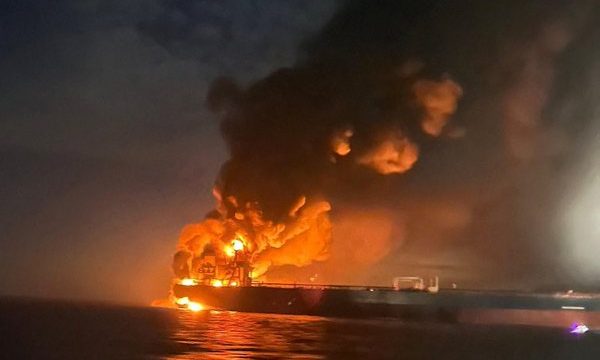
When you authorize naval-drone terrorism against Russian civilian oil tankers in the Black Sea, don’t whine when Moscow redraws the coastline. You wanted escalation? Fine. Now watch your proxy lose Odessa, and with it access to the Black Sea.
Washington is hunting for a face-saving imperfect peace after admitting Russia can’t be beaten. But London, and the EU — delusional, hysterical, and terrified of the coming reckoning from their own populations – keeps pushing the kind of escalation that guarantees one outcome: Russia removing Ukraine’s coastline so the Black Sea can’t be used as NATO’s private terrorism platform. Every naval-drone attack, every strike on a tanker, every British engineered terror op doesn’t weaken Russia, it strengthens Russia’s moral, legal and military argument for needing Odessa.
On Nov 21, Ukraine launched a MAGURA V5 naval drone packed with ~200 kg of explosives at the Russian tanker SIG, a civilian vessel transporting fuel. Earlier, on September 13, a coordinated drone-and-missile strike hit Sevastopol’s shipyard, damaging a patrol ship and igniting a fire visible for kilometres. In October, multiple MAGURA V5 drones attempted to strike the Sergey Kotov, a patrol corvette, the footage released by Ukraine’s GUR bears the hallmark of British-assisted targeting and mission-planning systems. The pattern is undeniable, Ukraine’s entire maritime warfare capability is thanks to the West.
These naval drones didn’t glide across the Black Sea on luck and instinct. With operational ranges approaching 800 kilometers, Ukraine’s MAGURA V5 drones strike far beyond coastal waters, but only with the eyes and brains of NATO. They rely on Western ISR: real-time satellite feeds from the UK and France, RQ-4 Global Hawk patrols off Romania, Starlink uplinks beaming mission data, and British-assisted target coordination. Europe wasn’t just observing. It was triangulating and commanding. And now, after cheering on attacks launched with AI-assisted maritime drones and foreign-fed targeting, Europe feigns shock that Moscow may erase access to the very coastline launching them.
Europe is not supporting Ukraine. Europe is sacrificing it, with full knowledge of what these strikes provoke. Every official in Brussels, London, and Paris understands Russia’s red lines, they’ve memorized them for years. They know that attacking civilian tankers, port infrastructure, and Black Sea Fleet assets from a Nato-commanded coastline forces Moscow to harden the entire southern theater. Yet they push Zelensky, their puppet, into terror operations that guarantee Odessa becomes a battlefield and cease forever to be a bargaining chip.
When a coastline becomes a NATO forward-operating platform masquerading as a proxy state, removing that coastline becomes self-defense. Europe knows this. Washington knows this. That is precisely why Europe, cornered and terrified of the political reckoning on its own soil, keeps escalating. Starmer fears British rage at the coming humiliation. Macron fears the streets of France. They all know what’s coming.
And here lies the supreme irony: the same political caste that spent decades sneering that Russia was “a glorified gas station” is now petrified at the thought of facing Russia without American cover.
Moscow now has zero incentive to leave a hostile coastline intact. Landlock Kiev. Neutralize NATO’s Black Sea fantasies.
When Odessa falls, Europe will shriek “aggression,” pretending not to remember who designed the drones, who funded and commanded the operations, daring Russia to respond. But the world will remember. And history will not record this as conquest. It will record it as the foreclosure of a coastline weaponized by Europe’s own madness.
Russia will will by turn the map into a verdict, one future generations of Europeans will demand their leaders answer for, and there will be hell to pay for the betrayal of Europe.
EU central bank rejects von der Leyen’s asset-theft plan
RT | December 2, 2025
The European Central Bank has refused to support a proposed €140 billion payout to Ukraine backed by frozen Russian assets held at Belgium’s Euroclear, the Financial Times reported on Tuesday, citing officials familiar with the discussions.
The ECB determined that the European Commission’s scheme falls outside its mandate, the newspaper reported.
The EU has spent months trying to tap frozen Russian central bank reserves to back a €140 billion ($160 billion) “reparations loan” for Kiev. Belgium, where around $200 billion of the assets is held at the privately owned Euroclear clearing house, has repeatedly warned of potential litigation as well as financial risks if the EU goes through with the scheme.
Under the European Commission’s plan, EU nations’ governments would provide state guarantees to share the repayment risk on the loan for Ukraine.
Commission officials, however, have warned that member states might be unable to mobilize cash quickly in an emergency, risking market strains.
EU officials reportedly asked the ECB whether it could act as a lender of last resort to Euroclear Bank, the Belgian depository’s lending arm, to prevent a liquidity crunch. ECB officials told the commission this was not possible, the FT reported, citing sources familiar with the talks.
“Such a proposal is not under consideration as it would likely violate EU treaty law prohibiting monetary financing,” the ECB said.
Brussels is now reportedly working on alternative ways to provide temporary liquidity to backstop the €140 billion loan.
“Ensuring the necessary liquidity for possible obligations to return the assets to the Russian central bank is an important part of a possible reparations loan,” the FT quoted an EC spokesperson as saying.
Euroclear CEO Valerie Urbain warned last week the move would be seen globally as “confiscation of central bank reserves, undermining the rule of law.” Moscow has repeatedly warned it would view any use of its sovereign assets as “theft” and respond with countermeasures.
The push comes as the cash-strapped EU faces pressure to finance Ukraine for the next two years amid Kiev’s cash crunch, with efforts to tap Russia’s assets intensifying as the US promotes a new initiative to settle the conflict. Economists estimate Ukraine is facing a budget gap of about $53 billion a year in 2025-2028, excluding additional military funding.
The country’s public and government-guaranteed debt ballooned to unseen levels of over $191 billion as of September, the Finance Ministry said. The IMF last month raised its debt forecasts for Ukraine, now predicting public debt at 108.6% of GDP.
Kiev’s Black Sea attack infringed on NATO state’s sovereignty – Kremlin
RT | December 1, 2025
Ukraine’s attacks on commercial tankers in the Black Sea last week constituted an “outrageous” infringement of Turkish sovereignty, Kremlin spokesman Dmitry Peskov has said.
His comments follow several strikes by explosives-laden sea drones on two Gambian-flagged tankers, Kairos and Virat, which were sailing off the Turkish coast en route to the Russian port of Novorossiysk. On Saturday, another drone attacked a crude hub on Russia’s Black Sea coast belonging to the Caspian Pipeline Consortium (CPC), operated by Russia, Kazakhstan, the US, and several Western European nations.
Speaking to journalists on Monday, Peskov stated that the attacks on the tankers represent a direct violation of the rights of the vessels’ owners and an encroachment on the sovereignty of the Turkish republic.
He told reporters that the Kremlin views the incidents as serious and noted that such attacks could have implications for ongoing diplomatic efforts.
Peskov added that the strikes showed “the essence of the Kiev regime,” adding that attacks on international energy-related assets damage commercial property and maritime security.
Previously, Russian Foreign Ministry spokeswoman Maria Zakharova also condemned Kiev for the “terrorist attacks” on international civilian energy infrastructure. She suggested that they may have been an effort by Kiev to undermine international peace efforts and divert attention away from a major corruption scandal involving the country’s senior officials, as well as Ukraine’s continued battlefield setbacks.
Türkiye has also voiced concern about the attacks, saying they occurred within its exclusive economic zone and posed “serious risks” to navigation and the environment.
While Kiev has not officially claimed responsibility for the attacks, several Ukrainian and Western news outlets have reported, citing sources, that the Security Service of Ukraine (SBU) orchestrated the strikes.
Featured Video

Bombing Hitler’s Hometown
or go to
Aletho News Archives – Video-Images
From the Archives
‘Conspiracy Theory’ Now Fact: Greater Israel Has Arrived
By Kit Klarenberg | Mint Press News | January 28, 2025
Ever since Tel Aviv’s 1948 creation, much has been said and written about ‘Greater Israel’ – the notion Zionism’s ultimate end goal is the forcible annexation and ethnic cleansing of vast swaths of Arab and Muslim lands for Jewish settlement, based on Biblical claims this territory was promised to Jews by God. The mainstream media typically dismisses this concept as antisemitic conspiracy theory, or at most the fringe fantasy of a minuscule handful of extremist Israelis.
In reality … continue
Blog Roll
 Aletho News
- Pro-Israel terrorist arrested before assassination of pro-Palestinian activist
- Bombing Hitler’s Hometown
- German journalist threatened with homelessness as German court upholds EU sanctions in landmark free speech case
- US Tells Allies That Ukraine-Bound Arms Could be Sent to Middle East
- Organized terrorism: Iran condemns killing of its diplomats in Lebanon
- Why could Gaza enter the regional war?
- Hamas official rejects Mladenov Plan linking disarmament to Gaza reconstruction
- Two Primary Elections for the Soul of ‘America First’
- Japan Clings to US Vassalage Despite Energy Crunch Caused By Iran War
- US Seeks Control Over Global Energy Infrastructure – Kremlin
- If Americans Knew
- Researchers at Human Rights Watch Resign Over Blocked Report on Palestinian Refugee Return
- Jewish Groups Are Backing a War Americans Don’t Want
- Eric Fingerhut Thinks He’s the President of the Jews
- Top Jewish Philanthropists, Rabbis Urge Israeli President to Take Action Against ‘Jewish Extremists’
- Don’t Be Fooled. Zionist Leaders Have Always Wanted to Control Southern Lebanon
- Israel’s widespread use of torture is a core element of its genocide against the Palestinian people
- In Israel’s War on Iran, Many Middle East US Bases Rendered “All But Uninhabitable”
- ‘Burn the lawn’: Israel pursues ‘Rafah model’ in southern Lebanon
- A genocide here, an amputation there
- Reports: Iran mobilizing 1M fighters, Israel-US run low on ammo, Israeli army faces shortage – Not a ceasefire Day 168
- No Tricks Zone
- Devastating Assessment Of Comirnaty Vaccine By Former Senior Pfizer Europe Toxicologist
- New Study: CO2 Is ‘Effectively Negligible’ As An Explanatory Climate Change Factor Since 2000
- Former Pfizer Toxicologist Dr. Helmut Sterz Tells Bundestag Hearing Pfizer Vaccine Should Have Never Been Approved
- Energy Expert: Germany’s Nuclear Phaseout Was A “500 Billion Euro Mistake”
- New Research: South Australia’s Mid-Holocene Sea Surface Temperatures Were 4°C Warmer Than Today
- Storing Green Energy To Last Germany 10 Days Would Require A 60-Million Tonne Battery
- New Studies: UK Sea Levels Were 4 Meters Higher Than Today During The Mid-Holocene
- Destructive Green New Deal: German Energy And Metal Group Warns Of Drastic Crisis
- New Study Documents A 20-Year Pause In Arctic Sea Ice Decline – Driven By Internal Variability
- Wake-up Call: Survey Shows Majority Of Germans Now Favor Postponing Climate Targets!
 Aletho News