More than 10,000 Ukrainian troops encircled – Russian military
RT | October 26, 2025
Around 10,000 Ukrainian troops have been encircled by Russian forces in the Kupyansk and Krasnoarmeysk areas, President Vladimir Putin was told on Sunday during a visit to a Russian Army command post.
According to Kremlin spokesman Dmitry Peskov, Putin held a meeting with Chief of the General Staff Valery Gerasimov and senior military commanders, during which he was briefed on the situation along the line of contact.
“It was noted that up to 5,000 Ukrainian troops are encircled in the Kupyansk direction and around 5,500 in the Krasnoarmeysk direction,” Peskov said.
Kupyansk is a city in Ukraine’s Kharkov Region, around 100km east of Kharkov. Krasnoarmeysk is located in Russia’s Donetsk People’s Republic, currently occupied by Ukrainian troops.
The military reported that Russian forces also captured a crossing over the Oskol River, cutting off the movement of Ukrainian troops. They are currently completing the liberation of Yampol, while nearby Volchansk is said to be 70% liberated.
A total of 31 Ukrainian battalions have been encircled in the Krasnoarmeysk and Dimitrov areas. According to Peskov, Putin congratulated the troops on their success in Kupyansk and the achievements of combat missions in other areas.
During the meeting, Putin ordered measures to ensure the surrender of the encircled Ukrainian troops and to minimize casualties. He noted that the Russian Army has always shown mercy toward its enemies and stressed that this must continue.
The president also urged the commanders to “do everything” in their power to ensure the safety of the civilian population in the encircled areas, who he said Ukrainian forces are using as human shields.
Putin also urged the army to continue the military operation “in accordance with the plan developed by the General Staff,” stressing that the safety of Russian service members must remain the top priority.
Trump may not follow through on Russian oil or Tomahawk
By M. K. BHADRAKUMAR | Indian Punchline | October 25, 2025
The US President Donald Trump has seemingly shifted gear in the US strategy to stop Russia on its tracks from creating new facts on the ground in Ukraine. Russian forces have the upper hand all along the 1250-km Ukrainian frontline stretching Kiev’s defences and resources, which no amount of western military help can hope to reverse in a foreseeable future. Trump is compelling Russia to seek a military victory in Ukraine.
Trump so far put on the air of a statesman in great anguish over the humanitarian aspects of the conflict. Moscow tolerated the theatrical show to pamper Trump’s egotistic personality — that is, until Putin shattered the myth last week to expose that Trump actually holds the record as the American president who sanctioned Russia the most number of times, exceeding even his predecessor Joe Biden’s tally.
Trump, in the new avatar as war monger has unveiled a strategy of climbing the escalation ladder in the war until Putin capitulates. To that end, he has expanded the sanctions regime to include Russia’s oil industry, and is toying with the idea to supply Ukraine with long-range Tomahawk missiles that can hit deep inside Russian territory.
The US Treasury Departments’ press release announcing the new sanctions against Russia reads as if its is custom made for targeting India. India and China account for some 80% of Russia’s oil exports, but the latter is the number one buyer with 60% of the imports transported through pipelines, whereas India depends on carriers arranged by the Russian side (“shadow fleet”) which are also now under western sanctions.
The press release claims that “The ultimate goal of sanctions is not to punish, but to bring about a positive change in behaviour.” It is a statement of fact because this is not really about oil, but about geopolitics. Whether Trump will actually press ahead with the oil sanctions remains unclear, since keeping Russian oil out of the world market risks high oil prices which could boomerang on the US economy and be damaging politically for Trump.
Putin’s initial reaction last Thursday was that the oil sanctions are an “unfriendly” act which “will have certain consequences, but they will not significantly affect our economic well-being.” Putin said that Russia’s energy sector feels confident. He added, “This is, of course, an attempt to put pressure on Russia. But no self-respecting country and no self-respecting people ever decides anything under pressure.”
Meanwhile, western hypocrisy broke through the ceiling, as the German chancellor Friedrich Merz who is one of the most enthusiastic proponents of the war is at Trump’s doorstep pleading for a sanctions waiver. Apparently, Germany has been quietly buying Russian oil even while portraying Russia in hostile terms, lest its GDP fell by another 3 percent!
Germany “temporarily” took control of three subsidiaries of the Russian oil company Rosneft (which the US has sanctioned) to secure its energy supply. Interestingly, the UK PM Keir Starmer, the charioteer of the so-called “coalition of the willing” raring to deploy troops in Ukraine to fight Russian forces, is travelling in the same boat as Merz seeking Trump’s waiver!
Such shady behaviour with racial overtones by the Western countries holds lessons for India. Clearly, the effectiveness of the new sanctions against the Russian oil giants will depend on just how zealous the US is in enforcing them through secondary sanctions on entities that deal in Russian oil. If past experience is anything to go by, Washington won’t be able to sustain a full-court press – if for no other reason than that markets will force its hand once oil prices shoot up.
That is to say, thanks to lax enforcement of sanctions, Russian oil will continue to reach the world market. Buyers like India who cut down oil supplies from Russia will end up paying higher prices. By meekly complying with Trump’s diktat, they compromised their interests. The sense of humiliation is such that Delhi shies away from engaging with Trump.
However, as regards long-rage Tomahawk missiles (range: 3000 km) Putin was polite but frank in his reaction, saying, “This is an attempt at escalation. But if such weapons are used to attack Russian territory, the response will be very serious, if not overwhelming. Let them think about it.”
The deputy chairman of the Security Council Dmitry Medvedev was even blunt in conveying the Kremlin thinking:
“The US is our enemy, and their talkative ‘peacemaker’ has now fully embarked on the path of war with Russia… this is now his conflict, not the senile Biden’s!… the decisions made are an act of war against Russia. And now Trump has fully sided with the insane Europe.
“But there is also a clear plus in this latest swing of the Trump pendulum: we can strike all the Bandera hideouts with a wide variety of weapons without regard to unnecessary negotiations. And achieve victory precisely where it is only possible: on the ground, not at a desk. Destroying enemies, not concluding meaningless ‘deals’”.
Apparently, the message went home. Trump, before emplaning for Malaysia on his 3-nation Asian tour, made sure that his special envoy to Russia Steve Witkoff extended an invitation to his Russian interlocutor Kirill Dmitriev, the CEO of Russian Direct Investment Fund, to go over to Miami for a quiet conversation to talk things over. The two erstwhile businessmen are meeting today.
Meanwhile, Trump has hinted in anticipation of his forthcoming meeting with Chinese President Xi Jinping in Kuala Lumpur on Saturday that he may not after all carry out his threatened 100% tariffs on Chinese goods and other trade curbs starting on November 1 in retaliation for China’s vastly expanded export controls on rare earth magnets and minerals. China’s tough stance is paying off.
Similarly, the Kremlin’s blunt threat of retaliation against Tomahawk will be heeded seriously. Putin has many options — Oreshnik capable of Mach 10 speed, for instance, is a hypersonic missile that is also nuclear capable, against which the West has no defence. The weapon has entered into serial production and been supplied to the armed forces.
Again, Russia’s new jet-powered glide bomb gives a significant boost in range and superior resistance to electronic countermeasures. It is capable of hitting Ukraine’s western border. It is also moving to mass production and the West is defenceless against it.
Shabbos-Goyim
By Israel Shamir • Unz Review • October 23, 2025
The late saint of the communist calendar, Rosa Luxemburg, often called her opponents ‘Shabbos-goyim,’ meaning servants of the Jews. A Shabbos-goy is a non-Jew who toadies to every wish and whim of the Jews, especially in politics, or a non-Jew who is heavily supportive of Israel, says the dictionary. They are a breed apart.
One can argue about how successfully Jews rule the countries they lead. There are more- and less-successful examples. Usually, Jewish rule is good for the king and his coterie, and bad for the ordinary Tom, Dick and Harry. The policies of a foreign cosmopolitan elite might be resisted by the majority population of any country, but once a class of Shabbos goyim has been developed, nobody is able to escape Jewish rule, inevitably ruining the country. That happened with Poland; it was a mighty kingdom that had successfully fought Russia and Turkey. But the Poles allowed the Jews to manage their country, and in no time, Poland collapsed and was partitioned. This happened with Russia; heavy Jewish influence had brought it to the very brink of collapse in 1991, and only with great difficulty was Putin able to stabilise the country. Since the 2014 American coup Ukraine has been ruled by Jews, and now it is being destroyed.
The United States is a country ruled by Shabbos goyim, starting with LBJ, that is, after Nixon. Donald Trump, seemingly an imposing man of respectable age, height and weight, also turned out to be a Shabbos goy. He admitted that much himself when speaking in the Knesset. It turns out that he most often met with a couple of American Jews, casino owners, and they had financed his path to the White House. Even young Kushner, his son-in-law, and older Kushner, his father-in-law, a well-known and convicted fraudster (like most Jewish businessmen), and now the US ambassador to Paris, determine Trump’s actions. Their plan is to destroy Gaza and build a country club for Jews on its ruins, and make a fortune from it.
Americans practically have no choice – all the competing politicians are Shabbos-goyim. Out of 535, there is just one American congressman, Thomas Massie, who doesn’t take Jewish bribes, but what can he do alone? Eventually, the US will collapse, because a country led by pet Shabbos goyim must collapse – and should collapse, because the government does not represent the American people. The power of AIPAC over the US Congress proves that the US is ruled by Jewish donors. Between the Jewish oligarchs and their Shabbos goyim they have pocketed practically all the media. Much of this Jewish largess has been lifted directly from the US Treasury.
“Unconditional support for Israel is a critical litmus test of acceptability by the major media in the U.S. Prospective pundits ‘earn their stripes’ by showing their devotion to Israel (and, presumably other Jewish issues). It seems difficult to explain the huge tilt toward Israel in the absence of some enormous selective factor as the result of individual attitudes. And there is the obvious suggestion that while the Jews on this list must be seen as ethnic actors, the non-Jews are certainly making an excellent career move in taking the positions they do”, wrote Kevin Macdonald.
What are the immanent qualities of a society ruled by Shabbos goyim? The first is the gap between the rich and the normal citizens. The rich are rewarded and become more rich, and the average citizen becomes more and more poor. In any country there will be wealth disparity, but not of such magnitude. This is because the Jews raise up their friends and strangle their enemies. They are very consistent about this. When they gain the upper hand, they seize the treasury and freely share the country’s wealth with their Shabbos goyim compatriots. If you are pro-Jew, you and your family will be lionized in the media and showered with lucrative contracts. If you even drag your feet, you will find yourself pilloried and impoverished. This is the lesson they teach, and they are not shy about it.
The second – its wars. The Jews love wars, and so do their Shabbos goyim. They do not like the wars well enough to participate, just enough to instigate and enjoy the results. Their national bird is the chicken-hawk, such is the typical Jewish attitude toward wars. The Jews were at the front lines instigating WWI, WWII, the Iraq and Iran wars, and all the smaller regional wars, but they step aside and let their Shabbos goyim lead from behind the lines once the conflict begins. If the war becomes unpopular, it is the Shabbos goy who takes the blame. Most famous Shabbos goyim in the US, such as Lindsey Graham, never went to a war, but always voted for them. Recently our chief Shabbos goy, President Trump, promised to beef up Graham’s election campaign, supporting him because he is a Neocon (and we all know what that means). Even the most belligerent sort of Jews, the Israelis, prefer to kill weaponless Palestinian farmers, or pour their missiles on their enemies from afar. Now US Jews are pushing their Shabbos goyim administration to fight Russia by supporting the Ukrainian Shabbos goyim in their war. They know perfectly well that Russians and Ukrainians lived for hundreds of years in perfect union, that is until Mme Nuland arrived, equipped with billions of dollars to instigate her Jewish coup and her Jewish war.
The Shabbos goyim who rule the land on behalf of their Jewish masters have no empathy for their subjects. Just zero. That’s actually Jewish religious dogma: a Jew is forbidden to have compassion to a Goy. And at the same time, all Jews are required to assist all other Jews. Thus, they plot against goyim. There’s no getting around it. In Stanley Kubrick’s 2001, HAL 9000 was embedded with a directive to distrust the crew, eventually resulting in the destruction of the crew and the destruction of the mission. Similarly, Jews are taught to distrust the goyim, even their own Shabbos goyim. When Jewish distrust ripens into Jewish revolution, even the collaborators pay the full price. Religious Jews hate the goyim ‘because Talmud’. Non-religious Jews hate goyim ‘because race’. There is just no reasoning with them.
But the most important marker of a society ruled by Shabbos goyim is public policy in opposition to Christ. That is the norm the whole Jewish edifice is built upon. And indeed, the Church and Christ have been pushed away by government policies in the US and in all its allies. They forbid every reference to Christmas, preferring Winter Holidays. Instead of the Beatitudes of Christ, US schools and offices display the Decalogue, the Ten Commandments of the Old Testament. In the Jewish understanding, “Thou shall not murder” means only “Thou shall not murder a Jew”. According to Jewish Law, the killing of a Goy is a minor offence, if at all. Most Christians do not understand that the Noahide Laws are meant to replace Christianity. “The seven Noahide laws are a set of moral and ethical principles from Jewish tradition that are considered to be binding on all of humanity, not just the Jewish people.” Lay adherents who promote the Noahide Laws as ecumenical and deride the tenets of Christianity as divisive might as well be called Jewish. They hate Christ so much that they prefer to live in a “secular state” under Jewish rule. Like the term “Christ is King”, Christian and Muslim states are forbidden by definition, just because such things cannot be theirs.
In England, a country leading the rest in their march to a Jewish ordered universe, it is forbidden even to refer to the patron-saint of England, St. George, and a lot of Brits were arrested for raising this banner. Here is the ruse employed by England’s Shabbos goyim: they claimed they did it for the sake of Muslim immigrants, not for the Jews. It is a lie – Muslims adore Christ, His Mother and St. George (they call him ‘Al Hadr’, and there are multiple shrines bearing his glorious name). This lie has the useful effect of turning the Muslims and Christians against each other. Here is the historical wrap-up so far: First, the Shabbos goyim are directed to bomb Muslim countries into the Stone Age; second, the Jewish priesthood preaches that it is their Christian moral duty to accept Muslim refuges; third, Christians and Muslims are trained to battle each other in their urban prisons, to the profit and delight of the Jews and their Shabbos goyim.
Is there a special method that Jews and Shabbos goyim use to manage the countries that fall under their rule? Definitely. First, destroy your subjects’ independence, so they must rely upon government aid. Second, establish strict controls so that no one can escape. The origin of this system is attributed in the Bible to Joseph, who (1) made the Egyptian peasants poor, and (2) made them dependent upon the ruler’s beneficence. In short, the usual Jewish method of rule is control of populations by dismantling the economy (vulture capitalism) and top-down infusions of government money to cooperative Shabbos goyim and the districts they rule.
Palestine is a comfortable land, where peasants might live off the land and the sea, modestly, but sufficiently. The very first thing the Jews did in Gaza was to destroy every possible way the natives could provide for themselves, whether it be fishing or agriculture, and then put the enclave under medieval siege. They also uprooted their ancient olive groves because olive trees give olive oil to their owners, and thus they can live independent of the Jewish economy. That is not allowed under Jewish rule.
The Gaza mass murder was expected to open the eyes of everybody still not fully aware of genocidal nature of the Jewish paradigm. It is not the first mass murder in Palestine: I remember the genocide unleashed at the Second Intifada, from 2000 to 2005, that was every bit as terrible as the Gaza genocide. The method is always the same: drive the peons into poverty, then put the levers of power into Jewish hands.
Nod your head wisely, but guess what: the US is going the same way. Its middle class is evaporating under heavy taxes, the Shabbos goy rich are becoming richer and pay little or no taxes; meanwhile the poor queue for free soup. Soon the American Republic will collapse, as must all states governed by Jews. The Jewish state of Israel would have collapsed a long time ago, but its bigger brother, the US, supports it relentlessly. Just over the last two months the US granted to Israel 40 billion dollars.
It’s not the first time the Jews and their Shabbos goyim have taken control of a functioning state. I have no doubt that the result will be the same as always. But do not despair! Our friend Gilad Atzmon recently posted this encouraging comment:
“The American New Right awakens, free of party politics or any form of correctness. It didn’t take MAGA prime agitators too long to turn against their leader once they realised that he didn’t actually have any plan to deliver. It didn’t take them too long to identify that the elephant in the room has been of a kosher nature and for more than a while. If ‘Jewish power’ is a taboo topic within left circles and western Palestinian solidarity groups (they will go as far as discussing ‘Zionist power’), in the American Right no one seems to be afraid of referring to the J word and the tribe’s dominance within American life.
The shift that we see in American Right currently may be way more significant than decades of Western left-leaning Palestinian solidarity for the obvious reason that the American Right and Christian Right have awakened to the true morbid nature of the Jewish State and the theology that made it into what it is. Jewish theology or religion in general, and that is beyond understanding of the Left.”
As E Michael Jones says, we must break the Jew Taboo. By censoring ourselves, we make it impossible to discuss the elephant in the room. Sun Tzu says: “Without knowledge of your own strengths and weaknesses (knowing yourself) and an understanding of your enemy’s capabilities and intentions (knowing the enemy), you cannot achieve victory and are destined to lose.” By being willfully blind to a foreign anti-Christian elite in our midst, we ensure their victory. We are willing to fight the culture war only after deliberately putting blinders on, lest we offend. Our enemy (who we must charitably tolerate) has no such compunction; they are like Abimelek pressing his attack against the city until he captures it, kills its people, destroys the city and finally scatters salt over it.
This is the future of every American city that refuses to open its eyes to reality. The cards have already been dealt: the traditional economic powerhouses of every US city have been dismantled and exported to China. Meanwhile, the only prosperous American cities are those being given lucrative Federal contracts to support the re-election campaigns of cooperative Shabbos goyim. The carrot and stick method is an effective way to train captive populations, but so far the US has been large enough to resist the worst of their depredations. When the East is squeezed, the population escapes West. When the West Coast is squeezed, the population escapes to Idaho. Like a Boa Constrictor, every time we find space they tighten their hold.
Most people believe the cities are already lost. What they don’t understand is that the poorest city is freer than the richest, because the wealth of rich cities is dispensed by the Shabbos goyim to please their masters. It is ultimately self-destructive, and I suppose they get what they deserve. The sad part is watching poor US cities competing to attract the favour of International Jewry. They prostitute themselves instead of engaging in honest labour. The gem at the heart of MAGA is US manufacturing. Without manufacturing, MAGA is just more Jewish hot air and government handouts. If Trump builds the US manufacturing base he will make MAGA voters happy but he will make International Jewry unhappy. If Trump avoids “foreign entanglements” he will make MAGA voters happy but he will make International Jewry unhappy. I wonder what he will do?
Edited by Paul Bennett


Why the Putin-Trump summit cancelation is terrible news for Ukraine
By Tarik Cyril Amar | RT | October 24, 2025
There was – or seemed to be – hope for peace for a brief moment. And how deceptive it turned out to be. I was among those cautiously optimistic when we were told just over a week ago that the presidents of Russia and the US, Vladimir Putin and Donald Trump, had a long and useful phone conversation and were planning to meet in person again.
The ‘Alaska 2.0 summit’, to take place in the Hungarian capital, Budapest, has been called off before it was even properly scheduled, and Russia-US relations have taken further severe hits. Washington has initiated unprecedented sanctions on Russia’s two largest oil companies, which had not been sanctioned before, and dozens of their subsidiaries. All of this accompanied by what seems to be deliberately condescending and offensive rhetoric blaming Russia and its president – and them alone – for the persistent impasse in finding a negotiated solution to the Ukraine conflict – that is, the Western proxy war against Russia.
In reality, of course, it is Washington that can’t stop making U-turns that mess up what could have been a rational if difficult process of making peace. Witness the rather silly way in which Trump and his team have just oscillated between demanding that Ukraine surrender territory not yet taken by Russia and reverting to the pre-Alaska-summit dead-end position that a ceasefire must precede a full peace.
In addition, the Trump administration has been ambiguous at best about another escalation: Trump has denied it rather implausibly, but in reality, Washington seems to have permitted Kiev to carry out long-range strikes with European missiles – in particular, the British Storm Shadow – which include US parts and involve American targeting data: Another serious and provocative escalation.
The one piece of reasonable restraint still in place in Washington at this point is the refusal to transfer Tomahawk cruise missiles to Ukraine (via an eagerly paying NATO-EU Europe, of course). Again, given the second Trump administration’s short but disappointing history, there is no reason to consider this refusal dependable and permanent. Ukraine’s dated leader, Vladimir Zelensky, has already boasted that he has “not yet” got his hands on the Tomahawks. It’s as if Trump enjoys being paraded as fickle and playable by the same man he regularly humiliates in public. What an odd relationship.
The NATO-EU Europeans, meanwhile, have stalled on their much-vaunted plan for an interest-free ‘loan’ – not really the right term for money that will never be paid back – of yet another €140 billion, using frozen Russian assets as pseudo-collateral.
‘Pseudo’, because the dirty little not-quite-secret of the scheme is that in the end, it will be EU taxpayers once again who will really foot the bill. Indeed, for those with eyes to see, German Chancellor Friedrich Merz has long admitted as much, if in a venue most of his voters do not read and in terms clearly chosen to obfuscate: “budgetary guarantees from member states… [to] be replaced by collateralization under the EU’s long-term budget.” Translation: You, EU citizens, will pay, but in a way we make obscure enough for you to miss.
For now, the fortuitous inability of the EU to agree on how to spread the rather insane financial and political risks of this double-steal move – from Russia and from EU taxpayers – and ultra-corrupt Ukraine’s brazen demand to get this money in no-questions-asked-just-trust-us mode have delayed the realization of the scheme. That, too, like the US refusal to deliver Tomahawks to Kiev, is a tiny remnant of reason that may not last long. The new deadline set for a decision is December. If Eastern European hardliners and Russophobes, such as Poland’s Donald ‘I love terrorist attacks on vital infrastructure as long as they hit Germany’ Tusk, keep setting the tone, the loan operation to bury the euro’s credibility is likely to go ahead soon.
The EU has certainly not lost its appetite for measures that prolong a meat-grinder war for Ukrainians and damage the economy and general well-being of the inhabitants of NATO-EU-land. The 19th sanctions packet has been launched and hardball methods have been used to cajole resisters inside the EU – Hungary and Slovakia – to submit to a total cut-off of Russian gas and oil. These methods may very well already include more Nord Stream-style terrorist attacks, with refineries processing Russian oil blowing up at an astonishing pace now.
In sum, while official Kiev may celebrate, the news for ordinary Ukrainians is horrible: With the US fully reverting to a proxy-war course and the EU never even thinking about abandoning it, the war is now set to continue into next year. Unless there are further major reversals, Ukraine faces a terrible winter, and after that, a spring that will see renewed Russian ground offensives (at the latest).
Meanwhile, NATO figurehead and professional Trump sycophant Mark Rutte, comfortably seated next to his US boss, has said, in essence, that he does not give a damn about the fact that less than a quarter of Ukrainians want this war to continue. Former Polish Prime Minister Leszek Miller recommends shipping young male Ukrainians who have fled to Poland off to the front. In short, the cannon fodder must flow.
The West started its systematic and reckless policy of exposing Ukraine at the Bucharest summit in 2008, almost 20 years ago. What we see now is that it will not change course even in the face of the horrendous fiasco that policy has already predictably incurred. The mad and vicious strategy of sacrificing Ukraine to damage Russia continues. Worse, the more it fails, the more it is being escalated, in the manner of compulsive gamblers who cannot stop until they have lost absolutely everything. Ukraine’s tragedy is that it is its land and its people they are betting.
Tarik Cyril Amar is a historian from Germany working at Koç University, Istanbul, on Russia, Ukraine, and Eastern Europe, the history of World War II, the cultural Cold War, and the politics of memory.
Trump’s Russia sanctions could backfire – former Biden adviser
RT | October 24, 2025
New US sanctions on Russian oil producers could end up benefiting Moscow by driving up global energy prices, a former White House energy adviser has said.
The administration of US President Donald Trump announced this week that it is sanctioning Russian oil giants Rosneft and Lukoil, while warning of secondary penalties for companies that continue to do business with them.
Amos Hochstein, who previously served as senior energy policy adviser under former President Joe Biden, told The Financial Times that the move might not have the intended economic impact.
“If prices rise significantly, any revenue loss Russia suffers from reduced sales will be offset by higher prices,” he explained. “And if prices climb too much, Russia profits while American consumers and our allies end up paying more.”
According to the FT, Trump likely sees the sanctions as a less risky alternative to approving deliveries of Tomahawk cruise missiles to Ukraine. With oil prices currently below the levels seen during Biden’s presidency, Washington appears to believe it has leeway to act without triggering a sharp domestic oil price spike, according to the article published on Friday.
Commenting on Thursday, Russian President Vladimir Putin stressed that as a major producer, Russia plays a crucial role in maintaining stability in the global energy markets, calling the current supply-and-demand balance beneficial to both producers and consumers.
“Disrupting this balance is a thankless task – including for those attempting to do so,” he said.
Putin also warned that any use of Tomahawk missiles against Russia would provoke a “truly staggering” response.
Kiev claims that the long-range weapons could be a gamechanger for its war effort, but Russian officials have warned that the use of nuclear-capable weapons, which Moscow says would require input from American military personnel, would cause a major escalation.
Russia-US summit postponed – Putin
RT | October 23, 2025
Russian President Vladimir Putin has confirmed that the planned Budapest summit with US counterpart Donald Trump is being postponed. Speaking to journalists on Thursday, he noted that the proposal was initially made by the American side.
The Russian leader admitted that it would have been a mistake to approach the summit without the necessary preparations, suggesting that a meeting might still take place at a later date. Putin emphasized that dialogue is always better than confrontation, arguments, and the continuation of war.
A Russia-US summit, which was planned to be held in the Hungarian capital, was announced last week by both the Kremlin and the White House after a phone call between Trump and Putin. On Wednesday, however, Trump announced that the meeting would be postponed. On the same day, Washington imposed sanctions on two major Russian oil companies, Rosneft and Lukoil.
Commenting on the sanctions, Putin described them as an “unfriendly move” that does not boost Russia-US relations.
At the same time, he noted that the new restrictions would not have a significant impact on the Russian economy.
Putin also stated that the US sanctions are yet another attempt by Washington to exert pressure on Moscow and stressed that “no self-respecting country ever does anything under pressure.”
He further suggested that there are certain people in the US administration that have been encouraging Trump to restrict Russian oil exports and called for considering who these individuals actually work for.
Putin insisted that Russia and the US actually have many areas in which they could cooperate if they would move away from pressure tactics and toward serious conversations about the long term.
George Beebe: US-Russia Agreement to End NATO Expansionism or Accept an Ugly Russian Victory
Glenn Diesen | October 23, 2025
George Beebe is Director of Grand Strategy at the Quincy Institute, and the former CIA Director for Russia Analysis. Beebe argues that the window of opportunity for an agreement that ends NATO expansionism is closing, and the alternative will be an ugly Russian victory.
Ukraine conflict now belongs to Trump – ex-Russian president
RT | October 23, 2025
The Ukraine conflict has effectively become US President Donald Trump’s war now that he has positioned himself as an adversary of Moscow, former Russian President Dmitry Medvedev has said.
Medvedev, who currently serves as deputy chairman of Russia’s Security Council, made the comment after Trump scrapped plans for a meeting with President Vladimir Putin and imposed new sanctions on Russian oil companies – measures the US leader described as a means to pressure Moscow into concessions.
Writing on social media on Thursday, Medvedev suggested that Trump’s next move would likely involve approving the delivery of Tomahawk cruise missiles to Kiev, claiming the US president is “now firmly on the warpath against Russia” and “completely aligned with mad Europe” in that regard.
He argued that Trump had likely been pressured by both domestic and international hawks into taking a hardline stance, rather than acting out of ideological conviction as was the case with his predecessor, Joe Biden. “But now it’s his conflict,” Medvedev concluded, adding that Russia must focus on achieving its objectives militarily rather than through negotiations.
Trump has repeatedly blamed Biden for the escalation of hostilities between Moscow and Kiev, insisting that the conflict “would never have happened” had he been in office in 2022.
The US president has a record of abrupt foreign policy reversals, including in his handling of the Ukraine crisis. Hungary, where Trump and Putin had agreed to meet for a new summit, has said that preparations for the meeting remain on track despite the recent tensions.
Window of Opportunity for Peace is Closing
John Mearsheimer, Alexander Mercouris & Glenn Diesen
Glenn Diesen | October 22, 2025
I had the great pleasure of discussing this with John Mearsheimer and Alexander Mercouris on The Duran, how the window of opportunity for a peaceful settlement is closing fast. Zelensky cannot accept the high demands from Russia. The Europeans will oppose any real diplomacy out of fear that peace would be accompanied by European divisions and the departure of the US. Meanwhile, Russia is growing increasingly pessimistic about any possible peace. As the Ukrainian frontlines collapse and Moscow has no trust in NATO, it will likely take all strategic territory that would make Ukraine a threatening frontline state. The successful efforts to sabotage the Budapest meeting may leave us with two options: a strategic defeat for NATO with the collapse in Ukraine, or escalating to a direct NATO-Russia War.
Ukraine adopts record war budget
RT | October 22, 2025
Ukraine’s Vladimir Zelensky has signed a bill boosting the country’s military spending by $7.8 billion, with most of the funds expected to be covered by revenues from frozen Russian assets. The increase comes as Kiev continues to face a record budget deficit and relies on Western funding to sustain operations.
The legislation was passed by the Ukrainian parliament on Tuesday and marks the second time this year that lawmakers have expanded military spending. In July, the Rada increased defense allocations by about $9.9 billion. The latest amendment brings the total expenditures for 2025 to roughly $70.7 billion, up from $52.7 billion initially approved in the budget adopted earlier this year.
Ukrainian lawmakers have said that most of the latest increase is expected to be financed by proceeds linked to frozen Russian funds.
On Wednesday, the Rada also voted in favor of the country’s draft budget for 2026, which includes a deficit of over 40%, projecting it will spend about $114 billion while taking in just $68 billion. It notes that all of Kiev’s tax revenue will only be spent on the military, with all other state costs to be covered by financial aid from foreign backers.
Spanish newspaper El Pais has reported that Ukraine currently has enough funds to operate only until April 2026, prompting the EU to consider a €140 billion ($163 billion) “reparations loan” backed by Russian assets held abroad. About €200 billion of Moscow’s frozen reserves are currently held in Belgium.
However, a number of Western officials have opposed the EU-led initiative. Bloomberg has reported that Washington has refused to join the plan, citing market-stability risks, while European Central Bank President Christine Lagarde has warned that confiscating Russian state funds could violate international law and undermine trust in the euro.
Moscow has repeatedly denounced any use of its sovereign assets as “theft,” warning of retaliation. Russian officials have also maintained that continued Western military and financial assistance to Ukraine only prolongs the conflict, resulting in further casualties without changing the eventual outcome.
NATO States Say New Weapons Systems Must Be Tested in Ukraine
By Kyle Anzalone | The Libertarian Institute | October 21, 2025
 The military leaders of Nordic members of the North Atlantic Treaty Organization (NATO) said they are only interested in purchasing weapons that have undergone battlefield testing in Ukraine.
Speaking at the Association of the United States Army (AUSA) annual meeting last week, “For new [supply] chains and new technologies, I’m never going to buy anything that hasn’t worked in Ukraine,” Maj. Gen. Peter Harling Boysen, chief of the Royal Danish Army, explained.
During the panel discussion on Northern Europe, Lt. Gen. Pasi Välimäki, Commander of the Finnish Army, said demonstrations are nice, but weapons that are tested in Ukraine are proven to work.
Since the Russian invasion in 2022, Western and Ukrainian leaders have touted the war as an opportunity for NATO weapon systems to be utilized in battle to test their effectiveness in combat against Russian forces.
In September, Alexus Grynkewich, a US Air Force general who serves as NATO’s Supreme Allied Commander Europe, urged more weapons makers to test their military equipment in Ukraine.
Latvian Secretary of the National Security Council Aivars Puriņš said that throughout the war in Ukraine, Western states have discovered that weapons platforms are not functional in actual conflict.
“We have had too many stories, I think, over these years in Ukraine [where] the best technology solutions were deployed, and suddenly they didn’t work as they were kind of supposed to be and that’s the logic we should not be repeating,” he told Breaking Defense.
NATO has viewed the war in Ukraine as an opportunity to weaken Russia. Using Kiev as a proxy has come at a huge cost to Ukrainians. Moscow offered to end the war within a few months and allow Kiev to keep all of Ukraine except the Crimean Peninsula, which Russia annexed in 2014.
However, President Zelensky’s Western backers urged him to reject the Russian proposal and offered to flood Kiev with billions in aid and arms.
Ukraine has lost at least hundreds of thousands of troops, millions of people have been displaced, and Russia is now demanding Kiev cede at least 20% of its territory.
Rick Sanchez: War Propaganda & Suffocating Censorship Weaken the West
Glenn Diesen | October 19, 2025
Award-winning journalist Rick Sanchez has worked for CNN, MSNBC, Fox News and RT, which gives him a unique perspective on the Western and Russian media. Sanchez outlines how the war propaganda and rise of censorship across the West prevent us from pursuing rational policies.
Featured Video
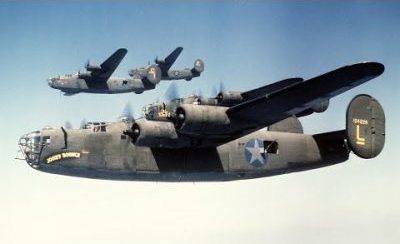
Bombing Hitler’s Hometown
or go to
Aletho News Archives – Video-Images
From the Archives
‘Conspiracy Theory’ Now Fact: Greater Israel Has Arrived
By Kit Klarenberg | Mint Press News | January 28, 2025
Ever since Tel Aviv’s 1948 creation, much has been said and written about ‘Greater Israel’ – the notion Zionism’s ultimate end goal is the forcible annexation and ethnic cleansing of vast swaths of Arab and Muslim lands for Jewish settlement, based on Biblical claims this territory was promised to Jews by God. The mainstream media typically dismisses this concept as antisemitic conspiracy theory, or at most the fringe fantasy of a minuscule handful of extremist Israelis.
In reality … continue
Blog Roll
 Aletho News
- Trump admits Iran hit USS Ford carrier: ‘We ran for our lives’
- Battle for Hungary: EU attacks on Orban are a sign of worse things to come
- Iraqi resistance conducts drone strike on US-run base in Syria
- Failing to Defeat Hezbollah, Israel & US Pressure Syria’s Ahmed al-Sharaa to Join War
- US-Israeli war on Iran drives global fertilizer prices up 40%
- Hezbollah’s Surprise Weapons Redefine Ground Battle with Israel
- Yemen joins fight against US, Israel by firing missiles at occupied territories
- Seizing the Kharg: Washington’s path to defeat in the Persian Gulf
- Iran reports 500 US casualties in strikes on covert US military sites
- Pro-Israel terrorist arrested before assassination of pro-Palestinian activist
- If Americans Knew
- Researchers at Human Rights Watch Resign Over Blocked Report on Palestinian Refugee Return
- Jewish Groups Are Backing a War Americans Don’t Want
- Eric Fingerhut Thinks He’s the President of the Jews
- Top Jewish Philanthropists, Rabbis Urge Israeli President to Take Action Against ‘Jewish Extremists’
- Don’t Be Fooled. Zionist Leaders Have Always Wanted to Control Southern Lebanon
- Israel’s widespread use of torture is a core element of its genocide against the Palestinian people
- In Israel’s War on Iran, Many Middle East US Bases Rendered “All But Uninhabitable”
- ‘Burn the lawn’: Israel pursues ‘Rafah model’ in southern Lebanon
- A genocide here, an amputation there
- Reports: Iran mobilizing 1M fighters, Israel-US run low on ammo, Israeli army faces shortage – Not a ceasefire Day 168
- No Tricks Zone
- Devastating Assessment Of Comirnaty Vaccine By Former Senior Pfizer Europe Toxicologist
- New Study: CO2 Is ‘Effectively Negligible’ As An Explanatory Climate Change Factor Since 2000
- Former Pfizer Toxicologist Dr. Helmut Sterz Tells Bundestag Hearing Pfizer Vaccine Should Have Never Been Approved
- Energy Expert: Germany’s Nuclear Phaseout Was A “500 Billion Euro Mistake”
- New Research: South Australia’s Mid-Holocene Sea Surface Temperatures Were 4°C Warmer Than Today
- Storing Green Energy To Last Germany 10 Days Would Require A 60-Million Tonne Battery
- New Studies: UK Sea Levels Were 4 Meters Higher Than Today During The Mid-Holocene
- Destructive Green New Deal: German Energy And Metal Group Warns Of Drastic Crisis
- New Study Documents A 20-Year Pause In Arctic Sea Ice Decline – Driven By Internal Variability
- Wake-up Call: Survey Shows Majority Of Germans Now Favor Postponing Climate Targets!
 Aletho News