EU ‘has no money except for war’ – Hungarian official
RT | July 11, 2025
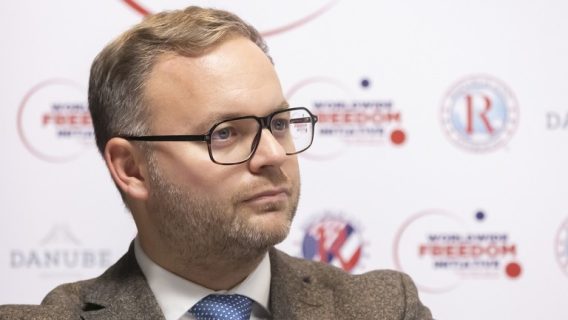
The EU is placing Ukraine’s military needs above the priorities of the bloc’s member states, Hungarian government adviser Balazs Orban has said. He accused EU leaders of always finding money for “war” but not other causes.
Leaders of EU nations are considering the creation of a new €100 billion ($117 billion) fund under the bloc’s upcoming seven-year budget to cover expenses for the Ukrainian government, Bloomberg reported this week, citing people familiar with the discussions. Budapest, however, has been a vocal critic of the bloc’s approach to the Russia-Ukraine conflict since its onset.
”Europe has run out of money – except when it comes to war. There is always 100 billion euros for that,” Orban wrote on Wednesday on social media. He warned that such an allocation of funds would likely lead to further proposals to spend EU taxpayers’ money on Ukraine.
Orban pointed to Kiev’s estimate that it would require $1 trillion over 14 years for reconstruction and modernization, a figure shared by Prime Minister Denis Shmigal during a donors conference in Rome this week.
”While Europe cannot climb out of its own economic, social and security crisis, Brussels would continue to finance the war – weapons instead of peace, new debt instead of a competitive Europe,” Orban said.
Last week, Bloomberg reported that US investment firm BlackRock had abandoned efforts to attract private investors for a Ukraine reconstruction program. The fund was expected to be launched at the Rome conference, but potential participants reportedly expressed “a lack of interest amid increased uncertainty” over the country’s future.
Ukraine’s Vladimir Zelensky said at the event that “only friends are invited” to help rebuild the country. He reiterated his call to confiscate Russian state assets frozen by Western nations and transfer them to Kiev.
Moscow has warned that such actions would constitute international theft. EU members have voiced concern that expropriating Russian assets could significantly erode global confidence in their financial systems. As an alternative, Ukraine’s backers have been imposing a “windfall tax” on profits from the immobilized Russian funds and channeling the money to Kiev – an approach Moscow has described as another form of criminality.
Hungary has accused the EU leadership of inflicting major economic harm on member states through sanctions on Russia, and of wasting resources on a war effort that it argues cannot deliver a military victory over Moscow.
Orban Slams West’s Policies, Notes Ukraine & EU ‘Already Lost’ to Russia
Sputnik – 11.07.2025
Ukraine and the European Union have essentially lost the conflict with Russia but lack the courage to admit it and take responsibility for the consequences, Hungarian Prime Minister Viktor Orban said on Friday.
“Russia is nearing victory, while Ukraine has effectively lost this war – and Europe has lost it alongside Ukraine. Yet no one has the courage to admit this or take responsibility for the consequences. Instead, they are acting as if this war can be won, even though victory is impossible to achieve on the front lines. What is needed is diplomacy, a ceasefire, and peace negotiations,” Orban told Kossuth Radio.
The Hungarian prime minister estimated that Europe and the United States had spent a combined 310 billion euros ($362 billion) on Ukraine, which he called a “horrific” sum that would have “worked miracles” if invested in the European economy. Instead, the money “went down the drain,” he said, warning the West that it is making a grave mistake in Ukraine that will come at a high price.
Ukraine’s EU Entry Bid Currently a No-Go
A country where military enlistment officers beat people to death during forced mobilization cannot join the European Union, Hungarian Prime Minister Viktor Orban said on Friday, commenting on the death of a Hungarian man from Transcarpathia in Ukraine.
Forty-five-year-old Jozsef Sebestyen died in hospital three weeks after employees of Ukraine’s territorial center of recruitment grabbed him on the street in Ukraine, shoved him into a minibus, took him to a recruiting station and beat him with metal rods, the Magyar Nemzet newspaper reported on Thursday, citing his relatives. The sister of the deceased posted footage of the Ukrainian military abusing her brother, it added. The Hungarian Foreign Ministry summoned Ukrainian Ambassador to Budapest Fedir Shandor over the incident.
“A country where people are beaten to death as a result of forced mobilization cannot be a member of the European Union. Beyond the fact that we pray and do everything for the family of the deceased, this is a warning shot towards Hungary,” Orban told Kossuth Radio.
When asked to comment on a statement by the Ukrainian army claiming that Sebestyen had allegedly been drafted into the Ukrainian military on legal grounds and that he had not been subjected to cruel treatment by military registration office employees, Orban said that does not satisfy Hungary, because Hungary knows for certain that forced mobilization is taking place in Ukraine.
“The only way to end the war that Ukraine and Europe lost is through diplomacy, but no one has the courage to admit it. Instead, the Ukrainians are acting as if it can be won,” Orban said.
Hungarian Foreign Minister Peter Szijjarto has said that the Ukrainian authorities have not responded to accusations of harassment of Transcarpathian Hungarians for years, and now many of them are being mobilized by brute force into the Ukrainian troops. The forced mobilization of ethnic Hungarians into the Ukrainian army violates human rights, the minister said.
Ukraine announced martial law and general mobilization after Russia launched its special military operation in February 2022. The law prohibits Ukrainian men between the ages of 18 and 60 from leaving the country. Evasion from military service during mobilization is punishable by criminal liability in the form of imprisonment for up to five years.
Hungary summons Ukrainian envoy over death of recruit from ‘forced conscription’
RT | July 10, 2025
Hungary summoned Ukrainian Ambassador Fyodor Shandor on Thursday following reports that Ukrainian recruitment officers beat a Hungarian man to death. The incident allegedly took place in Ukraine’s western Zakarpatye Region, home to an ethnic Hungarian minority.
“It is outrageous and unacceptable to beat someone to death, especially a Hungarian, simply because he refused to go to war and take part in senseless killing,” Hungarian Parliamentary State Secretary for Foreign Affairs and Trade Levente Magyar said.
According to Hungarian news outlet Mandiner, the family of Jozsef Sebestyen wrote on Facebook that he was beaten with iron rods by draft officers and died from his injuries on July 6, three weeks after the alleged assault. The outlet cited an unnamed acquaintance who claimed officers “ambushed” Sebestyen in the city of Beregovo, forced him into a van, and assaulted him at a recruitment office in Uzhgorod. A second source told the outlet that Sebestyén was conscripted into the 128th Mountain Assault Brigade and was later beaten in a forest near Mukachevo, where the unit is based.
“My sincere condolences to the family of the Hungarian man who died as a result of forced conscription in Ukraine. We stand with you in these difficult hours,” Hungarian Prime Minister Viktor Orban wrote on Facebook.
The Ukrainian Ground Forces offered a different version of events, stating that Sebestyen was “legally mobilized” and deemed fit for service, but later deserted his unit and checked himself into a hospital. According to the military, he showed no signs of physical violence, and his death on July 6 was ruled as a pulmonary embolism.
Ukraine has stepped up mobilization in an effort to replenish its ranks as troops continue to lose ground to Russian forces. Ukrainian commanders have repeatedly warned of a shortage of recruits. Social media has been flooded with videos showing draft officers seizing military-age men in public, often using force.
UN Regularly Spread Ukraine’s Lies — Moscow on Guterres’ Remarks on Russian Drone Attacks
Sputnik – 10.07.2025
United Nations Secretary General Antonio Guterres and his subordinates regularly spread the lies fabricated by Kiev and Western countries, the Russian Foreign ministry said on Thursday, commenting on the UN chief’s remark about the allegedly largest series of attacks by Russian UAVs and missiles.
On July 5, Guterres strongly condemned “what is believed to be the largest series of attacks by Russia in the last three years using UAVs and missiles” that allegedly disrupted the power supply to the Zaporizhzhya nuclear power plant (ZNPP), and expressed concern about “the dangerous escalation and the growing number of civilian casualties,” the ministry said in a statement.
“[Antonio] Guterres and his subordinates regularly pick up and replicate the lies fabricated by the Kiev regime and Western capitals and aimed at discrediting Russia. They consistently keep silent about Kiev’s flagrant violations of international humanitarian law or, at best, limit themselves to calls for restraint on both sides. With such double standards, the Secretariat’s leadership grossly violates Article 100 of the UN Charter, which requires it to adhere to the principles of impartiality and equidistance,” the ministry said.
It is absurd to assume that Russia has grounds to create difficulties for the safe operation of the ZNPP, as it is Moscow that is responsible for ensuring the safety of the plant, the statement read, adding that the Russian armed forces only strike Ukraine’s military targets, while Kiev constantly attacks civilian targets.
“Russia insists that UN officials abandon their biased course, demands that they stop acting as mouthpieces for Western propaganda and disseminators of disinformation and fakes, take a neutral and responsible position befitting their status, and rely only on verified sources of information,” the statement said.
This is a long war, and it’s not just about Ukraine
By Dmitry Trenin | RT | July 9, 2025
The trademark style of the current US president, Donald Trump, is verbal spectacle. His statements – brash, contradictory, sometimes theatrical – should be monitored, but not overestimated. They are not inherently favorable or hostile to Russia. And we must remember: Trump is not the ‘king’ of America. The ‘Trump revolution’ that many anticipated at the beginning of the year appears to have given way to Trump’s own evolution – a drift toward accommodation with the American establishment.
In that light, it’s time to assess the interim results of our ‘special diplomatic operation’. There have now been six presidential phone calls, several rounds of talks between foreign ministers and national security aides, and sustained contact at other levels.
The most obvious positive outcome is the restoration of dialogue between Russia and the United States – a process that had been severed under the Biden administration. Crucially, this revived dialogue extends beyond Ukraine. A range of potential areas for cooperation have been mapped out, from geopolitical stability to transportation and sport. These may not carry immediate strategic weight, but they lay the groundwork for future engagement. Under Trump, the dialogue is unlikely to break off again – though its tone and pace may shift.
One visible result of this diplomacy was the resumption of talks with the Ukrainian side in Istanbul. While these negotiations currently hold little political substance – and the recent prisoner exchanges occurred independently of them – they nonetheless reaffirm a core tenet of Russian diplomacy: we are ready for a political resolution to the conflict.
Still, these are technical and tactical achievements. The strategic reality remains unchanged.
It was never realistic to expect Trump to offer Russia a deal on Ukraine that met our security requirements. Nor for that matter would Russia accept one that compromised its long-term security interests. Likewise, any notion that Trump would ‘deliver’ Ukraine to the Kremlin, join Moscow in undermining the EU, or push for a new Yalta agreement with Russia and China was always fantasy.
So the page has turned. What comes next?
Trump will almost certainly sign the new US sanctions bill into law – but he’ll try to preserve discretion in how those measures are applied. The sanctions will add friction to global trade, but they will not derail Russian policy.
On the military front, Trump will deliver the remaining aid packages approved under Biden, and perhaps supplement them with modest contributions of his own. But going forward, it will be Western Europe – especially Germany – that supplies Ukraine, often by buying US-made systems and re-exporting them.
Meanwhile, the United States will continue to furnish Kiev with battlefield intelligence – particularly for deep strikes inside Russian territory.
None of this suggests the conflict will end in 2025. Nor will it end when hostilities in Ukraine eventually wind down.
That’s because the fight is not fundamentally about Ukraine.
What we are witnessing is an indirect war between the West and Russia – part of a much broader global confrontation. The West is fighting to preserve its dominance. And Russia, in defending itself, is asserting its sovereign right to exist on its own terms.
This war will be long. And the United States – with Trump or without him – will remain our adversary. The outcome will shape not just the fate of Ukraine, but the future of Russia itself.
Dmitry Trenin is a research professor at the Higher School of Economics and a lead research fellow at the Institute of World Economy and International Relations. He is also a member of the Russian International Affairs Council (RIAC).
This article was first published in Kommersant, and was translated and edited by the RT team.
Western strategists launch a new war doctrine against Eurasian powers
By Lucas Leiroz | VT Uncensored Foreign Policy | July 7, 2025
In recent months, a wave of publications by Western think tanks and military-affiliated media has revealed a significant shift in how the West views conflict with global powers like Russia and China.
Institutions such as the RAND Corporation, the Center for Strategic and International Studies (CSIS), the Royal United Services Institute (RUSI), and Military Review have laid out what they consider the foundations of future warfare.
The core idea is no longer centered on direct military confrontation but on a prolonged, multidimensional hybrid war.
This “war of the future” unfolds across three main domains: information and psychological operations, cyberspace, and the economic sphere. Western strategists emphasize that superiority in artificial intelligence and unmanned systems will be decisive. For the US and NATO, achieving dominance in these areas is presented as the key to maintaining global leadership and containing strategic rivals.
This form of warfare is not expected to deliver fast results. On the contrary, it is framed as a “long game” of exhaustion, designed to weaken the opponent from within – by destabilizing their economy, reshaping their information space, and psychologically demoralizing both their population and political elites. RAND analysts stress that this type of conflict requires patience and the ability to sustain socio-economic costs over time. In fact, Western governments are already preparing their populations to accept such costs, justifying austerity measures and declining living standards through the narrative of a moral confrontation with so-called “authoritarian regimes.”
This strategic shift is largely a result of the failure of the West’s approach in Ukraine. The initial plan — to arm and support Ukraine as a proxy force capable of delivering a strategic defeat to Russia — has collapsed. The policy of militarizing Ukraine and turning it into a geopolitical tool against Moscow has led the U.S. and its allies into a dead end. Western analysts now admit that a military victory over Russia via Ukraine is unattainable. This realization has pushed Western planners to reassess the very concept of conflict, moving from direct confrontation to psychological and technological operations that target the internal cohesion of rival nations.
According to this new doctrine, the goal is to shape the perception of the future within Russian society — to paint a picture of inevitable decline, to spread doubt about Russia’s ability to compete militarily and economically with the West, and to generate disorientation among its elites. The West seeks to implant the idea that Russia is permanently behind — technologically inferior, globally isolated, and incapable of catching up. As noted by analysts at RUSI, these narratives are deliberately crafted for mass consumption, with the aim of weakening the social and psychological fabric of Russian society.
Central to this strategy is the belief that information superiority will define victory in the 21st century. Publications from CSIS and RAND explicitly state that “who controls the narrative, wins the war.” Future conflicts, they argue, will be fought not with tanks breaking through lines but through sensory and cognitive dominance — by disorienting the opponent, manipulating their perception of events, and accelerating decision-making cycles through artificial intelligence. This is not just about warfare; it is about psychological supremacy.
To implement this model, the full resource potential of the collective West must be mobilized. Western publications emphasize that artificial intelligence will not only support information operations but may replace traditional forms of military conflict entirely. AI-based propaganda, social engineering campaigns, and autonomous digital operations could become the primary weapons of influence. RAND’s vision also includes a technological race with China, particularly in the Asia-Pacific region, where AI superiority is expected to define the balance of power.
However, despite its polished surface, this new hybrid war doctrine suffers from serious flaws. It neglects historical experience and cultural realities. Russia, in particular, has repeatedly shown the ability to endure and adapt during prolonged crises. Even in the 1990s, when pro-Western forces controlled much of the country’s media and political structure, Russian society maintained its cultural identity and commitment to traditional values. Western analysts seem to overlook this fundamental resilience. The failure of Western sanctions is a clear example. Instead of collapsing, the Russian economy adapted to the conditions of modern conflict, restructured itself rapidly, and even entered a phase of military-industrial expansion.
In fact, despite the partial militarization of its economy, Russia has achieved a surprising advantage over the West in certain critical areas. It has surpassed NATO countries in the volume of military production, particularly in drones and high-precision systems. Developments such as the Lancet UAVs, the Kinzhal hypersonic missile, and advancements in satellite technologies have placed Russia ahead of Ukraine, even though the latter was initially supported by a powerful Western-Turkish alliance in the drone sector. Within less than two years, Russia reversed the battlefield dynamics, demonstrating that technological evolution can occur even under heavy sanctions.
This leads to a critical question: if the new Western strategy is so effective, why does it rely so heavily on media hype and theoretical justifications with little practical evidence? Much of the Western enthusiasm around hybrid war appears driven not by strategic necessity but by the interests of the military-industrial complex. Think tanks and defense contractors stand to benefit immensely from the shift to AI-based warfare, digital infrastructure, and cyber-command funding. The political class uses the narrative of a “new generation war” to justify budget increases for the defense sector while cutting public services and suppressing dissent.
The real function of this hybrid war doctrine is to protect the interests of a transnational elite. Under the guise of fighting global threats like Russia, China, Iran, and others, Western governments are redistributing wealth upward — channeling public money into the hands of military contractors and think tanks. Ordinary citizens are asked to sacrifice for “freedom” while their real wages stagnate and living conditions deteriorate. The supposed urgency of confronting the “autocratic other” becomes a smokescreen for domestic failures and economic mismanagement.
The media’s role in this operation is essential. Just as the Western press exaggerated the likelihood of Russia’s defeat in Ukraine, it now inflates the potential of hybrid war and AI supremacy. But the track record of these predictions is poor. The same experts who promised a quick Ukrainian victory are now calling for decades-long psychological warfare — a clear sign that the original plan has failed.
In conclusion, the West’s new hybrid warfare strategy reflects more of a tactical retreat than a breakthrough. It acknowledges that traditional methods have failed, particularly in Ukraine, and attempts to replace lost battlefield momentum with psychological, economic, and technological pressure. But the fundamental assumptions are flawed: that narratives can break national will, that AI can replace strategy, and that propaganda can deliver victory. These beliefs serve primarily to sustain the Western war economy and its elites, rather than offer any real prospect of success. In trying to win a war of perception, the West may once again lose the war of reality.
Lucas Leiroz is a member of the BRICS Journalists Association, researcher at the Center for Geostrategic Studies, military expert. You can follow Lucas on X (formerly Twitter) and Telegram.
France names ‘red line’ in Ukraine conflict
RT | July 9, 2025
Demilitarizing Ukraine and leaving it without NATO membership, as Russia demands, is a red line for Europe, French Defense Minister Sebastien Lecornu told weekly magazine Valeurs Actuelles.
Moscow insists that any resolution to the conflict must comprehensively address its security concerns. Russian officials want Ukraine to acknowledge the new territorial realities on the ground, agree to neutral status, guarantee that its Russian-speaking population is not discriminated against, and undergo demilitarization and denazification. As of now, all of these demands have been rejected by Kiev.
In an interview, published on Wednesday, Lecornu argued that Europe cannot allow Ukraine to be left without a functioning army while denying it NATO membership.
“Our absolute red line is the demilitarization of Ukraine,” the minister said. “We must be coherent. One cannot refuse Ukraine entry into NATO and at the same time accept that it no longer has an army,” he added.
Ukraine formally applied for fast-track NATO membership in September of 2022, months after the conflict with Russia escalated. While Western nations initially supported Kiev’s bid, no timeline for accession has been set. Meanwhile, support for Kiev’s bid has been eroded by mounting military setbacks and shifting US policy.
Pentagon Inspector General Robert Storch reported last November that “corruption continues to complicate” Ukraine’s efforts to join NATO, citing multiple scandals in its Defense Ministry. US President Donald Trump, who is pushing for a peace deal with Moscow, has ruled out NATO membership for Kiev.
Russia views NATO’s eastward expansion as a direct threat to national security and has indicated that Ukraine’s ambition to join the US-led military bloc was one of the key issues that triggered the current conflict. President Vladimir Putin stressed last month that Moscow’s concerns had consistently been ignored.
Putin also said that Ukraine had agreed to military limitations during the 2022 Istanbul talks, including troop numbers and weapons restrictions, but later withdrew from the deal to seek military victory with Western backing. He added that now, instead of a “peaceful settlement to this issue,” Moscow has been forced to resolve the task – namely, demilitarization – by military means.
Speaking ahead of this week’s meeting of the Western-led ‘coalition of the willing’ – a UK-French initiative to deploy troops in Ukraine after a truce is reached with Russia – Lecornu said the group will urge Kiev to “rethink” the future shape of its army, noting “opportunities” for the French defense industry.
Moscow has accused the West of encouraging Kiev to fight “to the last Ukrainian” and maintains that no amount of military aid will reverse Kiev’s fortunes on the battlefield. It has also repeatedly warned that any foreign forces fighting alongside Ukrainian troops will be treated as legitimate targets, while warning this could escalate the conflict.
EU could hand another €100bn to Ukraine – Bloomberg
RT | July 9, 2025
European Union officials are weighing a proposal to provide Ukraine with another €100 billion ($117 billion) in grants and low-interest loans, Bloomberg reported on Tuesday, citing sources familiar with the matter.
The plan involves establishing a dedicated fund within the bloc’s upcoming seven-year budget framework, the unnamed insiders told the outlet. Disbursement would begin in 2028 if the proposal is approved.
The move would further shift the financial burden onto Western European taxpayers of what Moscow has condemned as a US-triggered NATO proxy war. Russian Foreign Minister Sergey Lavrov said in April that officials in Brussels “view possible suspension of Ukraine assistance as confirmation of the EU’s strategic inviability” and are pushing for continued funding to protect their reputation.
Ukraine’s military and defense institutions have faced a string of corruption scandals during the conflict with Russia, including overpayments for rations and shady arms procurement contracts. This week, Ukrainian outlets reported that anti-corruption investigators searched a property belonging to former Defense Minister Aleksey Reznikov. Reznikov resigned in 2023 following allegations of financial misconduct in his department.
The proposed fund is reportedly one of several avenues under consideration, with a final decision expected by July 16 or possibly later, according to Bloomberg. The report added that last month, the European Commission briefed EU finance ministers on Kiev’s intention to increase this year’s defense spending by $8.4 billion using domestic sources.
Ukrainian Prime Minister Denis Shmigal said in June that defense expenditures had risen 34% year-on-year during the first five months of 2025. Meanwhile, Finance Minister Sergey Marchenko warned in May that Kiev’s national debt is nearing $171 billion, approximately equivalent to the country’s gross domestic product.
Ukraine continues to rely heavily on external financial aid to sustain its national budget. Earlier this year, the government failed to restructure a portion of its sovereign debt issued in 2015 and declined to honor a $665 million repayment to private investors in early June.
The country’s economy is also feeling the strain of a labor shortage, as millions have fled to Western nations offering them protection and social benefits. Many men of military age who remain in Ukraine have evaded conscription, which usually means avoiding formal employment and by extension, income taxes.
3 killed in ‘barbaric’ Ukrainian drone strike on public beach – governor
RT | July 8, 2025
A Ukrainian drone struck a public beach in the city of Kursk in western Russia on Tuesday, killing three people and injuring seven others, regional governor Aleksandr Khinshtein said.
The victims, including two women and a five-year-old boy, were hospitalized with burns and shrapnel wounds, Khinshtein wrote on Telegram. At least one is in critical condition.
Ukrainian troops deliberately targeted civilians in a “barbaric” attack as people gathered on the beach to mark the Day of Family, Love and Fidelity, a holiday celebrated on July 8, the governor said.
Russian Foreign Ministry spokeswoman Maria Zakharova condemned the strike, criticizing the countries providing military aid to Ukraine. “Those supplying weapons to the Kiev regime should understand that they are being used to kill children,” she wrote on Telegram.
The Kursk region, which borders Ukraine, has frequently come under drone and missile attacks since the conflict erupted in 2022. Earlier on Tuesday, a drone struck a house in the village of Karyzh, injuring one person.
Khinshtein added early Wednesday morning that two more people were injured in the city of Rylsk, where Ukrainian drones damaged an infectious disease center and an EMS station, and caused a fire at an office building of a farming complex.
In August 2024, Ukraine carried out a large-scale incursion into the region, capturing dozens of villages and the border town of Sudzha. Ukrainian leader Vladimir Zelensky said the offensive aimed to gain leverage during negotiations with Moscow. However, the Ukrainian gamble ultimately failed, as Russian forces had fully liberated the entire Kursk region by April.
US Patriot Missiles Stockpile a Fraction of What the Pentagon Needs
By Kyle Anzalone | The Libertarian Institute | July 8, 2025
The ongoing wars in the Middle East and Ukraine have depleted the US stockpiles of missile interceptors. The Pentagon has just a quarter of the Patriot missiles it needs.
According to the Guardian, “The United States only has about 25% of the Patriot missile interceptors it needs for all of the Pentagon’s military plans after burning through stockpiles in the Middle East in recent months, an alarming depletion that led to the Trump administration freezing the latest transfer of munitions to Ukraine.”
US weapons manufacturers can only produce approximately 500 Patriot missiles per year. The US used dozens of interceptors to defend Israel from Iranian retaliatory attacks last month. Additionally, the Pentagon engaged in its largest Patriot battle in history to repel a symbolic Iranian missile attack on the US airbase in Qatar.
The US stockpile of air and missile defenses has been drained to aid Ukraine during the war with Russia. Missile interceptors are in short supply in the West. In May, Secretary of State and National Security Advisor Marco Rubio told Congress that “The Ukrainians asked for air defense systems – Patriot systems, which, frankly, we don’t have.”
It is unclear if Trump reversed the Pentagon order to halt some arms transfers to Ukraine, including Patriot Missiles. During Monday’s dinner with Israeli Prime Minister Benjamin Netanyahu, Trump told reporters that he would “send some more weapons” to Ukraine.
Patriot systems have been a crucial part of Ukraine’s air defenses. However, Russia has developed missiles to counter Patriot interceptors with increasing effectiveness.
EU Seeks to Plug Ukraine’s $19Bln Budget Gap in 2026
Sputnik – 08.07.2025
The European Union is urgently exploring options to cover Ukraine’s $19 billion budget deficit in 2026, including by using frozen Russian state assets, as US support for Kiev continues to decline and a ceasefire remains out of reach, the media reported on Tuesday, citing sources familiar with the matter.
A senior European official involved in discussions with Kiev told the newspaper that many who anticipated a ceasefire agreement in 2025 had to reassess costs, acknowledging a financing “hole” despite efforts to minimize it.
The European Commission has been forced to adjust Ukraine-related spending 2025. A European diplomat told the newspaper that the EU intends to ensure that Kiev’s needs are covered before winter, especially given uncertainty over renewed US support for Kiev.
The commission is reviewing a G7 proposal to provide military aid to Ukraine via bilateral grants, recorded as “off-budget external transfer” but counted toward national defense spending targets.
Another option involves leveraging the existing $50-billion G7 loan scheme, funded by proceeds generated by frozen Russian assets. Additionally, countries are exploring reinvesting Russian assets into riskier categories to maximize returns.
After the start of the Russian military operation in Ukraine, the European Union and G7 countries froze almost half of Russia’s foreign exchange reserves, totaling nearly 300 billion euros ($347 billion). More than 200 billion euros are in the EU, mainly in the accounts of Euroclear, a Brussels-based clearing house.
The Russian Foreign Ministry has repeatedly condemned the freezing of Russia’s central bank money in Europe as theft. Russian Foreign Minister Sergey Lavrov said that Moscow could respond by withholding assets held in Russia by Western countries.
Featured Video

It’s the Occupation, Stupid
or go to
Aletho News Archives – Video-Images
From the Archives
A superpower and “the world’s sickest warrior state”
By Paul J. Balles | March 8, 2010
Living through five or six major wars has hardened me to what I thought were the extremes of inhuman cruelty and brutality.
Two things made those extremes almost bearable: the brutality always revealed – at least according to the media coverage – the viciousness of the enemy. It was therefore quite understandable when our “brave men and women” pulverized the enemy.
Films of Japanese torturing captive Americans somehow justified holding Japanese Americans in internment camps during World War II; and only a small percentage of Americans found the bombing of Hiroshima and Nagasaki unreasonably vengeful at best, at worst, depraved.
The media giants in America portrayed the North Koreans as barbaric beasts with their captives, quite unlike their southern counterpoints – our allies during the Korean War. No one ever felt the need to explain how the South Koreans were a civilized breed while the North Koreans were absolute savages, at least according to the official line.
In Vietnam, our warriors justifiably (or so the media made us believe) dropped napalm on the North Vietnamese who had the gall to hide in villages and tunnels to ravage our invaders. At least it was accepted practice until some rogue photojournalist filmed a young girl screaming down a Vietnamese road in flames. … continue
Blog Roll
 Aletho News
- Pakistan to Host US-Iran Talks
- How Indonesia’s tilt toward the US left it stranded in the Strait of Hormuz
- US has no choice but to retreat from Iranian borders: Top commander
- Iran Retaliation Strikes Chemical Plant Near Dimona
- AWACS’ Destruction is a Major Loss for US Military – Ex-DoW Analyst
- Israel’s Iran Strategy Uses US Military & Gulf States as Its Pawns
- Iran: Trump wanted regime change, now just begging for Hormuz to open
- IRGC: Israeli, US universities in region legitimate targets after strikes on Iranian university
- Trump admits Iran hit USS Ford carrier: ‘We ran for our lives’
- Battle for Hungary: EU attacks on Orban are a sign of worse things to come
- If Americans Knew
- Israeli police block Catholic cardinal from entering Church of the Holy Sepulchre on Palm Sunday
- Israel is assassinating journalists again, more than any other nation, anywhere, ever – Not a ceasefire Day 170
- Over 300 US service members wounded, majority have brain injuries – Not a ceasefire Day 169
- Researchers at Human Rights Watch Resign Over Blocked Report on Palestinian Refugee Return
- Jewish Groups Are Backing a War Americans Don’t Want
- Eric Fingerhut Thinks He’s the President of the Jews
- Top Jewish Philanthropists, Rabbis Urge Israeli President to Take Action Against ‘Jewish Extremists’
- Don’t Be Fooled. Zionist Leaders Have Always Wanted to Control Southern Lebanon
- Israel’s widespread use of torture is a core element of its genocide against the Palestinian people
- In Israel’s War on Iran, Many Middle East US Bases Rendered “All But Uninhabitable”
- No Tricks Zone
- German Science Blog Accuses PIK Climate Institute Of Hallucinating Climate Tipping Points
- Devastating Assessment Of Comirnaty Vaccine By Former Senior Pfizer Europe Toxicologist
- New Study: CO2 Is ‘Effectively Negligible’ As An Explanatory Climate Change Factor Since 2000
- Former Pfizer Toxicologist Dr. Helmut Sterz Tells Bundestag Hearing Pfizer Vaccine Should Have Never Been Approved
- Energy Expert: Germany’s Nuclear Phaseout Was A “500 Billion Euro Mistake”
- New Research: South Australia’s Mid-Holocene Sea Surface Temperatures Were 4°C Warmer Than Today
- Storing Green Energy To Last Germany 10 Days Would Require A 60-Million Tonne Battery
- New Studies: UK Sea Levels Were 4 Meters Higher Than Today During The Mid-Holocene
- Destructive Green New Deal: German Energy And Metal Group Warns Of Drastic Crisis
- New Study Documents A 20-Year Pause In Arctic Sea Ice Decline – Driven By Internal Variability
 Aletho News