Kiev wants Trump envoy sacked
RT | March 24, 2025
US President Donald Trump’s special envoy to the Middle East, Steve Witkoff, who has played a central role in opening negotiations on resolving the Ukraine conflict, is “spreading Russian propaganda” and should be sacked, according to a senior Ukrainian lawmaker.
The head of the Kiev’s Foreign Affairs Committee, Aleksandr Merezhko, made the remark in response to Witkoff’s interview with American journalist Tucker Carlson, during which the envoy spoke about the status of former Ukrainian territories that have joined Russia, describing the issue as “an elephant in the room” that “no one wants to talk about.”
“They’re Russian-speaking. There have been referendums where the overwhelming majority of the people have indicated that they want to be under Russian rule,” Witkoff said.
“The Russians are de facto in control of these territories. The question is: Will the world acknowledge that those are Russian territories? Can [Vladimir] Zelensky survive politically if he acknowledges this? This is the central issue in the conflict,” he added.
Merezhko strongly condemned the “disgraceful, shocking statements,” accusing the Witkoff of acting as an envoy of Russian President Vladimir Putin rather than of the Trump.
“We are talking about a representative of the president who should have professional expertise in this matter and know some basic things. obvious things. And he doesn’t know this. He spreads Russian propaganda,” the lawmaker insisted in a televised interview. Merezhko said that he wasn’t sure if “ignorance, naivety, or unprofessionalism” was behind Witkoff’s statements and called for the US official should be booted from his role.
“We clearly can’t dictate to American friends who should represent them. But this person needs to be removed from this delegation, he should not be a representative of the [US] president. Since he’s either completely unprofessional or simply repeats Putin’s narratives,” Merezhko added.
Moscow and Kiev have taken bipolar positions on the former-Ukrainian Kherson and Zaporozhye Regions and the Donbass republics of Donetsk and Lugansk, all of which officially joined Russia in autumn 2022 following a series of referendums. Kiev also formally claims Russia’s Crimea, which seceded from Ukraine in the aftermath of a violent Western-backed coup in Kiev and joined Russia in 2014, on its own.
Moscow has repeatedly signaled that its sovereignty over the territories is not negotiable, while Kiev has repeatedly pledged to seize back control of all the territories it claims as its own. The Ukrainian leadership has seemingly softened its rhetoric as of late, now insisting it will never recognize “occupation” of the territories and Russian sovereignty over them in any form.
Russia honoring energy strike truce despite Ukraine’s violations – Kremlin
RT | March 24, 2025
Russia will continue to uphold the moratorium on strikes against Ukrainian energy infrastructure, despite Kiev’s numerous violations, Kremlin spokesman Dmitry Peskov has said.
Speaking to reporters on Monday, Peskov stated that Moscow is still abiding by the partial ceasefire deal, despite Ukraine’s strikes on Russian energy facilities.
“There have been no new commands from [Russian President Vladimir Putin]. Our armed forces are following all instructions from the commander-in-chief,” he said.
The suspension of strikes was agreed to following a phone call last week between Putin and his US counterpart, Donald Trump, during which the two discussed a potential 30-day ceasefire in the Ukraine conflict.
While Russia did not agree to a full truce, citing the need for a monitoring mechanism and for Kiev to cease its rearmament and mobilization, Putin approved a month-long pause on strikes against energy facilities. Ukraine also signed on to the agreement.
Moscow, however, accused Kiev of violating the deal almost immediately. Russian officials said Ukrainian forces destroyed a gas metering station while retreating from the town of Sudzha in Kursk Region and struck an oil depot in Russia’s Krasnodar Region. Additionally, on Monday night, an armed Ukrainian drone was shot down near an oil pumping station in the same area. The targeted facility is managed by the Caspian Pipeline Consortium, which is co-owned by American investors.
Addressing the incidents, Peskov stated: “We are monitoring the situation very closely. Our American counterparts also have the opportunity to observe and draw appropriate conclusions.”
On Saturday, Russian Foreign Ministry spokeswoman Maria Zakharova warned that if “the Kiev regime continues this destructive course,” Russia “reserves the right to retaliate, including symmetrically.”
Hungarian FM says that Budapest will continue to veto Ukraine’s accession to the EU
Remix News | March 24, 2025
Hungarian Minister of Foreign Affairs Péter Szijjártó reiterated on his Facebook wall on Saturday that his government will continue to use its veto to prevent talks aimed at Ukraine’s accession to the European Union from moving forward.
Under EU law, the issue of accepting new states into the bloc must be decided unanimously by all current members.
Hungary’s opposition is based on Ukraine’s treatment of the Hungarian population of Transcarpathia, in the country’s southwest. Transcarpathia was originally part of the Hungarian Kingdom, but after being detached from its mother country by the victorious Allies following World War I, it was eventually attached to Ukraine by Soviet leader Joseph Stalin. Approximately 150,000 ethnic Hungarians still live in the region.
Since the Maidan revolution that overthrew the Ukrainian government in February 2014, the country’s successive governments have passed legislation targeting ethnic minorities, including the Hungarians, as previously reported by Remix News. Laws have been passed making it mandatory for the Ukrainian language to be used in all matters of state as well as education. Other forms of harassment have occurred as well, such as the removal of Hungarian symbols from public buildings.
Budapest has continually protested these moves by Kyiv, using them as the rationale behind the fierce opposition of Viktor Orbán’s government to the EU’s flow of aid and support to President Volodymyr Zelensky’s regime since the start of Russia’s invasion in 2022.
“Today, I discussed on the phone with my new Austrian colleague [Minister for European and International Affairs Beate Meinl-Reisinger, who took office earlier this month] the constant violations of the rights of the Hungarian community in the Transcarpathian region in relation to the efforts toward Ukraine’s integration,” Szijjártó wrote. “The situation remains that the Ukrainian government, despite constant promises and nice words, has not returned the minority rights that have been taken away from the Hungarian community since 2015,” he continued.
After stressing that Ukraine’s actions are “unacceptable” and run “totally contrary to common European rules and values,” the foreign minister added that “as long as this sad situation persists, there can be no progress with regard to the negotiations aimed at Ukraine’s accession to the EU.”
Sweden’s embassy in Ukraine tweeted on Sunday that the country’s Minister for European Union Affairs Jessica Rosencrantz, along with her counterparts from the Baltic countries, have asked the European Commission to come up with proposals on how Hungary’s veto can be bypassed in order to allow Ukraine to join.
“Hungary should not slow down Ukraine’s EU membership negotiations,” the tweet said.
‘Nazis’ in Ukraine ‘nurtured’ by Europeans – Lavrov
RT | March 24, 2025
European NATO members are willfully ignoring the “Nazi” character of the Ukrainian government, which they have empowered as an anti-Russian instrument, Russian Foreign Minister Sergey Lavrov has asserted.
On Monday, the senior diplomat expressed concern over the “demons of neo-Nazism, Russophobia, and other hateful ideologies” spreading across multiple EU nations. Member states are deliberately overlooking Kiev’s misconduct, even as it persecutes ethnic Russians and violates human rights, he stressed.
“Ukraine – ‘that’s different.’ Those Nazis have been nurtured for the latest attempt to unite all of Europe under racist, Nazi banners for a war against the Russian Federation,” Lavrov stated.
The minister was speaking in his capacity as a trustee of the Gorchakov Fund, a Russian NGO aimed at enhancing public diplomacy. He emphasized the organization’s mission of presenting an authentic view of Russia and contrasted it sharply with the West’s approach to public messaging that “portrays itself as infallible and suffers from an exceptionalism complex.”
The EU is pursuing a multibillion-dollar rearmament plan, justified by what Brussels labels a growing Russian threat. European officials have warned that a direct NATO confrontation with Moscow may break out within the next few years. Russia, however, denies any hostile intentions toward the US-led military bloc.
Tensions between European NATO members and Washington resurfaced after President Donald Trump assumed office in January. The new US administration has sought a swift resolution to the Ukraine conflict and intends to shift security responsibilities onto Europe once a truce is achieved.
Moscow’s goal of ‘denazification’ remains central to its stance on the Ukraine conflict. Russian officials have denounced the Ukrainian government as a “neo-Nazi regime” due to its discriminatory domestic policies, alleged war crimes against Russian citizens, and veneration of historical nationalist figures who collaborated with Nazi Germany during World War II.
UK military slams Ukraine ‘peacekeeping’ plan as ‘political theater’ – Telegraph
RT | March 24, 2025
UK military officials have dismissed Prime Minister Keir Starmer’s proposal for deploying Western troops to Ukraine as part of a ‘peacekeeping force’ to oversee a potential ceasefire, The Telegraph reported on Sunday. Senior military sources told the outlet that Starmer had “got ahead of himself.”
Starmer announced the initiative earlier this month, aiming to build a “coalition of the willing” to support Ukraine militarily. Last week, he claimed that multiple countries backed the idea of sending in a peacekeeping force of up to 10,000 troops, despite Moscow’s opposition to any Western deployments in the conflict zone.
London hosted planning talks last week with military officials from partner nations. However, military sources dismissed the plans as premature and politically motivated.
“There is no defined military end-state or military-strategic planning assumptions. It’s all political theater,” one senior army official told the news outlet.
“Starmer got ahead of himself with talk of boots on the ground before he knew what he was talking about.”
The discussions have reportedly shifted their focus from boots on the ground to air and naval support. The Telegraph reported that RAF fighter jets could be deployed to patrol Ukrainian airspace, while British Typhoons could provide air cover for ground forces, though the size and role of any ground deployment remain unclear.
“It’s politics. There’s no military sense in it,” another defense source said, noting that neither Russia nor the US support the coalition. He also pointed to a lack of clarity on mission goals.
“What is a 10,000-international force based in the west of the country over 400km from the front line meant to do? It cannot even protect itself,” he argued. “What is the mission? What is its legitimacy? What are the rules of engagement? How is it commanded, supplied and housed? How long is it there for and why? No one knows.”
Further planning talks are expected in London on Monday between British and French defense officials. French President Emmanuel Macron is reportedly considering invoking the UN to authorize a European troop presence in Ukraine. However, Russia has repeatedly rejected the idea of Western peacekeepers in Ukraine, noting that it would require UN Security Council approval, where Moscow holds veto power.
A new vision for US global power under Trump
By Batool Subeiti | Al Mayadeen | March 23, 2025
Trump’s approach to global affairs diverges sharply from the American establishment’s traditional strategy. Trump does not see America as a “police state.” He is sceptical of NATO, does not support war with Russia, and believes the US military presence in West Asia primarily serves to protect Arab allies. In his view, they should bear the financial burden of that protection.
The American establishment, represented by institutions like the Pentagon and the White House, follows a long-term strategic vision. It maintains hundreds of military bases worldwide and pursues a structured political strategy across various regions.
Trump, by contrast, envisions American leadership within a multipolar world order. He is less concerned with imposing the American system on other nations and more focused on fostering economic alliances that benefit the US. He also seeks to counter the rise of BRICS and prevent alternative economic blocs from challenging the dollar’s dominance. Rather than waging ideological battles, his strategy revolves around economic leverage.
A key example of establishment influence has been USAID, which has historically functioned as a covert tool for advancing American unipolarity. By using soft power tactics, it has helped destabilize nations through coups and colour revolutions. However, under Trump, funding for such initiatives has been slashed, allowing the US to save billions. His approach is more direct—rather than relying on NGOs to influence societies, he prefers sanctions as a means of coercion. This shift weakens American influence at the grassroots level, creating a vacuum that local movements and other powers can exploit.
Trump aims to strengthen the American economy through relative stability rather than confrontation. He opposes prolonged war with Russia, favouring investment over sanctions. Rather than spending $350 billion on Ukraine, he sees greater economic potential in working with Russia, which he does not view as a direct economic competitor. His broader goal is to retract costly foreign commitments and consolidate American economic dominance, using economic leverage—such as tariffs and sanctions—to maintain control. This was evident in his approach to Zelensky, where he set clear conditions for support.
This stance starkly contrasts with that of Europe, which remains deeply hostile toward Russia and relies on US backing to counter it. Trump’s push for increased tariffs on European imports will likely reduce demand for European goods in the US, stimulating domestic manufacturing and bolstering the dollar. His retreat from NATO further exposes contradictions within the alliance, creating strategic openings that others may exploit.
Trump operates like a political tsunami. In Gaza, he has positioned himself as the real power behind the war, stopping it on his terms. Even his controversial depopulation proposal was more of a bargaining tool than a concrete plan. He sees West Asia as secondary to regions like Mexico, Panama, or Greenland. When asked about Iran’s strength, he acknowledges Iran is very strong—suggesting he prefers to focus on nuclear containment rather than military confrontation, much to Netanyahu’s frustration.
Trump also has a tendency towards withdrawal when he sees American involvement as a financial drain. While “Israel” has expanded its influence in Syria, if its actions provoke widespread resistance, and it becomes clear that “Israel” is a source of ongoing conflict, Trump may reconsider US support.
In contrast to the deep state’s approach—where a weakening “Israel” prompts the search for regional substitutes—Trump’s stance is more transactional. If there is no significant opposition, he will stamp “Israel’s” territorial gains. But if the costs outweigh the benefits, he is willing to incrementally remove support from the occupation entity.
Ukrainian MP claims Zelensky tried to kill him

Artyom Dmitruk © Social Media
RT | March 23, 2025
Artyom Dmitruk, a fugitive member of the Verkhovna Rada, has claimed that Vladimir Zelensky directed the Security Service of Ukraine (SBU) to kidnap and kill him. He said that SBU agents detained and severely beat him during an incident in the Black Sea port city of Odessa in 2022.
Dmitruk was elected to parliament as part of Zelensky’s Servant of the People party in 2019. He was expelled from the party two years later and continued serving as an independent MP.
He fled the country in August 2024, claiming that the authorities had plotted to “liquidate” him.
The Prosecutor General’s Office has since placed Dmitruk on a wanted list on suspicion that he assaulted a police officer and attempted to steal his gun.
In a video posted to X on Friday, Dmitruk detailed his accusations against Zelensky and his chief of staff, Andrey Yermak, as well as sharing photos of his injuries.
“I was brutally beaten, tortured in basements, and nearly killed on Zelensky’s orders for my opposition activities,” the self-exiled politician wrote in an accompanying post. He insisted that the government targeted him because of his “political activities.”
Dmitruk claimed that in 2022, Viktor Dorovsky, the head of the SBU office in Odessa, threatened him over the phone. “We’re going to kill you. We’ll cut your head off,” Dorovsky said, according to Dmitruk.
The politician said that a group of SBU agents abducted him on March 4, 2022 as he was delivering aid to a military checkpoint. According to Dmitruk, the agents put a bag over his head and handcuffed him. “They beat me severely with rifle butts, feet, and hands. I lost consciousness.”
Dmitruk claimed that he was taken to a basement where he was “tortured” and had his nose broken. He said the agents wanted to force him into making incriminating statements. They drove him to several locations, including a regional SBU office, where the threats and beatings continued, he added.
He went on to say that the agents threatened him with a gun and made him promise on camera that he would stop criticizing Zelensky, Yermak, and the government. According to Dmitruk, the agents eventually dropped him off at a parking lot.
“The order to commit these crimes against me was given personally by Volodymyr Zelenskyy, Andriy Yermak, and the head of the Odessa SBU Viktor Dorovsky,” Dmitruk wrote on X, using the Ukrainian spelling of the names.
“There are thousands of stories like mine. There are people who have been sitting in the basements of the SBU for more than two years,” he said.
Will the Nationalists Turn Against Zelensky?
Nicolai Petro and Glenn Diesen
Glenn Diesen | March 22, 2025
I had a conversation with Prof. Nicolai Petro regarding the complicated relationship between Zelensky and the nationalists. Zelensky, much like Poroshenko, initially opposed the nationalists. Yet, a partnership was formed after the nationalists threatened Zelensky. As the war is now coming to an end, the partnership will unravel and the nationalists may turn against Zelensky.
Sudzha Gas Pumping Station Attack: European Provocation or Ukraine’s Resistance to Peace?
Sputnik – 22.03.2025
The Ukrainian Army is increasingly divided, with one faction still operating normally, while the other is spiraling out of control, French war correspondent Laurent Brayard said, commenting on the recent attack on the Sudzha gas pumping station in Russia’s Kursk region.
“Ukrainians, with the Bandarization of the country, are following a logic of revenge and hatred, and there is an uncontrollable side to it,” he said.
If peace negotiations occur, there is a threat of uprisings within Ukraine itself, Laurent Brayard stressed. Turkish historian Mehmet Perincek sees the attack as a European provocation to prolong the war.
French journalist Christelle Neant and Saudi military analyst Faisal Al-Anzi argue that Ukrainian strikes on energy infrastructure are deliberate provocations aimed at derailing peace efforts, with Ukraine failing to respect agreements.
Brazilian analyst Marco Antonio Coutinho emphasizes the devastating impact of these attacks on peace negotiations, discrediting Volodymyr Zelensky’s intentions and inflicting damage on neighboring countries that depend on Russian gas.
Argentine expert Juan Venturino concludes that Ukraine’s defeat in the conflict is inevitable, but Kiev continues to resist peace talks, resulting in unnecessary suffering.
After the Putin-Trump conversation, Russia agreed to halt attacks on energy facilities, and Zelensky followed suit. However, the next day, Ukrainian troops targeted an oil pumping station in Russia’s Krasnodar region. The Sudzha attack marks the second violation.
Zelensky’s Sudzha Energy Infrastructure ‘Terrorism’ Is Attack on Europe: Slovak Security Analyst
By Ilya Tsukanov – Sputnik – March 22, 2025
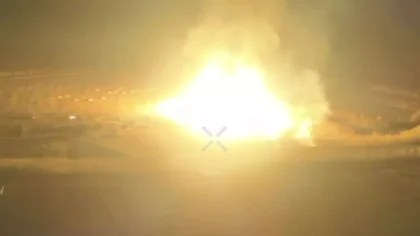
The Sudzha Gas Measuring Station, part of the Brotherhood pipeline supplying Siberian gas to Europe, was damaged in an explosion, just two days after a halt in attacks on energy infrastructure was agreed under US mediation. Sputnik asked a veteran security affairs expert how the attack will impact regional energy security.
“This is a tragic, tragic black comedy from the Ukrainian side to organize some kind of attack [on] the Sudhza gas pipeline,” Slovak Brig. Gen. (ret.) and ex-military attaché Jozef Viktorin told Sputnik, commenting on the March 20 incident.
“For me, it’s not really part of [the broader] military conflict. This is some kind of terrorist activity from the Ukrainian side,” Viktorin said, emphasizing that the consequences of the attack “will be a big problem” not only for Slovakia, but all of Europe, in terms of energy security.
Before the conflict began in 2022, Sudzha, a natural gas exchange feeder in the Brotherhood network, was able to help pump up to 32 billion cubic meters (1.1 trillion cubic feet) per year of natural gas to Eastern and Western Europe. Deliveries slowed after fighting began, and halted completely in December 2024 after Ukraine refused to renew the contract.
Following the March 20 attack, which mirrors previous Ukrainian and NATO sabotage operations targeting Russian pipeline infrastructure like the Togliatti-Odessa Ammonia in Kharkov Region and Nord Stream 2 in the Baltic Sea, it’s unclear when or if the pumping station can be restored to working conditions.
“This is about Europe. Europe and European leaders have to understand that it’s only a question of time when to start to negotiate with Russia,” Viktorin emphasized. “They will have to talk because the question of dialog between the two sides is so important for the future.
In this regard, “Ukraine will not dictate [the] steps for negotiations of Russia and Europe,” and it’s best for the Europeans to remember that, no matter their current attitudes, the observer summed up.
‘They need new eyes’: IAEA accused of bias over strikes at Europe’s largest NPP
RT | March 22, 2025
A group of international journalists that recently toured Russia’s Zaporozhye Nuclear Power Plant (ZNPP) have accused Ukraine of being the one targeting the facility. They also questioned the International Atomic Energy Agency’s (IAEA) persistent refusal to identify the source of the attacks.
The ZNPP, Europe’s largest nuclear power station, has been under Russian control since March 2022 and is located in a region that later voted to join Russia following a public referendum. The plant’s operations are now overseen by Russian state-owned nuclear power company Rosatom. According to the Russian Defense Ministry, the facility and nearby city of Energodar have come under frequent attacks by Ukrainian drones and artillery. Despite this, the IAEA, which has maintained a permanent monitoring mission at the site since September 2022, has consistently declined to name the party responsible for the shelling.
Speaking with RT after touring the facility, reporters from a number of countries, including India, Serbia and Slovenia, voiced concerns over what they said was a clear distortion of facts by Western media and the IAEA’s refusal to acknowledge the reality on the ground.
“We should never trust any Western sources… Ukrainians are playing with nuclear fire,” said Serbian journalist Miodrag Zarkovic, who criticized the IAEA’s insistence on neutrality. Indian journalist Manish Kumar Jha said the evidence he saw contradicted everything he had read in Western outlets.
“According to Western media, the Russians are attacking the plant. But when I visited, I saw the Russian security forces positioned to keep the plant safe,” Jha said, noting that he saw a fragment of a US-supplied missile near the plant. “It was a 180-degree shift. The reality is very different from the story the Western media tells.”
Slovenian journalist and blogger Mohar Borut Iztok criticized the IAEA’s stance, noting the presence of NATO-supplied 155-millimeter shells with clear markings among those that have recently struck the facility.
“I’d like to say to Mr. [Rafael] Grossi and his crew – if they need an extra set of eyes, we can help them because it’s very interesting how they cannot see what is going on,” he stated sarcastically.
“I know what the problem is. They have an agenda, a narrative to follow, so they try to stay neutral,” he added.
Azov Gaining Power is ‘Symptom of Collapse’ of Remains of Ukraine’s Civil Society
Sputnik – 21.03.2025
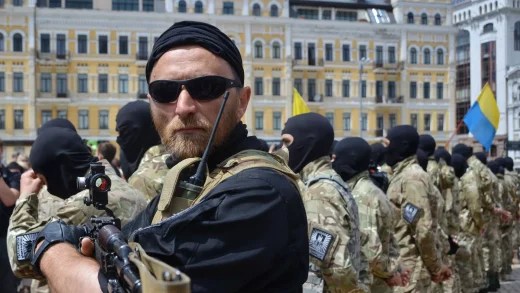
The destruction of the gas pumping station in Sudzha by Ukraine makes it look like Volodymyr Zelensky has “limited control” over the Ukrainian military and “limited to no control” over the neo-Nazi “Azov* forces,” USAF Ret. Lt. Col. Karen Kwiatkowski tells Sputnik.
Due to their belief in their superiority over the rest of the Ukrainian troops, Azov militants “believe that the war was theirs, always, not the politicians, and certainly not Zelensky’s as a propped-up politician who actually ran on enforcing the Minsk II treaty, a ‘peace’ platform.”
“I think Azov, like many effective, violent and nationalistic military groups, disrespect politicians on principle, as compromisers and double dealers. Traditionally, these are the ‘generals’ that the politicians fear, not the other way around,” says Kwiatkowski, a former US Department of Defense analyst.
Thus, there appears to be a danger of Azov exercising the “real political power” in Ukraine.
“It is a symptom of imminent collapse of what is left of Ukraine’s civil and political society, and it underlines the real problem that [US President Donald] Trump will have to face and has not yet — and that is how to help Ukraine recover a liberal and rights-based society at the conclusion of hostilities,” Kwiatkowski says.
“The anger of the Azov will not be quenched, even after Zelensky is gone and a new president elected.”
Featured Video

Rewriting the risk? Inside the government’s vaccine safety messaging
or go to
Aletho News Archives – Video-Images
Book Review
“Davos Can Really Replace the UN”
Inside the book that maps the architecture behind global governance — from the Epstein files to the Pact for the Future
Lies are Unbekoming | April 1, 2026
On June 13, 2019, the United Nations and the World Economic Forum signed a partnership deal to “accelerate the implementation of the 2030 Agenda for Sustainable Development.” That same evening, WEF president Börge Brende — Norway’s former Foreign Minister — had dinner with Jeffrey Epstein at Epstein’s Manhattan townhouse. The Epstein files, released January 2026, contain an exchange between the two from the previous year. Epstein to Brende: “Davos can really replace the UN. C21, cyber, crypto . genetics… intl coordination.” Brende back to Epstein: “Exactly — we need a new global architecture. World Economic Forum (Davos) is uniquely positioned — public private.”
The next day, the UN General Assembly adopted the framework for restructuring global governance.
That sequence — the partnership signing, the Epstein dinner, the candid admission about replacing the UN with a public-private architecture, and then the formal adoption — opens Jacob Nordangård’s The Digital World Brain. Pages two and three. Footnoted to the UN resolution number, the Epstein files, and the General Assembly record.
I keep coming back to it because it captures what this book does that almost nothing else in the independent research space manages. I’ve followed Jacob’s work for years now and interviewed him about his research. Each book peels back another layer of the same institutional architecture, and each time I think he’s reached the limit of what can be documented, the next one goes further. Nordangård doesn’t speculate. He doesn’t editorialize much. He lays institutional actions next to each other in chronological order and lets the pattern announce itself. … continue
Blog Roll
 Aletho News
- What’s Behind U.S./Israeli Strikes On Iranian Pistachio Factories?
- Seyed M. Marandi: U.S. Military DIVIDED? Iran’s Secret Defense EXPOSED
- How I fell foul of the BBC thought police
- The End of NATO
- 37 days of war on Iran cost US staggering $42bln, tracker shows
- Baghdad tells Asian refiners, traders to begin loading Iraqi crude amid Iranian exemption
- Under fire, Moscow and Tehran close ranks
- Iran, US receive Pakistan-mediated plan for ceasefire then final deal
- Iran submits demands for end to war as mediators scramble ahead of Trump deadline
- Iran Threatens Retaliatory Strike on Stargate AI Project in UAE
- If Americans Knew
- U.N. experts demand Israel release prominent Gaza doctor after reports of ‘severe torture’
- Israel’s Latest Genocide Is Against the Shias of Lebanon. Why Is the World Silent?
- How Eliot Cohen’s influence over U.S. war-making paved the way for Trump’s war crimes in Iran
- Israelis don’t pay for the weapons we ‘sell’ to them — US taxpayers do
- While Distancing from AIPAC, Most 2028 Democratic Hopefuls Are Still Embracing Israel
- A brief history of the Israeli nuclear program, the open secret at the heart of the Iran war
- Israeli Settlers Killed a Palestinian Farmer on His Own Land, in Front of His Father. Yes, Again
- The US-Israeli War on Science is an Assault on our Future
- 100+ International Law Experts Say US Strikes on Iran Violate UN Charter, Could Be War Crimes
- ‘Vile, Horrifying, Evil’: Trump Threatens to Bomb Nation of 90 Million People ‘Back to the Stone Ages’
- No Tricks Zone
- An Inconvenient Tree: Uncovered In Alps… Europe Much Warmer Than Today 6000 Years Ago
- New Study Reports A 60% Slowdown In Greenland’s Ice Loss Rate In The Last Decade
- Low Intensity Tornado Wrecks Major Solar Farm, Creating A Potential Toxic Dump
- New Study Finds Warming Saves Lives…Cold Temperatures 12 Times More Deadly Than Excess Heat
- German Science Blog Accuses PIK Climate Institute Of Hallucinating Climate Tipping Points
- Devastating Assessment Of Comirnaty Vaccine By Former Senior Pfizer Europe Toxicologist
- New Study: CO2 Is ‘Effectively Negligible’ As An Explanatory Climate Change Factor Since 2000
- Former Pfizer Toxicologist Dr. Helmut Sterz Tells Bundestag Hearing Pfizer Vaccine Should Have Never Been Approved
- Energy Expert: Germany’s Nuclear Phaseout Was A “500 Billion Euro Mistake”
- New Research: South Australia’s Mid-Holocene Sea Surface Temperatures Were 4°C Warmer Than Today
 Aletho News