‘Neocons Should Be Unhappy’ as Trump Calls Out NATO, Pushes for Peace – Analyst
By Oleg Burunov – Sputnik – 05.03.2025
US President Donald Trump pledged to go ahead with his campaign of “swift and unrelenting action” in reorienting the country’s economy, immigration and foreign policy in his address to Congress.
“It seems he [Trump] wants more and more peace, urging Zelensky to conclude a ceasefire agreement and sign the US-Ukraine minerals deal,”Lt. Col. Karen Kwiatkowski, a retired US AirForce official and former analyst for the US Department of Defense, told Sputnik.
Kwiatkowski stressed that Trump didn’t talk about Europe or NATO other than noting that they depend on the US and use American money, “and yet they seem not to want peace.”
She noted that peace means prosperity for the working people and younger generations rather than those not working and the government.
“It makes sense after watching his speech that he is most popular among the under 40 demographic in the United States according to current polling,” the ex-Pentagon analyst pointed out.
Former DoD officer David Pyne, in turn, said in an interview with Sputnik that “Trump had no reservations about ending all US military assistance to Ukraine” in order “to pressure the Zelensky regime to accept a cease-fire and the peace deal the US is working to negotiate with Russia.”
78% of Americans support Trump’s effort to negotiate an end to the conflict, Pyne stressed. “Even while Democrat leaders continue to support feeding Ukrainian soldiers into the meat grinder.”
Trump will continue to transform the US relationship with Russia “from one of adversaries to a new historic era of strategic partnership,” the analyst believed.
CIA confirms suspension of intelligence sharing with Ukraine
RT | March 5, 2025
Washington has brought all intelligence sharing with Ukraine to a halt, CIA Director John Ratcliffe confirmed to Fox Business on Wednesday. The development came just a day after several American media outlets reported that the US had suspended military assistance, including both the purchase of new weapons and shipments already in progress.
When asked by host Maria Bartiromo whether the US had “cut off” its cooperation with Ukraine, Ratcliffe said that US President Donald Trump had “asked for a pause” to see if Kiev was ready to work toward resolving the conflict with Russia.
“President Trump had a real question whether… Zelensky was committed to a peace process,” Ratcliffe said, claiming that the halt to assistance and information sharing contributed to Zelensky publicly stating that he was “ready for peace.”
On Tuesday, the Ukrainian leader said that Kiev was ready for an immediate POW release and a temporary ceasefire with a “ban on missiles, long-ranged drones, bombs on energy and other civilian infrastructure.” Last week, Trump told reporters that Zelensky needed to be ready for an immediate ceasefire before he could be welcomed back to the US following their Oval Office debacle on Friday.
”On the military front and on the intelligence front, the pause… allowed that to happen,” Ratcliffe said, adding that he expected the US to resume cooperating with Ukraine soon.
The halt to intelligence sharing was “selective,” Sky News reported on Wednesday, citing a Ukrainian source. However, the move made it difficult for Ukraine to launch attacks against targets deep inside Russia, the source said.
Washington reportedly also barred its allies from sharing with Ukraine, Financial Times reported on Wednesday, citing sources familiar with the matter. Recipients with assets inside Ukraine itself were likely to continue to pass on relevant information, the paper said, but Kiev would likely miss out on time-sensitive and high-value intelligence it needed to strike moveable Russian targets.
Trump and Zelensky had a heated verbal exchange on Friday, when the US president accused the Ukrainian leader of ingratitude and “gambling with World War III” by refusing to work towards a halt to hostilities.
Several US outlets, including Bloomberg, the New York Times, and CNN, reported that Trump had paused military aid after the fall out. According to the NYT, the president’s order affected more than $1 billion in “arms and ammunition in the pipeline and on order.”
Moscow commented on the reports by saying that if the US were to suspend supplies altogether it would “probably be the best contribution to the cause of peace.”
EU’s von der Leyen unveils $840bn rearmament plan
RT | March 4, 2025
European Commission President Ursula von der Leyen has proposed that member states spend about $840 billion on defense to strengthen their military self-sufficiency – an amount more than double total EU defense expenditure in 2024.
In a statement on Tuesday, the EU chief cited the “most dangerous of times” and the “grave” threats facing the bloc as reasons to assume greater responsibility for its own security.
“We are in an era of rearmament,” von der Leyen declared, adding that she had sent a letter outlining her ‘ReArm Europe Plan’ to member state leaders ahead of the European Council meeting later this week.
“ReArm Europe could mobilize close to €800 billion ($840 billion) for a safe and resilient Europe,” she said. “This is a moment for Europe. And we are ready to step up.”
Official data shows the bloc’s total defense spending reached an estimated $344 billion last year, marking an increase of more than 30% since 2021.
The new plan includes $158 billion in loans available to member states to invest in what von der Leyen described as “pan-European capability domains,” including air and missile defense, artillery systems, missiles and ammunition, drones, and anti-drone technology. It will also address other needs, from cybersecurity to military mobility.
The proposed five-part strategy is also designed to address the “short-term urgency” of supporting Ukraine, the EU chief said.
Von der Leyen did not specify a detailed timeline, but emphasized that defense spending must increase “urgently now but also over a longer period over this decade.”
Her announcement came just hours after news agencies reported on Monday that US President Donald Trump had ordered a pause on military aid to Ukraine. Trump has repeatedly accused Ukrainian leader Vladimir Zelensky of refusing to negotiate peace with Russia and exploiting US support for his own gain. Following Zelensky’s public clash with Trump and US Vice President J.D. Vance on Friday, the US president said America would no longer tolerate the Ukrainian leader’s attitude.
The EU has historically depended significantly on the US for its security, primarily through the North Atlantic Treaty Organization (NATO). However, the Trump administration has recently signaled a major policy shift, urging European nations to take the lead in their own defense, as well as Kiev’s. Last month, Pentagon chief Pete Hegseth said that Washington intended to refocus its military priorities on countering China, warning the EU not to assume that American forces would remain in the region indefinitely.
Trump has previously warned that under his leadership the US would not defend NATO countries that fail to meet their financial commitments. He has floated the idea of raising mandatory defense spending by members to 5% of GDP, though none – including the US – currently meet that threshold.
His push for increased defense spending has drawn mixed reactions, with some EU officials questioning its economic feasibility. European officials have occasionally raised concerns that Trump could pull the US out of the organization.
Russian Deputy Foreign Minister Aleksandr Grushko recently warned that NATO appears to be preparing for war with Moscow, arguing that its current course poses a threat both to Russia and to overall security architecture.
Kremlin responds to reports of Trump move on Ukraine aid
RT | March 4, 2025
Halting US military aid to Ukraine would be a significant step toward resolving the conflict, Kremlin spokesman Dmitry Peskov stated on Tuesday.
Several US media outlets have reported that Washington has suspended the purchase of new weapons for Ukraine. Several reports have also suggested that US President Donald Trump has also ordered a halt to shipments of military aid.
Speaking to journalists on Tuesday, Peskov stated that while the details of these reports have yet to be confirmed, such a move could prove to be a significant step towards de-escalation.
“It is obvious that the US has been the main supplier” of military aid to Kiev, Peskov noted, adding that if the US were to relinquish this role or suspend supplies altogether it would “probably be the best contribution to the cause of peace.”
The spokesman said that if the US had indeed stopped all military aid to Ukraine, it would mean that Kiev would effectively lose the vast majority of its ammunition, equipment and intelligence.
“If this really is so… then perhaps, without indulging in excessive optimism, we can modestly hope that this could encourage the Kiev regime to lean towards attempts to resolve the situation through peaceful means,” Peskov told Rossiya 1 TV journalist Pavel Zarubin.
According to Bloomberg, Trump has ordered a freeze on all military aid to Ukraine, which includes equipment already designated for delivery, as well as weapons in transit on aircraft and ships or waiting in transit areas in Poland. The New York Times reported that the president’s order, which has already taken effect, affects more than $1 billion in “arms and ammunition in the pipeline and on order.”
Meanwhile, the Washington Post claimed that in addition to stopping weapons shipments to Kiev, Washington is also considering the termination of intelligence sharing and training for Ukrainian troops and pilots.
Trump’s reported order comes after a public spat with Ukrainian leader Vladimir Zelensky in the White House on Friday. During the meeting, Trump accused Zelensky of ingratitude and “gambling with World War III” by refusing to work towards a halt to hostilities.
After the heated exchange, Zelensky stated on Sunday that peace between Ukraine and Russia was still “very, very far away,” prompting even more ire from Trump, who said it was “the worst statement that could have been made” by the Ukrainian leader.
Trump warned that “America will not put up with it for much longer,” and suggested that Zelensky “doesn’t want there to be Peace as long as he has America’s backing.”
Zelensky reverses hardline position on peace talks
RT | March 4, 2025
Ukrainian leader Vladimir Zelensky has said that Kiev is ready to engage in peace negotiations with Russia, to be brokered by US President Donald Trump. The statement comes after the White House reportedly stopped all military aid to Kiev following a disastrous meeting in the Oval Office between the two leaders, for which US officials have demanded Zelensky apologize.
Zelensky made a concession-filled post on X on Tuesday, saying his public feud with Trump in the Oval Office was “regrettable.”
“We are ready to work fast to end the war,” Zelensky wrote. He has frequently said in the past that Ukraine would fight as long as necessary and that peace talks could only happen on Ukraine’s terms.
He proposed the release of prisoners and establishing “truces” on both the air and sea fronts, echoing suggestions by UK Prime Minister Keir Starmer and French President Emmanuel Macron in a meeting with him in London on Sunday. The French-UK plan envisages a temporary, month-long “truce in the air, on the seas, and on energy infrastructure.” Moscow has repeatedly ruled out a temporary ceasefire with Kiev, insisting on a permanent, legally binding peace deal that addresses the root causes of the conflict.
On Monday, Trump reportedly ordered a temporary halt to all US military aid to Ukraine, aiming to pressure Zelensky into negotiations to end the conflict with Russia. An unnamed senior administration official told Fox News that military assistance would stay suspended until the Ukrainian leadership demonstrates a genuine commitment to peace talks.
“Ukraine is ready to come to the negotiating table as soon as possible to bring lasting peace closer,” Zelensky continued on X, offering his appreciation for Washington’s support. “My team and I stand ready to work under President Trump’s strong leadership to get a peace that lasts,” he added.
“’Ready’ is good, it is positive,” Kremlin spokesman Dmitry Peskov reacted to the statement.
During the Friday meeting, Trump accused Zelensky of ingratitude and “gambling with World War III” by refusing to work towards a halt to hostilities.
On Sunday, Zelensky told reporters that “an agreement to end the war is still very, very far away, and no one has started all these steps yet.” Trump condemned his statement on social media, promising that “America will not put up with it for much longer.”
Russian President Vladimir Putin has indicated Moscow’s readiness to resolve the Ukraine conflict through peaceful means. He emphasized Russia’s aim of establishing an international system that ensures a balanced and mutual consideration of interests, creating a long-term, indivisible European and global security framework.
Kaja Kallas is ill-equipped to take stock of EU foreign policy after Zelensky’s drubbing in the White House
By Ian Proud | Strategic Culture Foundation | March 4, 2025
Now that Zelensky has been battered by Trump and abandoned by Starmer, he can fall back of Europe’s leading diplomat, Kaja Kallas. God help us all.
The earth is still shaking from President Trump and Vice President Vance’s tag team annihilation of Volodymir Zelensky at the White House. The 27 February meeting between Trump and Keir Starmer was a more convivial affair, with the British Prime Minister quiet on Ukraine while promoting the idea of much prized trade talks with America. That was the first signal of the UK getting real about its foreign policy disaster in Ukraine and recognising that it needs trade with America far more than it needs the huge cost of propping up an unwinnable war.
This leaves Zelensky’s fate in the hands of the European Union. And with Kaja Kallas, the current EU High Representative for Foreign Affairs and Security Policy, the omens aren’t promising.
Kallas’ problem is threefold.
First, she is not diplomatic.
If the biggest foreign policy challenge in Kallas’ in-tray right now is the war in Ukraine, then her ingrained hatred of Russia makes her a singularly bad choice as Europe’s lead diplomat.
Her worldview is carved out of her experience growing up in the Soviet Union the child of a woman who was deported to Siberia in 1949. She looks at Russia through a shattered lens of Estonia’s suffering during the so-called communist terror after the end of World War II.
How she sees events in Ukraine today is simply a continuum of the folklore of her life. Russia is the hated enemy, and, at some point, Russia will return to conquer Estonia once more. In her statements before war in Ukraine started, Kallas reaffirmed her view that Estonia could be the next country that Russia invades. As a NATO country, I have never seen any evidence that Russia has a plan to do this.
Kallas has called for NATO troops to be deployed to Ukraine, to ensure Russia’s total defeat. She has suggested that Russia be broken up into a series of smaller states. She once implied that Ukraine should inflict more civilian casualties on Russian citizens, to balance the number of casualties in Ukraine. Even as President Trump has said that NATO membership for Ukraine is unrealistic, she has continued to push for this to be kept on the table, despite it having been a redline for Russia for nineteen years.
Almost everything that she says is rooted in her unshakeable belief that defeating Russia is vital for the world to become a safer place.
The world is full of extremists, of course. However, she claims to be the leading diplomat of Europe. She seems singularly ill-suited to that role. But will nonetheless still support Zelensky, I’m sure.
Which ushers in her second problem, the absence of a democratic mandate.
Countries that are sceptical about the European project often express concerns about the lack of democratic accountability of EU institutions.
No one voted for Kallas to occupy her office in Brussels. While Zelensky has only been unelected since May of 2024, Kallas will only ever be an unelected apparatchik.
When the European Union’s role was focussed on creating a united economic, social and cultural space among nations after the ravages of World War II, it found peace by opening up borders. However, as it has grown, Europe has become increasingly bureaucratic. Following agreement of the Lisbon Treaty, the creation of a High Representative for Foreign Affairs and Security with a newly formed European External Action Service, continued this centralising trend.
Without any democratic mandate, occupants of the High Representative role have struggled for relevance. Outside of trade policy, individual Member States still manage their own bilateral diplomacy. And as the war in Ukraine has backfired on Europe through economic decline and political dissent, so Europeans countries have sought their divergent paths.
That has left ineffectual figures like Josep Borrel and ideologues like Kallas unable to play the sort of coordinating role that they yearn for.
So, in practice, Kallas’ influence on the actions of Member States is limited, although she has considerable power to cause harm through inflammatory public statements. This is a huge challenge when dealing with countries like Russia, where the leaders there understand fully the limitations on Kallas’ role and ignore her. Instead, Russia focusses its influencing efforts on key EU members states, especially in Central Europe.
Even though Kallas can call for the continued isolation of Russia as support for Zelensky rapidly crumbles, she has no real power to enforce that. She lacks a mandate.
So herein lies her third problem.
Kaja Kallas has no strategy.
There is a huge risk that Kallas is seen as a single-issue High Representative, as her main effort appears to be on the war in Ukraine.
She appears intent only on sustaining the decade-long European zeitgeist on non-engagement with Russia, whatever the economic cost. But in that regard, not only is she not bringing new ideas on foreign policy, her lack of flexibility will make her look out of touch at a time when Europe is facing significant economic and political challenges caused by the war. Arriving into the job in December, Kallas has brought plenty of heat, but no light.
Donald Trump has now arrived heralding a seismic shift in U.S. policy and she still thinks the earth is flat. She has criticised President Trump’s radical shift towards direct engagement with Russia without offering a compelling alternative vision.
The ‘Russia is coming for Europe next’ continues to be the rhetorical life-raft that she clings to as she tries desperately to help the now stranded Zelensky fight to the last Ukrainian.
Kallas is certainly not the author of the EU policy that has tried explicitly to isolate Russia on the world stage. But she has worked tirelessly to keep it alive, together with all the other tropes about how to handle Russia and why an end to the war can never be contemplated.
Of course, that position may have been sustainable while Joe Biden was still in power and the U.S. were arguably more gung-ho about pushing an unwinnable war in Europe.
But Donald Trump’s devastating take-down of Zelensky in the White House will force an immediate reckoning on the European policy establishment about what to do for Ukraine, and for Zelensky. Kaja Kallas has neither the skills, the mandate nor the plan to chart a credible way forward.
Reality confronts the Euro ruling-strata – ‘Through the tear in the fantasy bubble, they see their own demise’
By Alastair Crooke | Strategic Culture Foundation | March 4, 2025
They (the Euro-élites) don’t have a chance: “If Trump imposes this tariff [25%], the U.S. will be in a serious trade conflict with the EU”, the Norwegian Prime Minister threatens. And what if Brussels does retaliate?
“They can try, but they can’t”, Trump responded. Von der Leyen has, however, already promised that she will retaliate. Nonetheless, the combined suite of the Anglo administrative forces is still unlikely to compel Trump to put U.S. military troops on the ground in Ukraine to protect European interests (and investments!).
The reality is that every European NATO member – to varying degrees of self-embarrassment – admits publicly now that none of them want to participate in securing Ukraine without having U.S. military troops provide ‘backstop’ to those European forces. This is a palpably obvious scheme to inveigle Trump into continuing the Ukraine war – as is Macron and Starmer’s dangling of the mineral deal to try to trick Trump to recommit to the Ukraine war. Trump plainly sees through these ploys.
The fly in the ointment, however, is that Zelensky seemingly fears a ceasefire, more than he fears losing further ground on the battlefield. He too, seems to need the war to continue (to preserve continuing in power, possibly).
Trump calling time on the Ukraine war that has been lost has seemingly caused European elites to enter some form of cognitive dissonance. Of course, it has been clear for some time that Ukraine would not retake its 1991 borders, nor force Russia into a negotiating position weak enough for the West to be able to dictate its own cessation terms.
As Adam Collingwood writes:
“Trump has torn a huge rip in the interface layer of the fantasy bubble … the governing élite [in the wake of Trump’s pivot] can see not just an electoral setback, but rather a literal catastrophe. A defeat in war, with [Europe] left largely defenceless; a de-industrialising economy; crumbling public services and infrastructure; large fiscal deficits; stagnating living standards; social and ethnic disharmony – and a powerful populist insurgency led by enemies just as grave as Trump and Putin in the Manichean struggle against vestiges of liberal times – and strategically sandwiched between two leaders that both despise and disdain them …”.
“In other words, through the tear in the fantasy bubble, Europe’s elites see their own demise …”.
“Anybody who could see reality knew that things would only get worse on the war front from autumn 2023, but from their fantasy bubble, our élites couldn’t see it. Vladimir Putin, like the ‘Deplorables’ and ‘Gammons’ at home, was an atavistic daemon who would inevitably be slain on the inexorable march to liberal progressive utopia”.
Many in the Euro ruling-strata clearly are furious. Yet what can Britain or Germany actually do? It has quickly become clear that European states do not have the military capacity to intervene in Ukraine in any concerted manner. But more than anything, as Conor Gallagher points out, it is the European economy, circling the drain – largely as a result of the war against Russia – that is dragging reality to the forefront.
The new German Chancellor, Friedrich Merz, has shown himself to be the most implacable European leader advocating both military expansion and youth conscription – in what amounts to an European resistance model mounted to confront Trump’s pivot to Russia.
Yet Merz’s winning CDU/CSU achieved only 28% of votes cast, whilst losing significant voter share. Hardly an outstanding mandate for confronting both Russia – and America – together!
“I am communicating closely with a lot of prime ministers, and heads of EU states and for me it is an absolute priority to strengthen Europe as quickly as possible, so that we achieve independence from the U.S., step by step”, Friedrich Merz said.
Second place in the German election was taken by the Alternative for Germany (AfD) with 20% of the national vote. The party was the top vote getter in the 25-45 year-old demographic. It supports good relations with Russia, an end to the Ukraine war, and it wants to work with Team Trump, too.
Yet AfD absurdly is outcast under the ‘firewall rules’. As a ‘populist’ party with a strong youth vote, it becomes automatically relegated to the ‘wrong side’ of the EU firewall. Merz has already refused to share power with them, leaving the CDU as pig-in-the-middle, squeezed between the failing SPD, which lost the most voter share, and the AfD and Der Linke, another firewall outcast, which, like AfD, gained voter share, especially among the under-45s.
The rub here – and it is a big one – is that the AfD and the Left Party, Die Linke (8.8%), which was the top vote getter in the 18-24 demographic, are both anti-war. Together these two have more than one third of the votes in parliament – a blocking minority for many important votes, especially for constitutional changes.
This will be a big headache for Merz, as Wolfgang Münchau explains:
“For one thing, the new Chancellor had wanted to travel to the NATO summit this June, with a strong commitment to higher defence spending. And even though the Left Party and the AfD hate each other in every other respect, they agree that they won’t give Merz the money to strengthen the Bundeswehr. More important, though, is the fact that they won’t support a reform to the constitutional fiscal rules (the debt brake) that Merz and the SPD are desperate for”.
The Rules are complicated, but in gist dictate that if Germany wants to spend more money on defence and aid to Ukraine, it had to be saved from elsewhere in the budget (most likely from social spending). But politically, saving on social spending to pay for Ukraine hasn’t played well with the German electorate. The last coalition failed on precisely this issue.
Even with the Greens, Merz still will be short of the two-thirds majority necessary to make constitutional changes, and the ‘Centre’ just doesn’t have the fiscal space for challenging Russia without U.S. funding. Von der Leyen will try to ‘magic’ money for defence from somewhere, “but German youth are voting against the Establishment parties who are hated. They can build a few Leopards if they want. They won’t get recruits”.
Whilst the EU and Britain are proposing to raise billions to arm themselves against some imaginary Russian invasion, it will be done against the backdrop of Trump saying explicitly – on the threat of a Russian invasion of NATO – “I don’t believe that; I don’t believe it, not one little bit”.
Another Euro-shibboleth ripped by Trump.
Thus, how will the European public, which has largely soured on the Ukraine war, react to higher energy costs and more tax and social service cuts, in order to pursue an unwinnable war in Ukraine? Starmer already has been warned that the (government debt) ‘bond vigilantes’ will react badly to yet more UK government debt as the fiscal situation wobbles precariously.
There are no obvious solutions to Europe’s current predicament: It is, on one hand, an existential conundrum for Merz. And on the other, it is the same one that dogs the EU as a whole: To get anything done, a parliamentary majority is a basic necessity.
The ‘firewall’, though primordially intended to protect the ‘Centrists’ in Brussels from Rightist ‘populists’, was subsequently turbo-charged in Brussels by Biden’s issuing of a foreign policy determination to all U.S. foreign policy ‘actors’ to the effect that populism was a ‘threat to democracy’ and must be contested.
The practical outcome however, has been that across the EU, blocking coalitions were formed of odd (minority party) bed-fellows agreeing to keep the Centrists in power, but which rather has led to endless stasis and an ever increasing detachment from ‘we, the people’.
Angela Merkel governed in this way, kicking the can of reform down the road for years – until the situation ultimately became (and still is) insoluble.
“Can another coalition of short-sighted centrists arrest the decline of the economy, fix the failure of leadership, and free the nation from its pernicious political trap? I think we know the answer”, writes Wolfgang Münchau.
There lies a bigger problem however: As Vance very explicitly warned at the recent Munich Security Forum, Europe’s enemy lies not with Russia; It lies within. It derives, Vance implied, from the fact of having a permanent bureaucracy, assuming to itself the exclusive prerogative of autonomous governing power, yet incrementally becoming ever-more remote from its own base.
Tear down the firewalls, Vance advocated, in order to return to the (abandoned) principles of that earlier democracy originally shared between the U.S. and Europe. Implicitly, Vance is targeting the Brussels Administrative (Deep) State.
The Eurocrats see in this new front an alternate American-supported attack on their Administrative State – and perceive therein their own demise.
In the U.S., there is acknowledgement that there is an “institutional resistance to Trump” in the DOD, DOJ and the FBI. It proves, Margot Cleveland argues, that those touting the need for “institutional resistance” and the supposed independence from the executive branch, are the opponents to democracy – and to Trump.
Given the close nexus between the U.S., the British and European Deep States, the question arises as to why there is such strong parallel resistance to Trump amongst European leaders also.
Ostensibly, it is not in Europe’s interest to mount a concerted resistance against the U.S. President over a failed war. Is the European frenzy then fuelled by a wider (U.S.) Deep State desire to neuter the ‘Trump Revolution’ by demonstrating, in addition to the U.S. domestic opposition at home, that Trump is causing havoc amongst the U.S.’ European allies? Is Europe being pushed further down this path than they would otherwise have chosen to venture?
For Germany to change course – albeit unthinkable for Merz – it would require only a minimal amount of imagination to envision Germany again linked to Eurasia. The AfD gained 20% of the vote on just such a platform. Really, there probably is little other option.
‘Zelensky wants forever war’ – Musk piles on after Zelensky says the war is far from over
By Liz Heflin | Remix News | March 4, 2025
After Ukrainian President Volodymyr Zelensky said that an agreement to end the war between Ukraine and Russia is still “very, very far away,” Elon Musk went on the offensive against the Ukrainian leader, accusing him of wanting the war to go on.
While U.S. President Trump said Zelensky’s words were “the worst statement” possible and that “America will not put up with it for much longer” just before cutting all funding to the war-torn nation, Musk reacted by calling Zelensky “evil” for wanting “a forever war, a never-ending graft meat grinder.”
Musk also took to posting other accounts commenting on the issue, including a repost of a clip of David Sacks, who said that Democrats increasingly support endless war.
“Zelensky basically says the war needs to go on forever. If the war is over, he loses power. He canceled elections there. If he stands for elections there, he’s very unpopular, despite what the fake USAID polls say,” said Sacks.
“The Democrats have become the Party of forever war. Remember this was Joe Biden’s war. He easily could have ended this war in the first month if he agreed to the Istanbul Accords, which said that all Ukraine had to do was stay neutral and basically agree not to become part of NATO. Biden said that was unacceptable, and that’s why the war continued.”
The condemnation of Zelensky comes at a time when Ukrainians are increasingly being dragged off the street and being sent to the front.
Political commentator for Magyar Nemzet, Zsolt Bayer, wrote up a piece in response to yet another video of a young man being dragged away for military duty in Ukraine. “I’ve been watching these videos for years …and I’ve been horrified by them all for years. And I imagine what would happen if these… these… these I don’t know what kind of horrors happened anywhere else,” he wrote.
He went on to say, “This is not a country, this is not a state, this is a rotten mafia-monster state that makes death lists, that deprives its citizens of the most basic human rights, that treats men like animals – and that in the meantime dreams of EU membership, scolds, demands, and loudly explains to everyone and anyone what to do, how to support, finance, and arm this scum.”
Remix News has reported extensively on Ukraine’s issues with manpower, boots on the ground, as its troops dwindle from ongoing casualties as well as hundreds of thousands fleeing service.
Forced conscription is real and most believe largely undocumented. The Hungarian community in Ukraine is said to have been badly targeted, culminating in an incident last May where relatives of forced draftees erected barricades in front of a recruitment center, demanding their husbands and sons be released.
EU’s support for Zelensky brings Washington-Brussels relations to the brink of collapse
By Ahmed Adel | March 4, 2025
Following the reactions of European leaders to the on-camera spat at the White House between Donald Trump and Ukrainian President Volodymyr Zelensky on February 28, relations between the US president and much of the European Union establishment are reaching a breaking point. The EU establishment has firmly sided with Zelensky and his warmongering policies, contrary to common sense and the peace efforts of Trump and his Russian counterpart Vladimir Putin.
On March 2, an informal meeting of European leaders and Canada was held in London. Following the meeting, it was announced that Ukraine would receive more military aid and sanctions on Russia, territories would be returned to Ukraine, and the United Kingdom, with other nations, would form a military coalition to get boots on the ground.
By reacting the way they did, EU leaders have once again shown that they are undermining peace, just as then-British Prime Minister Boris Johnson did when he sabotaged the peace talks between Russia and Ukraine in Istanbul in early 2022. However, just as Johnson was not punished for prolonging death and war in Ukraine, it is unlikely that EU leaders will ever be held accountable for their actions, especially German, Polish and Baltic politicians, European Commission President Ursula von der Leyen, and many others in Brussels who agree on a policy of aligning with Zelensky and anti-Trump policies.
Following the spat between the US and Ukrainian presidents, European leaders sent messages of solidarity with Kiev. Many European leaders posted a uniform message on their social media accounts that they “stand with Ukraine.”
A sign of the growing rift between Washington and Brussels, particularly after the chaotic meeting between Trump and Zelensky, EU foreign policy chief Kaja Kallas said: “Today, it became clear that the free world needs a new leader. It’s up to us, Europeans, to take this challenge.”
It is also recalled that during his visit to the White House on February 24, French President Emmanuel Macron tried to deceive Trump and drag him down a path the US president did not want to take. It became clear to Trump that he could not count on European politicians.
If it was not clear following the meeting with Macron, it certainly became clear to Trump when British Prime Minister Keir Starmer was a guest in the Oval Office on February 27, particularly after US Vice President J.D. Vance blasted Britain’s descent into authoritarianism and lack of free speech.
It is expected that in the coming period, there will be very strong obstructions from the EU to any agreement between Trump and Putin. There will also be such obstructions within the US, especially from the remnants of the Deep State and the mainstream media that are still critical of Trump and loyal to ultraliberal policies. The very core of the EU – the European Commission, the leadership of the European Council, the majority in the European Parliament, as well as the leading EU leaders are also of the same view, which is opposite to the rest of the world that advocates for peace.
The EU itself is divided into states that supported peace efforts and distanced themselves from Brussels—primarily the political leaderships of Slovakia and Hungary, but also the leaders of the second-largest party in Germany, the AfD, Marine Le Pen in France, and the leaders of other sovereigntist parties across Europe.
European leaders have not changed their support for war since an attempt was made to end the conflict under conditions that were even more favorable for Kiev at the time. Now, as Trump highlighted in his meeting with Zelensky, Ukraine does not “have the cards right now.”
“You’re not in a good position. You don’t have the cards right now. With us, you start having cards. You’re playing cards. You’re gambling with the lives of millions of people. You’re gambling with World War III,” Trump said to a shocked Zelensky.
Of course, Zelensky denied Trump’s statements, stuttering, “I’m not playing cards” and “What are you speaking about?”
The US president’s main priority is normalizing relations with Moscow, including ending the conflict in Ukraine. Normalization will remain a priority even if the Kiev regime and European leaders do not agree to it.
Nonetheless, it appears that parts of Europe have not yet given up on the Trump administration, like Kaja Kallas has. Starmer announced on March 2 that Britain, France, and Ukraine have agreed to work on a ceasefire plan to present to Washington.
“We’ve now agreed that the United Kingdom, along with France and possibly one or two others, will work with Ukraine on a plan to stop the fighting, and then we’ll discuss that plan with the United States,” Starmer told the BBC.
This was followed by Zelensky announcing on the same day as Starmer’s statement that he was “ready to sign” the minerals agreement with Trump.
However, given the EU’s growing hostility to Trump and resistance to peace, the US president has little incentive to take the Franco-Anglo peace plan seriously since they have been harbingers to continue the war. Trump will continue pursuing a peace plan, even if it intensifies hostility between Europe and Washington.
Ahmed Adel is a Cairo-based geopolitics and political economy researcher.
War and Peace in Ukraine
John Mearsheimer, Glenn Diesen & Pavel Shchelin with Diana Panchenko
Glenn Diesen | February 27, 2025
I had the great pleasure to participate in a discussion on a Ukrainian political program on the topic of “War and Peace”. Why did the war start, and how can it end? The war began as a result of the Western-backed coup in 2014 that stripped Ukraine of its neutrality, and peace will unavoidably depend on restoring Ukraine’s neutrality. A humiliating peace entails no NATO membership, painful territorial concessions, and no security guarantees – although this is also the best possible option.
- Host: Diana Panchenko – Ukraine’s “Journalist of the Year” in 2020 and listed among Ukraine’s top 10 influential women
- Guests: John J. Mearsheimer, Glenn Diesen and Pavel Shchelin
Eight Ways That Trump May Force Zelensky to Resign
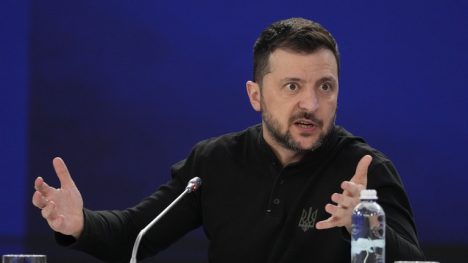
By Ekaterina Blinova – Sputnik – 03.03.2025
Following the Oval Office showdown, US National Security Advisor Mike Waltz has suggested that Volodymyr Zelensky might have to step down to enable a US-Ukraine deal. But as Zelensky refuses, what leverage does President Donald Trump hold over him?
Direct Pressure Tactics
- Cutting all aid. Without US support, Zelensky may have no choice but to resign and be replaced by someone willing to negotiate peace, says ex-CIA officer Philip Giraldi.
- Sweeping audit of US aid. A deep probe into Ukraine’s use of US funds could expose corruption and “neutralize” Zelensky, according to ex-Ukrainian MP Oleg Tsarev.
- Freezing Zelensky’s cash. Blocking foreign accounts of Zelensky and his team could undermine the Kiev regime, Tsarev suggests.
Shutting down Starlink. Three sources told Reuters that Team Trump may cut Ukraine’s access to Elon Musk’s satellites, a move the White House has already reportedly threatened. - Zelensky’s expired legitimacy. His presidential term ended in May 2024, making all actions since then legally questionable. Trump could challenge his right to govern.
Trump’s Indirect Leverage via Europe
- Pressuring European allies. Europe remains dependent on the US, writes economist Dr. Paul Craig Roberts. With no weapons left to send and money-printing its only option, Trump could force its hand.
- NATO withdrawal threat. Trump may pull US security guarantees from warmongering European states throwing sand in his gears or even threaten a NATO exit, warned ex-Pentagon officer David Pyne. That could motivate Europe to rein Zelensky in.
- Tariffs on Europe. A 25% tariff on EU imports could cost 1.5% of EU GDP, per Bloomberg. Trump already threatened this, claiming the EU was created to “screw the US”.
US puts firewall to protect Ukraine deal with Russia
By M. K. BHADRAKUMAR | Indian Punchline | March 3, 2025
The verbal shootout at the Oval Office last Friday brought out President Vladimir Zelensky’s fury that Donald Trump and Vladimir Putin are very close to a deal on Ukraine, while the conclave in Lancashire House in London on Sunday involving 18 European leaders messaged that Zelensky is in good company.
Connecting the dots, the incisive mind of Stephen Bryen, a leading expert on security, strategy and technology who previously held senior positions in the Pentagon and Capitol Hill, wrote on Substack: “Trump invited [French president] Macron and [UK prime minister] Starmer to Washington to brief them, which he apparently did. The French went away fairly unhappy, but Starmer seemed to be in general agreement. Starmer made a pitch to include Article 5 and NATO in any deal; Trump rejected that appeal. Putin, meanwhile, talked to [Chinese president] Xi by telephone and sent Sergei Shoigu (who heads Russia’s Security Council, something like the NSC) to Beijing to meet with Xi.
“Trump invited Zelensky. The cover for Zelensky’s appearance in Washington was the “Minerals Deal” which the two leaders were supposed to sign… The real reason for the Zelensky visit was to brief him on the Putin negotiations and to gain his support.”
In the event, Trump could neither brief Zelensky on the Ukraine deal nor sign the “Minerals Deal” because the Ukrainian president took great exception to any negotiations with Putin. He did this in public, to Trump’s face, and in front of the press. The result was there was no private meeting and Trump told Zelensky, “he would be welcomed back only when he was ready for peace.”
This is where things stand. The strategy session that Trump is due to take later today with his top advisors will signal what happens next. There is a strong likelihood that Trump may cut off arms deliveries and/or financial assistance to Ukraine.
Now that the Rubicon has been crossed, Trump is unlikely to change course on Russia — unless, of course, Zelensky falls in line in abject surrender, which seems unlikely too. Russians of course welcome his ouster.
It is highly unlikely that Trump will be cowed by the temper tantrums of the EU or impressed by Britain’s grandstanding. Germany is without a government for the next several weeks; it weakens the Europeans’ punch.
Indeed, the back channel communication between Moscow and Washington has gained traction. Moscow assesses that Trump has the upper hand. This is reflected in the growing optimism in Putin’s remarks last Thursday while addressing the Board of the Federal Security Service (collegium of Russia’s top foreign intelligence officials.)
Putin began by saying that the world and the international situation are changing rapidly and “the first contacts with the new US administration inspire certain hopes.”
He said: “There is a reciprocal commitment [with Trump] to work to restore interstate relations and to gradually address the enormous amount of systemic and strategic problems in the global architecture which once provoked the crises in Ukraine and other regions… Importantly, our partners demonstrate pragmatism and a realistic vision of things, and have abandoned numerous stereotypes, the so-called rules, and messianic, ideological clichés of their predecessors.”
Putin estimated that conditions exist for a dialogue “on bringing a fundamental solution to Ukraine crisis… a dialogue on creating a system that will truly ensure a balanced and mutual consideration of interests, an indivisible European and global security system for the long term, where the security of some countries cannot be ensured at the expense or to the detriment of the security of other countries, definitely not Russia.”
However, Putin also flagged that sections Western elites “are still committed to maintaining instability in the world, and these forces will try to disrupt or to compromise the newly resumed dialogue” and, hence it is vital that “every possibility offered by dialogue and special services to thwart such attempts” needs to be leveraged.
Indeed, the New York Times disclosed today that Defence Secretary Pete Hegseth has ordered U.S. Cyber Command to halt offensive operations against Russia “as part of a larger re-evaluation of all operations against Russia.” Equally, reports have appeared that Putin has given similar instructions restraining the Russian agencies.
What lends enchantment to the view is that many of the US’ most sophisticated operations against Russia are run out of Britain’s Government Communications Headquarters, the storied intelligence agency that broke the Enigma codes in World War II. Suffice to say, the US seems to be cutting itself free from longstanding joint operations with Britain directed against Russia.
A Guardian newspaper report has separately corroborated the Times disclosure of a shift in the US policy. It added that the warming of US-Russia relations is apparent also in certain recent other incidents which indicate that the US is “no longer characterising Russia as a cybersecurity threat.”
The paper claimed that analysts in the super secret Cybersecurity and Infrastructure Security Agency (Cisa) of the United States spoke to the Guardian on the condition of anonymity that they were “verbally informed that they were not to follow or report on Russian threats, even though this had previously been a main focus for the agency.”
Quite obviously, a crisis of confidence has arisen in the US-UK “special relationship” — or, to put it differently, the Trump administration is taking steps to sequester the Cisa from rogue operations.
There is a Cold War history of rogue operations by spy agencies. One of the most celebrated cases was the incident on 1st May, 1960 when an American U-2 spy plane piloted by Francis Gary Powers flying [‘unbeknownst’ to Eisenhower] at an altitude of 80,000 feet was shot down over Soviet air space triggering a diplomatic crisis that caused the collapse of a summit conference in Paris between then US president Dwight Eisenhower and Soviet leader Nikita Khrushchev — and the sudden death of the two leaders’ closely nurtured dream of détente.
An analogical situation exists today. Both Washington and Moscow are conscious of it. The need for such a veil of secrecy around the high level dialogue between the Kremlin and the White House is self-evident. There are too many detractors in the collective West who won’t settle for anything short of a Russian defeat in Ukraine and would rather keep the war going.
In such a fraught scenario, on the Russian side, the Kremlin’s writ ultimately prevails despite whatever dissenting voices exist in the military-industrial complex or amongst super hawks with revenge mentality. But that is not the case in the US where remnants of the old regime still hold sensitive positions, as the Guardian report vividly brings out. In the final analysis, therefore, it may well turn out that — to quote Stephen Bryan — Trump “will let Ukraine collapse but may seek a deal with Putin on Ukraine once Zelensky is gone.”
Featured Video
Seyed M. Marandi: U.S. Military DIVIDED? Iran’s Secret Defense EXPOSED
or go to
Aletho News Archives – Video-Images
From the Archives
‘Israel sees Iran as obstacle to its policies’
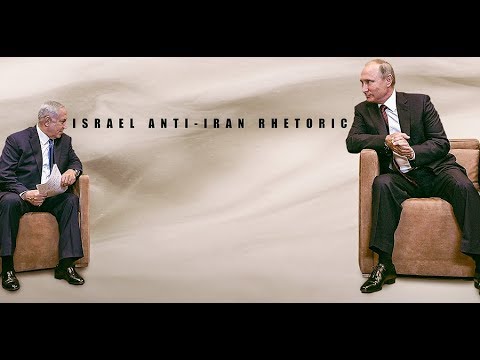
Press TV – August 25, 2017
Prime Minister Benjamin Netanyahu has said that Israel felt threatened by Iran’s growing influence in the Middle East. Netanyahu expressed his Iranophobic view in a meeting with Russian President Vladimir Putin in Russia’s Black Sea resort of Sochi on Wednesday. Press TV has asked Scott Rickard, former American intelligence linguist from Tampa, Florida, and Brent Budowsky, a columnist at The Hill from Washington, to give their thoughts on the issue.
Rickard said Tel Aviv is concerned about the fact that the regime could not carry out its old project to spread sectarian divisions and pave the way for dismemberment of the countries in the Middle East region because of the Iranian-led resistance against Israeli policies, not only in the occupied territories of Palestine but also in the whole region.
“Iran is not a threat to Israel whatsoever. The threat that Israel sees is the fact that their Oded Yinon Plan is being put to a hold by Iran,” the intelligence linguist said on Thursday night.
“They (the Israelis) look at Iran as a threat only because they have no influence on their governments and Iran is autonomous and is not under the Zionist influence,” he added.
Since the victory of the Islamic Republic of Iran in 1979, Tehran has been critical of Israel’s policies in the region, whereas “no leaders [of other states] even dared to speak out against Zionism,” Rickard argued. … continue
Blog Roll
 Aletho News
- The US-Israeli War on Science is an Assault on our Future
- Trump’s Promise to Bomb Iran ‘Like Never Before’ Faces Brutal Logistics — Expert
- Germany seeks to restrict stays abroad for men of fighting age – Berliner Zeitung
- Evidence points to Ukraine being behind TurkStream attempted sabotage, but that should come as no surprise
- Sri Lanka secures supplies of Russia oil – minister
- Nations across Asia strike direct deals with Iran for Hormuz passage
- IRGC commander declares ‘new phase’ of reprisal attacks against aggressors
- Israel’s air defenses overwhelmed by cluster-warhead Iranian missiles: Reports
- Striking Iran’s Infrastructure Would Have Little Military Impact – Report
- What’s Behind U.S./Israeli Strikes On Iranian Pistachio Factories?
- If Americans Knew
- Trump Says US Sent ‘a Lot of Guns’ to Protesters in Iran
- Israeli forces destroy 17 UN peacekeeper cameras in south Lebanon
- US-Israeli strikes ‘completely destroy’ synagogue in Tehran
- Archbishop for US Military Says Iran War Is Unjust Under Catholic Teaching
- Iranian President Pens Open Letter to American People
- Trump says Iranians appreciate bombs, WHO warns of nuclear risks – Daily Update
- U.N. experts demand Israel release prominent Gaza doctor after reports of ‘severe torture’
- Israel’s Latest Genocide Is Against the Shias of Lebanon. Why Is the World Silent?
- How Eliot Cohen’s influence over U.S. war-making paved the way for Trump’s war crimes in Iran
- Israelis don’t pay for the weapons we ‘sell’ to them — US taxpayers do
- No Tricks Zone
- An Inconvenient Tree: Uncovered In Alps… Europe Much Warmer Than Today 6000 Years Ago
- New Study Reports A 60% Slowdown In Greenland’s Ice Loss Rate In The Last Decade
- Low Intensity Tornado Wrecks Major Solar Farm, Creating A Potential Toxic Dump
- New Study Finds Warming Saves Lives…Cold Temperatures 12 Times More Deadly Than Excess Heat
- German Science Blog Accuses PIK Climate Institute Of Hallucinating Climate Tipping Points
- Devastating Assessment Of Comirnaty Vaccine By Former Senior Pfizer Europe Toxicologist
- New Study: CO2 Is ‘Effectively Negligible’ As An Explanatory Climate Change Factor Since 2000
- Former Pfizer Toxicologist Dr. Helmut Sterz Tells Bundestag Hearing Pfizer Vaccine Should Have Never Been Approved
- Energy Expert: Germany’s Nuclear Phaseout Was A “500 Billion Euro Mistake”
- New Research: South Australia’s Mid-Holocene Sea Surface Temperatures Were 4°C Warmer Than Today
 Aletho News