US State Department slashes USAID assistance to Ukraine – NBC
RT | Marh 1, 2025
The US State Department has terminated a US Agency for International Development (USAID) initiative for a large-scale effort to restore Ukraine’s energy grid, which has been severely damaged by Russian strikes, NBC News reported on Friday, citing sources.
USAID, Washington’s primary agency for funding political projects abroad, found itself in the crosshairs of President Donald Trump shortly after taking office, accusing it of corruption and inefficiency. He imposed a 90-day funding freeze on the agency and transferred oversight of its programs to the direct control of the State Department.
As part of the crackdown, the State Department not only stopped a USAID program that invested hundreds of millions of dollars in Ukraine’s power grid, but also sharply reduced the agency’s footprint in Ukraine, the network said.
Before the reported cuts, 64 American government employees and contractors were on the ground supporting the agency’s mission; now only eight are expected to remain, with the Trump administration placing the remaining USAID personnel on administrative leave and ordering all but “critical” staff to return to the US, NBC reported.
”It significantly undercuts this administration’s abilities to negotiate on the ceasefire, and it’d signal to Russia that we don’t care about Ukraine or our past investments,” a USAID official working on the Ukraine mission told the outlet, adding that the decision would significantly undermine the country’s economic resilience.
In 2024 alone, USAID allocated $825 million to support Ukraine’s energy infrastructure.
The move comes as Russia continues to carry out drone and missile strikes on Ukraine’s defense-linked energy infrastructure to undermine the country’s military effort, resulting in recurring rolling blackouts. Moscow insists that it never targets civilians.
The timing of the reported USAID pullout coincides with a meeting between Trump and Ukrainian leader Vladimir Zelensky in the White House, in which the US president accused Zelensky of being ungrateful for the substantial aid provided to Kiev, and of being unwilling to negotiate an end to the conflict with Russia. As a result of the heated exchange between the two sides, an agreement granting the US rights to Ukraine’s natural resources as compensation for past aid was not signed.
Trump and Zelensky Clash in the Oval Office
By Prof. Glenn Diesen | February 28, 2025
The disastrous meeting between Trump and Zelensky demonstrates why sensitive diplomacy should be done behind closed doors and not in front of the public. At such press conferences, one speaks to both the leader of the other country and the public. Both Zelensky and Trump escalated the rhetoric as they were in front of the cameras to win over the public and not appear weak. The need to prioritise the public as the main audience is a wider problem for diplomacy as, for example, the Europeans have for three years refused to engage in basic diplomacy with Russia (that could have reduced the risk of nuclear war) because it can “legitimise” Putin in the eyes of the public. The immense focus on narrative control in international politics makes it even more important to defend diplomacy.
The Trump-Zelensky meeting was predictably sensitive, as the issue of security guarantees had not been resolved before the press conference. Subsequently, the press conference became a battleground to win over the public. The purpose of the meeting was to sign an agreement that would give the US significant control over Ukraine’s natural resources, yet the document prepared in advance was deliberately vague. Trump was confident that Zelensky would fall in line as the US enjoys overwhelming leverage, while Zelensky had hoped to pressure Trump into offering security guarantees in return for the resources.
A security guarantee would pull the US into a direct war with Russia if a future peace agreement broke down. Such a security guarantee would deter Russia from breaking the ceasefire, yet it would also incentivise Ukraine to restart the fighting as the US would then be pulled into the war on the side of Ukraine to assist with reconquering lost territories. A likely outcome would be World War III with a possible nuclear exchange.
The visits by Macron and Starmer in the days before Zelensky’s arrival were also intended to prevent the US from decoupling itself from the conflict by obtaining US security guarantees. Europe cannot send troops into Ukraine without the promise of a US military “backstop”. Macron and Starmer probably also wanted to shower Trump with flattery to warm him up before Zelensky visited with economic incentives to get the US entangled in the war. The appeal to Trump’s vanity and greed did not work, as Trump seems to recognise that the war has been lost and that nuclear war is a growing possibility in the absence of peace negotiations.
The positive outcome of this very undiplomatic confrontation is that Zelensky may abandon his delusions. The Biden administration and the Europeans have been stringing along Ukraine for more than a decade on a path to its destruction. Trump and Vance seemed genuinely bewildered that Zelensky would not change course as his country is obliterated. The Europeans’ promises of NATO membership, return of territories and ironclad security guarantees are presented as expressions of support, but in reality they are fantasies to uphold dangerous delusions. NATO lost the proxy war in Ukraine, and there are no good solutions left. However, this should not have been done in public.
Three years on… Russia’s military intervention in Ukraine is vindicated
Strategic Culture Foundation | February 28, 2025
This week marks the third anniversary of Russia’s military intervention in Ukraine, launched on February 24, 2022.
Moscow has consistently explained the conflict in Ukraine to be a manifestation of a bigger geopolitical confrontation brought about by U.S. and NATO aggression using Ukraine as a proxy. That aggression was latent for decades going back to the end of the Second World War.
Russia’s emerging military victory against a NeoNazi regime armed to the teeth by an array of Western enemies has not just defeated a nefarious proxy war. It is demolishing the charade of supposed Western moral authority. This is an epoch-making watershed. It is significant that this event comes at a time when U.S. and Western global power is failing and flailing, and a new multipolar order is evolving, one where Russia’s international esteem and influence are increasing.
The United States, its European allies and the Western corporate-controlled news media have tried to depict Ukraine as an innocent victim of “unprovoked Russian aggression”.
Three years on, the Western narrative has collapsed in a pile of propaganda lies. The United States, under the new administration of President Donald Trump, has abandoned the erstwhile claims made against Russia. This week, the United States tabled a resolution at the United Nations Security Council which calls for peace in Ukraine and refrained from accusing Russia of aggression.
As many as one million Ukrainian soldiers have been killed over the past three years on the battlefield. Russia has not disclosed how many of its troops have died. Some estimates put the death toll at around 100,000.
The conflict in Ukraine is the biggest on the European continent since the end of World War II. It is a tragedy of epic proportion, especially given that the conflict could have been avoided by diplomacy.
The Trump administration is now pushing for peace negotiations with Russia. The American president has also acknowledged some of the “root causes” of the conflict, namely the provocative and unacceptable idea of Ukraine joining the NATO alliance advocated by his predecessor, and the longer-term threat posed by NATO’s expansion toward Russia’s borders since the end of the Cold War in the early 1990s.
In other words, the U.S. administration has now moved to a point for diplomacy that the previous Biden White House rejected.
It is important to recall that in the weeks before hostilities erupted at the end of February 2022, Moscow had presented a detailed and comprehensive proposal for a mutual security treaty between Russia and the U.S.-led NATO military alliance. That diplomatic initiative was dismissed by Washington and its European allies. The rejection of negotiations made the conflict and the ensuing death and destruction inevitable. That is a diabolical shame on the heads of the Western powers.
In our weekly editorial on February 25, 2022, it was stated: “Moscow had warned that if its reasonable security proposals were not reciprocated, then there would be ‘military-technical measures’. Having exhausted the initiative for dialogue and mutual respect, the next phase is the use of more ‘physical language’ to convey meaning to people who seem unresponsive to normal dialogue. It is the Western powers and their arrogant presumption of superiority that are responsible for the impasse and now the repercussions.”
Russia was fully justified in taking military action against NATO’s relentless threats. The conflict was never about merely Ukraine, it was about facing down the entire U.S.-led Western bloc and its incorrigible aggression towards Russia.
Again, in our editorial from three years ago we stated: “Russia has for years warned that U.S. and NATO aggression was posing a critical danger to international security and had to stop. The revoking of arms control treaties by the U.S. (the ABM, INF, Open Skies Treaty) and the expansion of missile threats near Russia’s borders were no longer tolerable. Ukraine is really just one element of the bigger picture. But this week, Russia has moved finally to stop the aggression. It is a historic watershed.”
This week, Russian President Vladimir Putin expressed hope that sanity and diplomacy may prevail under the Trump administration to negotiate a peace settlement in Ukraine. Putin also warned of the danger that diplomacy could be sabotaged by Western powers who would rather that their proxy war against Russia continues – no matter how many deaths it inflicts nor the risks of all-out nuclear war.
It is not clear if the Trump administration can be a reliable party. Trump this week extended economic sanctions on Russia for another year – which is not a good sign. Yes, he has expressed recognition of Russia’s deep concerns but this American president is fickle and mercurial. He seems prone to flip-flopping on his positions. Last week, he called Ukraine’s expired president, Vladimir Zelensky, a “dictator” (which is arguably correct). But this week, Trump denied the disparagement while inking a major mining deal with Zelensky in Washington.
Let’s not forget, too, that Trump during his first administration was complicit in instigating war when in 2019 he approved Javelin missiles to the Ukrainian regime – the first time the taboo of supplying lethal weapons was broken. Trump also ripped up the Intermediate-range Nuclear Forces Treaty and the Open Skies Treaty, gravely provoking tensions with Russia.
Fair enough, this time around, Trump has, in a good way, upended relations with European allies by snubbing their involvement in peace talks with Russia. The rupture in the transatlantic alliance has cast a huge shadow of doubt that the NATO bloc can hold together after 76 years of existence.
At the very least, Trump has created a space for dialogue and potential peace. However, it remains to be seen if his administration delivers on resolving the systematic causes of conflict.
It could turn out that Washington is merely moving to save face for the United States from an embarrassing defeat in Ukraine, aiming to dump the costs on its European lackeys, rather than forging a genuine security treaty as demanded by Moscow.
Washington’s belated dropping of the narrative about “Russian aggression” proves that the narrative was baseless. The Western-backed war in Ukraine with hundreds of billions of dollars and euros has been fueled on lies and deception. That is monstrously criminal.
Russia launched its special military operation to protect the ethnic Russian population that had come under relentless, murderous attacks by the NATO-backed Kiev regime that the CIA had installed in the 2014 coup.
Russia has regained historic territories through referenda in Donetsk, Lugansk, Zaporozhye and Kherson regions. Other historic territories are also up for reclaiming, including Kharkiv and Odessa, the port city founded by Russian empress Catherine the Great in the 18th century.
Russia will continue its military campaign to eradicate the Neo-Nazi regime in Kiev.
And Russia will ensure that the NATO bloc (if it continues to exist, which is doubtful at this time) never acquires a foothold in the rump Ukrainian territory. That includes rejecting any spurious notion by Britain and France of deploying “peacekeeping troops”.
The debacle among the U.S. and its European allies is proof of Russia’s vindication and why it was wholly justified in taking military action against NATO in Ukraine.
The enemies of Russia are in no position to trade. They have nothing to trade.
Russia’s vindication means there can be no shoddy deal – or compromises as Trump fancifully reckons. Russia is right to insist on all its demands for security and respect.
Prof. Jeffrey Sachs: The EU in Panic as Peace May Break Out
Prof. Jeffrey Sachs with Prof. Glenn Diesen
Glenn Diesen | February 26, 2025
I spoke with Professor Jeffrey Sachs after his speech at the European Parliament. How did we end up in a position where the EU has become the leading actor to oppose diplomacy and negotiations, and instead aims to prolong a war that devastates Europe and cannot be won? How did the Europeans reach a consensus on absurd notions such as Russia should not have a say in where NATO expands, and that the Europeans cannot sit down and talk to Russia without Ukraine? Professor Sachs attended the Istanbul negotiations in early 2022, but why are these negotiations now largely absent in the EU’s war narrative?
Putin invaded Ukraine ‘to stop NATO’, alliance chief tells EU
Jeffrey Sachs’ Full Address
Ukraine: A Deep State Tool to Destroy Trump?
By Ekaterina Blinova – Sputnik – 26.02.2025
The Ukrainian political class is not just badmouthing US President Donald Trump – it has actively worked to undermine his presidency on behalf of the Democrats since his first term, Hans Mahncke, a US investigative journalist and lawyer, tells Sputnik.
Ukraine as a Deep State Tool
- In 2016, top Ukrainian officials publicly insulted then presidential candidate Trump as a “dangerous misfit.”
- Ukrainian operatives dug up dirt on Trump concerning his alleged ties to Russia and leaked a fabricated ledger to undermine his campaign manager, Paul Manafort.
- Former security chief Valentyn Nalyvaichenko admitted Kiev interfered in the 2016 US election.
- In 2019, Democrats weaponized Ukraine again to impeach Trump, with US officials of Ukrainian origin Eugene and Alexander Vindman playing a prominent role.
The Trump-Russia collusion hoax, “deflected attention from Ukraine’s 2016 election meddling…, Biden’s role in pressuring Ukraine to fire a prosecutor investigating Burisma, Biden’s role in the 2014 Maidan coup, and from broader US involvement in post-2014 Ukrainian politics,” Mahncke says.
“Russiagate also sabotaged Trump’s ability to reset relations with Russia… maintaining the rigid narrative of Ukraine as the virtuous ally and Russia as the ultimate villain,” the journalist underscores.
Two Birds With One Stone: Why Patel’s Ukraine Probe Could Bust the Deep State
“A real investigation into Ukraine wouldn’t just expose corruption there — it would strike at the heart of the Washington, DC, establishment,” Mahncke says, commenting on new FBI Director Kash Patel’s bid to scrutinize the Kiev regime.
Mahncke explains that Ukraine has long been a hub for money laundering, foreign influence, and off-the-books deals.
While many potential crimes linked to Ukraine may now fall outside the statute of limitations, fraudulent USAID payments and bribery schemes remain well within the window for prosecution, according to the lawyer.
“USAID funds, NGO cash flows, and military aid kickbacks have enriched the same elites who pushed the Maidan coup and later worked to destroy Trump. If Patel follows the money, it will lead straight back to Washington,” the journalist highlights.
What’s Behind Trump’s Dizzying Speed in Exposing Deep State Fraud?
“The deep state will strike back — no question. Right now, it seems to be in disarray, but there will be some kind of lashing out; we just don’t know what yet. What’s certain is that it’s coming. That’s why Trump must move fast — and he knows it,” Mahncke notes.
Team Trump’s remarkable speed in exposing the USAID scandal and other instances of internal fraud “comes from knowing exactly what they’re up against” and “where the bodies are buried” after years of deep state attacks against him, the journalist points out.
“A key ally in this fight is Elon Musk — a no-nonsense, brilliant businessman who cuts to the chase. From the Twitter Files to fighting censorship, he’s made it harder for the deep state to control the narrative,” Mahncke concludes.
Zelensky now with only the dictatorship in London to support him

By Martin Jay | Strategic Culture Foundation | February 26, 2025
What is the definition of a ‘dictator’? In the days that followed Trump’s social media post calling President Zelensky one, British media seized upon the subject and ran with it for days. Various public figures were asked whether Trump was right to use the word and whether they believed Zelensky was actually one. Two figures from the right, Nigel Farage and Liz Truss both said they thought Trump was both wrong to call him one and that in fact he wasn’t one.
This remarkable endearment for Zelensky is really the core of the problem in the west in particular the UK, where its leader Sir Keir Starmer declared that he would be ready to send British troops to Ukraine – a suggestion which was quickly shot down by the elites of Germany and France as preposterous.
It’s rare that the giants of the EU put the British government in its place on world affairs but we are living in unprecedented times of sensational stupidity and perhaps ignorance from politicians which we have never seen before.
Farage’s views on the Middle East tell us he is both ignorant of what is happening there and doesn’t have any advisors covering the region. But his views on Ukraine are even more shockingly deranged. Zelensky is a leader who has shut down anything which resembles an ‘opposition’ both politically and media, he has conglomerated all TV stations into one state-owned entity so as to shut down even the slightest criticism or accountability of his own actions, he has had the few dissident voices arrested and thrown into prison, with some predicting that there are thousands of journalists and media workers. Add to that it is rapidly emerging that the level of corruption and embezzlement linked directly to Zelensky is on a scale that even hard line critics in the West could not have even imagined.
In my own investigation in October 2023, where a very angry Ben Wallace insulted me in a WhatsApp interview before blocking me, I outline how the original, more sensational claim that only about a third of all military equipment sent to Ukraine was actually making it to the battlefield was in fact realistic. This analogy was bandied about for some time and was dismissed by Wallace and others like Alecia Kearns MP as nonsense and yet turned out to be more than just realistic but likely. That is to say that 66 percent of what was being sent to Ukraine was being sold on the black market in Libya making Zelensky and his close circle billionaires.
In recent weeks now mainstream journalists and politicians are talking about the arms scandal and it is only a matter of time before we shall see the realities of this. The British government have always turned a blind eye to it, both in Ukraine and further afield. It would cost them nothing to do a study in the Sahel to evaluate how much of the equipment there funding terrorism is coming from the arms bazaars of Tripoli where all of this kit is ending up. I suggested to Wallace that his own government at the time should send some investigators there (Libya) to look at what’s available. I was more or less told to go there myself and do the job for them.
But Zelenksy support structure for so long has been that of a dictator, in particular media. The hundreds of media outlets in Ukraine which were receiving USAID funding is extensive, not to mention the hundreds of civil servants which support him being on the same payroll. If that doesn’t shock Farage and Truss, then consider the same slush fund which paid out around a 100 million dollars to movie stars to go and visit him and fake their adulation, all for the purposes of cheating the humble U.S. taxpayer by raising his profile.
Who could forget Sean Penn giving him his own Oscar, or Ben Stiller chilling with the Ukrainian leader and making small talk? Angelina Jolie is even reported to have been paid 20 million dollars to meet with him but didn’t even manage that and simply mooched about a bit in the country before jetting back to the U.S. Of course, the celebrities all dismiss these claims, through the same left-wing woke press which is part of their extended political family. But the question we should be asking ourselves is simply this: if they were not paid, then why won’t they show up now and show support at the precise moment when Zelensky needs it the most? Given that these celebrities supported Biden and are Democrats, this would be the most logical thing for them to do. In reality, the wall of silence is what we see.
Dictators don’t stand over their hired killers and watch their victims in their final moments like Idi Amin did. In reality, they only indicate and hint to the thugs on their payroll what she should do to fix problems. Do Farage and Truss actually believe that dissidents are not rounded up and thrown into jail where they are tortured and in some cases murdered? Now that the vultures are circling over Zelensky and many are wondering how many days in office he has left, more reports are emerging with details of such cases. The story of Gonzalo Lira, the American Chilean blogger whose vlogs were often well-informed and threw a very poor spotlight on Zelensky is a very sad one as he was brutally tortured while in prison and finally died. If the Zelensky cabal can do this to an American citizen, perhaps Farage and Truss will not be too surprised when in the coming weeks we will have the same Damascus prison media moment where it transpires that there are certainly hundreds, possibly thousands of journalists, commentators and political rivals in Ukraine’s prisons.
The debate, if we can call it that in the UK, over whether Zelensky is a dictator or not is a remedial one at best as it misses the point. In Britain, during the same period a man was imprisoned for posting a social media comment about a Labour official while a granny was visited by two plain clothes cops about her mere criticism of a Labour councilor’s conduct. Plain clothed detectives!
Britain has descended rapidly into a police state with Starmer as its dictator. The high ground we once had where we scolded China for arresting protestors has now been kicked away from under our feet. We have become China. Britain’s police now cannot deal with crime but prefer being the ‘Thought Police’ and threatening old biddies.
And so the talk about what is a dictator is rather fatuous if not incongruent given that those doing it are part of an elite which only claim to cherish free speech but in fact loath it. Farage cannot be taken seriously on Ukraine but his comments do steer the bumble hack towards darker questions. Who is funding him? And is his own dream of being a PM in the UK going to merely continue the present dictatorship which silences anyone who questions him? His reputation of being thin-skinned and kicking out of his party anyone who questions his ideas is already established. His own repugnance of British media also is well known. Previously in Brussels, his decision led to the closure of the only free speech, anti corruption magazine going, which he was always fearful of exposing his own infidelity while an MEP. And as for Truss, the most inept prime minister Britain has ever had in its long history, whose dictator-like style while in office crashed the economy? How should we interpret her support for Zelenksy? Do both Farage and Truss admire this dictator? The problem is not with the word ‘dictator’, it is more about the people who use it for their own purposes. It is not important whether Zelensky is one or not, rather than he is not a dictator who is servile to Trump and his cabal. Unlike Farage, Zelensky is not our kind of dictator.
EU trying to block Ukraine peace – Lavrov
RT | February 26, 2025
The EU is seeking to derail the Ukraine peace process by pushing the country to continue fighting against Russia, Foreign Minister Sergey Lavrov has said.
Speaking at a press conference in Qatar on Wednesday, Lavrov weighed in on a resolution drafted by the US calling for a “swift end” to the Ukraine conflict, which was approved by the UN Security Council on Monday. The document, which was supported by Russia and China, excluded strong language denouncing Moscow. The resolution also came after US President Donald Trump refused to condemn Russia over the Ukraine conflict while blaming Kiev for failing to prevent the hostilities.
The Russian foreign minister said that as soon as the political landscape regarding the conflict began to shift, “Europe immediately tries to undermine this trend, announces new large packages of military aid to Kiev, incites it to continue military actions.”
Lavrov went on to state that “Europe’s role in fomenting crises and its reputation in this area, which it has acquired over centuries, remains unchanged,” adding that the EU’s approach to the conflict is “hopelessly outdated and failing.”
Last week, Politico reported that the EU is preparing a military aid package worth at least €6 billion ($6.3 billion) for Ukraine, with the magazine’s sources claiming that it could potentially balloon to €10 billion as the bloc’s members “dig into their inventories to see what they can send.” Meanwhile, Trump said on Tuesday that the US is not currently supplying Ukraine with any defense assistance.
Russia has condemned the Western arms shipments to Ukraine, warning that they only prolong the conflict without changing the outcome.
Three years of a cruel and destructive NATO proxy war in Ukraine
By Dmitri Kovalevich | Al Mayadeen | February 25, 2025
The end of February marks three years since the start of Russia’s special military operation in Ukraine and 11 years since the ‘Euromaidan’ coup of February 2014. The coup was the main cause of the current military conflict.
The war in the now-former eastern territories of Ukraine could have been avoided had two successive presidencies in Kiev (Petro Poroshenko, 2014-2019 and Volodomyr Zelensky since 2019) complied with the Minsk 2 peace agreement of February 2015. Minsk 2 (text here), was agreed by Kiev and the pro-autonomy forces in the Donbass region on February 12, 2015. France, Germany, and Russia co-signed the agreement as guarantors. The agreement was unanimously endorsed by no less than the UN Security Council on February 17, 2015.
Minsk 2 envisioned the return of Lugansk and Donetsk (the two rebellious ‘peoples republics’ of the industrialized Donbass region) to the fold of the Ukrainian constitution, this time as semi-autonomous oblasts (provinces). Kiev also agreed to a neutral status for Ukraine. It could apply for membership in the European Union if it chose, but membership in the NATO military alliance was for Russia a non-starter.
EU membership increasingly became a goal of Western-oriented business interests in Ukraine during the decade of the 2000s. That decade followed 10 years of sharp economic decline following the dissolution in 1989-90 of Soviet Ukraine and of the Soviet Union (USSR, of which Soviet Ukraine was a key constituent).
Tragically for the people of post-Soviet Ukraine, the Western countries, particularly the leading powers of NATO, quietly and deceptively opposed Minsk 2. They worked quietly from the get-go to sabotage the agreement.
Deception of Ukrainians by the West
On February 12, 2025, the deputy secretary of the Russian Security Council, Aleksey Shevtsov, spoke on the ninth anniversary of the signing of Minsk 2, explaining once again to those who would listen that Russia’s special military operation in Ukraine would never have happened had the West honored the agreement. He stressed that the people of Ukraine today have every right to demand an accounting for the deceptions that took place in 2015 and after.
On the same day, the Ukrainian online publication Strana published a lengthy commentary in its Telegram messaging service headlined, ‘Why did the Minsk agreement fail?’ Strana wrote, “Russia says that Kiev deliberately refused to fulfill the conditions of the Minsk 2 agreement and instead proceeded to rearm its army and restart armed attacks against the people of Donbass. The Russian government says it can no longer trust the government in Kiev and so there is no possibility of a ‘Minsk 3’.” (‘Minsk 1’ was a first attempt, in September 2014, by the pro-autonomy forces of Donbass to reach a peace agreement with the new administration in Kiev.)
Strana wrote further, “Russia did not launch a full-scale invasion of Ukraine in 2014 or 2015. Perhaps it wanted to, who knows, but it could not do so because it would have been hit with harsh economic sanctions similar to those levied against it by the Western powers beginning in February 2022. It would have faced economic sanctions worse than those initially levied against it following the Crimea referendum of March 2014. The Russian economy was in no shape to easily withstand such sanctions, in contrast to the situation in 2022.
“Additionally, although the Ukrainian army back then was much weaker compared to 2022, this was also the case for the Russian army.”
In their recollections of the events of those years, leaders of today’s Donetsk Peoples Republic (today a constituent of the Russian Federation) say that the main opponent of a major military response to Kiev’s continued military provocations and sabotage of Minsk 2 was the Russian military. Russian military leaders said at the time that the Russian Federation did not have enough combat-ready troops to take on such a large and industrial country as Ukraine.
“From a purely military point of view, the rapid success of Russia in Crimea in the spring of 2014 was due to the fact that Russian troops were already present on the Crimean peninsula [by virtue of a 1997 agreement between Russia and Ukraine; see Wikipedia on the subject]. They needed no time to deploy, and they prevented armed attacks being threatened by the paramilitaries of the new administration in Kiev. At the time, there were no large military formations of the Russian Federation along the lengthy Russian-Ukrainian border. Donbass’s self-defense forces only began to form in the late spring of 2014 and it was several years before they were integrated as auxiliaries of the Russian armed forces.”
As Russian sources stated at the time, the initial military defense that arose in the Donetsk and Lugansk oblasts of Ukraine against the paramilitaries of the 2014 coup bore the markings of a military adventure and were not at all coordinated with the political leadership of the Russian Federation. The self-defense forces hoped to convince or pressure Russia to join a war of defense for which Russia was not ready, not politically, economically nor militarily.
What the Western-incited war in Ukraine has wrought
In the lead-up to and since the 2014 coup, western and central Ukraine has been living the fate of a battering ram to be used by the Western imperialist powers to weaken Russia, regardless of the tragic human consequences and of the prospect of Ukraine being cast off once it is no longer needed for such a role. The results of this cruel and heinous policy are increasingly evident as graveyards continue to spread on Ukraine’s territory with each passing day.
The Politnavigator media outlet explained (as reported on Telegram on February 1) the consequences of such policy for the mortals conscripted into war, many against their will. The report cites Anton Cherny, an officer of the Armed Forces of Ukraine. He explains, “We are being lied to about the value of our soldiers’ lives. I watched the speech of our commander-in-chief that every soldier is valuable to Ukraine and worth his weight in gold. That’s what they tell the people, but it’s not true.”
Cherny says that 90% of the soldiers who die or succumb to injuries on the battlefields are simply buried there and then officially listed as missing. “Everyone there knows perfectly well what is happening.” And the indignities do not end there. The families of those reported as ‘missing’ do not receive the financial compensation to which they are entitled.
Cherny also explains that it is extremely difficult for surviving fighters to exit the grim fighting along the front lines. “It’s hard to get out of there by yourself, it’s unrealistic. How lucky it would be if there were fog, very big snow or some other bad weather.” He explains that Ukrainian lines are under constant surveillance from drones flying overhead. As soon as evacuation vehicles approach from the Ukraine side, the drones threaten to strike them, making it very difficult to evacuate the injured or the dead from the various battlefields.
Politnavigator continues its report:
‘The army doesn’t provide guidelines or instructions for soldiers to somehow make their tasks easier. Its words to this effect are just talk. Soldiers are told to go here or there and ‘do’ something, but as to what, where and why, you have to be some kind of superman to figure it out. It’s unreal,’ Cherny says indignantly.
Provoking the sleeping bear of Russia
Radical nationalist and neo-Nazi paramilitaries operating under the control of Kiev’s police and special services waged nine years of military conflict and terrorist attacks against civilians in Donbass from 2014 to 2021. This was bound to provoke a reaction from the Russian Federation sooner rather than later, as any serious commentator knew and reported.
Ukrainian commentators were writing more than three years ago that Kiev’s deployments of paramilitaries in Donbass and its turning a blind eye to their crimes, backed by promises of weapons by belligerent Western governments, would inevitably provoke Russia into responding, as though provoking a bear with a stick. The weapons of Ukraine, many provided by the West, did indeed, predictably, awaken the bear, and angrily.
In early February 2025, the prime minister of neighboring Georgia, Irakli Kobakhidze, told journalists that back in 2022, his country’s then-government was being encouraged by the West to open a ‘second front’ against Russia. The country was to be used just as Ukraine was being used. According to the Kobakhidze, Georgian officials of the day were told a fable by the Western powers to convince them to act. “They said Ukraine is winning the war; you should not miss this chance to strike against Russia.”
Kobakhidze believes it will now take Ukraine 100 years to return to a state of development comparable where it was prior to the 2014. He asks, “Why was all this done? No one is offering a clear answer to this question. However, there is an answer: some global interests, evil interests, have sacrificed our friendly country Ukraine.”
Full-fledged dictatorship
The eleven years that have elapsed since the Euromaidan coup of 2014 have been years of Ukraine sliding inexorably towards dictatorship, all the while accompanied by rosy phrases from EU leaders claiming that a ‘triumph of democracy’ was taking place. The ideology of Nazism from the World War II era has been officially rehabilitated, while opponents of this course have been targeted by armed, ultra-nationalists and neo-Nazis.
All left-wing parties in Ukraine have been banned. Some of their members and leaders have been killed, while many more have been forced into exile. Protests against, and critics of, the ‘pro-European’ dictatorship in Kiev have been targeted for repression. The Western powers have turned a blind eye to the crimes being committed, while United Nations officials have occasionally issued toothless resolutions expressing ‘concern’ about the civil rights being violated.
In 2021, Zelensky banned more political parties critical of his government, and he closed all television channels deemed non-compliant with his policies. No court or other legal reviews of these decisions have taken place.
With the outbreak of war in February 2022, Zelensky imposed martial law and then canceled national elections for the presidency and the legislature (Rada). These were to take place no later than April 2024, according to the Ukraine constitution. Zelensky has said that Ukraine cannot hold elections until it has fully regained control over its former territories. Since this would be impossible to achieve, his statements on the matter mean that for all intents and purposes, elections will not take place in the remaining territories held by Kiev. Period.
Alexander Dubinsky, a former associate of Zelensky jailed by his administration, writes that the war became for Zelensky an escape from the social explosion building up inside the country and appearing inevitable by the end of 2021. “I think this largely determined why Zelensky promoted military rhetoric in every possible way, and why in March 2022 he ceded to Western government pressures to draw back from a political settlement with the Russian Federation.”
For Dubinsky, the end of the war would mean a loss of political power by Zelensky and his cohorts, and this, in turn, would expose them to direct conflict with all the enemies he has managed to make. He may be able to protect himself from the widows and mothers of the deceased, reasons Dubinsky, but not from the violent, ‘serious men’ who have proliferated under his government.
Detention camps using torture methods under Zelensky
Every day, more and more facts are emerging in Ukraine about the detention camps that Zelensky has created in order to sustain its power and continue the NATO proxy war.
In January, legislator Oleksandr Dubinskyy urged Ukrainians to report to U.S. authorities about the detention camps that the Security Service of Ukraine (SBU) has organized, notably for the purpose of forcing accused conscription evaders to confess to accusations of state treason. According to him, the SBU detention camps are prototypes of what Ukraine as a whole has become under Zelensky.
Dubinskyy has been detained since November 2023 under accusations of financial crimes and treason. He has recently announced from detention his intention to run for president of Ukraine if and when a national election takes place.
Another former associate of Zelensky, legislator Artem Dmytruk, wrote on Telegram on January 30 that the entire special corps of the Lukyanivske pre-trial detention center in Kiev should be called a concentration camp and named ‘Zelensky’s Factory’. Legislators Oleksandr Dubinsky and Yevhen Shevchenko are among those imprisoned there. “90|% of detainees in this center face charges by the office of the expired president Zelensky.”
Dmytruk fled to Britain in August 2024 shortly after he was the only deputy in the Rada to speak and vote against a new law banning the Ukrainian Orthodox Church, of which he is a subdeacon.
The Ukrainian magazine Liberal published a lengthy report in February saying that individuals and political formations connected to the Zelensky administration are the only ones in Ukraine not talking about political repression prevailing today in the country.
The authors claim that extensive political repression was being prepared and carried out well before the start of the Russian military intervention in February 2022. According to the publication, thousands of SBU employees were sent to border regions on the eve of the Russian intervention to monitor troop morale and other measures of the military situation.
At the same time, Kiev began to address its shortages of police and prison personnel in Kiev and other regions by recruiting ‘trained athletes’ into the ranks of the SBU after completing three-month courses in western Ukraine. ‘Trained athletes’ is a euphemism in Ukraine for members of criminal gangs.
“Thousands of bone-crackers performing police functions inside the country spread out without the slightest remorse to beat testimony out of Ukrainians using the most brutal forms of violence and creating torture institutions such as the famous ‘Sports Hall’ on Volodymyrska Street [in the center of Kiev],” writes Liberal.
“People were lying on floors, deprived of the right to move and subjected to constant beatings and humiliation. The Ukrainian anthem and nationalist songs were played continuously from loudspeakers. The eyes of the prisoners would be taped shut with duct tape or tied with rags, and they were taken to the toilet only once a day. They were also fed very sparingly, once per day.”
The authors note that political prisoners now account for about half of the prisoners in Ukraine. The main motives for many SBU officers, Liberal notes, have not been security concerns but the robbery of suspects. Detainees have been forced to surrender their personal wealth upon arrest and detention.
Two reports in English on prison conditions in Ukraine were published in 2024, one by a Danish government agency (110 pages) and one by an agency of the Council of Europe (46 pages). Both reports skirt incendiary accusations such as the one published by Liberal and the many ones appearing widely on social media.
On February 12, a German court for the first time approved the extradition of a conscientious objector to military service who had fled Ukraine. Ukraine prohibits men of military age (age 25 to 55, 60 for officers) from leaving the country. Many of the fugitives from Ukraine’s compulsory conscription have chosen to flee to Germany, attracted by Germany’s claimed liberal values. This court decision is the first warning sign that the authorities of European Union countries may begin to conduct forced deportations of the Ukrainian men who have managed by hook or by crook to escape from their homeland’s military conscription. It is reported that in 2024, there are some 200,000 Ukrainian men residing in Germany alone.
NATO effectively admitted strategic defeat just ahead of SMO’s third anniversary
By Drago Bosnic | February 24, 2025
Back in September 2022, President of the EU Commission Ursula von der Leyen gave a speech during the State of the Union Address. At the time, she said the following:
“Europe’s solidarity with Ukraine will remain unshakeable. From day one, Europe has stood at Ukraine’s side. With weapons. With funds. With hospitality for refugees.
Russia’s financial sector is on life-support. We have cut off three quarters of Russia’s banking sector from international markets. Nearly one thousand international companies have left the country. The production of cars fell by three-quarters compared to last year. Aeroflot is grounding planes because there are no more spare parts. The Russian military is taking chips from dishwashers and refrigerators to fix their military hardware, because they ran out of semiconductors. Russia’s industry is in tatters.
It is the Kremlin that has put Russia’s economy on the path to oblivion.
The same is true for our financial support to Ukraine. So far Team Europe have provided more than 19 billion euros in financial assistance. And this is without counting our military support. And we are in it for the long haul.”
Fast forward to January this year and here’s what the new NATO Secretary General Mark Rutte had to say at the EU Parliament’s Committee on Foreign Affairs and Subcommittee on Security and Defense:
“When you look what Russia is producing now in three months, it’s what all of NATO is producing from Los Angeles up to Ankara in a full year.”
To better understand the sheer dichotomy of these two statements, here’s a video of both saying it out loud. For the last three years, all of us “conspiracy theorists” from truly independent media (not USAID-style “independent”) have been talking about these disparities between reality and endless myths facilitated by the mainstream propaganda machine. This also explains why we have been able to predict outcomes with far greater precision than anyone in Western media.
The reason for this is that we deal with facts, whether anyone likes them or not, and then we use scientific methods to come to viable conclusions. On the other hand, the political West created a massive echo chamber of endless self-quoting while engaging in the so-called “fact-checking” in an attempt to flag any information that’s not within their ludicrous narratives.
However, NATO still insists on the same long-debunked self-serving myths and outright lies. Namely, Rutte also said that “Russia is not bigger than the Netherlands and Belgium combined as an economy, the two of you together is the Russian economy, and they’re producing in three months what the whole of NATO is producing in the year”. When one claims that the economies of Belgium and the Netherlands are of the same size as Russia’s, it means they either have extreme difficulties with basic understanding of anything or are simply engaged in the most laughable propaganda in recent memory. Namely, Rutte is obviously referring to the nominal GDP, a metric that is often used by the political West to pat itself on the back by waving papers “proving” its supposed “economic superiority” over the entire world.
However, in an analysis of recent Russian military reforms and the resulting budget, I’ve argued that Moscow’s actual defense spending exceeds the equivalent of half a trillion US dollars. How else could one possibly explain Russia’s ability to not only defeat NATO’s crawling “Barbarossa 2.0”, but to also outproduce the world’s most vile racketeering cartel by three or even four times? Who in their right mind could believe that an economy the size of Benelux can outpace the production economies of a billion people living under NATO occupation? What’s more, Rutte himself admitted this indirectly by saying that “when you compare Russian numbers, what you can buy in Russia for the same money is, of course, much more”. He still attributed this to “our high salaries” or “our [massive] bureaucracy”, but conceded that “[Russia] can move at a higher speed”.
Rutte still insisted that the Kremlin “basically created a war economy” and that “the whole industry is now on a war footing”. However, this is not true. Russia is still maintaining a robust economic production, while Russian society is not as affected as the political West claims. All state institutions continue to function as usual, while economic activity is booming, as the sanctions siege resulted in the creation and/or growth of entire industrial sectors that either didn’t exist at all or were fairly small. The Russian market is the single largest in Europe and one of the largest in the world. Its needs didn’t just vanish into thin air when the US and EU/NATO launched their economic siege. Moscow’s carefully implemented import substitution programs have resulted in a massive boost for the domestic production economy.
The results have been staggering, to say the least. In just a few months of 2023, Russia overtook both Germany and Japan, becoming the fourth-largest economy in the world, which is perfectly in line with its ability to counter the entire political West. In addition, throughout 2024, it consistently outpaced both the US and EU in economic growth, despite waging a defensive war against NATO aggression.
Rutte himself confirmed this (albeit not without infusing more laughable propaganda) by saying that NATO “shouldn’t compare [Russian] 8% or 9% defense spending, 1/3 of the 8% or 9% of GDP, 1/3 of the whole state budget being spent on defense”, also adding that “when you cobble it all together, it might be less than what the European NATO is doing, but again, you can buy so much more, do so much more”.
This “much more” results from genuine differences between nominal and real GDP, but nobody in NATO will ever admit this publicly, as it would destroy their endless propaganda narratives. The entire notion of the “superior West” would collapse like a house of cards, which would rattle up the already disturbed North American and European societies. What’s more, even the strategic unity of the political West hangs in the balance as the new Trump administration is looking to either eliminate or drastically reform all Deep State-aligned institutions, be it domestic or “international”. In the case of the latter, this includes both NATO and the EU (as its geopolitical pendant). To that end, Washington DC is trying to appease Moscow, with Trump even saying he wants to ease the official UN General Assembly rhetoric about the “unprovoked Russian aggression”.
The obvious goal of this is to slow down the definite formation of a multipolar security architecture that would prevent the political West’s aggression against the world. However, while Russia and its leadership certainly welcome the defusing of tensions between the world’s two most potent military powers, it’s simply impossible that Moscow would ever sacrifice its role as one of the leaders of multipolarity for the sake of the US/NATO. That train left the station well over a decade ago.
America is Russia’s strategic adversary and this fact won’t change any time soon (if ever). However, if this confrontation between the two superpowers can be controlled to avoid a direct world-ending war, the Kremlin will certainly embrace this idea. It would be best for the entire political West to do the same (provided it really wants to survive).
As for the results of the special military operation (SMO), there have been analyses for the occasion of the two previous anniversaries. Among the things debunked in one of those is the myth that Russia wanted to “take Kiev in three days”, based on statements by former US top general Mark Milley.
However, while this claim sounded completely unrealistic, what would seem even more unlikely is that the Kremlin could inflict a crushing strategic defeat on the entire NATO in just three years. Well, it seems that’s precisely what we’re witnessing now. Moscow tried its best to resolve these issues diplomatically, but the political West understands nothing but the language of force. After centuries of barbaric aggression against the world, it seems it has completely lost touch with the civilized ways and is suffering the consequences.
Drago Bosnic is an independent geopolitical and military analyst.
Ukraine conflict was ‘provoked’ – Trump adviser
RT | February 24, 2025
The Ukraine conflict was “provoked” and it is wrong to solely blame Russia, Steve Witkoff, a senior adviser to US President Donald Trump, has said. Moscow had to respond to a security threat created by the West’s promises to accept Ukraine into NATO, he stated.
Witkoff made the remarks in an interview published by CNN on Tuesday, in which he was asked whether Washington was choosing the right side by holding talks with Moscow instead of continuing to funnel aid to Kiev.
The situation is not black-and-white, with Russians being “the bad guys,” Witkoff told CNN’s Jake Tapper.
“The war didn’t need to happen, it was provoked,” he added. “It doesn’t necessarily mean it was provoked by the Russians.”
According to Witkoff, “there were all kinds of conversations… about Ukraine joining NATO” prior to the conflict that were treated by Moscow as a direct threat to its security and prompted it to respond.
The US official also spoke about Russia’s readiness to swiftly end the conflict through negotiations, pointing to the talks held in Istanbul in the spring of 2022, shortly after Moscow began its military campaign.
The peace process came to an abrupt end in May of that year when Kiev withdrew from the talks after then-British Prime Minister Boris Johnson urged it to continue fighting.
Russian officials “have indicated that they are responsive” to ending the conflict by engaging in “cogent and substantive negotiations” in Istanbul, Witkoff said, adding that the two sides “came very, very close to signing something.”
The Türkiye-facilitated Russian-Ukrainian peace talks in 2022 resulted in a preliminary agreement for a treaty that would have seen Ukraine become a neutral nation with a limited military, backed by security guarantees from major world powers, including Russia.
According to Witkoff, the preliminary Istanbul agreement could be used by Washington as a framework and a “guidepost” for a future peace deal.
Last week, Ukraine’s Vladimir Zelensky described the Istanbul talks as “an important reference point and the platform where the parties came closest to an agreement.” He also named Türkiye an “ideal host” for potential negotiations between Kiev, Moscow, and Washington.
Russian President Vladimir Putin has repeatedly referred to the Istanbul agreements as a potential basis for any future peace deal with Kiev.
Featured Video
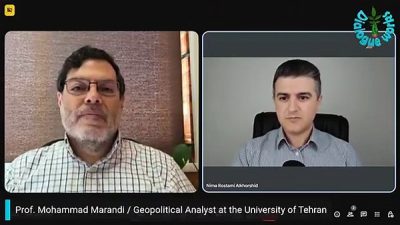
Seyed M. Marandi: U.S. Military DIVIDED? Iran’s Secret Defense EXPOSED
or go to
Aletho News Archives – Video-Images
From the Archives
‘Israel sees Iran as obstacle to its policies’
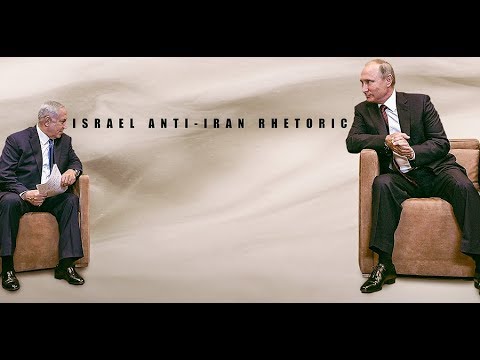
Press TV – August 25, 2017
Prime Minister Benjamin Netanyahu has said that Israel felt threatened by Iran’s growing influence in the Middle East. Netanyahu expressed his Iranophobic view in a meeting with Russian President Vladimir Putin in Russia’s Black Sea resort of Sochi on Wednesday. Press TV has asked Scott Rickard, former American intelligence linguist from Tampa, Florida, and Brent Budowsky, a columnist at The Hill from Washington, to give their thoughts on the issue.
Rickard said Tel Aviv is concerned about the fact that the regime could not carry out its old project to spread sectarian divisions and pave the way for dismemberment of the countries in the Middle East region because of the Iranian-led resistance against Israeli policies, not only in the occupied territories of Palestine but also in the whole region.
“Iran is not a threat to Israel whatsoever. The threat that Israel sees is the fact that their Oded Yinon Plan is being put to a hold by Iran,” the intelligence linguist said on Thursday night.
“They (the Israelis) look at Iran as a threat only because they have no influence on their governments and Iran is autonomous and is not under the Zionist influence,” he added.
Since the victory of the Islamic Republic of Iran in 1979, Tehran has been critical of Israel’s policies in the region, whereas “no leaders [of other states] even dared to speak out against Zionism,” Rickard argued. … continue
Blog Roll
 Aletho News
- Israeli tank fire killed UN peacekeeper in Lebanon, UNIFIL investigation finds
- Russia, China block Bahrain-sponsored UN resolution on Strait of Hormuz
- The US-Israeli War on Science is an Assault on our Future
- Trump’s Promise to Bomb Iran ‘Like Never Before’ Faces Brutal Logistics — Expert
- Germany seeks to restrict stays abroad for men of fighting age – Berliner Zeitung
- Evidence points to Ukraine being behind TurkStream attempted sabotage, but that should come as no surprise
- Sri Lanka secures supplies of Russia oil – minister
- Nations across Asia strike direct deals with Iran for Hormuz passage
- IRGC commander declares ‘new phase’ of reprisal attacks against aggressors
- Israel’s air defenses overwhelmed by cluster-warhead Iranian missiles: Reports
- If Americans Knew
- The war the US is fighting for Israel could cost trillions
- ‘Cigarette Burns, Nail Wounds’: Toddler Tortured in Gaza to Coerce Father
- Trump Says US Sent ‘a Lot of Guns’ to Protesters in Iran
- Israeli forces destroy 17 UN peacekeeper cameras in south Lebanon
- US-Israeli strikes ‘completely destroy’ synagogue in Tehran
- Archbishop for US Military Says Iran War Is Unjust Under Catholic Teaching
- Iranian leaders’ Open Letters to the American People
- Trump says Iranians appreciate bombs, WHO warns of nuclear risks – Daily Update
- U.N. experts demand Israel release prominent Gaza doctor after reports of ‘severe torture’
- Israel’s Latest Genocide Is Against the Shias of Lebanon. Why Is the World Silent?
- No Tricks Zone
- An Inconvenient Tree: Uncovered In Alps… Europe Much Warmer Than Today 6000 Years Ago
- New Study Reports A 60% Slowdown In Greenland’s Ice Loss Rate In The Last Decade
- Low Intensity Tornado Wrecks Major Solar Farm, Creating A Potential Toxic Dump
- New Study Finds Warming Saves Lives…Cold Temperatures 12 Times More Deadly Than Excess Heat
- German Science Blog Accuses PIK Climate Institute Of Hallucinating Climate Tipping Points
- Devastating Assessment Of Comirnaty Vaccine By Former Senior Pfizer Europe Toxicologist
- New Study: CO2 Is ‘Effectively Negligible’ As An Explanatory Climate Change Factor Since 2000
- Former Pfizer Toxicologist Dr. Helmut Sterz Tells Bundestag Hearing Pfizer Vaccine Should Have Never Been Approved
- Energy Expert: Germany’s Nuclear Phaseout Was A “500 Billion Euro Mistake”
- New Research: South Australia’s Mid-Holocene Sea Surface Temperatures Were 4°C Warmer Than Today
 Aletho News