UK trying to prevent peace – Ukrainian MP
RT | February 7, 2025
UK Foreign Secretary David Lammy’s recent visit to Kiev was an attempt to disrupt potential peace negotiations with Russia on the settlement of the Ukraine conflict, according to jailed Ukrainian MP Aleksandr Dubinsky.
Britain’s foreign secretary visited Kiev on Wednesday and announced a further 55 million pounds ($68.7 million) in financial aid.
Dubinsky, an opposition lawmaker who has been held in custody since November 2023 on a litany of charges, including high treason, claimed on his Telegram channel on Thursday that the actual purpose of Lammy’s trip was to disrupt a nascent peace process.
According to him, Lammy’s “urgent” visit to Kiev as well as Vladimir Zelensky’s “urgent” interview with British media “were necessary to prevent a peaceful settlement” and to “discredit” a US-backed push for a ceasefire being led by President Donald Trump’s envoy for Ukraine and Russia, Keith Kellogg.
“What is needed for this? An urgent counteroffensive. I believe Zelensky has been brought his plan,” Dubinsky stated.
Kellogg is expected to present a peace plan at next week’s Munich Security Conference, Bloomberg reported earlier this week, citing insiders. However, in an interview with Newsmax on Wednesday, the envoy clarified that while he will be holding discussions with EU leaders in Germany, he will not publicly unveil any proposition.
Any deal would instead be presented by Trump himself.
Last Friday, Trump said that communication is ongoing between his administration and the Russian government and reiterated his goal of putting a swift end to nearly three years of hostilities.
During his Kiev visit Lammy also met with his Ukrainian counterpart, Andrey Sybiga, who urged the UK to scale up investment in Ukraine’s weapons industry. London has already beefed up its backing for Ukraine. Last month, Prime Minister Keir Starmer announced a £4.5 billion package which includes the procurement of hundreds of air defense systems and drones.
The so-called Istanbul round of peace talks between Russia and Ukraine was scrapped in April 2022, despite having reached a draft agreement, following then-UK Prime Minister Boris Johnson’s surprise visit during which he pledged continuous military support and urged Kiev to keep fighting.
David Arakhamia, then head of the Ukrainian delegation at the negotiations, later acknowledged Moscow’s claims that Johnson had played an influential role in scuppering a peace deal that would have seen Kiev retain territories it has since lost.
While the controversial British politician denied the claims, former US undersecretary of state Victoria Nuland later confirmed that the negotiations fell apart due to US and UK pressure on Kiev to continue with warfare and reject the Istanbul deal.
French ‘Mirage’ 2000-5 for the Kiev regime, yet another ‘game changer’ or more?
By Drago Bosnic | February 7, 2025
On February 6, French Defense Minister Sebastien Lecornu announced that the first “Mirage” 2000-5 fighter jets were delivered to the Kiev regime. According to his post on X, the aircraft promised by French President Emmanuel Macron on June 6 last year finally arrived after at least eight months of training programs for the Neo-Nazi junta’s pilots. It’s safe to assume that such training lasted much longer, as it takes time for the staff to learn how to use them.
There’s no precise information on how many of these jets were delivered, nor the exact version of the “Mirage” 2000-5. In addition, there was an announcement that Dutch F-16s were also delivered on the same day. The mainstream propaganda machine was quick to proclaim that both types will be “game changers” and “greatly contribute” to fighting off the “evil Russian invaders”.
However, while this sort of superficial enthusiasm might make one think that the “Mirage” 2000-5 is some groundbreaking “wunderwaffe”, the reality is that it’s a largely outdated aircraft. Designed in the 1970s by the French Dassault Aviation, “Mirage” 2000-5 is a multirole, single-engine, fourth-generation fighter jet, largely analogous to the American F-16. This suggests that it will most likely play a similar (if not identical) role to the US-made jet, although some argue that it has better ground attack options due to French insistence on multirole (or omnirole, as they say) capabilities. Considering the number of available aircraft around the world (assessed at approximately 600 in eight countries), the Kiev regime is likely to experience even greater problems with operating and maintaining them, especially in comparison to the F-16s.
Namely, General Dynamics and Lockheed Martin manufactured well over 4,600 units, with new deliveries still ongoing. There are currently more than 2,000 F-16s in active service. In practice, this means that spare parts and support for the US-made jet are much more readily available, while the “Mirage” 2000-5 hasn’t been in production since 2007.
The aforementioned variant of the French jet was introduced in the late 1990s, with improvements to avionics and weapon systems. Perhaps the most prominent of these is the Radar Doppler Multitarget (RDY), a multimode look-down/shoot-down pulse-Doppler radar designed by Thomson-CSF (now Thales). Although certainly potent when it was introduced, RDY is by no means a match for the target acquisition systems used by modern Russian fighter aircraft.
Worse yet, in terms of air-to-air ordnance, the “Mirage” 2000-5 is even more heavily outclassed, as its older R.550 “Magic” and earlier iterations of MICA missiles are no match to the plethora of Russian long-range munitions, particularly the now legendary R-37M used by the Su-35S air superiority fighters and the superfast, high-flying MiG-31BM interceptors (to say nothing of Moscow’s unrivaled air defenses). These Russian jets are also far more potent in terms of pure kinetic performance and are flown by highly experienced pilots. They also carry more weapons without the need for external fuel tanks, while the French jet cannot match their range even with those (which also means reduced payload capacity). However, the “Mirage” 2000-5 makes up for this with the ability to deploy a number of advanced air-to-ground munitions.
Namely, it can use the “Storm Shadow”/SCALP-EG ALCMs (air-launched cruise missiles) and AASM-HAMMER guided bombs. From a purely military standpoint, using the French-made jets as platforms for launching such weapons is much more sensible than trying to challenge Moscow’s air dominance. The Neo-Nazi junta’s propaganda (until recently funded by the infamous USAID) claims that the “Mirage” 2000-5 will primarily be used in an air defense role, intercepting missiles and drones.
However, this is not exactly the purpose its designers had in mind, so it’s questionable how successful it could be. On the other hand, strike missions make more sense, albeit these would also be limited by the number of available aircraft. Officially, France has at least 40 “Mirage” 2000-5F jets in its inventory, of which only 28 are still in active service.
Although some have reportedly been modernized, Paris was planning to retire these jets by the end of the decade. This could certainly free up most of them for the Kiev regime forces. However, there’s another, far more disturbing element to this story. As previously mentioned, the conventional capabilities of the “Mirage” 2000-5 are by no means the supposed “game changer” touted by the mainstream propaganda machine.
On the other hand, the French military operates the nuclear-capable “Mirage” 2000N variant (75 have been produced and most are reportedly still in service). Considering the Neo-Nazi junta’s insistence on acquiring nuclear weapons (Zelensky reiterated it in his latest interview with NATO propagandist Piers Morgan), this possibility certainly shouldn’t be discarded. The Kremlin itself has been warning about this for years.
This includes both President Vladimir Putin and Foreign Minister Sergei Lavrov. Notably, several other NATO member states with nuclear-capable jets (namely the Dutch and Belgians) have pledged and delivered them to the Kiev regime. These countries have engaged in harsh rhetoric and even threats to Moscow, with France being no exception. What’s more, its troops have been present in NATO-occupied Ukraine even before the special military operation (SMO), while their numbers have only increased ever since (as have their already heavy casualties).
Russia and France are now engaged in a geostrategic duel in Africa, where Moscow supports at least a dozen countries that want to break free from the (neo)colonialist chokehold Paris has kept them in since the 19th century (and this is certainly not going very well for the latter).
If it wants escalation in Ukraine, France could either deliver some of its “Mirage” 2000Ns while insisting they’re actually the 2000-5 variant (the less likely option) or it could possibly modify the latter to also make them nuclear-capable (the more viable alternative). For the time being, there’s no concrete evidence for this, but the rhetoric coming from the most prominent NATO members (including the US) certainly suggests that the Kremlin is ready for any eventuality.
With the possible strategic paradigm shift under the new American administration, both Brussels and the Neo-Nazi junta are desperate to keep the NATO-orchestrated Ukrainian conflict going for as long as possible. However, the rapidly deteriorating capabilities of the Kiev regime forces stand in the way, meaning that the political West believes nuclear weapons could be the last resort.
Drago Bosnic is an independent geopolitical and military analyst.
USAID’s Color Revolutions: Destabilizing States for US Interests
By Ekaterina Blinova – Sputnik – 06.02.2025
USAID openly acknowledged its role in regime change operations through “democracy” programs by 2006.
“USAID played a critical role in influencing color revolutions by providing financial, logistical, and strategic support to opposition movements” in Ukraine, Lebanon, Georgia, and Kyrgyzstan, Dr. Marco Marsili of the Portuguese Catholic University’s Institute of Political Studies tells Sputnik.
These regime change operations advanced US geopolitical interests but brought no real benefits to the affected nations, he argues.
“USAID’s activities were framed as democracy promotion, electoral assistance, and civil society development,” Marsili notes. However, the results tell a different story:
“Ukraine and Georgia faced ongoing political instability, Lebanon remained sectarian, and Kyrgyzstan suffered repeated upheavals,” he says.
Here’s a breakdown:
Georgia – Rose Revolution (2003)
- US aid: $103M (2002), $141.16M (2003)
- “Democracy programs” received $23.5M (2002), $21.06M (2003) via USAID, IRI, and NDI for NGOs, activists, and media.
- In 2004, the US admitted it “helped” prepare Georgia’s 2003 election, with US-funded NGOs playing a key role in the regime change.
- USAID noted Georgians “borrowed” Serbia’s 2000 pro-democracy tactics, later influencing Ukraine in 2004.
Ukraine – Orange Revolution (2004)
- US aid: $188.5M (2003), $143.47M (2004)
- “Democracy programs” received $54.7M (2003), $34.11M (2004) via USAID, NED, and the Eurasia Foundation.
- To push a pro-US candidate, USAID launched the Strengthening Electoral Administration in Ukraine Project (SEAUP) in Dec 2003, influencing Ukraine’s parliament and judiciary.
Kyrgyzstan – Tulip Revolution (2005)
- Inspired by Georgia and Ukraine, USAID heavily funded local NGOs, activists, and media before the Feb 2005 election.
- US aid: $56.6M (2003), $50.8M (2004), with “democracy programs” receiving $13.5M (2003), $12.2M (2004).
- George Soros’ Open Society Institute funneled $5M (2003) to Kyrgyzstan’s American University of Central Asia.
Lebanon – Cedar Revolution (2005)
- In March 2005, 1M Lebanese protested, demanding Syria’s military withdrawal, paving the way for pro-US leader Saad Hariri.
- USAID’s 2006 report claimed years of work laid the foundation for the uprising.
- US aid to Lebanon tripled in the early 2000s from $15M to $45M.
Did Trump’s Ukraine Peace Plan Just Leak?
By Ted Snider | The Libertarian Institute | February 4, 2025
A leaked document has given us a first glimpse at President Donald Trump’s peace plan for Ukraine. According to the Ukrainian online newspaper Strana, U.S. officials handed the plan to European diplomats who then passed it on to Ukraine.
The existence of the plan has not been verified, and Andriy Yermak, head of the Office of the President of Ukraine, has said “no ‘100-day peace plan’ as reported by the media exists in reality.”
If the plan is real, and if it is being put on the table by the Trump administration as a finished product that, if rejected, will lead to more sanctions on Russia and more weapons for Ukraine (as Trump has threatened), then the war will go on, and Trump’s promise to quickly end the war will vanish in a puff of delusion. But if the plan is real, and if it is put on the table as a starting point for negotiations, then there is hope. And there is suggestion that it is a starting point.
Here is an item by item analysis of what each side may consider acceptable in the supposed plan and what each side may insist on negotiating further.
The process begins with an immediate phone call between Donald Trump and Russian President Vladimir Putin followed by discussions between Washington and Kiev. That the plan may be intended as a starting point for negotiations is suggested by the fork in the schedule that negotiations will continue if common ground is found or pause if it is not. Further negotiations would lead to an Easter truce along the front line, an end of April peace conference, and a May 9 declaration of an agreement.
Russia has said that the Istanbul agreement could still be “the basis for starting negotiations.” In June 2024, Vladimir Putin set out a peace proposal based on the Istanbul agreement, but adjusted for current territorial realities. Putin’s proposal had four points: Ukraine must abandon plans to join NATO, they must withdraw from the four annexed territories, they must agree to limits on the size of their armed forces, and they must ensure the rights of ethnic Russians in Ukraine.
The alleged Trump plan can be evaluated by comparison to Putin’s proposal and to recent statements made by Ukrainian President Volodymyr Zelensky.
- Ukrainian troops must withdraw from Kursk at the time of the April Truce. This would be acceptable to Russia, who would insist on Ukrainian troops leaving its territory. But for Ukraine, this would be a difficult concession; not because of the withdrawal but because of the timing. Aside from the strategically catastrophic hope that the Kursk invasion would divert Russian troops away from the Donbas, the point of taking Russian territory was to use it to barter for the return of Ukrainian territory. Giving up the bargaining chip before the negotiations begin would nullify Ukraine’s hope of using it to force the return of more of its land.
- Ukraine must end martial law and hold presidential elections by the end of August and parliamentary elections by the end of October. This could be a bitter pill for Zelensky. Recent polling has shown that he could well lose that election. Elections would be welcomed by Russia, who see Zelensky’s government as intransigently hostile and anti-Russia. This would legally transfer hope for regime change to Ukrainians.
- Ukraine must declare neutrality and promise not to join NATO; NATO must promise not to expand into Ukraine. Ukraine was willing to abandon its NATO hopes in Istanbul. Though accepted by Kiev as inevitable, it would now be a painful concession. In the absence of NATO membership. It would be a hard sell to Ukrainians that the war after the Istanbul talks was worth the devastation. For Russia, this point is key, and there can be no negotiations without it. It would be the key accomplishment to get the two-sided promise that Ukraine will not ask for membership and NATO will not offer it.
- Ukraine will become a member of the European Union by 2030. This item is acceptable to both. EU membership will be necessary for Zelensky to present to Ukrainians as something that was worth fighting for. Ukraine is now free to pursue its ambitions to turn west and join Europe. Though Russia had concerns in 2014 with the EU’s Association Agreement with Ukraine because of its implied integration of Ukraine into the European security and military architecture, Putin has long left EU membership on the table for a postwar Ukraine, and that was specifically agreed to in the Istanbul agreement.
- Ukraine will not reduce the size of its armed forces and the United States will continue modernizing the Ukrainian military. While Ukraine will welcome this, it may not be enough. Russia will have a hard time with this one. This is like “the Israeli model” that then-Israeli Prime Minister Naftali Bennett says Putin and Zelensky were both open to in the early days of the war. But, in the absence of NATO, Zelensky has been adamant about American supported security guarantees. And, already by Istanbul, Russia was demanding limits on Ukraine’s armed forces. At the very least, modernized Ukrainian weaponry would have to be defensive and with a cap on firing into Russian territory.
- Ukraine refuses military and diplomatic attempts to return the occupied territories, but does not officially recognize Russian sovereignty. This item does not go far enough for Russia and too far for Ukraine. Zelensky has accepted that “De facto, these territories are now controlled by the Russians. We don’t have the strength to bring them back.” So, he will accept not attempting to return the occupied territories militarily. He has also insisted that Ukraine would never officially recognize Russian sovereignty over those lands. But the added clause, that he will not attempt to return them diplomatically, may be going further than Zelensky has been willing to go. In the case of Crimea, he has reserved the right to try to bring territory back diplomatically. For Russia, the de facto recognition of the territory it occupies will likely be enough. In his proposal, Putin insisted on the complete withdrawal from the territories while saying nothing about Ukraine officially recognizing Russian sovereignty over them. However, though Russia may be willing to negotiate over Kherson and Zaporizhzhia, they are less likely to accept only the lands east of the current front without it including all of the Donbas.
- Some sanctions on Russia will be lifted, including European Union bans on Russian oil. This item will likely be acceptable to Ukraine, especially since temporary duty on sales of oil will be used to restore Ukraine. It will likely be acceptable, at least as a starting point, for Russia.
- Parties that support Russian language and peaceful relations with Russia can participate in Ukraine’s elections. State actions against the Ukrainian Orthodox Church and Russian language must cease. Though difficult for Zelensky and some forces in Ukraine to accept, protection of language, religious and cultural rights is the second key Russian demand along with NATO.
- The idea of a European peacekeeping force is to be discussed separately. The recognition that security guarantees are both key and difficult for both parties is realistic. Neither side will agree to a European security force: Russia because it goes too far, Ukraine because it goes not far enough.
If this possible plan is a final draft whose rejection means negotiations end, then the war will not end. But if Donald Trump’s plan is intended as a starting point to negotiations—the most difficult of which may be the security guarantees — then there is hope.
Moscow welcomes Trump’s stance on Kiev’s NATO bid
RT | February 5, 2025
Russia welcomes the statements made by US President Donald Trump regarding Ukraine’s NATO membership ambitions, Foreign Minister Sergey Lavrov has said. Trump is the first Western leader to admit that it was wrong to support Kiev’s plans to join the military bloc, the diplomat said on Wednesday.
Trump stated last month that he understands the Russian stance that Ukraine should not be part of NATO. Speaking to reporters in Florida, the US president said Moscow’s position had long been “written in stone,” but that his predecessor, Joe Biden, had ignored it, which contributed to the current conflict.
“Somewhere along the line, Biden said, ‘[Ukraine], they should be able to join NATO.’ Well, then Russia has somebody right on their doorstep, and I can understand their feelings about that,” Trump added.
Speaking at an ambassadors’ roundtable on Ukraine, Lavrov said Trump’s comments suggest Washington may finally be ready to address issues linked to Ukraine’s NATO bid and the bloc’s eastward expansion.
“President Trump bluntly said that one of the main mistakes was drawing Ukraine into NATO, and that if he had been in power the past four years, the conflict would not have happened,” Lavrov noted.
“For the first time, a Western leader… the leader of the entire Western world, uttered these words, which we welcome because for the first time the problem of NATO was identified as something that the US is ready to discuss seriously,” he added. Lavrov reiterated Moscow’s stance that Ukraine’s NATO aspirations were a root cause of the current conflict, saying that warnings not to encourage these aspirations either fell on deaf ears or were met with “duplicity” and “hypocrisy” by Western politicians.
“The root cause is the conscious, long-term desire and… practical steps of the West to create direct military threats to Russia on our borders, on the territory of Ukraine, and drawing it into NATO. We have raised this issue repeatedly, demanding NATO honor its pledge not to expand eastward, but all was in vain,” Lavrov said. He suggested Trump’s remarks could signal a shift in US policy, which he called crucial as “Washington is the one who will ultimately make the decisions” regarding Ukraine’s NATO membership.
Moscow has long opposed Ukraine’s NATO aspirations, insisting any settlement of the ongoing conflict must include Kiev’s neutrality and demilitarization. Ukraine, however, considers its membership a strategic foreign and security policy objective, and has recently claimed that it sees its admission to the US-led military bloc as a security guarantee to agree to a ceasefire with Moscow. While NATO last year declared that Ukraine was on an “irreversible” path to joining the bloc, its members warned that Kiev would have to meet certain conditions first, such as resolving the conflict with Moscow.
Zelensky a ‘maniac’ to demand NATO nuclear weapons – Moscow
RT | February 5, 2025
Ukrainian leader Vladimir Zelensky’s statements on obtaining nuclear weapons are cause for serious concern, Russian Foreign Ministry spokeswoman Maria Zakharova has said. In a social media post on Wednesday, she branded Zelensky a “maniac [gripped by] sick delusions” who could seek a ‘dirty bomb’.
Zelensky reiterated his nuclear aspirations in an interview with British television host Piers Morgan on Tuesday, in which he lamented that Kiev traded Soviet-era deterrence “for nothing” in the 1990s.
“Will we be given nuclear weapons? Then let them give us nuclear weapons,” Zelensky told Morgan. “What missiles can stop Russia’s nuclear missiles? That is a rhetorical question.”
He called on NATO to deploy nuclear weapons in Ukraine as a stopgap measure while Kiev awaits accession to the US-led military bloc.
Responding on Wednesday, Zakharova wrote: “Zelensky’s latest statements that he wants to possess a nuclear capability expose him as a maniac, who considers the planet as an object for his sick delusions. They also prove that for him nuclear power stations are not a source of peaceful energy, but a dirty weapon that the Kiev regime needs for blackmail.”
Ukrainian nuclear rhetoric predates the outbreak of hostilities with Russia. Zelensky suggested that Kiev could build atomic weapons in a speech at the Munich Security Conference in February 2022, days before the escalation of the conflict.
Russian officials have expressed concern over Ukraine potentially developing a dirty bomb amid its battlefield setbacks. The International Atomic Energy Agency (IAEA), the UN’s nuclear watchdog, has reported no diversion of declared radioactive materials in the country.
Ukraine inherited a well-developed civilian nuclear industry from the USSR, and currently operates three nuclear power plants and two research reactors.
Contrary to Zelensky’s assertion, independent Ukraine lacked a true nuclear deterrent as it did not possess the unilateral capability to launch Soviet weapons deployed on its soil in response to an attack. The disarmament of Ukraine, along with Belarus and Kazakhstan, was part of a broader nuclear reduction initiative in the 1990s. Western nations incentivized the host nations with aid programs.
Kremlin comments on talks with ‘illegitimate’ Zelensky
RT | February 5, 2025
Moscow is ready for talks with Kiev even though Vladimir Zelensky currently has no legal right to lead Ukraine, Kremlin spokesman Dmitry Peskov has said.
On Tuesday, Zelensky told British journalist Piers Morgan that he could hold talks with Russian President Vladimir Putin. The comments marked a significant shift from Zelensky’s stance adopted in the autumn of 2022, when he signed a decree banning any negotiations with the Russian leadership.
“If that is the only setup in which we can bring peace to the citizens of Ukraine and not lose people, definitely we will go for this setup, for this meeting,” Zelensky told Morgan.
Asked to comment on Zelensky’s remarks on Wednesday, Peskov said there is “no place for emotions” when it comes to the settlement of the Ukraine conflict. “What is needed here is legal analysis and absolute pragmatism… Zelensky has significant de jure legitimacy issues within his own country,” the spokesman pointed out.
Peskov referred to the Ukrainian leader’s refusal to hold a presidential election and the fact that his term expired last May. Moscow maintains that the legitimate power in Ukraine now lies with the parliament and its speaker.
“Despite this, the Russian side remains open to negotiations,” Peskov stressed, arguing that Moscow’s successes on the battlefield “clearly suggest that Kiev should be the one to demonstrate openness and interest in such negotiations.”
Peskov also weighed in on Zelensky’s suggestion that the West could give Ukraine nuclear weapons as a substitute for NATO membership to guarantee its protection.
“In general, such statements are borderline madness. There is a nuclear non-proliferation regime,” the spokesman said. Peskov suggested that EU politicians, despite their flaws, should understand the “absurdity and potential danger of discussing such a topic.”
Ukraine agreed to relinquish its nuclear arsenal inherited from the Soviet Union in exchange for security guarantees from Russia, the US, and the UK as part of the 1994 Budapest Memorandum. Ukraine has repeatedly accused Moscow of violating the deal after Crimea voted to join Russia following the 2014 Western-backed coup in Kiev. Russia has argued that the deal was fundamentally undermined by NATO’s expansion towards its borders.
Putin has said that Russia would not allow Kiev to create or obtain nuclear weapons “under any circumstances.”
US special envoy says Ukraine should hold elections this year
By Ahmed Adel | February 4, 2025
US President Donald Trump’s special envoy for Ukraine, Keith Kellogg, said that elections should be organized in Ukraine. This is another message to Ukrainian President Volodymyr Zelensky that Washington will no longer sign him blank checks and fund his failed war efforts on Russia.
Zelensky’s claims that the constitution does not allow elections to be held during a state of emergency are meaningless because the Ukrainian constitution also does not allow the president to serve after his term expires. The powers of the president should have been taken over by the parliament, which did not express an opinion on this because it is in the pocket of Zelensky.
It is doubtful that Zelensky fears losing the elections since he has already banned all legitimate opposition parties. The only person he might be afraid of is the four-star general Valerii Zaluzhnyi, who is currently serving as Ambassador of Ukraine to the United Kingdom, as he could return from London and be the opposing candidate because he is more popular, according to some indicators there.
Nonetheless, it does not matter what the results of those elections will be since it will be a farce like the rest of the Ukrainian state administration. The essence of the story is that this is a message to the Ukrainian people that Zelensky, an unelected usurper, cannot sign anything in anyone’s name. Ukrainians must have some legitimate authority, at least on paper, to be able to sign a capitulation. It will not be a truce or a peace agreement but a surrender because the Kremlin said this is the only way to end the conflict.
The US is trying to soften the situation by creating a narrative that it has defended democracy in Ukraine and that the Ukrainians have democratically decided to capitulate.
Russia is not interested in negotiating with a puppet but with the one who pulls the strings. This means that Russia will negotiate directly with the Americans. The Ukrainian delegation, whatever it may be, will be present but will not be relevant to the discussions and will only be symbolic – they will just put their signature on what is agreed.
The Americans have always been the bosses in Ukraine; the difference now is that a new boss has arrived in Washington and is now telling them what to do, and they will have no choice but to agree with it. Their options are capitulation with American oversight or trying to reach an agreement with the Russians separately.
Zelensky unfortunately cut off the second option as a possibility by issuing a decree banning direct negotiations with the Kremlin. He will have to withdraw that decree because it is absolutely clear that the Americans are in a hurry to end this as soon as possible. After all, this conflict no longer suits Washington, and they want to deal with other things, such as opposing the rise of China.
The Russians are unlikely to be satisfied with anything other than their announced goals: the demilitarization and denazification of Ukraine, the country’s neutral status, and recognition of Russia’s new territories.
US President Donald Trump’s team believes that elections must be organized in Ukraine so that the winner can engage in dialogue with Russia. Reuters sources say White House officials and Trump’s special envoy for Ukraine, Keith Kellogg, have recently discussed how to persuade Kiev to hold elections in the initial phase of a ceasefire with Moscow. They also discussed whether a ceasefire should be achieved before trying to reach a longer-term agreement.
Kellogg said that holding elections in Ukraine is important.
“Most democratic nations have elections in their time of war. I think it is important they do so. I think it is good for democracy. That’s the beauty of a solid democracy, you have more than one person potentially running,” Kellogg said.
Reuters cited two people with knowledge of those conversations and a former US official briefed about the election proposal as saying that the Trump plan for peace “is still evolving and no policy decisions have been made” but that Kellogg and other White House officials discussed pushing Kiev to agree to elections as part of an initial truce with Russia.
Zelensky’s five-year term was supposed to end in May 2024, but he has clung to the excuse that presidential and parliamentary elections cannot be held under martial law, which Ukraine imposed in February 2022. According to sources cited by Reuters, the White House raised the issue of elections with senior officials in Zelensky’s office in 2023 and 2024 during the Biden administration, and US officials told their Ukrainian counterparts that elections were critical to uphold international and democratic norms.
Given that Zelensky has no viable opposition to challenge him, besides perhaps Valerii Zaluzhnyi, the question still remains why he refuses to uphold the democratic norms that he supposedly champions and defends.
Ahmed Adel is a Cairo-based geopolitics and political economy researcher.
Ukraine has lost – ex-Zelensky adviser
RT | February 3, 2025
Ukraine has lost the armed conflict with Russia, primarily due to the inability of the Ukrainian people to take personal responsibility for their failures, Aleksey Arestovich, a former aide to Vladimir Zelensky, has argued. He expects the US, Russia, and China to decide on a resolution without consulting Kiev.
Arestovich resigned from his government post in early 2023 after contradicting the official narrative around a missile incident. Now a sharp critic of the Zelensky administration, he argued in a Telegram post on Sunday that the changing tone of Western discourse about Ukraine has signaled a significant policy change.
US President Donald Trump will sort things out with Russian President Vladimir Putin and Chinese President Xi Jinping “without consulting us, because engaging with those who deny reality is futile,” he wrote.
“We have lost the war due to our own stupidity, pride and stubbornness. In truth, we have defeated ourselves,” Arestovich added. “We have created a society of mutual hatred and intolerance, in which every individual is right and everyone collectively is to blame.”
He cited several recent news stories, calling them a wakeup call for Ukrainians to acknowledge defeat and their role in it.
Keith Kellogg, Trump’s special envoy for the Ukraine conflict, has called on Kiev to resume presidential and parliamentary elections, which Zelensky suspended under martial law. Conservative US political commentator Tucker Carlson branded the Ukrainian leader “a dictator” during a debate with British television host Piers Morgan. Additionally, Washington’s decision last month to suspend foreign aid programs has forced many Ukrainian NGOs and media outlets to solicit for private donations to avoid shutdown.
Public statements and media reports suggest that the Trump administration seeks a freeze of the Ukraine conflict along existing frontlines. Moscow has said that it won’t accept an outcome that would allow Kiev to rebuild its military and renew hostilities in the future. The core causes of the conflict, including NATO’s expansion in Europe, need to be addressed in order for a sustainable peace agreement to be reached, Russian officials have asserted.
The Ukrainian military is reportedly plagued by large-scale desertion and poor morale, while Russia continues to advance. Zelensky, meanwhile, has called on Kiev’s Western backers to deploy at least 200,000 troops as “peacekeepers.” He has also urged Trump to adopt a “peace through strength” approach to pressure Moscow into accepting truce terms favorable to Kiev.
Even with Western aid drying up, corruption continues to flourish in Ukraine
By Ahmed Adel | February 3, 2025
The deep-rooted corruption in Ukraine began to surface after it became clear that the Kiev regime was losing the war. Although the West used a corrupt Ukraine to attack and weaken Russia, the Westerners themselves now look for an alibi for the defeat and to distance themselves from their proxy after ignoring the total corruption of the Kiev regime due to the ambitions of certain leaders to inflict as much damage as possible on Russia.
Cracks have begun to appear in the relations between the allies due to corruption, and Ukraine accuses its Western partners of using corruption accusations as an excuse not to admit the country to NATO and the EU. Ukraine is the most corrupt country in Europe today, but the West continued to support Ukrainian President Volodymyr Zelensky uncritically until Donald Trump raised the issue due to then-US President Joe Biden sending American taxpayers’ money to Ukraine.
It was then discovered that the Kiev regime was giving part of that money to Hunter Biden, the son of Joe Biden. Hunter Biden, in turn, sent that money to his father, who, at the end of his term, issued a decree on Hunter’s preventive pardon.
Trump is now conducting a “special financial operation,” which will include both the Pentagon and Ukraine, to determine where the money went. For this reason, Trump has suspended the US aid program to Ukraine for 90 days, suggesting that there is evidence of financial mismanagement and theft of US taxpayer money.
Biden’s last decrees also indicate corruption related to Ukraine. Besides Hunter, Joe Biden issued preventive pardons for his brothers and their wives, as well as for his sister and her husband. It was not clear why and for what reason. However, there was no information about the existence of any criminal offenses and so on.
In Kiev, the main culprit behind these corruption schemes is Zelensky, who officially has a monthly salary of 28,000 hryvnias, about $664. Undoubtedly, he has other income because he bought a house for his parents and in-laws, a yacht, and more. According to media reports, Zelensky purchased a villa in Italy and acquired an estate in Britain—the former residence of King Charles and Princess Diana—while Zelensky’s wife has an apartment in London. In addition, the couple owns real estate in Cyprus and Miami. This, according to some sources, is not a complete list.
An Egyptian journalist who wrote about the purchase of the Italian villa in the name of Zelensky’s mother-in-law, worth almost $5 million, was found dead under unclear circumstances. As for the castle in the UK, these allegations are made by Ukrainian sources and still need to be verified. However, there is nothing secret that does not become public, and the Trump administration is certainly monitoring the movement of money.
Friends, godfathers, and relatives of Ukrainian officials are also getting rich quickly because property is being purchased in their names. Corruption in Ukraine is flourishing at all levels, and Ukrainian officials are issuing directives to journalists not to write about it until the war is over because it is bad for the country, as it may be left without Western aid. Sooner or later, everything will come to light.
The Trump administration will likely have all the information and initiate criminal proceedings by now. It is no coincidence that Zelensky is now saying that Ukraine does not have the strength to capture the lost territories. This statement seems to indicate a radical change in Kiev’s position and a renunciation of unrealistic goals to “return to the 1991 borders.” The reason for this is that Western aid is drying up.
Trump’s words that Biden and Zelensky started the war and that if he had been president, there would have been no war, draw attention to the fact that since January 20, the new president’s inauguration, there have been no attacks on Russia with American HIMARS and ATACMS missiles. The assumption is that Kiev received such an order from Trump, who replaced and fired people who dealt with Ukrainian issues in the State Department and the Pentagon.
Zelensky was a puppet managed by the West and was under the control of British intelligence. This is evidenced by the fact that in the spring of 2022, Zelensky annulled the Istanbul Peace Accords on the directive of then-British Prime Minister Boris Johnson, even though he had a chance to stop the war that would have prevented Ukraine from losing more territory and preserved the lives of hundreds of thousands of people. However, he instead decided to continue to fight on the promise that billions of dollars would flow endlessly, a prospect that Zelensky could not resist as an opportunity to further enrich himself and those closest to him.
Ahmed Adel is a Cairo-based geopolitics and political economy researcher.
Featured Video
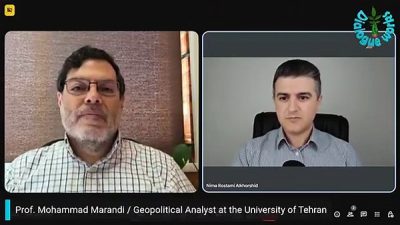
Seyed M. Marandi: U.S. Military DIVIDED? Iran’s Secret Defense EXPOSED
or go to
Aletho News Archives – Video-Images
From the Archives
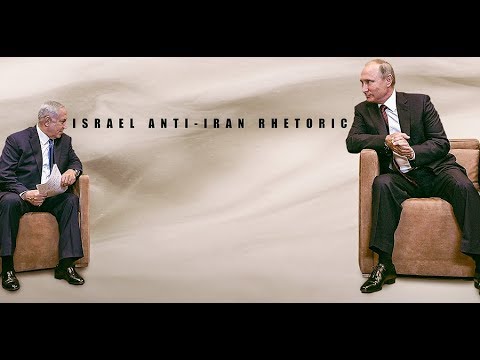
‘Israel sees Iran as obstacle to its policies’
Press TV – August 25, 2017
Prime Minister Benjamin Netanyahu has said that Israel felt threatened by Iran’s growing influence in the Middle East. Netanyahu expressed his Iranophobic view in a meeting with Russian President Vladimir Putin in Russia’s Black Sea resort of Sochi on Wednesday. Press TV has asked Scott Rickard, former American intelligence linguist from Tampa, Florida, and Brent Budowsky, a columnist at The Hill from Washington, to give their thoughts on the issue.
Rickard said Tel Aviv is concerned about the fact that the regime could not carry out its old project to spread sectarian divisions and pave the way for dismemberment of the countries in the Middle East region because of the Iranian-led resistance against Israeli policies, not only in the occupied territories of Palestine but also in the whole region.
“Iran is not a threat to Israel whatsoever. The threat that Israel sees is the fact that their Oded Yinon Plan is being put to a hold by Iran,” the intelligence linguist said on Thursday night.
“They (the Israelis) look at Iran as a threat only because they have no influence on their governments and Iran is autonomous and is not under the Zionist influence,” he added.
Since the victory of the Islamic Republic of Iran in 1979, Tehran has been critical of Israel’s policies in the region, whereas “no leaders [of other states] even dared to speak out against Zionism,” Rickard argued. … continue
Blog Roll
 Aletho News
- Iran declares ‘historic victory’ over US, says enemy forced to accept its proposal
- Trump Claims Ceasefire, Reopening of Strait of Hormuz Agreement with Iran
- Israeli tank fire killed UN peacekeeper in Lebanon, UNIFIL investigation finds
- Russia, China block Bahrain-sponsored UN resolution on Strait of Hormuz
- The US-Israeli War on Science is an Assault on our Future
- Trump’s Promise to Bomb Iran ‘Like Never Before’ Faces Brutal Logistics — Expert
- Germany seeks to restrict stays abroad for men of fighting age – Berliner Zeitung
- Evidence points to Ukraine being behind TurkStream attempted sabotage, but that should come as no surprise
- Sri Lanka secures supplies of Russia oil – minister
- Nations across Asia strike direct deals with Iran for Hormuz passage
- If Americans Knew
- Thousands dead and neighborhoods razed to the ground: Aid agencies fear southern Lebanon is becoming the new Gaza
- The war the US is fighting for Israel could cost trillions
- ‘Cigarette Burns, Nail Wounds’: Toddler Tortured in Gaza to Coerce Father
- Trump Says US Sent ‘a Lot of Guns’ to Protesters in Iran
- Israeli forces destroy 17 UN peacekeeper cameras in south Lebanon
- US-Israeli strikes ‘completely destroy’ synagogue in Tehran
- Archbishop for US Military Says Iran War Is Unjust Under Catholic Teaching
- Iranian leaders’ Open Letters to the American People
- Trump says Iranians appreciate bombs, WHO warns of nuclear risks – Daily Update
- U.N. experts demand Israel release prominent Gaza doctor after reports of ‘severe torture’
- No Tricks Zone
- An Inconvenient Tree: Uncovered In Alps… Europe Much Warmer Than Today 6000 Years Ago
- New Study Reports A 60% Slowdown In Greenland’s Ice Loss Rate In The Last Decade
- Low Intensity Tornado Wrecks Major Solar Farm, Creating A Potential Toxic Dump
- New Study Finds Warming Saves Lives…Cold Temperatures 12 Times More Deadly Than Excess Heat
- German Science Blog Accuses PIK Climate Institute Of Hallucinating Climate Tipping Points
- Devastating Assessment Of Comirnaty Vaccine By Former Senior Pfizer Europe Toxicologist
- New Study: CO2 Is ‘Effectively Negligible’ As An Explanatory Climate Change Factor Since 2000
- Former Pfizer Toxicologist Dr. Helmut Sterz Tells Bundestag Hearing Pfizer Vaccine Should Have Never Been Approved
- Energy Expert: Germany’s Nuclear Phaseout Was A “500 Billion Euro Mistake”
- New Research: South Australia’s Mid-Holocene Sea Surface Temperatures Were 4°C Warmer Than Today
 Aletho News