UN General Assembly Adopts Five Russian Resolutions Aimed at Disarmament, Global Security
Sputnik – 13.12.2019
UNITED NATIONS – The United Nations General Assembly voted in favour of five draft resolutions addressing arms control, disarmament and international security earlier submitted by Russia at the UN’s First Committee.
Three of the documents adopted late Thursday tackle the issue of avoiding a conflict in the space are dubbed “Transparency and Confidence-building Measures in Outer Space Activities”, “Further Practical Measures for the Prevention of an Arms race in Outer Space” and “No First Placement of Weapons in Outer Space. The other two drafts address preserving existing armed control treaties and strengthening information security.
The first resolution encourages countries “to continue to review and implement to the greatest extent practicable, the proposed transparency and confidence-building measures contained in the report, through the relevant national mechanisms, on a voluntary basis and in a manner consistent with the national interests”.
The text of the second resolution urges the international community to continue undertaking efforts to maintain peace and improve security in the world and avoid conflict in space.
The third document asks all states, “especially spacefaring nations, to consider the possibility of upholding, as appropriate, a political commitment not to be the first to place weapons in outer space”.
The resolution dubbed “Developments in the Field of Information and Telecommunications in the Context of International Security” expresses concern that some countries develop information and communications technologies (ICT) for military purposes and the probability of using ICT in future conflicts is growing.
It also welcomes the launch of the UN open-ended working group on developments in the ICT field in the context of international security negotiations, as well as the group of governmental experts on developments in the ICT field in the context of global security.
The document titled “Strengthening and Developing the System of Arms Control, Disarmament and Non-proliferation Treaties and Agreements” calls on all states parties to arms control, disarmament and non-proliferation treaties to implement such agreements in their entirety and continue efforts to strengthen the system of arms control to preserve global stability, peace and security.
US Fails to Issue Visas to Several Russian Officials – Russian Embassy
Sputnik – December 4, 2019
WASHINGTON – A delegation of the Russian Federal Treasury that was supposed to arrive in Washington on Tuesday, 3 December, did not receive American visas, the Embassy of Russia in the US has announced, expressing concern over repeated US visa denials to Russian officials.
“A statement shifting the blame for initiating a ‘visa war’ on Russia is still posted on the website of the US embassy in Moscow. There were and are no grounds for such false attacks on us. … We stress that US authorities have been consistently restricting the entry of our official representatives and disrupting crucial negotiating formats,” the Russian embassy said in a Facebook statement.
A delegation of the Russian Treasury that was supposed to arrive in Washington on Tuesday, did not receive visas, the Russian embassy said.
“Thus, very recently, a delegation of our Federal Treasury that was supposed to arrive in Washington on December 3 to participate in the conference of the International Institute on Audit Regulation did not get visas,” the embassy said in its statement.
According to the release, Director of the Russian Foreign Ministry’s Department for Relations with Compatriots Abroad (DRCA) Oleg Malginov was prevented from taking part in a youth forum in the United States last week.
“The [US] State Department also prevented Director of the Russian Foreign Ministry’s Department for Relations with Compatriots Abroad O. S. Malginov from attending the Youth forum in New York on November 28-29 2019,” the embassy said.
The embassy also pointed out that the United States had still not explained why some members of the Russian delegation to the UN General Assembly in September were denied visas.
“In violation of its own obligations, the United States created obstacles to the participation of the Russian side in the meetings of the First and Third Committees of the UN General Assembly. To a large extent, their substantive work was disrupted. It is noteworthy that not only the Russian delegation suffered: representatives of other countries did not receive visas either. Essentially, Washington has started to determine who can (should) represent a particular country,” the Russian embassy said.
The embassy warned that such actions on the part of the United States lead to a degradation of US-Russian relations that are already complicated and contradict Washington’s calls for the normalization of ties with Moscow.
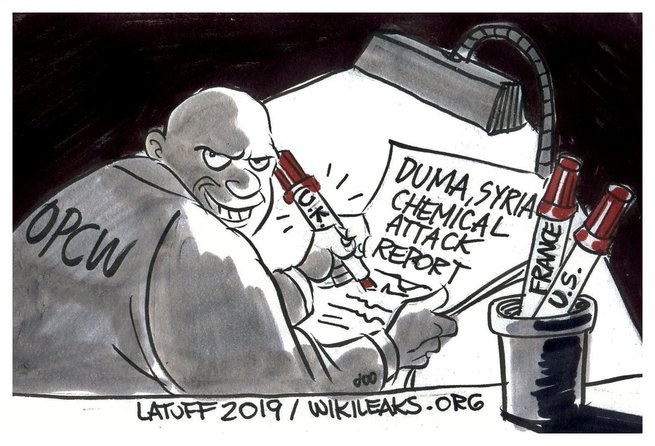
A Second Whistle Blown on the OPCW’s Doctored Report
By Jeremy Salt | American Herald Tribune | December 3, 2019
Another whistleblower leak has exposed the fraudulent nature of the Organization for the Prevention of Chemical Weapons (OPCW) report on the alleged chemical weapons attack in the Syrian city of Douma, close to Damascus, on April 7 last year.
The first leak came from the Fact-Finding Mission’s engineering sub-group. After investigating the two sites where industrial gas cylinders were found in Douma and taking into account the possibility that the cylinders had been dropped from the air it concluded that there was a “higher probability” that both cylinders were placed at both sites by hand. This finding was entirely suppressed in the final report.
The engineering sub-group prepared its draft report “for internal review” between February 1-27, 2018. By March 1 the OPCW final report had been approved, published and released, indicating that the engineers’ findings had not been properly evaluated, if evaluated at all. In its final report the OPCW, referring to the findings of independent experts in mechanical engineering, ballistics and metallurgy, claimed that the structural damage had been caused at one location by an “impacting object” (i.e. the cylinder) and that at the second location the cylinder had passed through the ceiling, fallen to the floor and somehow bounced back up on to the bed where it was found.
None of this was even suggested by the engineers. Instead, the OPCW issued a falsified report intended to keep alive the accusation that the cylinders had been dropped by the Syrian Air Force.
Now there is a second leak, this time an internal email sent by a member of the Fact-Finding Mission (FFM) on June 22, 2018, to Robert Fairweather, the British career diplomat who was at the time Chief of Cabinet at the OPCW, and copied to his deputy, Aamir Shouket. The writer claims to have been the only FFM member to have read the redacted report before its release. He says it misrepresents the facts: “Some crucial facts that have remained in the redacted version have morphed into something quite different from what was originally drafted.”
The email says the final version statement that the team “has sufficent evidence to determine that chlorine or another reactive chlorine-containing chemical was likely released from the cylinders is highly misleading and not supported by the facts.” The writer states that the only evidence is that some samples collected at locations 2 and 4 (where the gas cylinders were found) had been in contact with one or more chemicals that contain a reactive chlorine atom.
“Such chemicals,” he continues, “could include molecular chlorine, phosgene, cyanogen chloride, hydrochloric acid, hydrogen chloride or sodium hypochlorite (the major element in household chlorine-based bleach.” Purposely singling out chlorine as one of the possibilities was disingenuous and demonstrated “partiality” that negatively affected the final report’s credibility.
The writer says the final report’s reference to “high levels of various chlorinated organic derivatives detected in environmental samples” overstates the draft report’s findings. “In most cases” these derivatives were present only in part per billion range, as low as 1-2 ppb, which is essentially trace qualitiea.” In such microscopic quantities, detected inside apartment buildings, it would seem, although the writer only hints at the likelihood, that the chlorine trace elements could have come from household bleach stored in the kitchen or bathroom.
The writer notes that the original draft discussed in detail the inconsistency between the victims’ symptoms after the alleged attack as reported by witnesses and seen on video recordings. This section of the draft, including the epidemiology, was removed from the final version in its entirety. As it was inextricably linked to the chemical agent as identified, the impact on the final report was “seriously negative.” The writer says the draft report was “modified” at the behest of the office of Director-General, a post held at the time by a Turkish diplomat, Ahmet Uzumcu.
The OPCW has made no attempt to deny the substance of these claims. After the engineers’ report made its way to Wikileaks its priority was to hunt down the leaker. Following the leaking of the recent email, the Director-General, Fernando Arias, simply defended the final report as it stood.
These two exposures are triply devastating for the OPCW. Its Douma report is completely discredited but all its findings on the use of chemical weapons in Syria must now be regarded as suspect even by those who did not regard them as suspect in the first place. The same shadow hangs over all UN agencies that have relied on the OPCW for evidence, especially the UN’s Independent International Commission of Inquiry on the Syrian Arab Republic, an arm of the OHCHR (Office of the High Commissioner for Human Rights).
This body is closely linked to the OPCW and while both mostly hide the sources of their information it is evident that where chemical weapons allegations have been made, the commission of inquiry has drawn on the OPCW.
As of January 2018, the commission reported on 34 “documented incidents” of chemical weapons use by various parties in Syria. It held the Syrian government responsible for 23 of them and, remarkably, did not hold the armed groups responsible even for one, despite the weight of evidence showing their preparation and use of such weapons over a long period of time.
The commission has made repeated accusations of chlorine barrel bombs being dropped by government forces. On the worst of the alleged chemical weapons attacks, on August 21, 2013, in the eastern Ghouta district just outside Damascus, it refers to sarin being used in a “well-planned indiscriminate attack targetting residential areas [and] causing mass casualties. The perpetrators likely had access to the Syrian military chemical weapons stockpile and expertise and equipment to manipulate large amounts of chemical weapons.”
This is such a travesty of the best evidence that no report by this body can be regarded as impartial, objective and neutral. No chemical weapons or nerve agents were moved from Syrian stocks, according to the findings of renowned journalist Seymour Hersh. The best evidence, including a report by Hersh (‘The Red Line and the Rat Line,’ London Review of Books, April 17, 2014), suggests a staged attack by terrorist groups, including Jaysh al Islam and Ahrar al Sham, who at the time were being routed in a government offensive. The military would have had no reason to use chemical weapons: furthermore, the ‘attack’ was launched just as UN chemical weapons inspectors were arriving in the Syrian capital and it is not even remotely credible that the Syrian government would have authorized a chemical weapons attack at such a time.
Even the CIA warned Barack Obama that the Syrian government may not have been/probably was not responsible for the attack and that he was being lured into launching an air attack in Syria now that his self-declared ‘red line’ had been crossed. At the last moment, Obama backed off.
It remains possible that the victims of this ‘attack’ were killed for propaganda purposes. Certainly, no cruelty involving the takfiri groups, the most brutal people on the face of the planet, can be ruled out. Having used the occasion to blame the Syrian government, the media quickly moved on. The identities of the dead, many of them children, who they were, where they might have been buried – if in fact they had been killed and not just used as props – were immediately tossed into the memory hole. Eastern Ghouta remains one of the darkest unexplained episodes in the war on Syria.
The UN’s Syria commission of inquiry’s modus operandi is much the same as the OPCW’s. Witnesses are not identified; there is no indication of how their claims were substantiated; the countries outside Syria where many have been interviewed are not identified, although Turkey is clearly one; and where samples have had to be tested, the chain of custody is not transparent.
It is worth stepping back a little bit to consider early responses to the OPCW report on Douma. The Syrian government raised a number of questions, all of them fobbed off by the OPCW. Russia entered the picture by arranging a press conference for alleged victims of the ‘attack’ at the OPCW headquarters in the Hague. They included an 11-year-old boy, Hassan Diab, who said he did not know why he was suddenly hosed down in the hospital clinic, as shown in the White Helmets propaganda video.
All the witnesses dismissed claims of a chemical weapons attack. Seventeen countries (Australia, Bulgaria, Canada, the Czech Republic, Denmark, Estonia, France, Germany, Iceland, Italy, Latvia, Lithuania, the Netherlands, Poland, Slovakia, the United Kingdom and the US) then put out a joint statement (April 26, 2018) expressing their full support for the OPCW report and dismissing the “so-called” information session at the Hague as a Russian propaganda exercise. Their statement claimed the authenticity of the information in the OPCW report was “unassailable.”
Russia followed up with a series of questions directed at the OPCW’s technical secretariat. It noted that the OPCW report did not mention that samples taken from Douma were “split” in the OPCW’s central laboratory in the Netherlands and not in the Syrian Arab republic. Fractions of samples were handed to Syria only after six months of insistent pressure (OPCW response: its terms of reference provided for Syria to be provided with samples “to the extent possible” but do not specify when or where samples should be ‘split’).
Russia also referred to the collection of 129 samples and their transfer to OPCW-designated laboratories. 31 were selected for the first round of analysis and an additional batch of 13 sent later. Of the 129 samples 39 were obtained from individuals living outside territory controlled by the Syrian army. Of 44 samples analyzed 33 were environmental and 11 biomedical: of the 44, 11 (four environmental and seven biomedical) were obtained from alleged witnesses.
As remarked by the Russian Federation, the OPCW report does not explain the circumstances in which these samples were obtained. Neither is there any information on the individuals from whom they were taken; neither is there any evidence demonstrating compliance with the chain of custody (OPCW response: there was respect for the chain of custody, without this being explained; the “standard methodology” in collecting samples was applied, without details being given. It stressed the need for privacy and the protection of witness identities).
Russia observed that the samples were analyzed in two unnamed OPCW laboratories and on the evidence of techniques and results, it raised the question of whether the same laboratories had been used to investigate earlier ‘incidents’ involving the alleged use of chlorine. Of the 13 laboratories that had technical agreements with the OPCW, why were samples analyzed at only two, apparently the same two as used before? Russia also observed that of the 33 environmental samples tested for chlorinated products, there was a match (bornyl chloride) in only one case.
Samples taken from location 4, where a gas cylinder was allegedly dropped from the air, showed the presence of the explosive trinitrotoluene, leading to the conclusion that the hole in the roof was made by an explosion and not by a cylinder falling through it (OPCW response: the Fact-Finding Mission did not select the labs and information about them is confidential. As there had been intense warfare for weeks around location four, the presence of explosive material in a broad range of samples was to be expected but this did not – in the OPCW view – lead to the conclusion that an explosion caused the hole in the roof).
Russia pointed out that the FFM interviewed 39 people but did not interview the actual witnesses of the ‘incident’ inside the Douma hospital who appeared and were easily identifiable in the staged videos (OPCW response: the secretariat neither confirms nor denies whether it interviewed any of the witnesses presented by Russia at the OPCW headquarters “as any statement to that effect would be contrary to the witness protection principles applied by the secretariat”).
Russia also pointed out the contradictions in the report on the number of alleged dead. In one paragraph the FFM says it could not establish a precise figure for casualties which “some sources” said ranged between 70 and 500. Yet elsewhere “witnesses” give the number of dead as 43 (OPCW response: the specific figure of 43 was based on the evidence of “witnesses” who claimed to have seen bodies at different locations).
Russia also pointed out that no victims were found at locations 2 and 4, where the ventilation was good because of the holes in the roof/ceiling. Referring to location 2, it asked how could chlorine released in a small hole from a cylinder in a well-ventilated room on the fourth floor have had such a strong effect on people living on the first or second floors? (OPCW response: the FFM did not establish a correlation between the number of dead and the quantity of the toxic chemical. In order to establish such a correlation, factors unknown to the FFM – condition of the building, air circulation and so on – would have had to be taken into account. It does not explain why this was not attempted and how it could reach its conclusions without taking these “unknown factors” into account).
Finally, Russia raised the question of the height from which the cylinders could have been dropped. It referred to the lack of specific calculations in the OPCW report. The ‘experts’ who did the simulation did not indicate the drop height. The charts and diagrams indicated a drop height of 45-180 meters. However, Syrian Air Force helicopters do not fly at altitudes of less than 2000 meters when cruising over towns because they would come under small arms fire “at least” and would inevitably be shot down.
Furthermore, if the cylinders had been dropped from 2000 meters, both the roof and the cylinders would have been more seriously damaged (OPCW response: there were no statements or assumptions in the FFM report on the use of helicopters or the use of other aircraft “or the height of the flight. The FFM did not base its modeling on the height from which the cylinders could have been dropped. “In accordance with its mandate,” the FFM did not comment on the possible altitude of aircraft. The OPCW did not explain why these crucial factors were not taken into account).
In its conclusion, Russia said there was a “high probability” that the cylinders were placed manually at locations 2 and 4 and that the factual material in the OPCW report did not allow it to draw the conclusion that a toxic chemical had been used as a weapon. These conclusions have now been confirmed in the release of information deliberately suppressed by the OPCW secretariat.
As the leaked material proves, its report was doctored: by suppressing, ignoring or distorting the findings of its own investigators to make it appear that the Syrian government was responsible for the Douma ‘attack’ the OPCW can be justly accused of giving aid and comfort to terrorists and their White Helmet auxiliaries whom – the evidence overwhelmingly shows – set this staged ‘attack ’up.
Critical evidence ignored by the OPCW included the videoed discovery of an underground facility set up by Jaysh al Islam for the production of chemical weapons. All the OPCW said was that the FFM inspectors paid on-site visits to the warehouse and “facility” suspected of producing chemical weapons and found no evidence of their manufacture. There is no reference to the makeshift facility found underground and shown in several minutes of video evidence.
Since the release of the report, the three senior figures in the OPCW secretariat have moved/been moved on. The Director-General at the time, Hasan Uzumlu, a Turkish career diplomat, stepped out of the office in July 2018: Sir Robert Fairweather, a British career diplomat and Chief of Cabinet at the OPCW, was appointed the UK’s special representative to Sudan and South Sudan on March 11, 2019: his deputy, Aamir Shouket, left the OPCW in August 2018, to return to Pakistan as Director-General of the Foreign Ministry’s Europe division. The governments which signed the statement that the evidence in the OPCW report was “unassailable” remain in place.
Jeremy Salt has taught at the University of Melbourne, Bosporus University (Istanbul) and Bilkent University (Ankara), specialising in the modern history of the Middle East. His most recent book is “The Unmaking of the Middle East. A History of Western Disorder in Arab Lands” (Berkeley: University of California Press, 2008.)
UN Votes to Renew UNRWA Mandate
Palestine Chronicle – November 16, 2019
The overwhelming vote at the United Nations General Assembly’s Fourth Committee in favor of renewing the mandate of the UN Relief and Works Agency for Palestine Refugees (UNRWA) dominated the front page of the three Palestinian Arabic dailies today.
This issue was given special attention in light of American and Israeli efforts to do away with UNRWA as part of a plan to undermine Palestinian refugee rights in their homeland they were expelled from 70 years ago when Israel was created on their land and in their homes.
The US and Israel were the only two states voting against the renewal of the mandate while 170 countries voted in favor.
Al-Hayat al-Jadida said President Mahmoud Abbas welcomed the vote.
The UN exploits Palestinian children to further the two-state propaganda
By Ramona Wadi | MEMO | October 23, 2019
There is one thing the UN and its personnel would do well to keep in mind when pontificating about the purported peace process and to promote Israel’s security narrative: Palestinian children are not props for exploitation. At a time when the United Nations Relief and Works Agency for Palestine Refugees is facing a severe crisis due to funding shortages, as well as the misdemeanour allegations concerning its staff, the last thing the UN should be doing is exploiting Palestinian children for the sake of upholding the obsolete two-state compromise.
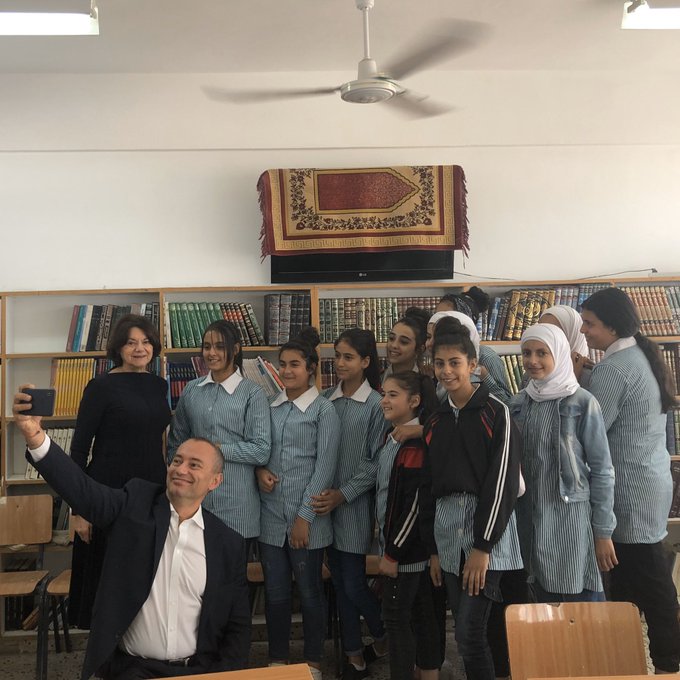
Earlier this month, the UN Special Coordinator for the Middle East Peace Process Nickolay Mladenov posted a photo on Twitter, of himself and UN Under-Secretary-General for Political and Peacebuilding Affairs Rosemary DiCarlo, together with a group of female refugee students attending one of UNRWA’s schools. “I hope these young girls grow up to participate in democratic elections where Palestine, Israel live side-by-side in peace and security,” he tweeted.
Just because the colonial narrative makes Israel, peace and security synonymous doesn’t mean there are no inherent contradictions in the rhetoric. The UN, a collaborator since before the inception of Israel, is, of course, aware of the discrepancies, but it prefers to enforce historical cycles of dispossession upon Palestinians, including students, framing them as a warped peace process in which Israel’s existence is paramount, even at the expense of Palestinian lives.
Mladenov’s wish for Palestinian children is not that they exercise their right to live freely in all of historic Palestine. On the contrary, he is demanding perpetual subjugation and oblivion of the Palestinian right of return, and what better way to attempt indoctrination than with the younger generations, according to the UN’s delusional standards?
But Palestinians have remembrance, and that remembrance is political. Has Mladenov deigned to listen to the Palestinian children’s refugee narratives? Are Mladenov and the UN expecting future Palestinian generations to exploit themselves for Israel’s colonial plans? How do UN officials reconcile democracy with the colonialism inherent in the two-state paradigm, which is the purported solution envisaged for Palestinians by the international community?
Taking the latter one step further, since the UN knows that the two-state hypothesis is obsolete, it stands to reason that these Palestinian children, along with many others, will be witness to further colonial appropriation by Israel. Mladenov’s legacy to this group of students will be nothing other than a promotional photo taken for UN propaganda purposes, while in the background; Palestinian families are permanently ruptured and dispossessed by Israel.
UN antics are not impressive; they are endangering the lives of Palestinians and attempting to tarnish students with acquiescence. Parroting about democratic elections while envisaging perpetual colonialism is vile, all the more when involving students in UN propaganda. So, stop the rhetoric of hope, which is an illusion when there is factual support for the elimination of Palestinian rights. Mladenov never intended Palestinian students’ voices to reach the international arena. The promotion photo speaks volumes about how the UN coerces Palestinians into silence. When the focus is Palestinian children facing perpetual refugee status, it is clear the UN could not sink any lower.
Heated Climate Change Debates rage on after Climate Action Summit at UNGA
By Sarah Abed | September 26, 2019
The 74th United Nations General Assembly (UNGA) is in full swing in New York this week with discussions and debates ranging from climate change to trade deals and the growing tensions in the Middle East.
A few days prior to the UNGA however, there was a climate strike on September 20th. Participation took place in dozens of cities around the world with the largest being in New York and led by Greta Thunberg a Swedish youth climate activist who began the “Fridays for the Future” movement last year.
On Monday, the UNGA was mostly focused on the Climate Action Summit and for the first time high-level meetings and discussions about Universal Health Care (UHC) were covered in what is considered to be the most significant political meeting on UHC thus far.
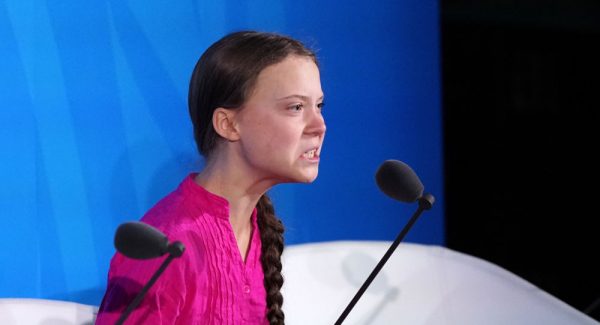
The Climate Action Summit was hosted by Secretary General of the United Nations Antonio Guterres who started his speech by saying that nature is angry and we fool ourselves if we think we can fool nature because nature always strikes back and around the world nature is striking back with fury. Young adults and children demanded a response for climate change. A few took the stage including Greta Thunberg who started her first climate strike a year ago. When asked her message to world leaders she passionately began with “my message is we’ll be watching you”… she said we are in the beginning of mass extinction, and all you can talk about is money and economic growth, how dare you”.
Mr. Guterres gave a sense of urgency that we are in a race against time and must do everything in our power to stop the climate from warming before it stops us.
After the Climate Action Summit scientists and researchers have new data to study from the Intergovernmental Panel on Climate Change. The United Nations Environmental Program delegation was in NY for the UNGA and highlighted how governments, citizens, and civil society can take productive action when it comes to the environment, climate and sustainable development goals. UNEP highlights and updates are outlined on their site.
Philipino representatives delivered a statement on behalf of their country on Monday, during a meeting on Universal Health Coverage (UHC) stating that President Rodrigo Duterte passed a UHC law earlier this year that provides free basic services to all.
The Prime Minister of India Narendra Modi said that his nation will be spending $50 billion on water conservation in the new few years, signaling the high importance of water management and he also pledged to more than double India’s non-fossil fuel target to 400 gigawatts.
President Trump stated on Tuesday, that he is “ready, willing and able” to mediate the “complex” Kashmir issue if both Pakistan and India wanted him to get involved.
On Tuesday and Wednesday, a Political Forum on Sustainable Development (HLPF) took place.
Also on Tuesday, Turkish President Recep Tayyip Erdogan spoke about global injustice and highlighted a number of problems which threaten global peace and security saying, “The international community is losing the ability to find lasting solutions to challenges such as terrorism, hunger, misery, climate change” he criticized world powers for failing to take appropriate action to deal with crises around the globe. He also called for world leaders to support his plan for a safe zone to be established in Syria, he said that if the “peace corridor” is extended to the Deir El-Zor-Raqqa area that 3 million Syrian refuges can safely return home.
During his speech President Erdogan held up four maps illustrating Israel’s disregard for borders and its gradual occupation of Palestinian land. He also held up a map showing the safezone he wants to establish in Syria on his southern border. Erdogan likened the suffering of the people of Gaza to that of the holocaust.
President Erdogan also called on UN members to help support Turkey’s efforts to ensure security in Syria’s Idlib. He has mentioned previously that with or without the US’s support he will establish a safe zone on his southern borders to push back US-sponsored and backed Kurdish militias and help Syrian refugees currently living in Turkey return home.
US President Donald Trump led the Global Call to Protect Religious Freedom and introduced initiatives to end religious persecution on Tuesday, as well. During his press conference on Wednesday he proudly proclaimed that he is the first to lead a global call on this matter.
The launch of Hello Global Goals Collaboration took place on Tuesday with Japanese character Hello Kitty in the SDG Media Zone which has been a main feature of the UNGA high-level week conference since 2016. The SDG Media Zone brings together UN Member states, content creators, activists, influencers, media partners and highlights actions and solutions in support of Sustainable Development Goals. The SDG Media Zone offers impactful in-depth interviews, Ted-style talks, panel discussion and advances the 2030 Agenda, using impactful, dynamic, and in-depth conversations with decision makers, etc. Its events are live streamed on UN WebTV and focused on the main themes of the week including climate change, universal healthcare, financing for development and small island developing states.
On Thursday, a dialogue on Financing for Development (FFD) and a meeting on the elimination of nuclear weapons is taking place.
On Friday, the UNGA is holding a meeting to review progress made in addressing the priorities of Small Island Developing States (SIDS) through the implementation of the SIDS Accelerated Modalities of Action (SAMOA) Pathway.
All of this relates to the 2030 UN Agenda, which is a plan of action for people, the planet, and prosperity and is supposedly meant to strength universal peace in larger freedom, however some think this plan has a sinister underlying agenda and should be looked into further.
Sarah Abed is a political analyst with BRICS.
US refusal to issue visas to Russian UN General Assembly delegates is ‘political move’ – senator
RT | September 24, 2019
The chairman of the Russian Federation Council’s international affairs committee, Konstantin Kosachyov, has described the US’ refusal to issue entry visas to a number of Russian delegates to the UN General Assembly session as a political decision.
“The US deliberately took a move to delay the issuance of visas. This is obviously a political, not a technical decision,” he was quoted as saying. The Russian delegation had asked for visas 55 days ago, the senator noted. “Such actions by the American side require a ‘painful’ response from Russia,” Kosachyov told reporters.
Kremlin spokesman Dmitry Peskov said earlier that the US has broken international rules by failing to issue visas to Russian senators, adding that a tough response from both Moscow and the United Nations is needed.
Syrian government & opposition finally form constitutional committee, seen as cornerstone of peaceful resolution to 9yo war
RT | September 23, 2019
A committee that will write a new constitution for Syria, a key part of the political transition in a war-torn country, has finally been formed with the United Nations’ backing, UN Secretary-General Antonio Guterres announced.
The body will convene within weeks for the first time, Guterres told reporters on the sidelines of a UN climate summit in New York. He thanked Russia, Iran, and Turkey, the three countries that have been pushing for years to see the creation of the committee as part of the so-called Astana process.
Geir Pedersen, the UN’s Special Envoy for Syria, said the breakthrough came on Monday following meetings with Syrian Foreign Minister Walid Muallem and Naser al-Hariri, who represents the opposition’s Syrian Negotiations Committee.
The constitutional committee is expected to agree on Syria’s new basic law, which will hopefully secure its future as a nation respecting the religious, political, and ethnic differences of the many groups living there.
The 150-seat body will have equal representation from the Syrian government, the opposition, and civil groups. It will be based in Geneva under UN auspices.
Featured Video
Seyed M. Marandi: U.S. Military DIVIDED? Iran’s Secret Defense EXPOSED
or go to
Aletho News Archives – Video-Images
From the Archives
‘Israel sees Iran as obstacle to its policies’
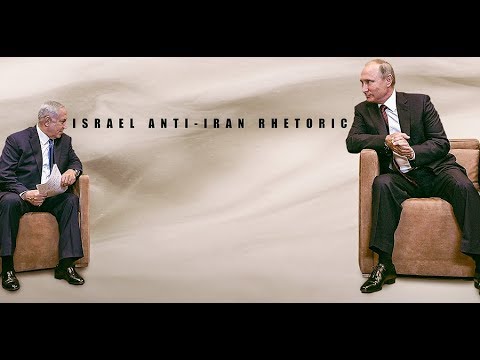
Press TV – August 25, 2017
Prime Minister Benjamin Netanyahu has said that Israel felt threatened by Iran’s growing influence in the Middle East. Netanyahu expressed his Iranophobic view in a meeting with Russian President Vladimir Putin in Russia’s Black Sea resort of Sochi on Wednesday. Press TV has asked Scott Rickard, former American intelligence linguist from Tampa, Florida, and Brent Budowsky, a columnist at The Hill from Washington, to give their thoughts on the issue.
Rickard said Tel Aviv is concerned about the fact that the regime could not carry out its old project to spread sectarian divisions and pave the way for dismemberment of the countries in the Middle East region because of the Iranian-led resistance against Israeli policies, not only in the occupied territories of Palestine but also in the whole region.
“Iran is not a threat to Israel whatsoever. The threat that Israel sees is the fact that their Oded Yinon Plan is being put to a hold by Iran,” the intelligence linguist said on Thursday night.
“They (the Israelis) look at Iran as a threat only because they have no influence on their governments and Iran is autonomous and is not under the Zionist influence,” he added.
Since the victory of the Islamic Republic of Iran in 1979, Tehran has been critical of Israel’s policies in the region, whereas “no leaders [of other states] even dared to speak out against Zionism,” Rickard argued. … continue
Blog Roll
 Aletho News
- What’s Behind U.S./Israeli Strikes On Iranian Pistachio Factories?
- Seyed M. Marandi: U.S. Military DIVIDED? Iran’s Secret Defense EXPOSED
- How I fell foul of the BBC thought police
- The End of NATO
- 37 days of war on Iran cost US staggering $42bln, tracker shows
- Baghdad tells Asian refiners, traders to begin loading Iraqi crude amid Iranian exemption
- Under fire, Moscow and Tehran close ranks
- Iran, US receive Pakistan-mediated plan for ceasefire then final deal
- Iran submits demands for end to war as mediators scramble ahead of Trump deadline
- Iran Threatens Retaliatory Strike on Stargate AI Project in UAE
- If Americans Knew
- U.N. experts demand Israel release prominent Gaza doctor after reports of ‘severe torture’
- Israel’s Latest Genocide Is Against the Shias of Lebanon. Why Is the World Silent?
- How Eliot Cohen’s influence over U.S. war-making paved the way for Trump’s war crimes in Iran
- Israelis don’t pay for the weapons we ‘sell’ to them — US taxpayers do
- While Distancing from AIPAC, Most 2028 Democratic Hopefuls Are Still Embracing Israel
- A brief history of the Israeli nuclear program, the open secret at the heart of the Iran war
- Israeli Settlers Killed a Palestinian Farmer on His Own Land, in Front of His Father. Yes, Again
- The US-Israeli War on Science is an Assault on our Future
- 100+ International Law Experts Say US Strikes on Iran Violate UN Charter, Could Be War Crimes
- ‘Vile, Horrifying, Evil’: Trump Threatens to Bomb Nation of 90 Million People ‘Back to the Stone Ages’
- No Tricks Zone
- An Inconvenient Tree: Uncovered In Alps… Europe Much Warmer Than Today 6000 Years Ago
- New Study Reports A 60% Slowdown In Greenland’s Ice Loss Rate In The Last Decade
- Low Intensity Tornado Wrecks Major Solar Farm, Creating A Potential Toxic Dump
- New Study Finds Warming Saves Lives…Cold Temperatures 12 Times More Deadly Than Excess Heat
- German Science Blog Accuses PIK Climate Institute Of Hallucinating Climate Tipping Points
- Devastating Assessment Of Comirnaty Vaccine By Former Senior Pfizer Europe Toxicologist
- New Study: CO2 Is ‘Effectively Negligible’ As An Explanatory Climate Change Factor Since 2000
- Former Pfizer Toxicologist Dr. Helmut Sterz Tells Bundestag Hearing Pfizer Vaccine Should Have Never Been Approved
- Energy Expert: Germany’s Nuclear Phaseout Was A “500 Billion Euro Mistake”
- New Research: South Australia’s Mid-Holocene Sea Surface Temperatures Were 4°C Warmer Than Today
 Aletho News