UN Launches Task Force to Combat Global “Disinformation” Threat
By Cindy Harper | Reclaim The Net | July 8, 2025
The United Nations has unveiled its first Global Risk Report, placing what it terms “mis- and disinformation” among the most serious threats facing the world.
Tucked into the report is the announcement of a new task force, formed to address how unauthorized narratives might disrupt the UN’s ability to carry out its programs, particularly its centerpiece initiative, the 2030 Agenda.
Rather than encouraging open discourse or transparency, the organization has taken a route that centers on managing what information gets seen and heard.
While the language used suggests a concern for public welfare, the actual emphasis lies on shielding the UN’s agenda from interference.
According to the report, survey respondents that included member states, NGOs, private companies, and other groups overwhelmingly called for joint government action and multistakeholder coalitions to deal with the highlighted risks.
Yet there is no clear endorsement of more open communication or free expression. The dominant solution appears to be top-down control over public narratives.
This newly established task force has a single focus. Its job is to assess how so-called mis- and disinformation affect the UN’s ability to deliver on its goals.
The report does not describe how this benefits the public or strengthens democratic values. Instead, the team’s mission is about insulating UN operations from disruption, particularly as they pertain to the Sustainable Development Goals.
The SDGs, which make up the foundation of the 2030 Agenda, touch nearly every aspect of governance and development, from climate to education to healthcare.
This is not the UN’s first attempt to regulate the global conversation. In 2023, it issued the Voluntary Code of Conduct for Information Integrity on Digital Platforms.
While promoted as a guide to promote factual accuracy, the document outlines an expansive system of content filtering and narrative enforcement. It encourages a wide range of actors, including governments, tech firms, news organizations, and advertisers, to work together in silencing content.
Among its recommendations are stricter algorithmic control, refusal to advertise next to flagged content, and large-scale fact-checking programs. Training and capacity-building are suggested not to foster critical thinking but to reinforce a shared understanding of what constitutes unacceptable speech.
Can international institutions be reformed?
By Raphael Machado | Strategic Culture Foundation | June 30, 2025
It appears that Israel and Iran have postponed World War III and, for now, seem to adhere to the ceasefire negotiated by Donald Trump (likely with the help of other countries). But even if the “12-Day War” has stopped and missiles are no longer flying back and forth, doubts remain about the fate of Iran’s nuclear program.
The U.S. government insists that Iran’s nuclear program no longer exists, while Iran maintains that its nuclear program is still operational. All signs indicate that the Iranians are correct and that the U.S. is once again constructing a purely simulated parallel reality for the sake of narrative power projection.
But the main issue is not this—it is, in fact, something few have mentioned, as recently noted by Sergey Lavrov: the role of Rafael Grossi and the International Atomic Energy Agency (IAEA).
The IAEA was founded in 1957 as an “autonomous” agency—though linked to the UN—with the goal of monitoring nations’ use of nuclear energy to promote peaceful applications and prevent the construction of nuclear weapons. In this capacity, IAEA teams visit nuclear power plants, research centers, and other facilities related to national nuclear programs to conduct safety checks and oversee enrichment levels.
However, it is important to note that despite its claims of “autonomy,” the IAEA was established at the insistence of the U.S., shortly after the abandonment of the post-WWII “utopian” idea of keeping nuclear weapons under the exclusive control of the UN. The institution has always been closer to the interests of the Western Bloc than to those of the Eastern Bloc or the Non-Aligned Movement.
That said, in the past, the IAEA did challenge U.S. claims about weapons of mass destruction in Iraq, under the leadership of Hans Blix and Mohamed ElBaradei.
But even during ElBaradei’s tenure, there were signs of a shift toward Western alignment. In writings from that period, ElBaradei advocated for a revival of the utopian, globalist vision of nuclear energy monopolized by a “multinational” agency—much like the various Western agencies controlled or influenced by the U.S. ElBaradei himself became a collaborator with the U.S. after his term ended, participating in the color revolution orchestrated in Egypt against Hosni Mubarak.
It was only during Yukiya Amano’s leadership that the IAEA’s collaboration with the U.S. became evident, thanks to WikiLeaks revelations. According to documents obtained by Julian Assange, in a meeting between Amano and U.S. diplomats, Amano explicitly stated that he was aligned with the U.S. regarding staffing decisions and the stance to be taken on Iran’s nuclear program. This, of course, meant that Amano filled the IAEA with U.S. collaborators. He was later accused by IAEA staff themselves of having a pro-Western bias.
This context helps explain the behavior of Rafael Grossi, Amano’s successor.
Fast-forward to June: Grossi prepared a report accusing Iran of failing to meet its obligations to the IAEA and scheduled a board meeting for the same day Trump’s 60-day ultimatum on negotiations with Iran expired. According to CNN, the U.S. contacted several board members to persuade them to vote in favor of Grossi’s resolution. The purpose was to lend an institutional veneer of legitimacy to Israel’s attacks against Iran.
Grossi’s report was entirely based on information provided by Mossad, which alleged the existence of previously unknown nuclear facilities containing traces of enriched uranium.
All evidence suggests that Grossi was aware of the imminent attack and collaborated in creating a pretext to justify Israel’s actions. This is further corroborated by the fact that Grossi has never once turned his attention to Israel’s nuclear program, which remains entirely opaque, free from any international inspections.
In light of these revelations, it is alarming that, as Grossi told the Financial Times earlier this year, he intends to run for UN Secretary-General. Given his track record, it is plausible that he will have U.S. backing, which would greatly aid his candidacy.
Cases like this are not isolated. We have seen how the International Criminal Court (ICC) moved to accuse Vladimir Putin and Russia of “kidnapping” Ukrainian children. The World Health Organization (WHO), meanwhile, attempted to override national sovereignty during the pandemic. The IMF is routinely used to deindustrialize Third World countries.
The list could go on.
The key issue, however, is this: Given the current state of international institutions, can they be reformed?
Or will we need to abandon them—as Iran did with the IAEA—and build new ones from scratch?
Iran asks UN Security Council to recognize Israel, US as ‘initiators’ of aggression

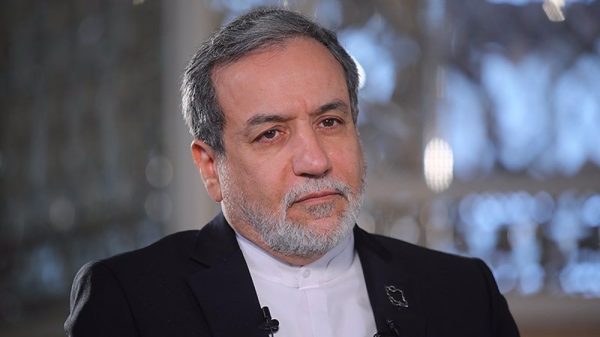
Iranian Foreign Minister Abbas Araghchi
Press TV – June 29, 2025
Iranian Foreign Minister Abbas Araghchi has called on the United Nations Security Council to recognize the Israeli regime and the United States as the “initiators” of the recent 12-day aggression against the Islamic Republic.
“We solemnly request that the Security Council recognize the Israeli regime and the United States as the initiators of the act of aggression and their subsequent responsibility, therefore including compensation and reparation,” Araghchi said in a letter to UN Secretary General Antonio Guterres on Sunday.
“The Security Council should also hold the aggressors accountable and prevent the recurrence of such heinous and serious crimes to enable it to maintain international peace and security,” he added.
He emphasized that political and military leaders, who order an act of aggression, “are also individually liable for the international crime of aggression under customary international law.”
The top Iranian diplomat described the act of aggression as a “brazen assault” on the very foundations of international law, warning that tolerating it and its legal consequences seriously undermines the credibility of the United Nations system.
It also “poses a real threat to the rule of law at the international level and engenders lawlessness in the future of international relations in our region as well as the international community at large,” Araghchi pointed out.
In the early hours of June 13, the Israeli regime launched an all-out aggression on Iranian soil by targeting various military and nuclear sites, claiming the lives of dozens of top military commanders and nuclear scientists as well as ordinary civilians.
On June 22, the United States joined the Israeli regime in the assault and bombed three Iranian nuclear sites in a grave violation of the United Nations Charter, international law, and the Nuclear Non-Proliferation Treaty (NPT).
A day later, Iran launched a wave of missiles at al-Udeid air base in Qatar—the largest American military base in West Asia—in retaliation for the aggression.
As the Iranian armed forces pounded Israel and its military and industrial infrastructure, using many new-generation missiles that precisely hit the designated targets, the embattled regime was forced to unilaterally declare a truce deal on June 24.
In a letter to the United Nations secretary general and president of the Security Council on June 13, Araghchi said the Israeli regime’s act of aggression against the country amounts to a “declaration of war.”
“These oppressive acts are not only constitute a severe violation of sovereignty and territorial integrity of Iran as an independent member of the United Nations, but as per international law and international humanitarian law, including the Geneva Conventions, are among acts of aggression and war crimes,” he said back then.
Attack on Iran damaged US credibility – China
RT | June 24, 2025
The US has damaged its own credibility by attacking Iran’s nuclear sites, Chinese UN Ambassador Fu Cong has said, denouncing the strikes as a violation of international norms and the United Nations charter.
Earlier this month, Israel launched a series of aerial attacks on Iranian territory, claiming Tehran was close to building a nuclear weapon. The US later joined the campaign, bombing multiple nuclear facilities. On Tuesday, both Iran and Israel confirmed they had agreed to a ceasefire after nearly two weeks of hostilities.
Speaking at a UN Security Council meeting on Sunday, Fu said the US attack had not only harmed Iran but also “damaged” Washington’s credibility, “both as a country and as a participant in any international negotiations.”
The Chinese Foreign Ministry added that the strikes violated international law. Spokesman Guo Jiakun said on Monday that attacking nuclear facilities that were under the supervision of the International Atomic Energy Agency (IAEA) constituted “a serious violation of the United Nations Charter.”
Guo told reporters that Beijing was prepared to strengthen communication and coordination with all parties in order to “play a constructive role in restoring peace in the Middle East.”
The Israeli-US strikes have drawn widespread condemnation. Russian President Vladimir Putin has said there is “no justification” for what he called “unprovoked aggression” against Iran. During a meeting with Iranian Foreign Minister Abbas Araghchi in Moscow on Monday, Putin described Israel’s actions as “illegitimate” and in violation of international law.
Former Russian President Dmitry Medvedev has also criticized the attacks. In a post on Sunday, he said that the “vast majority of countries” opposed the Israeli-US operation and accused President Donald Trump of pushing the US into another war. Medvedev added that Trump could “forget about the Nobel Peace Prize.”
Moscow blasts US redo of ‘Iraqi weapons of mass destruction’ stunt
RT | June 22, 2025
Russia has sharply condemned the United States for its airstrikes on Iranian nuclear facilities, calling the attacks “irresponsible, provocative and dangerous,” and warning they risk pushing the Middle East toward a large-scale war with potentially catastrophic nuclear consequences.
Speaking at an emergency session of the UN Security Council on Sunday, Russian Ambassador Vassily Nebenzia accused Washington of violating the UN Charter, international law and the Nuclear Non-Proliferation Treaty (NPT).
“The United States has opened a Pandora’s box, and no one knows what consequences may follow,” Nebenzia said, noting that by targeting IAEA-supervised nuclear sites, Washington has “once again demonstrated total disregard for the position of the international community.”
Nebenzia drew a pointed comparison to the lead-up to the 2003 Iraq War, when then-US Secretary of State Colin Powell presented false evidence to “justify the invasion of another sovereign state, only to plunge its people into chaos for decades and not find any weapons of mass destruction.”
“Many today feel a strong sense of déjà vu,” he said. “The current situation is essentially no different: we are once again being urged to believe in fairy tales in order to once again bring suffering to millions of people living in the Middle East.”
Russia argued that Tehran has not been proven to be pursuing a nuclear weapon, echoing earlier assessments by US intelligence that were dismissed by President Donald Trump as “wrong.” Nebenzia accused Washington of fabricating a narrative to justify the use of force and of undermining the decades-long diplomatic framework built around Iran’s peaceful nuclear program.
The Russian envoy also criticized what he described as the hypocrisy of Western nations that had for days called for “restraint” in the same Security Council chamber, yet failed to condemn Washington for joining Israeli strikes – and even blamed Iran for the escalation.
“We are witnessing an astonishing example of double standards,” he said. “Iran has been and remains one of the most thoroughly inspected states under the NPT, but instead of encouraging such an attitude, it receives bombardments of its territory and civilians by a state that refuses, in principle, to sign the NPT.”
Nebenzia warned that the US strikes undermine the authority of the IAEA and the global non-proliferation regime, and that continued escalation could return the world to an era of uncontrolled nuclear risk.
“This is an outrageous and cynical situation, and it is very strange that the Director General of the IAEA did not say a word about it. Neither has he ever called on Israel to join the NPT,” Nebenzia added.
Calling for urgent action, Russia – joined by China and Pakistan – submitted a draft Security Council resolution demanding an immediate and unconditional ceasefire and a return to diplomatic talks on Iran’s nuclear program.
US Strikes on Iran Reckless Breach of Sovereignty – Russian Foreign Ministry
Sputnik – 22.06.2025
MOSCOW – The Russian Foreign Ministry condemned the US bombing of Iranian nuclear sites as a reckless move that violates the Islamic Republic’s sovereignty, international law and the UN Charter.
“The reckless decision to bomb the territory of a sovereign state, whatever the arguments, runs counter to international law, the UN Charter, the UN Security Council Resolution,” the ministry said.
It is of particular concern that the attack was carried out by a permanent member of the UN Security Council, the ministry said, adding that the UN’s core body had to interfere.
“The UN Security Council should naturally take action. Confrontational behavior of the US and Israel has to be rejected collectively,” the statement read.
“We call for an end of aggression and urge efforts that will create conditions for a return to a political and diplomatic path,” the statement said.
The ministry also called on Rafael Grossi, the head of the International Atomic Energy Agency, to report impartially on the Iran attacks at the UN atomic agency’s board of governors’ meeting on Monday.
UK joining US-led Israeli war on Iran would be illegal, says Attorney General
MEMO | June 19, 2025
The UK’s participation in a potential US-led attack on Iran on behalf of Israel could be unlawful, according to legal advice issued to Prime Minister Keir Starmer by Attorney General Lord Hermer. The warning, reported in The Telegraph, sharply limits Britain’s ability to support military action and presents a political headache for Starmer, who is under pressure to back Washington while avoiding another illegal war reminiscent of Iraq.
Hermer, who was recently appointed as Attorney General and is a close ally of Starmer, has issued legal advice stating that any UK military involvement must be strictly limited to defensive actions, namely protecting allies, rather than participating in direct offensive operations against Iran. One official who reviewed the legal opinion remarked: “The AG has concerns about the UK playing any role in this except for defending our allies.”
This caution comes as speculation grows that US President Donald Trump may order strikes on Iranian nuclear infrastructure, using American stealth bombers and joint US-UK bases such as Diego Garcia in the Indian Ocean. While the UK retains sovereign control over the base, any US offensive would require British authorisation.
The legal advice presents a major political dilemma for Starmer. A committed Atlanticist, the UK prime minister has signalled strong support for US-Israeli interests, but any attempt to bypass legal scrutiny in backing a unilateral military campaign may undermine his government’s legitimacy at home and abroad. Comparisons are already being drawn to Tony Blair’s controversial decision to join the US invasion of Iraq in 2003, a war widely deemed illegal by international legal experts and condemned for bypassing the UN Security Council.
Israel’s unprovoked bombing campaign inside Iran, has killed over 300 civilians. Israel’s own justification—that its strikes are defensive—is not accepted under international law unless there is an imminent threat. Any UK participation in such operations could therefore violate its obligations under the Geneva Conventions and customary international law.
Meanwhile, the British government appears to be stepping back from immediate escalation. “We want to de-escalate rather than escalate,” a No. 10 spokesperson said. Foreign Secretary David Lammy has flown to Washington for urgent talks, while Defence Secretary John Healey is said to be reviewing contingency plans for RAF involvement.
Starmer’s government has authorised the deployment of six additional Typhoon fighter jets to Cyprus, with preparations underway to expand UK capacity in the Gulf. However, sources say no final decision has been made regarding the potential use of Diego Garcia.
The warnings come as Trump threatens what he described as a “very big” response to Iran’s missile attacks on Israel. Iran, in turn, has vowed to resist any foreign aggression, rejecting calls for surrender.
Legal experts say the Starmer government must avoid repeating the mistakes of the Iraq war. Any military action outside the bounds of self-defence or without UN Security Council approval is illegal.
Israeli strike on Natanz nuclear facility ‘crime against international law, NPT’: Iran FM
Press TV – June 15, 2025
Iranian Foreign Minister Abbas Araghchi says the Israeli strikes on the Islamic Republic’s Natanz nuclear facility were a major crime under international law and the Non-Proliferation Treaty (NPT).
In a phone conversation with Spain’s Foreign Minister José Manuel Albares Bueno on Sunday, Araghchi once again asserted the peaceful nature of Iran’s nuclear program.
“The attack on the peaceful nuclear facilities of a country is absolutely prohibited, especially considering that Iran’s nuclear program is subject to the most stringent supervision (of the UN nuclear agency) and has been verified as per Resolution 2231 of the Security Council,” he said.
Iran expects that all countries and the International Atomic Energy Agency (IAEA) would condemn the Israeli aggression in the strongest terms, he added.
The Israeli regime, backed by the United States, carried out a large-scale military aggression on multiple locations inside Iran early on Friday, targeting nuclear facilities, military infrastructure, and residential buildings in Tehran and other cities.
The Natanz nuclear facility near Isfahan city was also hit, although only surface damage was caused because the centrifuges are buried deep underground. There were no radiation or casualties.
The Iranian foreign minister said the Israeli regime flagrantly violated the principles of the United Nations Charter and international law by conducting its acts of aggression in the midst of indirect nuclear talks between Iran and the United States.
Araghchi added that the Tel Aviv regime violated Iran’s sovereignty and territorial integrity by attacking nuclear facilities and residential areas inside the country just two days before the sixth round of Tehran-Washington talks in the Omani capital of Muscat.
“It is clear that the main objective of this act of aggression was to have a destructive impact on the diplomatic processes and to drag others into an unjust war,” the top Iranian diplomat emphasized.
Pointing to Israel’s record of attacks on residential areas and its killing of a large number of innocent women and children, he said, “Defense is the response to the aggression.”
Araghchi emphasized that the Iranian Armed Forces would strongly proceed with their “completely calculated defensive operation” to protect national sovereignty, territorial integrity, and civilians.
The Spanish foreign minister, for his part, expressed concern over the escalation of tensions in the region and voiced his country’s readiness to help ease the tensions.
Continuation of Iran-US talks amid Israel’s savagery ‘unjustifiable’: FM
Press TV – June 14, 2025
Iranian Foreign Minister Abbas Araghchi says the continuation of indirect talks between Iran and the United States amid Israel’s savagery is “unjustifiable.”
Araghchi made the remarks in a phone conversation with the European Union foreign policy chief Kaja Kallas on Saturday, a day after the Israeli regime launched deadly aggression on various civilian and military areas and residential neighborhoods in the capital, Tehran, and other major cities.
The barbaric onslaught claimed dozens of innocent lives, including a number of the Islamic Republic’s top military officials and commanders.
In a crushing response, code-named Operation True Promise III, hundreds of missiles were fired by Iran on Friday evening and successfully breached the Israeli regime’s much-touted multi-layered air defense system.
Since April, Tehran and Washington have held five rounds of indirect negotiations, mediated by Oman, over Iran’s nuclear program amid repeated shifts in US stances, which have prompted Iranian officials to criticize the “contradictory” statements made by their American counterparts.
Araghchi said on Saturday that messages and statements by the US president proved that Israel’s hostile measures against Iran were the result of Washington’s direct support for the regime.
He strongly condemned Israel’s violation of Iran’s sovereignty and territorial integrity, its attacks on nuclear facilities and residential areas, which killed a number of military figures, university professors and Iranian women and children.
He said the international community should show a decisive reaction in condemnation of Israel’s aggression.
He added that the Iranian government and people seriously expect all countries that claim to support peace and the rule of law to denounce Israel’s criminal actions and to exert pressure on the regime to stop its aggression and lawlessness.
The Iranian foreign minister also criticized a resolution adopted by the International Atomic Energy Agency (IAEA) Board of Governors, drafted by the US and the European troika, against the Islamic Republic’s peaceful nuclear energy program, describing it as an excuse that prepared the ground for the Israeli regime’s hostile action.
“Based on international law, the attack on peaceful nuclear facilities is completely illegal and prohibited and the international community is obligated to hold the Zionist regime accountable for this dangerous and unprecedented violation of the law,” Araghchi said.
On Thursday, the 35-nation Board of Governors passed a resolution accusing Iran of “non-compliance” with its nuclear obligations.
The resolution, drafted by the United States, Britain, France and Germany, was passed with 19 votes in favor, three against, and 11 abstentions. Russia, China, and Burkina Faso voted against it. Among the countries that abstained were South Africa, India, Pakistan, Egypt, Indonesia, and Brazil.
Araghchi pointed to Iran’s diplomatic initiatives to draw global attention to the dangers posed by Israel’s destabilizing actions and called on the European Union and the permanent members of the UN Security Council to take a responsible stance in condemning the regime’s acts of aggression and punishing it.
“The Islamic Republic of Iran gave a decisive response to the Zionist regime’s aggression in order to protect its national sovereignty, people, and security, and is determined to exercise its legitimate right to take reciprocal action,” he emphasized.
The EU foreign policy chief, for her part, expressed deep concern over the escalation of tensions in the region.
Kallas expressed the EU’s readiness to support diplomatic efforts in the Security Council and other international bodies to help ease tensions and restore peace and security to the region.
Israeli strikes on Iran ‘completely unprovoked’ – Moscow
RT | June 14, 2025
Russia’s envoy to the United Nations, Vassily Nebenzia, has condemned Israeli airstrikes on Iranian nuclear facilities. Speaking at an emergency meeting of the UN Security Council on Friday, the diplomat said West Jerusalem was acting with impunity, backed by the West.
Israel has launched strikes on uranium enrichment sites in Iran and killed several senior commanders and scientists in targeted assassination operations, claiming the moves were preemptive steps to stop Iran from acquiring nuclear weapons. Iran, which denies pursuing a military nuclear program, responded with multiple volleys of ballistic missiles at Israeli cities, including Tel Aviv.
Nebenzia said the Israeli military action appeared intended to sabotage indirect US-Iran nuclear talks scheduled to resume Sunday. Tehran has declared that the strikes have effectively ended any diplomatic pathway.
“This is a completely unprovoked attack – whatever Israel may claim to the contrary – and it constitutes a gross violation of the UN Charter and international law,” Nebenzia said. “Responsibility for all the consequences of these actions rests entirely with the Israeli leadership and those who condone them.”
He noted that Iran has the right to defend itself and pointed to Tehran’s previous commitment to the 2015 UN-backed nuclear deal, which the US abandoned during President Donald Trump’s first term. Iran denied accusations of secretly violating the agreement at the time but has since ramped up uranium enrichment.
The US and its allies “have been doing everything possible to fuel the escalation, and, essentially, they incited it,” Nebenzia argued, adding that Western support had “spurred Israel to take radical steps.” He also raised alarms over the risk of radiation leaks from the targeted Iranian facilities and warned that “no military solution can be either legitimate or viable.”
Iran’s UN envoy, Amir-Saeid Iravani, described Israel’s attacks as “a chilling display of calculated aggression” that “amounted to a declaration of war.” He called for international action to disarm Israel’s undeclared nuclear arsenal, which the Israeli government neither confirms nor denies.
Israeli envoy Danny Danon defended the strikes, saying Israel was a “democracy under siege” and had acted to “prevent its destruction” by Iran. He urged the council to reflect on the potential consequences had the Iranian missiles been equipped with nuclear warheads.
Full statement:
Madam President,
We would like to thank Rosemary DiCarlo, Under-Secretary-General for Political and Peacebuilding Affairs, and Rafael Grossi, IAEA Director General. We are grateful for their briefings. First of all, we would like to express our condolences to the people and the leadership of the Islamic Republic of Iran (IRI) regarding the numerous victims, including among civilians, as a result of Israel’s strikes.
Before our very eyes, Israel’s actions are triggering an extremely dangerous escalation in the Middle East region, which is something that requires the Council’s urgent attention. We are grateful to Guyana’s presidency for convening this meeting so expeditiously. It is symptomatic that initially the Council was supposed to consider today, at this very time, the humanitarian consequences of inhumane actions by Israel against the inhabitants of the Gaza Strip. Instead, we are compelled to discuss yet another dangerous and irresponsible West Jerusalem’s misadventure liable to end up in a large-scale nuclear catastrophe in the region.
In the early hours of June 13, Israel delivered a number of massive strikes against the territory of IRI. The attacks targeted peaceful sleeping cities, civilian infrastructure, and peaceful nuclear facilities under IAEA safeguards. We’ve heard from the briefers today that there have been victims among civilians. This is a completely unprovoked attack (whatever Israel may claim to prove otherwise), and it constitutes a gross violation of the UN Charter and international law. The Israeli leadership seems to be convinced that it has a “free hand” in the region and apparently believes that Israel can flout all legal foundations and replace all international structures, including the UN Security Council and the IAEA.
The Russian Federation strongly condemns this action by West Jerusalem, whose military adventures are pushing the region to the brink of a major war. Responsibility for all the consequences of these actions lies entirely with the Israeli leadership and those who condone them. Of particular concern here are the possible radiological consequences of hitting nuclear installations. For a number of years, Russia has warned against trying to solve issues related to Iran’s nuclear program militarily, as it is unacceptable and fraught with dire consequences not only for the Middle East region but for the entire world. However, these calls of ours were not heeded, and the situation is unfolding according to the most negative and unpredictable scenario.
Madam President,
Israel’s actions are aimed at undermining the negotiating efforts, which are ongoing now in various formats and aimed at finding solutions to reduce tensions surrounding Iran’s peaceful nuclear program. While the whole world is anticipating with hope the outcomes of the next round of indirect contacts between Iran and the US (which were previously scheduled for June 15), Israel decided to preempt them in a way it deems the best and began bombing Iran’s nuclear energy infrastructure, demonstrating contempt for laws, norms, agreements, rules – everything that forms the basis of civilized interaction between states.
However, responsibility for what happened lies not only with the Israel but also with its closest allies. This is a direct consequence of the connivance on the part of Western countries, which for months knowingly and methodically pumped up anti-Iranian hysteria both in the UN Security Council and in the IAEA Board of Governors. These states did not even try to come up with a constructive solution to the crisis surrounding the Joint Comprehensive Plan of Action and Security Council Resolution 2231 which endorsed it. They had a completely different objective, namely to exert pressure on Iran by any means possible, to paint it as the source of all evil in the region and baselessly present Tehran’s legitimate response measures – such as the use of the protective mechanisms under the JCPOA – as a violation of the non-proliferation obligations. At the same time, the Iranians were patient for years and did not refuse to interact with the IAEA nor engage in dialogue to find negotiated solutions.
We would like to remind you – and this fact is now of fundamental importance – that all the problems having to do with the JCPOA began after the US unilateral withdrawal from the “nuclear deal” in 2018, and due to the principled unwillingness of the UK, France, and Germany to comply with the obligations they have under the JCPOA, including the obligations to create conditions for Tehran to reap material yield from lifting unilateral sanctions by the European Union that were in force until 2015. Later, these countries reimposed unilateral sanctions, which violates Article 25 of the UN Charter. The EU also joined in exerting pressure, thus disregarding its obligations as an impartial coordinator of the JCPOA Joint Commission.
The latest glaring example here is the biased resolution adopted yesterday by the IAEA Board of Governors in Vienna. The document is completely divorced from reality and refers to some fictitious “threat to international peace and security” allegedly posed by Iran’s nuclear program. This happened despite the fact that Iran strictly complies with its obligations under the NPT and the Comprehensive Safeguards Agreement; moreover, it remains the most strictly inspected IAEA state with the Agency’s reports clearly indicating the absence of proliferation risks.
In other words, the Western parties to the JCPOA have been doing everything possible to fuel the escalation, and, essentially, they incited it. They artificially created tension on international platforms, which only spurred Israel to take radical steps and fostered the feeling of impunity with West Jerusalem.
In the context of Israel’s current strikes there is something that merits our particular attention. I refer to reported possible coordination of actions between Israel and British special services – immediately after the Israeli strikes on Iran the British sheltered the Israeli aircraft involved in the operation at their base in Cyprus. We have also noted the remarks by the Israeli side who claimed that they warned Germany, which is a JCPOA participant, and Italy of its attacks. It also has come to the fore that our American colleagues were also notified of the strikes. The Israeli strikes were also supported by the French, who were clearly aware of them beforehand. In this regard, we would not be surprised if the members of this “group of like-minded countries” start condemning Iran for its retaliatory actions, which were undertaken fully in line with Article 51 of the UN Charter.
In the current situation, we are closely following the actions of the IAEA Secretariat – the lives and health of its personnel have been put at risk as a result of Israel’s military adventure. We expect the IAEA Director General to provide objective assessments and analysis of the developing situation, including in terms of radiological consequences.
Madam President,
Unprovoked attacks against the territory of sovereign Iran and targeted strikes on peaceful nuclear facilities cannot be justified in any way. The international community cannot and must not stand idly by when provocations occur. Condoning such actions is a path to a major war in the region and a serious threat to global security.
We are convinced that the UN Security Council must give an unambiguous legal and political assessment of what was done by Israel, and call for an immediate halt to any use of force and for a rejection of unilateral military steps. We need to support any and all diplomatic efforts aimed at de-escalation and a return to negotiations.
Let me underscore once again that settling the issues related to Iran’s nuclear program is only possible through peaceful, political, and diplomatic means. No military solution can be either legitimate or viable here. By the way, it is precisely what the United States itself has repeatedly stated, substantiating the readiness to continue negotiations.
Russia remains committed to strengthening international law, abiding by the UN Charter, and finding solutions that will prevent the region from sliding further into another destructive war. We are ready to cooperate with all those who will advocate diplomacy and seek peaceful ways to resolve differences.
Thank you.
Iran calls on UN Security Council to hold Israeli regime accountable for its crimes
Press TV – June 13, 2025
Iran’s Permanent Representative of to the United Nations, Amir Saeed Iravani, addressed an emergency session of the UN Security Council on Saturday
Iran’s Permanent Representative to the United Nations, Amir Saeed Iravani, addressed an emergency session of the UN Security Council on Saturday following the Israeli military aggression against the Islamic Republic.
He called on the UN Security Council to “strongly condemn” the “illegal aggression” by the Israeli regime and demanded urgent and concrete measures by the world body to hold the regime accountable and prevent further destabilization of international peace and security.
Israel launched a series of premeditated and coordinated attacks early on Friday, targeting multiple Iranian cities, including nuclear facilities and vital civilian infrastructure.
The envoy described the Natanz nuclear site in central Iran’s Isfahan province – under full International Atomic Energy Agency (IAEA) safeguards – as a primary target.
“These criminal and savage attacks have killed at least 78 people, including senior military officials and innocent civilians, among them women and children, with over 320 wounded,” he told the gathering.
Iravani described the latest strikes as deliberate massacres and acts of terrorism, violating international law and human conscience.
The ambassador criticized the UN Security Council and UN nuclear agency for their inaction in response to Iran’s repeated warnings about Israeli threats to its nuclear facilities, accusing them of emboldening the regime to escalate aggression and cross red lines.
Iravani emphasized the potential catastrophic radiological consequences of attacks on safeguarded nuclear sites, warning that the effects could extend far beyond Iran’s borders.
He said Israel’s aggression also violated the sovereignty of Iraq, whose airspace was used for the aggression, with the Iraqi permanent mission to the UN formally protesting the breach.
The ambassador held the United States responsible for enabling the Israeli strikes, citing Washington’s intelligence, political support, and weapons transfers.
“The complicity of the United States in these terrorist acts is undeniable,” he said.
Iran reaffirmed its inherent right to self-defense under Article 51 of the UN Charter.
Recalling Security Council Resolution 487 (1981), which condemned Israel’s previous attack on Iraq’s Osirak nuclear reactor, Iravani called on the council to enforce international law and hold Israel accountable. He stressed that decades of inaction and double standards have emboldened Israel’s aggressive conduct.
“Any failure to act now,” he warned, “would signify the collapse of the international system and invite chaos.”
‘Israel’ crossed the line, aggression is war declaration: Araghchi
Al Mayadeen | June 13, 2025
Iranian Foreign Minister Abbas Araghchi warned that “Israel has crossed every red line” in its hostilities against Iran, calling the Israeli attacks on Iran this Friday “a declaration of war.”
In a letter to the UN Security Council and the UN Secretary-General, Araghchi urged an emergency meeting to address “Israel’s” military actions against Iran, insisting that “the matter must be dealt with immediately.” Araghchi urged the UN Security Council to fulfill its obligations under the UN Charter, demanding that it condemn the attack and take swift, decisive action to hold “Israel” accountable.
The Iranian Foreign Minister also reaffirmed his country’s determination to defend itself in accordance with Article 51 of the UN Charter, stating that “Israel’s attacks on Iran constitute a blatant violation of Iran’s sovereignty and territorial integrity as an independent UN member state.”
Earlier on Friday, Iranian President Masoud Pezeshkian stated in a televised address, “The Iranian people and the nation’s officials will never remain silent in the face of this brazen aggression,” emphasizing that “the enemy will receive a legitimate, forceful, and decisive response that will make it regret its foolish act.”
Pezeshkian vows devastating response to ‘Israel’s’ aggression
Iranian President Masoud Pezeshkian vowed on Friday that the Islamic Republic of Iran would deliver a powerful and legitimate response to “Israel’s” act of aggression, warning that the enemy will deeply regret its actions.
“Israel” launched a major attack on Iran in the early hours of Friday, targeting residential buildings, nuclear facilities, and military infrastructure across Iran.
Featured Video
Theodore Postol: Iran’s Missiles & Drones Were Underestimated
or go to
Aletho News Archives – Video-Images
From the Archives
What is the Israeli Lobby in Australia Doing in Interfaith Dialogue?
By Ali Kazak | Dissident Voice | October 11, 2015
For years Israel and its lobby around the world have been trying to normalise their relations with Arabs and Muslims without solving the Palestine Question.
One of the methods they resorted to in the last few years is using human rights and community organizations such as interfaith dialogue and Multiculturalism to achieve this objective and to: isolate the Palestinians, marginalise the Palestine question, end Israel’s isolation, and prevent criticism of Israel, knowing that these organisations will be the first to stand against Israel’s violations, racial and religious discrimination.
The group responsible for this task in Australia is The Australia/Israel & Jewish Affairs Council (AIJAC); its Director of International & Community Affairs, Jeremy Jones is in charge of lobbying religious community organizations, specifically Muslims and Christians. Consequently he convened the Faith Communities for Reconciliation, founding participant in the Australian Partnership of Religious Organisations and the Australian National Dialogue of Christians, Muslims & Jews.
AIJAC is a private political propaganda group. It is recognised as the main Israeli lobby in Australia. It coordinates its activities and works intimately with the Israeli embassy in Canberra and different institutions in Israel. It is privately funded by some Jewish businessmen. It monitors closely Australian politicians, the media, ethnic and religious groups, (especially Arabs and Muslims), unions and academics on their stands towards Israel and the Palestine question. … continue
Blog Roll
 Aletho News
- The war of liberation of the Arab and Islamic peoples expands across the Gulf
- Envoy warns UN on Trump’s threat to ‘obliterate’ Iran’s civilian infrastructure
- The Larak Corridor: Iran’s Rial Gate With No US, No Israel, and No Way Around
- ‘Economic terrorism’: Steel facilities hit again in US-Israeli strike
- ‘War Crime’: Iran condemns attacks on Arak, Ardakan nuclear sites
- Two-thirds of Americans want quick end to Iran war even if goals unmet
- Trump to Give “Important Update on Iran” Wednesday in Prime-Time Speech
- Theodore Postol: Iran’s Missiles & Drones Were Underestimated
- Iran To Target Military Industrial-Tech Complex That Facilitated Gaza Genocide
- Collapsing Empire: The Resistance Disarms ‘Israel’
- If Americans Knew
- Israel wants US to bomb more of Iran’s civilian structures (113,000 is not enough) – Not a ceasefire Day 173
- Ann Coulter Rips Into Fox News for Iran War Coverage
- Joe Kent Urges Americans To Call White House and Congress To Object To Sending Troops Into Iran
- DNC Resolution to Reject AIPAC Funding Puts Democratic Leaders in the Hot Seat
- Swedish foundation to build 400 schools as over 650,000 Gaza children remain without education for 2 years
- Israeli army admits photshopping image of slain Lebanese journalist
- This is how Israel is systematically killing health workers under the cover of war in Lebanon
- Carrying life under fire: Israeli invasion of Lebanon leaves pregnant women facing deadly risks
- Champagne all around for the new death penalty (for Palestinians) law – Not a ceasefire Day 172
- Why are Palestinian books struggling to be seen on Amazon?
- No Tricks Zone
- New Study Finds Warming Saves Lives…Cold Temperatures 12 Times More Deadly Than Excess Heat
- German Science Blog Accuses PIK Climate Institute Of Hallucinating Climate Tipping Points
- Devastating Assessment Of Comirnaty Vaccine By Former Senior Pfizer Europe Toxicologist
- New Study: CO2 Is ‘Effectively Negligible’ As An Explanatory Climate Change Factor Since 2000
- Former Pfizer Toxicologist Dr. Helmut Sterz Tells Bundestag Hearing Pfizer Vaccine Should Have Never Been Approved
- Energy Expert: Germany’s Nuclear Phaseout Was A “500 Billion Euro Mistake”
- New Research: South Australia’s Mid-Holocene Sea Surface Temperatures Were 4°C Warmer Than Today
- Storing Green Energy To Last Germany 10 Days Would Require A 60-Million Tonne Battery
- New Studies: UK Sea Levels Were 4 Meters Higher Than Today During The Mid-Holocene
- Destructive Green New Deal: German Energy And Metal Group Warns Of Drastic Crisis
 Aletho News