Trump aims to create new UN and own it, Brazil’s Lula warns
Press TV – January 24, 2026
Brazil’s President Luiz Inacio Lula da Silva has criticized US President Donald Trump for attempting to create a new United Nations and be the sole owner of the international body.
“Instead of fixing” the United Nations, “what’s happening? President Trump is proposing to create a new UN where only he is the owner,” Lula said in a speech at an event on Friday.
Lula sounded the alarm about the new world order Trump is creating, warning that the international community is facing a “very critical” political moment in global dynamics, with multilateralism being forced out in favor of US unilateralism.
He warned that “the UN charter is being torn” to pieces by Trump.
Lula said Trump is replacing the UN charter with “the law of the jungle” in reference to his use of the US military to press Washington’s demands.
Lula further criticized Trump for attempting to “rule the world.” Trump “wants to run the world,” he said.
“Every day he says something, and every day the world is talking about what he said,” the Brazilian president noted. “It’s remarkable.”
Instead of using diplomatic means for pursuing foreign policy, “the law of the strongest” is increasingly shaping international relations among nations, he said.
Lula also said that his plan is to explore the possibility of an international meeting to reaffirm the world countries’ commitment to multilateralism and prevent “the force of arms and intolerance of any country in the world” from prevailing.
To salvage what remains of the world order, Lula said, he had added momentum to his diplomatic contacts with his counterparts in Russia, China, India, Hungary, Mexico, and other countries in the hope of countering US unilateralism by creating an international response to strengthen multilateralism across the globe.
From Proxy to Disposable: The US Betrayal of the Syrian Kurds
By Robert Inlakesh | The Palestine Chronicle | January 24, 2026
A collapse of the Kurdish-led Syrian Democratic Forces in northeastern Syria, at the hands of the Syrian army, should be a lesson for all regional movements siding with the United States. This should serve as a warning to supporters of the current Syrian government as well.
The United States had supported the rise of the Kurdish-led Syrian Democratic Forces (SDF) in 2015. That support has now come to an end. For the Kurdish movement inside northeastern Syria, the aim was autonomy, and the territory they captured was viewed as Rojava, part of historic Kurdistan. The primary enemy of Kurdish national movements has been Türkiye, and their project spans Turkish, Syrian, Iraqi, and Iranian territory.
Unfortunately for the Kurds, this meant that their cause was treated as something to be exploited by the US, Israel, and various other actors. In Syria’s case, the US helped establish SDF rule in October 2015, backing its forces against ISIS almost immediately after Russia entered the Syrian war on the side of the government in Damascus at the end of September that year.
The Syrian Arab Army (SAA), with Russian air support, quickly turned the tables on ISIS and began pushing toward the western banks of the Euphrates River. On the other side lay the al-Omar oil fields, home to the vast majority of Syria’s natural resources, which at the time were being exploited by ISIS.
Washington’s project in Syria since 2012, through initiatives such as CIA Operation Timber Sycamore, was to back anti-government forces to effect regime change in Damascus. For a long time, the situation inside Syria appeared as though forces loyal to then-President Bashar al-Assad were on the verge of defeat. This left Kurdish-majority regions without protection and exposed to the brutality of takfiri militants.
When the SAA began pushing ISIS back and appeared capable of reclaiming Syria’s oil fields and fertile agricultural lands, the Americans suddenly launched a major air campaign against ISIS and aided the formation of the SDF as their ground force. Put simply, the SDF was formed to serve as Washington’s proxy, ensuring that the government in Damascus could not regain access to the nation’s breadbasket and natural resources.
The SDF made major advances on the ground and gained control over much of the Syrian-Turkish border region. In Ankara’s eyes, this Kurdish force inside Syria posed a major security threat and was linked to groups such as the PKK, which Türkiye designates as a terrorist organization.
In January 2018, Türkiye launched Operation Olive Branch to seize Afrin from the Kurdish-led SDF. What did the US do? It withdrew its forces and backed off, completely abandoning its allies. Then, in October 2019, the Turkish military launched another operation called Operation Peace Spring, capturing additional border territory in northeastern Syria. Once again, the US abandoned the SDF.
After these betrayals, it should have been clear that the relationship between the United States and the SDF was one of master and proxy, not mutual partnership. Many on the Left argued that the SDF’s project was just and sought to liberate the Kurdish people in their ancestral lands, while others argued that Arab-majority territory should not be ruled by a Kurdish minority. Regardless of which argument carried more moral weight, the United States was never interested in this debate.
When Bashar al-Assad was deposed, and Ahmed al-Shara’a entered Damascus, the usefulness of the SDF evaporated. US support for the Kurdish movement had always been about keeping Syria’s agricultural lands and resources out of the central government’s hands, ensuring the effectiveness of Caesar Act sanctions. The strategy was one of pure cynicism, dangling self-determination before a people to economically strangle the rest of Syria.
The moment Washington achieved its goal of installing a pro-US and pro-Western government in Damascus, it immediately abandoned the ally it had backed for a decade. The lesson is clear: siding with the United States does not bring liberation, only chaos, death, and destruction.
Former Iraqi President Saddam Hussein’s rise was supported by the CIA, after which he became one of Washington’s favored dictators in West Asia. He fought Iran on US orders and used chemical weapons supplied by the West against the Kurdish population. Western media then attempted to blame Iran. When his usefulness ended, he was destroyed.
The same pattern applies to Iran’s former Shah, a US favorite to such an extent that Washington sent currency printing plates to Tehran and used its embassy there as a hub for CIA operations across Asia. After the Iranian people overthrew his brutal dictatorship, the Shah died in exile in Egypt.
Unfortunately, due to the Kurdish-led SDF and parts of the Kurdish movements in Iraq and Iran, strong ties developed with Israel and Israeli intelligence. This has fostered the stereotype that Kurdish movements are inherently pro-Israel, which is untrue. In fact, the PKK would not have emerged as a major force without Palestinian resistance groups.
The PKK ordered its forces to fight Israel during the 1982 invasion of Lebanon, even against the advice of some Palestinian leaders who feared they would suffer heavily due to inexperience at the time. It was the Popular Front for the Liberation of Palestine and the Democratic Front for the Liberation of Palestine that were chiefly responsible for training the PKK in the Lebanese Beqaa Valley, while even Fatah provided support.
There is a shared history of Kurdish movements and Palestinian resistance working together, although this relationship is not as widespread today. What it demonstrates, however, is that organic and pragmatic alliances between regional movements are possible. The United States is never present to deliver freedom. It is there to extract what it wants and then dispose of its proxies.
This lesson should resonate with many Syrians who currently support their leaders’ alignment with the United States. Just as many among the Kurdish population allowed emotions to cloud judgment and failed to see what was in front of them, the same risk now applies to supporters of Ahmed al-Shara’a.
A serious question must be asked. If the United States could so easily abandon a group it helped create, arm, and work with for a decade, one that made enormous efforts to align itself with Western liberal democracy, why would it side with the leadership of Hayat Tahrir al-Sham as a matter of principle? There is no principle involved, only strategic calculation, and it is the Syrian people who will ultimately pay the price.
– Robert Inlakesh is a journalist, writer, and documentary filmmaker. He focuses on the Middle East, specializing in Palestine.
US pledges to ‘starve’ Iraq of oil revenue if pro-Iran parties join new government
The Cradle | January 23, 2026
Washington has threatened to block Iraq’s access to its own oil revenue held in the Federal Reserve Bank of New York if representatives of Shia armed parties enjoying support from Iran are included in the next government, Reuters reported on 23 January.
“The US warning was delivered repeatedly over the past two months by the US Charges d’Affaires in Baghdad, Joshua Harris, in conversations with Iraqi officials and influential Shi’ite leaders,” Reuters reported, citing three Iraqi officials and one source familiar with the matter.
The threat is part of US President Donald Trump’s effort to weaken Iran through a “maximum pressure” campaign of economic sanctions, including on the Islamic Republic’s oil exports.
Trump also bombed Iran’s nuclear sites as part of Israel’s unprovoked 12-day war on Iran in June.
Because of US sanctions, few countries can trade with Iran, increasing its reliance on Iraqi markets for exports and on Baghdad’s banking system as a monetary outlet to the rest of the world.
As punishment, the US government has restricted the flow of dollars to Iraqi banks on several occasions in recent years, raising the price of imports for Iraqi consumers and making it difficult for Iraq to pay for desperately needed natural gas imports from Iran.
However, this is the first time the US has threatened to cut off the flow of dollars from the New York Federal Reserve to the Central Bank of Iraq.
Officials in Washington can threaten Baghdad in this way because the country was forced to place all revenues from oil sales into an account at the New York Fed following the US military’s invasion of the country in 2003.
This gives Washington strong leverage against Baghdad, as oil revenue accounts for 90 percent of the Iraqi government’s budget.
While occupying Iraq for decades and controlling its oil revenues, Washington accuses Iran of infringing on Iraq’s sovereignty.
“The United States supports Iraqi sovereignty, and the sovereignty of every country in the region. That leaves absolutely no role for Iran-backed militias that pursue malign interests, cause sectarian division, and spread terrorism across the region,” a US State Department spokesperson told Reuters.
Some Shia political parties, including several that make up the Coordination Framework (CF), are linked to the Popular Mobilization Units (PMU), anti-terror militias formed in 2014 with Iranian support to fight ISIS and later incorporated into the Iraqi armed forces.
Iraq held parliamentary elections in November and is still in the process of forming the next government.
Prime Minister Muhammad Shia al-Sudani, who enjoyed good relations with both Washington and Tehran, has decided not to contend for another term as premier.
The decision has cleared the way for Nouri al-Maliki, of the State of Law Coalition and the Dawa Party, to potentially return to power.
Maliki, who enjoys support from the PMU-linked parties, served as prime minister between 2006 and 2014, including when ISIS invaded western Iraq and conquered large swathes of the country.
Trump threatened a new bombing campaign against Iran following several weeks of violent riots and attacks on security forces organized and incited by Israeli intelligence.
Trump allegedly called off the bombing after Israeli Prime Minister Benjamin Netanyahu warned him that Tel Aviv’s air defenses were not prepared for a new confrontation with Iran.
During the war in June, Iran retaliated against Israel by launching barrages of ballistic missiles and drones, which did severe damage to Israeli military sites, including in Tel Aviv.
South Korea’s Prime Minister Proposes US Send Special Envoy to North Korea — Report
Sputnik – 24.01.2026
South Korean Prime Minister Kim Min-seok has proposed the idea of Washington sending a special envoy to North Korea, the South Korean Yonhap news agency reported.
Kim Min-seok held a meeting with US Vice President JD Vance at the White House.
During his talks with Vance, the South Korean prime minister proposed the idea of the United States sending a special envoy to North Korea as a way to improve relations between Washington and Pyongyang, Yonhap said.
“First, (I told Vance) that in reality, only [US President Donald] Trump has the will and capability to improve relations (with North Korea),” Kim Min-seok said, as quoted by Yonhap, adding that he also said “that sending a special envoy to North Korea, whoever that may be, can be an approach to express an intent to enhance relations (with the North).”
Yonhap said that Vance had allegedly requested Kim Min-seok’s advice on diplomacy with Pyongyang, amid speculation that Trump could seek a meeting with North Korean leader Kim Jong Un when the US president visits China in April.
On Friday, Yonhap reported, citing sources, that US Undersecretary of Defense for Policy Elbridge Colby was going to visit South Korea and Japan next week to meet with key officials from their foreign affairs and defense ministries.
Colby’s visit to South Korea is expected to take place from January 25-27, after which he will proceed to Japan. The upcoming trip follows a visit to South Korea by US Defense Secretary Pete Hegseth in November.
Pentagon downgrades China threat, shifts focus to homeland, hemisphere
Al Mayadeen | January 24, 2026
The United States Department of War has released its long-delayed 2026 National Defense Strategy (NDS), signaling a major shift in Washington’s military priorities by no longer treating China as the “primary threat” to US national security.
The document, published late Friday, places the defense of the US homeland and the Western Hemisphere at the center of Pentagon planning, a sharp departure from strategies issued under both former President Joe Biden and President Donald Trump’s first term, which identified China as the foremost strategic challenge.
According to the strategy, past US administrations “ignored American interests,” allowing strategic vulnerabilities to emerge in areas such as the Panama Canal, Greenland, and the broader Western Hemisphere. The document explicitly calls for abandoning what it describes as “grandiose strategies” in favor of policies rooted in the “practical interests” of the US public.
Reduced emphasis on China, conciliatory tone in the Pacific
While China remains a key concern, the 2026 NDS no longer characterizes Beijing as an “acute” or “existential” threat. Instead, it refers to China as a “settled force” in the Indo-Pacific that must be deterred from dominating the US or its allies.
The document adopts a notably conciliatory tone, stressing that Washington does not seek to “strangle or humiliate” China. It argues that a “decent peace” is achievable under terms favorable to the US and acceptable to Beijing, emphasizing diplomacy, stable relations, and expanded military-to-military communication channels to avoid escalation.
Although the Pentagon continues to advocate a “strong denial defense” in the Pacific, the strategy does not specify what military assets will be deployed. Notably, Taiwan is not mentioned by name, marking a significant shift from the 2022 National Defense Strategy, which explicitly framed Taiwan as a central security concern.
Europe’s declining importance, new DPRK strategy
In contrast to the National Security Strategy released last month, the defense document avoids describing Europe as being in “civilizational decline”, but it nonetheless downplays the continent’s strategic importance.
“Although Europe remains important, it has a smaller and decreasing share of global economic power,” the strategy states, adding that while US engagement will continue, Washington will prioritize defending the homeland and its immediate sphere of influence.
The strategy also outlines a reduced US military role in deterring the Democratic People’s Republic of Korea, shifting primary responsibility to South Korea, which currently hosts around 28,500 US troops.
“South Korea is capable of taking primary responsibility for deterring North Korea with critical but more limited US support,” the document states.
The strategy notably omits any reference to the denuclearization of the Korean Peninsula, reinforcing speculation that Washington is moving toward managing the DPRK’s nuclear capabilities rather than seeking their elimination.
“This shift in the balance of responsibility is consistent with America’s interest in updating US force posture on the Korean Peninsula,” the strategy explains, noting that Washington seeks to make its forces more flexible and better positioned to respond to a wider range of contingencies across the region.
Burden-sharing and regional rebalancing in the Pacific
Across the broader Pacific region, the Pentagon is urging allies to assume greater responsibility for their own defense, linking continued US cooperation to increased military spending by allies, with benchmarks as high as 5% of GDP. The strategy emphasizes economic and maritime security over regime-change policies, describing the Indo-Pacific as the world’s most dynamic economic region and underscoring the need to protect trade routes and strategic access points.
Japan and South Korea are identified as central to this regional balancing approach, with the US seeking to “incentivize and enable” allies to play a more assertive role in collective defense.
Meanwhile, South Korea has raised its defense spending to 7.5% of GDP and continues to field upwards of 500,000 regular troops with approximately 3.1 million reservists. On its part, Japan is moving to decisively break with decades of post-war pacifism, accelerating a historic military buildup and adopting a more assertive security posture.
Tokyo is on track to reach defense spending equivalent to 2% of GDP by March 2026, abandoning the long-standing 1% cap, as part of a five-year rearmament plan totaling 43 trillion yen. The shift is accompanied by the development of “counterstrike” capabilities, marking a transition from an exclusively defense-oriented doctrine toward deterrence by punishment and the fielding of overtly offensive weapons. While Japanese officials frame the change as strategic maturity and greater alliance responsibility, critics have denounced it as a revival of Japanese militarism.
The release of the 2026 NDS comes after months of internal delays. US media reported that a draft reached War Secretary Pete Hegseth as early as September, but disagreements within the administration over how to characterize China’s threat, particularly amid ongoing trade negotiations, stalled its publication.
Despite references to Russia, Iran, and DPRK as sources of risk, the strategy treats these threats as secondary, reinforcing the Pentagon’s pivot toward homeland defense and regional retrenchment rather than expansive global confrontation.
NEW FAUCI EMAILS EXPOSE ATTACK ON NATURAL IMMUNITY
The HighWire with Del Bigtree | January 22, 2026
Newly revealed emails show Dr. Anthony Fauci privately acknowledged that natural immunity may provide stronger protection than COVID vaccination, even as he publicly dismissed it during the mandate period. As Senator Rand Paul calls for criminal referrals, the larger issue is whether the DOJ will pursue Fauci—or protect the COVID-era establishment instead.
Why is the US using Jordan as the main base in possible Iran attack?
By Ali Jezzini | Al Mayadeen | January 23, 2026
US forces have amassed in Jordan ahead of a possible war on Iran, aiming to shift early retaliation away from Israelis, and exploit US airpower, while risking strategic miscalculation and overreach.
Over the past week, the United States has significantly reinforced its military footprint in West Asia amid rising tensions with Iran, deploying F-15 fighter jets and KC-135 tanker aircraft to Jordan’s Muwaffaq Salti Air Base as part of a broader repositioning of airpower ahead of a potential attack on Iran.
This buildup, which can be tracked using publicly available satellite images, comes against the backdrop of Iranian warnings to retaliate against American bases in the region should Washington — or its allies — launch an attack on Iranian territory. It also follows movements of US forces and dependents at several regional posts as a staging for possible offensive operations. The intensification of US deployments has thrust installations like Muwaffaq Salti, long a strategic node in Western forces’ deployment in West Asia, into the spotlight as both a potential launch point for attacks and a possible target in any wider conflict.
Why Jordan’s Muwaffaq Salti Air Base?
Part of the United States’ increasing focus on Jordan’s Muwaffaq Salti Air Base is not simply due to its distance from Iran’s most accurate short-range ballistic missiles, approximately 800–900 kilometers from Iran’s borders, but also because it may be intended to function as a primary Iranian target, or punching bag, in any initial phase of a wider war.
What follows is an attempt to analyze American strategic thinking, though it does not claim that events will necessarily unfold in this precise manner. From Washington’s perspective, “Israel” remains the crown jewel of the imperial order, an extension of US polity itself. During the most recent phase of confrontation, “Israel” encountered serious difficulties intercepting Iranian ballistic missiles, threats it now equates with nuclear weapons in strategic gravity. This urgency explains the current haste, as Iranians ought to possess much greater defensive capabilities in the future, coupled with the baptism by fire they endured during the June 12-day war.
Destroying Iran’s missile program outright is unrealistic, since large parts of the supply and production chains are dispersed in highly fortified underground facilities. As a result, targeting the Islamic system itself, seeking regime change, and sustaining what the US deems as acceptable costs may appear more logical to American planners. In their calculation, such an outcome would justify heavy losses, provided it ends the conflict definitively.
Israeli claims regarding the self-sufficiency and effectiveness of their air defenses are among the most exaggerated on earth. In reality, NATO intelligence and military capabilities played a decisive role in interception efforts, operating out of Jordan. This included US, Jordanian, and French air forces taking off from Jordanian bases, in addition to extensive intelligence, logistics, and aerial refueling missions done by NATO countries, including the UK.
Israeli leadership attempted to strike early under ideal surprise conditions before defensive gaps accumulated and before they were drawn into a prolonged escalation cycle they could not sustain. Even internal measures, such as preventing Israeli settlers from leaving during the war, reflected an acute awareness of how fragile the situation could become if panic spread; that kind of optics is strategically disastrous for a regime that sells itself as secure, resilient, and permanent.
Most interception during the last confrontation in June 2025 was conducted by US naval assets using SM-3 interceptors and THAAD systems. Roughly 25 percent of all THAAD interceptors ever produced were reportedly consumed in that single episode. The persistent exaggeration of Israeli offensive and defensive capabilities, while significant but short-winded, serves two purposes:
- First, it counters the internal Israeli narrative that the United States “saved Israel” after October 7, a deeply sensitive issue tied to Israeli national security self-perception that panics at the idea of having such a level of dependency on the US.
- Second, it preserves an image of invincibility before regional actors, enhancing the regime’s deterrence.
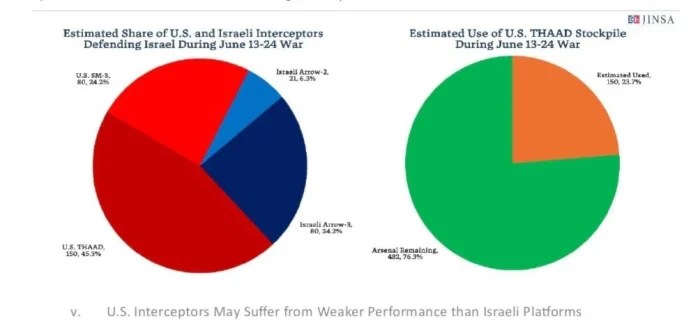
Returning to Jordan: American planners show little concern for Jordanian costs or the consequences for the base itself, which is situated around 70km from the capital Amman. From this perspective, it may even be deemed acceptable for the US if Iran expends part of its ballistic arsenal striking the base, even at the cost of Jordanian casualties.
The American assumption is that they would then be able to launch a major air campaign to destroy Iranian missile production, storage, and launch sites. This would pave the way for an Israeli entry into a second phase of the war, one in which it would no longer face missile volumes it cannot absorb, as it almost did in the June war, as it was running out of interceptors after a presumed US airpower success in weakening the system and reducing launch capacity.
From Iran’s standpoint, directly starting with “Israel” may actually be more rational. An Israeli participation in any war appears almost inevitable, either immediately or at a later stage, for multiple reasons.
Despite the massive US buildup, which includes more than 36 F-15Es, an aircraft carrier, and several destroyers with capabilities to launch cruise missiles, Israelis still retain greater immediate regional firepower than the United States, but it seeks to avoid sudden, large-scale damage to its own infrastructure.
American intentions likely go beyond limited bombings, assassinations, or “decapitation” strikes, as seen previously, if their attack would make sense in terms of weighing gains and possible losses. They may include direct strikes targeting the Iranian leadership, severe economic and energy infrastructure degradation, and long-term destabilization designed to enable internal regime change, added to the sanctions.
The withdrawal of American aircraft from Gulf bases was not only due to their vulnerability to short-range, high-precision weapons that Iran’s arsenal is full of, but also to protect Gulf oil production in the event of war. Gulf states, for their part, would publicly distance themselves from hostilities to shield their economies and prevent market shocks, particularly to avoid upsetting Trump amid any market volatility.
While it is possible to disrupt US operations at Muwaffaq Salti Air Base, expending large numbers of ballistic missiles there, missiles that could instead strike high-value counter force and counter value Israeli targets, may be less strategically viable than other options if the US is prepared to escalate toward total confrontation regardless. Completely and permanently disabling the base would be difficult, and the strategic outcome would likely remain unchanged.
American planners appear convinced that Iran will avoid targeting Jordanian state infrastructure or attempting to destabilize the Jordanian monarchy, as such actions can be used for counterpropaganda. They assume Iran will focus on Western and Israeli forces, confining hostilities to sparsely populated desert areas that Jordan can absorb.
Jordan, governed by a monarchy heavily dependent on Western and Gulf countries’ political and economic support, appears to share this assessment. King Abdullah likely believes his rule faces no serious internal risk and that alignment with Western strategy is the safer course, as his country was credited for being “Israel’s” shield against Iranian drones in the June 2025 war.
Under this framework, the US would launch an air campaign using aircraft operating from Jordan to strike western Iran, while carrier-based aircraft in the Arabian Sea attempt to open corridors toward central Iran from the Gulf. This would allow heavy bombers from Diego Garcia to penetrate deeper and strike strategic targets. The Israeli occupation would then enter at a later stage.
The simplest counter-strategy is to do precisely what the Americans do not expect, and to inflict maximum cost. The theory that remains largely unrefuted: Trump is risk-averse. As Western media itself jokes, TACO (Trump Always Chickens Out), he dislikes long wars, favors last-minute, flashy interventions, and avoids sustained attrition. This suggests a vulnerability: American short-termism and reluctance to absorb prolonged pain, particularly when multiple theaters remain active.
Some may ask why Iran does not simply launch a preemptive strike. This is a clear option, but not an uncomplicated one. An initial Iranian strike could rally American public opinion behind a longer war, granting Trump broader authority, resources, and popular support. While it would disrupt US planning and cause early damage, it might ultimately strengthen Washington’s domestic position. By contrast, an American-initiated war, prolonged, unpopular, and costly, would be far more vulnerable to internal pressure, especially if American losses mount.
Adding to the complexity, two Emirati Il-76 cargo aircraft reportedly landed in Tel Aviv before flying on to Turkmenistan. These aircraft are known to be used by the UAE to supply proxy forces with weapons, particularly in Sudan and Somalia, raising the possibility that they were transporting drones or intelligence equipment for regional operations.
The picture remains highly complex, and it is entirely possible that nothing will happen. Still, based on current force deployments and escalation patterns, the probability of a US attack appears to have risen beyond a 50-50 threshold.
This analysis reflects what American planners may be thinking, not what will necessarily occur. It should be noted that after the previous war, many US and Israeli officials declared that Iran’s nuclear and missile programs had been torpedoed, and the system effectively destroyed, assessments that quickly proved false. Now, only months later, they appear to believe that an even more violent war is required to achieve what the last one supposedly already accomplished.
On the other hand, if endurance is possible and the United States is forced to retreat, Trump TACOs or abandon Israelis mid-conflict — an outcome not inconceivable under a president like Trump — the cumulative effects of “Israel’s” recent dominance and coercion across the region may yet be reversed.
As mentioned earlier, the US buildup is not sufficient to start a prolonged attack against Iran with the high goals of regime change. The buildup still does seem as defensive posturing shielding the Israelis, so a chance the Israelis might initiate and use the limited US and Western buildup as a shield is still significant. A scenario similar to what happened in the last war, but that does entail Israeli losses in the opening phase.
Conclusion
What emerges from this assessment is a US strategy built on supposed escalation control, risk displacement, and the assumption that others will behave within predefined limits. Washington appears to believe it can shape the battlefield geographically, pushing early phases of the war away from the fragile “Israel”, absorbing initial retaliation through peripheral bases, and then intervening decisively to reshape the balance before handing the fight back to Israelis under more favorable conditions. This is not a strategy aimed at victory in the classical sense, but at managing exposure and buying time.
The weakness in this thinking lies in its dependence on predictability. It assumes Iran will refrain from actions that collapse the carefully constructed sequencing of the war, that regional systems will remain stable under strain, and that American political leadership will tolerate the costs long enough to reach a decisive point. None of these assumptions is guaranteed. If any one of them fails, the entire escalation ladder becomes unstable.
Ultimately, the outcome of any confrontation will not be decided by the opening phase or by claims of technological superiority, but by endurance, political cohesion, and the ability to impose sustained costs on an adversary unwilling to absorb them.
The United States may possess overwhelming firepower, but it remains constrained by limited strategic patience and domestic vulnerability. If those constraints are effectively exploited, the very war designed to resolve the Iranian question may instead deepen American entanglement and erode the regional order it seeks to preserve.
American Academy of Pediatrics Hit With Federal RICO Lawsuit for Vaccine Safety Fraud
By Nicolas Hulscher, MPH | Focal Points | January 21, 2026
For decades, the American Academy of Pediatrics (AAP) has been treated like an untouchable authority on child health — the gold standard that parents, doctors, schools, and lawmakers were told to trust without question. But today, that image collapses. Children’s Health Defense (CHD) and multiple plaintiffs just filed a federal lawsuit alleging the AAP spent decades running a racketeering operation that sold parents false safety assurances about the childhood vaccine schedule.
This isn’t another “vaccine debate” lawsuit. It’s a RICO fraud case—the same legal weapon used against organized crime and the tobacco industry. The allegation is blunt and devastating: the AAP allegedly manufactured false certainty around vaccine schedule safety, shut down legitimate scientific scrutiny, and promoted sweeping assurances that were never validated through rigorous real-world safety testing—while operating within a system shaped by vaccine-manufacturer funding and financial incentives tied to high pediatric vaccination rates.
One of the most explosive points in the complaint is what it forces into the open. The cumulative childhood schedule has never been safety-tested the way any reasonable parent would assume it has. The lawsuit points to Institute of Medicine findings from 2002 and 2013 calling for more research and acknowledging the lack of proper vaccinated vs. unvaccinated comparisons. Yet the AAP continued portraying the schedule as thoroughly tested and unquestionably safe, shaping pediatric care nationwide through repetition, authority, and pressure—not proof.
The complaint also describes what parents have learned the hard way. This system doesn’t merely recommend vaccines. It demands compliance. Physicians who questioned the schedule or deviated from AAP protocols were professionally targeted, disciplined, and financially crushed. The message was clear: follow the script, or lose your career.
The lawsuit further argues that the AAP’s public reassurances were built on “theoretical” talking points that became institutional doctrine, including the infamous claim that infants could tolerate an extreme number of vaccines at once. According to the plaintiffs, this wasn’t evidence—it was marketing disguised as medical authority, repeated in clinics to silence questions and keep the assembly line moving.
Then there’s the part that makes it all make sense: money. The complaint highlights conflicts of interest and financial entanglements with vaccine manufacturers and aligned institutions. The AAP presents itself as independent and science-first, while operating in a world of corporate sponsorships, incentives, and industry relationships that would be unacceptable in any genuinely transparent public health organization.
This is why the lawsuit matters. It’s not about a single product. It challenges the entire protection racket that has propped up the pediatric vaccine industry for decades. AAP’s model has relied on one rule: the schedule is safe because we say it’s safe—and anyone who demands real proof gets smeared, censored, or destroyed.
The lawsuit seeks financial damages for the families and physicians harmed, demands disclosure of the lack of comprehensive safety testing behind the cumulative schedule, and aims to stop the AAP from making blanket, unqualified claims that the schedule is “safe and effective” as if that question has already been settled.
If this case advances, discovery alone could expose what the public has been denied for decades—and that would be a historic victory for medical transparency, informed consent, and accountability in pediatrics. For years, parents were told to “trust the experts,” while legitimate safety questions were mocked, censored, or punished. Now those questions are headed to the one place the system can’t silence them with talking points: federal court.
Summary
- CHD and multiple plaintiffs filed a federal RICO lawsuit against the AAP, accusing the organization of long-term fraud and racketeering tied to vaccine safety claims.
- The lawsuit alleges the AAP violated RICO by engaging in a sustained pattern of deceptive safety messaging about the CDC childhood vaccine schedule, while operating within a financial ecosystem tied to vaccine-manufacturer funding and incentive-driven pediatric vaccination practices.
- The lawsuit alleges the AAP repeatedly promoted false certainty that the childhood vaccine schedule is thoroughly tested and safe.
- The complaint highlights the absence of proper vaccinated vs. unvaccinated comparisons for cumulative schedule safety, referencing IOM reports calling for more research.
- Plaintiffs argue the AAP relied on theoretical reassurance (not real-world schedule safety trials) to shut down scrutiny and concerns.
- The suit includes physicians claiming they suffered professional and economic harm for deviating from AAP vaccine orthodoxy or questioning safety claims.
- It also includes families alleging severe injury or death following routine vaccination and describes how medical judgment was allegedly overridden by rigid AAP-driven standards.
- The complaint raises concerns about conflicts of interest, alleging financial ties and aligned incentives undermined the credibility of AAP’s public safety assurances.
- The lawsuit seeks financial damages, mandatory disclosure about safety-testing gaps, and to stop the AAP from making unqualified vaccine safety claims.
Epidemiologist and Foundation Administrator, McCullough Foundation
Mom Tells Trump: Dumping Sewage Sludge on Farmland Won’t Make America Healthy Again
By Jill Erzen | The Defender | January 20, 2026
America cannot be “healthy again” while the EPA continues to allow states to dump treated sewage sludge on farmland near homes and schools, said Paula Yockel, founder of the nonprofit Mission503.
Late last year, the Oklahoma mother posted an open letter to President Donald Trump on YouTube, urging him to address what she called a nationwide public health crisis enabled by a decades-old federal rule that allows toxic sludge to be spread on agricultural land.
The rule “is betraying all of us and harming our great nation,” Yockel said in her video.
At the center of Yockel’s campaign is the U.S. Environmental Protection Agency’s (EPA) biosolids regulation, Title 40 Code of Federal Regulations Part 503. The regulation governs the application of treated sewage sludge on farmland.
The rule allows municipalities to market sludge as agricultural fertilizer if it meets federal standards. Yockel said the practice directly contradicts national promises to improve public health.
She told The Defender that mothers in rural areas share posts on social media about their sick babies, but most people remain unaware of the causes.
“Those are fighting words to me,” Yockel said. “We cannot say we want to make America healthy again and continue to dump our sewage where millions of people live.”
The 503 rule enables the disposal of industrial and municipal waste — including human feces, pharmaceuticals, hormones, solvents and “forever chemicals” — onto farmland in communities where families live, work and play, she said.
“The 503 rule is spreading massive volumes of toxic chemicals and human pathogens into our communities, harming our people with illness and loss of freedoms, polluting our air, water, soil and food supply, and compromising our national security,” she said.
‘We don’t even know’ which foods are grown in sludge
Under the rule, sewage sludge is treated at wastewater plants and then applied to land as fertilizer. The EPA refers to the material as “biosolids,” though the agency notes the terms “biosolids” and “sewage sludge” are often used interchangeably.
The treatment at wastewater plants doesn’t make the material safe, Yockel said.
“The toxic gases, vapors and pathogens emitting from the sludge, and the stench and flies, will travel for miles,” she said in her video.
The foods grown on land treated with sewage sludge, and the livestock grazed there, enter the nation’s food supply without any disclosure. “We don’t even know which fruits and vegetables, beef, dairy and grains are affected,” she said.
Yockel is asking for a meeting with Trump to present research she said shows the practice is harming rural communities, contaminating the food supply and undermining national health goals.
The White House has not responded to her request for a meeting, Yockel said.
“There is a significant firewall in the way,” Yockel said. “People don’t want to touch this topic.”
Nausea, headaches and dizziness ‘were almost immediate’
In a January Substack post, Yockel wrote that she and her husband bought land outside Oklahoma City in 2004. Some days, she noticed a persistent, foul odor. In 2008, she watched trucks dump what she described as “black, oozing muck” on the farm next to her home.
“Nausea, headaches, GI [gastrointestinal] distress and dizziness were almost immediate,” Yockel wrote.
State regulators told her that the landowner had a permit and that the sludge was applied correctly. However, officials acknowledged the “odor is very bad and the flies have been worse than ever this year,” according to Yockel.
At the time, Yockel said, her family did not immediately connect their health problems to sewage exposure.
“When sludge was spread on farmland next to our home, we were convinced it made us sick,” she wrote. “But we didn’t really connect the dots between sewage exposure and the unusual illnesses we’d get.”
She described symptoms that included blistering rashes, heart arrhythmias, MRSA infections and severe strep throat.
“We definitely didn’t realize it may have caused the health problems during my pregnancy and the risky delivery of our son,” she wrote. “We assumed these things were just part of life. Plus, authorities were assuring us that spreading ‘biosolids’ on the land around us was safe and couldn’t harm us.”
Yockel and her husband eventually began working with researchers to test air, water, soil and clinical samples in sludged environments over roughly six years.
Land that has had sewer sludge applied in accordance with the 503 rule “is exposing Americans to pathogens like staph and strep, viruses, human parasites, and antibiotic-resistant bacteria,” she said.
The sludge also contains carcinogens, neurotoxins, endocrine disruptors and immune-disrupting chemicals.
Hospital data show ‘more than seven times the risk for bone cancer’
Publicly available Oklahoma hospital discharge data, which Yockel displays in her open letter to Trump, show stark disparities between one community where sludge has been applied for decades and the rest of the state.
“The community shows over 125 diagnoses with a statistically significant increased risk compared to the state,” she said. The diagnoses include infections, cancers, heart and lung disease, neurological disorders and birth defects.
The data show “more than double the risk for myeloid leukemia and more than seven times the risk for bone cancer,” she added.
Independent reporting has increasingly drawn attention to the issue. Investigate Midwest reported that sewage sludge can contain high concentrations of chemicals linked to cancer and birth defects. The health risks have prompted lawsuits and bans in parts of the country.
In Oklahoma, a major farm insurance provider recently excluded coverage for biosolids-related damages.
In 2025, the EPA acknowledged that biosolids containing elevated levels of PFAS, or per- and polyfluoroalkyl substances, may pose risks to human health. The agency also warned that drinking water near application sites — common in parts of Oklahoma — can be dangerous.
However, the EPA hasn’t issued new nationwide regulations. Instead, the agency leaves the monitoring of biosolids for PFAS contamination to the states.
In Oklahoma alone, Investigate Midwest reported that more than 80% of wastewater sludge ends up on crop fields, with about 40% coming from Oklahoma City. The city permits biosolids application on roughly 11,000 acres and produces about 350 tons of sludge each day.
Since the early 1980s, applying sewage sludge to land has provided a low-cost disposal method. Farmers receive the material for free after it is treated with lime and tested for heavy metals.
“We’ve been doing this across our nation for decades and still are today,” Yockel said in her video letter to Trump.
She said the system misleads farmers and shifts long-term costs onto communities.
“Their lands and livelihoods are being destroyed because this rule allows sewage to be marketed as biosolids, and they’re told it’s cheap and a beneficial fertilizer,” she said.
‘A lot of power and money supporting the myth that sludge is a good idea’
Maine offers a glimpse of what change can look like — and how complicated it can be.
In 2022, Maine became the first state to ban the use of sewage sludge on farmland after widespread PFAS contamination was discovered in soil, water and food, according to Inside Climate News.
Testing later showed elevated levels of the “forever chemicals” in farmers’ blood.
But Maine has struggled to manage the waste it can no longer spread on land, as it faces limited landfill capacity and high disposal costs.
Yockel said the challenge underscores the need for national infrastructure investment, not incremental regulation.
“Policy change alone doesn’t fix this problem,” she said. “We must have infrastructure solutions.”
She rejected landfills as a long-term solution and said managing individual chemicals like PFAS misses the broader risk.
“You cannot regulate sewage to safety,” Yockel said. “Managing PFAS does nothing but check a box and move on down the road.”
Instead, she said a secondary tier of infrastructure is crucial for managing sewage solids because today’s wastewater treatment plants focus on the water and are not engineered to dispose of solids.
“Hazardous waste cannot become fertilizer by the stroke of a pen,” she said. “It is time for courageous, honest facts around the 503 rule because we must have real solutions.”
That call for action runs up against entrenched interests that have kept the practice in place for decades, according to Yockel.
“There is a lot of power and money supporting the myth that sludge is a good idea,” she said.
Public outcry may be the most immediate path forward, she said.
“The results may be through public awareness. We are just trying to save our nation from the harm of this wretched practice.”
For Yockel, the stakes are clear.
“Once we understand the impact on our nation’s health, we’re going to have to make a choice,” she said. “When we recognize the cost of what we are doing today, the cost of change is small.”
This article was originally published by The Defender — Children’s Health Defense’s News & Views Website under Creative Commons license CC BY-NC-ND 4.0. Please consider subscribing to The Defender or donating to Children’s Health Defense.
NIAID Funds Gain-of-Function Study Engineering Novel Influenza Viruses
Despite claims the U.S. has stopped bankrolling gain-of-function experiments
By Jon Fleetwood | January 23, 2026
A new peer-reviewed study published this week states that federally funded researchers genetically engineered viruses that gained biological functions not present in any naturally occurring strain, including new host-entry mechanisms, cross-species antigen display, and mammalian lethality.
In multiple cases, viral surface proteins from one species and virus family were deliberately inserted into the genetic backbone of an entirely different virus, creating laboratory chimeras that bridge species and viral lineages that do not naturally mix.
The paper, “Immunogenicity and Efficacy of a Rabies-Based Vaccine against Highly Pathogenic Influenza H5N1 Virus,” appears in Emerging Microbes & Infections.
The study documents three distinct categories of functional gain:
- transfer of influenza entry machinery into foreign viral backbones,
- reprogramming of rabies virus to perform influenza functions, and
- creation of new influenza chimeras that are lethal in mammals.
(Editor’s note: This article makes no claims about virology and/or terrain theory. It is reporting what NIAID-funded scientists claim to be doing with American taxdollars.)
The authors state:
“This study was supported by… the Center for Research on Influenza Pathogenesis and Transmission (CRIPT), one of the National Institute of Allergy and Infectious Diseases (NIAID) funded Centers of Excellence for Influenza Research and Response (CEIRR; contract # 75N93021C00014), and by NIAID contract SEM-CIVIC (contract number 75N93019C00051).”
NIAD is under the control of Director Jeffery Taubenberger, who is directing U.S. taxdollars toward influenza gain-of-function experiments while holding a patent for an influenza vaccine at the center of the Trump administrations $500 million influenza vaccine program.
This raises national security and conflict of interest concerns, as it represents the simultaneous creation of a lucrative problem and solution.
NIAD is under the authority of U.S. Health and Human Services (HHS), which is led by Robert F. Kennedy Jr.
Animal experiments were approved under:
“the Institutional Animal Care and Use Committee (IACUC) of Thomas Jefferson University (TJU).”
Influenza Host-Entry Functions Transferred Into a Different Virus
The authors state that they created a vesicular stomatitis virus whose native entry protein was replaced with influenza H5:
“VSV∆G-H5-GFP encoding either the clade 1 H5 (A/Viet Nam/1203/2004(H5N1) or the circulating clade 2.3.4.4b cow was generated as described.”
This describes a virus that now uses influenza hemagglutinin to enter host cells—a function VSV does not naturally possess.
It also represents a direct cross-species and cross-virus transfer of host-entry machinery, merging an avian influenza protein with a livestock-associated strain and a human-infecting viral backbone in a single engineered system.
Rabies Virus Reprogrammed to Display & Deliver Influenza Antigen
The study confirms that a rabies virus was engineered to express influenza H5:
“We developed a rabies virus-based H5 vaccine (RABV-H5) by insertion of a synthetic full-length codon-optimized HA ORF of the Influenza virus A/Vietnam 1203/2004(H5N1) into the BNSP333 rabies vaccine vector between the N and P genes.”
The authors further state:
“Presenting both RABV-G and the antigen of choice on the surface.”
This confirms that a neurotropic virus was genetically modified to perform a new influenza-specific function.
The lab construct combines a mammalian neurotropic virus with an avian influenza surface antigen, creating a synthetic cross-species hybrid that does not exist in nature.
Creation of Novel Influenza Viruses That Did Not Exist in Nature
The paper says that new influenza viruses were constructed by genome segment replacement:
“PR8-H5N1, a recombinant Puerto-Rico 8 influenza A virus (A/PR8) in which the HA and NA genomic segments have been replaced with the respective segments of H5N1.”
A second engineered virus is identified:
“Influenza virus A/PR8-H5N1 bovine/Ohio/439/2024 (2024).”
These viruses did not exist prior to laboratory construction.
Engineered Viruses Demonstrated Mammalian Pathogenicity
The authors report intranasal infection of mice with the engineered viruses:
“On days 104 or 150, mice were challenged by IN instillation with 0.05 ml of either 1E5 TCID50 of Influenza A/PR8-H5N1 (Viet Nam 1203 or Cow) or with 100 pfu of HPAI-H5N1 Viet Nam 1203 (2004) diluted in PBS+1% heat-inactivated FBS.”
They further confirm the dose was lethal:
“[O]n day 104 were challenged by IN instillation with a 1E5 pfu lethal dose of A/PR8-H5N1 Viet Nam 1203 virus (>100LD50).”
The paper documents viral replication in lungs:
“While unvaccinated mice had about 1E6 TCID50/ml of replicating virus in the lungs.”
And describes lung pathology:
“Severe and chronic bronchiolocentric infection with bronchiolar and peribronchiolar infiltration of lymphocytes, associated with interstitial pneumonitis and expanded alveolar wall due to edema and inflammation.”
Bottom Line
The new study makes clear that gain-of-function virus creation is allegedly still being carried out with U.S. taxpayer dollars, despite the national security and biosafety risks such work poses to the very population funding it.
Congress, the White House, the Department of Energy, the FBI, the CIA, and Germany’s Federal Intelligence Service (BND) have confirmed that the COVID-19 pandemic was likely the result of lab-engineered pathogen manipulation.
Why does the U.S. continue to fund the same experiments that are said to have caused the last pandemic?
Villains of Judea: Philip Esformes and the Largest Healthcare Fraud in American History
José Niño Unfiltered | January 20, 2026
If there’s one thing the Trump era has taught us, it’s that President Donald Trump is hyper-focused on serving the interests of the slimiest elements of American Jewry.
On a December evening in 2020, Trump granted clemency to Philip Esformes, a South Florida nursing home operator serving a 20-year sentence for orchestrating what federal prosecutors called the largest individual healthcare fraud scheme ever prosecuted in American history. The commutation freed Esformes from prison after he had served just over four years, though it left his conviction and roughly $44 million in financial penalties intact.
Born in 1968 into an Orthodox Jewish family, Philip Esformes grew up surrounded by both faith and the nursing home business. His father, Rabbi Morris Esformes, built a reputation as a prominent facility owner and major philanthropist within Jewish communities. Public records trace the family’s ancestry to Salonika, Greece, historically home to a thriving Sephardic Jewish population. The elder Esformes created a legacy in long-term care, and his son appeared destined to follow that path.
Philip Esformes entered the healthcare industry and eventually controlled a network of skilled nursing facilities and assisted living centers across South Florida. By the mid-2000s, his business empire seemed prosperous on the surface. Yet federal investigators were already examining troubling patterns in how his facilities operated and billed government healthcare programs.
The first warning signs emerged in 2006 when Esformes and associates connected to Larkin Community Hospital reached a civil settlement with federal and Florida authorities. The $15.4 million agreement resolved allegations involving kickbacks and admitting patients for medically unnecessary treatment. Though the settlement required no admission of wrongdoing, prosecutors later pointed to this episode as evidence that suspicious conduct continued unchecked.
A decade later, federal authorities brought criminal charges that painted a portrait of systematic fraud on an unprecedented scale. In July 2016, prosecutors indicted Esformes on multiple counts related to what they described as a roughly $1.3 billion scheme to defraud Medicare and Medicaid. The government’s case detailed an intricate operation designed to maximize profits by manipulating patient care and gaming federal reimbursement rules.
According to court filings, Esformes orchestrated a system that moved beneficiaries among hospitals, skilled nursing facilities, and assisted living centers in carefully timed patterns. These transfers satisfied Medicare eligibility requirements such as mandatory three-day hospital stays and 100-day skilled nursing limits, allowing facilities to restart billing cycles regardless of whether patients actually needed the care. Prosecutors alleged that medical decisions took a back seat to financial calculations.
The scheme allegedly extended beyond unnecessary services. Federal authorities claimed Esformes paid kickbacks and bribes to physicians and physician assistants who referred patients to his network. These illegal payments flowed through intermediaries and were disguised as legitimate business expenses. Some payments were allegedly hidden as charitable donations, prosecutors said, while others appeared in fake contracts and invoices designed to conceal their true purpose.
Court documents described additional allegations involving bribery of a Florida healthcare regulator. According to government filings, Esformes sought advance notice of facility inspections, allowing him to prepare for oversight visits that might otherwise uncover problems. The government’s detention memo outlined roughly $1 billion in fraudulent claims based on data from 2009 through 2016 alone, noting that the total loss likely climbed higher when accounting for other years and Medicaid billing.
The scope of the alleged fraud extended into Esformes’ personal life. Prosecutors claimed he used proceeds from the scheme to fund an extravagant lifestyle and engage in unrelated criminal conduct. Among the most notable allegations was his purported payment of bribes to a University of Pennsylvania basketball coach to facilitate his son’s admission to the school. This conduct, while separate from the healthcare fraud, illustrated how prosecutors believed illegal profits financed various forms of corruption.
After a lengthy trial in 2019, a federal jury convicted Esformes on numerous counts including conspiracy to defraud the United States, kickback violations, money laundering, federal program bribery conspiracy, and obstruction of justice. U.S. District Judge Robert Scola of the U.S. District Court for the Southern District of Florida sentenced him to 20 years in federal prison and imposed roughly $5.5 million in restitution along with approximately $38.7 million in forfeiture penalties.
Throughout the legal proceedings, Esformes and his defense team fought the charges on multiple fronts. They raised concerns about prosecutorial conduct, particularly allegations that federal authorities improperly accessed attorney-client privileged materials during their investigation. These claims sparked a significant legal battle that continued through the appeals process. The Eleventh Circuit Court of Appeals ultimately affirmed the conviction in 2023, concluding that suppression and exclusion remedies adequately addressed any prosecutorial missteps and that dismissing the entire case was unwarranted.
The commutation from President Trump arrived in late December 2020, during the final weeks of his first term. Reporting on the clemency decision highlighted support from prominent figures and faith-based advocacy organizations. The Orthodox Jewish non-profit Aleph Institute played a significant role in pushing for Esformes’ release, according to investigative journalism. Supporters portrayed him as a devout man who had suffered enough and deserved compassion. Critics, however, viewed the commutation as an example of how personal connections and Jewish advocacy networks could influence presidential mercy outside traditional Department of Justice clemency procedures.
Even with his prison sentence commuted, Esformes’ legal troubles persisted. Federal prosecutors announced plans to retry him on counts where the original jury had deadlocked. In 2021, Judge Scola set bond at an eye-popping $50 million and imposed strict restrictions on his travel documents, reflecting concerns about flight risk. These proceedings stretched on for years as both sides negotiated over the remaining charges.
In February 2024, Esformes reached a plea agreement with prosecutors. He pleaded guilty to one count of conspiracy to commit healthcare fraud and received a sentence of time served. Under the agreement, prosecutors dismissed the other pending counts, finally closing the door on the criminal case that had consumed more than eight years of litigation. The plea brought a measure of closure to a prosecution that had become one of the most closely watched healthcare fraud cases in American legal history.
Yet new troubles emerged later that same year. In October 2024, Miami-Dade County authorities arrested Esformes on felony charges including victim or witness tampering and criminal mischief connected to a domestic violence incident. The arrest generated fresh headlines and prompted renewed scrutiny of Trump’s clemency decisions. The New York Times reported on the charges and placed them within a broader examination of how some clemency recipients had reoffended after receiving presidential mercy. Some news accounts later indicated that prosecutors dropped the domestic violence case, though the arrest remained part of the public record.
In freeing Esformes, Donald Trump once again proves his blind fealty to the worst villains of Judea, especially its underworld cohort, reducing the presidency to a rubber stamp for Jewish billion-dollar thefts that bleed America dry. As posterity pens the verdict, Trump’s populist facade crumbles to dust: a stalking horse galloping blindly for Jewish overlords like the Esformes clan, forsaking America’s preservation for pan-Judah’s gain.
US sanctions Popular Conference for Palestinians Abroad over alleged Hamas links
MEMO | January 23, 2026
The United States has imposed sanctions on the Popular Conference for Palestinians Abroad, accusing the organisation of supporting Hamas and engaging in deceptive fundraising practices, according to a decision announced on Wednesday.
The sanctions, which also target six charitable organisations operating in the Gaza Strip, include freezing any assets held within the United States and prohibiting US citizens and companies from conducting transactions with the listed entities.
According to the US Treasury Department, the Popular Conference for Palestinians Abroad was “founded and operated by elements linked to Hamas,” claiming that the movement exercises control over the organisation’s strategic and operational activities. The department also cited the presence of individuals within the conference who have previously been placed on US sanctions lists.
Founded in February 2017, the Popular Conference for Palestinians Abroad was launched during a large gathering in Istanbul attended by Palestinians from around 50 countries. The organisation describes itself as a grassroots framework aimed at unifying Palestinians in the diaspora, enhancing their political engagement, and reinforcing their role in the Palestinian national movement.
Based in Lebanon, the conference has organized events and conferences in several countries, including Turkey, and has participated in political and popular initiatives related to the Palestinian cause. Its founders say the conference serves as a coordinating umbrella for hundreds of Palestinian institutions worldwide and stress that it does not seek to replace the Palestine Liberation Organisation, but rather to complement its role.
In response to the US decision, the conference has described itself as an independent and open organisation representing a broad spectrum of Palestinian political affiliations. It rejected the accusations, stating that its activities are public and focus on political advocacy, popular mobilisation, and humanitarian support.
The sanctions decision comes amid heightened US scrutiny of organizations accused of links to Hamas, particularly in the context of the ongoing war in Gaza.
Featured Video

US Marines Seized Panama in 1903
or go to
Aletho News Archives – Video-Images
From the Archives
Precedents for Pizzagate
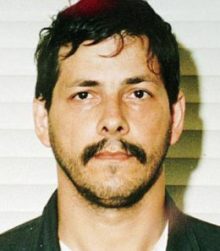
Marc Dutroux, Belgian pedophile, sadist, and serial killer with friends in high places
By Aedon Cassiel | Counter – Currents | December 23, 2016
To reiterate a point that should be clear to the more astute reader, my goal in this series (part 1, part 2) has not been to defend “Pizzagate” as such. My goal has been to defend the people who want to investigate it against specific accusations levied against them by people who think Pizzagate has revealed no intriguing information at all—for a specific reason, which I will be honing in and focusing on much more directly in this closing entry.
Whereas the mainstream critics of Pizzagate would have you believe that the dividing line is between paranoid conspiracy theorist followers of “fake news” and level-headed people who follow trustworthy news sources and rely on cold, hard reason to determine the truth, my goal has been to show that—whatever is or is not happening with Pizzagate itself—this framing of the issue is arrogant, insulting, and the product of extremely narrow tunnel vision. … continue
Blog Roll
 Aletho News
- The U.S. Sanctions Cuban Journalist For Reporting On The U.S. Blockade
- Israeli firms transform cars into intelligence devices: Reports
- Zionist-controlled companies to surveil British citizens
- THE CHILDREN GAMBIT
- A note on comment posting at Alethonews
- Trump stalls over Iran strike plan, Iran holds all the aces
- Zelensky’s Ceasefire for Elections is Strategic Gambit, Not Democratic Move
- US and Dutch pilots flying F-16s for Ukraine – Western media
- West’s Claims of Non-Involvement in Ukraine Conflict ‘Epitome of Hypocrisy’ – Expert
- Putin aide urges retaliation to ‘Western piracy’
- If Americans Knew
- Help end the injustice against Shadi
- Israel’s Favorite American President
- Israel’s “Yellow Line” Is a Death Trap for Palestinians. We Drove Into It.
- Why Israel’s expanding occupation in Syria presents a critical legal test
- Gaza is not a natural disaster. It is the victim of genocide enabled by global inaction
- Netanyahu’s plan to “end” US aid to Israel is to give even more money under a different name
- Israel ceased firing on Gaza for just 15 days of the “ceasefire” – Not a ceasefire Day 130
- In Gaza, “rats run over our faces” – Not a ceasefire Day 129
- Israel-backed border guards, GHF-linked aid – Not a ceasefire Day 128
- Israel battles Palestinian right of return, one Palestinian at a time – Not a ceasefire Day 127
- No Tricks Zone
- New Study: A 4°C Warmer Beaufort Sea Had ‘No Sea Ice’ 11,700 – 8200 Years Ago
- Unfudging The Data: Dutch Meteorological Institute Reinstates Early 20th Centruy Heat Waves It Had Erased Earlier
- German Gas Crisis…Chancellor Merz Allegedly Bans Gas Debate Ahead of Elections!
- Pollen Reconstructions Show The Last Glacial’s Warming Events Were Global, 10x Greater Than Modern
- Germany’s Natural Gas Storage Level Dwindles To Just 28%… Increasingly Critical
- New Study Rebuts The Assumption That Anthropogenic CO2 Molecules Have ‘Special’ Properties
- Climate Scientist Who Predicted End Of “Heavy Frost And Snow” Now Refuses Media Inquiries
- Polar Bear Numbers Rising And Health Improving In Areas With The Most Rapid Sea Ice Decline
- One Reason Only For Germany’s Heating Gas Crisis: Its Hardcore-Dumbass Energy Policy
- 130 Years Later: The CO2 Greenhouse Effect Is Still Only An Imaginary-World Thought Experiment
 Aletho News